The chair next to mine has gone copper twice this summer, and I have watched two grown women leave with ash blonde braids instead of a trim. Long hair is heading in two directions right now: sculpted layers that hold a shape, or one blunt baseline doing all the work. I am siding with blunt, mostly.
That is the range across these 19 ideas: a trim you can book over a lunch break at one end, a six hour copper transformation at the other. Hairstyles for Long Hair, sorted by how much work each one asks of you. I wrote them for fine hair that goes flat by 4 pm, because that is mine.
Black Hair With Long Layers and Volume
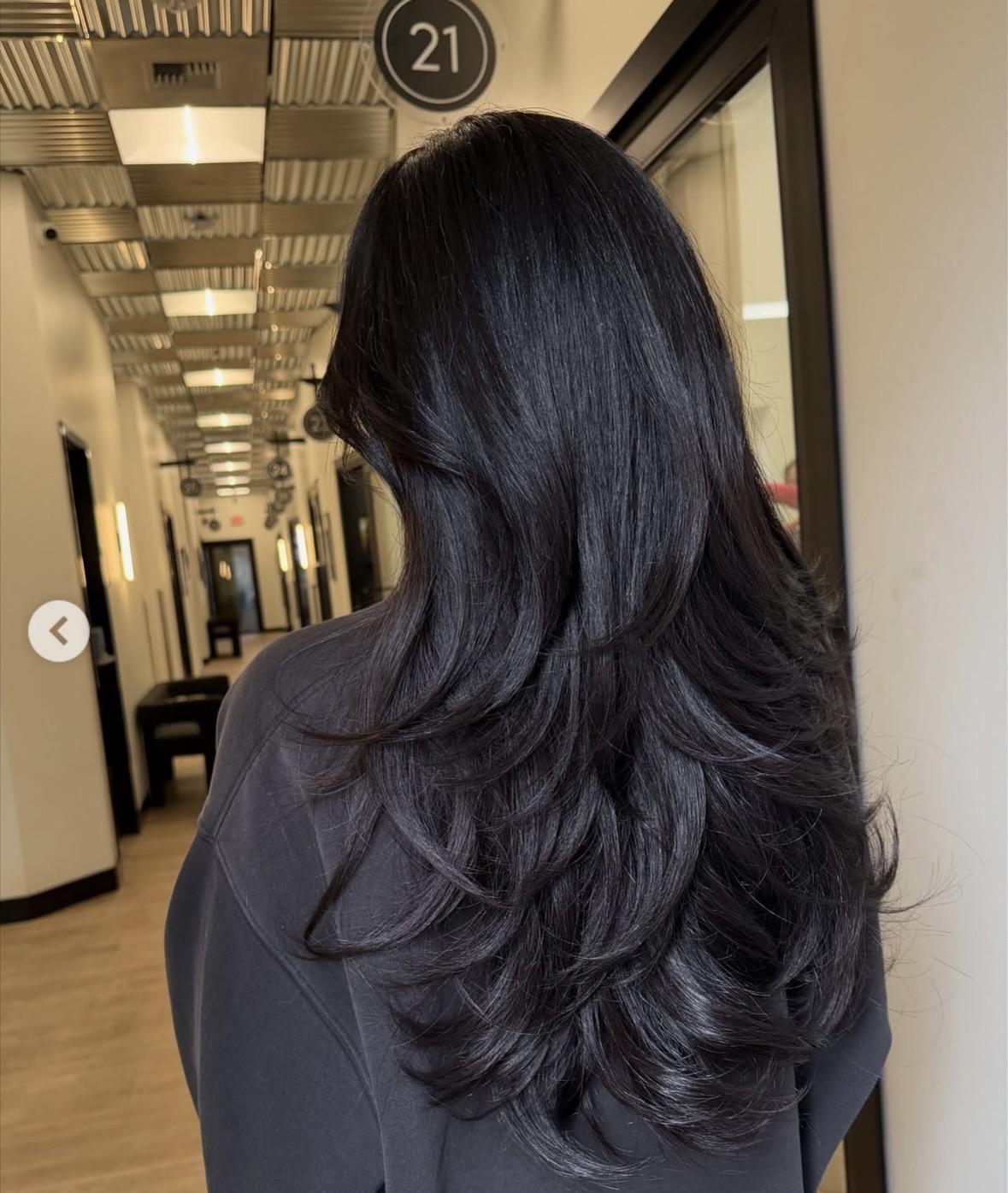
Black hair shows every layer line, which is why long layers for black hair have to be cut soft rather than stacked. This cut lands at mid-back, and the layers stay below the collarbone so the weight keeps the shape. No bangs. On straight texture the movement comes from blunt ends releasing into the layers, not from thinning the interior. It flatters thick hair that needs release, and a middle part keeps the back symmetrical. Fine, low-density ends go see-through here. Pass.
Vibrant Copper Mid-Back Cut
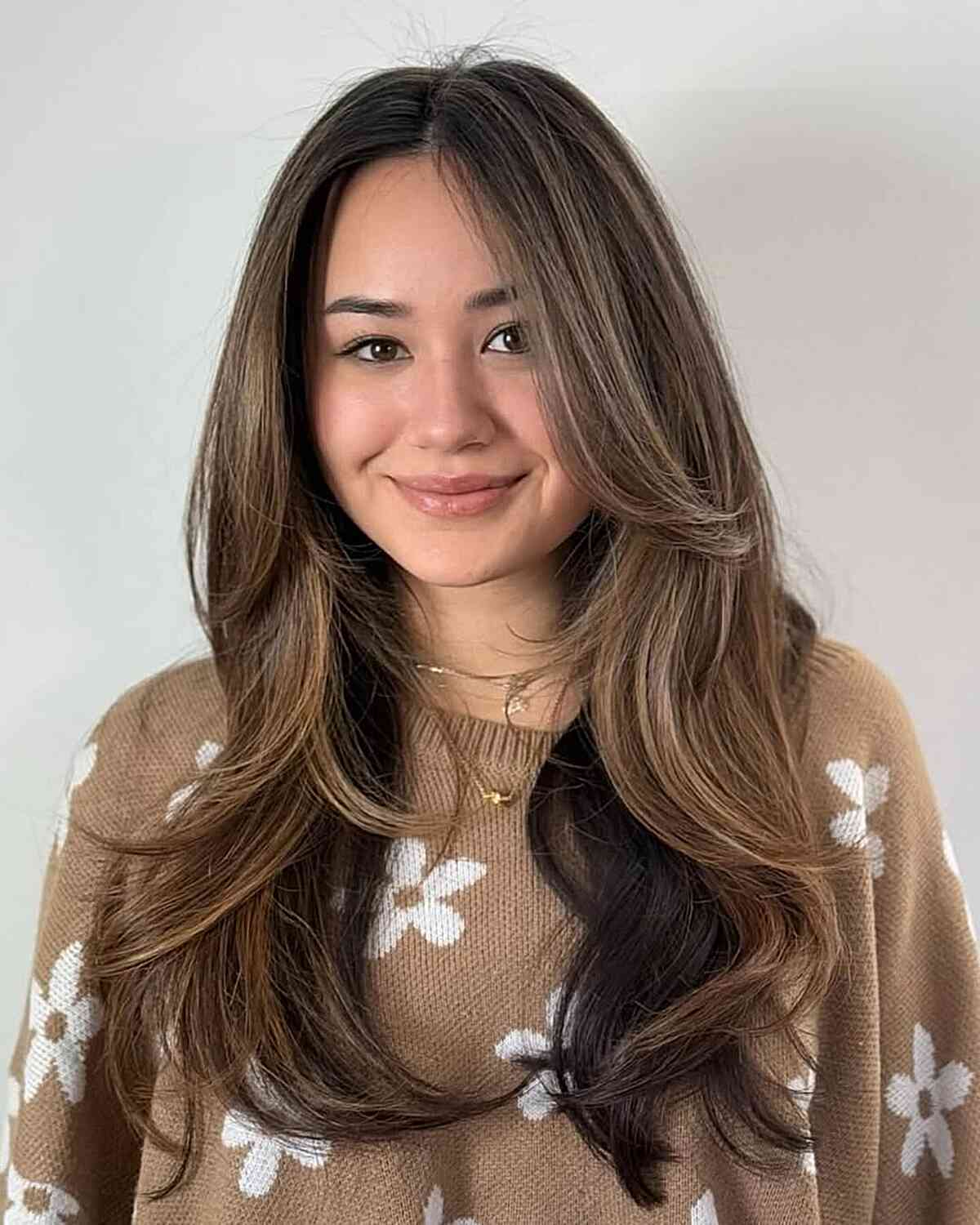
When did copper stop reading as a summer thing? It owns late fall, and mid-back cuts in this shade are everywhere right now. The shape is layered through the mid-back, and the whole point is copper hair with face framing: pieces that start near the cheekbone, no bangs, nothing cut short enough to fight the blowout. On straight, thick texture a sleek blowout runs about twenty minutes and holds its shape all day. The color is the actual work here. Vibrant copper fades, and it needs a refresh every six to eight weeks or it drifts brassy at the ends. Grow-out is gentler than expected, since those face framing pieces blur the root line as it travels.
Dark Brown U-Shape Layers
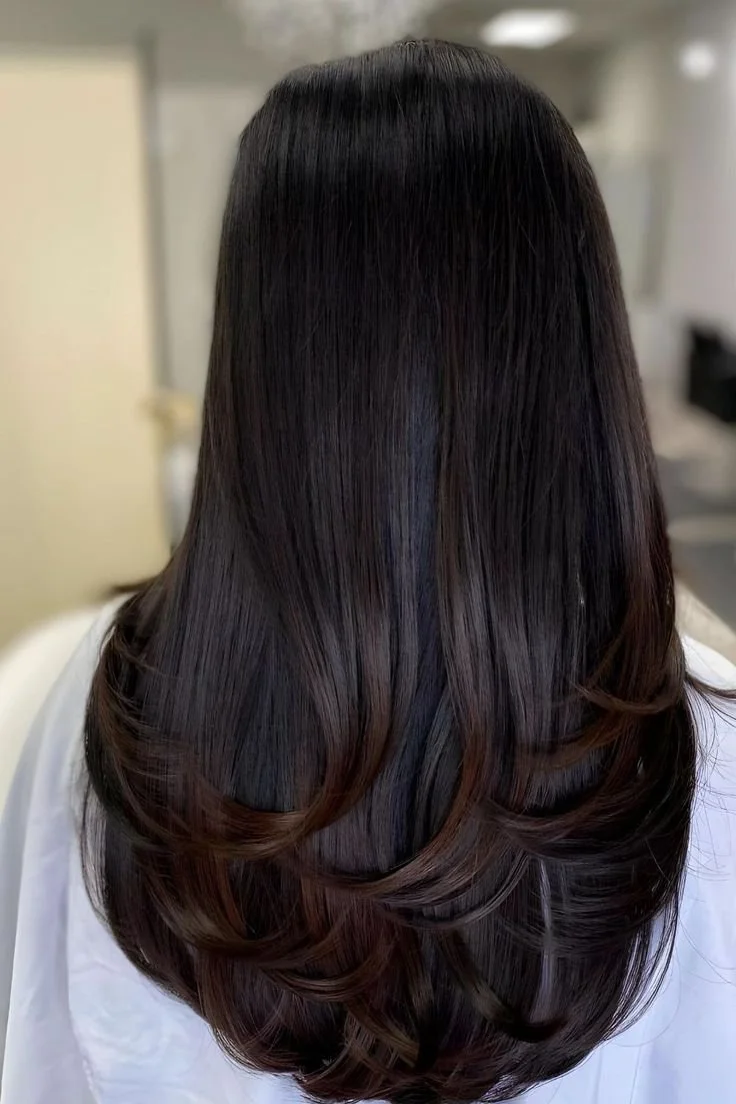
U-shaped layers beat a uniform mid-back cut, and it is not close. A blunt line gives you one length and one silhouette, with every strand landing in the same place. This shape drops its shortest layers around the shoulders and lets the rest fall to mid-back, so the perimeter curves instead of sitting flat. On straight, thick texture, that curve is the only thing standing between a cut and a curtain. Dark brown with a subtle ombre softens the layer transitions. No bangs, and none needed, because the sculpted layers do the framing themselves.
The alternative, a one-length cut, is not wrong. It is just heavier. U-shaped layers for thick hair pull the bulk inward and taper the ends, which is why this shape looks polished without a full round-brush session. Ask for a soft U at the back with blended layers and a middle part. The thickness stays through the body instead of stacking at the hem.
Collarbone Layers With Face Framing
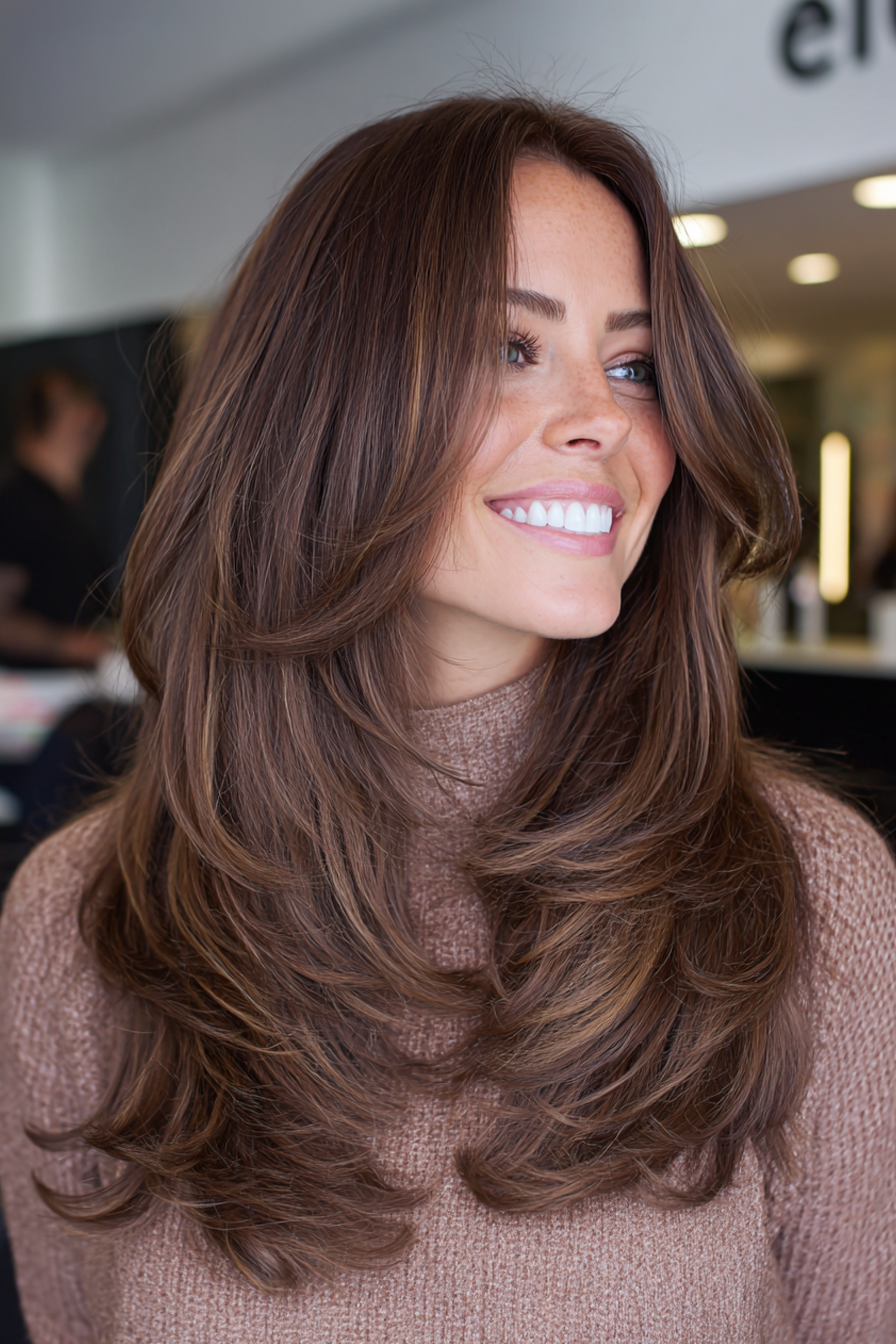
I have asked for face-framing layers more times than I can count, and I have never received the same haircut twice. Collarbone length layers live or die on where the shortest piece starts, and on straight, medium-density hair that point either lands at the cheekbone or it does not. Cheekbone height is the whole game. Long layers do the work through the back, and the face-framing bangs are what you actually see. A middle part splits them evenly, so the cut sits balanced, and the lighter highlights in this rich brown base make every layer edge visible.
- Ask to keep the length right at the collarbone.
- Ask for the layers well defined, not blended away.
- Ask to see the face-framing pieces dry before you leave.
Natural Dark Brown Soft Layers
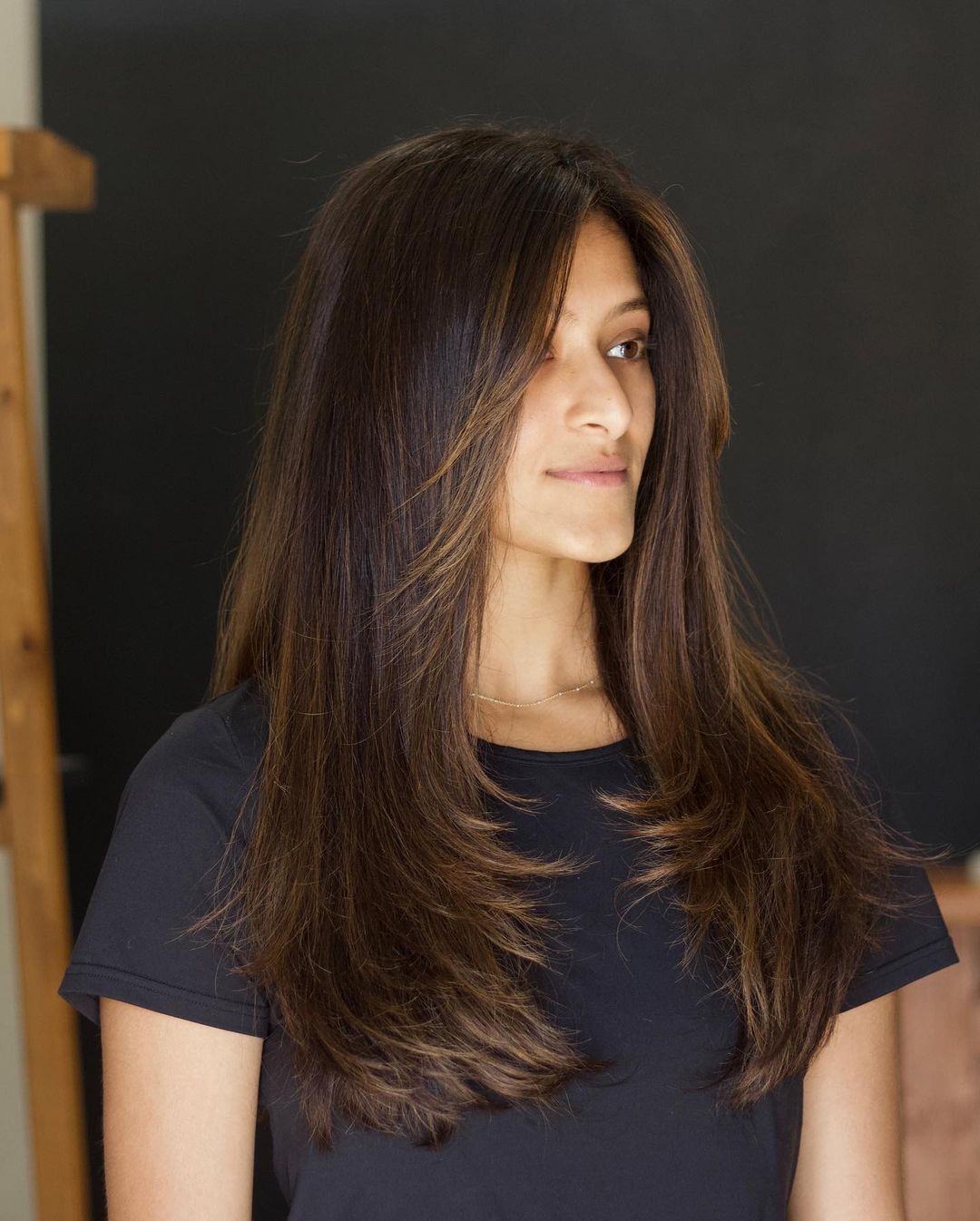
Thick hair cut into soft layers looks air dried on purpose, but that is not an accident. Soft layers for thick hair get built by taking weight out of the interior while the surface stays long, so the mid-back length holds its shape and the volume spreads sideways instead of stacking at the crown. Weight out, length intact. No bangs here, and that is deliberate: a side parting needs a clean front edge. Straight, thick hair keeps that interior line for months.
Honey Blonde Waves with Wispy Bangs
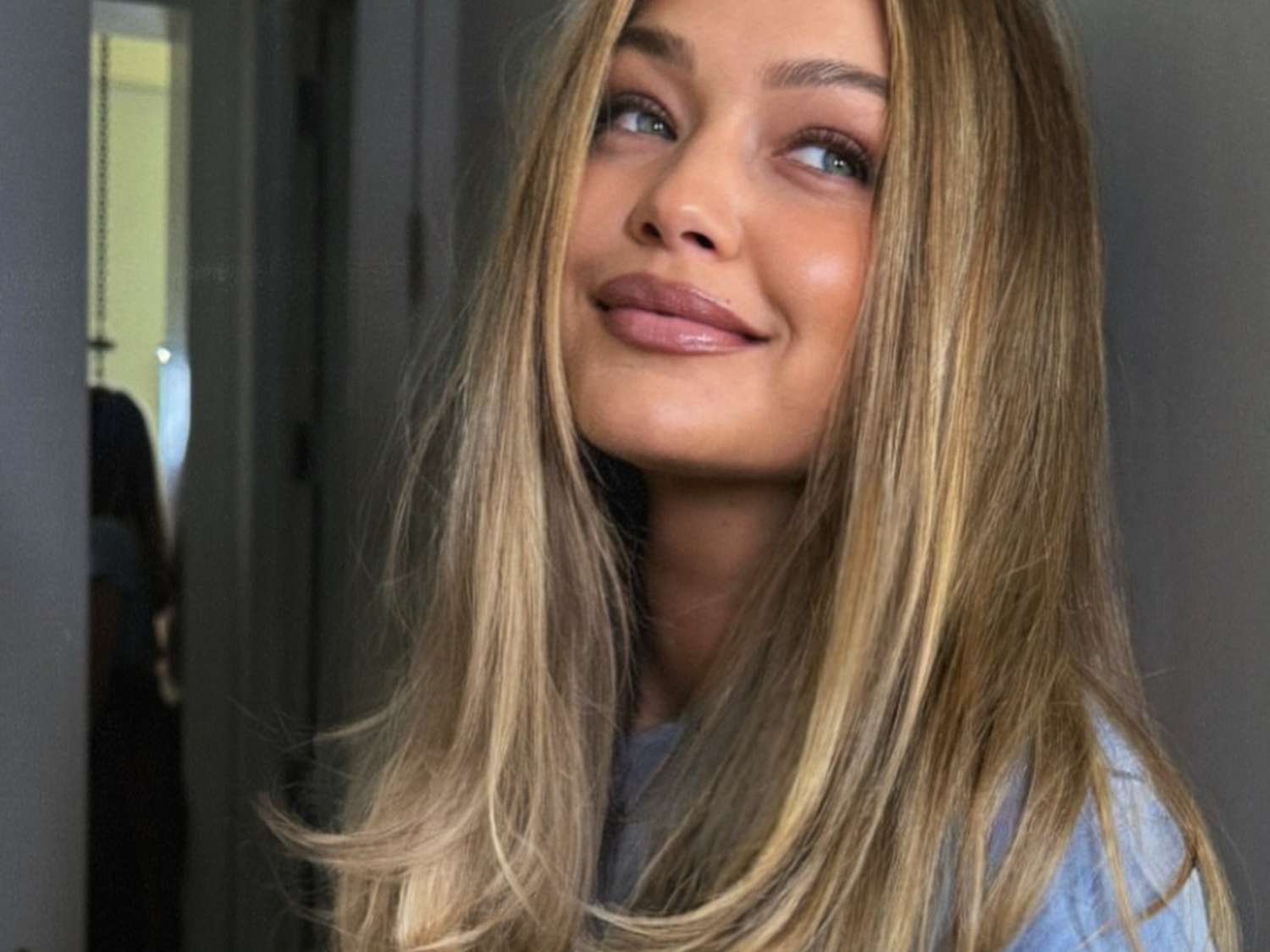
When did one hair color start demanding its own calendar? Honey blonde waves look like the softest thing on this list until you count the appointments. The base is honey blonde with lighter blonde highlights, which means the tone drifts warm around week six and the mid-back length shows every bit of that drift. Long layers and wispy bangs are what keep it moving, and the bangs are the part that eats your schedule, because they need a trim every three to four weeks or they start falling into your eyes.
Styling is where wavy, medium-density hair earns its keep. Soft waves from a large barrel iron take about twenty minutes, and a texturizing spray carries them to the end of the day. Straight hair would need more work for the same result. Fine hair loses the wave by lunch. Trim every eight weeks to hold the layers. Book the toning before the brass shows up, not after.
Ash Blonde Dutch Braids
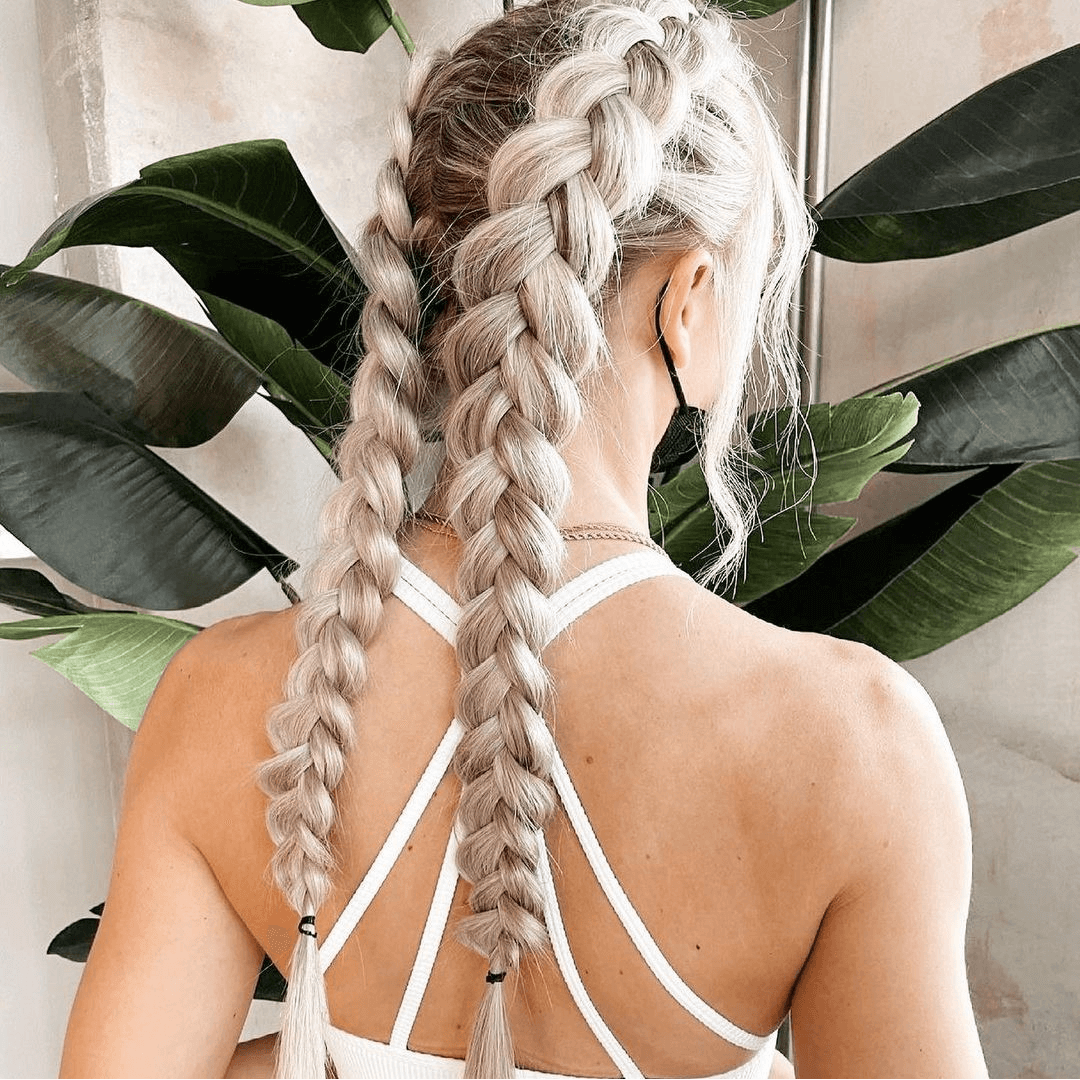
Two Dutch braids on thick mid-back hair should not look this tidy. Ash blonde braided hair is a salon job: weaving two chunky braids down a layered cut so the taper stays even needs a steady hand and a mirror you can turn your head in. Straight, thick texture braids cleanly. Fine hair slips out by braid two. The length helps: mid-back gives each braid enough rope to look deliberate, and no bangs means nothing to fix by noon, which is half the reason this lands now. Book it. Not a bathroom-mirror job.
Dark Brown Voluminous Blowout with Curtain Bangs

One mirror, a round brush, and hair that finally holds some air under it. Curtain bangs dark brown hair works hardest on a layered mid-back cut, where the volume sits in the layers instead of hanging flat. The shape flatters long faces and square jaws, because the curtain bangs split at a middle part and sweep outward, softening a wide forehead and adding width where a narrow face needs it. Round faces should pass. That outward sweep hands them width they did not ask for. Same for fine, straight texture cut without layers, which drops by mid-afternoon and leaves the bangs parted like a shrug. With layers and a soft middle part, this blowout suits most anyone who owns a round brush.
Platinum Blonde Collarbone Waves with Curtain Bangs
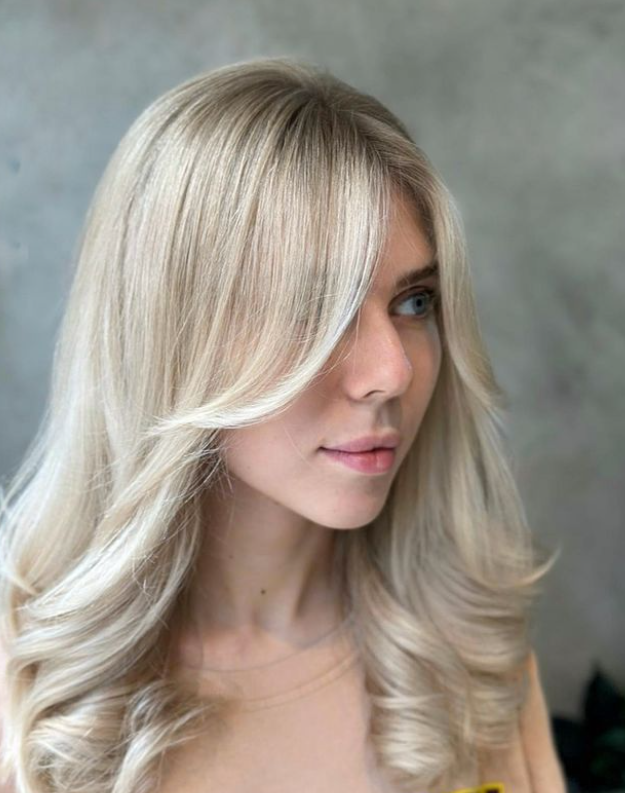
Confession: this one fights fine hair. Platinum blonde curtain bangs are built, not cut and left alone. The collarbone length gets layered so the ends move, the bangs are cut to graze the cheekbone, and the round brush does the real work: lift at the root, over-direct the bang section away from the face so it dries outward. Fine, straight texture drops flat within a day, and the wave pattern collapses at the collarbone first, because that is where length weighs most.
Sleek Dark Brown Uniform Length
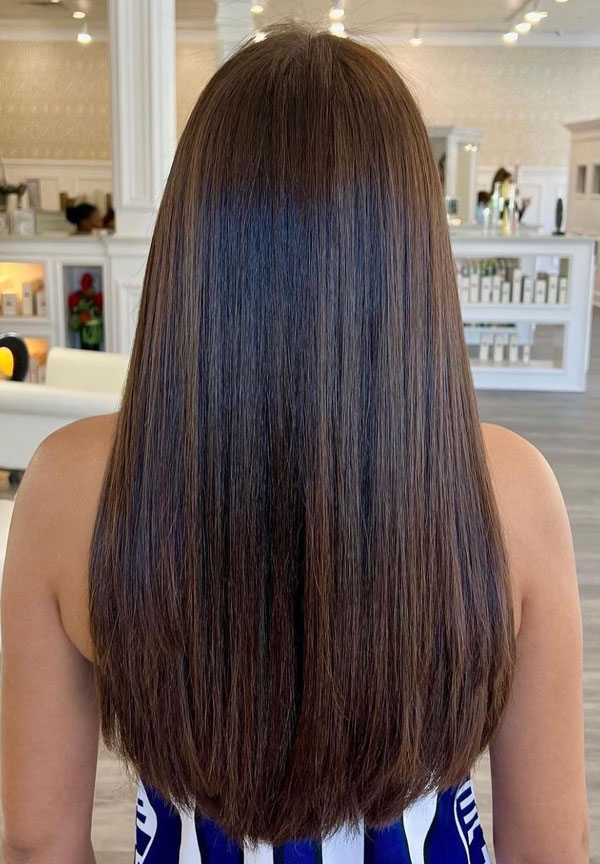
How long does sleek actually hold before real life gets to it? That is the whole question with sleek long dark brown hair cut to one uniform line at mid-back. The shape is mostly a single length with long layers underneath doing quiet work, so the perimeter reads as one clean slice from the back view. No bangs, middle parting, straight and medium density. A flat surface hides nothing: every uneven end shows, and that is the trade. Fifteen minutes with a flat iron and a heat protectant keeps it deliberate. Skip the iron on a humid day and the same cut stops looking like a decision you made. There is no second option with uniform length.
Mid-Back Dark Brown Layers with Soft Waves
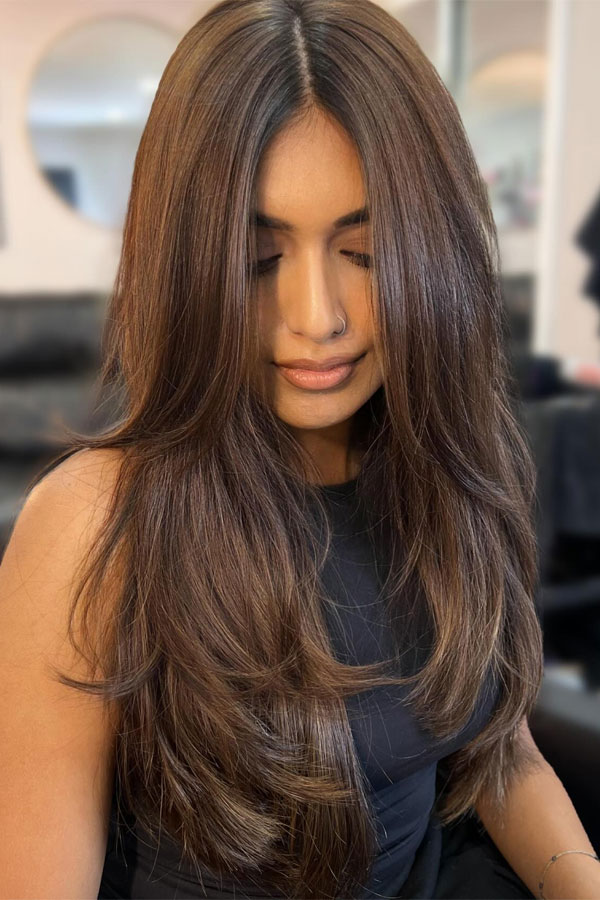
Day one of a blowout is not the test. Day four is. Long layers dark brown hair cut to mid-back with soft waves holds its shape because the layers are stacked through the lower half, not the crown, so the bend sits where the weight already falls. Straight, thick texture is what makes this work. Fine hair doing the same thing collapses into a triangle by the second day; thick hair keeps the volume even after a night’s sleep. No bangs, middle parting, subtle highlights catching the front where you actually see them.
Twenty minutes with a round brush gets the waves, and they survive a pillow without much fuss. The grow-out is where this cut earns its keep: soft layers blur the line as they drop, so week nineteen still looks like the plan rather than a lapse. Book a trim every eight to ten weeks and the shape stays. Stretch it to twelve and the ends start reading thin while the middle stays full, which is a ratio nobody asks for.
Choppy Ash Blonde Layers with Full Fringe
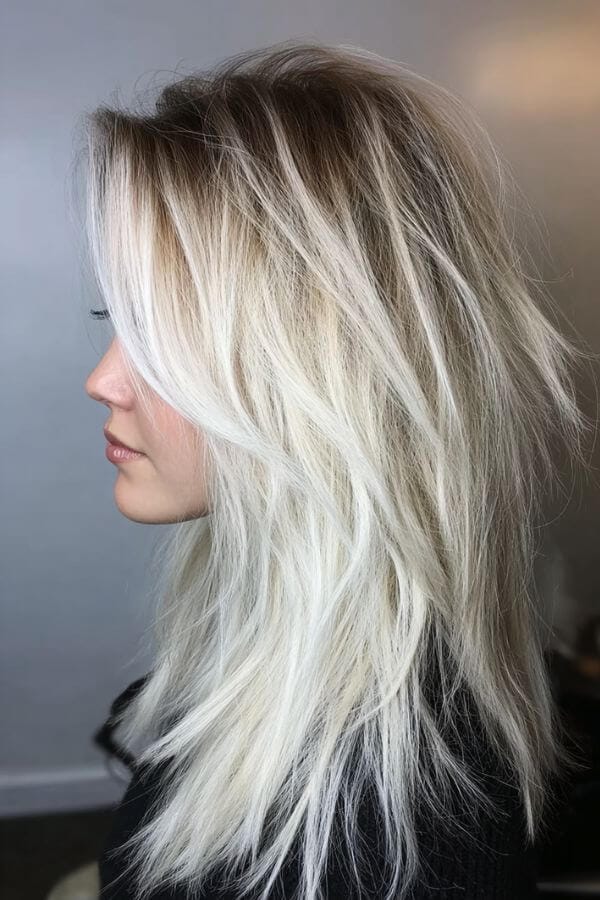
This is a cold-weather cut, and it knows it. Choppy layers ash blonde with dark roots look best in low, gray light, which is most of November, because the texture has somewhere to go without humidity pulling it flat. The cut itself is all separation: mid-back length with pieces taken at different angles, so a wavy, fine texture can look built instead of thin. Then the full fringe, blunt across the brow with enough weight to sit flat. Middle parting, slightly messy styling, fifteen minutes of scrunching and separating. For a party, a first date, any night where the plan is a dark room and a camera, this earns its place. Spring would ruin it.
Thick Dark Brown Sculpted Layers

Wet hair, a middle part, one clean section combed forward, and the cut starts at the back of the head rather than at the ends. Thick hair mushrooms under stacked layers, so the technique here is vertical: the stylist lifts each section straight out and slides the blade down the length, removing weight from the interior instead of the surface. That is how sculpted layers dark brown get their separation, each one a distinct shape instead of one blunt mass. The length stays at mid-back. Nothing comes off the baseline until the shape can stand on its own.
Texture decides the rest. Thick, straight hair with a bend at the ends holds a carved line; finer hair gives the layers less to grab. The blowout is where the shape arrives, rough-dried, then a round brush through each layer so the ends turn under and the surface stays smooth. No bangs, and a middle part, which keeps every layer visible from the crown down. Ask for the shape, not the inches.
Ash Blonde Twisted Updo with Loose Strands
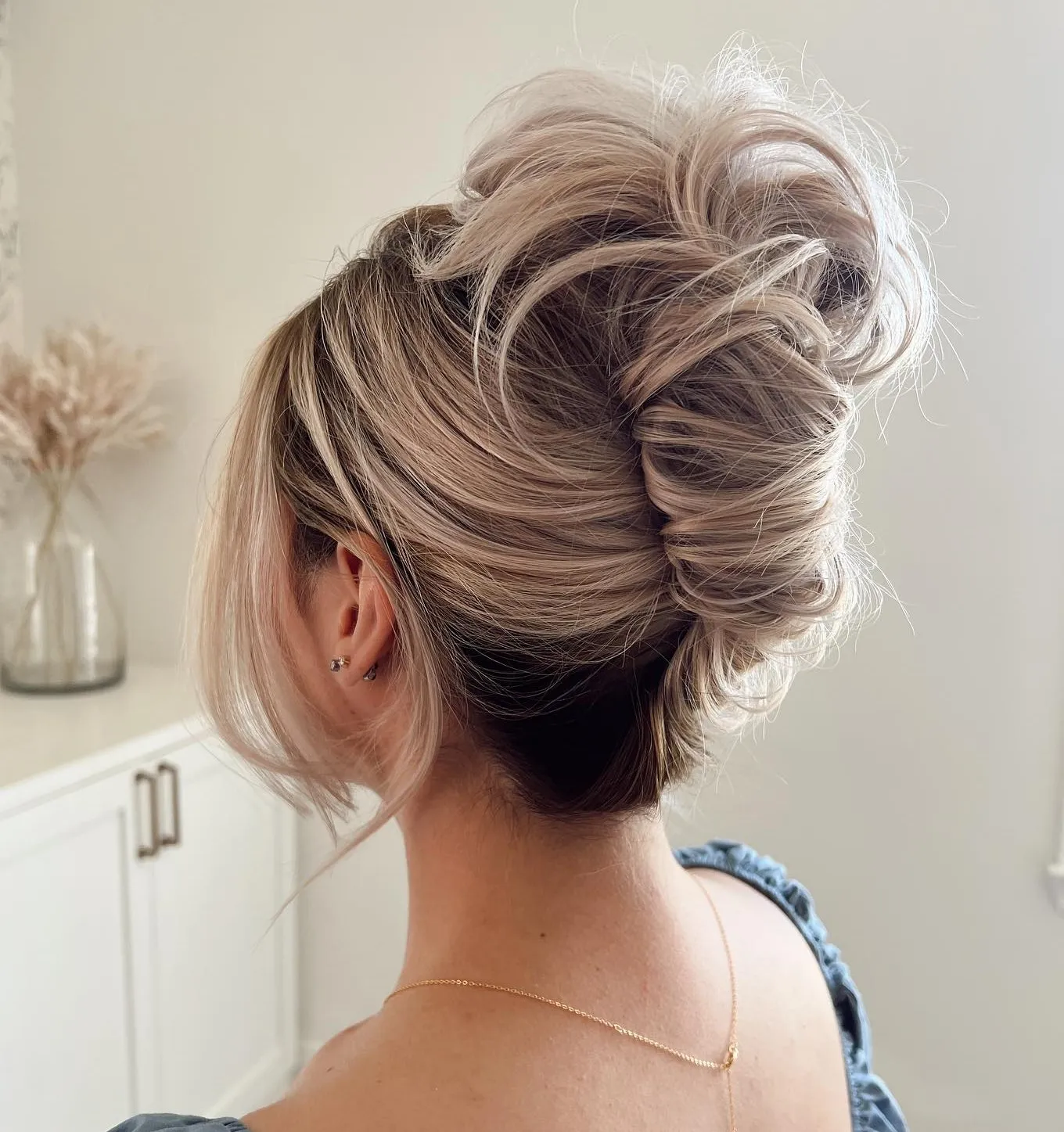
Gut reaction: I would not fake this at home. The mistake is treating an ash blonde updo like a ponytail you twist and pin, when the volume in a voluminous twisted updo comes from sectioning, backcombing at the root, then pinning each twisted piece flat against the head. Wavy, fine hair at mid-back takes that shaping, layers and all; ironed hair fights it. No bangs, so the loose strands do the framing. Second-day hair holds best. Twenty minutes minimum, or hand it to a stylist.
Thick Black Hair with Curtain Bangs
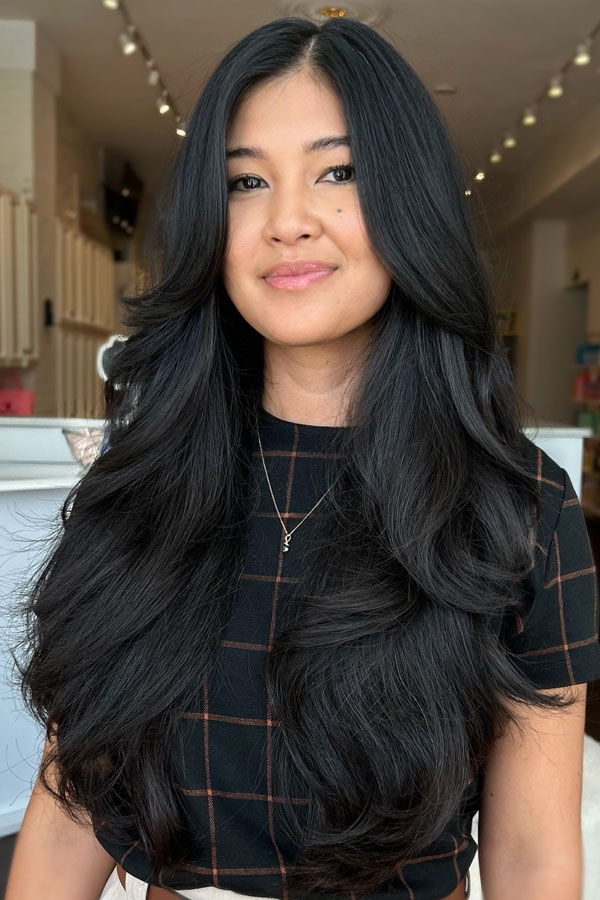
Confession: I resisted curtain bangs for two years because I was sure thick hair would drag them flat. It does not, as long as the middle part is set and the bangs are cut long, sweeping from past the brow outward. With curtain bangs thick black hair becomes a weight problem rather than a shape problem, which is why the layers underneath matter as much as the fringe itself. On straight, dense mid-back hair the whole thing hangs heavy, and the blowout is what gives it swing instead of a slab. Order of operations:
- Rough-dry to eighty percent with the middle part fixed.
- Round-brush the bangs outward, not down.
- Cool shot on the ends before you touch them.
Ash Blonde Collarbone Layers with Side Bangs
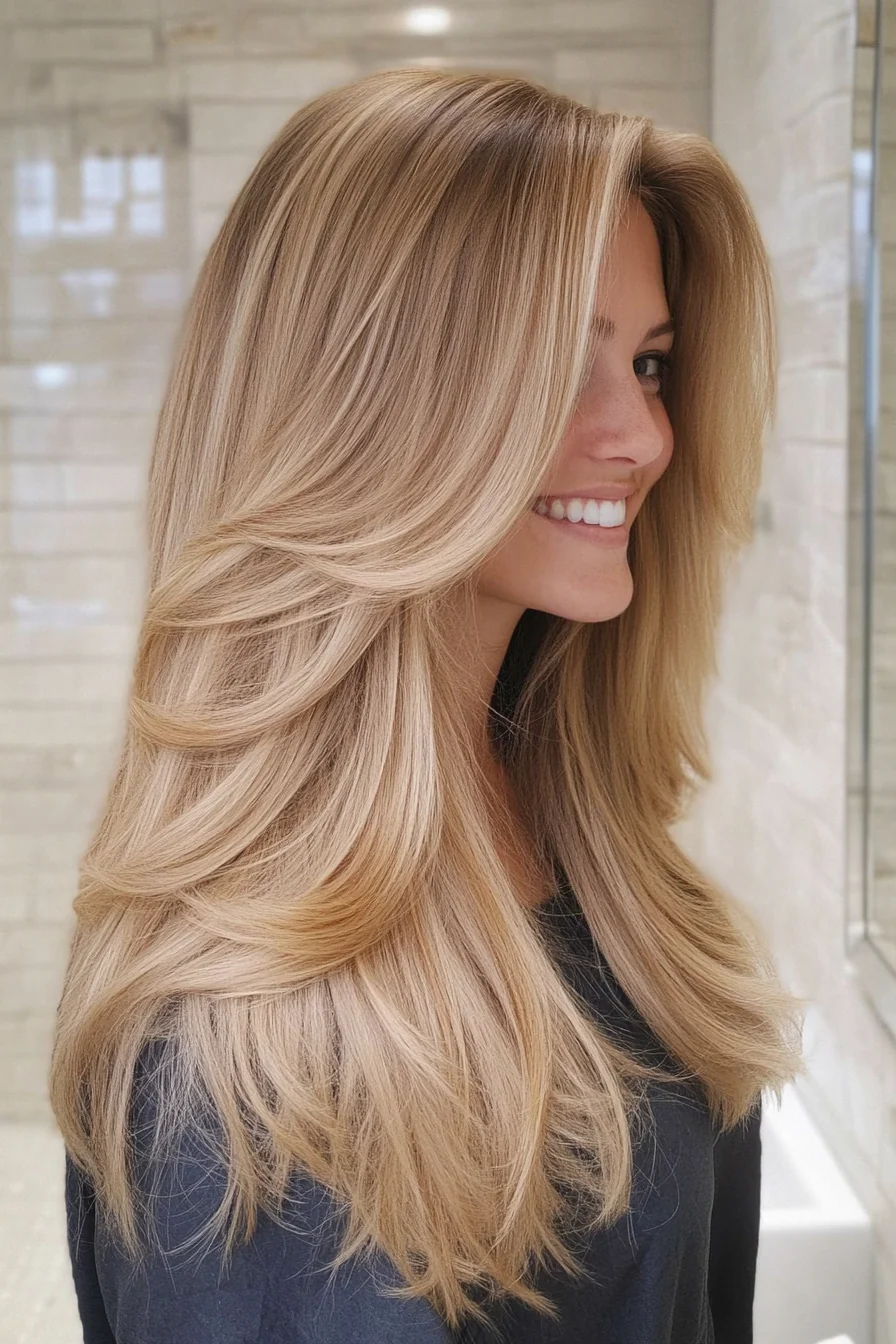
Collarbone layers only work when the shortest one sits below the chin, and this cut keeps it there. A side part feeding into ash blonde side swept bangs gives a round face a diagonal to follow rather than a hard frame, while a long oval picks up softness at the cheekbone. Straight, fine to medium texture is what lets those layered sections separate instead of blur together. Same shape on thick hair turns into a triangle by week two. Square jaw, skip the blunt version.
Vibrant Copper Blowout with Face Framing
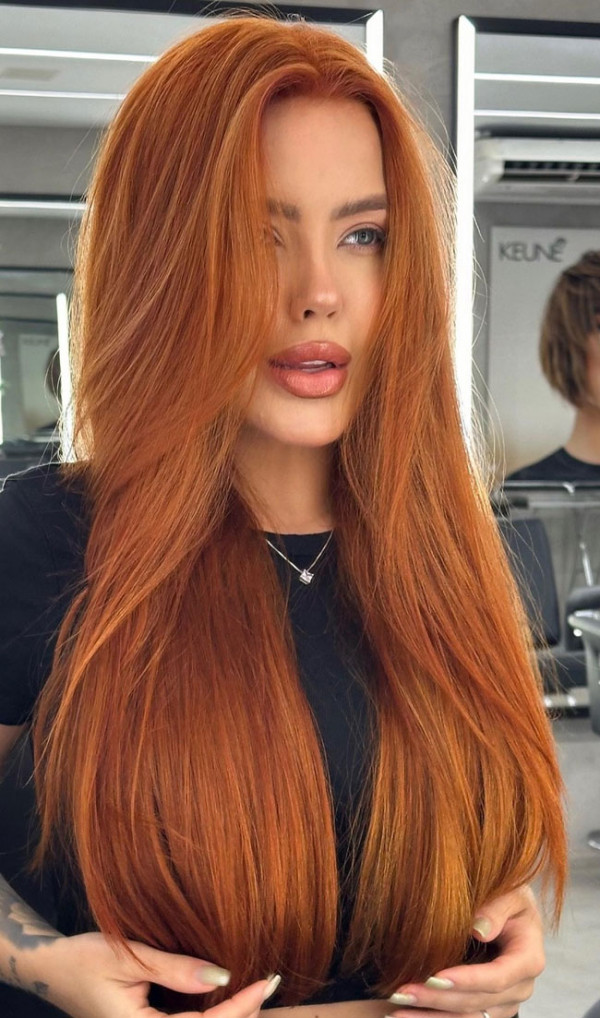
Can you live with the same color every six weeks for as long as you keep it? That is the real question with vibrant copper face framing, because copper is the shade that shows every rinse, every sunny day, every week you push past your appointment. The cut itself is layered through a mid-back length, with the shortest pieces starting at the cheek and the rest falling past the shoulder. Thick, straight texture blow-dries into the volume the shape needs.
Wear it Monday and it is glossy and round. Wear it Thursday after two washes and the midsection is flatter than the root, so the blowout is a daily job, about twenty minutes with a round brush rather than a ten-minute rough dry. Color is the heavy part: a gloss every four to six weeks keeps the tone, and if you stretch that you get a duller, browner copper rather than a faded one. Fine for a committed person. Not for a low-maintenance one.
Brunette V-Cut Layers with Soft Waves
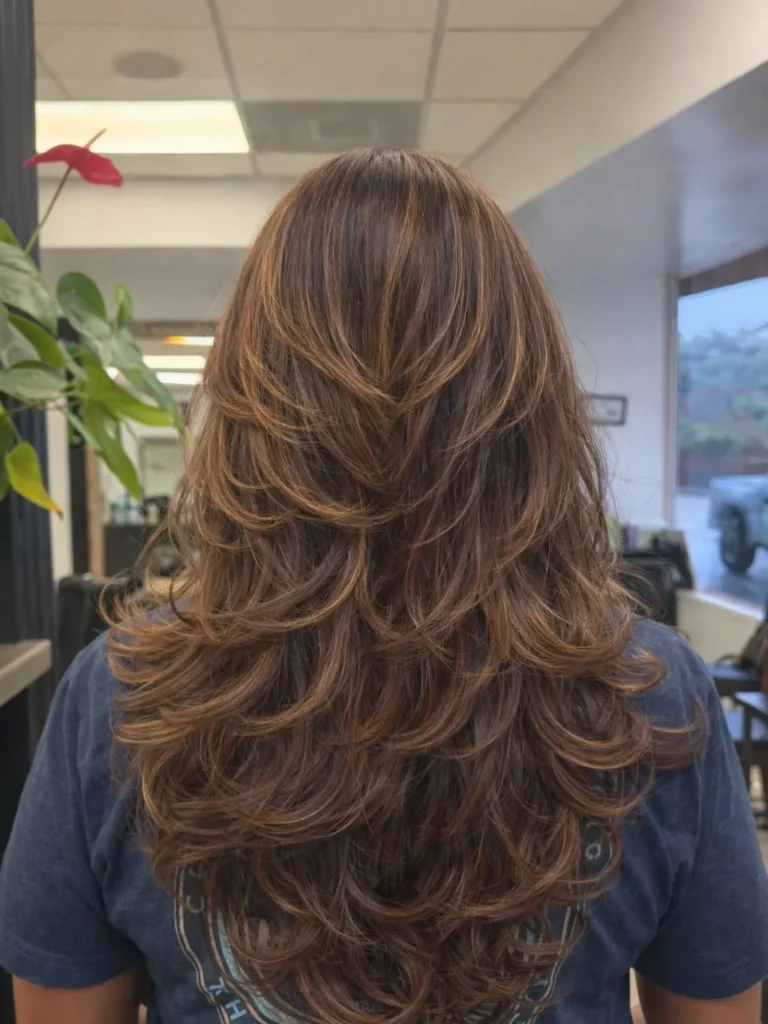
Pick the V over the blunt baseline if you want the ends to move. A v-cut layers brunette shape puts the longest point at the center back and shortens the sides, so a mid-back length reads as soft waves instead of a curtain with a straight hem. Against a blunt cut, which swings as one solid piece, the V hides plenty. Against a soft U, it is the bolder pick: more shape at the sides, more movement through the bottom third. Medium-density wavy texture carries it best, since the V only shows when the layers separate. Fine hair can wear it, though the taper can look thin at the tip. No bangs keeps the vertical line clean. Want even ends? Stay blunt. I would take the V.
Dark Brown Curly Updo with Side Bangs
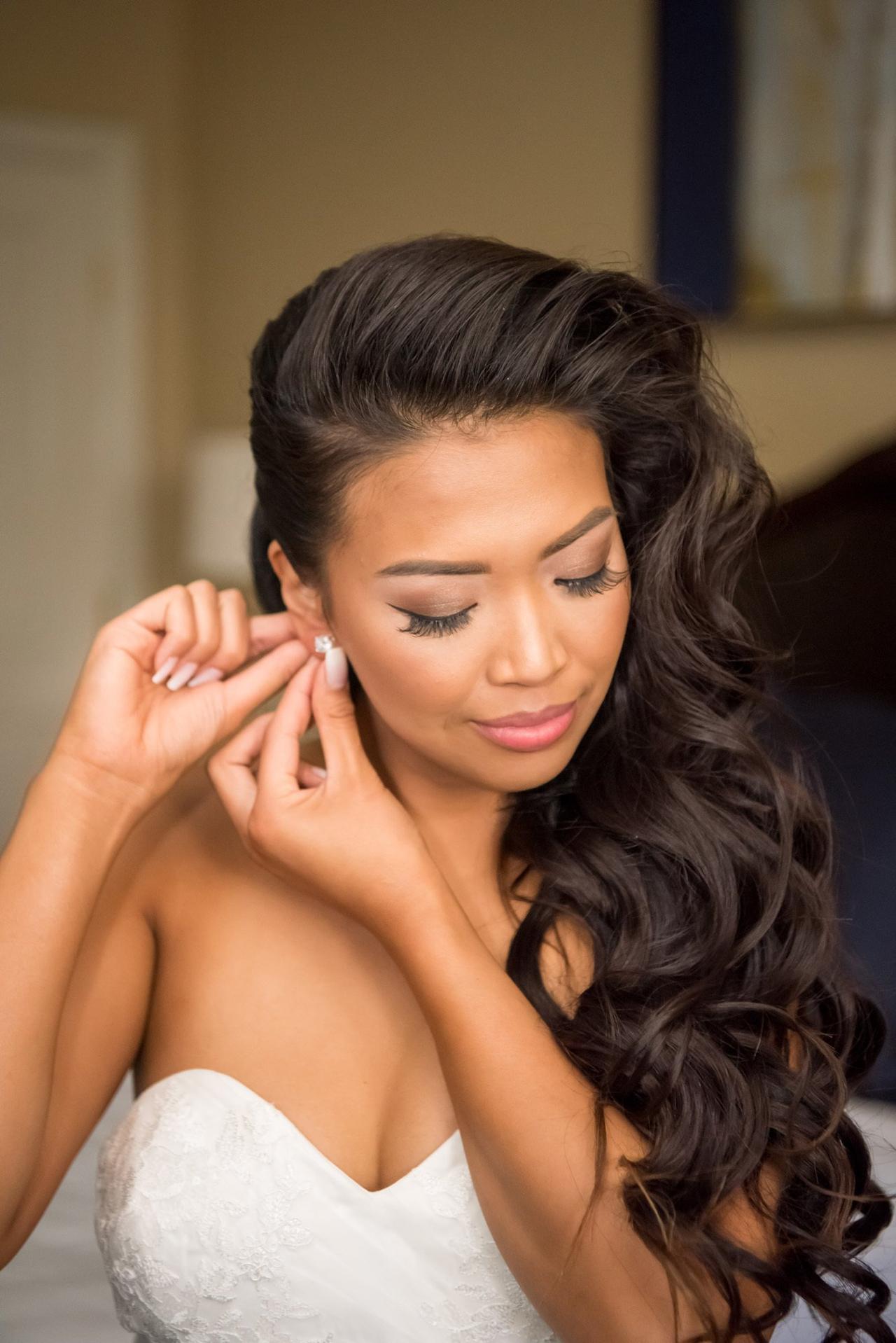
I will admit I have abandoned more updos halfway through than I have finished. This one survives because the curl does the work. Long dark brown hair, no layered shape to speak of, gathered low and to one side, with curly updo side swept bangs, reads as glamorous and full. Honest catch: wavy, fine hair fights the shape. The curls drop, the bangs separate, and you are left pinned and slightly fuzzy. Texture spray on the bang section, then a light hold. Thirty minutes, and frizz is the enemy.
Final Thoughts
Two summers ago I sat through a root shadow and swore off copper for good. 19 ideas later, I have a consultation booked. Not for the bleach, for the collarbone layers with face framing, which is the one cut here that works on fine hair without an hour of round brushing every morning. My roots still show at week five.