
I keep seeing royal blue hair in the chair next to mine. Not the shy, washed-out version that fades to green by week three, but the kind that makes you double-check the saturation on your phone. It is a commitment, and it is worth it.
These 27 ideas cover the full spectrum: low upkeep to high, short crops to waist-length waves, salon-only techniques and a few you can pull off at home. Whether your hair is fine, thick, straight, or coily, there is a version of royal blue hair that will not fight your texture. I have tested enough bad dye jobs to know which ones actually hold.
Solid Royal Blue Long Layers
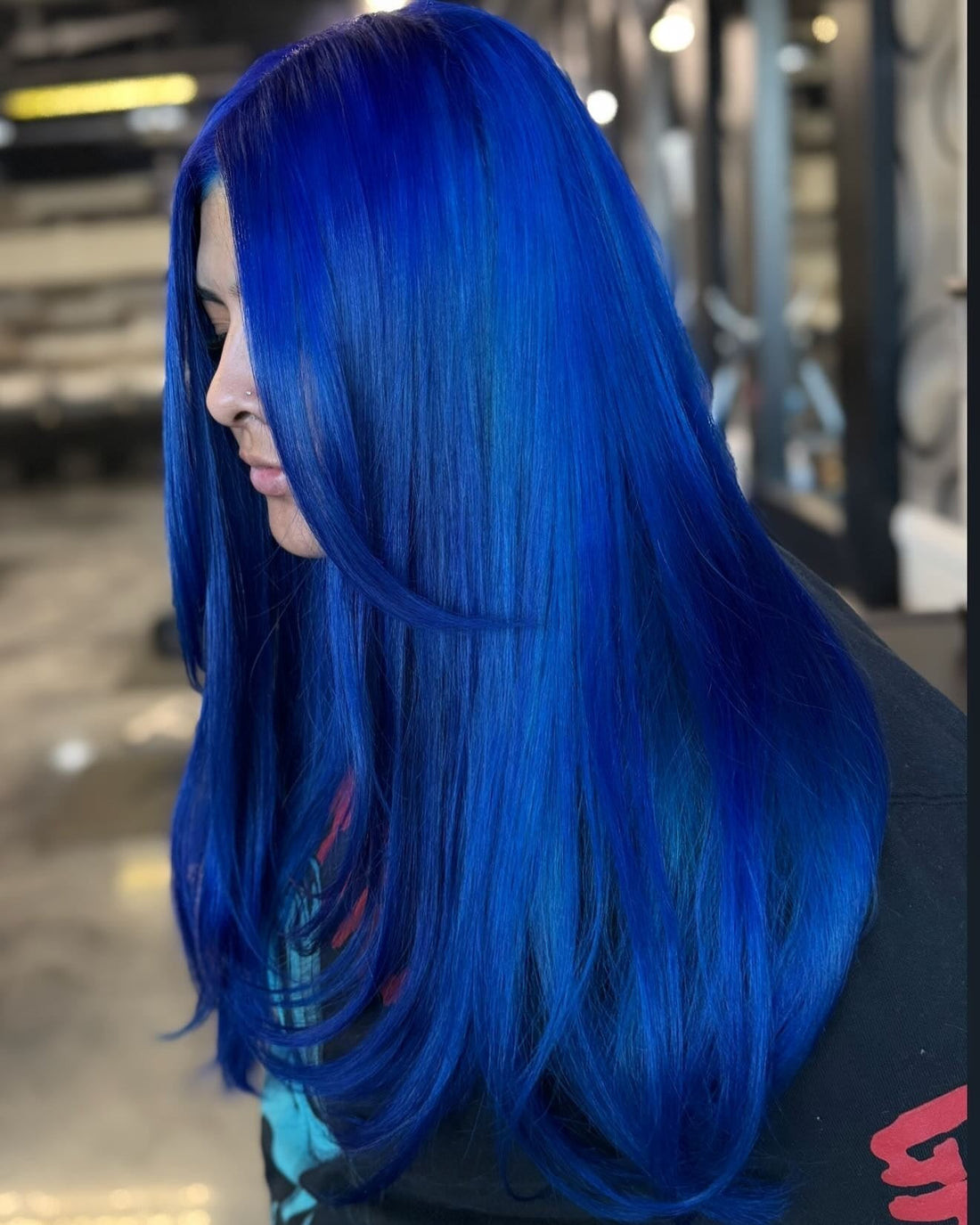
Side-swept bangs and long layers on fine, straight hair create a sleek line that shows off solid royal blue hair. The uniform color reads clean, almost graphic, against the straight texture. But fine hair at this length can go flat by 4 pm, and the blue needs a saturated base to start with. A blunt baseline helps the color hold visual weight. The bangs sweep across, not down, which keeps the face open.
Brown Base With Royal Blue Streaks
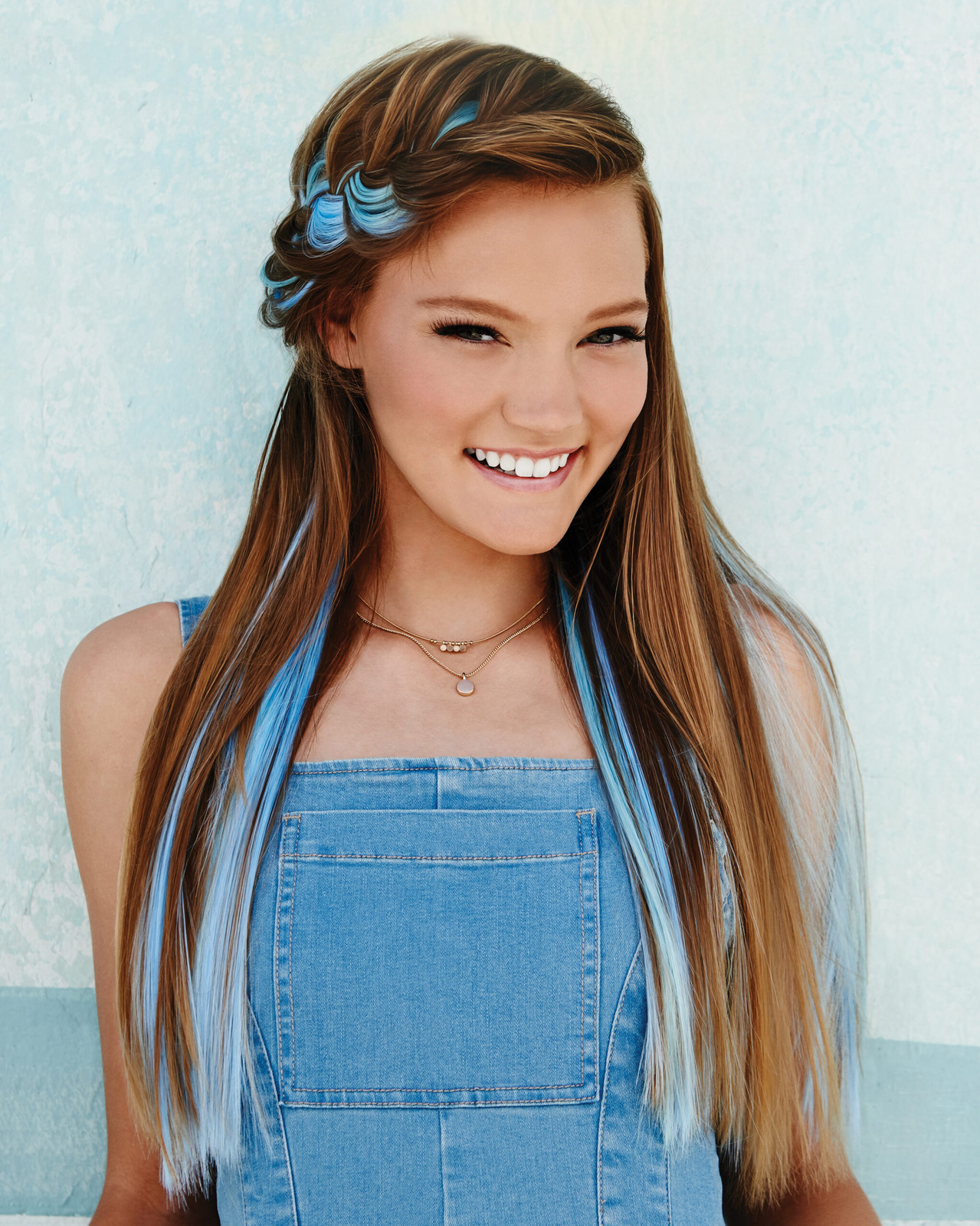
Can a brown base make blue look more interesting? It can, when the royal blue highlights are woven into braids. The technique is a partial weave: the stylist takes thin sections, lightens them, then applies blue. The brown stays warm underneath, so the blue reads as accent, not costume. Straight texture keeps the lines clean, and the braids add grip for the color to sit on. No bangs here, just a side part that lets the streaks fall forward.
Upkeep is the catch. The blue streaks fade faster than the brown base, and they need a toner every few washes to stay bright. The braids add about 15 minutes to styling. But the grow-out is softer than solid color, because the brown blends with the root.
Thick Wavy Royal Blue
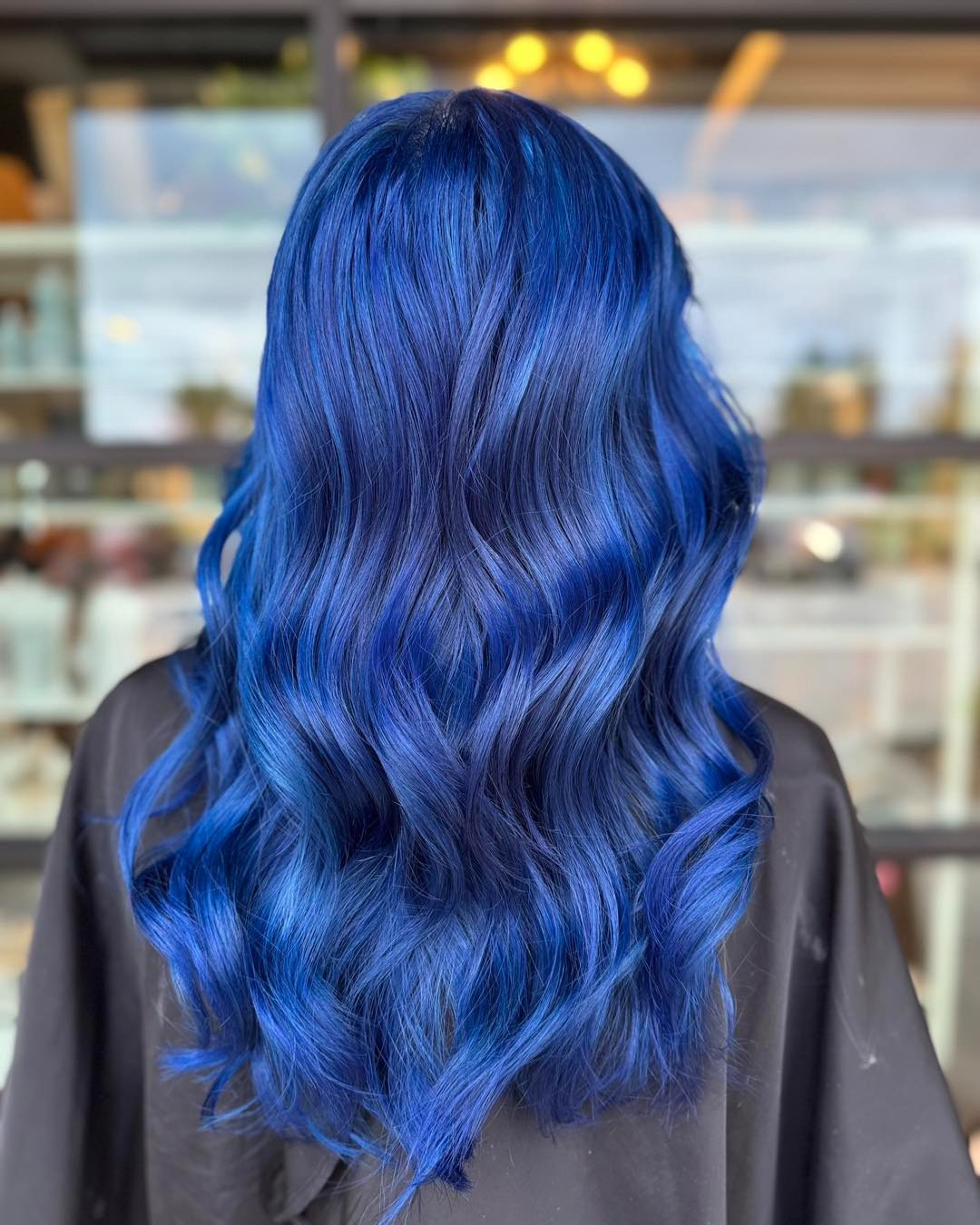
This one holds. Thick, wavy hair at mid-back length with layers and a middle part, all in royal blue wavy hair. The texture gives the color depth, and the waves catch light differently than straight hair does. No bangs, which is smart for thick hair that can get bulky at the front.
Styling steps are short but specific. Wash, apply a texturizing spray, diffuse on low heat. The diffuser keeps the wave pattern even. Air drying works but takes hours on thick hair. The layers prevent the bottom from getting too heavy. The color needs salon upkeep every four to six weeks, but the wave pattern hides a week of root growth better than straight hair does.
Blue Ombre Loose Waves
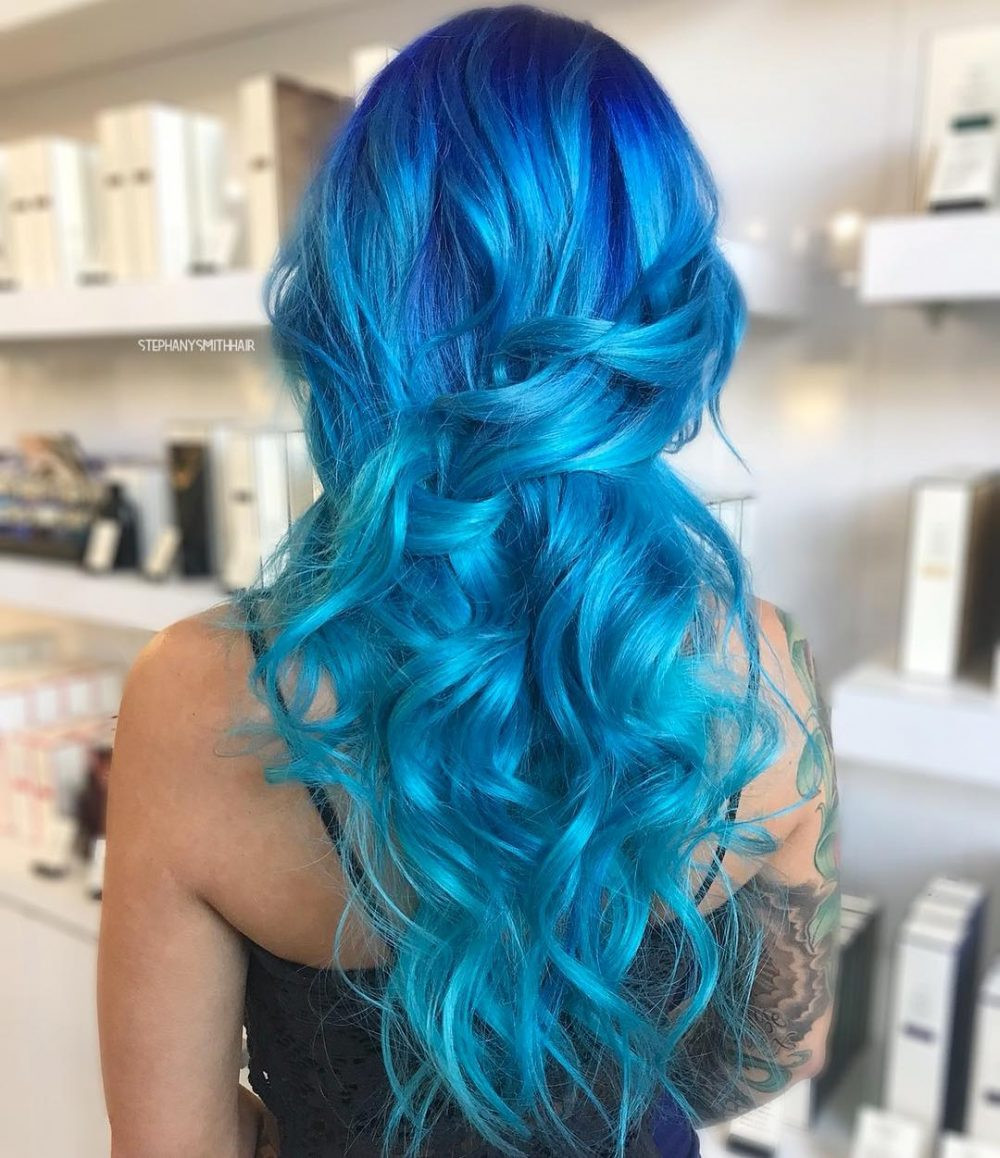
Summer light hits this and it shifts from dark navy at the root to bright cyan at the ends. Blue ombre hair with long layers, a middle part, loose waves and a braided accent. The ombre transition is the whole point: it saves the roots from frequent touch-ups because the dark base grows in naturally. Thick, wavy texture helps the gradient read soft, not striped. No bangs, which lets the color travel uninterrupted from crown to tip. The loose waves take about 20 minutes with a large-barrel iron. This is a festival or vacation color, not a Monday-morning meeting color.
Dark Base With Subtle Blue
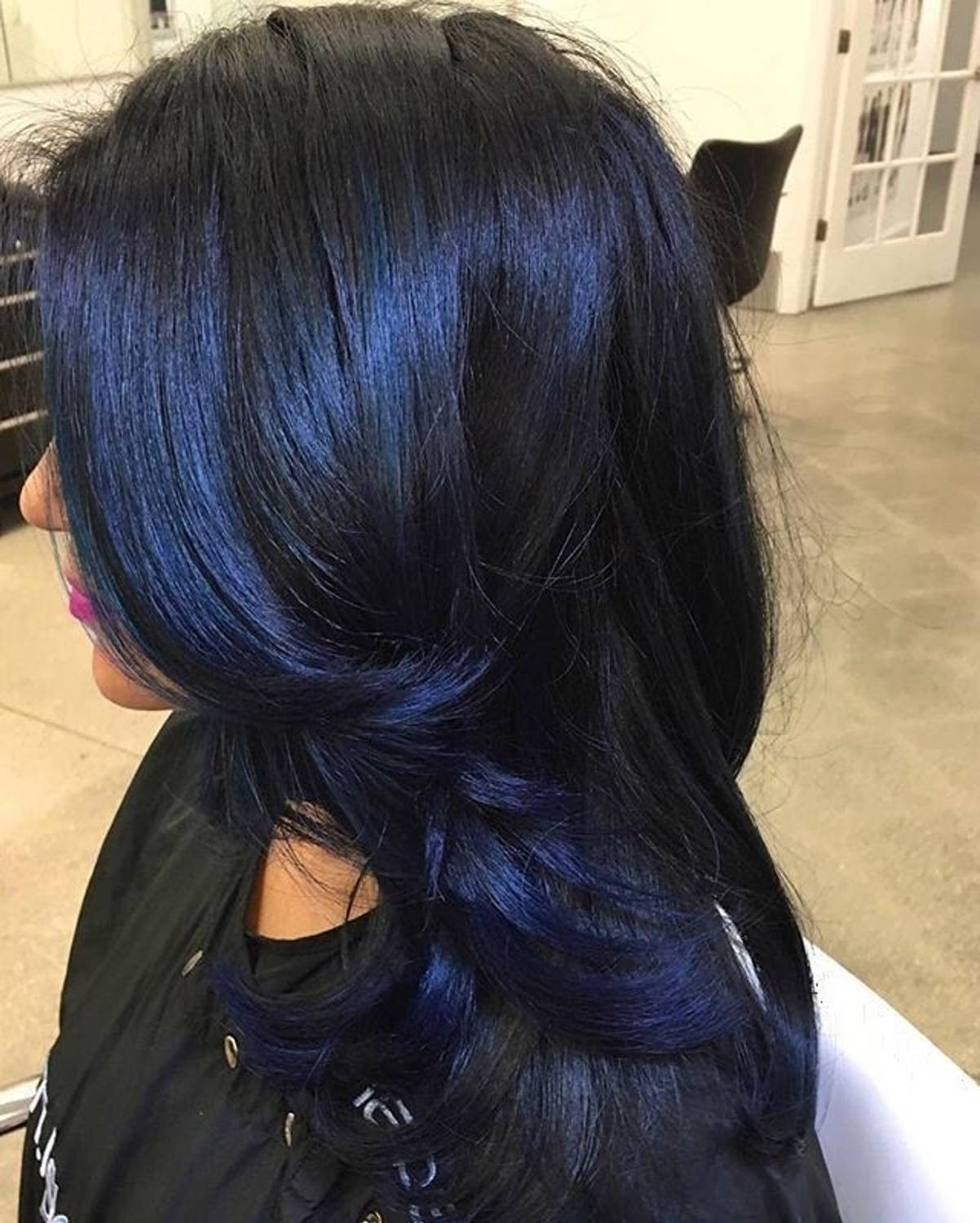
I was skeptical. A dark base with deep blue highlights can look muddy if the stylist doesn’t lift the sections enough. But shoulder-length, side-parted layers with thick, wavy texture and voluminous curls give the blue room to catch light. The deep blue highlights are subtle, almost hidden in the dark base until you move. No bangs, which keeps the weight at the ends where the color sits. The honest downside: if your natural base is very dark brown or black, the blue can read as a sheen rather than a highlight. Ask for a partial lift before the blue goes on.
Collarbone Royal Blue Blowout
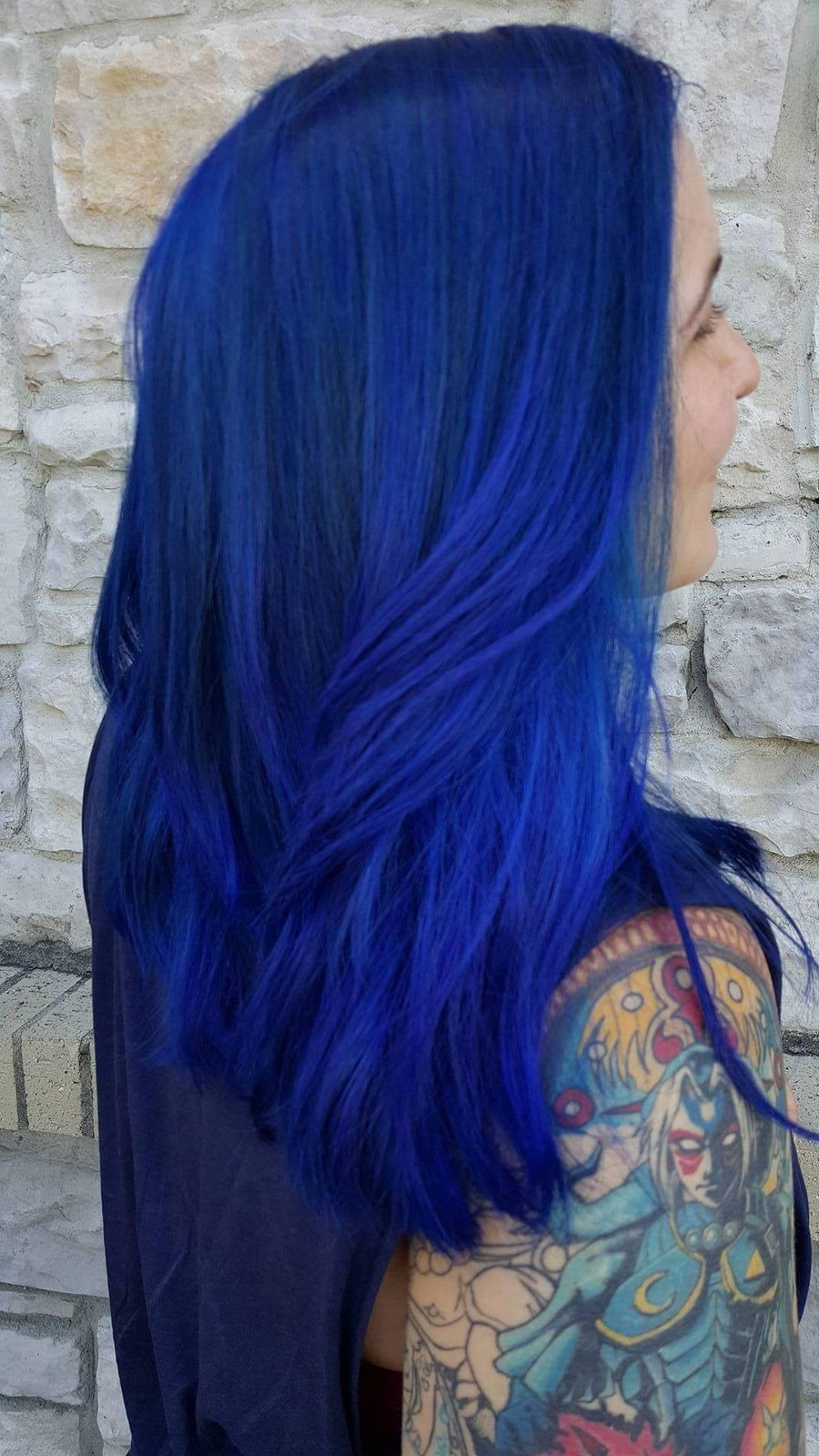
That rich royal blue collarbone length takes about 20 minutes to blow out, and that is if you know what you are doing. The layers are cut to stack at the nape and release at the collarbone, which means a round brush has to follow every section. No bangs to tuck or pin, just the middle part and the wave pattern.
It is a solid color, no root shadow, no peekaboo streaks. That means the grow-out line shows at week four, and by week six you are booking the chair again. The texture holds the wave for about a day, maybe two if you sleep on a silk pillowcase. Not a low-maintenance length, but the finish is worth the time.
Pixie With Royal Blue Fringe
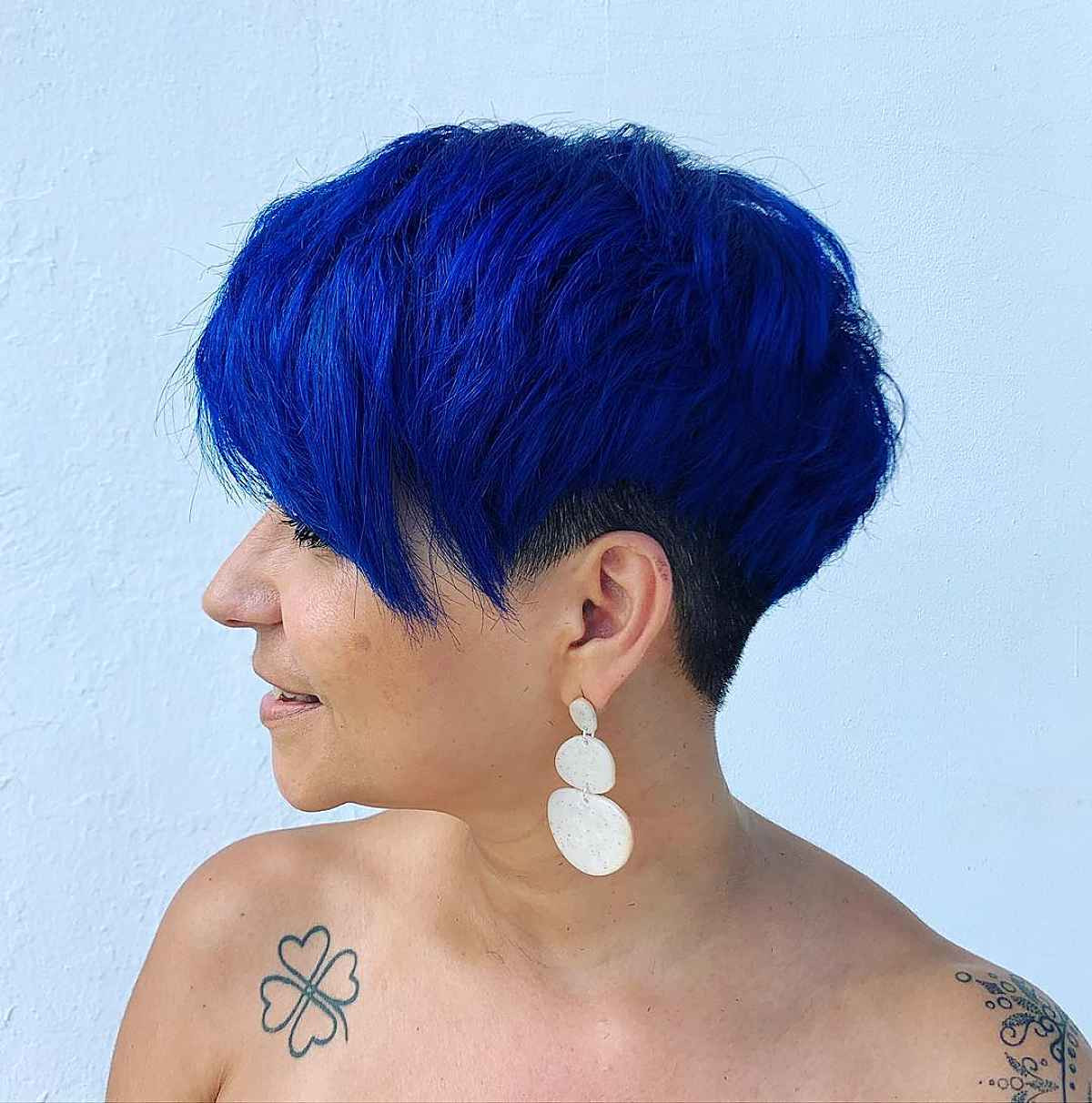
Who does a royal blue pixie cut actually flatter? Anyone with a strong jawline and the patience for a trim every three weeks. The elongated fringe lands at the brow bone, side-parted, and the rest is cropped close at the ears and nape. Straight, medium-density texture works best here, because the cut relies on clean lines, not volume. This is not a bathroom-mirror job. Book the salon for the cut and the color both, because the bleach has to hit the fringe without overlapping the short sections. One wrong snip and you are waiting a month for it to grow back.
Black With Royal Blue Streaks
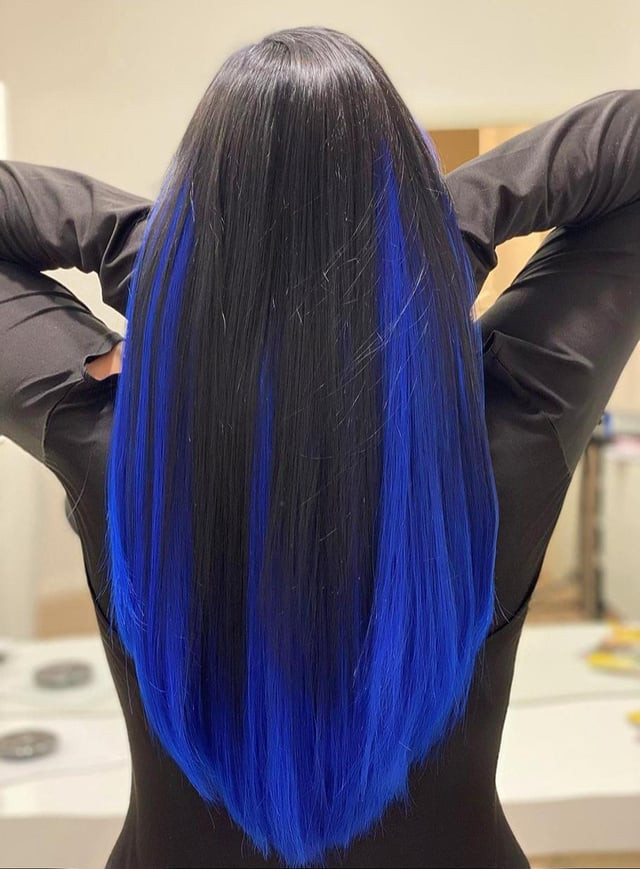
I wanted color without the full commitment, so I asked for royal blue streaks on my black base. The stylist wove thin sections from the mid-lengths to the ends, leaving the roots dark. Straight, thick texture, mid-back length, no bangs, a middle part that lets the blue peek through on both sides.
Here is the honest downside: the blue fades faster than the black. By week three, the streaks look more like a washed-out teal than royal blue. A toning shampoo helps for about two washes, then you are back to faded. I still like the effect, but I have learned to schedule a gloss appointment at week four. The contrast is sharp when it is fresh, and that is the week I take photos.
Royal Blue Purple Bob
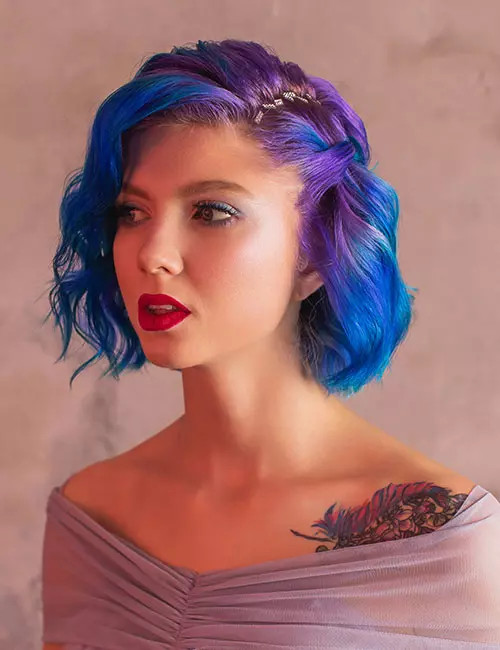
A blue and purple hair blend beats a split dye every time. The bob hits at the chin, side-swept bangs, loose waves with a braided accent woven through one side. Medium-density wavy texture, the color is a gradient from deep violet at the roots to bright royal blue at the ends. What to ask your stylist for: a soft melt, no hard line between the two tones, and the bangs cut dry so they fall exactly where the side part lands. The blend reads as one color shifting in the light, not two colors fighting for attention.
Collarbone Blue Waves
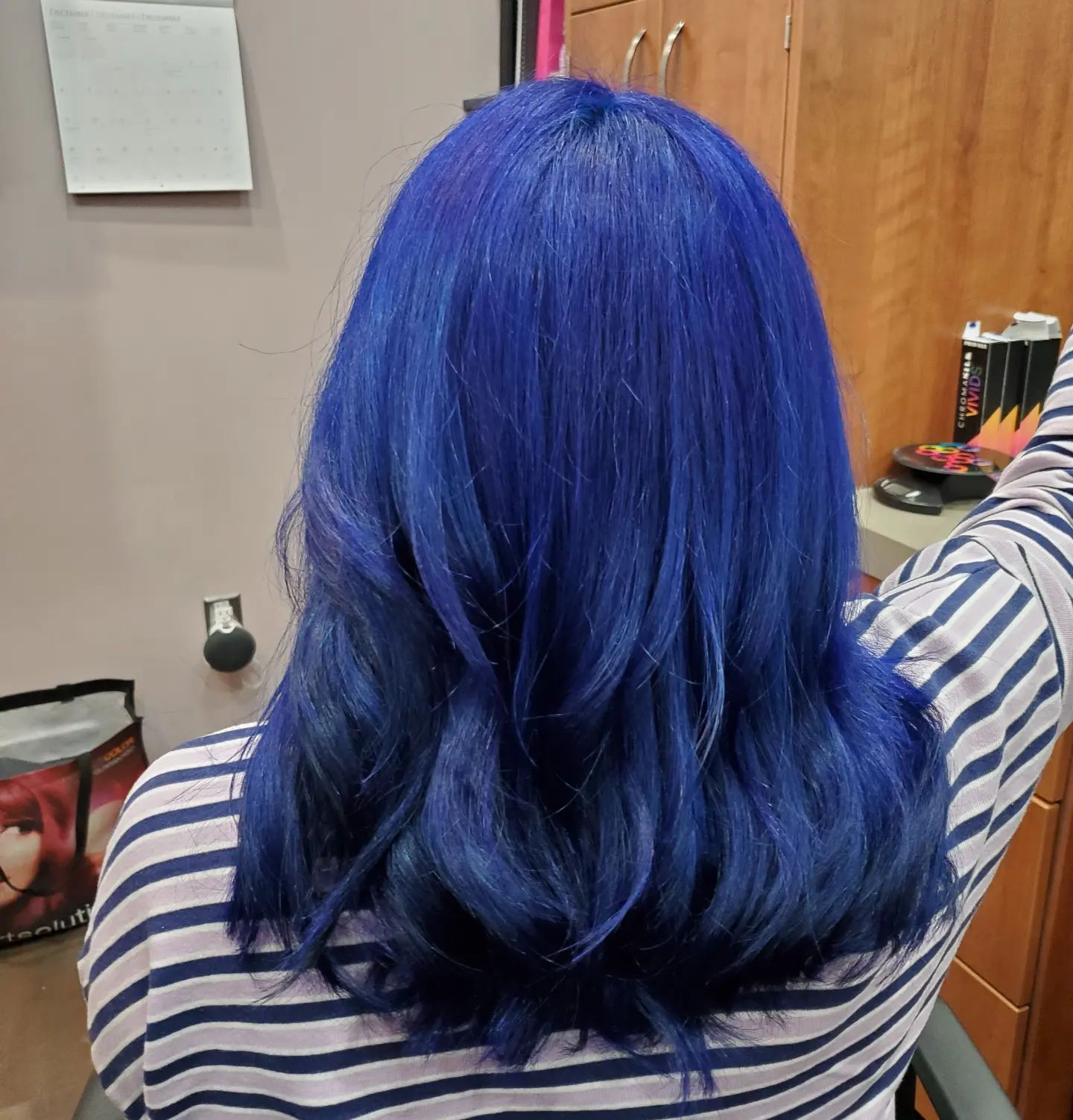
Here is what a real week looks like. Day one, the waves hold their shape from a large-barrel iron. Day two, they loosen into a soft S-pattern that still looks intentional. Day three, you are either refreshing with a curling iron or pulling it into a low ponytail. The collarbone length is forgiving that way, it tucks behind the ears without losing the line. Not a wash-and-go cut, but close enough for a Tuesday.
Mid-Back Thick Straight Royal Blue
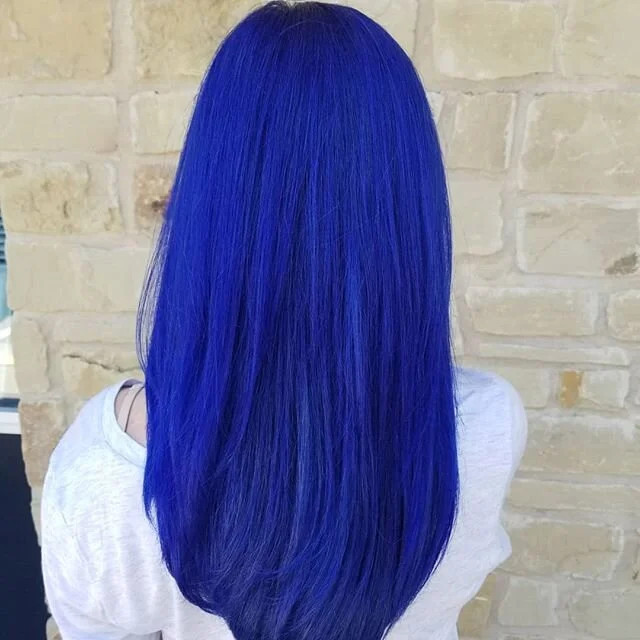
How do you get a uniform royal blue hair that looks this even from root to tip on thick, straight hair? It starts with a double process: lighten to a pale yellow, then deposit the blue. The cut is mid-back with long layers that stop above the elbow, no bangs, a middle part. The layers keep the weight from pulling the colour flat. The texture is straight, with subtle waves added after drying. The colour holds its saturation for about four weeks before the first fade shows at the ends.
Upkeep is the real story here. The grow-out line on a middle part is merciless — you see every half-inch of root by week five. A root shadow buys you two more weeks, but this is a colour that demands a salon visit every four to six weeks. The waves are a styling choice, not a necessity; straightening takes about 20 minutes with a heat protectant. The uniform royal blue hair reads richest when the light hits the full length, and that only happens if the colour is fresh.
Deep Blue Braided Hair
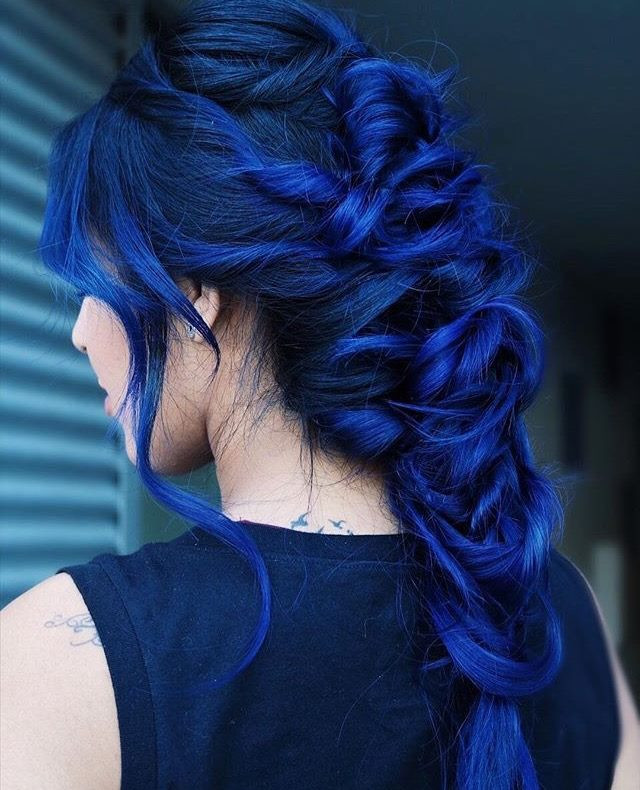
The braid starts at the crown and works down the back, each section catching the light differently. This is deep blue braided hair, a shade that sits between navy and midnight, with black roots that disappear into the weave. The cut is long, with face-framing pieces that break the weight at the cheekbones. The texture is wavy and thick, which means the braid holds its shape without slipping. A side part gives the braid more volume at the root. This flatters oval and heart-shaped faces best — the face-framing pieces soften a wide forehead. If your hair is fine or thin, the braid will look sparse. The colour depth is the whole point: the dark base lets the blue read as a secret, not a shout.
Textured Royal Blue Cut
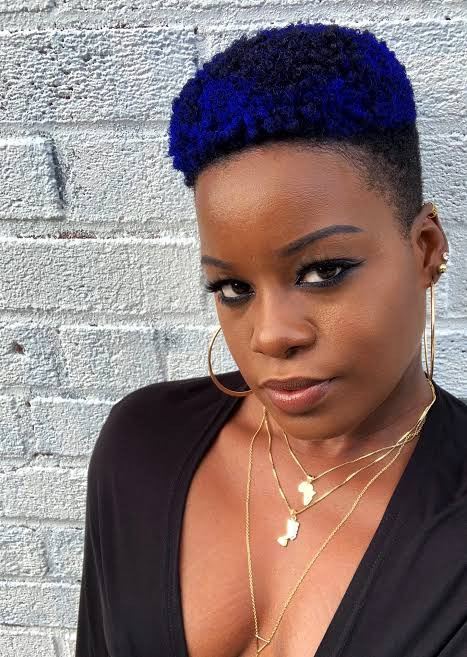
I will admit I was skeptical about shaved sides and a royal blue short cut together. Too much, I thought. Then I saw the precision: the shaved sides are clean, not aggressive, and the colour sits on the top length at ear level. The texture is coily and thick, which gives the cut a shape that holds without product. No bangs, no visible parting. The darker roots are intentional — they keep the blue from looking flat. This is a salon job, no question. The shaved lines need a steady hand and the colour needs a stylist who understands how lightener lifts coily hair. Book it, this is not a bathroom-mirror job.
Royal Blue Afro Hair
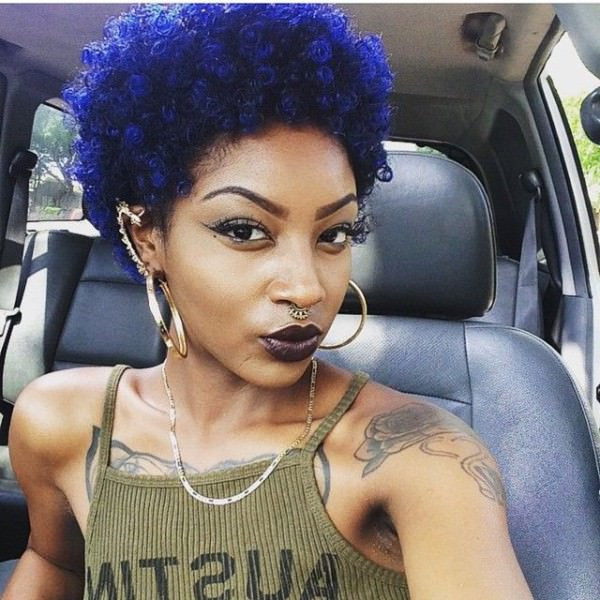
This is the look for summer. A royal blue afro at ear length, cut in layers that let the curl pattern breathe. The middle part splits the volume evenly. No bangs, the shape is the statement. The texture is curly and thick, and the colour is a solid royal blue from root to tip. This lands best at a pride event or a summer festival — places where the hair is part of the declaration. The layers keep the afro from turning into a triangle; they give it a rounded, intentional shape. The colour needs a salon every four to six weeks, and the curls need their usual moisture routine. The verdict: bold, specific, not for the hesitant.
Royal Blue Bob With Full Bangs
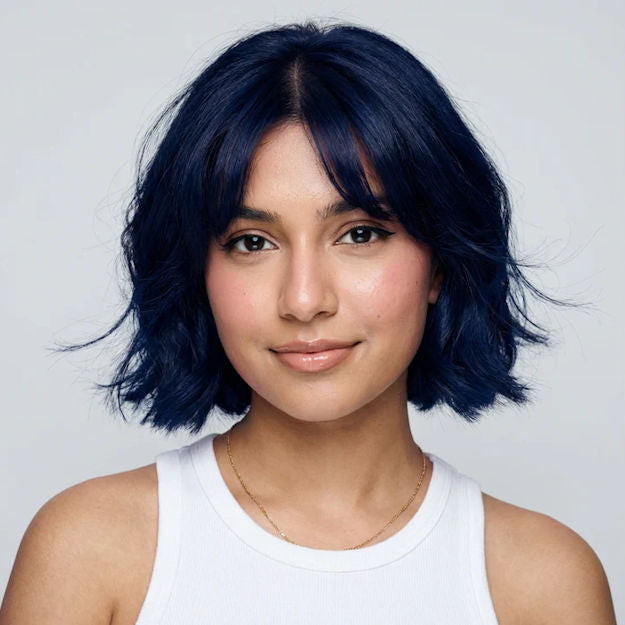
The fringe separates by noon. That is the honest downside of a royal blue bob with bangs on wavy, thick hair. The cut is chin-length, a blunt bob with full bangs that hit just above the brows. The middle part is hidden under the fringe. The texture is wavy, which means the bangs will curl at the edges unless you dry them with a round brush. Air-drying is simple — the bob dries fast — but the bangs will do what they want. The colour is a solid royal blue, vibrant and even. The honest downside: the bangs need a trim every three weeks, and the colour needs a salon every four. If you are not ready for that rhythm, skip the fringe.
Vivid Blue Waves With Wispy Bangs
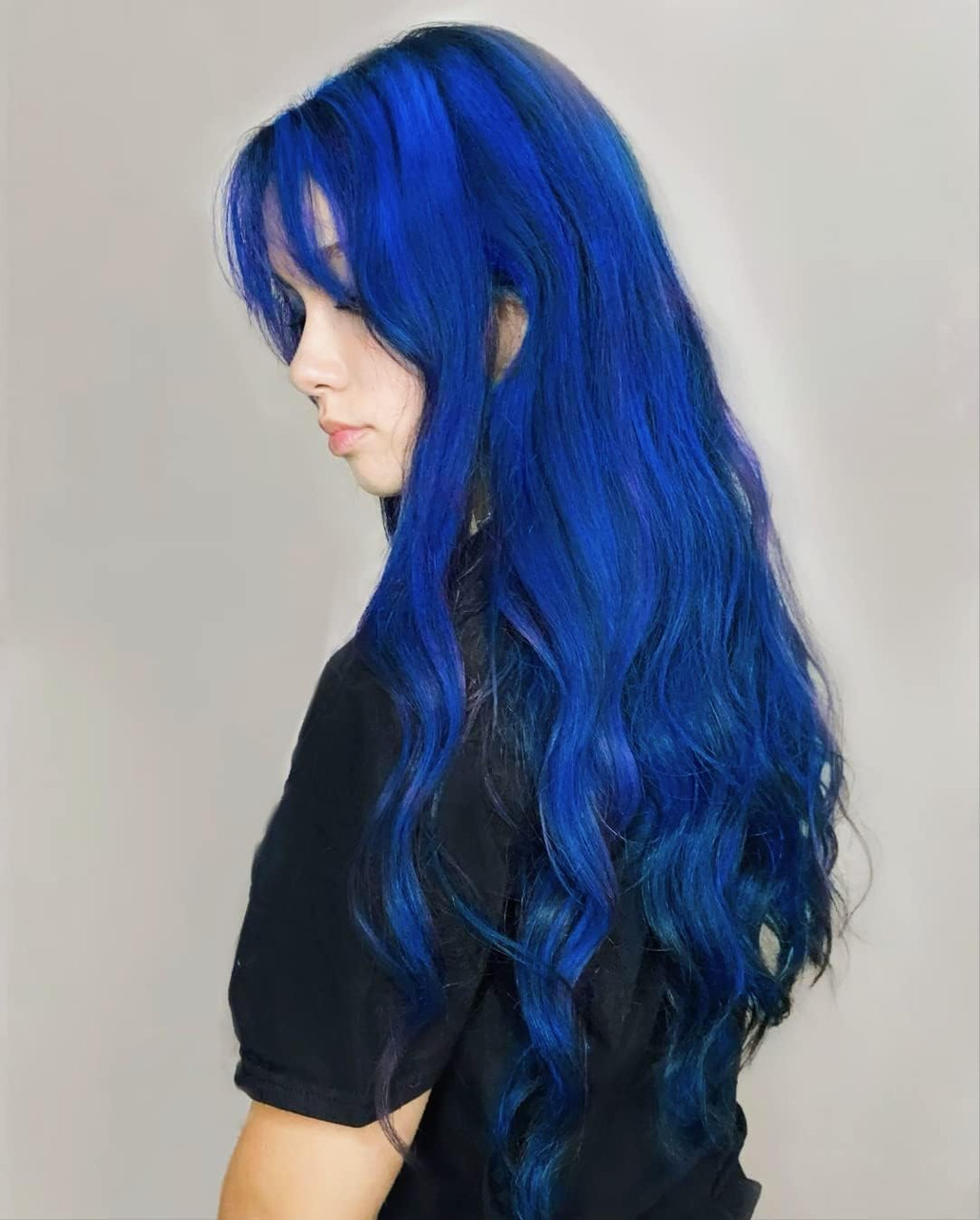
How much chair time are you actually willing to trade for a color this saturated? The vivid royal blue hair in this cut runs from root to tip, and the darker undertones mean the depth shifts as the waves turn. It’s a mid-back length with long layers that keep the thickness from weighing the wave pattern down, and the wispy bangs are the part that needs the most attention. They grow out fast, so plan on a trim every three to four weeks just to keep them feathering the way they do here. The loose waves themselves take about twenty minutes with a large barrel, but that is the easy part. The real commitment is the color: a blue this intense needs a salon visit every four to six weeks to stay this vivid, because the red tones underneath will start peeking through by week five. If you have fine hair, know that the saturation reads best on a thicker base, so this is a look I would book, not attempt at home.
Layers Wavy Royal Blue Collarbone
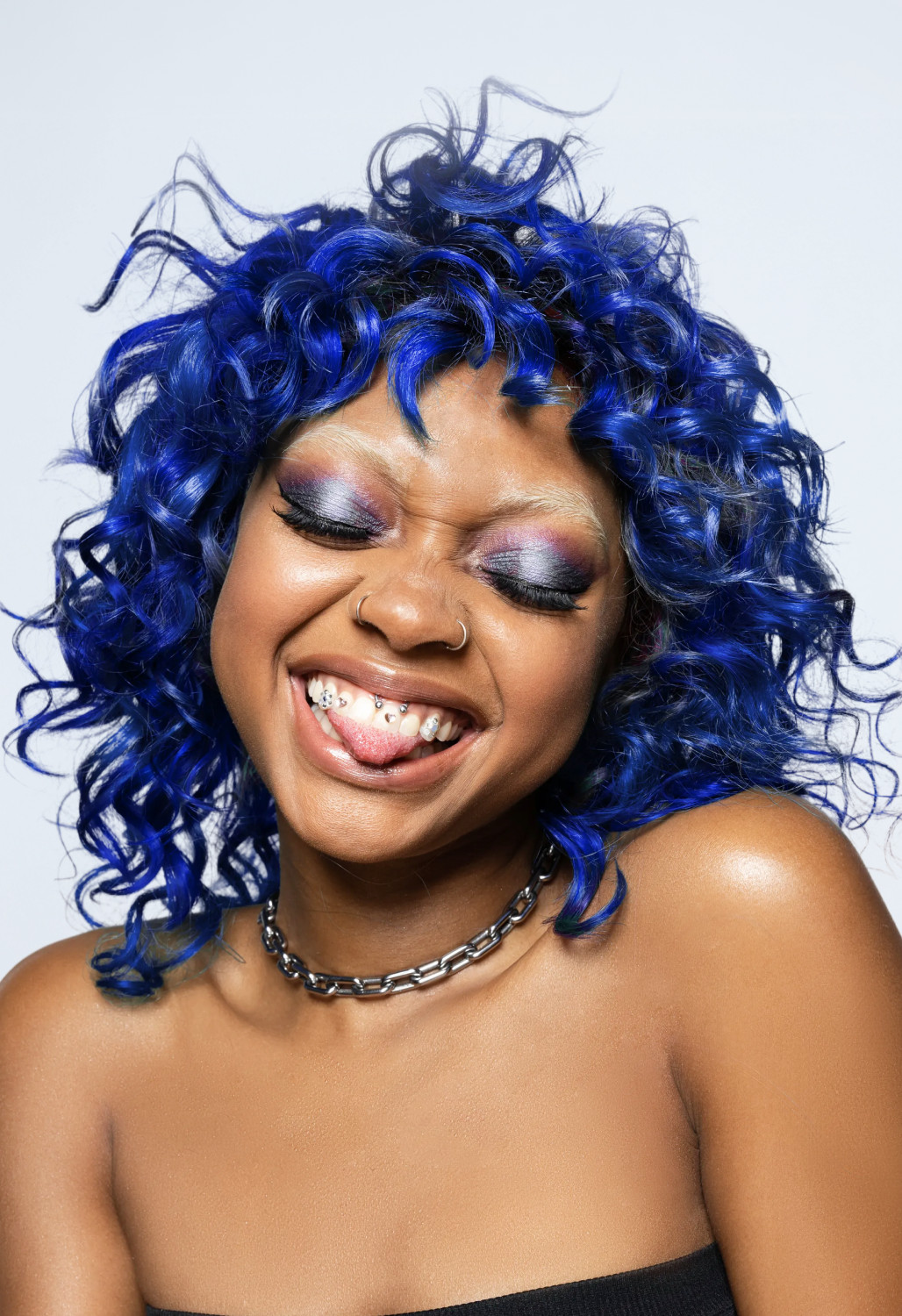
The air-dried finish tells you everything about how this cut is built. Royal blue collarbone layers are cut with the weight concentrated at the ends, so the thick, wavy texture stacks instead of falling flat. The stylist carves internal layers that start around the chin, which gives the waves somewhere to turn without losing the blunt perimeter at the collarbone. No bangs here, just a middle part that lets the front pieces swing forward. It is a cut that rewards a thicker hair type, since the layering removes bulk and the remaining wave pattern does the volume work. The upkeep is straightforward: a trim every eight weeks to keep the ends from thinning out, and the color needs a refresh every four to six weeks to hold the blue.
Dark Blue With Royal Blue Highlights
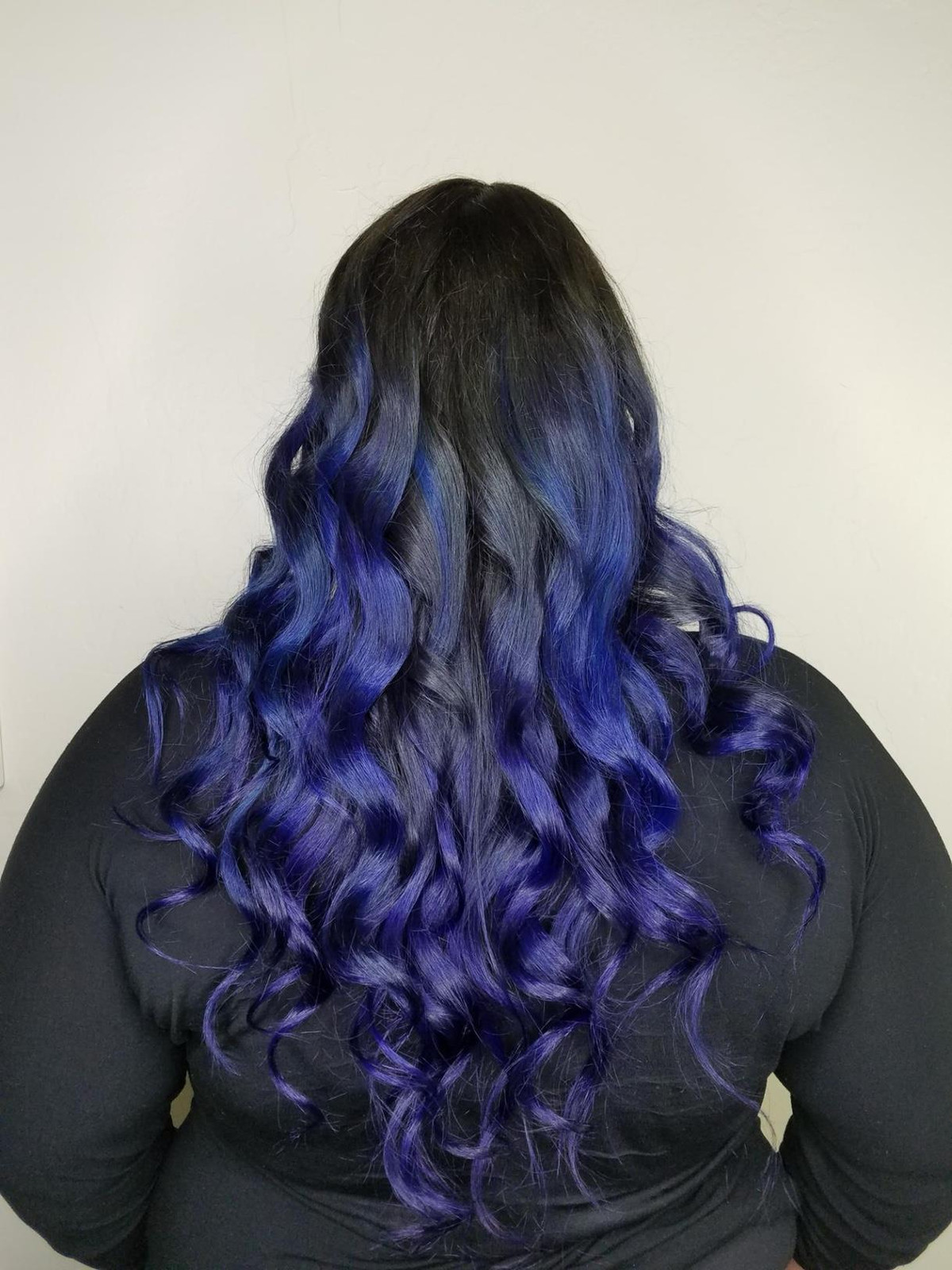
The dark base does the forgiving work here, which is why this color reads well on more skin tones than a full vivid blue would. Dark blue with royal blue highlights keeps the root area deep and rich, so the brighter pieces only catch light where the waves break. That means the contrast flatters warm undertones without washing out cooler ones, because the highlight placement is doing the shaping, not the overall shade. The mid-back length carries long layers that let the thick, wavy texture move, and the highlights are woven through the mid-lengths and ends rather than sitting on top. There are no bangs, just a middle part that keeps the face open. The trade-off is that the highlights need salon maintenance to stay distinct, otherwise they blur into the base by week six or seven.
Vibrant Royal Blue Waves
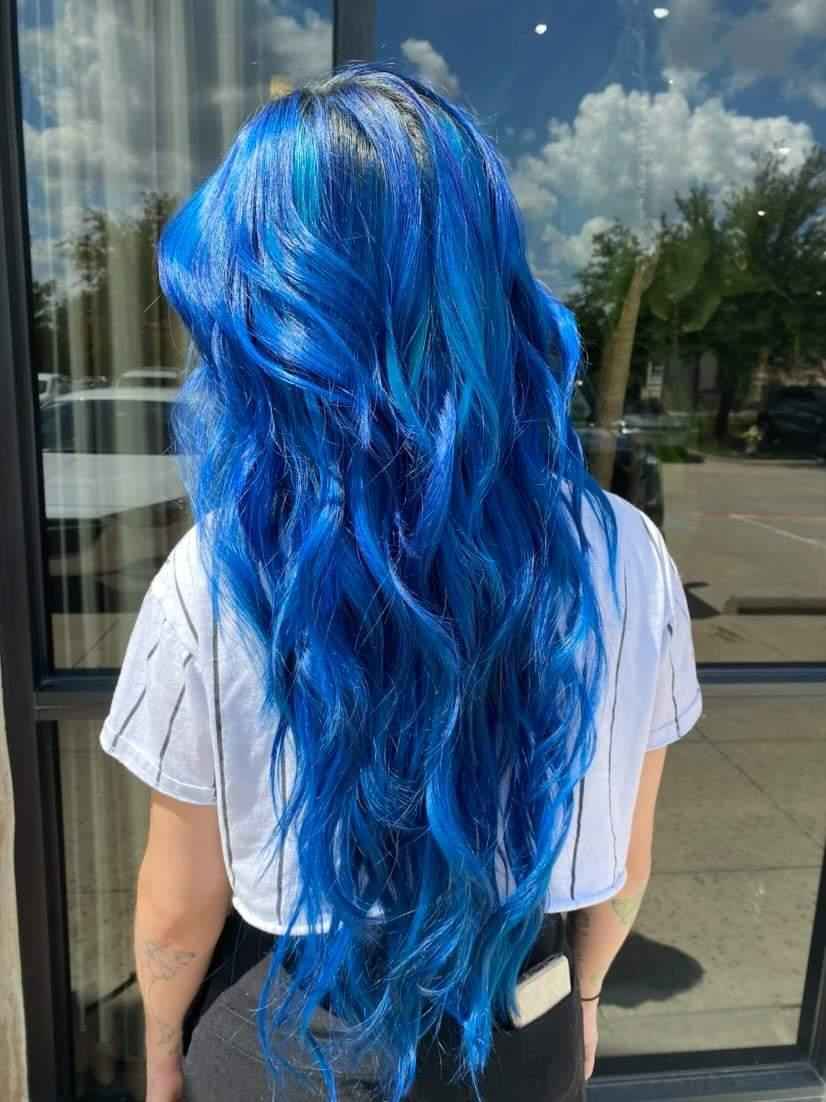
Do you trust a blue that looks this electric in the chair to still look that way in month two? I have seen vibrant royal blue waves fade into a greenish-teal by week four, and it is not a good look on anyone. The mid-back length and thick, wavy texture hold the color well at first, but the honest downside is that a shade this saturated has nowhere to go but out. The layers help the waves move, and there are no bangs to fuss with, which is a relief. But the brassiness will come, and it will come faster than you expect.
Visual Idea
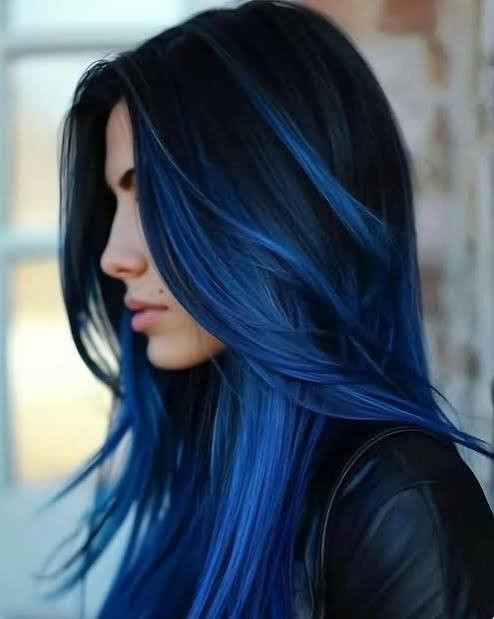
I will confess I have tried to fake a balayage at home, and the result was a stripe, not a blend. This royal blue balayage is a salon job, full stop, because the technique requires painting the color freehand through the mid-lengths and ends while leaving the root area untouched. The air-dried finish on this mid-back length shows how the wavy, thick texture lets the blue melt downward instead of sitting in a hard line. The layers are cut to give the waves room, and there are no bangs, just a middle part. The stylist controls where the color lands, and that is the difference between a dimensional blue and a blue that looks like a mistake.
Mid-Back Visual Idea
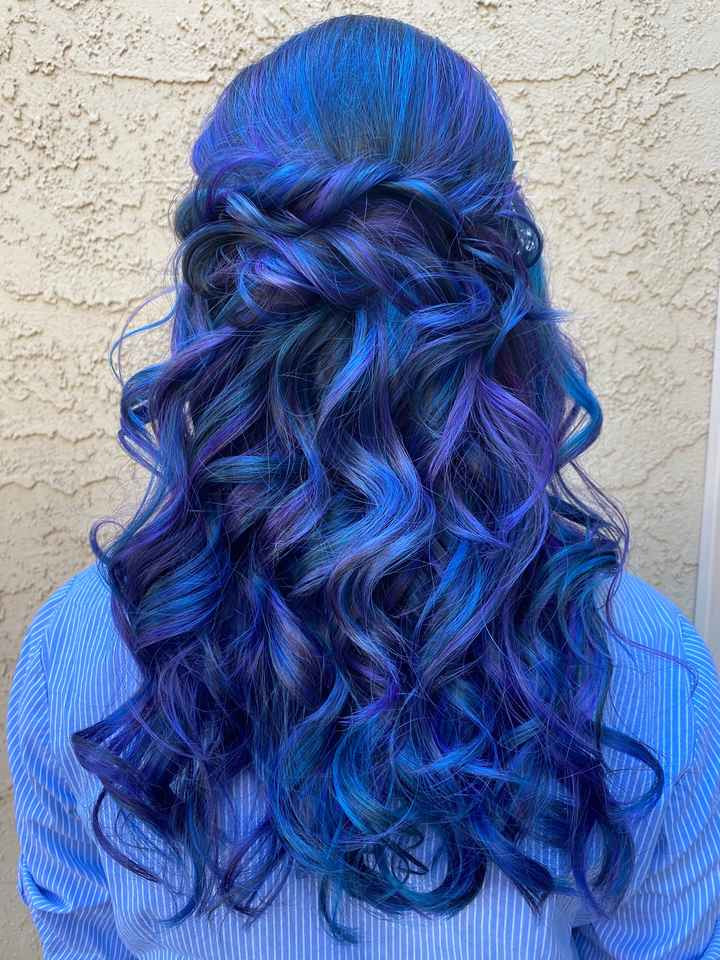
I once spent a whole season convinced my hair needed to be one color, one tone, one story. Then I sat in the chair for a friend’s wedding and let the stylist talk me into royal blue with purple and teal highlights, and the braided crown she built over loose waves made me feel like I’d shown up dressed for the occasion. The layers start at my chin and carry that multi-tonal color all the way down my mid-back, so the braid catches the light in pieces instead of one flat block. It’s thick hair’s best trick: the waves hold the braid’s shape, and the half-up style keeps the length from swallowing the color. I booked it for a celebration, but honestly, it made a random Tuesday feel like one too.
Royal Blue Visual Idea
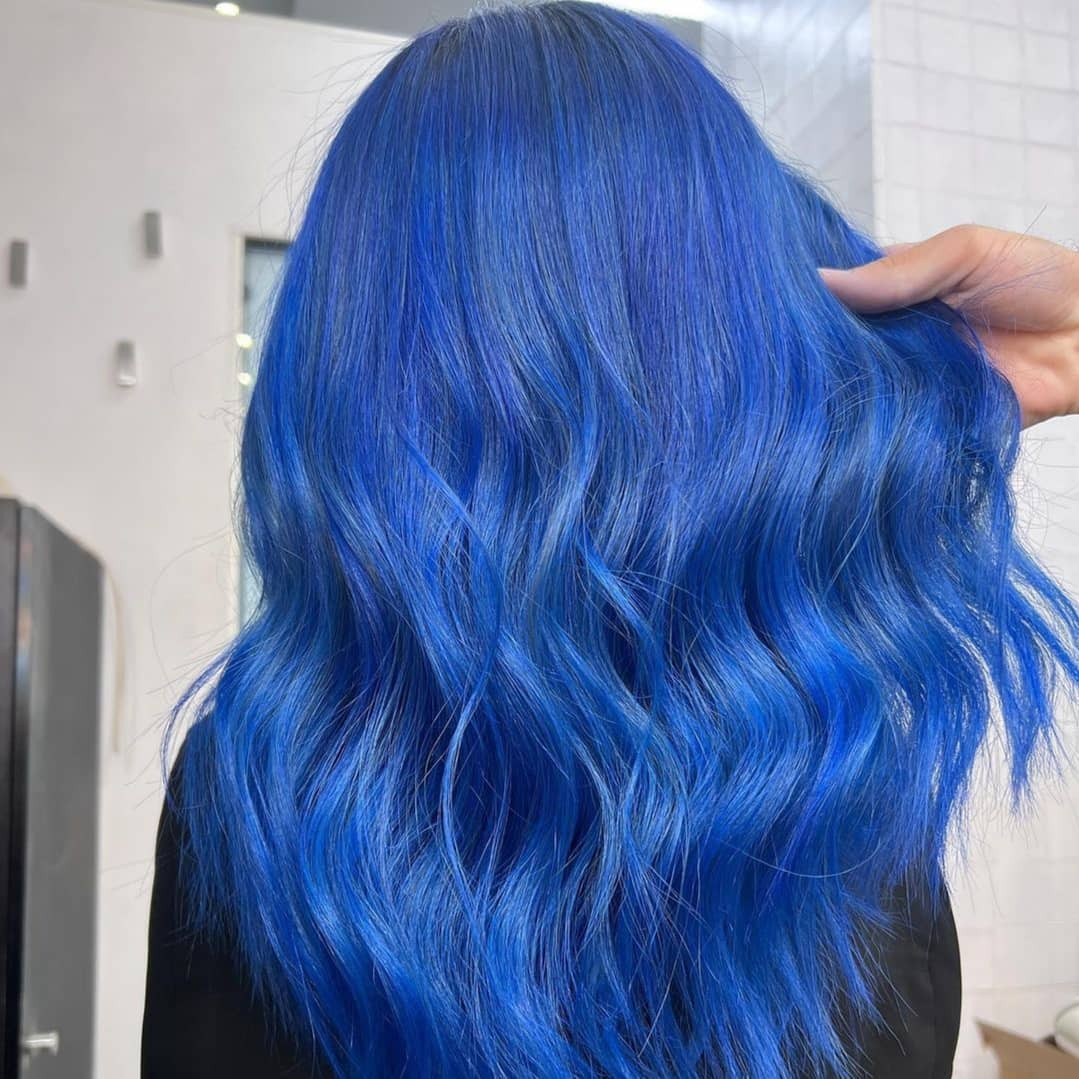
Royal blue beats every other fashion color I’ve tried, and it’s not close. Pastel pink washes out by the second week, lavender turns gray on me, but this lustrous royal blue on thick, wavy hair keeps its shine long after the first wash. The depth of the blue reads almost jewel-like, and on mid-back layers with a middle part, the waves catch the light so the color looks wet even when it’s dry. It’s a commitment, sure, but the payoff is a shade that doesn’t fade into something sad. If you want a color that still looks intentional at week four, this is the one.
Long Layers Visual Idea
Solid royal blue on long layers is a slow burn, and I mean that in the best way. The color stays intense for a solid month, then starts to soften at the ends, which on thick, wavy hair just looks like the light hitting it. I wash in cool water and use a purple shampoo once a week to keep the blue from turning green, and I’ve learned to book a trim every eight weeks so the layers don’t start to look straggly. The grow-out is the real test: the roots come in dark, and that line is visible by week five, so either embrace the shadow or plan a touch-up. It’s not a low-maintenance color, but the uniform shade from root to tip is worth the upkeep.
Mid-Length Visual Idea
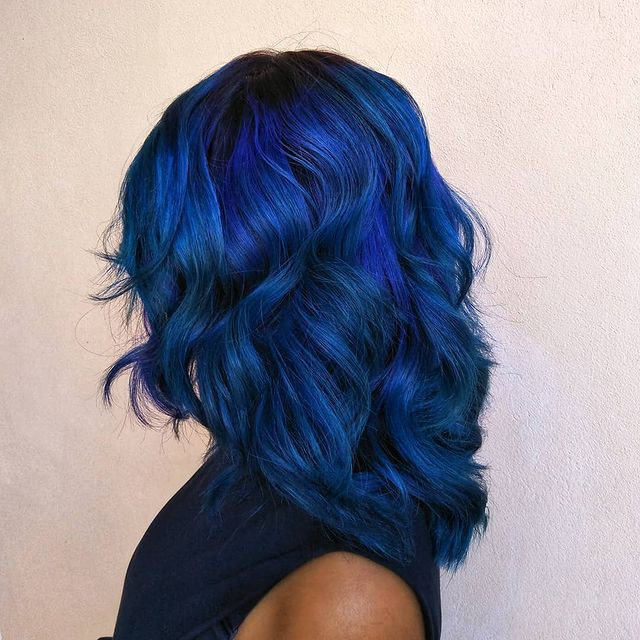
Ever wonder why some mid-length cuts move and others just hang there? The long layers here start around the chin and cascade down, so the vibrant royal blue catches the light in sections instead of one flat slab. On medium-density wavy hair, those layers create movement that makes the color look almost dimensional, even though it’s a uniform shade. The middle part keeps the face open, and the length stops just above the shoulder, so the waves have room to bounce without the weight pulling them straight. It’s the kind of cut that makes a bold color look like it belongs, not like it’s wearing you.
Dark Base Fading To Royal Blue Visual Idea
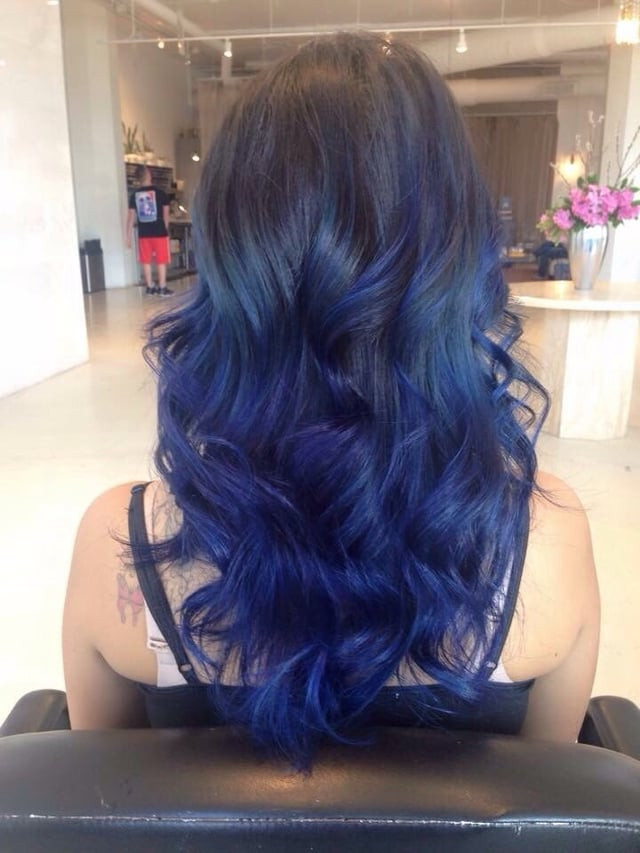
There’s a moment when the dark base at your roots melts into royal blue at the ends, and it’s the most forgiving color transition I know. The ombre effect starts around the ears, so the dark top keeps the color from feeling like a costume, and the mid-back length gives the fade room to breathe. On wavy, medium-density hair, the loose waves blur the line between the two shades, so the grow-out is practically invisible for months. The dark base also means less bleach on your scalp, which my fine-haired friends appreciate. It flatters warm and cool skin tones alike, because the blue reads bright without competing with your face. If you’re nervous about going full blue, this is the version that lets you dip a toe in.
Royal Blue With Lighter Blue Highlights Visual Idea
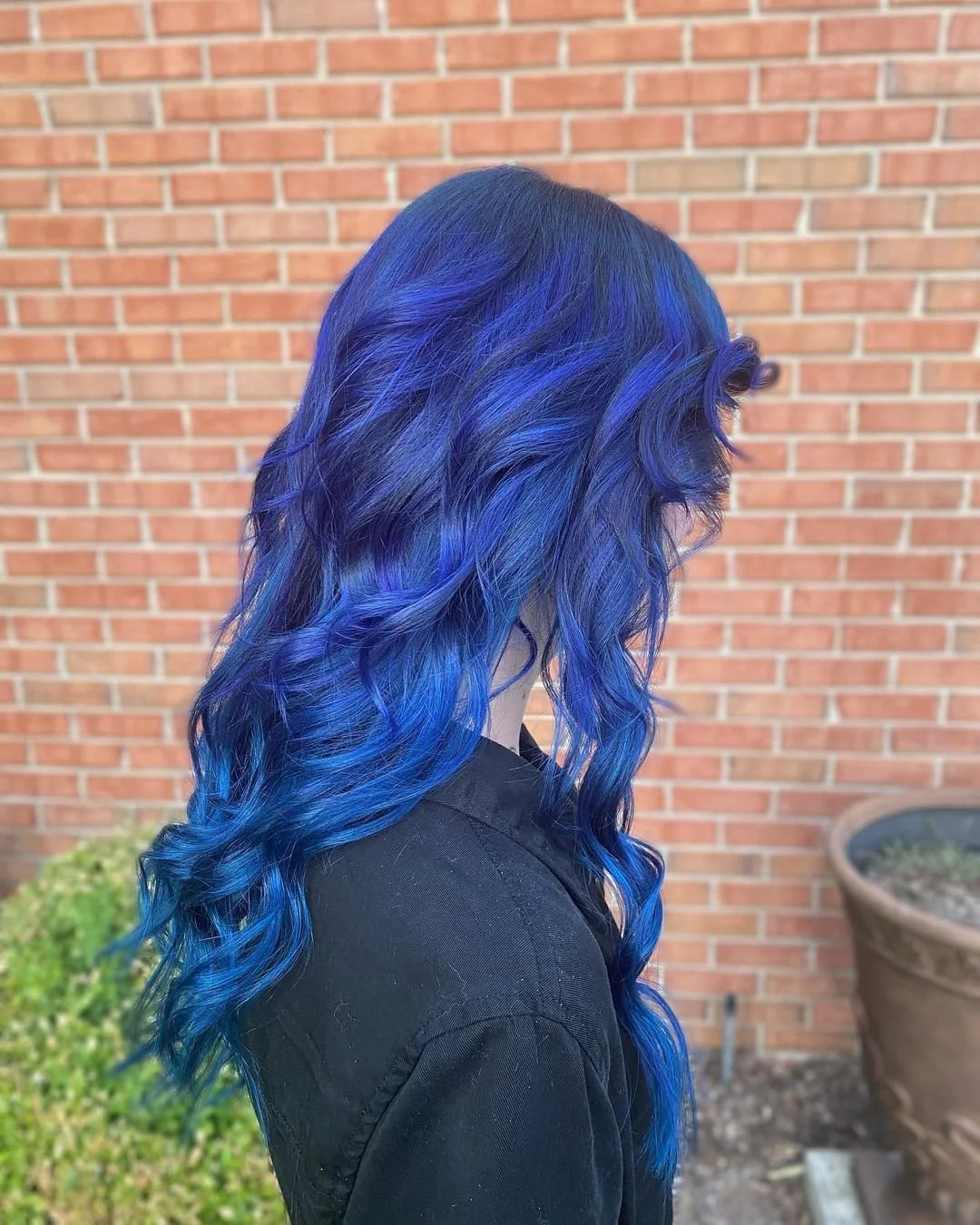
This is the one you book for a wedding or a birthday, not a Tuesday. The royal blue base runs mid-back with long layers cut to keep the weight moving, and the lighter blue highlights catch every bit of overhead light. Thick wavy texture helps the colour read as dimensional instead of flat, and the middle part lets both shades sit evenly on each side. No bangs here, the layers do the work. The honest downside: that lighter blue fades first, and it fades fast. By week four you will see a shift, and by week six you will be scheduling a toner appointment. Worth it for the night you walk in and everyone turns their head. Not worth it if you want to forget about your hair for two months.
Visual Idea — Viewed From The Back
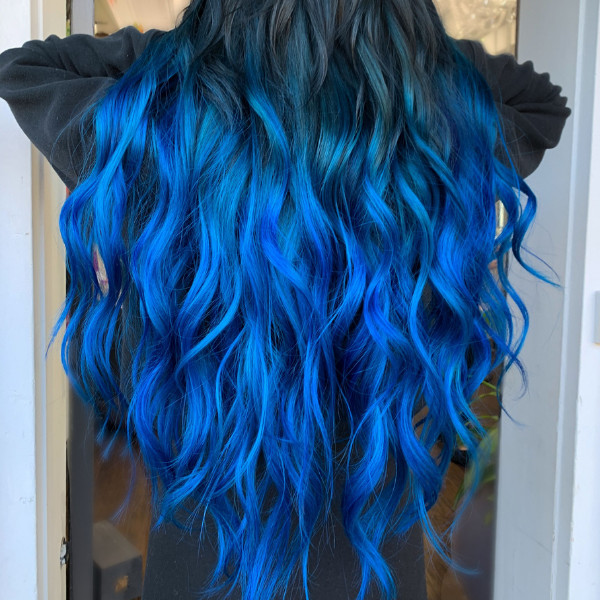
Have you ever seen a colour transition and immediately known the chair time behind it? This one reads dark royal blue at the roots and graduates to a brighter blue toward the ends, with long layers cut through thick wavy texture. No bangs, middle part, and the ombre effect is the whole story. The upkeep is the real conversation. That root area needs a touch-up every four to six weeks, and the ends need a refresh toner every third wash to keep the bright blue from turning greenish. I have sat through this kind of gradient twice, and both times I left with a sore neck and a very happy head of hair.
The colour refresh itself is not a quick appointment. Expect two to three hours in the chair depending on how much the bright sections have faded. The layers help the waves fall naturally, so the shape holds between trims longer than a blunt cut would. But the colour is the commitment. If you want a blue that moves from dark to light without a hard line, this is the one. Just know what it asks of your calendar.
Final Thoughts
After writing all of these, I am booking the collarbone blowout with the blue ombre. It is the one that survived my fine hair going flat by 4 pm. The rest are good ideas. That one is a plan.

