
I’ve been watching the women in the salon chair next to mine, and something shifted this year. The silvers got bolder, the bobs got blunter, and the pastels stopped apologizing. It’s not about covering grey anymore. It’s about deciding which grey, and what it sits next to.
This is 19 takes on Hair Color for Women Over 60, from a five-minute root shadow to a full platinum commitment. I wrote them for fine hair that goes flat by 4 pm, for the grow-out line that shows at week five, and for anyone who wants a colour that works with her life, not against it. Some are low upkeep. Some are three hours in the chair. All of them earned their place.
Bright Silver-White Pixie
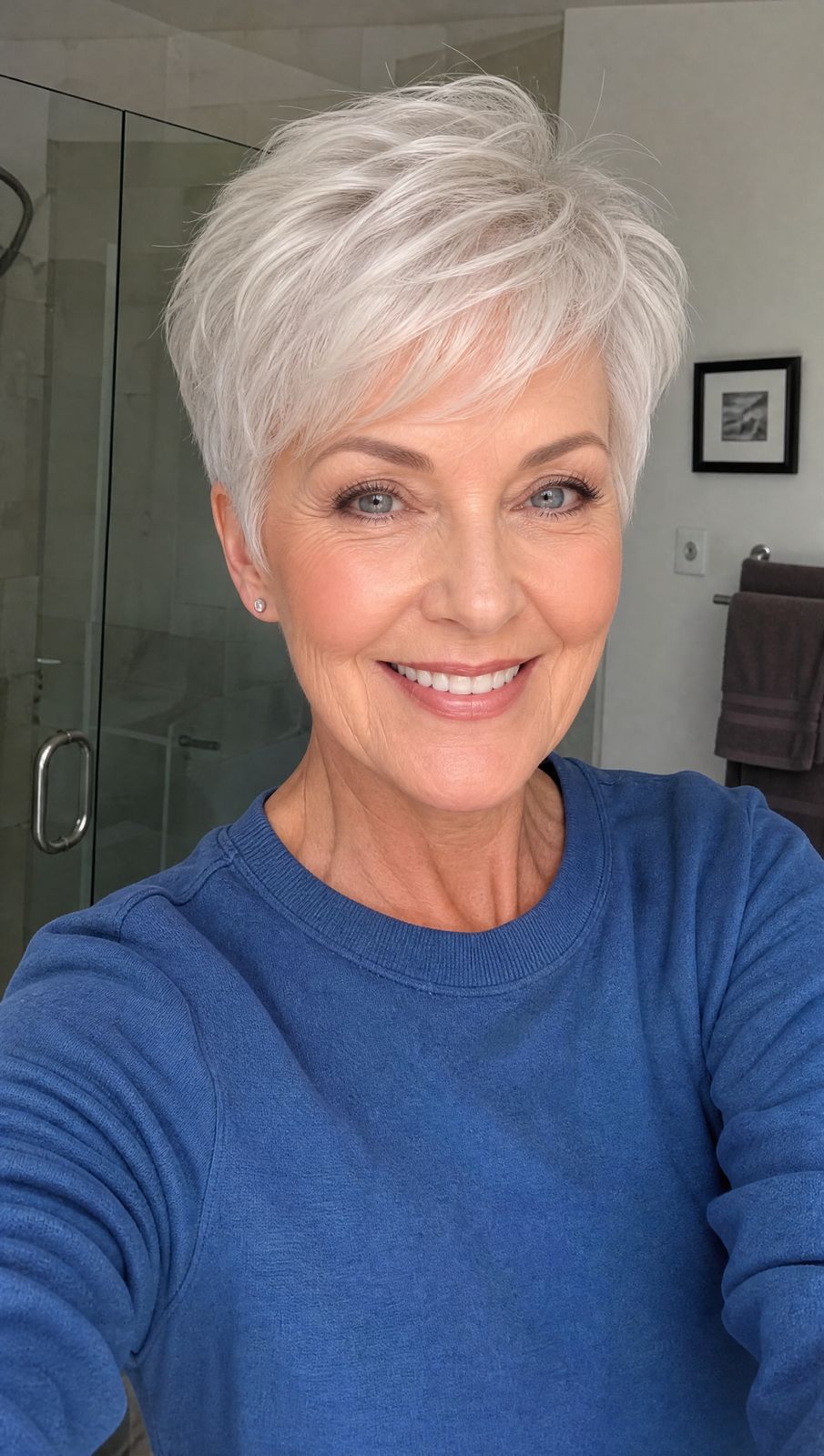
There’s a reason this silver white pixie cut keeps showing up in my feed, and it’s not just the shock value. The bright silver tone catches the light in a way that reads as cool and polished against mature skin, which tends to carry warmth as we age. It’s a contrast that flatters, not fights. The cut itself sits at ear length with a middle part and short, wispy bangs, and the straight, medium-density texture is styled with volume at the crown. That lift is what keeps the whole thing from looking severe.
Sleek Ash Blonde Inverted Bob
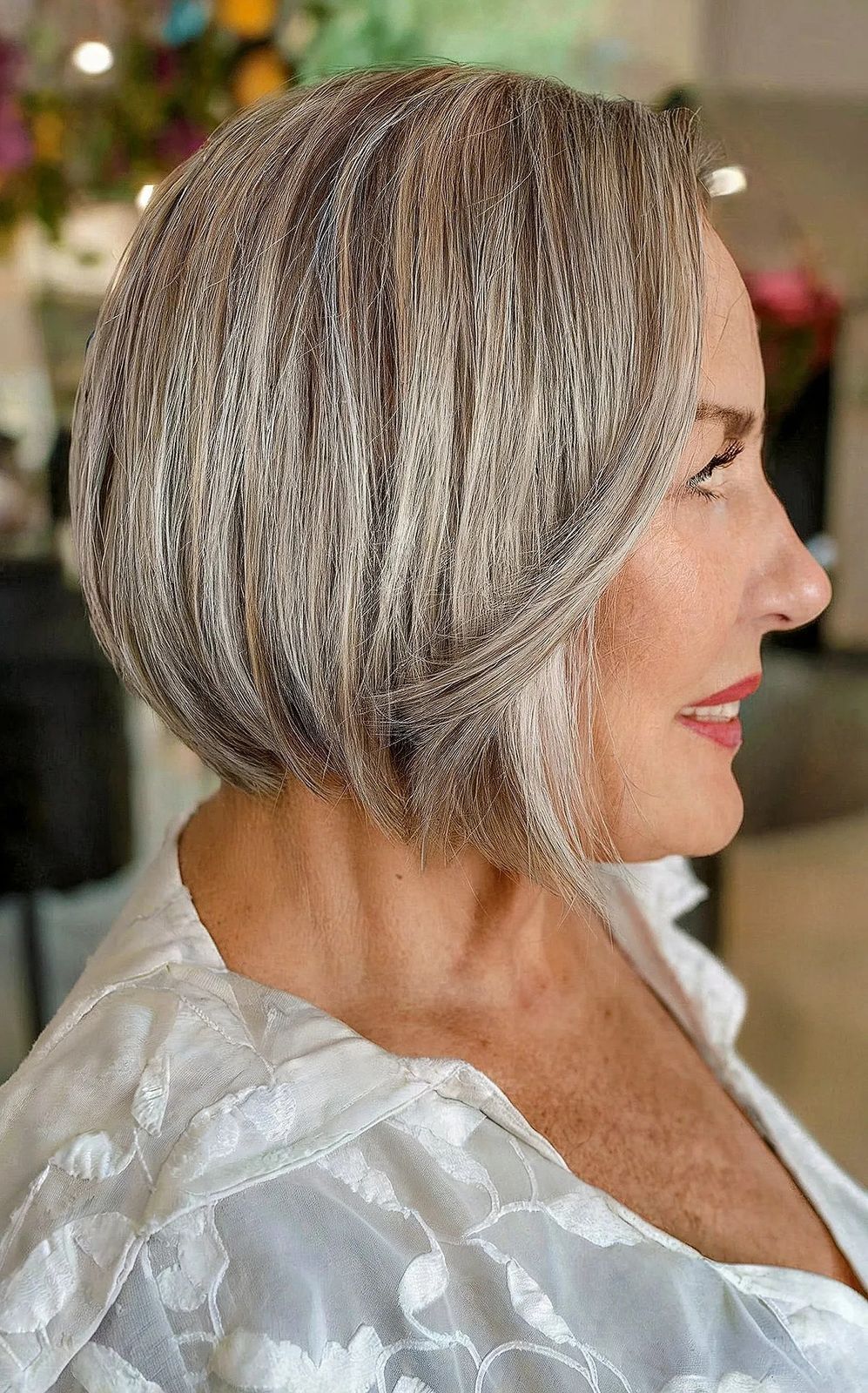
If you want sleek, this ash blonde inverted bob beats any softly layered style I’ve seen on women over 60. The chin-length cut stacks shorter in the back, which gives it that sharp, modern line, and the ash blonde with subtle grey and beige undertones keeps the tone cool without washing you out. Side part, no bangs, straight fine hair, and it’s all smoothed down flat. That’s the whole point: zero movement, zero fuss. A softer layered bob reads romantic, this one reads deliberate. It’s not for anyone who wants to run fingers through their hair and call it done.
Finger-Waved Platinum Blonde Pixie
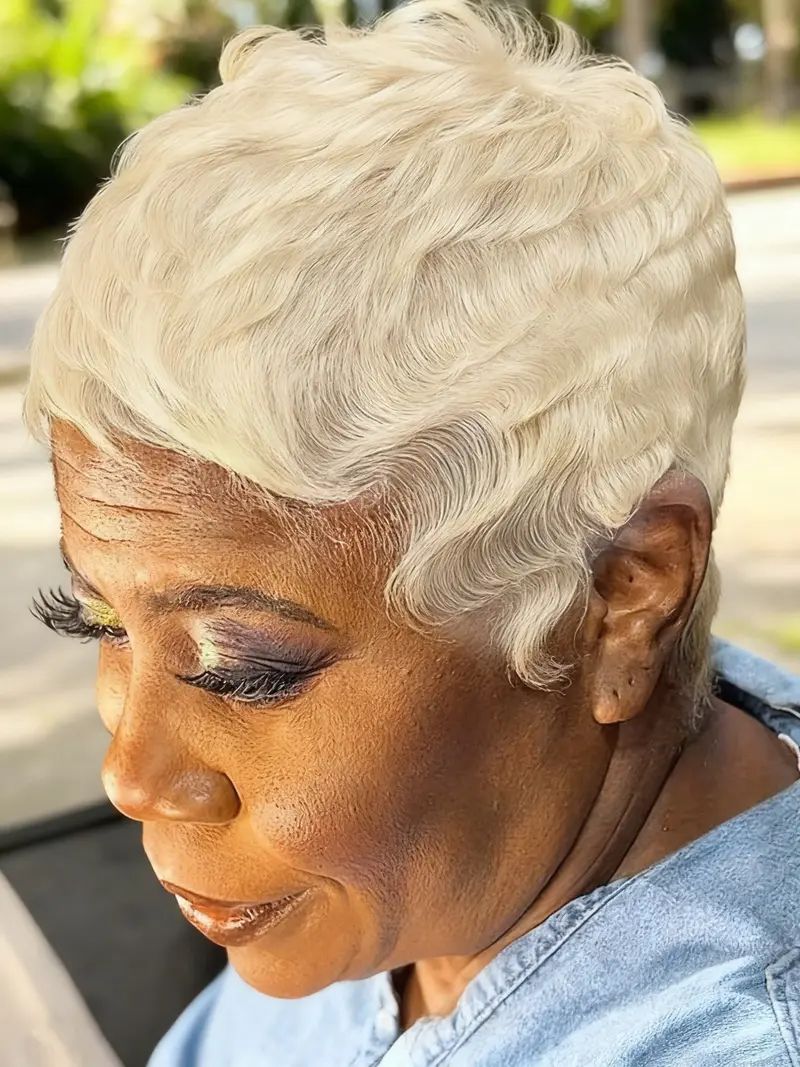
My first thought was: that’s a lot of commitment. The platinum blonde pixie with finger waves is sculpted, not styled, and it takes a steady hand and a comb to get those S-shaped waves to sit right. The ear-length cut is slicked back on top, no bangs, and the fine, wavy texture is what actually holds the wave pattern. This is not a bathroom-mirror job, and I say that with respect. The vintage appeal is real, but it demands a stylist who knows how to set a wave, not just cut one.
Silver-Grey Bob With Straight Fringe
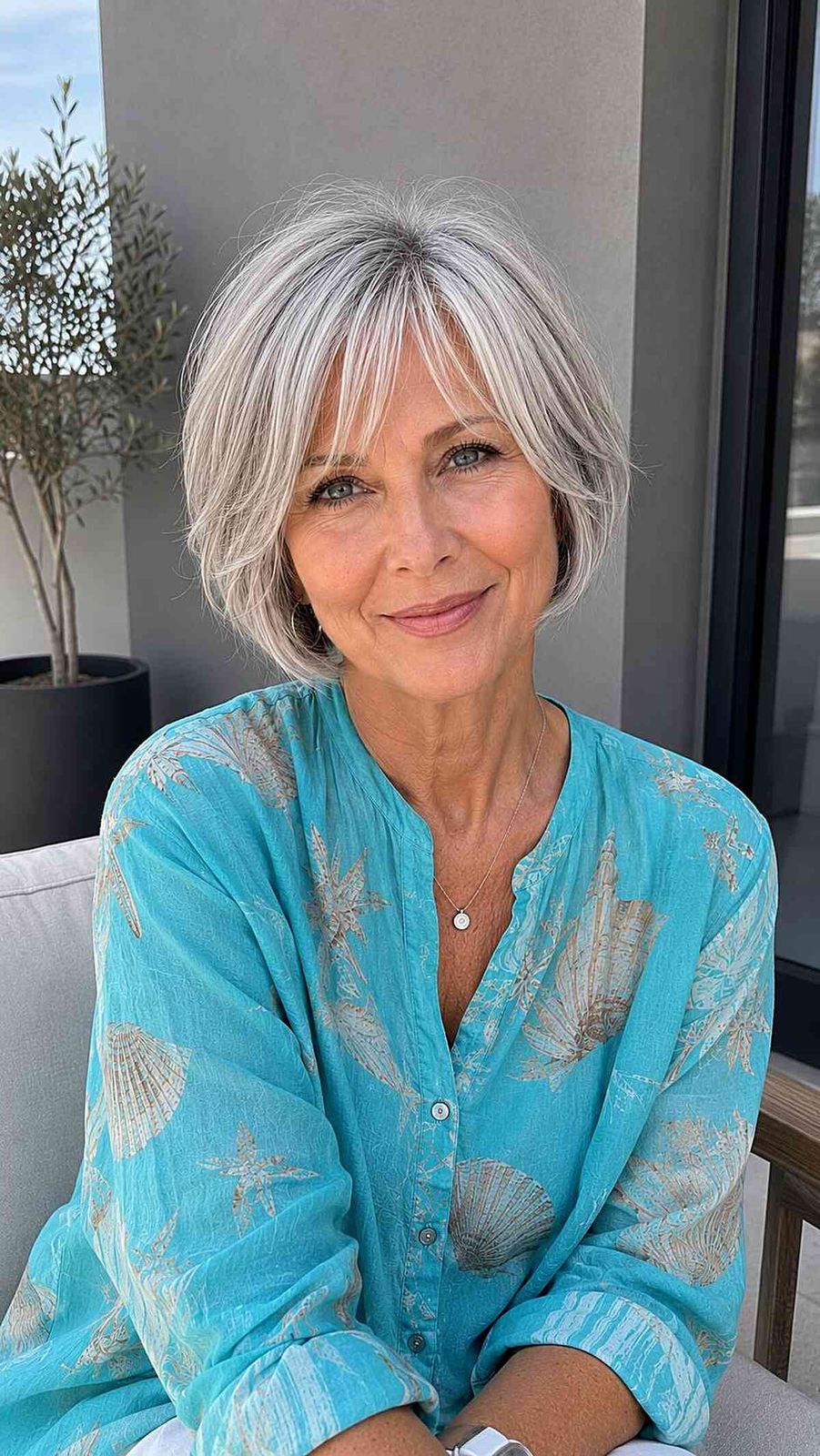
The straight fringe on this silver grey bob is doing all the work. It hits right at the brows, which draws the eye upward and balances a face that’s lost some definition along the jawline. The bob sits at ear length, blunt and graphic, with a middle part and straight, medium-density hair that’s styled flat. The silver-grey tone is cool and even, no dimension needed. But here’s the wear reality: that fringe will be in your eyes by week two, and the line goes soft fast. Plan on a trim every three weeks if you want it to stay sharp.
Textured Silver-Grey Pixie
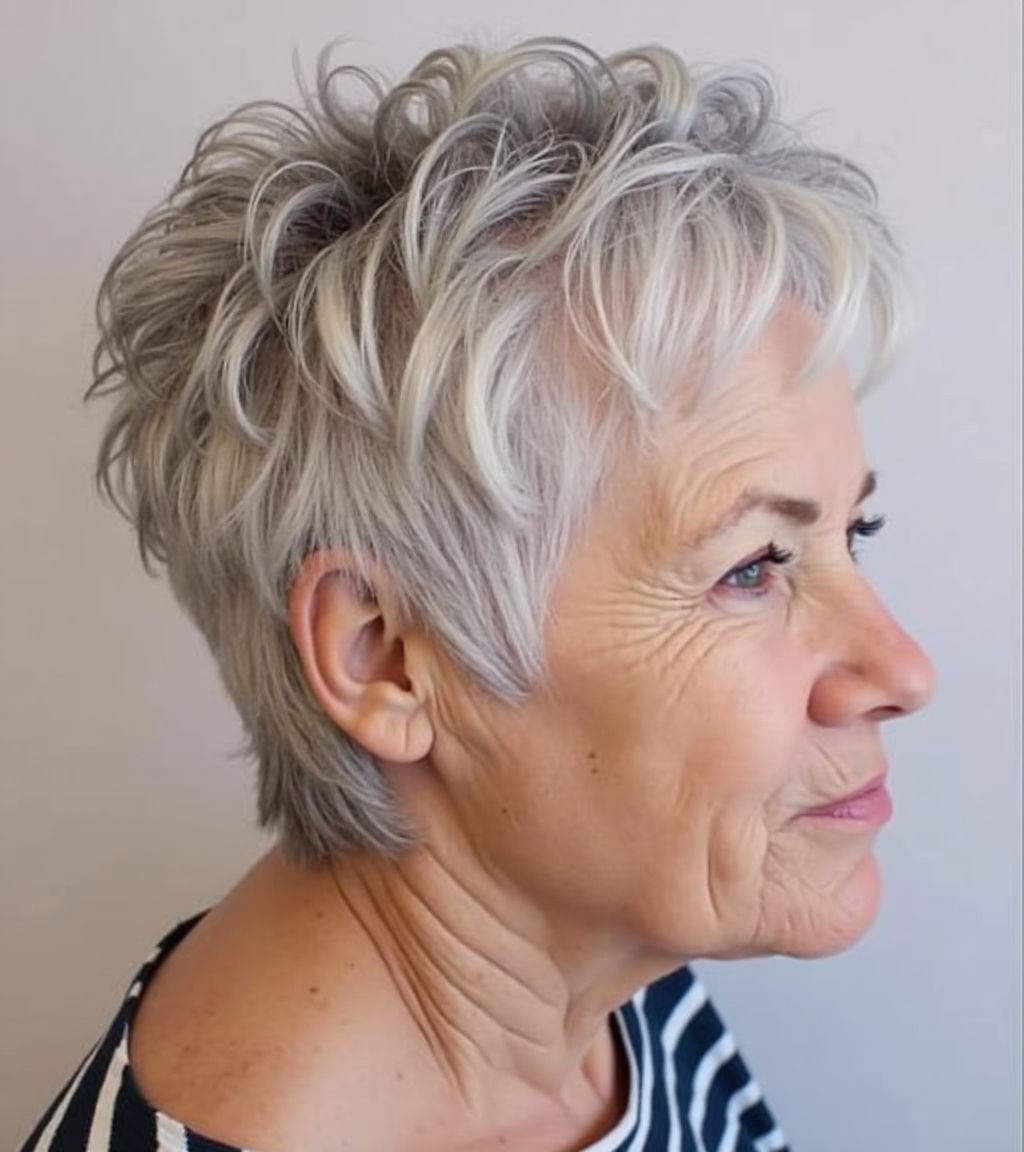
Do you have fine, curly hair that goes flat by noon? Then this silver grey pixie cut might be the answer you’ve been looking for. The short, side-parted cut is all about texture, with tousled layers that give volume where fine curls usually fall flat. The silver grey is broken up with white blonde pieces, which adds depth and movement without looking streaky. That multi-tonal effect is what keeps it from reading as a solid helmet. It’s a cut that works with your curl pattern, not against it.
But let’s be honest about who this flatters. The texture is doing the heavy lifting, so if your hair is stick-straight, you’ll spend time coaxing it into shape. The fine, curly texture is the ideal candidate, because the layers give it lift and the white blonde pieces catch the light. This is a salon cut, no question, but the payoff is a pixie that looks lived-in, not styled to death.
Rich Burgundy Pixie
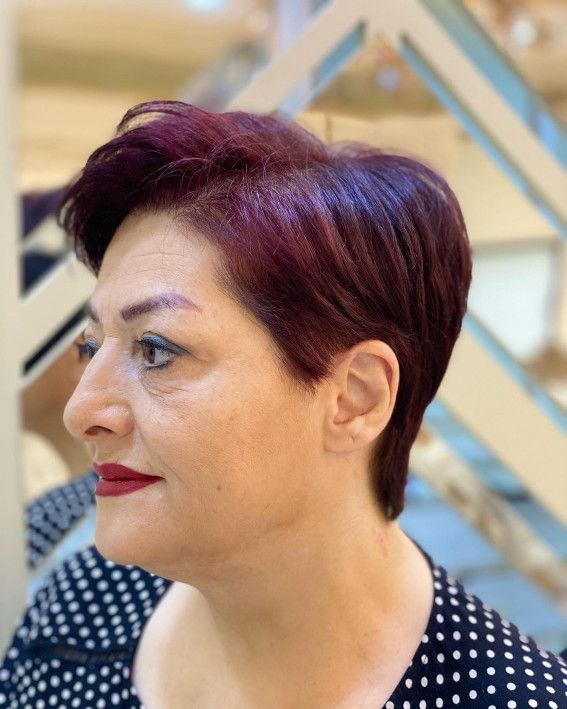
The first frost hits, and suddenly I want a colour that reads like a cashmere scarf. A burgundy pixie cut is that. The side-swept bangs fall across the forehead, the fine, straight texture holds the shape without fighting it. Burgundy lands somewhere between berry and wine, and on a short cut it reads deliberate, not accidental. Side view shows the nape clean, the crown lifted. This is an autumn colour. It asks for a clear sky and a wool coat.
уши Silver-Grey Pixie With Textured Fringe
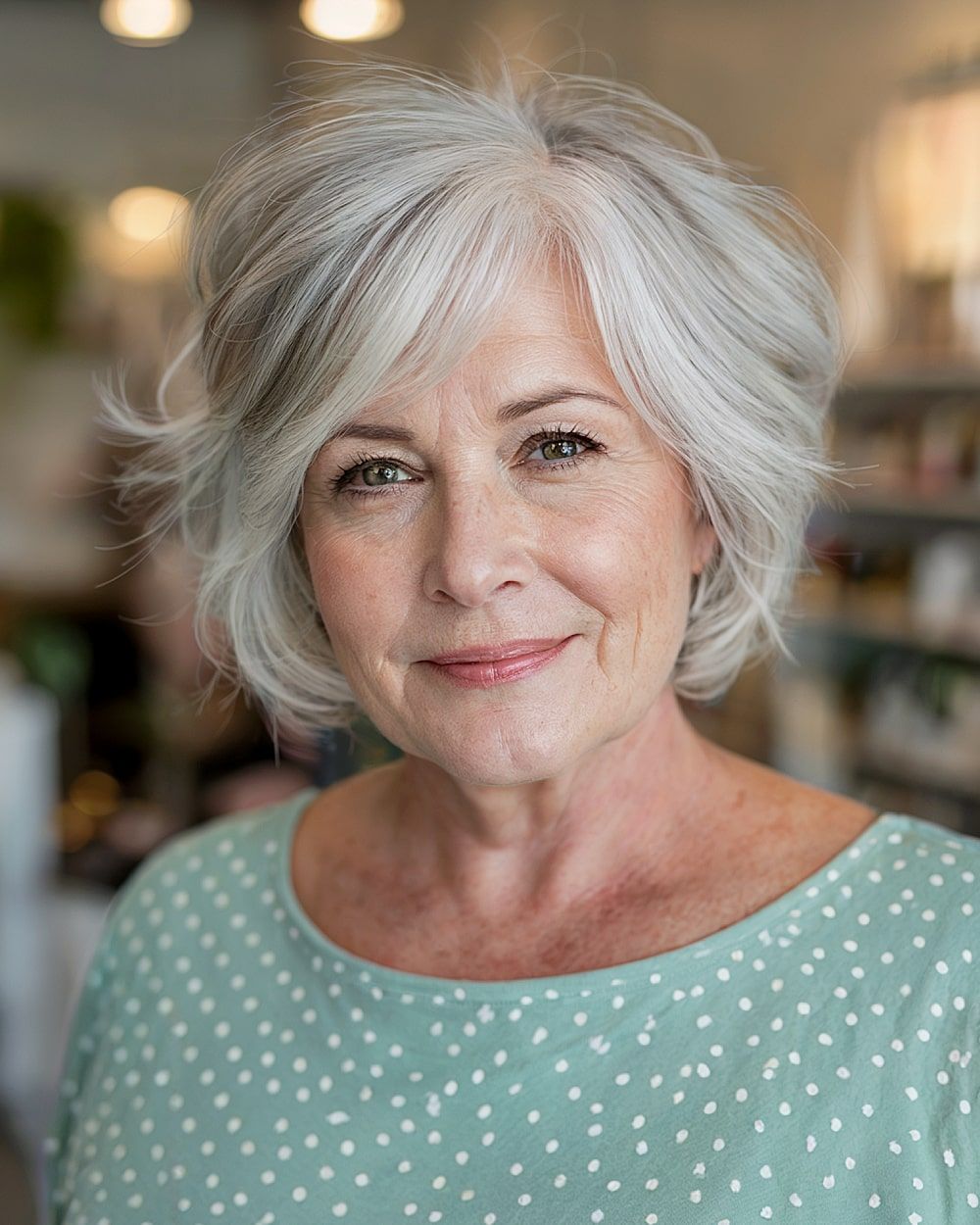
I will confess: I have over-styled a fringe into submission more times than I want to count. A silver grey pixie with a textured fringe punishes that instinct. The ear-length cut keeps the sides close, the elongated fringe falls forward with a light, almost careless separation. Straight, medium-density hair works best here; any heavier and the fringe lands flat. The honest downside: a fringe that looks “too done” is a five-minute fix away from disaster. You want a piece that moves, not a curtain that sits.
Silver-Grey Bob With Soft Waves
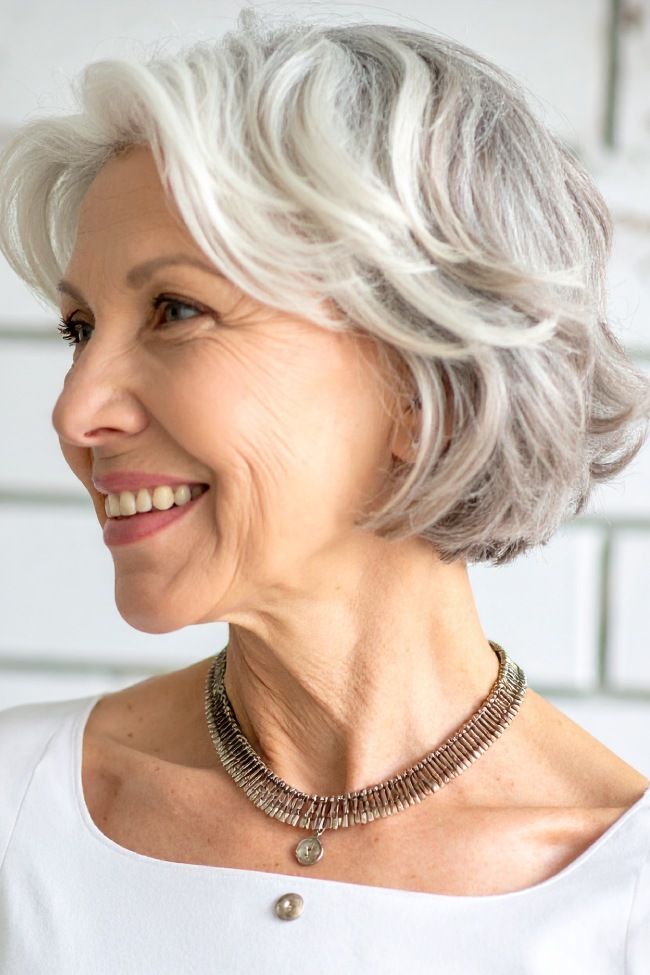
This colour costs time. A silver grey bob waves look like they happened by accident. They did not. The collar-length bob is cut blunt, the side part gives it weight on one side. The waves are soft, not tight, and they require a large barrel and patience. The upkeep is the real story: a smoothing serum to keep the silver from reading dusty, trims every six to eight weeks to keep the bob from collapsing into a wedge. The waves hold for about six hours before they start to drop. Plan accordingly.
Shag With Silver Grey Blue Undertones
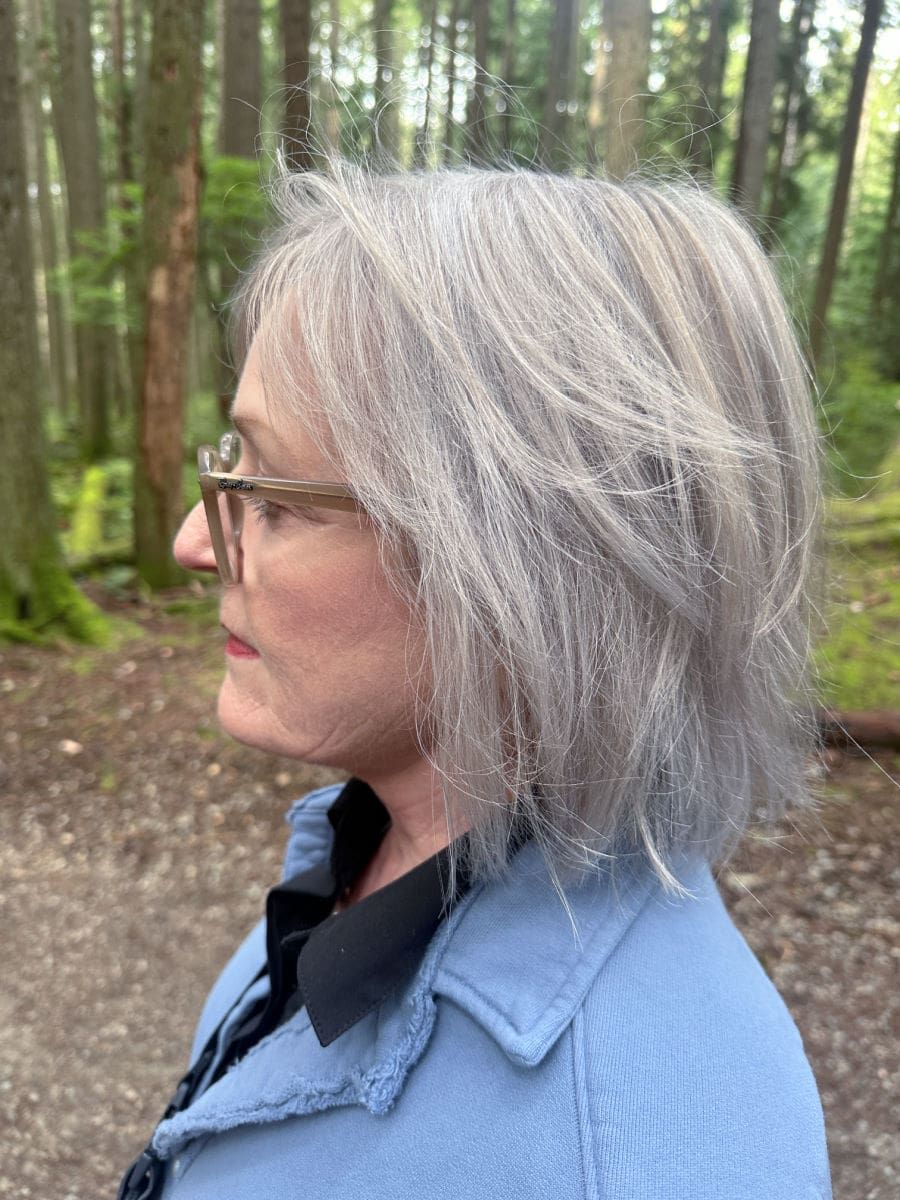
Here is what I noticed about the silver grey shag with blue undertones: it does not sit still. The shoulder-length shag is cut into layers that catch the light, and the blue undertones shift from cool silver to a soft periwinkle depending on the angle. Thick, wavy texture is the engine here; the shag needs volume to work, and straight hair will not give it. The colour is vibrant but not loud. Ask your stylist for a root shadow that fades into the blue, not a hard line. The grow-out is soft that way.
Natural Grey With Blonde Highlights
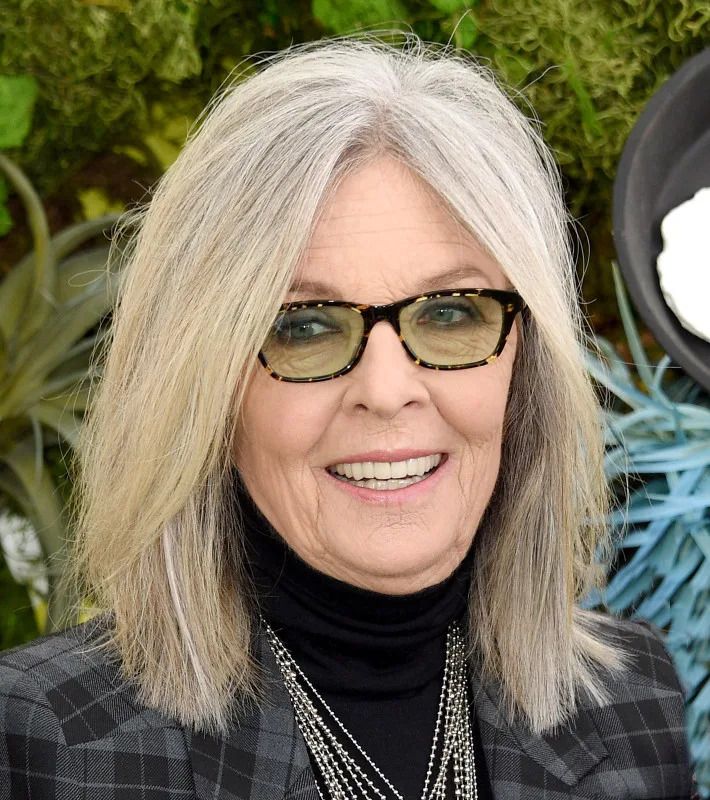
I tried this at home. It went better than I expected. Natural grey hair with blonde highlights is the rare colour that looks better when you do not try too hard. The collarbone-length layers fall straight, the middle part keeps it simple. The blonde highlights are subtle, placed around the face to catch light, not to cover the grey. The trick: paint the highlights onto dry hair, not wet. Wet application bleeds. Dry keeps the line soft. Air dry, add a dab of smoothing cream, and walk away. That is the whole routine.
Layered Light Blonde Bob
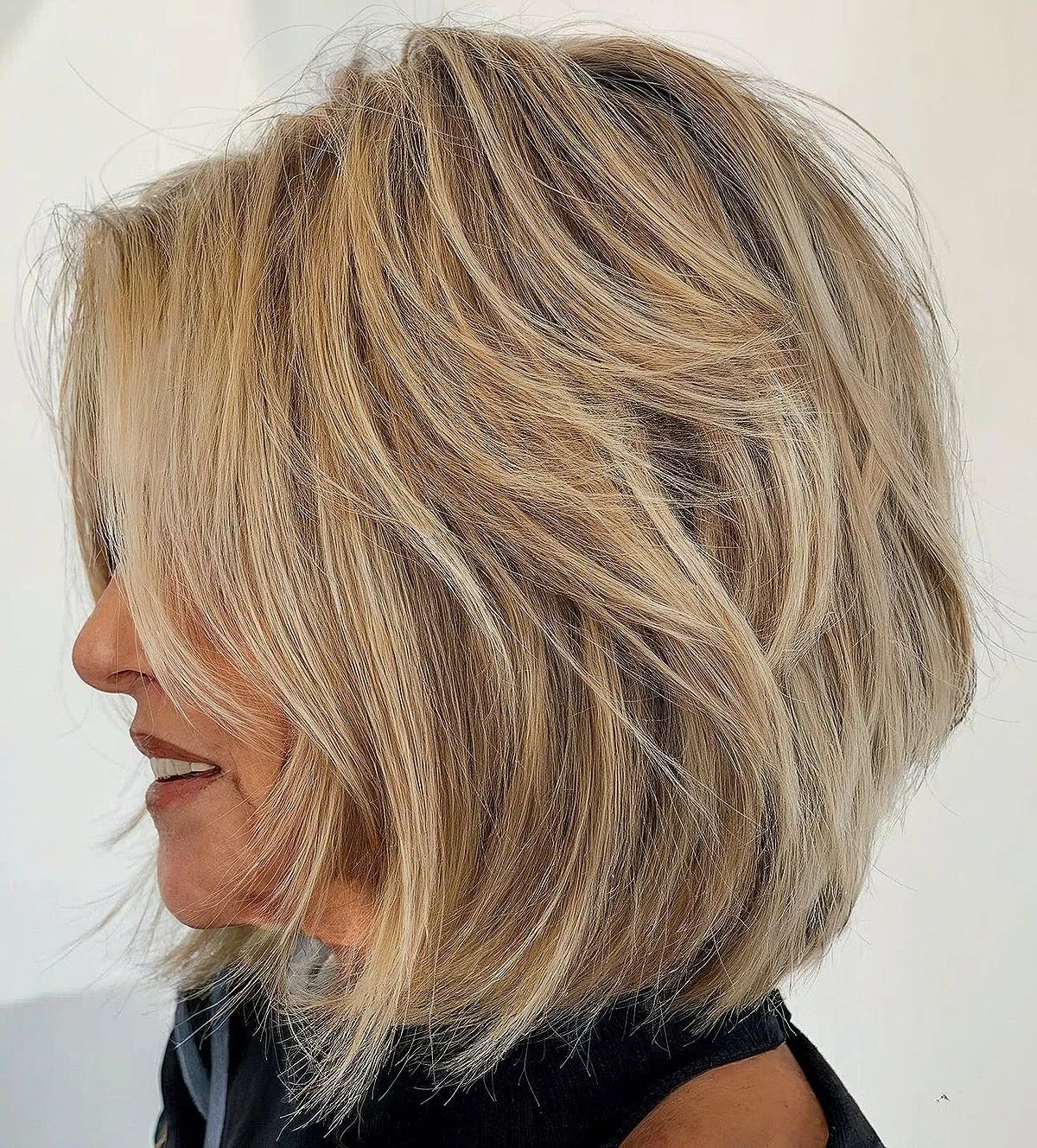
Have you ever looked at a fringe and thought, that could actually fix something? This layered light blonde bob lands right at the collar, with a bang that covers the forehead completely. The subtle highlights run through the top layers, giving the straight, medium-density texture some dimension without needing a full bleach. That fringe is the real workhorse here: it softens a strong jawline or a high forehead in a way that no amount of contour ever could. The tone stays neutral, not too warm, not too icy, which keeps the grow-out from screaming for a toner at week three.
Honey Blonde Lob With Caramel Highlights
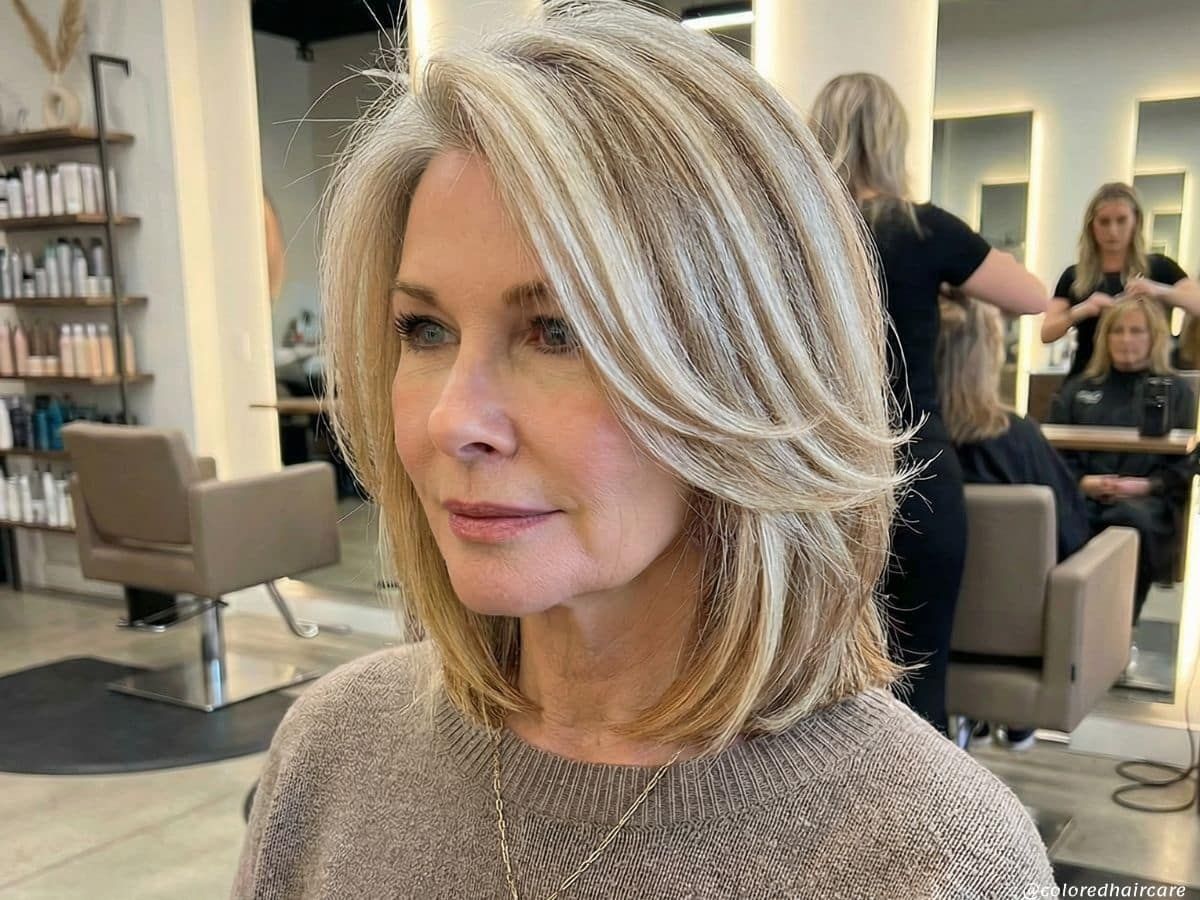
Best grow-out in this roundup, and I am not being dramatic. The honey blonde lob is built with a balayage technique that paints the caramel highlights freehand, so the root line stays soft and invisible for months. The base colour is a warm honey, not yellow, not brassy, and the caramel pieces are placed around the face and through the mid-lengths of this collarbone-length cut. The curtain bangs frame the sides, and the wavy, medium-density texture gets a lift from the contrast between the deeper base and the lighter strands. This is a spring-through-fall colour: it catches the sun without washing out a cool skin tone.
Wavy Honey Blonde Bob
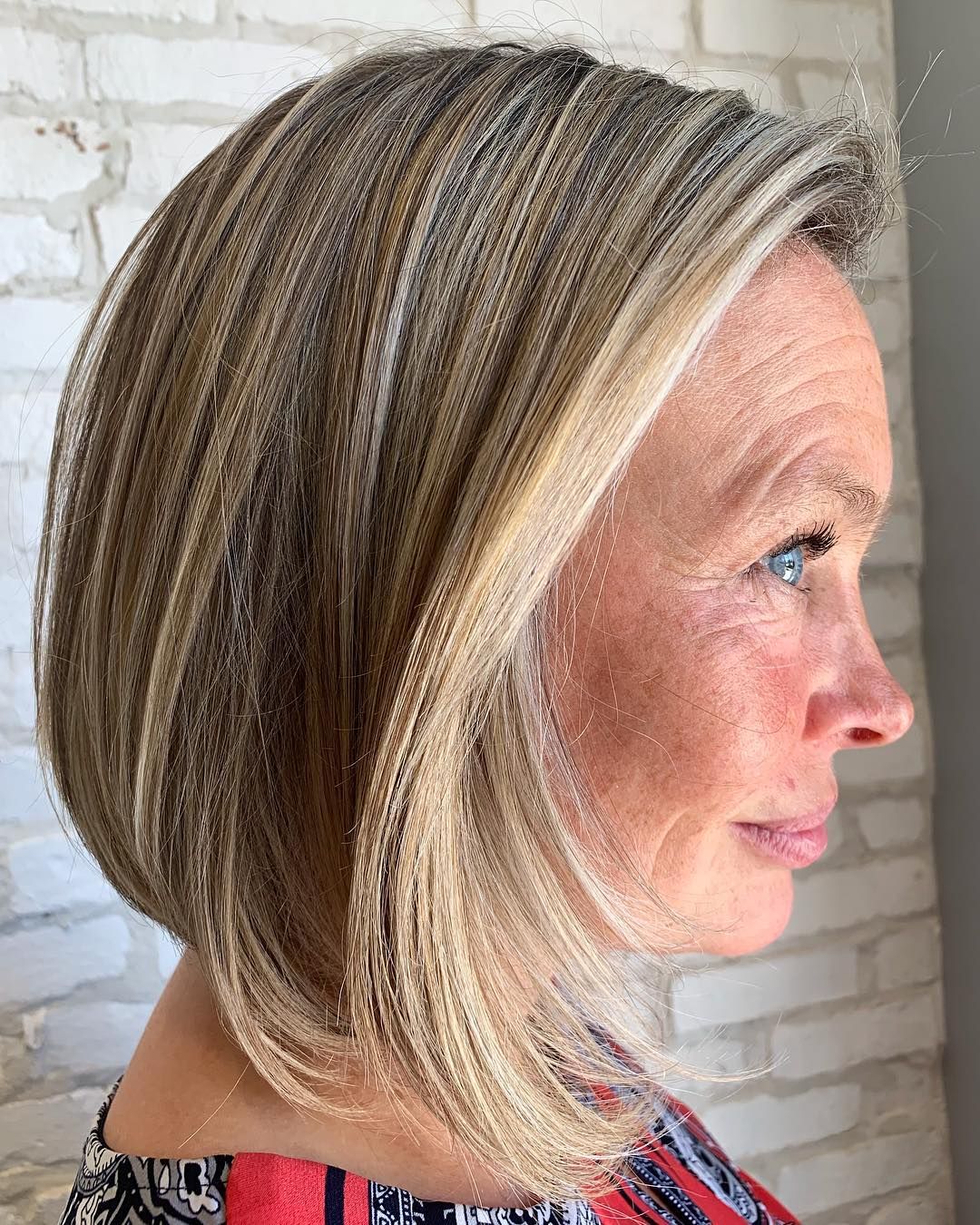
Here is the thing about a honey blonde bob with waves: it looks like it took no effort, but that is a lie if your base is dark. The honey blonde bob here is chin-length, no bangs, with caramel highlights woven through the waves to keep the colour from going flat. The wavy, medium-density texture holds the shape well, but the honest downside is the lift. If you are starting from a medium or dark brown base, this warm tone needs significant lightening to read as honey and not muddy. The side part and the waves hide the grow-out line for about six weeks, which is the only reason I still recommend it.
Chin-Length Ash Blonde Layered Bob
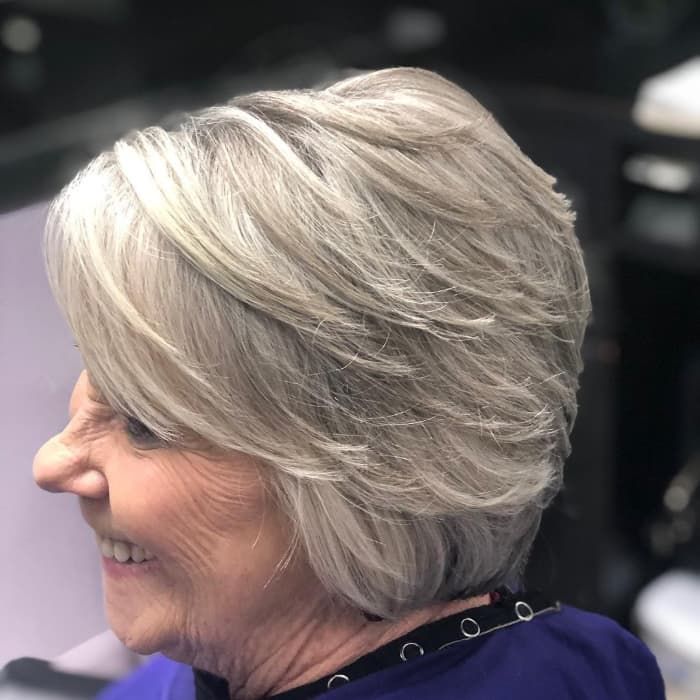
I looked at this ash blonde layered bob and thought, that is what a blunt cut wishes it could be. The layers here are soft and stacked, not choppy, which gives the chin-length bob movement without sacrificing density. The ash blonde tone is cool, almost silver in some light, with lighter blonde highlights around the face to keep it from reading flat. The side-swept bang softens the line, and the wavy, medium-density texture holds a blowout with volume for a full day. A blunt cut would feel heavy at this length; the layers let the colour breathe and the shape last longer between trims.
Medium Brown With Blonde Highlights
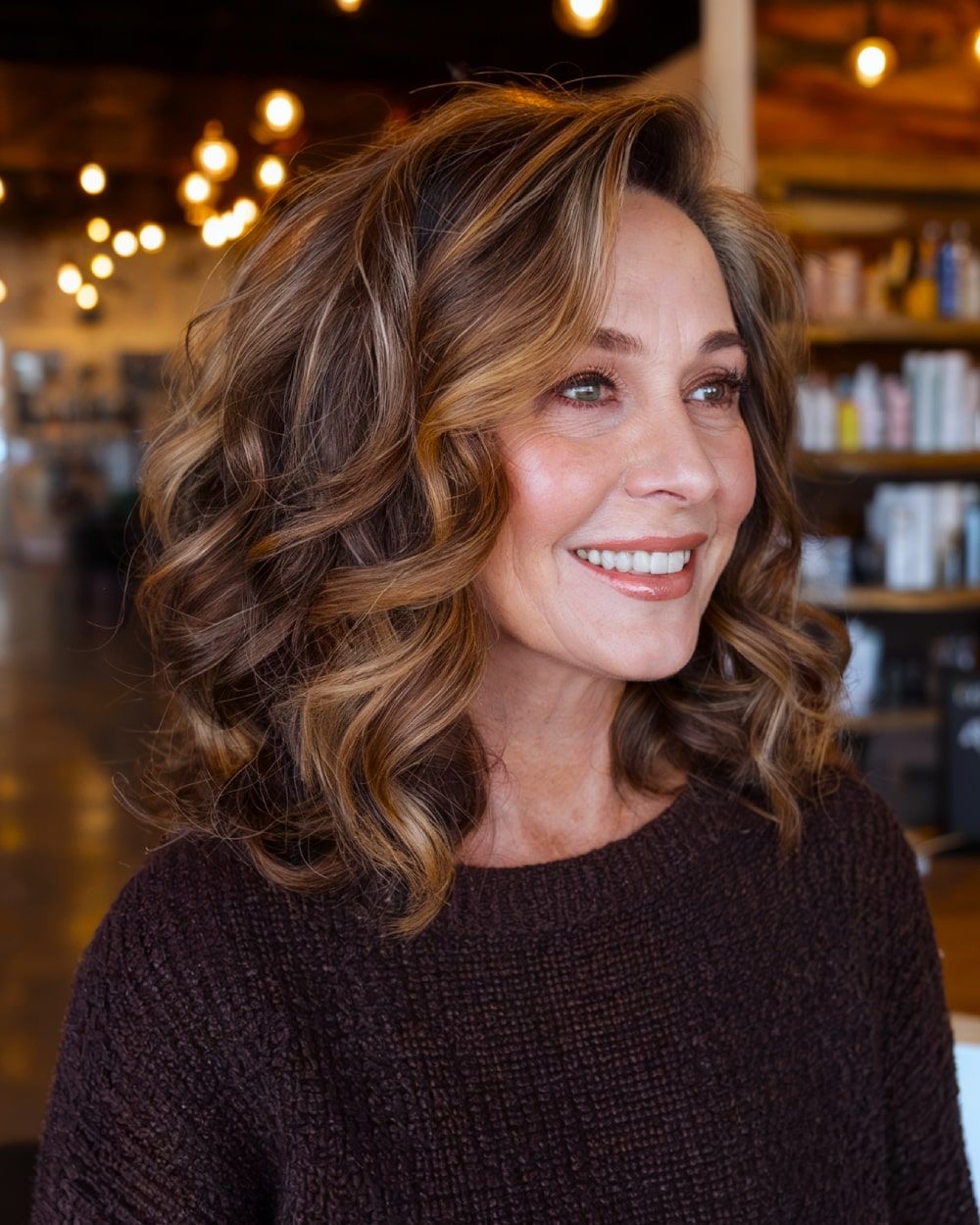
Picture a collarbone-length cut with a side parting and soft curls, and the colour doing all the work. That is the medium brown highlights with blonde highlights here. The base is a warm medium brown, not too dark, not too light, and the blonde pieces are placed through the mid-lengths and ends of this thick, wavy texture. This is a dimensional colour that needs thickness to pop: the blonde highlights sit on top of the brown, and if your hair is fine or low density, they can look scattered instead of intentional. The styling steps are simple: a blow-dry and a curling iron for the waves, then a texturizing spray to keep the lift.
Layered Brown Bob With Highlights
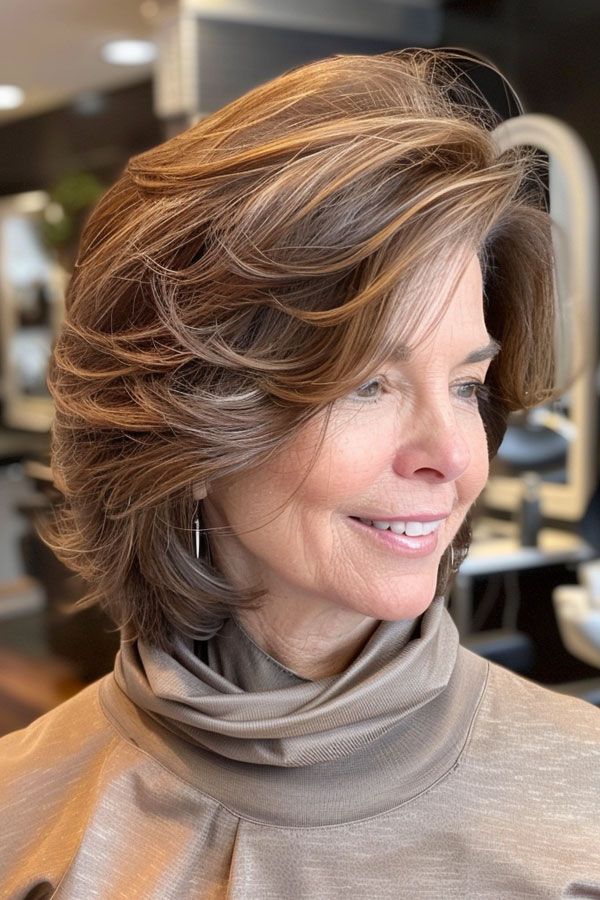
I will confess: I used to think a brown bob with highlights was the safe choice. Then I saw how layered strands catch the light and change the whole shape. The base is a warm chest brown, the highlights are a few shades lighter, painted on in thin ribbons. The technique is foil highlights, not balayage, which means the contrast is deliberate and the regrowth line is sharp. Chin-length, straight texture, side part. The honest downside: those layered ends need a trim every six weeks or they look ragged. The highlights need a toner refresh around week eight or they start pulling brassy. A round brush blow-dry is non-negotiable here. Flat by 4 pm is not an option if you want the layers to read.
Medium Brown Caramel Highlight Bob
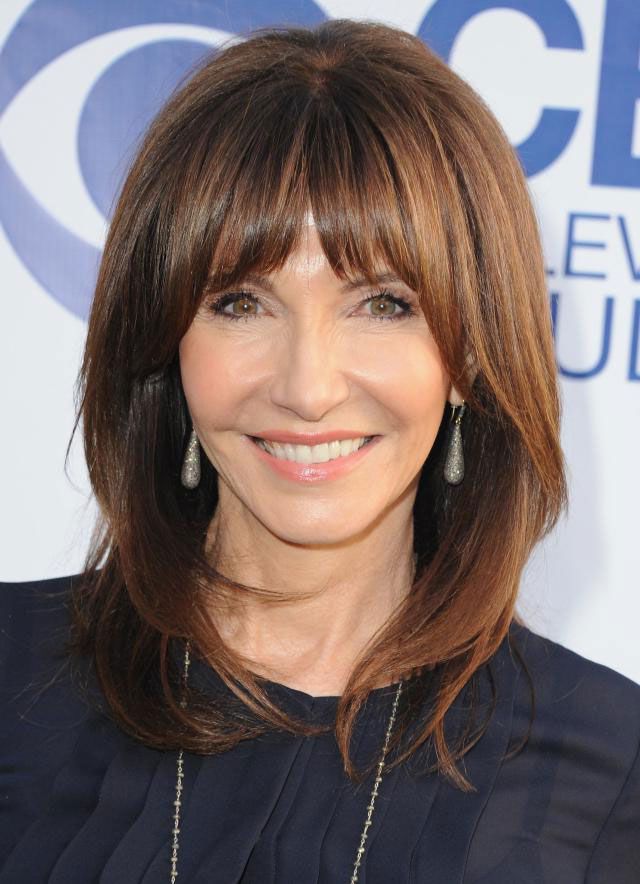
Here is the precise observation: the caramel highlight bob works because the highlights are not random. They sit on the top layer only, a few thin pieces around the face and through the crown. The base is a medium brown, the caramel highlights are a warm golden tone, painted in a soft babylight pattern. The technique is hand-painted, not foiled, so the transition is subtle. Collarbone length, straight texture, side-swept bangs that blend into the layers. No sharp regrowth line, the warmth just fades over eight to ten weeks.
The side-swept bangs hit the cheekbone and soften the whole front. A blow-dry with a round brush is the only way to get the volume. Flat by 4 pm is a risk on fine hair. The colour adds dimension without a drastic change.
Ash Blonde Bob With Blunt Bangs
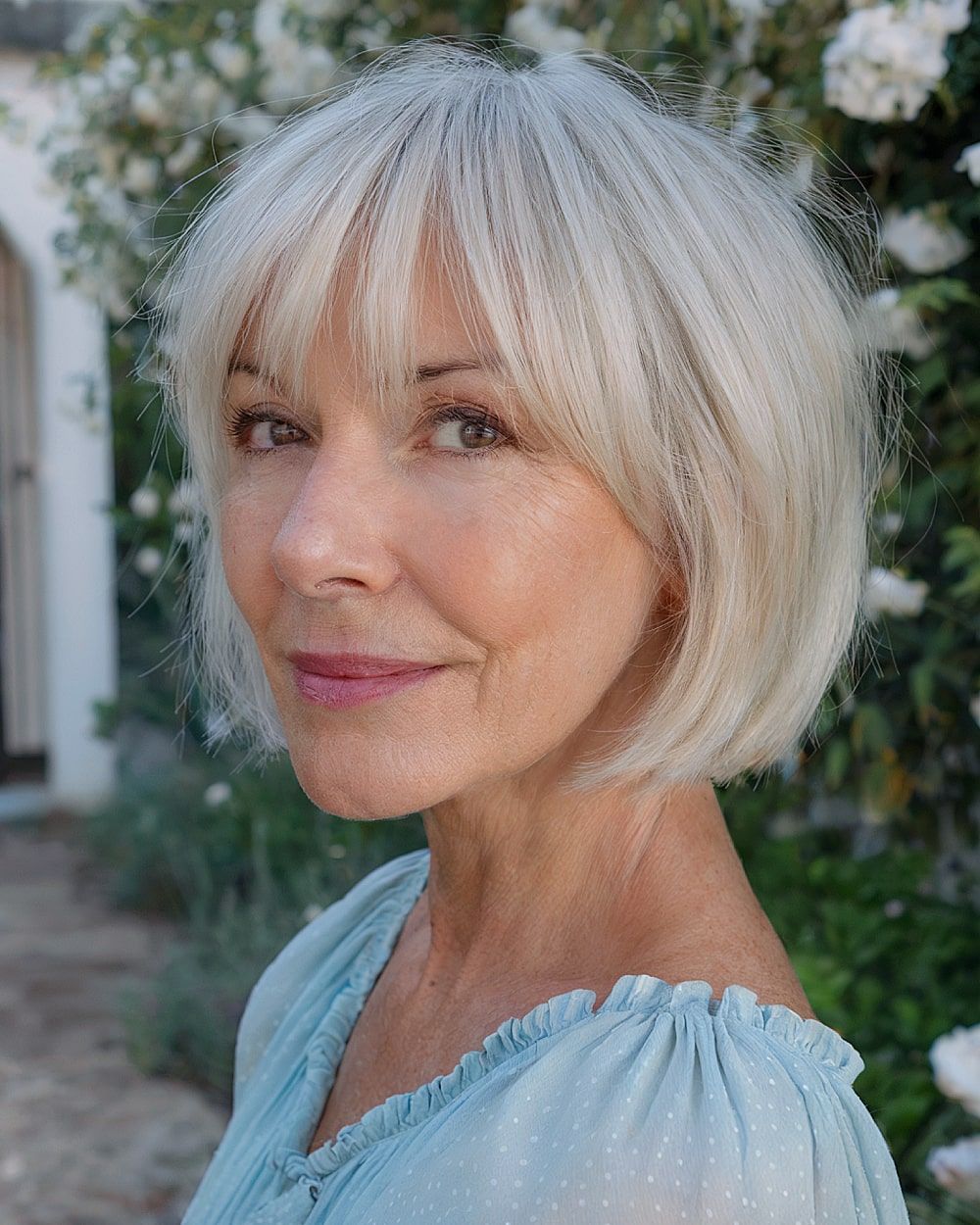
Verdict: the ash blonde bob with blunt bangs is a commitment, not a whim. The bob hits the chin, the blunt bangs sit just above the brow. The colour is a cool ash blonde, no warmth, no gold. The technique is a single-process colour, not highlights, so the tone is solid and flat. Straight texture, no visible parting. The blunt bangs need a trim every three weeks or they hit the lashes and drive you crazy. The bob needs a trim every six weeks or the blunt line softens. A flat iron is required every morning. The ash tone pulls green on some water, so a purple shampoo is not optional. It is a sharp look, but it is not a low-maintenance one.
Visual Idea
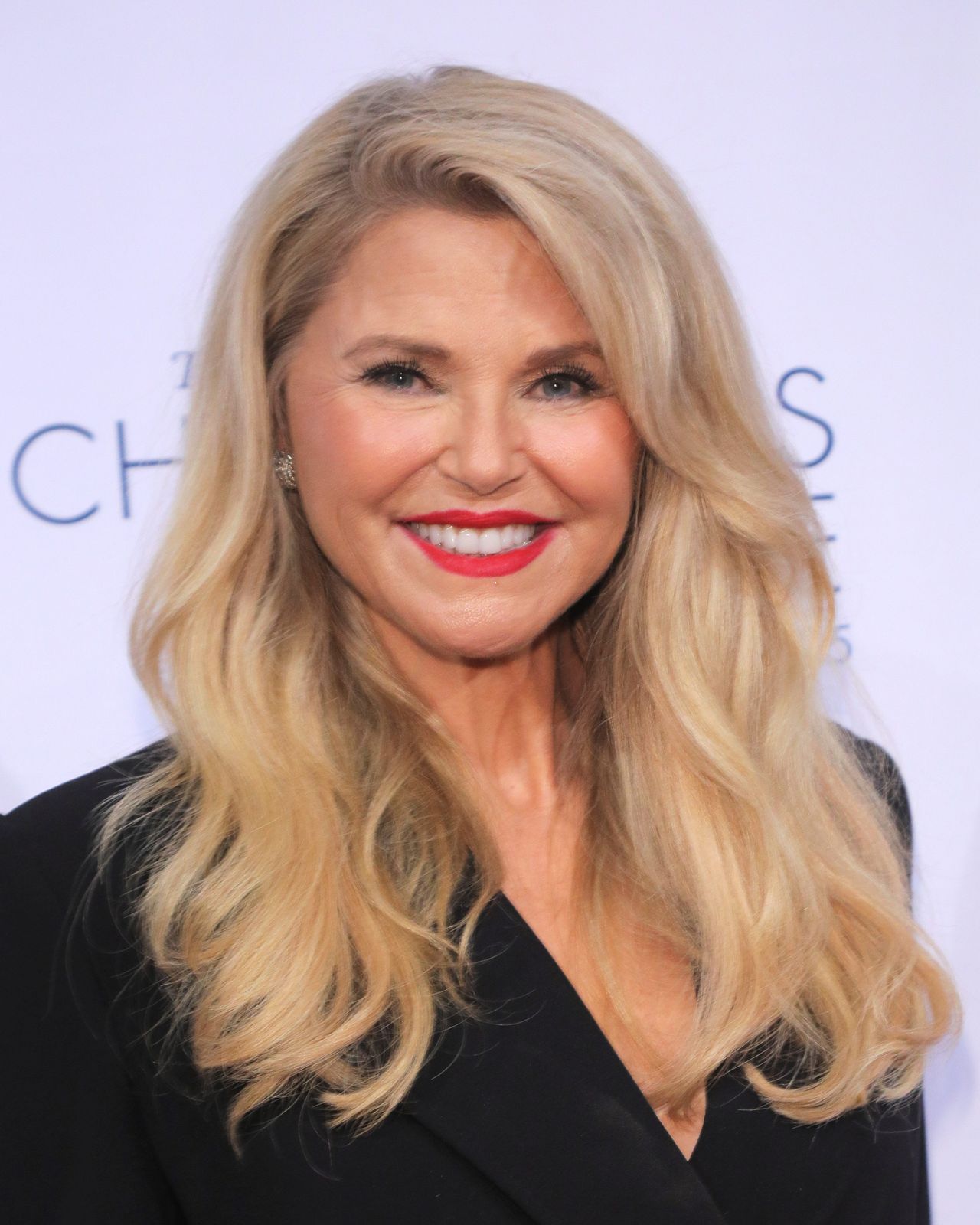
Can we talk about platinum blonde honestly? The colour is a cool platinum, almost white, no warmth. The technique is a full bleach and tone, not highlights. Mid-back length, wavy texture, fine density, middle part, no bangs. The loose waves are curled with a large barrel. The honest downside: brassiness shows at week three, the roots show at week four, and the hair needs a bond builder in every wash. A purple shampoo is not enough, you need a toner at the salon every four to six weeks.
The waves hide the grow-out line for about a week, then it is obvious. Fine hair can handle the bleach if the stylist is careful. The length makes the upkeep expensive. It is a look, but it is a project.
Final Thoughts
After writing all 19 of these, I noticed something. The colours that work best are the ones that don’t try to be something else. Silver that leans into silver. Blonde that stays cool. Burgundy that knows it’s a statement. No one is pretending.
- Trim the baseline every eight weeks
- Tone silver shades at week six, not week ten
- Root shadow buys six calm weeks
- Purple shampoo once a week, not every wash
I’m booking the silver-grey bob with the straight fringe next. It’s the one I kept coming back to.

