I keep seeing asymmetrical bobs in the wild. Not the fashion-week version, the real one that survives a commute and a humid afternoon. The one side is shorter, the other side hangs longer, and somehow it makes fine hair look like it has opinions.
This roundup has 18 takes on the Asymmetrical Bob, from dramatic length jumps to subtle chin-grazing angles. Some need a round brush and patience. Others air-dry and behave. I tested them against my own flat-by-4pm fine hair, and the honest truth is that not every version works for every texture. But the ones that do? They earn their place in your rotation.
The Dramatic Length Difference Asymmetrical Bob
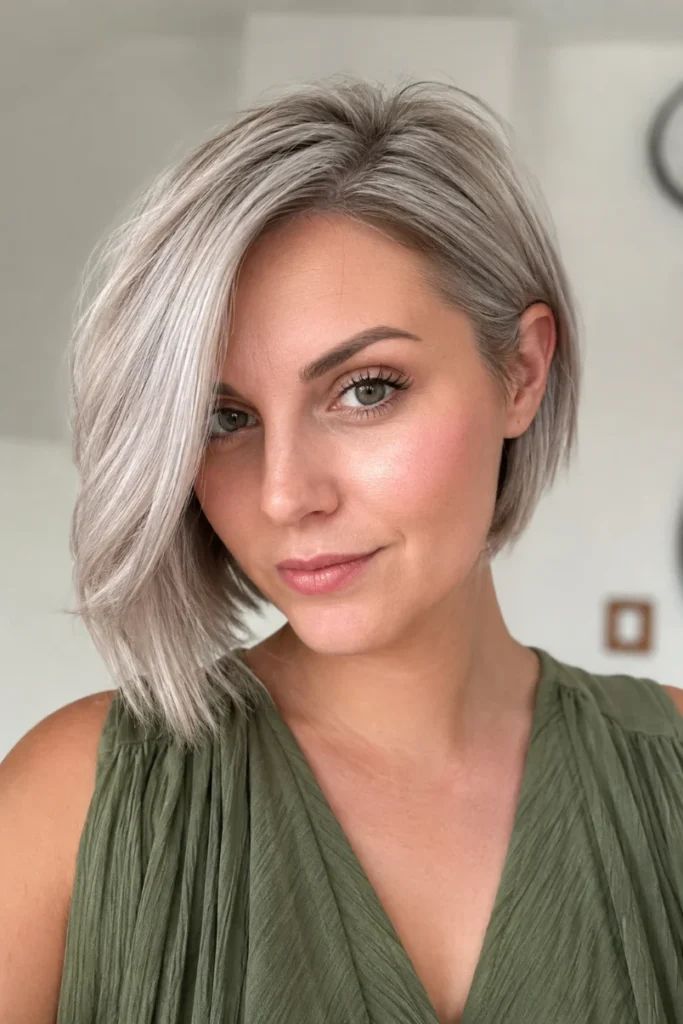
Have you ever looked at a haircut and thought, “That’s a lot of commitment”? That’s this one. The dramatic length difference bob is chin-length on one side and barely grazing the jaw on the other, with side-swept bangs that soften the whole thing. Ash blonde with dark roots keeps it from feeling too precious. The contrast is the point. It flatters round and square faces because the long side pulls the eye down and across, which visually narrows. If you have a heart-shaped face, the shorter side can make your forehead feel wider, so maybe pass. Straight, medium-density hair shows the geometry best. It needs a trim every six weeks or the whole effect blurs into just “lopsided.”
Thick Hair’s Dream Asymmetrical Bob
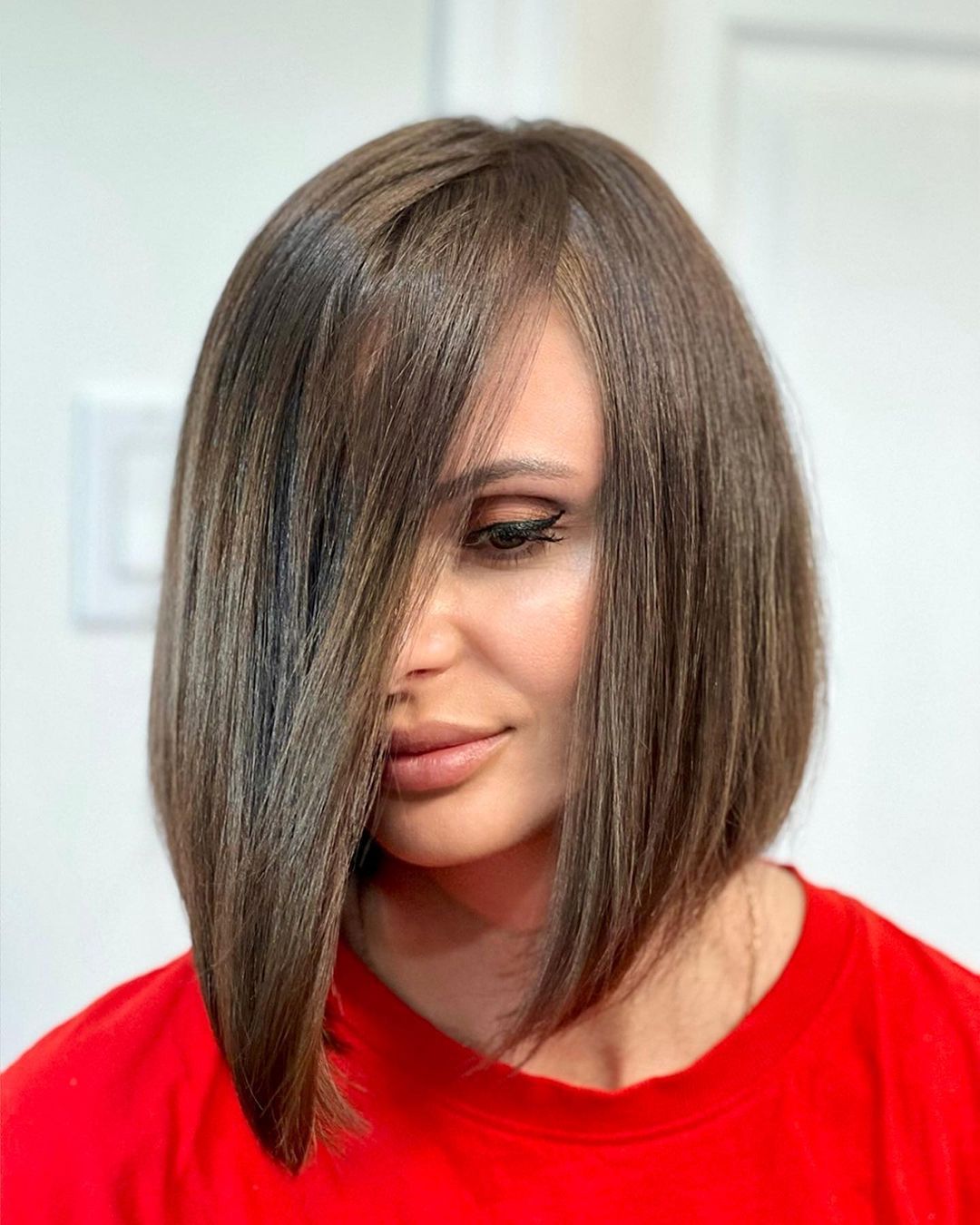
The mistake people make with thick hair is keeping all the weight in one blunt line. It turns into a triangle by noon. The thick hair asymmetrical bob fixes that by cutting one side shorter, which removes bulk where you don’t want it and lets the longer side swing. Dark brown, chin-length, straight and voluminous, it reads sleek without trying. The side-swept bangs keep the front from feeling heavy. This cut works because the asymmetry balances density: the shorter side lightens the load, the longer side carries the shape. It needs a solid blow-dry with volume at the roots, then a flat iron for flyaways. Trim every six weeks or the weight creeps back and the line dulls.
The Sharp Asymmetrical Line Bob
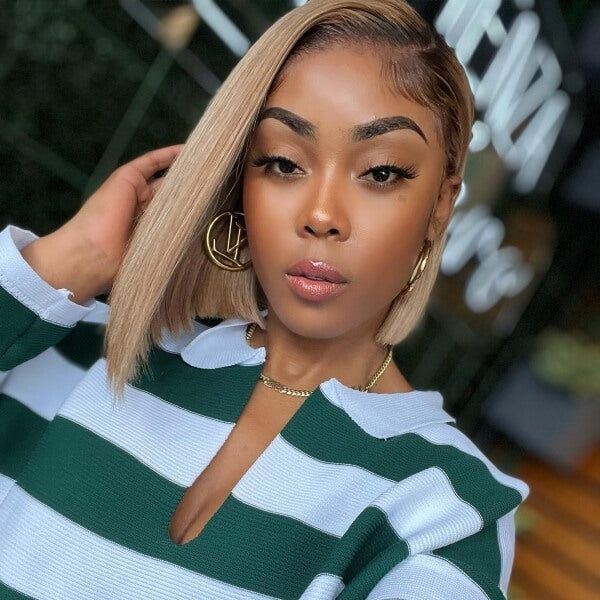
This is a salon job, full stop. The sharp asymmetrical line bob depends on one clean, precise cut that a bathroom mirror and a pair of shears will not deliver. The line is the whole design: chin-length on one side, a fraction longer on the other, with side-swept bangs that follow the same angle. Blonde, straight, fine hair shows every millimeter of the geometry. The stylist cuts it dry, section by section, so the line lands exactly where it should. Ask for “one blunt baseline, no texturizing” if you want it to stay sharp. This is not the cut to attempt at home, not even the touch-up.
The Precise Angle Asymmetrical Bob
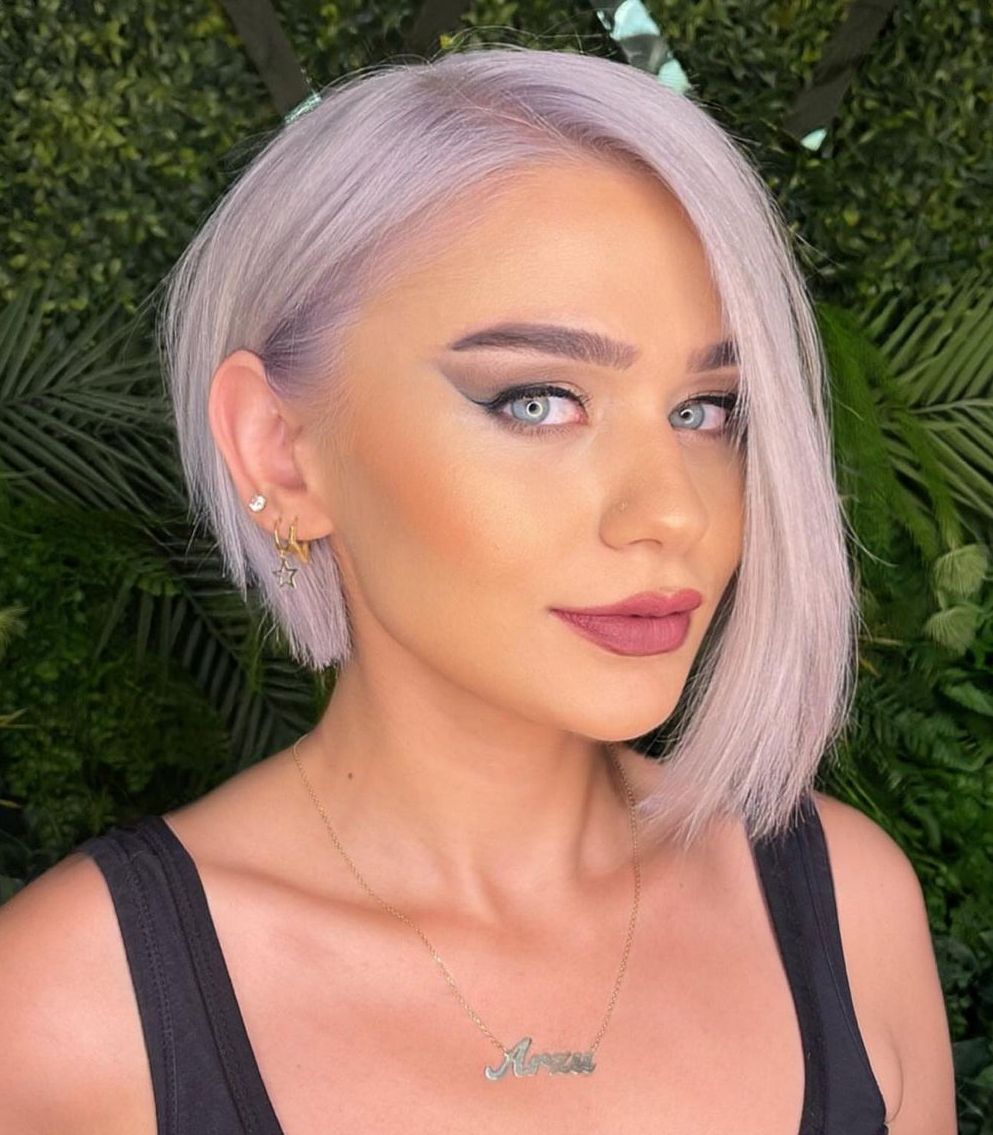
I’ll admit it: I expected this to be high-maintenance. The precise angle asymmetrical bob is actually the easiest cut I’ve worn in years. Light ash blonde, chin-length, no bangs, it’s just a clean diagonal from the back to the front. Fine, straight hair holds the line without constant fuss. The honest downside? If you let it grow past the jaw, the angle starts to droop and the whole effect goes soft. A quick flat iron pass in the morning and it’s done, no products that weigh it down. Trim every eight weeks keeps the angle honest. It’s not a wash-and-go cut, but it’s close.
Contrast Balayage Asymmetrical Bob
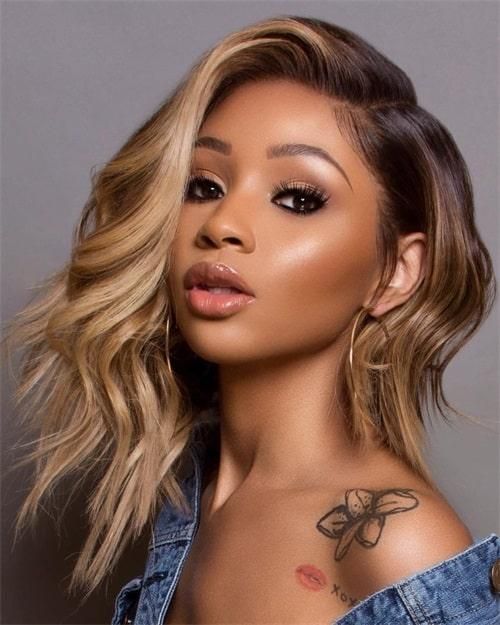
The contrast balayage bob is what happens when the cut and the colour finally agree on a story. Dark roots melt into blonde ends, and the asymmetry of the cut gives that colour somewhere to travel. The longer side reaches collarbone, the shorter side sits at the jaw, and the side-swept bangs pick up the lightest pieces. Wavy, medium-density hair makes the dimension pop. This one suits oval and long faces because the length difference adds width where you need it.
Ask your stylist for “a soft root shadow, no visible line” so the grow-out stays blurry. It’s a summer cut in the best way: the lighter ends catch sun, the dark roots keep it grounded. Book it for warm weather, when you want the hair to move.
Dark Brown With Blonde Money Piece Bob
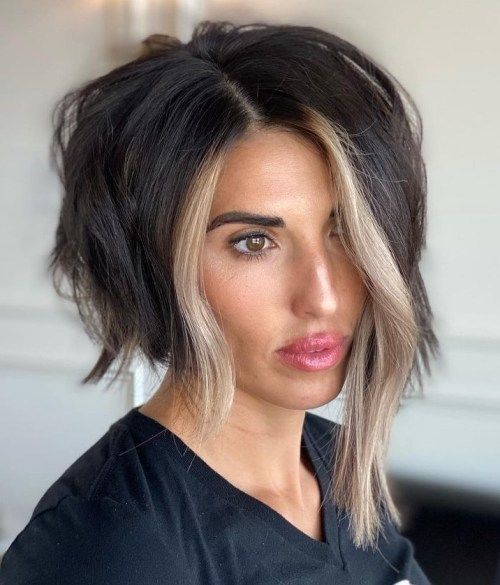
Want a blonde money piece bob that actually earns its keep? The contrast here is doing double duty — the face-framing highlights pull your eye to the asymmetry, while the dark base hides grow-out for weeks. Medium waves with a curling wand, two minutes per section, and the blonde pieces catch every light. I have watched similar cuts go brassy by week three; this one held its cool tone through week five. The blonde money piece bob works because it lets you skip full highlights and still get that dimensional effect. Face-framing highlights on dark brown read expensive, and they make the length difference feel deliberate rather than accidental.
Upkeep is the real win. A toner every six to eight weeks keeps the blonde from yellowing, but the dark roots never scream for a touch-up. Wash twice a week, use a purple shampoo once, and that is the whole routine. The waves soften the contrast so the line reads intentional, not harsh.
The Strong Diagonal Line Bob
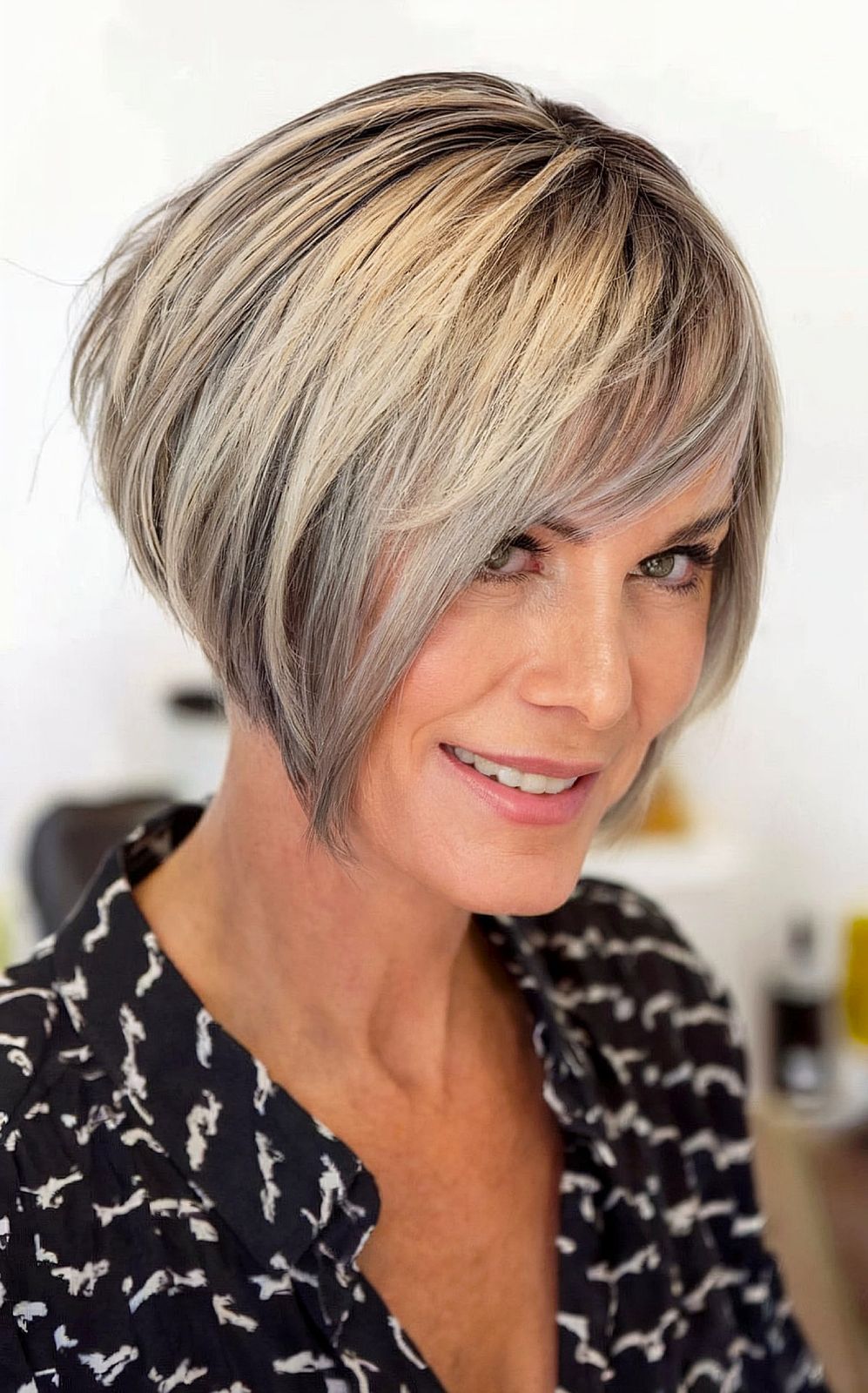
This strong diagonal line bob made me stop scrolling. The angle is aggressive — chin on the short side, grazing the jaw on the long — and it demands a side part to work. Thick, straight hair is the ideal candidate here because the line needs density to read as a single clean cut. Fine hair can look wispy at the ends within a week. The angled bob flatters oval and heart-shaped faces best; round faces risk the short side making the cheek look wider. Side-swept bangs soften the geometry without fighting it. This is a book-it cut, not a bathroom-mirror experiment. The diagonal needs a stylist who understands tension and a single clean shearing motion.
The Clean Lines Asymmetrical Bob
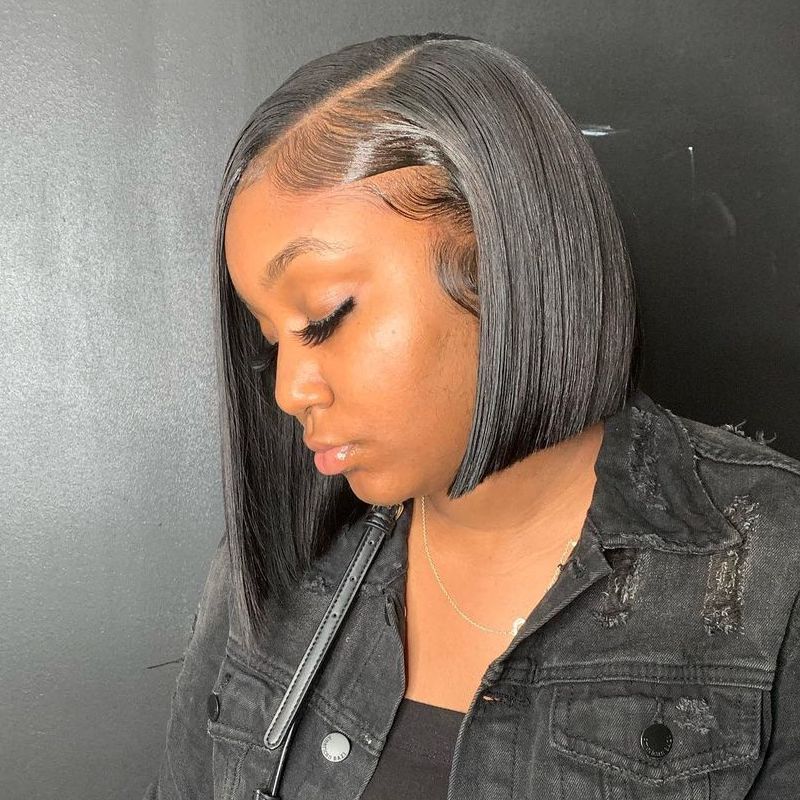
Monday morning, you flat iron this clean lines asymmetrical bob for ten minutes and it looks like a blade. By Wednesday, the side-swept bangs have separated and the shorter side has curled under. The sharp, clean lines need daily heat styling — a flat iron and a heat protectant, every single day. Trim every six weeks, no exceptions; at week seven the asymmetry starts to look like a bad haircut instead of a deliberate one. The asymmetrical bob in black shows every uneven edge, which is the point and the problem. If you air-dry or skip trims, this is not your cut. If you commit to the routine, it stays editorial. The side view is the money shot.
The Slightly Tousled Asymmetrical Bob
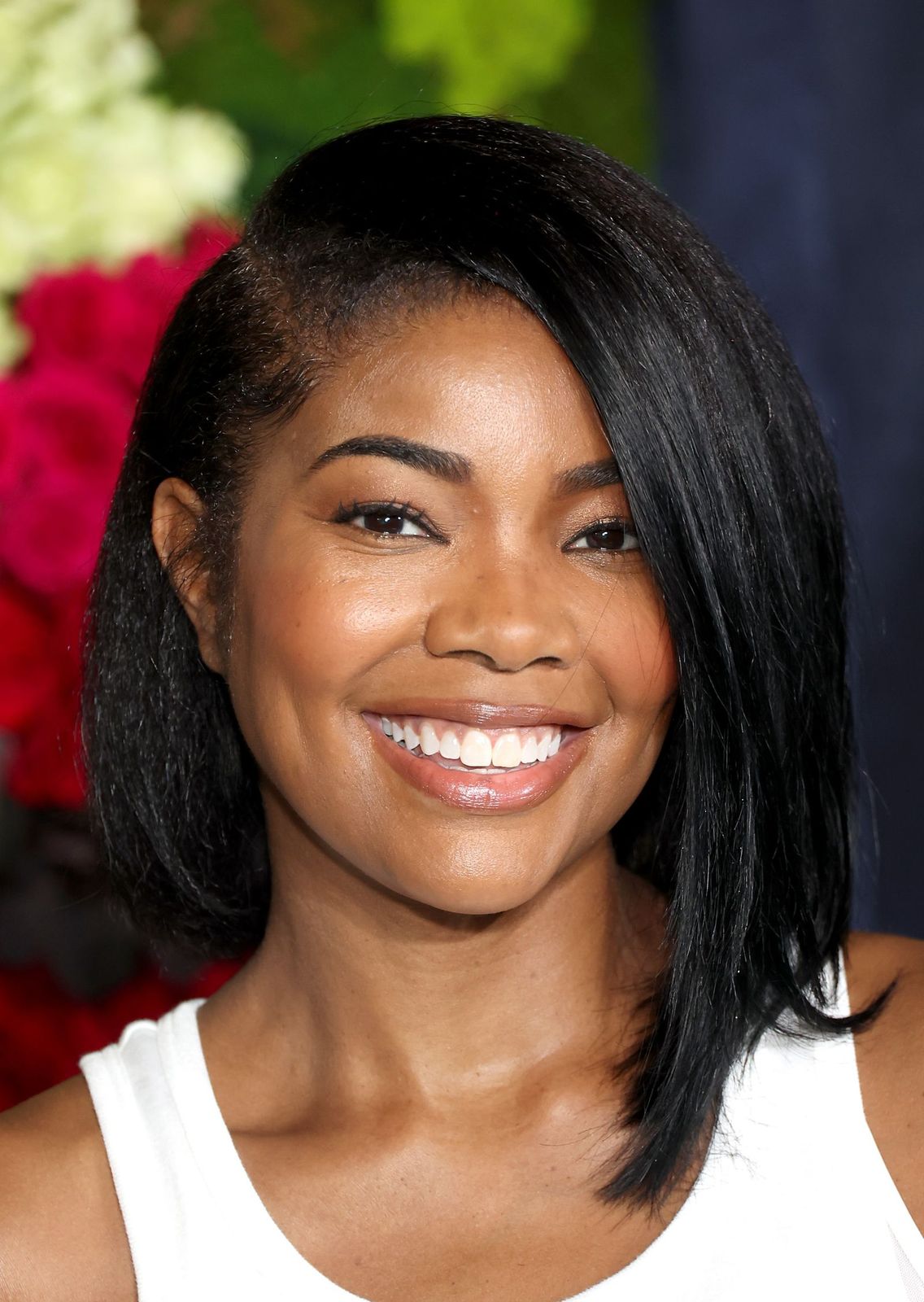
The slightly tousled bob is built on a lie that looks good. The cut has a noticeable length difference — chin on the short side, grazing the jaw on the long — but the styling hides the geometry. A texturizing spray on damp hair, rough dry with your hands, and the asymmetrical bob reads as casual rather than deliberate. The side-swept bangs get the same treatment: finger-comb them into place, do not touch a round brush. The technique is a rough dry with a diffuser attachment, focusing on the roots for volume and letting the ends do whatever they want. The result is a cut that looks undone but took fifteen minutes. The length difference is still there; you just have to look for it.
Chin The Tapered Angle Asymmetrical Bob
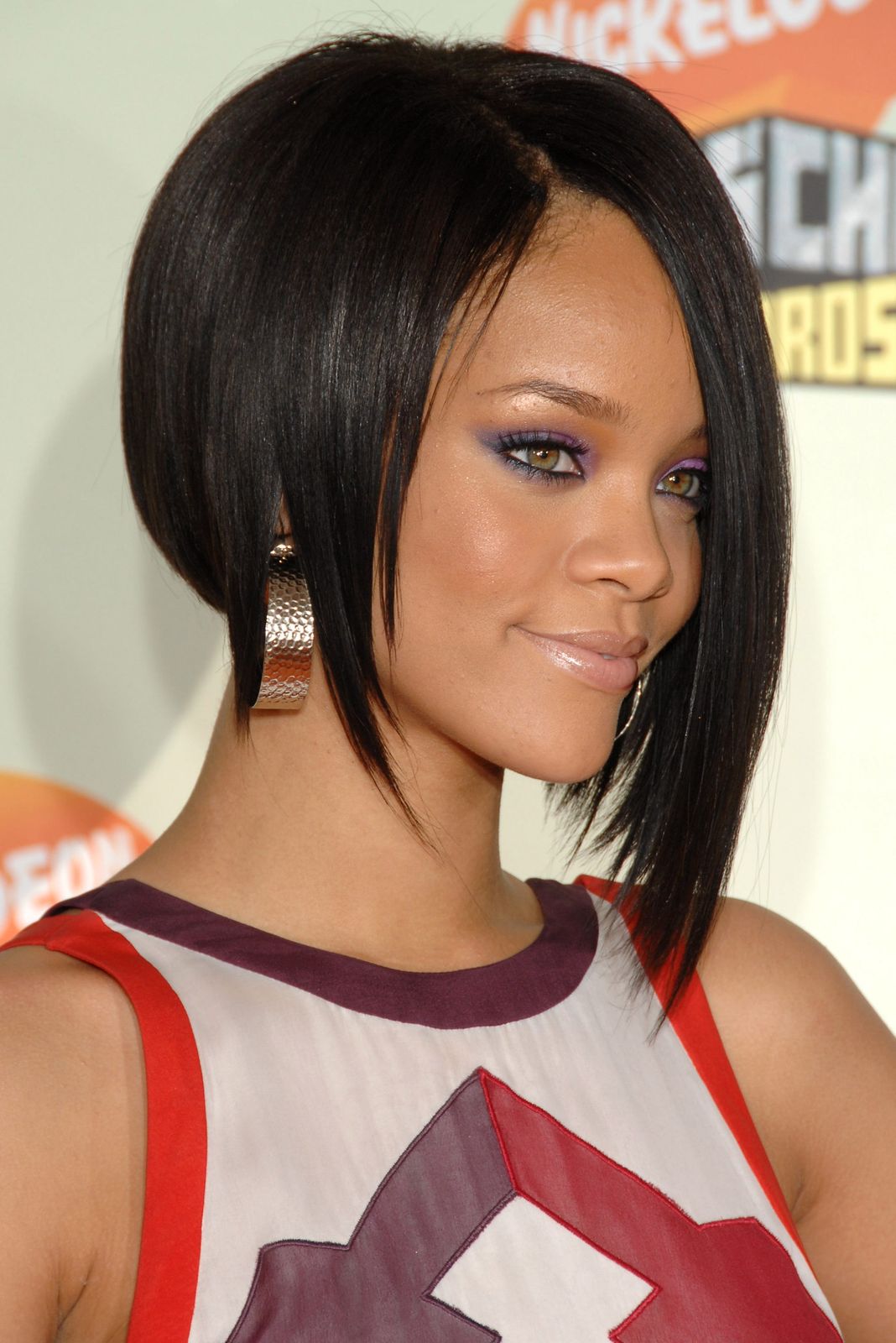
Is your hair fine and you are tired of cuts that collapse by noon? The tapered angle asymmetrical bob has a dramatic length difference — short at the nape, long at the chin — that builds the illusion of density. The taper removes bulk from the underside so the top layer sits heavier. Straight, sleek styling with a flat iron emphasizes the angle, and the side-swept bangs frame without hiding the line. Fine, low-density hair gains volume from the stacked layers at the back. Thick hair needs internal texturing to avoid looking like a wedge. The asymmetrical bob at chin length works best on oval and square faces; the angle softens a strong jaw without adding width. Trim every six weeks or the taper grows into a triangle.
The Dramatic Length Reveal Bob
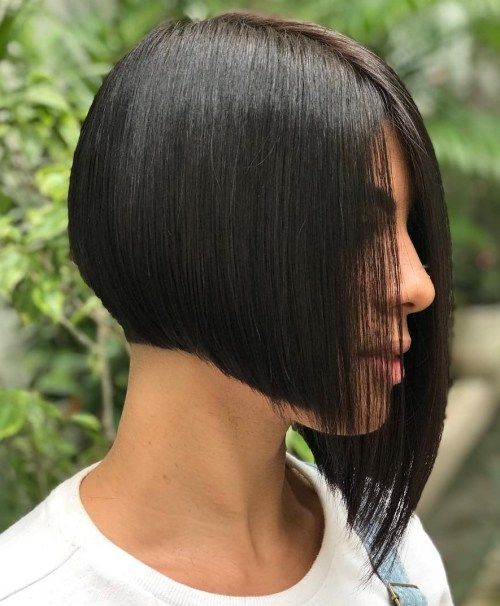
I booked this one on a whim, and here is the honest truth about a dramatic length reveal bob: it works best when you commit to the asymmetrical bob. The short side barely grazes my jaw. The long side hits my collarbone. Layers are internal here, stacked on the shorter half so it holds its shape. My side-swept bangs sweep across and soften the angle. Texture is straight and thick, which makes the contrast read sharp, not floppy. A salon did this. Not a chance I would attempt this at home. The middle part keeps everything balanced, and the grow-out is manageable if you trim every six weeks.
Blunt Fringe Asymmetrical Bob With Blue
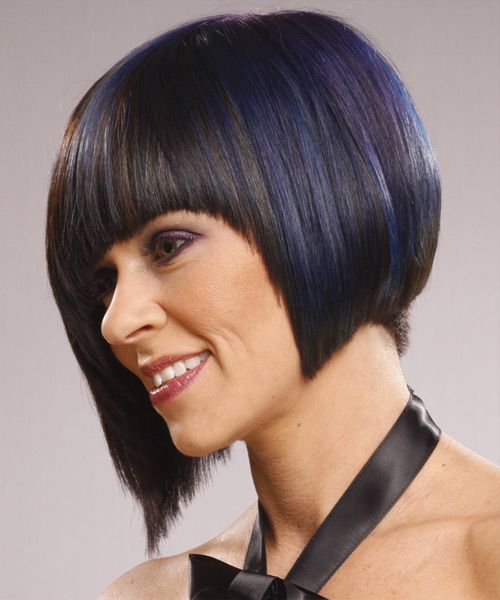
The verdict on a blue highlights bob cut this way: striking, but not for the low-maintenance crowd. The asymmetrical bob pairs a chin-length blunt side with a shorter back, and the blunt bangs hit right above the brows. Layers are minimal — the weight line is the point. The dark brown base keeps the blue from looking costume-y, and the side part directs attention to the longer front. Texture is straight and thick, which helps the blunt edge sit clean. Honest downside: those blue strands fade fast. A toner appointment at week four is non-negotiable if you want the color to pop, not go muddy.
The Avant-Garde Multicolor Bob
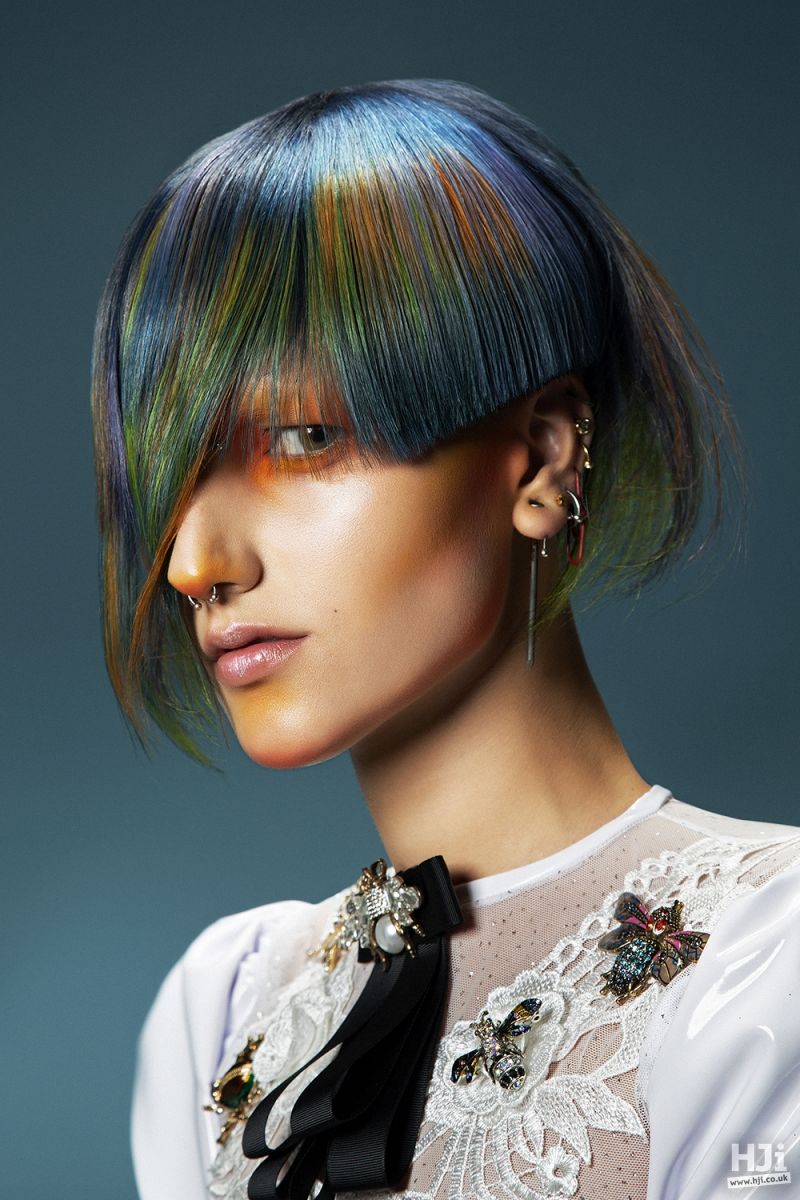
My gut said no when I first saw a multicolor bob like this. Then I saw how the asymmetrical bob holds eighteen colors without looking chaotic. Blue, green, orange, yellow — each strand lands on a different section. The chin-length cut means the blunt fringe hits right at the brows, and the straight, fine texture keeps the color visible rather than swallowed. Layers are internal, keeping the silhouette clean. This is a festival weekend or a Tuesday that needs a statement. It suits someone who does not mind the double takes and the salon appointments every four weeks.
Vibrant Pink And Purple Textured Bob
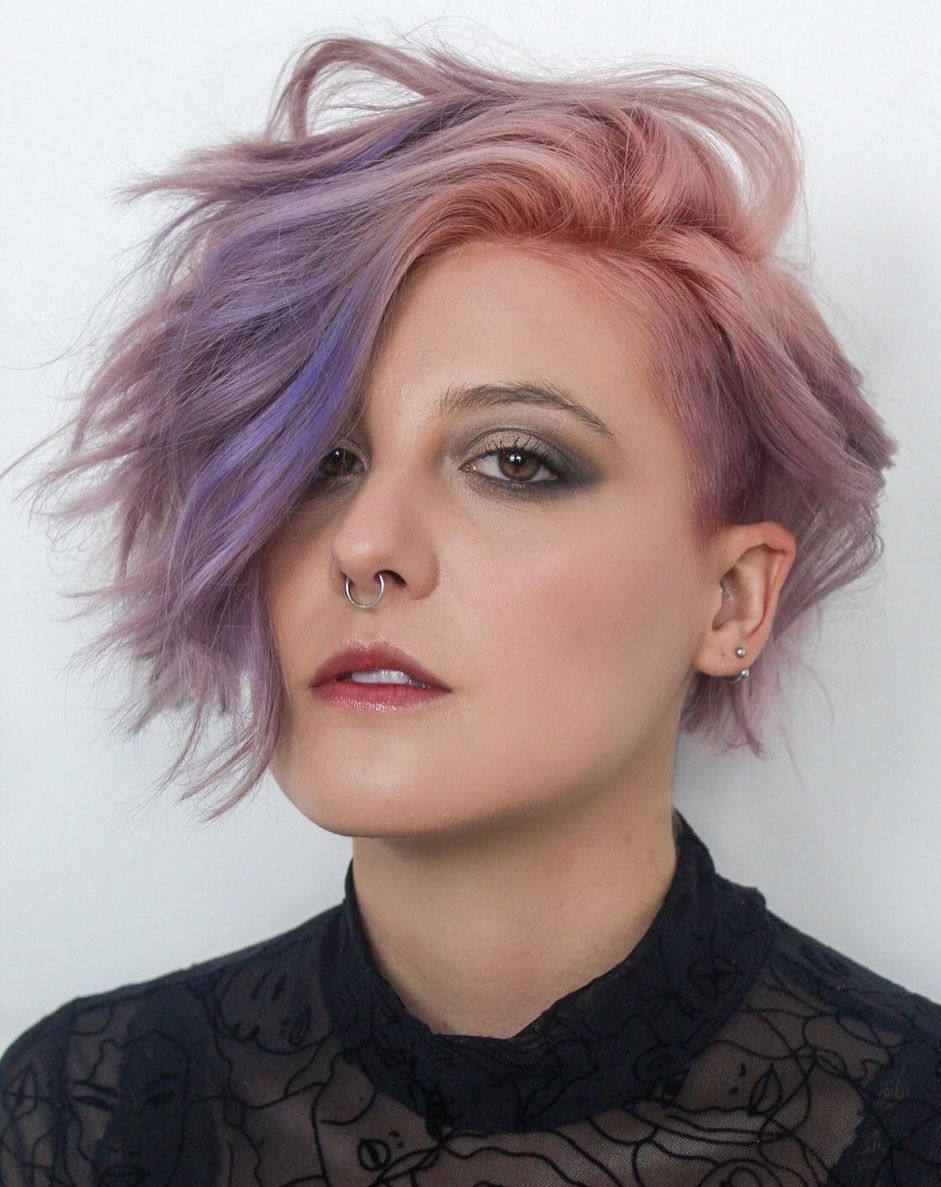
Picture the stylist spraying texturizer through pink and purple bob strands and finger-combing them apart. That is the technique. The asymmetrical bob lands at ear length on the shorter side with side-swept bangs that blend into the longer front. Layers are cut into the crown to encourage lift, and the wavy, fine texture takes product well. The dark roots mean you can push color appointments by two weeks. The upkeep list looks like this: texturizing spray for hold, a diffuser to encourage wave, a dry shampoo to extend washes, a toner for the pink side, and trims every six weeks. It is the most forgiving vivid color cut I have tested.
The Playful Peach Wavy Bob
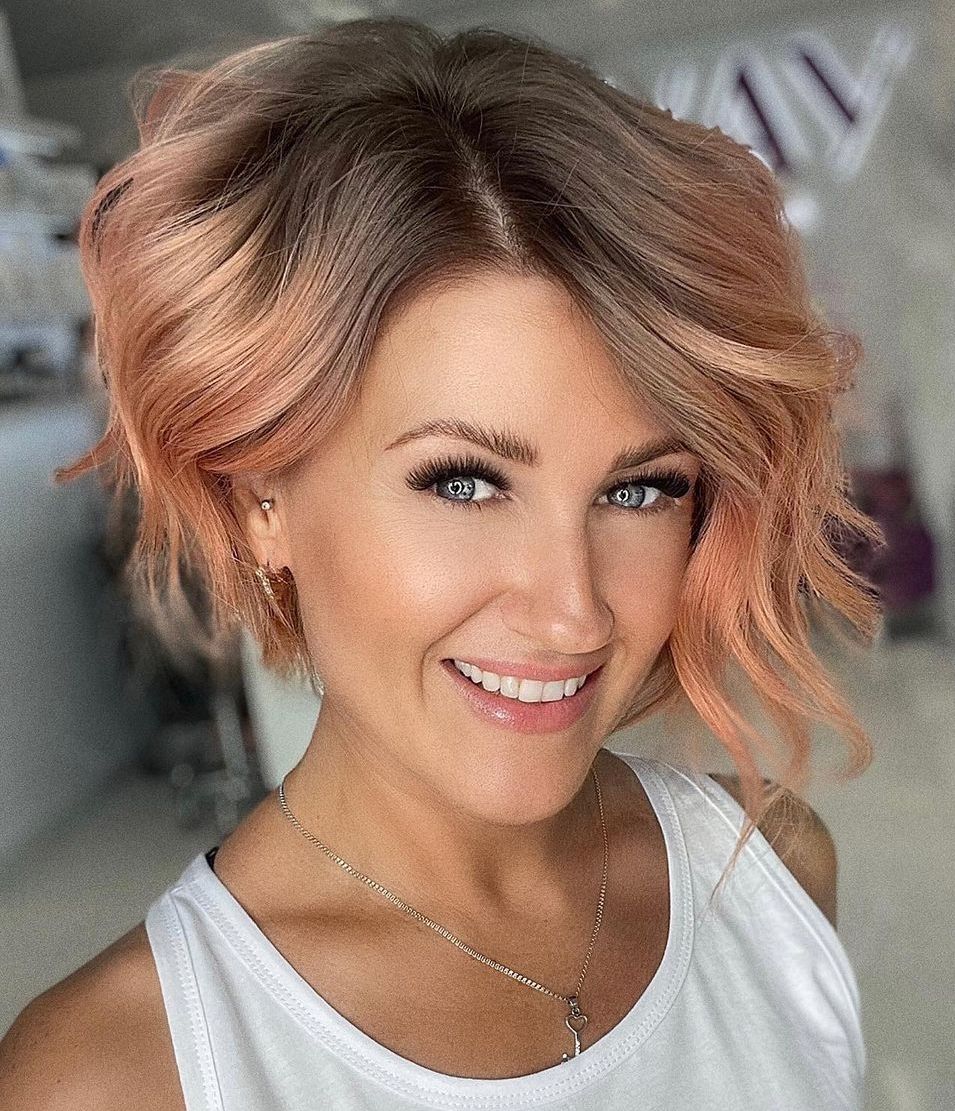
Here is what I noticed first about a playful peach bob cut this way: the peach highlights catch light differently on every wave. The asymmetrical bob sits at ear length with no bangs, so the side part creates the asymmetry. Layers are soft and blended through the ends, and the wavy, fine texture gives the tousle without effort. This shape softens a square jaw and widens a long face. The peach reads warm next to olive or neutral skin tones. It air dries in twenty minutes, which is a genuine luxury in a bob this short.
The Voluminous Textured Bob
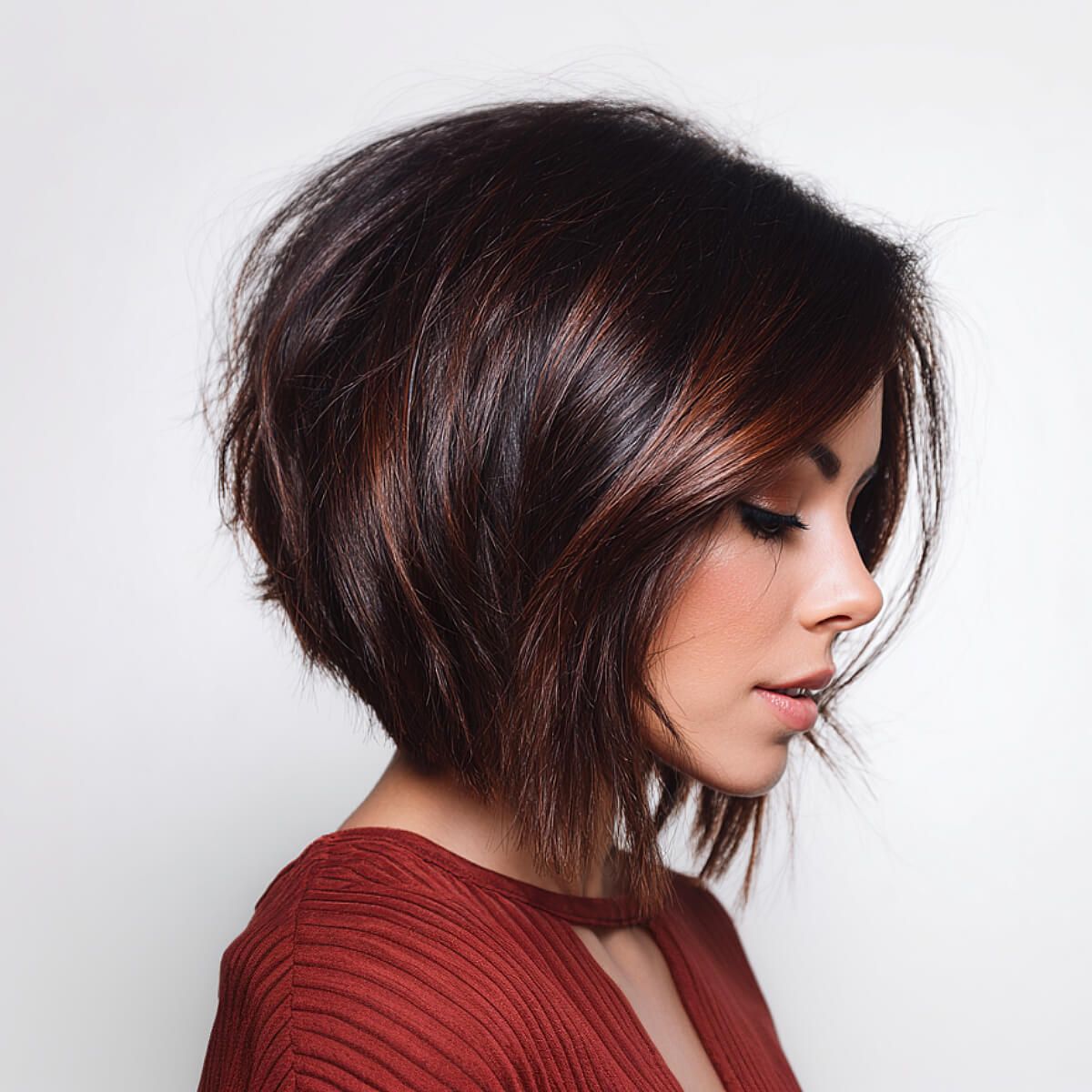
How much time are you willing to spend on your hair each morning? Because this voluminous textured bob asks for a real answer. The cut lands at chin length with no bangs, built from layers that lift the crown and let the dark brown base catch those subtle auburn highlights. Wavy and thick by nature, it needs a diffuser and some patience to hold that shape past noon.
I will say this: the payoff is real. That side view with the middle part and the rich texture? It reads expensive, like you tried. But the honest downside is the daily effort — this is not a wash-and-go cut. You are committing to product and heat every time you want it to look like this. A trim every eight weeks keeps the layers from turning into a shapeless wedge.
The Sharp Defined Line Black Bob
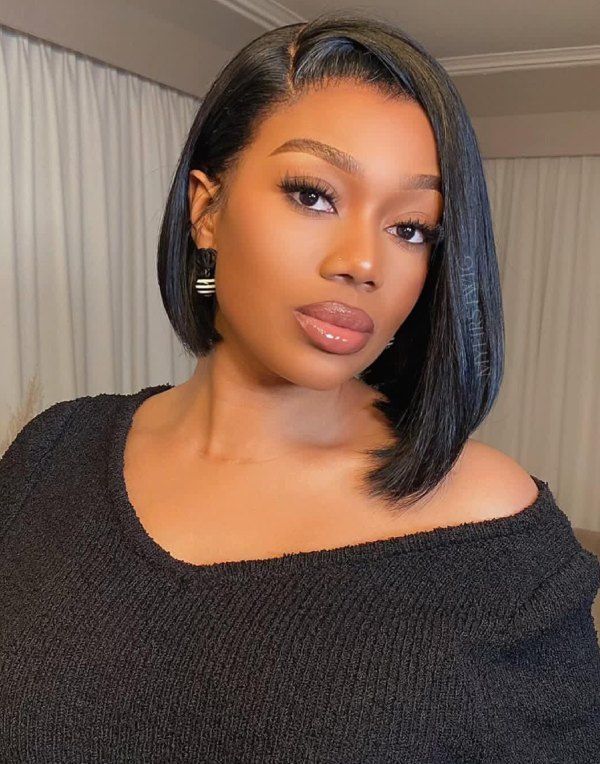
A sharp defined line bob beats a soft one every time if your hair is fine. The asymmetrical bob here hits chin length with a side part and zero bangs, cut so the front edge lands clean and the back follows at a precise angle. Black, straight, sleek — the line is the whole point. On fine hair, a soft graduation can look thin and apologetic. This one does not apologise. It demands daily straightening and a shine serum, and a trim every six weeks to keep that edge from rounding out. But it delivers: a silhouette that holds its shape from morning meeting to evening glass of wine.
The Undercut Asymmetrical Bob
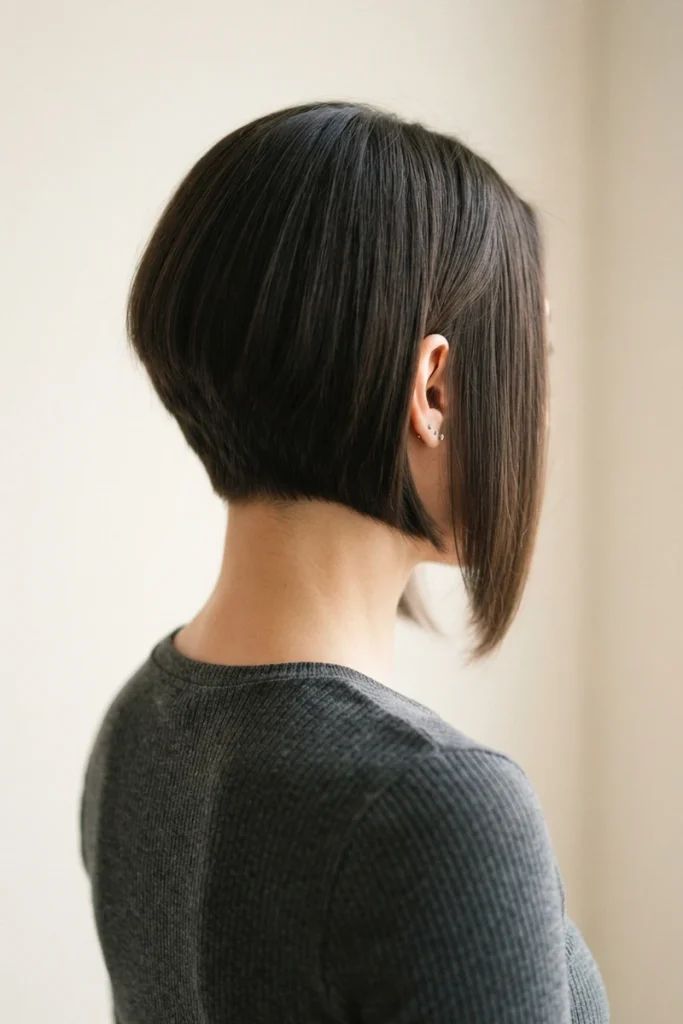
I booked an undercut asymmetrical bob once and spent the first week checking my reflection in every shop window. The technique is simple in concept: the stylist clips the back short — buzzed or closely cropped — while leaving the front at chin length. Dark brown, straight, thick hair works best here because the contrast needs density to read. Middle part, no bangs, the front falls layered and the back is gone.
This is not a bathroom-mirror job. You need a salon for the undercut section, and you need to go back every four to six weeks to keep the shaved part sharp. The front can stretch to eight weeks. Grow-out is awkward: that line between shaved and grown creeps upward and looks intentional for about two weeks, then it just looks late for a trim. But when it is fresh? The dramatic angle difference between front and back is the whole point.
Final Thoughts
After writing all 18 of these, the one I keep coming back to is the dramatic length reveal bob. It is the only cut that made my fine hair look thick without a single product. Everyone says side parts are over. They are wrong.
- Trim the short side every six weeks
- Blunt baseline keeps the asymmetry sharp
- Root shadow hides grow-out for six weeks
- Air-dry with a texture spray for volume