
I kept seeing these loc colors in my feed and on the subway, and they weren’t the same old brown-to-blonde. Deep burgundy, electric blue, pink melting into purple — someone was having fun. It’s not subtle, and that’s the point.
So here are 24 loc color ideas that actually work, from a single bold shade to layered ombre blends. Some are DIY-friendly, some need a pro. I’ve got fine hair that goes flat by 4 pm, so I know which ones hold and which ones fade fast. This is for anyone who wants their locs to say something, without the salon markup.
Deep Burgundy Faux Loc Updo
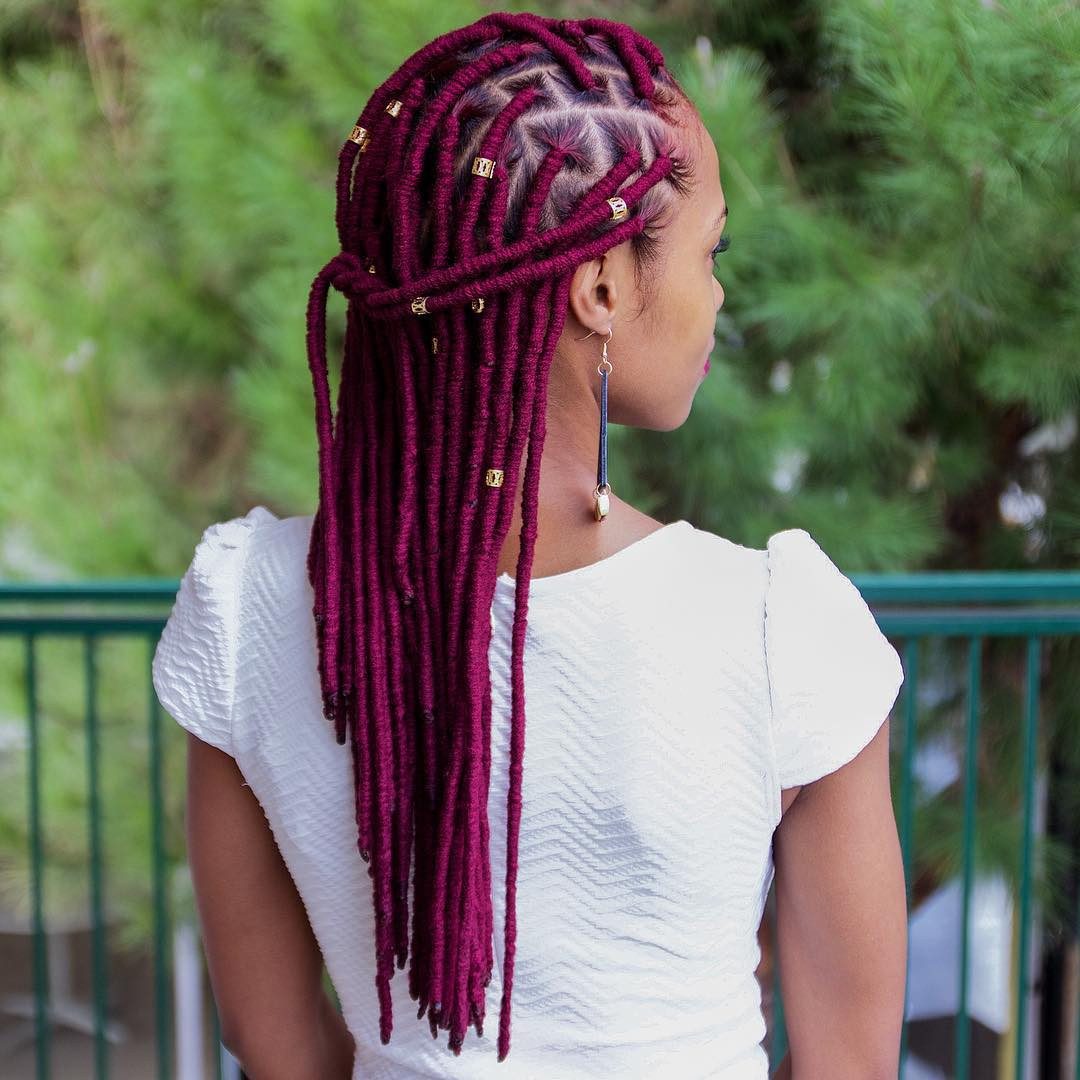
That deep burgundy reads almost black in dim light, then catches a gold bead and turns wine-bottle bright. It is a statement that does not shout. The faux locs hit mid-back, the texture is uniform braided, the tone is cool enough to sit next to a black turtleneck without fighting it. This colour flatters anyone who wants rich without neon. Skip it if you prefer your reds fire-engine loud. The middle part and the beads mean the parting must be straight — one crooked section and the whole geometry wobbles. Professional installation, no question. You do not attempt this braid pattern in a bathroom mirror at 10 pm.
Electric Blue Loc Ponytail
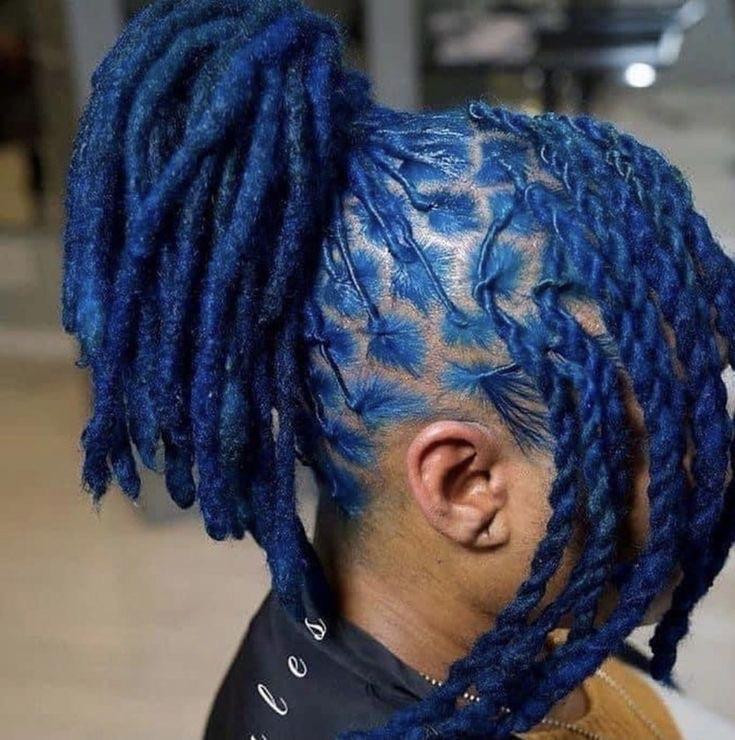
Ever wonder how electric blue stays that clean on locs? It is a pre-lighten situation. The natural base gets lifted first, then the blue goes on, and the tone is pure cobalt with no green lean. Straight texture here, pulled into a high ponytail with an intricate middle part. The colour holds its punch for about six weeks before it starts reading more teal than true blue. Wear it with a slicked-back crown and let the ponytail drop. Upkeep means a toning refresh at the salon, not a purple shampoo fix. This one is not a weekend project.
Vibrant Pink and Purple Locs
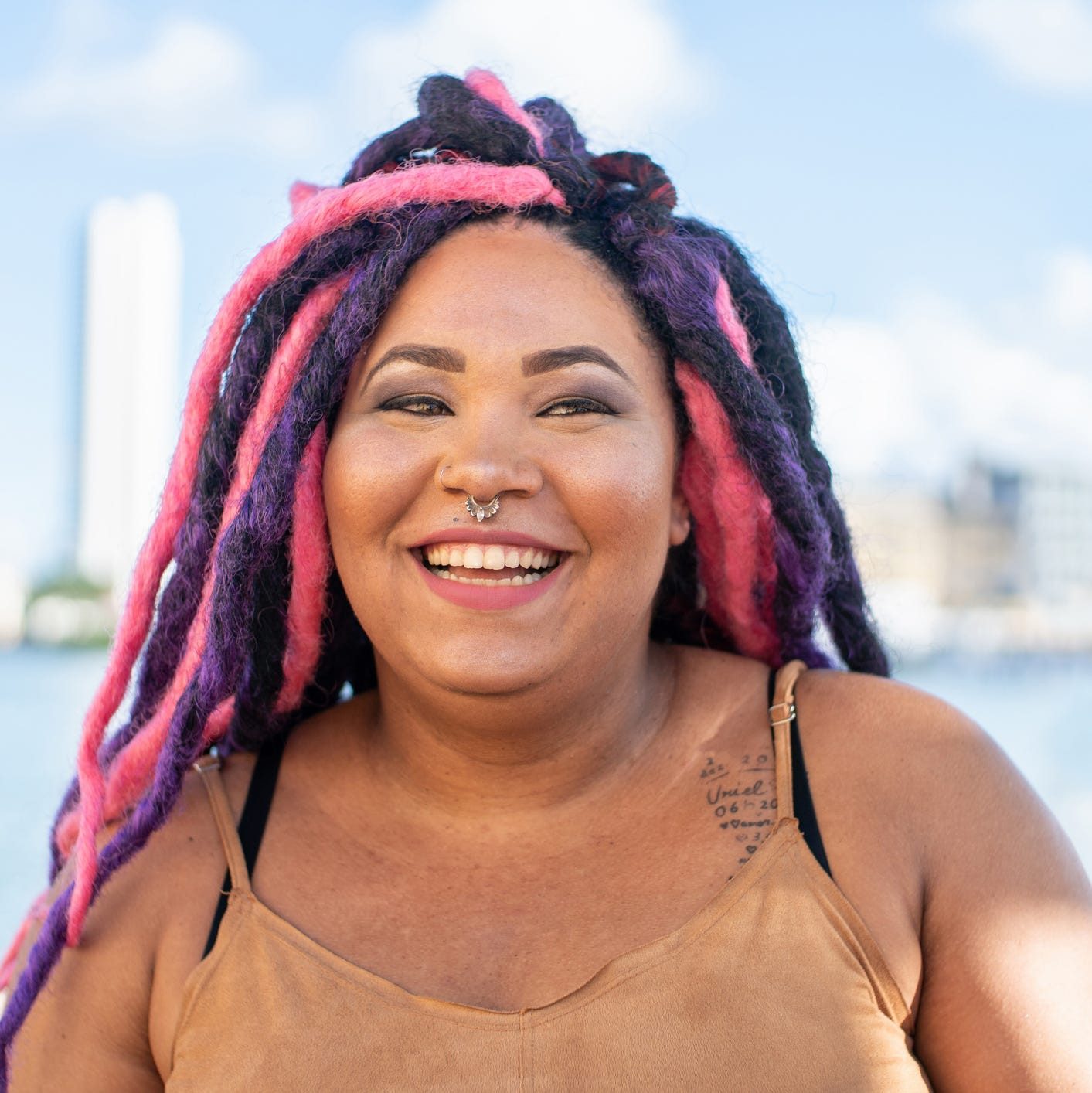
Pink and purple locs win the colour lottery. They sit together warmer than a single magenta, the pink leaning fuchsia and the purple staying cool enough to separate. Mid-back length, thick wavy texture, loose and unstyled beyond the part. This is a summer colour if I have ever seen one — it glows next to white, fades slower in humidity than a pastel would. Compared to a solid violet, these two tones give more depth and a longer window before the roots show. The grow-out line lands at the crown, not at the part, which buys you an extra two weeks before the retouch call.
Vibrant Blue Loc Bun
I will admit I underestimated how long a high loc bun takes to build. Thick wavy texture, vibrant blue from root to tip, a side part and face-framing strands that soften the whole thing. The bun itself sits high and voluminous. This is a salon style through and through — the colour needs professional application to avoid patchiness, and the wrap requires tension you cannot replicate on yourself. The blue tone will fade fastest at the ends, so plan a refresh every six weeks. Worth it for the silhouette. Not worth it for a Tuesday.
Purple and Orange Loc Updo
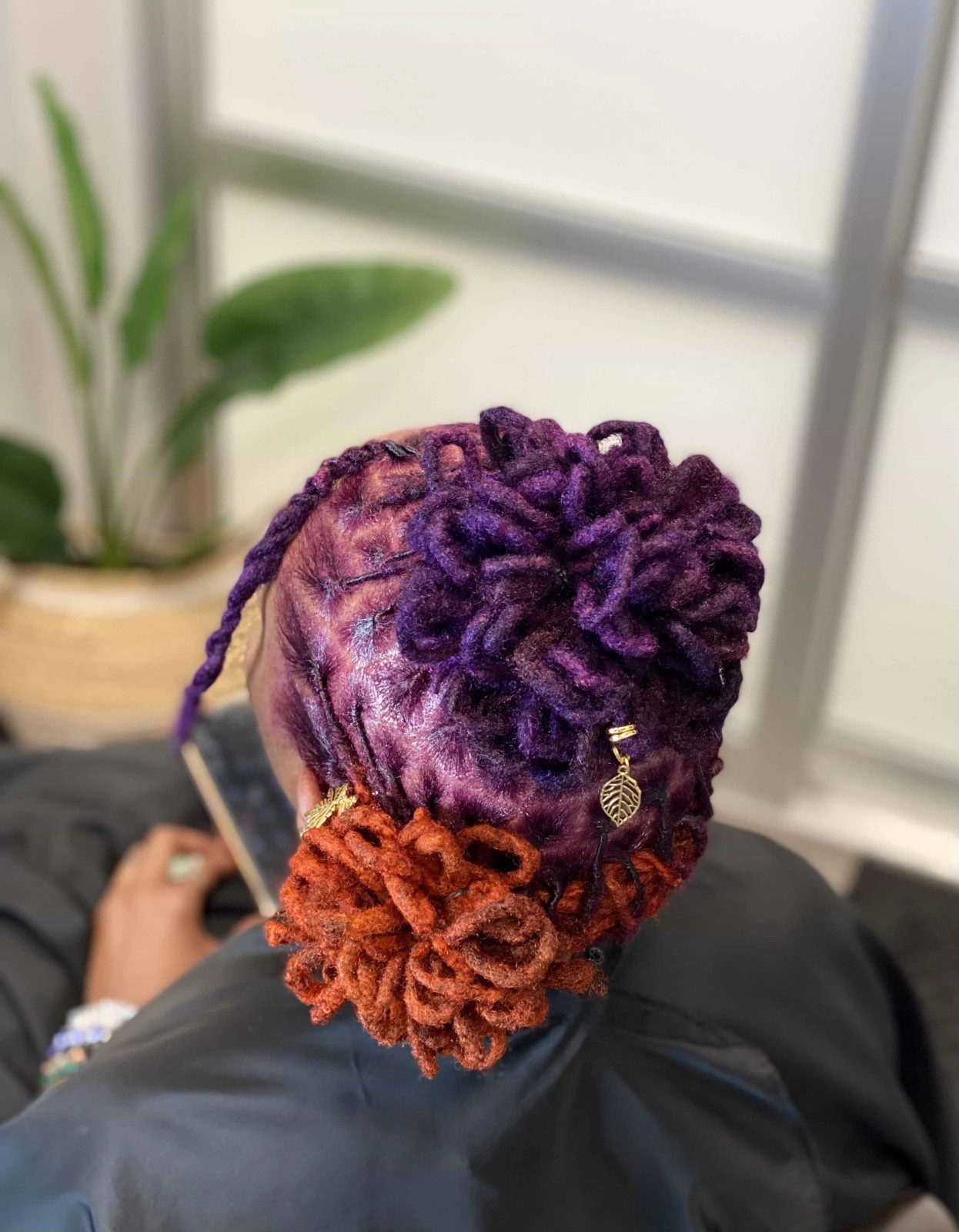
The two-tone technique here is precise: purple at the root, orange toward the ends, no bleed line between them. Shoulder-length wavy locs braided into an updo, middle part, back view that shows the gradient cleanly. The artistic appeal is real. The honest downside is that orange fades faster than purple, so the balance shifts after week four. You will either love the peachy result or book a touch-up. The updo hides the fade line better than loose locs would. Professional colour work, professional braiding, and a calendar reminder for week six.
Pink to Purple Ombre Locs
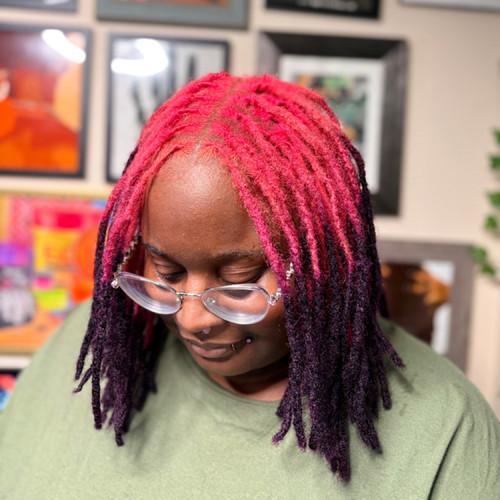
Can a pink to dark purple gradient actually work on locs, or is it a filter-only fantasy? It depends on your skin tone and your tolerance for attention. The pink to purple ombre locs here land at shoulder length, wavy, with a middle part that keeps the gradient visible from root to tip. Warm undertones let the pink sing. Cool undertones pull the purple forward. Either way, this is a look that demands a certain confidence — you will not blend into a crowd, and that is the whole point. The technique is a salon-grade ombre, not a home dip-dye, and the tone shifts from bubblegum at the top to a deep aubergine near the ends. Wear it when you want people to notice your hair before they notice you.
Red and Orange Gradient Locs
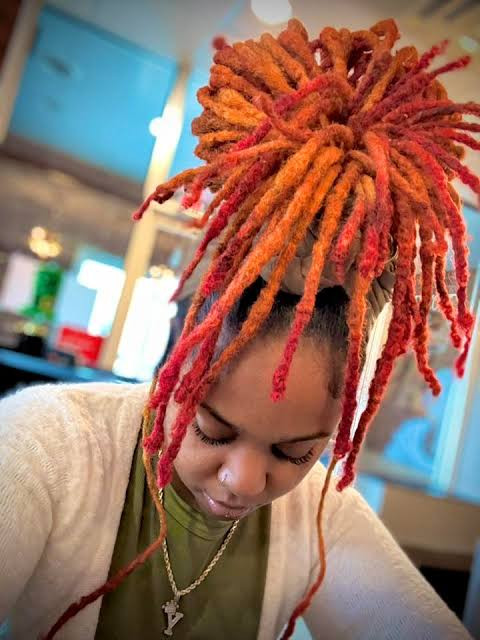
Right, so this one is a lot. In the best way. The red and orange locs hit shoulder length with a middle part and a gradient that runs from a true red at the roots to a burnt orange at the tips. The coily texture here is doing the heavy lifting — it catches the light differently on each twist, so the color shift reads as dimensional instead of flat. Styling these locs upwards into a voluminous shape is the real test. The gradient stays visible, but the volume means you lose some of the color transition near the scalp. The honest downside? Red fades fast. Orange fades faster. You are looking at a color refresh every six weeks if you want the fire to stay lit. Worth it for the drama, skip it if you want low maintenance.
Black Base with Burgundy Purple Ends
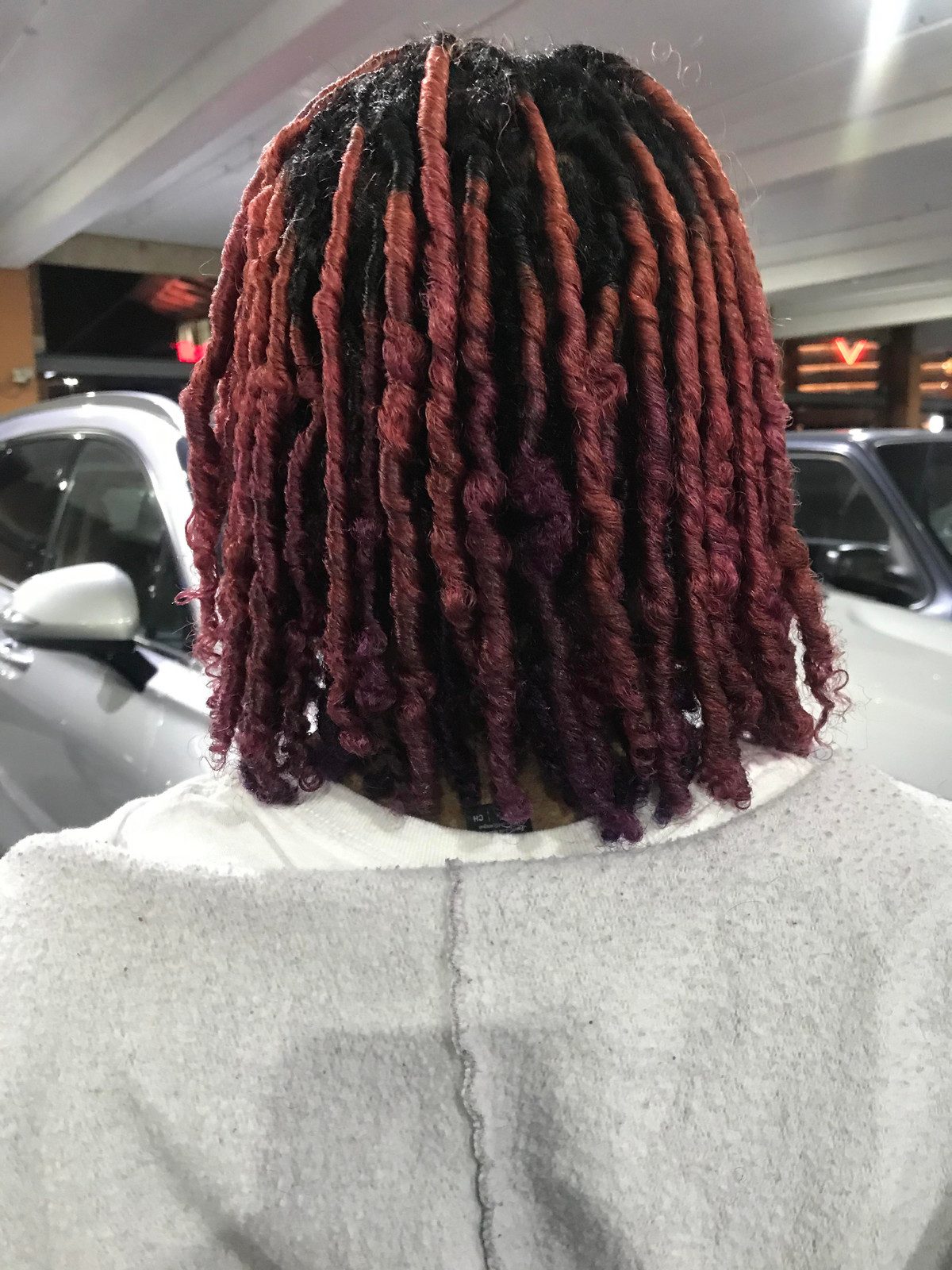
I was skeptical. Black locs with burgundy and purple highlights can look like a Halloween wig if the tone is off. But this one works. The base is a deep, true black, and the burgundy purple loc ends are woven in as twisted highlights, not a solid block of color. The wavy texture helps the transition read as intentional, not accidental. The technique is the key here: a professional applies the burgundy and purple to select locs, leaving the black base intact. It is a salon job, no question — doing this at home risks muddy tones and uneven saturation. The result reads as rich, not artificial. I was wrong to doubt it.
Multi-Tonal Loc Color Blend
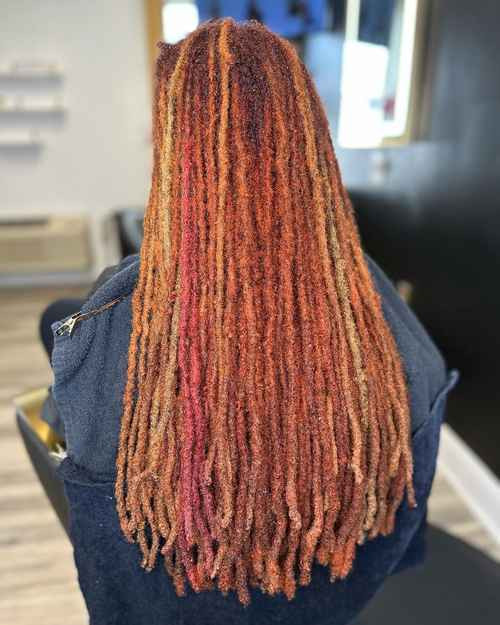
This is not one colour, it is three, and they are not blended by accident. A multi-tonal loc color like this one starts with a dark base, then sections of red, orange and blonde are painted in alternating ribbons down each loc. The technique is called color blocking within individual locs, and it takes a steady hand and a good eye for placement. The stylist has to map out where each tone falls so the colours read as a gradient, not a mess. Length matters here because mid-back locs give enough room for the blend to travel and land. Texture helps, too: wavy locs catch the light differently on each curve, so the red reads warm in one section and the blonde reads bright in another.
Ask your stylist for a dark brown base, then three accent colours applied in vertical panels on each loc. Say you want the red closest to the root, the orange in the middle, and the blonde at the ends. And tell them to keep the saturation high, no pastels. A multi-tonal loc color this vibrant reads best when every shade is at full strength.
Vibrant Orange Shoulder Length Locs
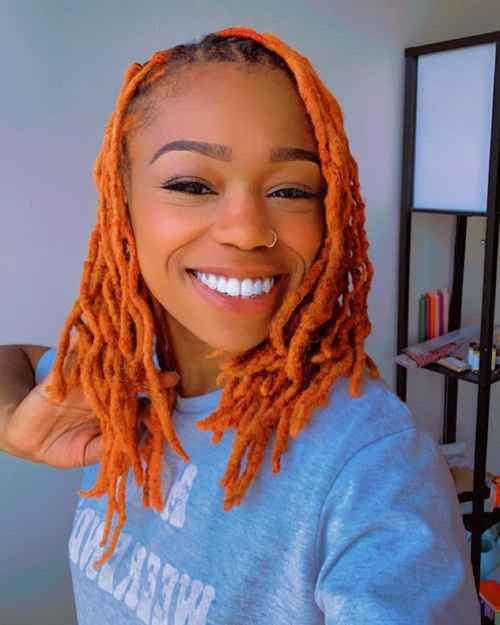
Who can actually wear vibrant orange locs without looking like a traffic cone? Someone with warm or neutral undertones, for starters. The vibrant orange locs here hit shoulder length, wavy, with a side part that breaks up the color block. The tone is a true, saturated orange — not a washed-out peach or a muddy rust. It is a summer color, full stop. It works for festivals, beach vacations, and any occasion where subtlety is not the goal. The shoulder length keeps it wearable; longer locs in this shade can feel overwhelming. If your skin has cool or pink undertones, this orange will fight you. If you are warm-toned and bold, book it.
Mid-Back Orange Loc Updo
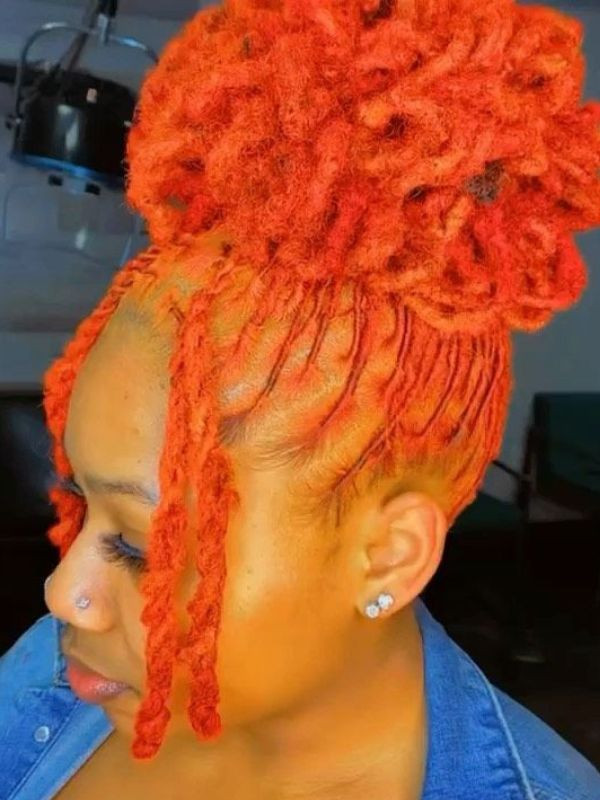
Orange this bright does not fade quietly. The updo stays for a full workday, but those face-framing strands left down? They catch on every jacket zipper and car seatbelt. By Wednesday the vibrant tone starts pulling warm, and by week three you are reaching for a toner. The mid-back length means the updo takes real time to pin, and the loc texture holds the colour well but demands a professional refresh every four to six weeks. Worth it for the one day it looks like this. The other six days are negotiation.
Auburn Locs With Subtle Highlights
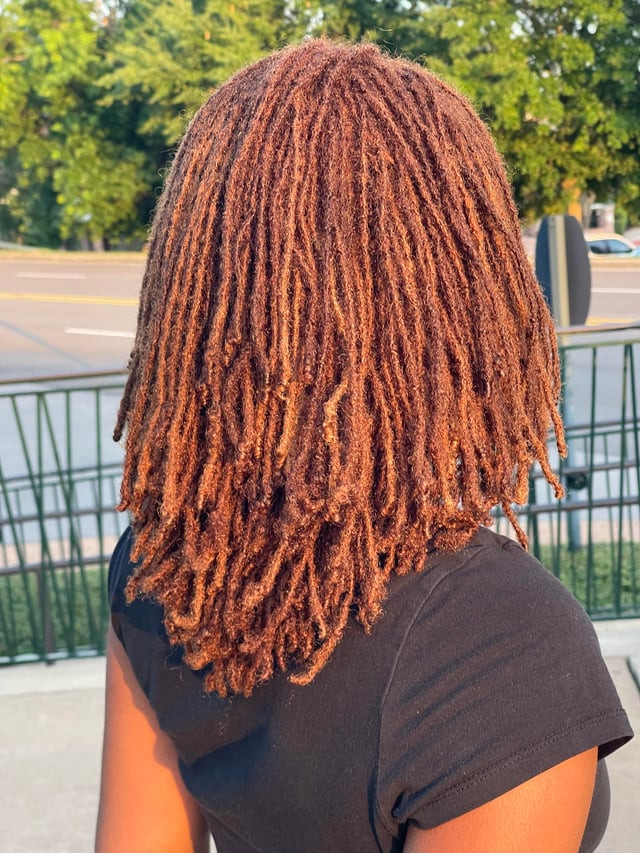
I will admit it: I picked auburn because I thought it would be boring. Safe. Something my grandmother would approve of. Then the light hit those subtle highlights and the whole thing shifted warm, dimensional, almost metallic. The fine, dense locs drink the colour evenly, and the shoulder length keeps it from feeling heavy. I was wrong. Auburn is not the compromise. It is the payoff.
Dark Brown Locs With Honey Blonde
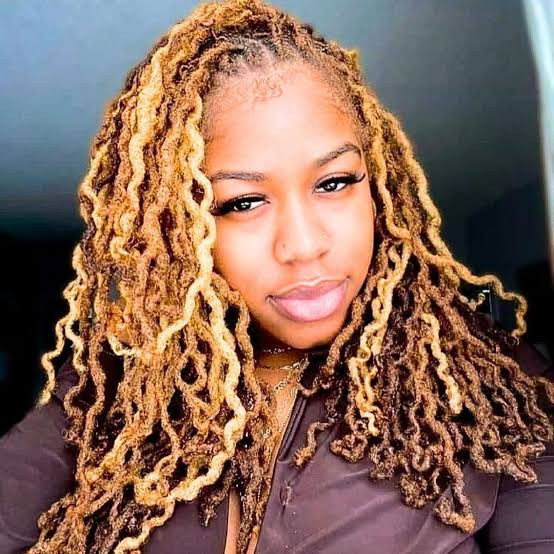
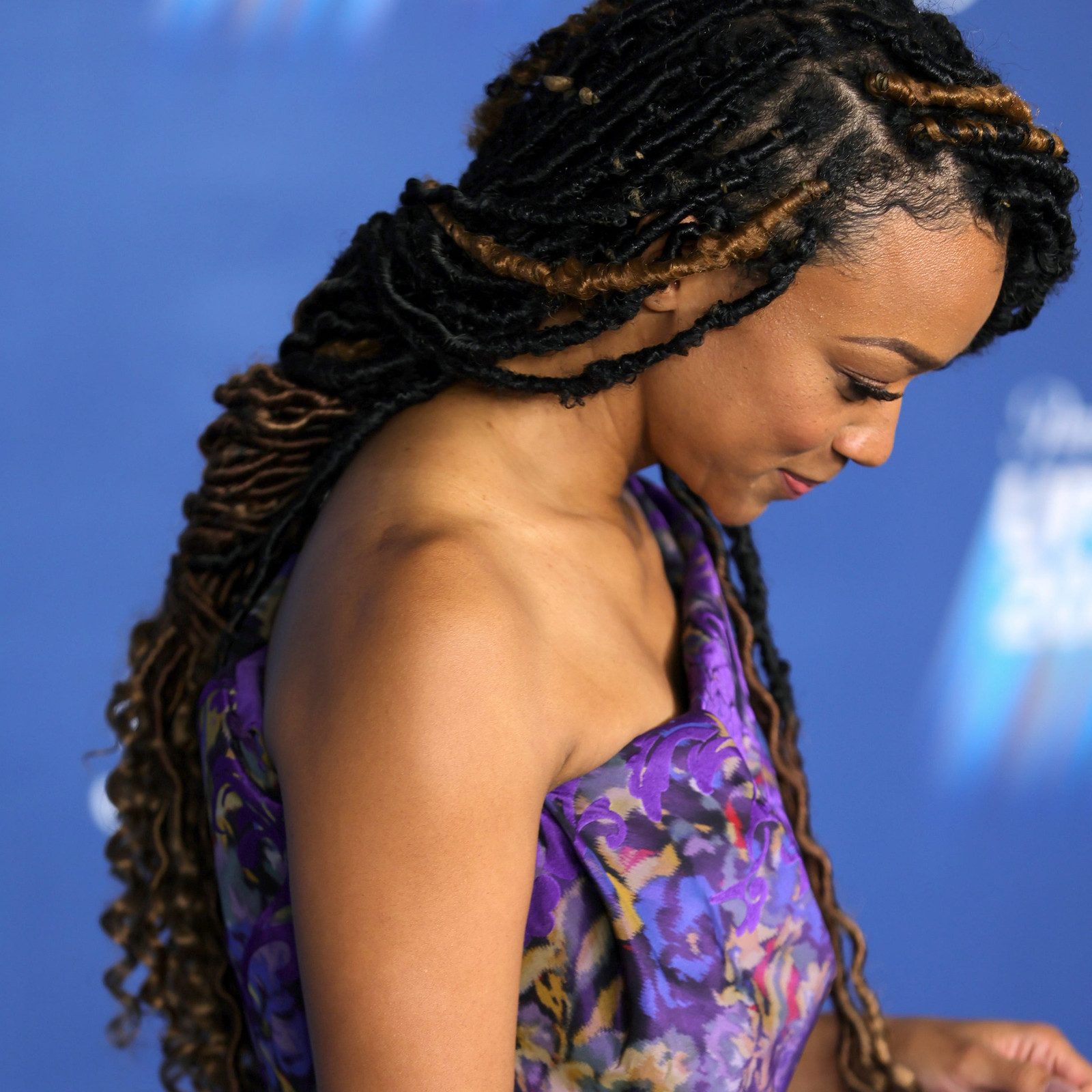
My gut says everyone tries this at home first. Do not. The mistake is thinking you can paint honey blonde highlights onto a dark brown base without lifting first. You cannot. The result is muddy, not golden. This is a salon job, full stop. The wavy locs and medium density show every uneven patch, and the braided front sections mean the colour needs to land precisely. Highlights need refreshing every eight to twelve weeks. The honest downside: if the base is not lightened enough, the honey reads greenish. Book the consultation.
Dark Brown to Blonde Ombre Locs
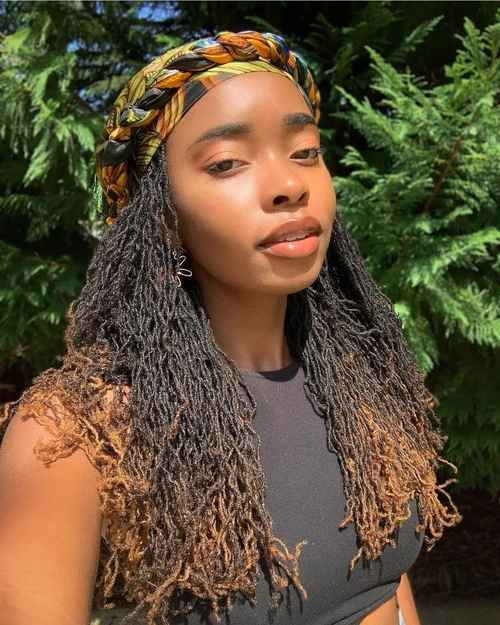
This is the colour equivalent of a good fade haircut. The ombre technique starts dark at the root and graduates to blonde at the ends, no harsh line anywhere. The fine, wavy locs catch the light differently at each level, which is the whole point. But blonde ends brass. They do. A purple shampoo becomes part of the routine, and the toning rhythm lands around every eight weeks. The mid-back length means the gradient has room to breathe, and the dark brown base keeps regrowth looking intentional for months. Not maintenance-free. Maintenance-smart.
Black Locs With Blonde Highlights
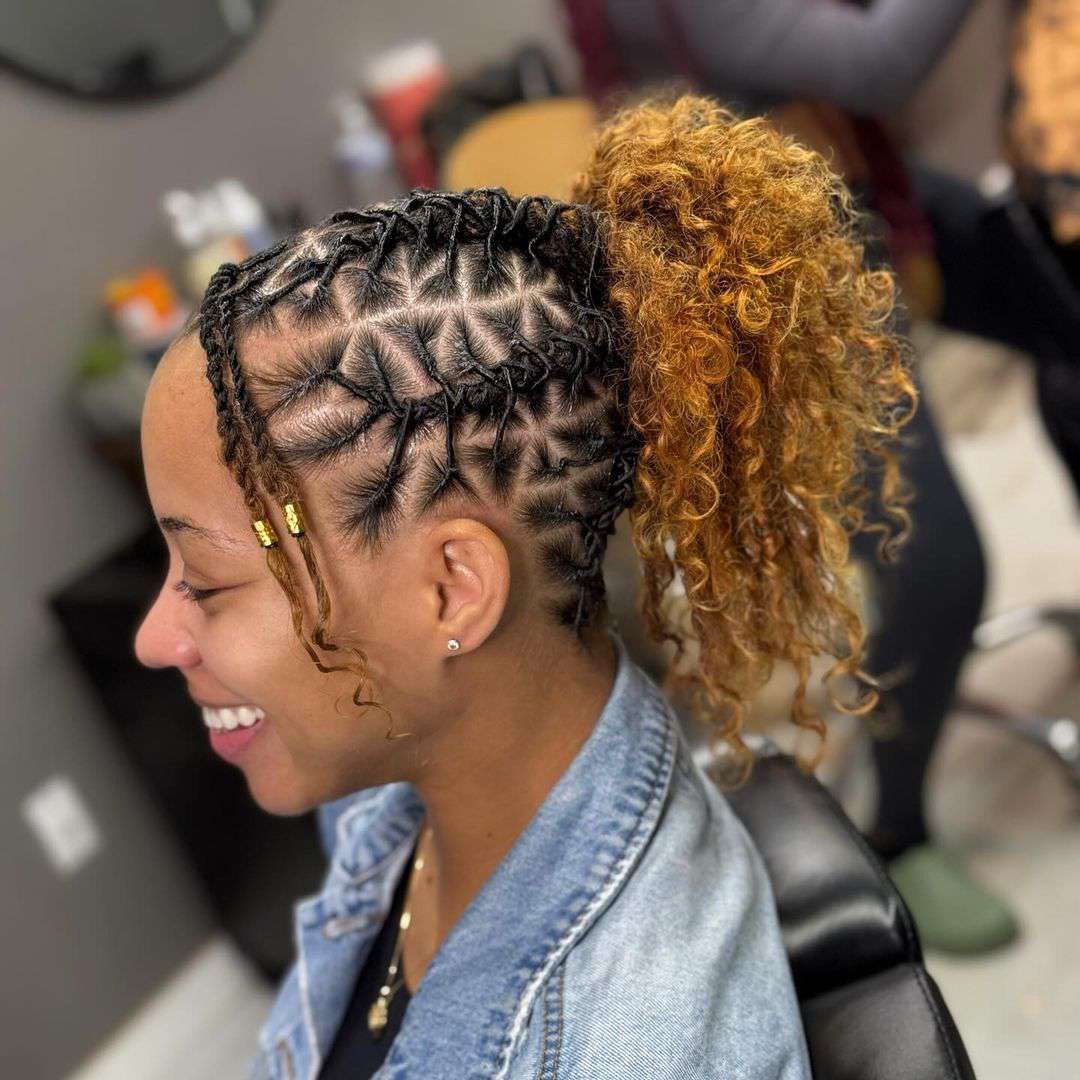
Summer wedding, outdoor ceremony, three hours of dancing. The black base with blonde highlights held the whole thing. The braided updo with the high ponytail stayed cool even in humidity, and the wavy and curly locs gave the blonde highlights enough texture to read as intentional streaks rather than scattered light. The middle part kept it symmetrical from every angle. Would I wear this to the grocery store? No. But for one event where the photos matter, this is the colour that photographs itself.
Black and Blonde Loc Contrast
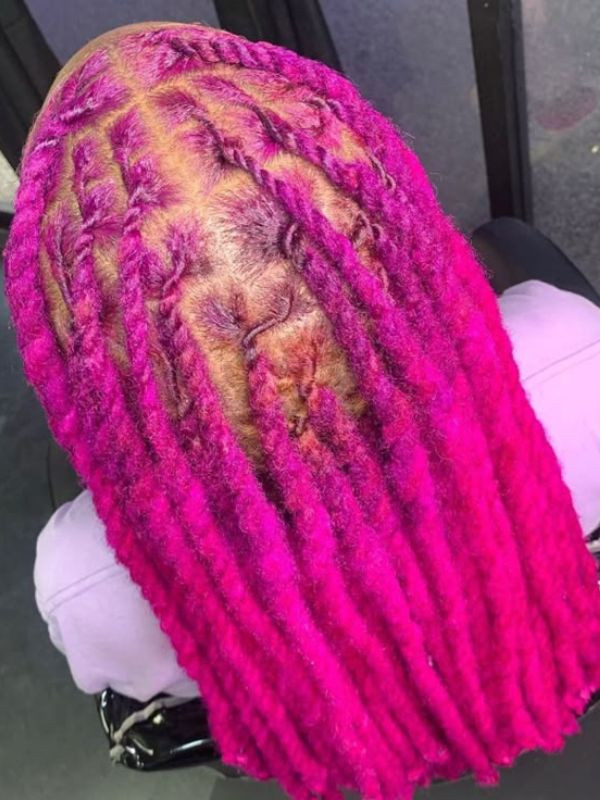
Why choose black and blonde locs over, say, a deep burgundy and black? Because the contrast here is a statement, not a suggestion. Mid-back length, thick wavy texture, and a middle part that lets each blonde highlight sit exactly where it was placed. The tone stays cool on the dark side, warm where the blonde hits. Honest downside: those highlights need a professional touch every eight to twelve weeks, and the grow-out line is not subtle. It’s a commitment, not a casual experiment.
Short Two-Tone Locs
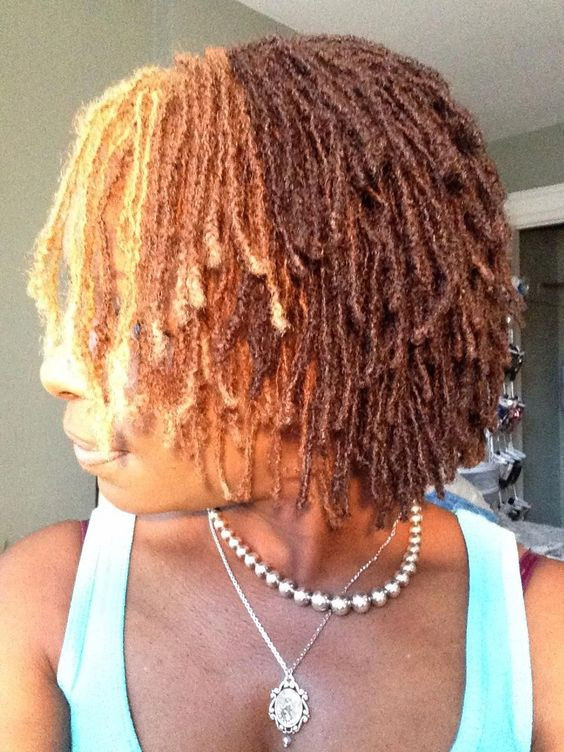
Short, coily, fine texture, and a middle part that shows every inch of the two-tone contrast. Natural black at the roots, honey blonde through the ends, no bangs to distract. This is a salon-leaning job because the blonde placement needs precision to avoid a stripey mess. Who benefits? Anyone with a rounder face who wants vertical length without actual length, and anyone who hates spending more than ten minutes on hair. Skip it if your texture is very coarse and dense, the two tones can look heavy rather than dimensional.
Light Brown Locs With Sun-Kissed Highlights
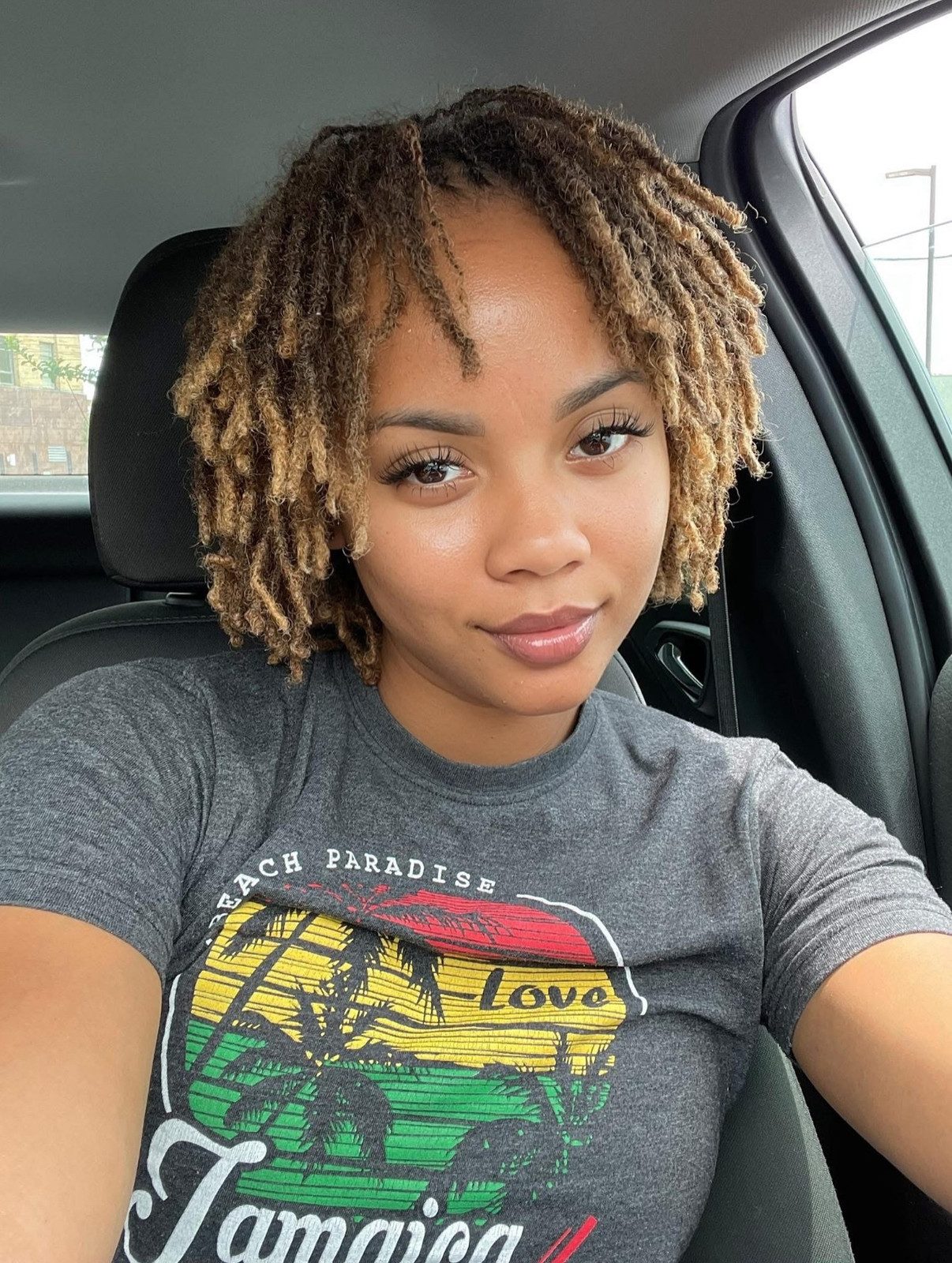
I’ll confess: I expected these chin-length, wavy locs to look flat by day three. They don’t. The side part helps, the light brown base with blonde highlights catches light from different angles. Styling is a shake and a quick finger-comb, maybe a twist at the nape if you’re feeling fancy. The honest downside: the highlights start to brass around week six, and a purple shampoo becomes your Saturday ritual. Refreshing them every eight to twelve weeks keeps the sun-kissed effect from turning into a muddy grown-out stripe.
Natural Medium Brown Loc Extensions
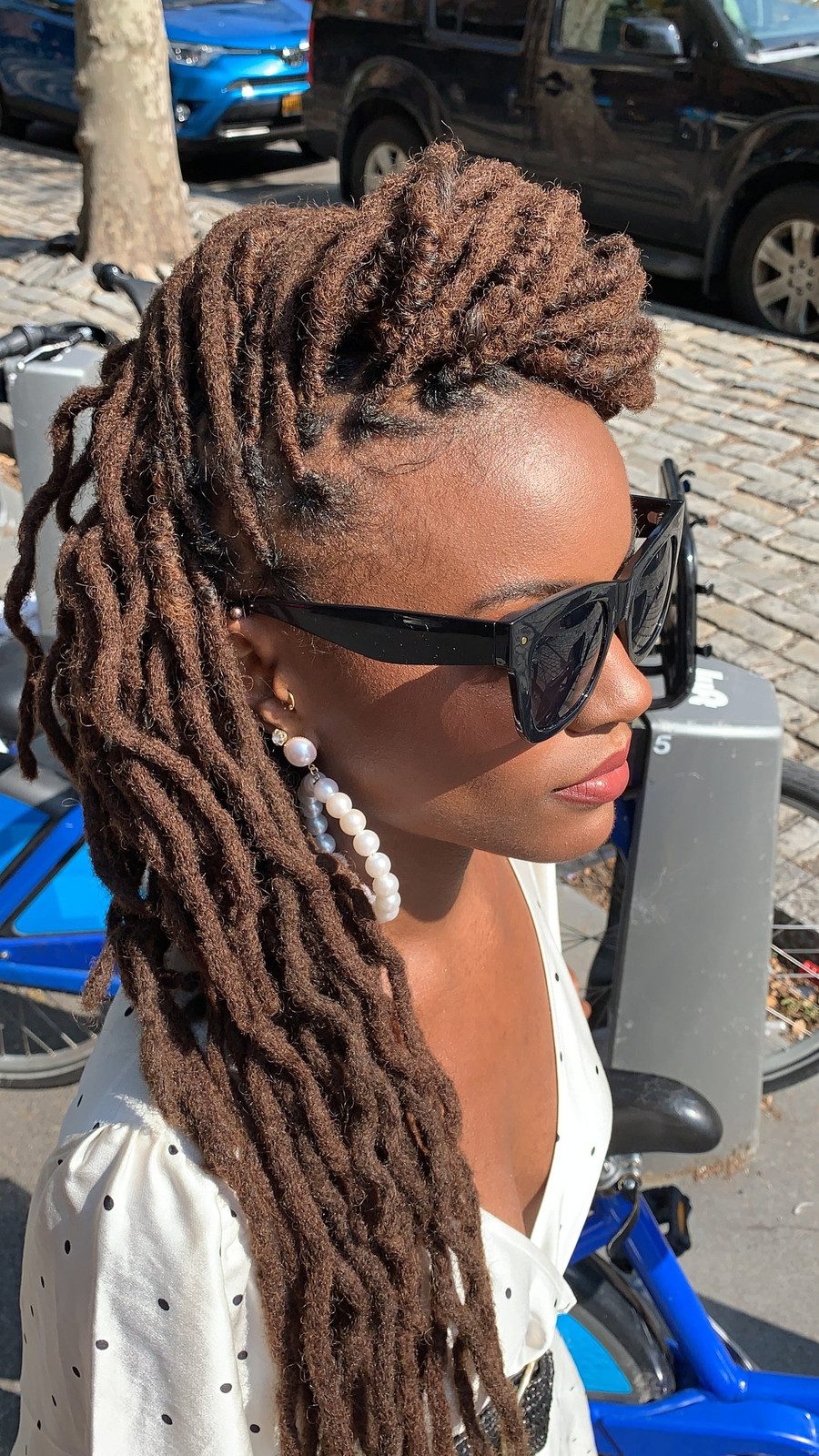
Here is the verdict: medium brown loc extensions are the quiet workhorse of this roundup. Collarbone length, loose, a middle part that lets the texture breathe. The technique matters more than the shade, because a bad blend screams extension at ten paces. The base tone is a neutral medium brown, no warmth, no ash, just brown. The trick is matching the extension’s texture to your own, then layering the ends so the transition is invisible. It is a salon job, and the right stylist makes it look like these grew out of your scalp.
Medium Brown Locs With Subtle Blonde
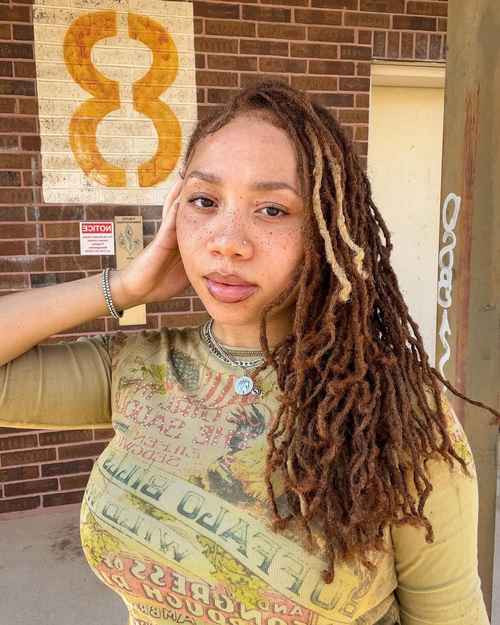
Who is medium brown hair with subtle blonde highlights actually for? Mid-back length, wavy texture, medium density, a middle part that frames the face evenly. The blonde is sparse, more of a whisper than a shout, and the tone stays warm enough to avoid that ashy disconnect. It flatters anyone who wants dimension without a high-maintenance grow-out line. The honest downside: the subtlety means the highlights can disappear in low light, and if you want them visible, you are refreshing every eight to twelve weeks. Not for anyone who wants their colour to announce itself from across the room.
Honey Blonde Collarbone Locs
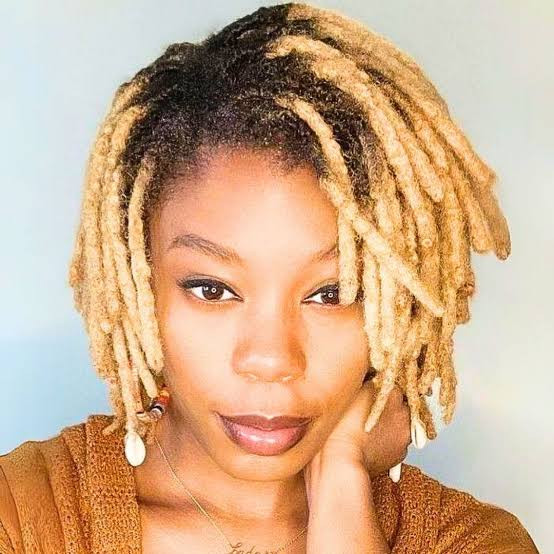
I will admit I side-eyed the all-over honey blonde locs at first. The colour is warm and uniform, a single shade from root to tip, and on collarbone-length locs with a medium wavy texture it reads as deliberate. The technique is a full saturation dye, not highlights or ombre, which means the tone stays consistent. This is a salon job, not a box colour situation, because getting that even honey blonde without brass requires professional application. Air drying is the move here, it lets the texture do the work.
Natural Black Dreadlocks
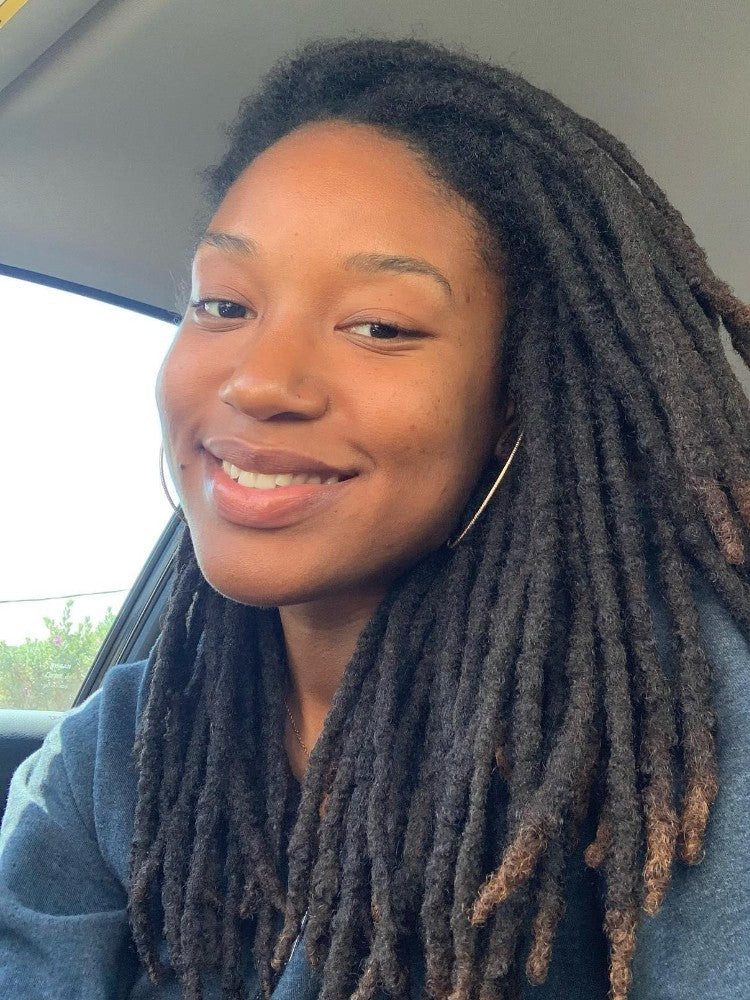
What catches me first is the texture, thick coily dreadlocks that are loose and natural, no uniform sizing. The colour is natural black with subtle brown undertones at the ends, which is not a dye job but the hair’s own depth catching light. Side-parted and mid-back length, these dreadlocks sit with weight and movement. Wear is straightforward, they do not need daily manipulation, and upkeep is minimal, a retwist every few months to keep the roots neat. The authenticity of natural black dreadlocks is the whole point, no colour refresh needed, no fade to manage.
Deep Burgundy Faux Loc High Bun
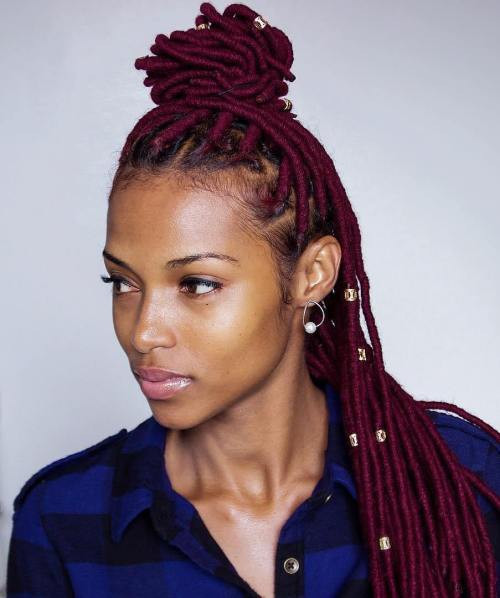
Have you ever wanted a colour that looks expensive in low light? Deep burgundy on faux locs does that. The technique is a full saturation dye on the faux hair before installation, which means the colour is even and rich, no patchiness. Mid-back length, wavy texture, pulled into a high bun with hanging locs, it reads as elegant. The honest downside is that deep burgundy faux locs need a touch-up every six to eight weeks to keep the tone from fading to a muddy red. Salon only, this is not a weekend project.
Blonde and Brown Loc Bubble Ponytail
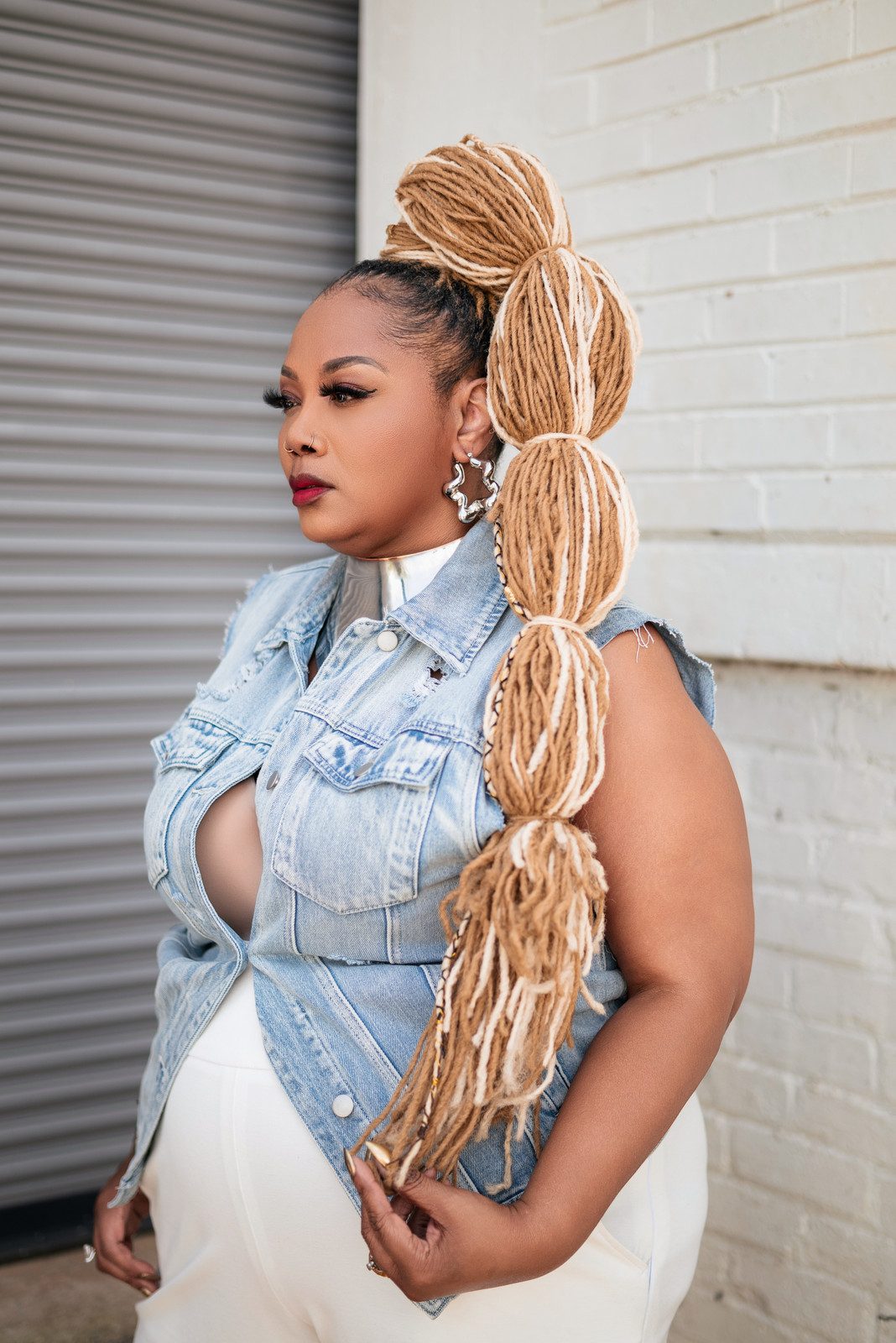
A single-tone ponytail is fine. A blonde and brown loc bubble ponytail is better. The construction is the win here, the bubble technique sections the locs into rounded segments along the length, and the two-tone colour makes each bubble read separately. The blonde sections catch light, the brown gives depth, and the contrast is the whole visual trick.
Compared to a straight high ponytail or a simple half-up, this style has more dimension without extra effort. The locs are long, middle-parted, and the bubble shape holds the colour blend in place. The blonde tones may need occasional toning to stay bright, but the brown base hides grow-out well. Salon construction, the bubble technique is not a quick home style.
Final Thoughts
After writing all 24 of these, the one I keep coming back to is the black base with burgundy purple ends. It’s the grow-out I can live with. The rest? Bookmark them for when you want your hair to do the talking.

