
I keep seeing honey blonde locs in the salon chair next to mine, and every time I catch myself staring at how the light hits them. This season it is all about warm, dimensional blonde, from soft honey to bold platinum, and I have to admit, it is growing on me.
Here are 17 Blonde Locs ideas that actually work, from low-maintenance air-dried styles to high-impact updos that need a stylist. Whether your locs are fine or thick, short or mid-back, there is a look here that fits your routine and your face shape. I have been through the grow-out line at week five and the flat-by-4pm struggle, so I wrote this with real upkeep in mind.
Playful Honey Blonde Locs in Space Buns
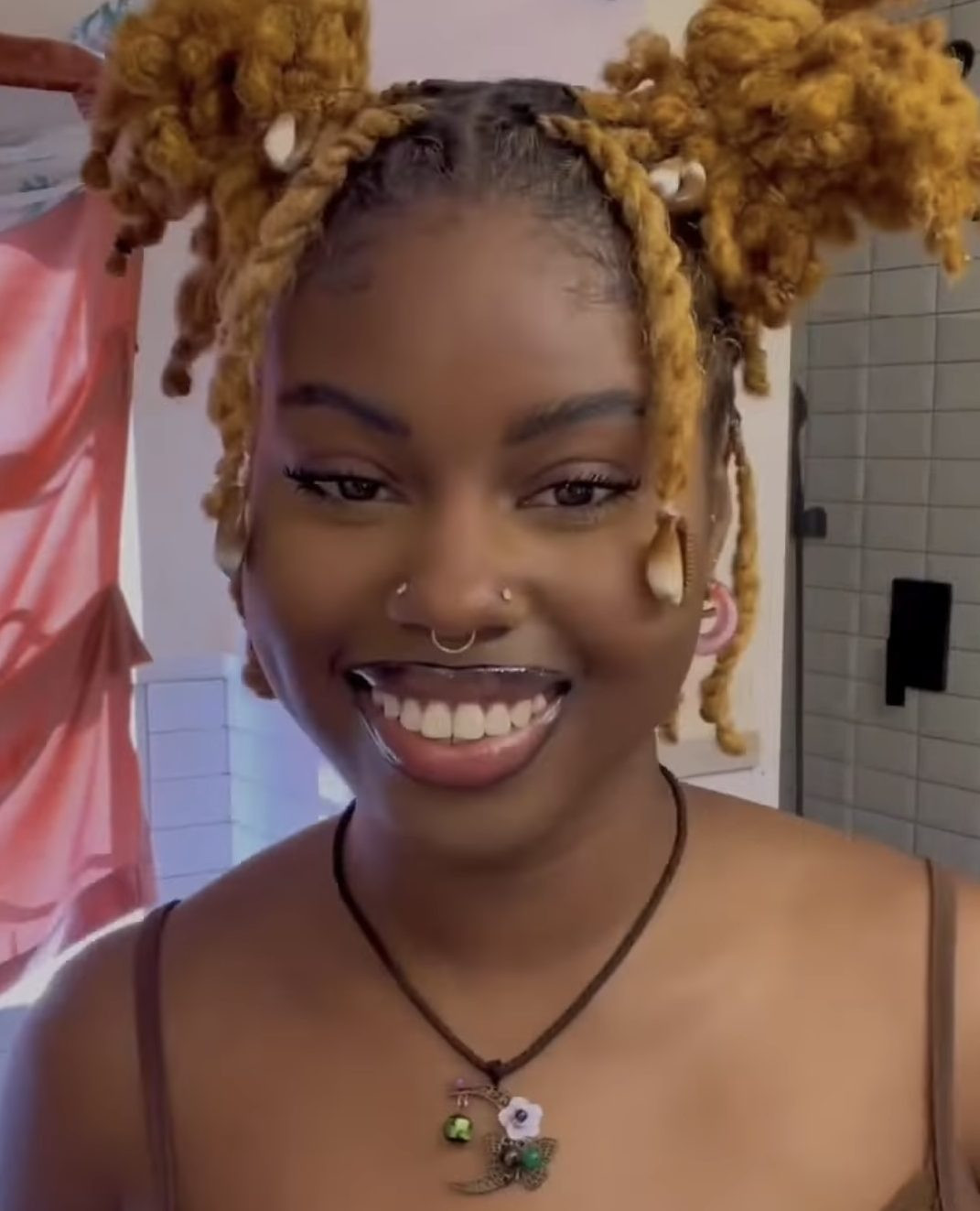
Ever tried a style that makes you feel like you’ve got a secret? That’s these honey blonde locs short enough to read as spunky, with darker roots that ground the whole thing. The middle part widens a round face, and the two buns sit high enough to catch light. Medium-thick locs hold the shape without drooping by 4 pm. No bangs means the forehead stays open, which balances a longer face. The honey blonde reads warm against deep skin tones, and the darker roots mean the grow-out line hides for a good ten weeks. It’s not a bathroom-mirror job, the buns need a second pair of hands or a lot of patience.
Vibrant Honey Blonde Shoulder Length Locs
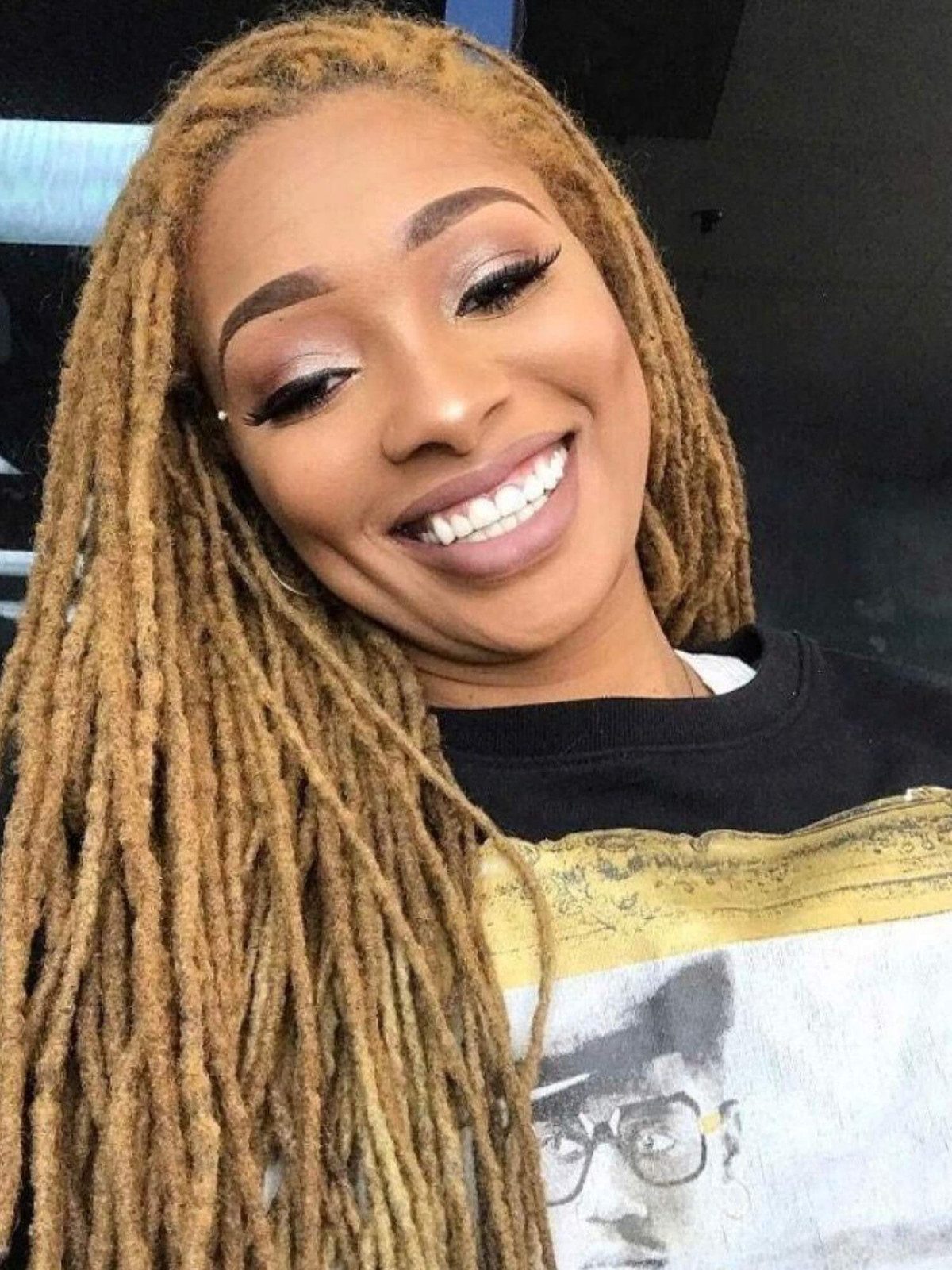
Shoulder length is the Goldilocks zone of locs, long enough to pull back, short enough to air dry in a reasonable hour. This vibrant honey blonde leans warm, almost golden, and it flatters medium and deep skin tones without washing anyone out. The side part adds a little asymmetry, which softens a square jaw. Texture here is standard locs, not too thick, not too fine, so they move when you walk but don’t tangle into a nest by Tuesday. A trim every 8 to 10 weeks keeps the ends blunt, and a toner every 6 to 8 weeks stops the honey from drifting orange. It’s a salon colour, no question, but the daily styling is just shake and go.
Bold Platinum Blonde Wavy Locs
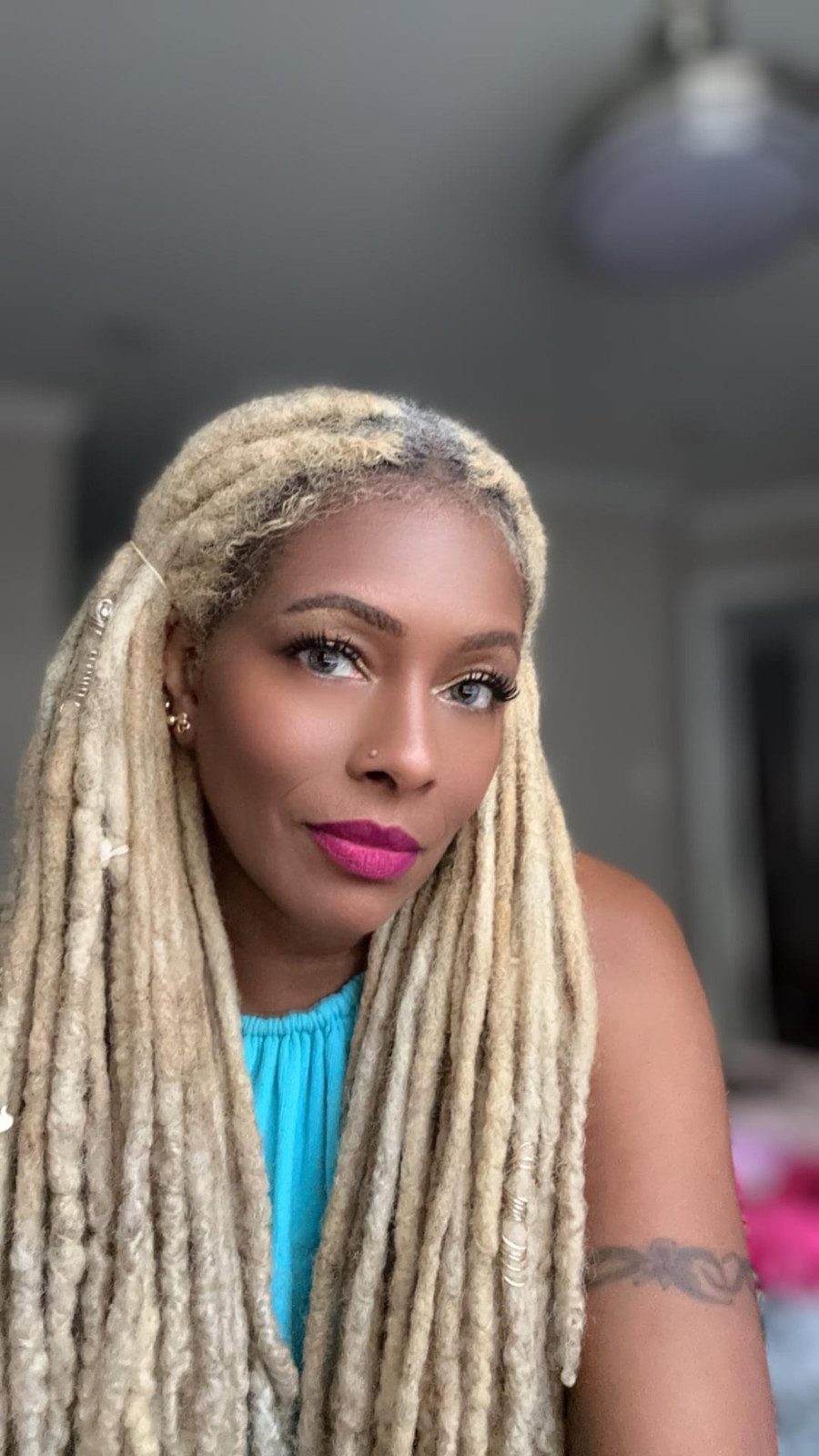
Platinum on locs is a commitment, not a whim. The base has to be lifted to a pale yellow first, then toned to that icy white, and on thick, wavy locs that means hours in the chair. The result is a uniform, almost metallic blonde that reads bold against every skin tone. Ask your stylist for a single process with a heavy toner, not a foil, because the wave pattern makes foils patchy. Keep the middle part clean and the length at the shoulder, where the weight won’t pull the wave out. The texture stays defined if you air dry and skip the heavy creams.
It’s not a low-maintenance colour. The roots show at week four, and the brassiness creeps in by week six without a purple shampoo. But the payoff is a shade that looks expensive, even when it’s just a regular Tuesday.
Voluminous Platinum Blonde Faux Locs Updo
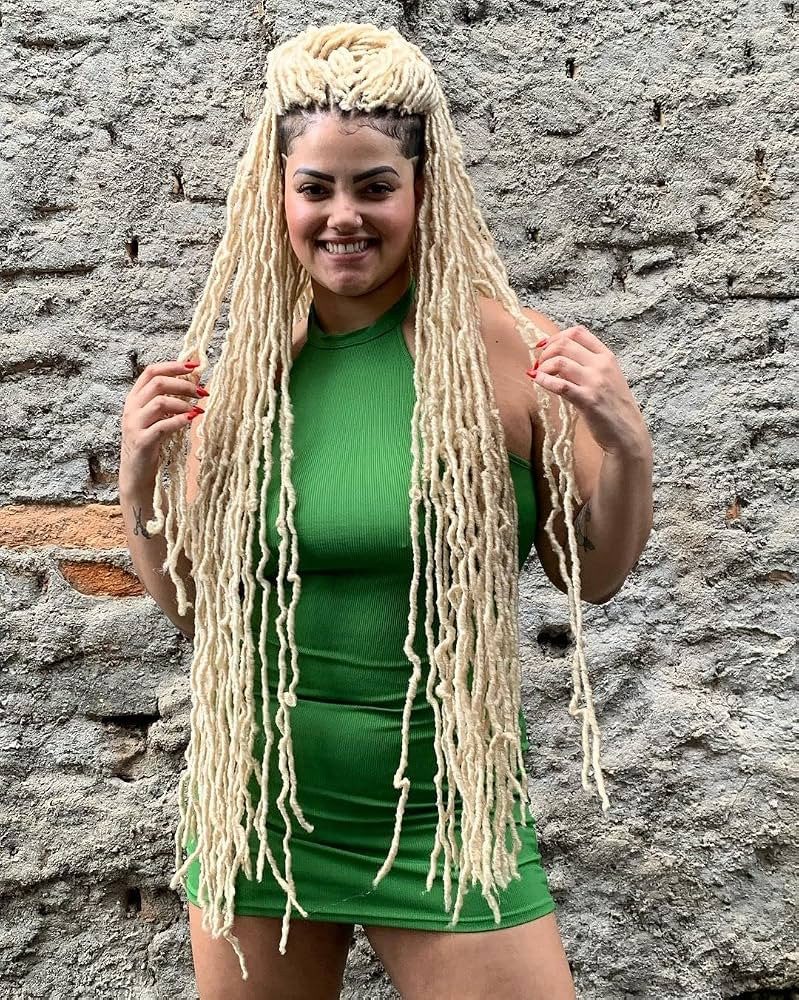
I’ll admit it, I was skeptical about faux locs. They can look heavy or costume-y, but this updo changed my mind. The platinum blonde is bright, almost silver, and it catches the light in a way that feels glamorous, not gimmicky. The mid-back length gives you enough to work with, and the fine texture of these faux locs means they’re lighter than they look, so the updo doesn’t pull at your scalp by hour three. The loose locs framing the face soften the whole thing, and the middle part keeps it modern.
Here’s the honest downside: fine faux locs can frizz at the ends after a few wears, especially if you sleep on them without a silk scarf. And the platinum will yellow without a toner every 6 to 8 weeks. But for a wedding or a holiday party, this is the one. It’s a salon install, no question, but the updo itself takes 20 minutes once the locs are in. It’s not a daily style, it’s an occasion style, and it delivers.
Lush Honey Blonde Mid-Back Locs
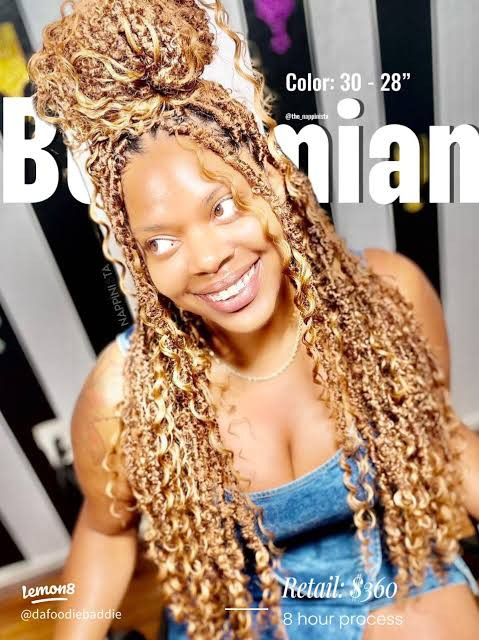
Mid-back length is where locs start to feel like a statement, and this honey blonde makes the most of it. The colour is rich, almost caramel, and it doesn’t wash out to a pale yellow like lighter blondes can. On thick, wavy locs, the honey catches the light in sections, so it looks dimensional even without highlights. The middle part keeps the weight balanced, and the loose styling lets the wave show. It’s a warm shade that flatters golden and olive undertones, and it reads natural, not bleached.
The upkeep is real. Trims every 10 to 12 weeks keep the ends from thinning, and a toner every 6 to 8 weeks keeps the honey from turning brassy. But the length means you can pull it back on day three and still look put together. It’s a salon colour, but the daily routine is just air dry and go. If you’ve got thick locs, this is the shade that makes them look lush, not heavy.
Bright Platinum Blonde Afro Locs Bun
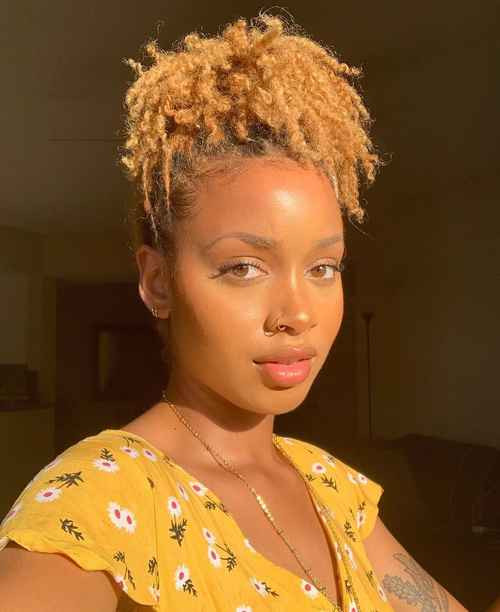
Can we talk about who actually pulls off bright platinum blonde afro locs? It’s not everyone, and that’s fine. The colour needs a face with strong features — high cheekbones or a defined jaw — because the light shade can wash out soft contours. On a round face, the high bun adds vertical lift and balances the width. The fine density here works in your favour: the curly texture catches light differently than straight hair, so the bright tone reads dimensional instead of flat. Styling into a bun takes about five minutes, but the upkeep is real. Platinum requires frequent toning and colour touch-ups every four to six weeks. If you hate the salon chair, this isn’t your shade.
Striking Platinum Blonde Coily Locs Updo
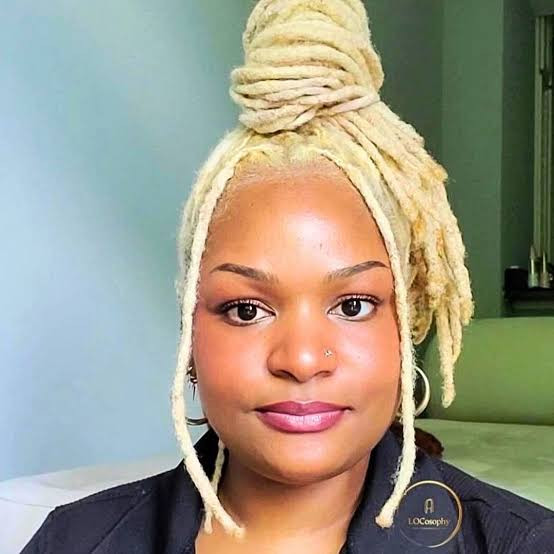
Monday morning, 7 am, and this updo is holding. The even tone of the platinum blonde coily locs is what makes it work — no patchy spots, no yellow creeping in at the ends. At mid-back length, the coily texture gives the updo real structure; it doesn’t sag by lunch. I’ve worn this to a wedding and to a Tuesday meeting, and it looked right both times.
The loose strands framing the face are the detail that sells it. They soften the sleek silhouette and keep it from feeling severe. Styling takes fifteen to twenty minutes, which is honest time for a secure updo. The catch: platinum requires consistent toning and colour touch-ups every four to six weeks. If you can’t commit to that schedule, skip the shade and go darker.
Braided Ash Blonde Mid-Back Locs
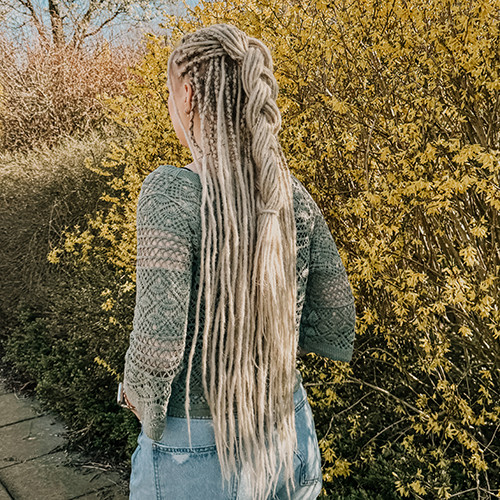
Ash blonde locs braided into a mid-back length: the technique matters more than the shade. The braid adds ten to fifteen minutes to styling time, but it locks in the ash tone and keeps the wavy texture from frizzing. On thick locs, the prominent braid creates dimension that a single flat braid can’t match.
This is a salon job, not a bathroom-mirror project. The colour placement needs a professional hand to keep the ash even and prevent patchy spots. Ash blonde can fade to yellow if you skip toning every six to eight weeks. Trims every ten to twelve weeks keep the ends clean and the braid crisp. If you want the dimension without the maintenance, ask for a darker base with ash highlights instead.
Light Brown Locs in Playful Space Buns
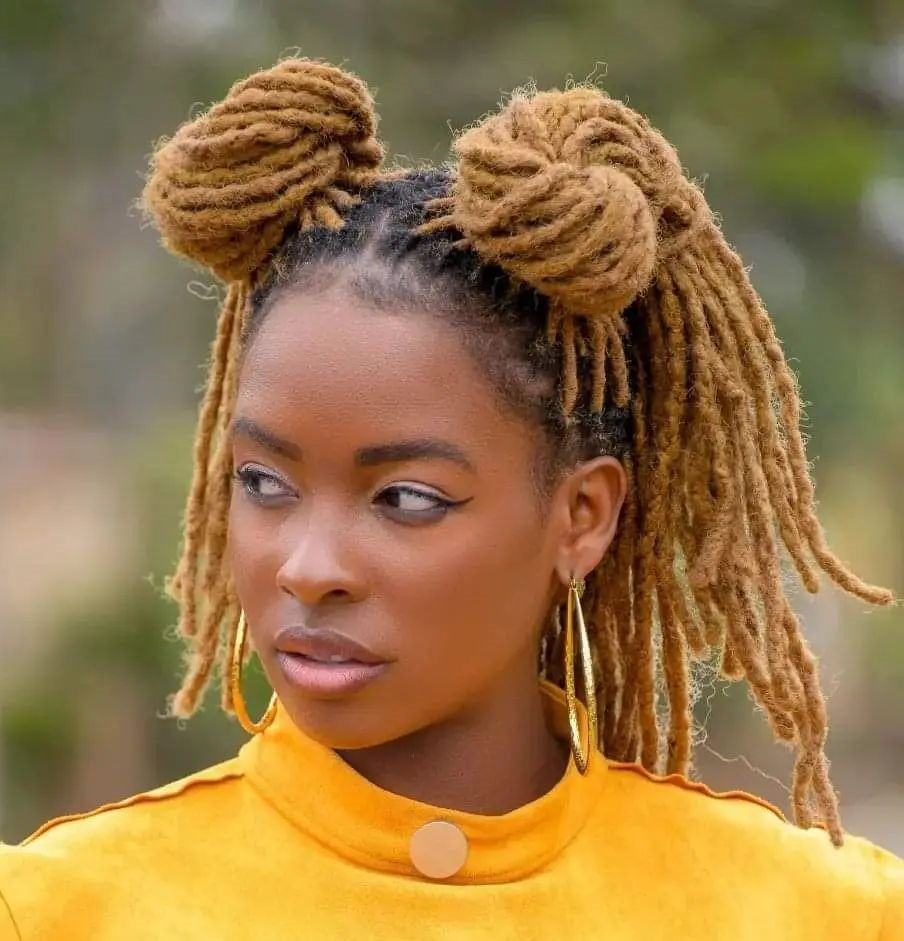
Why does light brown look softer than blonde? It just does. Light brown locs medium length, styled into space buns, hit a different register than any platinum shade — warmer, less demanding, more forgiving. The two buns sit at mid-back length and take about ten minutes to create. No heat, no product, just section and twist.
The honest downside: light brown doesn’t pop the way blonde does. In dim light, it reads as brown, period. If you want contrast, this isn’t it. But if you want a colour that needs touch-ups only every ten to twelve weeks and trims every ten weeks, this is the one. It’s the shade that lets you forget you have colour at all. Some weeks, that’s exactly what I need.
Dark Brown to Blonde Ombre Locs
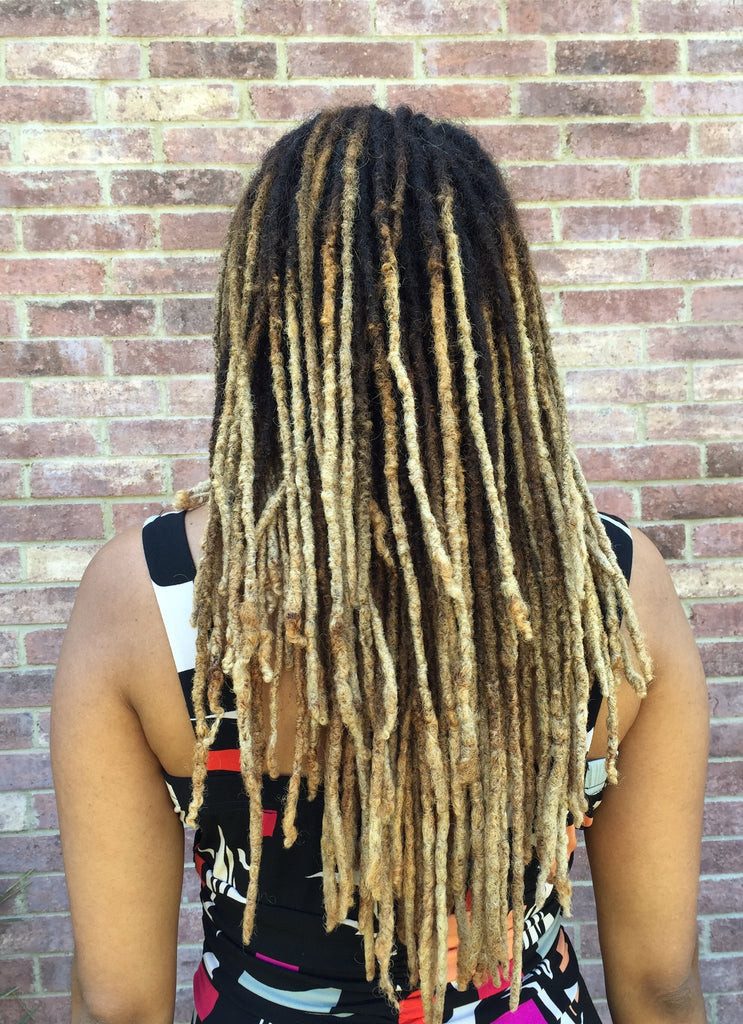
The dark brown base fades into blonde ends, and the grow-out is the best part. Dark brown blonde locs ends with an ombre technique mean your roots never betray you — the dark base is intentional, not neglected. At mid-back length, the wavy texture catches the transition and shows the contrast clearly.
Week one: the blonde ends are bright and the dark roots are fresh. Week eight: the roots have grown maybe half an inch, and the ombre still reads as planned. Week twelve: the blonde has softened, and the dark has crept down, but the line is still natural. Toning the ends every six to eight weeks keeps the blonde from going brassy. Trims every ten to twelve weeks keep the ends healthy. This is the colour for people who hate the root panic. I am those people.
Bright Honey Blonde Buns on Thick Locs
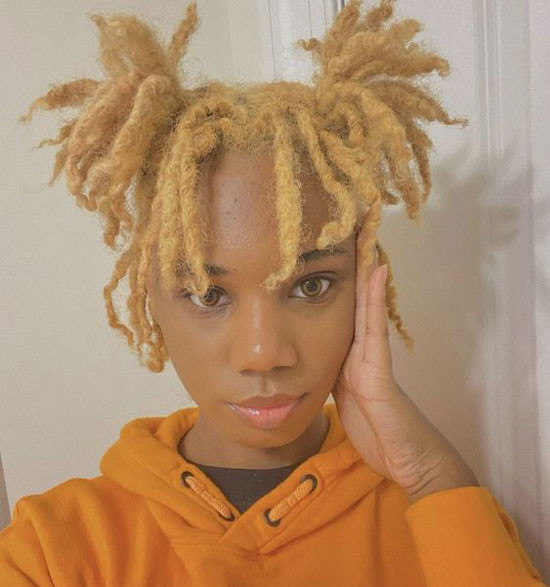
Can we talk about how bright honey blonde locs buns actually read on thick hair? The honey blonde shade here is warm and saturated, not pastel. On thick locs at shoulder length, the color has enough surface area to glow without washing out. The middle part keeps the buns symmetrical, which balances a round face. The technique is a full saturation dye, not highlights, so the tone stays uniform. That bright finish needs a toner refresh every six to eight weeks or it pulls brassy. Texture is smooth locs, no frizz, which makes the buns sit clean.
Natural Air-Dried Platinum Blonde Locs
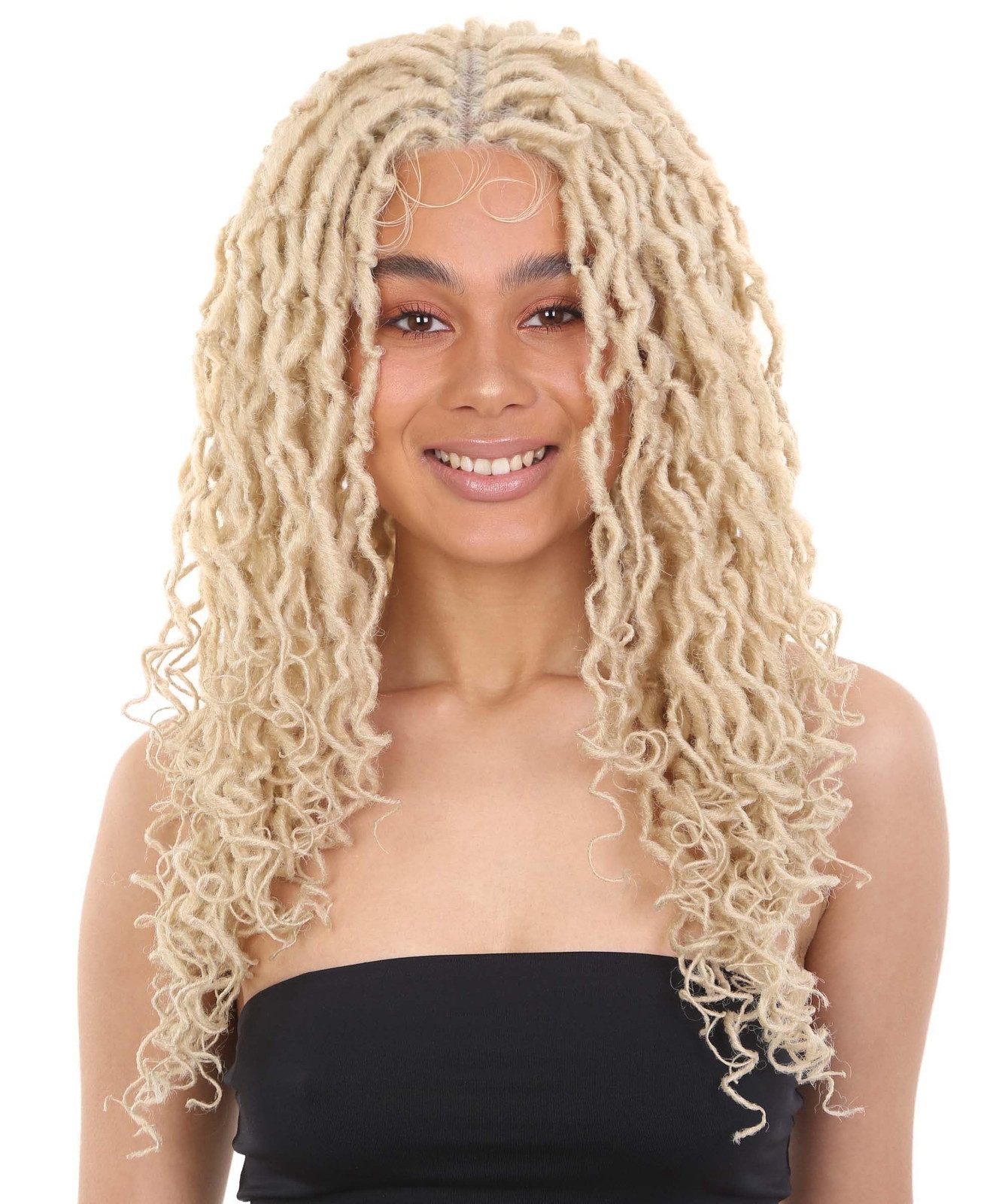
I will admit I underestimated how much work platinum blonde locs natural really are. The color is a cool, almost silver platinum blonde, and on shoulder-length wavy locs with medium density, it reads stark and clean. The technique is a full lift to pale yellow, then toned to neutral. The tone is cool, no warmth. Air-dried texture means the wave pattern shows, no heat manipulation. The honest downside: this is a salon job, not a box dye situation, and the grow-out is visible at week three. You will be toning every four weeks or living with yellow.
Dimensional Honey Blonde Butterfly Locs
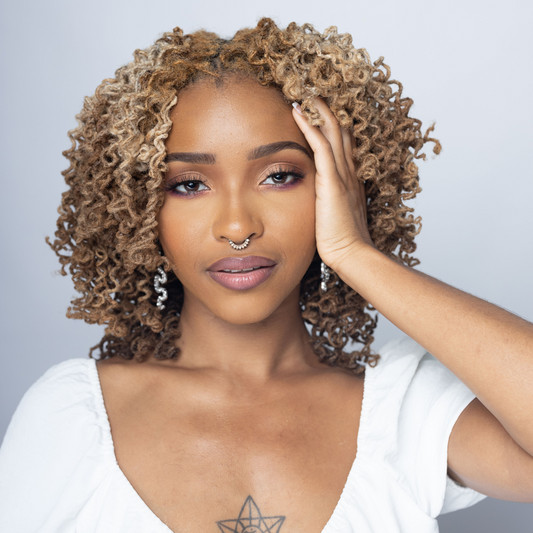
Best technique in this roundup for adding depth without going dark. The honey blonde butterfly locs here use a honey blonde base with lighter blonde highlights woven through the wrap technique. The result is a dimensional honey blonde that shifts in sunlight. Collarbone length keeps the volume manageable. Texture is wavy locs with medium density, so the butterfly method adds fullness without weight. The tone is warm but not orange. Ask your stylist for a honey blonde base with face-framing highlights two shades lighter, and keep the wrap loose at the ends for that wavy finish.
Wavy Honey Blonde Locs with Natural Roots
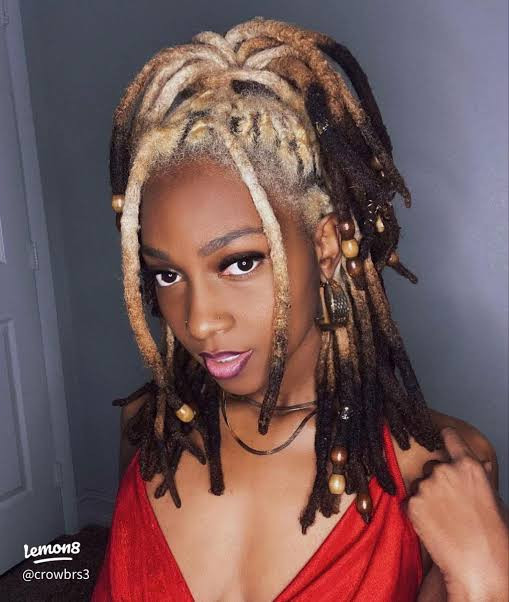
Here is the difference between honey blonde locs dark roots and a full blonde: the roots buy you time. The honey blonde runs from mid-length to the ends, while the darker roots stay at the scalp. Shoulder-length wavy locs with a middle part show the contrast cleanly. The tone is warm honey, not ash. Wear and upkeep is low because the root shadow hides new growth for eight weeks. Toning the blonde sections every six to eight weeks keeps the warmth from turning brassy. Texture is loose waves, so the color catches light differently on each loc. This is the set-it-and-forget-it option.
Dimension: Dark Brown to Blonde Highlights
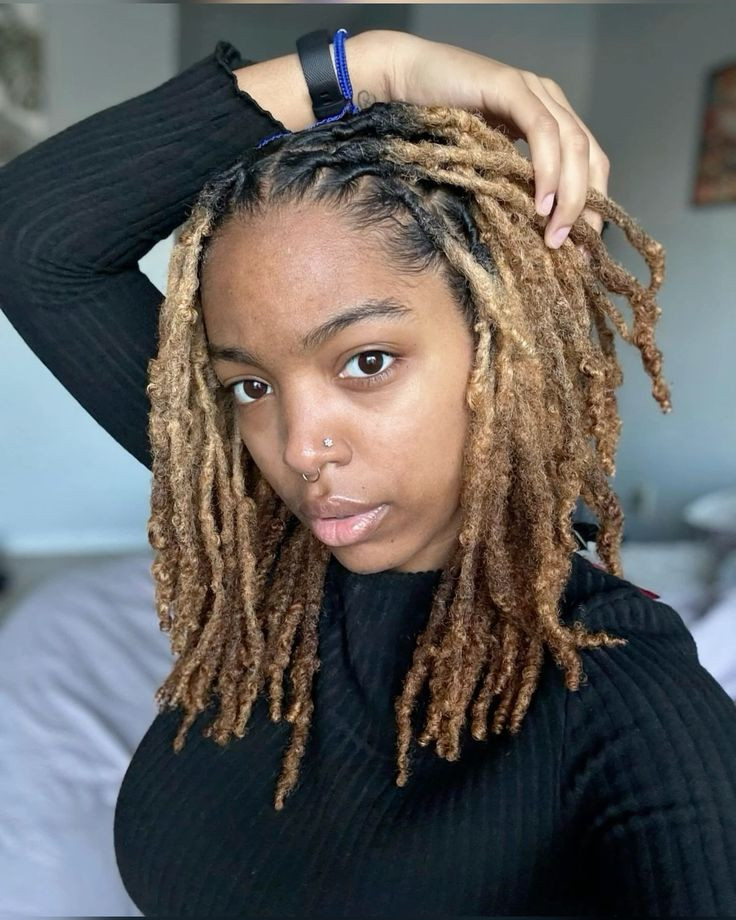
You walk into the room and the first thing you see is the contrast. The dark brown blonde highlights locs here start with a dark brown base at the roots, then subtle blonde highlights run through the length. Shoulder-length wavy locs with medium density carry the dimension without looking stripey. The technique is a partial highlight, not full saturation, so the dark base stays dominant. The tone is neutral blonde against warm brown, which reads natural. The honest downside: the highlights will fade to gold by week six, and you cannot fix that at home. This is for anyone who wants blonde without the full commitment of a platinum base.
No Bangs Air-Dried Honey Blonde Mid-Back Locs
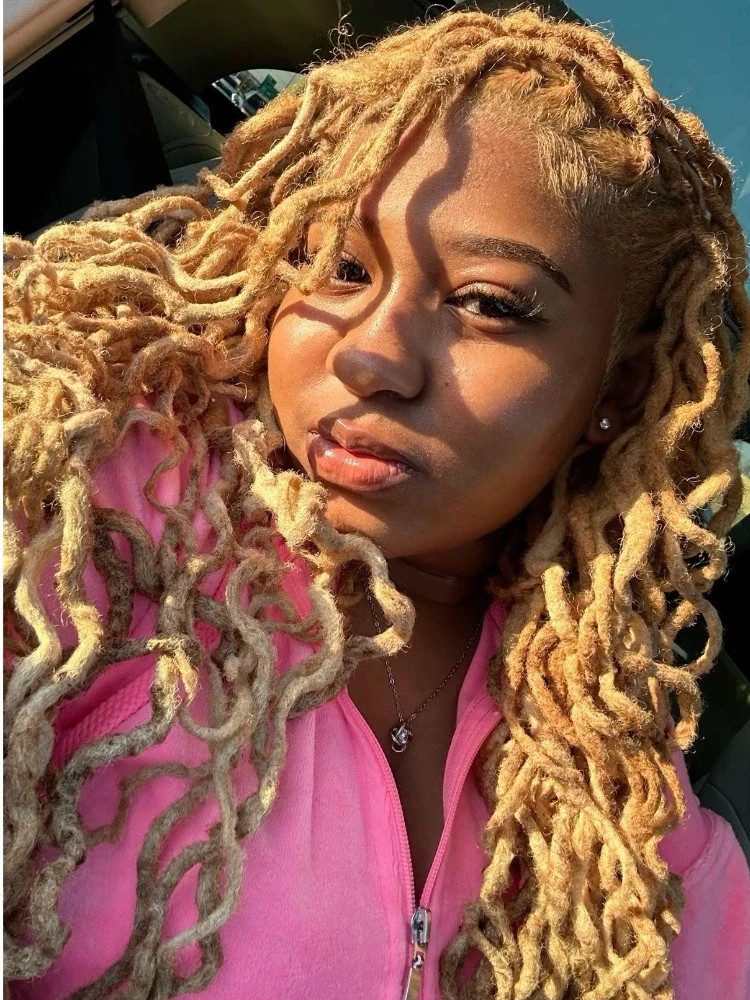
This is the loc style that makes you look like you woke up this way. And maybe you did. The honey blonde locs air dried here are thick and wavy, hitting mid-back with a middle part and zero bangs. The colour is warm honey blonde, achieved through a professional lightening technique that lifts the base without frying the strands. The tone leans golden, not brassy, which means it catches sunlight without screaming. The texture is naturally wavy from air drying, no diffuser, no heat. That wave comes from the locs themselves, not from styling. The length gives weight, so the waves hang rather than puff. No bangs means the face is fully open, and the middle part keeps everything symmetrical. This is a set-it-and-forget-it look, but only if your stylist gets the colour right first.
The air-drying technique is the whole point. After washing, you let gravity do the work, maybe a gentle squeeze with a towel. No twisting, no rolling, no products. The result is a soft, lived-in wave that looks intentional without trying. The honey tone needs a toning session every six to eight weeks to keep the warmth from turning orange. Trims every ten to twelve weeks keep the ends healthy. This is not a look you rush. But once it is set, it stays.
Long Golden Blonde Wavy Locs
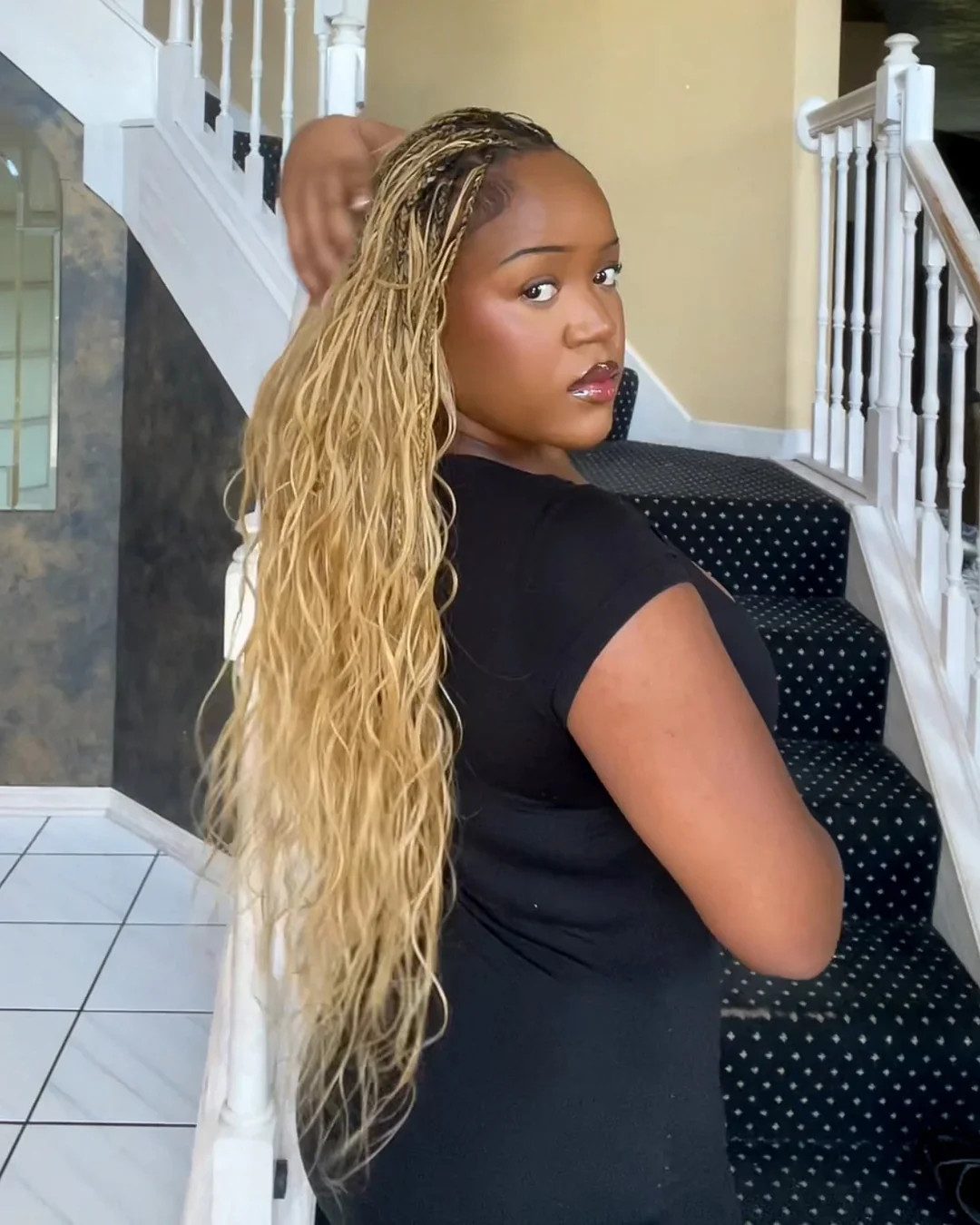
How much time do you have? Because long blonde locs wavy at this length and colour are not a weekend project. The base is a warm golden blonde, lifted from a darker natural shade through multiple sessions. The technique is a full lightening process, not highlights, not balayage. The tone is golden, bright but not platinum, with a warmth that reads expensive rather than brassy. The length is mid-back, the texture is thick and wavy, and the styling is air dried for that natural flow. This is a look that demands patience and a good relationship with your stylist.
Maintenance is the real cost here. The golden tone needs a toner every eight to ten weeks to stay bright, not muddy. Trims every twelve to fourteen weeks keep the ends from splitting under the weight. The waves hold better at this length because the locs have enough heft to drape rather than spring. Air drying is non-negotiable for the texture, heat would flatten the wave. You are looking at a full day in the chair for the initial colour, then half days for touch-ups. Worth it? If you have the time, yes.
Final Thoughts
After writing all of these, I keep coming back to the honey blonde space buns. They are playful, they hold all day, and they hide a grow-out line better than anything else in this roundup. I am booking that appointment next week.
- Trim the baseline every eight weeks.
- Tone at week six, not week ten.
- Deep condition once a week.
- Sleep on a satin scarf.
Blonde locs are a commitment, but the right shade and style make it worth it.

