
I kept seeing light blue hair in my feed and in the chair next to mine at the salon. Not the neon blue of 2016, something softer, more deliberate. Pastel but not washed out, icy but not cold. It looked like a whole new category of colour.
This roundup covers 21 takes on Light Blue Hair, from a five-minute root shadow to a full bleach-and-tone. Some need a salon, some work at the kitchen sink. Fine hair, thick hair, round faces, sharp jawlines — there is a version that stays true past week three. I know because I have the grow-out line to prove it.
Vibrant Medium Blue Long Straight Hair
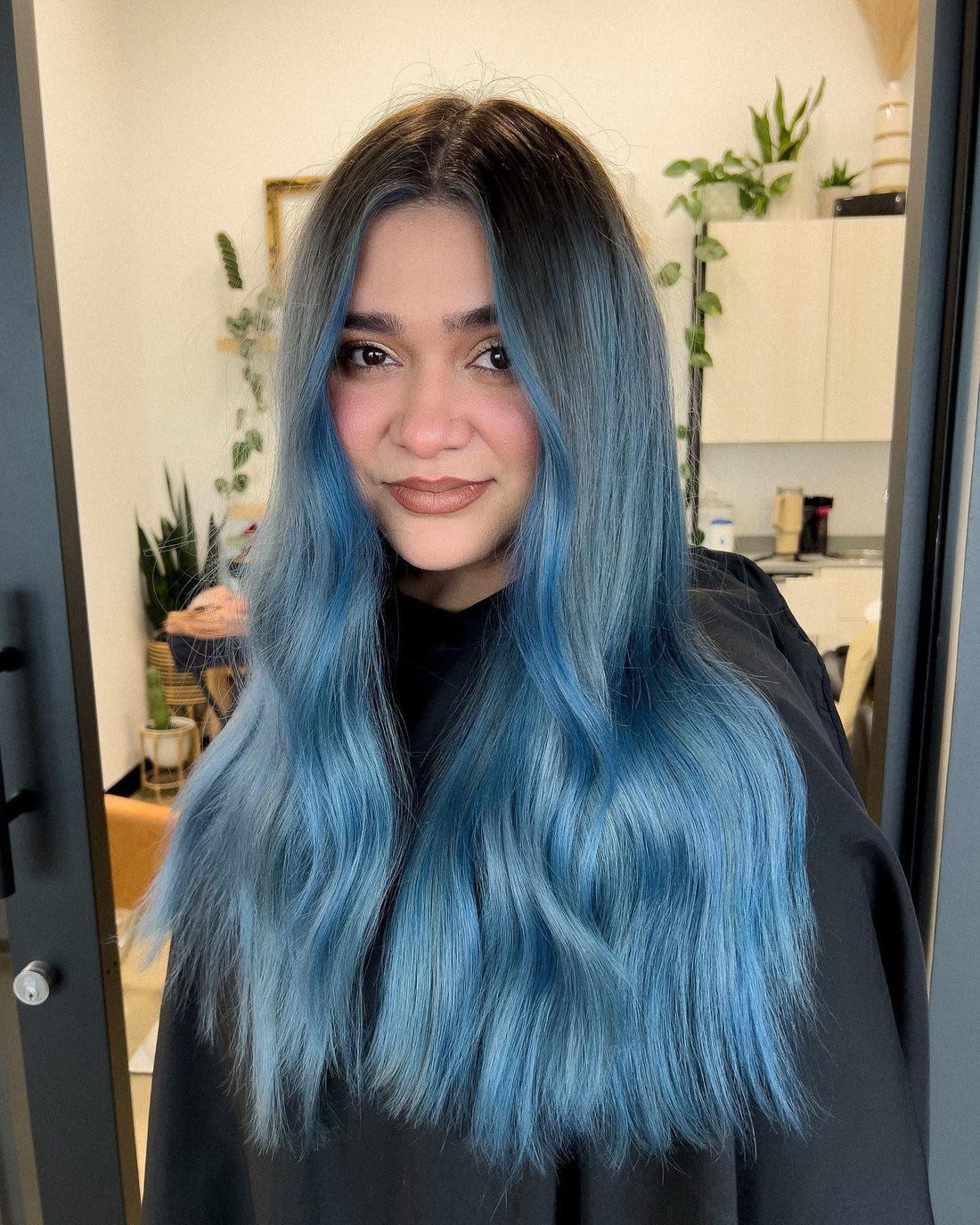
That blue stops you mid-scroll, doesn’t it. It’s a medium blue long hair cut straight at mid-back, no layers, no bangs, just a blunt line that lands with purpose. The texture is thick and straight, so the colour sits flat and even, no patchy surprises. Darker roots give it a grown-in feel, which matters because this is not a bathroom-mirror job. You need a salon for the lift and a flat iron at home for the finish. One honest downside: the ends will show every split, every dry day. Trim rhythm is every ten weeks, no skipping.
Uniform Light Blue Long Straight Hair
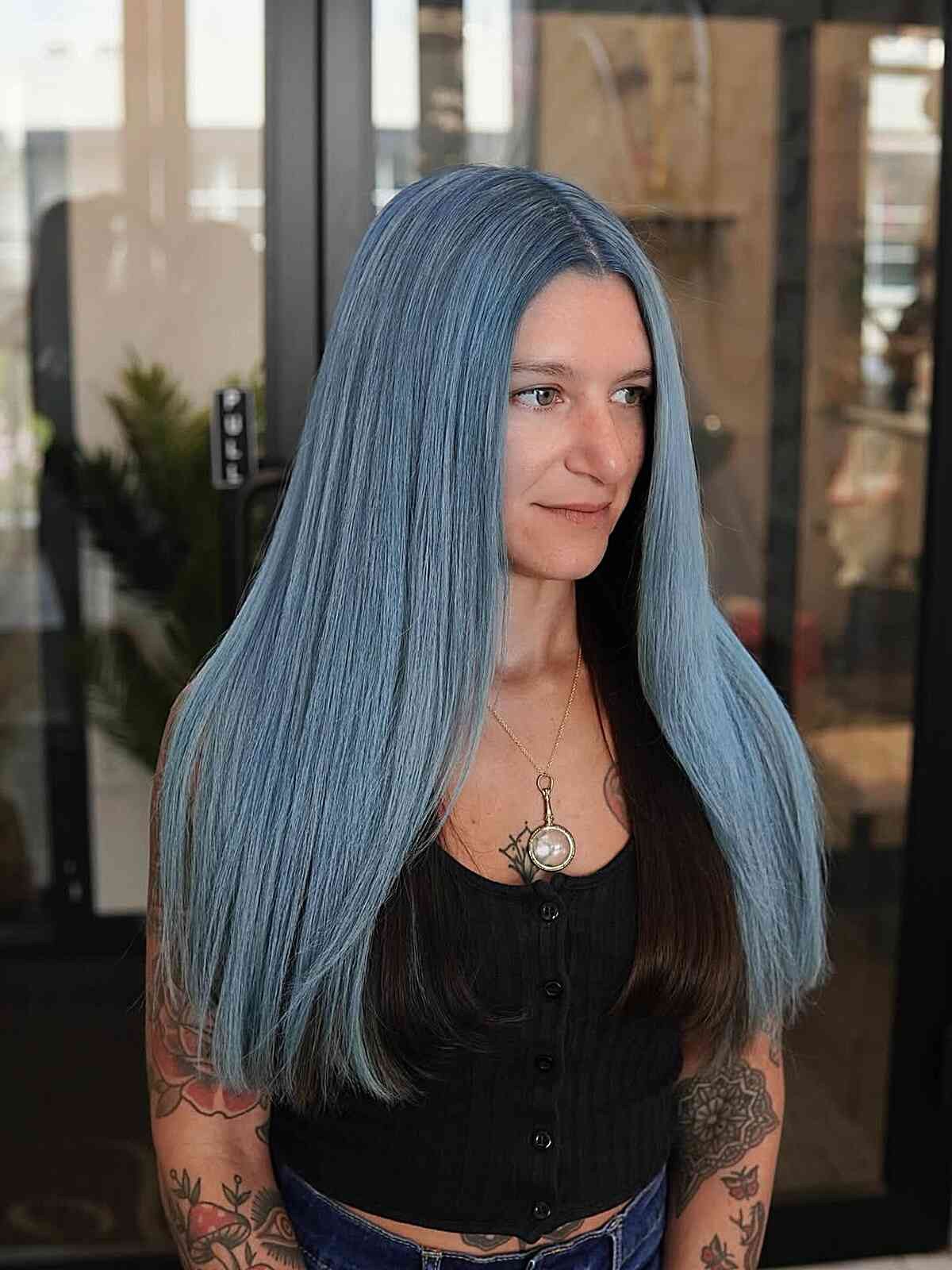
Can one colour across the whole head actually work without looking flat. Yes, when it is uniform light blue on a straight mid-back cut with no layers and no bangs. The texture is straight, medium density, and the colour is evenly applied from root to tip, which creates a clean, modern line. The wear is straightforward: blow dry with a paddle brush, add anti-frizz serum, done. Upkeep is the catch. You will need a touch-up every four weeks because the roots grow in dark and the pastel fades patchy. Not a set-and-forget colour, but the visual payoff is worth the calendar reminders.
Multi-Tonal Blue and Purple Wavy Hair
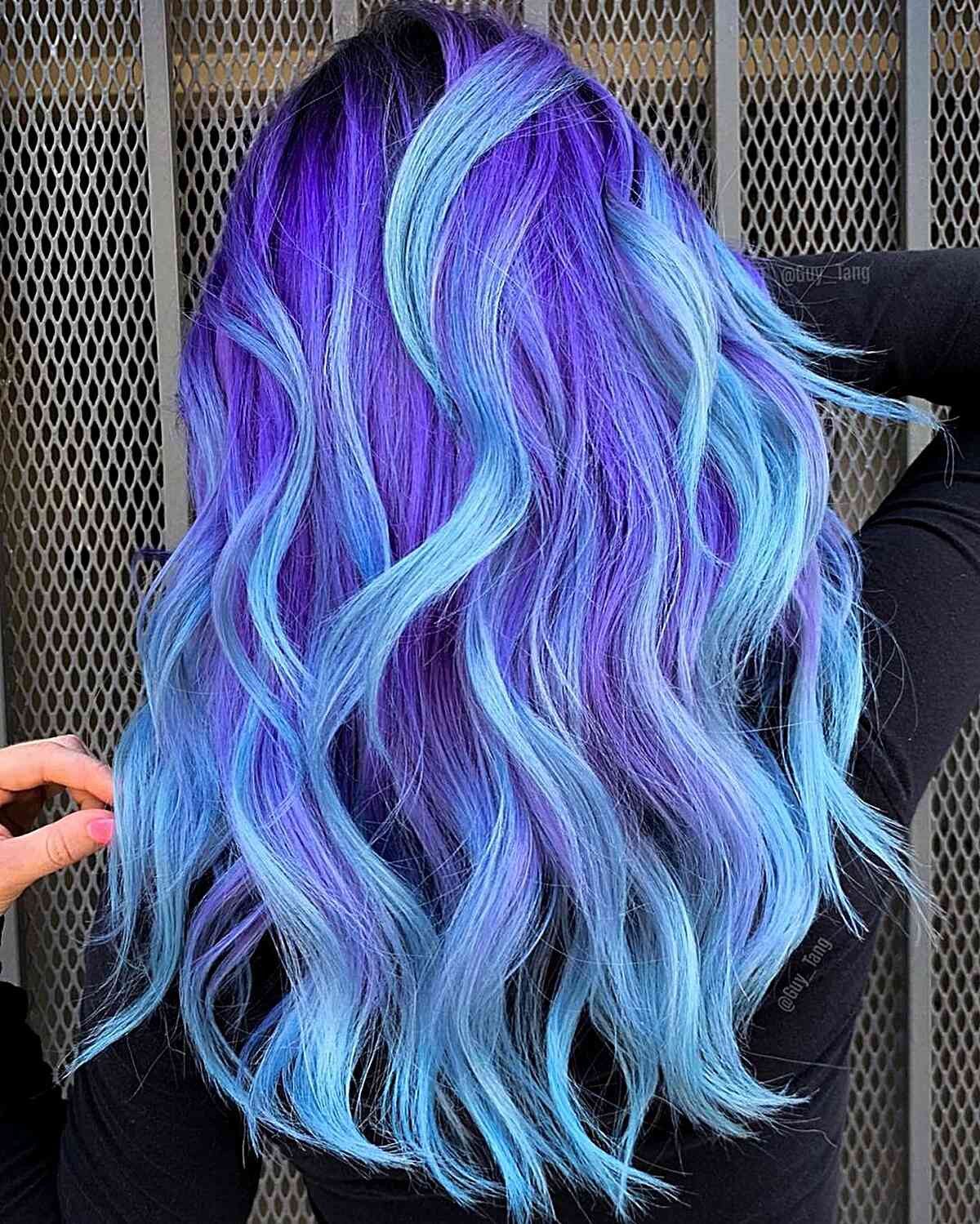
The colour is the headline, but the layers are the reason it works. This is blue and purple hair built on a layered cut at mid-back length, no bangs, with a middle part that lets the dimension breathe. The texture is wavy, thick, and the layers are cut to catch the light at different points, so the lighter blue strands and violet highlights shift as you move. Technically, the stylist paints the colour in sections, darker at the roots, brighter through the mid-lengths and ends. Styling is simple: a large barrel curling iron away from the face, then finger comb to break up the set. The layers hold the wave shape without it collapsing into a single flat chunk.
Chin Length Light Blue Bob
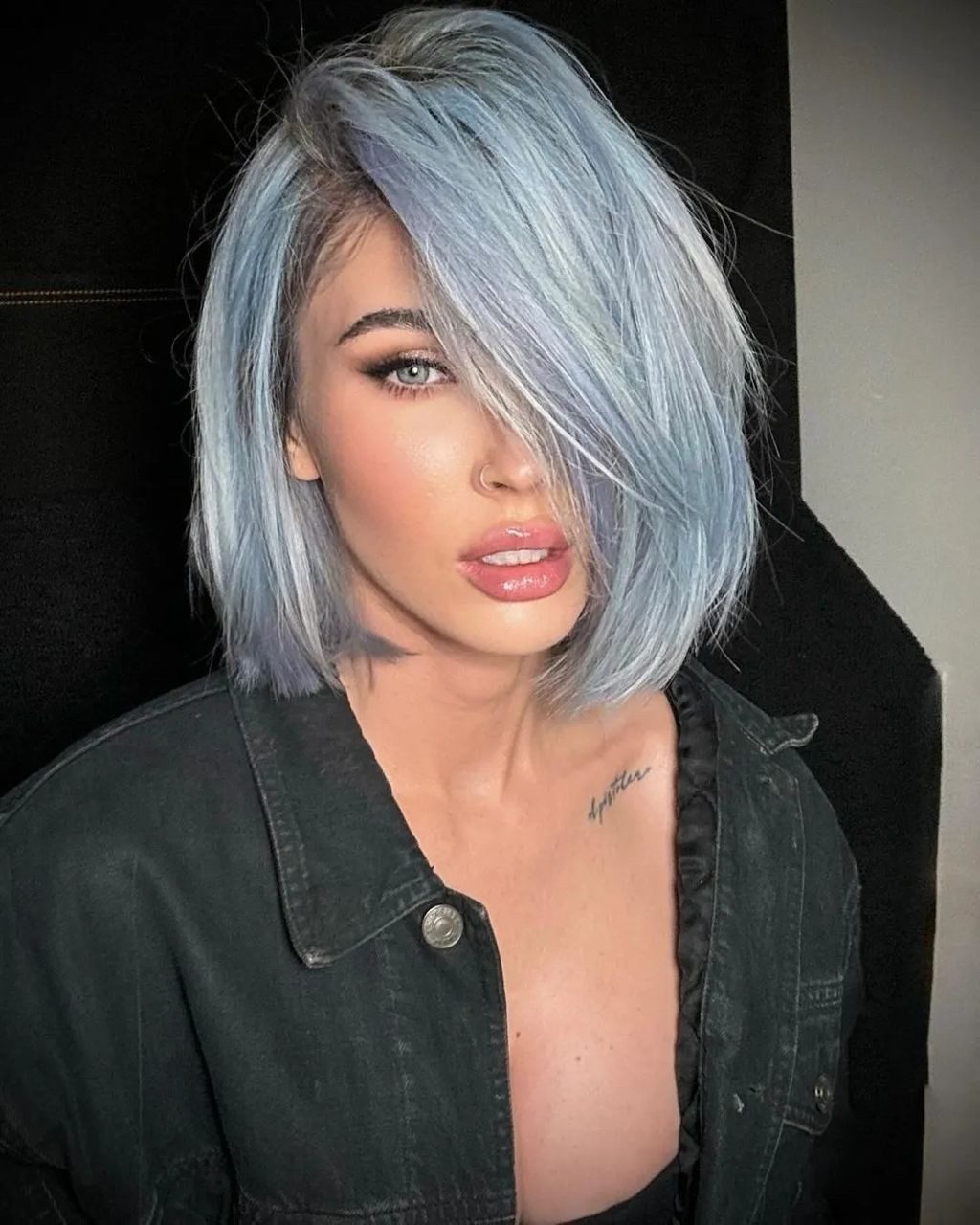
I will admit I was skeptical about a light blue bob at chin length. It looked sharp in the salon photo, sure, but how does it hold up on a Tuesday. The cut is a chin-length bob with side-swept bangs, straight texture, fine density, and a cool-toned light blue shade with faint purple undertones. The side-swept bangs are the key. They add movement that a blunt bob can lack at this length, and they frame the face without requiring daily round-brush work. This is a DIY-friendly style if you can blow dry roots upward for crown height. But the bob line is not forgiving. You need a salon trim every six weeks to keep the edge crisp. Skip a trim and the chin-grazing line turns into a chin-tickling mess.
Teal to Purple Gradient Hair
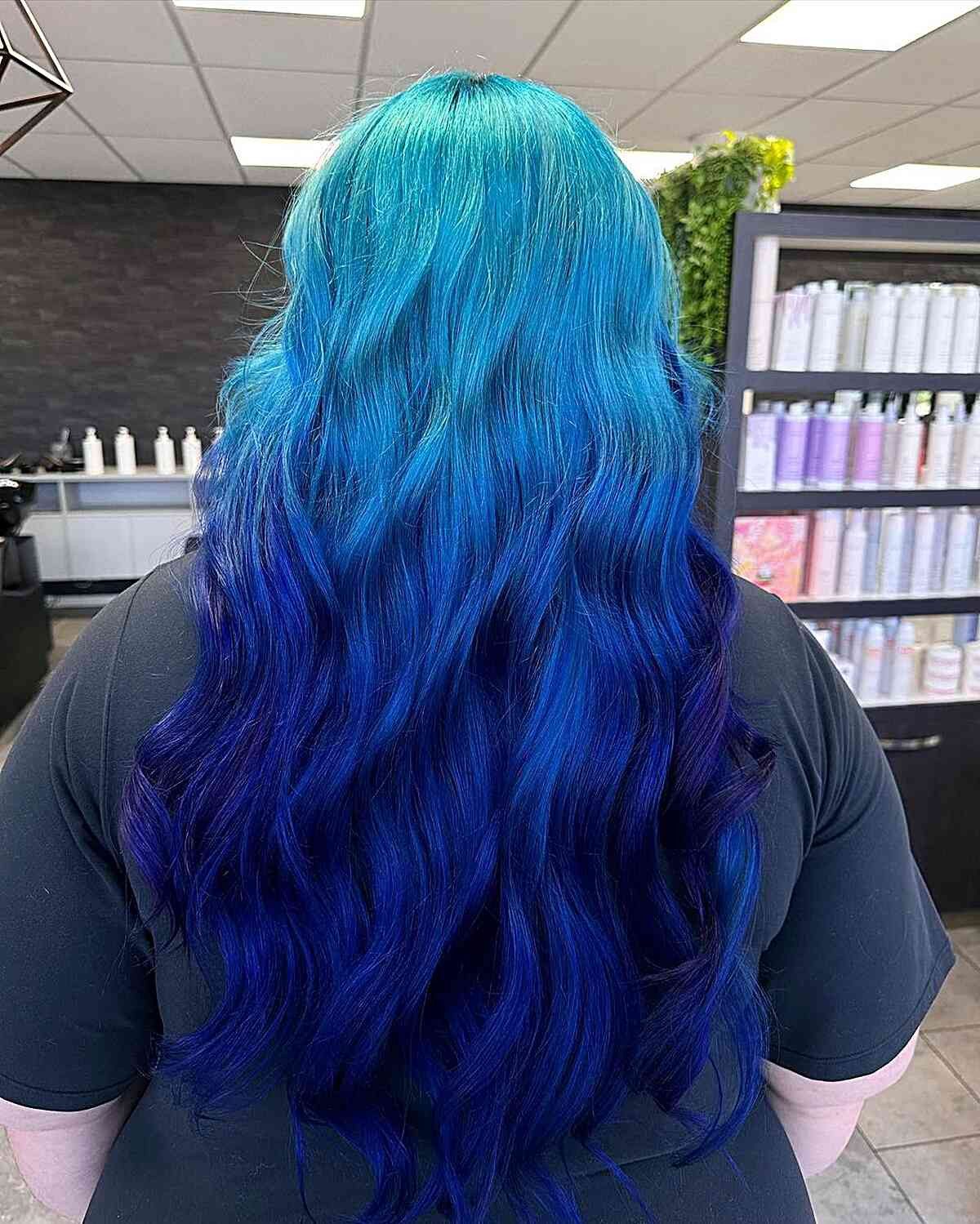
Gradient versus ombre: I am picking gradient every time. This teal and blue gradient hair starts teal at the roots, shifts to deep blue through the middle, and lands on purple at the ends. The cut is long layers at mid-back length, no bangs, wavy texture, and the gradient color effect is built by painting each section separately, not by pulling colour through. The layers matter because they let each tone sit on its own plane instead of bleeding into a muddy middle. Styling is loose waves with a curling wand on medium heat and a heat protectant to stop the colour from stripping. The honest downside: this is a three-hour salon session, minimum. But the grow-out is forgiving. The dark root blends into the teal, so you get eight weeks before you need to think about a refresh.
Uniform Light Blue Waves
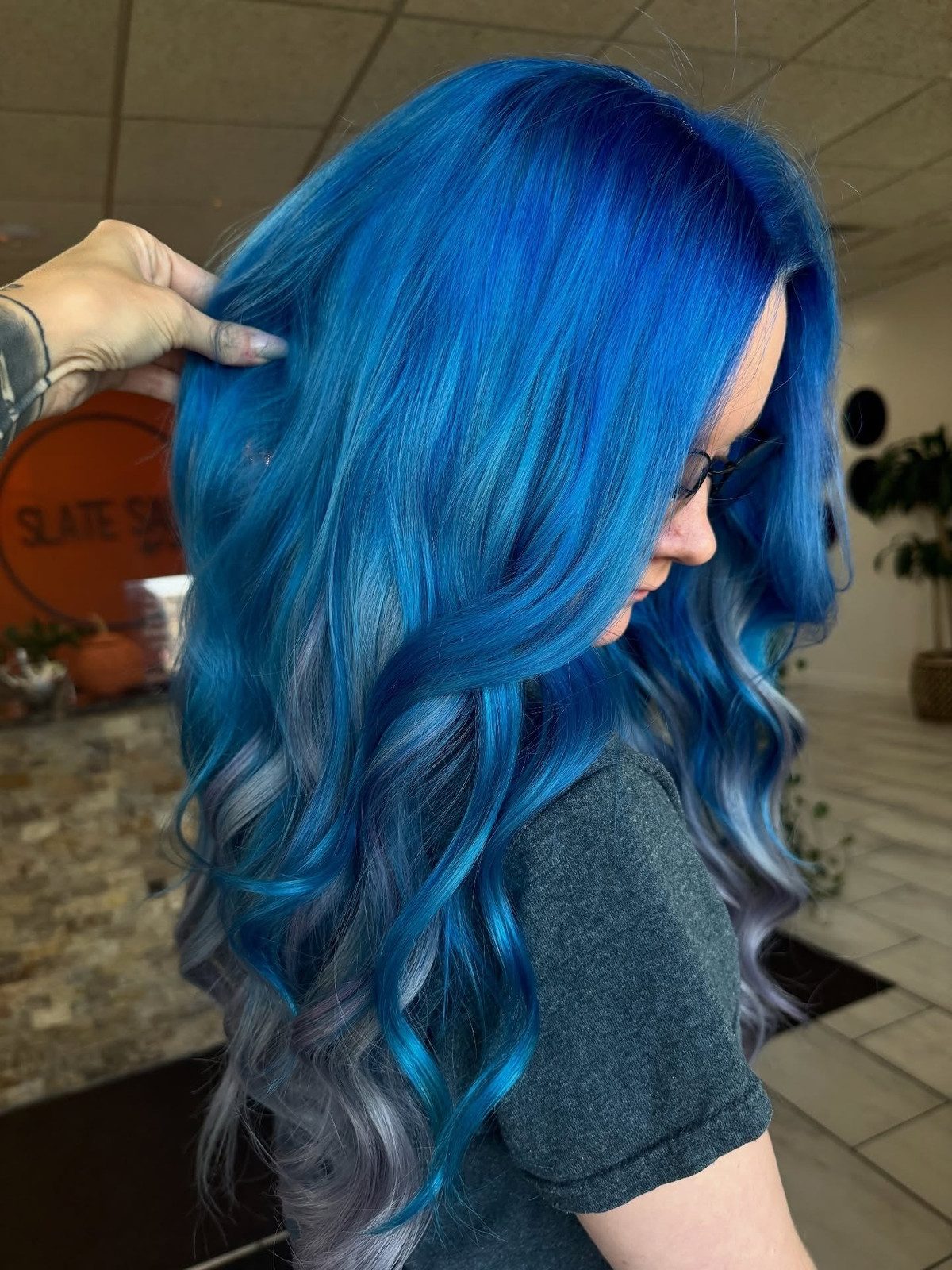
The wave pattern is uniform from root to tip, which is rarer than you think. Mid-back length, long layers, no bangs. The even light blue color helps: no dark root, no chunky highlights breaking up the line, just one continuous shade running through every S-bend. My fine hair would show every crimp and gap at this length. Medium density carries it better, the layers stack without disappearing. You wear this by twisting sections around a curling wand while the hair is still damp, then spritzing with texture spray. The hold lasts about six hours before the bottom waves drop straight. Trim ends every eight weeks or the uniform wave pattern frays at the hem.
Pastel Blue Angled Bob
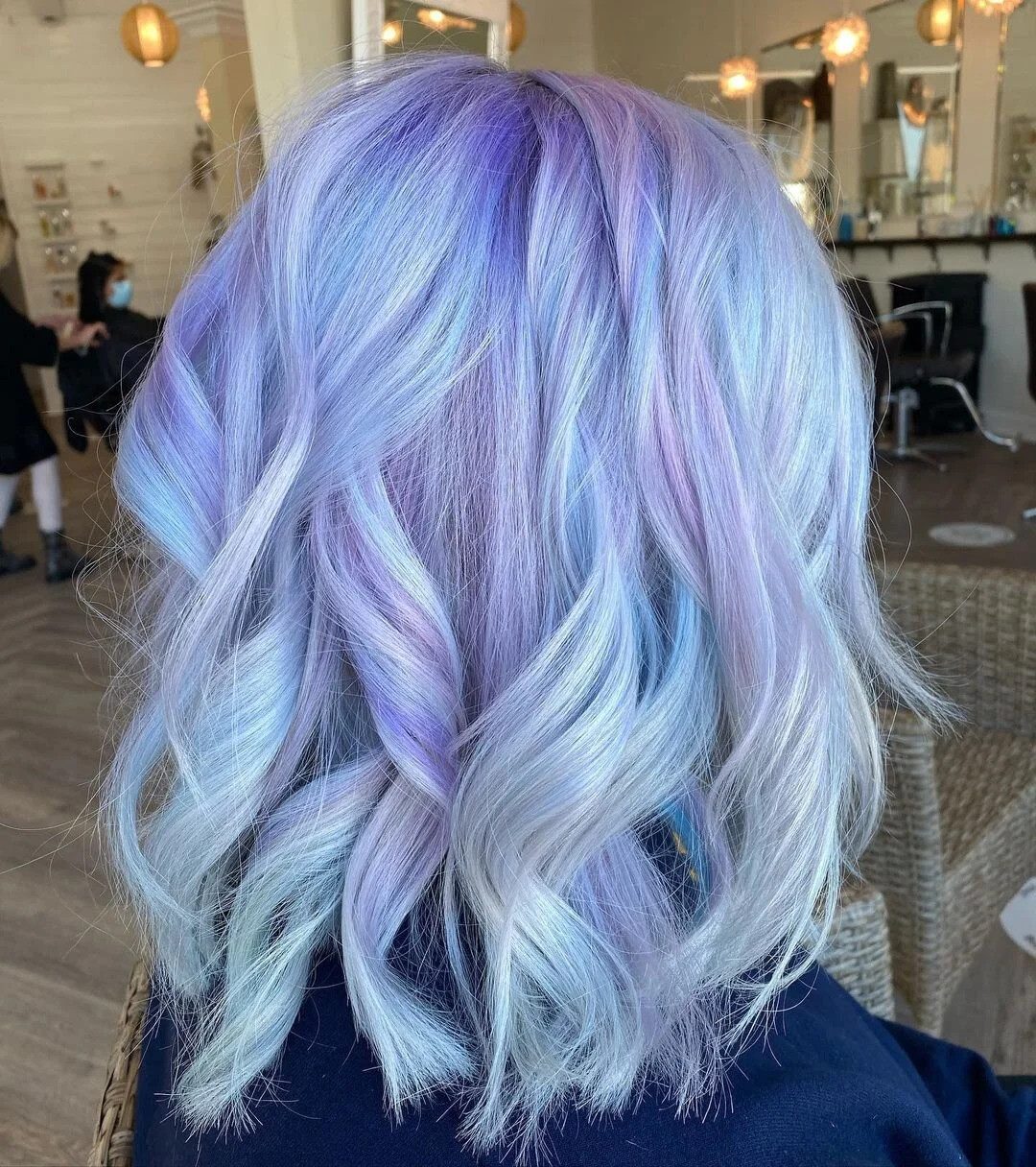
My first reaction was that this bob was shorter in back than I expected. Chin length in front, grazing the nape in back, no bangs. The pastel blue angled bob works because the angle is steep enough to read as deliberate, not like you asked for a trim and the stylist got carried away. The multi-tonal pastel blend mixes blue, purple and white in loose curls that land around the jaw. Medium density hair holds the shape without looking hollow. A small curling wand creates tight bends, then you shake them out with a drop of styling oil. Keep a purple shampoo on hand to maintain the white tones, because the pastel fades fast without it.
Collarbone Blue Bob With Silver
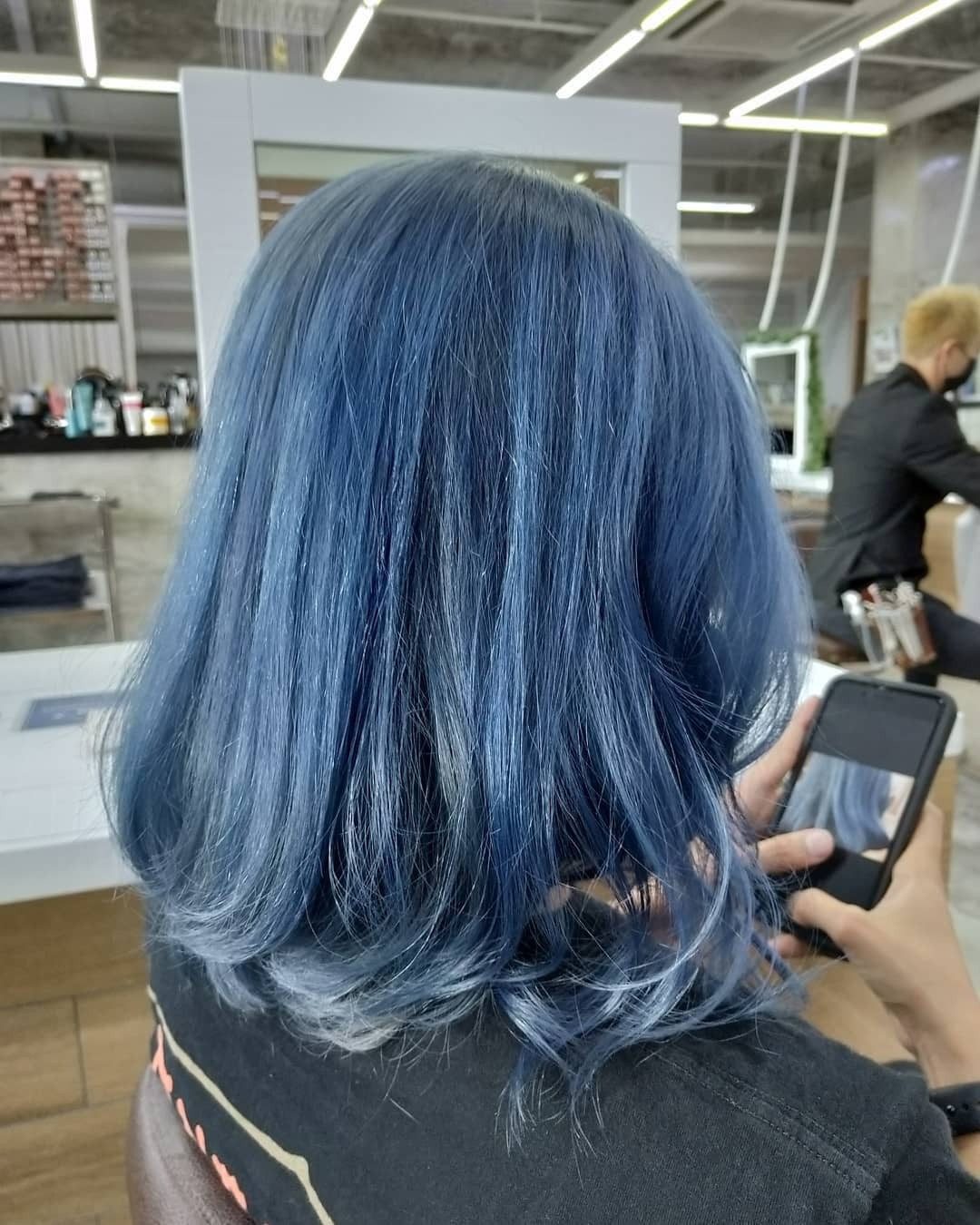
Can we talk about who this collarbone bob actually works for? The blue bob with silver highlights lands just above the shoulder, no bangs, middle part, straight to wavy texture. The silver highlights sit in the top layer, which means they catch light when you move. This flatters medium density hair most, fine hair shows the silver streaks better but the bob can look thin, thick hair needs more internal layering or it becomes a triangle. The honest downside: silver highlights pull brassy within three weeks if you wash warm. Cool water and a clarifying wash shield help, but you will be at the toner appointment every four weeks. Best for someone who already has a blonde base and does not mind maintenance.
Shoulder Length Light Blue Hair

Notice how the wispy bangs do not meet the side sections, there is a deliberate gap of about an inch. The shoulder length light blue hair uses long layers that start past the chin, so the bulk sits at the shoulders and the ends are lighter. Wispy bangs skim the brows, not below them. Fine to medium density works here because the layers are not aggressive, the shape stays full. The technique is simple: the stylist cuts the long layers while the hair is dry, then goes back and point-cuts the bangs. You maintain it by scrunching air-dry cream into damp hair and letting it dry naturally. The wispy bangs need trimming every four weeks or they hit your eyelashes and you start squinting.
Pastel Blue Bob With Purple Streaks
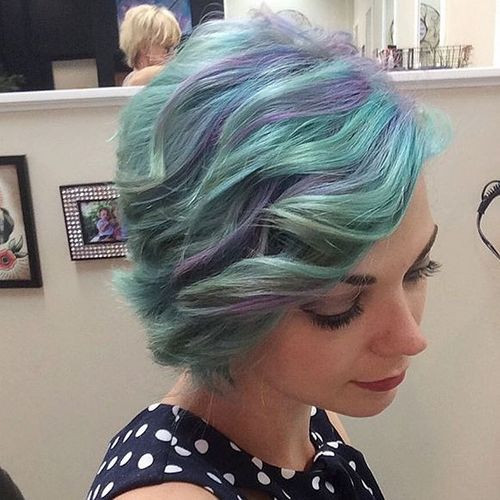
I will confess I was skeptical about purple streaks in a pastel bob. The pastel blue bob with purple streaks is chin length, side-swept bangs, wavy texture. The purple streaks are chunky, not fine ribbons, placed mostly underneath and at the ends so they peek out when the hair moves. This is a salon job, the purple needs to be painted on pre-lightened sections, you cannot get that separation with a box dye. A 1-inch curling iron creates soft bends, then you sweep the fringe to one side. The purple streaks fade faster than the blue, expect to refresh them with color depositing conditioner every two weeks. The side-swept bangs hide a high forehead well and the chin length suits oval and heart face shapes.
Blonde to Light Blue Ombre Hair
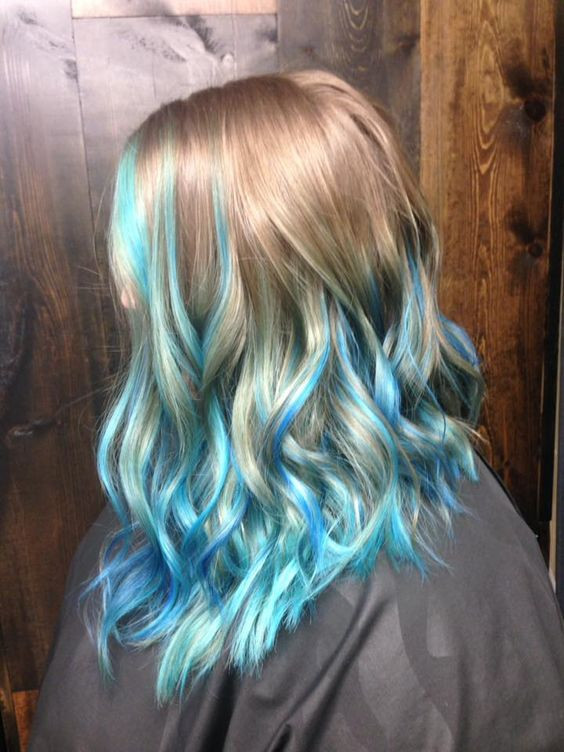
Light blue hair is a commitment, but the right haircut makes the grow-out almost boring. I have had every shade from pastel to denim, and the cuts that survive are the ones with a clear shape. A blunt collarbone bob, light blue all over, is the one I keep coming back to. It reads expensive even when my roots show at week five. The blunt line hides split ends for a month longer than any layered cut I have tried. That alone is worth the flat-iron time.
Uniform Pastel Light Blue Lob
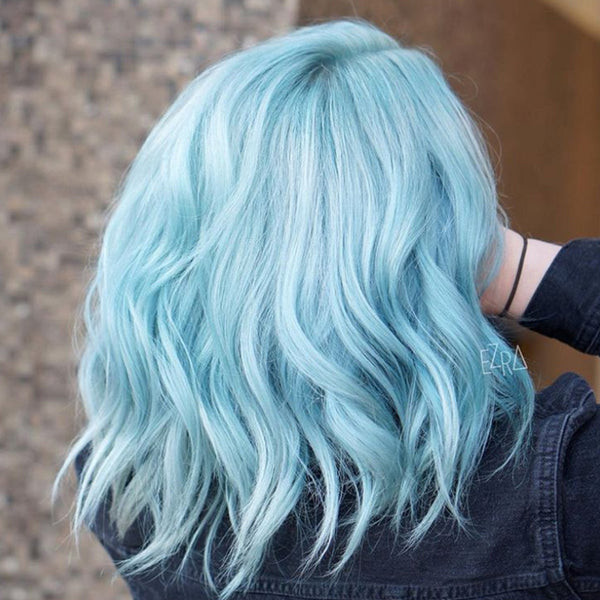
I wanted to hate this one. A uniform pastel light blue lob sounds like the kind of colour that looks chalky by the second wash. But the photo shows a wavy lob at collarbone length, no bangs, a middle part, and the colour is even from root to tip without a single dark patch. That evenness is the whole trick. The cut is a blunt lob with no layers, which keeps the pastel light blue looking dense instead of washed out. Wavy texture helps because the waves catch the light differently, making the uniform colour read dimensional. The upkeep is the catch. Every eight weeks you trim the blunt baseline, and every three weeks you refresh the pastel shade with a toning treatment. Skip either one and the lob looks ragged and the colour looks flat.
Bright Blue to Light Blue Gradient
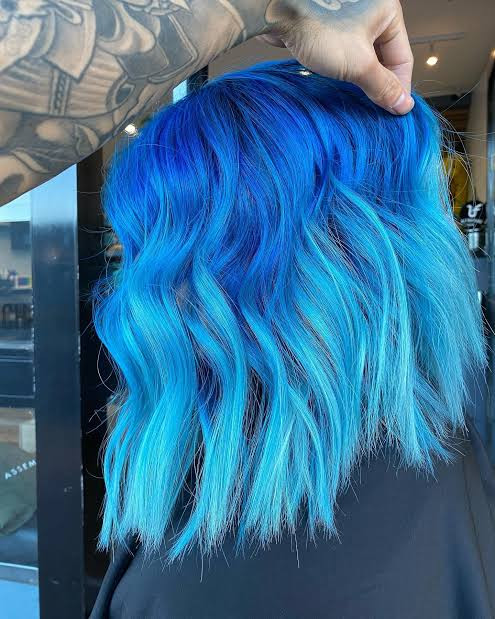
This one grabs you. A wavy bob at collarbone length, no bangs, a middle part, and the blue to light blue gradient starts royal at the root and fades to a soft sky at the ends. The bright blue roots are the statement, and the fade is what makes it wearable. The cut is a blunt bob with internal layers through the back, so the wavy texture has shape without losing the blunt perimeter. The honest downside is that the bright blue roots need refreshing every four weeks, and that is a salon visit, not a kitchen-sink job. Skip it and the gradient turns into a stripe.
Icy Light Blue Long Hair
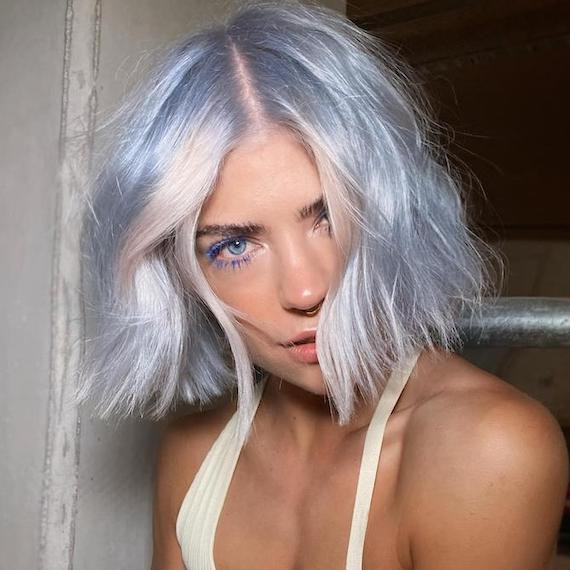
Who actually looks good in icy light blue long hair? Not everyone, and that’s fine. The long layers at mid-back length give the silver tones room to catch the light, but only if your hair is thick enough to hold the wave. Mine goes flat by 4 pm, so I’d need a texture spray and a curl refresher by lunch. The middle part and no bangs keep it clean, but the upkeep is real: a purple shampoo weekly to stop the icy light blue long hair from turning green. If you’ve got the density and the patience, it’s striking. If not, skip it.
Vivid Blue to Icy Blue Ombre
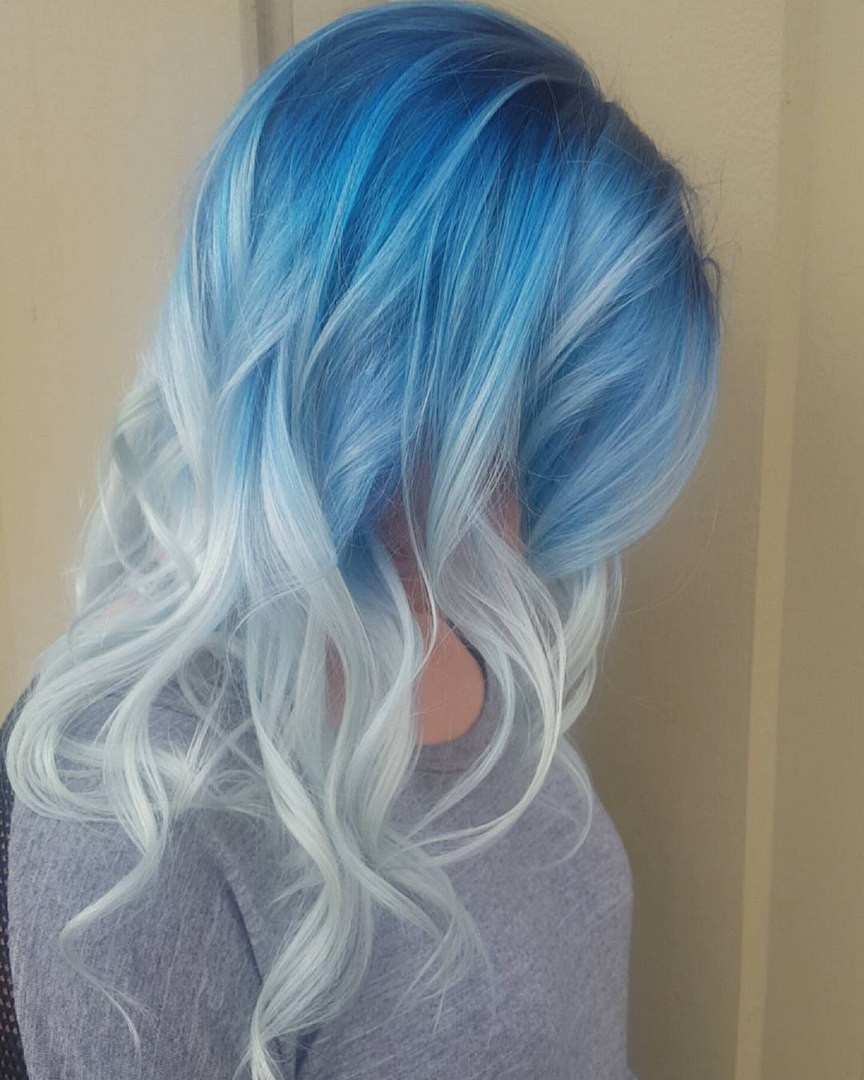
The vivid blue root to icy blue ends is a deliberate gradient, not an accident. On a collarbone bob with no bangs, the colour transition shows best in waves, where each bend reveals a different tone. It’s a summer look, honestly, because the vivid to icy blue hair demands bright light to read as intended. The honest downside? That vivid blue root fades fast, and if you don’t use sulfate-free wash, the blue bleeds into the icy ends. You’ll be back in the chair every six weeks to keep the line sharp.
Dark Brown to Light Blue Ombre
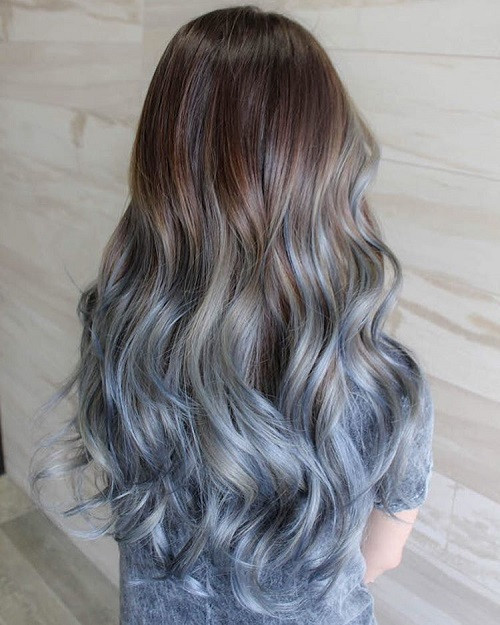
I have a confession: I expected this one to look heavy, two blocks of color stacked on top of each other. But the dark brown to blue ombre does something smarter. The long layers run from mid-back to the ends, and that transition from dark brown root to light blue is what saves it. No bangs, just a middle part that lets the wave pattern breathe. The ombre starts below the chin, so the brown reads as grown-in, not a root emergency. I curled the ends with a large iron, and the movement made the gradient look liquid. Zero touch-ups at the top, just a toner on the blue ends every six weeks. That is the kind of wear I can live with.
Side View Icy Light Blue Bob
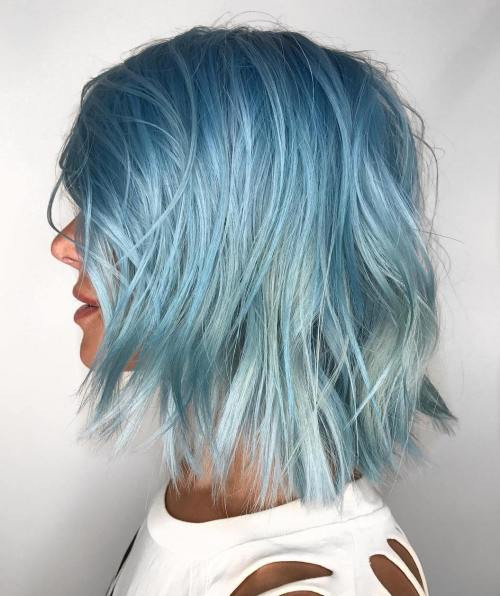
I am picking the icy blue wavy bob over a blunt lob, and I will tell you why. The side view shows a collarbone bob, no bangs, with a middle part that gives the wave pattern room to fan out. A blunt lob at this length can look like a bell. This one does not. The icy light blue color is sheer enough that each wave catches the light separately. I used a sea salt spray and diffused on low — the texture held its shape, not stiff, not flat. This is a salon cut. You cannot get that airy baseline with kitchen scissors. Book it, trim the baseline every eight weeks, and skip the DIY.
Vibrant to Soft Blue Long Hair
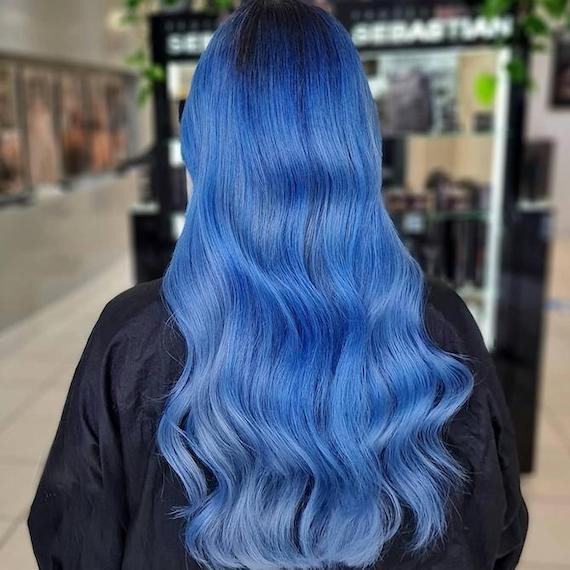
Picture this: a woman walks into a coffee shop, and her hair is the brightest thing in the room. That is the appeal of vibrant blue long hair. It is a mid-back length with long layers that move separately — no bangs, a middle part, loose waves. The color starts intense at the root and fades to soft blue at the ends. The honest downside? It is loud. You cannot dress it down. That vibrant blue demands the rest of you dress in neutrals or look like a costume. And the fade from vivid to soft is not a gradient you can skip toning. Three weeks in, the top still pops but the ends start reading more grey-blue than pastel. Wash in cool water and plan a toner touch-up at week four. I am still skeptical that anyone wears this past six weeks without intervention.
Mid-Back Fine Icy Light Blue Long Hair
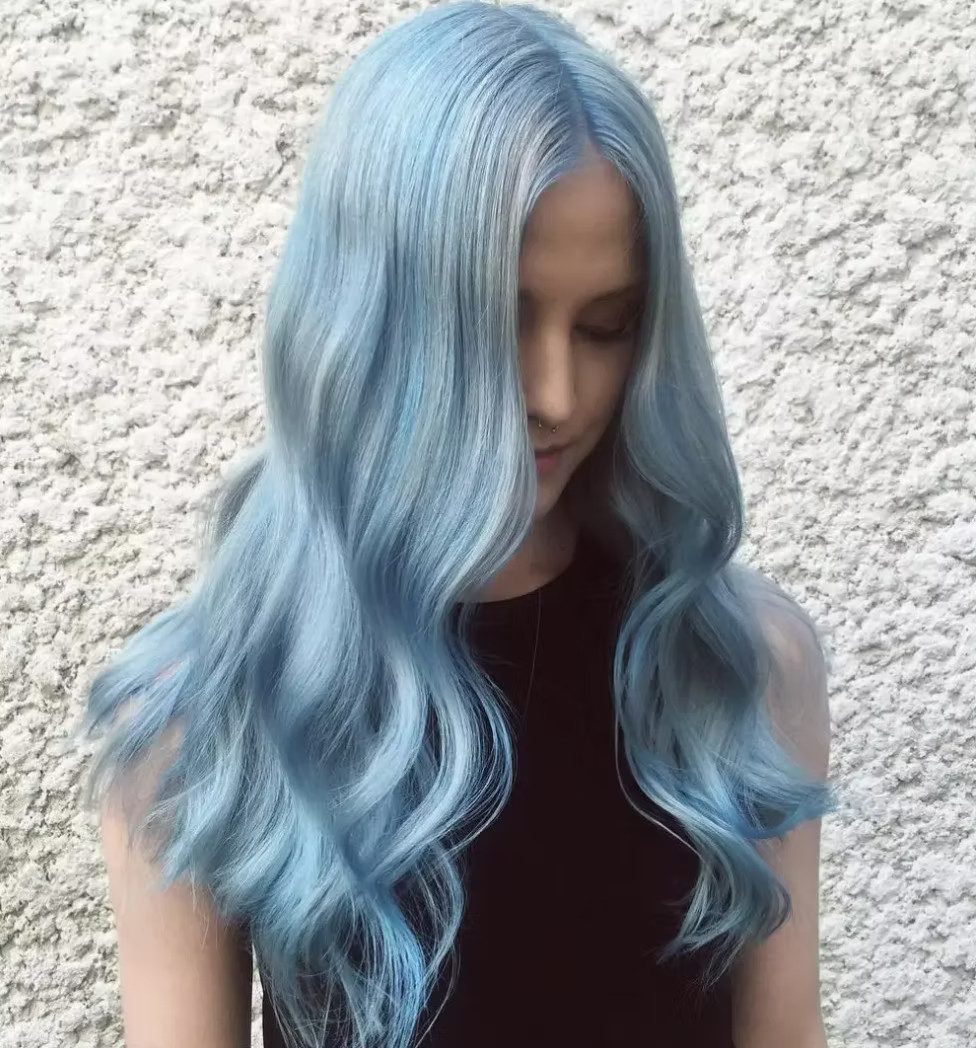
My gut reaction: this is the best case scenario for fine light blue hair. The cut is long wavy layers that stop at mid-back, no bangs, middle part. The icy light blue shade is so pale it looks frosted, and the fine texture is what makes it work. Coarse hair at this length and shade would look heavy, like a sheet of paper. Fine hair holds the wave without bulk, and the transparency lets the light through. A lightweight thickening spray before blow-drying gave my strands grip without that plastered feeling. The upkeep is the catch. Fine hair pulls the toner out faster. I needed a purple shampoo every third wash just to keep the icy light blue from turning dishwater. It is beautiful. It is also a job.
Visual Idea
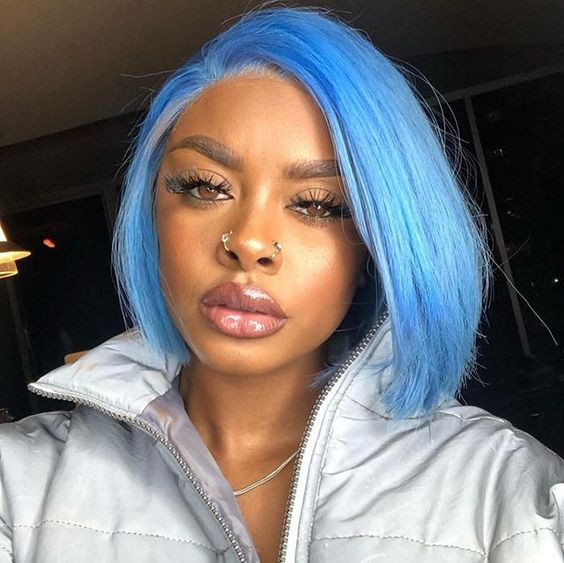
Ask yourself: have you ever tried a chin-length bob and wondered why it looked stiff? Side-swept bangs are the answer. This one is a uniform light blue, solid color, fine straight texture, front view with a side part. The bob hits exactly at the chin, no layering, one clean line. That blunt cut gives fine hair the illusion of density — no thin ends peeking through. The side-swept bangs soften the shape so it does not sit there, two dimensional, like a mushroom cap. The honest downside is the angle. A side part widens the face. If your jaw is already square, this cut reads as wider than it is. Round and oval faces? they get the lift. Everyone else, try this on a dry shampoo day first and see how the silhouette lands.
Collarbone Visual Idea
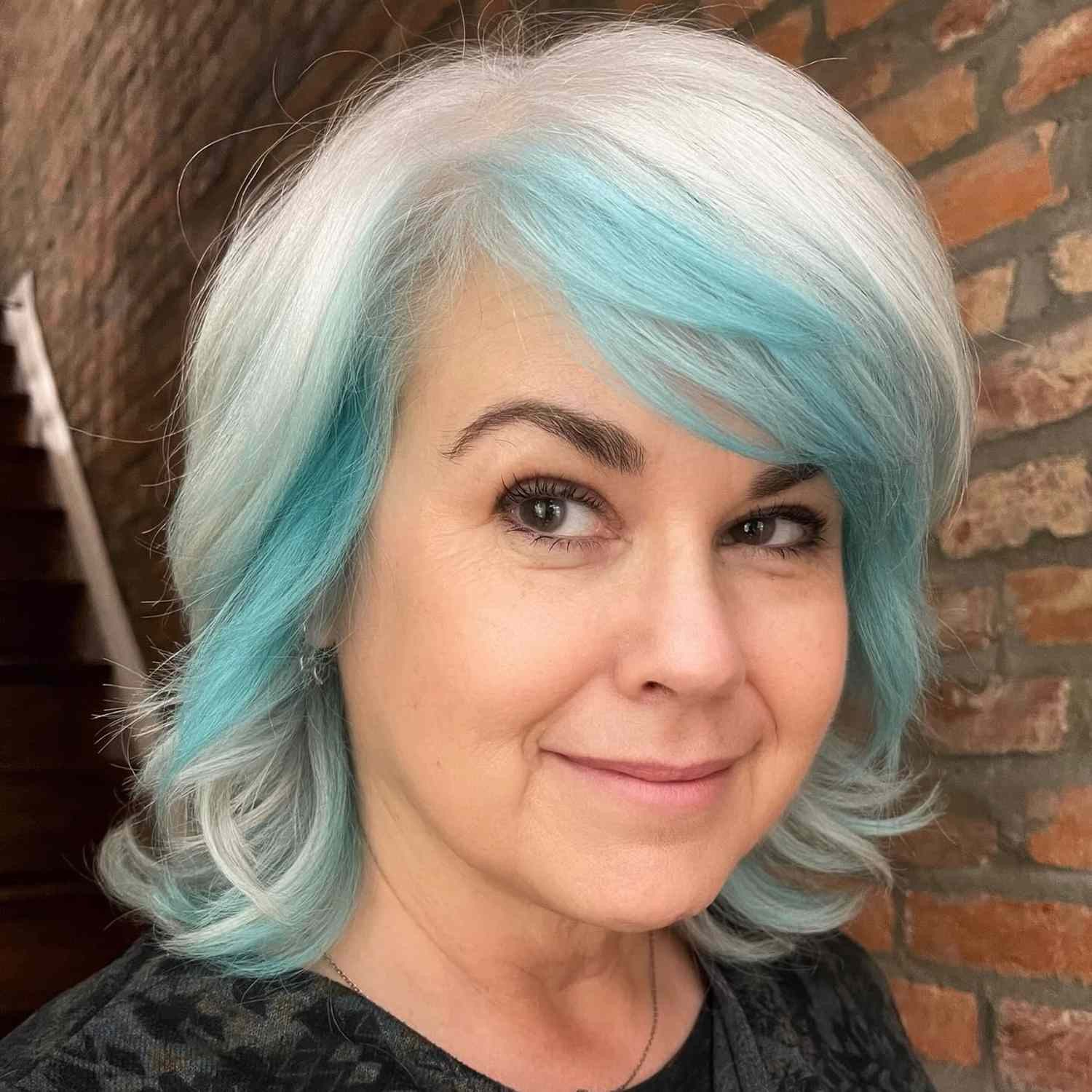
The trick with a collarbone cut is that every layer lands at a different angle. Side-swept bangs fall past the eyebrow, then the next layer hits the jaw, then the shortest one skims the collarbone itself. Fine hair reads thicker here because no two sections stack on top of each other. The white base with light blue highlights means the colour moves, too — the streaks shift from vivid at the roots to sheer at the tips. Say this to your stylist: a long, soft layered cut with side-swept bangs, keeping the baseline blunt so the ends don’t fray. The blowout holds because the layers are long enough to wrap around a round brush.
Final Thoughts
After writing all of these, the one I keep coming back to is the collarbone bob with silver. It is the colour that does not need a full commitment and the cut that does not need a curling iron. I booked it last week. We will see if it holds past week five.

