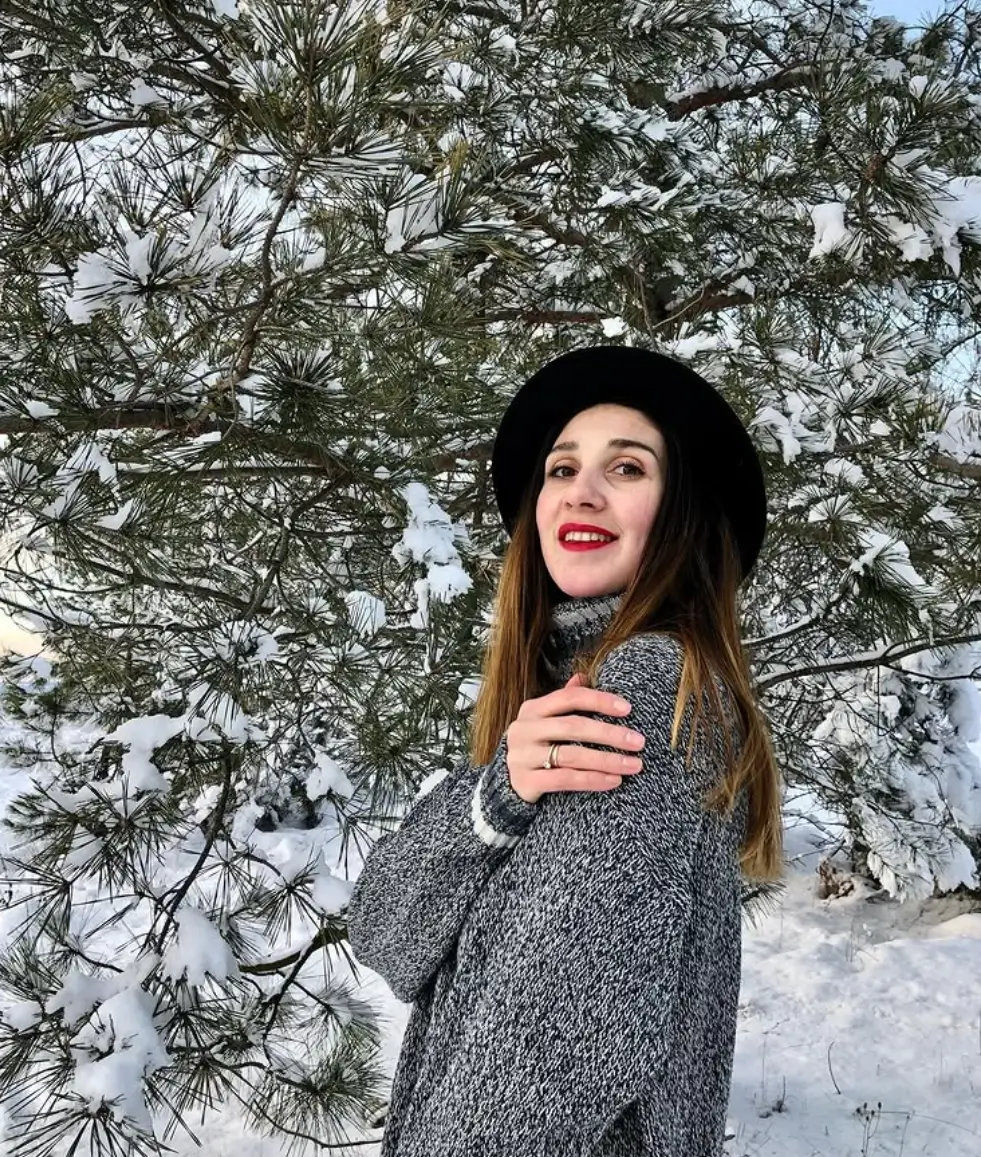
Last summer I watched three women in the chair next to mine ask for a messy bun and leave with something that looked like it took effort. The difference was a twist, a braid, or just the right amount of hair left out. I started paying attention.
This is 40 Second Day Hairstyles that actually work on day two, three, or whenever you last washed. Some take ten minutes, some take twenty. Most work on fine hair that goes flat by 4 pm, and a few need thick hair to hold their shape. I tested them on my own grow-out, my own flat roots, and my own impatience with a round brush.
Effortless Ash Blonde Messy Bun
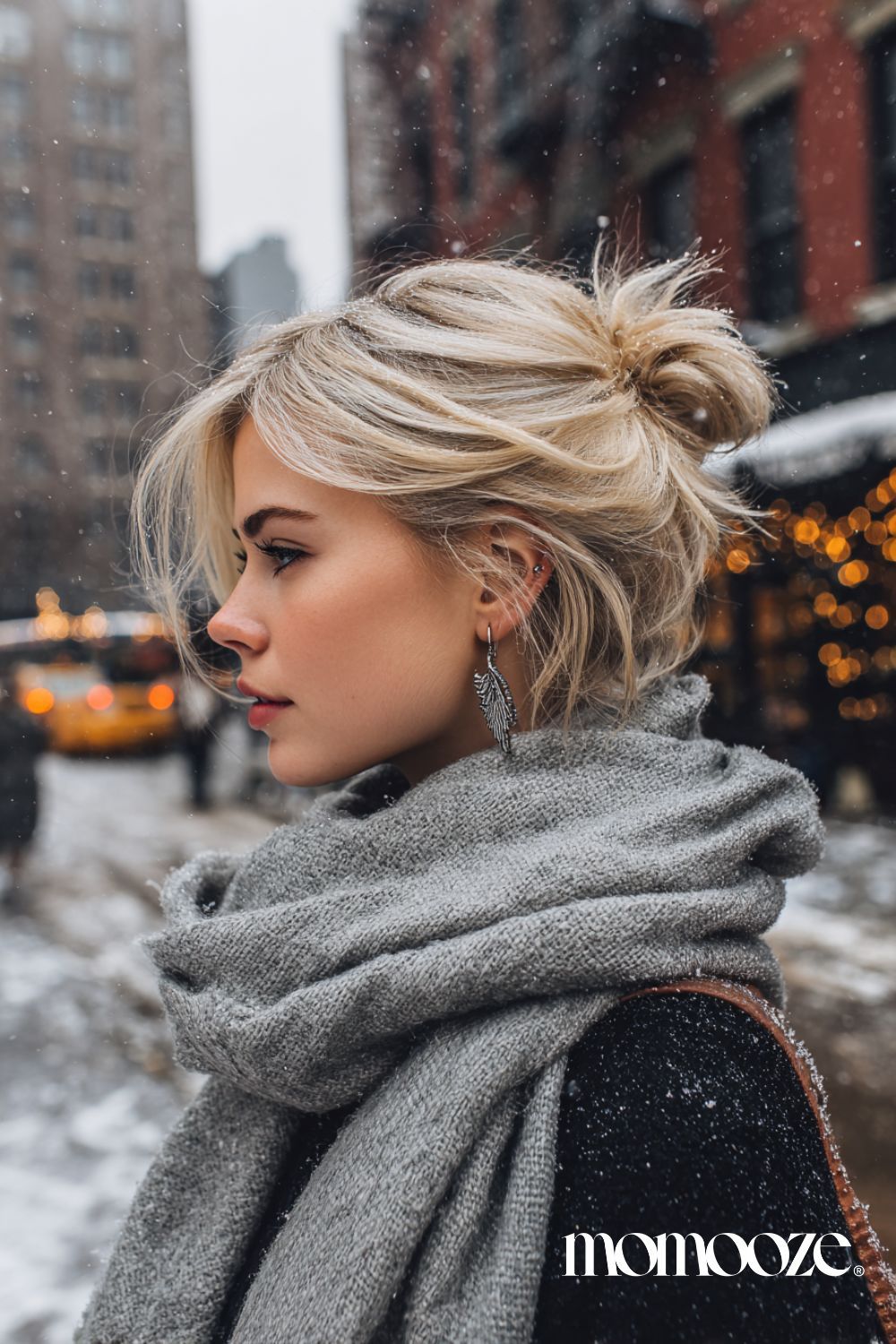
The ash blonde messy bun works because it never tries too hard. Those loose, wispy strands around the face do the softening, so the bun itself can sit high and careless without reading severe. It flatters medium density best, hair with enough wave to grip the pins but not so much that it fights you. Collarbone length is the sweet spot, long enough to gather, short enough that the weight doesn’t pull the whole thing flat by afternoon. The middle part keeps it honest, no sweeping to hide behind. Ash blonde adds a coolness that brightens the face, but only if your skin runs warm, otherwise it can wash you out. This is a five-minute style that holds until dinner, as long as you accept the wispy bits as the point, not the failure.
Voluminous Dark Brown Messy Bun
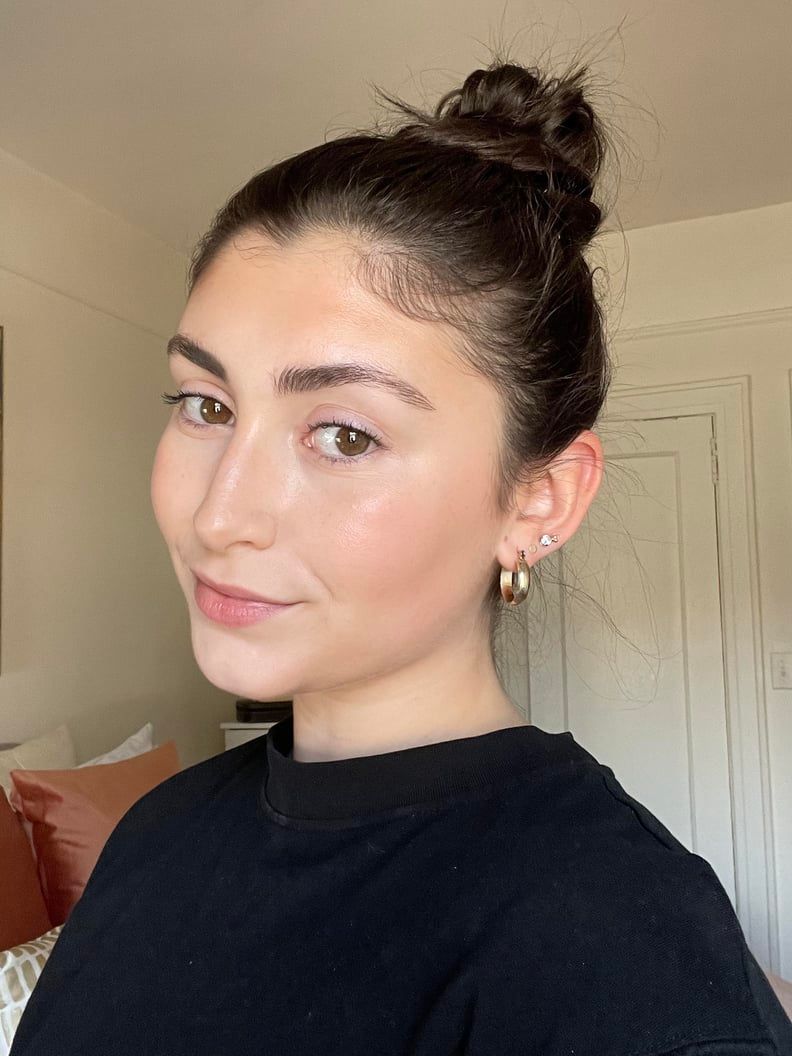
The voluminous dark brown messy bun beats the sleek version every time. Sleek needs clean hair, a steady hand and a mirror you trust. This one needs fingers and a little patience.
Start by tipping your head forward and gathering at the crown, no brush, no comb. Twist loosely, wrap, pin, then pull sections out with your fingers until it looks like you forgot something. That’s the volume, the deliberate looseness. Mid-back length gives you enough rope to build height, and dark brown hides any gaps between pins, which is a mercy. Wavy texture helps the bun stay put without a single bobby pin doing overtime. Face-framing pieces soften the whole thing, so it reads undone, not unfinished. Seven minutes, tops, and it holds through a workday because the volume is structural, not sprayed on.
Crown Messy Bun For Thick Blonde Hair
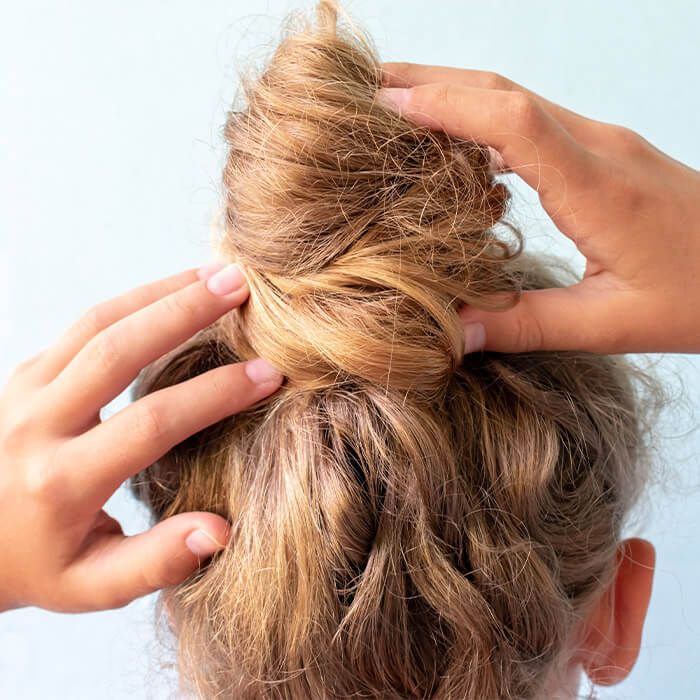
Ever fought a bun that kept sliding down your head by noon? The mistake is pinning too tight, which makes thick hair slip right out. The fix is to twist loosely and let the weight anchor itself. Thick blonde hair at mid-back length has enough heft to hold a crown bun without a single extra pin, as long as you don’t overthink it. Day-old wave or grit from yesterday’s styling gives it grip, so skip the fresh wash. Twist, wrap, pin twice, done. This is a DIY style, genuinely easy, six minutes from start to finish. The back view shows the payoff: a full, round shape that doesn’t deflate. Just don’t smooth it down, the mess is what keeps it up.
Collarbone Messy Bun With Wispy Bangs
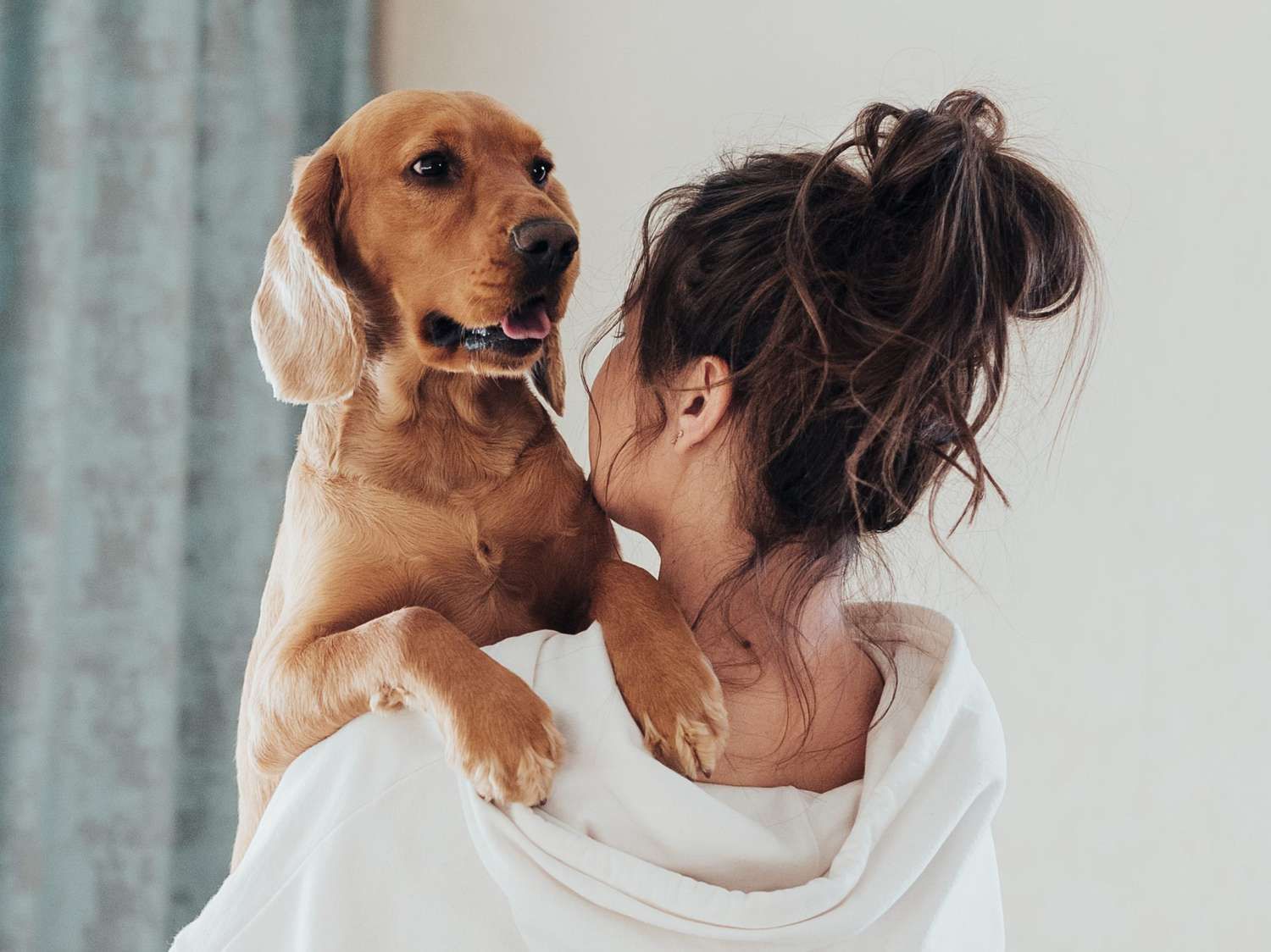
I’ll confess, I expected this collarbone messy bun to fall apart by lunch. It didn’t. The wispy bangs are the secret, they catch the eye and hide the fact that the bun itself is barely holding on. On day two hair, the natural wave gives the pins something to grab, so it stays put through errands and a late meeting. The downside is real though, if your hair is fine or freshly washed, the whole thing slides down your neck by 3 pm. Medium density at collarbone length is the sweet spot, enough hair to form a bun, not so much that it pulls heavy. Dark brown hides any stray pins, which helps. It’s called effortless, but it takes a minute to learn the right looseness. Once you do, it’s the fastest style you own.
Collarbone Romantic Ash Blonde Messy Bun
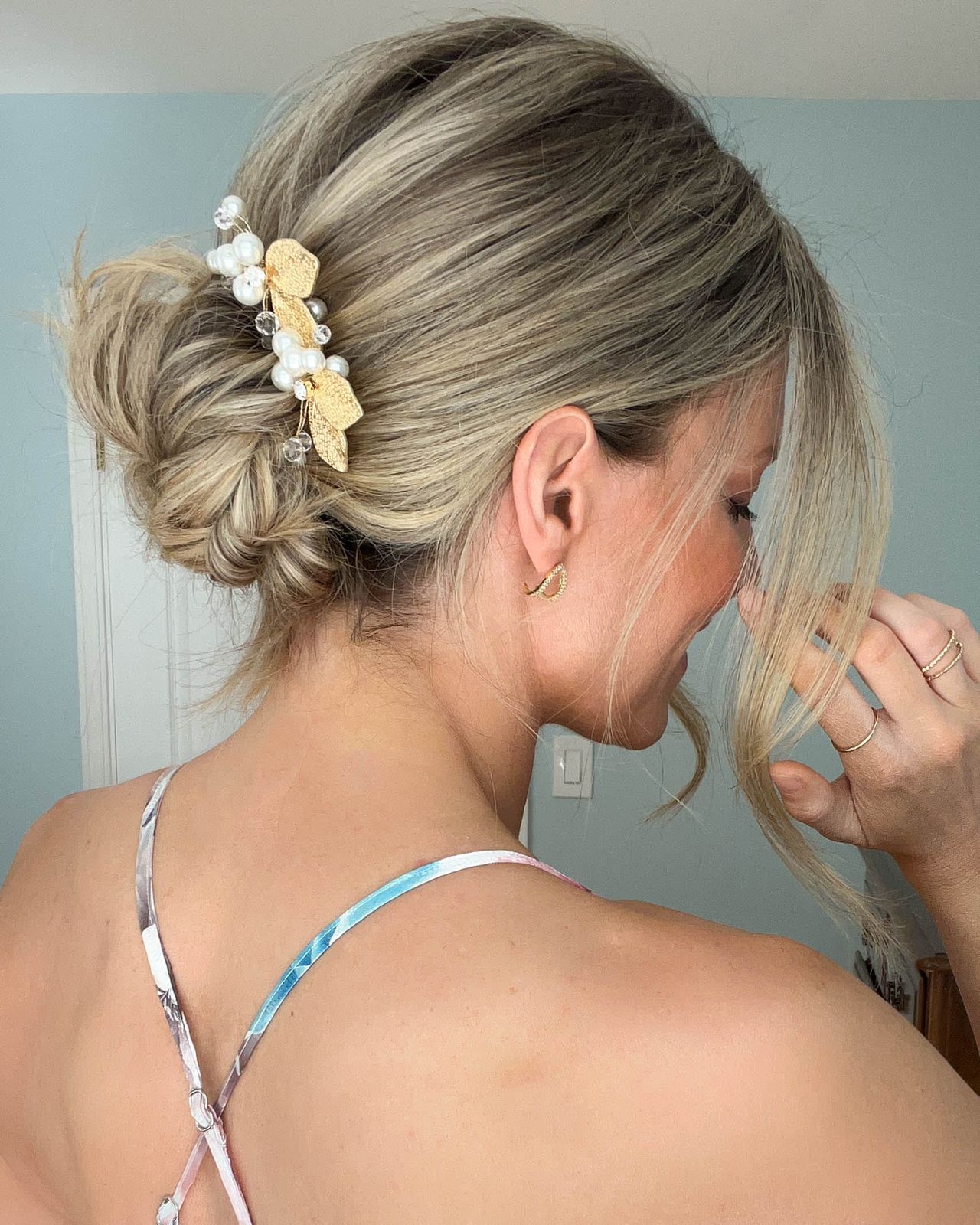
There’s a softness to this messy bun with tendrils that a tight updo just can’t fake. The loose tendrils around the face and nape are the whole point, they catch the light and make the ash blonde look almost silver. It suits collarbone length because the shorter strands naturally fall out, no need to pull them deliberately. Medium density wavy hair holds the textured bun without fighting it, and the middle part keeps it romantic instead of severe.
This one leans salon, not because it’s hard to twist, but because the ash blonde needs a skilled hand to avoid brassiness. The tendrils soften a square jaw, and the height at the crown balances a round face. Seven minutes to build, but it holds all day because the texture does the work. Skip it if your hair is stick-straight, the tendrils will just hang limp.
Playful Blonde Double Messy Buns
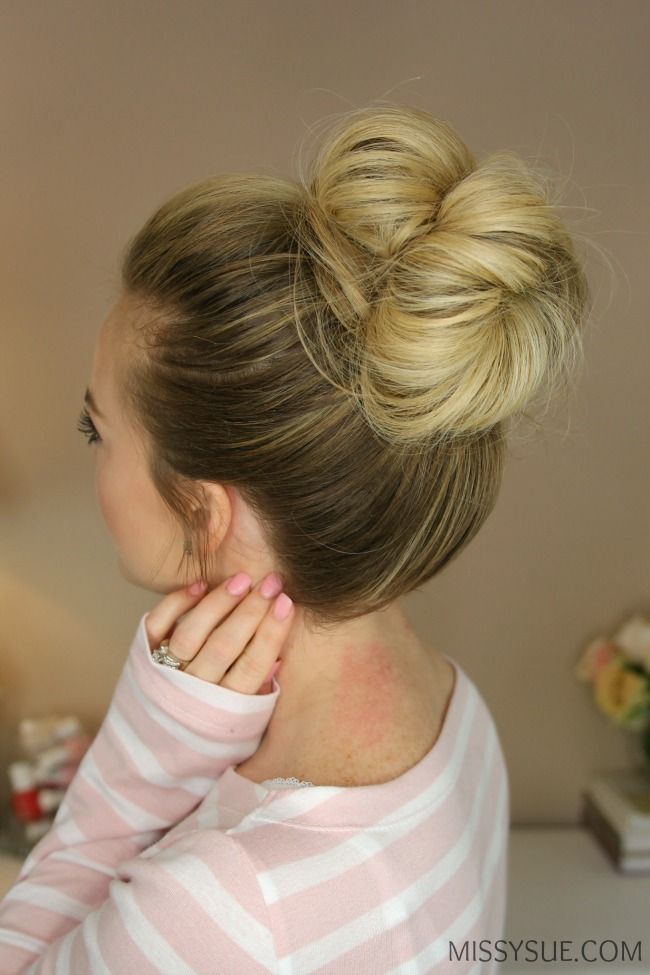
The double messy bun is the rare second day style that gets easier as your hair gets messier. Start with a middle part and divide everything into two equal sections, which sounds simple until you realise most of us grab more on one side and the whole thing lists like a ship. Twist each section loosely, wrap it into a bun, and pin without being precious about it. The trick is pulling out strands after you secure, not before, so you keep the volume you just built. My hair is thick and wavy with darker roots showing through the blonde, and that contrast is what makes the buns read playful instead of sloppy. They hold for a full day, but the texture does the work, so skip the brush entirely.
This one leans salon because the layers need to land right for both buns to sit evenly, but once the cut is there, it is a ten minute job.
Elegant Blonde Twisted Bun
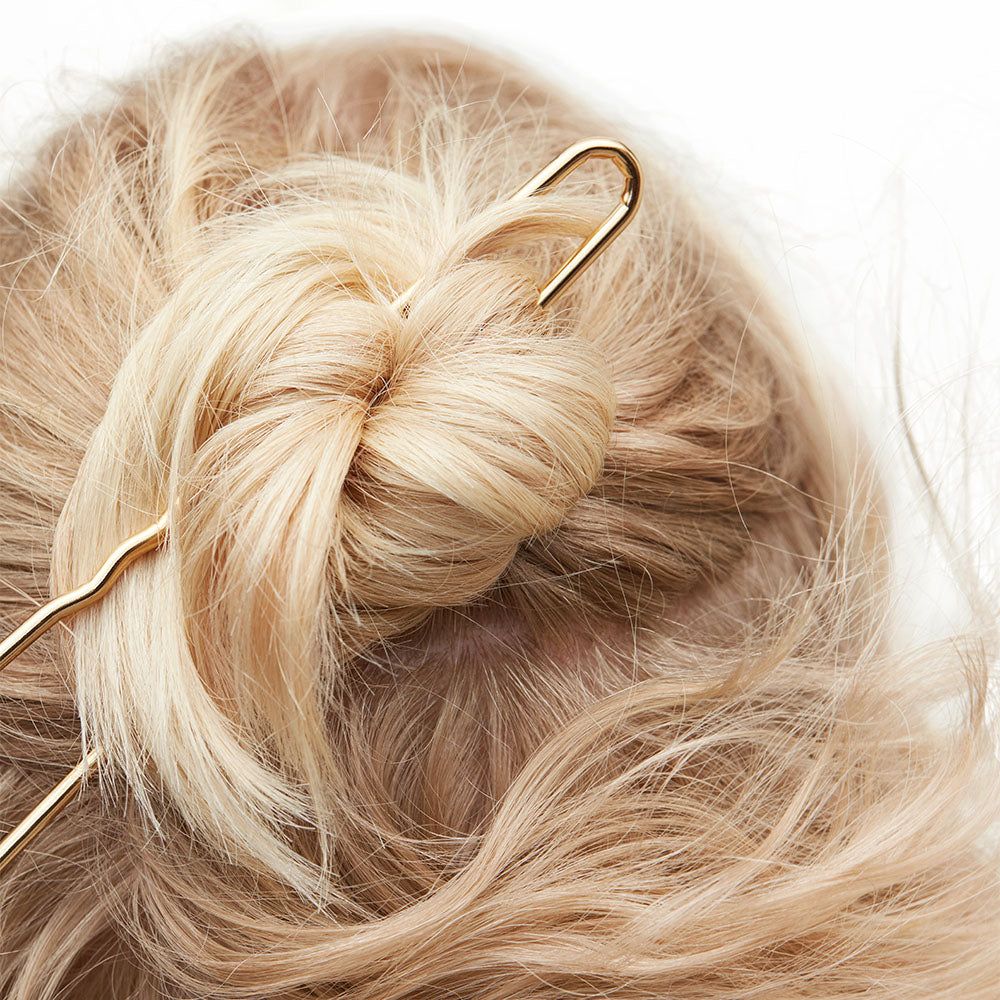
Why does a bun that takes five minutes look like you had a plan? Twist the whole length into a loose coil, wrap it low on the back of the head, and stab a hairpin through the centre to hold it, the gold pin is doing more work than any styling product. For extra hold on thick, wavy blonde hair, run a texture spray through first or catch it with a clear elastic before you twist, then the pin just keeps the shape honest. This is a DIY situation, no salon required, and it survives a commute, a workday, and dinner without asking for attention. The wavy texture keeps it from looking severe, and the mid-back length gives you enough to twist without fighting a short tail.
Double Braided Ponytail
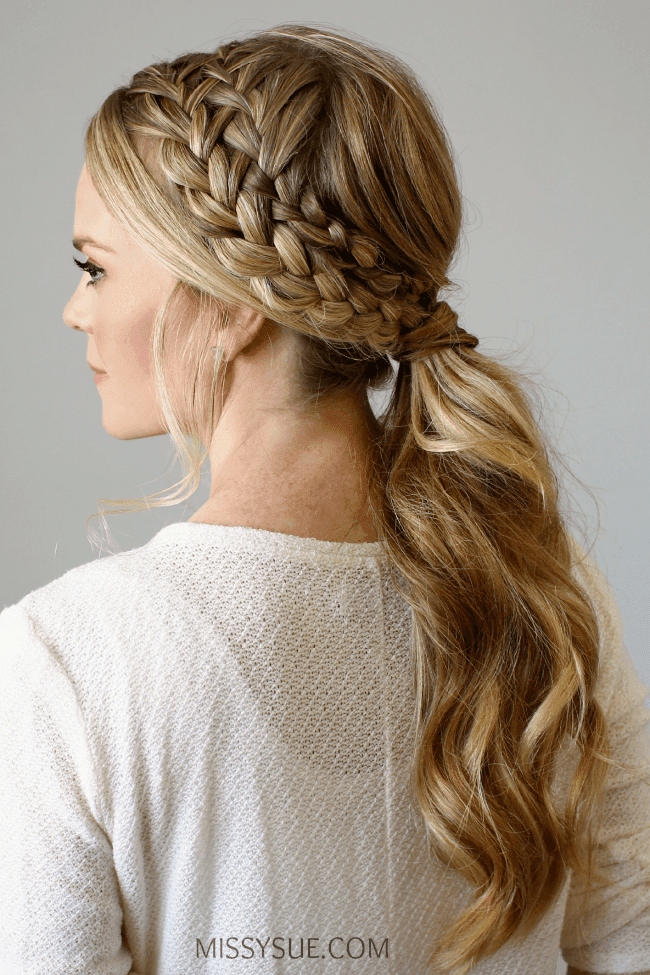
The braids stay neat for two full days, which is more than I can say for most of my second day hairstyles. Start with a middle part, Dutch or French braid each side from the hairline, and merge both into a low ponytail at the nape, the neat braided detail is what keeps it looking deliberate rather than rushed. Ash blonde reads cool against warm skin, and the wavy texture gives the braids grip so they do not slide apart by lunch. Dry shampoo helps add that grip on day two, but the real longevity comes from the braid structure itself. It holds through gym sessions and rain, though the honest downside is that it takes fifteen minutes and looks lopsided if you rush the merge. Wear it to work, wear it to brunch, wear it when you have no idea what to do with your hair, it covers all of those.
Half-Up Twisted Bun
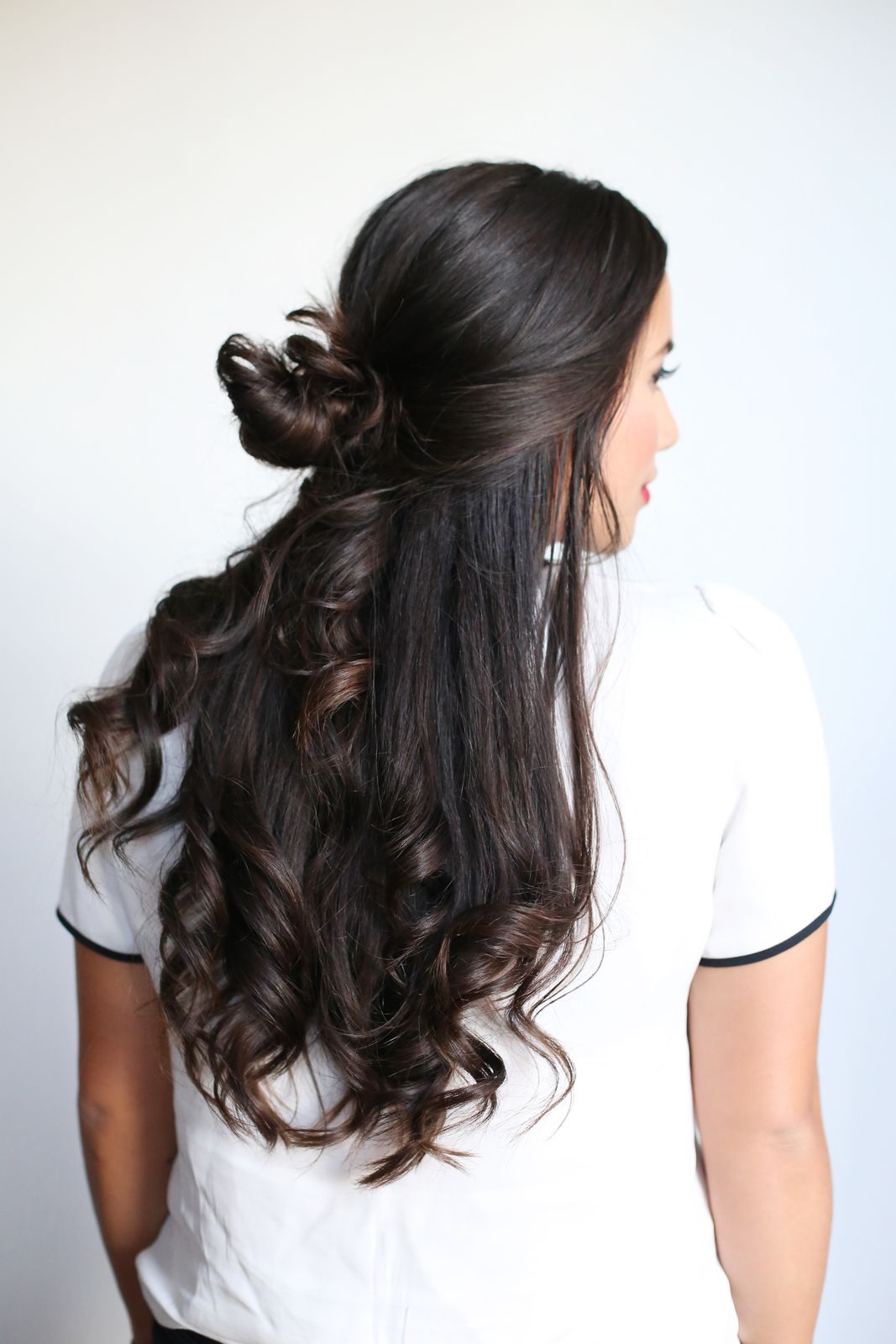
The half up half down bun flatters nearly every face shape because it pulls the hair away from the crown while leaving length to soften the jaw. Take the top half, twist it forward into a small bun at the back of the head, and pin it, then pull a few strands loose around the face for softness. The dark brown colour reads rich against most skin tones, and the wavy texture keeps the loose section from looking flat by afternoon. It works on mid-back length, though anything shorter than collarbone makes the bun look like a knot. The twisted bun sits higher than a standard half-up, which visually lengthens a round face, and the loose strands soften a square jaw. This is the one I recommend when someone wants second day hair that looks considered without trying.
Braided Crown With Loose Waves
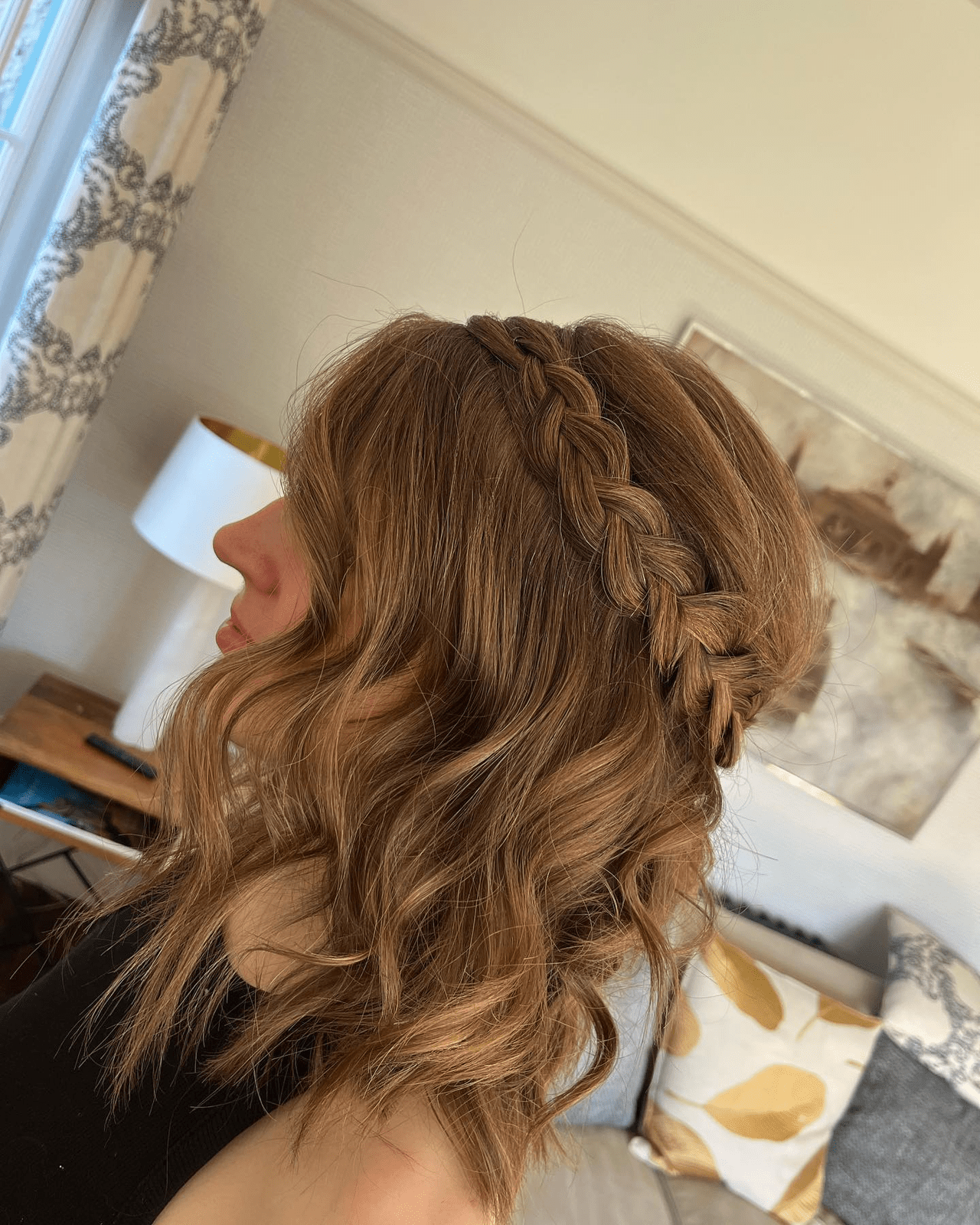
What if your hair could look like it spent the morning at the beach instead of the bathroom? Take a section along the hairline, braid it tightly, and sweep it over the top of the head, securing underneath so the braided crown detail reads as a deliberate accent. The rest stays in loose waves, which is where second day texture finally earns its keep. Light brown with blonde highlights catches the light in the braid, making the weave look more intricate than it is. Side-swept bangs tuck into the braid or fall loose, both work. This is a ten minute style that looks like forty, and the braid holds all day because it has nothing to fight, the waves underneath stay loose and the crown stays put. The medium density hair carries the braid without it looking skinny.
Mid-Back Twisted Crown Half-Up
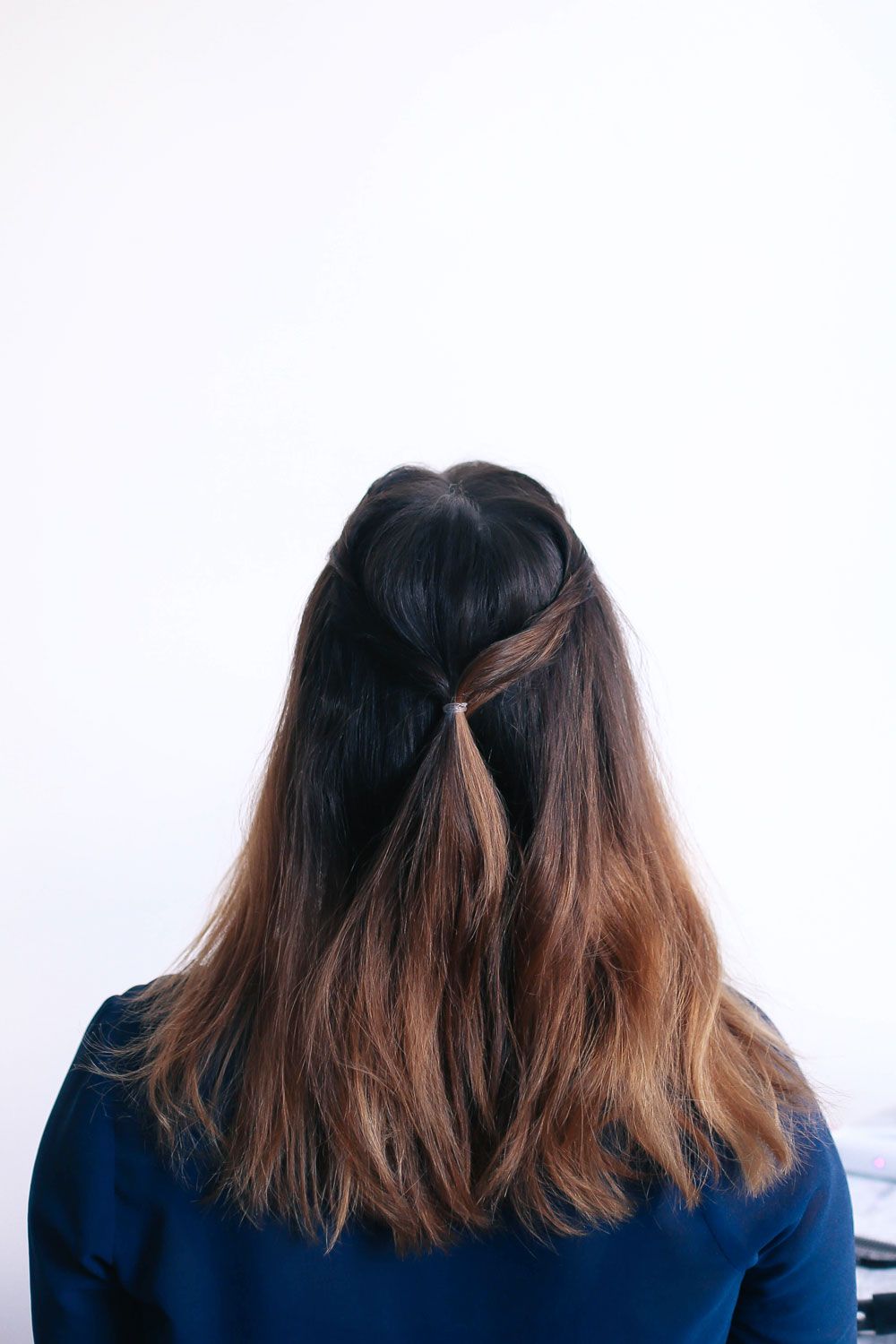
The twisted crown half up is the quiet workhorse of second day hairstyles. From the back, two front sections twist toward the nape and meet in a low knot, while the rest of that dark brown ombre falls in loose waves to mid-back. It holds because the twist grips the hair, not a pin fighting gravity. I wore this on day two when my roots were showing and the ends had gone flat. The middle part widens a round face, so skip it if that’s you. Takes eight minutes, no mirror required after the first twist.
Voluminous Messy Updo
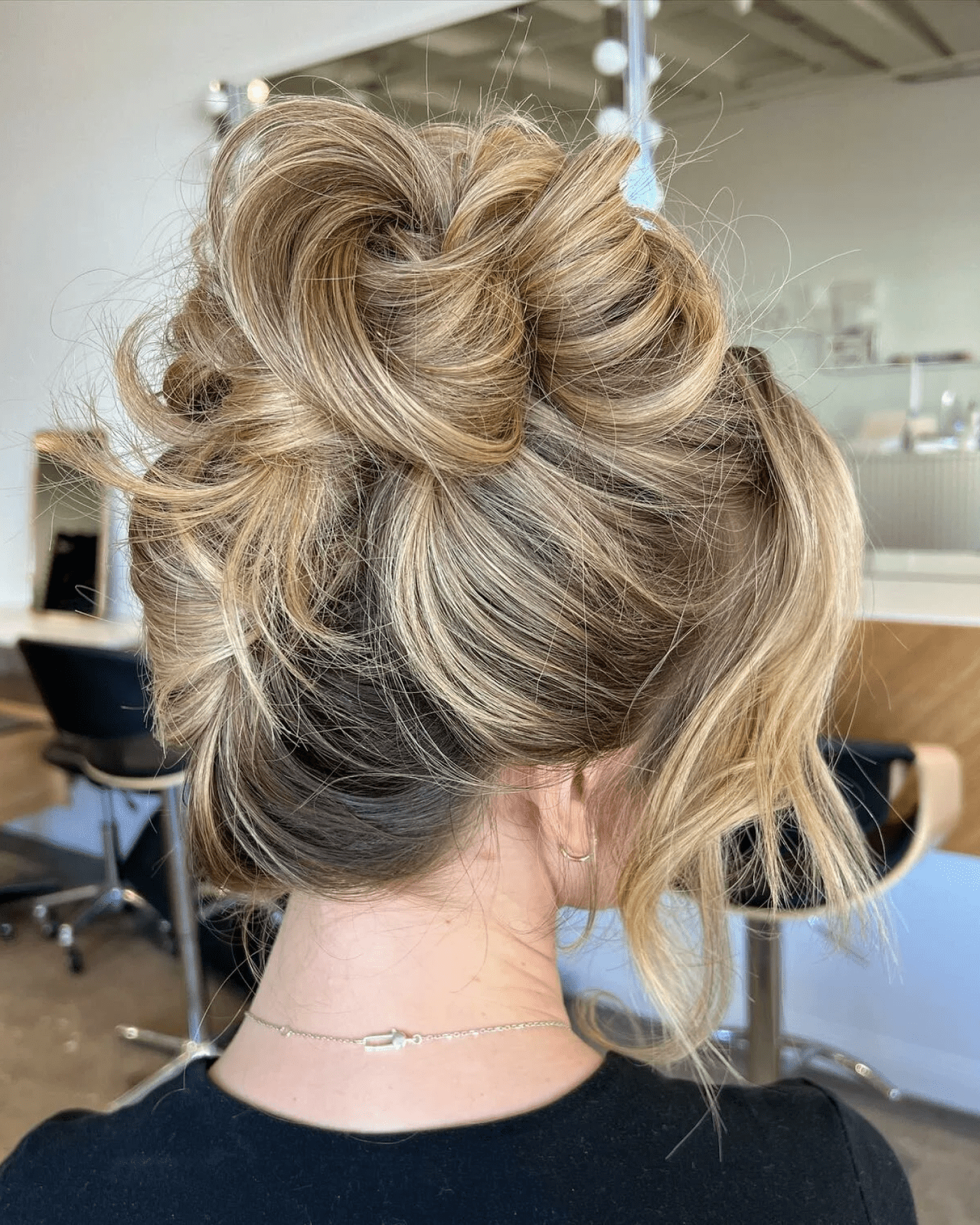
This messy updo is not for everyone, and I mean that as a compliment. It needs thick, wavy hair with layers, the kind that holds a pin without fighting you. The dark blonde balayage adds depth so the pulled-out pieces read as texture, not chaos. If your hair is fine or straight, it will deflate by noon and look like a sad knot. I have fine hair, so I know. But if you’ve got the density, gather it loose, pin it low, and pull out a few strands. Fifteen minutes, and it stays until you take it down.
What surprises me is how much face shape matters here. A high, voluminous updo lengthens a round face, while a low version softens a square jaw. The middle part keeps it from looking like a ballerina bun. Just don’t try this with slippery, freshly washed hair; day two texture is what makes it work.
Slicked Back High Ponytail Braid
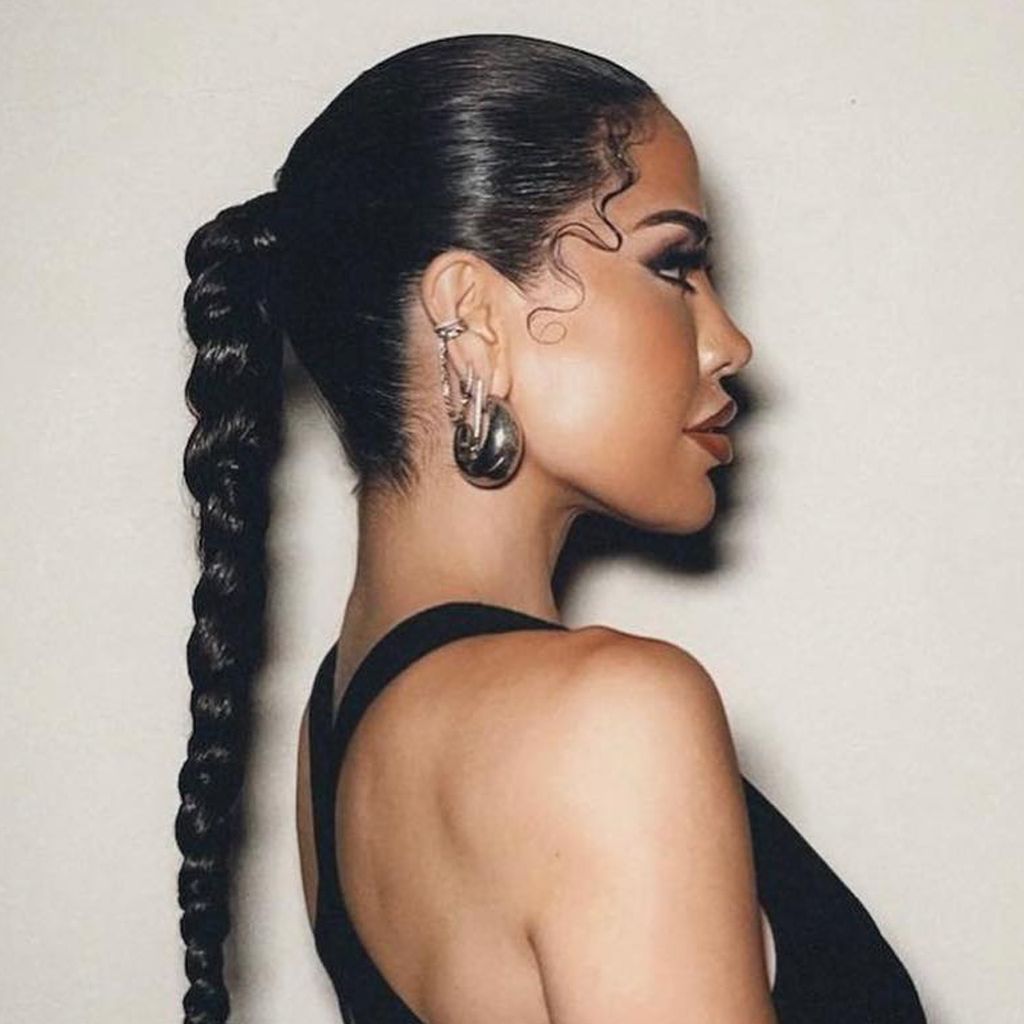
I’ll confess: I tried this high ponytail braid at home once and it took me forty minutes and a lot of swearing. The slicked back part needs strong hold gel and a fine-tooth comb, and the braid has to be tight or it unravels by lunch. The black, straight, thick hair in the photo makes it look easy; mine is fine, so my braid was a sad little rope. But the effect is worth it: the baby bangs soften the severity, and the length of the braid balances the slick crown. It’s a salon look, honestly, unless you’ve practiced.
The honest downside is the hold. Slicked back hair shows every flyaway by hour three, and the gel can flake if you touch it. I’d book this for an event, not a Tuesday. But if you’ve got the patience, it reads as powerful, not try-hard.
Segmented Black Bubble Ponytail
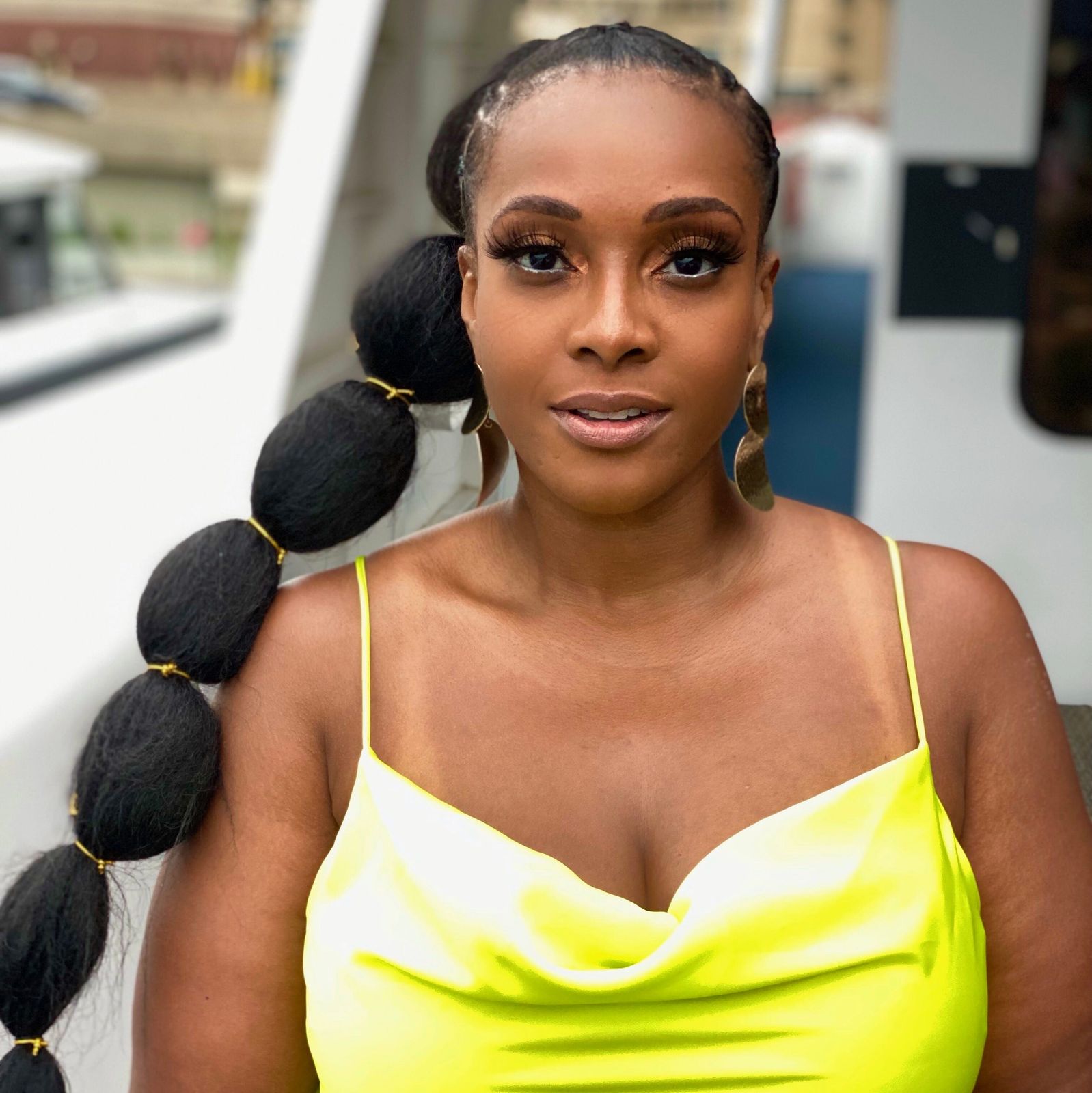
The bubble ponytail is pure geometry. Start with a straight, sleek base, then secure elastic bands down the length at even intervals. The trick is the pull: each section gets gently tugged outward to form a rounded bubble, and the coily, thick texture in the photo holds that shape without slipping. On straight hair, you’d need a texturizing spray to keep the bubbles from collapsing. The black colour makes the segments read clearly, no highlights to blur the lines. Fifteen minutes, and it’s the kind of second day hairstyle that gets noticed.
Loose Blonde Mid-Back Messy Bun
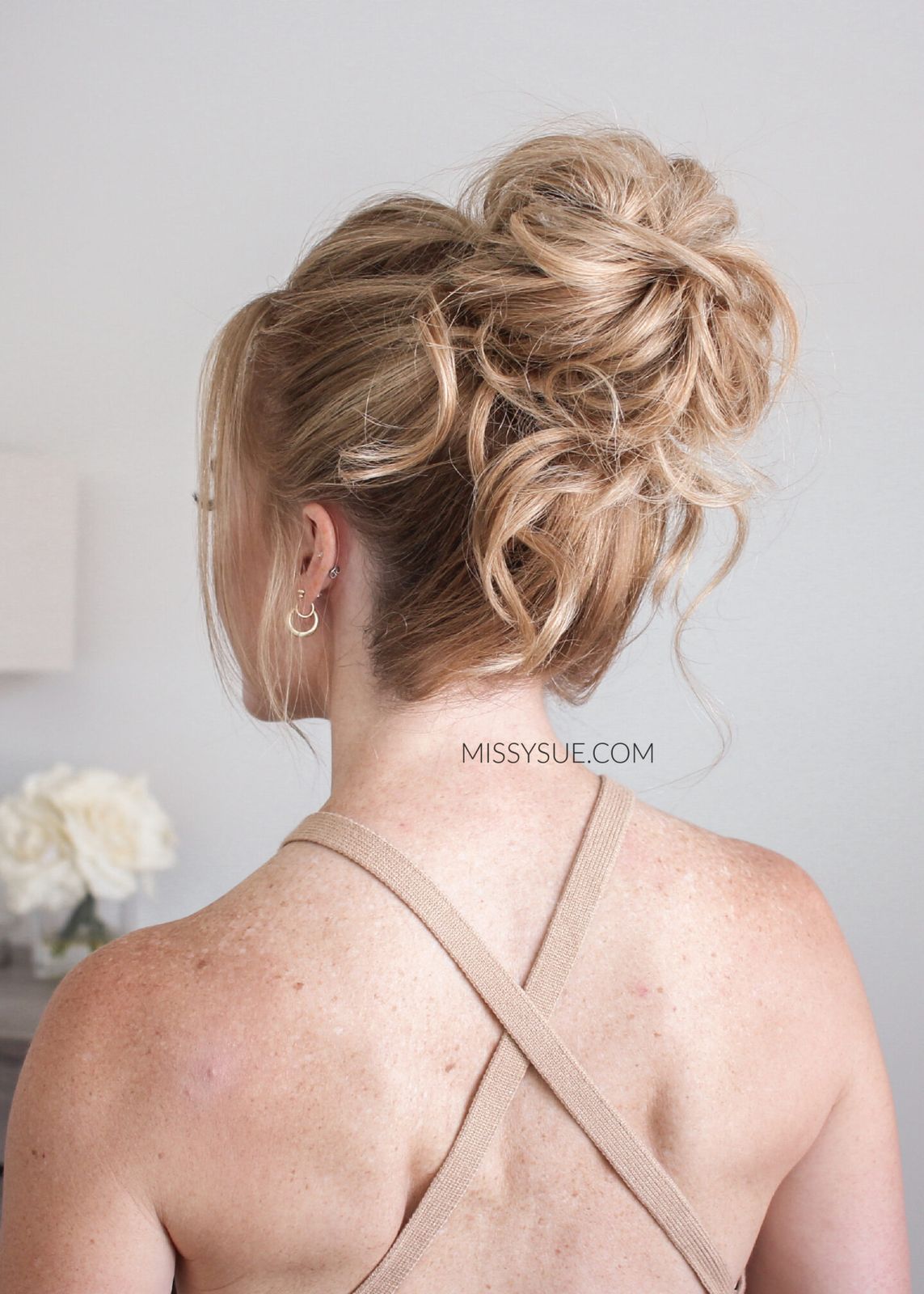
Who else has a bun that looks good for exactly four minutes? This blonde messy bun is the exception. The ash blonde colour and wavy texture mean the loose strands blend together instead of sticking out like antennae. I gathered mine on day two, when the waves had softened but still had grip, and it held its volume all afternoon. The mid-back length gives you enough hair to make the bun look substantial, not like a mouse nest. Four minutes, one elastic, and you’re done. It’s the rare second day hairstyle that actually works.
Double Dutch Braids to Pigtails
This is the neatest second-day style for thick, straight hair that refuses to hold a curl. The double dutch braids pigtails sit flat against the scalp, so no puffiness builds up overnight. The dark brown reads solid, no highlights needed. The middle parting keeps the braids even. It holds all day without slipping. If your hair is fine or wavy, the braids will look thinner and the edges will fuzz by noon. That is not a failure of the style, it is a texture mismatch. Thick and straight? Bookmark this.
Braid Into Messy Bun
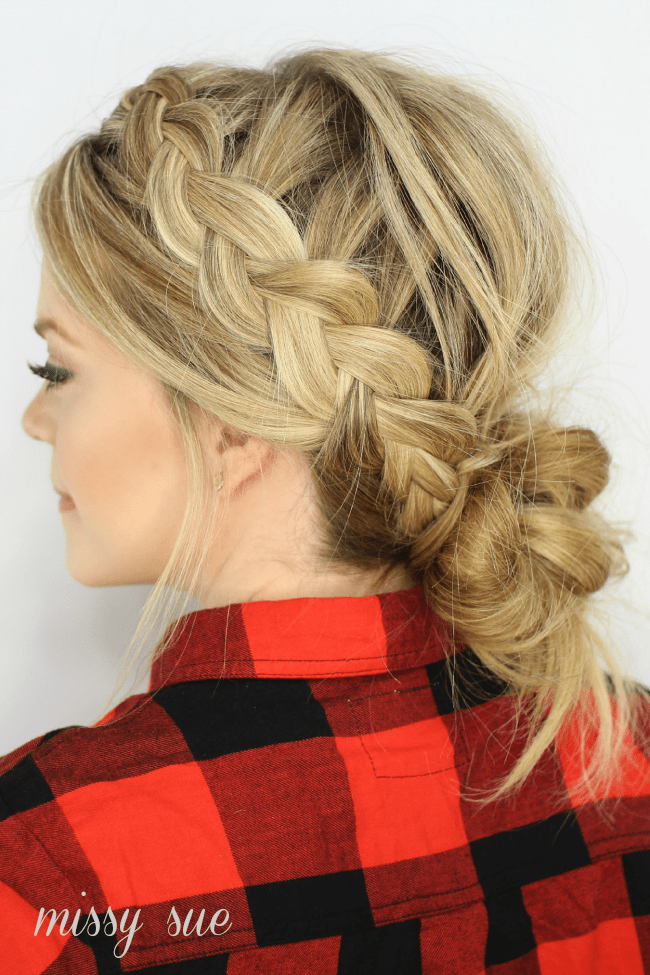
I will admit I tried this in my bathroom mirror and gave up after six minutes. The braid into messy bun looks casual but the braid section needs a steady hand and a clip to hold it while you build the bun. The ash blonde layers catch the light, so the braid reads even when it is half-buried. Wavy texture helps the bun look full. Without a texturizing spray the bun slides loose by hour three. Book the stylist for the first try, then practice at home.
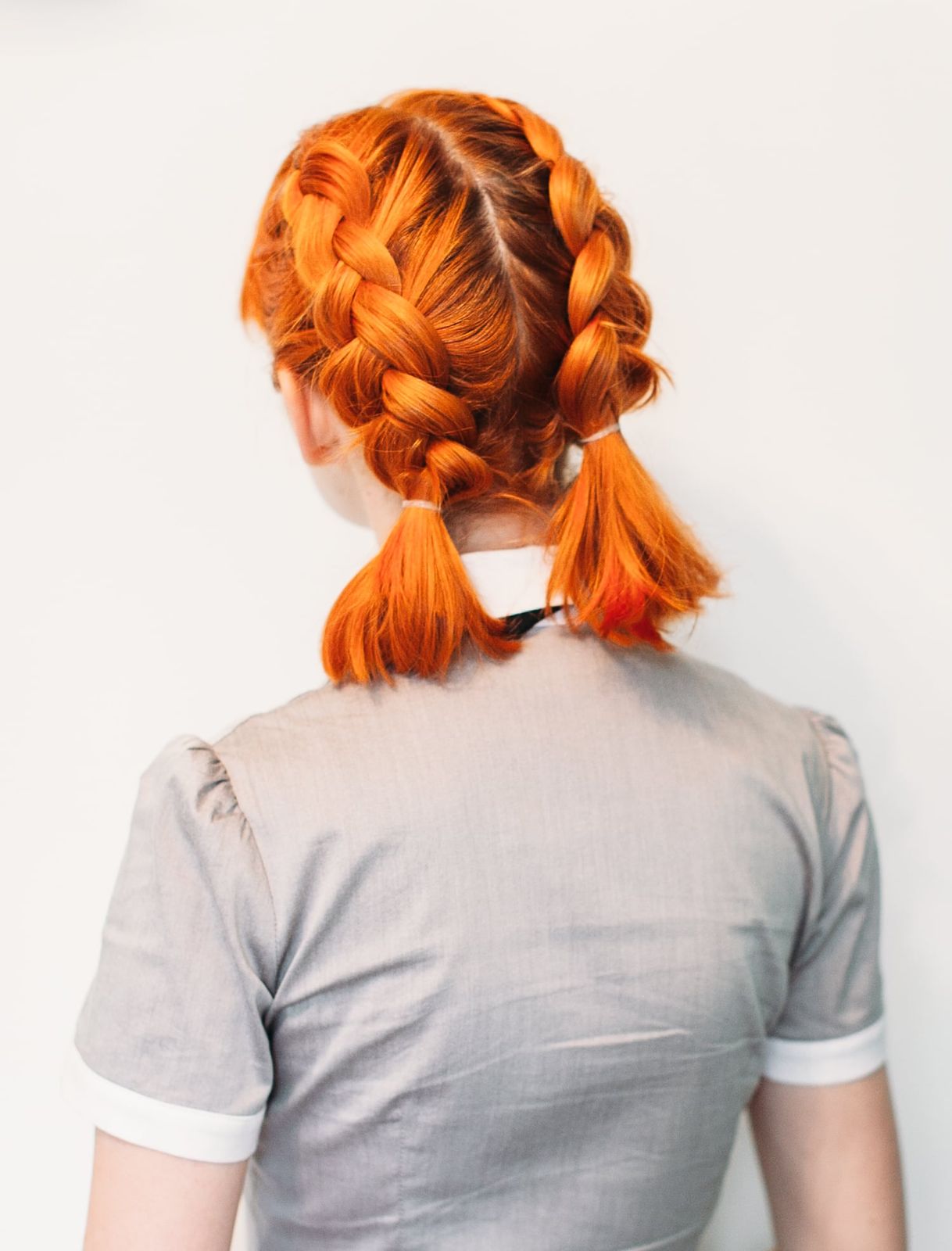
Vibrant Orange Double Dutch Pigtails
The vibrant orange is the whole point. On a festival day or a birthday dinner, this colour makes the double dutch pigtails pop in a way brown or blonde cannot. The shoulder length keeps the braids from getting heavy. Thick, wavy texture fills out each braid without needing to pull sections apart. The middle parting keeps it symmetrical. Takes fifteen minutes if the hair is brushed and smooth first. Do not attempt on tangled day-old hair, the orange will look muddy.
Thick Ash Blonde Dutch Braid
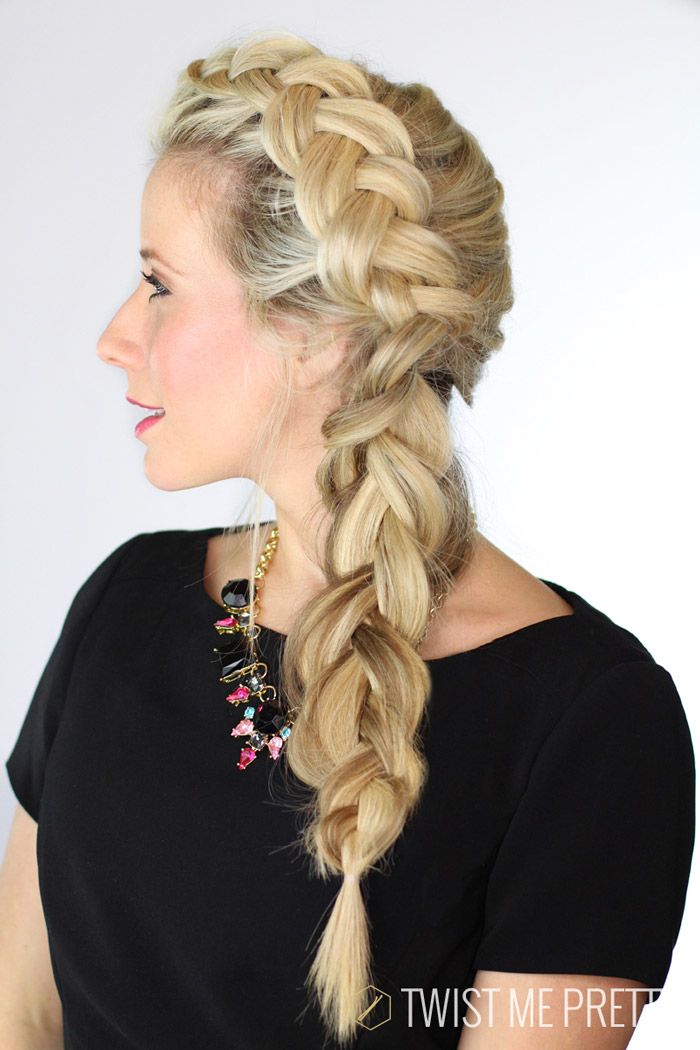
Does a thick dutch braid actually stay in on day two? Yes, if the hair has enough texture to grip itself. The ash blonde base with lighter blonde highlights gives the braid dimension, so it does not look like one flat rope. The side parting lets the braid sit over the shoulder, which keeps it from rubbing against a jacket collar and frizzing. Wavy, thick hair holds the shape without pins. The upkeep is a trim every ten weeks to keep the layers from poking through the braid. A texturizing spray before braiding adds grip.
Bold Double Dutch Braids
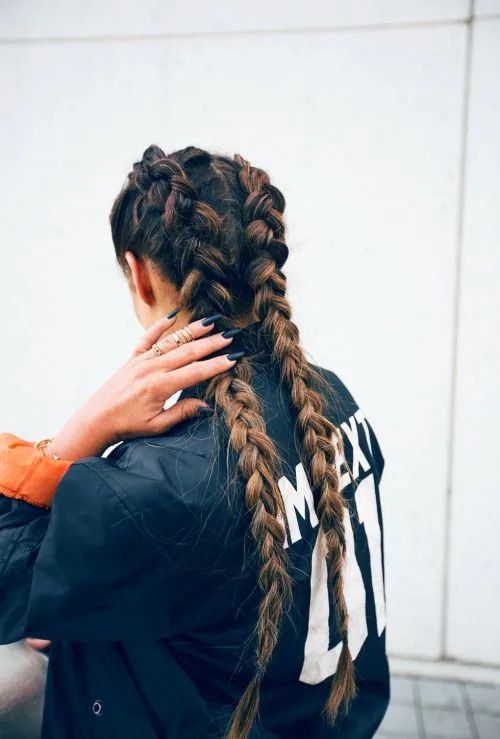
Two braids read bolder than one. The medium brown with lighter brown highlights gives each braid depth, so the eye moves across the sections instead of landing on a flat stripe. The middle parting keeps the braids even. Wavy, thick texture fills the braids without needing to tug them apart. A single braid can look severe on a round face. Two braids frame the face on both sides, which softens the line. If you want impact without an updo, this is the one.
Fishtail Braids to Low Ponytail
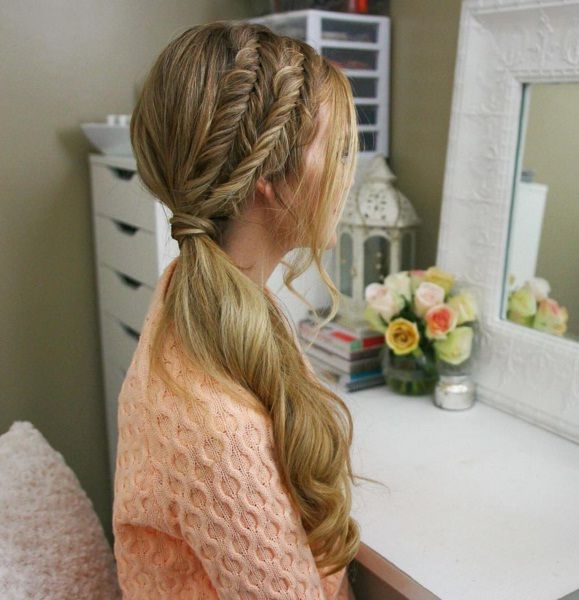
The fishtail braid demands a different rhythm than a standard three-strand. You split the section in two, then pull a thin strip from the outside of the left piece and cross it into the right. Repeat on the other side. Keep going until you reach the nape, then gather everything into a low ponytail and secure the braids into the elastic. The honey blonde base with lighter highlights catches the light at every crossover, which is why this texture reads so dimensional. Mid-back length gives you enough rope to work with; thick, wavy hair holds the pattern without constant re-tightening. For the second day, finger-comb the braid sections apart gently so they soften into the ponytail. The middle part keeps it symmetrical. No bangs needed here, the braids are the point.
Let a few face-framing pieces fall free near the ears. That loose strand is intentional, it breaks up the stiffness. You want this to look like it took skill but not suffering.
Loose Side Braid With Balayage
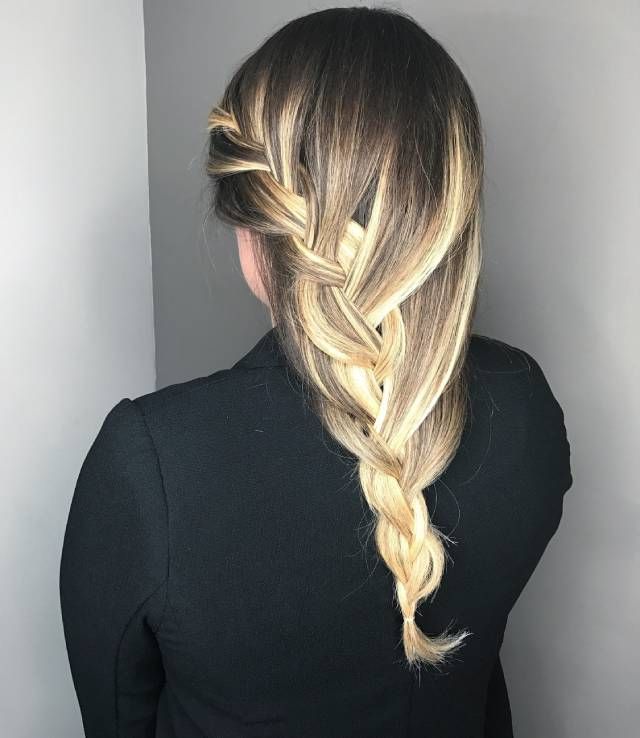
Does your balayage disappear when you wear your hair down? A loose side braid pulls the dark brown base to one shoulder and lets the blonde highlights spiral through the braid so they actually show. This works best on straight, thick hair at mid-back length: the weight keeps the braid from unraveling. The middle part splits the colour evenly, then the braid stacks the tones. Real talk — you need a steady hand to keep the sections consistent, otherwise the highlights cluster on one side. A seven-minute style that reads salon-level because the colour placement does the work for you. The layers catch the light at different points along the braid, creating depth without effort on your part. Skip this if your highlights start above the ear: the braid will hide the best part.
Textured Dark Brown Loose Braid
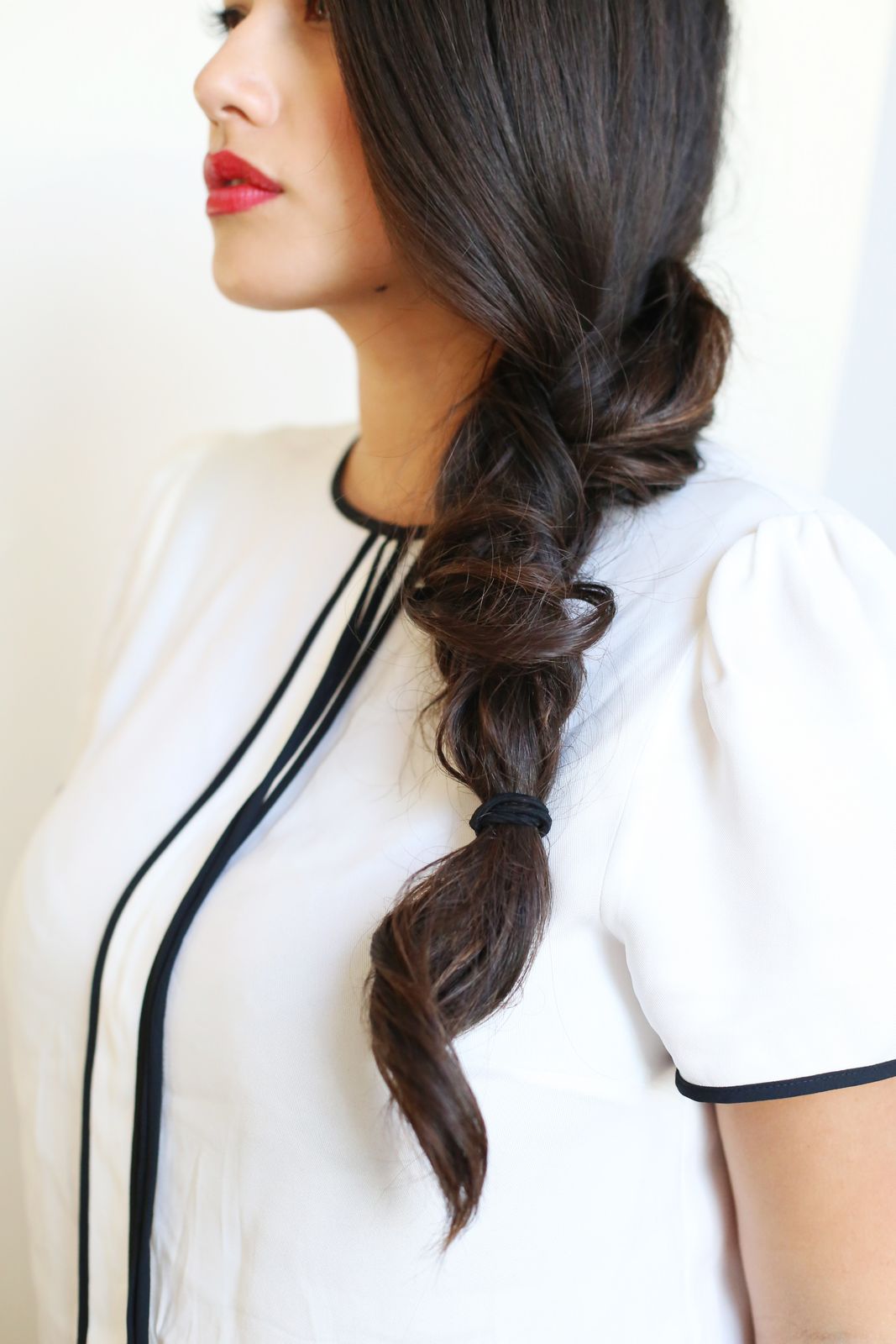
This is what a DIY braid looks like after you stop caring about perfection and start pulling. The dark brown mid-back hair is layered with a middle part, wavy and thick enough that the braid holds itself together without visible elastics. A salon version would be cleaner, sectioned with purpose, each strand symmetrical. The DIY version gives you this: uneven tension, pieces that escape near the crown, a braid that sits wider at the top and tapers sloppily at the end. I prefer the DIY outcome here. The looseness reads as relaxed rather than messy, and the waves create natural texture that a comb would flatten. No bangs, so the hair falls clean around the face. A texturizing spray before you start gives the grip you would otherwise chase with tight sections.
Intricate Braided Updo
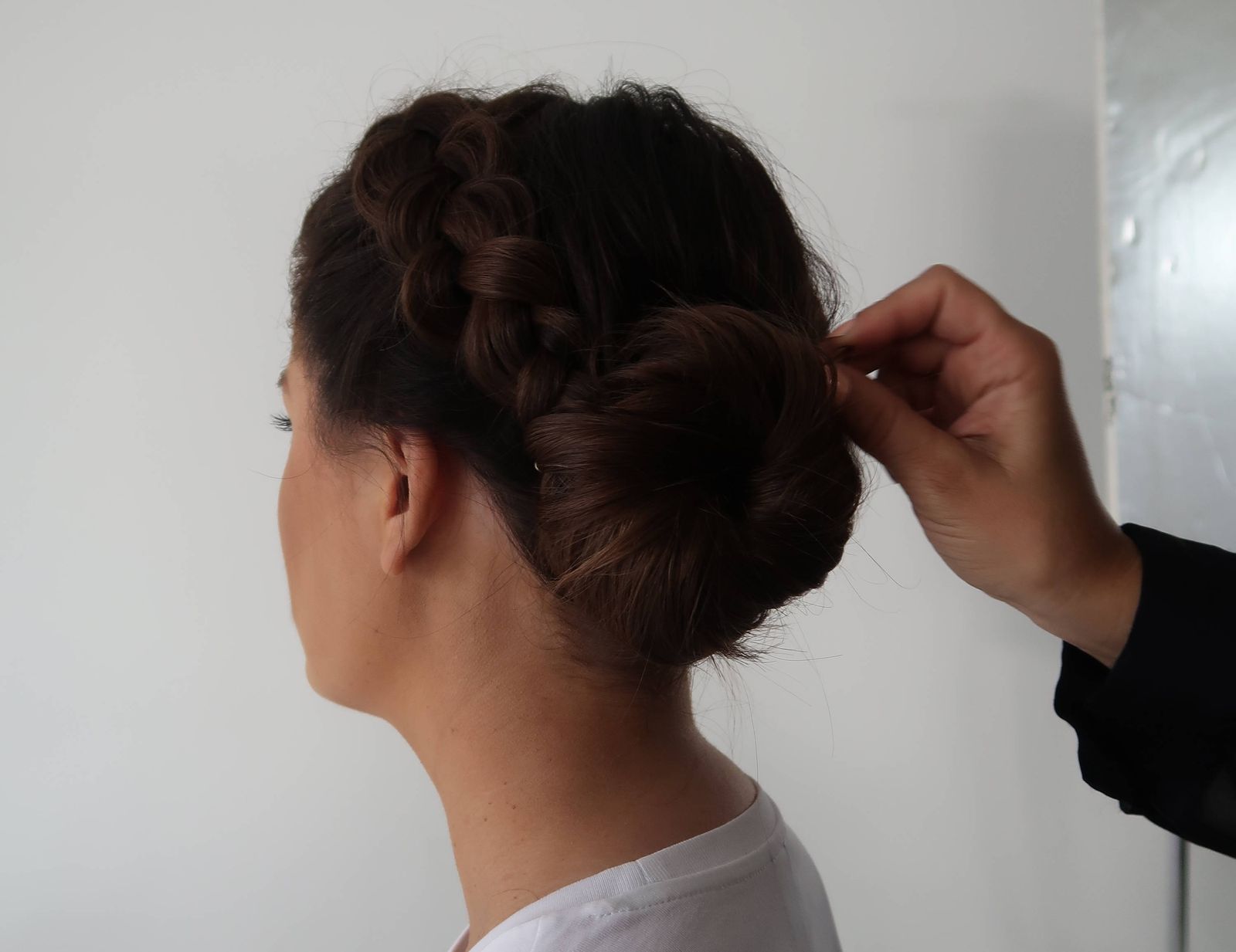
An intricate braided updo built from dark brown mid-back hair, and it still looks deliberate on the second day. The layers create texture that keeps the braid from going flat, and the wavy texture holds the twists overnight. This is the kind of updo that looks better after eight hours of wear: the pieces settle into the bun, the hair relaxes into the pattern you set. You do not need to redo it on day two. Just secure any loose strands that migrated near the temples with a pin and go.
The low bun sits at the nape, which means it does not pull at the crown or cause tension headaches by evening. The back view reveals the real work — multiple braids woven together, not one braid wrapped into a nest. That is the difference between this and a quick bun. It takes twenty-five minutes, but it also lasts twenty-four hours. For day two, the intricate braided detail actually looks more integrated. The pattern softens instead of falling apart.
Smooth Red Chignon Bun
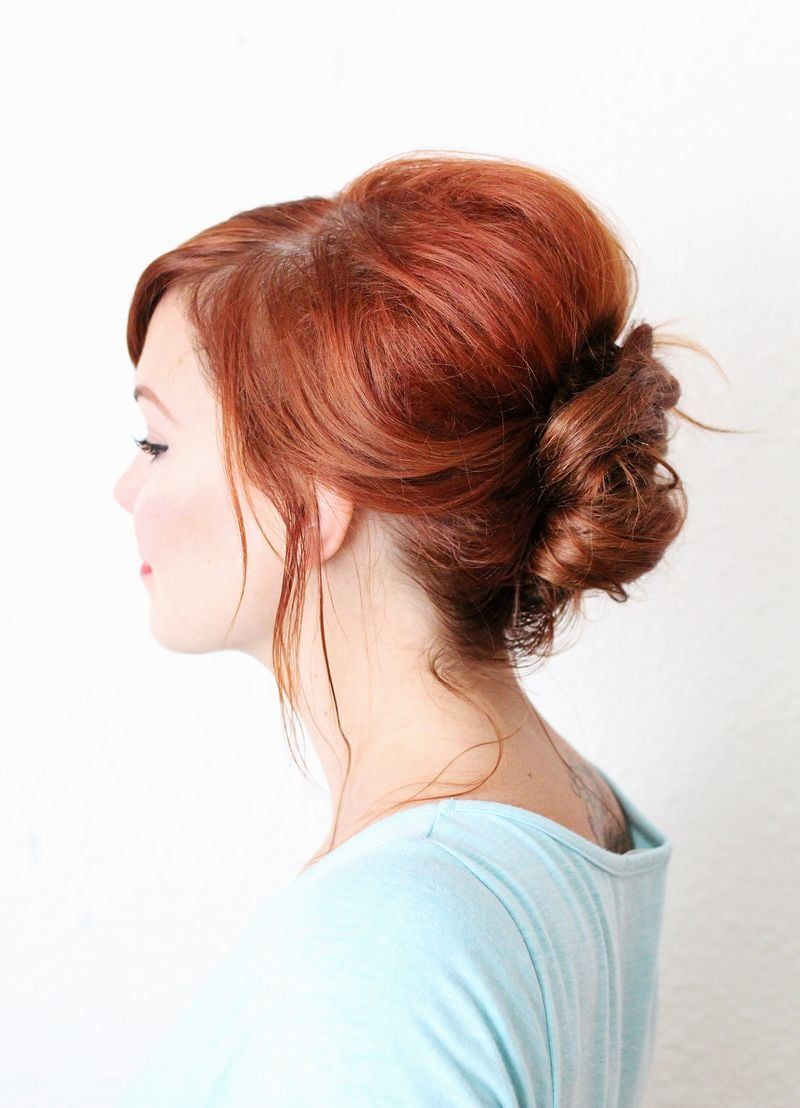
When do you need a red chignon bun? Any event where you want your hair to say polished without saying boring. The smooth finish comes from straight, mid-back-length red hair brushed back into a side part and wound into a low knot at the nape. The colour reads as intentional against the sleek shape: a chignon demands a single, uninterrupted shade. This is not the style for blended highlights or root shadow. The side-swept bangs break the severity of the pulled-back shape and soften the face. The side part follows the bangs naturally. A fine-tooth comb and a strong hold spray are non-negotiable here, otherwise the bun will slump within an hour. Book it for a formal event, not a Tuesday. The finish is too precise to survive a commute.
Half Up With Delicate Side Braid
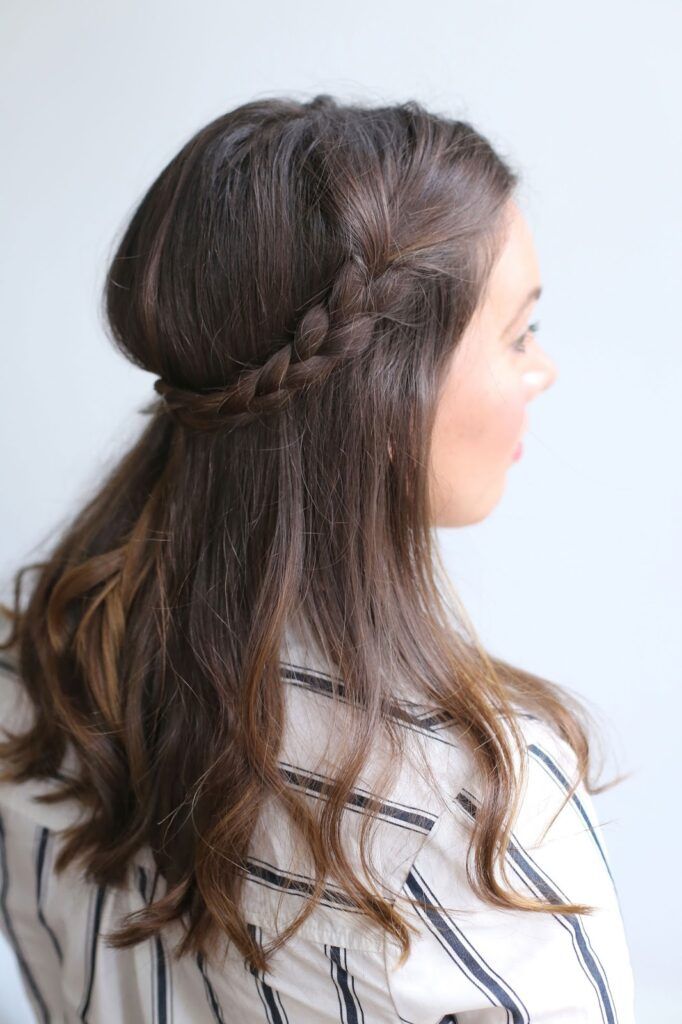
This is the best use of a side part I have seen in months. You take a small section of hair along the hairline, braid it loosely, and pin it back toward the crown. The rest of the hair stays down, wavy and dark brown, shoulder length. The braid is the anchor, thin enough to feel delicate, thick enough to read as intentional. Styling takes about seven minutes, and the hold is fine for a full day because the braid distributes tension across the side of the head. A half up braided crown like this one works because the braid is not tight, it sits soft against the layers. Medium density hair holds the shape best.
Ponytail With Scarf Accessory
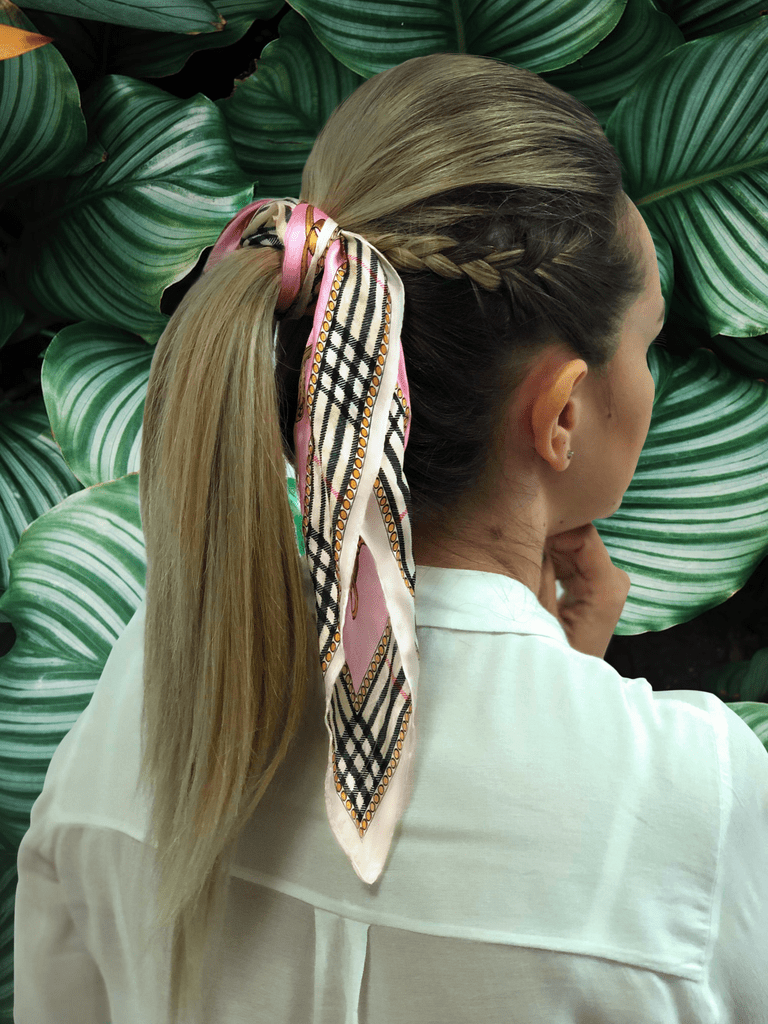
A silk scarf tied at the base of a ponytail does two things at once. It hides the elastic and it adds a colour block that breaks up the blonde. The ponytail itself is straight, thick, mid-back length, pulled back from a side part. A subtle side braid runs into the ponytail for texture, but the scarf is the main event.
Here is the honest downside. The scarf slips. Silk slides against straight hair, so by late afternoon you are retying it. The hold on the ponytail is fine, the hold on the accessory is not. I still wear it because a ponytail with scarf looks finished in a way a plain ponytail does not. Just keep a spare scarf in your bag.
French Braid to Low Ponytail
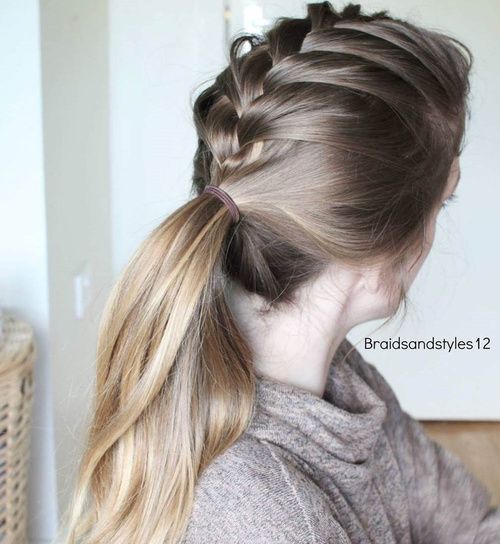
Do you have thick, wavy hair that tangles by noon? This is the style for you. The french braid starts at the crown and feeds into a low ponytail at the nape, with the ends left loose and wavy. The braid controls the volume at the top, the ponytail lets the texture show at the bottom. Dark brown base with blonde highlights, mid-back length, a middle part. The braid is pulled apart gently after weaving, which softens the whole thing. A french braid ponytail flatters round and oval faces because the braid adds vertical line without width. Fine hair will not fill the braid sections, skip this one unless you have medium to thick density.
Thick Crown Braid Ponytail
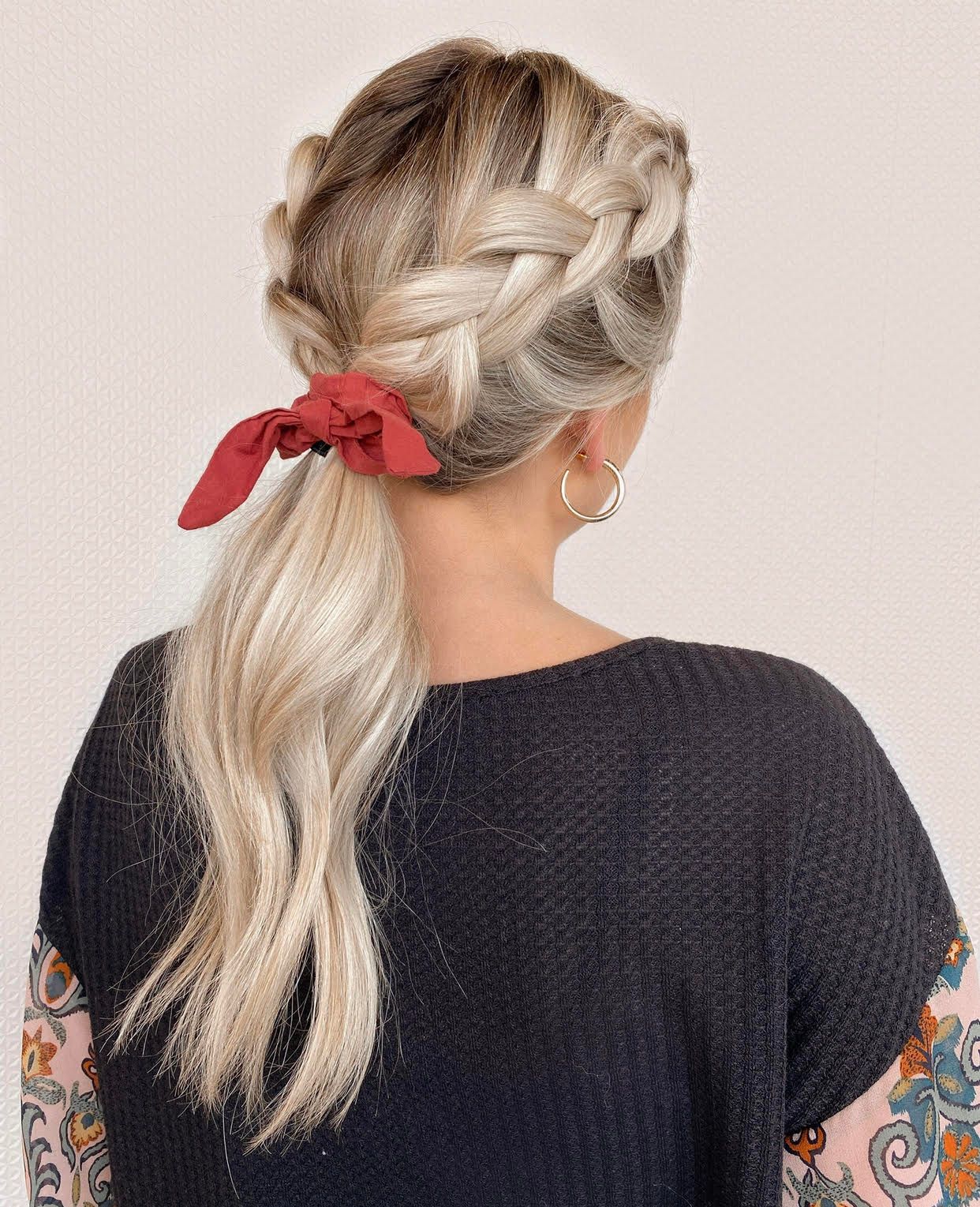
This is a salon booking, not a bathroom mirror project. The crown braid wraps along the hairline from one ear to the other, incorporating hair as it goes, then the rest gathers into a ponytail at the back. Blonde with dark roots, mid-back length, wavy texture, a middle part. The braid is thick, which means it needs density to fill each section, and the tension must be even or the braid buckles.
I have tried this at home three times. Twice the braid sat crooked, once it looked fine but took forty minutes. A stylist does it in twelve. The hold is excellent because the braid anchors the hair flat against the scalp, so the ponytail stays lifted all day. A crown braid ponytail is worth the chair time if you want a style that stays intact through humidity and movement.
Intricate Double Braided Bun
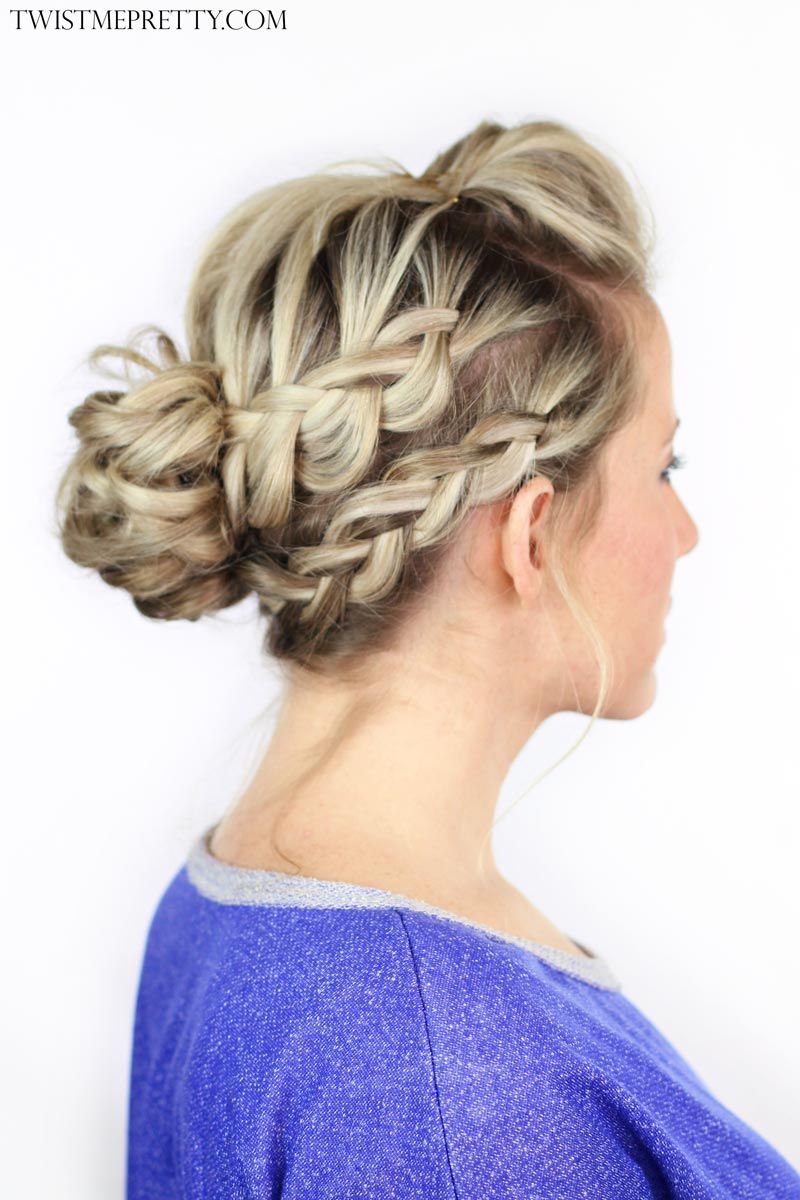
I will admit I had to watch the tutorial twice. Two braids start at the crown, one on each side of a middle part, and they weave down toward the nape before twisting into a single bun. Ash blonde, mid-back length, wavy texture, layered. The braids are the structure, the bun hides the ends. The honest downside is the learning curve. If your braiding is uneven, the bun sits lopsided and you start over. A double braided bun holds all day once it is pinned correctly, but the first attempt will test your patience. Medium to thick density is required, fine hair will not cover the pins.
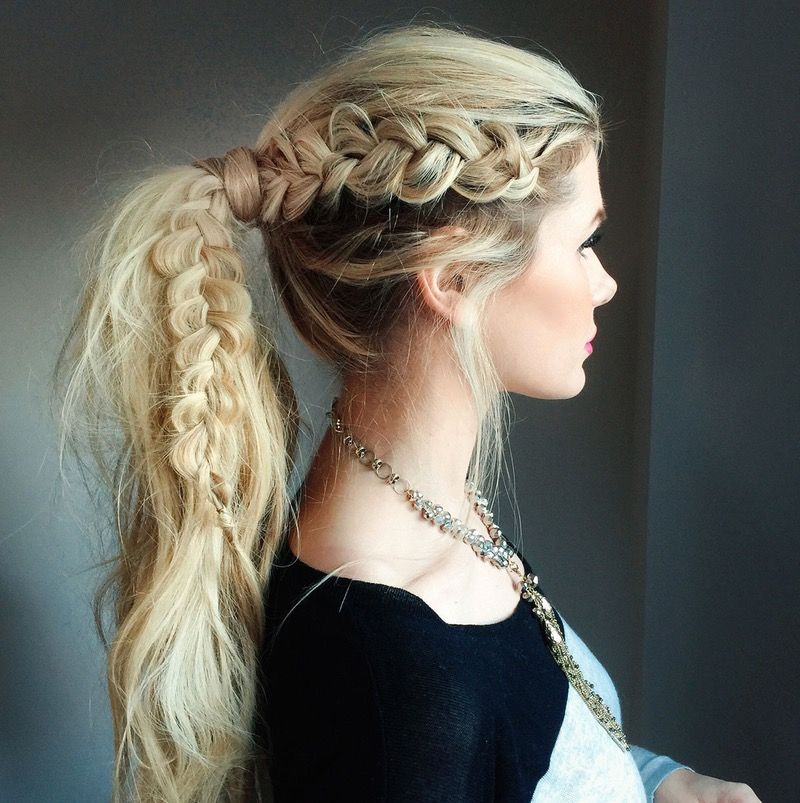
Braided Mohawk Ponytail
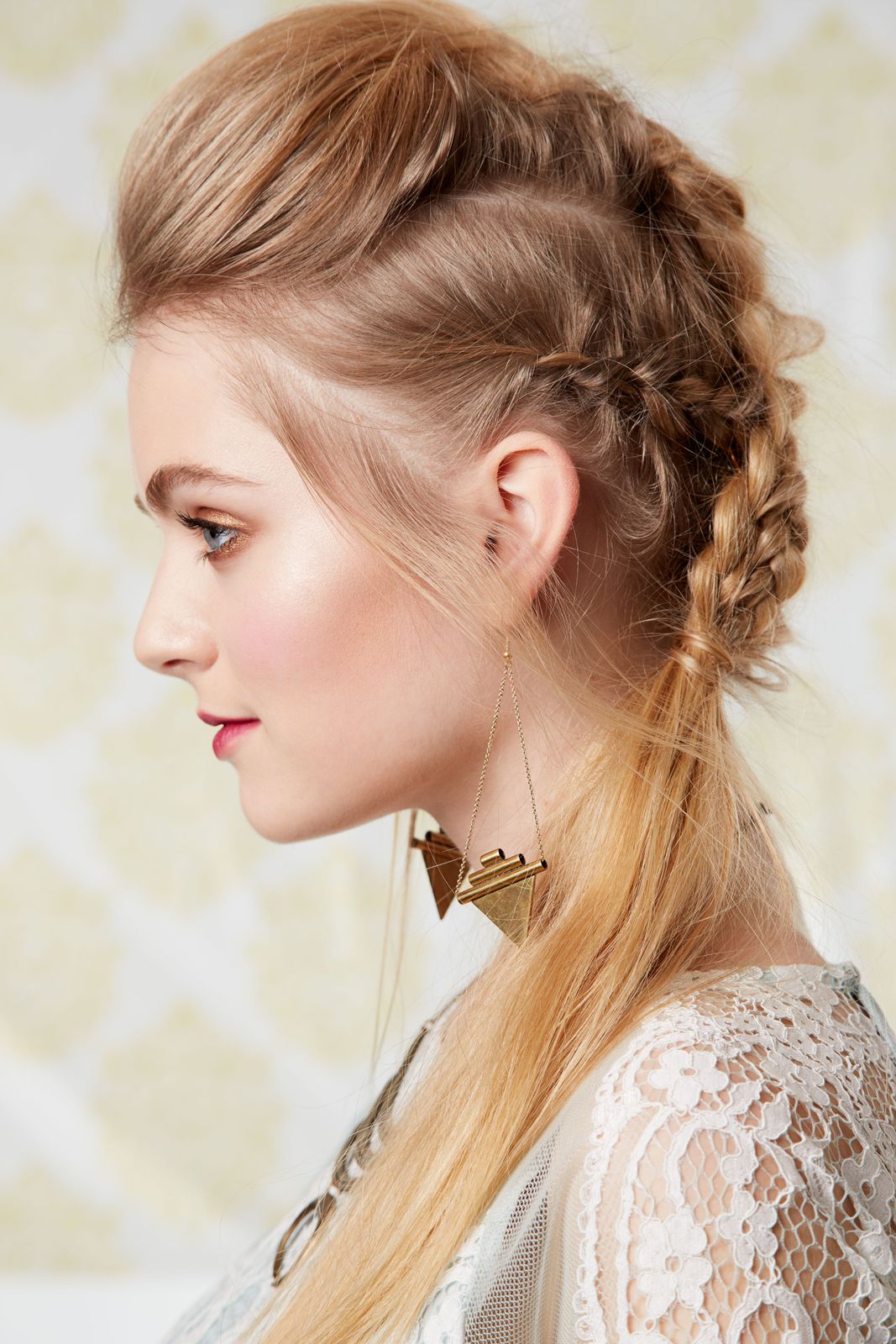
The braided mohawk ponytail is the rare style that looks like you tried harder than you did. It’s a side-parted blonde, mid-back length, with the hair braided along the crown before it drops into a ponytail. The wavy texture underneath keeps it from reading as severe, which is the whole trick. Compare it to a slicked-back high ponytail and the mohawk wins every time: it has a shape that holds past lunch without a single touch-up. The braid hugs the hairline, so it stays put while the ponytail swings free. That contrast is what makes it edgy without tipping into costume. If you have layers, the shorter pieces will escape the braid and that is fine, it adds to the undone finish. This one is a salon job, not because the braiding is hard, but because the placement needs to follow your head’s curve. I tried it once at home and the braid sat too high, like a headband that slipped.
The hold is the real surprise. A braided crown usually loosens by noon, but the ponytail’s weight pulls the braid taut, so it actually tightens as the day goes on. I wore it through a windy walk and it looked the same at five as it did at nine. The blonde reads brighter against the braid’s shadow, which gives the whole style more dimension than a single flat braid ever would.
Braided Crown to Ponytail
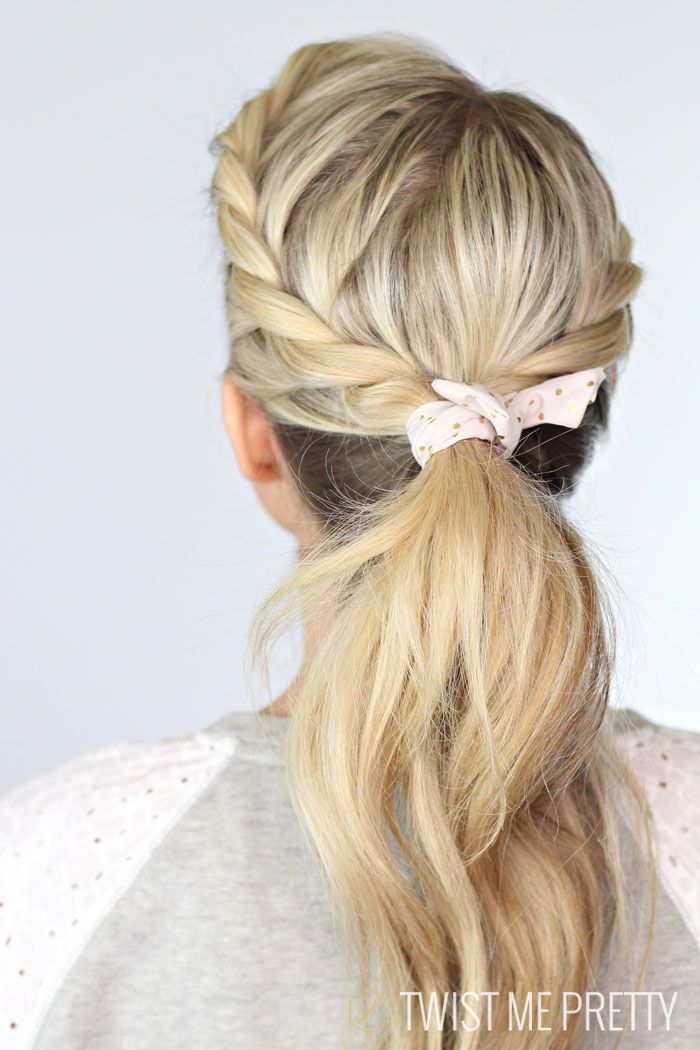
Can a braided crown ponytail survive a full workday without turning into a frizzy mess? I have my doubts, and that is exactly why I like it. This one is collarbone length, thick, wavy, with a middle part and the braid running along the hairline before it gathers into a low ponytail. The blonde highlights catch the light in the braid, which is the whole point. It holds better than you would expect because the braid anchors the hair close to the scalp, so the ponytail does not pull or slip. The upkeep is minimal: a quick re-braid of the front pieces if they escape, and the rest stays put. It is salon-leaning, not because the technique is impossible, but because getting the braid to sit evenly on both sides takes practice. I would book this for a wedding or a long day, not for a Tuesday when you are rushing out the door.
Blonde French Braid Ponytail
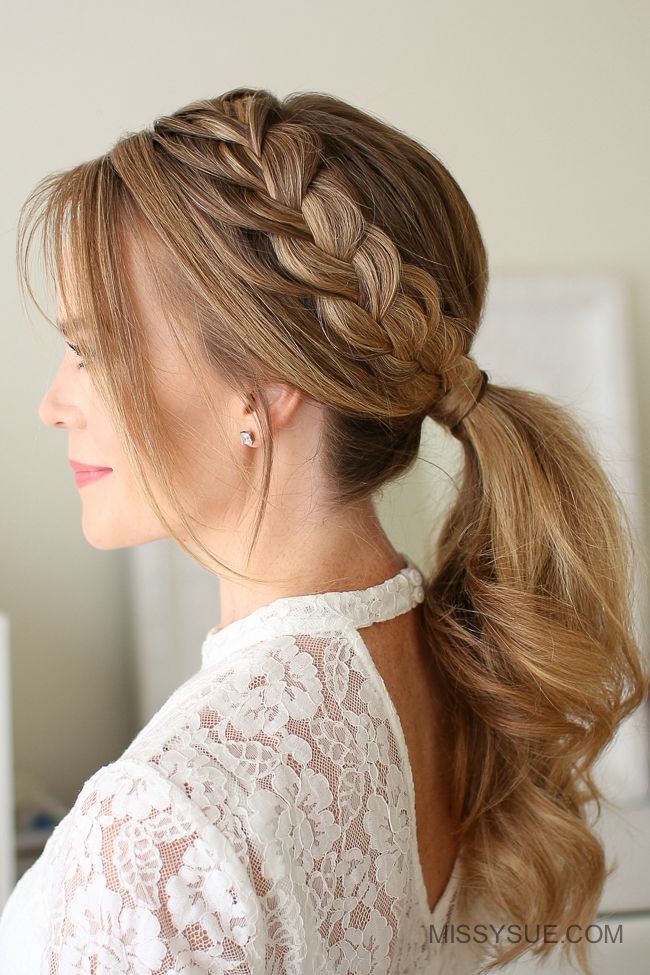
The blonde french braid ponytail is a classic, but it is not for everyone. It suits mid-back length hair with some wave, because the braid needs texture to grip and the ponytail needs weight to hang properly. Side-swept bangs soften the whole thing, which is why it works on rounder faces that a center part would widen. The braid itself is intricate, the kind that takes a stylist to get the tension even. I have seen home attempts go lumpy at the crown, and that is the difference between this looking polished and looking like a rushed gym braid. The blonde matters here: a single flat shade can make the braid read as one solid rope, but the wavy texture breaks up the color and gives it depth. If your hair is fine or thin, the braid will look scraggly by hour three, so this is a thick-hair style. It holds well, the braid keeps everything in place, and the ponytail swings free without pulling at the scalp. I would not attempt this at home unless you have braided someone else’s hair before, it is not a first-try style.
What sells me is the way the braid transitions into the ponytail without a visible seam. That is the salon skill. The hold is solid, I have worn it through a full day of errands and the braid stayed crisp while the ponytail got slightly wavier, which actually improved the look.
Textured Ash Blonde High Ponytail
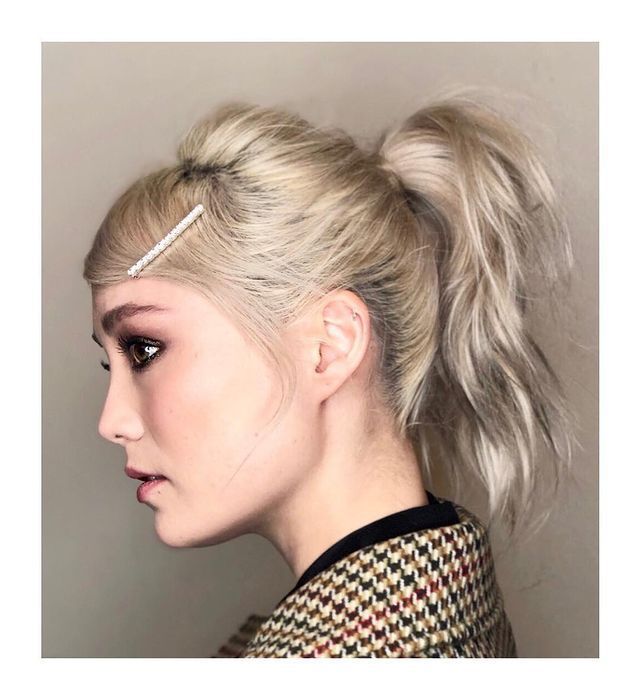
The textured high ponytail is the difference between a DIY attempt and a salon finish. At home, you tease the crown, spray in some texture, and hope it holds. The salon version has a precision to the layering that makes the texture look deliberate, not messy. This one is ash blonde, mid-back length, with wispy bangs and a side part that gives it movement. The straight texture with a bit of grit is what makes the ponytail look lived-in without being sloppy. The honest downside: it does not last. By hour four, the crown starts to flatten and the texture settles, so you are re-teasing or accepting the droop. That is the trade-off for a style that takes eight minutes. The DIY version is fine for a casual day, but if you want it to hold through an event, book the salon. The ash blonde is the key, it catches the light in the teased sections, so the texture reads even when the volume drops.
Braids Into Football Ponytail
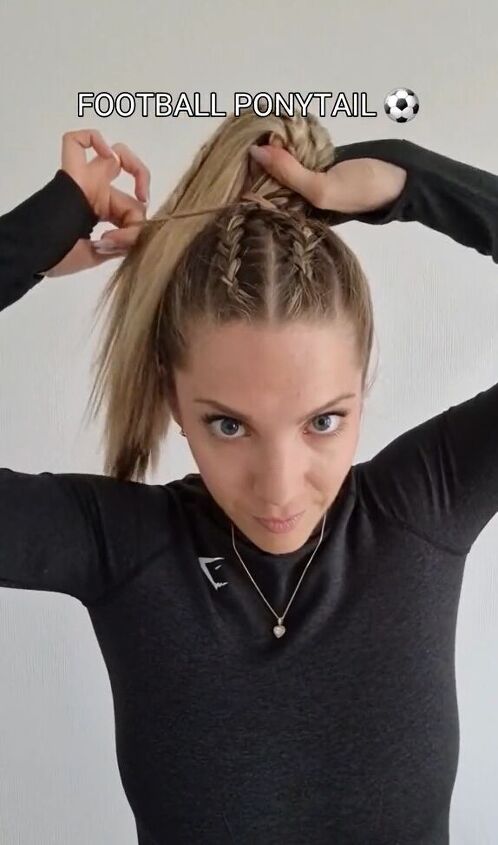
Ever wonder how they get that football shape at the base of a ponytail? It is not magic, it is sectioning. The braids into ponytail style starts with two braids, one on each side, that meet at the nape and feed into a single ponytail. The football detail comes from dividing the ponytail into sections and pinning each one so it bulges slightly, creating that rounded, almost sculpted silhouette. This one is mid-back length, straight and thick, with blonde highlights that make the braids visible against the darker base. The middle part keeps it symmetrical, which is essential for the football shape to read. It is salon-leaning because the braids need to be even and the ponytail sections need to be the same size, otherwise the shape looks lopsided. I have tried it at home and the football turned into a lumpy blob. The technique is precise, but the payoff is a style that holds all day because the braids anchor the hair and the sections are pinned tight. It is sporty without being basic, the kind of thing you wear to a game and then out after.
The hold is the real win here. The braids keep the front secure, and the pinned sections do not budge, so the whole thing lasts through a workout and a dinner without a touch-up. The blonde highlights add depth so the football shape does not read as a solid block of color.
Visual Idea
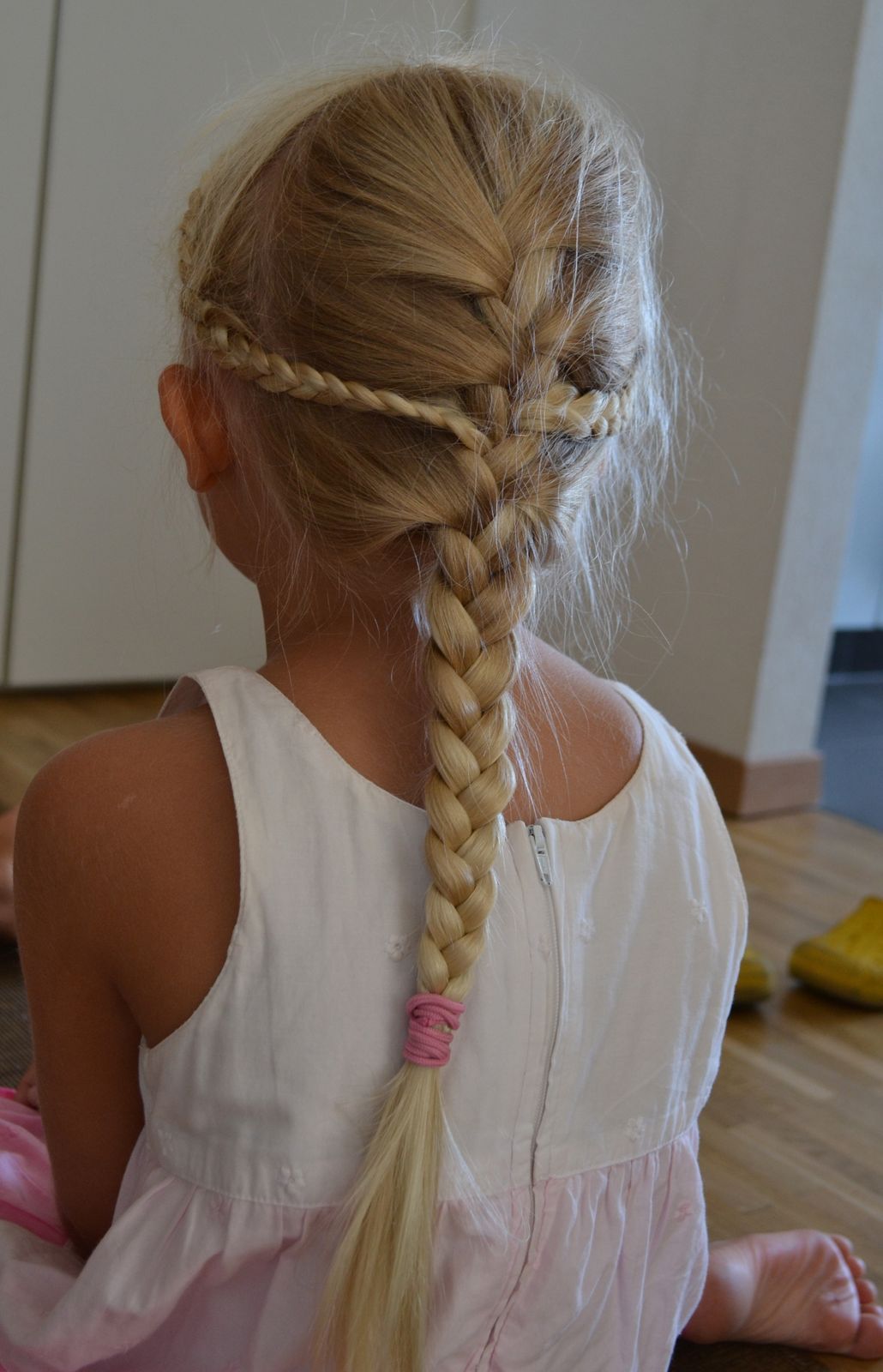
Mid-Back Visual Idea
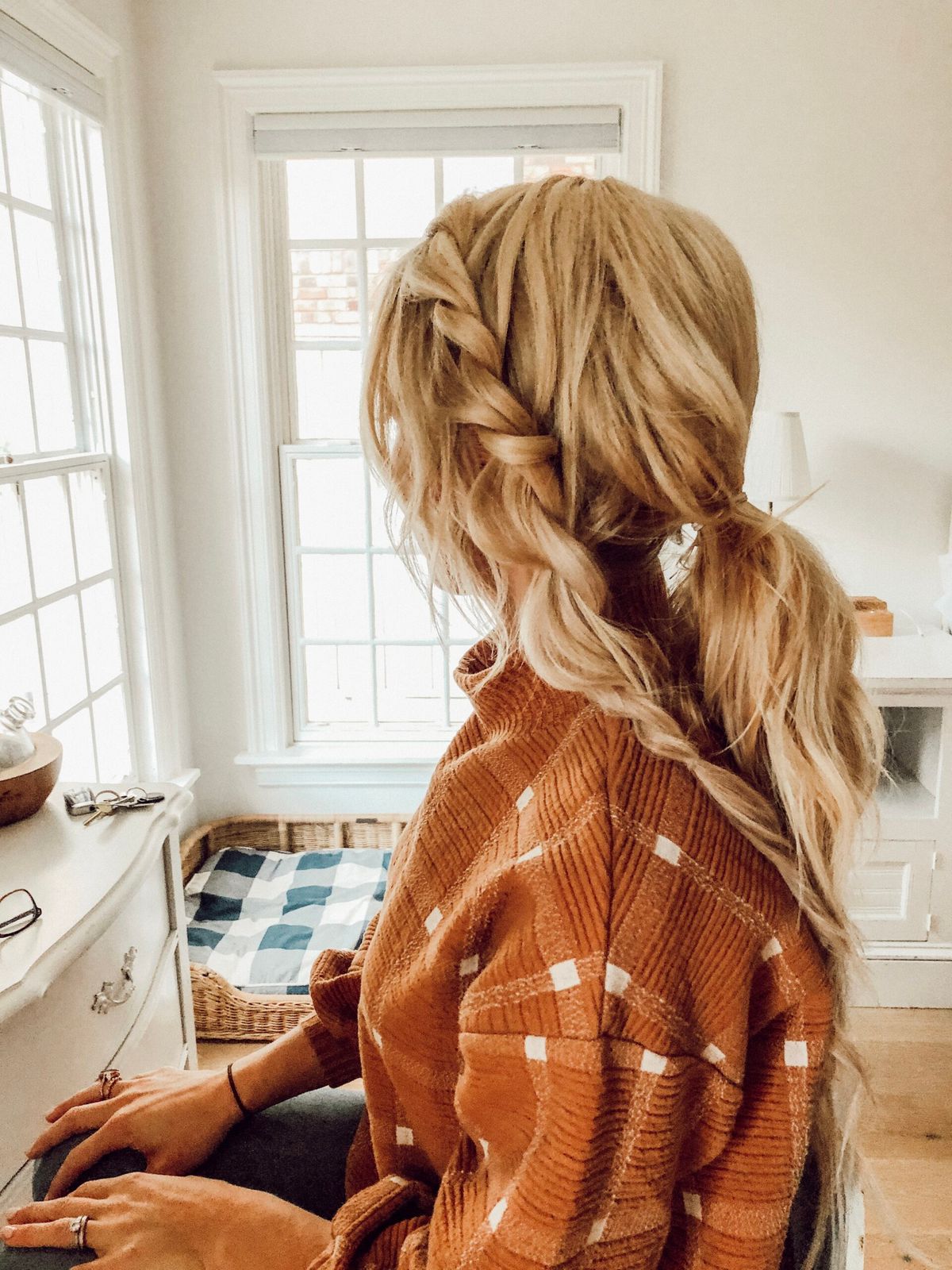
Best combination in this batch. A braided ponytail with loose waves sounds like two different commitments, but on mid-back ash blonde it reads as one deliberate style. The braid anchors the top half, keeps the crown from falling flat, and the waves below add movement that a full braid would kill. Thick wavy texture is the secret here: the braid has body, the waves have memory. The middle part keeps it grounded. This is the style you wear when you want something that looks like you tried but actually took fifteen minutes. The ash tone keeps the whole thing from reading too warm or too sweet.
Collarbone Visual Idea
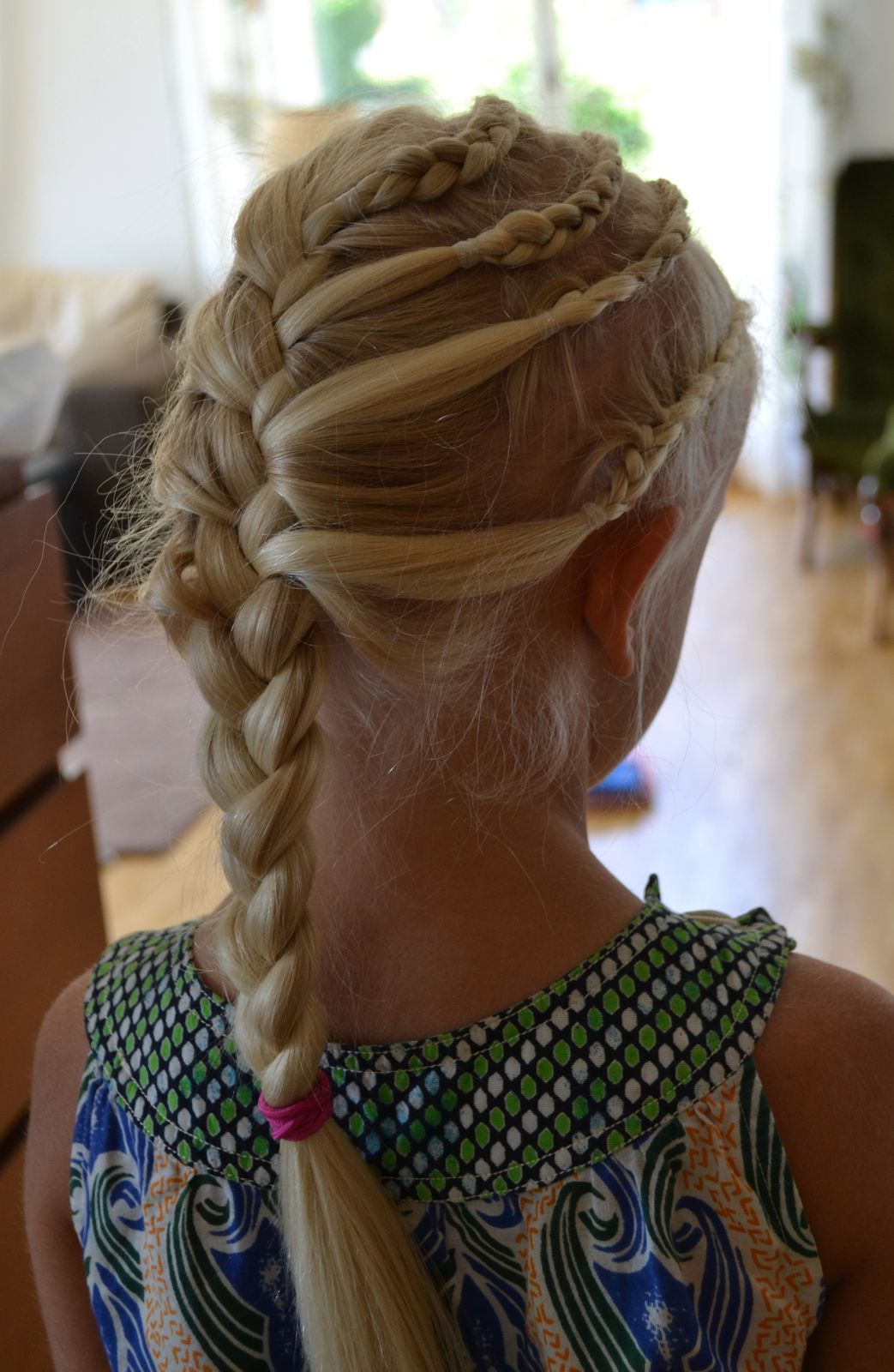
What I notice first: the braid wraps the crown like a headband, but it’s not delicate. It’s substantial, built from sections that actually read. This is not a DIY project. The braiding is intricate, the kind that requires a second mirror and a patient stylist. On straight, fine hair at collarbone length, the braid has nowhere to hide: every section has to be clean or it looks sloppy. The blonde helps, giving contrast between the twists. The honest downside is time. You are looking at twenty-five minutes minimum, and if your arms get tired, the tension drops and the crown goes soft. Book it for a special day, not a Tuesday.
Dark Brown Visual Idea
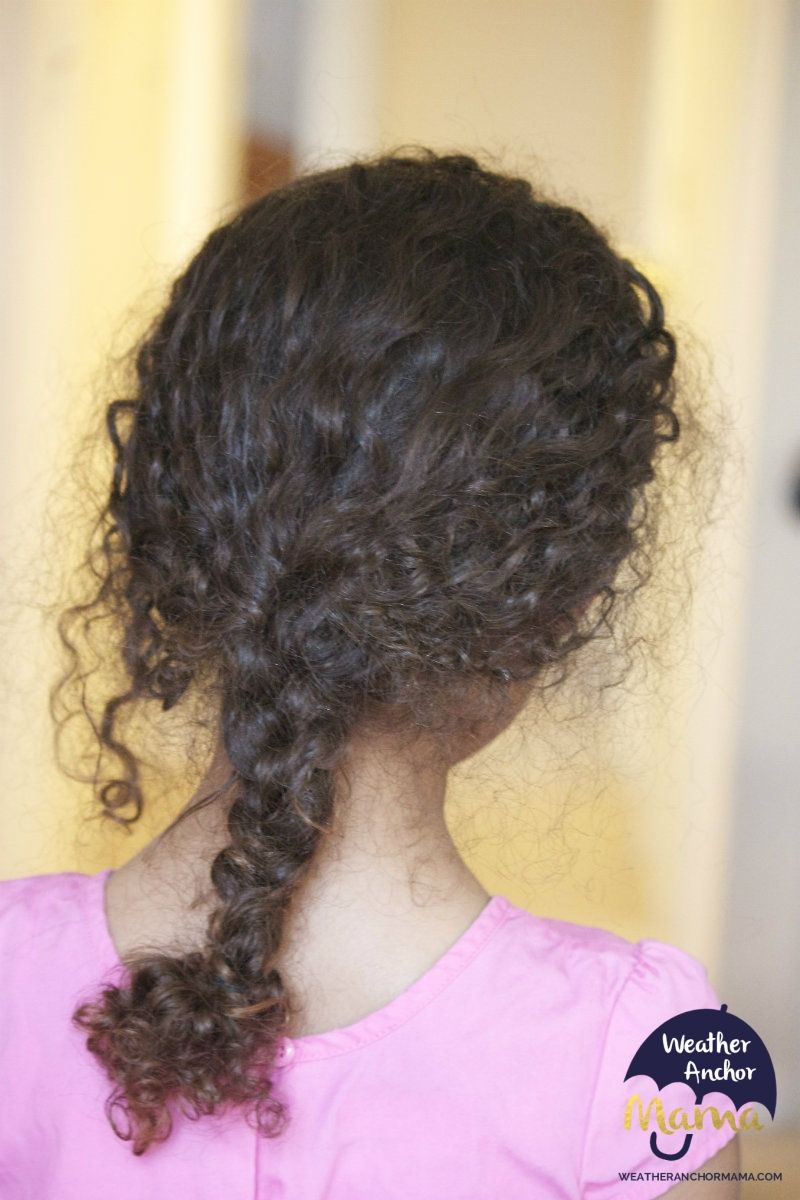
Can a braid look defined without looking stiff? On curly, thick hair, the answer is yes. The technique here is about respecting the curl pattern: detangle in sections, keep the tension even, and let the natural texture fill the braid instead of fighting it with a brush. The result is a braid that has body and movement, not a flat rope. The dark brown reads deep and rich, no highlights needed to make the sections pop. The middle part keeps the line clean. This is a style that works because the hair does the work. You guide it, you don’t force it.
Blonde Visual Idea
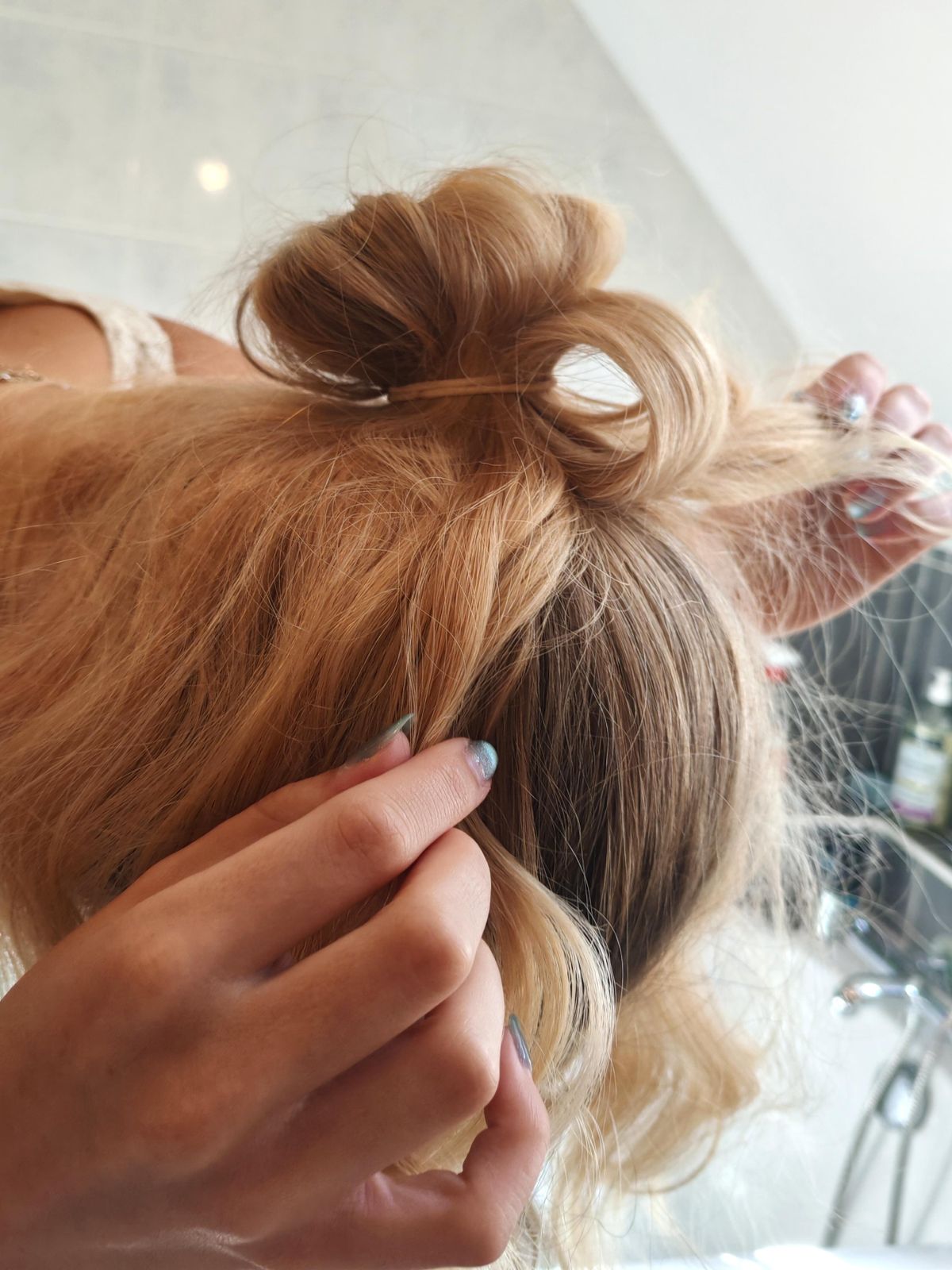
Best effortless texture in this roundup. The updo is loose, almost accidental, but the face-framing pieces are deliberate: they soften the front and keep the style from reading as a messy blob. On wavy, medium-density hair at mid-back, the texture holds the shape without pins fighting gravity. The blonde keeps it light, visually, so the updo doesn’t look heavy. Day two is where this shines: the waves have relaxed, the volume has settled, and the updo reads as intentional softness instead of day-one effort. The middle part keeps it symmetrical. No bangs to adjust, no pieces to tuck.
Final Thoughts
I went into this expecting to skip half of them. Instead I found myself bookmarking the double Dutch braids and the crown braid ponytail. The one I am actually booking next is the braided crown with loose waves. It held all day and hid my week-five roots.