I keep seeing wolf cuts on straight hair around my neighborhood, and the ones that work aren’t the shaggy chaos you’d expect. They land somewhere between a mullet and a layered bob, and on fine straight hair that goes flat by 4 pm, that structure matters more than any texture spray.
This is 20 takes on the Wolf Cut for Straight Hair, from a platinum shoulder length version that needs toner at week six to a dark brown collarbone cut I could actually style with a brush and ten minutes. Some need a salon appointment, some work with a bathroom mirror and sharp scissors. All of them keep the shape visible past lunch.
Platinum Shoulder Length Wolf Cut
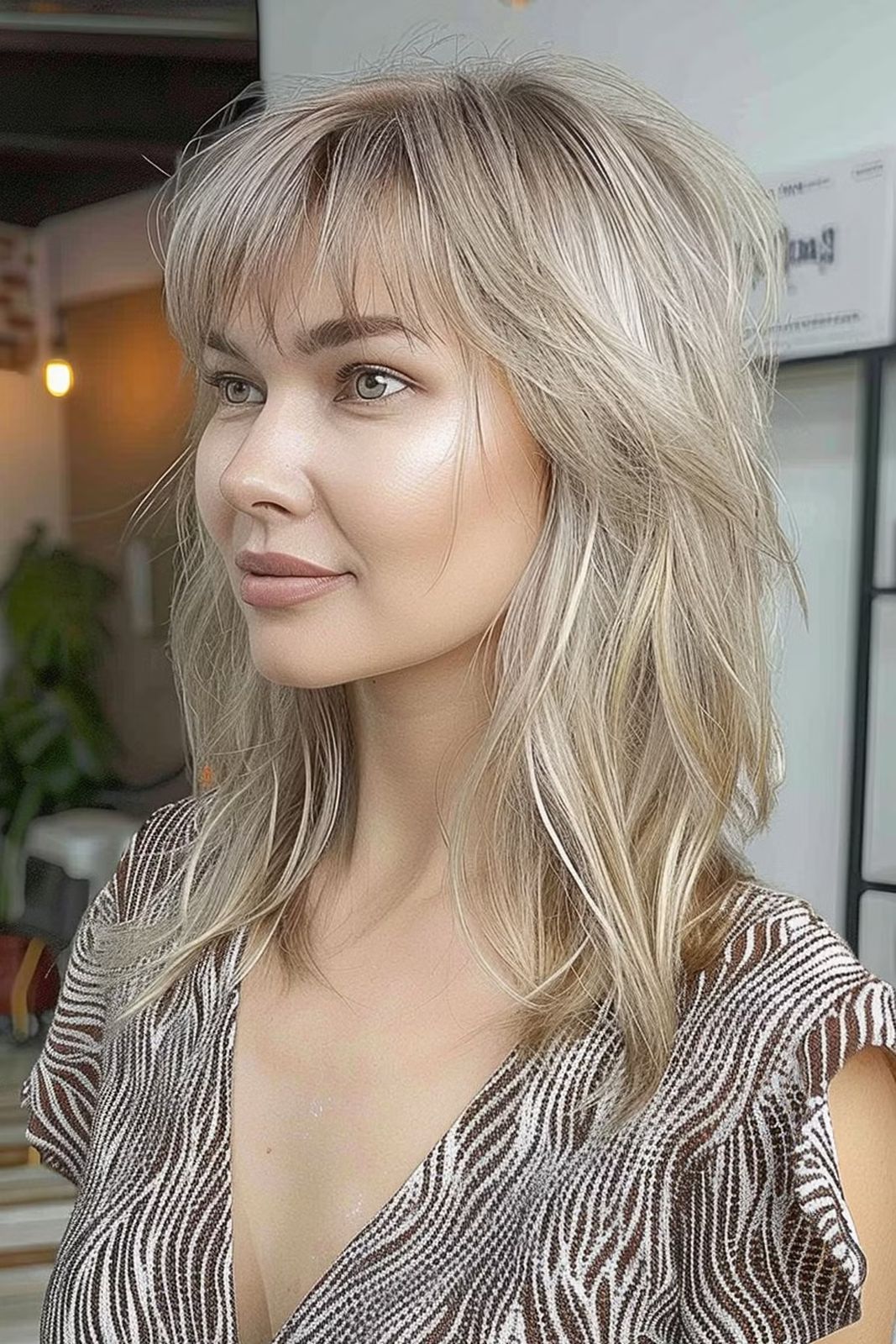
The platinum wolf cut shoulder length is a test of whether your hair can hold shape without product. Fine, straight texture usually flattens by noon. This cut fights that with short, stacked layers at the crown that push volume upward, then a piecey finish at the shoulder that lands wispy, not blunt. The wispy bangs are cut short enough to read intentional but long enough to tuck behind an ear. It works because the layers do the heavy lifting. No round brush required. Skip this if your hair is coarse or dense — the weight will pull the shape down and you will just have a choppy bob.
Ash Blonde Wolf Cut Collarbone Length

The ash blonde wolf cut is the better choice if you want texture without the full punk commitment. A shag is heavier on the bottom and reads more 70s. This one keeps the collarbone length long enough to pull back, then layers the top shorter so the straight texture moves instead of sitting flat. The curtain bangs are the key — they fall to cheekbone and blend into the layers so there is no hard line. Tell your stylist you want the interior layers cut with shears, not a razor, and the perimeter left soft. Razor on straight, fine hair frays too fast.
Shaggy Collarbone Wolf Cut
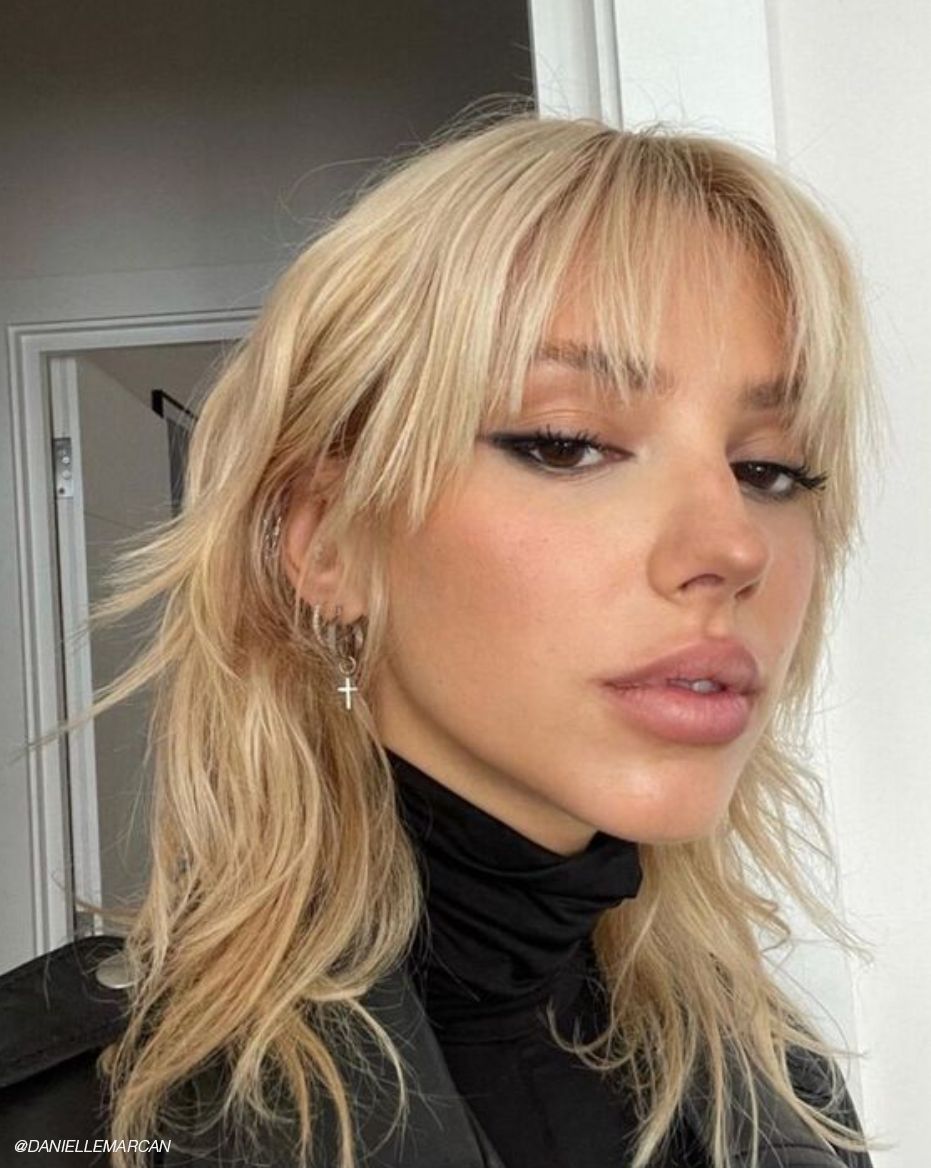
How much effort does a shaggy wolf cut actually take on straight hair? More than the photos suggest. The choppy textured layers look undone, but undone is a choice. Day one after the salon, it falls perfectly. Day three, the top layers start to sit flat against the crown and the bangs separate into two curtain panels that hang straight. The fix is a quick blast with a blow-dryer at the roots while shaking your head side to side. Dry shampoo at the crown before bed helps the next morning. The collarbone length helps — it is short enough to air-dry in under an hour, long enough that a bad layer day still looks like a lob.
Textured Black Shoulder Wolf Cut
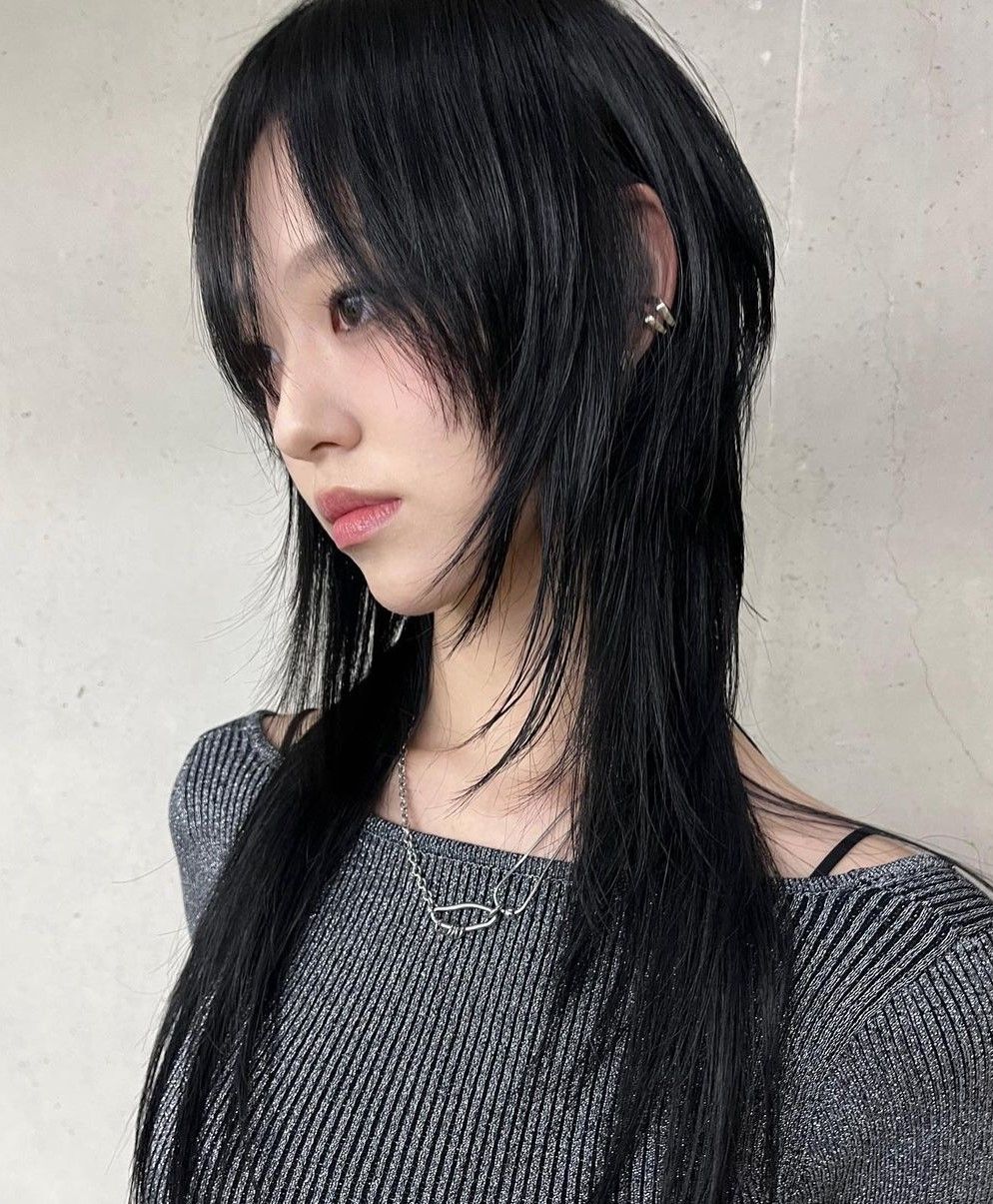
I looked at the black wolf cut and thought, that is a salon-only cut. It is. The shaggy layers on straight black hair need precision because any unevenness shows immediately. The stylist cuts the top layers short and stacked, then leaves the shoulder-length bottom pieces longer and point-cut into soft points. The wispy bangs are cut dry, not wet, so they land exactly at brow level. Do not try this at home. A bathroom-mirror wolf cut on black hair reads as a bad mullet. Book a stylist who has done this shape before and bring a photo of the back.
Light Brown Face-Framing Wolf Cut

I will admit something. I was not planning to like the light brown wolf cut. Face-framing layers on straight hair usually mean two long pieces that brush the collarbone and nothing else. This one goes further. The layers start at chin level and graduate down to mid-back, so the shape has movement without losing length. The wispy bangs are cut to blend into those layers, not sit separate. Styling is minimal. Air-dry with a texture spray at the roots, then finger-comb the front pieces forward. That is it. The blonde highlights catch the light and keep the brown from reading flat. It is the softest entry point into the wolf cut if the shorter versions feel like too much.
Edgy Jet Black Wolf Cut Micro Fringe

That micro fringe sits a good two inches above the brow, which means it demands a trim every two weeks, no negotiation. The jet black wolf cut is straight, blunt at the ends, and the layers stack tight through the crown. Texture is minimal up top — the point is precision, not pieceyness. Bangs this short show every split end and every cowlick. You will notice the grow-out on day nine. I notice it on day nine. If you want a cut that announces itself before you walk in the room, this is it. Just know the upkeep is the announcement, too.
Chin Length Choppy Wolf Cut

You sit down, the stylist picks up texturizing shears, and you watch the floor fill with hair for twenty minutes. That is the chin length wolf cut. The layers are cut deep and random — some strands stop at the jaw, others at the chin, the choppy fringe lands somewhere between eyebrow and eyelid. On straight, fine texture, this shape relies entirely on the cut to hold its volume. No blow-dry trick can fake what the shears did not do. Book someone who knows how to work a slide cut. The result is a shape that moves like it was never one shape at all.
Dark Brown Collarbone Wolf Cut

This is the wolf cut that lands somewhere between fall and spring, not too shaggy for a work week, not too polished for a Saturday. The dark brown wolf cut hits collarbone, the choppy layers stack through the back and thin toward the ends, and the full bangs sweep just above the brow. Straight texture keeps the shape readable — every layer lands where it was cut. In humid weather, the layers separate instead of clumping. In dry air, they hold their line. It is the seasonal middle ground that actually works across seasons.
Dark Blonde Wolf Cut With Curtain Bangs
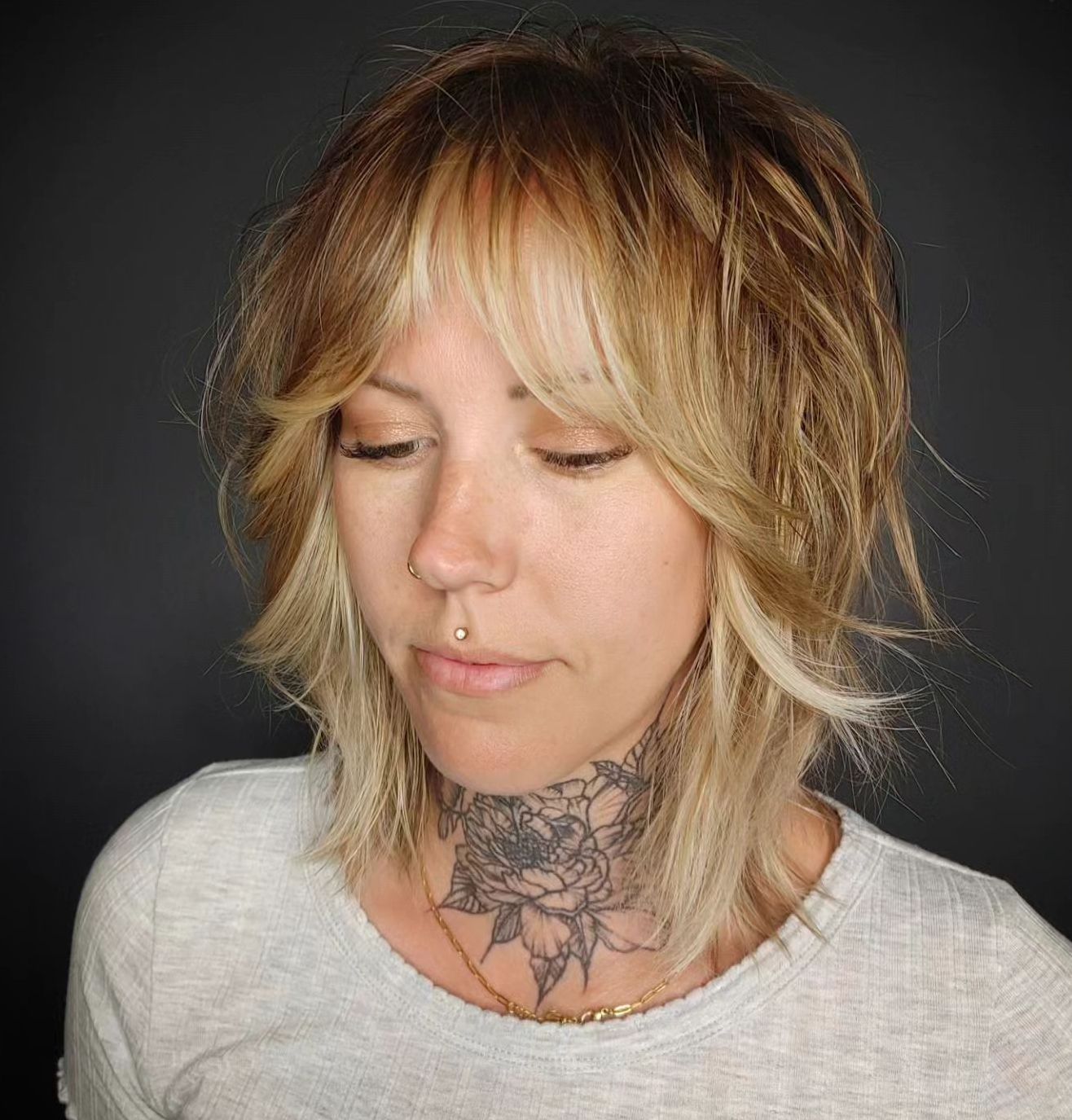
I looked at this and thought, that is what a wolf cut looks like when it actually breathes. The dark blonde wolf cut lands at collarbone, the curtain bangs split at the bridge of the nose and feather into the layers beneath. Texture is built into every section — the layers are not uniform, the bangs are not blunt, the ends are not one straight line. On straight hair, this means you style it every day or it falls flat by noon. The trade-off is a shape that reads intentional even when it is not. I am not convinced that trade is worth it for everyone.
Dark Brown With Highlights Shoulder Length Blowout Wolf Cut
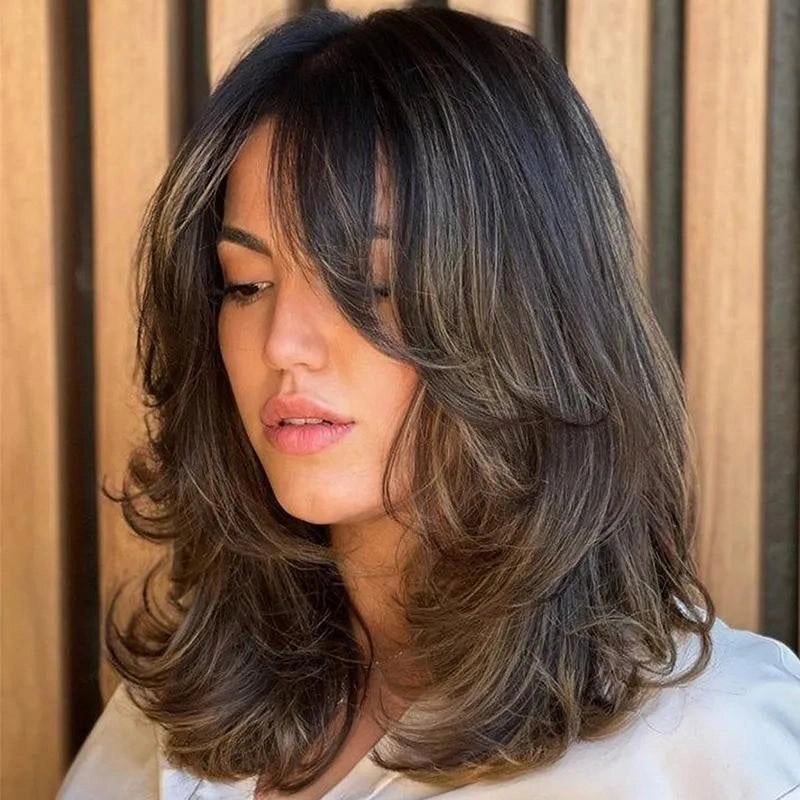
The full bangs sweep to one side, the layers fan out from the jaw, and the shoulder length wolf cut lands with a rounded, blown-out finish that reads more polished than punk. Straight, finer textures take this shape well because the blowout adds the volume the cut alone cannot hold. The highlights add dimension, but the real work is the round brush at the roots. This is the wolf cut for someone who wants edge without the morning argument. If your hair goes flat by 4 pm, this shape holds longer than the shaggier versions.
Blunt Bangs Thick Black Shoulder Wolf Cut

Blunt bangs win this round. If you are deciding between wispy and a hard line, go hard. The thick hair wolf cut needs that graphic chop at the brow to balance the choppy layers below. Shoulder length keeps it wearable, not dramatic. Straight texture reads sharp here, not soft. This is a salon job, not a mirror experiment. Blunt bangs shift by a quarter inch and the whole proportion changes. Ask your stylist for one clean horizontal line, no texturizing across the forehead.
Choppy Bangs Collarbone Layered Wolf Cut

Can a layered wolf cut survive a Tuesday? I tested it. Monday morning blowout, Tuesday second-day hair, Wednesday dry shampoo and a prayer. The choppy bangs help. They blend into the layers instead of demanding a fresh style every morning. Collarbone length means the shortest pieces hit the jaw, the longest skim the collarbone. Straight texture holds the cut’s shape better than wavy hair does. A trim every six weeks keeps the ends from going soft. A texture spray on dry hair, a quick scrunch, done.
Platinum Blonde Platinum Collarbone Wolf Cut

I blinked. The platinum collarbone wolf cut is not subtle. Choppy textured layers start at the ear and stack down, each piece cut at a different angle. Straight hair shows every uneven slice, which is the point. The wispy bangs feather across the forehead, light enough not to fight the platinum. The honest downside: the layers need a trim every five weeks or the shape collapses into a blob. A blowout with a round brush lifts the roots, then a texture spray separates the ends.
Black Collarbone Heavy Layered Wolf Cut

I told my stylist I wanted a heavy layered wolf cut. She raised an eyebrow. Heavy layers on straight hair can look like a helmet, she said. I said do it anyway. She cut the interior layers short, left the perimeter long at the collarbone. The choppy textured appearance comes from the contrast: dense weight on the bottom, air up top. Curtain bangs frame the face without blocking it. Air drying works. I scrunch a texture spray into damp hair and walk away. This is a salon cut. The layering technique is too precise for bathroom scissors.
Blonde With Subtle Highlights Blonde Shoulder Length Wolf Cut

A blonde wolf cut with textured layers sounds like volume guaranteed. Then straight hair sits there, flat by noon. The subtle highlights help. They add dimension that the cut alone cannot deliver on one-note blonde. Shoulder length keeps the full bangs from overwhelming the face. The blowout styling is non-negotiable. Without a round brush lift at the crown, the layers disappear into the length. The honest downside: second-day hair needs dry shampoo and a curling iron touch-up on the bangs. Not a wash-and-go cut.
Curtain Bangs Black Collarbone Shaggy Wolf Cut
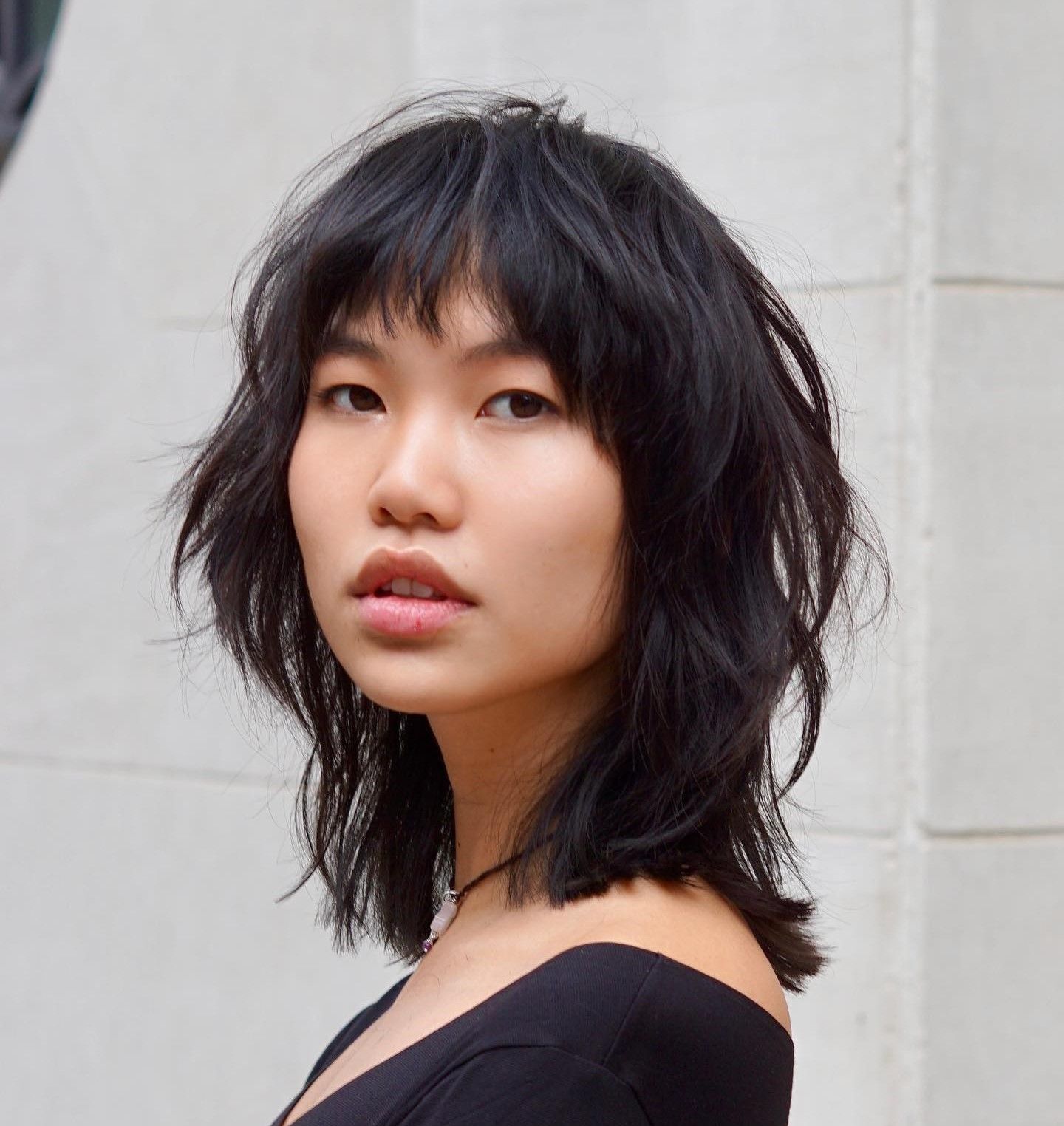
You sit down, you leave the salon two hours later, and you have shaggy choppy layers that look like they took all day. The wispy curtain bangs are the part that costs you — not in money, in precision. A straight, collarbone-length wolf cut with black hair and a middle part, air-dried. The stylist carves the layers so the bangs feather into the rest without a blunt line. Book this one, it is not a bathroom-mirror job.
Medium Brown Shaggy Wolf Cut

This is the cut that works for every season, and I mean every single one. A medium brown wolf cut with shaggy layered texture, collarbone length, choppy bangs that hit just above the brow. Air-dried, middle part, straight hair that looks like it has been moving all day. Summer humidity does not kill it. Winter hats do not flatten it. The layers are cut so the weight sits at the collarbone, not above it, which means the shape holds whether you are at a backyard barbecue or a holiday dinner.
Dark Brown Wolf Cut With Pink Highlights
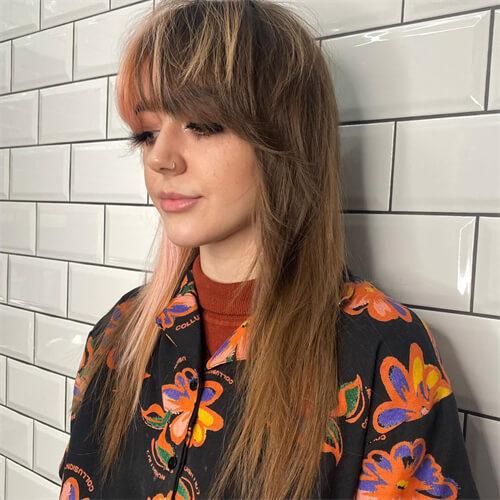
I saw this and thought, that is a lot of upkeep for a peek of pink. A dark brown wolf cut with pink highlights wolf cut, collarbone length, curtain bangs that sweep to the side. The pink is not everywhere — it lives inside the layers, so it only shows when the hair moves. That is the trick. But here is the honest downside: pink fades. You can do this at home with a semi-permanent colour, but the tone will shift every three washes. A salon job buys you eight weeks of clean pink.
Visual Idea
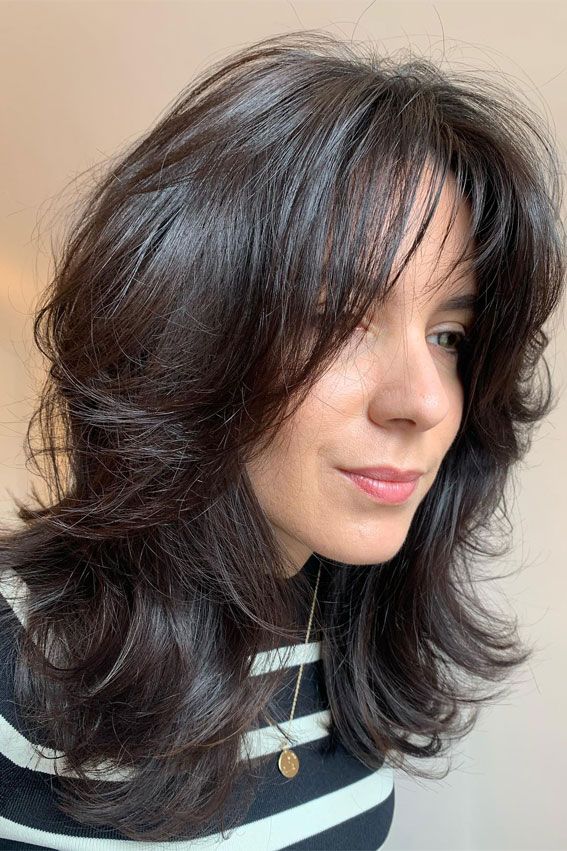
Straight hair with no natural wave needs a wolf cut that builds its own movement. This one does it with curtain bangs that start high on the crown and layers that graduate down to collarbone length. The blowout adds volume at the roots, which straight hair loses by lunch on its own. The dark brown colour is not the point. The point is that the cut creates the illusion of texture where there is none. Fine hair, low density — this one works. Thick, heavy hair? Skip it.
Collarbone Visual Idea
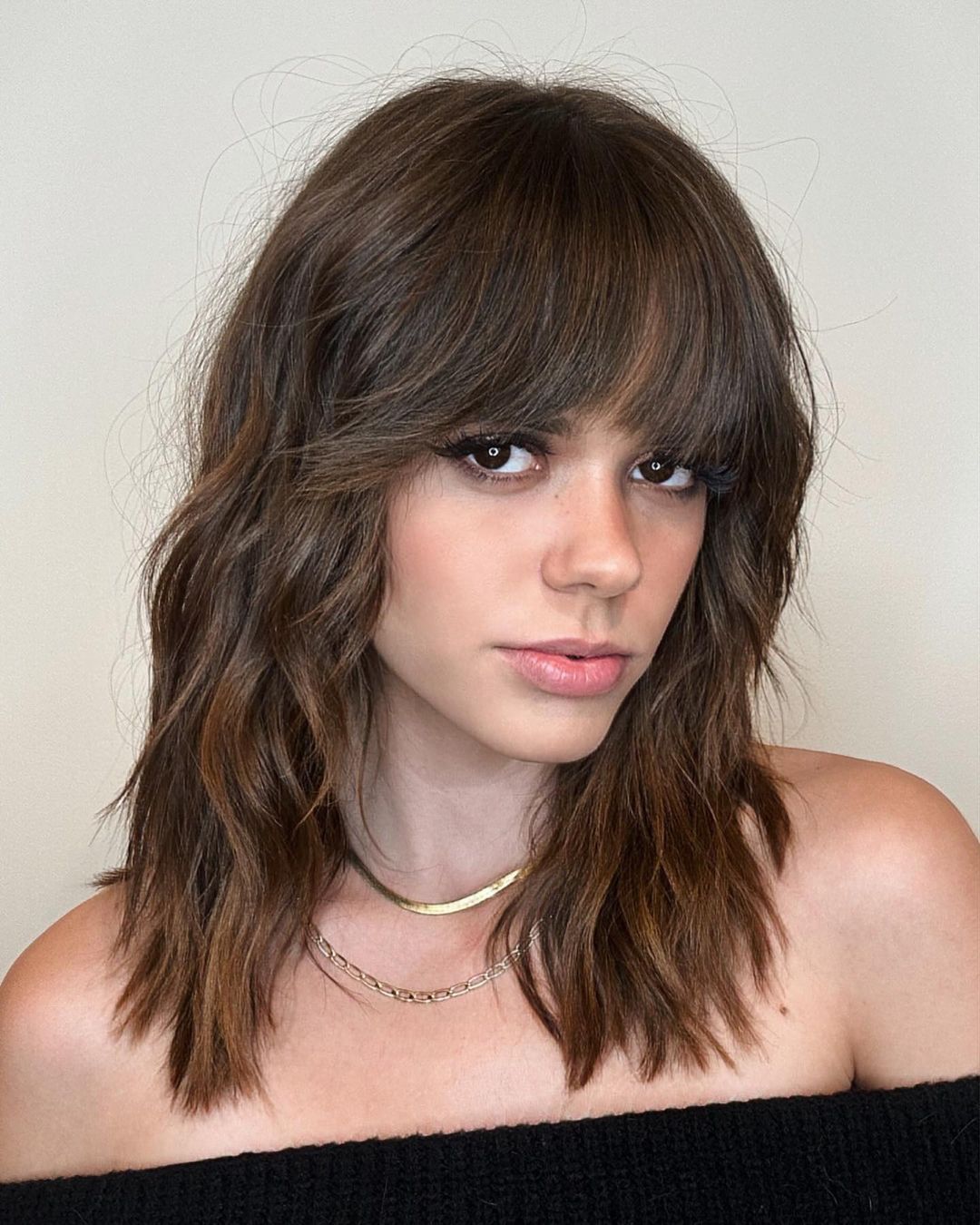
Can you air-dry a wolf cut on straight hair and still look like you tried? Yes, but only if the layers are cut right. This one is medium brown, collarbone length, curtain bangs that dry into a soft curve without a round brush. The cut does the work. The upkeep is a trim every eight weeks to stop the ends from going flat. By week six, the layers start to blend into one shape, and by week ten, it is just a long bob. The air-dried look lasts about six hours before the roots go limp.
Final Thoughts
After writing all of these, I am booking the dark brown collarbone wolf cut next. The grow-out is the best in this roundup, and I can keep my roots for six weeks before anyone notices. That is a rare combination in a cut this specific.
- Trim the baseline every eight weeks
- Ask for a soft root shadow, no visible line
- Tone platinum shades at week six, not week ten
- Blow dry the bangs first, then the rest