
I keep seeing dark blonde in the chair next to mine. It’s not the bright, brassy blonde of a few years ago. It’s quieter, more dimensional, and it suits a lot more skin tones than I expected.
This roundup has 17 dark blonde ideas, from low-maintenance balayage to a chin bob that needs a trim every six weeks. Whether your hair is fine, thick, straight, or curly, there’s a shade and cut here that works. Dark Blonde is the color I keep coming back to, because it grows out gracefully and never looks flat by 4 pm, even on my fine hair.
Luminous Dark Blonde with Beige Highlights
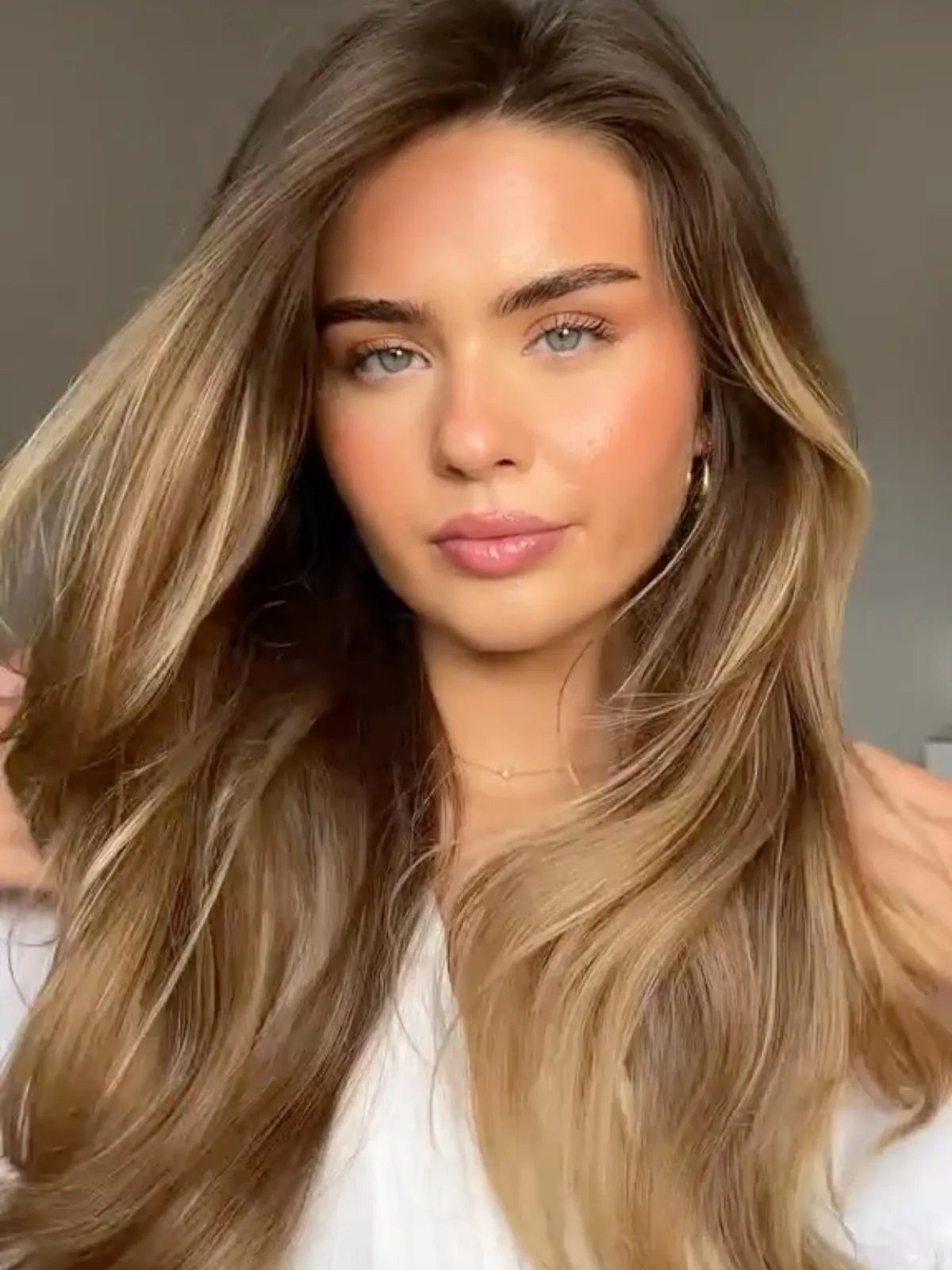
That particular beige blonde highlight has a way of catching light without going brassy, which is harder to find than it sounds. The dark blonde base keeps it grounded, the beige highlights sit warm but not orange, and the whole thing reads polished because the mid-back length and those thick waves have room to show off the dimension. A middle part and layered cut let the colour breathe. This one flatters warmer skin tones best, the kind that glow in gold earrings. The beige blonde highlights brighten without washing you out, and that is a fine line to walk.
Dark Blonde Ombre with Loose Curls
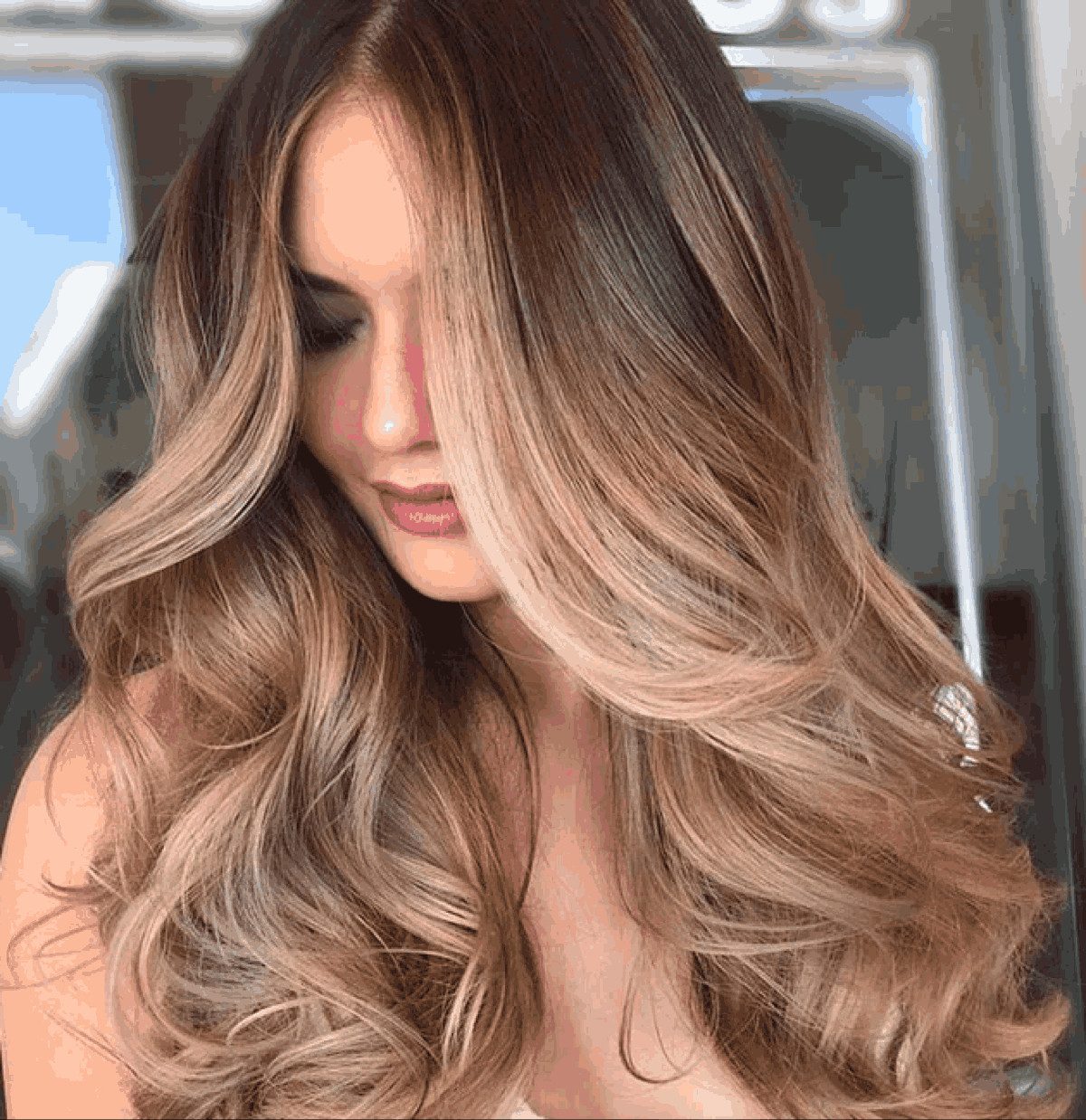
When did dark roots start looking deliberate instead of neglected? That is the dark blonde ombre trick. The ombre effect graduates from a deeper root into lighter ends, no hard line, no regrowth panic. On this mid-back length with thick, wavy texture and a side part, the loose curls catch every shift in tone. The technique works because the stylist keeps the dark blonde dense at the crown and lets the lightness build slowly down the lengths. It looks beachy, sure, but the real win is the grow-out. You can stretch ten to twelve weeks before the ombre starts asking for a touch-up.
Vibrant Dark Blonde Curls with Highlights
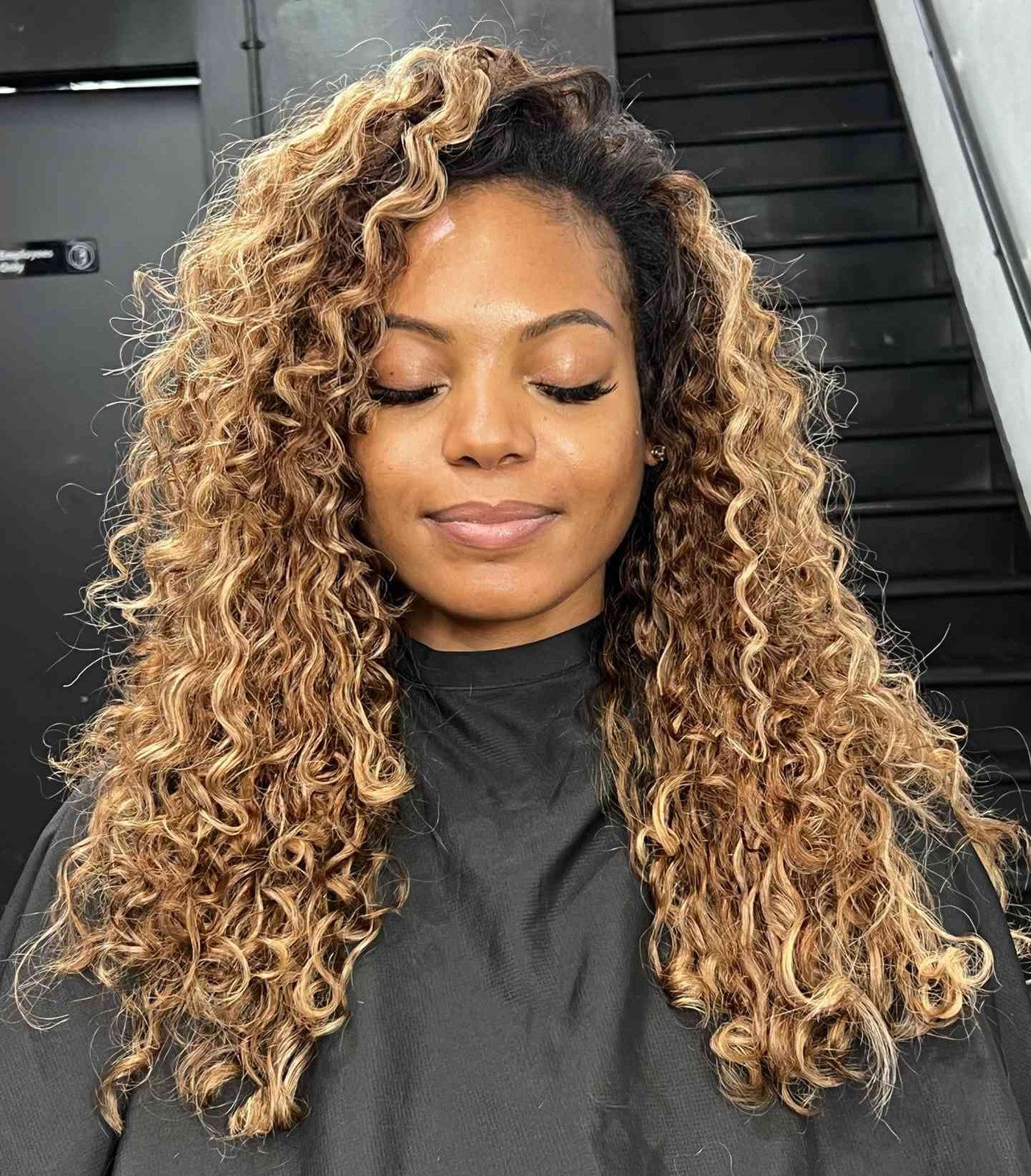
This is not the subtle dark blonde that whispers. This one announces itself. The dark blonde curly highlights here are bolder, more golden, spaced closer together so the blonde highlights pop against the deeper base. On thick, curly texture at mid-back length with long layers and a middle part, the colour has volume to play with. Compared to the beige version, this reads warmer and more intentional. The curls catch the lighter pieces and throw them forward. It is a look that asks for a refresh every six to eight weeks, but the payoff is that the blonde actually reads as blonde, not as faded brown.
Polished Dark Blonde with Ash Dimension
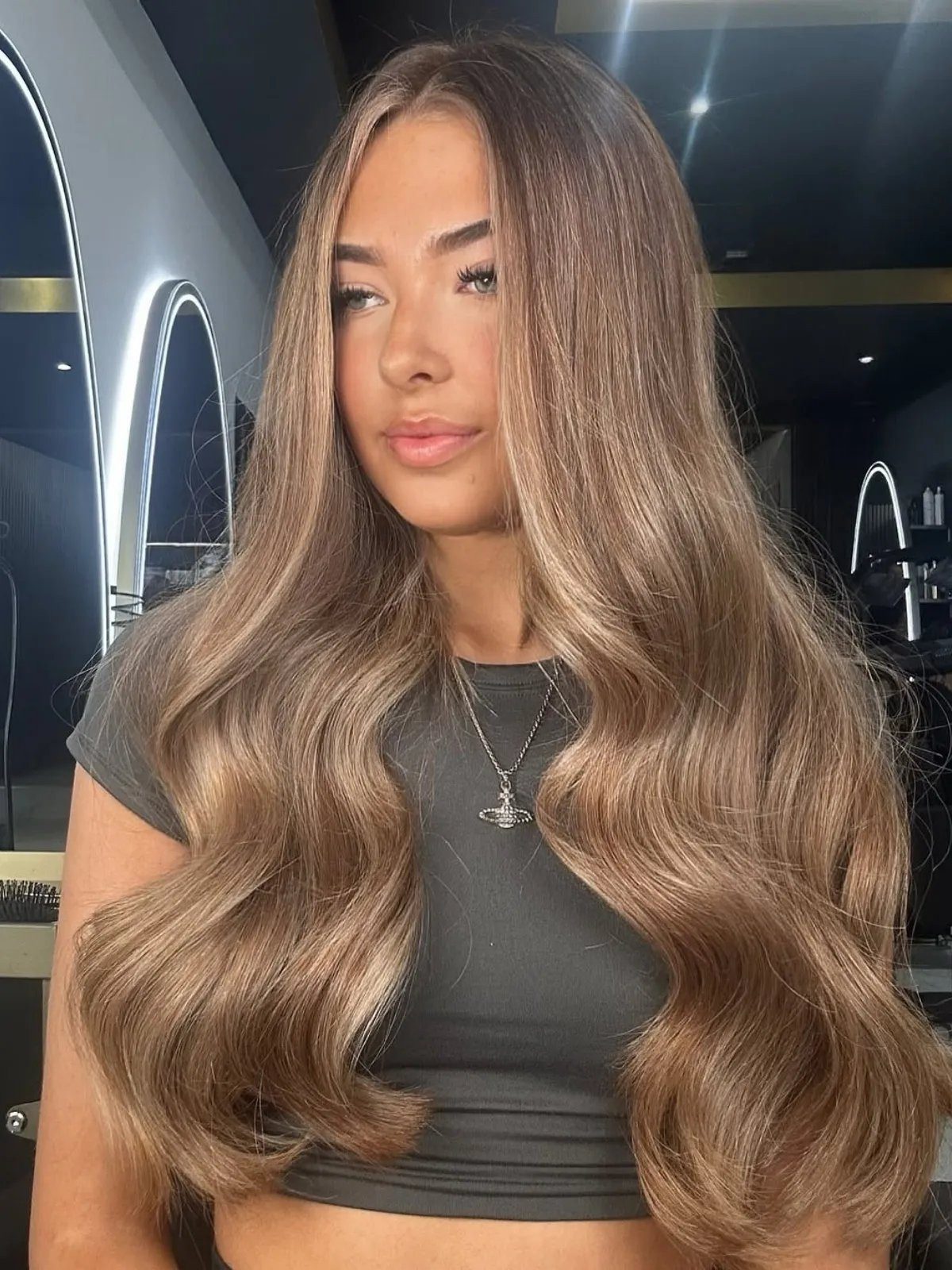
I will admit it, I have let ash tones go brassy more times than I want to count. This dark blonde ash highlights look fights that. The ash blonde highlights are woven through a dark blonde base on thick, wavy mid-back length, layered and middle-parted, and the effect is cool without going grey. The upkeep is the real story here. Ash fades fast, so a purple shampoo is not optional, it is the difference between this polished blowout and a muddy mess. Plan for a toner refresh every six to eight weeks. The waves and layers give the ash dimension room to read, and when it is fresh, it is the coolest blonde in the room.
Collarbone Dark Blonde with Face-Framing
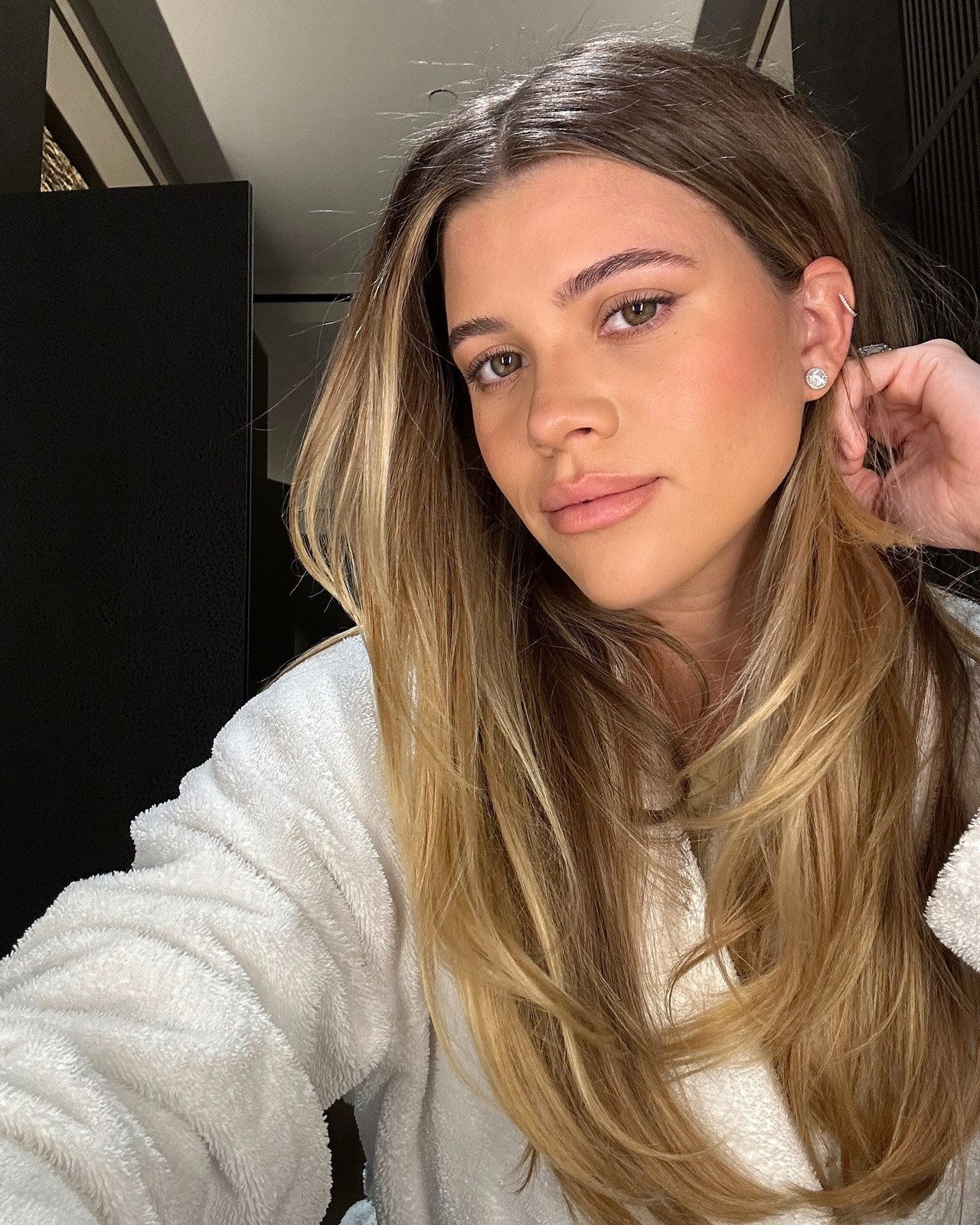
The shorter length here changes everything. Collarbone dark blonde with face-framing highlights, the lighter pieces sit right around the jaw and cheekbones, drawing the eye upward. On wavy, medium-density hair with long layers and a middle part, those face-framing highlights do the work of a contour. They brighten without needing a full head of colour. The dark blonde base stays rich at the back, which means less salon time overall. The trade-off is that those front pieces will need touching up every six to eight weeks. They fade first, and they are the whole point.
Dimensional Mid-Back Wavy Blowout
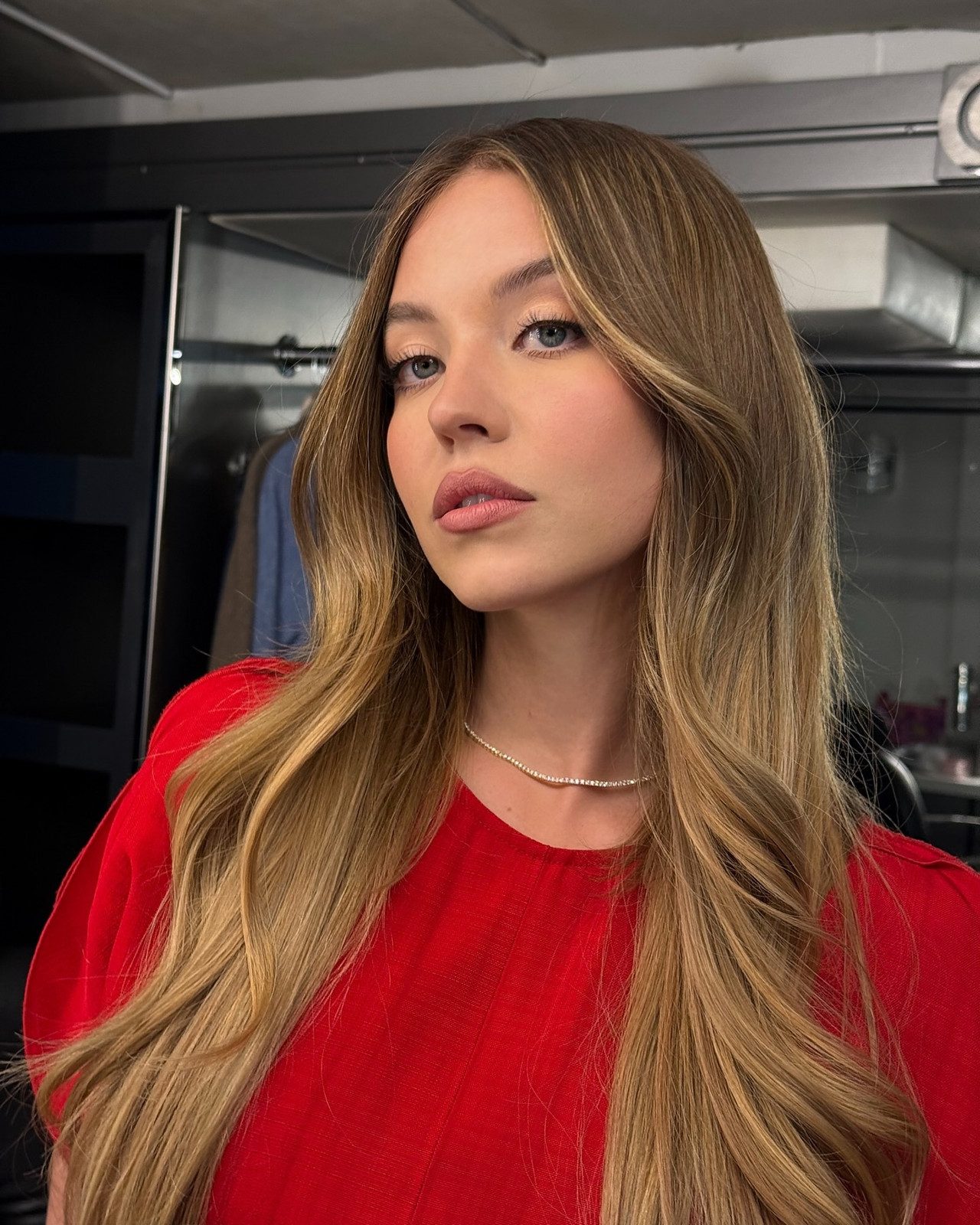
Picture a Saturday in late June, a wedding invitation on the fridge, and exactly twenty-two minutes before you need to leave. That is the window this dark blonde wavy blowout lives in. The colour is a base dark blonde with lighter blonde highlights painted through the mid-lengths, so the wave catches light in bands rather than one flat sheet. The layers run from collarbone down to mid-back, and the texture is thick enough to hold the bend from a round brush without fighting it. A middle part and face-framing highlights pull the eye up, which is useful when the afternoon sun hits the dance floor and you want your hair to look like you meant it.
Chin Bob with Blonde Money Piece
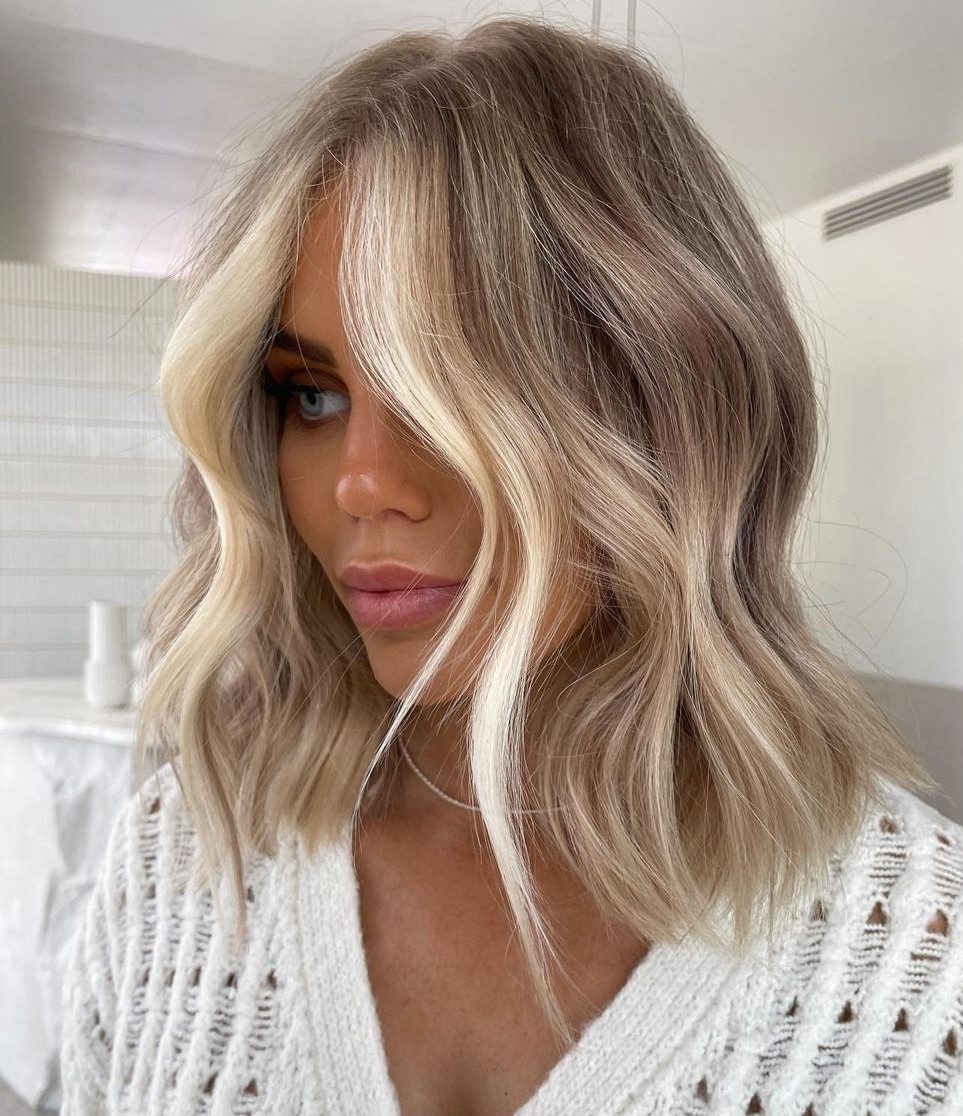
Can you paint a precise blonde money piece on your own crown, in a bathroom mirror, with a handheld brush? I have tried. The answer is no. A chin bob with a dark blonde money piece — that bright blonde section framing the face — is a salon colour, not a kitchen-sink project. The base is dark blonde, the money piece is lifted several shades lighter, and the line between them needs to be soft, not stripey. The bob itself is blunt at the chin, the texture is fine, and the curtain bangs sweep the cheekbone. The money piece will show roots at week four. Book the appointment.
Collarbone Dark Blonde with Golden Tones
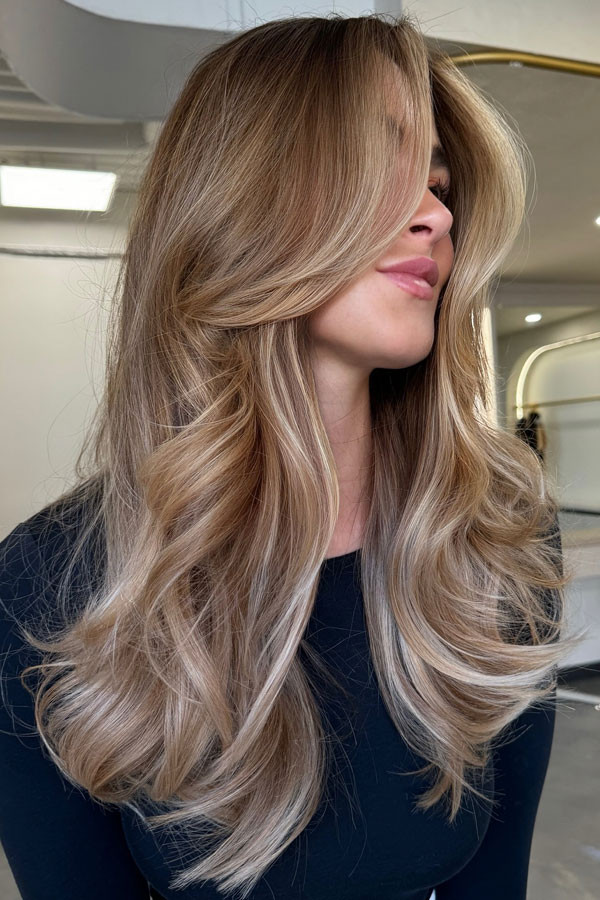
I will admit it: I wanted the warmest dark blonde golden highlights I could get, and I got them. The base is dark blonde, the highlights are golden blonde, and for the first two weeks the colour is exactly what a September afternoon looks like. Then the golden tones start to pull brassy, especially if you use the wrong shampoo at home. The cut is collarbone with layers and curtain bangs, the texture is wavy and thick, and the side part gives the face-framing layers somewhere to land. A toner refresh every six to eight weeks keeps the gold from turning orange. Worth it. But plan for it.
Mid-Back Dark Blonde Balayage with Face-Framing
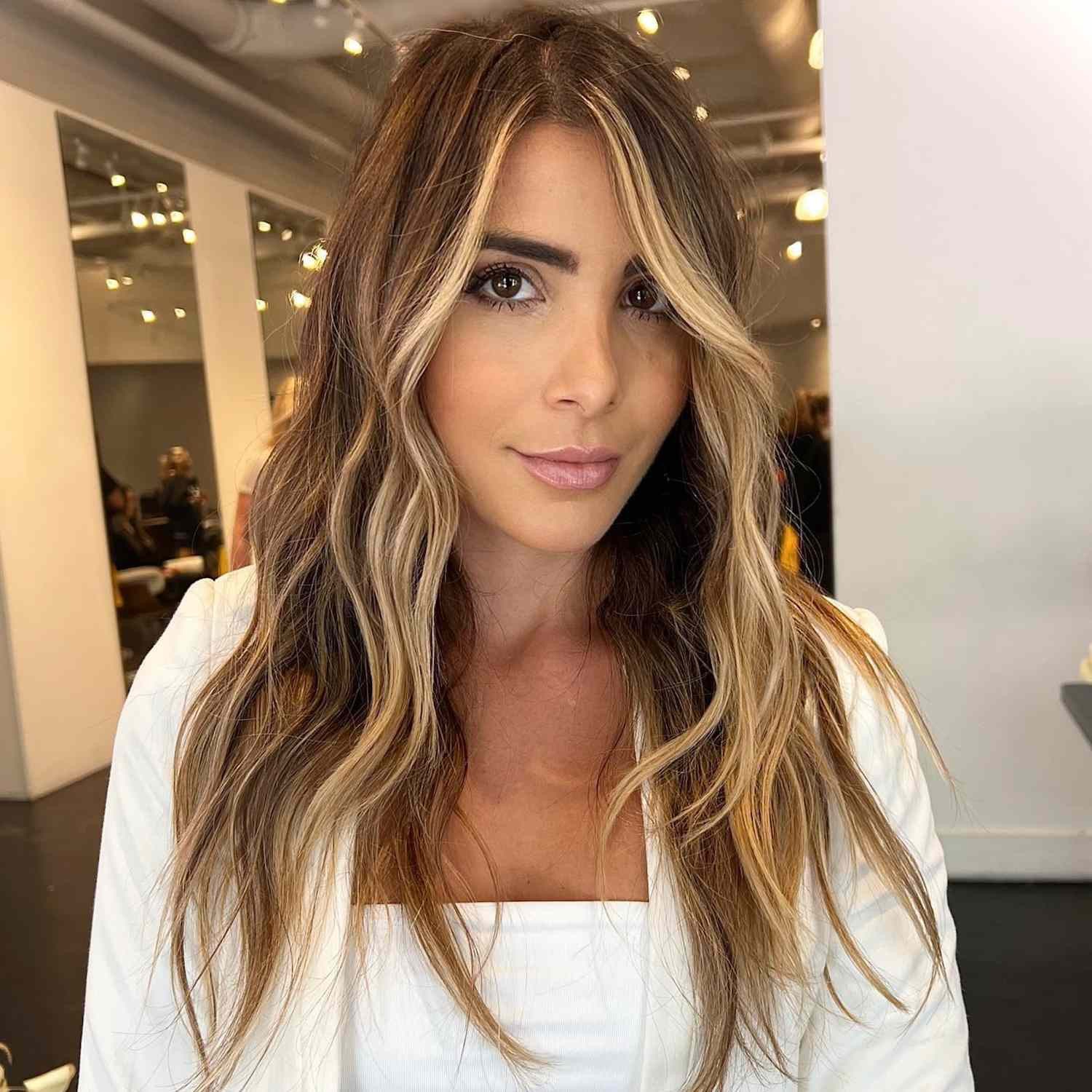
Best grow-out in this roundup. The dark blonde balayage starts at the root and gets lighter as it moves down, so there is no line to chase. The base is dark blonde, the blonde balayage is hand-painted through the mid-lengths and ends, and the face-framing highlight around the front pieces catches the eye without looking painted on. Length is mid-back, texture is wavy and medium density, and the layers keep the weight from pulling the wave flat.
Ask your stylist for a soft, sweeping balayage that starts below the ear and concentrates the light pieces around the face. Loose waves take about fifteen minutes with a large-barrel iron. The grow-out is so forgiving that you can stretch touch-ups to ten or twelve weeks. That is the whole point.
Wavy Dark Blonde Balayage Layers
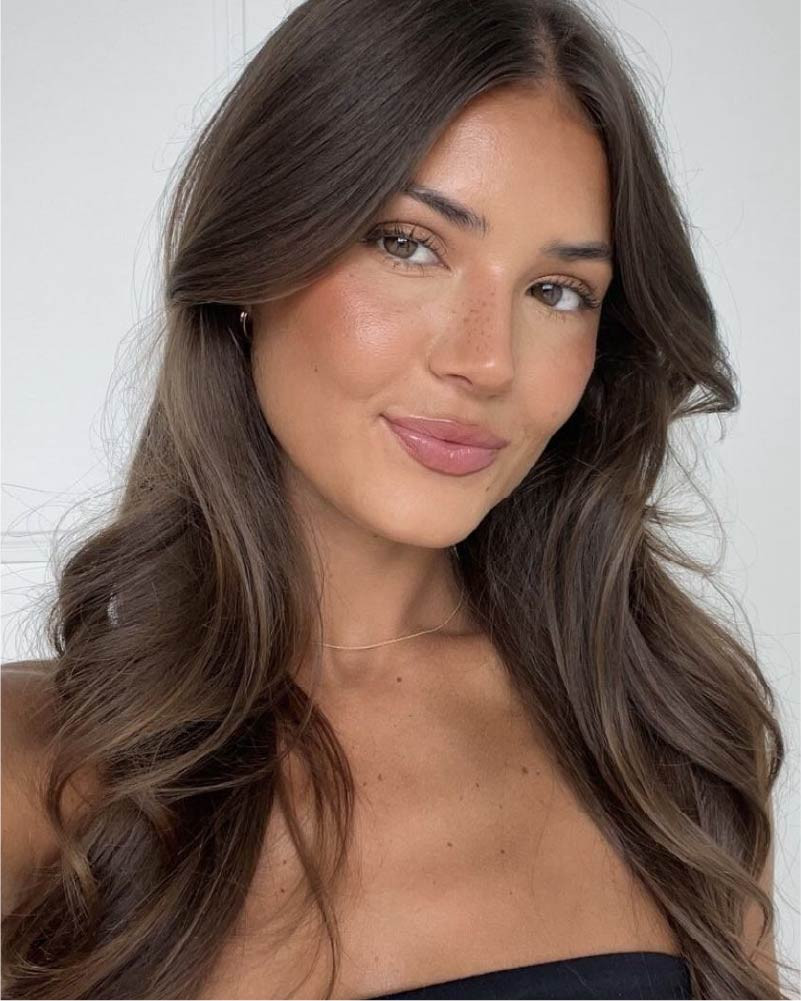
Does your hair go flat by noon? Then the dark blonde balayage layers might be your answer. The colour is dark blonde at the root, and the lighter blonde balayage is painted in soft ribbons through the mid-lengths and ends, so the transition is gradual, not striped. The cut is long layers with side bangs, the length is mid-back, and the texture is wavy and medium density. That soft transition is key: it adds visual volume without a harsh root line, which means fine to medium hair looks fuller, not thinner. A side part and a wavy blowout take about fifteen minutes. The balayage grows out so gently that you can skip the salon for three months and nobody notices.
Smooth Dark Blonde Balayage Blend
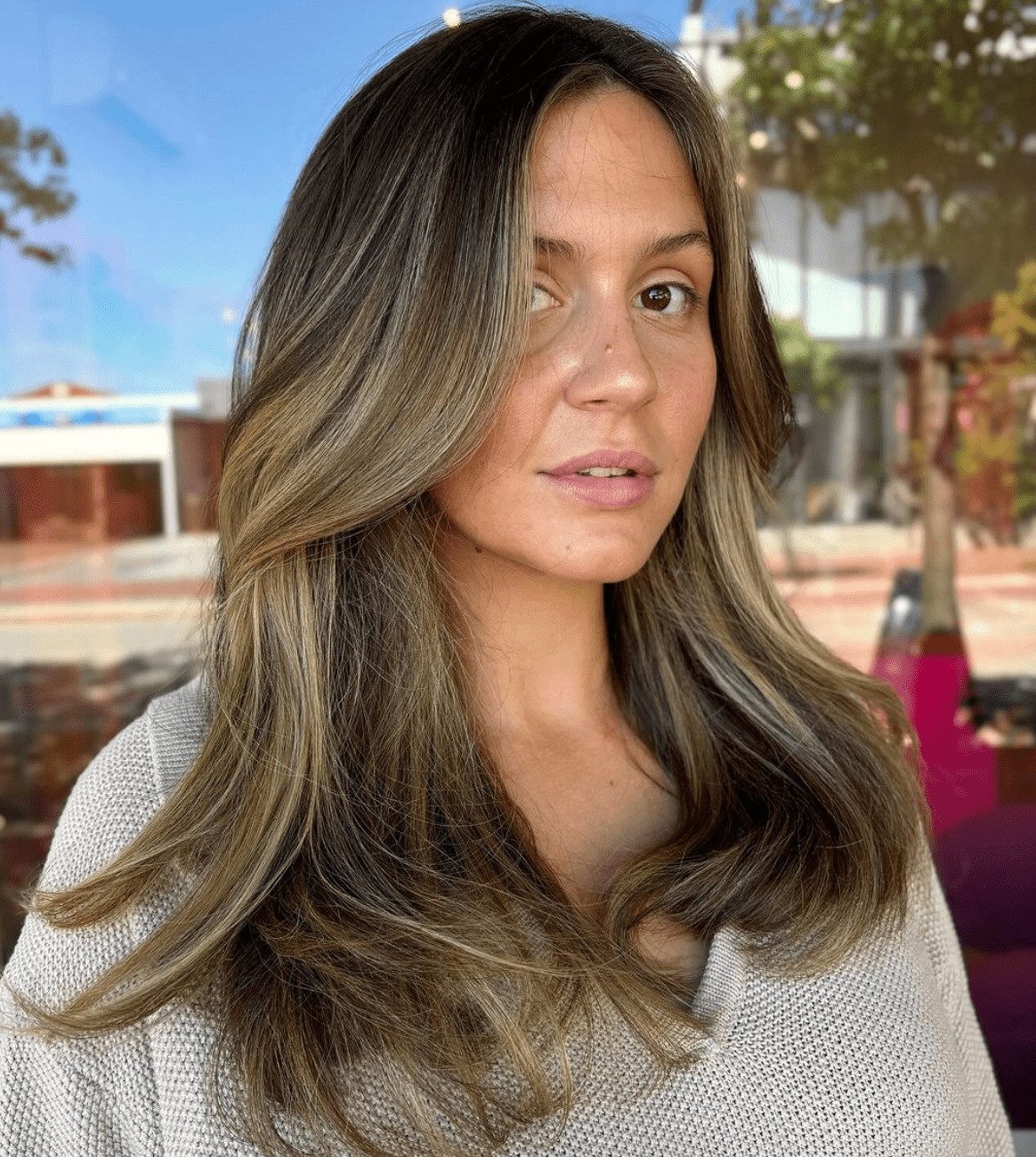
This is the colour I point to when someone says balayage is high-maintenance. The dark blonde balayage blend starts deep at the root and softens into a warm blonde balayage through the mid-lengths and ends, no harsh line anywhere. On wavy, thick hair past the shoulders, the transition reads as natural shadow, not grown-out colour. I wash it twice a week and it still looks deliberate at week eight. That is the whole trick: the root is not a mistake, it is the plan.
The loose waves help, sure, but the real work is the placement. A good stylist paints the lightener in a V-shape, heavier at the ends, so the dark base stays dominant at the crown. My roots showed at week five, and I did not care. That is rare.
Layers Dark Blonde with Face-Framing Bangs
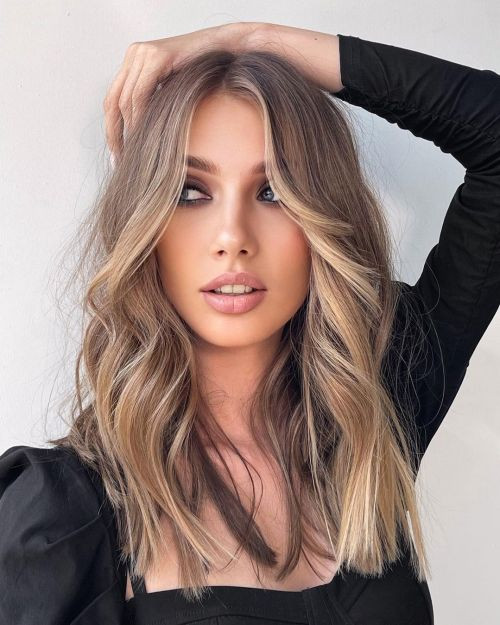
I will admit it: I tried to cut curtain bangs at home once. It took three weeks and a salon visit to fix. The dark blonde curtain bangs in this photo are cut into the layers, not tacked on, and the lighter blonde highlights hit exactly at the cheekbone. That is a professional placement, not a mirror-and-scissors gamble. The collarbone length and wavy texture give the bangs something to blend into, but the colour placement is what makes them read as intentional. Book it. Do not DIY this one.
Gradient Dark Blonde Balayage
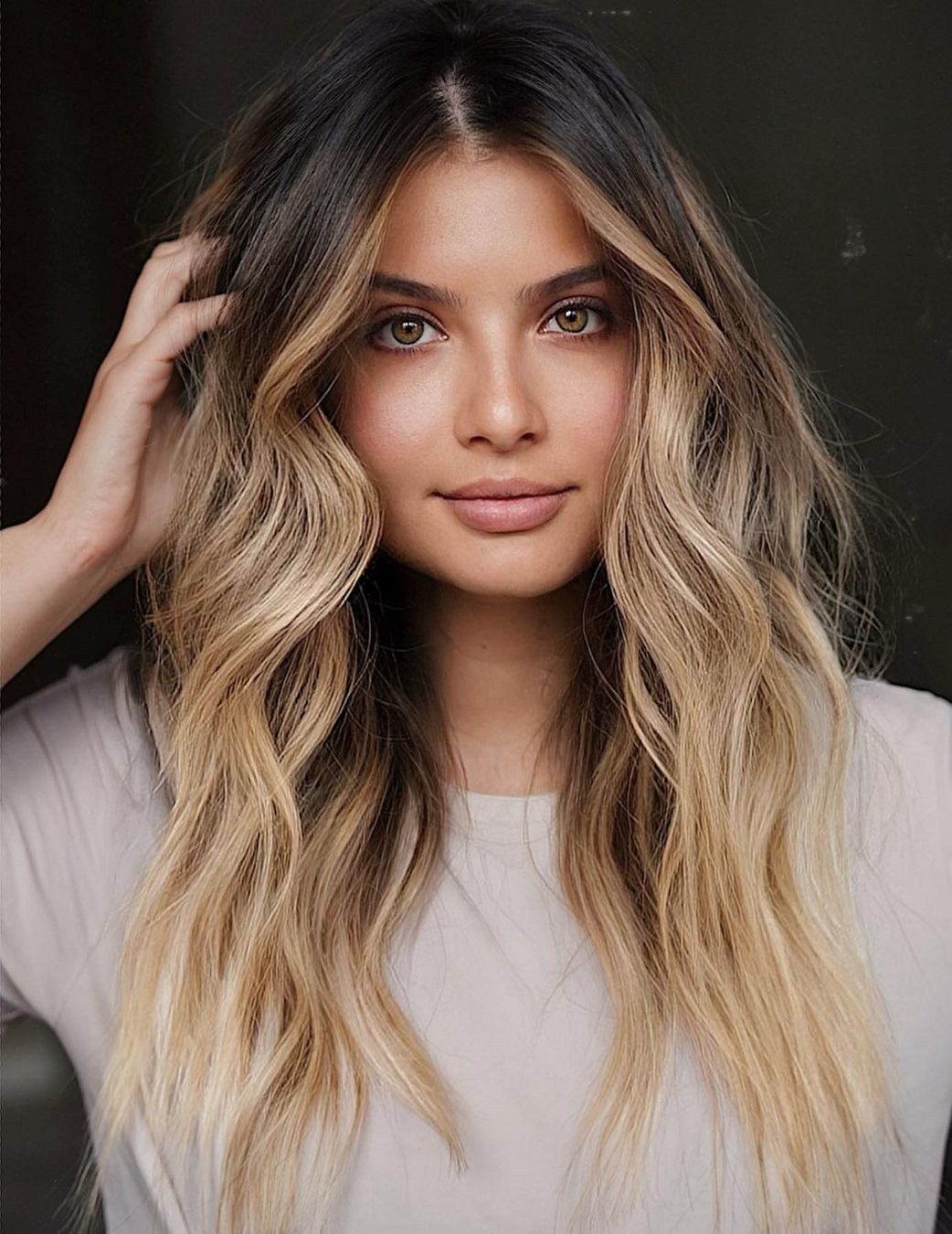
You walk into the salon and say “solid colour,” and you get one thing. The dark blonde gradient balayage is the opposite. The colour starts dark at the root, then lifts gradually through the mid-lengths into a soft blonde at the ends. No banding, no stripe. The gradient effect on this mid-back, wavy hair is subtle enough that it does not scream “highlight,” but it catches light in a way flat colour never does. It is more expensive than a single-process dye, yes. It also does not leave you with a hard line at week four.
Collarbone Dark Blonde with Subtle Dimension
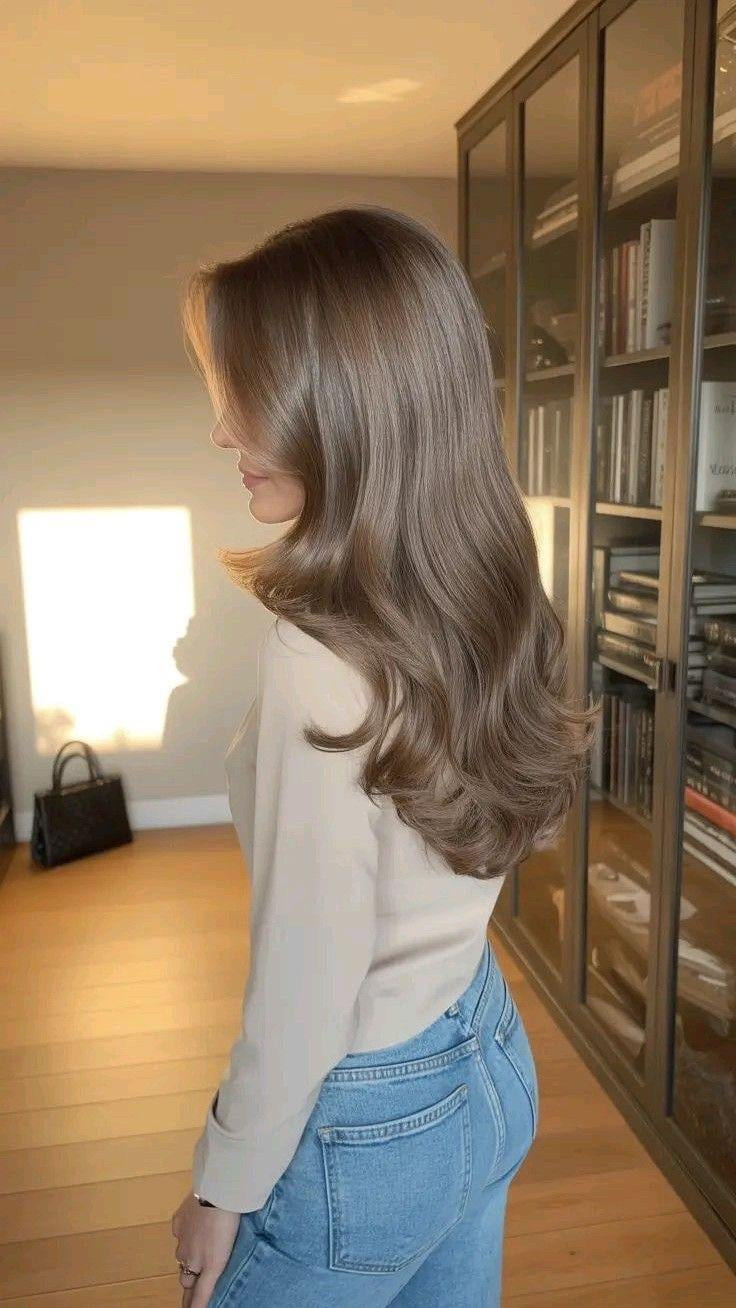
When did dark blonde start looking this expensive? The collarbone cut has side-swept bangs and a wavy blowout, but the colour is the quiet star. The dark blonde subtle highlights are placed sparingly, a few lighter ribbons around the face and through the layers, not a full head of foil. That restraint is what makes it work for the shift into cooler weather. The warmth is still there, but it is soft, not golden. You can go eight weeks between toning sessions. I have pushed it to ten.
Dark Blonde Lob with Curtain Bangs
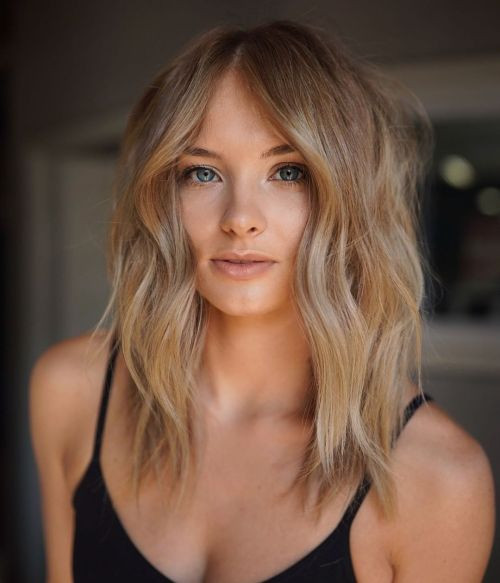
Best grow-out in this roundup. The dark blonde lob hits at the chin, with curtain bangs that soften the line. The subtle lighter blonde highlights are woven through the ends, so when the lob grows past the shoulders, the colour still has shape. Honest downside: fine hair will need a texture spray or a mousse to hold the wave. Without it, the lob falls flat by noon. Trim the bangs every four weeks, the length every eight. It is a commitment, but the payoff is a cut that looks styled even when it is not.
Visual Idea
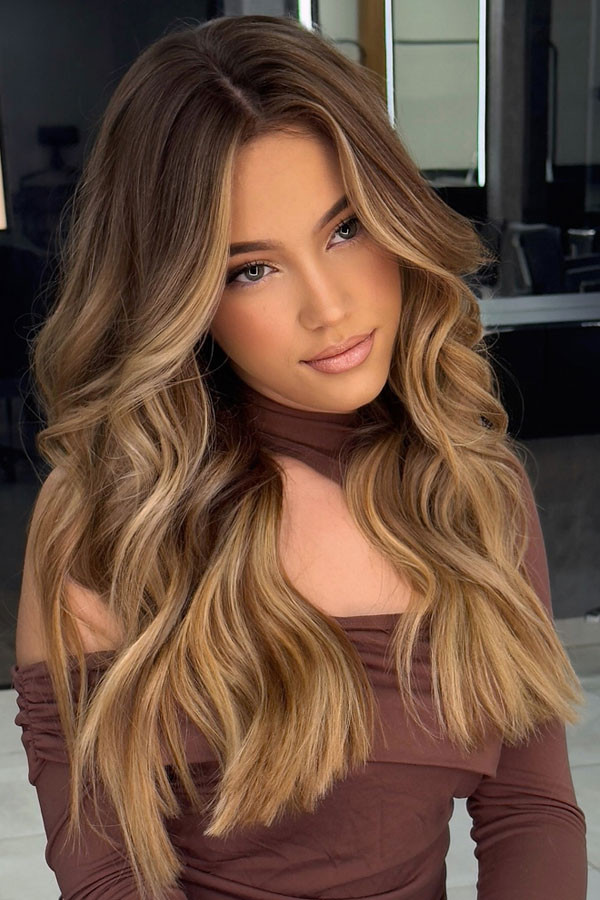
A root shadow is doing the heavy lifting here. The dark blonde base stays grounded near the scalp, then the blonde highlights start a few inches down. That soft transition means you skip the stripe of regrowth most highlights leave at week four. The colour reads dimensional because the root shadow creates depth while the lighter pieces catch the light. Mid-back length on thick, wavy texture gives the waves enough weight to hold their shape without collapsing. Middle part, loose waves, no bangs. The technique is straightforward: the stylist paints the shadow first, then weaves the highlights through the mid-lengths and ends. Book a salon for this one, the root placement is precise.
Collarbone Visual Idea
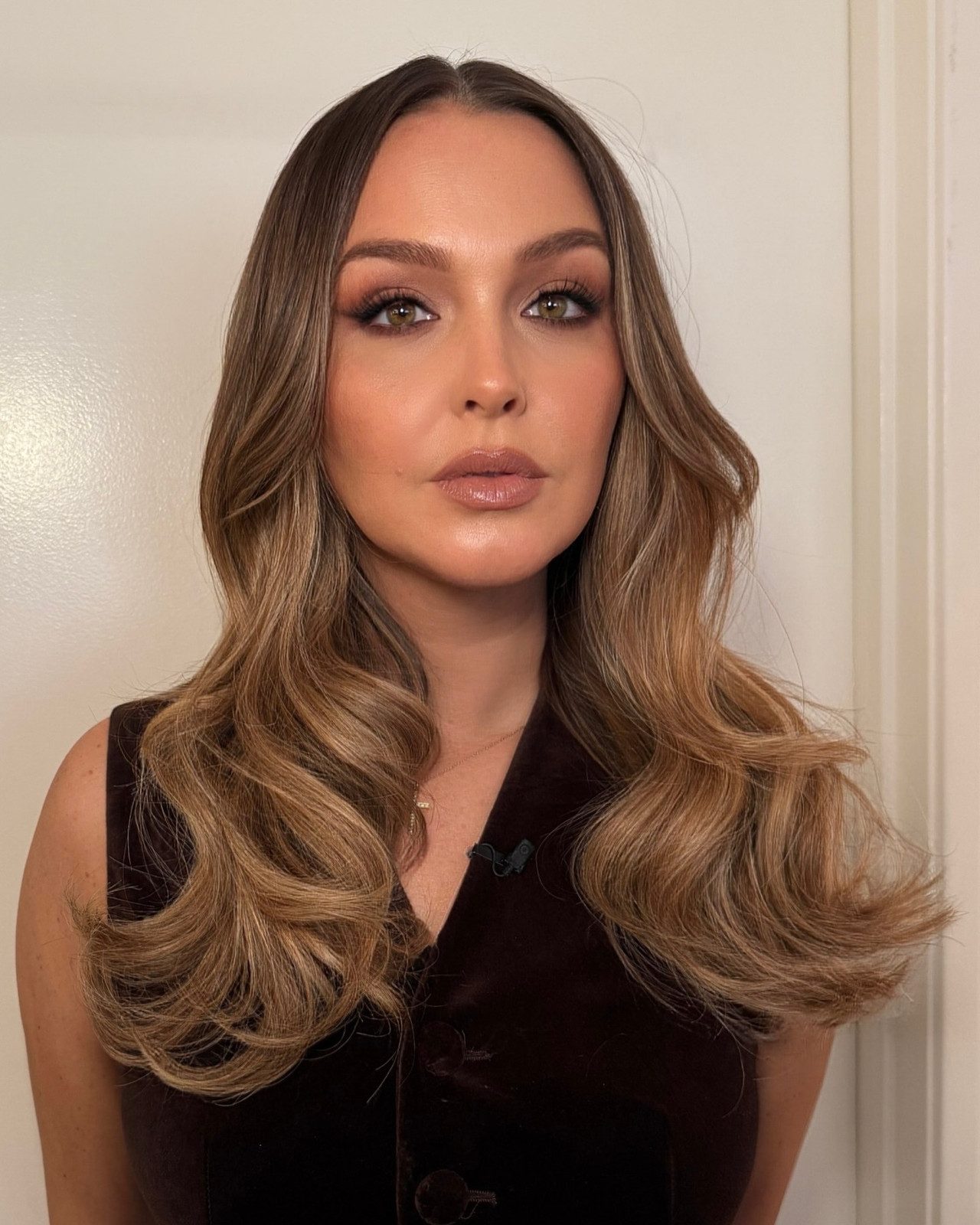
That caramel highlight placement is the reason this works. The dark blonde base keeps it grounded, the caramel adds warmth without tipping into brassy. On olive or tan skin, that warm note reads intentional, not accidental. Collarbone length with layers, side part, wavy texture. Thick hair carries the layers well; fine hair might find the waves fall flat by midday. This is a salon colour, the caramel needs to be painted in the right sections to avoid a streaky result.
Final Thoughts
- Trim the baseline every eight weeks.
- Tone at week six, not week ten.
- Root shadow hides grow-out for six weeks.
- Deep condition once a week.
After writing all of these, I’m booking the collarbone cut with the face-framing. It’s the one I keep staring at, and it works with my fine hair.

