I have watched the gray bob creep into every salon chair next to mine for the past year. It is not just silver hair, it is a specific cut, collarbone or shorter, that makes the color look deliberate. Finally, I think it earned the attention.
These 25 Gray Bob ideas range from blunt and severe to softly layered, with roots that grow out gracefully and colors that do not demand a toner every three weeks. If your hair goes flat by 4 pm like mine, there are options that hold shape. If you are growing out a bleach job, there are root shadows that buy you six weeks. Gray Bob works because it is low-drama, high-impact.
Wavy Layered Gray Bob With Side Sweep
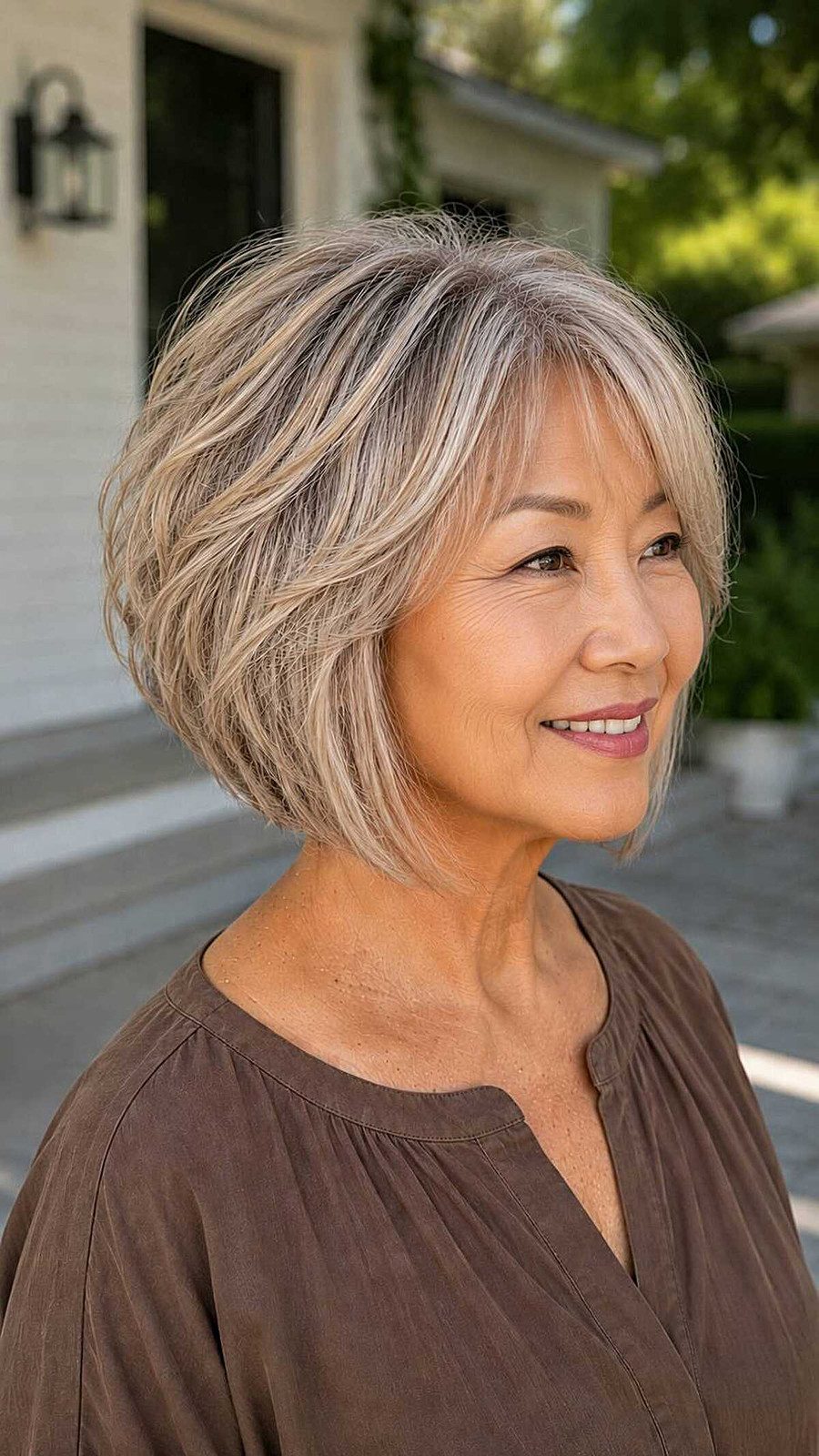
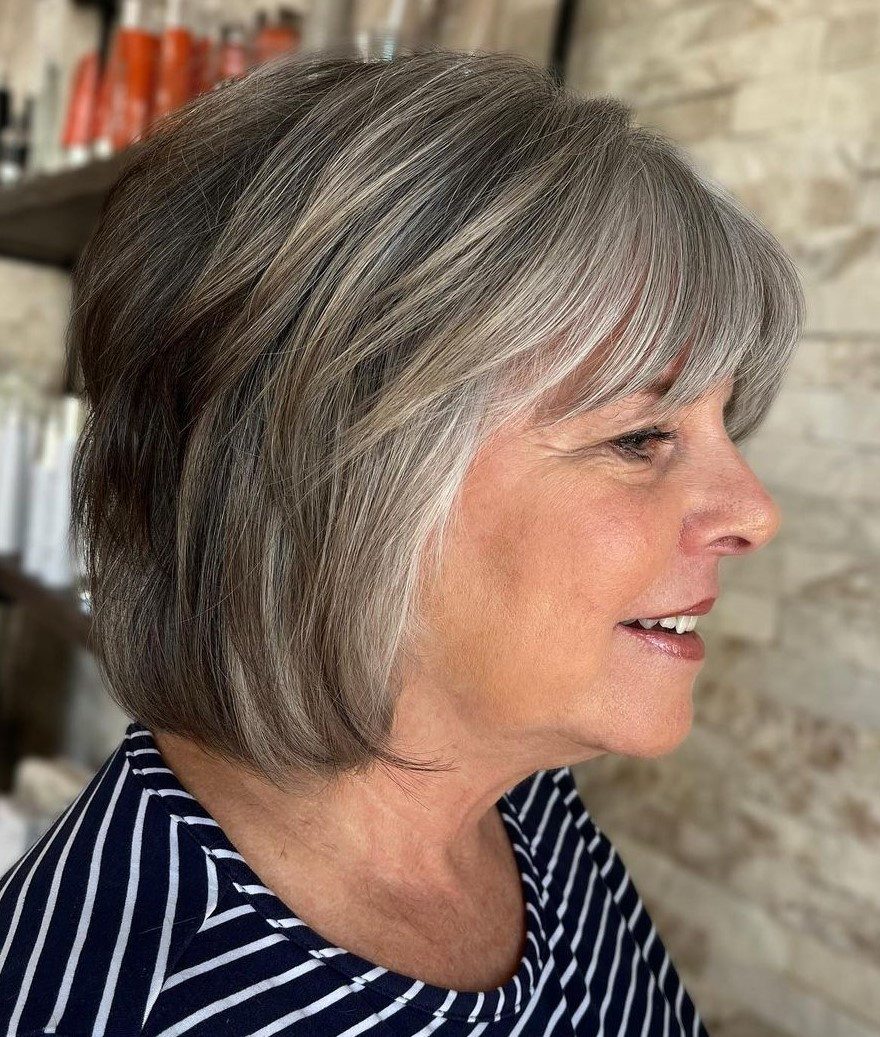
The side-swept bangs hit just above the brow, and the layers stack soft, not choppy. This is a wavy gray bob built for thick hair that actually holds a wave past lunch. Chin length gives it weight so the ends don’t frizz. The side part widens a round face, and if your texture runs fine, skip this — the layers will vanish by noon. Side-swept bangs sweep across, not down, which keeps them from splitting into two separate curtains by 3 pm. Texture and layers work together here, each one propping the next.
Rounded Ash Gray Bob With Stacked Back
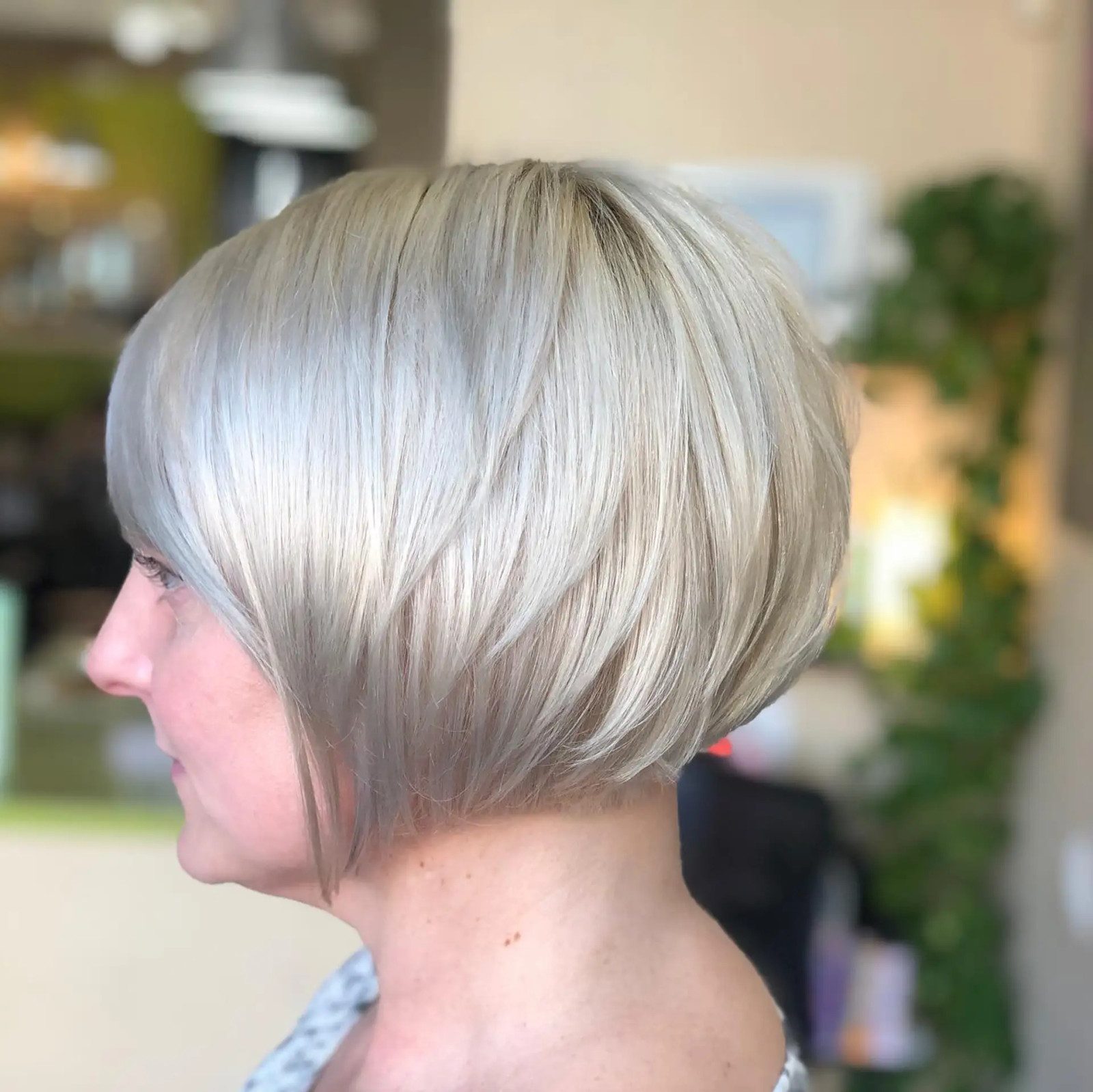
The stacked bob wins over a blunt bob every time if your hair is fine. The rounded shape adds density where it counts, at the crown, without looking helmet-like. Ash gray reads cool against warm skin, and the middle part keeps the line symmetrical. Straight, fine texture is what this cut was designed for — wavy hair would fight the stacked back. No bangs means the shape speaks for itself.
Voluminous Gray Bob With Silver Highlights
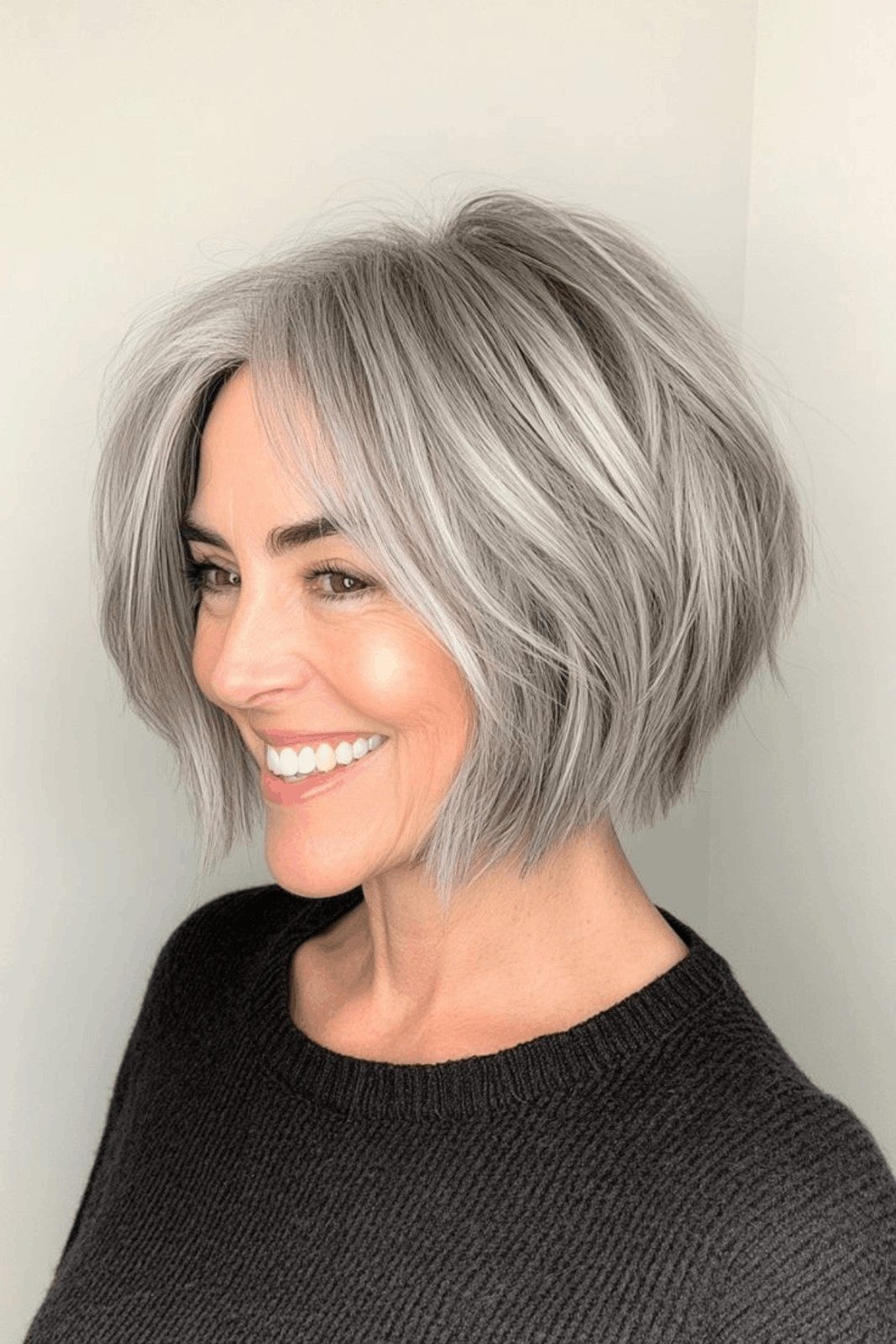
I expected a flat gray. Got bounce instead. The voluminous gray bob works because the silver highlights sit on the top layers only, which lifts the whole shape. Side-swept bangs blend into the layers, no hard line. Wavy, thick texture is ideal — the cut removes weight without deflating the silhouette. Ask your stylist for a rounded interior layer and a soft V at the nape. That is what keeps the volume from collapsing into a triangle.
Sleek Angled Gray Bob With Sharp Line
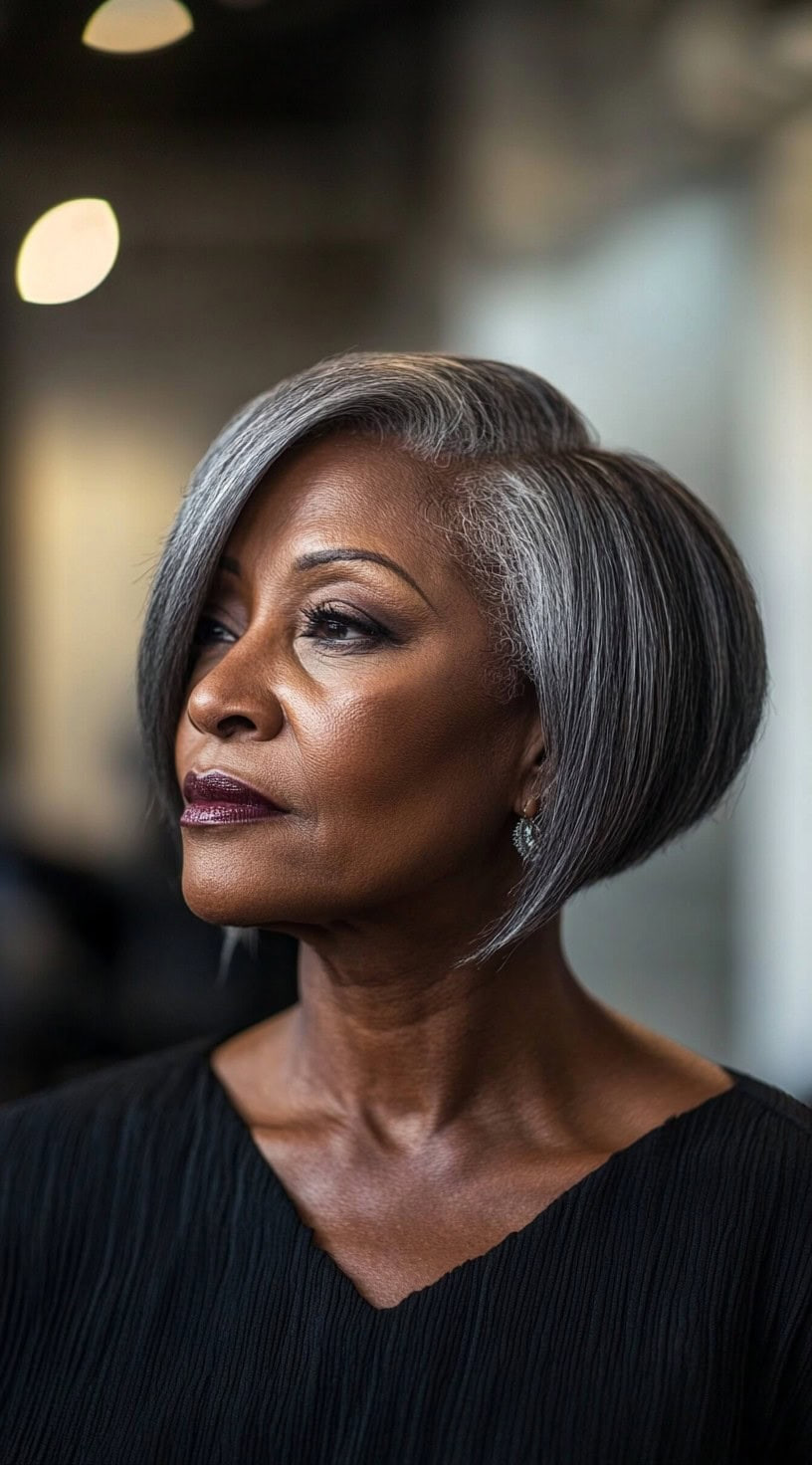
Does your bob still look good on day three? This one does not. The angled gray bob with a sharp line demands a flat iron every morning. The angle drops longer in front, chin length, which lengthens a round face. Straight, thick texture holds the line; fine hair would show every bend. Side-swept bangs are cut at the same slant. The honest downside: one missed trim and the angle goes blunt and blocky. Six weeks, max.
Naturally Curly Gray Bob With Side Part
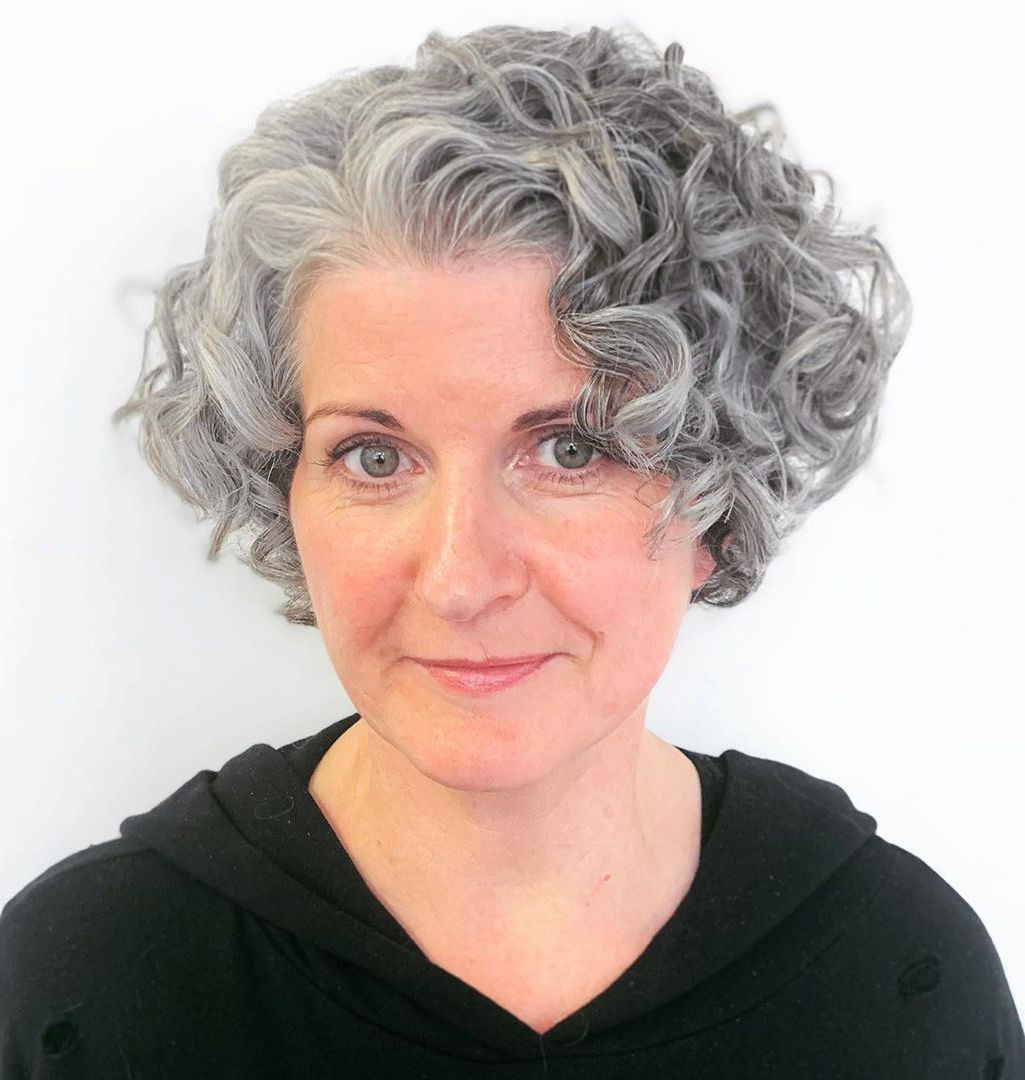
I will admit I was skeptical about gray on curls. The curly gray bob changed my mind. Chin length lets the curls spring without going triangle, and the side part breaks up the roundness that curls can create. Thick, curly texture needs no heat — air dry with a gel and go. Natural gray reads silver in this cut because the curls catch light at different angles. Side-swept bangs are cut dry, which is the only way to get them right on curly hair. Trim every 10 weeks, no sooner, or you lose the volume that makes this cut work.
Collarbone Gray Bob With Darker Roots
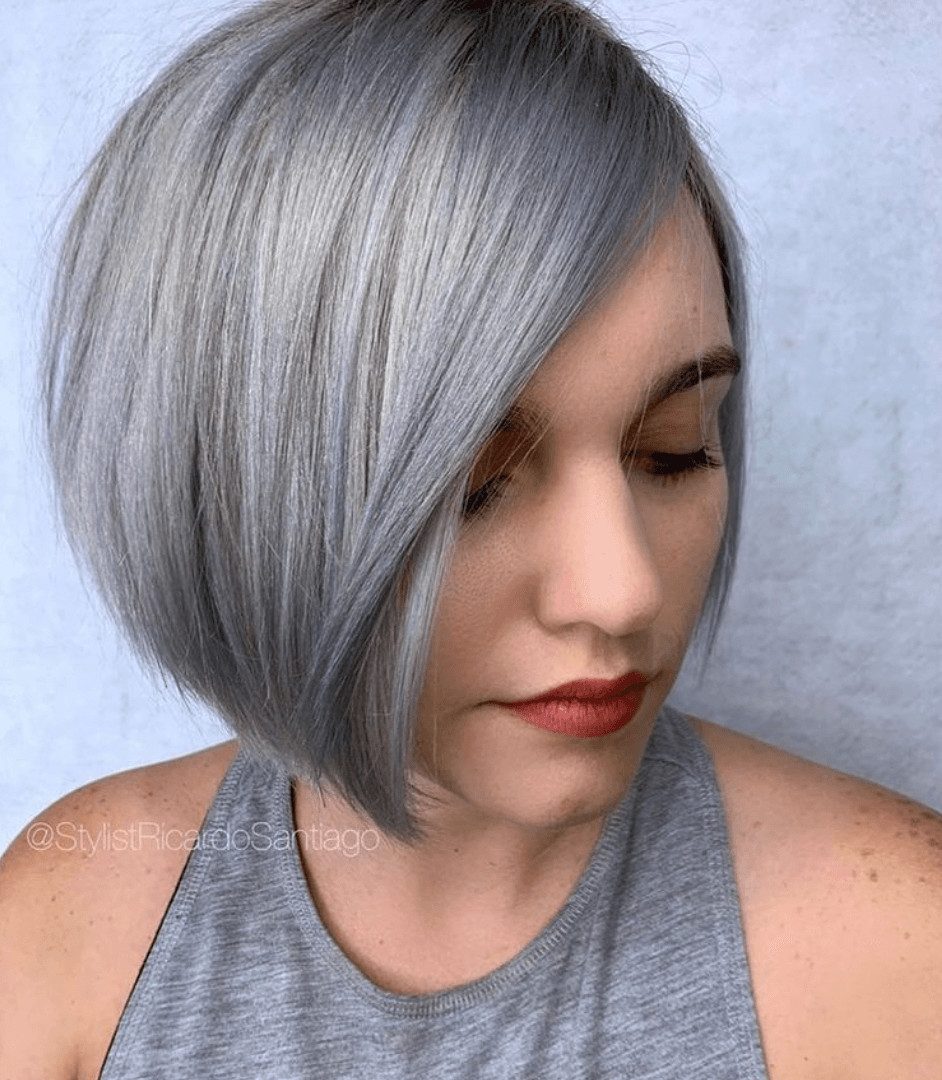
There is a moment in late September when the light shifts and suddenly your summer blonde looks like a mistake. That is when this gray bob collarbone length lands. The cut is a collarbone bob with side-swept bangs and soft layers through the back, the kind that swings when you turn your head. The darker roots are not a grow-out, they are the point: a deliberate shadow at the base that keeps the silver from washing you out. Texture is wavy and medium density, so it holds a bend without a curling iron. This is for the shoulder-season transition, when you want something that works under a coat and still looks intentional at dinner.
Side part, blow-dry with a round brush or let it air-dry with a scrunch. Fifteen minutes either way. Trim every eight to ten weeks, and book the consultation first because the root shadow has to land in the right place or it reads as neglect.
Sharp Blunt Gray Bob With Middle Part

This is a salon cut, no negotiation. The blunt gray bob hits at chin length with a middle part and zero layers, which means every millimeter of the baseline is visible. Straight, thick texture is the only texture that holds the sharp blunt line without caving by noon. No bangs, no softening, just a graphic block of silver that reads as deliberate. A bathroom-mirror trim will ruin it in one snip. Book the appointment, say “blunt bob, middle part, no layers, chin length,” and do not touch it between visits.
Layered Gray Bob Collarbone Length Blowout
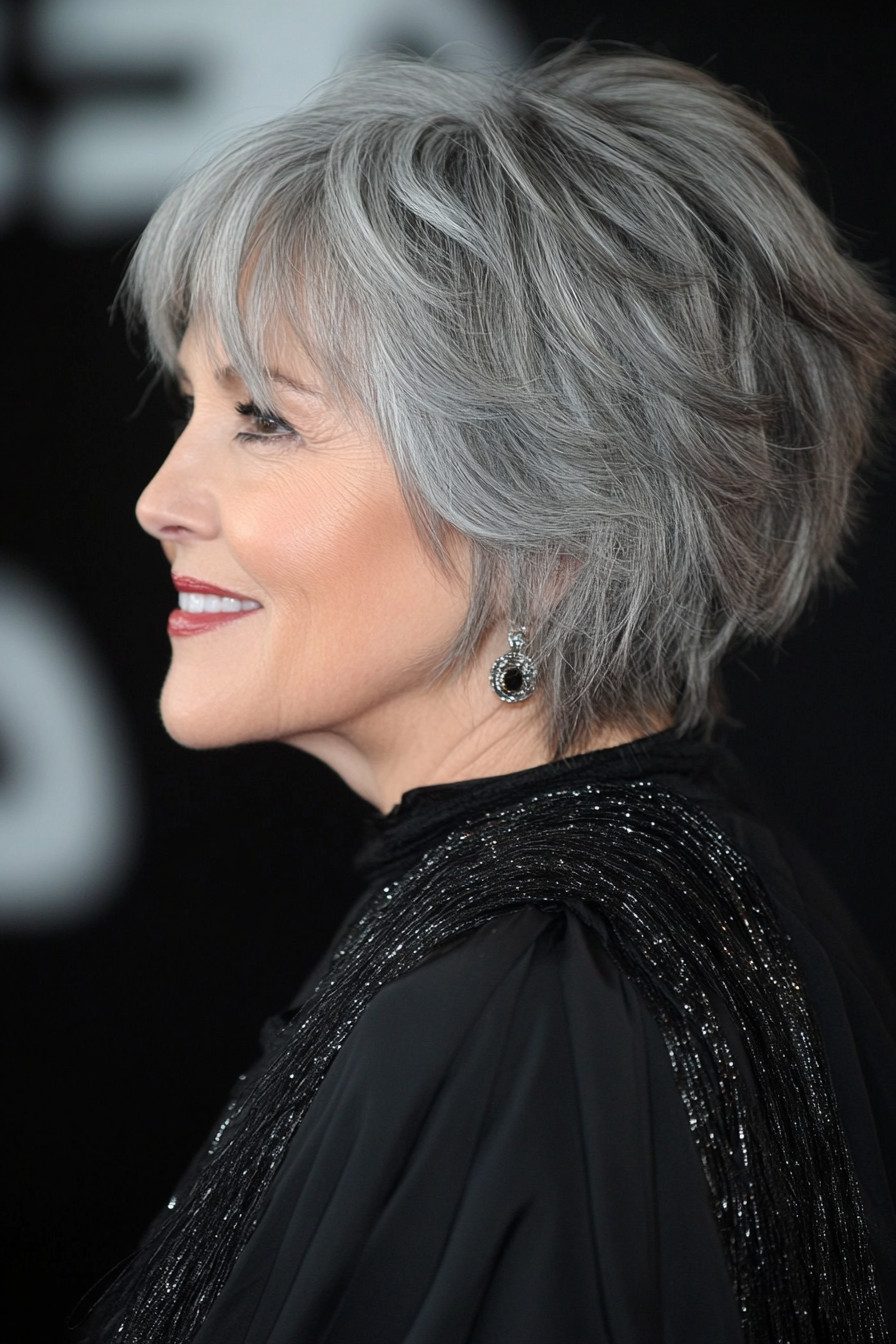
Have you ever watched someone blow out a layered bob and wondered why yours never looks like that? The mistake is thinking the blowout is optional. This layered gray bob at collarbone length is a middle-part, no-bangs situation with internal layers that only reveal themselves when the hair is lifted. Straight, thick texture, side view shows the movement. The layers add volume at the crown and keep the weight off the ends, but they also mean a flat blow-dry reads as flat. A round brush, a heat protectant and twenty minutes of tension give you the shape. Skip the brush and you get a lump. Trim every eight weeks to keep the layer integrity, because one skipped appointment and the shortest layer starts acting like a separate haircut.
Short Textured Gray Bob With Wispy Bangs
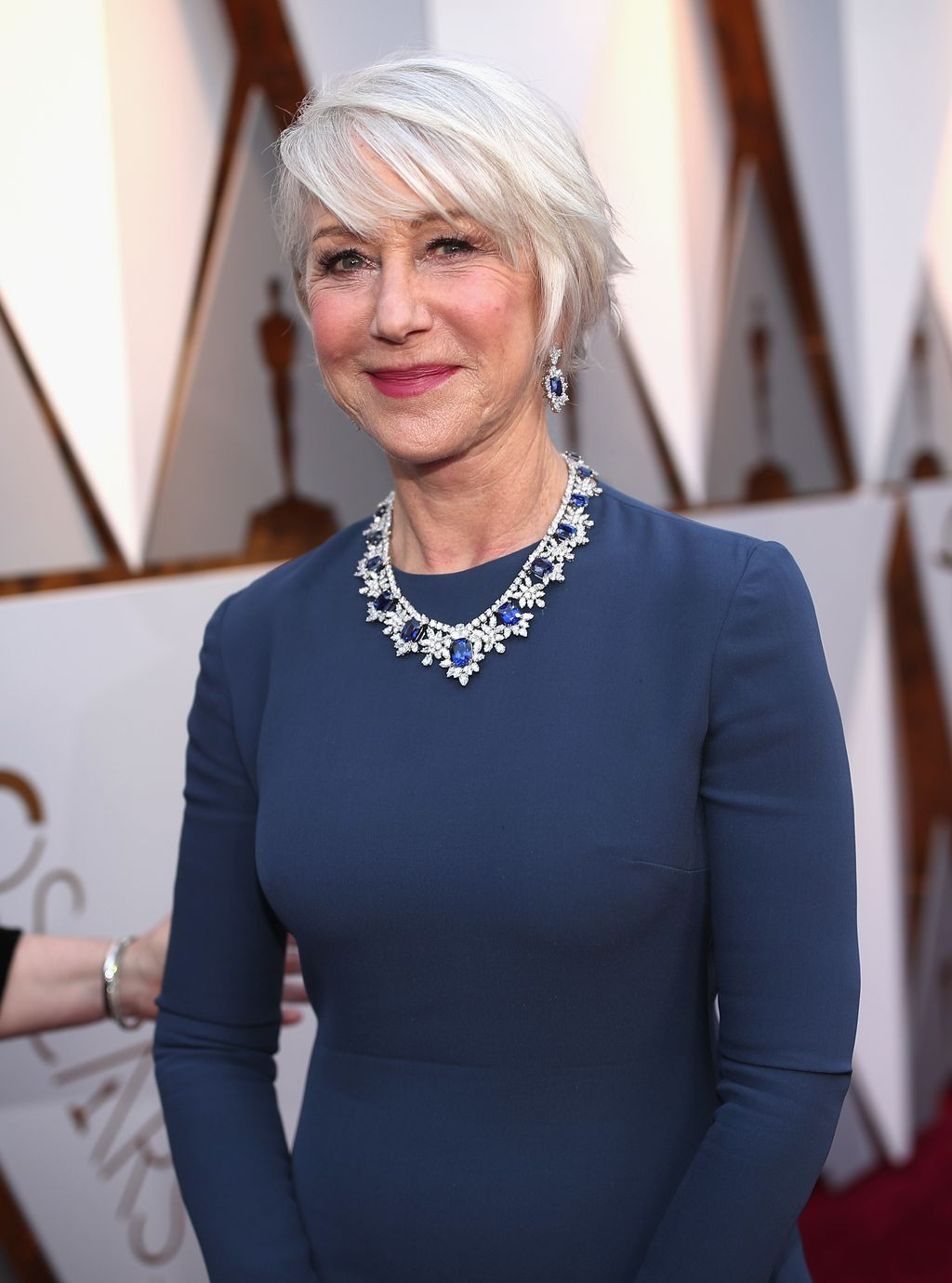
Monday morning, you have twelve minutes. This short gray bob with textured layers and side-swept bangs arrives at ear length, gray, wavy and fine. The texture is the point: a texturizing spray or a dab of paste breaks up the surface so the choppiness reads as intentional, not as a bad haircut. The wispy bangs sweep across the forehead and hide the fact that you did not wash them yesterday. Honest downside: fine hair means the texture drops by late afternoon, and you will reapply the spray or accept the flat. Trim every six to eight weeks to keep the ends sharp, because a blunt edge ruins the whole airy thing.
Classic Blunt Gray Bob With Blunt Bangs
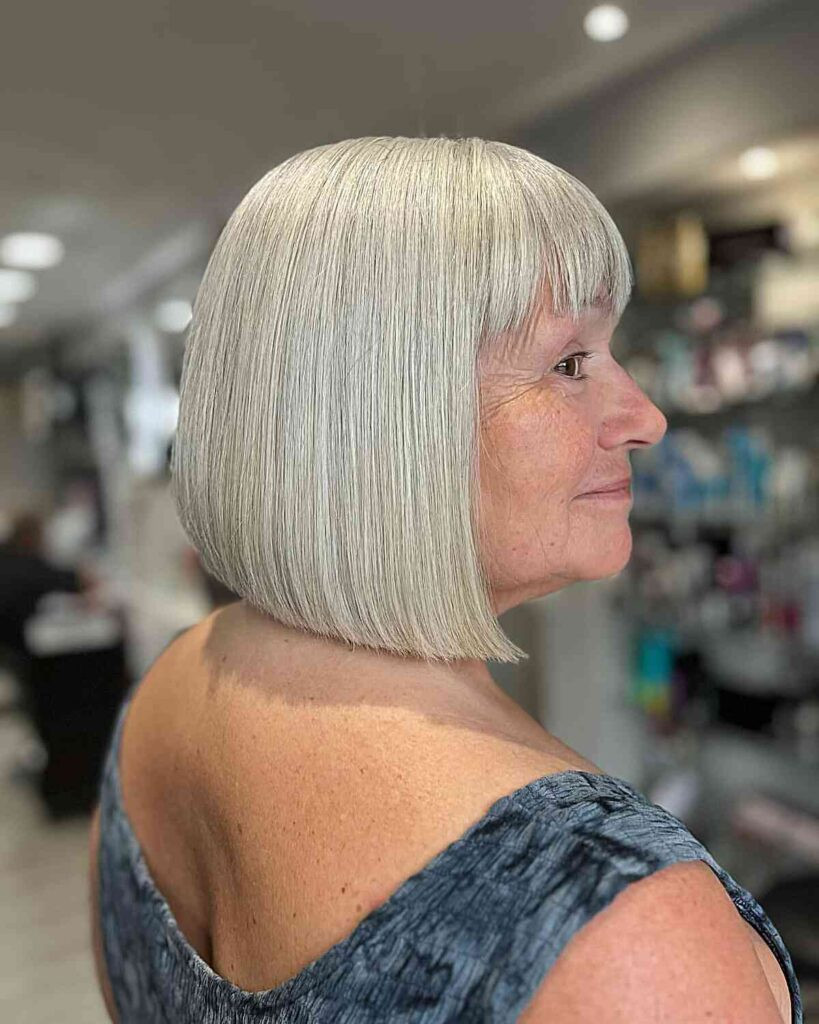
A blunt bangs bob with a blunt cut at chin length and a middle part is a geometry problem. The light gray color and straight, fine texture mean the line is everything. This suits a longer face shape because the horizontal bang and the blunt baseline shorten the visual distance from hairline to chin. It fails on very round or very wide faces because the blocky shape adds width. Fine hair works here because the blunt edge creates the illusion of density; thick hair can look heavy. Upkeep is the catch: the bangs need a trim every three to four weeks, and the baseline every six. Skip the bang trim once and you are pushing hair out of your eyes for a month.
Sleek Gray Bob With Dark Undertones
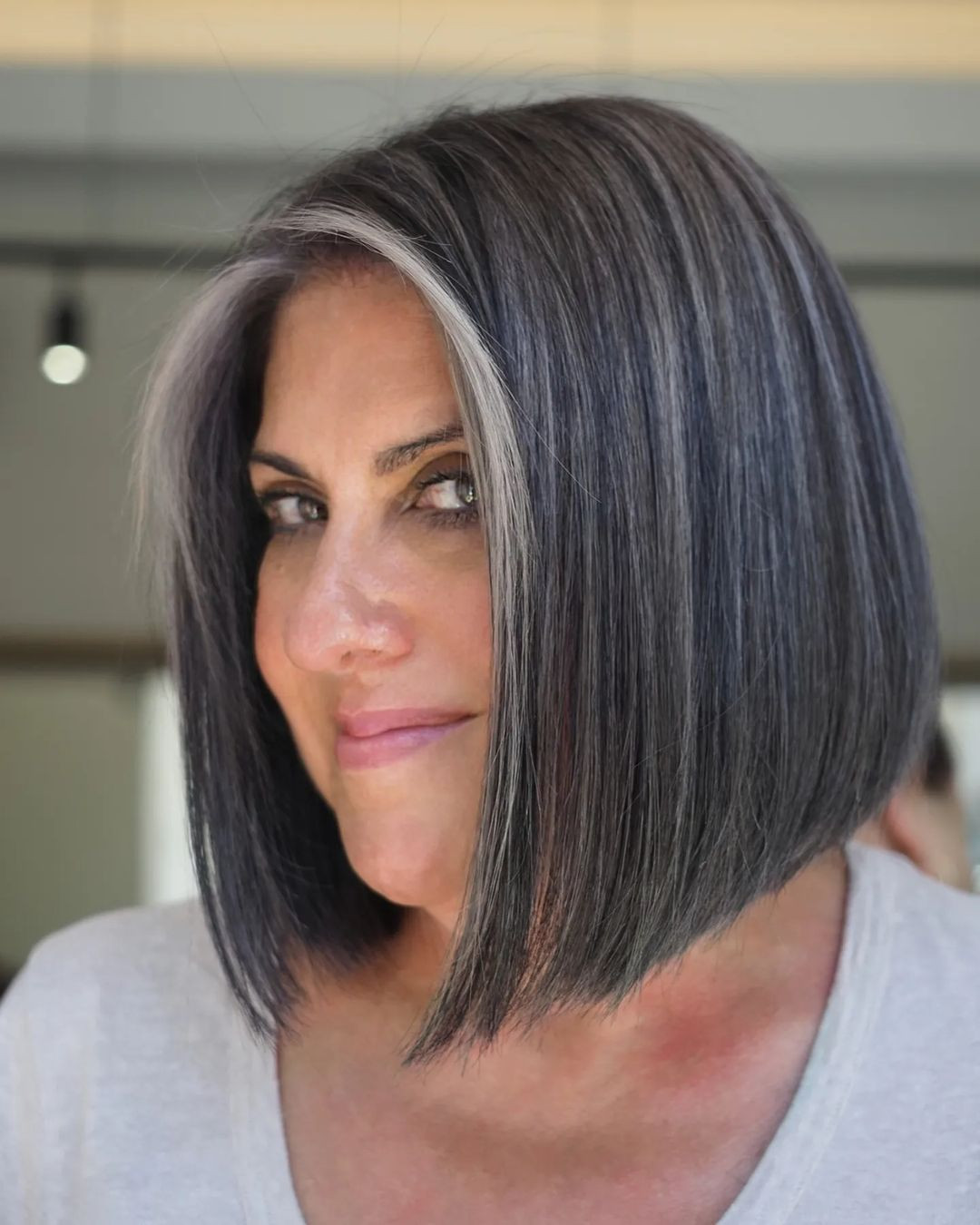
The sleek gray bob with dark undertones is the smarter cousin of solid gray. Where flat silver reads one-note, this one has depth, a shadow that shifts when the light hits. Chin-length, no bangs, a middle part that lands clean. The cut is one blunt line, no layers, which means the dark undertones sit visible instead of getting lost in movement. Straight, thick texture holds the shape without fighting. This is the bob that says you thought about it.
Sharp Bob With Thick Blunt Bangs
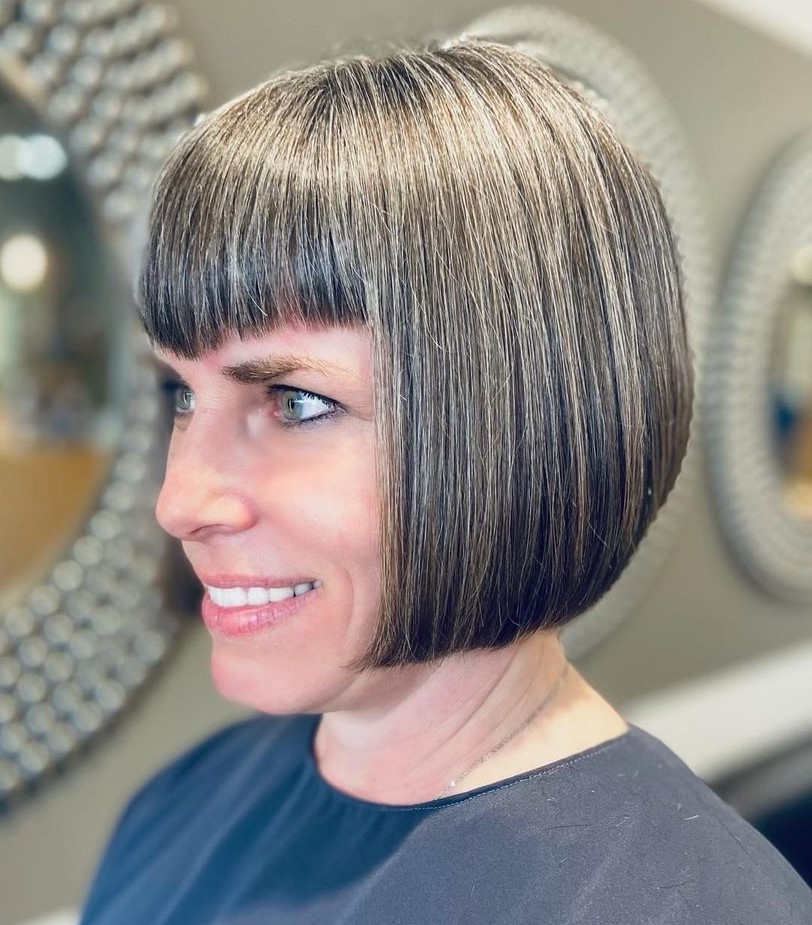
My gut says this is the most precise cut in the roundup. The bob with blunt bangs lands at chin height, a straight line from ear to ear, and the fringe hits just above the brow. No graduation, no softening, just two sharp horizontals. The sharp bob demands a stylist who understands geometry, because one uneven snip and the whole thing reads crooked. Thick, straight texture carries the line best; fine hair would show every imperfection. Middle part, no layers, the weight sits forward.
The bangs are the whole point. They fall thick, not wispy, which means they need their own trim every three to four weeks. The baseline holds longer, about six weeks, but the fringe will start brushing your lashes by week four. You book this cut knowing you are also booking the maintenance.
Ash Gray Bob With Blunt Fringe
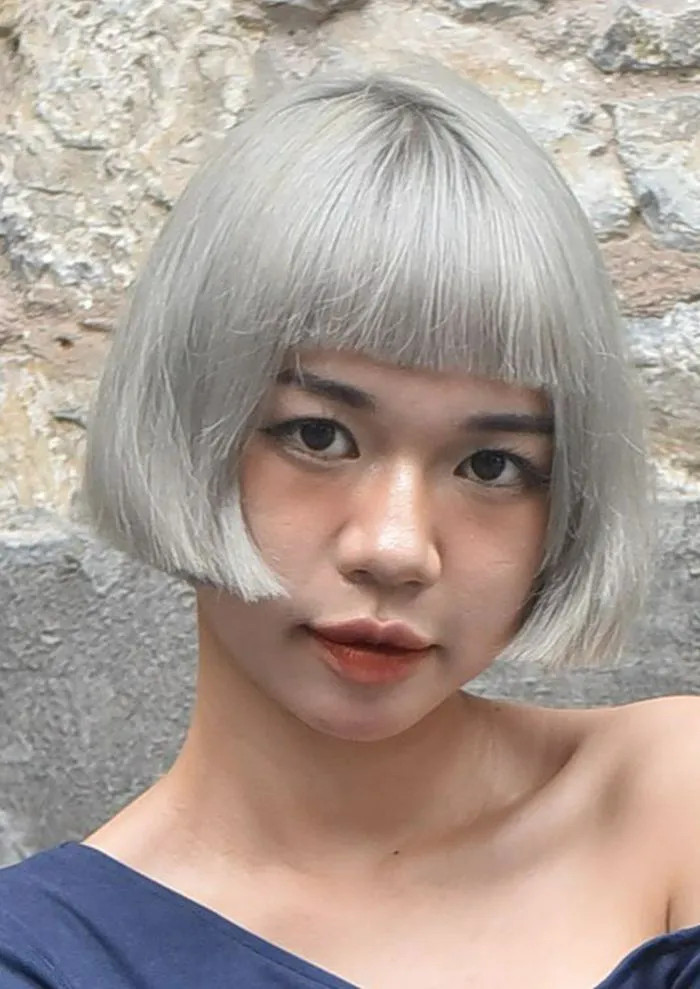
Can fine, straight hair actually hold a blunt line past noon? With the ash gray bob and blunt fringe, yes, but not without help. Chin-length, middle part, the cut has no layers, which is the only way fine hair keeps density at the ends. The fringe is a solid block, not feathered, which means it needs a flat iron every morning to stay crisp. The downside: fine texture shows every oil slick by late afternoon. A dry shampoo at your desk is non-negotiable. Trims every six weeks for the bob, every three for the fringe, or the blunt edge goes fuzzy.
Wavy Gray Bob With Loose Curls
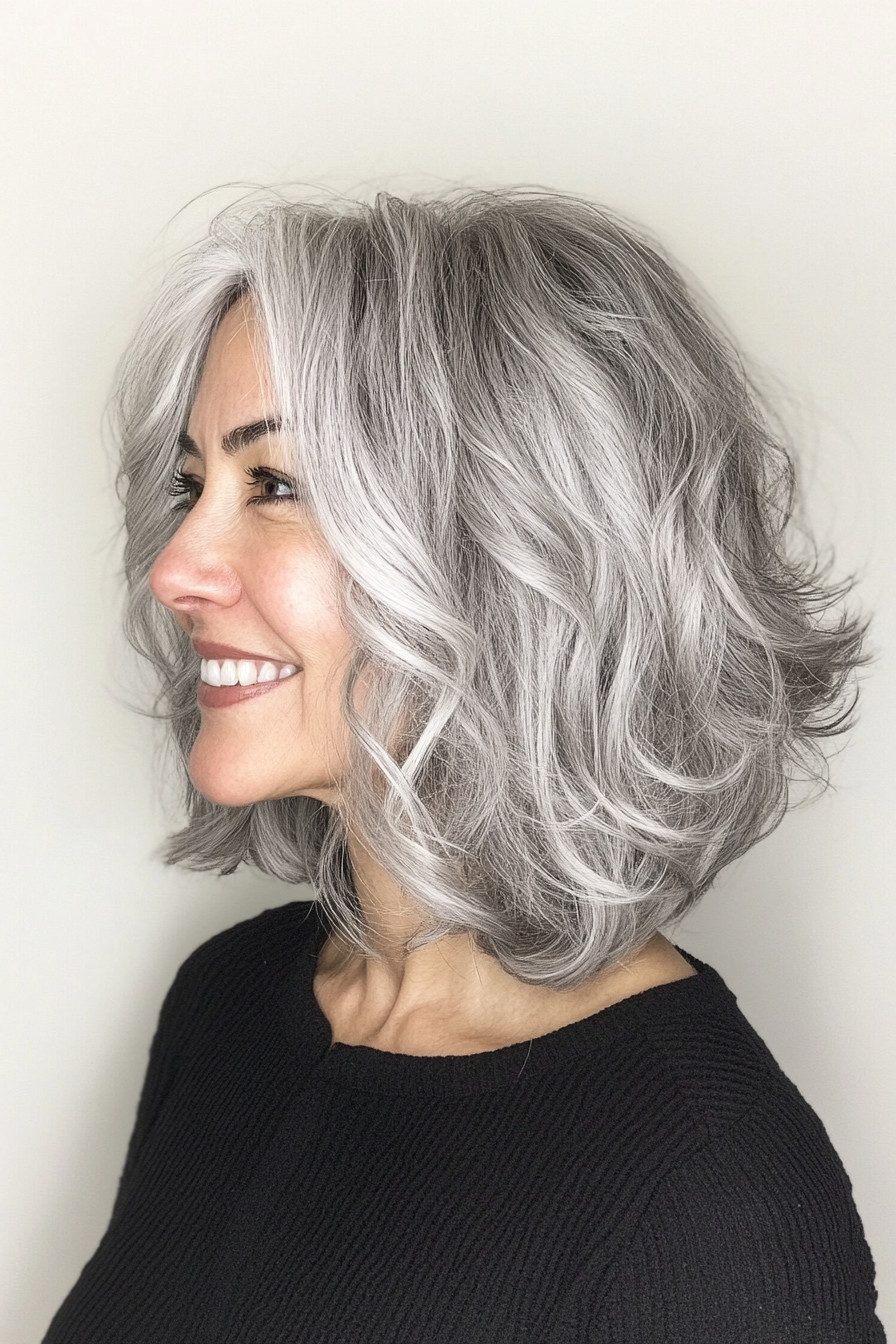
I will admit I was skeptical of the wavy gray bob on natural texture. Most bob cuts assume you will blow it straight, and if you do not, the shape collapses into a triangle. This one does not. Collarbone length, no bangs, a middle part, and the layers are cut into the wave pattern, not against it. The loose curls fall open, not tight, which means the gray reads as soft rather than stark. Medium density, wavy texture is the sweet spot; very fine hair would lose the curl by lunch.
The upkeep is almost lazy. Air dry with a curl cream, scrunch twice, walk away. Ten minutes, no heat. The trim schedule is relaxed too, every eight to ten weeks, because the wave hides uneven ends better than straight hair does. This is the cut for anyone who wants gray without the full commitment of a flat iron every morning. It works with what you have.
Collarbone Gray Bob With Blue Undertones
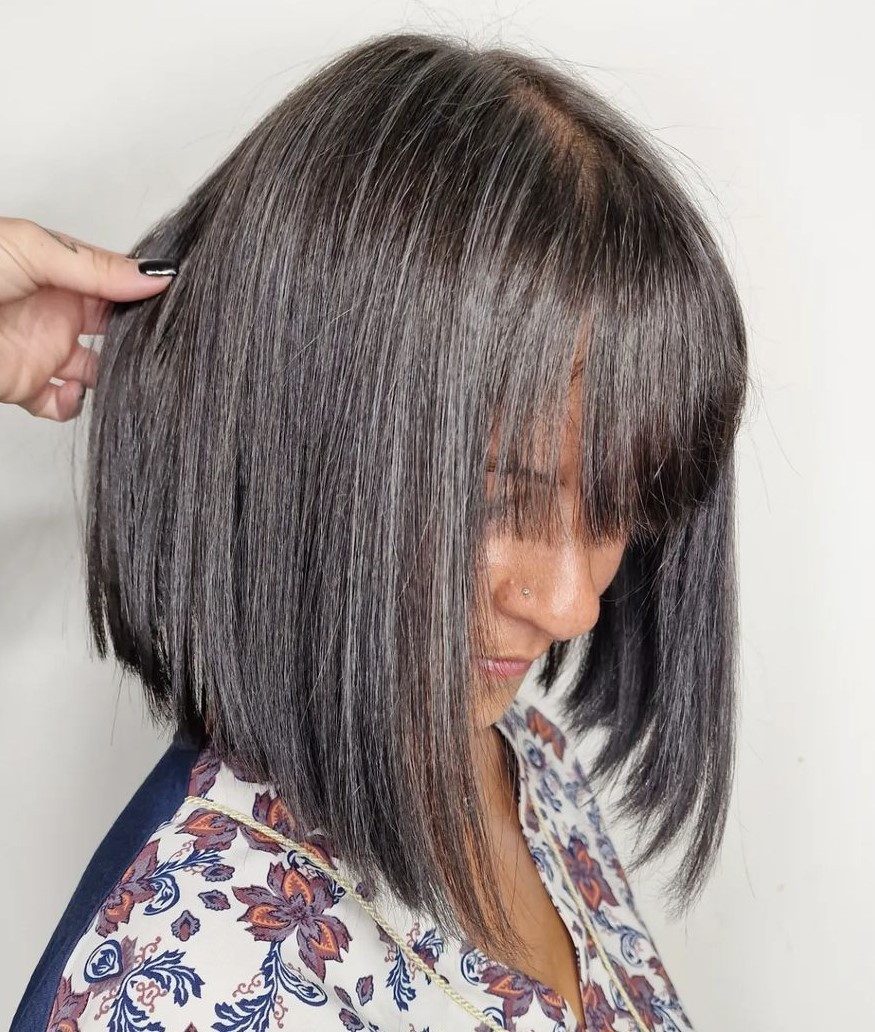
The gray bob blue undertones catch the light in a way solid gray cannot. It is not a pastel or a vivid streak, it is a wash, a cool shift that appears in afternoon sun and reads neutral in flat office light. Collarbone length, side part, blunt bangs that hit the brow. The cut has soft layers through the ends, enough to give the wavy texture movement without losing the bob shape. Medium density, the blue sits visible against the gray base without overpowering it.
This lands best in cooler months, when the blue reads as intentional rather than accidental. It also works for evening events where a solid gray bob would feel too casual. The colour needs a refresh every six to eight weeks, because the blue fades faster than the gray base. A cool-toned shampoo helps stretch the time between salon visits. Trim every eight weeks to keep the collarbone length from drifting into grown-out territory.
Collarbone Gray Bob With Soft Layers
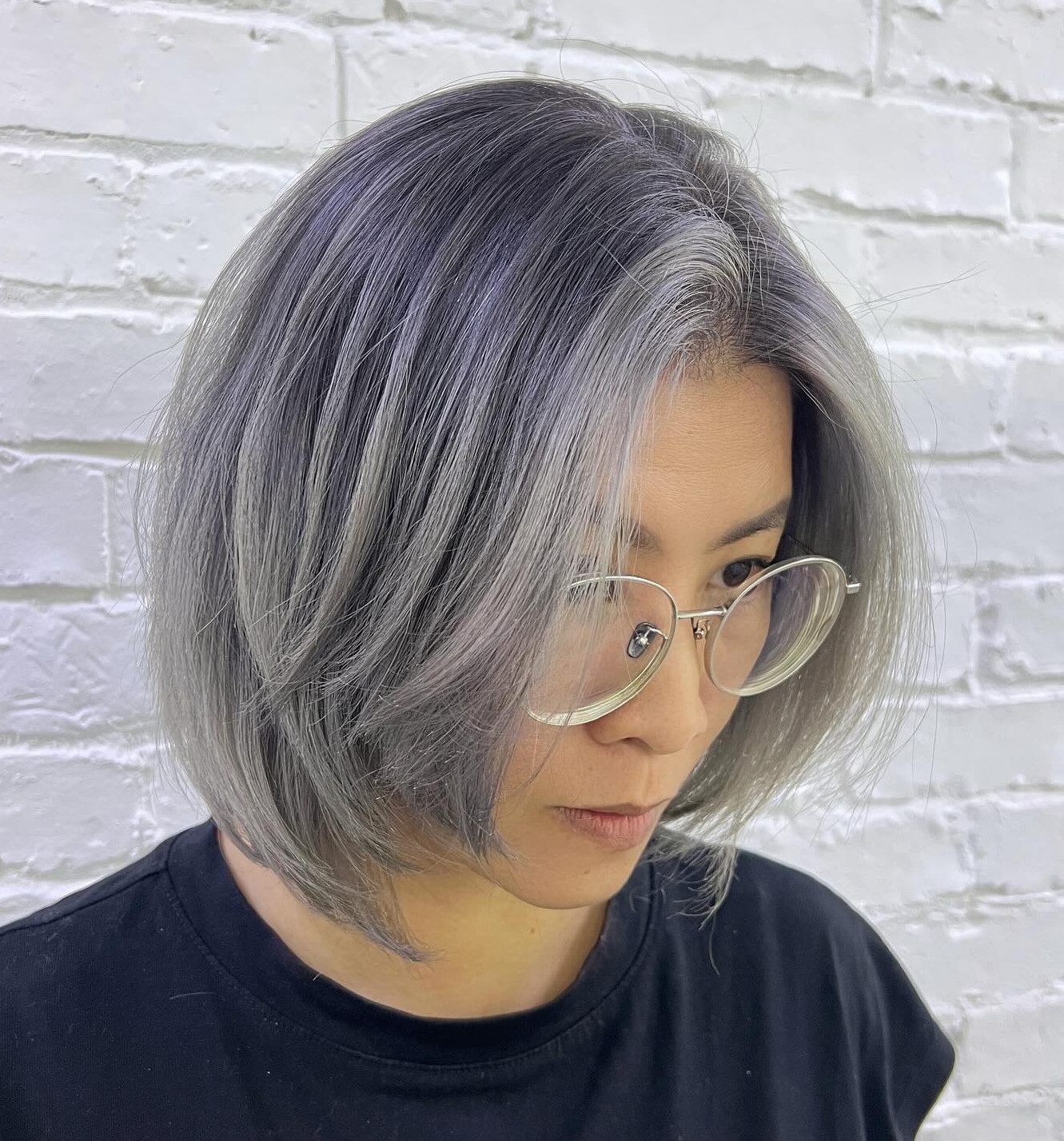
The collarbone gray bob is the best grow-out in this roundup. Soft layers make that claim possible. A blunt line shows every split end by week five, but soft layers let the shape drift into something that still reads intentional. The length sits right at the collarbone, which means it swings without bouncing. No bangs, just a side part that falls forward. The texture is wavy, medium density, and the lighter highlights keep the gray from turning muddy. I would not try this at home. Soft, blended layers require a stylist who understands how to remove weight without creating holes. A bathroom-mirror job leaves you with choppy ends and a shape that collapses. Book the cut, skip the scissors.
Ash Blonde Bob With Dark Roots and Bangs
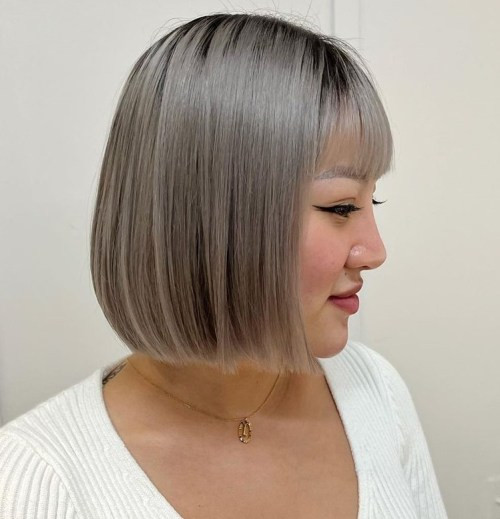
When did ash blonde start looking this expensive? The ash blonde bob with dark roots is a study in contrast, but the mistake people make is treating the roots as an afterthought. The blunt bangs hit at the brow, the chin-length bob is straight and fine, and the middle part keeps everything symmetrical. The honest downside: dark roots with ash blonde go brassy fast. A purple shampoo is not optional, it is the difference between cool and dirty. The bangs require a trim every three to four weeks, and the bob needs a refresh every six to eight. Skip a toning appointment and the whole thing reads yellow.
Sleek Gray Bob With Clean Line
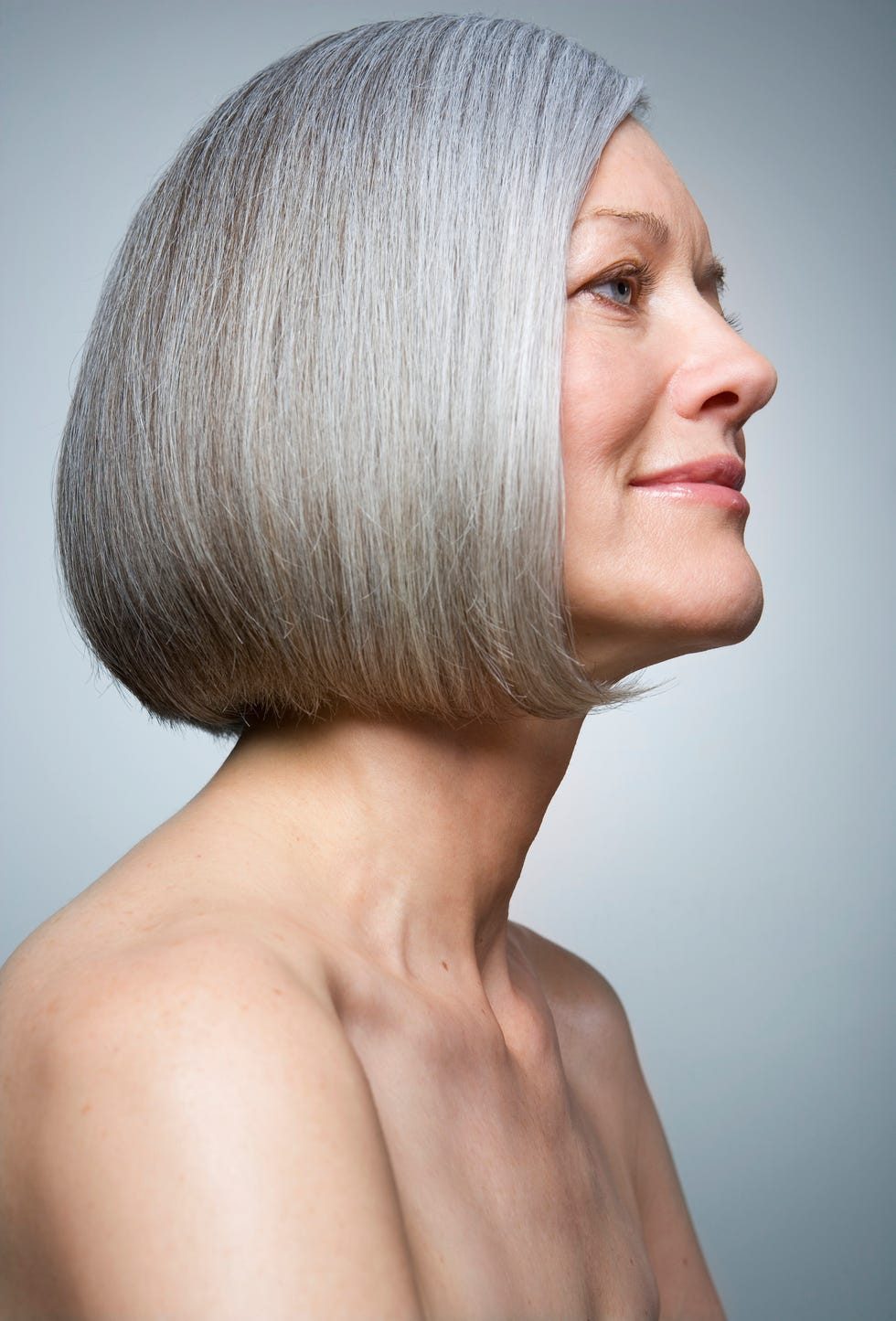
Monday morning, the sleek gray bob looks sharp. Thursday afternoon, it still does. That clean line is the reason. The cut is a chin-length bob with no bangs, a middle part, and a straight, air-dried texture that refuses to bend. The upkeep is three items: a trim every six to eight weeks to keep the line from softening, a heat protectant before any flat iron pass, and dry shampoo at the roots on day two. The wear across a real week is better than most bobs because there is no layer to separate and no wave to fall. The line holds. The gray stays cool. It is a low-drama cut that asks for a regular appointment and nothing else.
Visual Idea
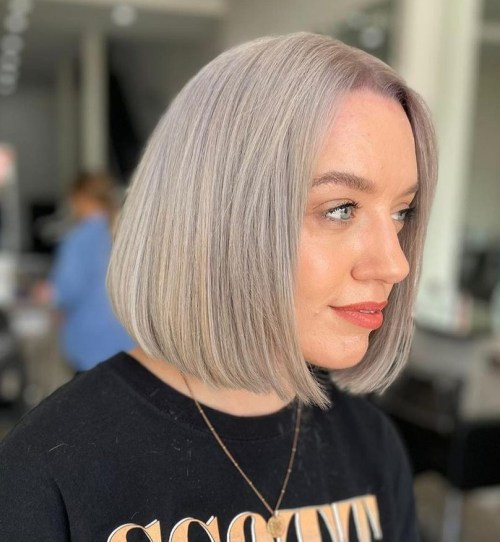
The front-side view tells the whole story. The chin-length bob is straight, fine, and parted on the side with no bangs. The sharp line is the technique: the stylist cuts a blunt baseline with no interior layering, which keeps the ends dense. Fine hair benefits from this because a blunt line creates the illusion of thickness. The sleek finish requires a flat iron and a heat protectant, but the texture is straight enough that a good blow-dry with a round brush can get you there. The gray reads silver in this light, no yellow, no brass. It is a simple cut that demands precision in the execution.
Chin Visual Idea
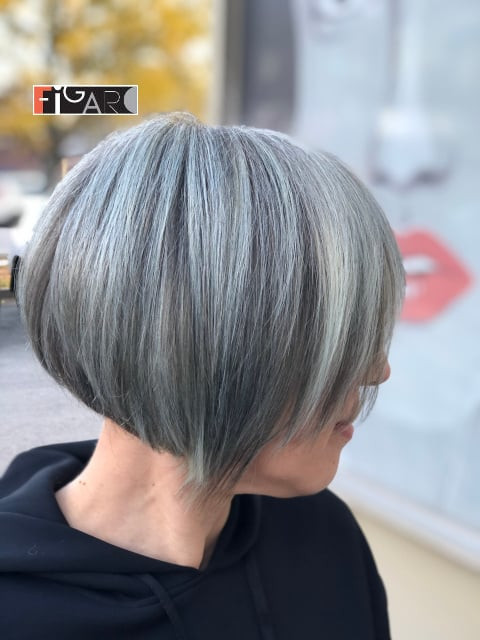
The stacked back wins over the one-length bob for anyone who wants movement without losing the short shape. A chin-length bob with a stacked back is shorter at the nape and longer toward the front, which creates lift at the crown and keeps the front pieces heavy. The middle part and straight, thick texture play well with the stacking because the weight drops forward instead of sitting flat. A one-length bob at the chin can feel severe on a round face, but the stacked back softens that line. The gray with highlights adds dimension that a solid color would not. It is a bob that moves when you turn your head. The one-length version just sits there.
Gray With Subtle Blue Streaks Visual Idea
I did not expect to like this as much as I do. The blue is not a streak, it is a whisper — a few fine slices woven through the interior, visible only when the light catches the side. The cut is a chin-length bob, no bangs, middle part, smoothed straight over fine hair. The technique matters here: the blue is placed underneath the gray, not on top, so it reads as depth rather than decoration. From the front you see a clean silver bob. Then you turn your head and there it is. A cool, quiet surprise.
That is the whole point. The blue does not compete with the gray, it sits inside it. For anyone who wants a hint of colour without committing to a full tone, this is the move. The gray stays the star. The blue is just the secret.
Gray Visual Idea
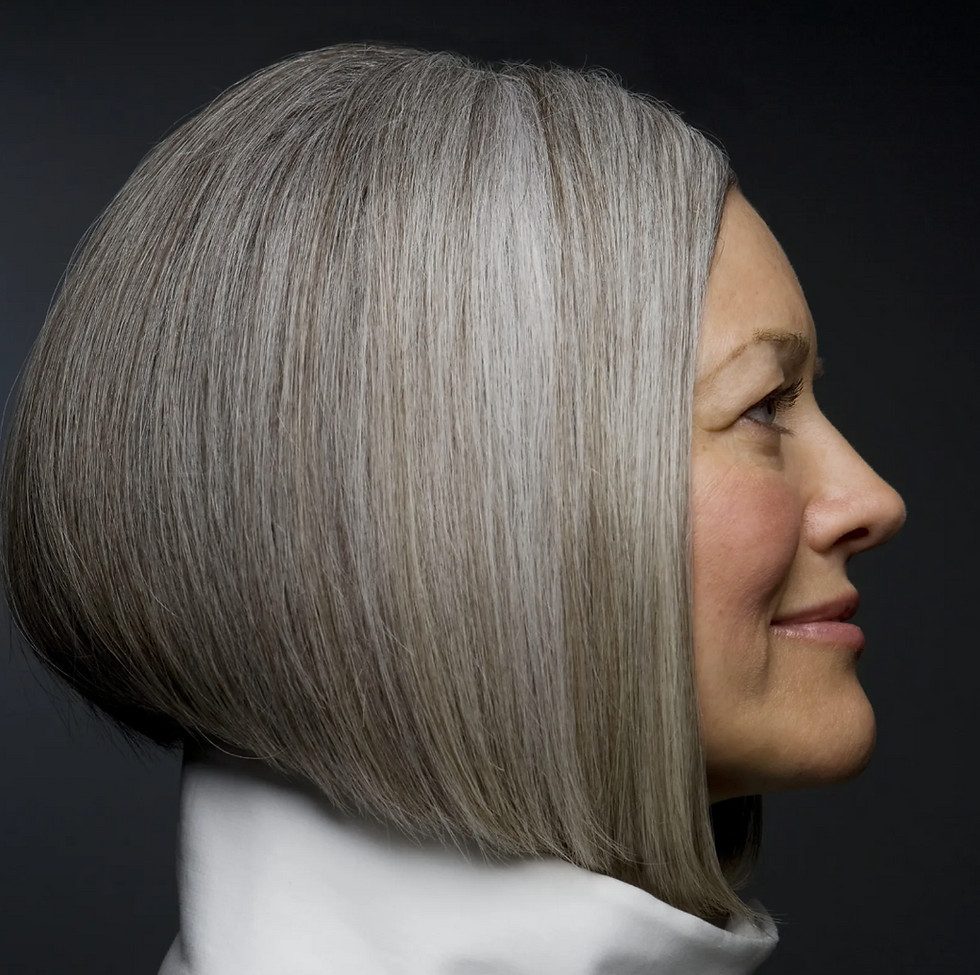
Can a bob be too uniform? This one is chin-length, straight, fine, no bangs, middle part, all one shade of gray. Sleek on day one. By day three, fine hair this straight starts to show every bend from sleeping on it wrong. The texture does not hold a blowout the way thick hair does. So the sleekness becomes a project. You have to want that polished look enough to reach for a flat iron every morning. Not a problem if you do. But if you are hoping the cut will do the work for you, this one will not.
Bob Visual Idea
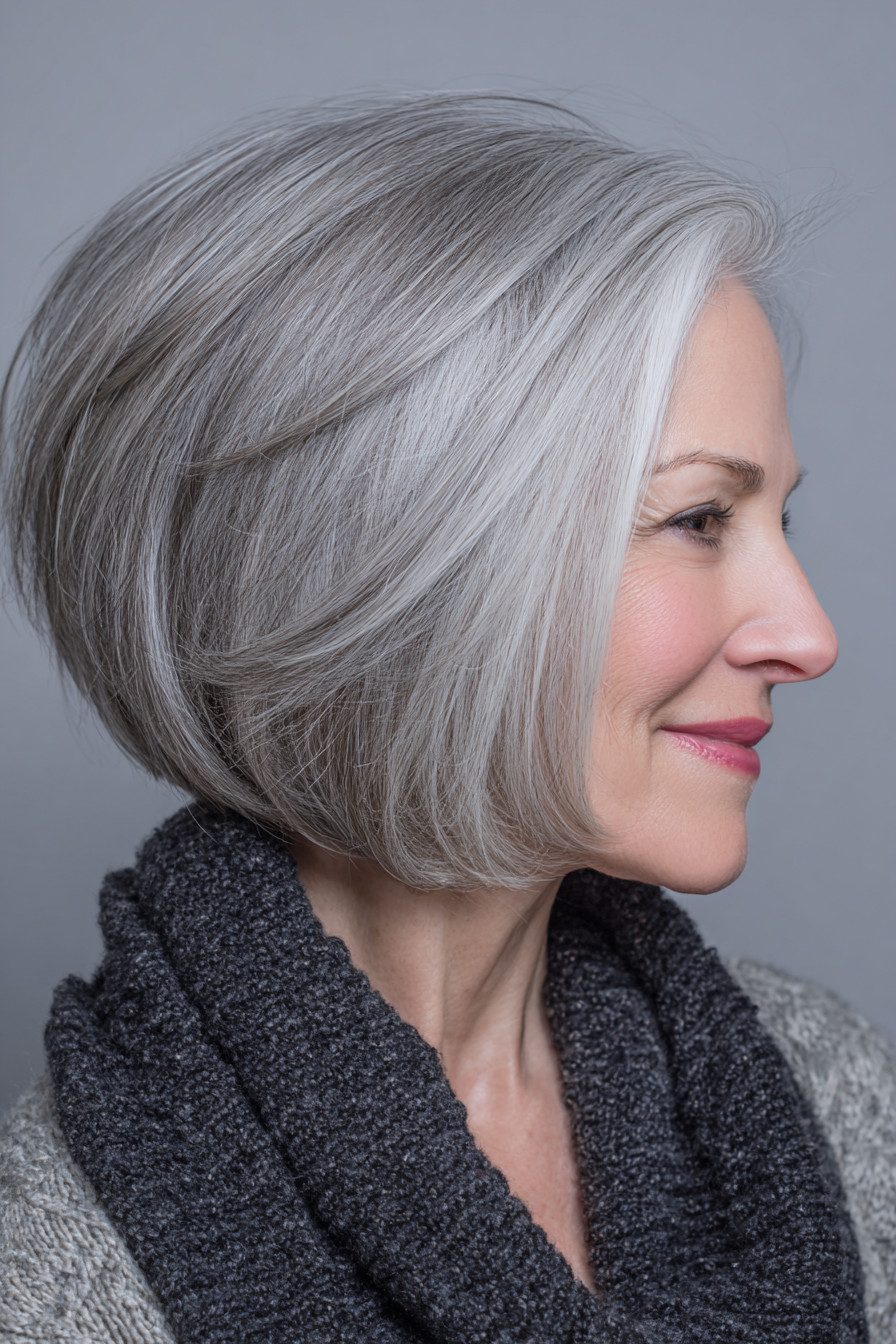
I will admit I was skeptical about a blunt chin-length bob on thick hair. I thought it would sit like a helmet. It does not. The weight of thick hair actually helps here — it drops straight down and creates this solid, heavy shape that fine hair cannot replicate. No bangs, middle part, one uniform gray colour. The blowout is key: a round brush lifts the roots just enough so the line stays clean without looking glued down. The upkeep is a trim every six weeks. The shape depends on it. Miss that window and the hemline starts to kick out. I have missed that window. I will not miss it again.
No Bangs Visual Idea
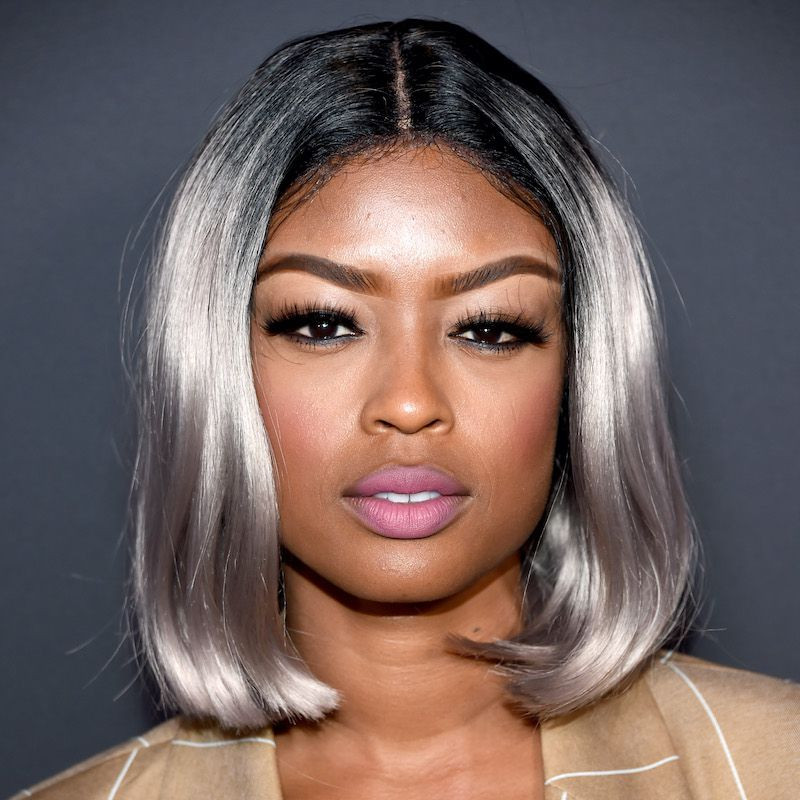
There is a specific kind of sleekness that only works in fall and winter. Humidity kills it. This bob, chin-length, no bangs, middle part, blown out straight over thick hair, is that kind of sleek. It lands best when the air is dry and you can wear a turtleneck without the collar lifting the ends. The gray reads cooler in low light, more silver than ash, and the absence of bangs keeps the whole thing severe in a way that feels intentional.
For events, this is the bob you book a blowout for. It photographs as one solid shape, no flyaways, no texture breaking the line. At a wedding or a dinner, it reads as effort without looking like you tried. The trick is the finish: the stylist brushes it smooth while the hair is still warm, then lets it cool before moving it. That is how you get the shine. That is how you get the line.
Front View Visual Idea
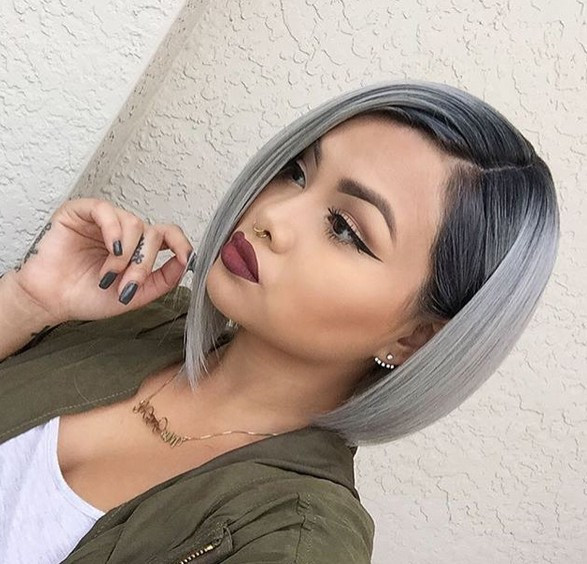
This is a salon cut. Period. The sharp angle from the front view — longer in front, shorter in back, a precise diagonal line — is not something you replicate with kitchen shears and a mirror. Chin-length, side part, no bangs, blown out straight. The mistake people make is asking for this angle but not specifying the weight distribution. Tell your stylist you want the front to land heavy, not feathered. That is what gives the sharp line its authority. A soft front will read as a grown-out bob. A heavy front reads as a decision.
Final Thoughts
After writing these 25 ideas, I keep circling back to the rounded ash bob with the stacked back. It is the one that made me stop scrolling and actually call my stylist. I am booking it next week, and I already know my roots will show at week five. That is the point.