I keep seeing it in the chair next to mine. A blunt fringe, a sharp side piece, and the rest of the hair falling straight. It’s the Hime Cut, and it’s everywhere. I thought it was just anime cosplay. I was wrong.
This roundup has 22 versions. Some are collarbone, some hit mid-back. Some have pastel streaks, some stay dark. Fine hair works. Thick hair works. My own fine, straight hair went flat by 4 pm with my last cut. This one held its shape. If you have a round face, the side pieces help. If you have low density, the blunt baseline reads thicker. The grow-out is predictable. That is rare.
Wavy Hime Cut With Blue and Pink Streaks
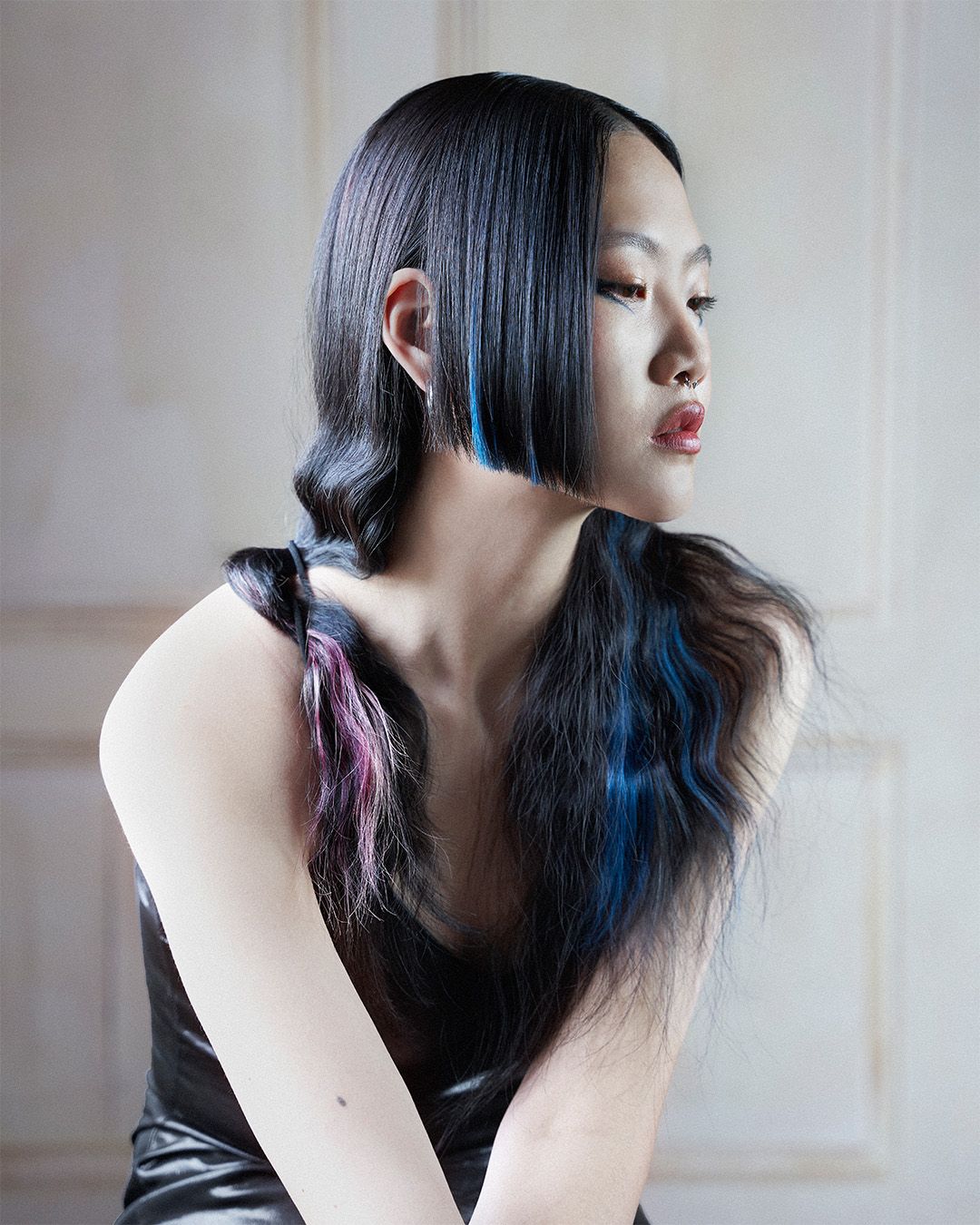
That middle part lands exactly where the sharp side pieces start — no guesswork, no gap. This is a hime cut with color streaks that work because the wavy texture softens the blunt edges without losing the line. Blue and pink highlights land mostly on the mid-back length, not the bangs, which keeps the face-framing pieces readable. Thick hair carries the wave without collapsing by noon. The braided accent is a bonus, not the structure.
Light Brown Hime Cut With Purple Streaks

Ever wonder why some hime cuts look sharp and others look sloppy? The answer is precision in the blunt bangs and side pieces. This hime cut purple streaks on light brown works because every line is deliberate — the bangs hit just above the brows, the side panels drop straight to the jaw, and the back stays one clean length. Ask your stylist for a blunt baseline, no texturizing scissors near the fringe, and the purple placed underneath so it peeks out when you move. Styling takes about ten minutes with a flat iron. The hime sections need a trim every six to eight weeks to keep that geometry.
Dark Brown Hime Cut With Blonde Ombre
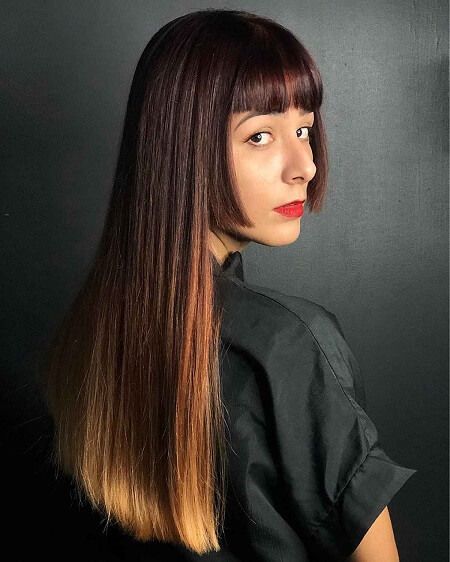
I’ll admit I was skeptical about ombre on a cut this geometric. But the hime cut ombre ends from dark brown to warm blonde actually work because the colour transition starts below the jaw, leaving the blunt bangs and side panels solid dark. The sharp lines stay readable. The ombre means root touch-ups are less frequent, but the blonde ends do need a purple shampoo about once a week to avoid brass. The hime sections still need shaping every six to eight weeks. A flat iron keeps everything crisp in about fifteen minutes.
Mid-Back Dark Brown Hime Cut With Ombre and Layered Sides
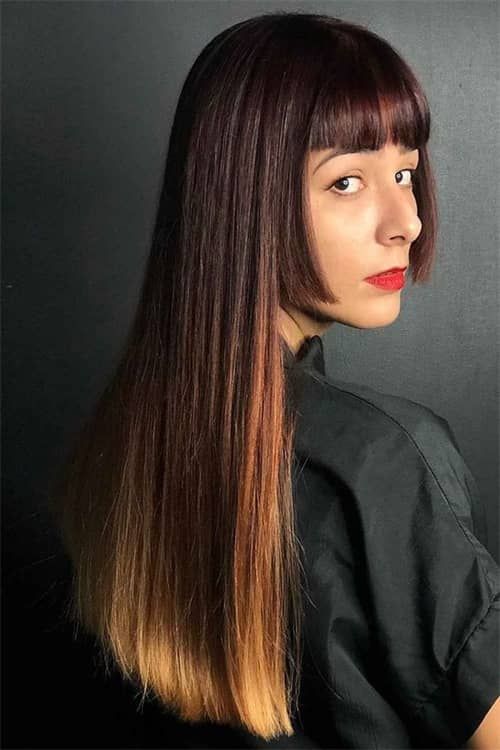
Hime cut jaw length sides on fine hair versus thick hair — different game entirely. On fine, straight hair like this, the blunt bangs and side panels read as intentional geometry, not accidental chunks. The ombre fades gracefully because there is less density to go brassy. Thicker hair needs more internal layering to keep the side pieces from sitting like heavy curtains. Wear and upkeep: straightening takes about twenty minutes, and those jaw-length pieces need a trim every six weeks. The ombre buys you an extra appointment between root touch-ups.
Dark Brown Hime Cut With Subtle Grey Highlights

The sharp, blunt cut of the face-framing pieces is what makes this hime cut cheekbone fringe work — no taper, no soft blending, just a clean horizontal stop. The grey highlights are subtle enough that they read as dimension, not costume. This is a salon cut, not a bathroom-mirror job. The air-dried texture keeps it from looking severe, but the fringe needs a trim every four to five weeks to stay at that exact cheekbone spot.
Collarbone Hime Cut With Layered Sides

Ever feel like every haircut demands a whole new wardrobe? This hime cut layered sides version is the rare one that just slots in. The collarbone length sits at that sweet spot where it reads polished for a work meeting but loose enough for a Saturday market. The blunt fringe does the dramatic work while the layered sides soften the transition, so you get the anime edge without committing to something severe. The dark brown base with lighter highlights catches light in a way that moves the eye around. It is straight and medium density here, which is exactly what this cut wants. If your hair is fine or thin, the layers can disappear fast, so keep them defined. This one adapts to your week, not the other way around.
Mid-Back Hime Cut With Layered Face-Framing

The first time I wore this, someone asked if I had a blowout. I had just straightened it at home. The hime cut with layers here is built on a mid-back length of thick, straight black hair, and the layered face-framing pieces are what make it look expensive. They sweep from the blunt bangs down the sides, giving movement without losing the weight that thick hair needs. Straightening takes about 20 minutes, which is honest for this much hair. The blunt bangs need a trim every 4 weeks, no negotiation, or they start parting on their own. The layers grow out softer than a sharp hime cut, so you get a gentler shape over time, and trims every 8 to 10 weeks keep the framing from turning into a shag. It holds its line through a full day, even by 4 pm.
Thick Black Hime Cut With Blunt Bangs

I want to love this one, and I mostly do. The blunt hime cut bangs on thick black hair create that contrast the style is known for: a hard line across the forehead, then a long, straight fall to mid-back. It is striking. But thick hair is exactly what makes this hard to maintain. The bluntness shows every split end, and if you skip a trim, the line starts to feather on its own. Styling is simple, about 15 minutes to get it perfectly straight, but the bangs need attention every 3 to 4 weeks or they lose their edge. The rest of the hair needs a trim every 8 weeks to keep that blunt baseline honest. If you are not ready for that rhythm, this cut will humble you.
Fine Black Hime Cut With Dramatic Bangs

What makes this work is the precision. The fine hair hime cut relies on a sharp, straight fall, and the dramatic blunt bangs are cut so cleanly they almost look drawn on. On fine hair, this is a clever trick: the bluntness adds the illusion of density, because there is no layering to thin things out. The mid-back length keeps the weight low, which helps fine hair hang straight instead of flipping. It is a sleek, graphic look that does not need much styling beyond a quick straighten. The catch is the hairline. Fine hair gets oily fast, and the bangs will show it by lunch. A dry shampoo at the roots buys you the afternoon.
Collarbone Hime Cut With Blunt Bangs

Thinking about trying the hime cut but scared of the commitment? Start here. The collarbone hime cut is the entry point, because it gives you the blunt bangs and the sharp side pieces without the full-length drama. It is a shorter canvas, so the shape reads graphic and modern, and it suits medium density straight hair best. The blunt bangs are the statement, and they need a trim every 3 to 4 weeks to stay sharp. The collarbone length is forgiving: it works for an office day, a dinner out, or a lazy Sunday, and it does not demand a whole new styling routine. If you have never had bangs, this is the least risky way to find out if you can handle them.
Sleek Collarbone Hime Cut With Fringe

I confess I spent ten minutes just staring at the mirror after this one. The cut is a hime cut, collarbone length, with a blunt fringe that sits right above the brows and cheek-length side pieces that drop like a curtain. The layers are minimal, just enough to let the side pieces separate from the main body. The texture is straight, medium to thick density, and the whole thing depends on a middle part and a flat iron. Start at the roots, work down in small sections, and do not rush the fringe. A heat protectant is non-negotiable here.
The technique is precision over speed. The blunt fringe needs a straight line, no angling, and the cheek length hime cut side pieces must be cut with the hair dry and completely flat. I use a ceramic iron set to medium heat and finish with a light-hold spray to keep the shine from turning greasy by noon. The result is a graphic, almost architectural shape that reads as intentional without looking like you tried too hard.
Black Hime Cut With Sharp Side Pieces

I pick the sharp side pieces over the softer, blended version every time. The hime cut sharp sides sit at cheekbone length, cut blunt and straight, no graduation. The blunt fringe is the same: one clean line across the forehead. The collarbone length body is straight, thick black hair, and the layers are almost nonexistent, just a slight separation at the ends. This is a salon cut, no question. The cheekbone length pieces require a steady hand and a dry cut, and trying to replicate it at home with scissors and a mirror is how you end up with a jagged mess. Book the appointment and bring a reference photo.
Collarbone Hime Cut With Clean Lines

Monday morning, straight out of the shower, ten minutes with a flat iron. That is the daily reality of the hime cut clean lines. The cut is a hime cut, collarbone length, with a blunt fringe and side pieces that hit the jaw. The layers are minimal, just enough to keep the side pieces from merging with the body. The texture is straight, thick black hair, and the clean lines depend on a middle part and a flat iron. The upkeep is real: bangs need a trim every three to four weeks, and the side pieces require shaping every six weeks to keep the contrast sharp. Skip a trim and the whole thing starts to look shaggy.
Thick Black Hime Cut With Collarbone Length

The first thing you notice is the weight. The hime cut collarbone length on thick black hair is not a light cut, it is a dense, blunt shape that lands with intention. The blunt fringe sits straight across, the side pieces drop to the cheekbone, and the main body falls in one solid sheet. The layers are minimal, just a slight release at the ends to prevent the whole thing from looking like a helmet. The texture is straight, thick, and the middle part is the anchor. The visual impact comes from the contrast: the sharp fringe against the flat body, the dark colour against the skin. It is graphic and precise, and it works best when the hair is healthy and the cut is fresh.
Collarbone Hime Cut With Subtle Layering

Does the blunt fringe work with layered sides? Yes, but only if the contrast is intentional. The hime cut subtle layering keeps the blunt fringe heavy and the side pieces sharp, while the collarbone length body gets a light release through the ends. The texture is straight, thick, and the layers are subtle enough that the shape still reads as a hime cut, not a shag. The honest downside: the contrast can look disjointed if the layers are too soft or the side pieces are too long. This cut flatters oval and heart-shaped faces best, because the blunt fringe shortens the forehead and the side pieces widen the cheek area. Skip it if your hair is fine or thin, the layers will disappear and the contrast will collapse.
The other risk is the grow-out. The blunt fringe demands trims every three to four weeks, and the subtle layering in the body means you can stretch to eight weeks between trims. But the side pieces will start to blend into the body around week five, and the whole shape softens. If you want the stark contrast to last, you commit to the schedule.
Blunt Bangs Collarbone Hime Cut With Sharp Side Pieces

This is the geometry version. The hime cut collarbone pieces drop straight down, cut at a clean right angle. No graduation, no softness. The stylist sections the side hair from the back, pulls it forward, and snips a single horizontal line. The sharp side pieces land exactly at the collarbone, and the blunt bangs sit a finger-width above the brows. Straight, thick texture holds that line all day. Wavy or fine hair loses the edge by noon.
Long Hime Cut With Precise Bangs and Sides

I booked this thinking it would be low maintenance. It is not. The jaw length hime cut demands a straightener and twenty minutes every morning. The precise side pieces sit at the jaw, cut to a sharp point, and the blunt bangs need a trim every three weeks or they hit the eyes. The back stays long, past the shoulders, which sounds easy until you realise the front layers and the back length are two different haircuts living on one head. Straight, thick texture holds the shape. Fine or wavy hair will need a flat iron and a prayer.
The upkeep list is short but non-negotiable. Bangs every three to four weeks. Side pieces every six weeks. A heat protectant every single day. Skip one trim and the whole graphic line softens into a regular long cut.
Visual Idea

Black hair with blonde bangs is the most aggressive version of this cut. The contrast makes the blunt line look sharper, and the blonde draws the eye straight to the fringe. It works because the rest of the hair stays dark and uniform, no highlights, no dimension. The downside shows up at week three: the blonde bangs need a toner or they pull yellow against the black. Straight, thick texture carries the contrast best. Fine hair reads too thin at the bangs, and the blonde can look brassy fast.
Chin Visual Idea

Shoulder Visual Idea
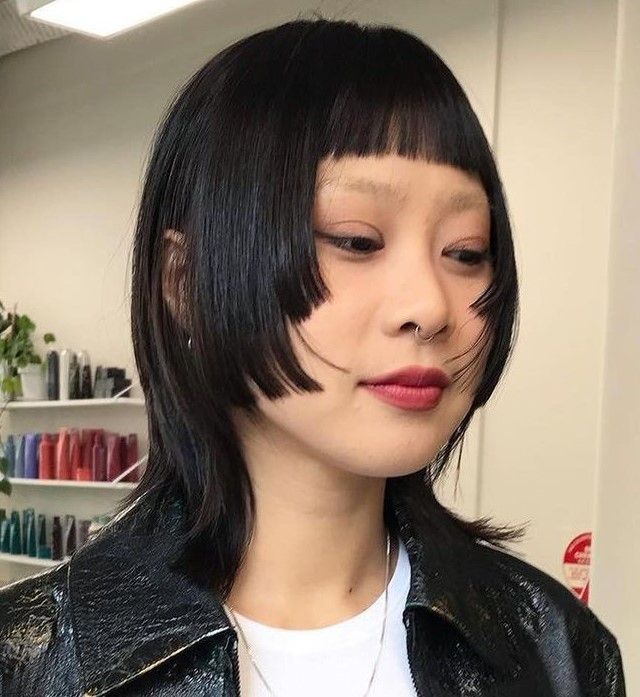
Can your face handle micro bangs? That is the first question. The shoulder-length hime cut with micro bangs works best on oval and heart shapes, because the short fringe and the jaw-length side pieces frame the upper face and leave the jawline visible. Straight, thick texture is non-negotiable. Fine hair cannot support the density the micro bangs need, and wavy hair will bend the fringe into a curve instead of a straight line. If your hair has any wave at the root, skip this. The micro bangs will not sit flat.
Mid-Back Visual Idea
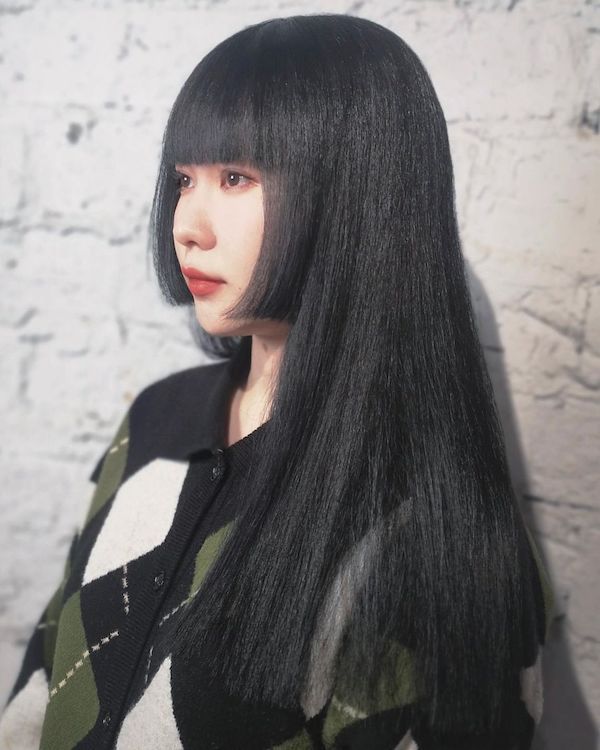
Best grow-out in this roundup, but only if you commit to the schedule. This mid-back cut works because the blunt bangs and the sharp side pieces are so precise that any growth reads as sloppy, not lived-in. The straight, thick texture here holds the geometry; my fine hair would collapse the side pieces by noon.
You need a trim every four weeks to keep that blunt line clean. The layers are minimal, just enough to stop the back from feeling heavy, but the bangs are the clock. Let them go five weeks and you are pinning them back or fighting a curtain that refuses to sit. I booked this twice in one season, then admitted I was not ready for that rhythm.
Brown With Subtle Highlights Visual Idea
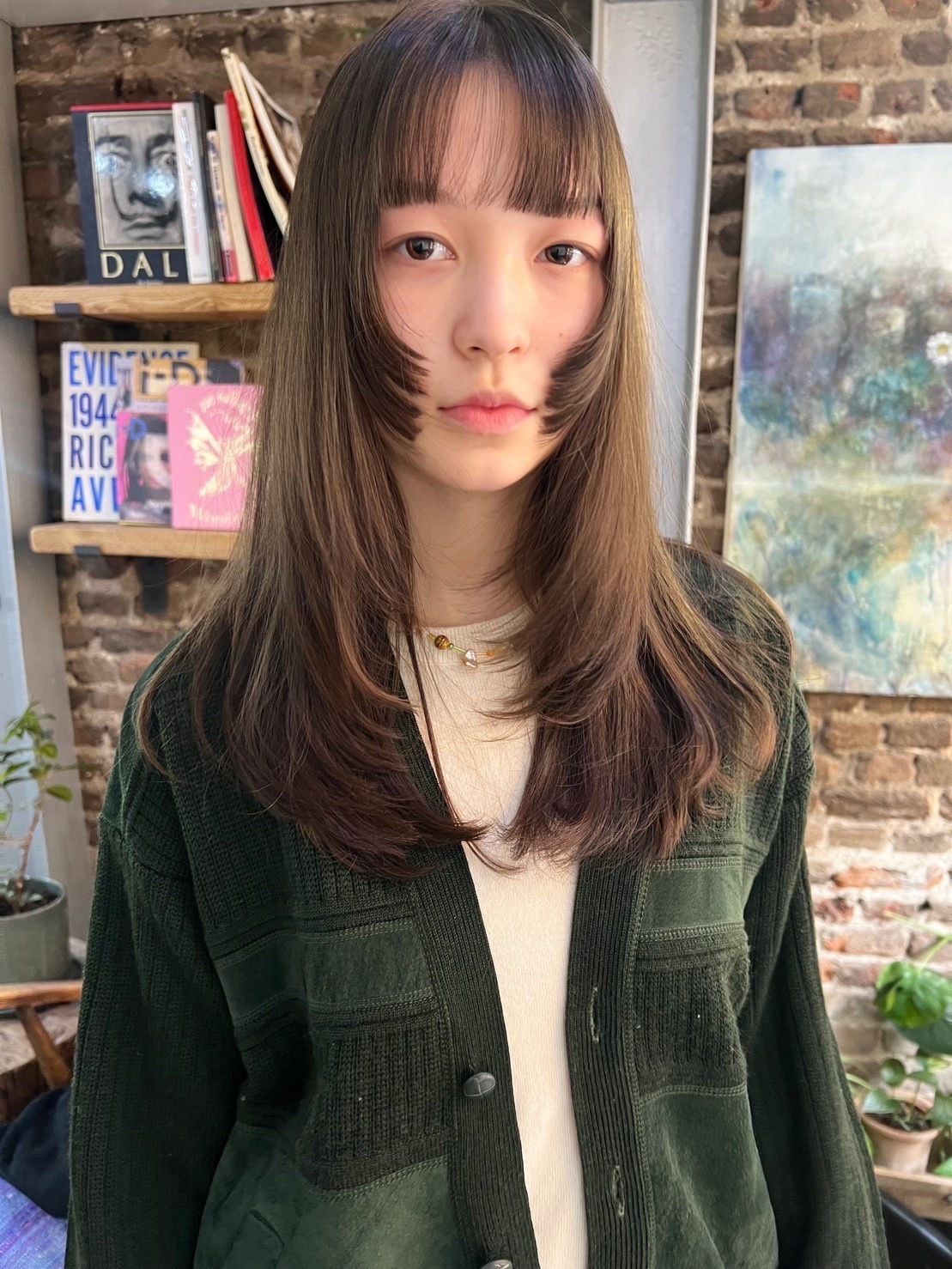
This is a salon job, not a bathroom-mirror experiment. The blunt bangs and the sharp side pieces need a straight, fine-to-medium texture to land cleanly, and the subtle highlights add depth without breaking the solid line. The cut itself is the star: the brown base grounds it, the highlights catch light, but the geometry stays readable. The honest downside? Fine hair shows every uneven snip. I have watched a friend try this at home with thinning shears. The bangs ended up wispy, the side pieces lost their weight. Book the consultation first, bring a reference photo, and let the stylist cut dry. The texture will not forgive a wet-snip guess.
Final Thoughts
- Trim the fringe every three weeks, not four.
- Tone pastel streaks at week six, not week ten.
- Blunt baseline needs a trim every eight weeks.
- Side pieces grow into layers, not chaos.
I started this roundup skeptical. I am ending it with a screenshot on my phone. The collarbone version with the sharp side pieces. That is the one I am booking next.