
I keep seeing the same thing in the salon chair next to mine: dark roots melting into something warm and golden, no harsh line, no brass. Honey brown is having a moment, and honestly, it deserves it. It reads expensive without trying hard, which is exactly my kind of color.
Here are 21 ways to wear Honey Brown Hair, from low-maintenance root smudges to full-on balayage, from collarbone lobs to mid-back lengths. Whether your hair is fine, thick, straight, or curly, there’s a version that works. I’ve included the grow-out reality, the styling time, and the honest warnings, because I’ve learned the hard way that a pretty photo doesn’t tell you what happens at week five.
Mid-Back Waves with Subtle Honey Highlights
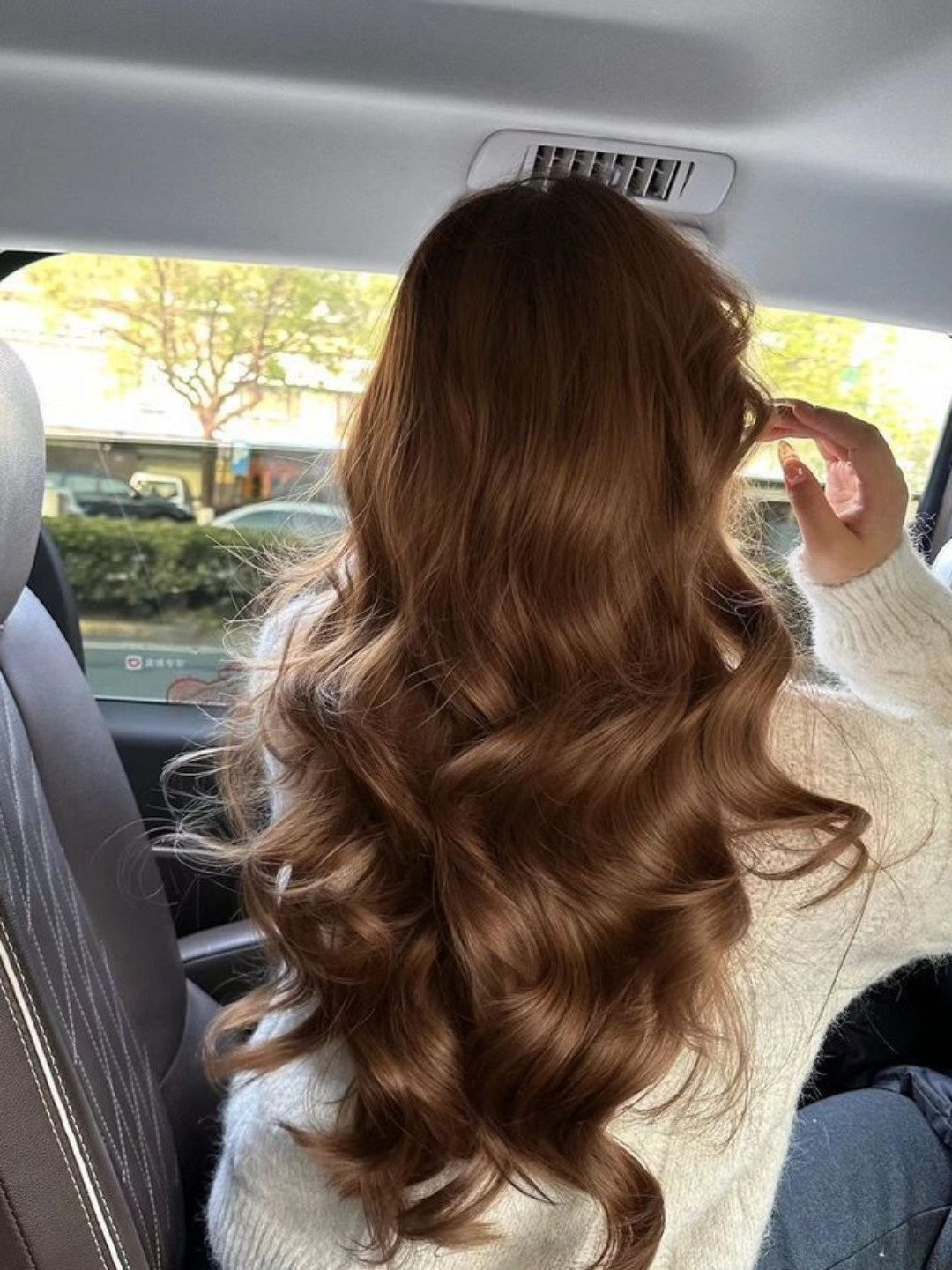
A medium brown with honey highlights is the hair equivalent of a sweater that actually fits — not trying too hard, just warmer. The honey ribbons land mid-shaft and fade toward the ends, so the roots stay dark and the grow-out is kind. Mid-back length with layers and thick, wavy texture carries the colour without it getting lost. The middle part helps the highlights fall evenly on both sides. If your hair is fine, ask for fewer highlight slices and more space between them, or the effect gets swallowed.
Collarbone Lob with Side-Swept Bangs
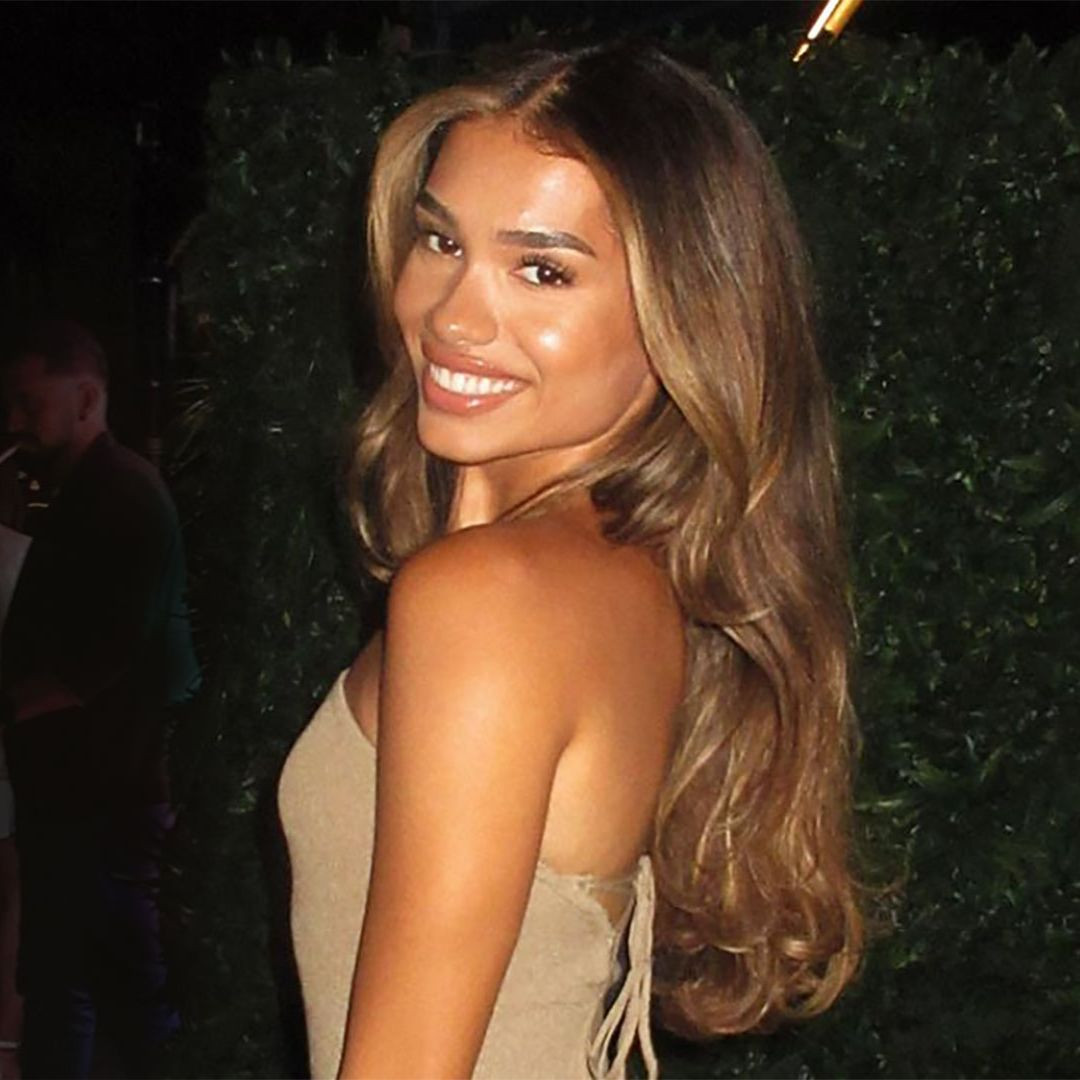
How often does a honey brown lob with bangs actually look good by Friday? More than you would think. The side-swept bangs hit just past the brow, which means they live in your face for exactly one week before needing a trim. The medium brown base with subtle honey highlights stays soft because the highlights are fine and spaced out, no harsh regrowth lines. The collarbone length lands above the shoulder, so it does not flip outward when you sleep on a damp head. Wavy texture, medium density. Blow-dry the bangs first, everything else second.
Long Wavy Hair with Honey Blonde Balayage
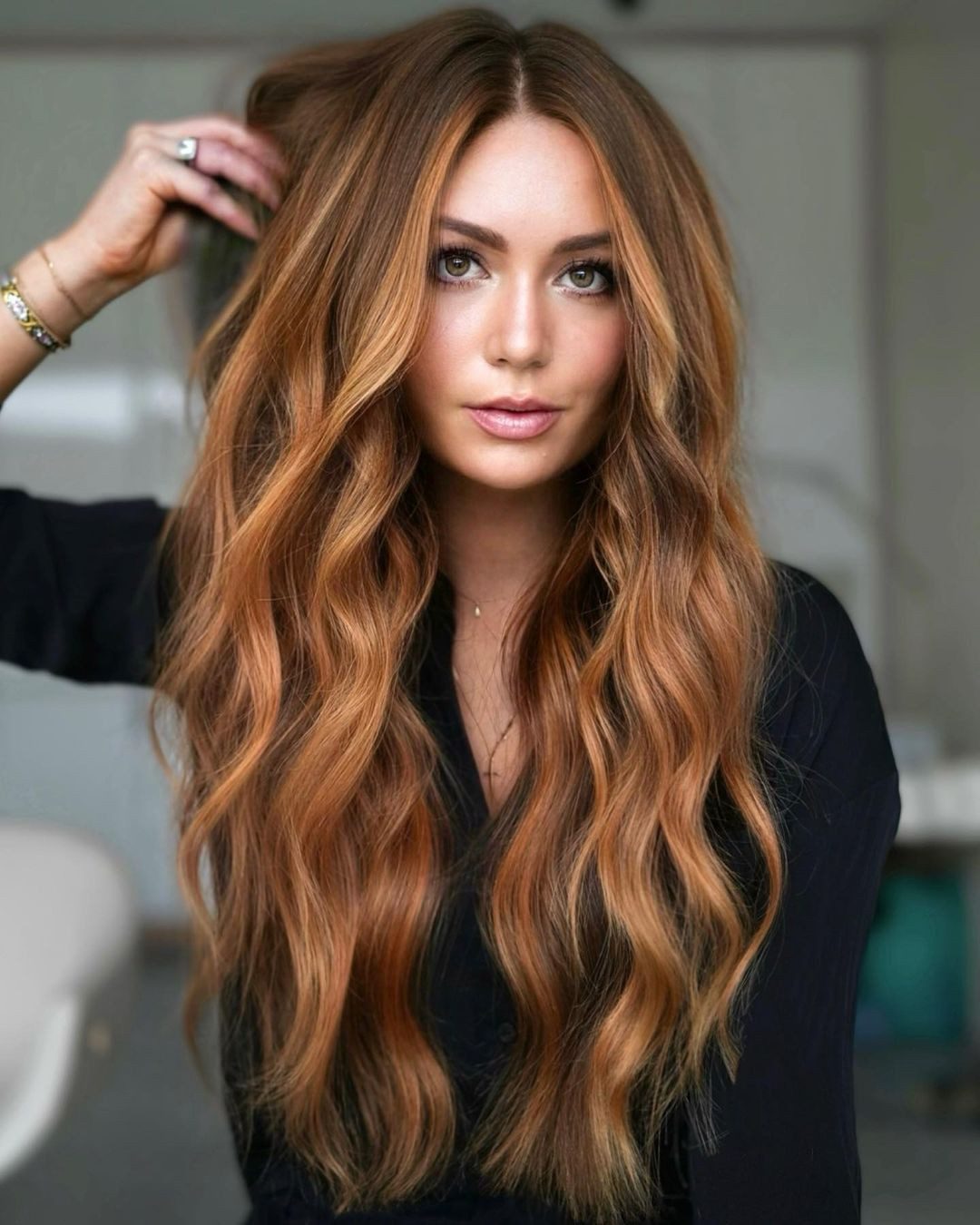
The technique here is what makes warm brown with honey blonde balayage work when other blondes turn brassy by week three. The colourist paints the honey blonde balayage in a V-shape from the mid-lengths down, leaving the root zone untouched. That V pattern hits the ends first, which is where light catches on wavy, thick hair, curtain bangs included. The warmth in the honey tone keeps the blonde from turning ashy against a warm base.
- Mid-back length, long layers.
- Ask the stylist for a V-placement, not horizontal stripes.
- Thick texture needed, fine hair will flatten the wave.
- A gloss every eight weeks keeps the honey from pulling yellow.
- Say: “I want a sunkissed effect, not a stripe.”
Three hours in the chair, no shortcuts.
Dark Brown Base with Subtle Honey Highlights
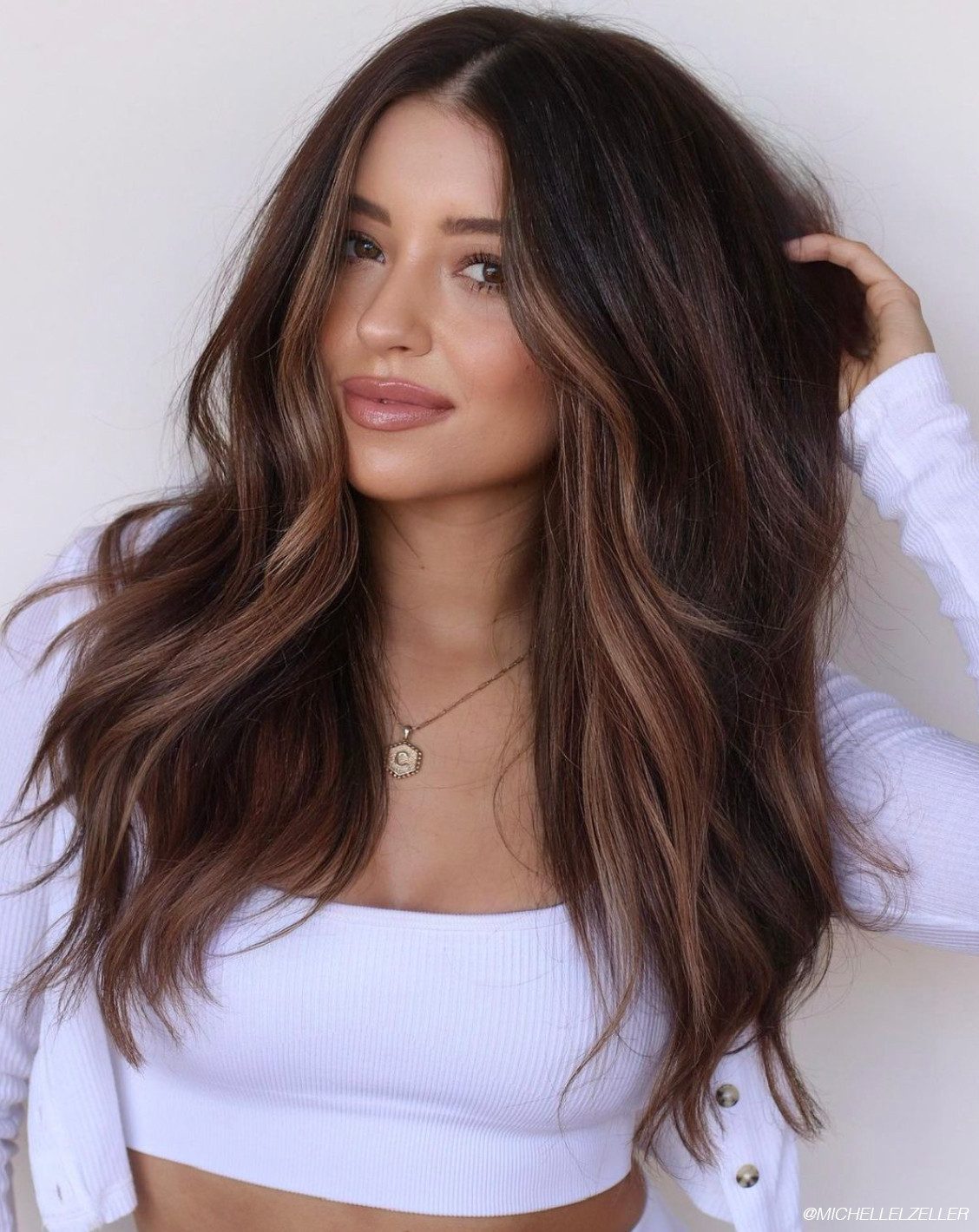
Dark brown with honey highlights is better than caramel on a dark base, and I will die on this hill. Caramel goes brassy fast. Honey stays warmer, richer, less orange. The dark brown with honey highlights here is a mid-back length with layers, wavy blowout, thick texture. The honey slices are thin and widely spaced — the colourist painted a few per section, not all over. That restraint means the highlights read as dimension, not a colour job. Side parting lets the honey fall forward. It works because the base is dark enough to create contrast without looking like two different heads.
Honey Brown Base with Blonde Highlights
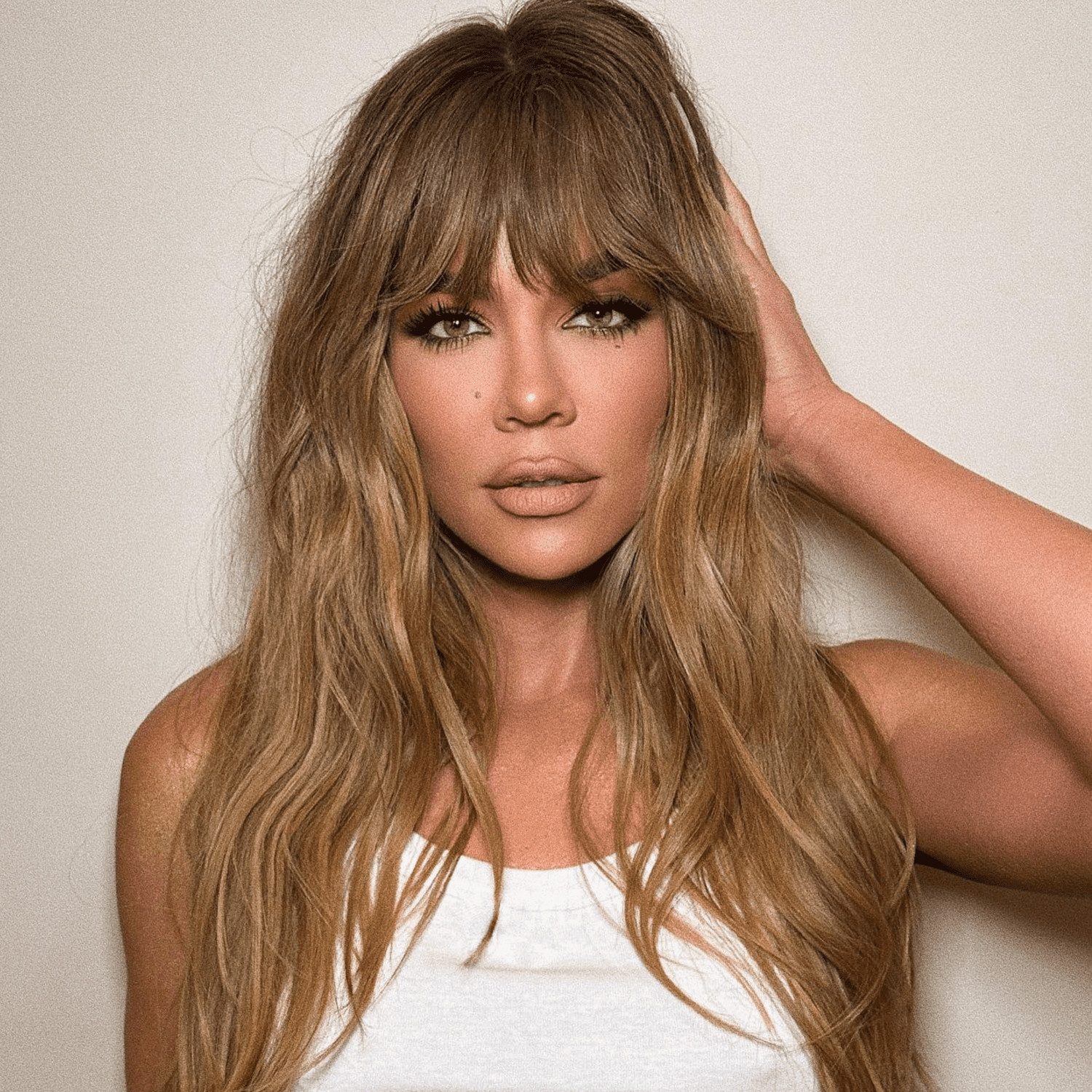
Honey brown with blonde highlights is the shade that pulls a room together without announcing itself. The base lives in that middle ground between brown and blonde — warm, not ashy, not too dark. The blonde highlights sit on top, a few shades lighter, placed around the face and through the ends. Mid-back length, layers, thick wavy texture, curtain bangs. The middle part keeps the blonde distribution even. It suits a range of skin tones because the honey brown warms up fair complexions and the blonde highlights keep darker ones from looking flat. Works for a wedding, works for Tuesday.
- Honey brown base with blonde highlights.
- Curtain bangs, mid-back length, long layers.
- Thick wavy texture needed for the movement to read.
- Highlights at the face and ends, not near the roots.
- Say: “I want a dimensional honey brown, not a solid colour.”
It is versatile enough that you stop worrying about the occasion and just go.
Warm Honey Brown Lob with Curtain Bangs
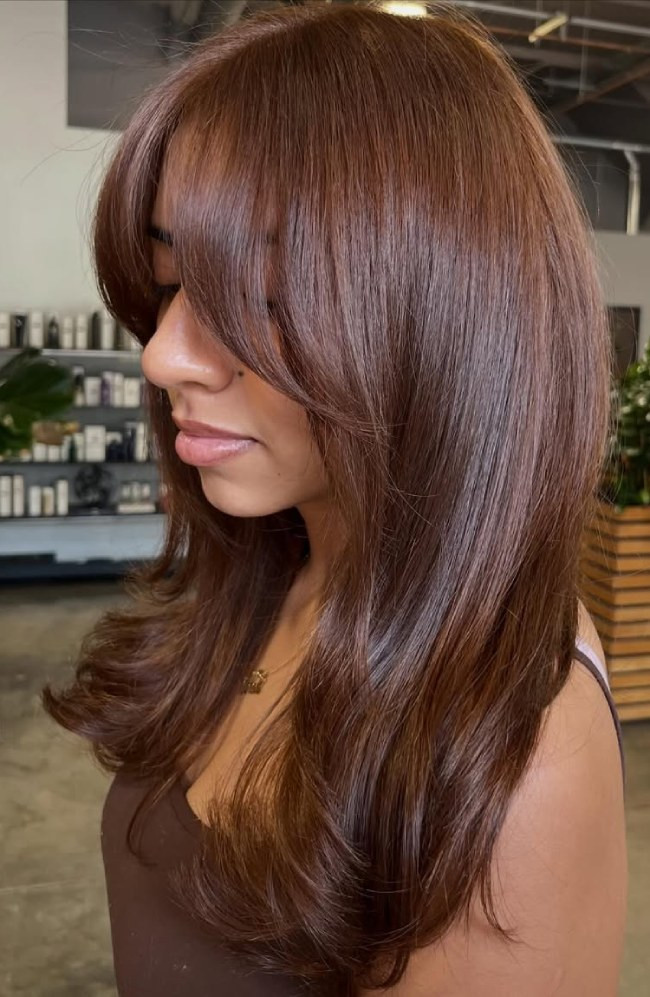
I’ll admit it: I picked this warm honey brown lob because I was tired of booking root touch-ups every five weeks. A solid warm honey brown tone across the whole head means the grow-out is a slow fade, not a stripe. The lob hits collarbone, the curtain bangs soften the sides, and the soft waves give it movement without requiring a curling iron every morning. Medium density hair holds the shape well, and a quick blowout with a round brush takes about ten minutes. The colour needs a refresh every ten to twelve weeks, but the trim rhythm is tighter: every six to eight weeks, or the bangs start looking shaggy.
Long Layered Honey Brown with Subtle Highlights
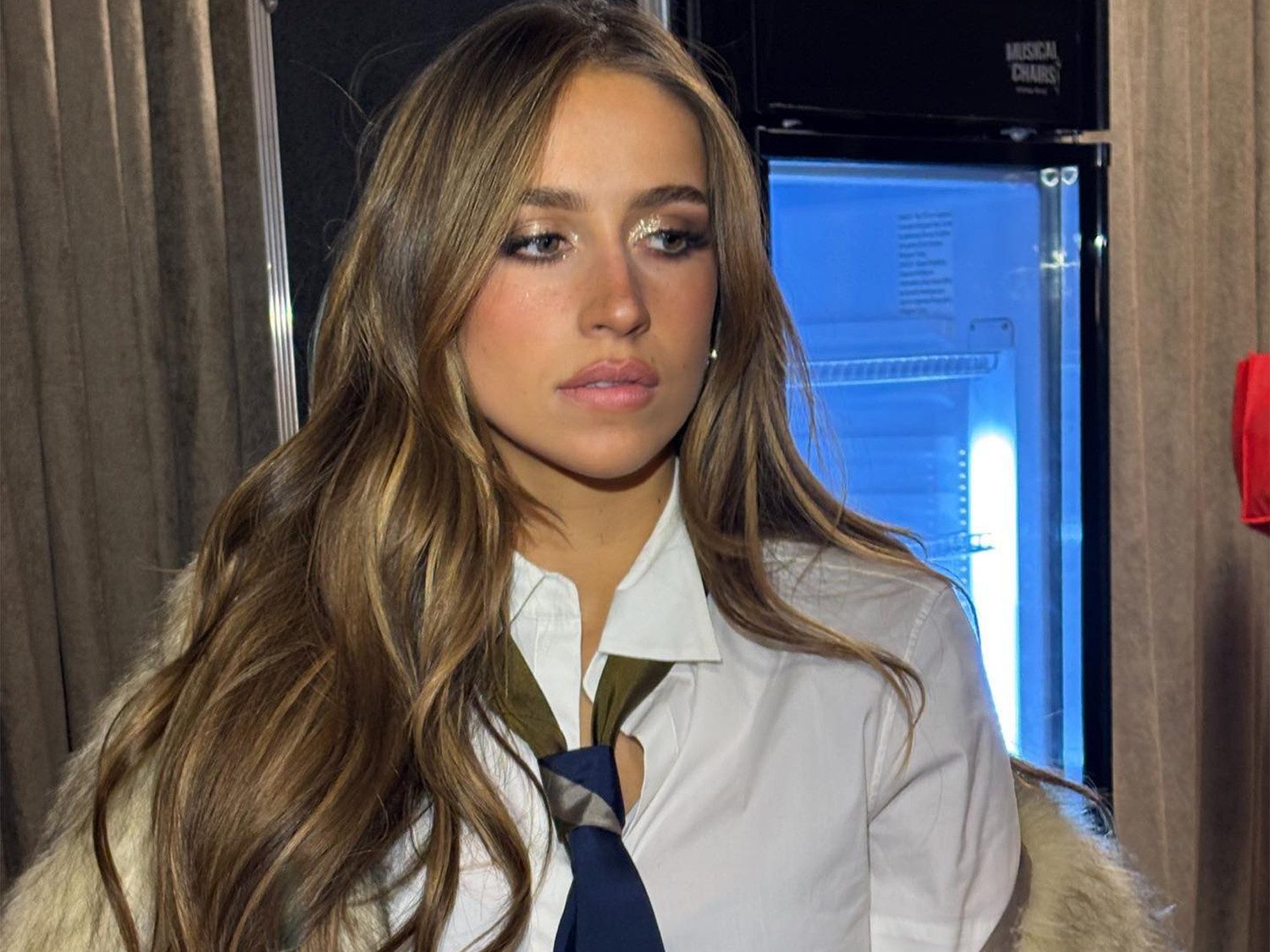
Here is the thing about honey brown with subtle highlights: the lighter pieces are the first to go brassy, especially if you spend weekends outside. The base is a warm honey brown, the subtle highlights are painted on with a balayage technique, and the tone leans golden, not ash. On thick, wavy hair at mid-back length, the layers catch light and the highlights read as dimension, not streaks. But the honest downside is timing. A full balayage takes about three hours in the chair, and those highlights need a toner refresh every eight to ten weeks if you want them to stay honey, not orange. Sun exposure accelerates the shift, so a purple shampoo becomes a weekly ritual, not an occasional one.
Toasted Cinnamon Honey Brown Curls
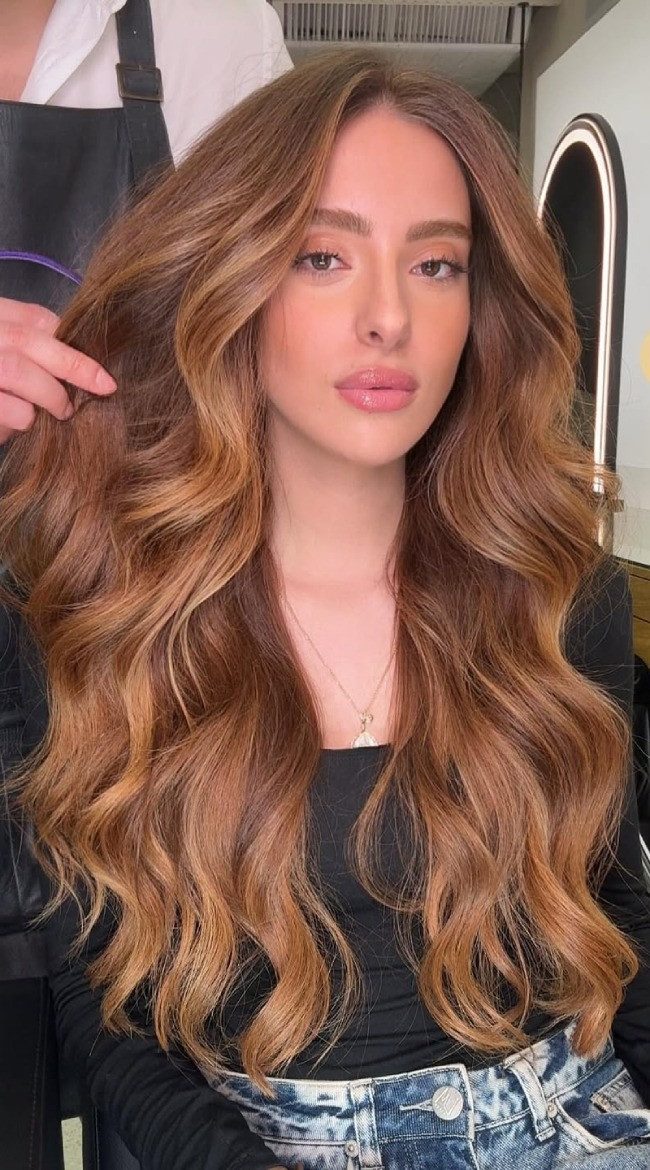
The cinnamon honey brown balayage on this one is built in sections: the stylist paints the mid-lengths and ends, leaving the roots a deeper toasted cinnamon honey brown. The technique creates a soft, melted transition rather than a hard line, which matters for curly hair because curls catch light differently than straight strands. On thick, curly hair at mid-back length, the long layers let the shape fall without triangle-head.
- Length: mid-back, long layers
- Technique: balayage, hand-painted from mid-lengths
- Texture: thick curls, defined with a curl cream
- Styling: diffuse on low heat, no brushing
- Ask your stylist: “I want a balayage that starts below the crown, no visible root line”
The result is a colour that looks like it grew in the sun, not a salon bowl. The balayage needs a refresh every ten to twelve weeks, but the tone stays warm without turning brassy because the base is already deep enough to anchor it.
Rich Honey Brown with Soft Waves
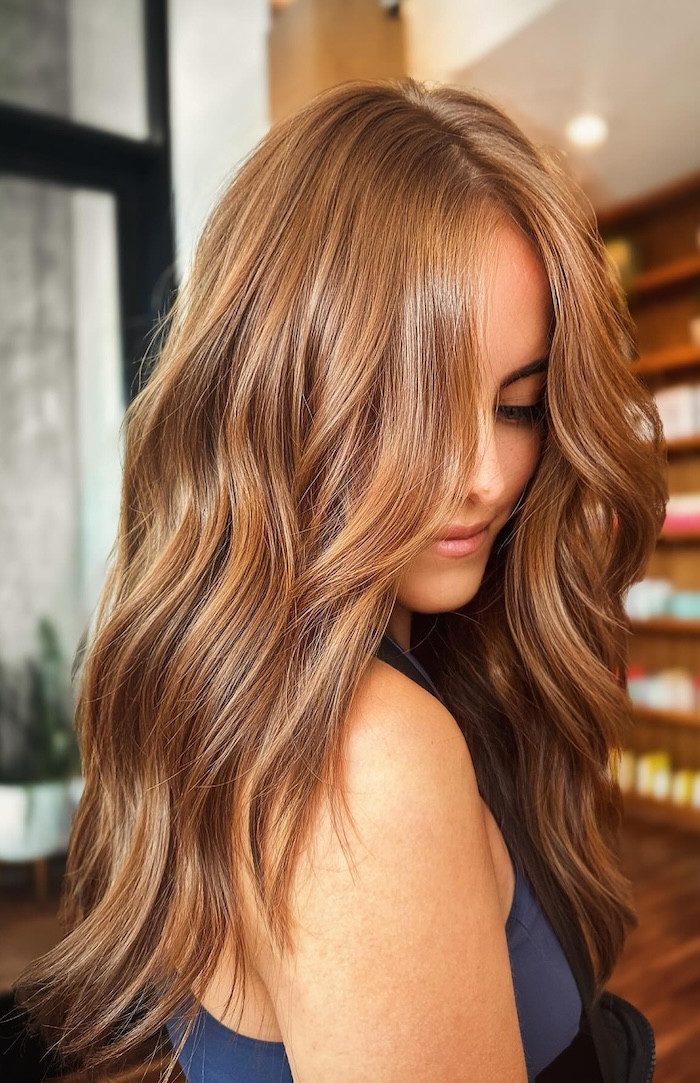
I stood in the grocery store line last week and watched a woman with rich honey brown hair walk past. The colour was so even, so warm, that I nearly asked her stylist’s name. That is the thing about a solid rich honey brown tone: it does not need highlights or lowlights to look expensive. On thick, wavy hair at mid-back length, the soft waves catch the light and the colour reads as dimensional on its own. The middle part widens a round face, and the long layers keep the shape from feeling heavy. A quick blowout with a round brush takes about fifteen minutes, and the colour needs a refresh every ten to twelve weeks. No balayage, no foils, just one rich, warm shade that grows out gracefully.
Dark Brown Lob with Honey Brown Highlights
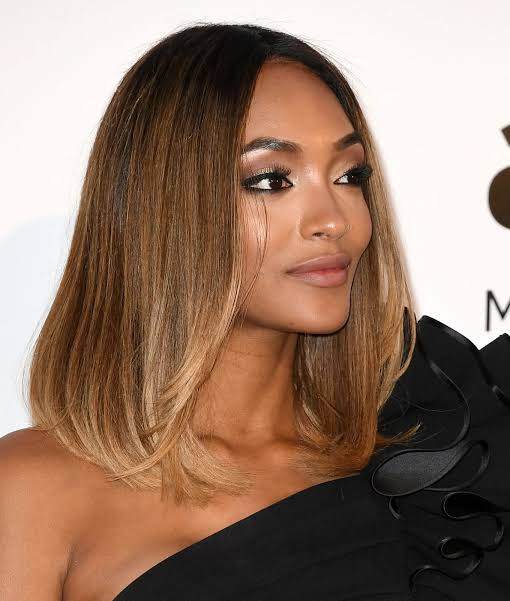
Can we talk about what a dark brown lob with honey highlights actually costs in time? The dark brown base is your natural or dyed level four or five, and the honey brown highlights are painted on with a foil technique to lift the colour several levels. On straight, thick hair at collarbone length, the contrast reads as sleek and intentional. But this is not a bathroom-mirror job. Getting those highlights light enough to read as honey, not muddy brown, requires a stylist who knows how to section and process. The highlights need a refresh every eight to ten weeks, and the dark base will need a gloss every other visit to keep it from fading warm. A trim every six to eight weeks keeps the lob shape sharp.
Layers Collarbone Honey Brown with Blonde Highlights
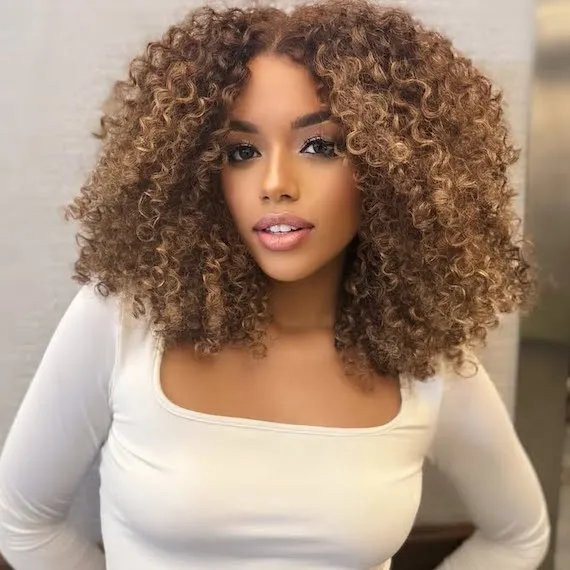
Honey brown hair reads like a neutral that glows, which is why it keeps showing up in my salon inspo folder. The base sits between a true brown and a warm caramel, so it flatters both fair and medium skin without washing out either. I asked for it with a root shadow, because my natural colour is a flat dishwater brown. The grow-out is the real reason I keep it. My roots showed at week five, and honestly, it still looked deliberate.
The tone does the heavy lifting. A warm honey base keeps the face from going sallow, but it needs a gloss around week six or it drifts yellow. It suits fine to medium density best. On thick, coarse hair, the warmth can read brassy fast. Book the consultation first.
Dark Brown with Honey Beige Balayage
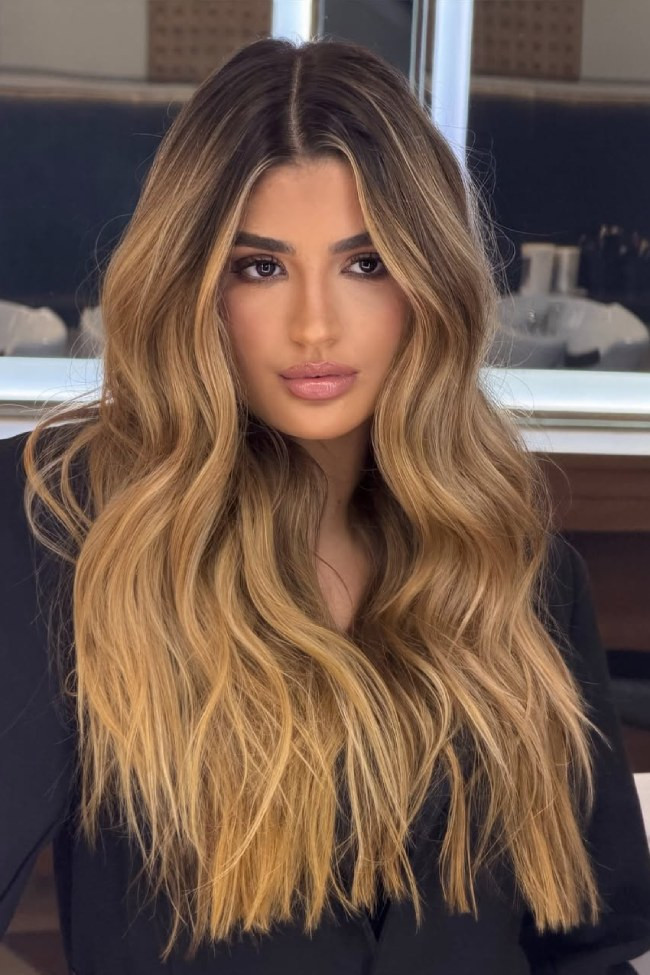
Did not expect to like a dark brown honey beige balayage this much. The base is a deep, almost espresso brown, and the balayage lifts sections around the face and through the mid-lengths into a beige that reads golden in sunlight and neutral under fluorescents. The blend is the point: no stripes, no harsh line where the dark ends and the light begins. It softens the grow-out because the roots stay dark and the painted sections fade gradually rather than suddenly.
By week six, the beige settles into something closer to a warm caramel. That is not a bad thing. It still looks intentional, just less bright. A purple shampoo once a week keeps the beige from pulling brassy, but skip it for two weeks and the tone drifts yellow. The honey beige balayage works best on medium to thick textures; fine hair loses the dimension because the dark base overwhelms the lighter pieces. Air drying gives a soft wave. Diffusing gives more lift at the crown. The grow-out is the selling point here because the dark base hides the new growth for a solid ten weeks.
Long Dark Brown with Caramel and Honey Highlights
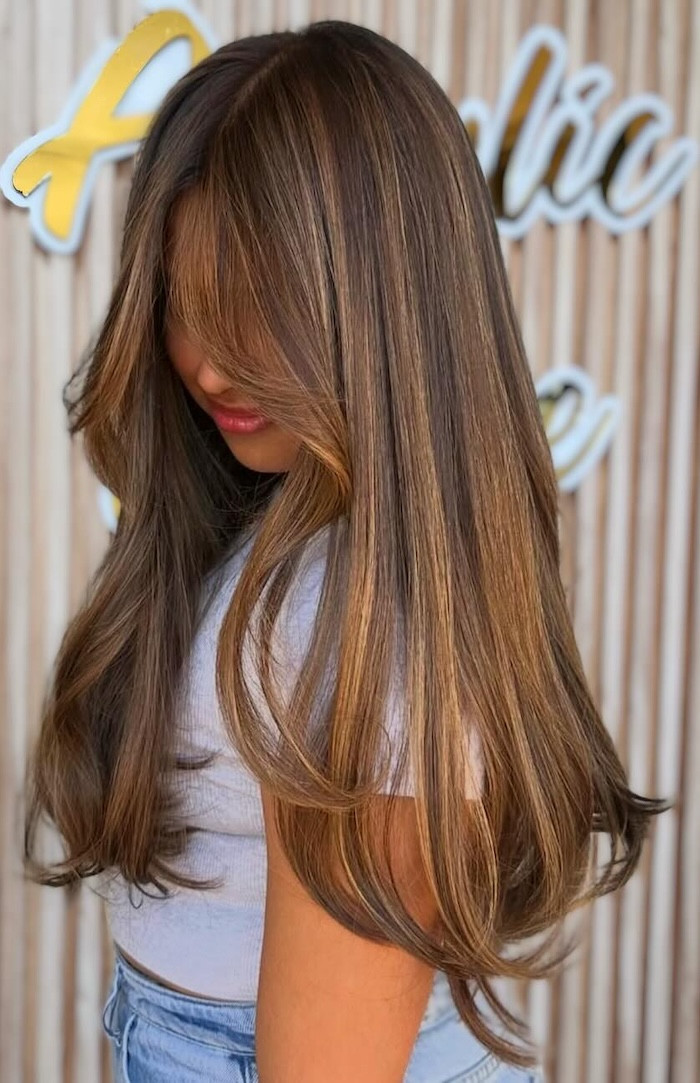
The dark brown with caramel honey formula is a two-step application, and that is what makes it different from a single all-over highlight. The caramel goes on first, painted in wider sections through the mid-lengths and ends, then the honey is woven in finer pieces around the face and crown. The caramel adds warmth without lifting too high, the honey adds brightness where the light hits first. The result is dimension that reads as natural, not striped. Straight, thick hair shows the contrast best because the strands lie flat and the colours sit next to each other. Wavy or curly textures blend the tones together, which softens the effect but also loses some of the intentional placement.
Ask your stylist for caramel and honey highlights placed in alternating sections, not all over. Say you want the caramel wider and the honey finer. Say you want the honey concentrated around the face. The face-framing layers here are cut to hit just below the chin, which lets the honey catch the light when the hair is tucked behind an ear. A middle part works for oval and heart shapes. A deep side part softens a square jaw. The tone stays warm for about eight weeks before the honey starts to fade cooler and the caramel settles into a neutral brown.
Dark Brown with Honey Blonde Contrast
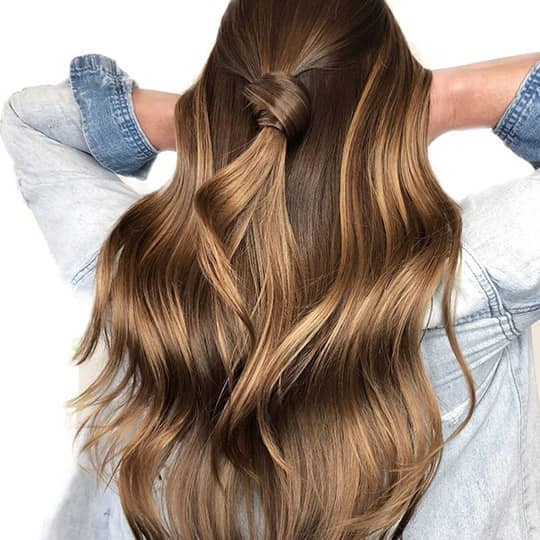
I will confess I have made the mistake of letting honey blonde highlights go too long between toning sessions. The dark brown honey blonde contrast is stunning for the first four weeks: the base is deep and rich, the highlights are bright and warm, and the separation between the two is what gives the hair its dimension. Then the honey blonde starts to oxidize. It pulls brassy, then yellow, and suddenly the contrast looks less intentional and more like a root that grew out unevenly. The fix is not more bleach. The fix is a toner at week five, a purple shampoo twice a week starting week three, and highlights that are painted in a soft V pattern rather than straight across. Straight across highlights grow out as a horizontal line. The V pattern blends into the dark base as the hair grows, so the grow-out looks softer even when the tone shifts. The contrast works best on medium to thick textures because fine hair lets the dark base dominate and the highlights get swallowed. The tone is warm but not golden, more honey than butter, which means it flatters olive and neutral skin without washing out fair skin. The back view shows the contrast best; the front view softens it with face-framing pieces that blend the two tones together.
Mid-Back Dark Brown with Honey Blonde Balayage
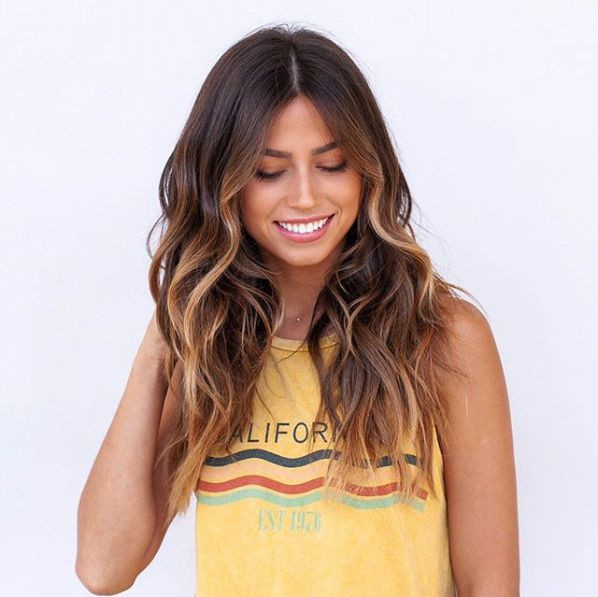
The dark brown honey blonde balayage is the version I recommend over traditional foil highlights on a dark base. Traditional highlights lift the colour from root to tip, which creates a uniform brightness that grows out as a hard line. Balayage paints the colour onto the surface of each section, leaving the roots dark and the ends lighter, which means the grow-out is soft and the dimension is layered rather than uniform. The honey blonde here is painted in broad strokes through the mid-lengths and ends, with finer pieces around the face. The result is a gradient that reads as sun-lightened, not salon-striped. The tone is warm but not golden, a honey that leans beige rather than amber, which keeps it from clashing with cool or neutral skin tones.
Thick, wavy texture holds the balayage best because the waves catch the lighter pieces at different angles. Straight, fine texture needs a curling iron or a large-barrel wand to create the bends that show the dimension. The mid-back length means the balayage has room to travel from dark at the roots to honey blonde at the ends, which is the whole point. A trim every ten weeks keeps the ends healthy without cutting into the painted sections. The honey blonde balayage fades gradually over twelve weeks, settling into a soft beige that still reads as intentional. The grow-out is the quiet win here because the dark base never needs a root touch-up.
Collarbone Blowout with Honey Highlights
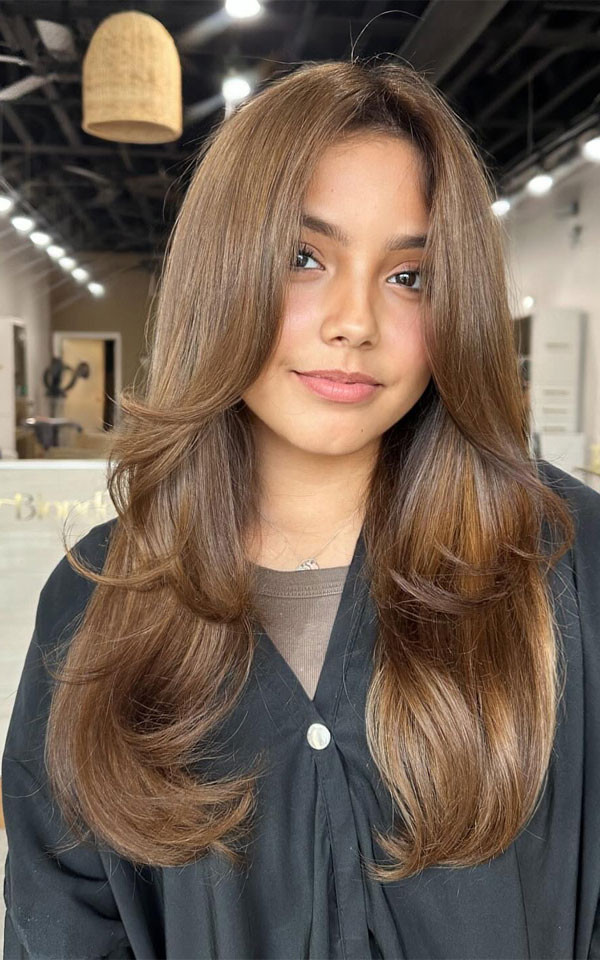
That blowout is not a Saturday morning project. On a medium brown with honey highlights base, the round brush work is what makes the honey highlights catch light instead of disappearing into the brown. My fine hair would need a mousse and twenty minutes of cool air to hold that curve past lunch. Thick hair gets there faster but the curtain bangs still require a heat protectant and a clip to set each side. A purple shampoo once a week keeps the honey from turning brassy on the medium brown base. If you try this at home, expect the front pieces to fight you.
Shoulder Length Honey Balayage
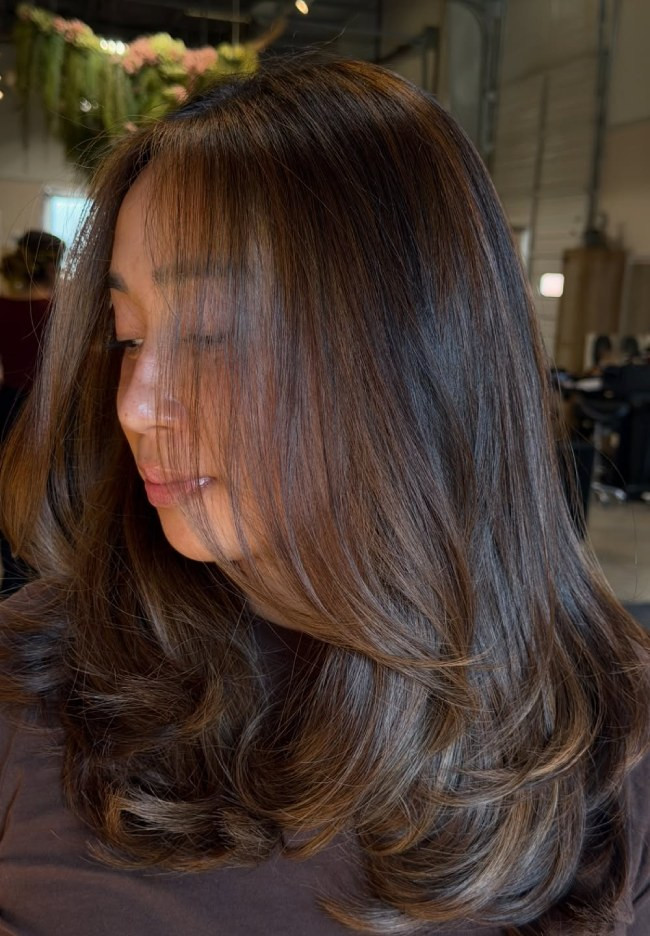
Who actually gets away with a dark brown honey balayage? Anyone with a natural level four or five base, because the grow-out reads as intentional shadow root rather than neglect. The honey balayage sits warm against olive or golden undertones. On porcelain skin it can pull too yellow unless the stylist cools the tone with a beige gloss. The shoulder length means the lightest pieces land near the jaw and cheekbones, which softens a square jaw but does nothing for a very round face. Thick wavy hair holds the dimension best. Fine hair loses the honey contrast by week three.
Visual Idea
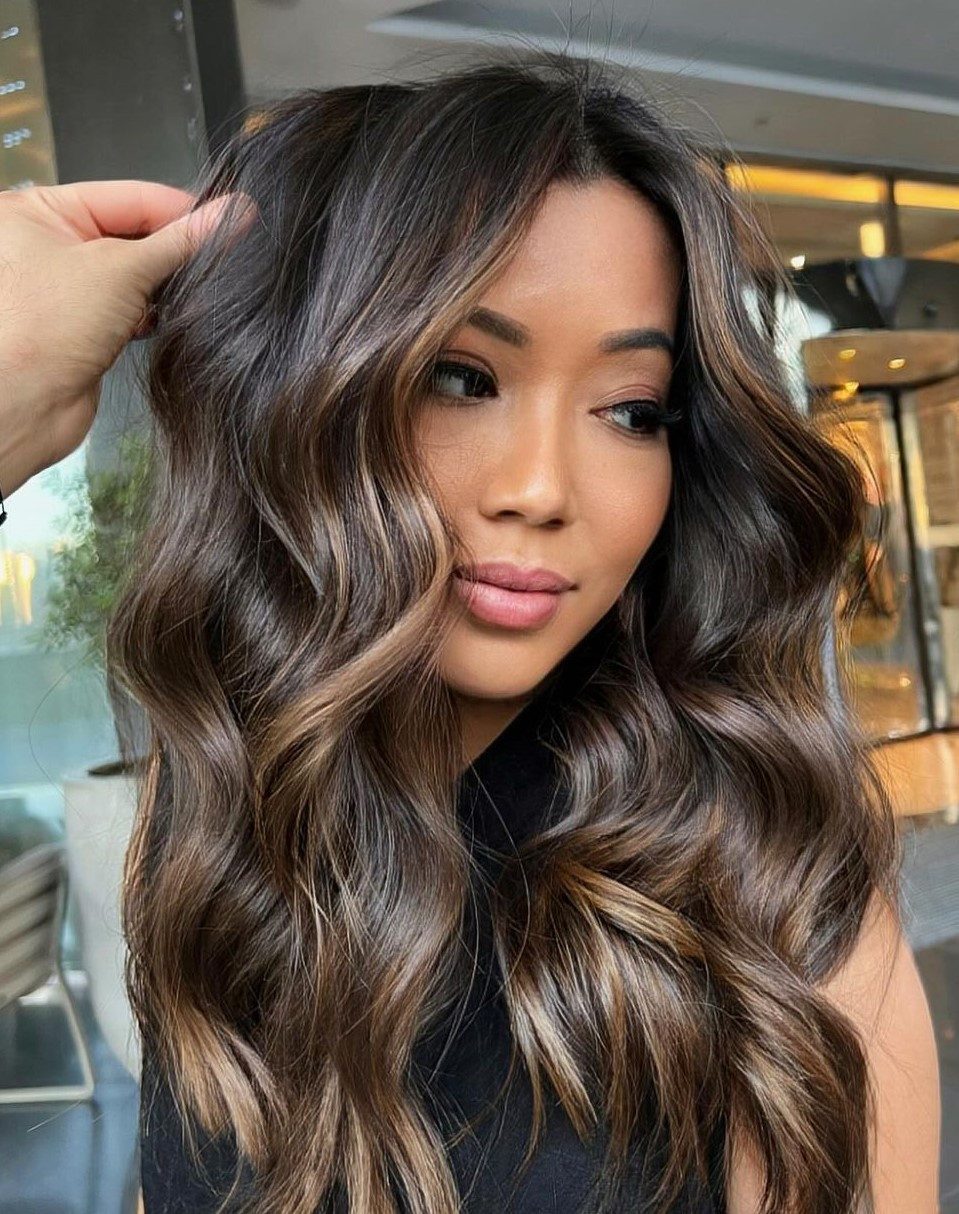
The honey highlights on a dark brown base start vivid. They really do. For the first two weeks the lighter strands sit right against the dark base, warm and separate. Then the base fades a shade lighter and the honey blends in. By week twenty-one the highlights look more like a lived-in balayage than a highlight job. The mid-back length means the ends take the most toner loss. A gloss treatment at week four resets the warmth without a full salon visit. The loose waves help the honey read as dimensional rather than streaky. I would skip a clarifying shampoo on this colour.
Mid-Back Visual Idea
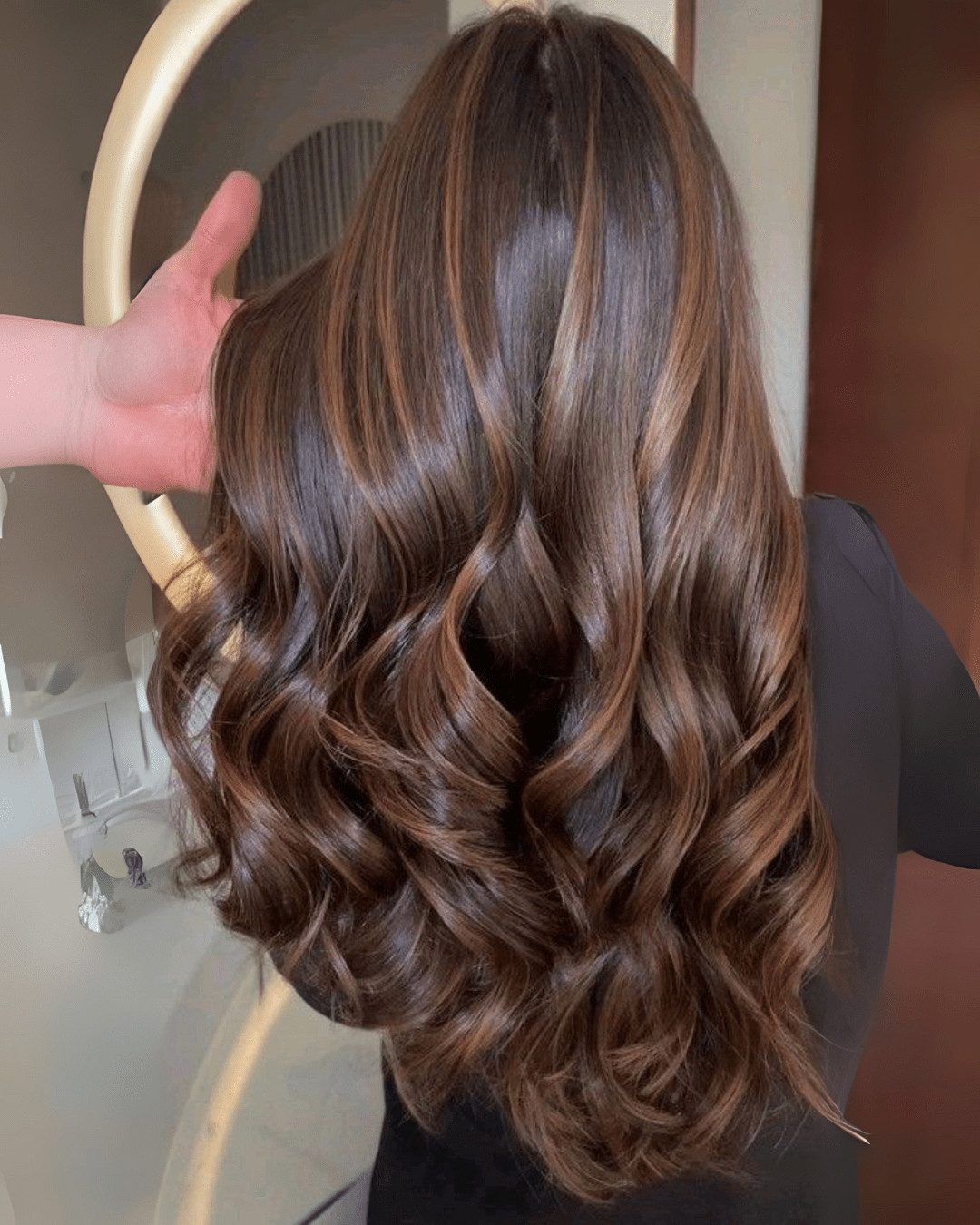
This is an autumn colour that does not wait for the leaves to turn. The rich honey brown with caramel highlights adds warmth to a cool-weather wardrobe, and the caramel pieces keep the honey from reading flat against dark coats. The mid-back length shows off the caramel placement best when the hair is loose and wavy. A blunt trim every ten weeks stops the ends from looking stringy against the warm tones. I would not book this in June. It belongs between October and February when the low sun catches the caramel.
Honey Chestnut Brown Balayage Visual Idea
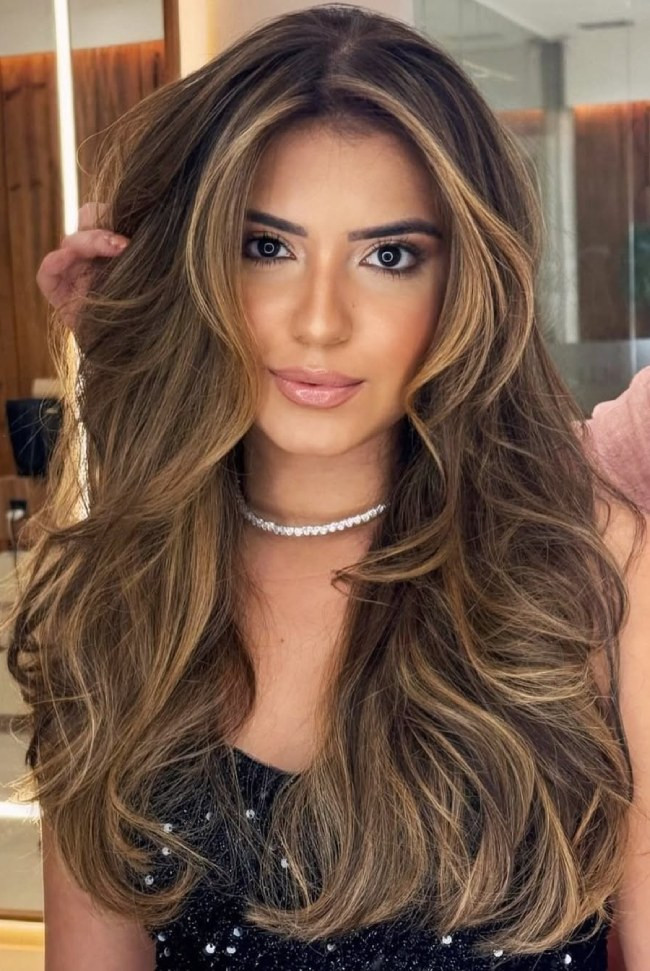
The balayage here starts darker at the root and lightens to honey chestnut brown around the ears, then sweeps through the mid-lengths. The face-framing pieces are painted closer to the part so the lightest colour hits the cheekbones. That placement is deliberate. It draws the eye outward rather than down, which works for a round or heart-shaped face. The long layers keep the honey chestnut brown from pooling at the ends. Thick wavy hair takes the paint well. Fine hair needs a finer weave or the honey washes out by the second wash.
Long Layers Visual Idea
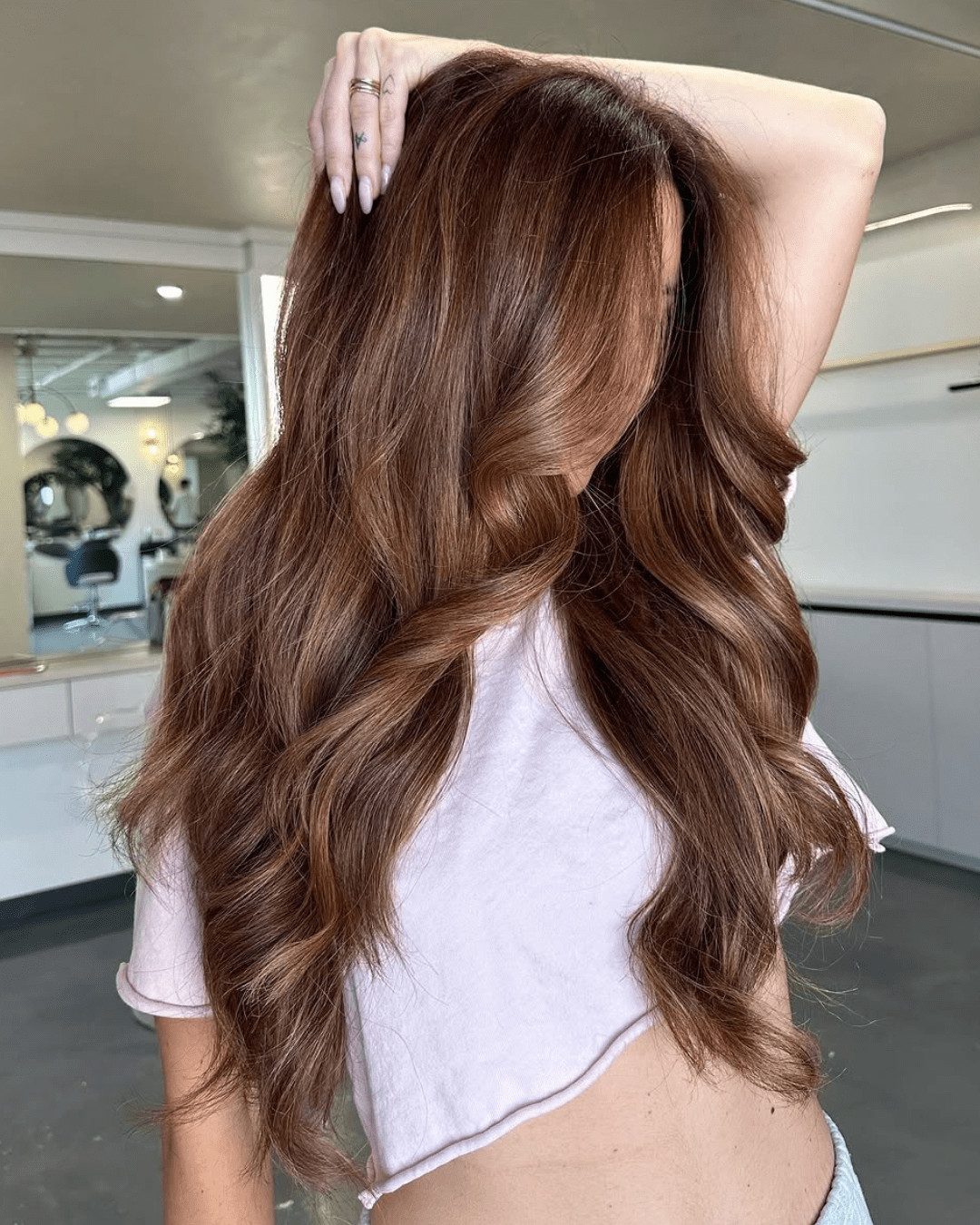
I’ll admit it: I’ve saved this exact combination more times than I’ve actually booked it. Medium brown base with honey blonde highlights, woven through long layers that start around the chin and melt into loose waves at mid-back. The honey tones read warm without tipping into orange, which is the whole trick. On thick, wavy hair, the highlights catch light and move with you. The honest downside? Honey blonde on a medium brown base fades fast, and by week four you’re fighting brass with a purple shampoo. It’s still worth it, just know the upkeep.
Final Thoughts
After writing all of these, I’m booking the dark brown base with subtle honey highlights. It’s the one that fits my fine, straight hair and my patience level: low upkeep, no harsh grow-out, and it still catches the light. The rest of these are beautiful, but that one feels like me.

