
I keep seeing lavender in the salon chair next to mine, usually on someone who swore they’d never go pastel again. The colour has softened since the last round, less cotton candy, more cool grey with a violet pulse. I was skeptical. Then I watched a root shadow do half the work.
This roundup covers 25 takes on Lavender Hair, from a low-commitment streak to a full vivid commitment. Some need a stylist, some hold up on fine hair, and a few will test your patience by week four. There is a version for every density and every tolerance for grow-out, including mine, which went flat by 4 pm and needed a root touch-up at five weeks.
Cool-Toned Lavender with Silver Highlights
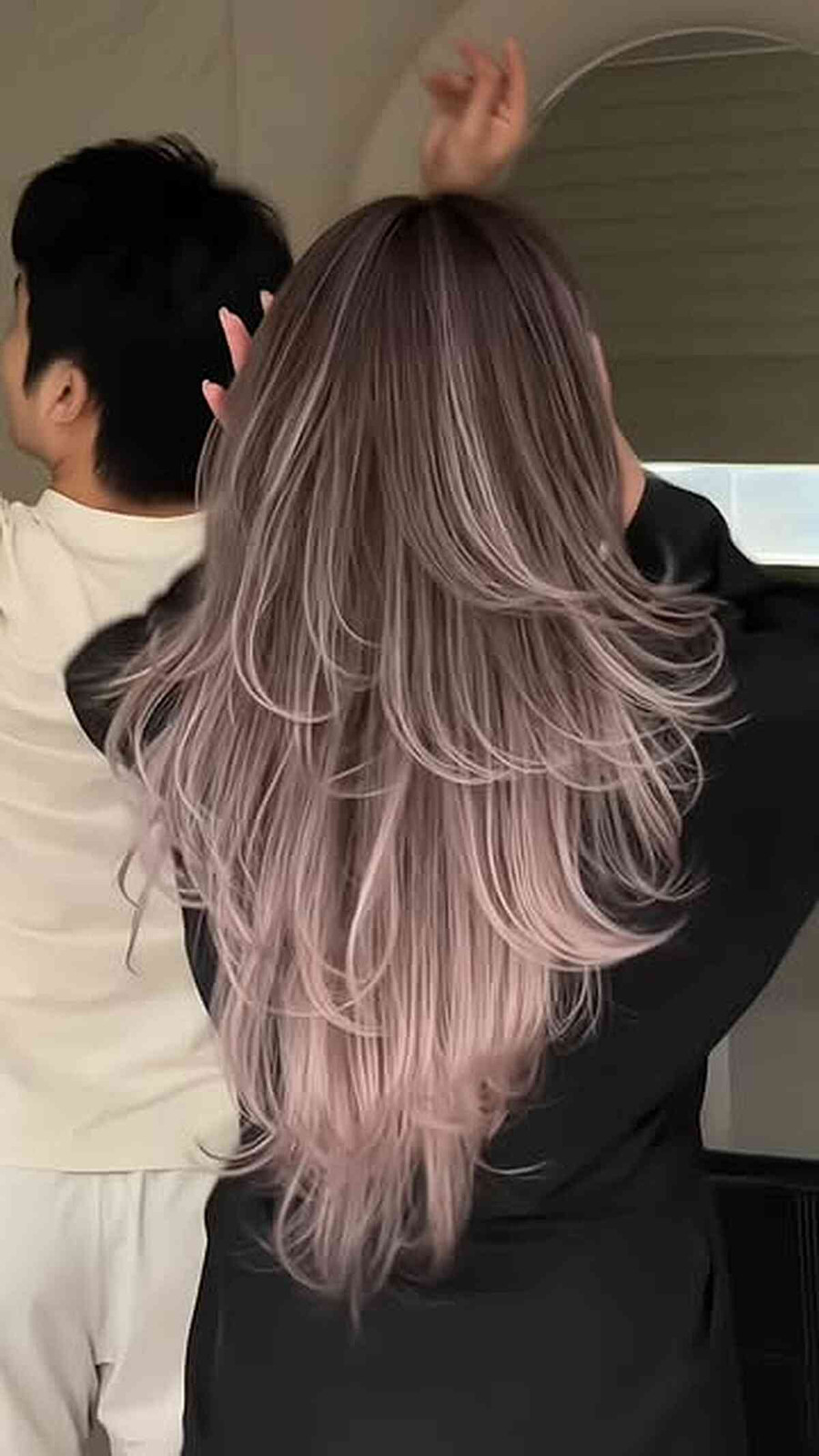
The silver and grey undertones keep this from reading as cotton candy. It lands somewhere between cool and cold, which is exactly the point. Mid-back length with long layers that move without separating. No bangs, middle part, air-dried waves. The texture is wavy and medium density, and that matters because fine hair would let these silver highlights look thin. This one needs density to carry the metallic weight. A round face would find the middle part and long vertical lines lengthening. Anyone with warm skin undertones should pass. The cool tones will fight you.
Vibrant All-Over Lavender
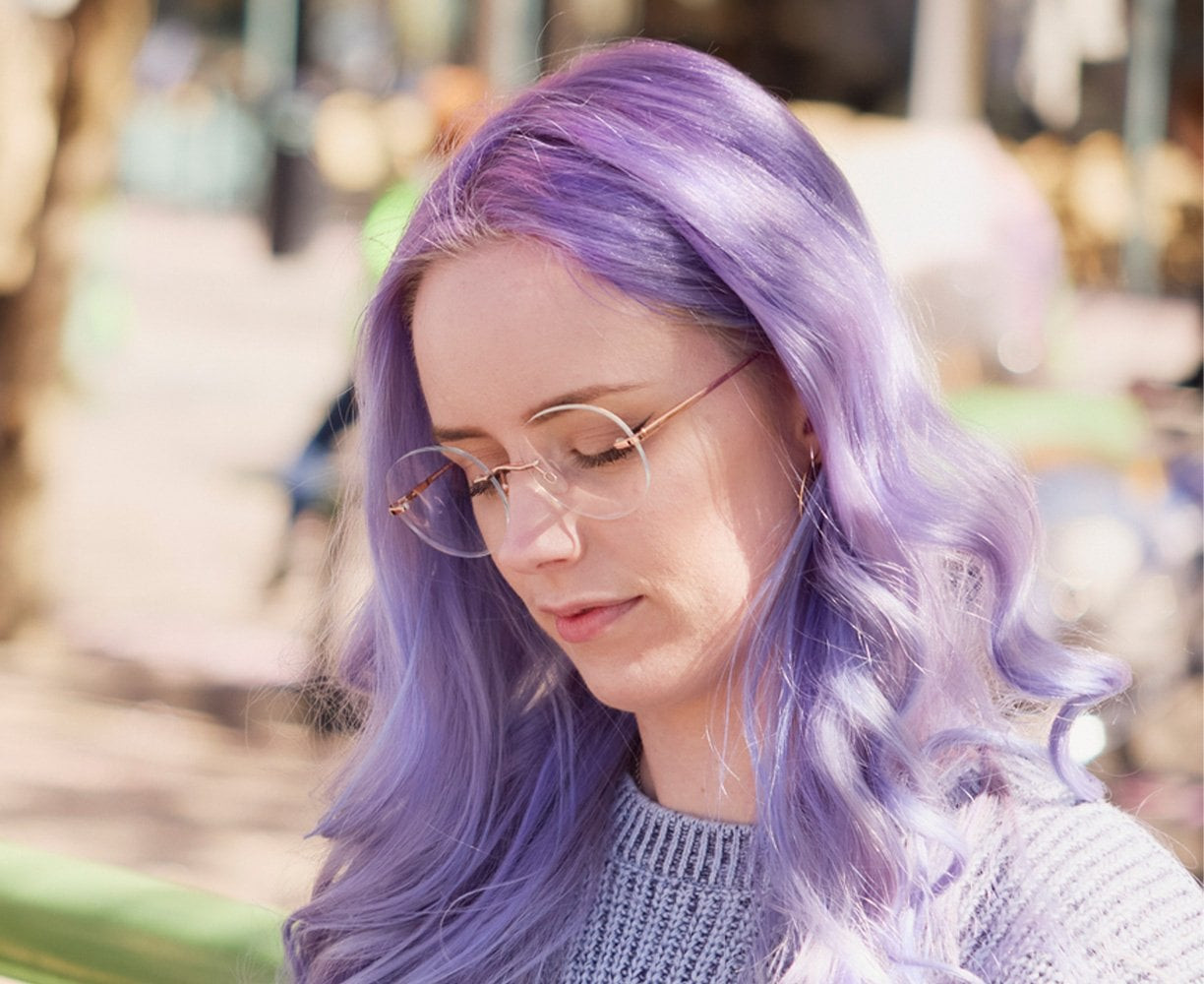
This is the one that fades fastest. I will not pretend otherwise.
Vibrant lavender hair at mid-back length with long layers and no bangs. The loose curls add shape without fighting the colour. Thick, wavy texture holds the curl and the pigment better than fine hair would. The styling steps are simple: a curling wand for defined curls, then separate them with fingers. The upkeep is the real story. A professional touch-up every four to six weeks. Harsh shampoos strip this colour in two washes. Use something gentle. The fade goes patchy, not pretty, so book the touch-up before you see the brass.
Ash Blonde with Subtle Lavender Streaks
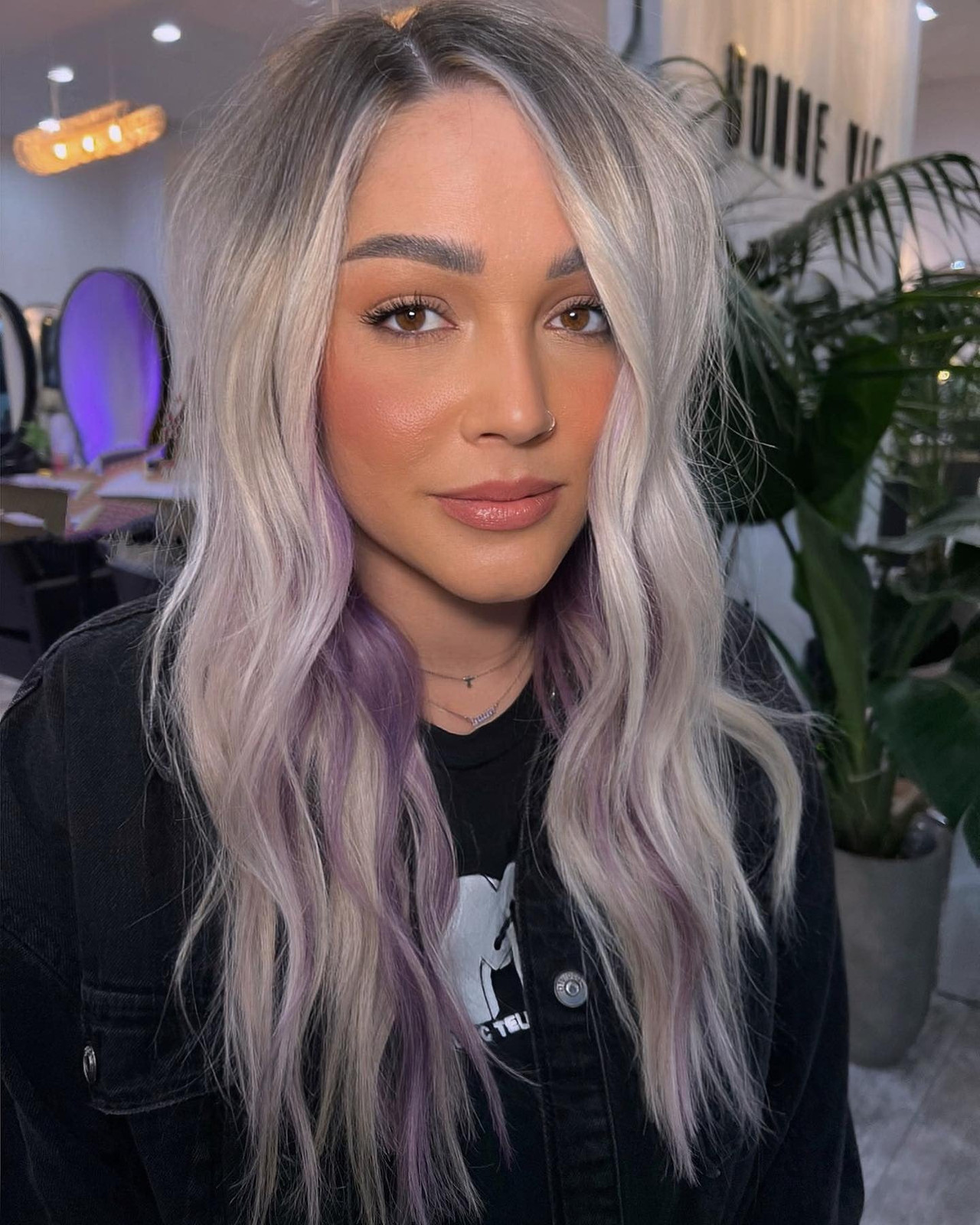
Why go all the way when a few streaks do the work? Collarbone length with long layers and side-swept bangs. The ash blonde base is the anchor, the lavender streaks on ash blonde are the accent. Wavy, medium density texture. Side part. The loose waves keep it from feeling precious. Compared to a full lavender head, this one reads as modern and deliberate. The ash blonde base also means the fade is graceful, not garish. A trim every six to eight weeks keeps the side-swept bangs from turning into curtain fringe. This is the version for people who want lavender without committing to lavender.
Lavender With Dark Root Shadow
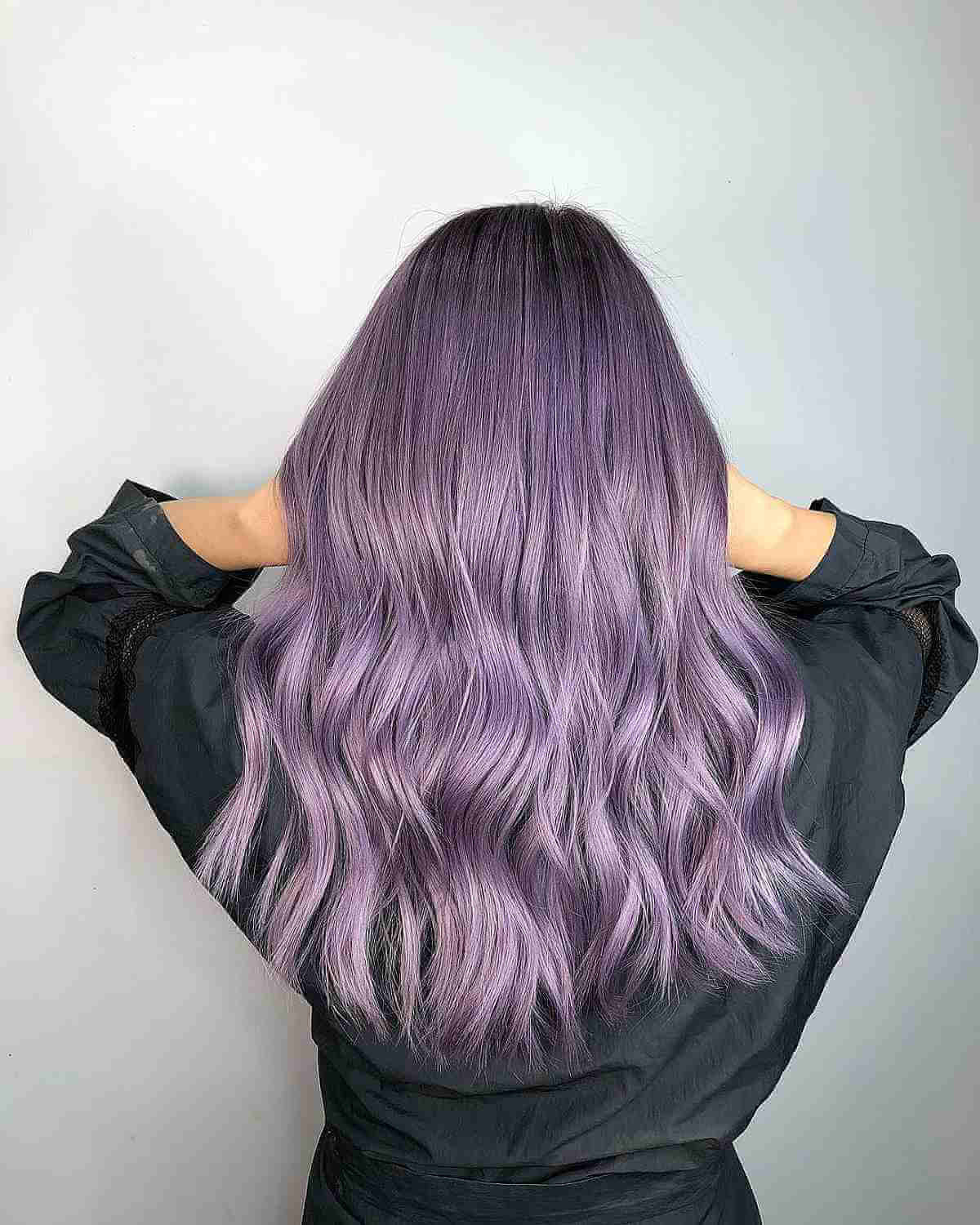
I booked this twice in one season. That is my confession.
Lavender with root shadow at mid-back length, layers throughout, no bangs. Middle part, wavy texture, medium density. The dark root shadow is not a grow-out hack, it is a deliberate choice. It gives the lavender depth and stops the colour from looking flat against the scalp. The layers catch the light differently at the root versus the ends, and that is the whole trick.
- Mid-back length with layers
- No bangs, middle part
- Wavy, medium density texture
- Blow-dry with a round brush to enhance the layers
- Tell your stylist: soft root shadow, no visible line
Trim every eight to ten weeks. Over-washing dulls the lavender. A dry shampoo stretch between washes keeps the colour vibrant longer.
Ash Brown Base with Lavender Highlights
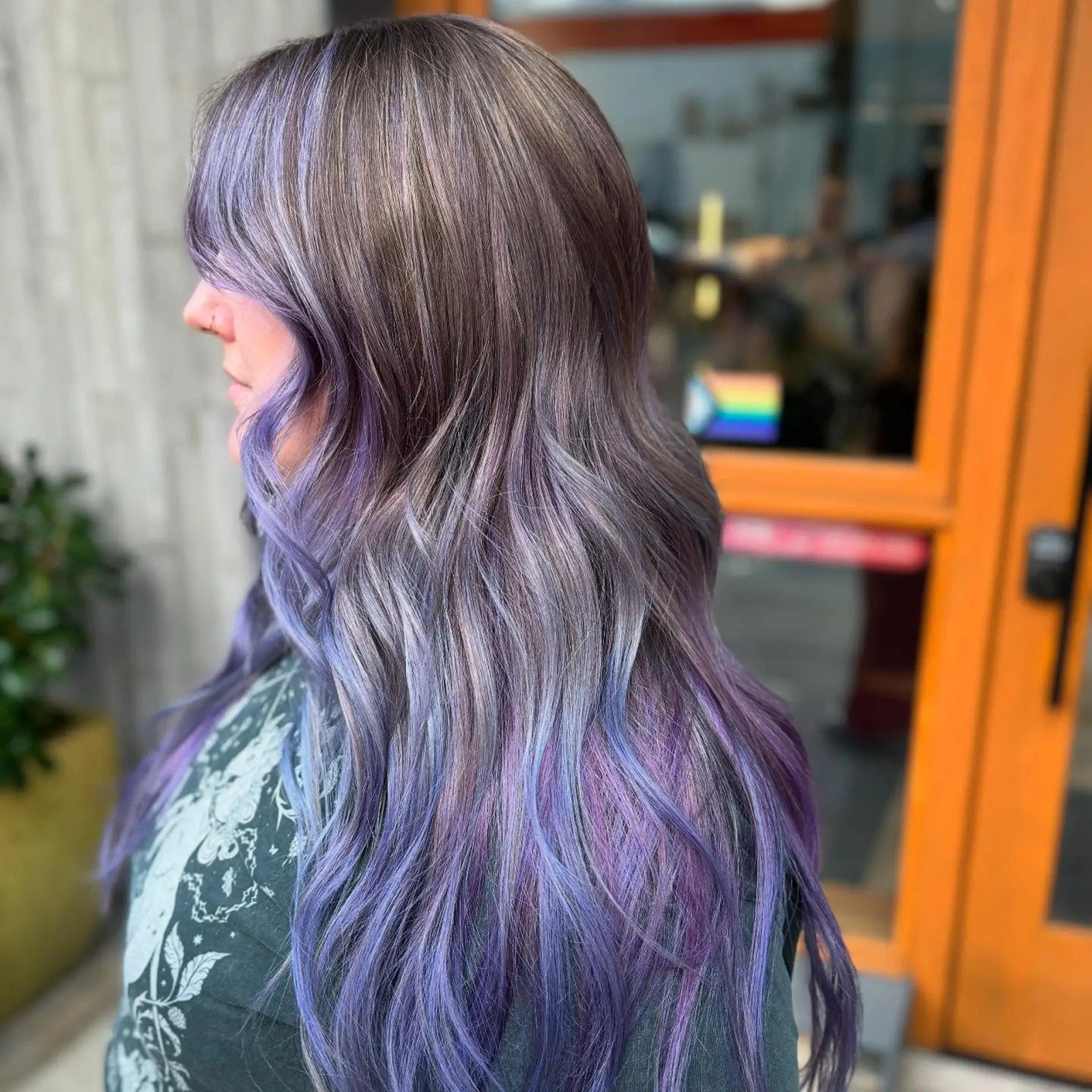
Thick, wavy hair does not always take colour evenly. The ash brown with lavender highlights solves that. Mid-back length with long layers, no bangs, middle part. The ash brown base is dense enough to hold the thick texture, and the lavender highlights sit on top without getting lost. This is a salon job. The blending requires a stylist who understands how to weave highlights through thick hair without creating stripes. Air-dry or use minimal heat. The highlights fade softly into the brown, so the grow-out is gentle. A trim every ten to twelve weeks. Anyone with fine or low-density hair should skip this. It needs the weight.
Bright Lavender Mullet
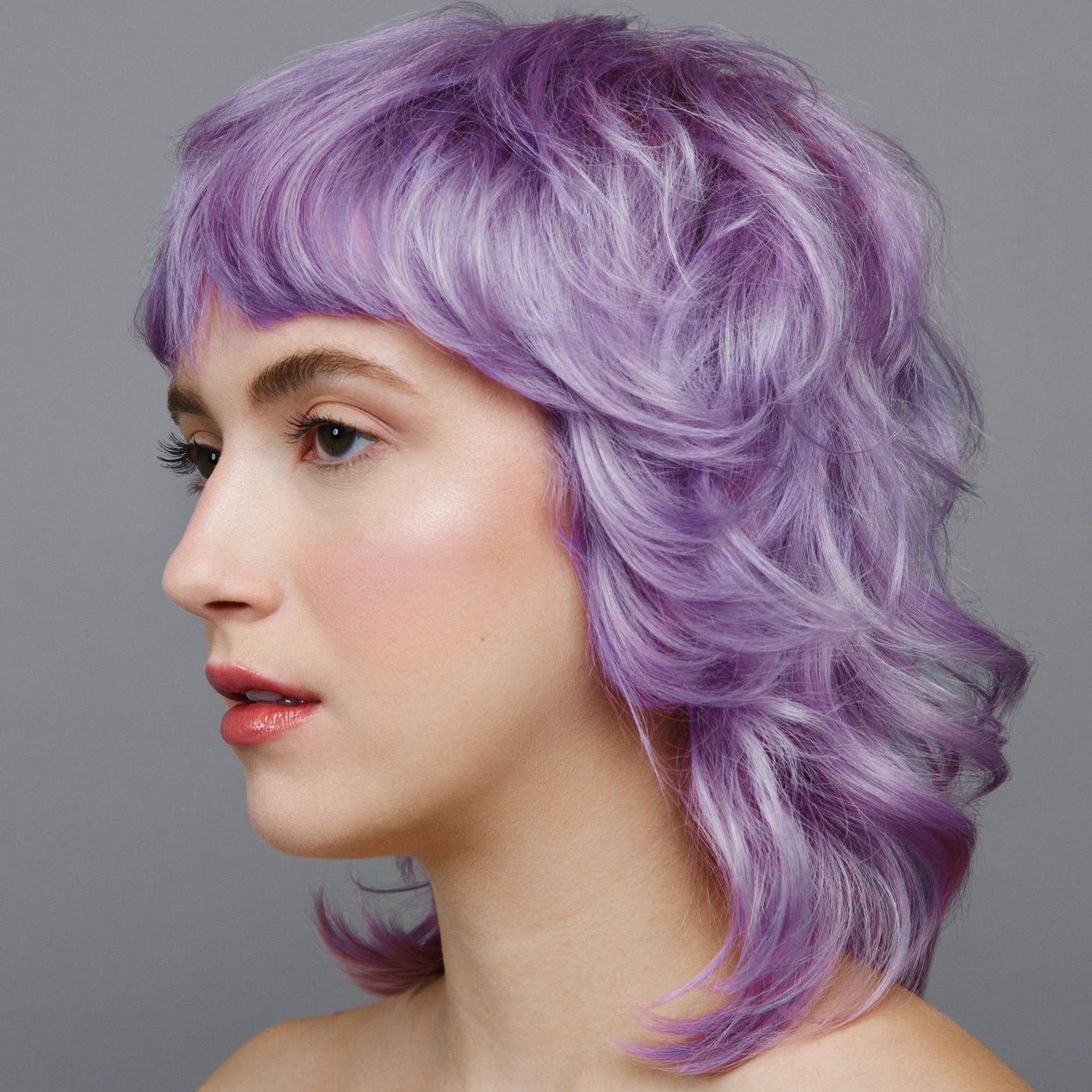
The mullet hits the party circuit in June and does not apologize. This bright lavender mullet lands choppy bangs at the brow, short layers at the ear and longer pieces grazing the collarbone, all of it wavy and medium density and aggressively textured. It is a three-hour salon commitment and a four-week color refresh, and the honest downside is that choppy bangs will separate by noon unless you carry a texture spray. But for one night of dancing, it is worth every second of the grow-out that follows.
Soft Light Lavender Lob
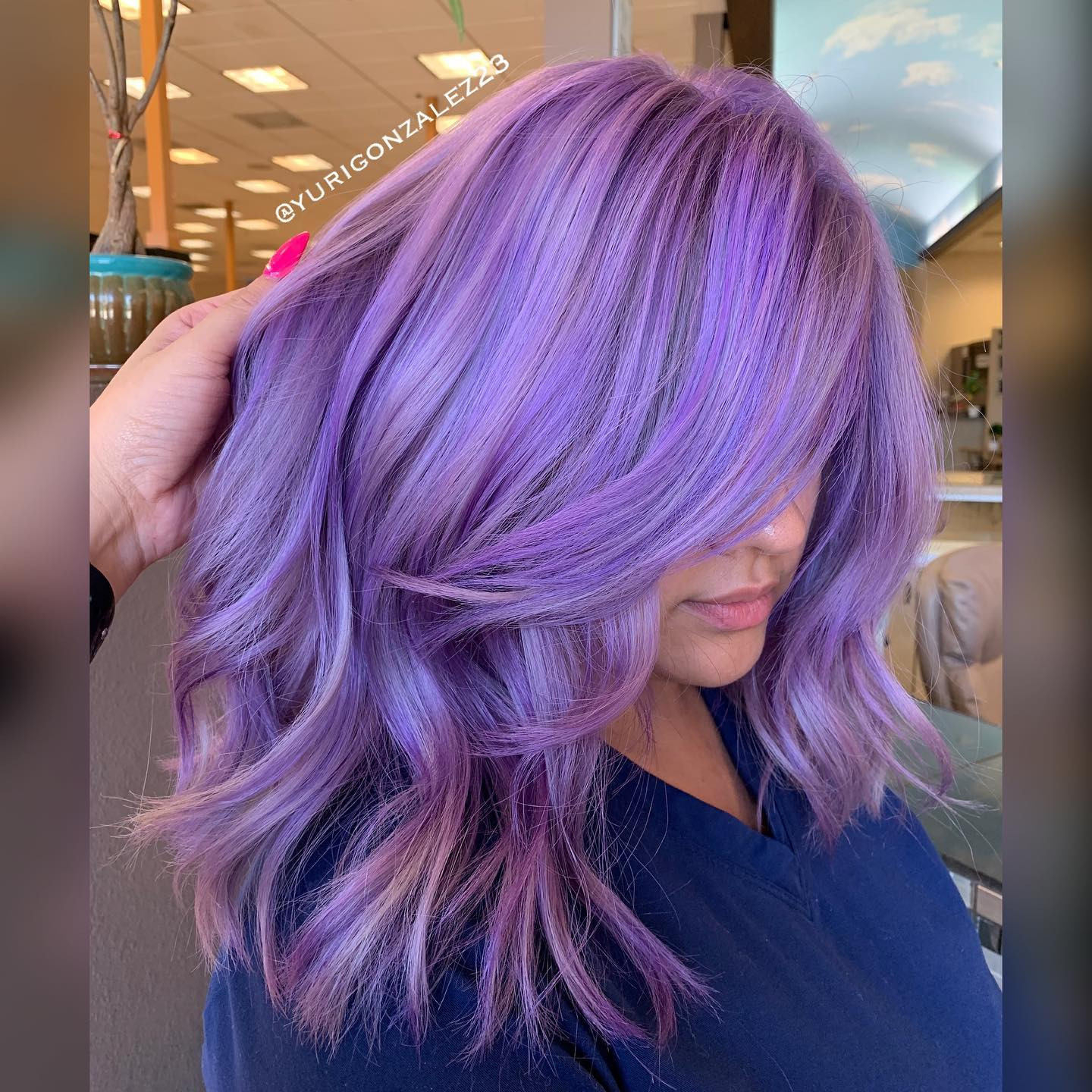
This one earns its keep. The soft light lavender lob lands at the collarbone with side-swept bangs and loose waves, the colour a light lavender with lighter highlights that catch the light without screaming. Ask your stylist for a lob with soft layers that start at the chin, side-swept bangs that hit the cheekbone, and a light lavender base with a few brighter pieces woven through the crown. That is the whole recipe. It is simple, it is repeatable, and it fades so evenly that you can stretch the salon visit to eight weeks without looking patchy.
Uniform Pastel Lavender Waves
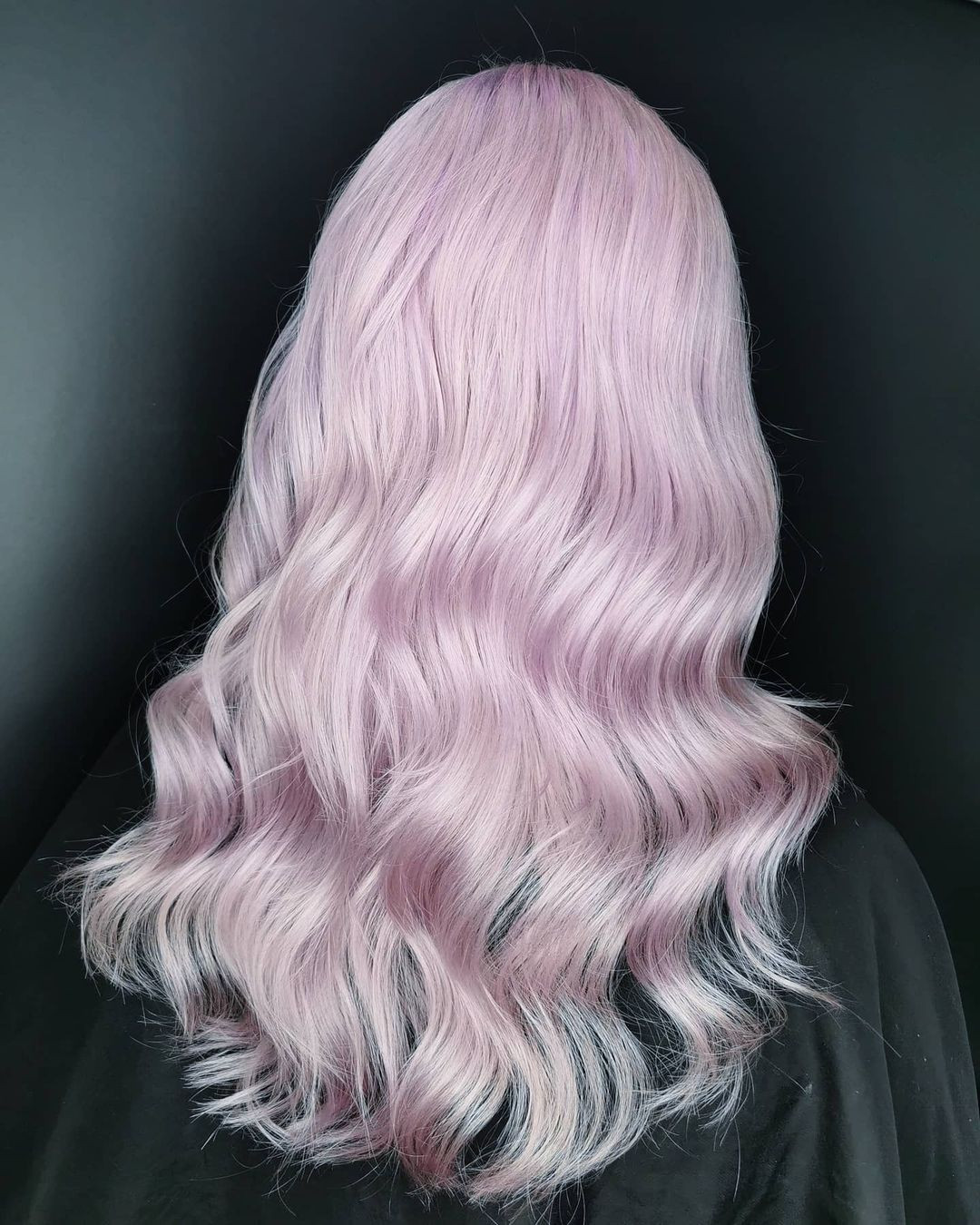
Can a pastel lavender hair actually survive a real week? On thick, wavy hair, the uniform pastel lavender holds better than you expect. The long layers start below the shoulder and the colour is one even pastel tone from root to mid-back, no highlights, no root shadow, just a single soft shade that fades lighter over time. The waves hide the grow-out for the first three weeks, then the roots become a deliberate contrast. A trim every ten to twelve weeks keeps the ends healthy, and air-drying with a diffuser preserves the wave pattern better than any hot tool.
The real trick is the grow-out. Because the colour is uniform, the dark root line shows at week four, not week six. You either commit to a toner every three weeks or you let the pastel fade to white and call it a deliberate ombre. I have done both. The ombre route is calmer.
Soft Lavender Pixie Crop
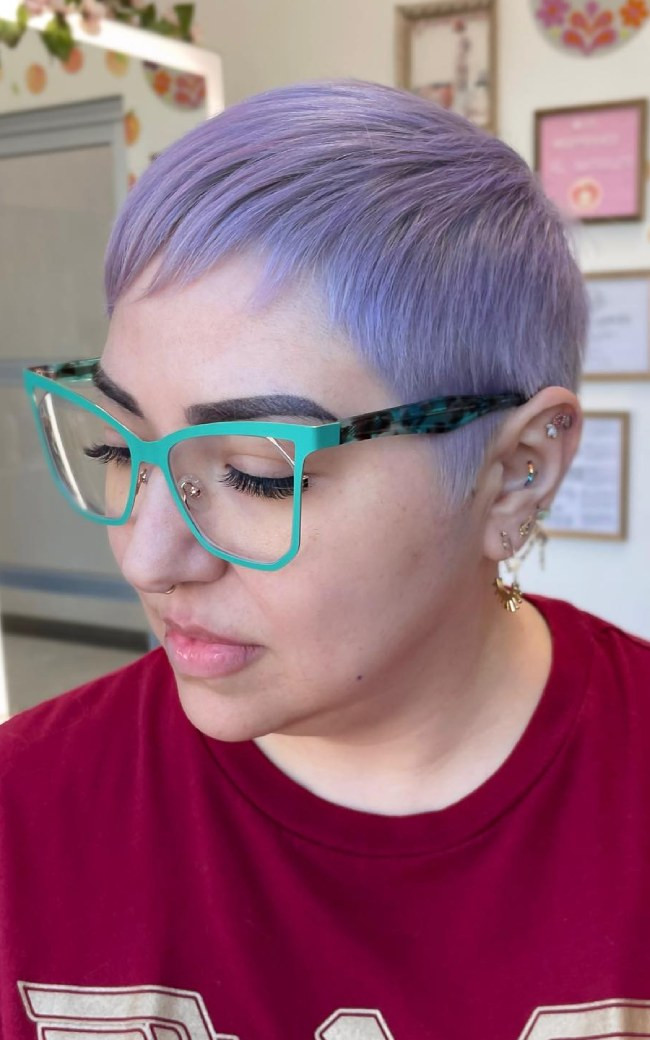
The soft lavender pixie cut works best on fine, straight hair that holds a clean line. The pixie crop sits at the ear with short, feathered bangs that sweep across the forehead, the colour a soft lavender that reads almost silver in low light. On coarse or curly hair, the shape fights the texture and you lose the precision. On fine hair, the feathered bangs add volume where it tends to fall flat, and the side part breaks up a round hairline without elongating a narrow face. It is not a universal cut, but for the right texture it is the easiest wash-and-wear option in this roundup.
Grey Bob with Lavender Highlights
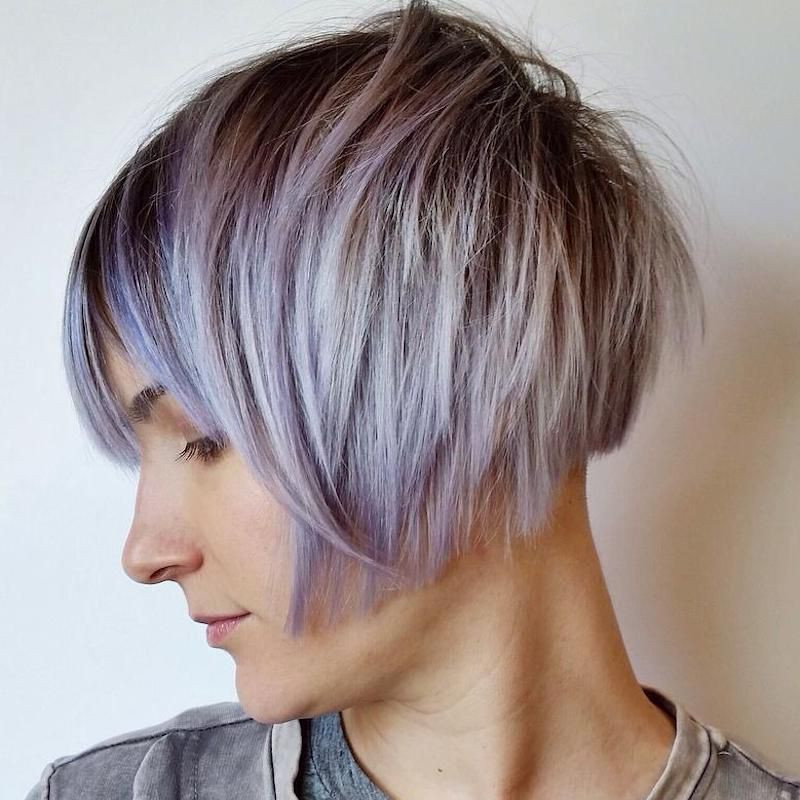
Can you get lavender highlights on grey hair without a salon visit? If your base is already a cool grey or silver, yes, with careful sectioning and a semi-permanent pastel toner. The grey base in this bob is a natural or dyed silver, with subtle lavender highlights woven through the top layer and the side-swept bangs. The bob itself is blunt at the ear, no layers, which keeps the fine, straight texture looking dense. Apply the toner to damp, towel-dried hair, focus on the front sections and the bangs, and rinse after ten minutes. The result is a soft lavender shimmer that fades back to grey over four washes, no root line, no regret.
Vibrant Lavender Curls
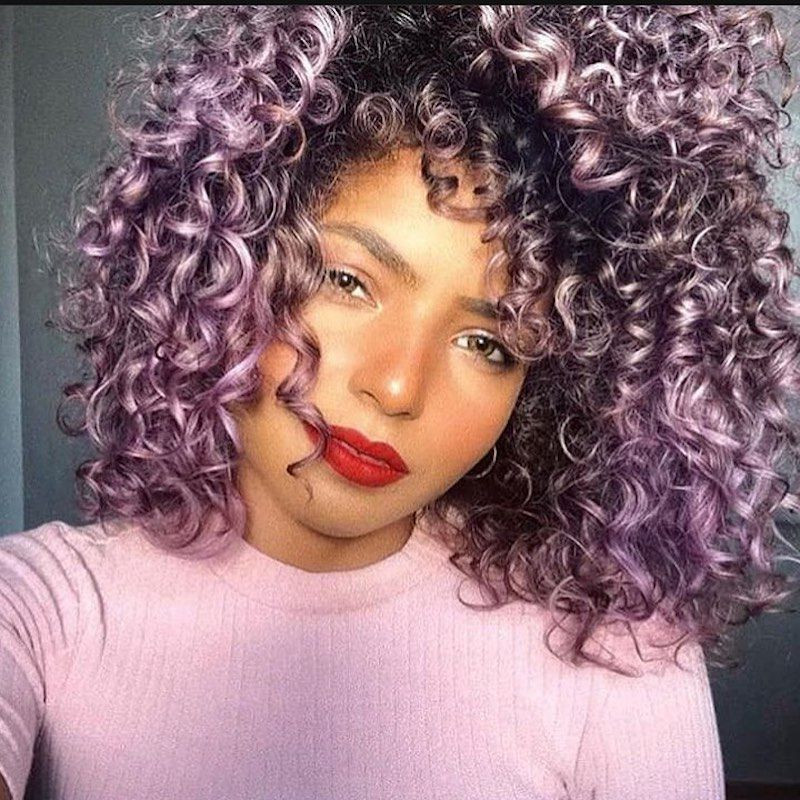
I will admit, I was skeptical about putting a color this loud on curly hair. But this layered cut with curly bangs makes the vibrant lavender curls feel less like a costume and more like a statement. The layers let each curl catch the light, so the color reads dimensional instead of flat. The bangs are short enough to bounce off the forehead, which keeps the whole thing from feeling heavy. Texture matters here: thick, coily hair holds the shape best, while fine curls might need a diffuser to keep the volume from dropping by noon. The middle part widens a round face, so test that before you commit.
Vibrant Lavender Lob with Dark Roots
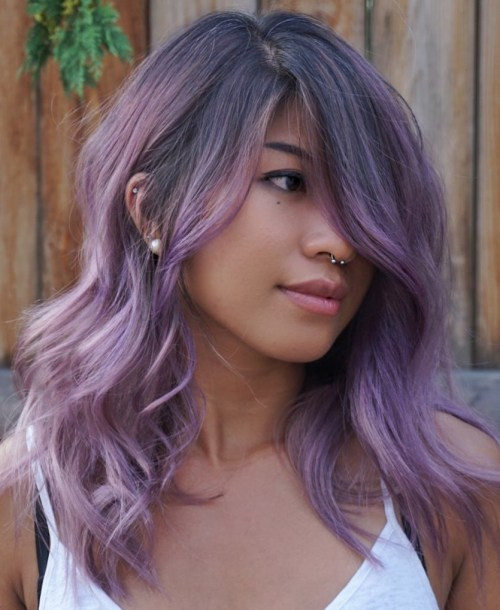
A lob, side-swept bangs, and a darker root shadow. That is the whole formula, and it works.
The collarbone length keeps the vibrant lavender with dark roots from reading too young. The side part softens a square jaw, and the bangs sweep across without fighting the wave pattern. The root shadow buys you about six weeks before the grow-out line shows, which matters when the lavender is this intense. Textured waves are the move here: a quick tousle with a texturizing spray, no brush, no round brush, no patience required. Medium density hair holds the wave best. Fine hair might go flat by 3 pm, so ask your stylist for a few internal layers to keep the shape alive.
Pastel Lavender Chin Bob
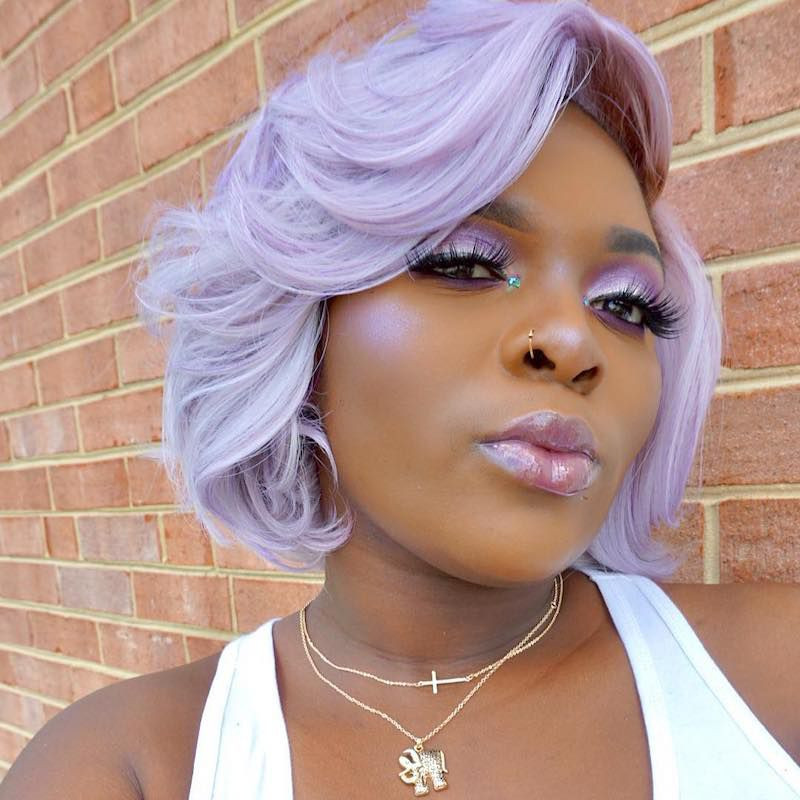
I saw this pastel lavender bob and had a gut reaction: that is a lot of upkeep for a chin-length cut. The blunt bangs hit just above the brows, which means you are trimming every four weeks if you want them to stay out of your eyes. The bob itself is one length, no layers, so the pastel lavender reads as a solid block of color. That is the point. Straight, fine hair works best here because any wave breaks the clean line. The middle part suits an oval face. If your hair is thick, skip this cut: the weight will make the bob look like a helmet.
Dark Brown to Lavender Ombre
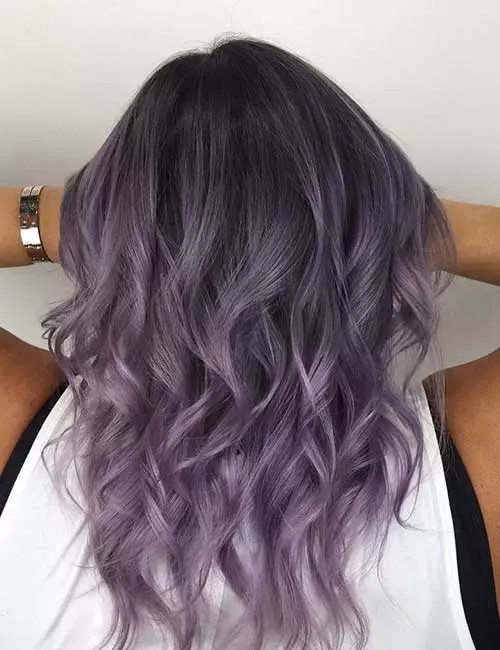
The mistake people make with lavender ombre hair is starting the color too high. You want the dark brown base to dominate the top half, then the lavender kicks in around the shoulders. That way the grow-out is invisible for months. The mid-back length with long layers lets the ombre read as a gradient, not a stripe. No bangs here, which is smart: the face stays clean, and the color does the work. Thick, wavy texture enhances the transition because each wave catches a different shade. Fine hair will need a curling iron to fake the movement. The back view in the photo shows the lavender peeking through the waves, which is exactly the effect you want.
Blunt Bangs Sleek Pastel Lavender Bob
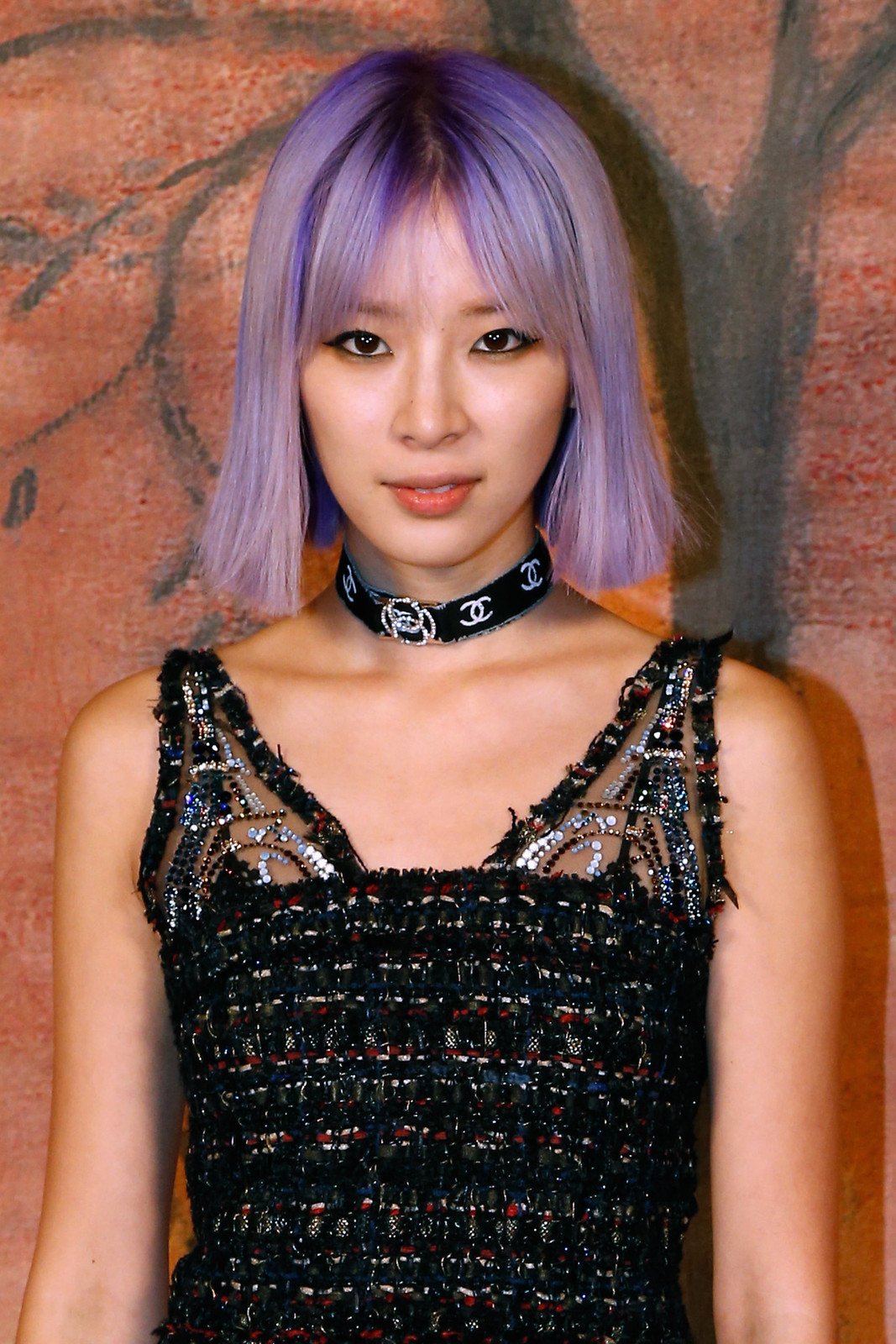
A sleek pastel lavender bob with blunt bangs versus a soft, textured one with curtain fringe. They look like cousins, but they behave very differently. This version is all about precision: the chin-length bob is cut to one blunt line, no layers, and the bangs hit straight across the brow. That means every strand has to cooperate. Straight, medium-density hair is the only texture that will hold this shape without fighting. The pastel lavender reads as a solid block, which is the whole point: no dimension, no gradient, just a flat, even shade from root to end.
The comparison is this: a textured bob hides a bad blow-dry. This one does not. You are committing to a flat iron every wash, and the bangs will need a trim every three weeks if you want them to stay out of your eyes. The middle part suits a long face. If your hair has any natural wave, skip this cut and go for the curtain fringe version instead.
Silver Lavender Bob with Contrast Roots
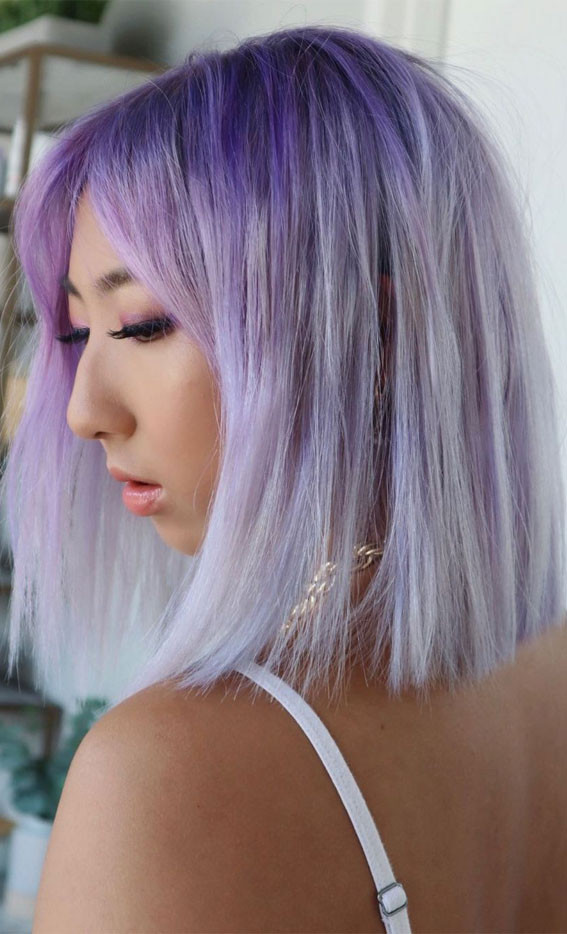
Can a bob look expensive and low-maintenance at the same time? This one does. The cut hits at chin length with blunt bangs and a side part, the ends slightly textured so they don’t land like a helmet. The silver lavender with dark roots is the trick: the contrast roots blur the grow-out line for weeks, which means you skip the panic at week four. Fine, straight texture works best here, the blunt baseline keeps it reading dense. A side part widens a round face, so if yours is narrow, this is your shape.
Iced Pink Lavender Waves
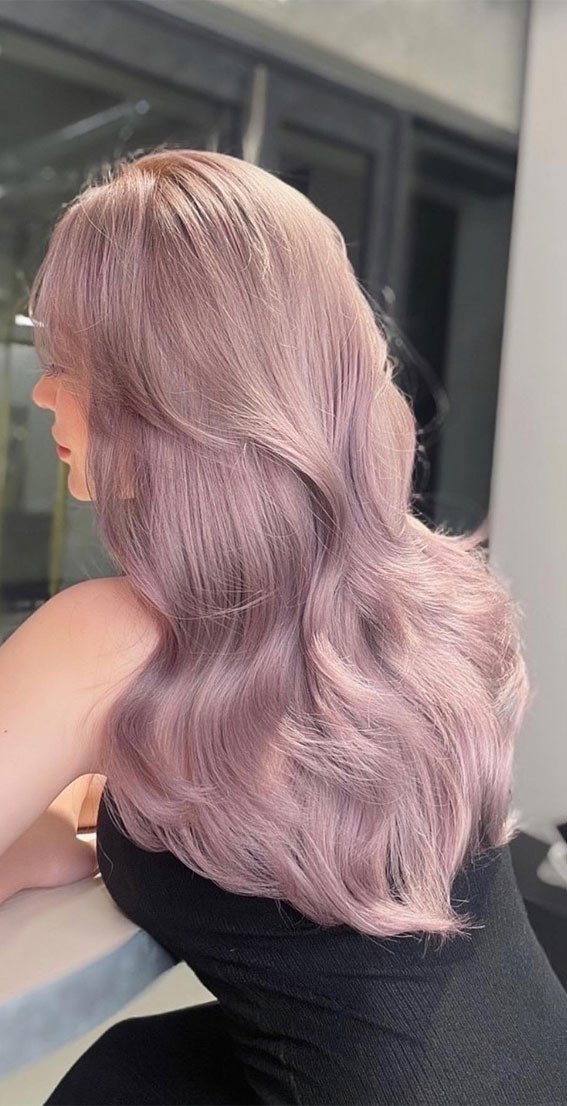
I will admit I was skeptical about iced pink lavender hair. Pink undertones can read bubblegum fast, not soft. But this one lands somewhere between a winter sky and a faded rose. The cut is shoulder-length with long layers, no bangs, and the loose waves are the only styling move you need. Medium-density wavy texture holds the wave without product, which is rare. The pink undertones fade gracefully, they shift to a cool beige before they go brassy, so you get six decent weeks before the toner conversation starts.
Visual Idea
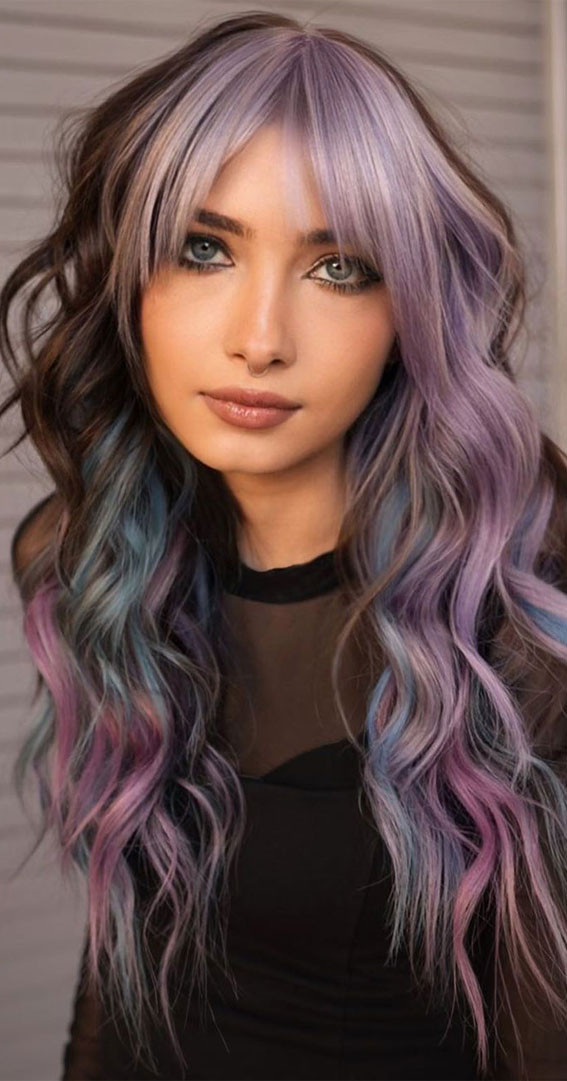
You walk in, show a photo, and three hours later you walk out with mid-back layers, blunt bangs, and lavender with blue and pink highlights woven through the lengths. The wavy texture and thick density mean the layers actually show, they don’t collapse into one flat curtain.
The cost is the chair time. A multi-tonal job like this is not a single bowl application, it is a foil-and-paint situation that demands a stylist who understands how blue and pink fade at different speeds. The blunt bangs need a trim every three weeks, no negotiation. But the payoff is a color that shifts in different light, which a single shade cannot do.
Collarbone Visual Idea
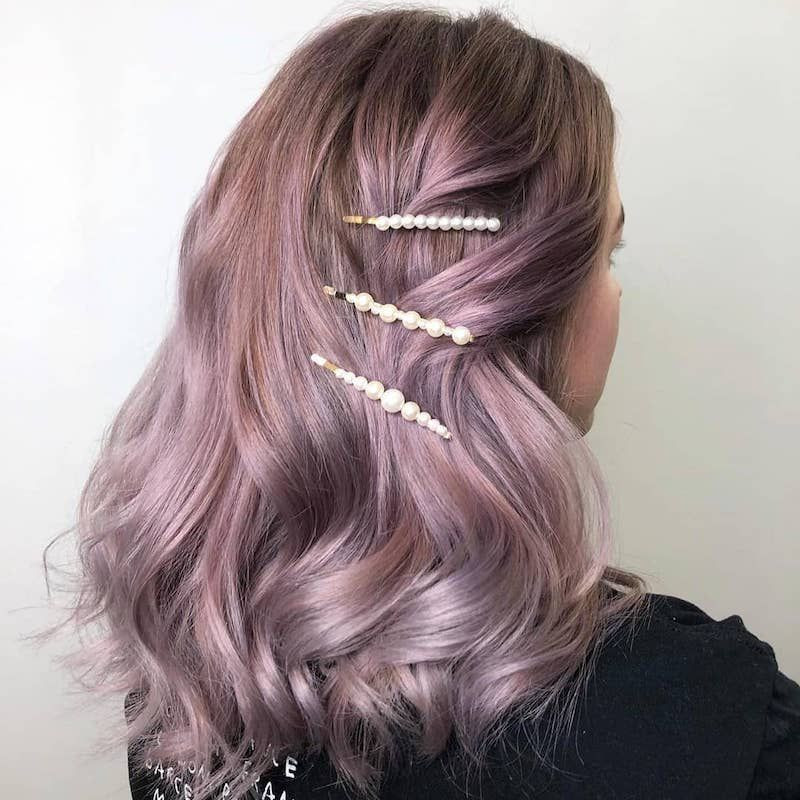
This one stopped me. Dusty lavender at collarbone length, side-swept bangs, loose waves, a side part. It is the haircut equivalent of a cashmere sweater you found at a thrift store. Medium-density wavy texture is the requirement, the waves give the dusty lavender some movement, without them it would read flat. The side-swept bangs soften a square jaw, they land just above the brow bone and blend into the layers. It is not a dramatic cut, it is a cut that makes you look like you have your life together.
Shoulder Visual Idea
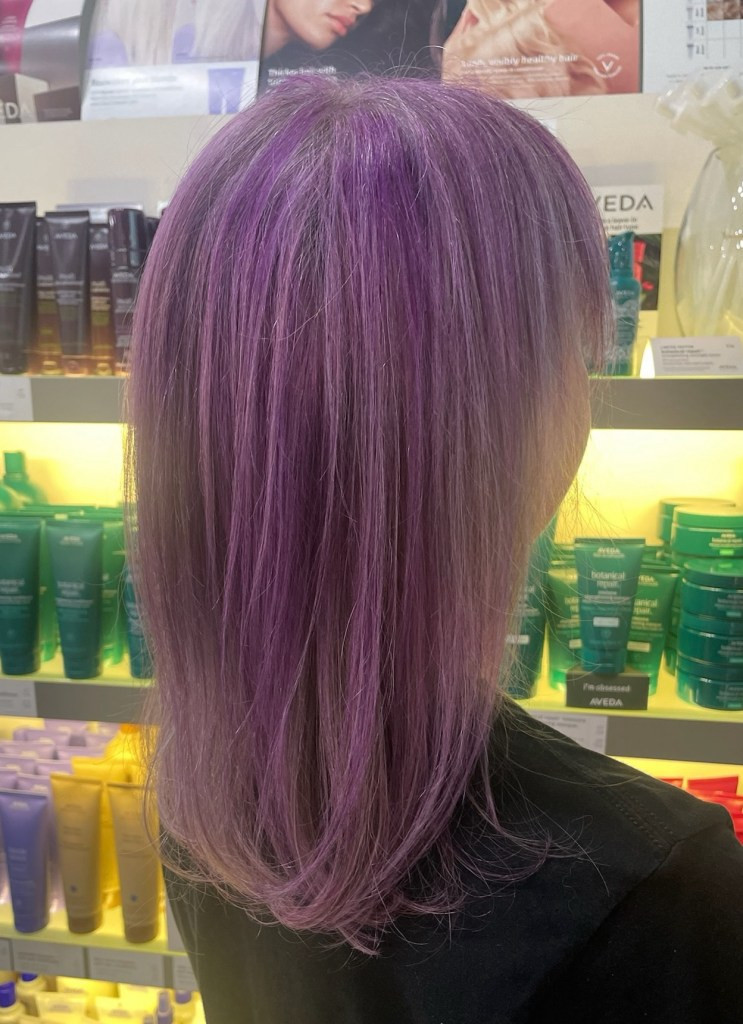
Best grow-out in this roundup. The shoulder-length lob with no bangs and a middle part is the shape that refuses to look bad at week eight. Vibrant lavender on straight, fine texture reads saturated because the hair is smooth, no texture breaks up the color. The blunt baseline is the key, it makes fine hair look thicker than it is. A middle part suits oval and heart faces, it balances the width at the cheekbone. The grow-out is a straight line, no layers to misbehave, just a trim every ten weeks.
Vivid Lavender Visual Idea
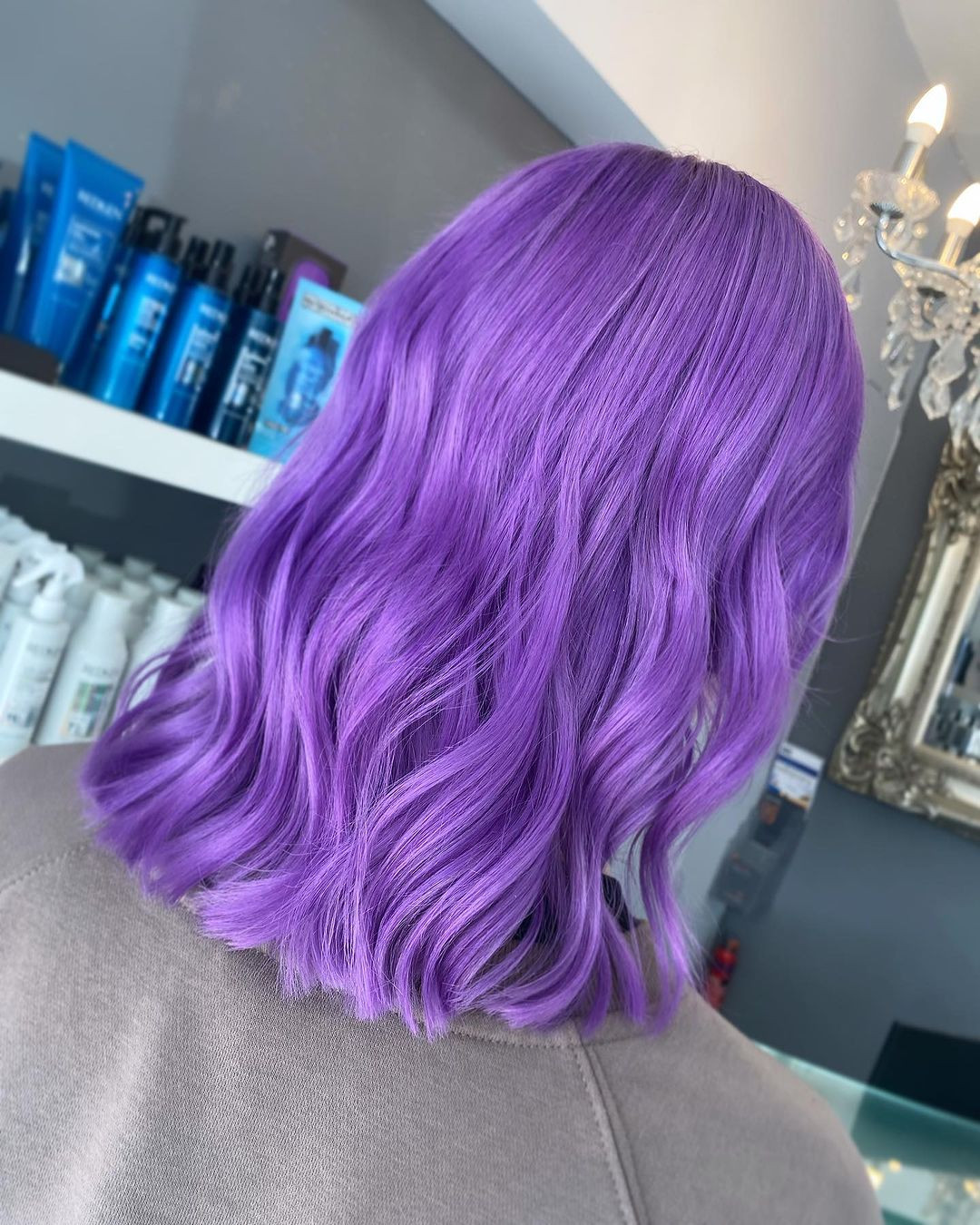
The trick with a vivid all-over shade like this is that your base has to be nearly white before the color goes on. I mean, pale enough that your stylist double-checks the bowl. This bob hits collarbone, no bangs, a middle part, and the wave pattern is loose enough to let that uniform lavender hue breathe. Medium density hair holds the shape without getting weighed down. At home, you are not getting this depth. A demi-permanent box color lifts unevenly and leaves a patchy mess. Book the chair, bring a reference photo, and expect to sit through a full lightening session first. The result is worth the three hours.
What makes it work is the cut. A blunt bob with soft interior layers keeps the color looking dense and saturated. No layers means no thin spots where the lavender goes sheer. The waves are done with a wide-barrel iron, nothing tighter than a two-inch clamp. That keeps the color reading solid instead of fragmented. If your hair is fine, skip the heavy wave spray. A light texture mist is enough.
Bob Visual Idea
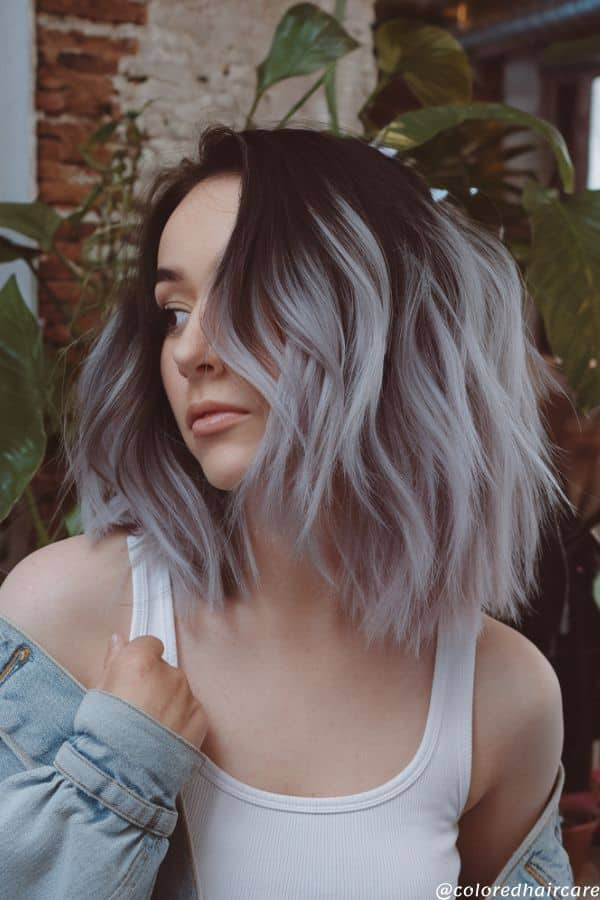
Can a bob with dark roots and lavender ends actually read as intentional and not like a grow-out emergency? In this case, yes. The contrast is sharp enough that it looks planned. The cut is a collarbone bob, no bangs, middle part, styled in a wavy blowout. Medium density hair lets the dark base sit heavy while the lavender highlights catch light at the ends. The trick is the placement. The lavender starts a few inches down, not at the root, so the dark base reads as a deliberate shadow root. It is not a faded pastel, it is a statement.
Mid-Back Visual Idea
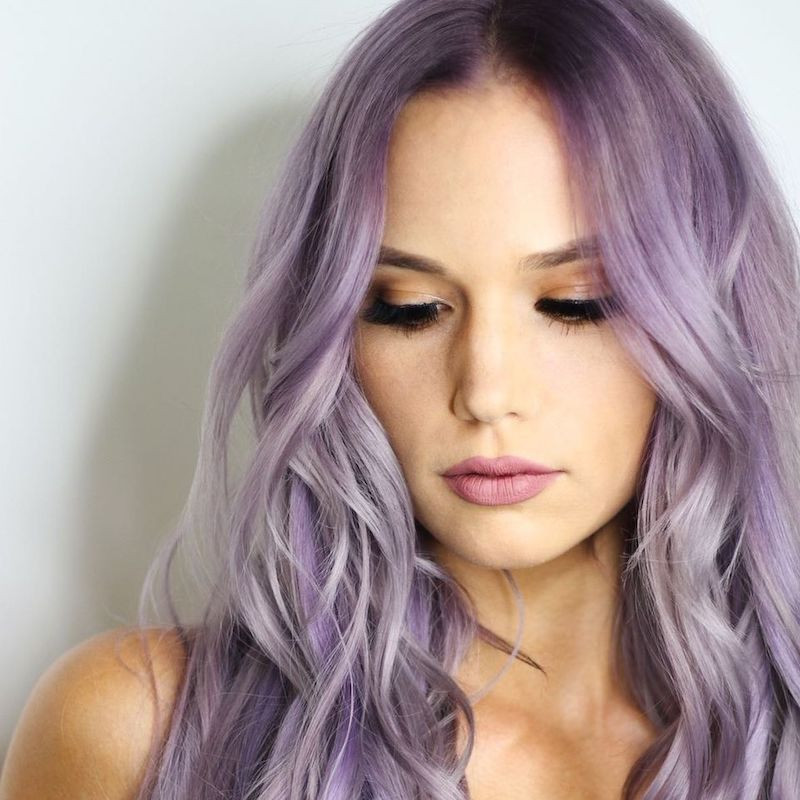
I will admit I was skeptical about muted lavender on longer hair. It can look washed out, like the color ran out of conviction. This one does not. The cut is long layers, mid-back length, no bangs, a middle part, loose waves. The muted lavender hue sits somewhere between dusty violet and grey, and on medium density wavy hair it reads soft without being weak. The layers are cut high enough to give movement but not so short that the color breaks into stripes. The wave pattern does the work. A large-barrel wand, one pass per section, no tight curls. The result is a color that moves. It is not shouting, but it is not fading into the background either.
Pastel Lavender Visual Idea
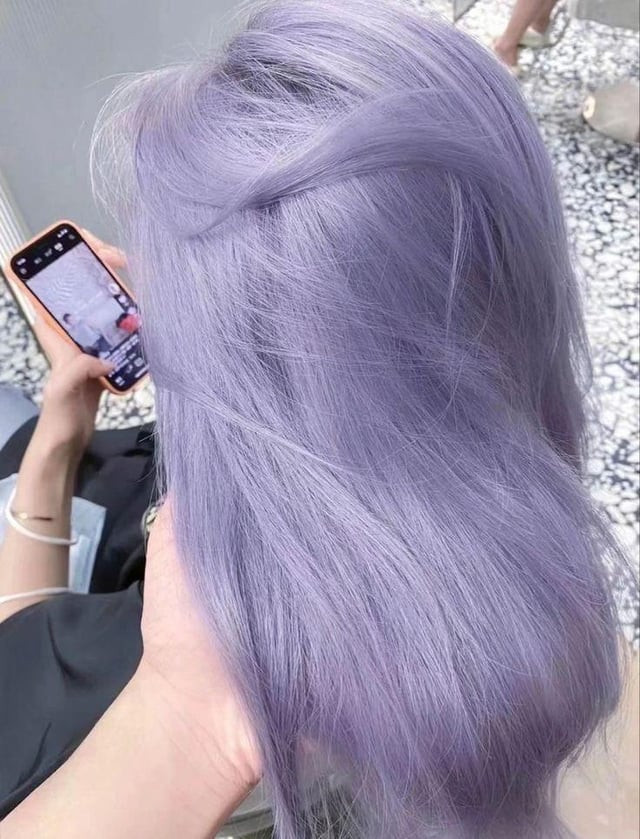
I was standing in my kitchen, coffee in hand, scrolling, and this pastel lavender stopped me cold. The color is so soft it looks dusty, like someone mixed a drop of violet into a bowl of cream. The cut is long layers, mid-back, no bangs, a middle part, loose waves. Medium density hair carries the pastel without it going transparent. The layers are subtle, just enough to keep the ends from weighing down. No heavy interior cutting, no short pieces. The wave is done with a one-inch iron, each section wrapped away from the face. It is a quiet color. It does not demand attention. It just sits there, and you keep looking.
The first time I saw this shade in person, I thought it would wash out in two washes. It did not. The stylist used a pastel toner on pre-lightened hair, no direct dye. That is the difference. A direct dye fades fast. A toner sinks into the cuticle and holds for weeks. The upkeep is a purple shampoo once a week, no more. Over-toning turns it silver.
Ash Lavender With Darker Roots Visual Idea
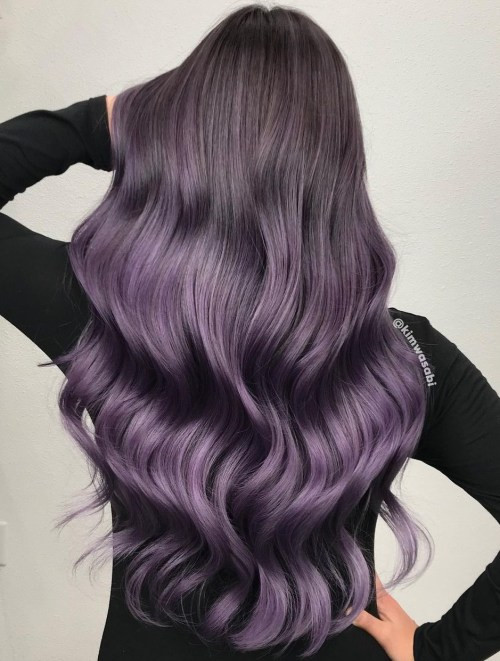
The mistake people make with ash lavender and darker roots is letting the root shadow climb too high. It should start at the scalp and fade into the ash lavender by the ear, not sit as a sharp band. This one gets it right. The cut is long layers, mid-back, no bangs, a middle part, loose waves. The darker roots blend into the ash lavender seamlessly, no line. Medium density wavy hair helps the transition read soft. The ash lavender hue is cool, almost grey, with a violet undertone that keeps it from looking muddy. The wave pattern is loose, done with a wide barrel, and the layers are long enough to keep the color continuous. Ask your stylist for a root melt, not a root shadow. The melt is softer.
Final Thoughts
After writing all of these, I noticed the best ones share one trait: they let the roots grow in without a scene. That changes everything.
- Refresh the tone at week six, not week ten.
- Use a purple shampoo once a week, not daily.
- Book a gloss between full colour appointments.
- Trim the baseline every eight weeks to keep shape.
- Skip heat styling on wash day to stretch the colour.
I am booking the ash brown base with lavender highlights next. It is the one I kept coming back to, and my roots will thank me.

