
I keep seeing light auburn in the chair next to mine. Not the flat red-brown I remember from 2014, but something with lift, with a real undertone. It is the shade that does not need a tan to work.
This is 21 ways to wear Light Auburn Hair. Long layers, short bobs, warm highlights, subtle lowlights. It covers fine hair that goes flat by 4 pm, thick hair that needs dimension, and every grow-out stage in between. I have sat through enough demi-permanent sessions to know which ones fade fast and which ones hold.
Intense Light Auburn Mid-Back Layers
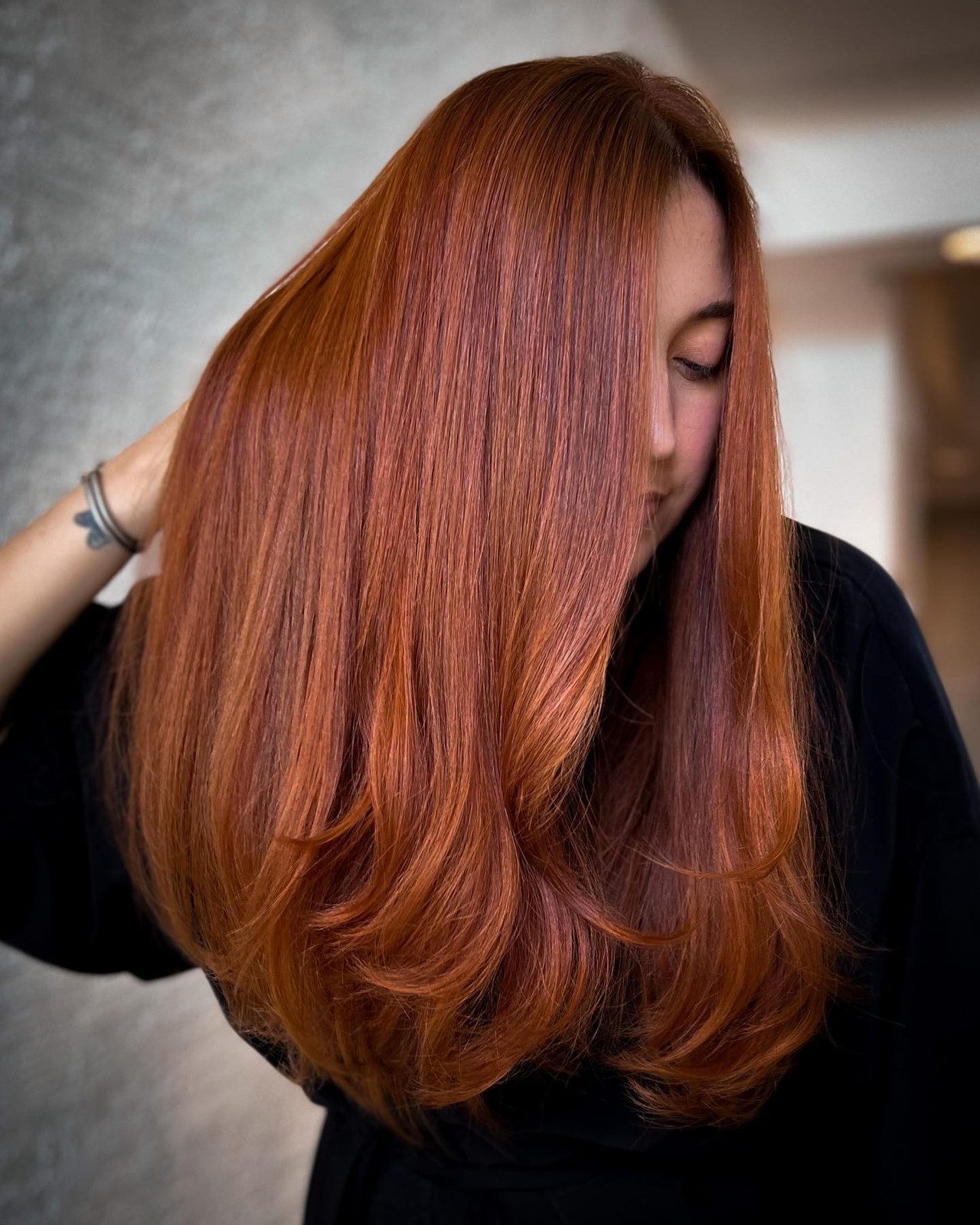
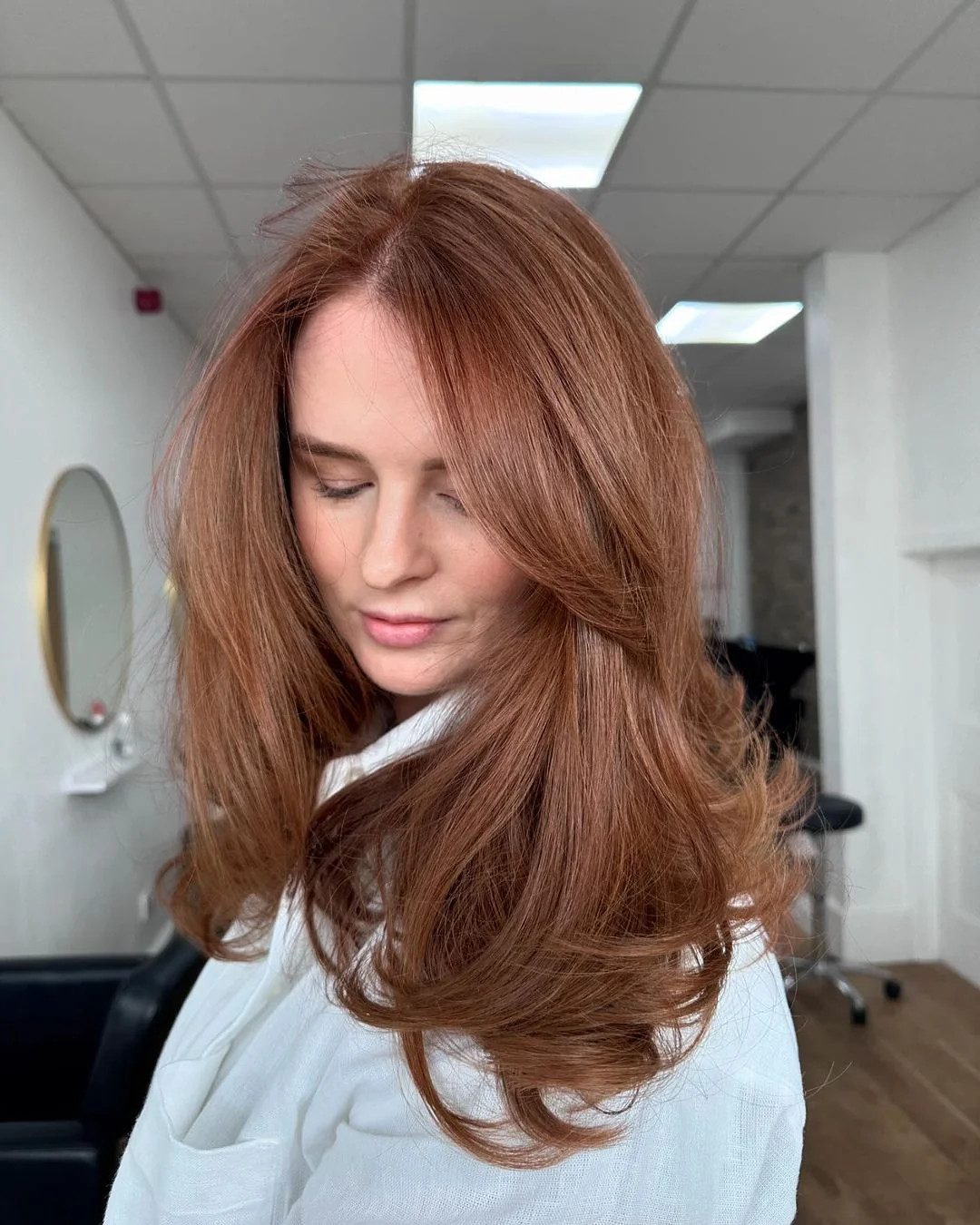
That intense light auburn hair hits different when it has mid-back length and a middle part to show it off. The fiery undertones catch overhead light first, then settle into a warm bronze near the ends, which is exactly what makes this hue work on so many skin tones. It reads vibrant without washing anyone out, and the long layers keep the colour visible rather than buried. The blowout with soft curls takes about 25 minutes with a round brush, and the texture is straight with waves, thick enough to hold the shape past lunch. No bangs here, which means you can push it back on day three and still look deliberate.
Luminous Light Auburn With Golden Highlights
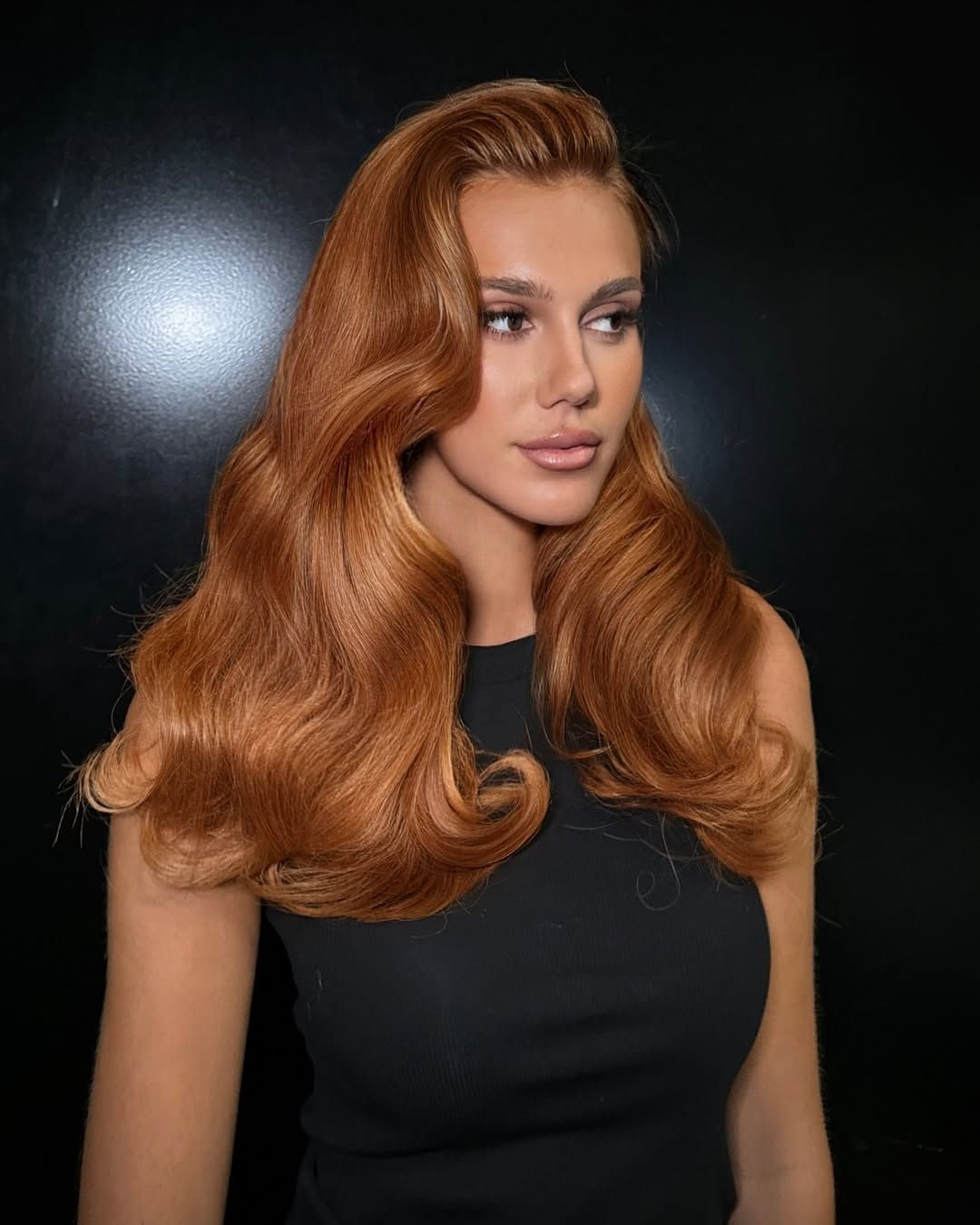
How do you get a light auburn with golden highlights that does not look like two separate colours fighting on your head? The trick is in the placement. The golden highlights sit close to the part and around the face, while the base auburn stays deeper through the mids and ends. That creates a luminous effect that moves with the hair rather than sitting on top of it.
Ask your stylist for a balayage with fine ribbons of gold through the front, and add curtain bangs if you want the lightness to frame your jaw. The voluminous waves take about 20 minutes with a large barrel curling iron. The highlights need a touch-up every 8-10 weeks, but the base grows out soft. Protect it from chlorine or the gold turns brassy fast.
Visual Idea
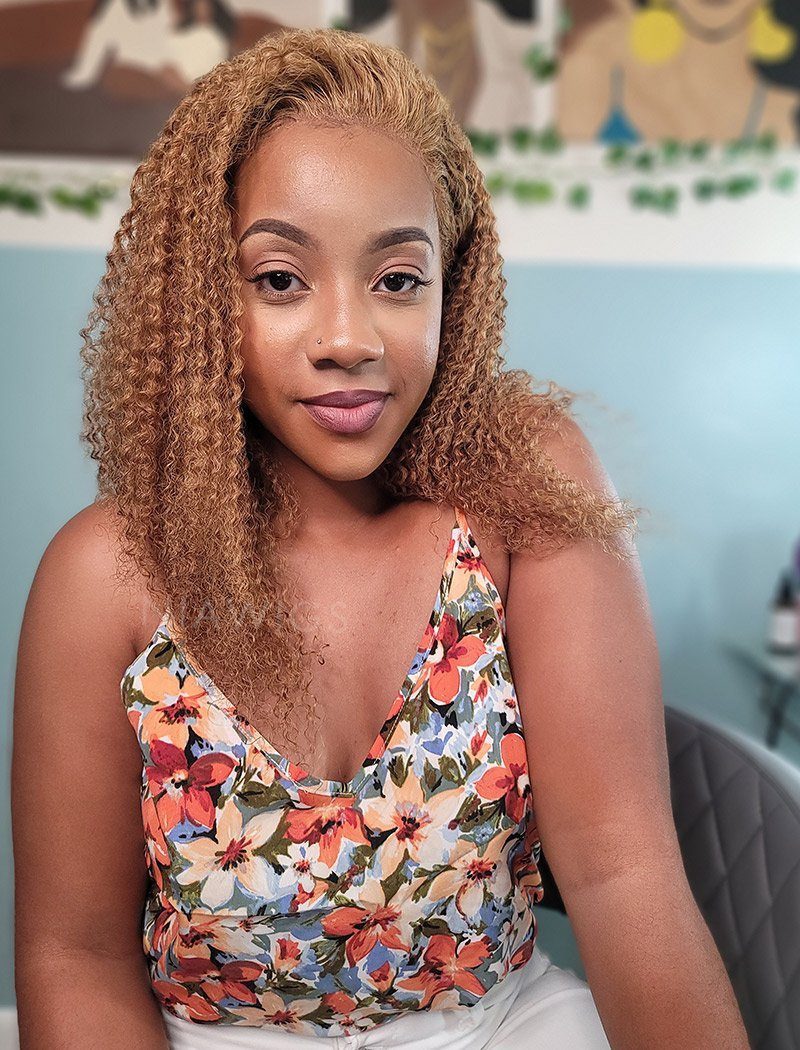
Light auburn with blonde highlights is the bolder cousin of a standard auburn, and I pick it every time. The blonde lifts the whole thing out of “just brown with red” territory and into something that catches light from across the room. This is a salon-leaning job because the blonde needs to be lifted from the auburn base without turning orange. Do not try this at home with a box. The collarbone length and wavy texture keep it from looking heavy, and the middle part lets both colours show evenly.
Collarbone Visual Idea
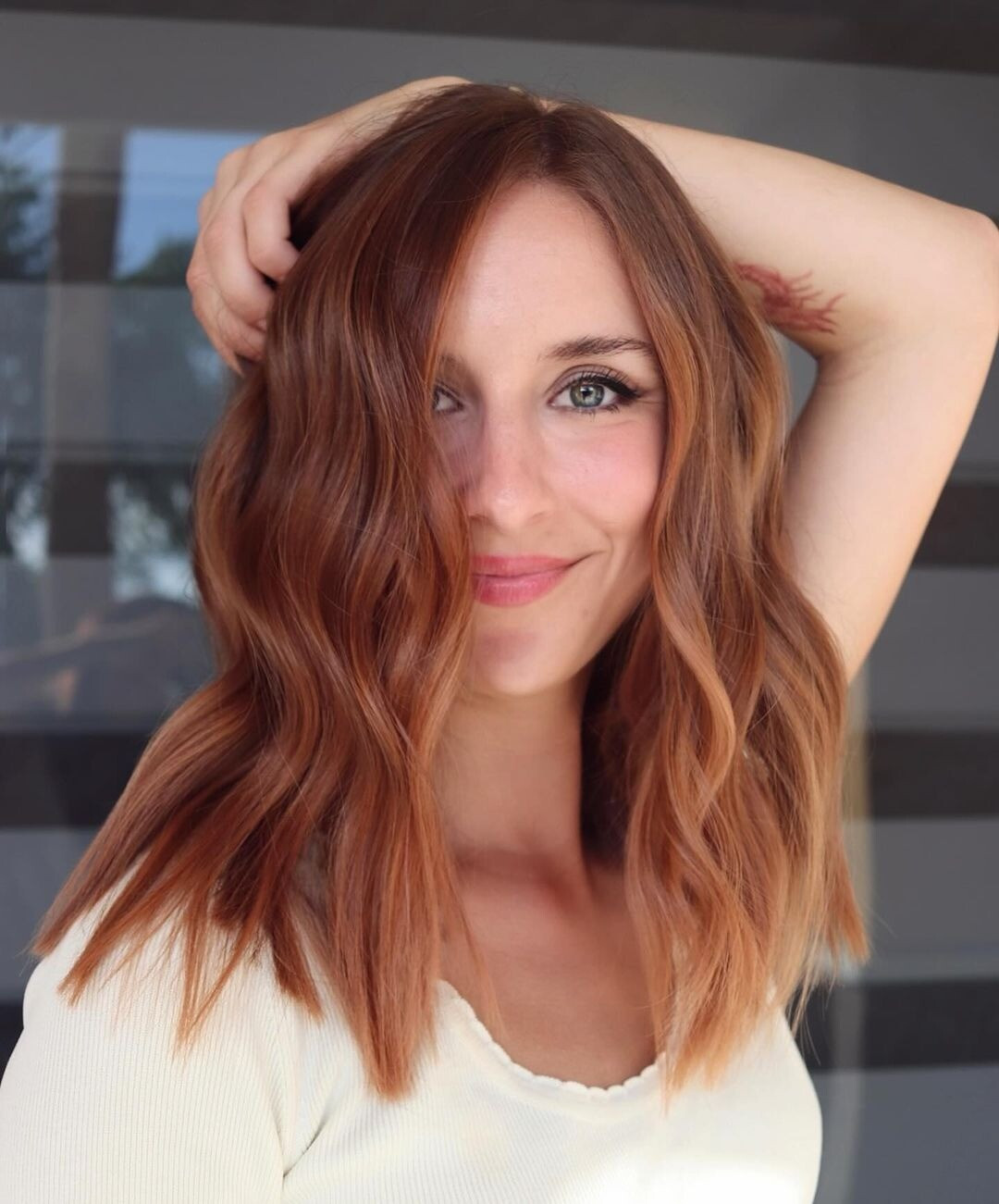
I will confess: I expected collarbone-length light auburn to look flat by day three. It does not. The layers give the colour room to shift, and the soft waves catch the light at different angles, so the auburn reads deeper in the back and brighter at the ends. The honest downside is that even colour on this length shows every fade. If you wash more than three times a week, the mid-lengths will look dull before the roots grow in. A back view reveals the real test: if the colour is even from crown to hem, you are golden. If not, you see the line.
Visual Idea — Giving It A Warm
A medium auburn with noticeable copper undertones lands differently in autumn than it does in July. In summer, the copper reads almost orange. Come October, it deepens into something that matches the leaves without trying. The face-framing layers and loose shoulder-length waves let the copper catch side light, which is the whole point.
This is the colour you book for September and keep through December. The copper undertones fade faster than the auburn base, so expect a gloss every six weeks if you want that reddish-orange pop to last. Skip the gloss and it settles into a warm brown by January, which is not a bad outcome either.
Mid-Back Visual Idea
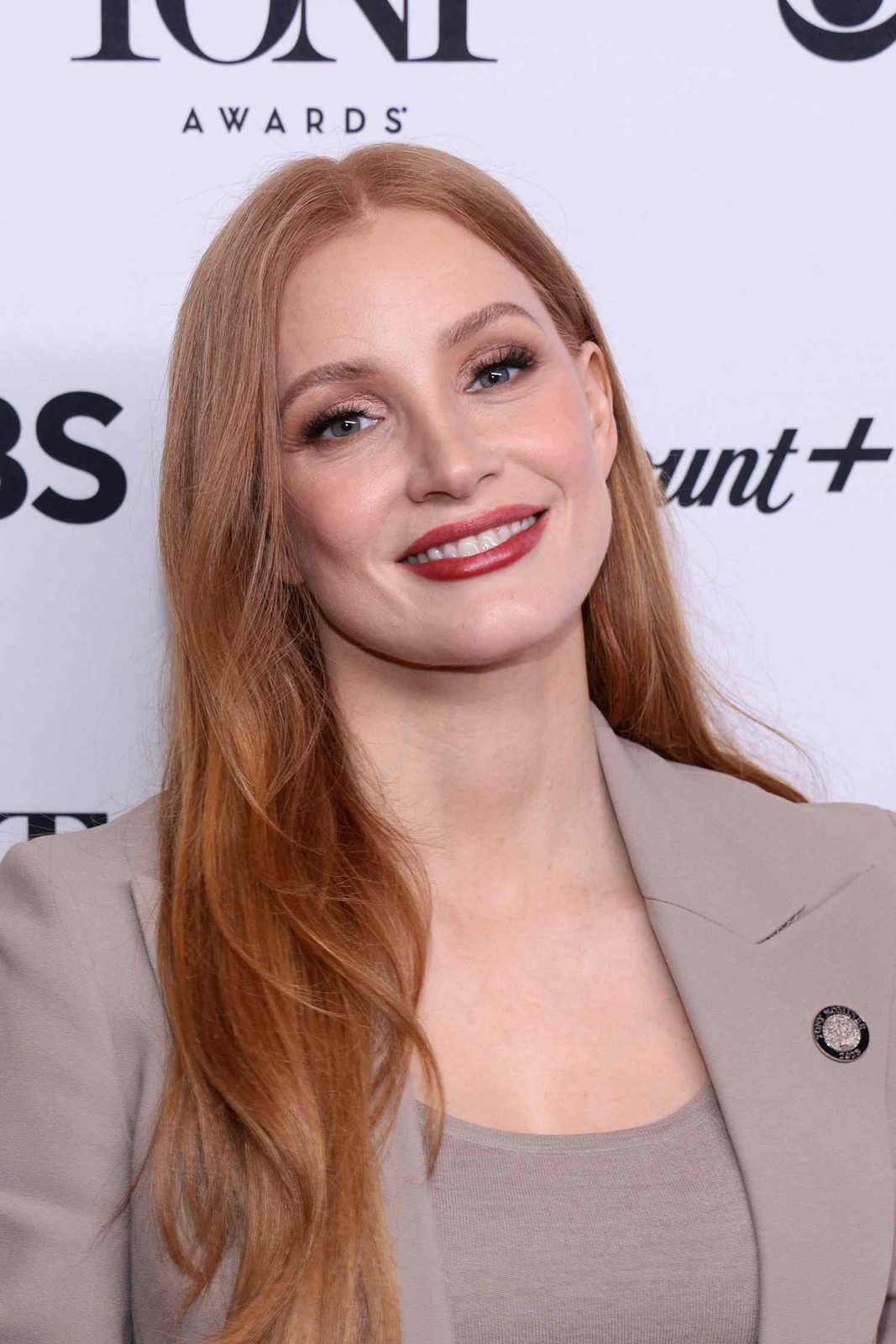
When did a single, uniform shade start looking this expensive? A bright light auburn, applied root to tip with no highlights or lowlights, does something strange to fine to medium hair. It reads as dense, even when it isn’t. The mid-back length and subtle long layers give the colour room to catch light evenly, which is exactly what straight, fine hair needs to avoid looking flat. No bangs, a middle part, a slight wave at the ends. That is the whole styling effort, and it works because the colour does the heavy lifting.
This is a salon colour, not a box job. A uniform light auburn requires an even lift across every strand, and fine hair processes fast. Too hot at the root and you get a line. But if your stylist nails the formula, you get six weeks of hair that looks thicker than it is. I have never had a colour that made my fine hair look this substantial without a single layer of product.
Shoulder-Length Visual Idea
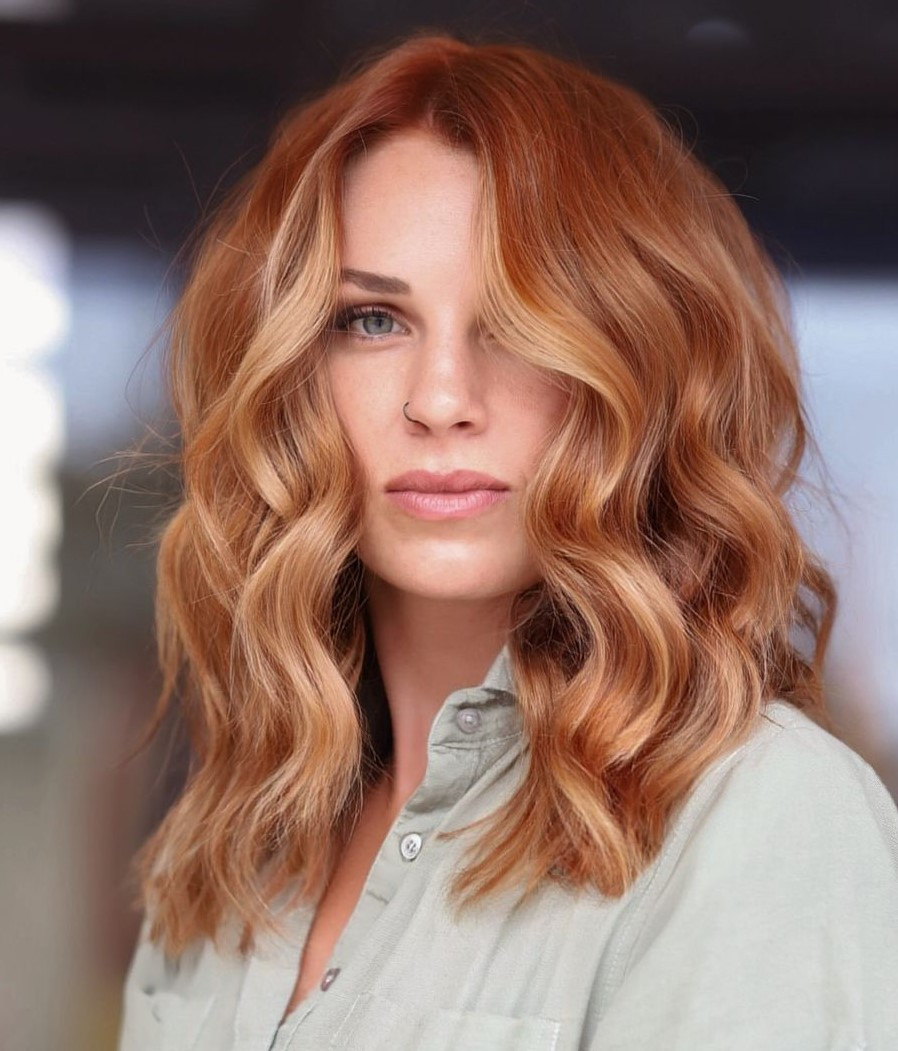
Blonde highlights on a light auburn base. That is the combination that made me stop scrolling. The technique is a fine, face-framing balayage, painted so the blonde sits mostly around the curtain bangs and the top layers, then fades into the auburn below. The result is a shoulder-length cut that looks bright without being brassy. The loose waves help blend the two tones together, so there is no harsh line where the colour shifts. It is a salon technique, and it should be. The stylist has to weave the highlights thin enough that they read as light hitting the hair, not as separate streaks.
Chin Visual Idea
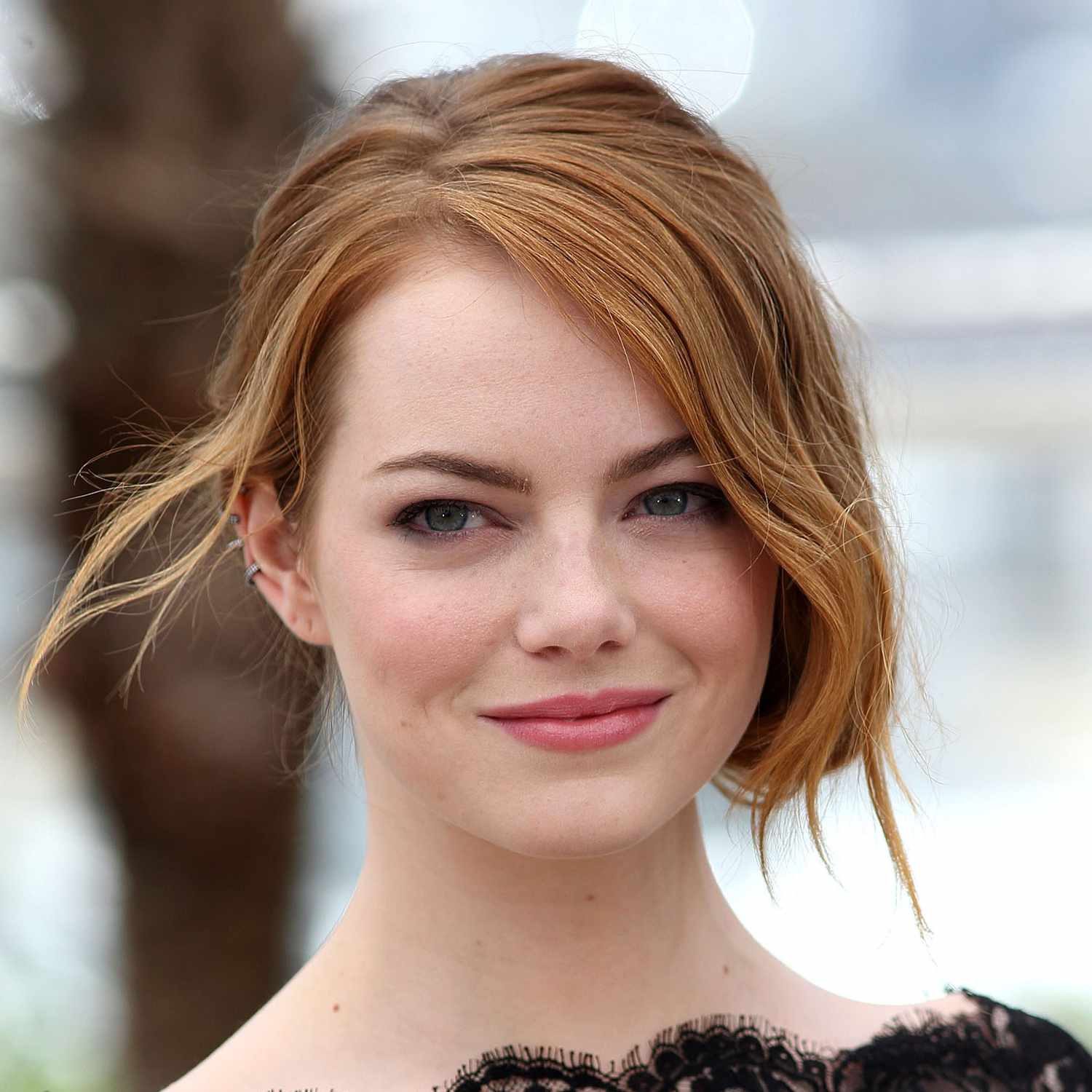
I will admit it: I love the idea of a soft light auburn bob more than I love the reality of maintaining one on fine, wavy hair. The colour is warm and slightly tousled, with wispy bangs and a side part that give it a lived-in feel. But here is the honest downside. Light auburn on fine hair fades fast, and waves can make the colour look patchy by week three. The bob length means you see every bit of root growth. It is a stunning chin-length shape when fresh. Just know you will be back in the chair sooner than you want.
Rich Light Auburn With Blonde Balayage Visual Idea
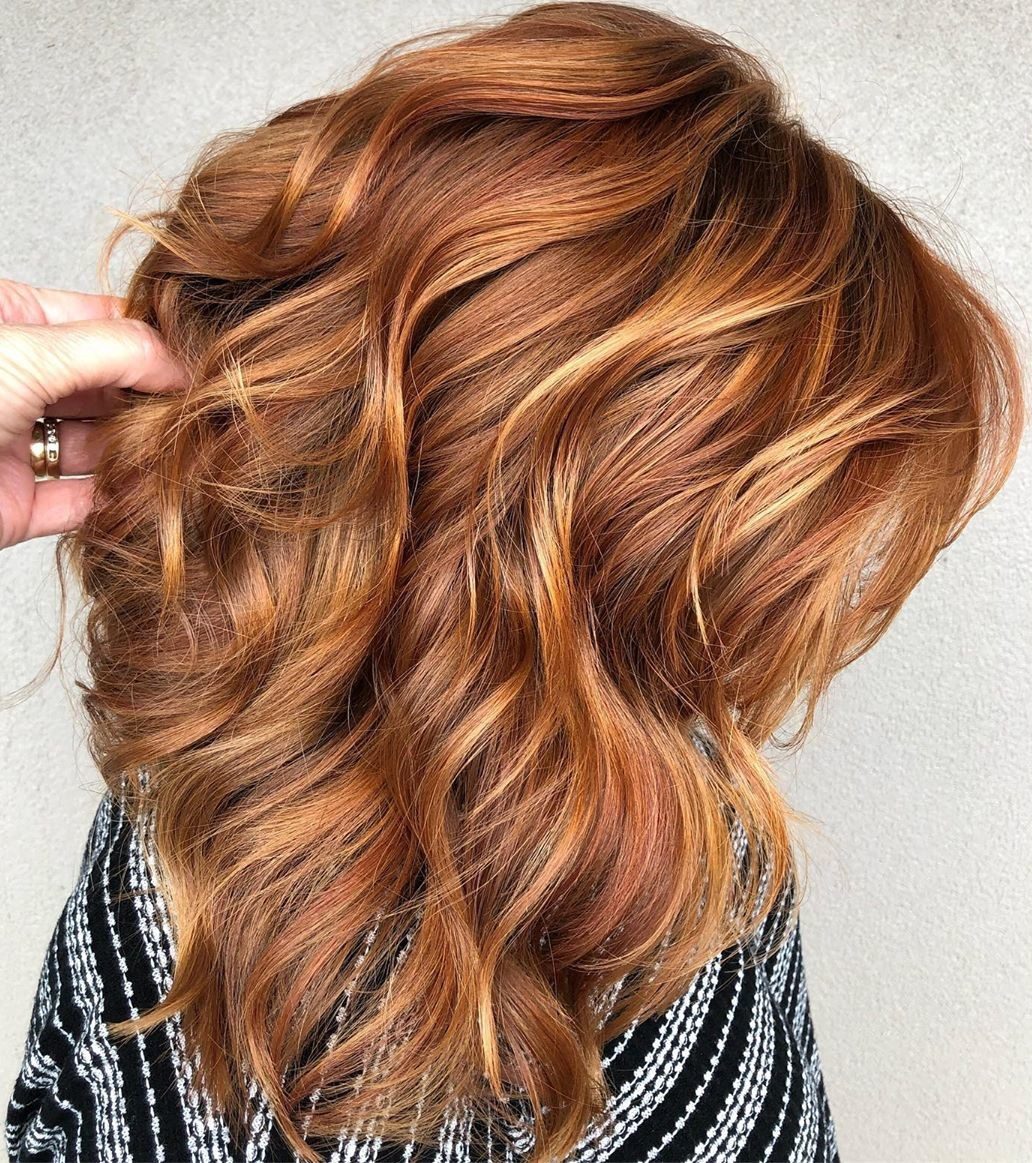
A solid light auburn is reliable. A rich light auburn with blonde balayage is a statement. The difference is the contrast. The balayage starts a few inches from the root and sweeps through the mid-lengths and ends, creating a gradient that makes the auburn look deeper at the top and lighter at the bottom. It is a collarbone-length cut with layers and a side part, styled wavy to show off the dimension.
This is not a DIY project. The blonde needs to be lifted to the right level without compromising the auburn base, and that takes a trained eye. Book the salon. Tell them you want a soft, blended balayage that keeps the root area rich and the ends bright. The grow-out is softer than a solid colour, which buys you a few extra weeks between appointments.
Light Auburn With Warm Golden Undertones Visual Idea
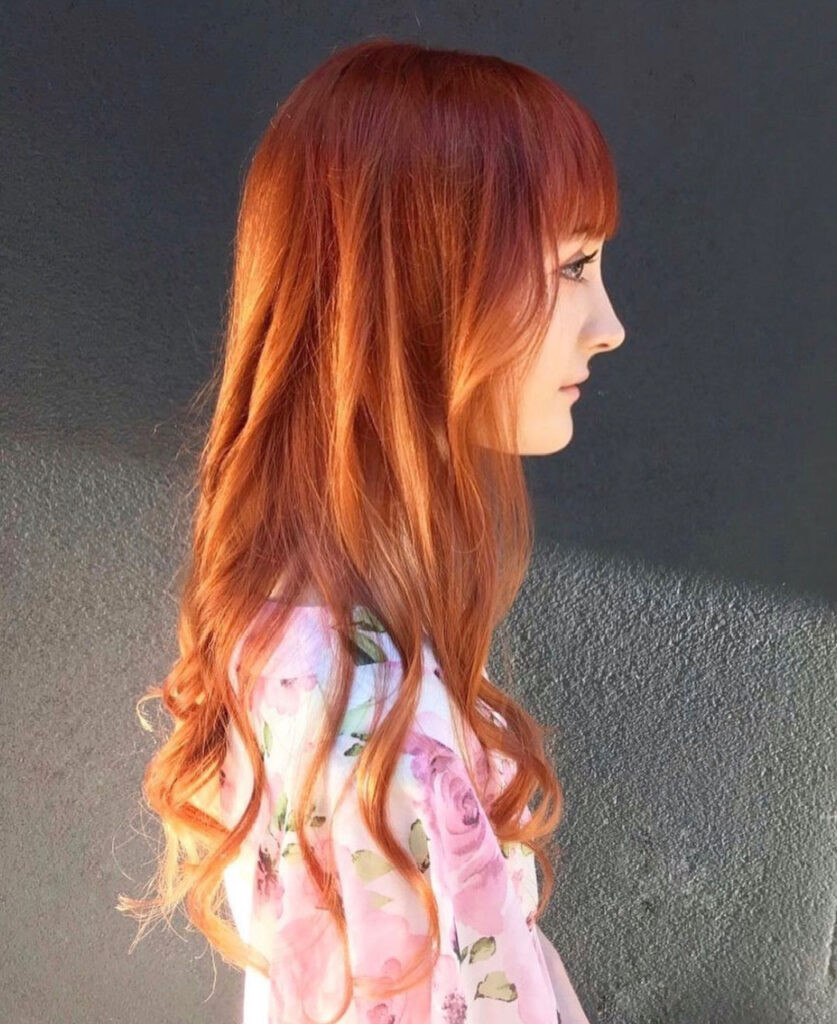
Here is what happens to a light auburn with warm, golden undertones across a real week. Day one is vibrant, almost luminous, with the gold catching every light source. Day three, the colour settles into something more natural, a little less shiny. By day five, the gold starts to pull slightly yellow on the ends, especially if you use heat tools. That is the trade-off. The warmth is what makes this shade flattering and sun-kissed, but it also fades faster than a cooler auburn. The collarbone-length layers and full bangs help, because the colour is concentrated on the visible front sections. A toning shampoo once a week keeps the gold from tipping into brass. It is not high maintenance, but it is not zero maintenance either.
Bright Light Auburn Visual Idea
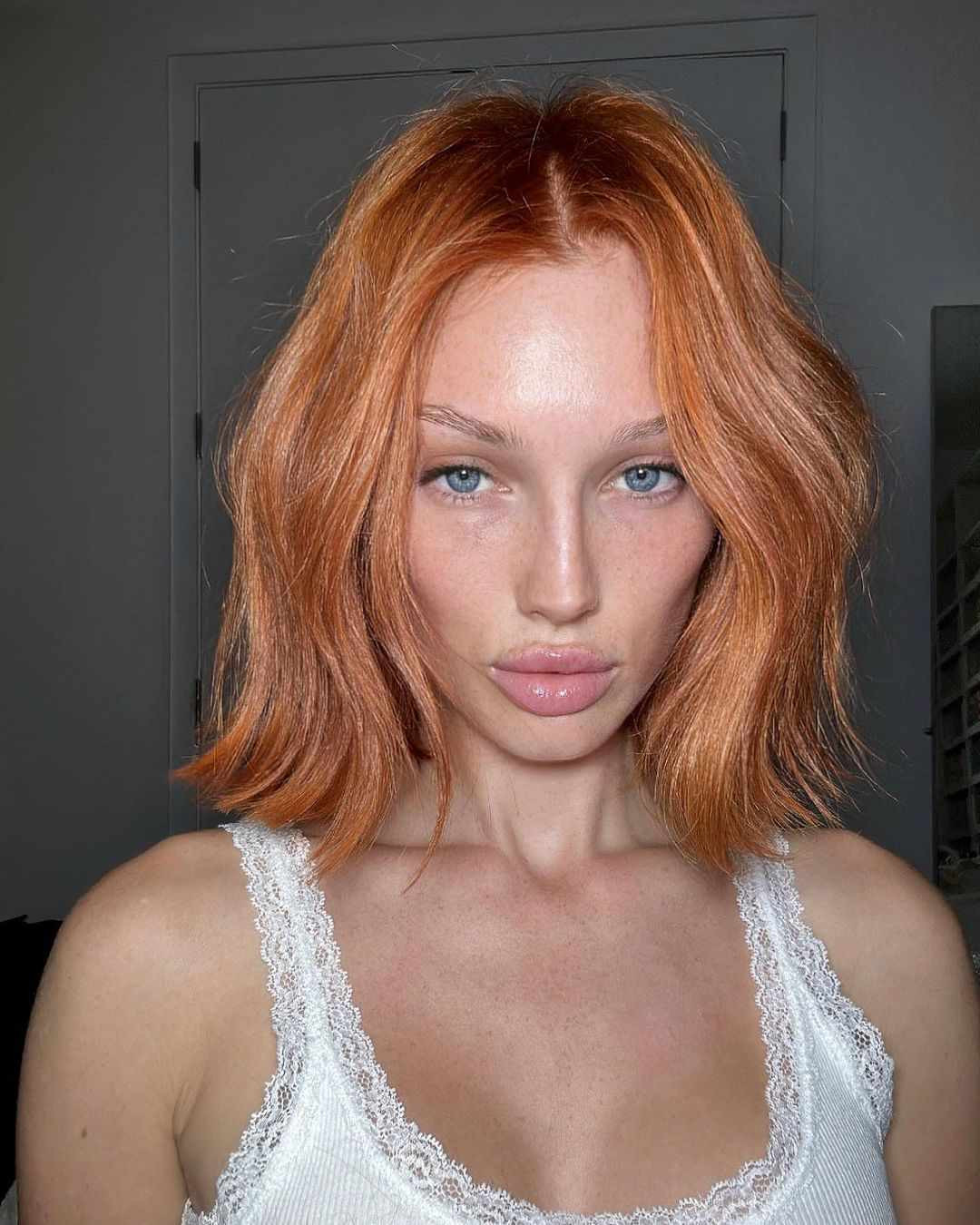
When did bright light auburn start looking this bold on fine, wavy hair? This chin-length bob with wavy bangs and a middle part leans into the intensity, and honestly, it works. The uniform color, no highlights to break it up, makes the texture the whole story. On fine strands, that brightness adds a visual density that darker shades can flatten. Wavy and fine means the cut needs to hold its shape, and this bob does, the waves give it volume without bulk. If your hair is coarse or thick, the same shade might read heavier, but on fine texture, it’s a confident, bright statement.
Shoulder Visual Idea
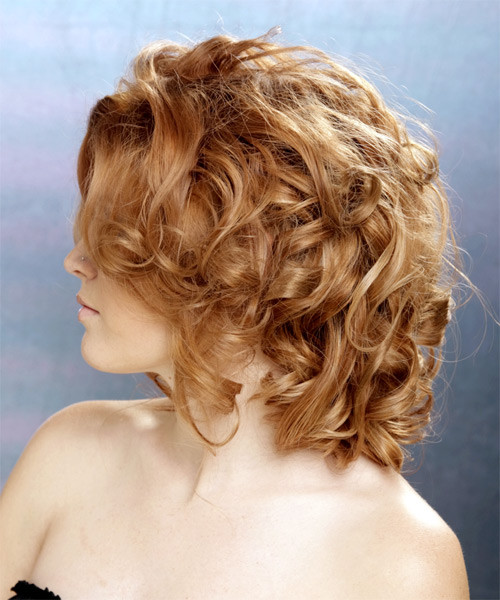
This is the color of late afternoon sun, and I mean that as a compliment. The light auburn base with golden highlights lands somewhere between copper and honey, and on shoulder-length layers with no bangs, it catches light like a slow summer day. The curls, bouncy and defined, make the golden pieces pop from every angle, especially with a side part that lets them fall forward.
It’s a seasonal color, sure, but not in a limiting way. This shade reads summery because the golden highlights mimic sun exposure, yet it doesn’t wash out pale skin the way a pure blonde might. On medium-density curly hair, the technique of weaving highlights through the mid-lengths and ends keeps the root area deeper, so it grows out without a harsh line. If you want that sun-kissed vibe without committing to full blonde, this is the compromise that actually flatters.
Long Visual Idea
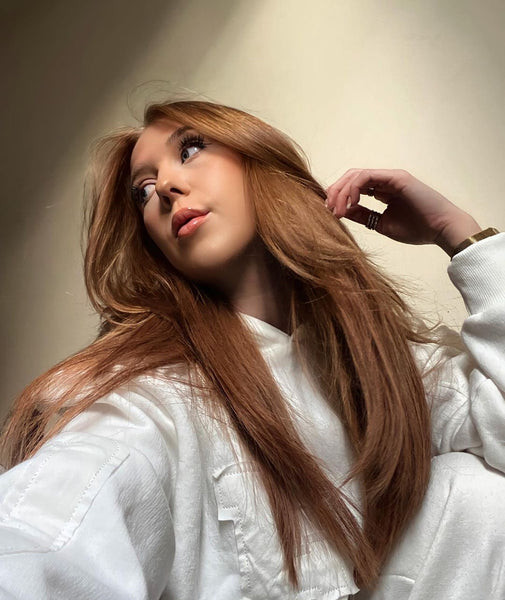
This is the grow-out champion of light auburn hair. The long layers and face-framing pieces are cut to move, and the color, a soft light auburn base with subtle blonde highlights, is built to fade gracefully. The technique here is key: the blonde is placed sparingly, just enough to catch light around the face and through the ends, never so much that it overwhelms the auburn. On straight, fine texture, that restraint keeps the hair looking healthy and the tone even.
The upkeep is manageable, but it’s not zero. A trim every eight weeks keeps the long layers from dragging, and the blonde highlights, being subtle, don’t demand the toning schedule of a full balayage. You’ll want a purple shampoo once a week to keep the auburn from pulling brassy, and a heat protectant before any straightening, since fine hair frays fast. The side part and face-framing layers mean you can skip the round brush most days, just air-dry and go. This is the color for someone who wants dimension without the salon every six weeks.
- Long layers cut to move, not just sit
- Subtle blonde highlights, placed around the face
- Soft light auburn base, no harsh root line
- Trim every eight weeks to keep the shape
- Ask for a side part that frames, not flattens
Long Layers Visual Idea
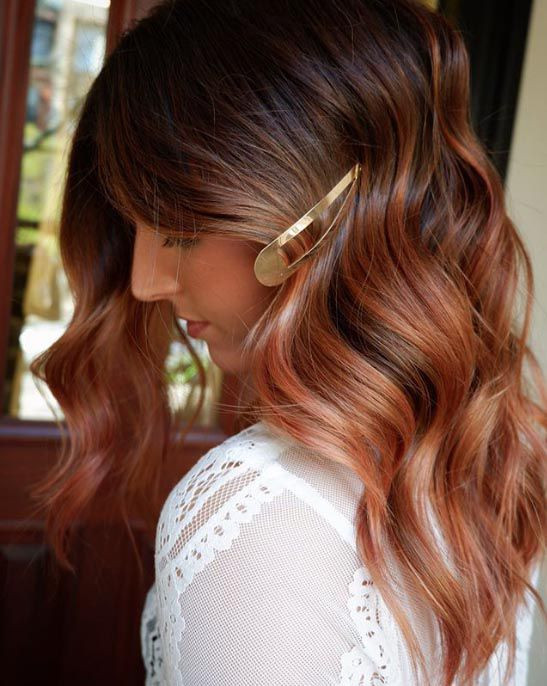
I will admit, I once thought balayage was a DIY situation. Then I watched a friend try it with a box dye and a prayer, and the transition line landed somewhere around her ears like a bad ombre. This look, dark brown base melting into light auburn balayage, is the exception that proves the rule. The whole point is that the auburn starts low, past the chin, so the roots stay dark and the grow-out is invisible for months. That soft, seamless shift is a technique that needs a stylist’s eye for placement, not a bathroom mirror and a YouTube tutorial. Skip the at-home version. The honest downside is the salon hours, but the alternative is a stripe you will be explaining for six months.
Layers Visual Idea
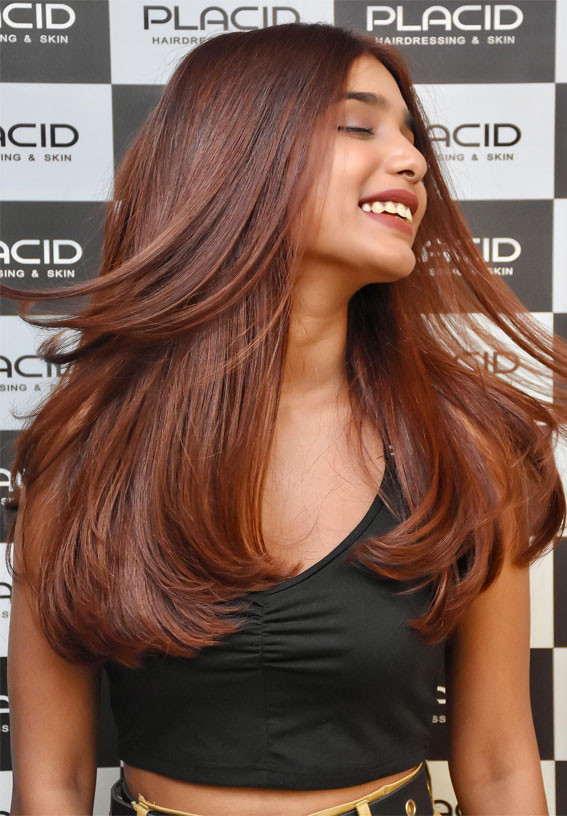
Straight, thick hair has one problem: it hangs like a curtain and hides every cut underneath. Layers fix that, and this collarbone-length version proves it. The solid light auburn colour does the heavy lifting, catching the light so each layer reads as its own shape instead of one flat block. That density is what makes the cut work, the weight keeps the layers from floating away into wisps. If your hair is fine or thin, you will lose the effect, the layers will just look like split ends. But for thick, straight hair, this is the rare cut that shows off both the shape and the colour at once.
Light Auburn With Blonde Highlights Visual Idea
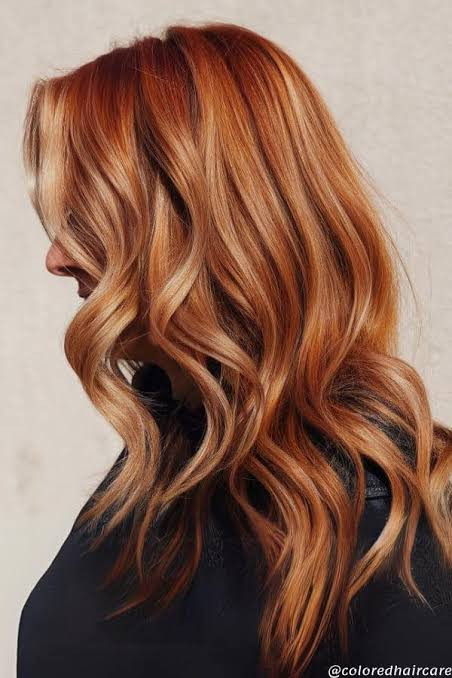
Have you ever seen a colour that looks expensive from across the room but costs less than you think? This is it. Light auburn hair with blonde highlights, the technique here is a freehand balayage that keeps the base warm and the lift bright. The tone reads golden against the auburn, not icy or grey. On wavy mid-back layers, the contrast shows in every bend. My roots showed at week five, and the blonde stayed cool for two months before I needed a toner. That is longer than I expected from such a light lift.
No Bangs Visual Idea
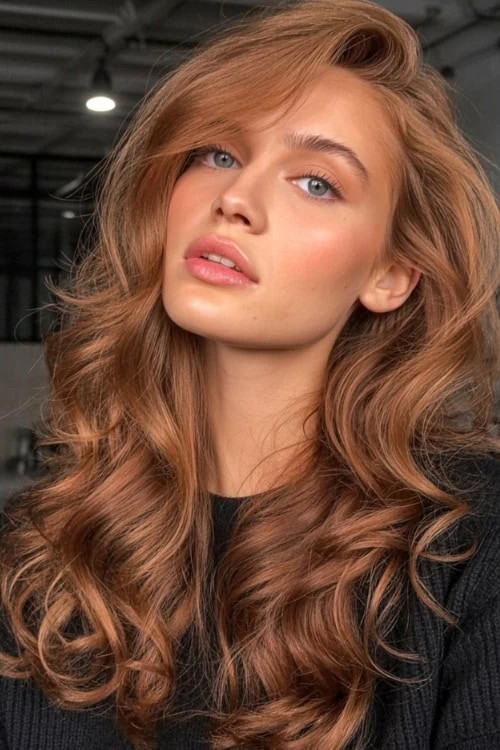
Best transition colour of the year. Soft light auburn, no bangs, no heavy contrast, just a single-process shade that lands somewhere between copper and rosewood. The tone is muted, not brassy, which makes it a natural fit for spring when the light shifts or for autumn when you want warmth without commitment. On thick wavy hair at mid-back, it reads as your colour but better. A trim every ten weeks keeps the ends healthy, and the grow-out is invisible for the first six weeks. No root shadow needed, no toner schedule.
The upkeep is almost boring. That is the point. You wash it with a colour-safe shampoo, you book a gloss every third visit, and the rest of the time you forget you have colour at all. For anyone tired of high-maintenance blonde or dark shades that fade to rust, this is the calm middle ground.
Light Auburn With Subtle Lighter Tones Visual Idea
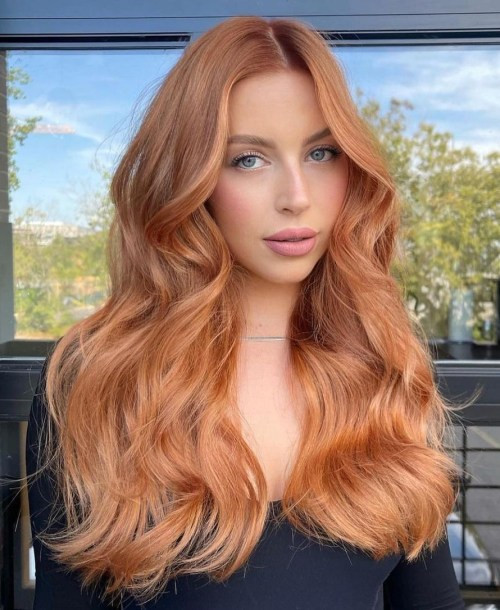
I saw this and thought, finally, a colour that does not scream. Light auburn with subtle lighter tones, the technique is a fine babylight weave around the face, lifted just one level above the base. The tone stays warm but not orange, which is harder to pull off than it sounds. On collarbone-length wavy layers, the lighter pieces catch the light without looking striped. The honest downside: those babylights fade fastest. By week four, the lighter tones can lean brassy if you skip a purple shampoo once. You have to stay on top of it.
Front View Visual Idea
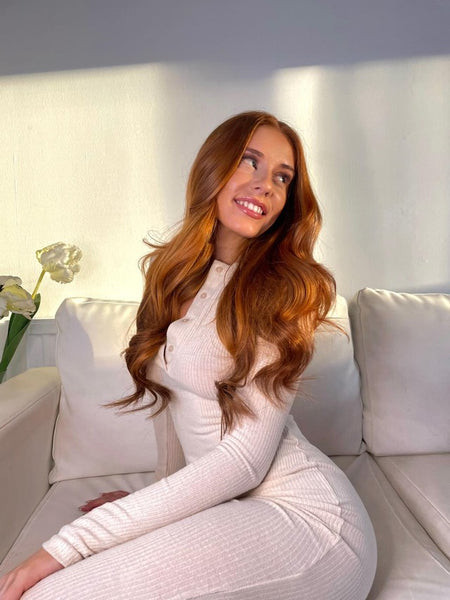
I will admit I was sceptical about how much a single warm shade could do for a face. Then I saw this front view. Light auburn with subtle highlights, the base is a rich copper-brown and the highlights are fine, warm ribbons placed around the crown and the hairline. The tone is golden enough to brighten cool or neutral skin without washing it out. On collarbone-length wavy hair, the layers catch the light from every angle. This is a salon colour, not a box job. The dimension comes from placement, not from a single all-over formula. Ask your stylist for a warm auburn base with face-framing babylights, no more than two levels lighter.
Front View Slight Side Profile Visual Idea
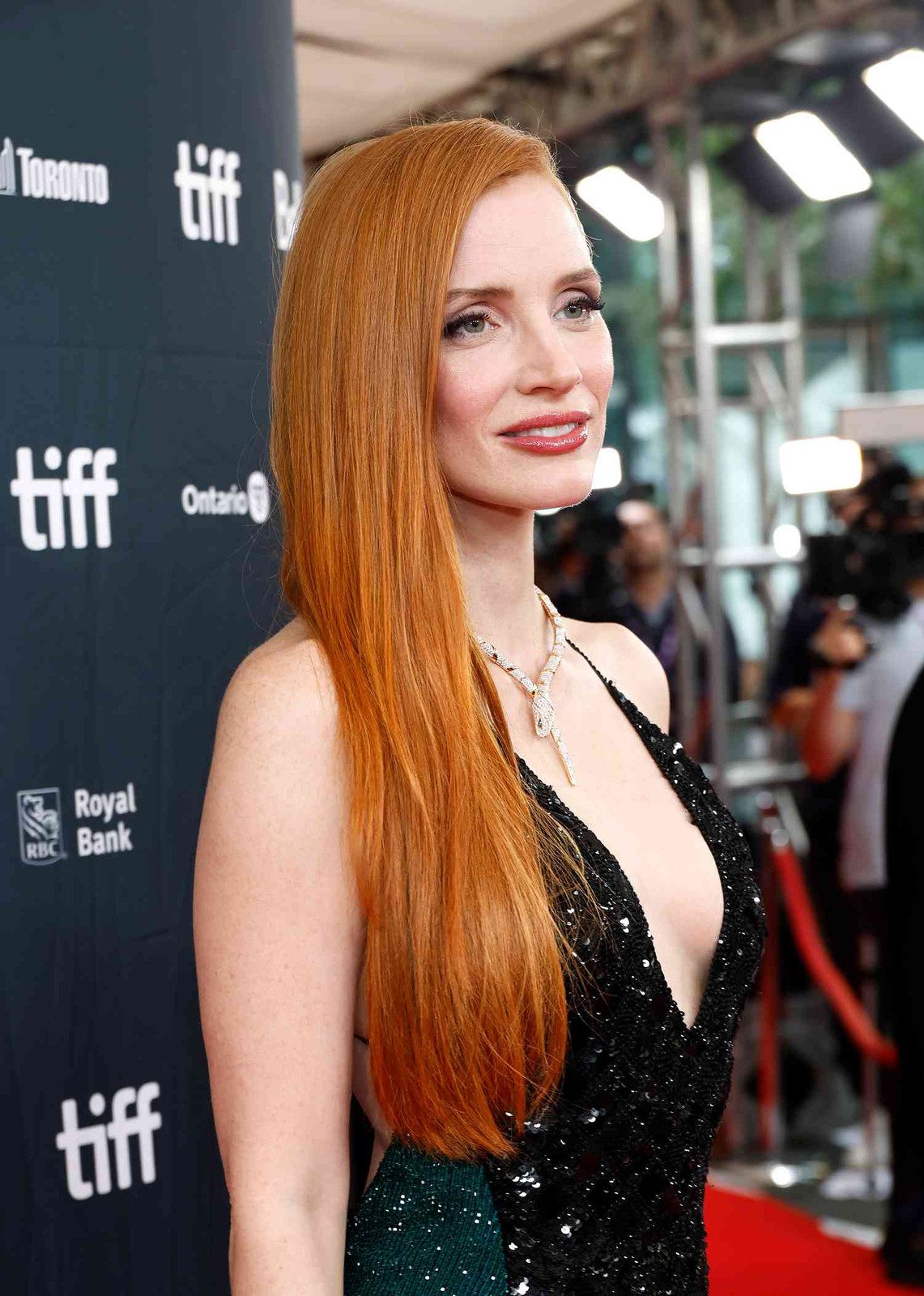
The colour shifts every time the light hits it. That is the first thing I noticed. Light auburn base with subtle copper highlights, the base is a soft brunette-red and the copper runs through the mid-lengths in fine, blended strokes. On mid-back wavy hair, the loose waves catch the copper in the bends and let the auburn sit deeper underneath. The wear is better than I expected. The copper fades gradually over six weeks, not all at once, so you get a slow transition from bright to warm instead of a sudden brass alert.
The styling is minimal. A blowout with a round brush at the ends, or air-dry with a wave cream and a scrunch. The waves hold for two days before they relax, but the colour still reads well on straight hair because the copper is woven through, not just painted on the ends. A toner every eight weeks keeps the copper from pulling orange.
Middle Visual Idea
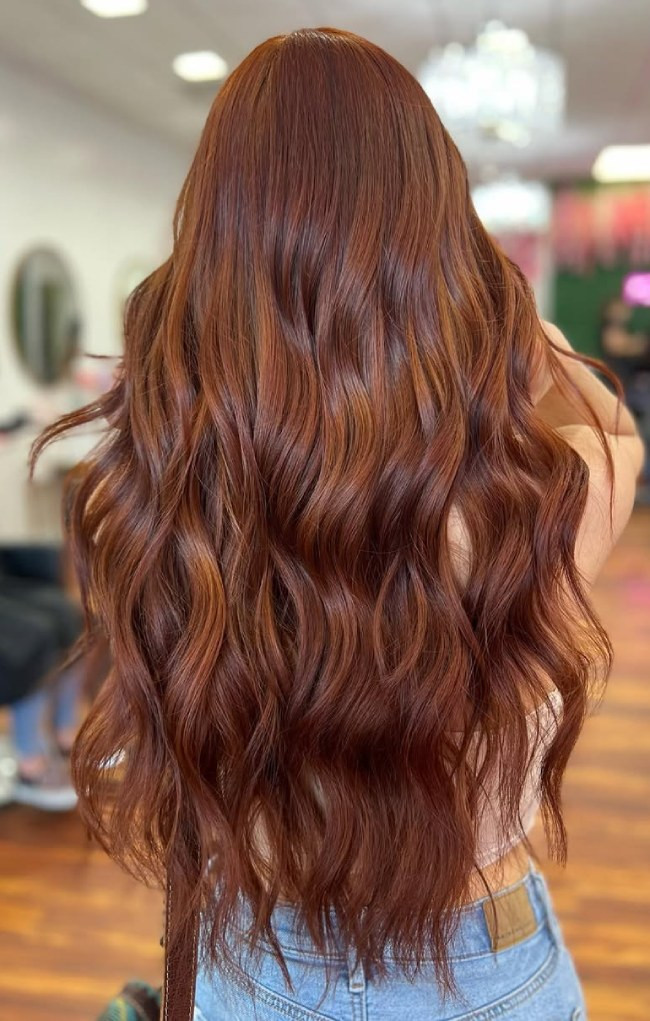
Can you get dimensional light auburn at home? I have tried. The answer is no, not this version. The colour here is light auburn with subtle highlights, and the technique is what makes it work: a root shadow that softens the grow-out, then fine babylights placed only where the sun would hit. The tone stays warm, never brassy, because the highlights are painted low and slow. The length is mid-back, the texture is wavy and medium density, and the middle part lets the colour fall symmetrically. You can buy a box and hope. Or you can sit in a chair for two hours and get this.
Final Thoughts
After writing all 21 of these, I noticed something. The best light auburns are not the brightest ones. They are the ones with a quiet undertone, a little gold or a little copper, that catches light without shouting. That is the one I am booking next.

