
I keep seeing lilac in the chair next to mine, not as a full commitment but as a sharp bob or a soft melt that catches the light. It’s a pastel that reads structured, which is rare. I like that.
Here are 23 Lilac Hair ideas, from low upkeep to high, short to long, salon to DIY. Whether your hair is fine or thick, your face round or long, there’s a version that fits. I’ve been through enough bleach jobs to know the grow-out line at week five, so I tell you what really holds.
Sharp Chin-Length Blunt Bob in Solid Lilac
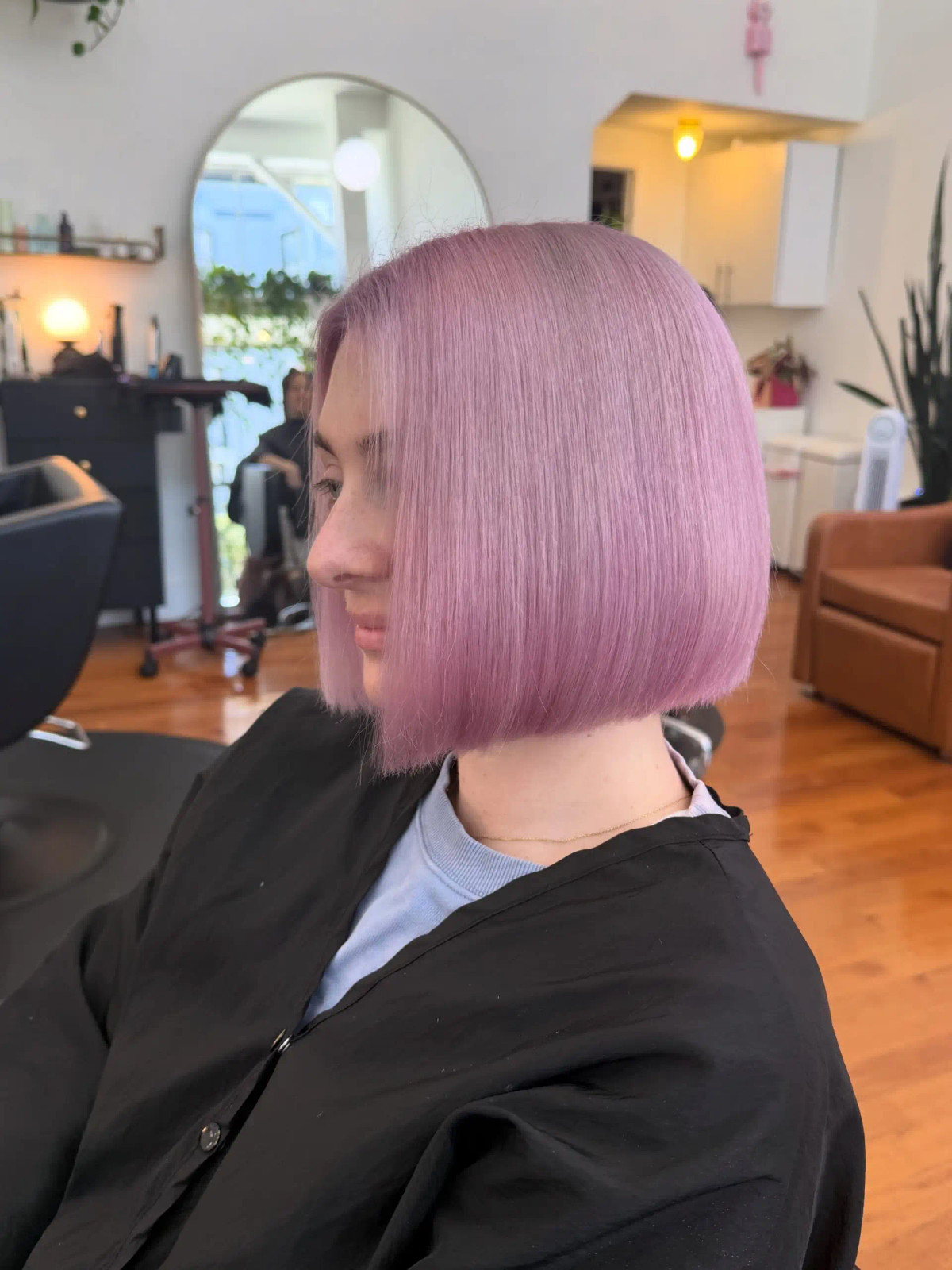
A solid lilac blunt bob at chin length does one thing well: it makes fine hair look like it has actual weight. The blunt cut stacks every strand on top of the next, so the hemline reads dense instead of wispy. No layers, no bangs, just a straight-across line that hits right at the jaw. The middle part and side view show off how clean the shape is. This is for anyone with fine, straight texture who wants the color to do the talking. If your hair is thick or wavy, the blunt line will flip or fan out by lunch.
Vibrant Lilac Sleek Bob
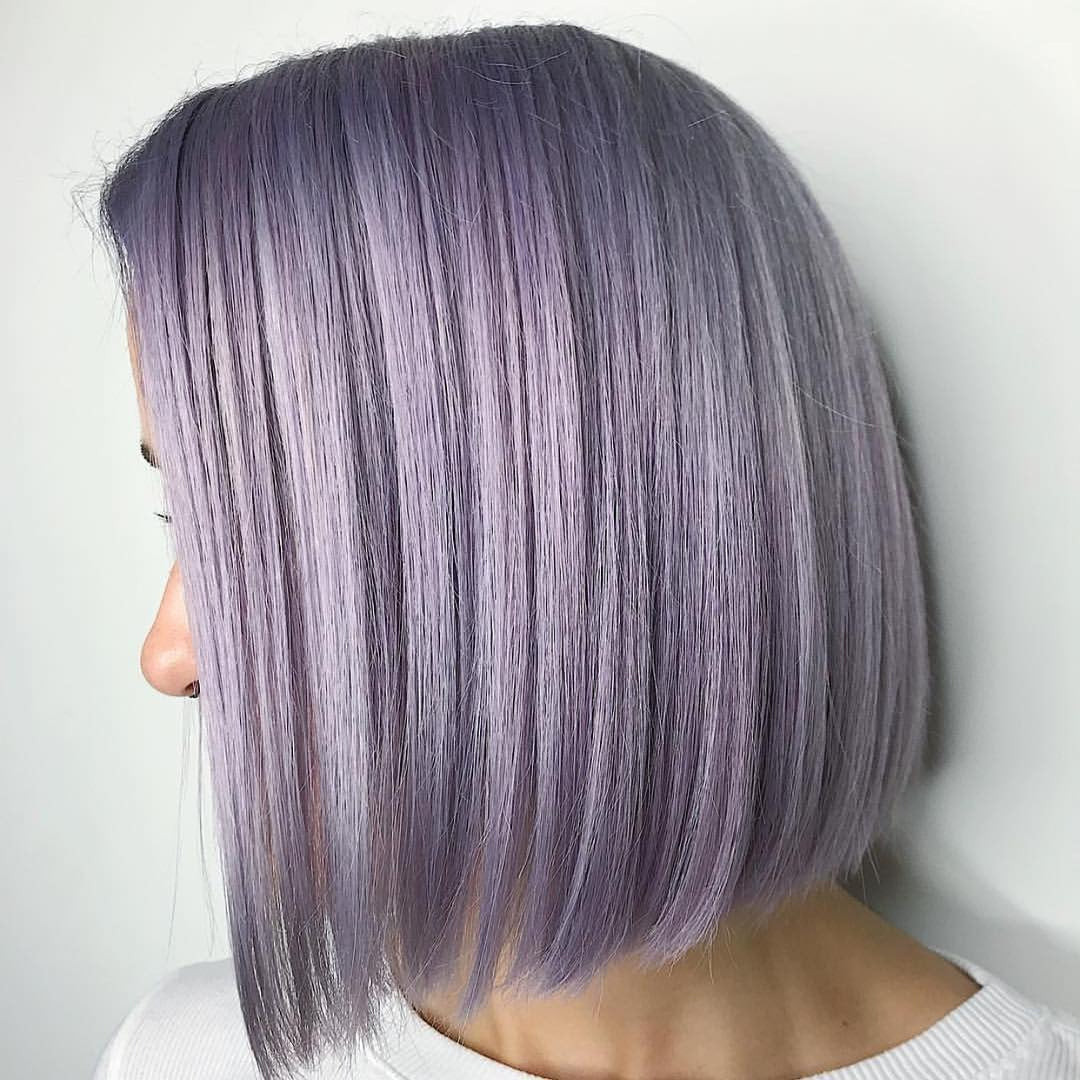
Can a vibrant lilac bob stay this polished past day one? Yes, if you commit to the routine. The sleek bob relies on a blunt cut with no layers, straight texture and medium density, and a middle part that keeps everything symmetrical. No bangs means no piecey separation at the forehead. The trade-off is daily heat styling to kill any wave or bend. A trim every six weeks keeps the line sharp. Skip this if your mornings are a ten-minute window.
Fine Straight Bob in Vibrant Lilac
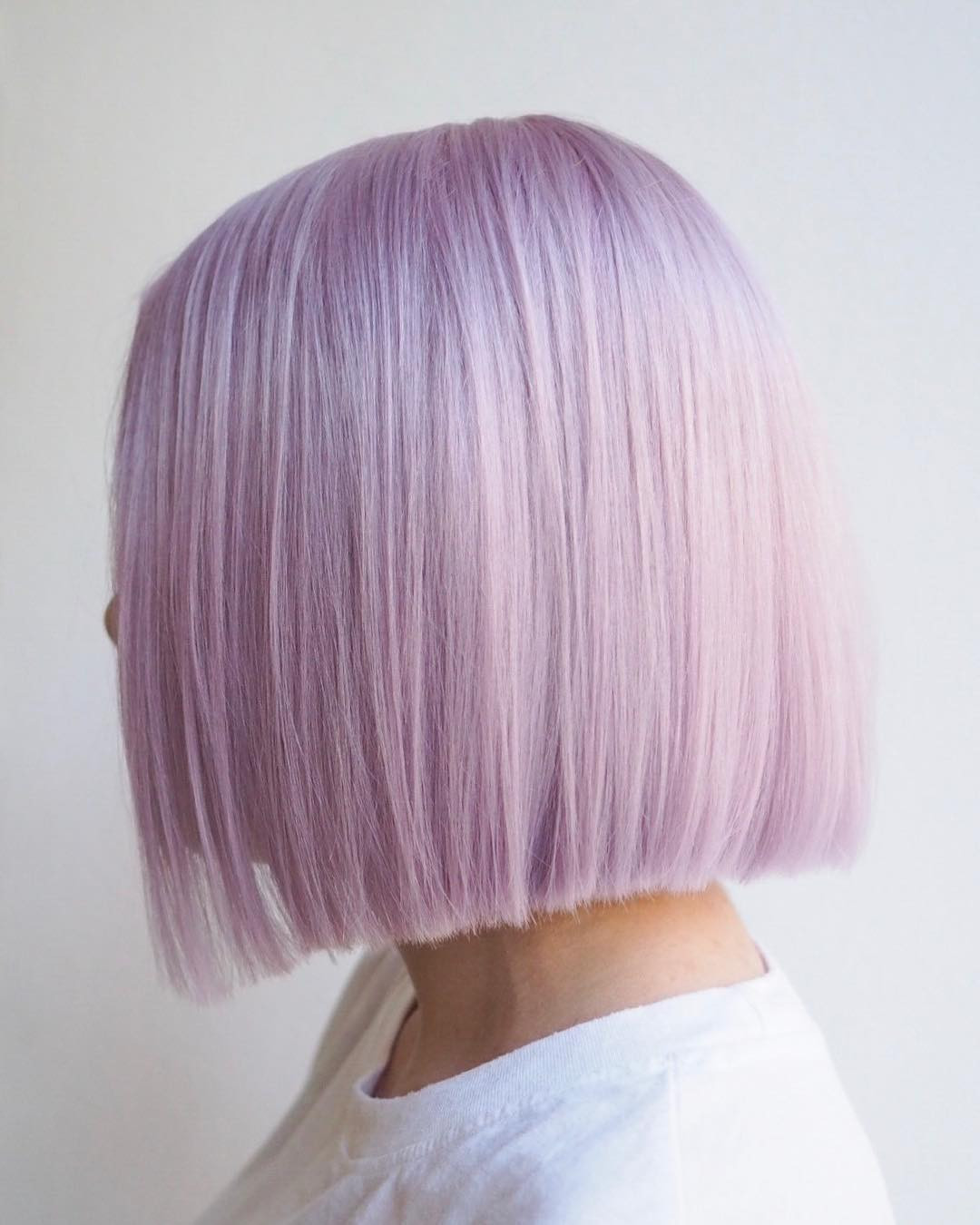
I thought a fine lilac bob would fade in two washes. It does fade faster than medium or thick hair, because fine strands have less cuticle to trap the pigment. The vibrant lilac reads electric on day one, then softens by week three. The bob itself is chin-length, no bangs, straight texture, middle part. A toner refresh every four weeks keeps the color from drifting into a washed-out lavender. The cut is not the problem. The color commitment is.
Shag With Lilac Highlights

Best grow-out in this roundup. A lilac highlights shag starts with a dark base at the roots, then slices of lilac through the mid-lengths and ends. The shag cut uses heavy layers and curtain bangs that graze the cheekbone, so the shape holds even when the color grows out. Wavy texture is ideal: the layers catch the highlights and the waves hide the regrowth line. Middle part, collarbone length, no blunt edges. The contrast between dark and lilac gives dimension that a solid color cannot match. If you have fine, straight hair, the layers might collapse into a triangle shape by noon.
Lilac and Grey Mid-Back Waves
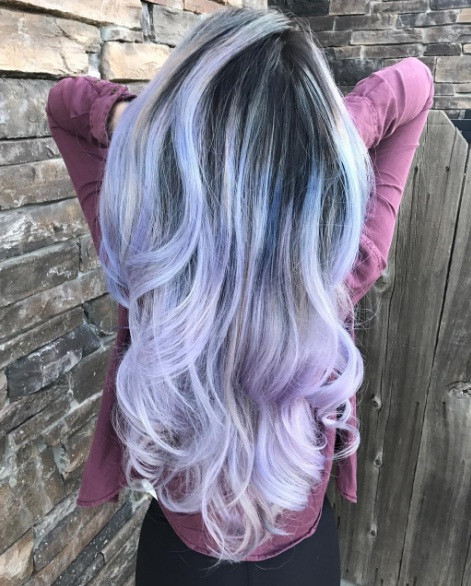
This is the color blend that makes you look like you planned it for months. The dark root anchors the whole thing, while the grey highlights cut through the lilac like a cool breeze. No bangs, just thick straight hair cut into layers that hit mid-back. The waves are loose and wide, not tight curls, which lets the grey peek through instead of getting swallowed. It lands somewhere between winter ash and spring pastel, which means it works when the season can’t decide either. A trim every ten to twelve weeks keeps the shape honest, but the color is what does the heavy lifting here.
The upkeep is about keeping the grey from going brassy and the lilac from fading into nothing. That means a toning shampoo in rotation and a stylist who understands cool tones. The dark root buys you time, about six weeks before you start eyeing the regrowth. This is not a wash-and-go color, but it is a two-wash-a-week color if you play it smart. Loose waves are your friend here, they blur the line between shades and make the whole thing look intentional.
Striking Vibrant Lilac Mid-Back
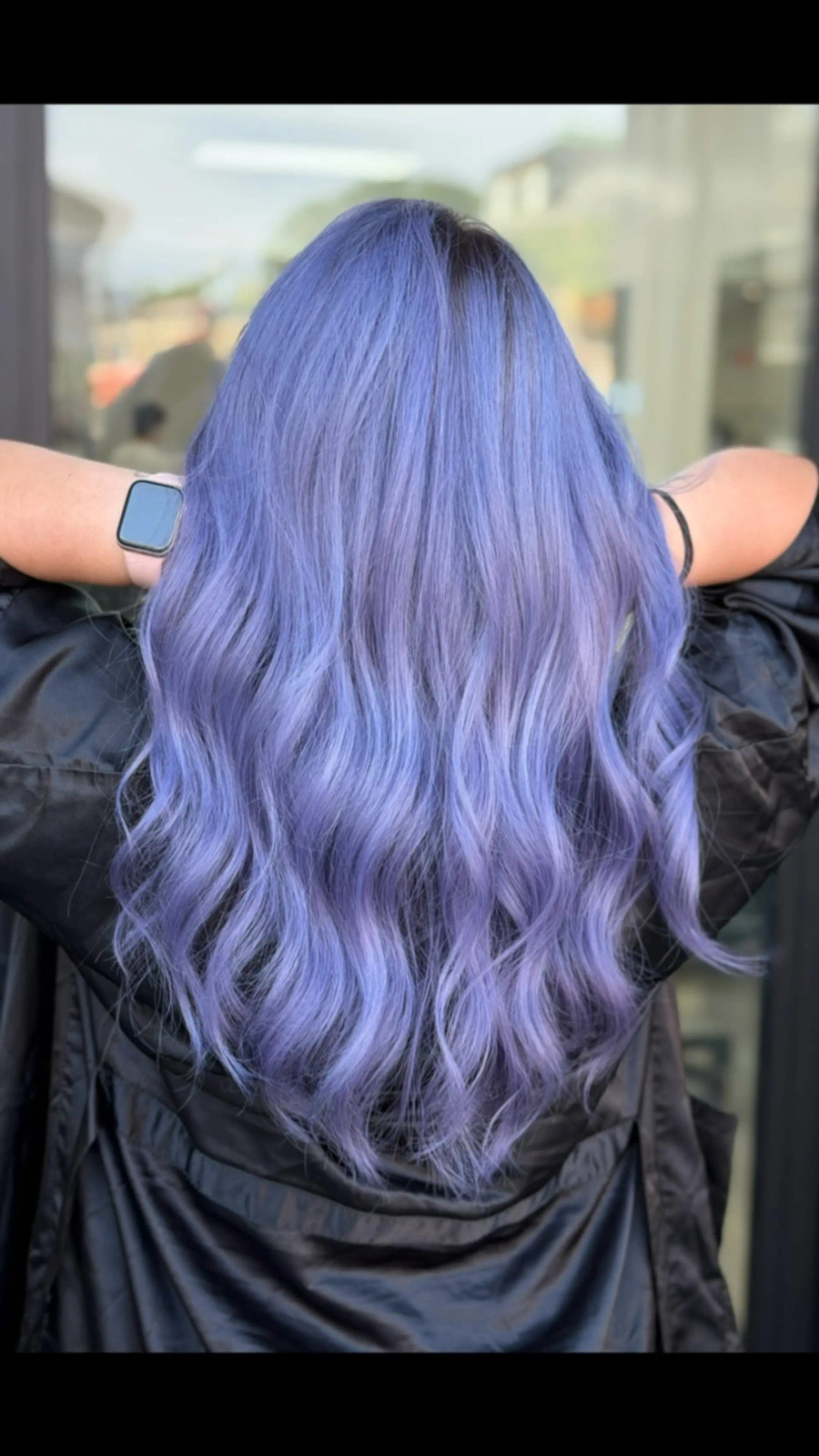
Can your skin handle blue undertones this loud? Because that is what vibrant lilac mid-back demands. The color sits on wavy medium-density hair cut into layers, no bangs, loose waves that catch the light and throw it back. The blue undertones are what keep it from reading as pink or purple, they make it cool and almost electric. This works best on hair that has been lightened to a pale blonde first, otherwise the color lands muddy. Medium density is ideal, fine hair might look overwhelmed, thick hair might eat the vibrancy. The payoff is a shade that stops conversation, the trade is a toning session every three to four weeks.
Mid-Back Lilac with Darker Roots
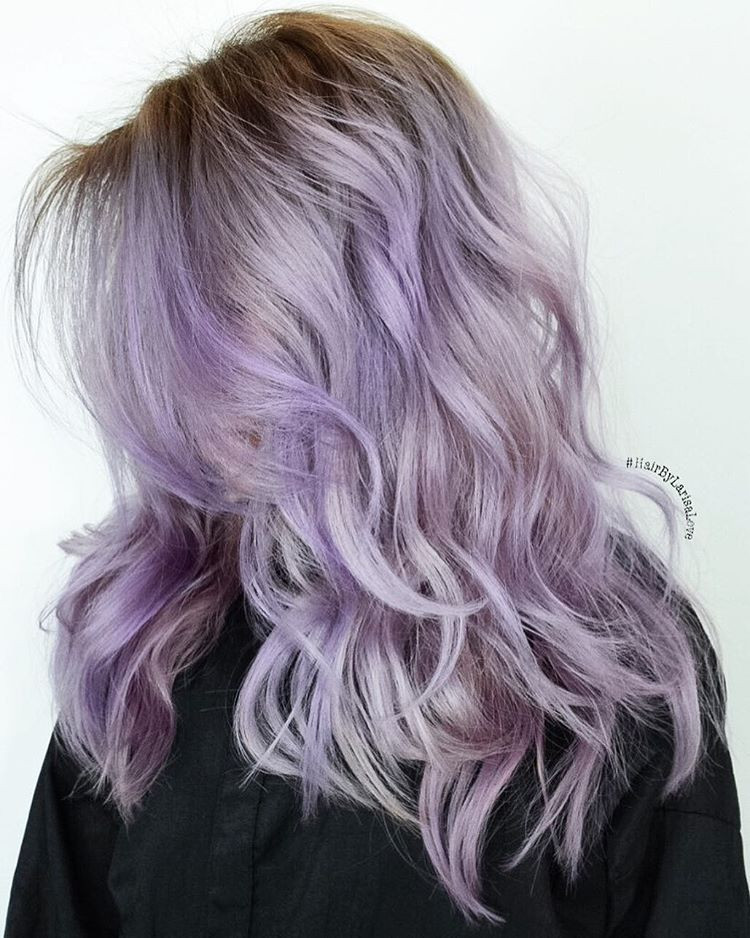
Monday morning, you look in the mirror and the color still holds. That is the reality of lilac with dark roots. The roots are not a mistake, they are the feature. The mid-back length is cut into long layers, no bangs, loose waves on medium-textured hair that does not fight back. The darker base means the lilac fades from the ends first, not the top, so the grow-out is a slow dissolve instead of a sharp line. By week six, the roots have grown a quarter inch and nobody notices because the darkness was always there. A trim every ten to twelve weeks keeps the ends healthy, but the real maintenance is minimal. Wash with cool water, skip the daily heat, let the waves air dry. This is the color for people who want lilac without the weekly panic.
Pastel Lilac Pinkish Gradient
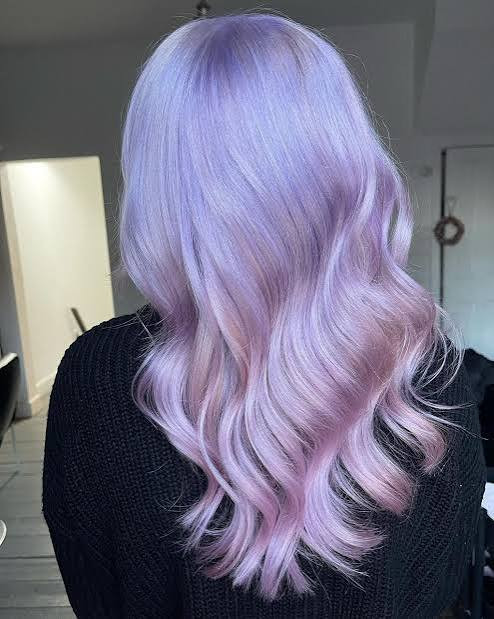
I thought pastel meant easy. It does not. The mistake people make with a pastel lilac gradient is assuming any blonde base will do. It will not. The base needs to be pale, almost white, or the pinkish undertones turn the whole thing into a muddy beige. The gradient here moves from a soft lilac at the roots to a pinkish whisper at the ends, cut into layers on wavy medium-density hair, no bangs, mid-back length. The pinkish undertones are the tricky part, they need a cool base to land clean, otherwise they read as warm and the whole thing collapses. The honest downside is the toning schedule, every four to six weeks, and the fact that one bad shampoo can shift the color. If your base is not pale enough, skip this and go for a deeper lilac instead.
Dramatic Lilac to Pink Gradient
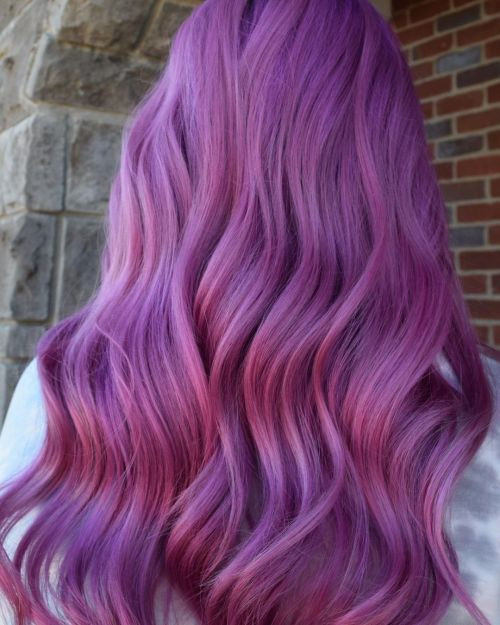
The verdict is that a lilac to pink gradient is not a gradient in the soft sense, it is a deliberate color change that lands hard. The top is lilac, the bottom is vibrant pink, and the transition is short, maybe two inches, not a slow fade. Long layers on wavy mid-back hair, no bangs, the cut keeps the shape simple so the color does the work. The technique is different from an ombre, which fades gradually, this is more of a color block that softens at the seam. The pink needs a separate lightening pass, which means two sessions in the chair, not one. The result is a color that reads as two distinct shades that happen to live on the same head. It is not subtle, it is not meant to be.
Wavy Bob With Multi-Color Lilac Blend
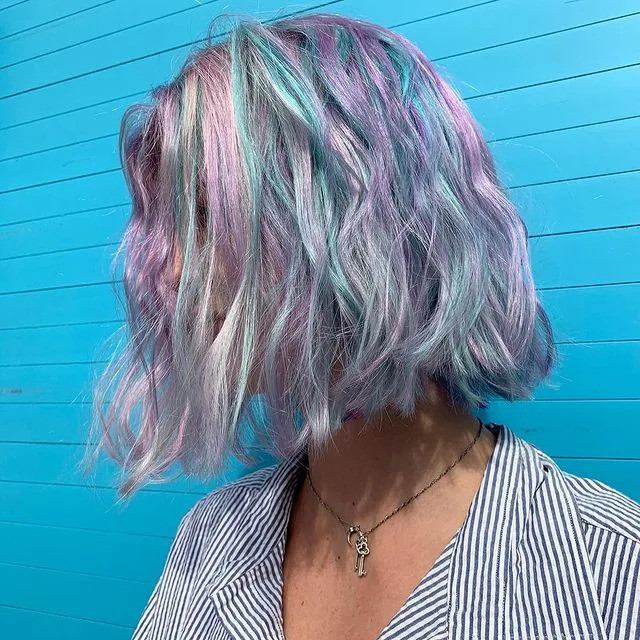
Can one head of hair really carry pink, mint, white and lilac without looking like a craft project? This collarbone bob says yes, but only if a professional handles the application. The cut stays simple, no bangs, a middle part, soft waves that let the pastel color combination do the work. Each streak needs its own bleach level and its own tone, which means a single at-home bowl will not cut it. You pay for the precision, and the result reads intentional instead of chaotic. A multi-color lilac bob like this one requires a very light base and careful sectioning. Toning is not optional, it is the whole point.
Silver Lilac Bob With Purple Accents
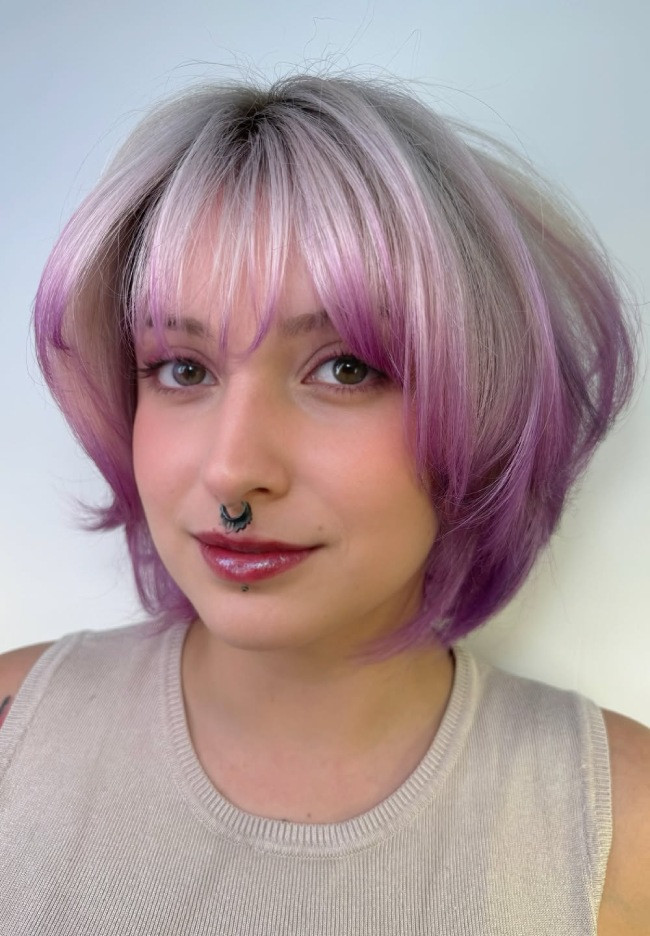
Monday morning, you wake up and the wispy fringe has shifted left. That is the reality of a silver lilac purple accents bob. The collarbone length is layered, the fringe is fine and needs a quick dry with a round brush or it separates into sad strings. The purple accents sit mostly on those front pieces, so they fade first, usually by week three. A toning shampoo keeps the silver from turning muddy, but the purple will need a direct dye refresh every few washes. The cut itself holds its shape well, the layers add movement without losing the blunt-ish baseline. Just know the fringe is a commitment, not a set-it-and-forget-it detail.
Soft Lilac Bob With Blonde Highlights
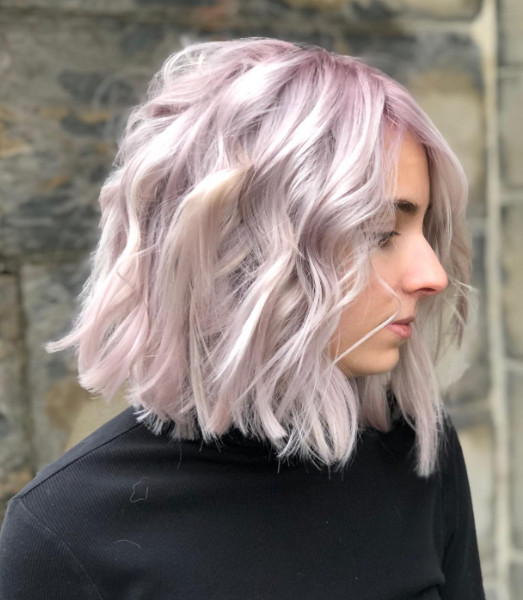
The lilac blonde highlights in this collarbone bob land somewhere between pastel and neutral, which is exactly why it works on more skin tones than a straight violet. The blonde streaks break up the lilac so it does not wash out warm complexions, and the side-swept fringe softens the whole thing further. Medium density hair holds the wave pattern best, fine hair may need a texture spray to keep the bends visible past noon. The middle part and soft waves create a shape that flatters round and oval faces equally. It is not a bold statement, it is a wearable everyday lilac that still feels special. The highlights also mean less visible root regrowth than a solid pastel.
Pastel Lilac Layers With Blonde

When does a pastel lilac shoulder length cut make the most sense? Late spring, when the light is soft and you want your hair to look like it matches the wisteria. The side-swept bangs and loose, tousled waves give it a relaxed feel that works for outdoor events, garden parties, or a weekend brunch where you want to look put together without trying hard. The blonde highlights woven through the layers add dimension so the pastel does not fall flat in natural light. Medium density, wavy texture is ideal, the layers need some body to hold their shape. This is not a winter shade, it needs sun to read as vibrant instead of washed out. Book it for April or May, enjoy it through August.
Soft Lilac With Natural Lighter Roots
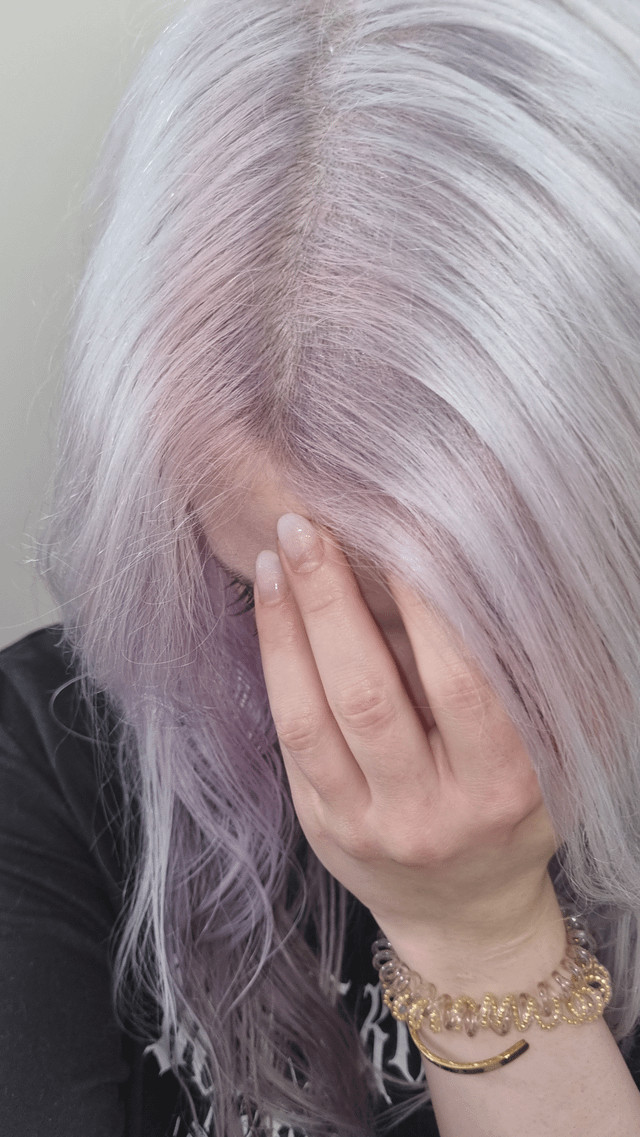
Best grow-out in this roundup. The lilac with lighter roots is designed to fade gracefully, no harsh line ever appears. The shoulder-length layers are cut for air-drying, fine wavy texture encouraged to do its own thing. You wash, you scrunch, you walk away. The soft lilac hue sits mostly on the mid-lengths and ends, so the lighter roots blend into your natural base as they grow. Toning every six to eight weeks keeps the lilac from turning beige, but honestly, even a little faded it still looks intentional. This is the lowest maintenance lilac I have seen, and I mean that as a genuine compliment.
Angled Bob in Pastel Lilac
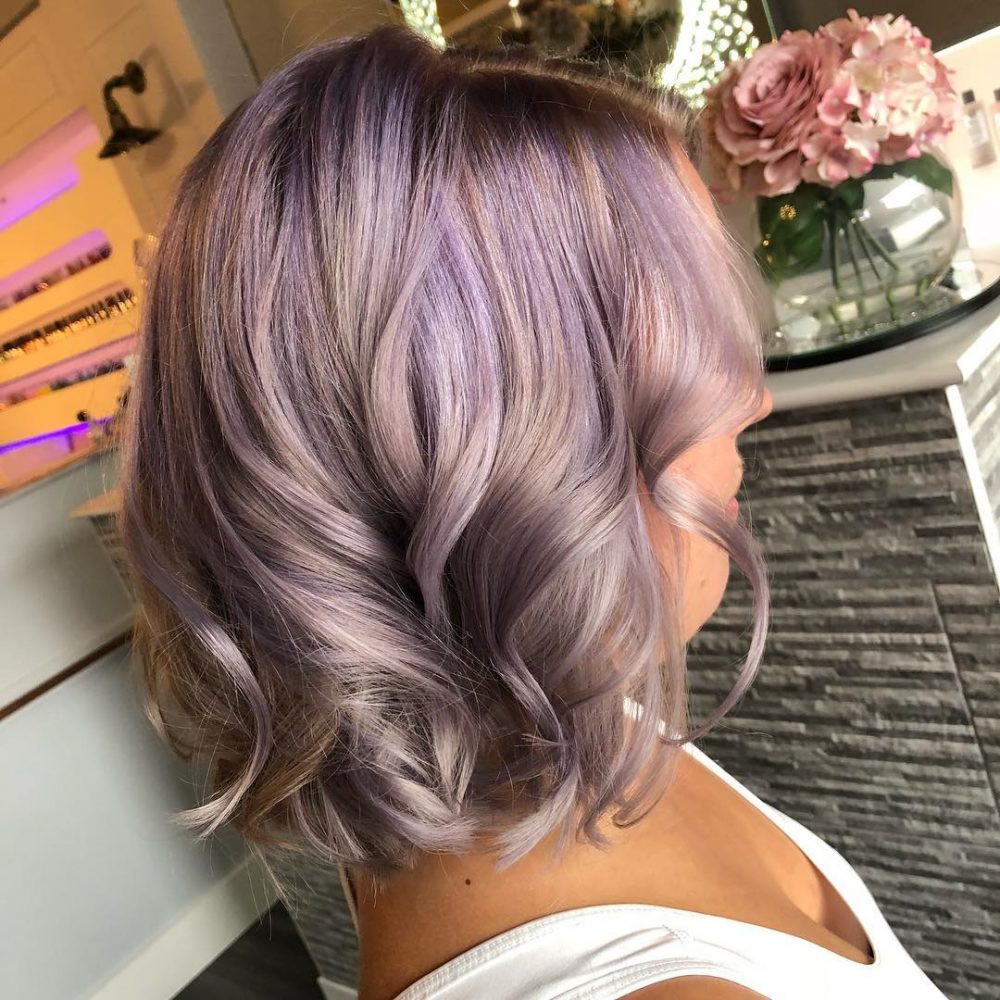
This is the version that makes me stop scrolling. A pastel lilac angled bob reads softer than a straight-across bob in the same shade, because the diagonal line lets the lighter highlights catch light at different angles. The cut drops to collarbone at the front and sits shorter at the nape, no layers, no bangs. Fine hair benefits from that single blunt baseline — it holds the shape instead of collapsing into a triangle. The curled ends are not optional, though. Without a round brush and a few minutes of heat, the angle reads choppy instead of intentional.
Chin-Length Bob With Lilac Pink Highlights
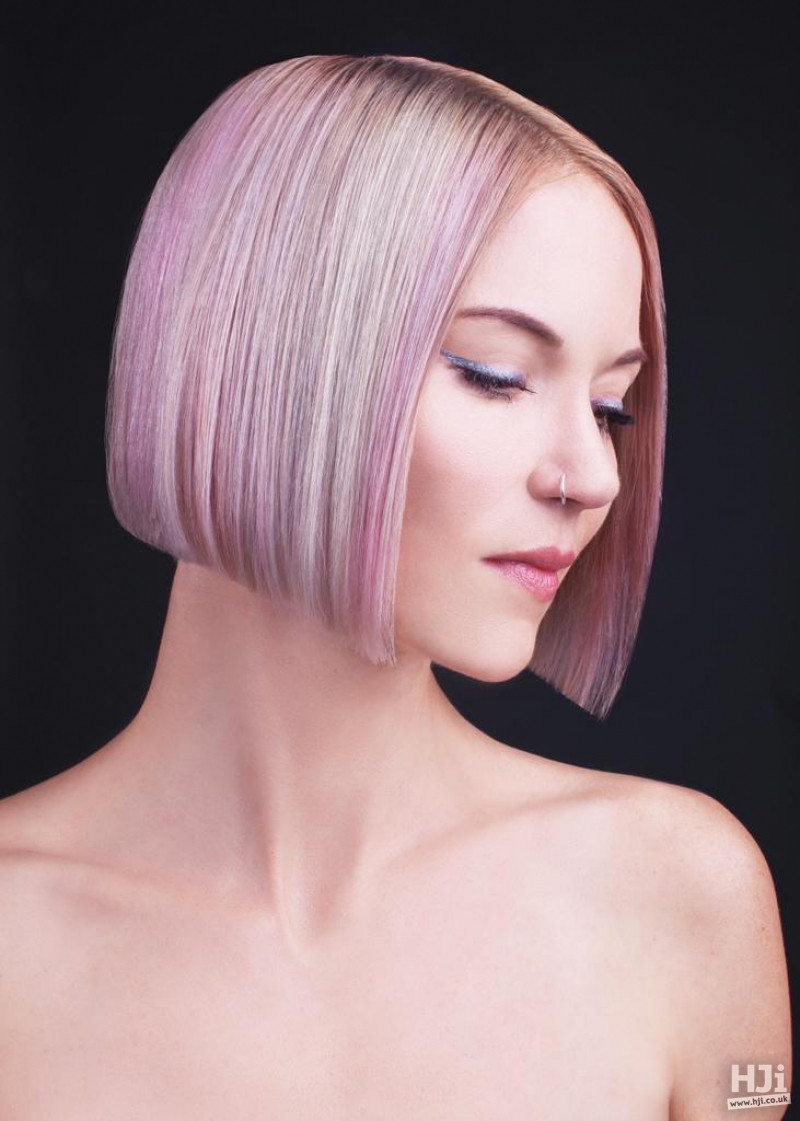
Does anyone actually want their hair to look thinner? That is the question I ask every time I see lilac pink highlights on a chin-length bob. The placement matters. If the stylist scatters the highlights evenly from root to tip, fine straight hair can look more sparse, not more dimensional. A better approach: keep the pink concentrated at the ends and around the face, with the lilac as the dense base. That way the bob reads solid, not scattered. The trade-off is that the pink fades fastest, because pastel tones on lightened hair always do. You are looking at a toning appointment every four weeks, minimum. The cut itself is low-maintenance, no bangs, no layers, just a clean line that needs a trim every eight weeks to stay sharp.
Collarbone Bob With Lilac Ombre
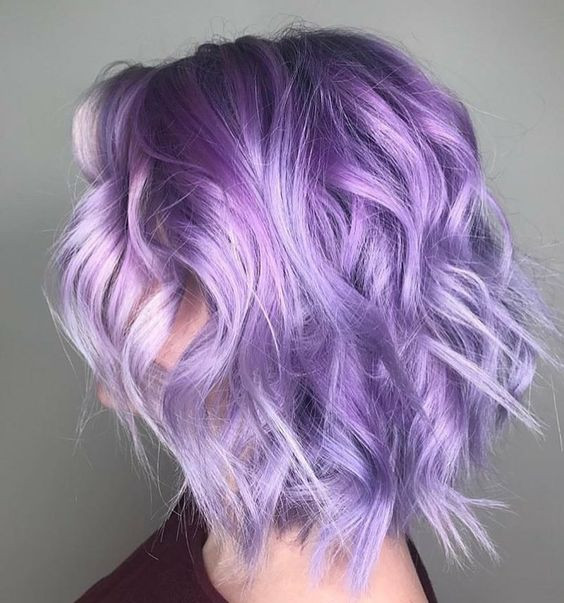
An ombre and a balayage are not the same thing, and this collarbone bob makes the difference visible. The lilac ombre bob starts darker at the roots and shifts to lighter lilac tones in a visible gradient, not a soft sweep. The line of demarcation is intentional, not blurred. That matters for grow-out. Because the contrast is built into the design, the roots grow in without that awkward stripe you get from a single-process pastel. The collarbone length keeps the gradient readable — shorter and the transition would look cramped. Longer and the ombre would need more colour to read. No bangs, no layers, the cut is a blunt bob with a slight curve at the ends. Wavy texture helps the gradient show, but straight works too.
Visual Idea

A lob with darker roots and vibrant lilac through the rest. This is the colour for someone who wants the impact of lilac without the weekly root panic. The darker base at the crown means the regrowth blends instead of announcing itself at week three. The loose waves keep the colour from looking flat, and the collarbone length works for oval and heart-shaped faces because the soft framing at the jaw does not add width. Medium texture is the sweet spot here. Fine hair would need a denser colour application to keep the lilac from looking translucent. No bangs, no layers, just a lob that relies on the colour gradient for its shape.
Ear Visual Idea
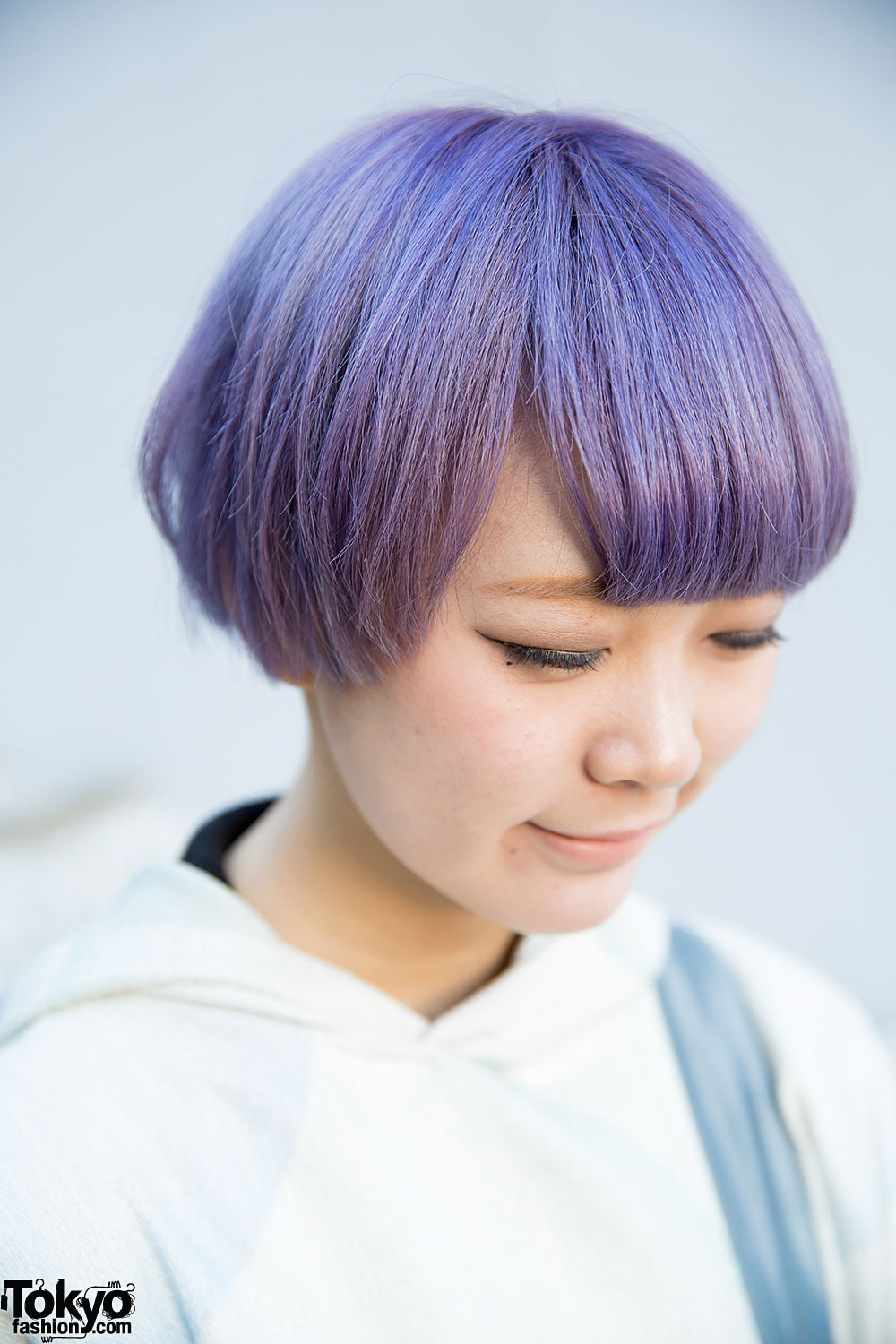
Did you wake up and decide you wanted to look like a 1960s French film extra? Because that is the energy of an ear-length bowl cut in lilac with purple undertones. The blunt bangs and the rounded shape require a straight texture to stay sharp. Wavy or curly hair would turn this into a different silhouette entirely. The commitment is not the cut, it is the daily styling. Every morning you have to flat-iron the bangs and the sides to keep that clean line. Skip a day and the shape reads messy, not intentional. The purple undertones in the lilac help it fade cooler instead of going yellow, which buys you an extra week between toning sessions.
Short Visual Idea
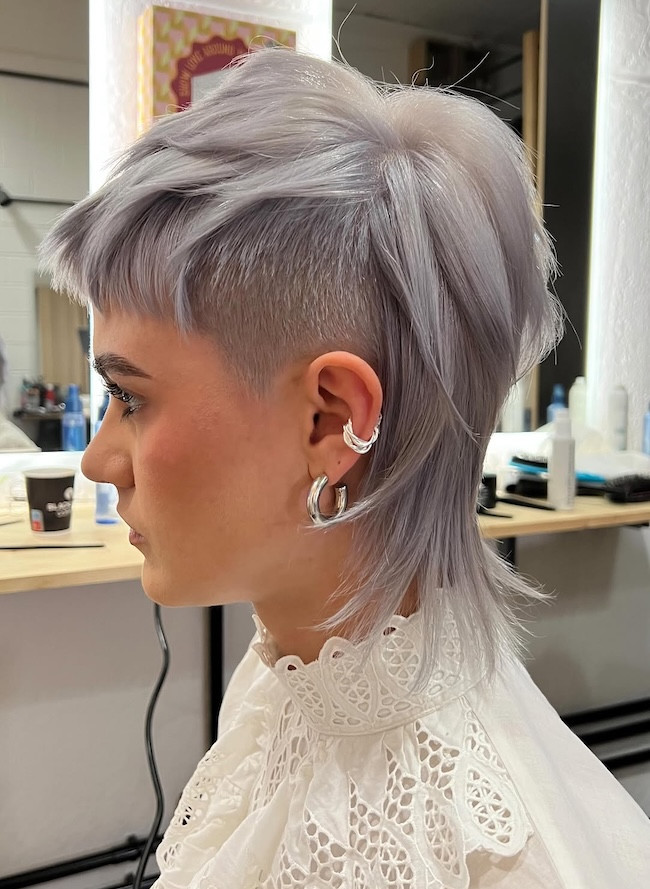
I’ll admit it: I wanted to hate the micro bangs. But the pixie mullet with an undercut in icy lilac is doing something. The cut is short, the layers are aggressive, and the bangs barely graze your forehead. Straight, fine texture actually holds this shape because there’s less weight pulling it down. Side part, swept forward, it reads intentional. The honest downside? An undercut and micro bangs need a trim every three weeks. That is not an exaggeration.
Shoulder Visual Idea
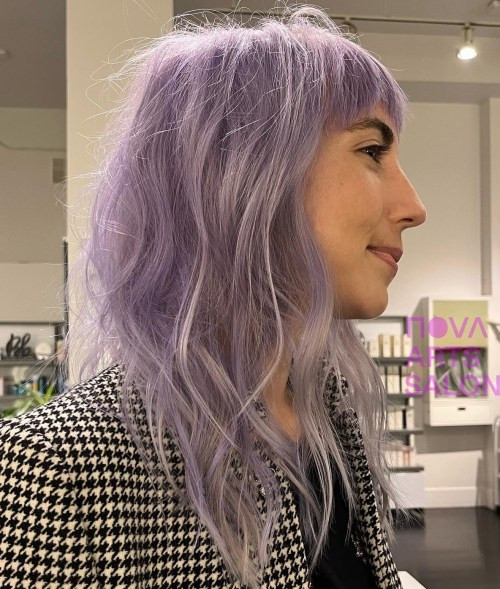
This is the one you book, not attempt at home. A shoulder-length shag with full bangs and lilac hair with subtle lighter streaks requires a stylist who understands both the cut and the color. The layers create movement, the full fringe frames the face, and the loose waves soften everything. Fine, wavy texture works here because the shag adds volume where straight hair would fall flat. If you are not ready for a salon commitment every six to eight weeks, skip the full bangs. The shag alone will still deliver.
Chin Visual Idea
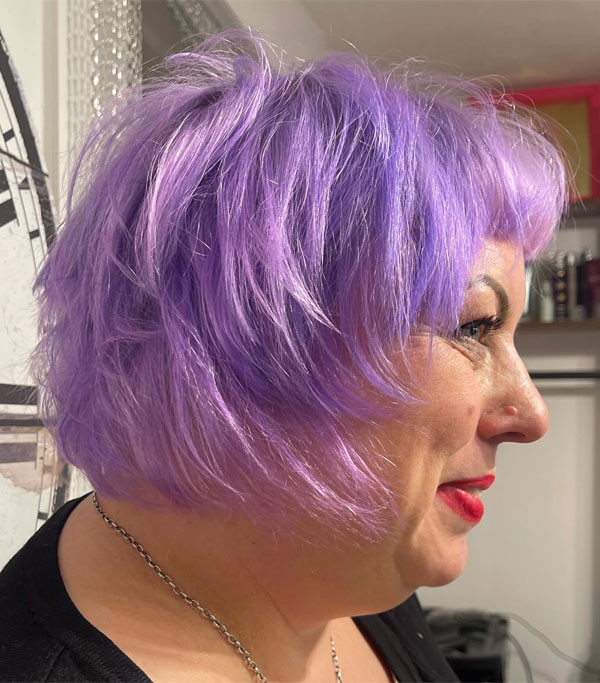
That tousled texture is not accidental. A chin-length textured bob in vibrant lilac with a blunt fringe relies on point-cutting and internal layering to keep the shape from looking like a helmet. The cut removes weight from the interior, so wavy, medium-density hair can move without going flat. The blunt fringe stays solid, the sides stay soft. Side part, tousled finish, it reads modern. The color is loud, the cut is precise, and together they work because neither one is half-done.
Smoky Lilac And Grey Visual Idea
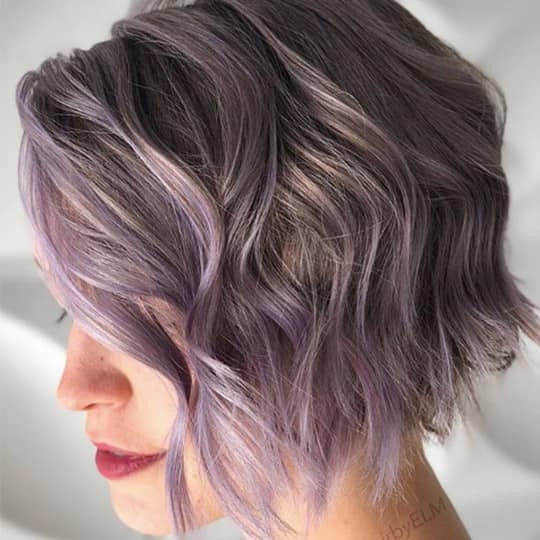
You walk into the salon wanting solid lilac. You walk out with smoky lilac and grey blended through an angled bob with side-swept bangs. The difference is subtle and it matters. Solid colors read bold; this blend reads sophisticated. Fine, wavy texture catches the lighter grey pieces, so the dimension shows even when the hair is not styled. The side-swept bangs soften the angle of the bob. It is less maintenance than a full pastel, because the grey base hides grow-out longer. I picked a side and it is this one.
Final Thoughts
After writing all of these, I’m booking the sharp chin-length bob. It’s the one that made me reconsider my own fine hair’s limits. The structured shape holds, and the lilac feels less like a trend and more like a decision.

