I’ve been watching the bob crawl back into every salon chair I sit next to. This time it’s not the blunt, severe version from three years ago. It’s locs, twists, curls, and a few inches of air-dried texture that actually look like they belong to the person wearing them.
You get 34 ideas for a loc bob. They run from ear-length to collarbone, from four hours of setting to a simple two-strand twist that lasts a week. Fine hair, thick hair, coily texture, straight locs. My fine, flat-by-4-pm hair would skip half of these. But the ones that work? They don’t fight the natural texture. That’s the trick.
Ear-Length Bob With Textured Side Bangs
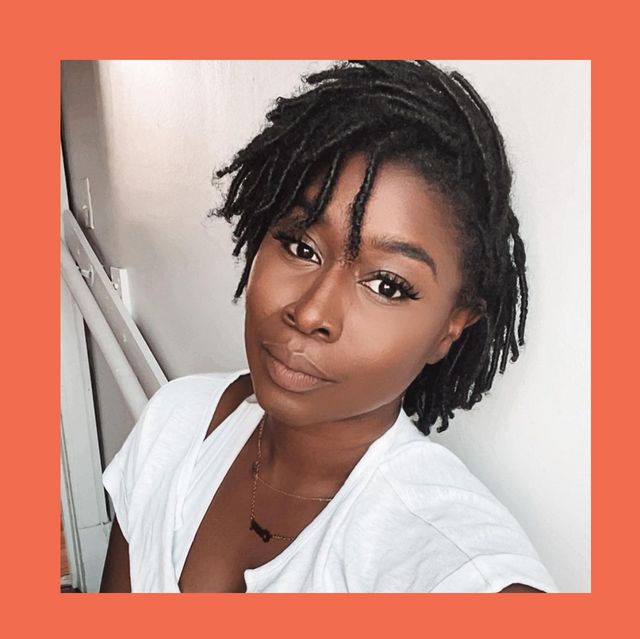
An ear length loc bob sits short enough to feel cool on the neck but long enough to still tuck behind one ear. The side bangs do the real work here — they cut across the forehead at an angle, which softens the blunt baseline and keeps the whole shape from reading too severe. Thick, wavy texture holds the side sweep in place without a pin. A side part is non-negotiable; a middle part would split the fringe and ruin the line.
Vibrant Red Bob With Blunt Bangs
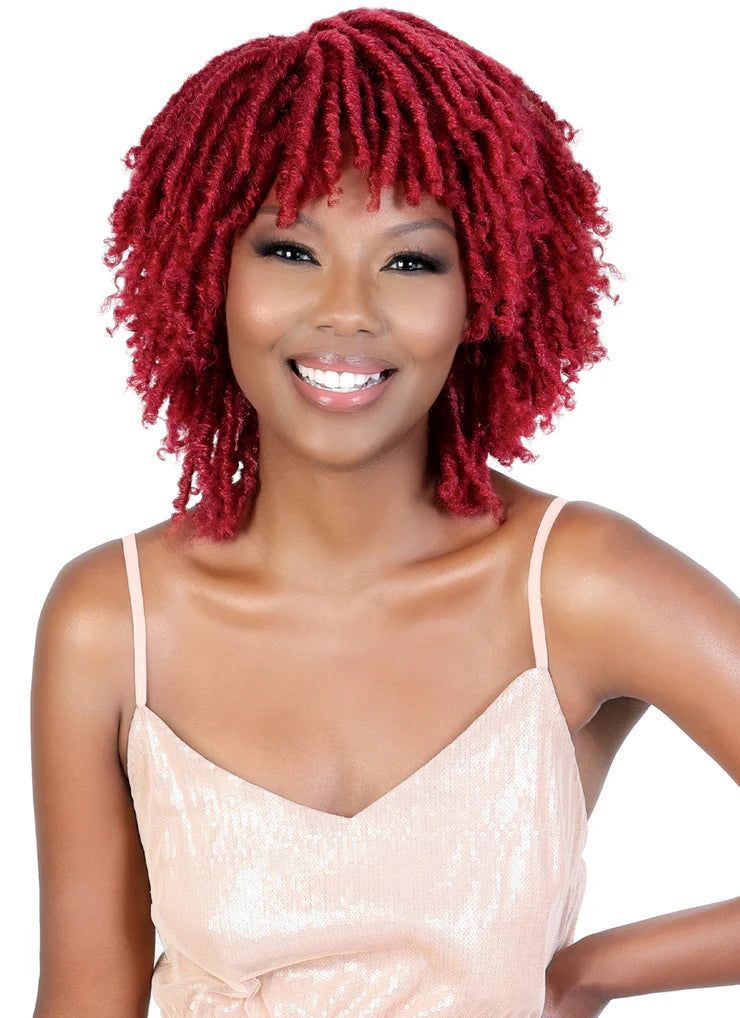
A red loc bob with bangs is not a subtle choice. The blunt bangs drop straight across the forehead, and the chin-length bob follows the same clean horizontal line — it is a cut that announces itself. Compared to a softer, layered bob, this one demands commitment. The red is loud, the fringe is unapologetic, and the middle part keeps everything symmetrical. If you want something that fades into the background, pick another section.
Shoulder-Length Bob With Curtain Bangs
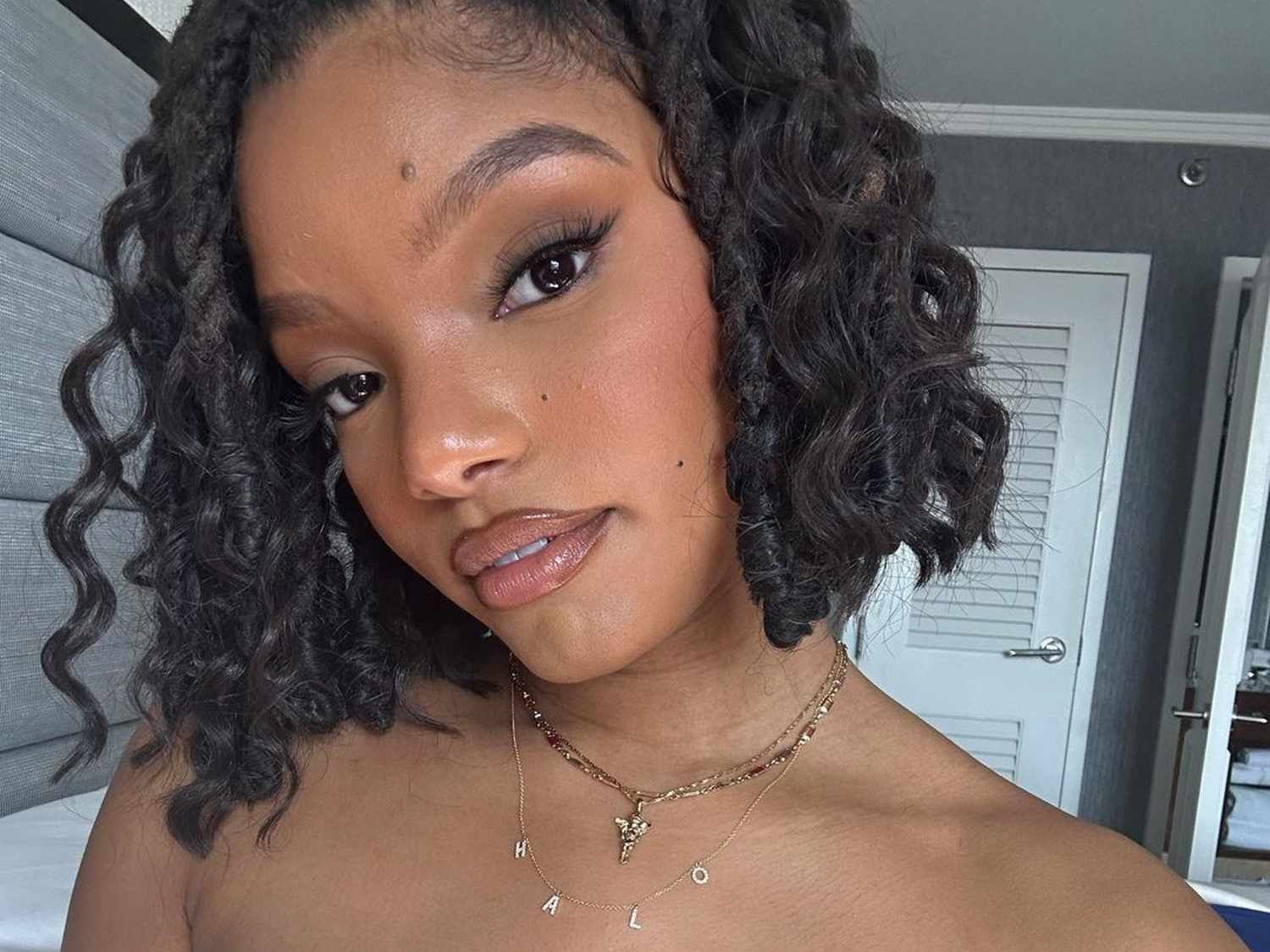
The soft curls in this shoulder-length bob are the kind that look effortless only because someone put in the effort. A diffuser on low heat, a cool shot at the end, and a patient ten minutes of hover-drying before touching the hair.
Here is the real week. Day one, the curtain bangs bob looks polished, the middle part frames the face evenly. Day two, the soft curls have dropped by about thirty percent. A quick refresh with a misting bottle and a scrunch brings them back. Day three, the bangs need a round brush and a minute of heat to re-form the swoop. The ends hold up for about eight weeks before they need a trim. The texture is curly, which means the curls shrink the length by an inch or two — account for that when you ask for shoulder length.
Chin-Length Blonde Loc Bob
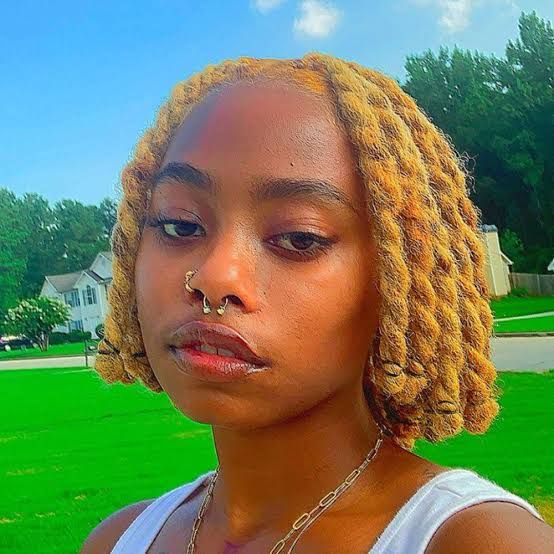
How much time do you have? A blonde loc bob at chin length is not a same-day decision. The blonde requires lifting dark locs, which can take multiple sessions spread over weeks. The textured locs themselves need a stylist who knows how to lighten locs without compromising the structure — this is not a DIY bleach bowl situation. The payoff is a bright, even blonde that reads expensive because it cost time. A middle part and no bangs keep the focus on the color. Trim every six to eight weeks to keep the chin line crisp.
Textured Black Bob With Side-Swept Bangs
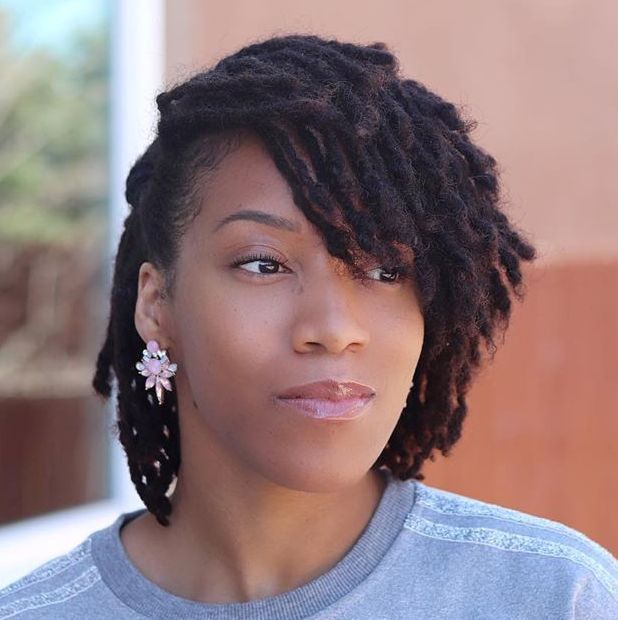
I will admit I was skeptical about a side-swept fringe on locs. It felt like asking for something the texture was not built for. But a textured loc bob with bangs works because the stylist cuts the side-swept fringe at an angle into each loc individually, not straight across. The black locs are thick, so the fringe has weight — it stays where it is placed instead of drifting back into the rest of the hair. The honest downside: the side-swept fringe needs a reset every morning. A quick comb-through with a fine-tooth comb and a dab of styling cream redefines the sweep. Skip this if you want a wash-and-go fringe.
Collarbone Bob With Wispy Bangs
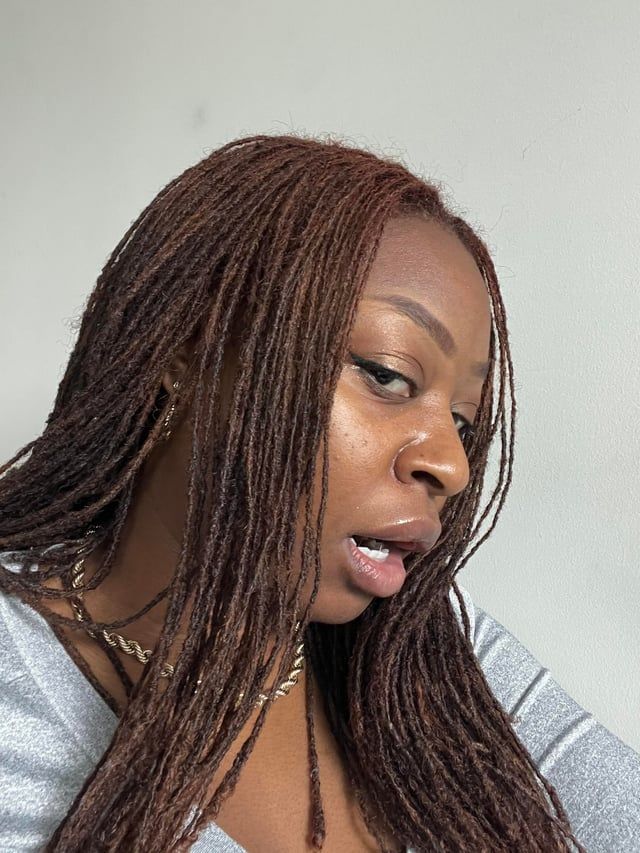
There’s a softness to this one that catches me off guard every time. The collarbone bob with wispy bangs lands somewhere between polished and undone, and the defined curls at the ends give it a shape that actually holds past noon. A middle part lengthens a round face, while the wispy bangs soften a square jaw without hiding it. The collarbone length suits most face shapes because it draws the eye down, not across, and the wavy locs add volume where fine hair tends to fall flat. I’d wear this to a wedding or a Tuesday, honestly, it does both.
Upkeep is real but not punishing. The wispy bangs need a quick brush, maybe a spritz of water, and the collarbone length keeps its line for about eight weeks before the ends start to wander. Defined curls mean you’re either air drying with a curl-defining cream or diffusing, pick your morning mood. This is a cut for someone who wants movement without committing to a full fringe or a blunt edge.
Dyed Red Orange Chin-Length Micro Loc Bob
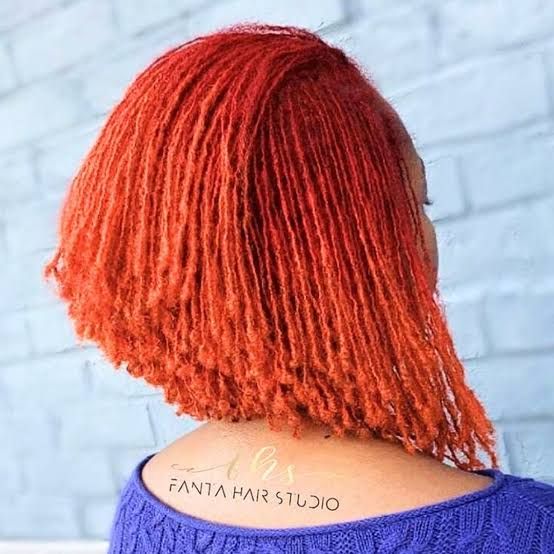
Red-orange is a commitment, and this micro loc bob wears it like a dare. The chin length keeps the shape tidy, but the vibrant color does the shouting, so no bangs needed, the hue is the statement. Micro locs read dense and deliberate, and that red-orange hue lands best in late autumn, when everything else goes muted and this walks in loud. It’s a seasonal mood, not a year-round default, and the color will fade if you don’t touch it up. Short, yes. Boring, absolutely not.
Chin-Length Bob With Curly Bangs
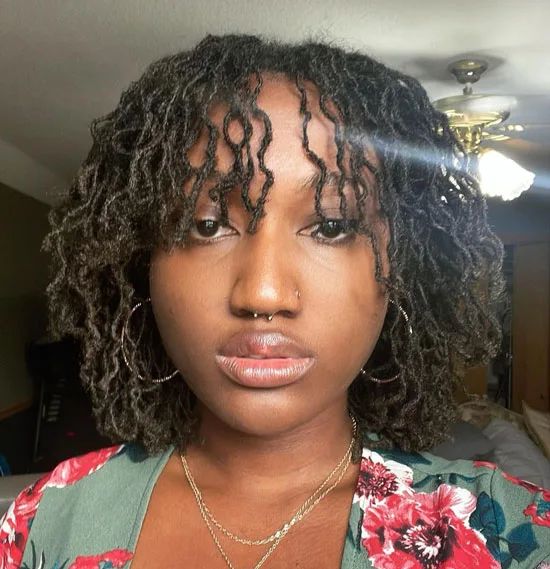
I’ll admit it, I tried curly bangs once and underestimated the maintenance. The curly bangs loc bob is playful, but those short curly bangs have a mind of their own, they shrink, they separate, they do whatever they want by 3 pm. The mistake is treating them like straight bangs, expecting them to lie flat. They won’t. Keep them lightly moisturized and use a tiny bit of styling paste to coax the curls into place, otherwise you get a fringe that points in three directions. The chin-length bob itself is forgiving, it frames the face without weighing down, but the bangs are the boss here. If you’re not ready to wrestle them every morning, this one will humble you.
Collarbone Bob With Thick Twisted Locs
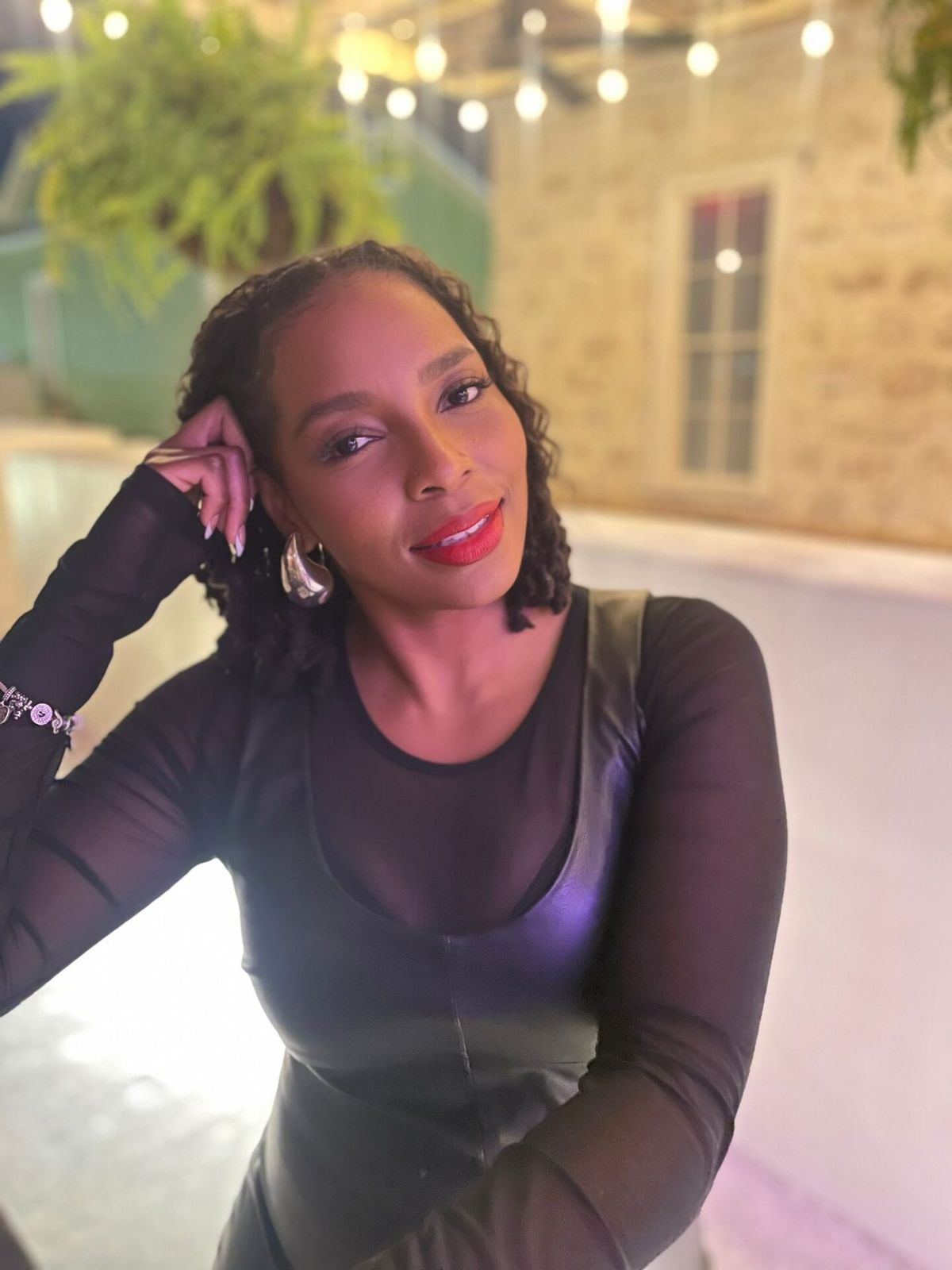
I remember the first time I saw a thick twisted loc bob in person, it was at a coffee shop, and I stared longer than was polite. The collarbone length is what makes it work, long enough to feel substantial, short enough to keep the shape defined. The wavy texture of the twists adds a softness that a tighter loc might miss, and the middle part opens up the face without committing to bangs. I’ve been tempted to chop mine, but the grow-out is the real story.
Keeping the twists neat means a touch of oil or pomade, and air drying gives the best texture, no heat needed. The baseline needs a trim every eight weeks, otherwise the bob shape blurs into a shapeless mass. It’s a look that asks for patience, but the payoff is a shape that actually holds its line through a busy week. I’m a convert, reluctantly, because I didn’t expect to love the maintenance.
Uniform Chin-Length Coily Bob
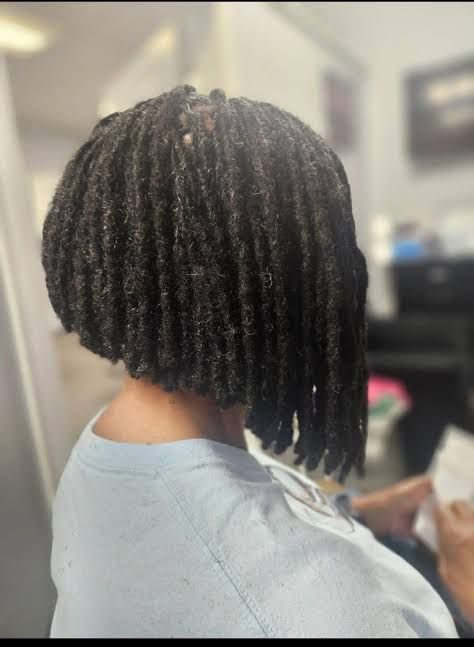
There’s something quietly confident about a coily loc bob that doesn’t try to be anything else. The uniform shape at chin length works because it doesn’t fight the texture, it lets the coils stack and settle into a clean line. A round face gets softened by the even perimeter, while a longer face gets balanced by the width at the jaw. The density of the coils means you don’t need layers to create volume, the texture does it on its own. Just keep the shape trimmed, because the uniform line is the whole point, and let the coils dry without heavy products that weigh them down.
Collarbone Bob With Defined Curls
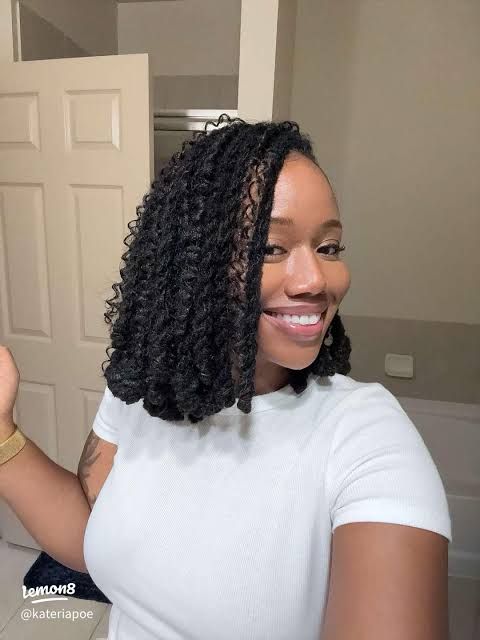
This one earns its keep. A collarbone-length defined curls loc bob with a deep side parting and no bangs, it moves from a work meeting to a dinner reservation without a single touch-up. The layers are cut into the curl pattern, not against it, so each coil sits where it should and the shape holds its weight through a long day. I have watched this cut outlast a full commute and then a humid evening. It is not a wash-and-run cut, but it is close. The collarbone length gives you enough hair to pull back if you want, though honestly, you will not want to.
The side parting is the secret. It breaks up the roundness a center part can create and lets the curls fall forward in a way that reads intentional, not accidental. The texture stays defined because the cut respects the curl’s natural spring. No fighting. No flat spots by 4 pm. For anyone with medium to dense curls who wants a bob that actually works for a week, not just a photo, this is it.
Chin-Length Bob With Two-Strand Twists
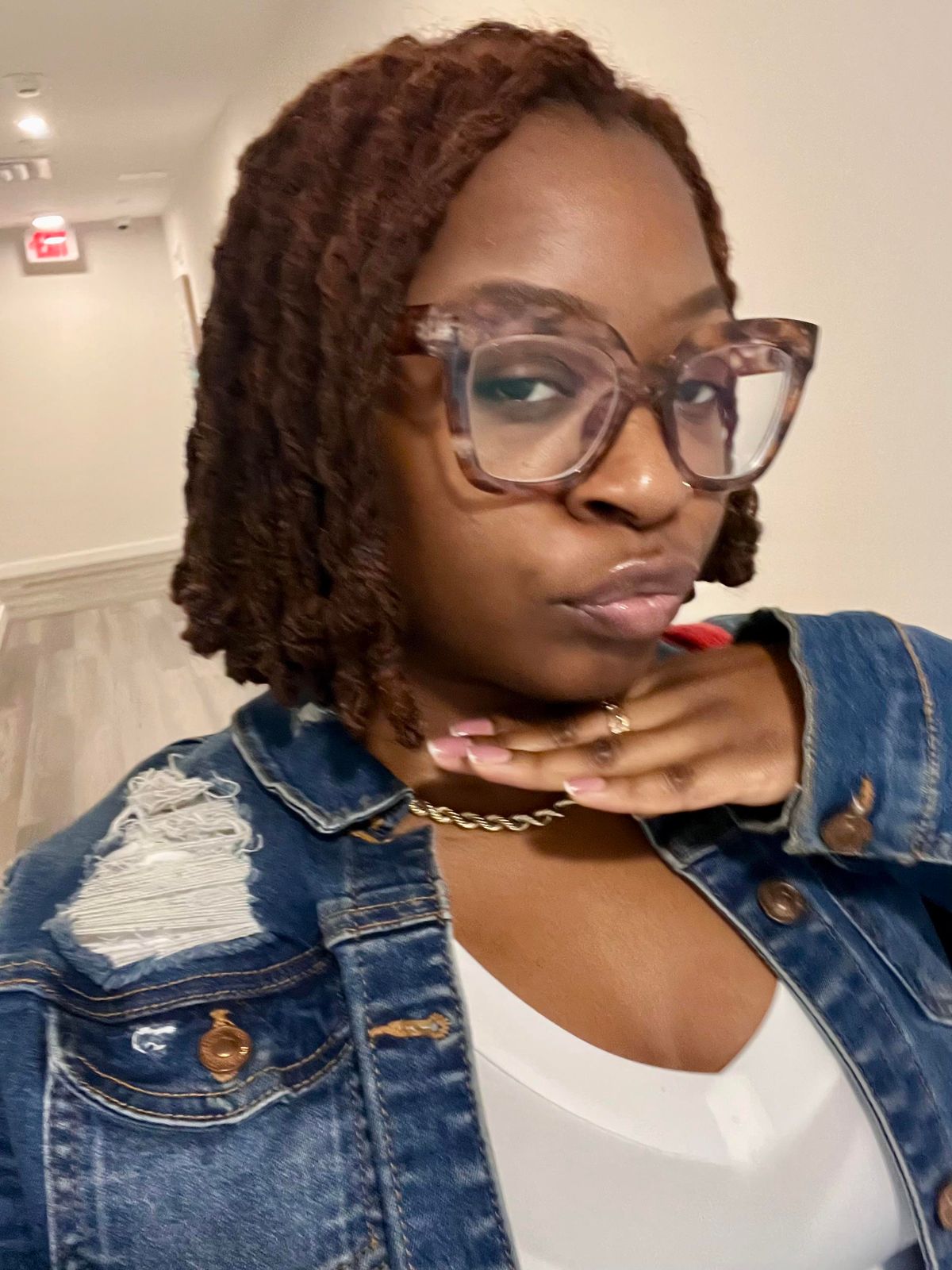
When did a two strand twist loc bob start looking this finished? The chin-length bob is built with neat two-strand twists, no bangs, a side part, and lighter brown tips that catch the light. The technique matters: each twist is started at the root with consistent tension, and the ends are sealed so they do not unravel. Tell your stylist you want the twists to sit flat against the head, not poof out, because the bob shape depends on that clean perimeter. This is a salon job, not a bathroom-mirror project. The twists take precision to keep the bob line straight, and the lighter brown tips require a colorist who understands how to place lightness without lifting too high on the loc.
Chin-Length Bob With Thick Wavy Locs
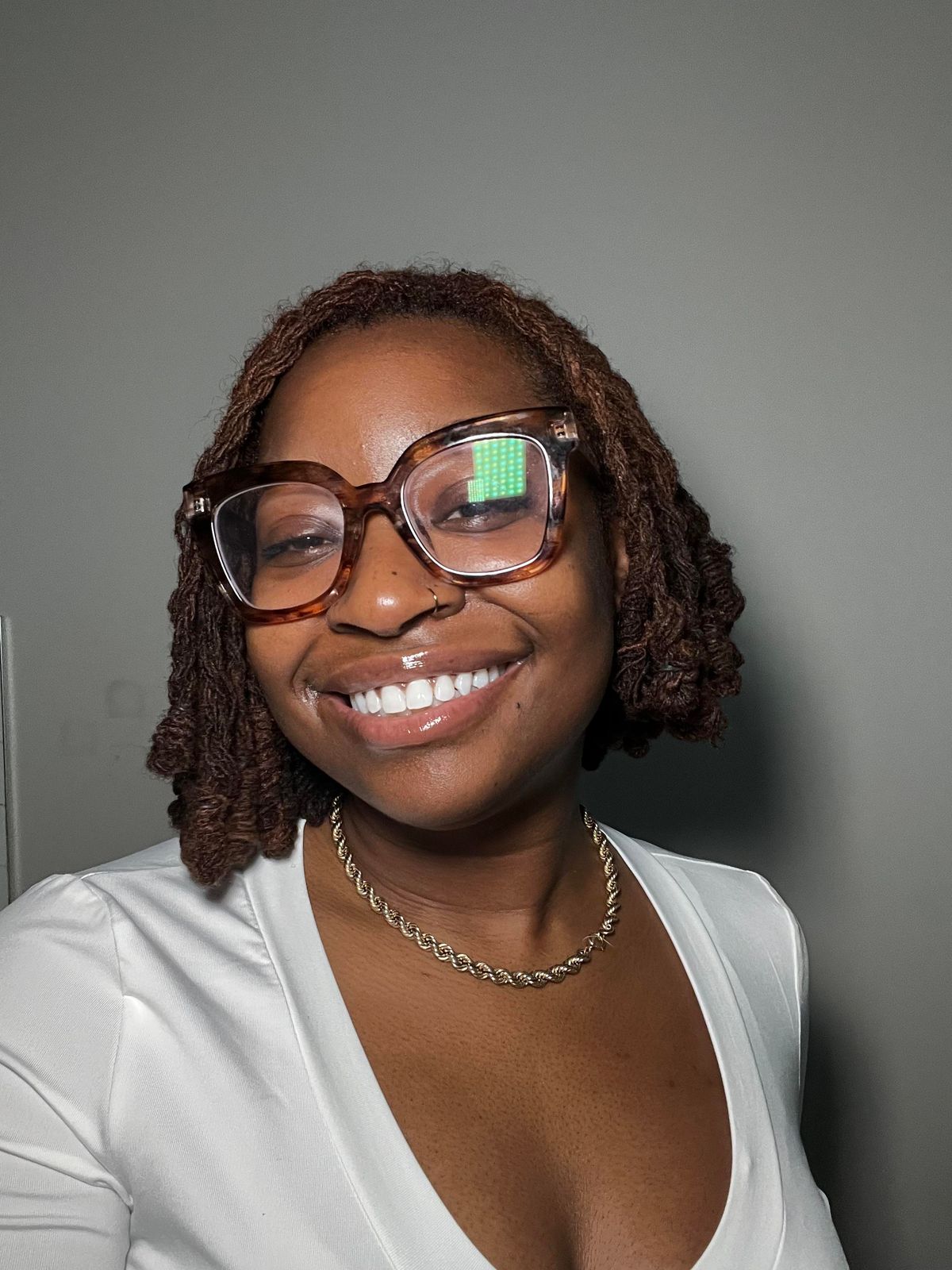
I will admit I was skeptical about a thick wavy loc bob at chin length. Thick locs can feel heavy, and a bob this short can read as too dense, too much weight sitting at the jaw. But air dried, with a middle part and no bangs, this one works. The wavy texture of the locs softens the blunt line, and the chin length keeps the weight from pulling downward. The locs are thick enough to hold the bob shape without collapsing, but the wave pattern stops it from looking like a solid block of hair. It is a natural, textured look that does not try to be anything else. That is what sold me.
Blunt Chin-Length Bob
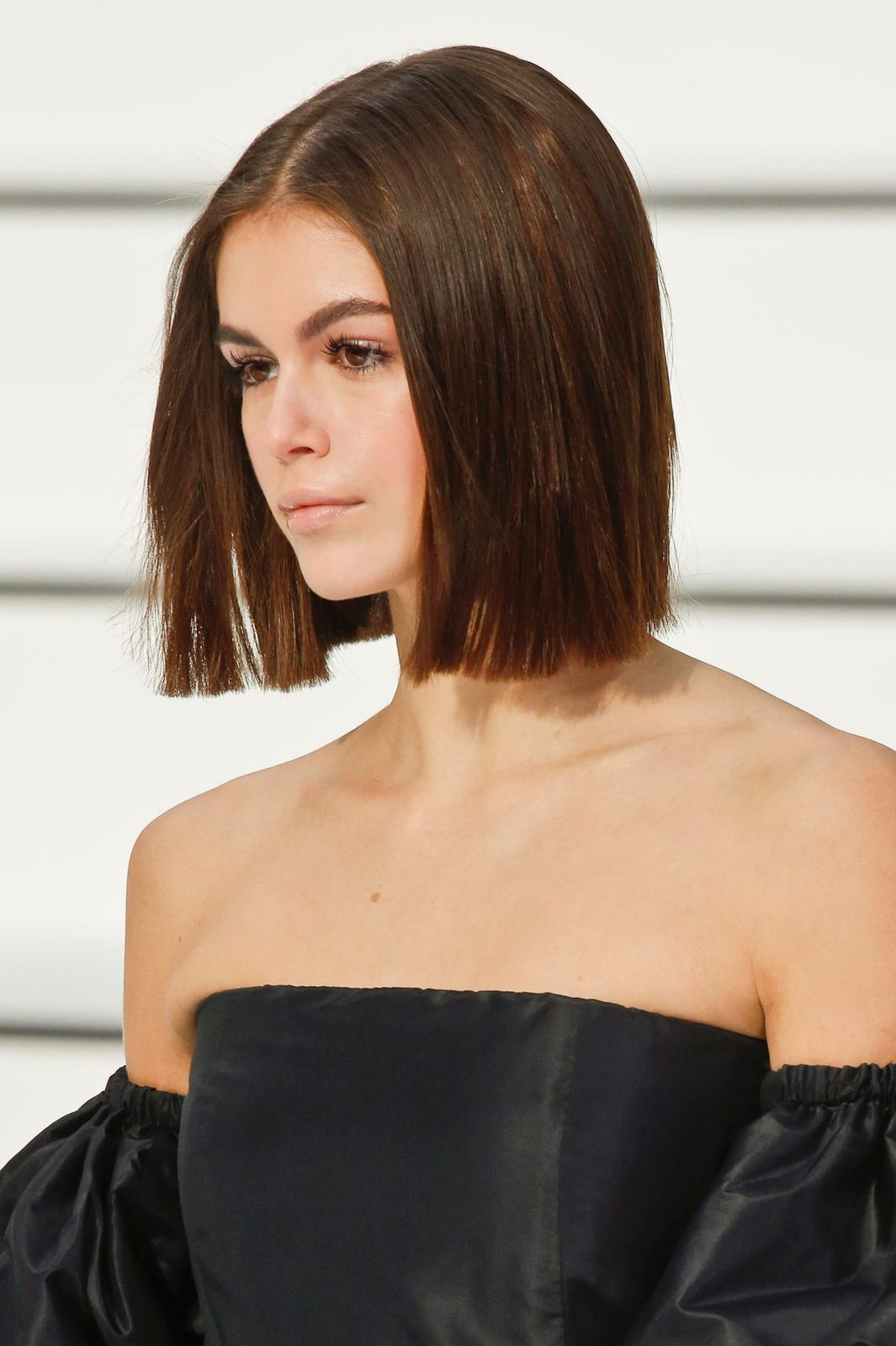
A blunt cut loc bob is the opposite of textured. Where a layered bob softens and moves, this one sits. The chin-length cut, middle part, no bangs, and a smooth blowout create a solid, polished line that does not shift. Compared to a wavy or curly bob, this one asks for more precision in the cut and more discipline in the styling. The blunt edge shows every uneven snip. The smooth blowout requires a flat iron and a steady hand. But the payoff is a clean, graphic shape that reads as deliberate. It is not for someone who wants to wake up and go. It is for someone who wants a sharp line that stays sharp.
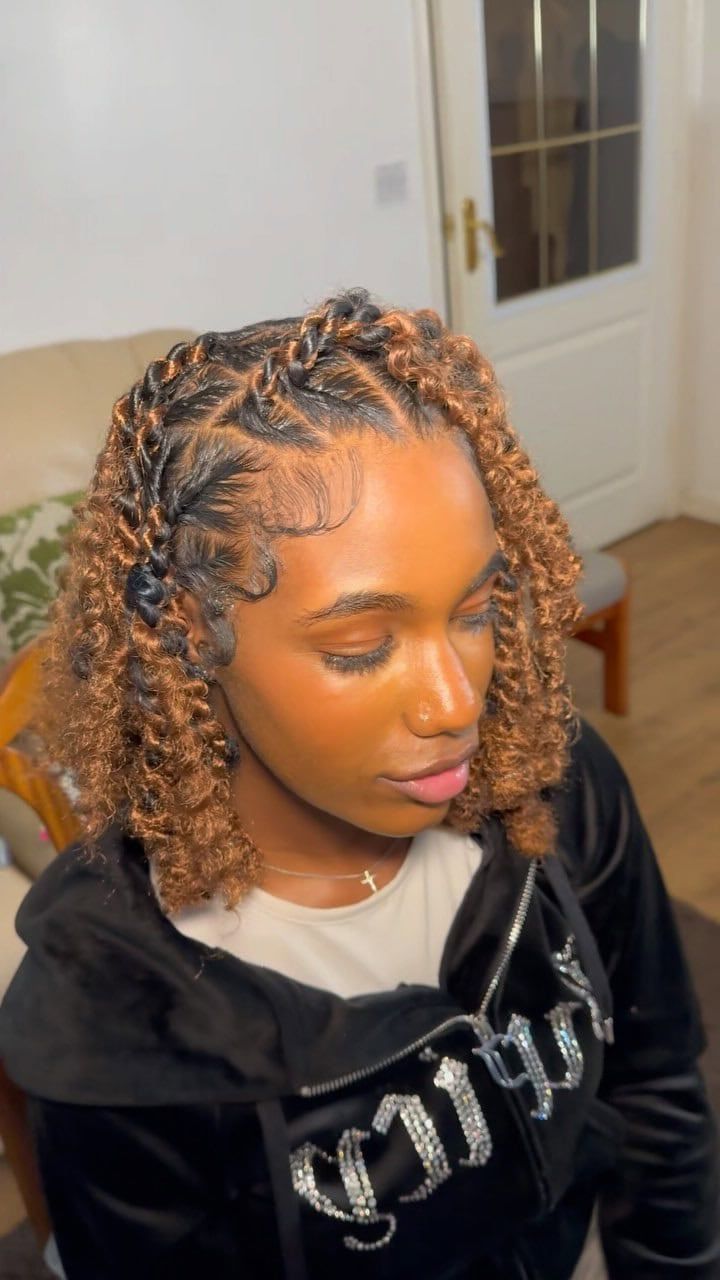
Collarbone Bob With Two-Tone Curls
Textured Bob Between Ear and Chin
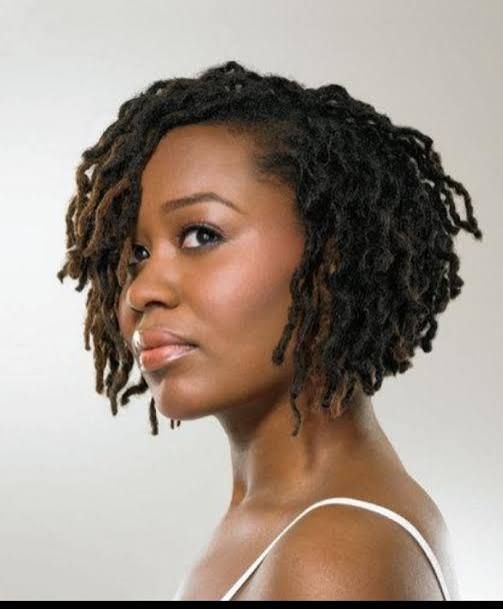
I used to think a wavy loc bob meant fighting with a curling iron every morning. Then I watched a friend twist her locs into a rounded shape and let them dry. The result was a textured bob that held its definition through a full workday. The cut lands between ear and chin, with layers carved in to keep the weight off the ends. She used a light oil on her fingertips to smooth down flyaways, and the locs stayed defined. The wavy loc bob is not a wash-and-go, but it is close. You twist, you wait, you fluff. That is the whole ritual. The rounded shape flatters a round face by adding height at the crown. The defined shape means you skip the round brush entirely. Just keep the ends twisted and the roots lifted.
Black Bob With Loose Curls And Accessories

Black locs never looked so dressed up. The chin-length cut is a classic bob, but the loose curls loc bob changes the whole mood. I twisted sections while damp, then pinned them up with a couple of hair accessories. The result was a defined shape with movement that lasted all evening. The key was letting the locs dry completely before touching them. Once dry, I separated the twists with my fingers for a looser curl. The black shade reads rich and glossy, which makes the bob look polished. The wavy twisted loc bob is perfect for a night out, but it also works for a casual lunch. The accessories do the heavy lifting, so the styling effort stays low. I only had to re-twist a few front pieces by the next morning.
Defined Chin-Length Bob With Wavy Twists
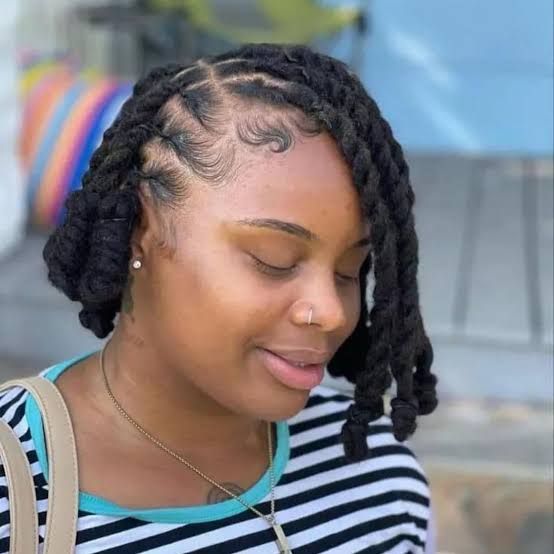
This is the bob for locs that refuse to lie flat. The chin-length cut with a side part gives the wavy loc bob a defined shape that frames the jaw. I twisted each loc while damp, then let the whole thing air dry. The result was a wavy twisted loc bob with a rounded shape that held its definition for two days. The key was keeping the twists small enough to dry evenly. The defined shape means no frizz, just a clean line from ear to chin. The black shade stays true, which makes the bob look sharp. The wavy texture adds volume without any heat. This is a low-maintenance cut that still looks intentional. I just re-twist the front pieces each morning and go.
Dark Brown With Blonde Highlights Chin-Length Bob With Blonde Highlights
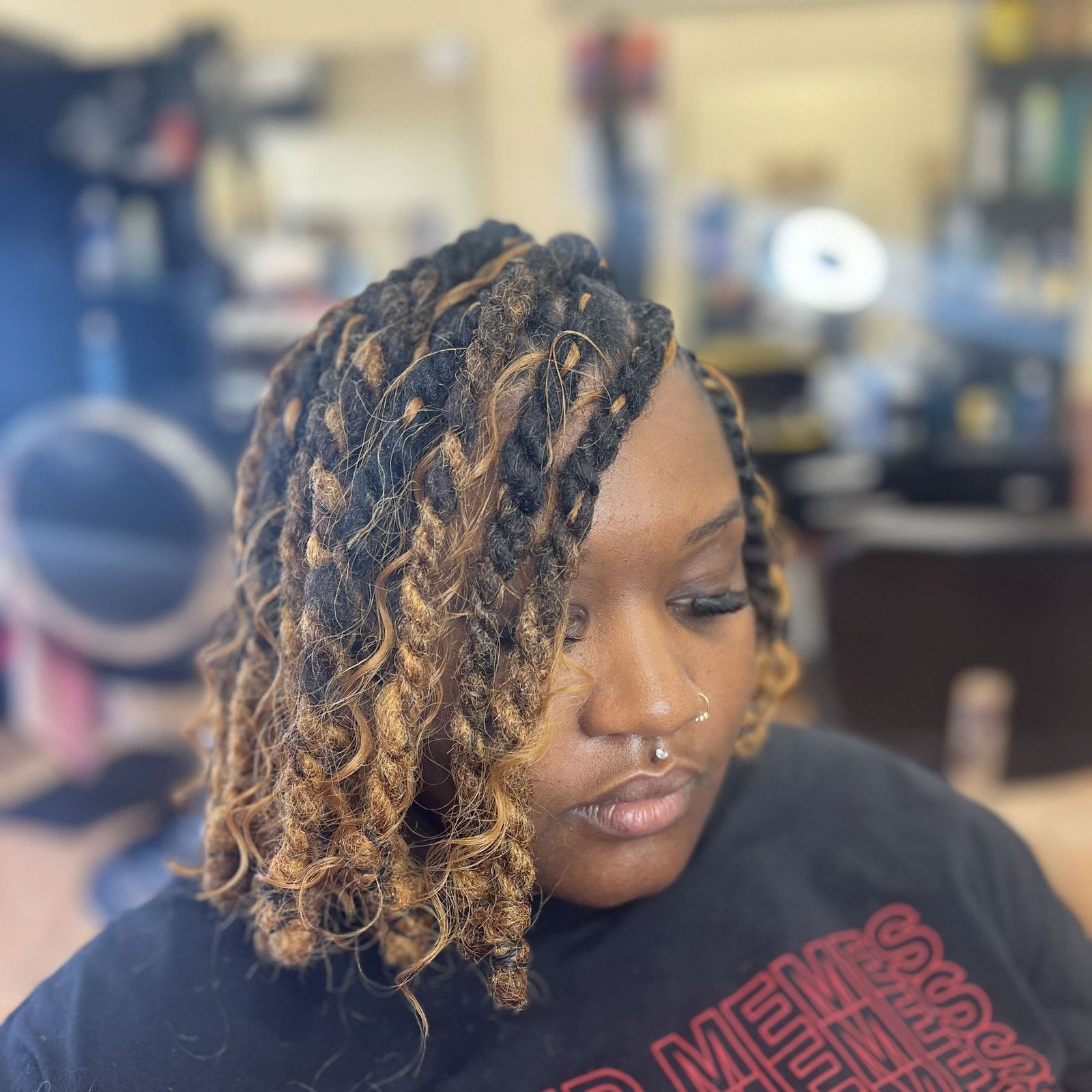
The first time I saw a wavy loc bob with blonde highlights, I thought the colour would fight the texture. It does not. The dark brown base gives the locs depth, while the blonde highlights catch the light and make the wavy loc bob look dimensional. The chin-length cut with a side part keeps the shape rounded, and the loose curls loc bob adds movement. The blonde highlights are placed on the top layer, so they show up when you twist. The result is a defined shape that reads expensive. The wavy texture means the highlights never look flat. I only had to re-twist a few front pieces by the next morning. The dark brown with blonde highlights loc bob is a keeper.
Visual Idea
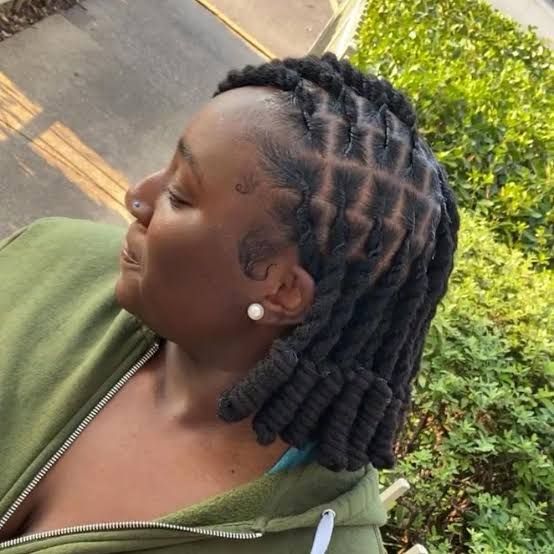
I remember the first time I saw a wavy loc bob with a defined shape. It was on a woman at a coffee shop, and I could not stop staring at how the chin-length cut framed her face. The wavy twisted loc bob had a rounded shape that looked effortless, but I knew it took skill. The key was the twist-out: she had twisted each loc while damp, then let it dry completely. The result was a wavy loc bob with loose curls that held their definition all day. The black shade made the texture pop. The defined shape meant no frizz, just a clean line from ear to chin. I asked her how long it took, and she said the prep was the secret. The wavy loc bob is not a wash-and-go, but it is close.
Chin Visual Idea
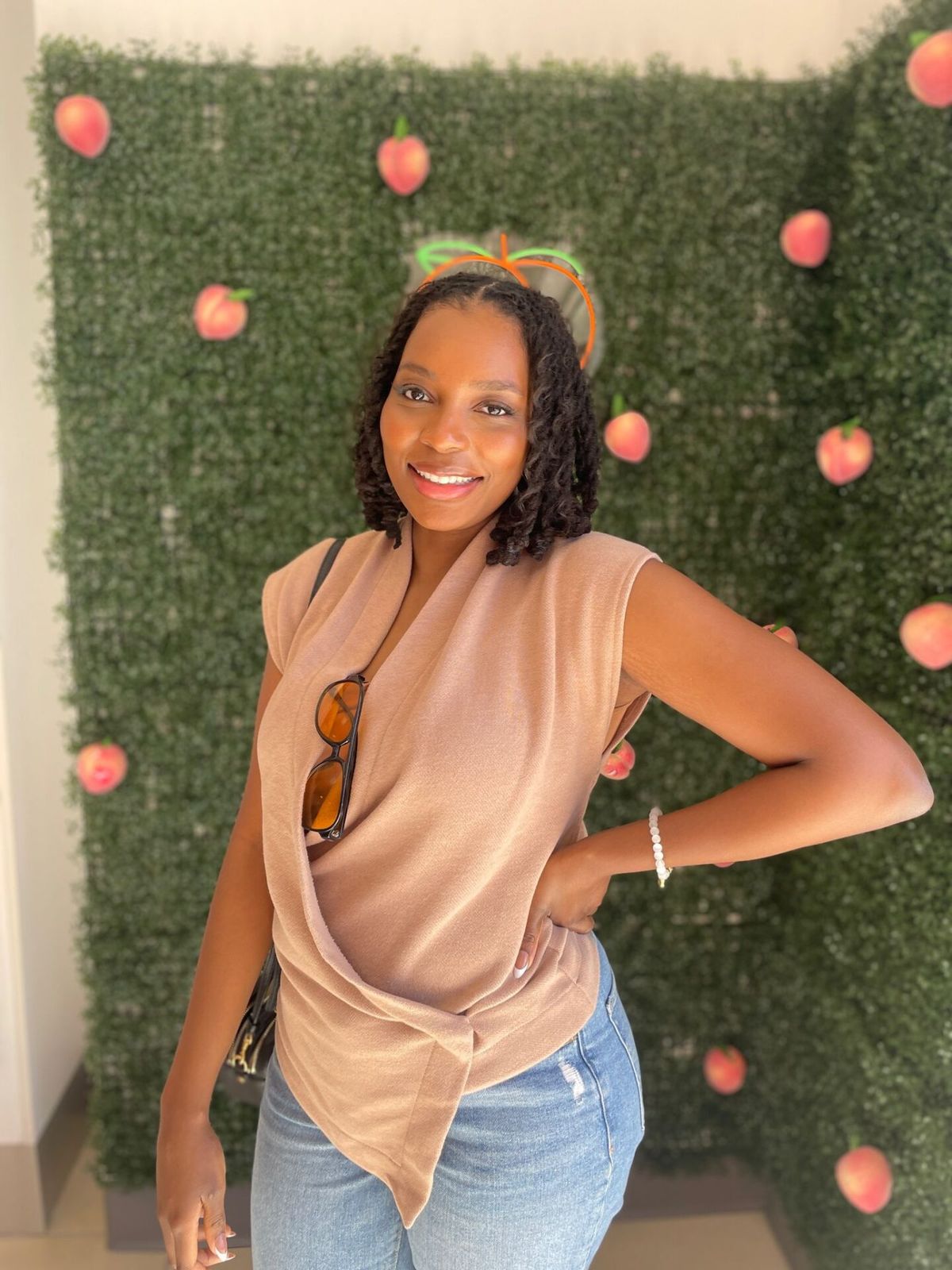
When did a chin-length bob start looking this dimensional? The black base with brown highlights does the heavy lifting here, adding depth without a full colour commitment. Those highlighted ends catch light at the collarbone, which visually softens a square jaw and adds width to a narrow face. The middle part and loose waves keep it from reading severe. No bangs means the colour does the framing instead. It is a salon job, the highlights need a toner refresh around week six, but the grow-out is gentle because the brown is only a few shades off the black. A round face gets the same lift without the bluntness of a solid dark bob.
Collarbone Visual Idea
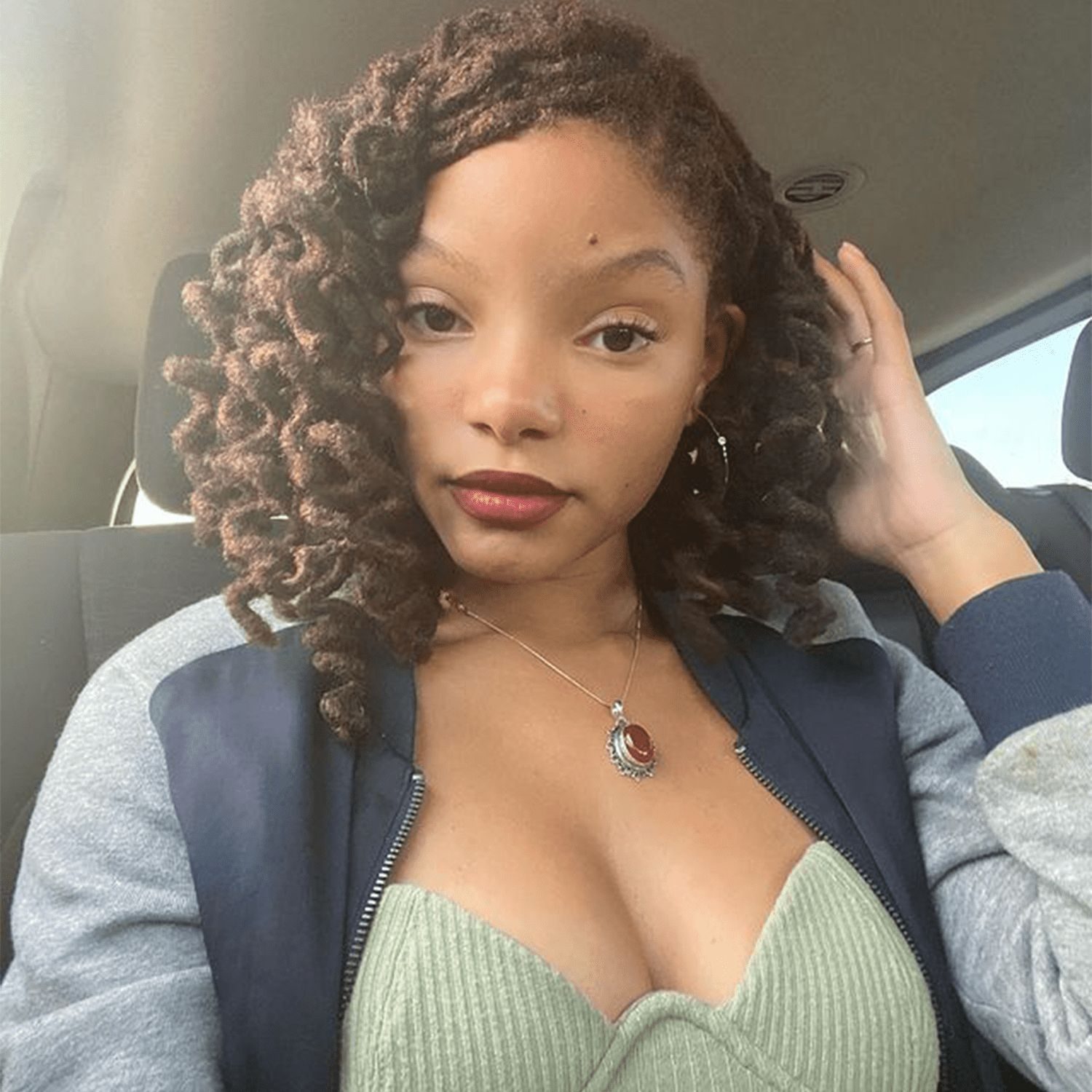
Best grow-out in this roundup. The collarbone length means the locs have enough weight to hang straight, but the wavy texture keeps them from looking heavy. Medium density is the sweet spot here: too thin and the locs look sparse, too thick and the bob loses its shape. The side part gives volume on one side, which balances a rounder face. No bangs means you can pull it back without fighting a fringe. The shine comes from the locs being well-maintained, not from product. I have seen this cut hold its shape for three weeks between retwists, as long as you sleep with a satin scarf. The dark brown colour hides fading well, but the defined texture is the real star.
Black Visual Idea
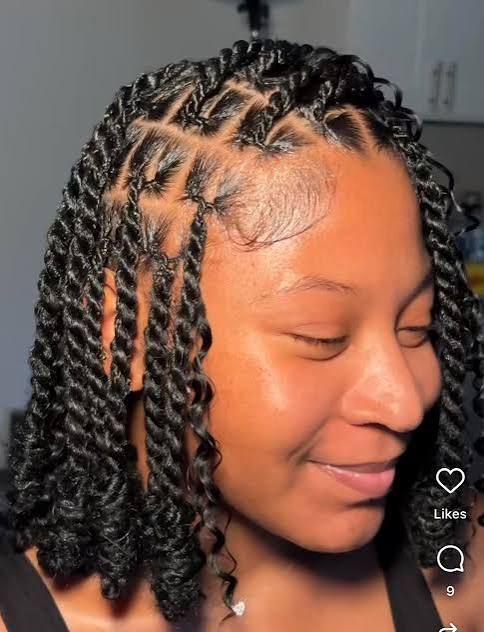
You walk in with a photo, you walk out four hours later. The braided twists on this collarbone bob take time, and the middle part requires precision that is hard to replicate at home. The black colour is straightforward, no toner needed, but the twists themselves are the investment. A salon visit for this installation runs long, and the cost reflects the skill. The bob length keeps the weight manageable, which actually shortens the styling time compared to longer locs. The defined twists hold for two to three weeks with careful maintenance. This is not a bathroom-mirror job. Book the consultation first, ask about the twist size and how it will sit against your hairline.
Bob Visual Idea
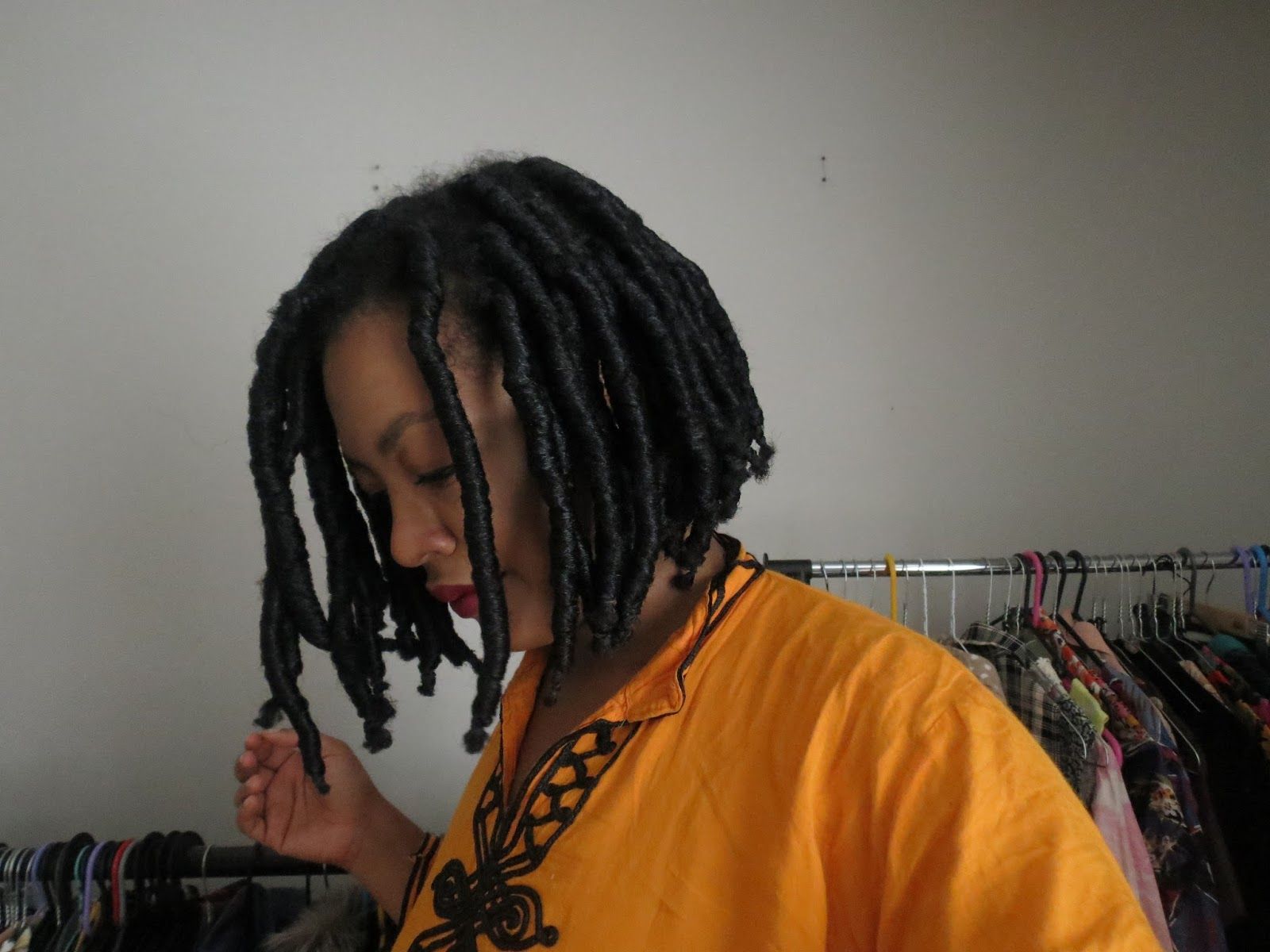
The side view tells you everything. This collarbone bob is built with thick locs that are palm-rolled, not twisted, which gives them a rounder, denser shape. The middle part splits the weight evenly, and the air-dried finish means no heat damage. The technique matters here: each loc is started at the root with a two-strand twist, then palm-rolled every few inches to create that consistent wave pattern. The bob cut removes the oldest, most fragile ends, which makes the locs look healthier immediately. No bangs keeps the focus on the loc texture. The black colour is solid, no highlights needed. This is a salon technique, not a DIY project. Ask your stylist about the roll direction so the locs fall forward, not away from your face.
No Bangs Visual Idea
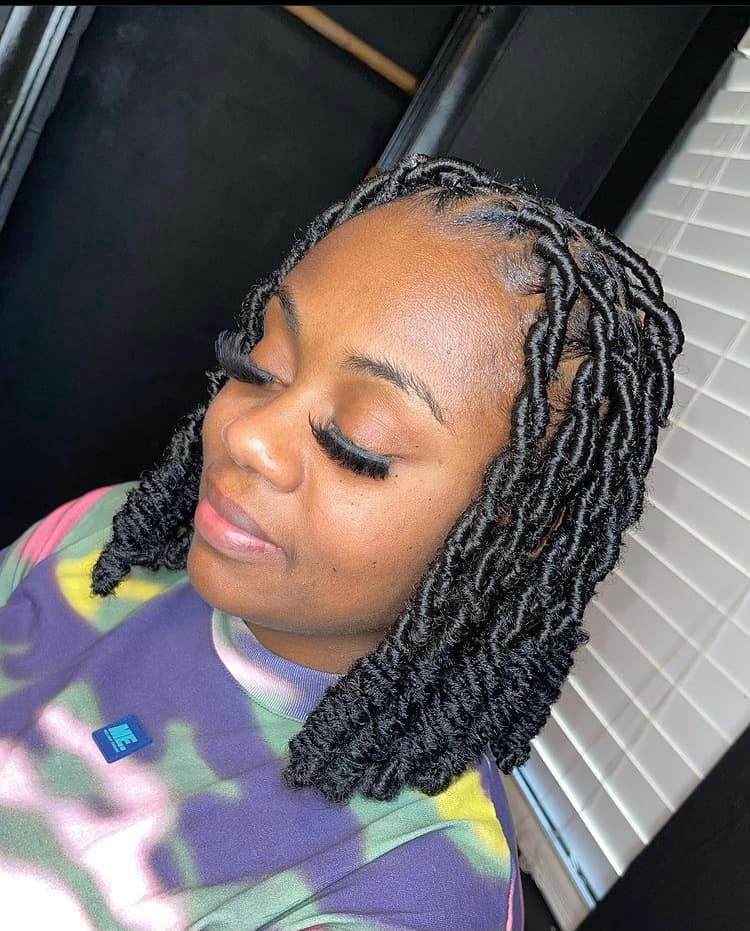
I will admit it: I used to think no bangs on a loc bob meant a boring line. Then I saw this side view. The chin length hits right at the jaw, and the middle part creates symmetry that a side part cannot match. The wavy texture keeps the locs from looking stiff, and the defined loc knots at the ends add visual interest where bangs would normally sit. The mistake people make is letting the locs get too dry, which makes the knots frizz and the wave pattern collapse. A light spritz of water and a quick palm-roll in the morning resets the shape. The black colour hides the dry ends better than a lighter shade would. No bangs means no trimming every four weeks, which is a win.
Black With Auburn Highlights Visual Idea
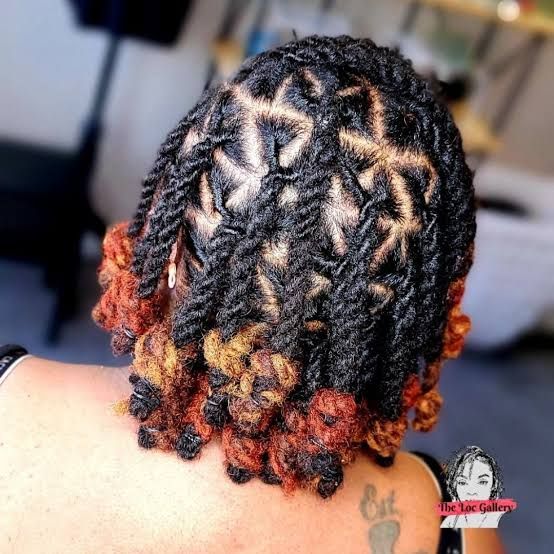
Black with auburn highlights wins over a full auburn dye job every time. The geometric pattern here is the reason: those sharp, deliberate stripes of auburn cut through the black base like a structural element, not a wash of color. It reads as intentional architecture, not a seasonal impulse. A softer application would blur into a gradient, which is fine for a lived-in look but lacks this precision. The chin-length cut and wavy braided twists give the highlights a clear canvas to land on, and the middle part splits them evenly. No bangs here, and honestly, they would compete with the geometry. This is a salon job, no question — getting those stripes to land straight takes a steady hand and a clear plan.
Side View Visual Idea
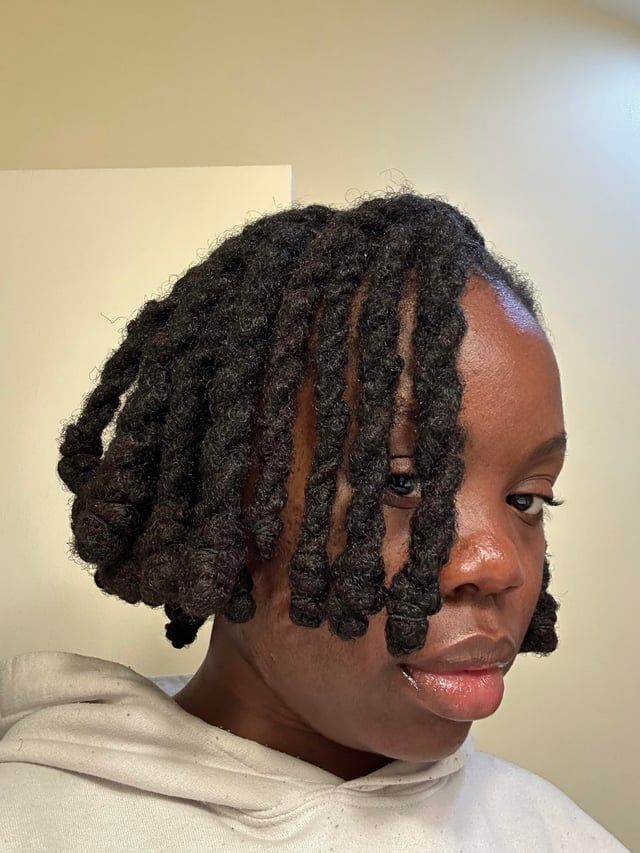
Side view, and suddenly the silhouette makes sense. The wavy locs stack at the chin, then curve slightly under, which softens a square jaw and adds structure to a round one. Medium density is the sweet spot here — too thin and the shape collapses, too thick and it becomes a helmet. The side part shifts the weight to one side, which helps a long face feel shorter and a heart-shaped face balance at the jaw. No bangs, but the front locs naturally graze the cheekbone, doing the work a fringe would. Black is the right color for this cut because it reads as a single solid shape; highlights would break the line. Air-dried texture keeps it low-stakes, but the cut itself is all salon precision.
Ear Visual Idea
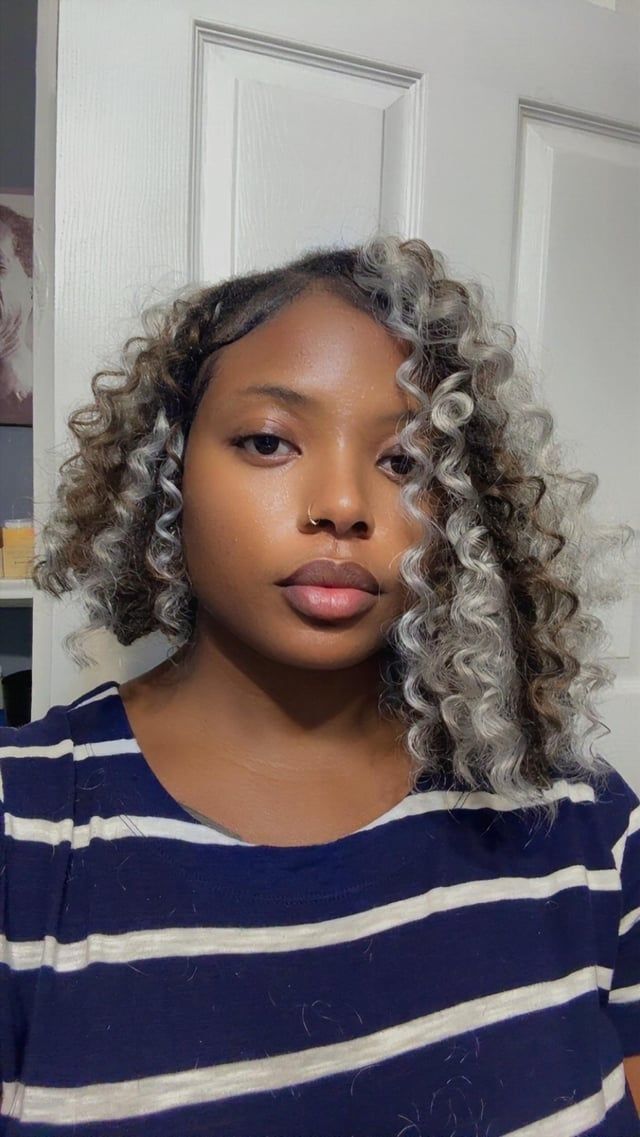
Can an ear-length loc bob actually hold its shape past day one? Barely, but that is the point. The thick wavy locs create a rounded dome that sits close to the head, which means it does not tangle or flatten the way longer locs do. The downside: the middle part will widen if you sleep on it wrong, and air drying leaves a few locs sticking up at the crown. A quick finger-coil in the morning fixes it, but it is not a set-it-and-forget-it cut. No bangs, because at this length there is nothing to sweep. Black keeps the shape solid, and the close crop makes the texture the main event. Salon only — this is a sculptural cut, not a trim.
Side Visual Idea
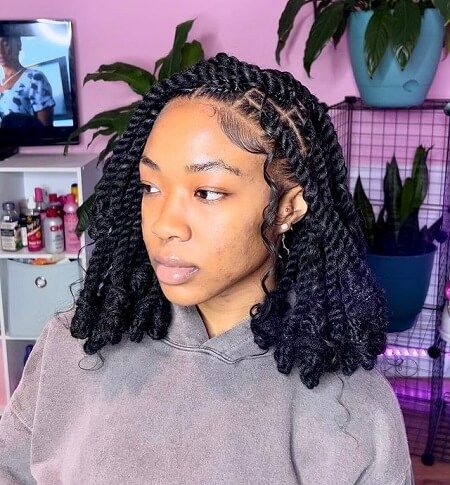
Collarbone length, side view, and the braids are doing something specific. The diamond parting at the crown creates a geometric center that draws the eye upward, which is a deliberate choice for a festive setting. It is the kind of detail that catches light and reads as intentional, not accidental. The wavy texture in the braids keeps them from looking stiff, and the black color grounds the whole thing so the parting pattern stays visible.
This is a look that lands in late fall or winter, when you want something that holds through a long evening without constant adjustment. The side part softens the collarbone length, which can otherwise feel heavy on a short neck. No bangs, but the front braids graze the shoulder, which does the same job. Salon only — the diamond parting requires a steady sectioning hand and patience.
Front View Visual Idea
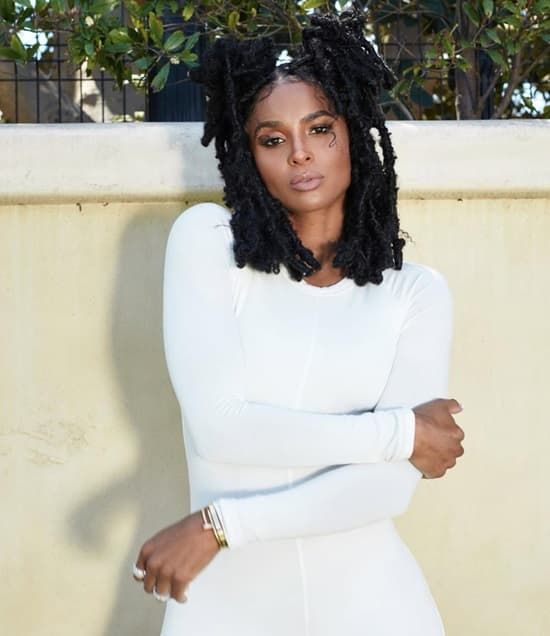
I will admit it: I was skeptical about a chin-length bob with thick wavy locs and no bangs. Then I saw the front view. The middle part splits the locs evenly, and the thickness creates a rounded frame that does not need a fringe to soften the face. The technique here is about distribution — each loc is placed so the weight lands at the jaw, not the chin, which makes the face look longer and the neck look longer. This is not a DIY cut. The precision of the parting and the evenness of the loc lengths require a stylist who understands how thick locs behave when they are cut short. Air-dried texture is the only styling it needs, and the black color keeps the shape as the hero.
Air Dried Visual Idea
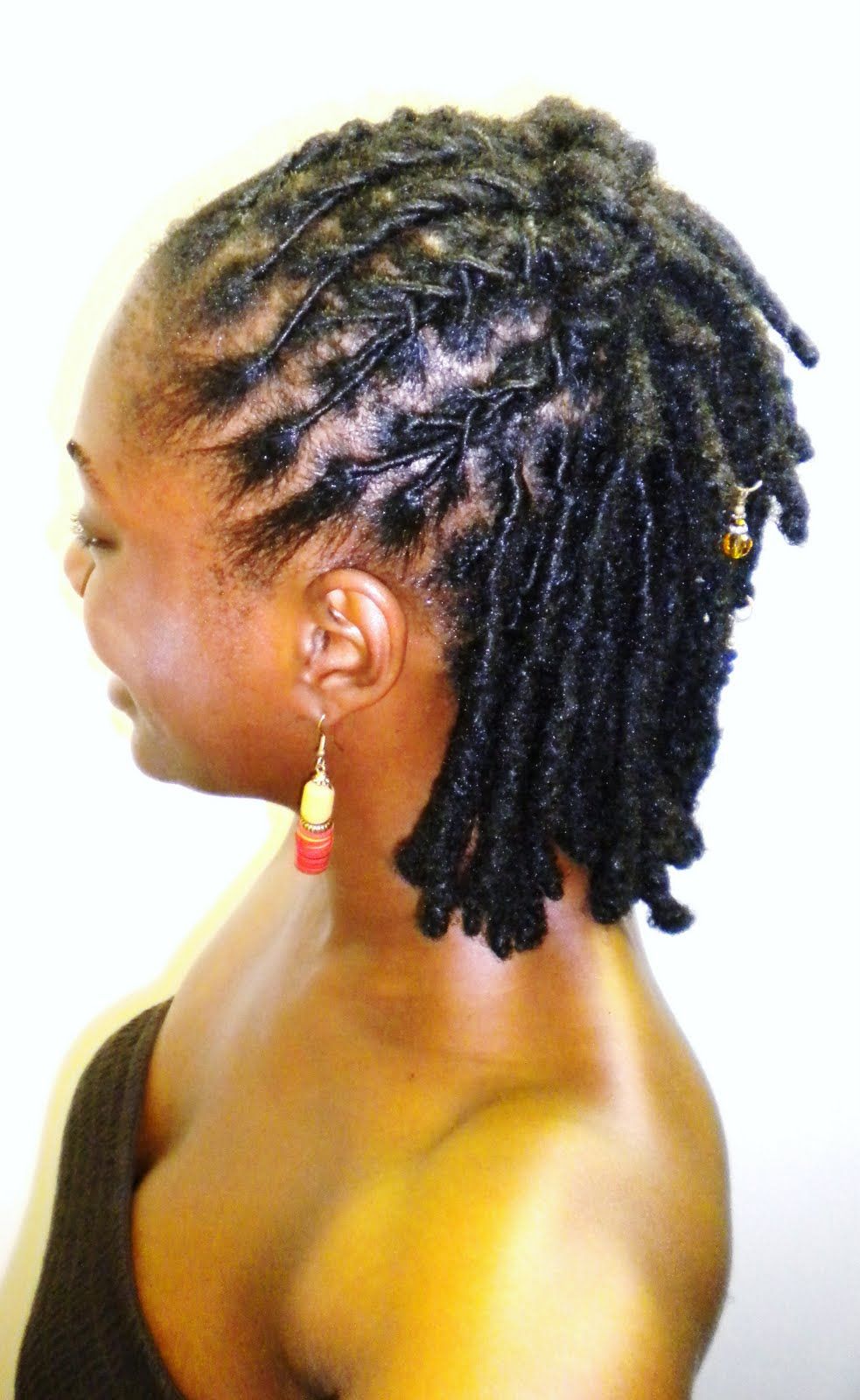
You look at air-dried layered locs and think, that is zero effort. The mistake is believing it. The layers in a loc bob need to be cut while the hair is dry, in its natural shrinkage, or you get a shape that climbs an inch higher every wash. I have seen it. A bob that sat at the ear in the salon and sat above it two weeks later. The honest downside is the trimming rhythm: every six to eight weeks, no skipping. The texture is thick and wavy, which means the layers stack differently each morning. That is the look, uneven on purpose. But the uneven has to be deliberate, not accidental.
Middle Visual Idea
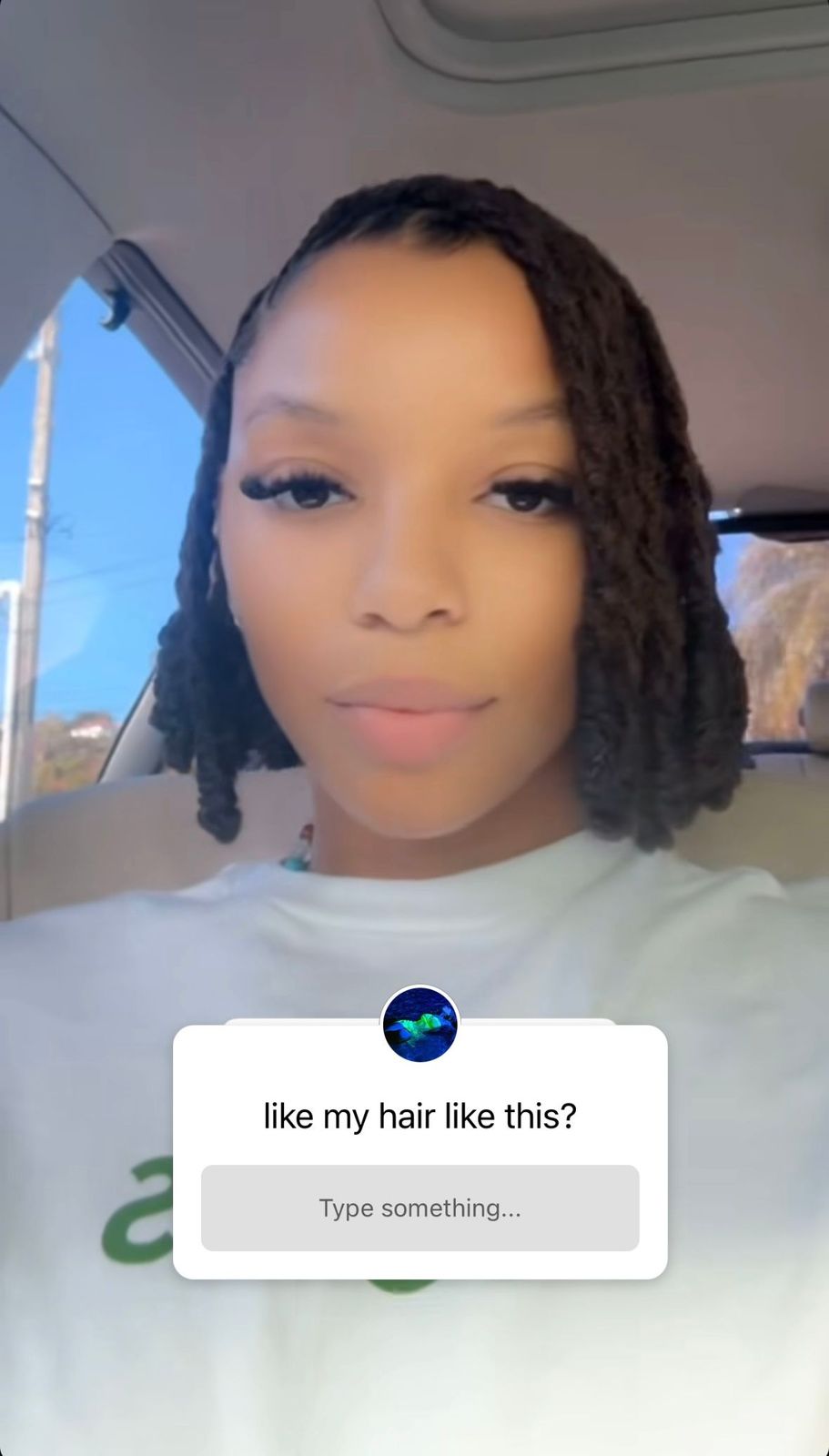
I watched a friend run her fingers through air-dried wavy locs at brunch and it took her maybe four seconds. The bob sat at the chin, the middle part split it cleanly, and the waves did not fight her. That is the thing about this cut: the layers are cut into dry locs so the wave pattern stays intact, no straightening, no stretching. The bangs are absent, the forehead is open. It is not a look you wrestle into submission. It is a look you wake up to. I have spent more time deciding between coffee and tea than this bob takes to style. That is the whole point.
Dark Brown Visual Idea
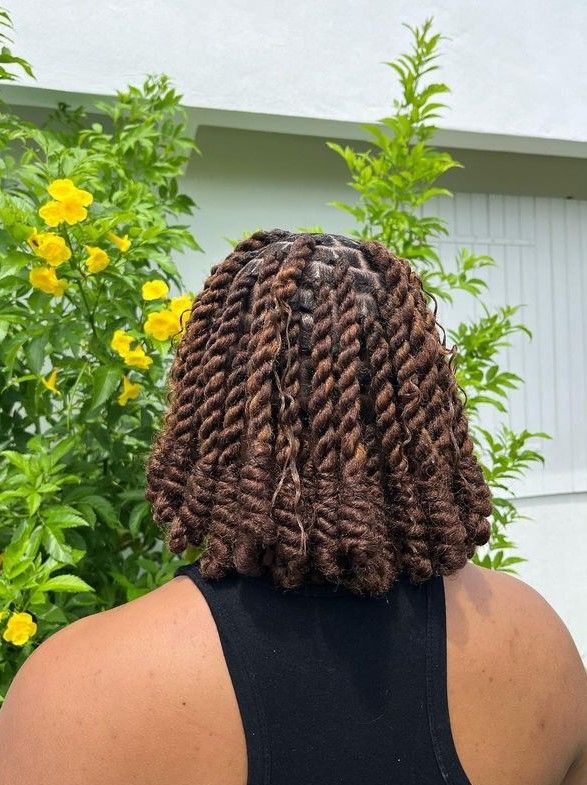
Does a neatly twisted loc bob work for round faces? Yes. For square jaws? Also yes. The collarbone length pulls the eye down, the middle part elongates, and the dark brown colour reads solid, no distraction. The texture is locs, twisted tight enough to hold shape but loose enough to swing. The cut is a bob, blunt at the baseline, no bangs. The layers are subtle, mostly hidden inside the twist pattern.
Here is the upkeep: the twists need retwisting every four to six weeks if you want that neat silhouette. Skip a month and the roots puff out, the bob becomes a triangle. The hair type that suits this best is medium to high density, because thin locs can look sparse at collarbone length. Low density should stay shorter, chin or above, so the bob reads full.
Shoulder Visual Idea
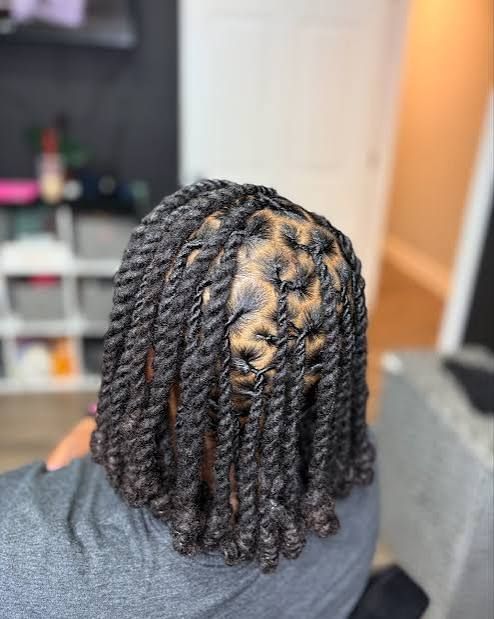
This is the most versatile length in the roundup. Shoulder-length twisted locs can be worn down, half-up, pinned back, or twisted into a low bun. The bob shape is soft, not blunt, because the thick texture needs room to move. No bangs, just a middle part that lands cleanly. The layers are cut into the locs while dry, so the weight falls evenly.
I have worn this length for six months. It does not tangle at the nape the way longer hair does. It does not flip out after a humid commute. The styling is simple: retwist the front every few days, let the back do what it wants. The honest reality is that shoulder length on locs is not a set-it-and-forget-it cut. It needs a trim every eight weeks to keep the hemline from fraying. But between trims, it is the most forgiving loc bob I know.
Final Thoughts
After staring at 34 variations, the one I keep circling is the chin-length bob with two-strand twists. Not because it’s dramatic. Because it sits still, stays hydrated, and doesn’t demand a round brush. That’s rare in a cut this short.
- Twist every two to three weeks
- Spray with water before re-twisting
- Sleep on silk or satin
- Trim the ends every ten weeks
I’m booking a consultation next week.