
I kept seeing olive green hair in my feed and in the chair next to mine. Not neon, not forest. A muted, almost dusty green that reads like a neutral until the light hits it. It is the colour equivalent of a grey sweater: calm, wearable, and suddenly everywhere.
This roundup has 31 takes on Olive Green Hair, from a five-minute air-dry wave to a full salon balayage. Fine hair, thick hair, bobs, braids, blunt ends, curtain bangs. My roots showed at week five on the first try, so I paid attention to which versions buy you time and which ones demand a standing appointment.
Collarbone Lob With Rich Green Highlights
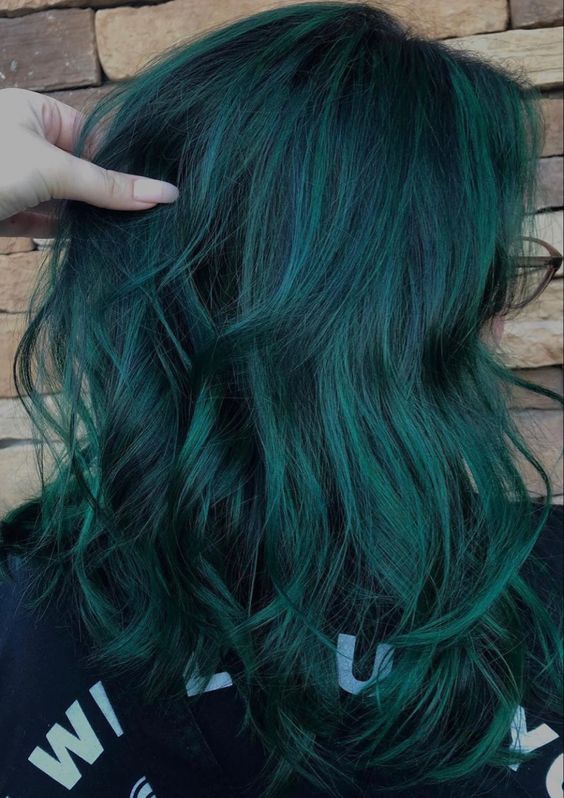
There’s a reason this lob with green highlights keeps showing up in my saved folder: the collarbone length catches the light exactly where thick, wavy hair tends to sit, and the middle part lets those rich dark green strands with lighter pieces do the talking without any bangs competing for attention. The weight of the cut lands just below the shoulder, which means it moves when you turn your head but never flips into your face. For anyone with a rounder jaw, that length softens the line without hiding it. Thick hair holds the wave shape for hours, so a quick diffuser pass is enough.
Fine Bob In Vibrant Deep Green
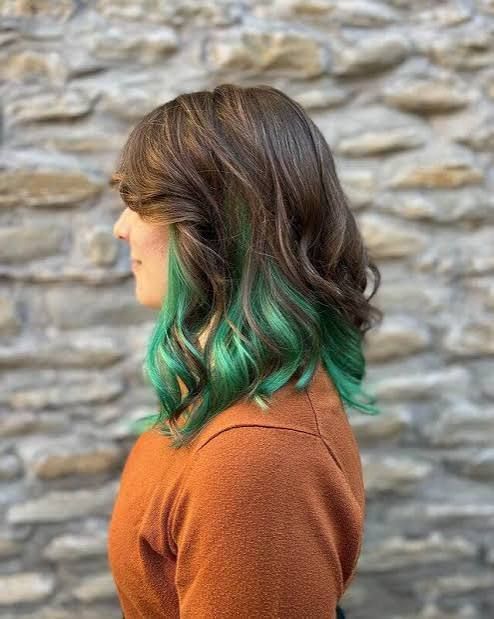
Skip the voluminous lob if your hair is fine; this vibrant deep green bob is the smarter sibling. Chin length with a middle part and slightly tucked ends, it reads sharp instead of scraggly. Straight, fine strands sit flat by 4 pm, but here that’s the point. The uniform deep green shade adds density that a layered cut would steal. It’s not the wash-and-go option, it’s the ten-minute flat iron commitment that pays off in a clean line. A trim every six weeks keeps the edge honest.
Pastel Mint Curls With Curtain Bangs
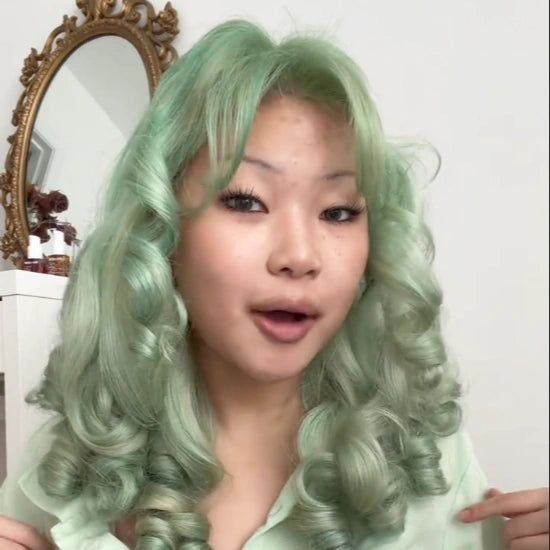
How do you get volume from shoulder-length pastel mint green hair without it collapsing into a sad triangle? It’s all in the layering and the curl technique. Ask your stylist for face-framing layers that start at the chin, then use a curling iron or wand on medium sections, wrapping away from the face. The curtain bangs need a round brush and thirty seconds of heat daily; they’ll fall flat by noon if you skip it. Finish with a texture spray at the roots. The short list: layers for lift, curtain bangs for width, loose curls for movement.
Wavy Bob With Green Highlights
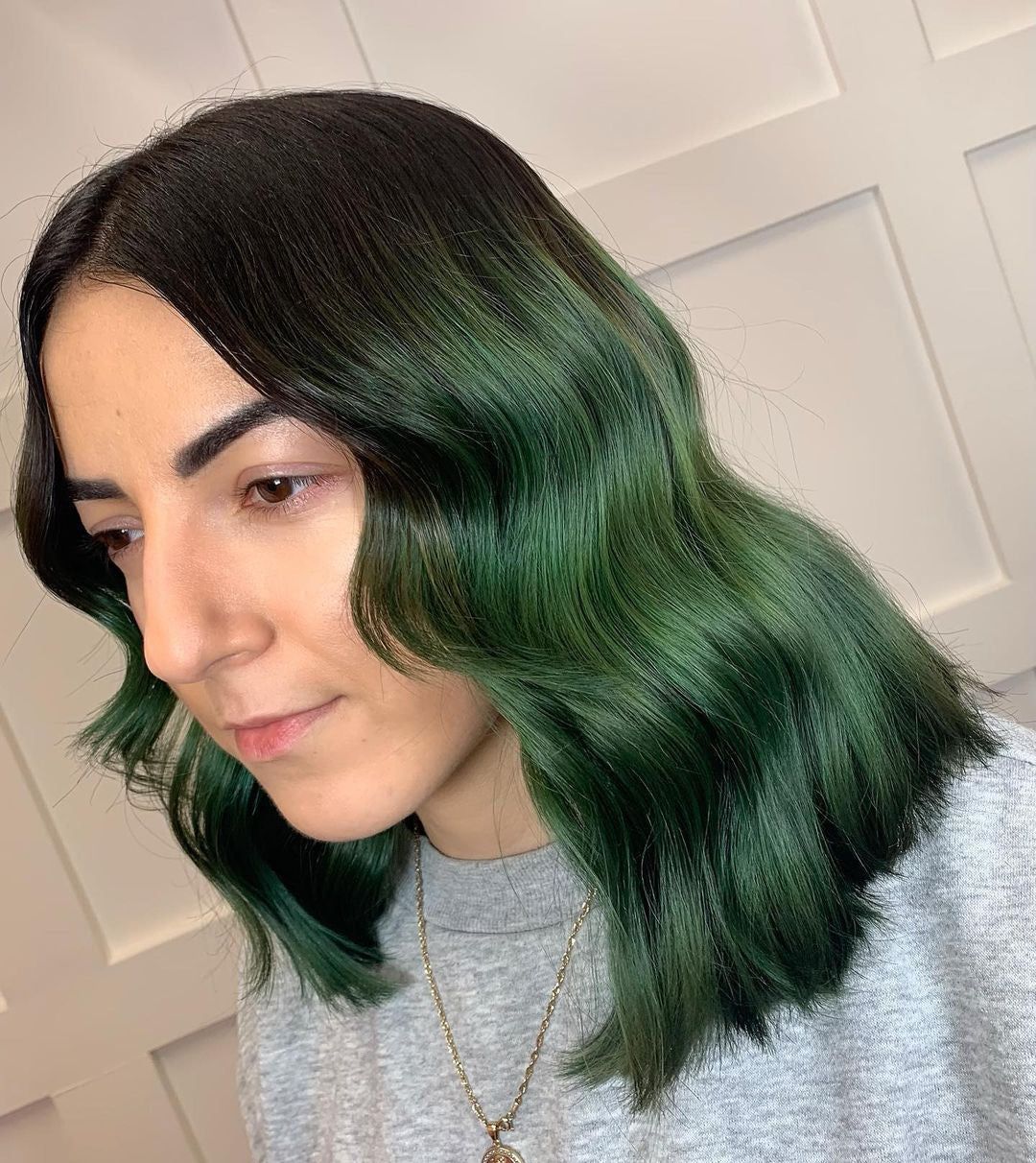
I’ll admit it: I thought a chin-length bob on thick, straight hair would be a daily fight. Turns out, the wavy bob with green highlights is the laziest cut I own. The dark green base with lighter pieces hides the fact that I only finger-tousle it with a texturizing spray. Thick strands hold the bend without a curling iron, and the highlights mean I can skip a refresh for an extra two weeks. The trim schedule is the catch: every six weeks, or the bob starts to look like a sad mullet.
Black To Green Ombre Waves
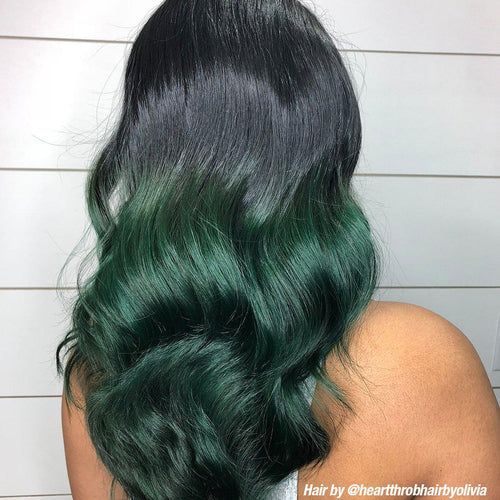
It’s the last week of October and the air has that crisp bite that makes you want to wear everything in forest tones. This is the hair equivalent: mid-back length with a dark green ombre that fades from black roots to a deep green at the ends, styled in loose waves. The long layers give the waves room to stack without tangling, and the ombre grows out gracefully because the root is already black. No bangs means the middle part does the work. Book this for the holiday party circuit, it reads dramatic without shouting.
Sharp Chin Bob In Vibrant Dark Green
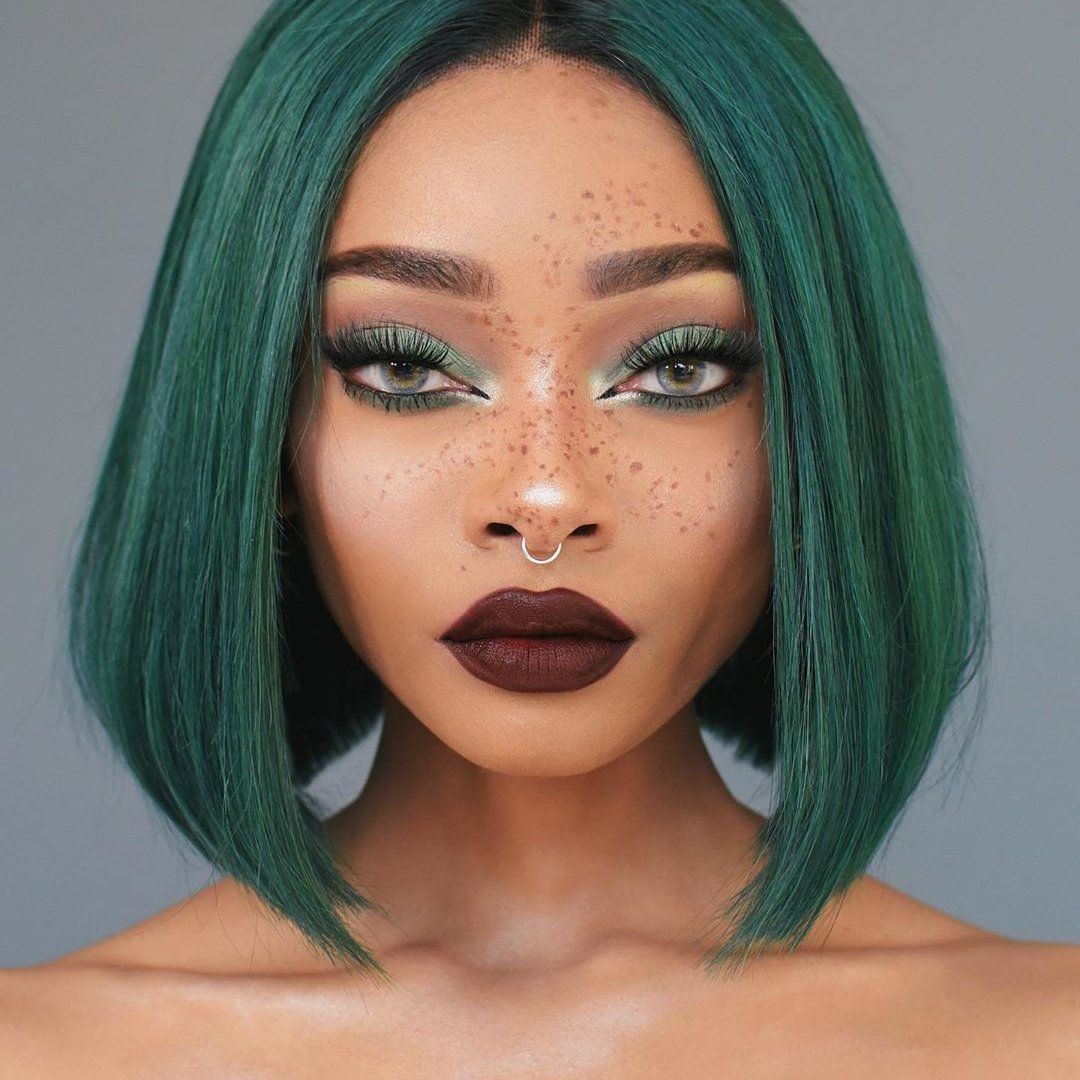
I looked at this and thought, okay, that is a haircut that means business. The chin-length bob lands exactly at the jaw, which is where it gets interesting. On medium-density, straight hair, that sharp line reads deliberate, not accidental. No layers to soften it, no bangs to distract. The middle part pulls everything symmetrical. The texture is what sells it: one smooth plane from root to edge. If your hair is fine or wavy, the line blurs fast. But on the right texture, this is the kind of cut that makes you stand up straighter.
Fishtail Braid In Deep Green
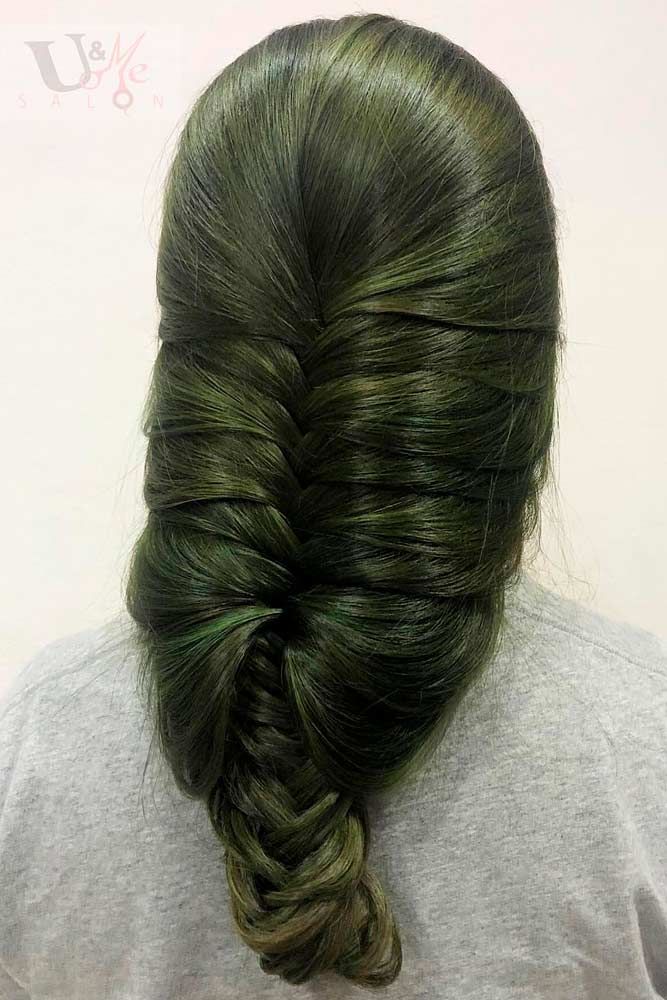
The fishtail braid looks like it took an hour. On thick, wavy hair, it probably did. The pattern is intricate, each section crossing over the next in that alternating rhythm. At home, I can manage a basic three-strand. This one? I would book the appointment. The salon has the patience to keep the tension even and the sections clean, which is the difference between a braid that reads intentional and one that reads rushed. The dark green with lighter highlights adds depth, the braid catches the light in strips.
The length is mid-back, which gives you room to work. No bangs, so the focus stays on the plait. The texture helps: wavy hair grips the strands better than straight hair ever does. Cost is time, mostly. About 20 minutes of sectioning and crossing, and then it holds for days. That is the part that surprises me. I expected it to loosen overnight. It stayed.
Blunt Bob With Black Roots
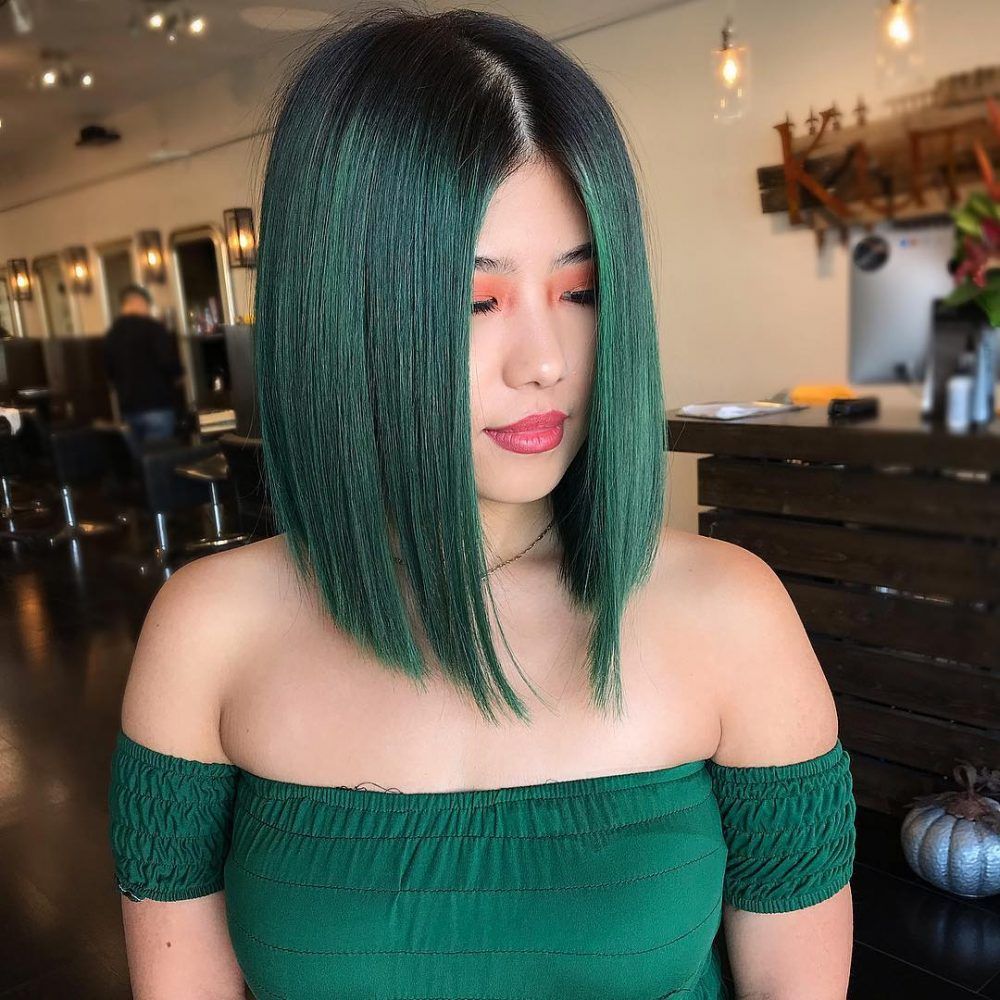
I will admit I have tried this and got it wrong. The mistake is thinking black roots mean zero effort. They do not. If the transition between black and green is too sharp, the whole thing reads like a bad dye job from 2015. The trick is a soft blend, a few subtle strokes where the two colors meet. The blunt bob at collarbone length keeps the shape clean, no layers, no bangs. Straight texture helps the line read crisp. The honest downside: if the green fades unevenly, the contrast looks harsh instead of intentional. Trim every eight weeks to keep that blunt edge sharp.
Air-Dried Olive Green Waves
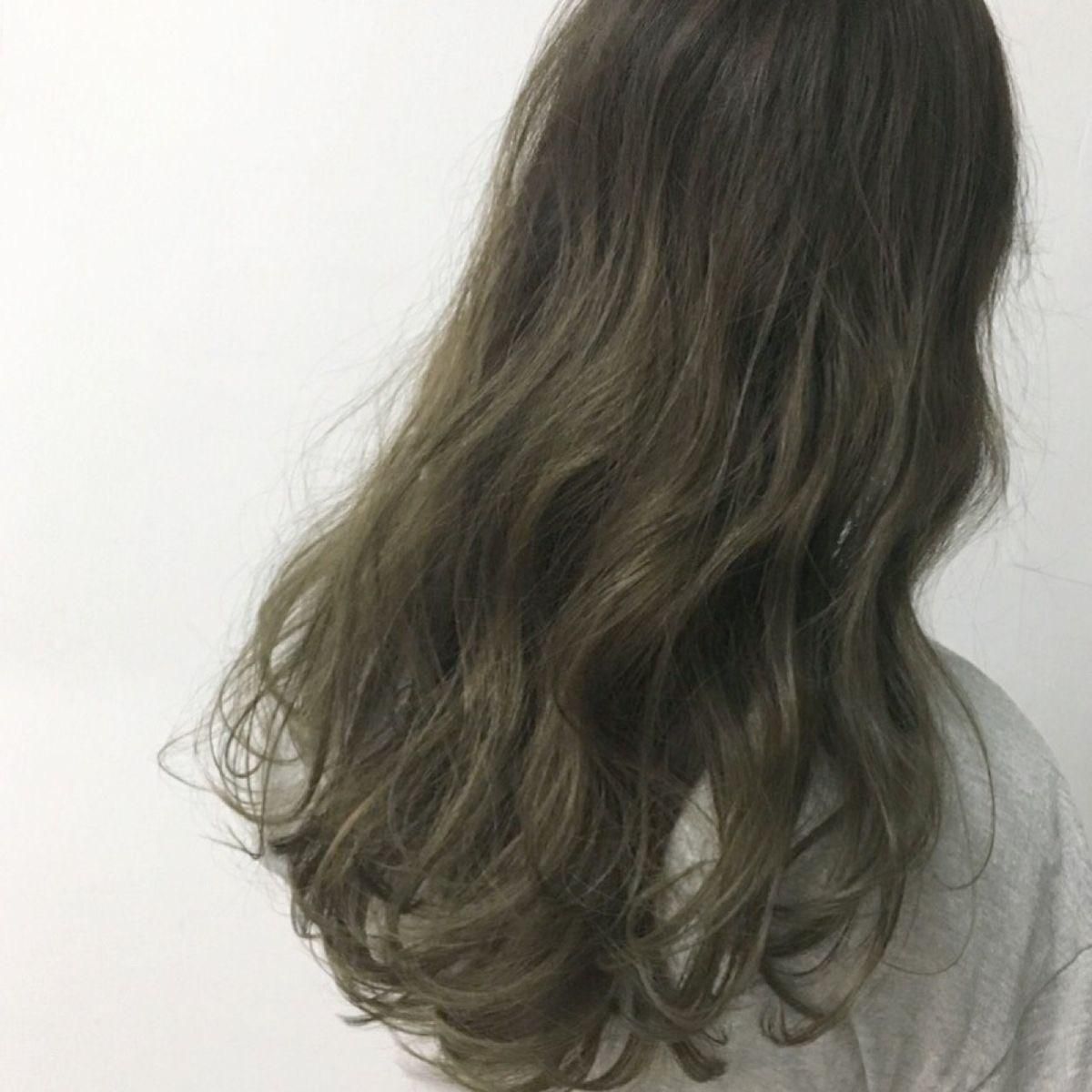
I have a memory of standing in my bathroom, towel on my shoulders, thinking, this will either work or I am rewetting it. The olive green colour is forgiving that way. It does not demand perfect styling. The mid-back length with layers gives the waves somewhere to go, a natural S-shape that forms on its own. No bangs, no heat, just a leave-in conditioner and time. The texture is wavy and thick, which is the kind of hair that air-dries into something presentable. Fine hair would fall flat. But on the right texture, this is the lowest maintenance version of green hair I have found.
Muted Olive Green Half-Up Style
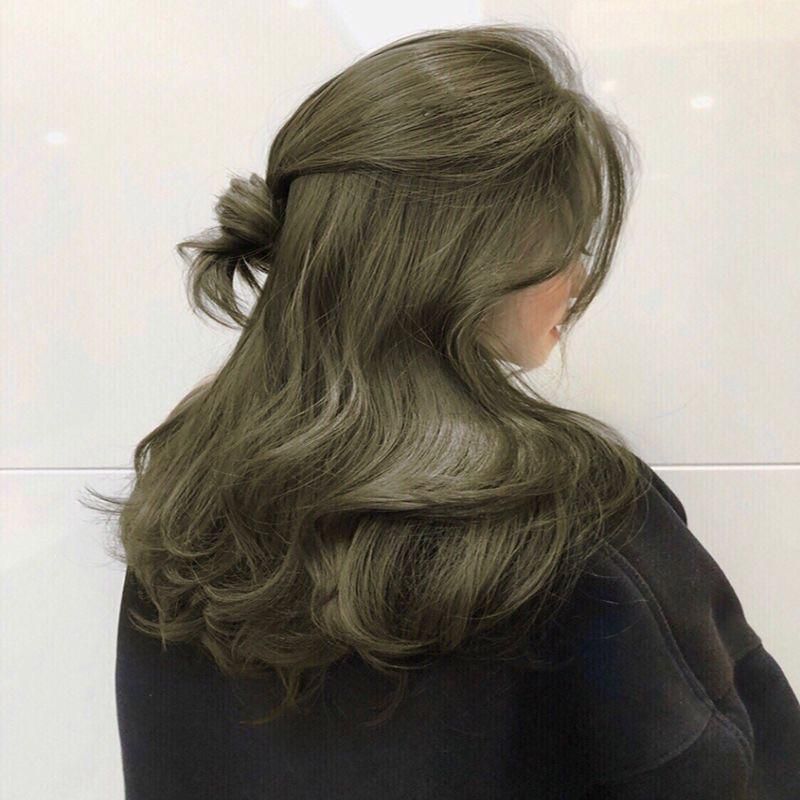
Can a muted colour actually read as intentional and not just faded? I was sceptical. The half-up style is what saves it. Pulling the top section back into a ponytail at the crown changes the whole shape. The layers in the mid-back length catch the light differently, the muted olive green shifts from grey-green to something earthier depending on the angle. No bangs, so the face is open. The texture is wavy, which gives the loose sections a natural bend. Wear and upkeep are minimal: five minutes to pull it up, and the colour fades slowly because muted tones are less saturated to begin with. I was wrong to doubt it.
Olive Green Blowout With Curtain Bangs
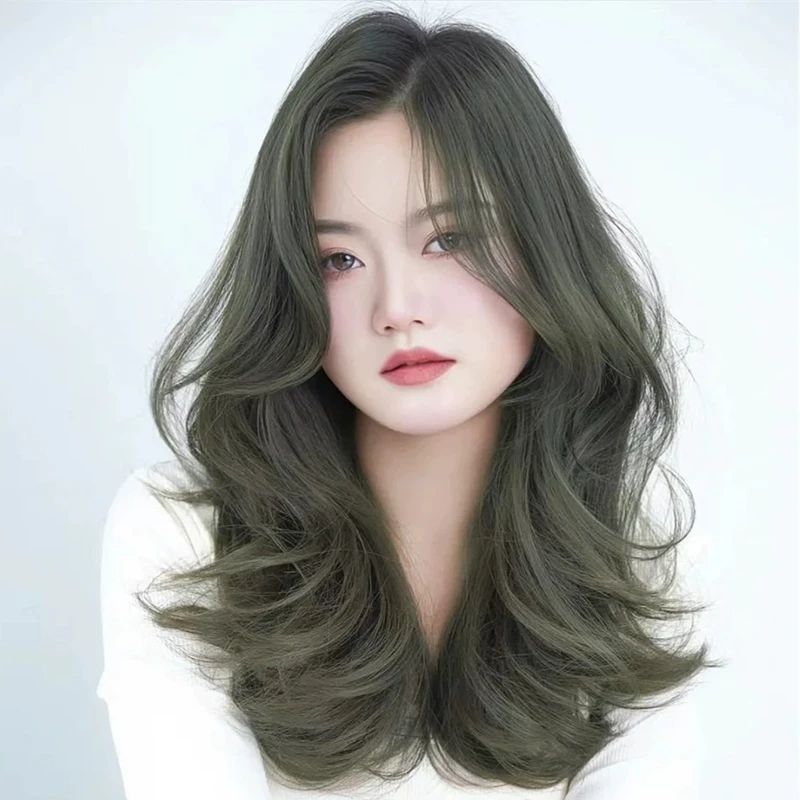
This olive green blowout is the one I would pick over a solid emerald every time. The curtain bangs fall soft and keep the collarbone-length layers from looking too blunt. A middle part lets those bangs frame the face without trying too hard. The waves are thick and deliberate, not accidental. It is a polished, salon-driven look that still breathes.
Vivid Green Blowout With Full Bangs
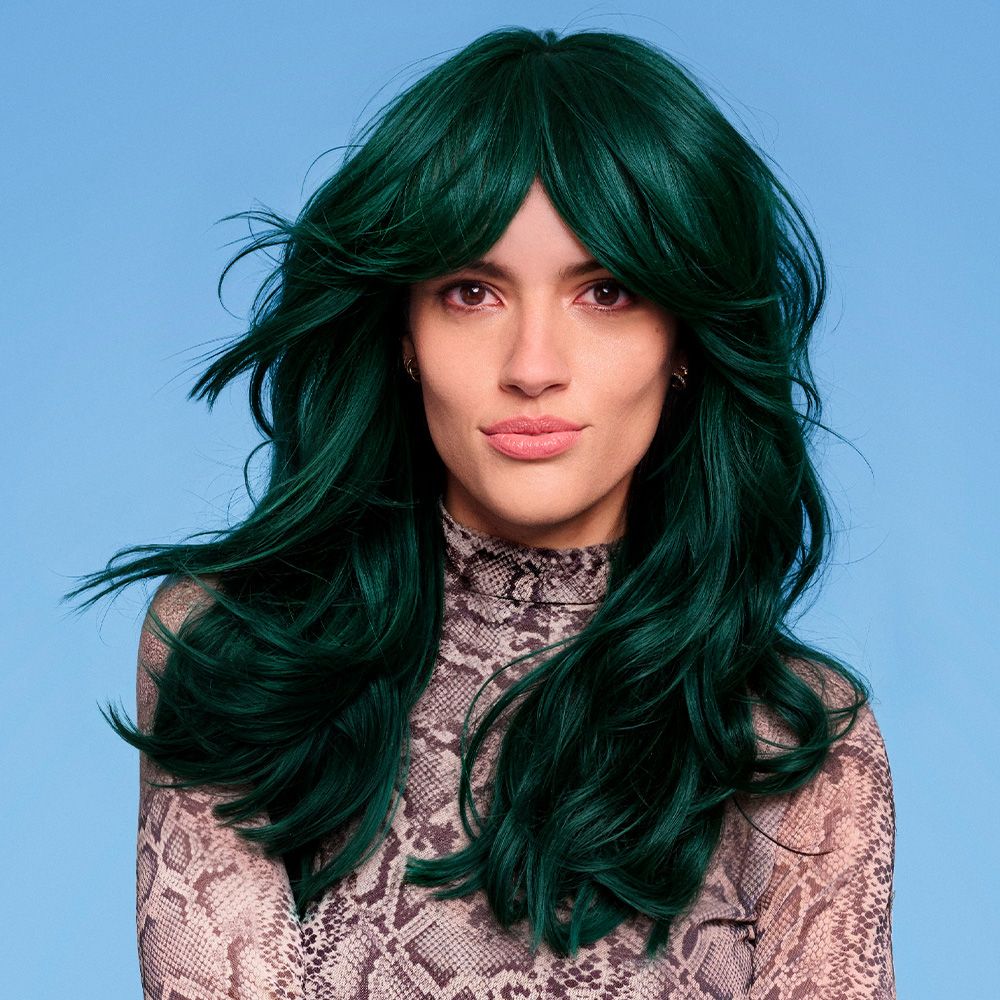
Vivid green hair with full bangs is a commitment, and it suits the person who wakes up ready to style. The collarbone length holds a blowout well, and the layers give the thick, wavy texture somewhere to move instead of just sitting there. Full bangs are the anchor: they frame the face and make the green feel intentional, not accidental. But this is not a wash-and-go situation. The bangs need a round brush every morning, and the vivid green will fade fast, so you’re booking a toner appointment before you know it. If you have fine, straight hair, the weight of the bangs might fall flat by noon. Thick hair carries this cut better, and a middle part keeps it from feeling like a costume.
Dark Brown With Olive Undertones
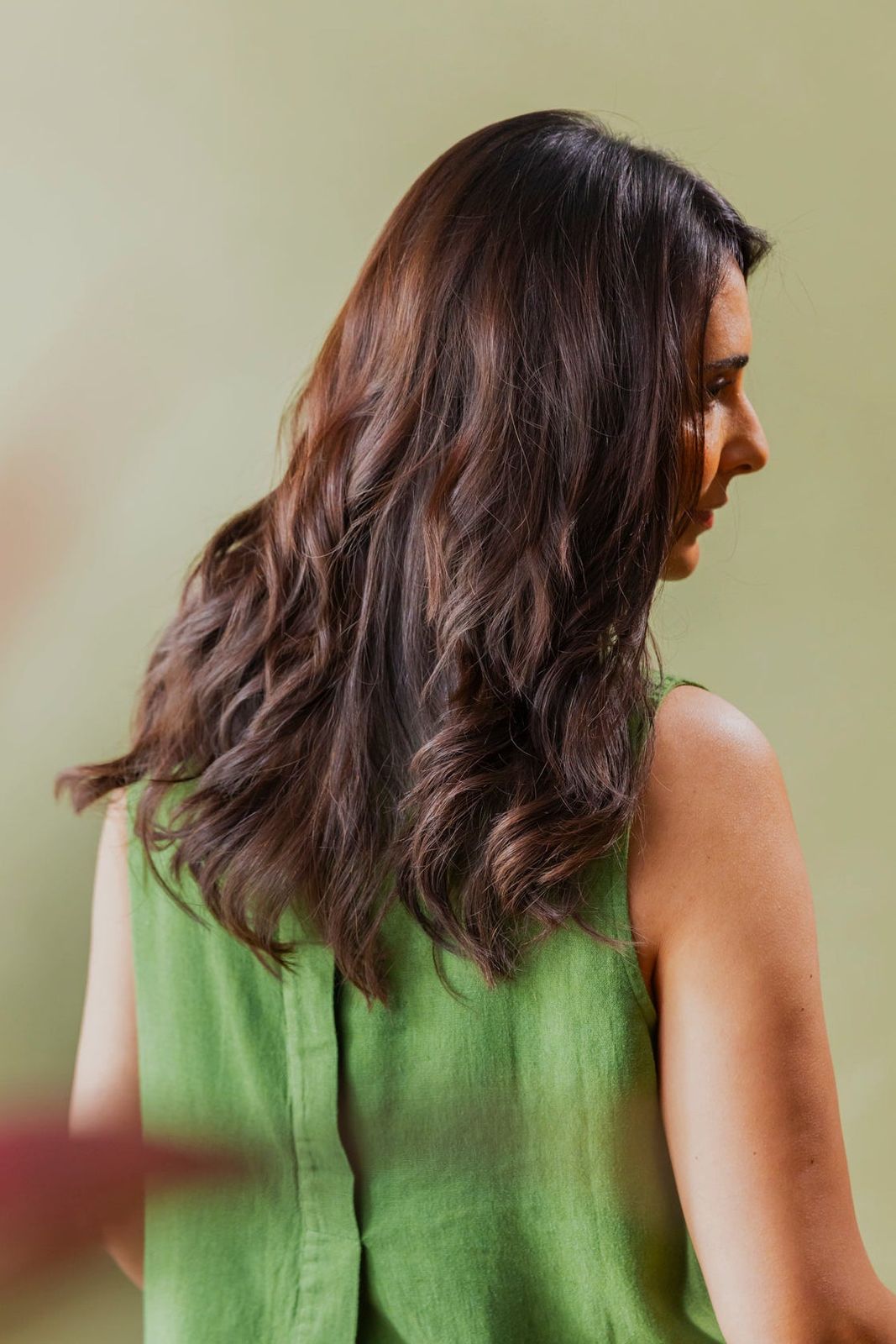
I’ll admit, I was skeptical that olive undertones would show up on dark brown hair, but they do, just quietly. The mid-back length and thick, wavy texture give the color room to catch the light, and the subtle olive hue peeks through in the waves. No bangs here, which is smart: the layers do the shaping, and the color stays the star. Over a week, the undertones actually become more apparent as the color fades slightly, which sounds backwards but works in your favor. It’s low maintenance, a trim every ten to twelve weeks keeps the ends healthy, and air drying with a smoothing serum is enough. If you want green but you’re not ready to explain yourself, this is the color that lets you keep it a secret.
Vibrant Teal Green Waves
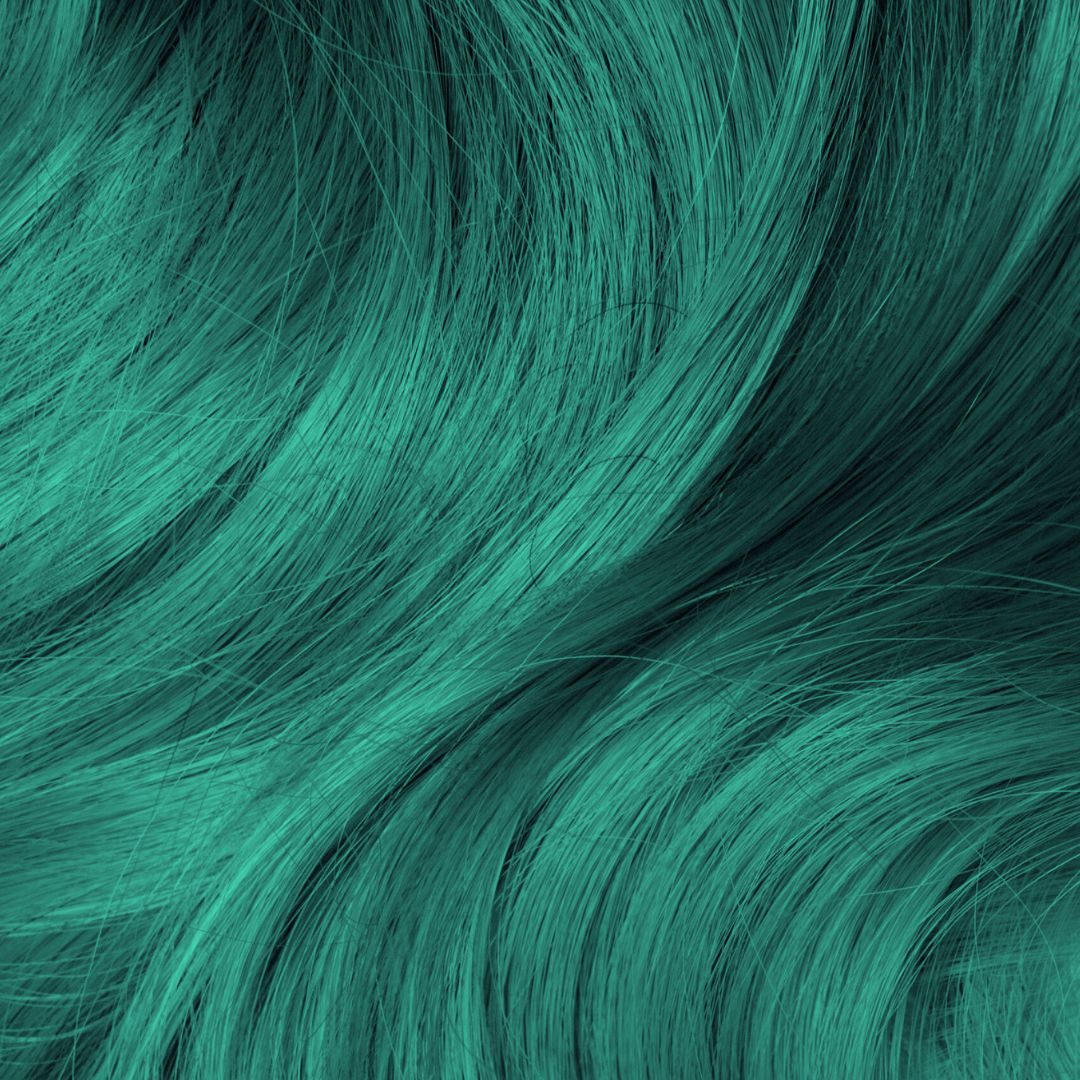
Ever had a color that feels like a dare and a hug at the same time? That’s this vibrant teal green, a shade that lands somewhere between a jewel and a secret. The cut is all about long layers, which keep the shoulder-length shape from turning into a triangle when the waves settle. I’m a fan of how the color is applied, it’s not a flat root-to-tip dip, but a technique that lets the teal breathe around the face, catching the light in the waves. The middle part and loose waves do the heavy lifting, making the whole thing read as deliberate, not costumed. It’s a festival-ready color that doesn’t need a costume to work.
Mid-Back Vibrant Olive Green Waves
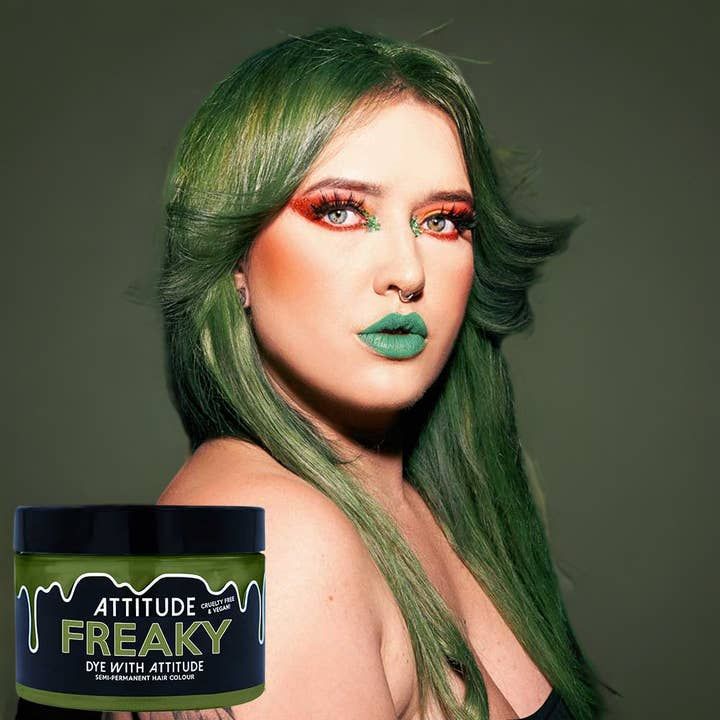
Alright, I get it now. This vibrant olive green hair on thick, wavy hair at mid-back length is a lot of hair, and that is exactly the point. The layers cut through the weight so the waves don’t just hang there, they actually move. No bangs here, which is smart because with this much texture and colour, a fringe would compete. The middle part keeps it symmetrical, letting the colour do the talking. This is for someone who wants their hair noticed before they walk in the room.
Vibrant Emerald Green Collarbone Waves
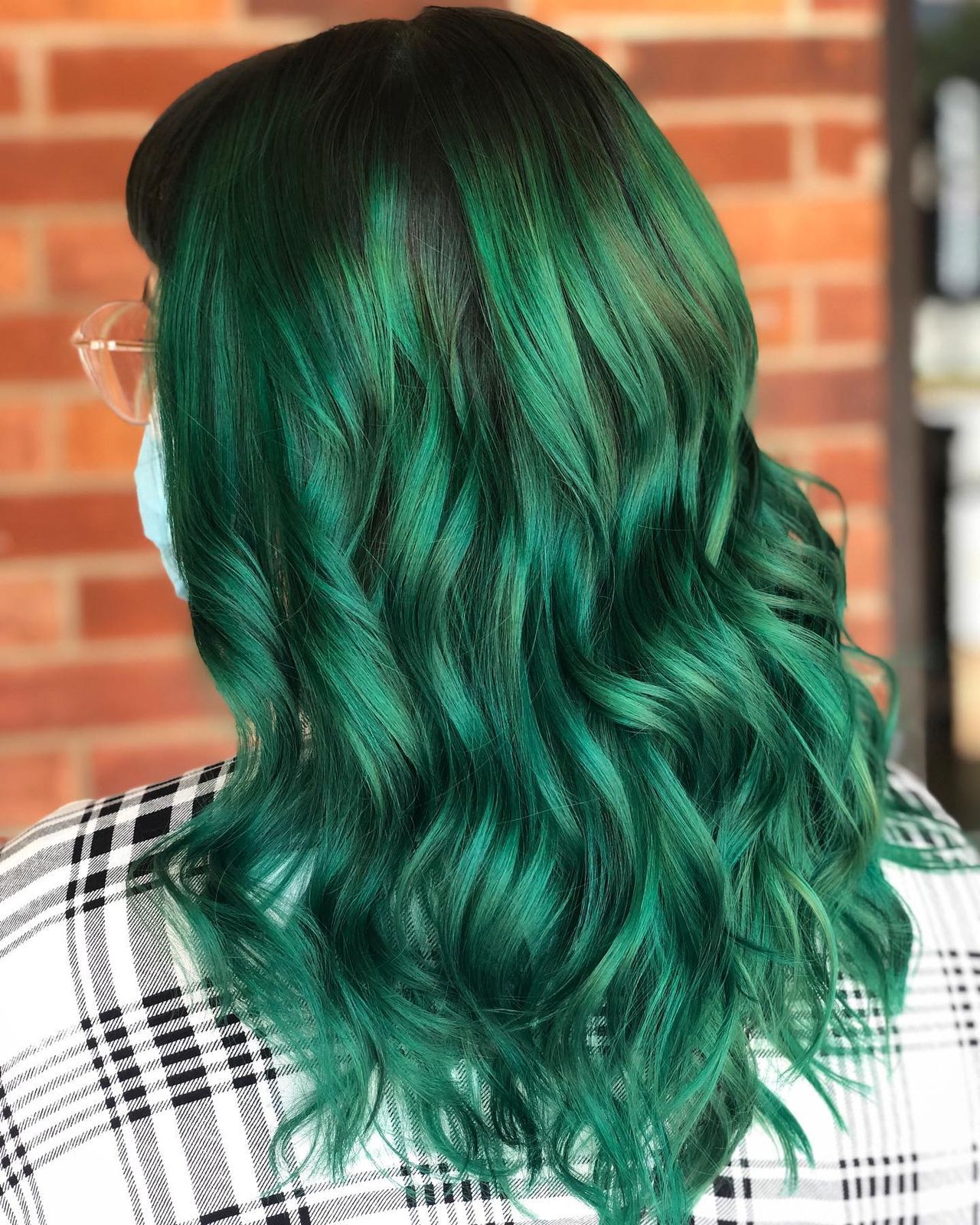
I watched a friend go through three rounds of colour remover to get this vibrant emerald green hair to stick. The collarbone length is the sweet spot where the layers actually show, not just disappear into a ponytail. No bangs, middle part, loose waves that look like they took effort but not desperation. Medium density hair holds the wave shape without going flat by lunch. The colour is the whole story here, and the cut just gets out of its way.
Deep Olive Green Loose Waves
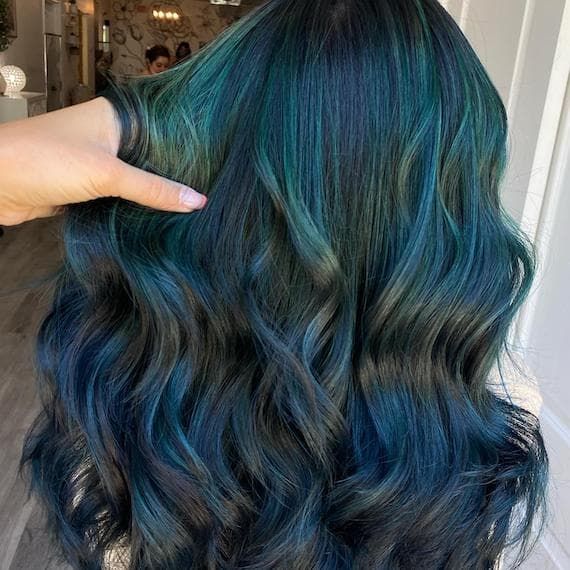
I will admit I was sceptical about deep olive green hair. On the swatch it looked like swamp water. But on thick, mid-back length hair with loose waves, the darker undertones read as expensive, not muddy. The middle part and no bangs keep it clean, the waves break up the darkness so it does not feel flat. This grows out gracefully because the base is already deep, you do not see a harsh root line for weeks. The upkeep is moderate, a trim every ten to twelve weeks, and the colour fades into a softer green rather than a weird brassy something.
Dark Green With Yellow-Green Highlights
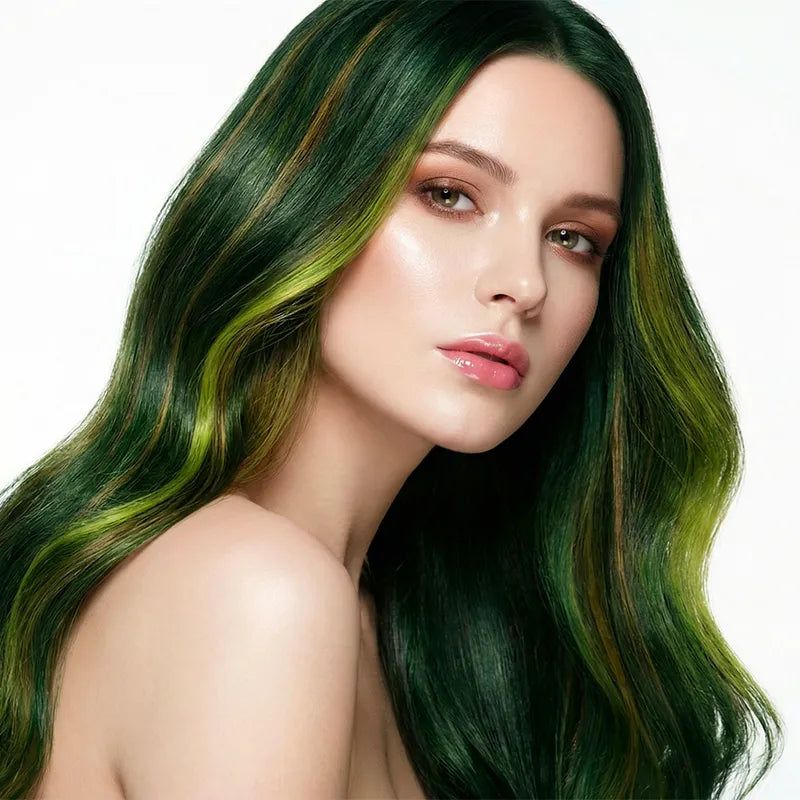
Can we talk about how precise this green hair with yellow highlights actually is? The dark green base is the easy part, you can do that at home. The bright yellow-green highlights, those are a salon job. A side part shows them off asymmetrically, the layers let them peek through instead of sitting on top. No bangs, mid-back length, loose waves that catch the light differently with every turn of the head. Book the consultation first, this is not a bathroom-mirror job.
Deep Olive Green Shoulder Layers
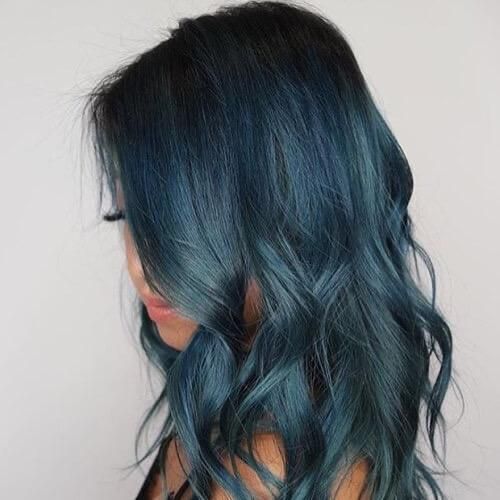
Collarbone length with deep olive green layers sounds easy. Then you try to do a wavy blowout on it every morning. The layers are short enough to flip up if you let them air dry, so you either commit to the round brush or accept the chaos. Medium density hair helps, it does not get poofy, just full. No bangs, middle part, the olive green reads as a neutral somehow. The daily styling time is about fifteen minutes, which is honest.
Mid-Back Dark Olive Green Air-Dried Waves
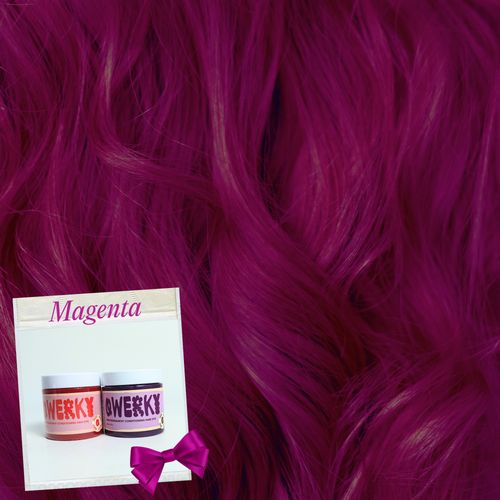
I am genuinely surprised by how much I like this. The dark olive green air dried waves hit mid-back, with long layers that keep the weight from pulling the texture flat. No bangs, a middle part, and the whole thing asks for maybe five minutes of a leave-in before you walk away. It suits warm and neutral skin tones best, the olive reads soft against them. Thick or coarse hair holds the wave pattern longest. Fine hair will lose the bend by noon, skip this one if yours goes flat fast. The grow-out is the real win here. Dark roots blend into dark olive green for weeks, you can push trims to twelve weeks and nobody notices.
The maintenance is low, which matters because this is not a quick colour to undo. A trim every ten to twelve weeks and a toning session every six keeps the green from drifting brown. It is a slow commitment, but a quiet one.
Deep Green Loose Waves With Side Part
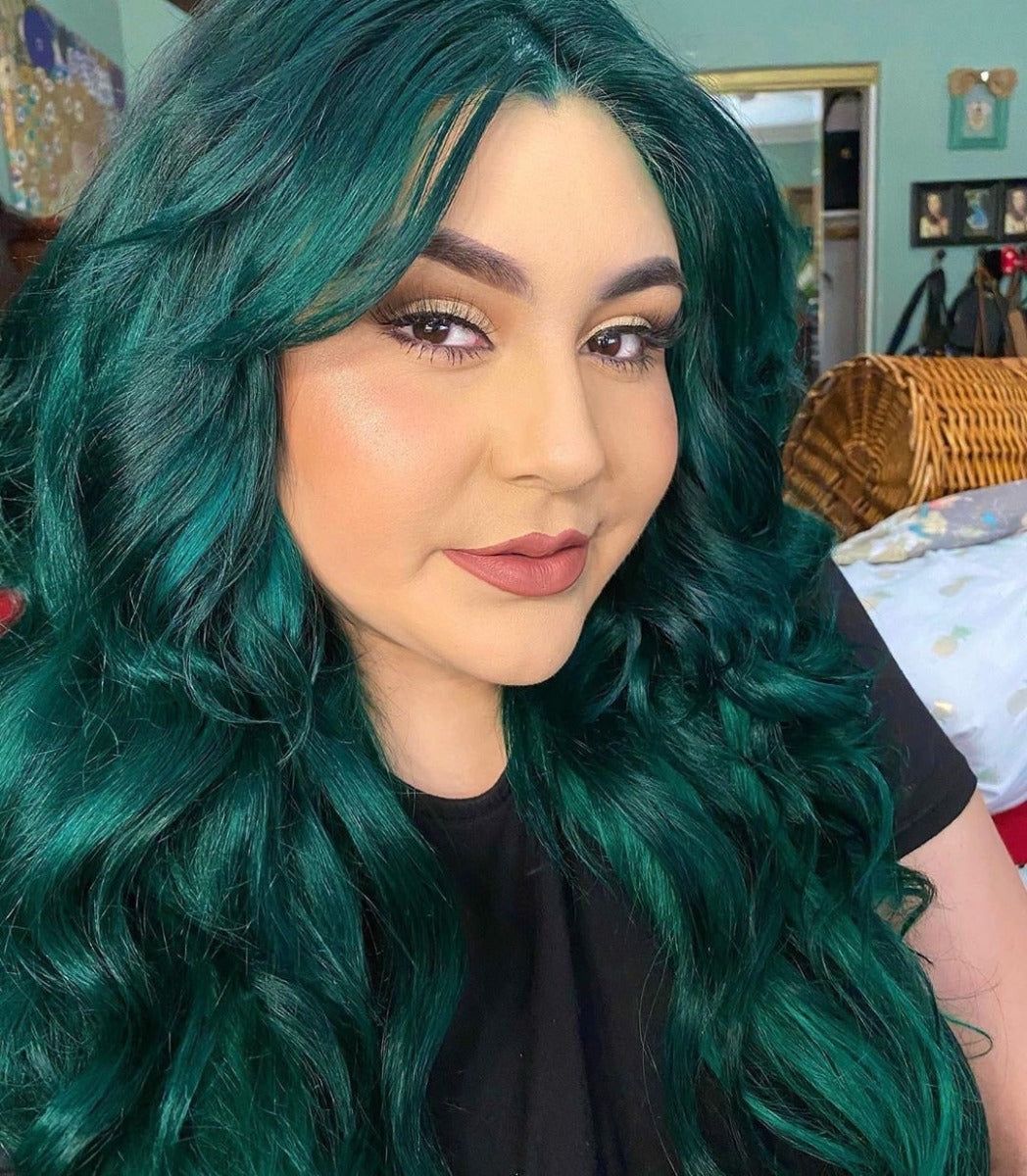
I made the mistake once of thinking a side part would hide uneven fading. It does not. The deep rich green hair in this look is gorgeous, long layers that brush mid-back with loose waves and no bangs, but the side part exposes the line where the colour wears first. That spot gets more sun, more heat from the curling iron, more friction against a pillow. The rest of the hair stays saturated, the part line goes dull and muddy. The fix is to rotate your part every wash, or commit to a toning mask every two weeks on that section only. It is an honest downside, not a dealbreaker, but one you should know before you book it.
Ash Blonde With Ash Green Highlights
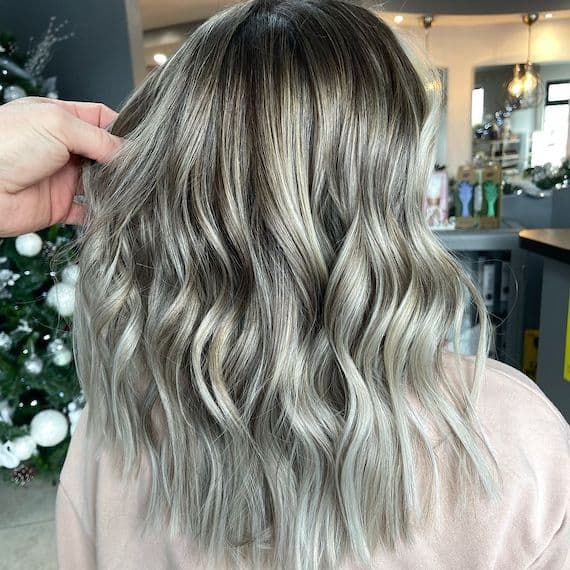
I sat in the chair and watched the stylist pull foils and thought, this is either going to be cool or corpse-like. The ash green highlights hair landed somewhere better. Collarbone length, soft layers, no bangs, a middle part, and a wavy blowout that took fifteen minutes. The ash blonde base keeps the green from going too murky, the green keeps the blonde from washing me out. It can lean grey if your stylist overtones, I had that happen once, a purple shampoo fixed it in two washes. The upkeep is every eight weeks for the trim, six for the highlights. It is not a set-it-and-forget-it colour, but it is the closest I have found to cool without being cold.
Deep Teal Green Voluminous Waves
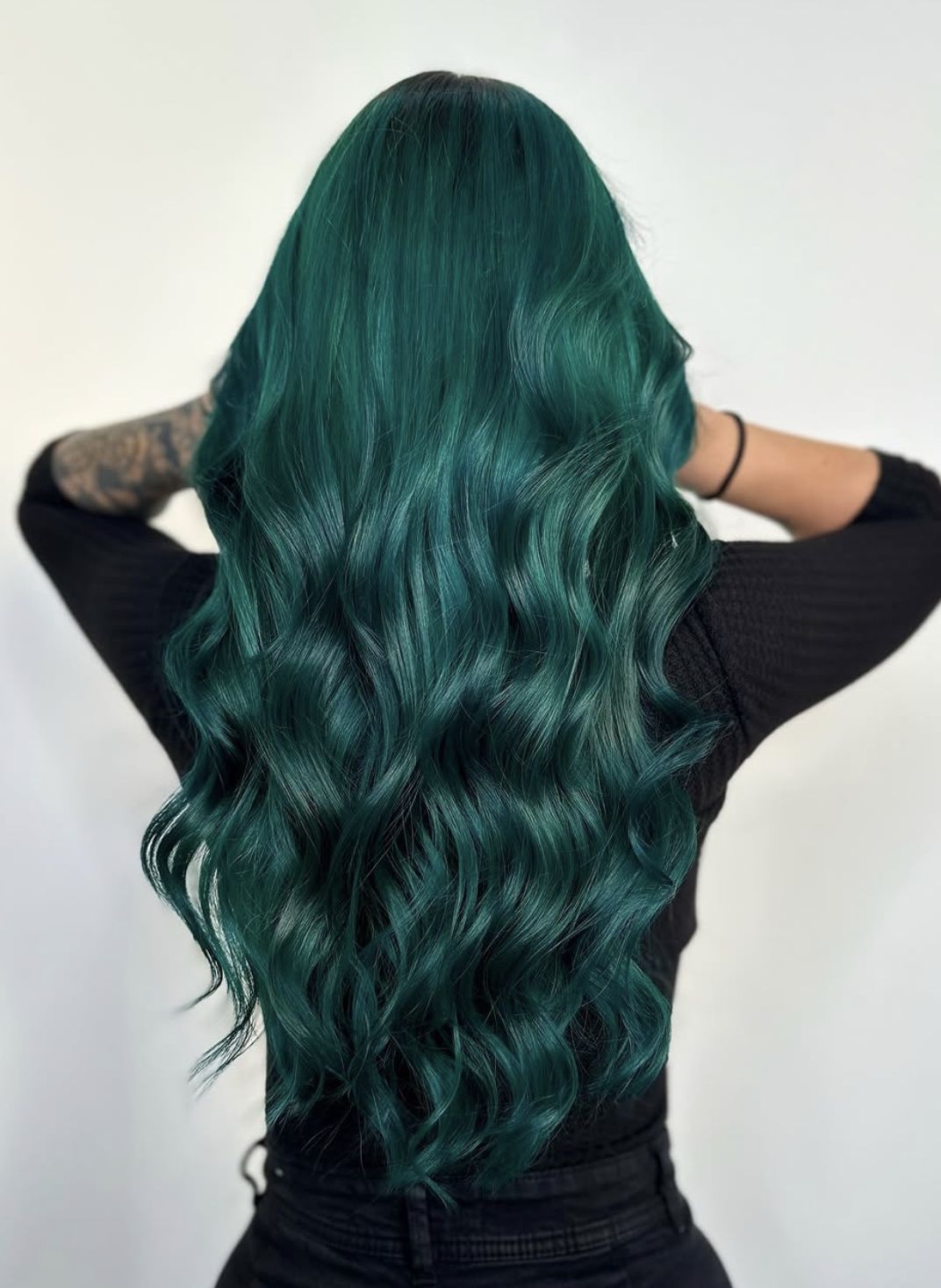
Can a colour this bold still feel wearable? The deep teal green hair in this look says yes. Mid-back, layered for volume, no bangs, a middle part, and loose waves that the thick texture holds without a fight. The darker undertones keep it from screaming, the teal keeps it from being boring. It is not a subtle colour, but it is not a costume colour either. It lands somewhere between jewel and earth, and that is a hard balance to pull off.
The upkeep is where I get sceptical. Vibrant colours fade fast, and teal is no exception. You will need a toning session every four to six weeks to keep the saturation, and a trim every ten to twelve. The waves help hide the grow-out line, which buys you a week or two. It is a commitment, but if you want a colour that turns heads without turning into a conversation piece, this is it.
Long Layers Vibrant Saturated Green Waves
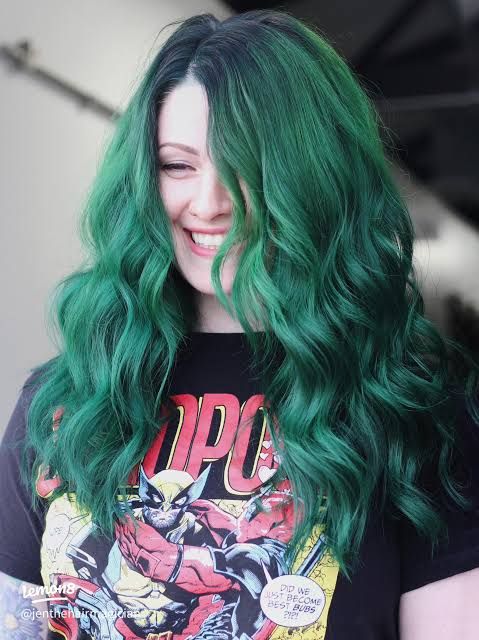
If you are choosing between a muted sage and this, pick this. The vibrant saturated green hair is not shy, mid-back with long layers that give the waves room to move, no bangs, a middle part, and a finish that reads bright and alive. The sage would be safer, but it would also be forgettable. This one makes you look twice. The layers keep the colour from sitting in one flat block, the waves catch the light and throw it back in pieces. It is a look that demands attention without asking for it. The fade is real, you will need a colour-depositing conditioner every third wash, but the payoff is worth the extra step.
Muted Olive Green Wavy Blowout
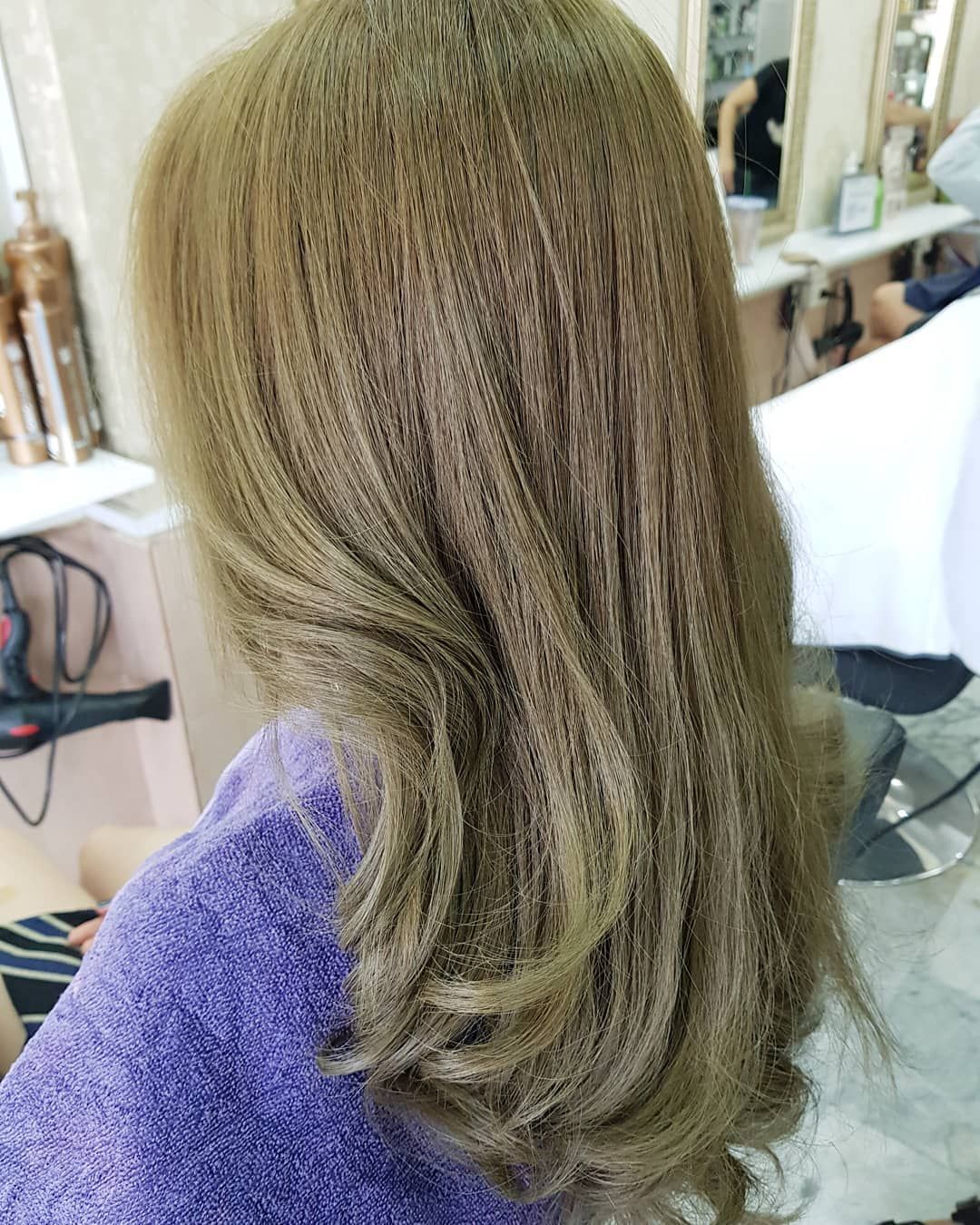
There’s a quiet confidence in a muted olive green blowout that doesn’t need to shout. The collarbone length lands right where it softens a strong jaw, and the subtle highlights catch light without demanding attention. It’s a forgiving color for medium-density straight hair, since the wavy blowout adds body that fine strands lack. The middle part widens a round face, so ask your stylist for a deep side part if that’s your shape. This is the easiest green to live with, honestly.
Emerald Green With Subtle Highlights Vibrant Emerald Green Waves
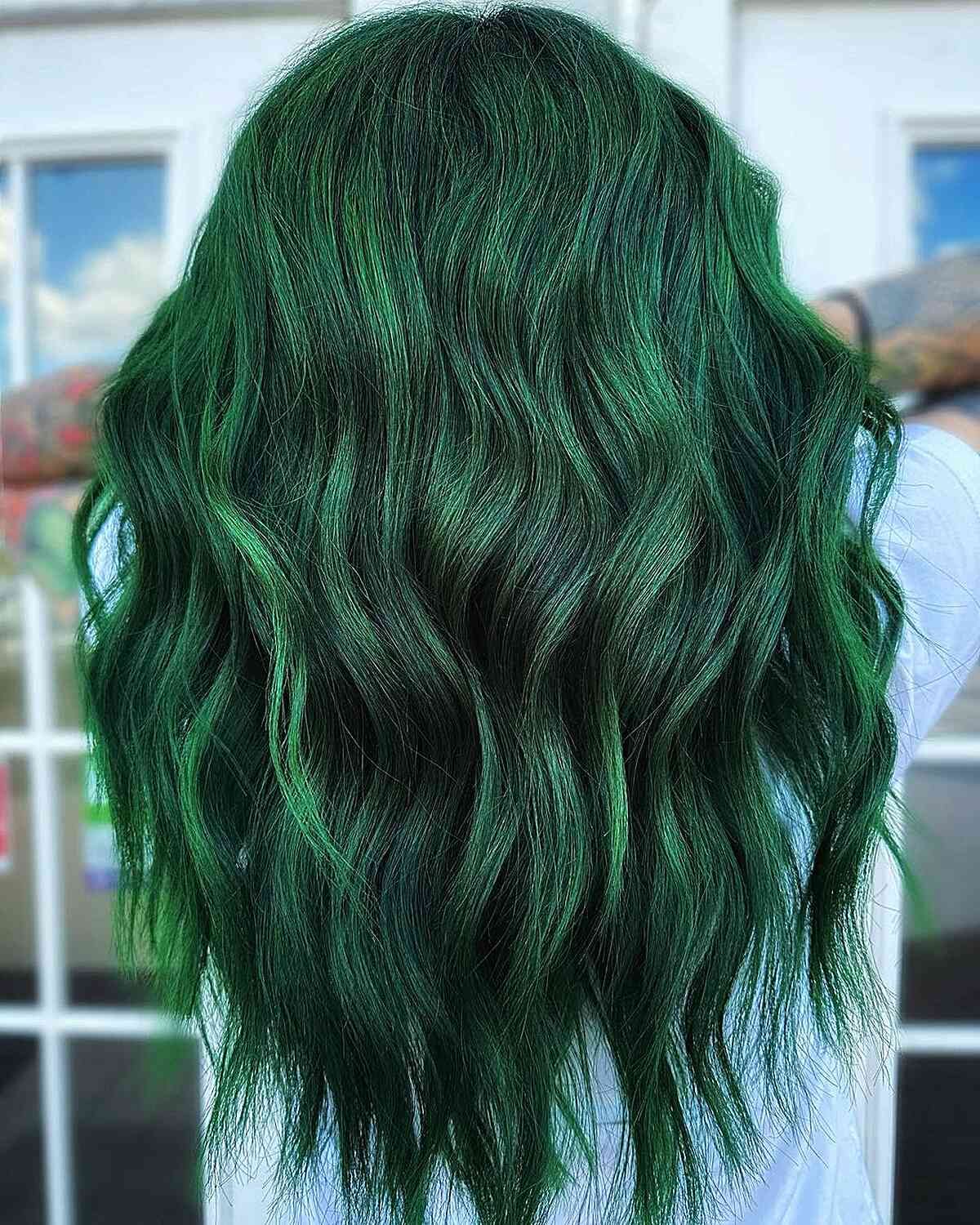
I’ll admit it, I underestimated how much upkeep vibrant emerald green hair highlights demand on thick, wavy hair. The mid-back length shows off every layer, and the loose waves make the subtle highlights look dimensional rather than striped. But here’s what nobody tells you: vibrant colors fade fast, and thick hair eats pigment. By week three, that jewel tone starts leaning teal, so you’ll need color-depositing conditioners in your rotation. The good news is the waves hide regrowth better than straight hair would. A trim every ten to twelve weeks keeps the layers from turning shapeless. It’s a commitment, but the payoff is a color that looks expensive in motion.
Mid-Back Deep Olive Green Long Layers
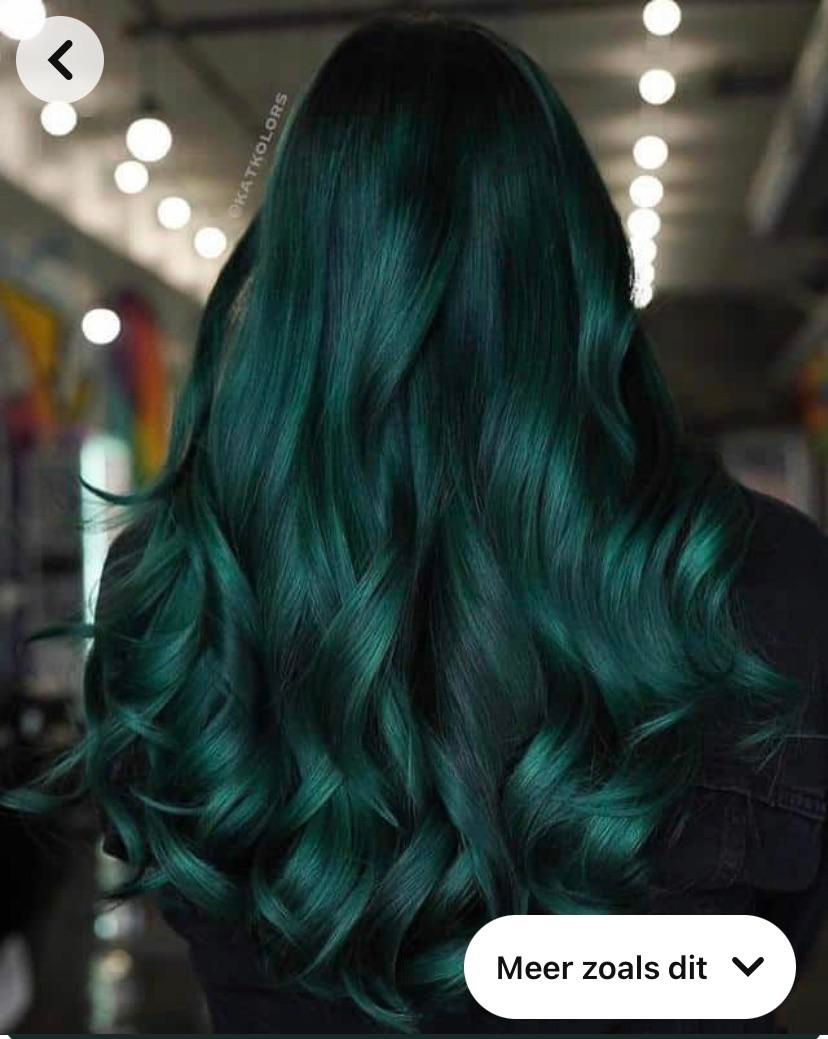
Ever wondered why some deep olive green layers look flat while others glow? The trick is in how the stylist cuts the interior layers, not just the ends. On mid-back length, long layers should start around the chin and graduate down, so the color catches light at different depths when the hair moves. The loose waves then curl around those layers, and the deep olive green reads rich instead of murky. Thick, wavy hair is the ideal canvas here, since fine strands can’t support the weight of long layers without going stringy. A middle part keeps the face open, and no bangs means the layering does all the work.
Collarbone Ashy Olive Green Wavy Blowout
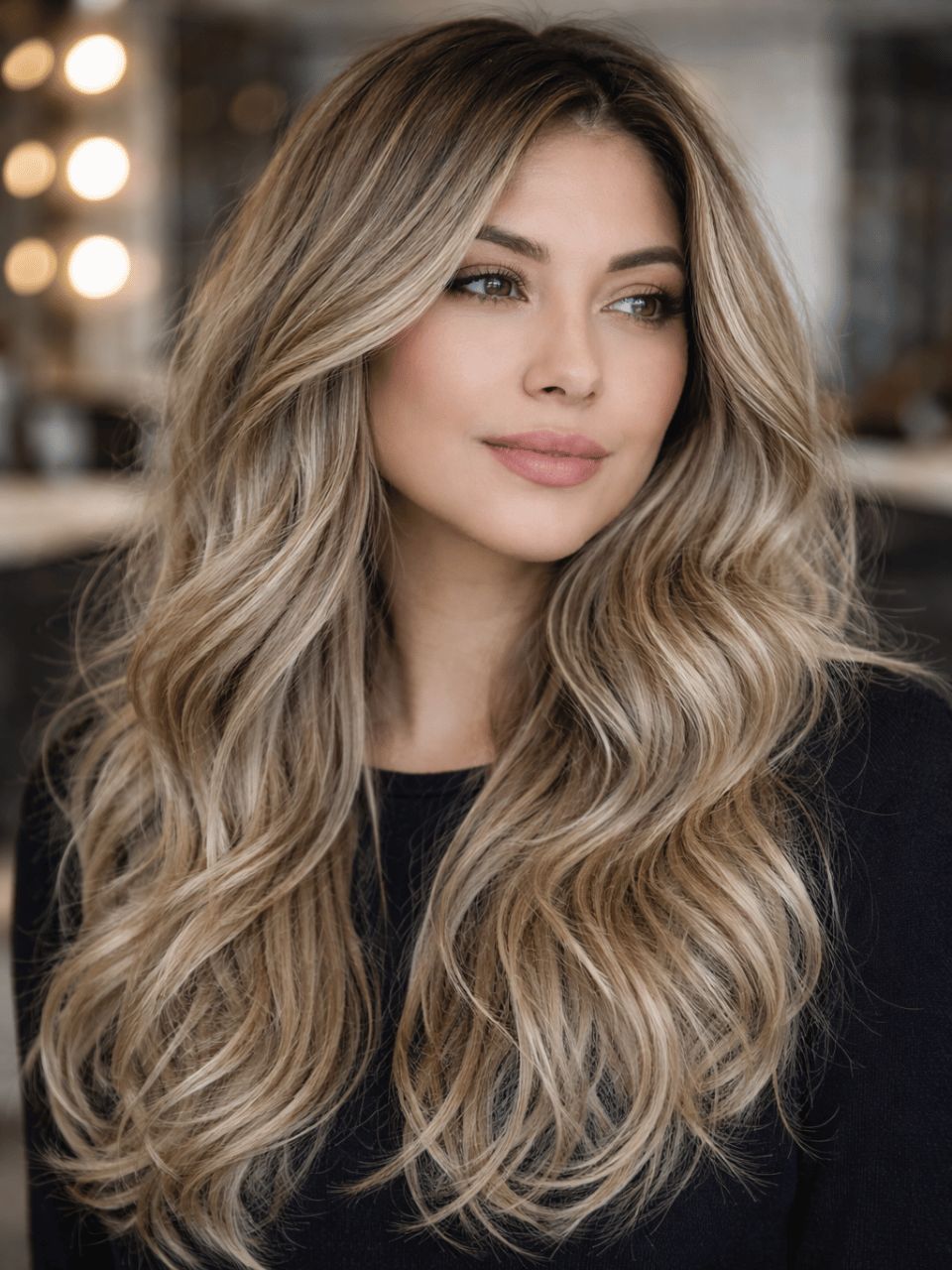
When the weather can’t decide what season it is, an ashy olive green hair color bridges the gap perfectly. The collarbone length with layers gives the wavy blowout somewhere to land, and the ash undertones keep the green from looking costume-y. It’s the transitional shade that works for both the last chilly days and the first warm ones. The middle part suits oval and heart faces, while the waves soften a square jaw. Medium-density hair holds this blowout shape without falling flat by afternoon, and the muted tone fades gracefully rather than turning brassy.
Dark Green Waves With Lighter Undertones
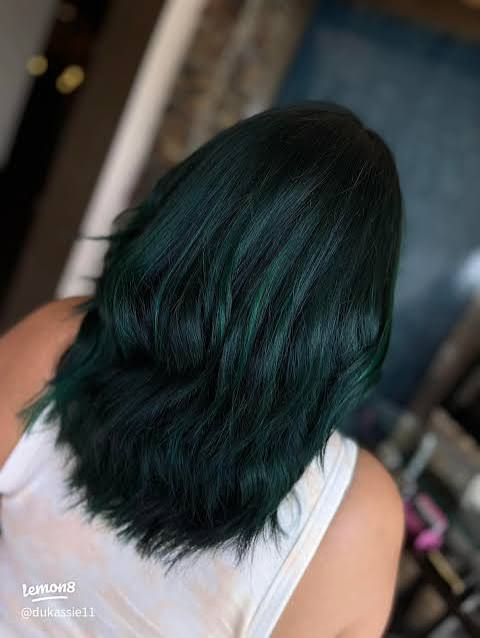
The difference between a flat dark green and a dimensional one comes down to the undertones, and that’s where the salon earns its keep. Getting dark green undertones hair to read as layered rather than muddy requires the stylist to weave lighter green pieces through the mid-lengths, not just paint them on top. On straight, thick hair, this matters even more, since the density can swallow subtle color shifts.
I’ve seen box dye attempts at this, and they end up looking like one solid block of color. The salon version uses a gloss or toner after the main color to create that depth. The long layers help too, because they let the lighter undertones peek through as the hair moves. If you’re tempted to try this at home, don’t. This is a book-it appointment, not a bathroom-mirror project.
Vibrant Olive Green Curls
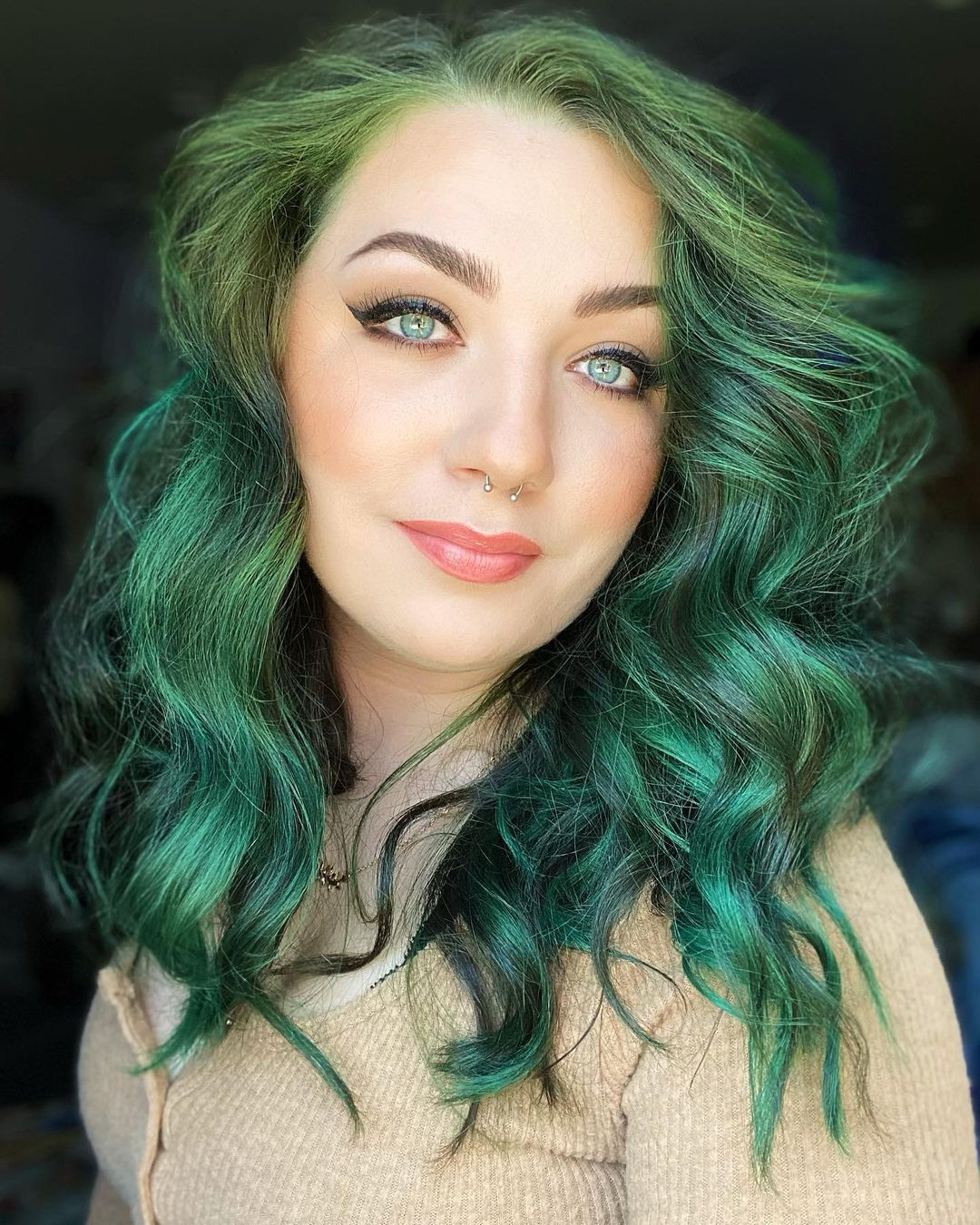
I will admit I did not expect to like vibrant olive green curls this much. The collarbone length keeps it practical, and the layers give the waves room to move without turning into a triangle. No bangs, just a middle part and that saturated green doing the work. The honest downside: vibrant colors fade fast on layered, wavy hair. The ends go first, and by week four the top still looks rich while the bottom turns murky. A root shadow buys you time, but you will be scheduling a gloss every six weeks. Worth it for the three weeks of perfect green.
No Bangs Deep Dark Olive Green Waves
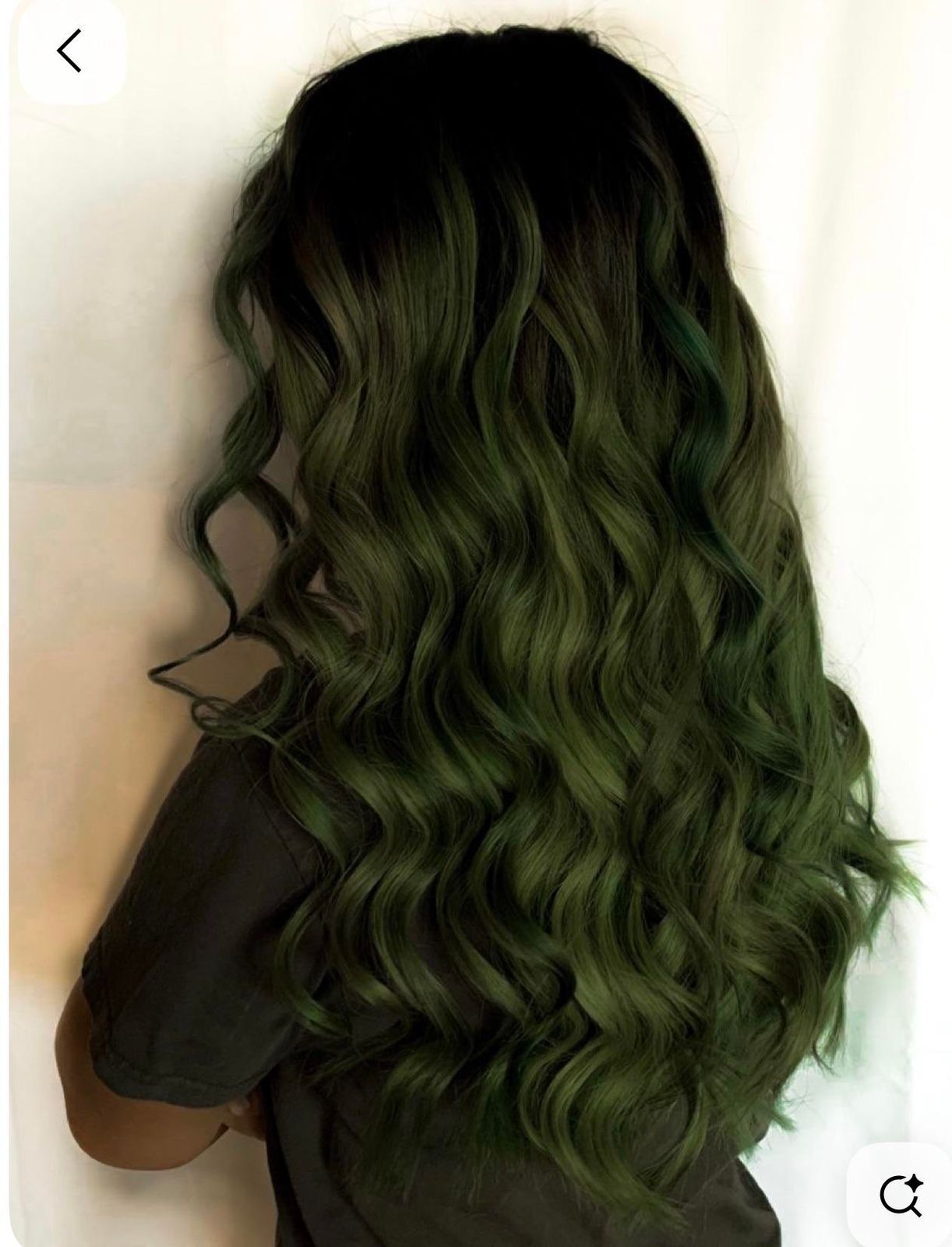
I sat in the chair and said, keep it long, keep it dark, no bangs. The stylist nodded like she had heard that exact sentence ten times that week. Mid-back length with long layers, loose waves, a middle part that just hangs. The dark olive green does not shout. It sits there, rich and a little moody, and it grows out like a dream.
No root line at week six, no brassy shift at week eight. I wash with cool water and a color-safe shampoo, and the shade stays true for two months. A trim every ten weeks keeps the ends from splitting, but honestly the shape holds on its own. This is the set-it-and-forget-it of green hair. I have worn it to work, to dinner, to a wedding. No one asks if it is dyed. They just say, your hair looks really good.
Final Thoughts
After writing all 31 of these, the one I keep coming back to is the air-dried olive green wave. No heat, no panic at 4 pm when the curl drops. Just a colour that does the work.
- Tone the green at week six, not week ten
- Purple shampoo once a week keeps brass away
- Root shadow every eight weeks if you want low upkeep
- Cold water rinse on wash day to slow fade
I am booking the muted olive half-up next. It is the one I will actually wear.

