
I started noticing it in the chair next to mine. A woman with dark brown hair asked for caramel streaks, just a few, nothing dramatic. The stylist wove them through the top layer and left the rest untouched. It took maybe forty minutes. And it looked like she had been on vacation for a week. That is the whole appeal of Partial Highlights: you get the lift without the full commitment.
This roundup has 20 ideas, from subtle face-framing pieces to brighter streaks that actually hold their own on fine hair. Some you can ask for at a walk-in appointment, others need a consultation and a plan. I have fine, straight hair that shows every root by week five, so I know which of these buys you time and which one needs a toner at week six. Every look here works for a real week, not just the first day.
Medium Brown With Caramel And Blonde Streaks
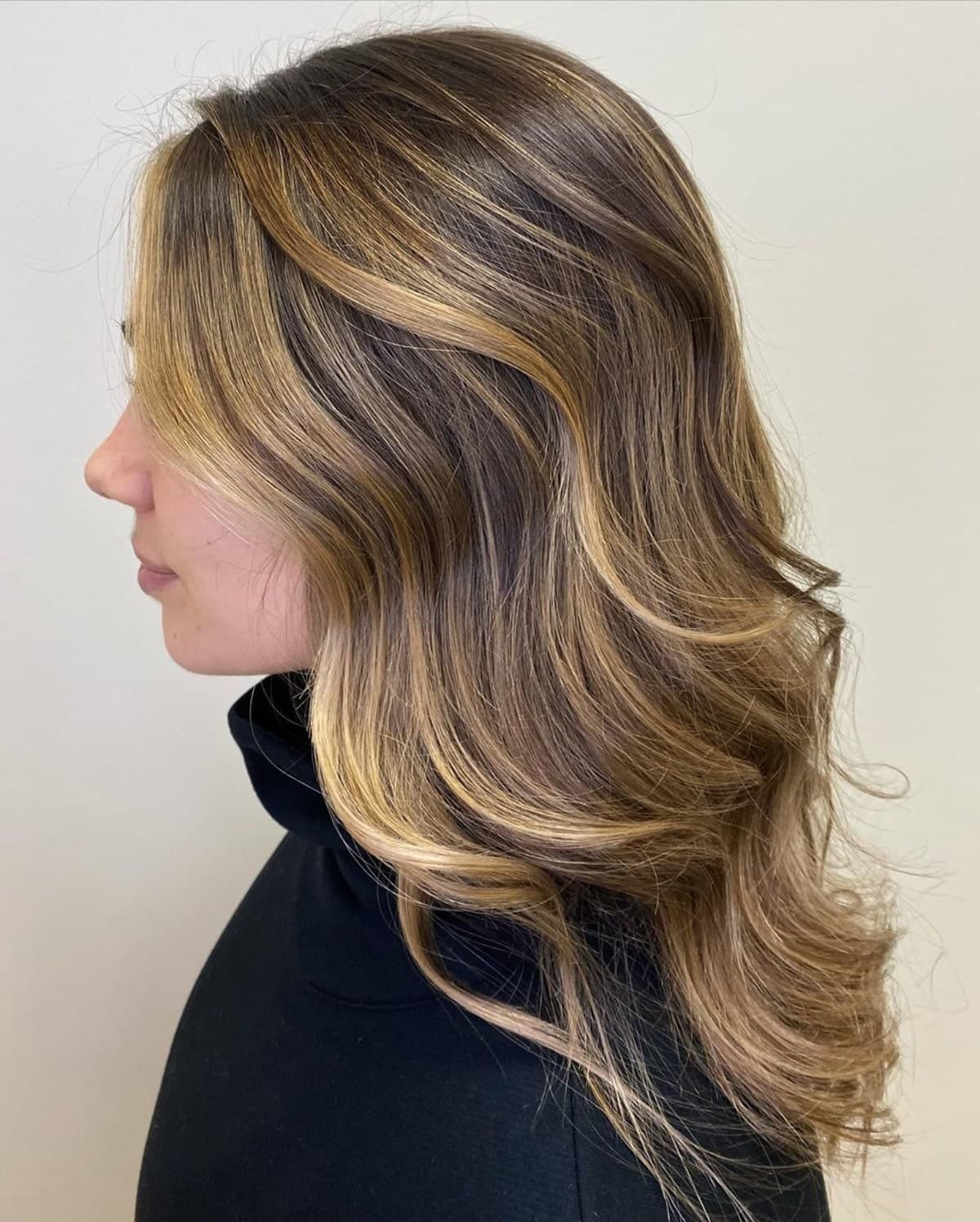
The base is a warm medium brown, and the caramel and blonde streaks sit close to the part, not scattered everywhere. That placement is the trick: it reads like sunlight hit exactly where it should, not like someone went highlight-happy with a cap. The tone stays warm throughout, no ash, no brass, just honey and butter against brown. On straight, shoulder-length hair with soft waves, the contrast lands subtle but present. Fine textures catch the lighter pieces well; coarse hair might swallow them. This is a colour for someone who wants dimension without a full head of foil.
Dark Brown Lob With Caramel Highlights
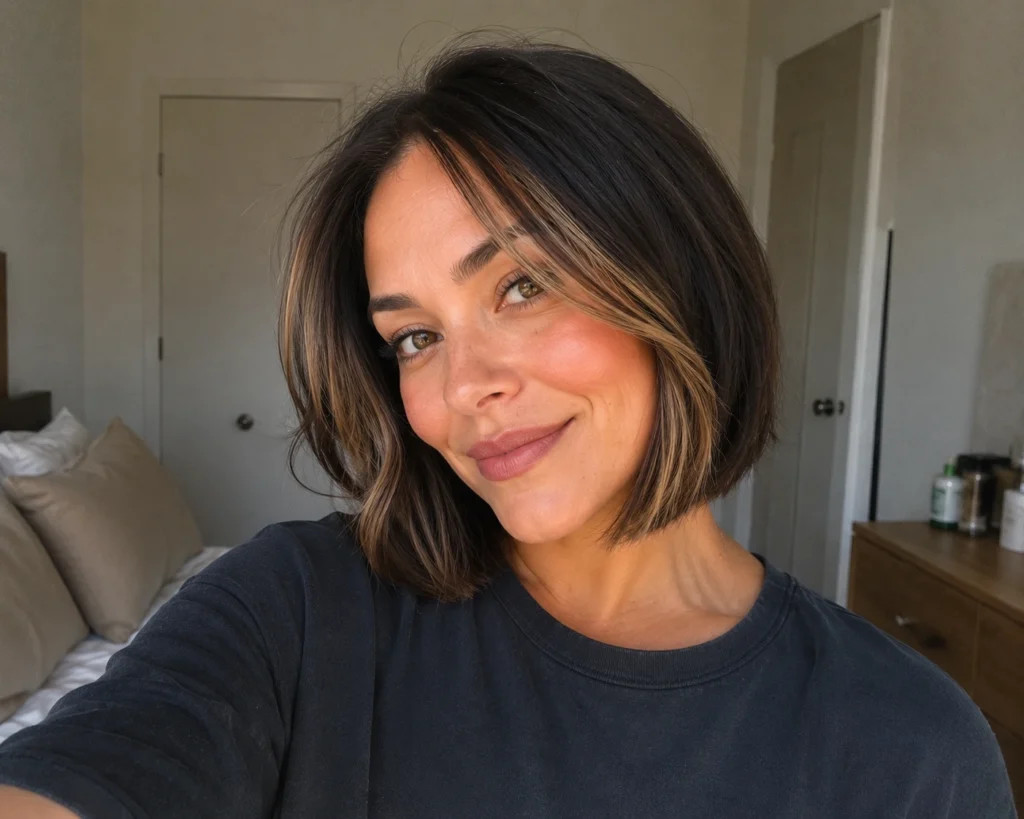
How does a lob with caramel highlights on dark brown survive a Tuesday? Pretty well, actually. The dark brown base hides the root line for weeks, and the caramel pieces are placed thickest around the face, so even when the rest fades, the front still reads intentional. I blow-dried mine with a round brush, ten minutes, and the waves held through a commute and a dinner. The tone stays warm, no ash, no greenish shift. A gloss every eight weeks keeps the caramel from going flat. Straight textures need a spritz of texture spray to keep the pieces separate.
Layered Collarbone Cut With Curtain Bangs
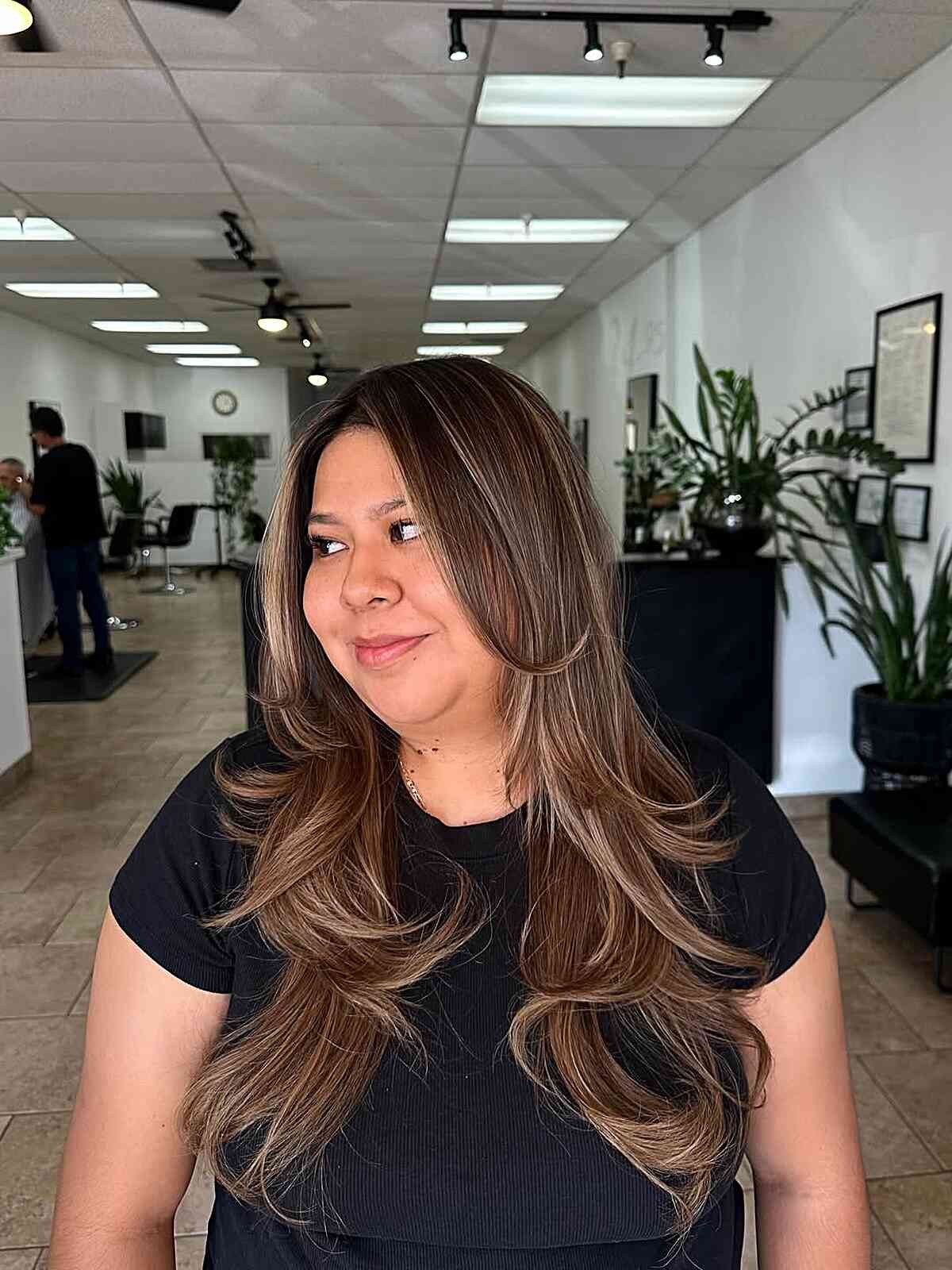
This is the colour equivalent of a good bra: supportive, invisible, doing all the work. The curtain bangs catch the caramel highlights face framing, so every time you tuck hair behind your ear, the lighter pieces slide forward. The technique is simple: the stylist weaves caramel into the layers that fall around the cheekbone and jaw, leaving the underlayers dark. The tone stays warm, no ash, no brass. Medium density hair holds the shape best; fine hair might need a volumising mousse at the roots.
- Collarbone length, layered
- Curtain bangs, side parting
- Wavy blowout, medium texture
- Caramel highlights in face-framing layers only
- Ask for: “Weave caramel into the layers around my cheekbone, keep the rest dark”
Book the appointment. This is not a box-dye project.
Chin Bob With Blunt Bangs And Blonde Streaks
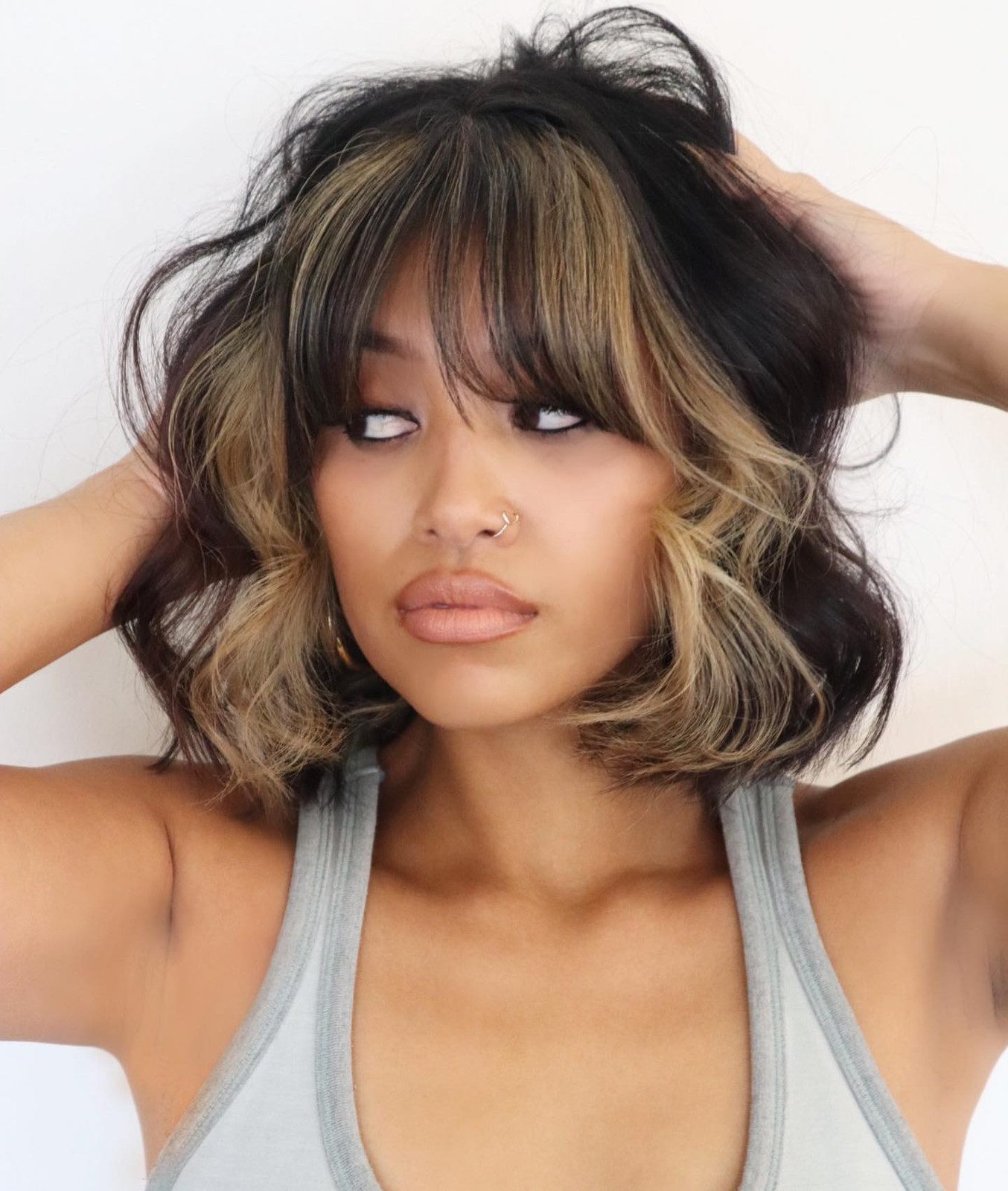
This is the bob that makes you want to chop everything off, and I get it. The blonde highlights on dark bob are unapologetically bold, sweeping right around the face like a graphic liner you didn’t have to draw. A dark brown base keeps it grounded, so the contrast reads sharp instead of muddy. The wavy texture softens the blunt bangs, but don’t mistake that for low maintenance. Brassiness will creep in by week six, especially on the lighter pieces, and the blunt line shows every split end. You’ll be back for a toner and a trim before you know it.
Sleek Chin Bob With Face-Framing Blonde
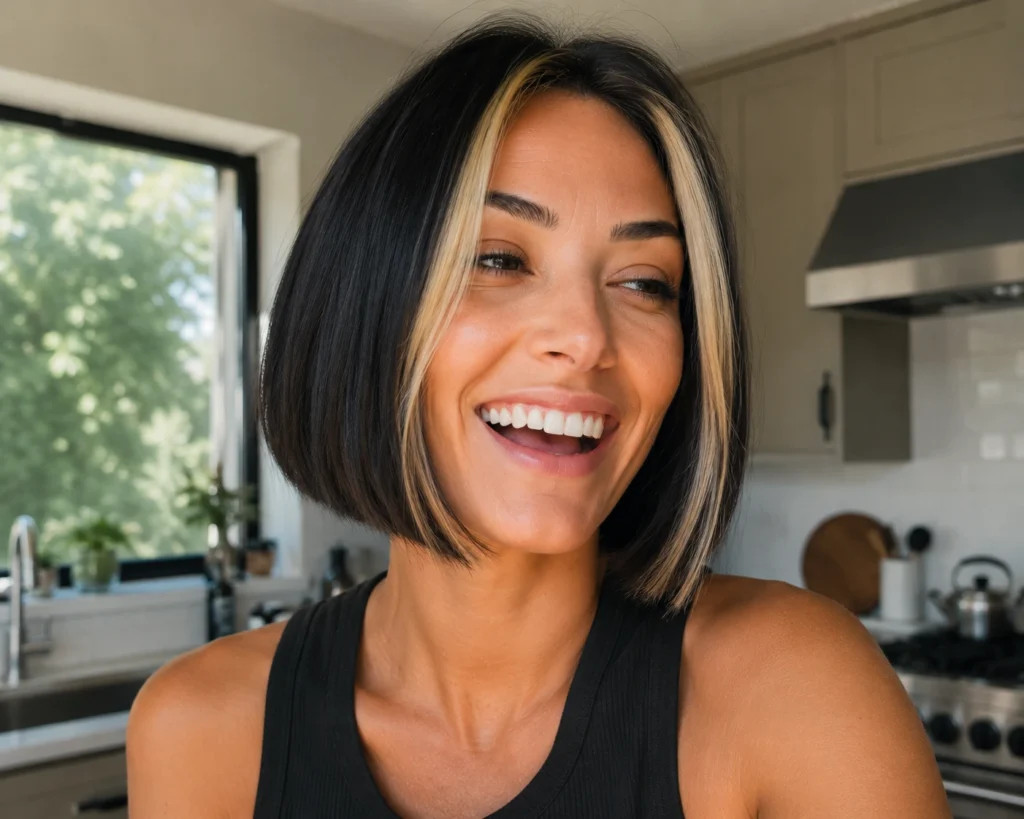
I’ll admit it: I didn’t think a chin bob could look this polished on fine hair. But the face framing blonde highlights are placed right where they catch the light, which gives the illusion of volume without any backcombing. The dark brown base keeps the contrast subtle, so it reads as expensive, not brassy. Straight and fine texture is the secret here, this style falls flat on anything with natural wave. A side part adds a little lift at the root, but only if your hair is genuinely sleek. If you’ve got coarse or curly hair, skip it, you’ll fight the straightener all day.
Angled Bob With Blonde Streaks
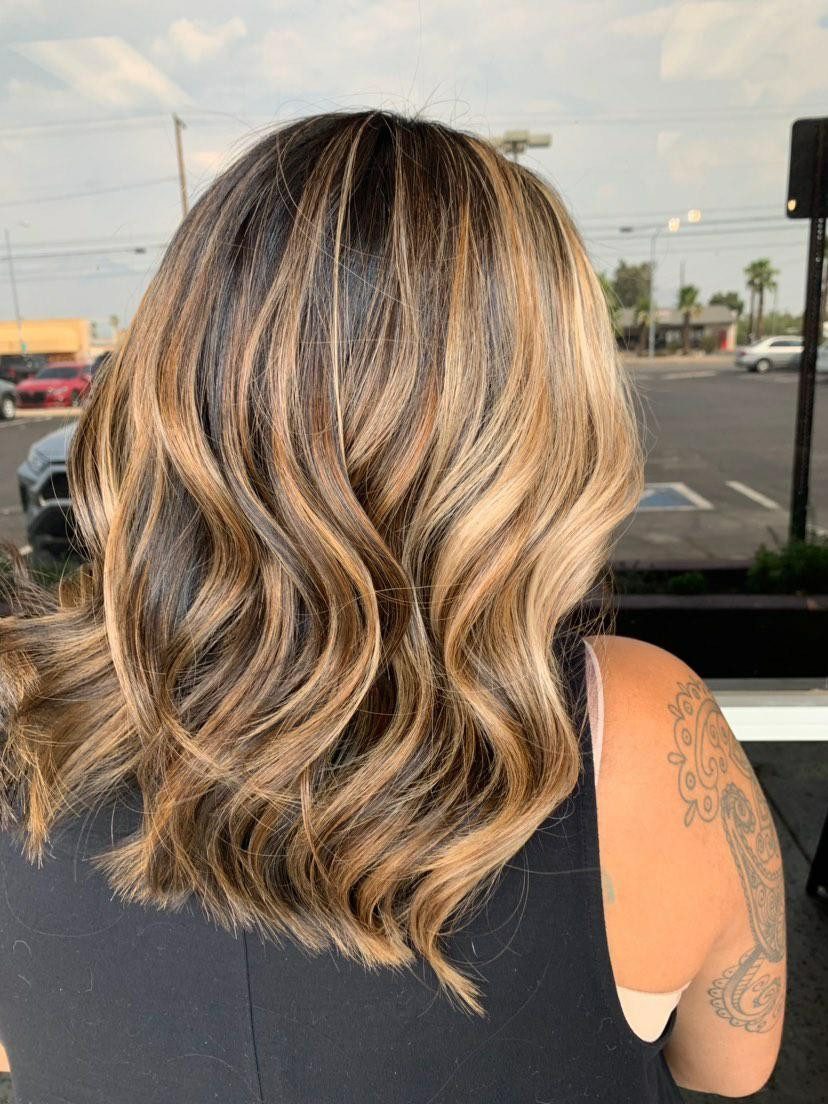
The side part drops, and suddenly the blonde streaks catch the light. This is an angled bob with blonde highlights on a dark brown base, chin-length, straight and fine. The sharp contrast is the whole point. It takes about 15 minutes to style, and the defined highlights will need a salon touch-up every 6-8 weeks to keep that crispness. Do not try this at home. The precision of the foil placement and the angle of the cut are a professional job. Book it.
Chin Bob With Choppy Bangs And Caramel
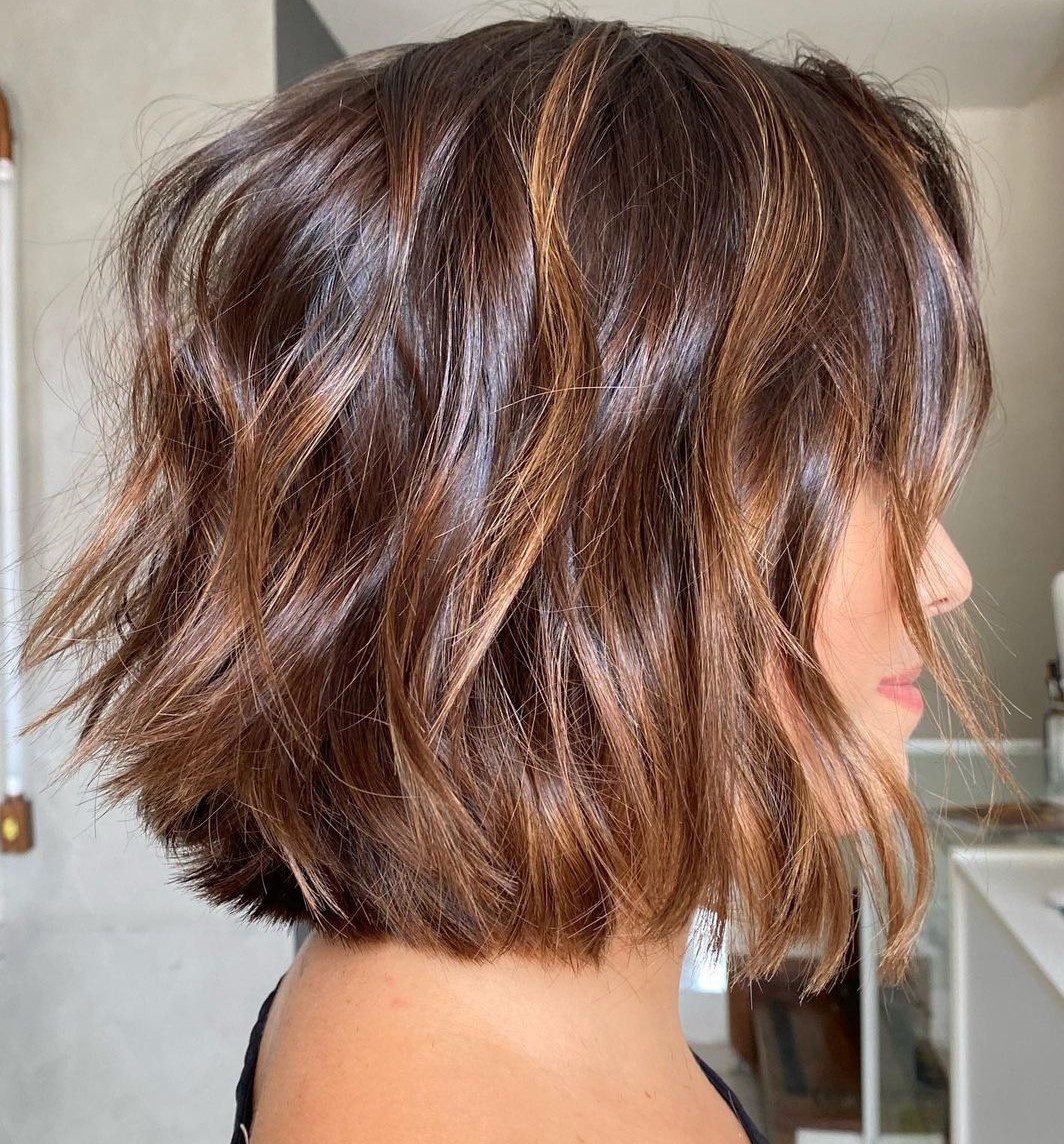
The mistake people make with caramel highlights on bob is placing them too low. The dark brown base gets buried, and the choppy bangs sit in a separate colour zone. The caramel needs to start near the root on the top sections and weave through the bangs themselves. That is how the dimension reads as intentional. A chin-length bob with wavy, medium-density texture can handle this. The choppy bangs need a trim every three weeks, but the caramel itself stretches to 10-12 weeks.
Light Blonde With Brighter Blonde Streaks
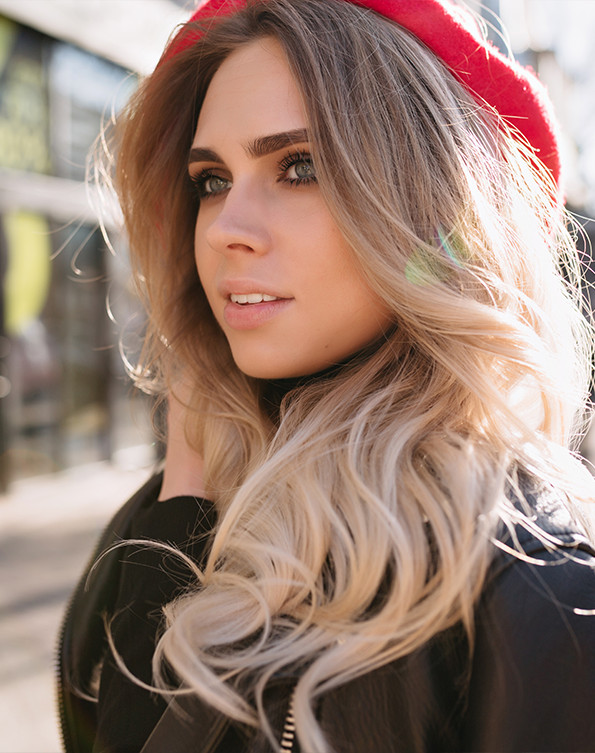
How do you get that sun-kissed effect without sitting in the sun for a week? You ask for lighter blonde highlights on a light blonde base. The technique is a partial highlight, placed mostly around the face and through the top layer. The stylist weaves fine sections, so the brighter streaks sit inside the base colour, not on top of it. Shoulder-length, loose waves, middle part. The styling takes about 15 minutes with a curling wand. The lighter highlights might need a purple shampoo every third wash around week five to keep them from turning yellow.
Ash Blonde With Platinum Streaks
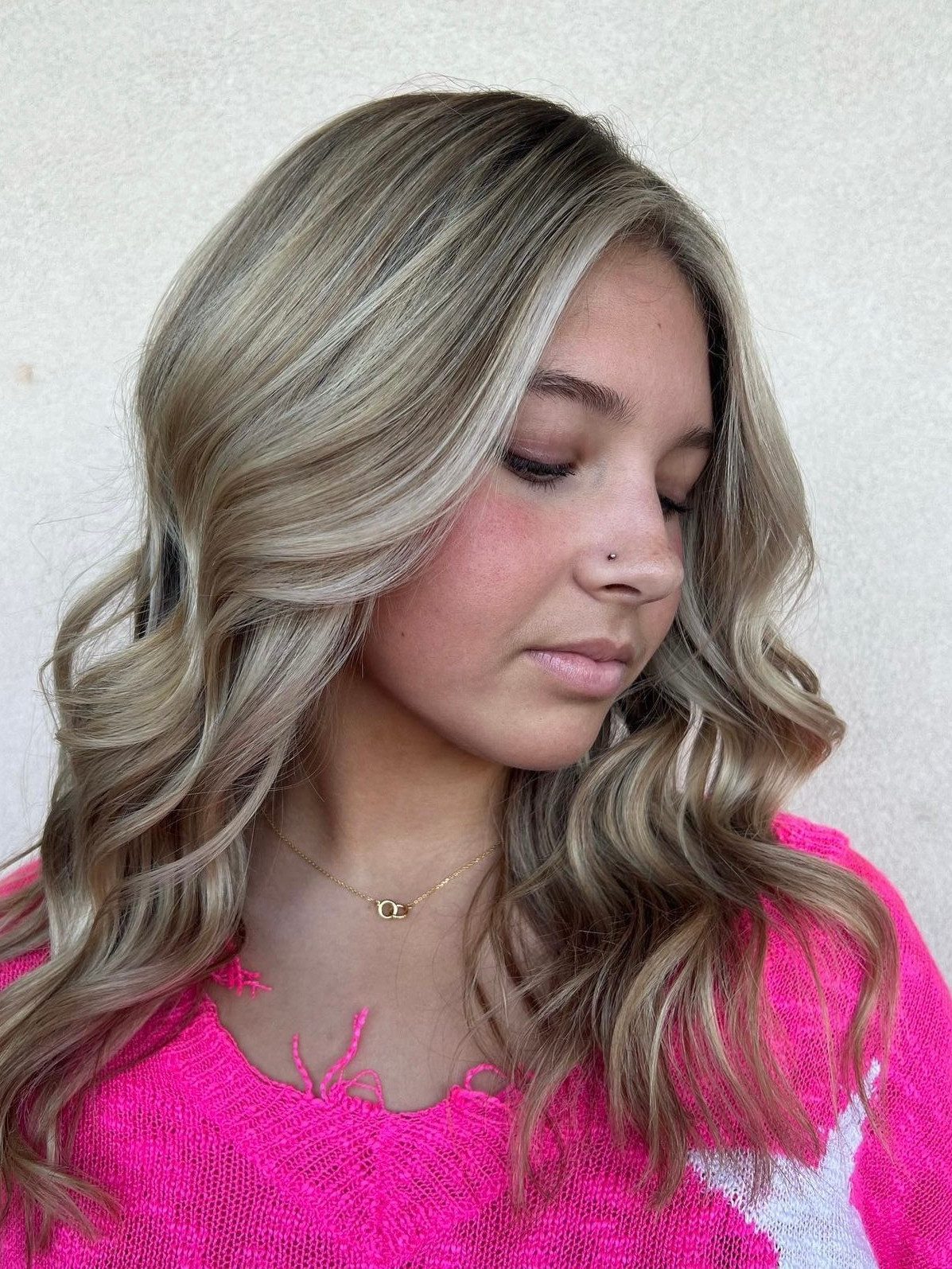
This is the colour for the months when you want your hair to match the frost on the window. An ash blonde base with platinum blonde partial highlights. The significant contrast and dimension land best on shoulder-length, layered hair with a soft, wavy blowout. The cool tone reads sharp against warm winter coats and grey scarves. The wear and upkeep are real: platinum highlights need toning every 4-6 weeks, and the ash base can pull muddy if you skip a gloss. The styling takes about 20 minutes. Worth it for the three months it looks perfect.
Ash Blonde Bob With Platinum Highlights
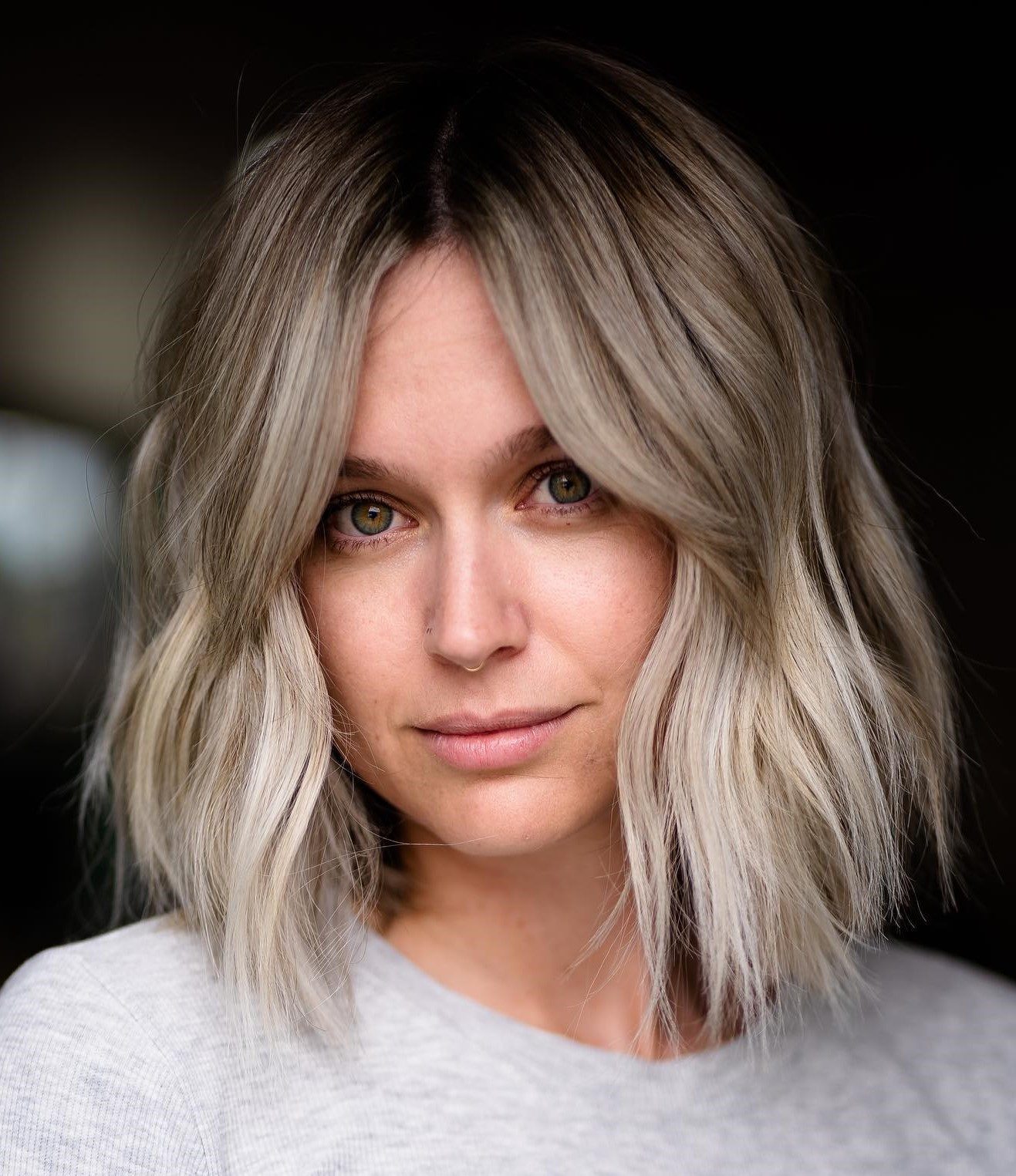
This one is for high-contrast lovers with medium-density, wavy hair. The ash blonde with platinum highlights on a chin-length bob with curtain bangs. The platinum hits the ends and the curtain bangs, which means the colour moves when you turn your head. Who should pass? Anyone with very fine, low-density hair. The platinum can look sparse, and the ash base can read flat. The styling takes about 20 minutes for the wavy blowout. The upkeep is every 4-6 weeks for toning. The payoff is a bob that does not sit still.
Dark Blonde Bob With Face-Framing Layers
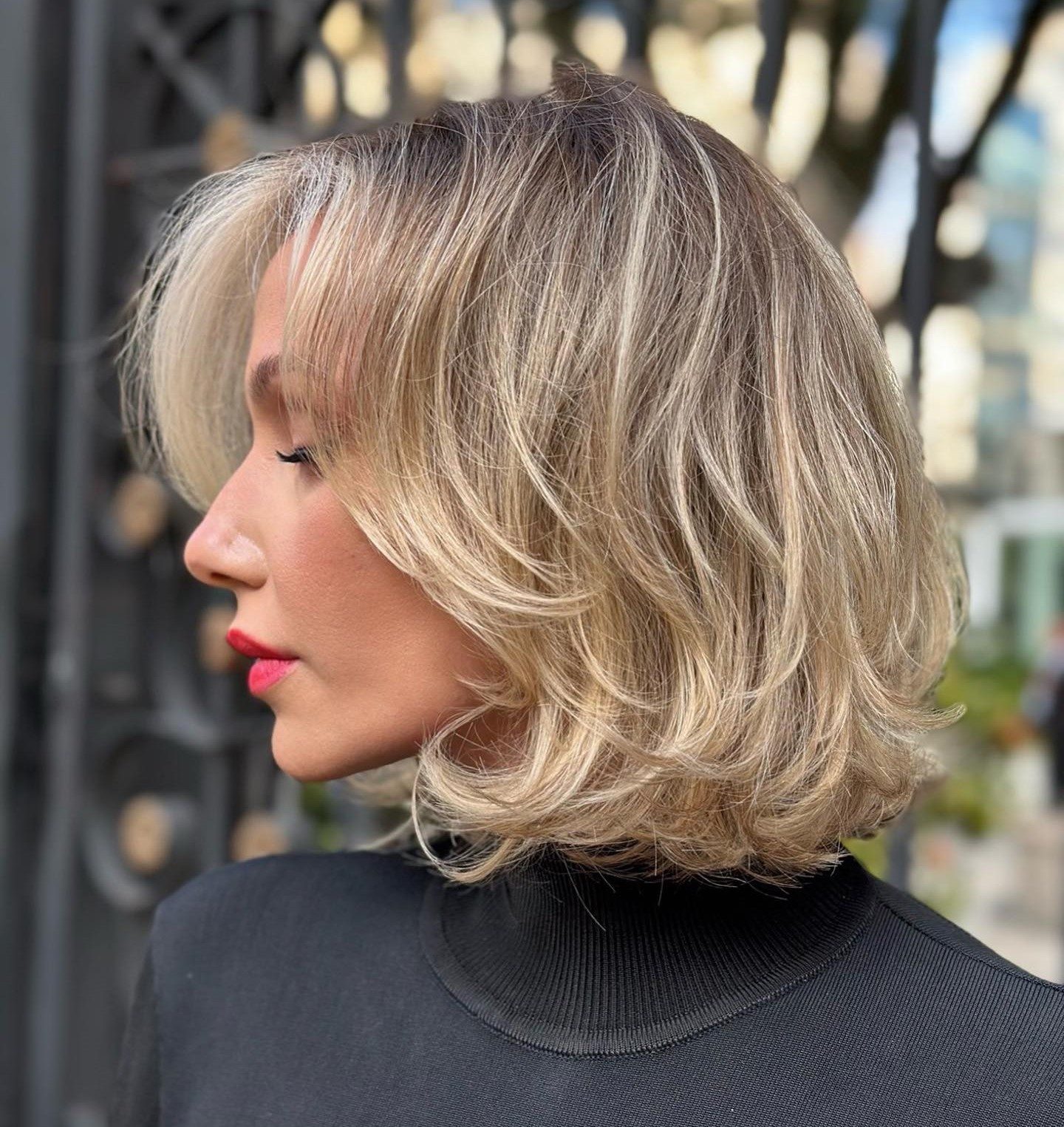
I’ll admit it: I was skeptical a bob this short could handle face-framing highlights without looking stripey. The base is a dark blonde with lighter blonde pieces woven through the front, and the technique is a partial weave that keeps the colour concentrated where it matters. The tone is warm, not brassy, which helps the layers read soft rather than harsh. My hair is wavy and medium density, and the chin-length cut holds the wave well. The honest downside? Those front pieces show grow-out faster than the rest, and by week six you will notice.
Visual Idea
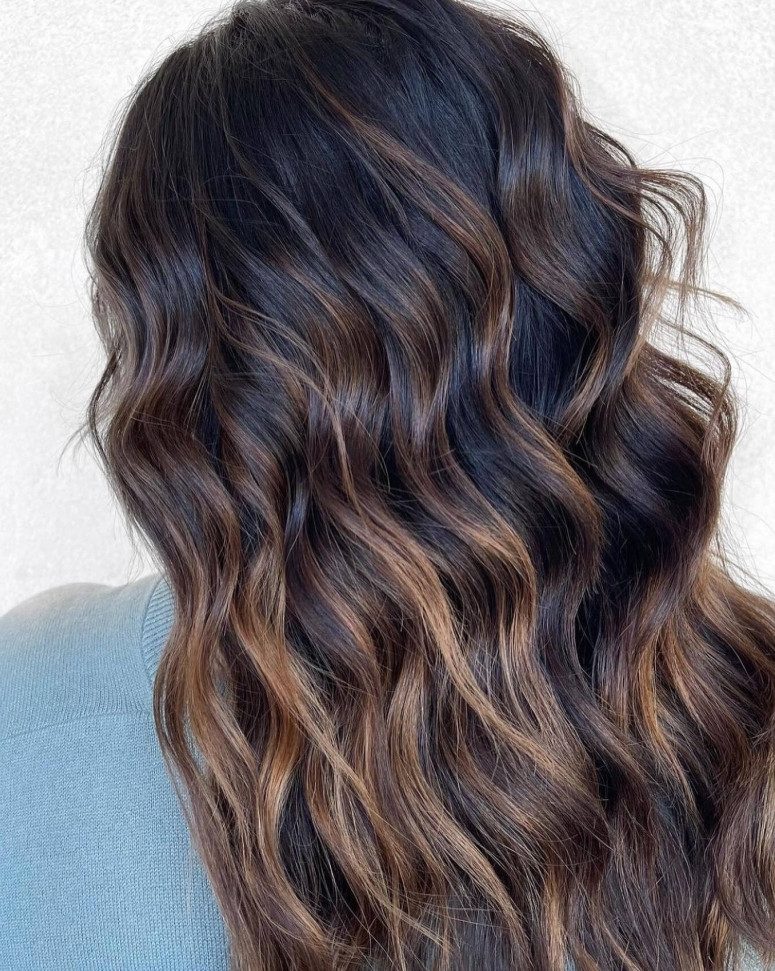
The caramel hits the mid-back waves like someone painted them on with a very steady hand. The base is a dark brown, deep enough that the caramel highlights pop without screaming for attention. The technique is a partial weave, meaning the stylist selected sections rather than foiling the whole head, which keeps the dimension natural. Texture is wavy and thick, the kind that holds a curl without product. Upkeep is manageable: a toning gloss every eight weeks keeps the caramel from turning orange, and a trim every ten weeks keeps the layers from tangling. No bangs, no fuss, just colour that works with the hair instead of fighting it.
Visual Idea — Medium Density
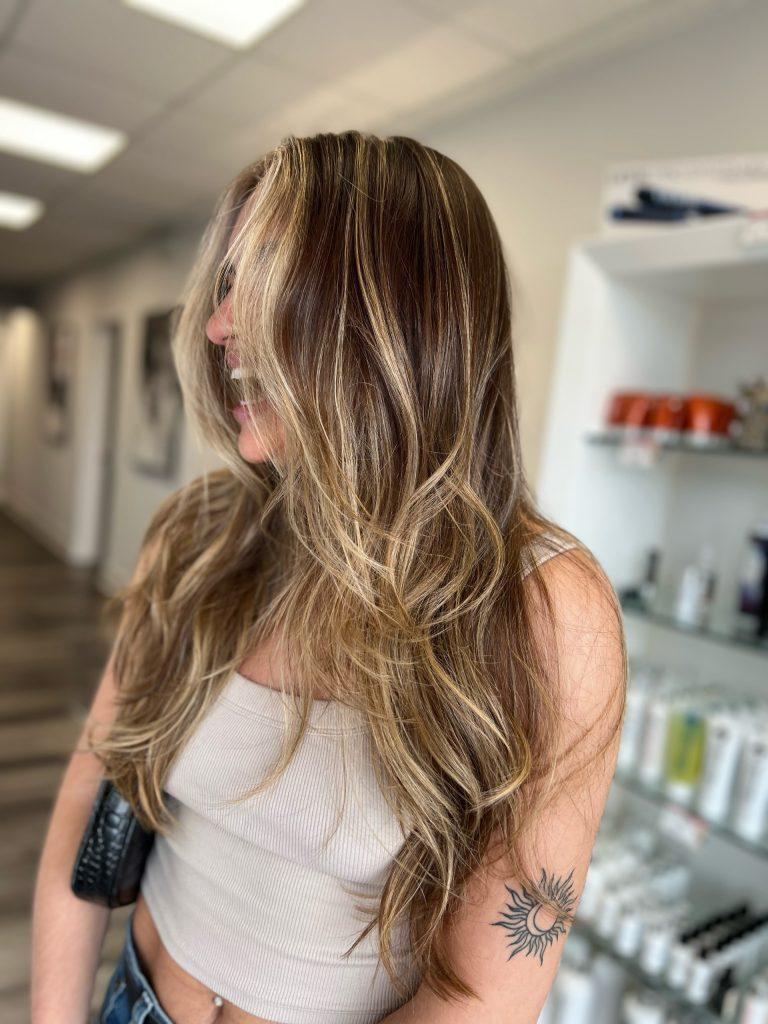
This is the colour that makes you wonder why anyone bothers with full highlights. The base is dark blonde, the partial highlights are a shade lighter, and the technique is a fine weave that deposits colour sparingly. The result is a tone that reads like you spent August outside, not three hours in foil. On medium density, wavy hair at collarbone length, the loose waves catch the light in sections rather than all at once. Compared to a chunky highlight, this is quieter, less maintenance, and harder to spot the grow-out line. It is the colour equivalent of a good baseline: you notice when it is missing, not when it is there.
Visual Idea — The Base Colour Is Ash Blonde
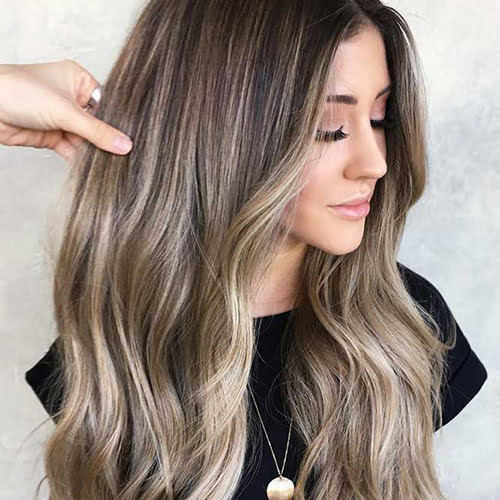
Does your skin run cool, or do you just wish it did? Ash blonde with beige highlights is the colour for the second group. The base is a cool ash blonde, not silver, not grey, just enough blue to cancel warmth. The beige highlights sit a shade lighter and add dimension without introducing yellow. The technique is a partial foil placement that keeps the highlights concentrated on the top layers, so the mid-back length reads dimensional rather than flat. Wavy texture and medium density help the colour breathe. If your skin has warm undertones, skip this one, it will read ashy in a way that looks accidental. But for cool or neutral complexions, this is the colour that makes people ask where you got it done.
Collarbone Visual Idea
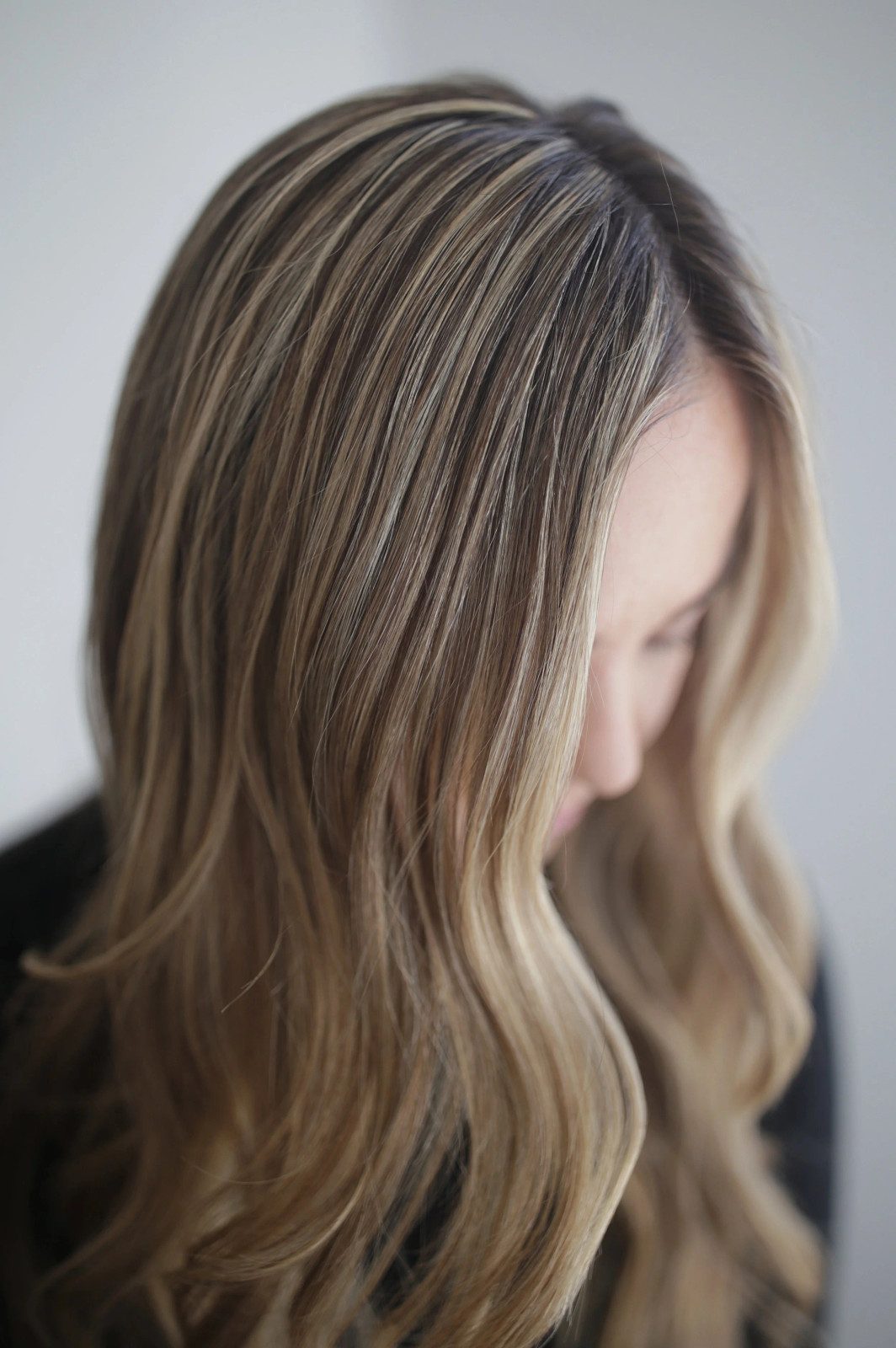
The contrast is the whole point here. Dark blonde base, lighter blonde highlights, and the difference between them is sharp enough to see from across the room. The technique is a partial highlight that sits on the top layer only, so the underlayer stays dark and the overall effect is layered, not solid. Collarbone length, wavy blowout, medium density. The honest downside is that contrast fades. By week five, the lighter pieces start to warm up, and by week eight you will be reaching for a toning shampoo. If you want the line to stay crisp, book a gloss every six weeks. It is worth it when the colour is fresh, but do not pretend you will skip the upkeep.
Dark Brown Base With Blonde Highlights Visual Idea
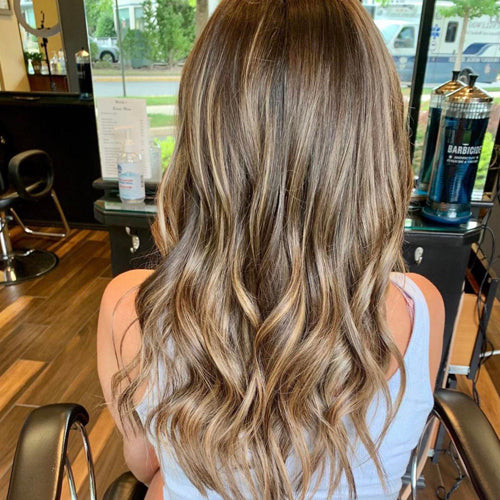
I will admit I was skeptical about partial highlights on thick hair. Then I saw this back view and understood why the salon is non-negotiable here. The base is a deep dark brown, the blonde highlights are painted in a partial technique that skips the underside entirely. That means less foil, less processing time and a lighter hit of warmth across the mid-lengths and ends. The tone stays neutral, no brassiness creeping in because the stylist controls the placement. On wavy collarbone-length layers with no bangs, the highlights land where the light hits naturally, not everywhere. A DIY kit cannot replicate that selectivity, the sections are too wide and the result is a stripe instead of a shimmer. Book the appointment, bring a reference photo, let someone else handle the foils.
Mid-Back Visual Idea
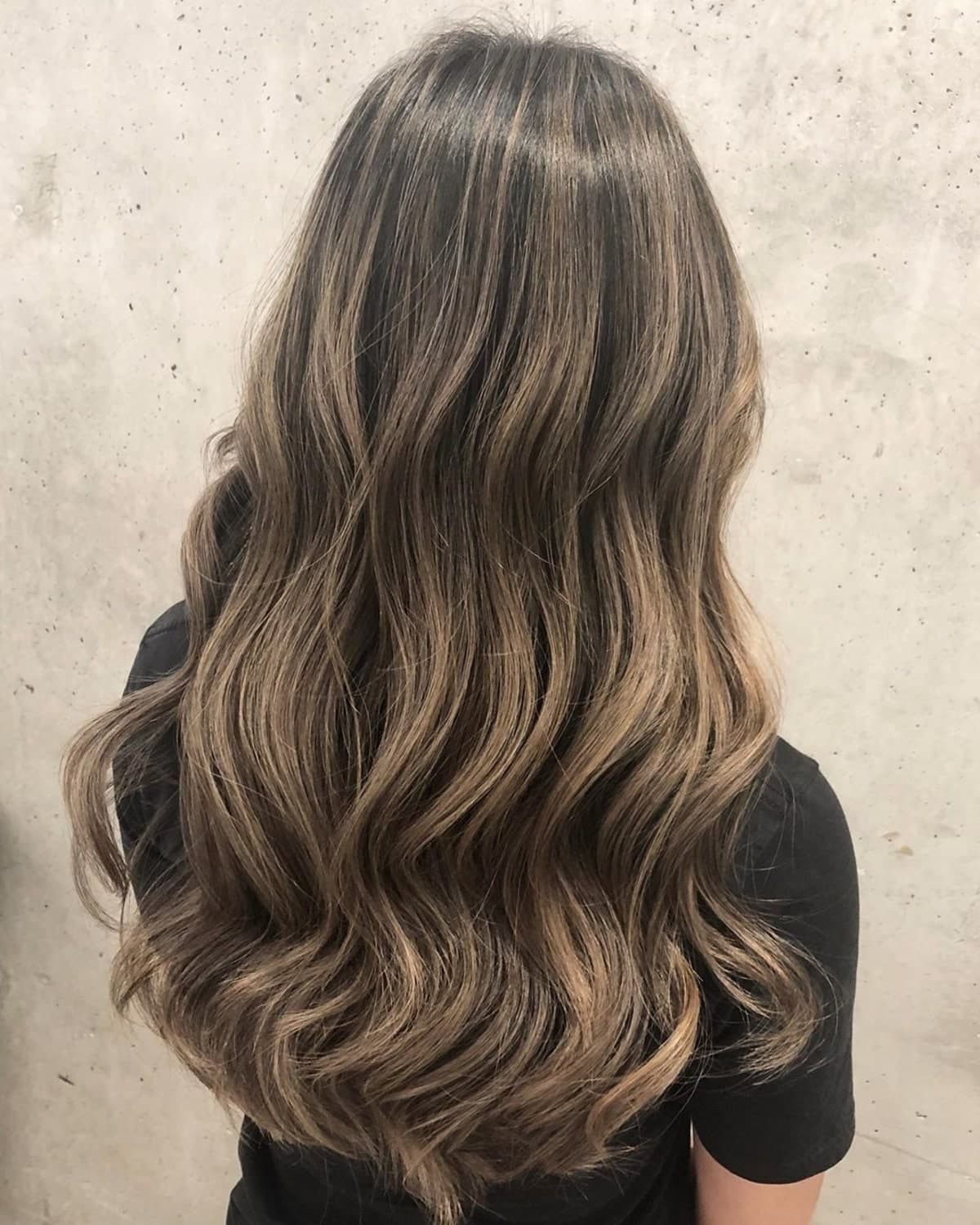
Picture a cold November afternoon and this is the hair colour that belongs in it. A dark brown base runs from root to mid-shaft, then warm brown highlights start appearing around the ears and carry all the way to the mid-back ends. The technique is a partial weave, so the highlights are concentrated on the top and front sections while the underneath stays solid. That warmth against the dark base reads like a cashmere scarf, not a neon sign. The tone is honeyed, not golden, which keeps it from clashing with the cooler months. Loose waves and a middle part let the colour breathe without trying too hard. On medium-density wavy hair, the partial placement adds dimension without weight. It is the kind of colour that makes a turtleneck look intentional.
Layers Visual Idea
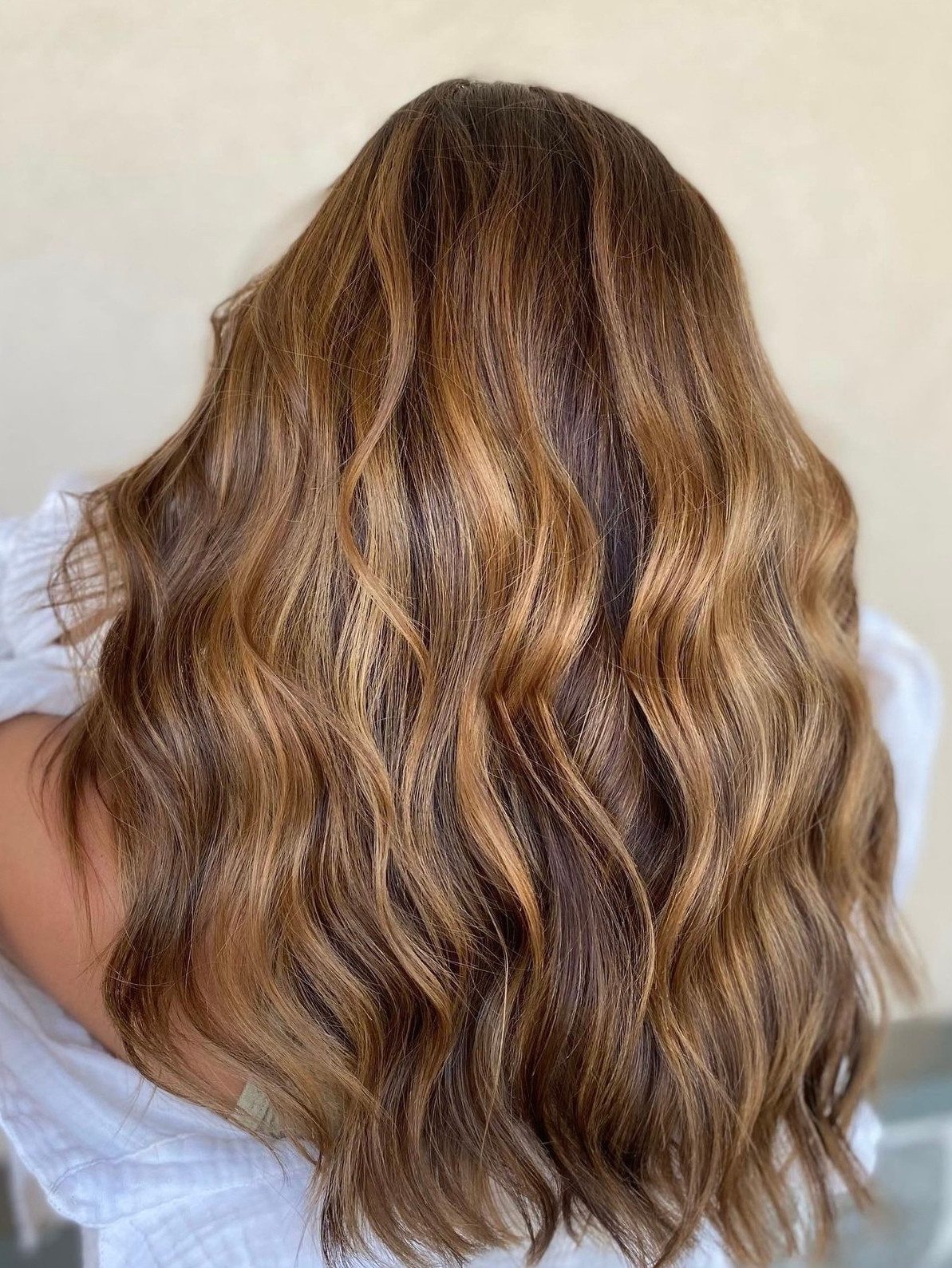
My first reaction to this colour was that it should not work. Caramel and ash blonde together, on a medium brown base, sounds like two different seasons colliding. But the partial technique is what saves it. The caramel highlights sit at the crown and mid-lengths, warm and round, while the ash blonde streaks are woven lower, near the ends, cooling everything down before it gets too sweet. The base is a medium brown, not too dark, so both tones have room to register. On thick wavy hair cut into layers that hit mid-back, the contrast moves with the texture. No bangs, a middle part, loose waves that catch the light at different angles. To ask for this, say: medium brown base, partial highlights with caramel through the top and ash blonde through the ends, blended so neither tone dominates.
No Bangs Visual Idea
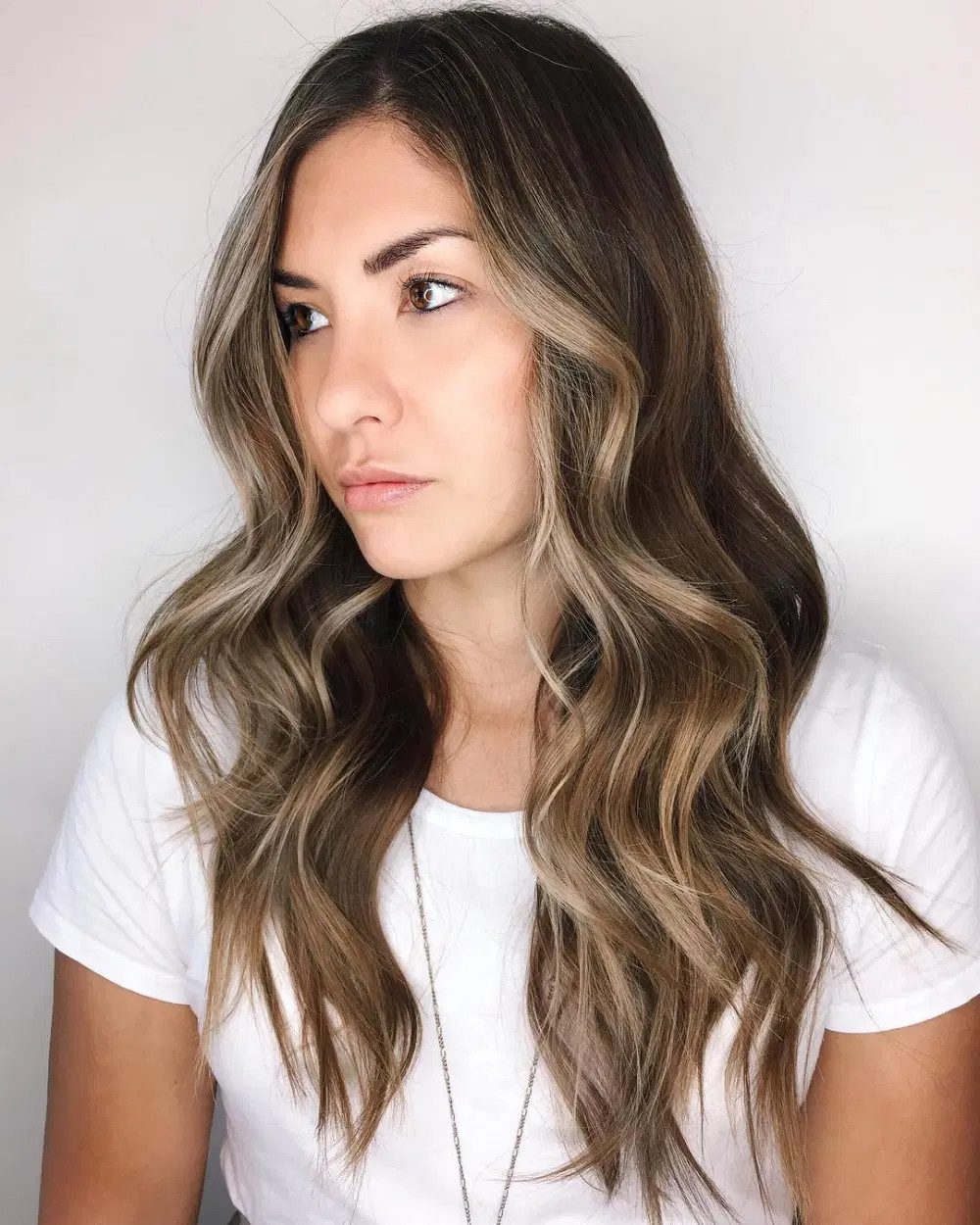
What I notice first about this colour is how clean the grow-out looks. The base is a dark brown, the ash blonde highlights are painted using a partial technique that stays above the nape and below the crown, so new growth blends into the dark base without a harsh line. The tone is ashy, almost silvery in the right light, which means it needs a purple shampoo every third wash to keep the warmth at bay. On wavy mid-back layers with a side part and no bangs, the highlights fall forward naturally, framing without needing a fringe. The upkeep is a toner refresh every eight to ten weeks, not a full foil redo. That is the real advantage of partial highlights on a dark base, the root line is your friend, not your enemy.
Side View Visual Idea
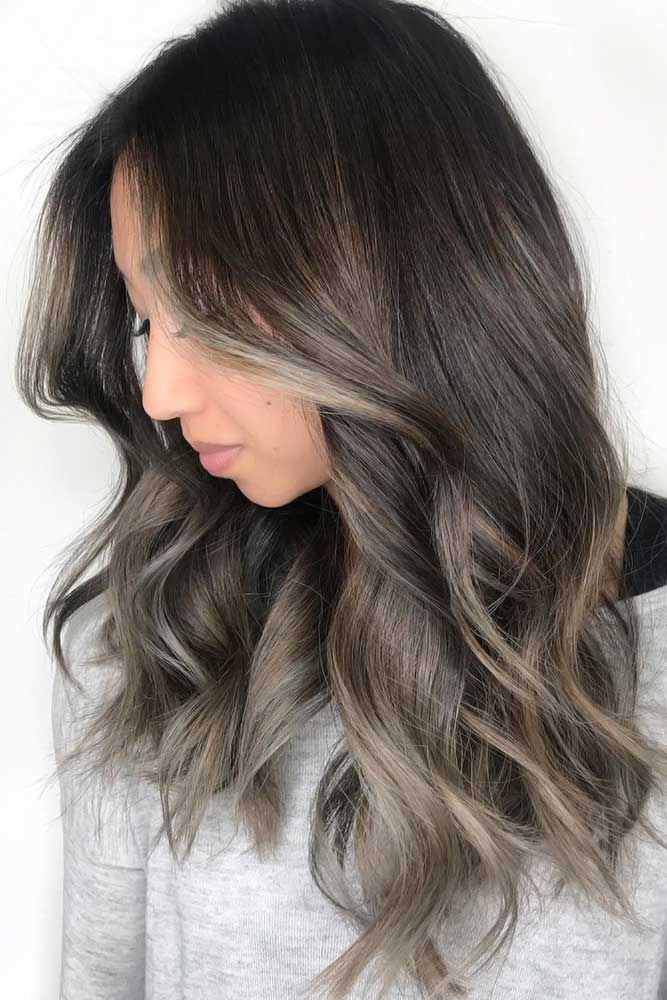
Have you ever wondered why ash blonde highlights look different on a dark brown base versus a light brown one? This side view shows the answer. The base is a deep dark brown, almost espresso in the shadows, and the ash blonde highlights are painted in a partial technique that wraps around the face and fades toward the back. On a lighter base, ash blonde can read as flat or muddy. Here, the contrast is sharp enough that the ash tone reads as cool silver, not grey. The hair is collarbone length with layers, a middle part and a wavy blowout that gives the colour movement. No bangs, just the face-framing pieces catching the light. The partial placement means the back stays mostly dark, which keeps the overall look grounded. Ash blonde on dark brown is a power move, subtle from behind, striking from the side.
Final Thoughts
After writing all of these, I keep coming back to the ones with a dark base and caramel streaks. They do not fight your natural colour, they just wake it up. And the grow-out is so soft you barely notice it. That is the trick with Partial Highlights: pick a tone that lives next to your base, not on top of it.
- Trim the ends every ten weeks, not eight
- Use a purple shampoo only on the lightest pieces
- Root shadow at week six if you want more time
- Skip the toner if your base is warm
I am booking the caramel lob next. That one held up through a full work week and a humid Saturday. Hard to argue with that.

