
I keep seeing pastel pink in the chair next to mine. Not the chalky, faded version from a few years ago—this one has depth, a root shadow, a cut that actually works with it. Pastel Hair has grown up, and the haircuts finally caught up.
This is 26 ways to wear it, from a single pink streak to a full rainbow blend. I tested which ones hide grow-out, which ones need a salon, and which ones survive fine hair going flat by 4 pm. One specific detail from my own hair history: my roots showed at week five on a pastel pink balayage, so I looked for cuts that buy you time.
Soft Pastel Pink Collarbone Cut
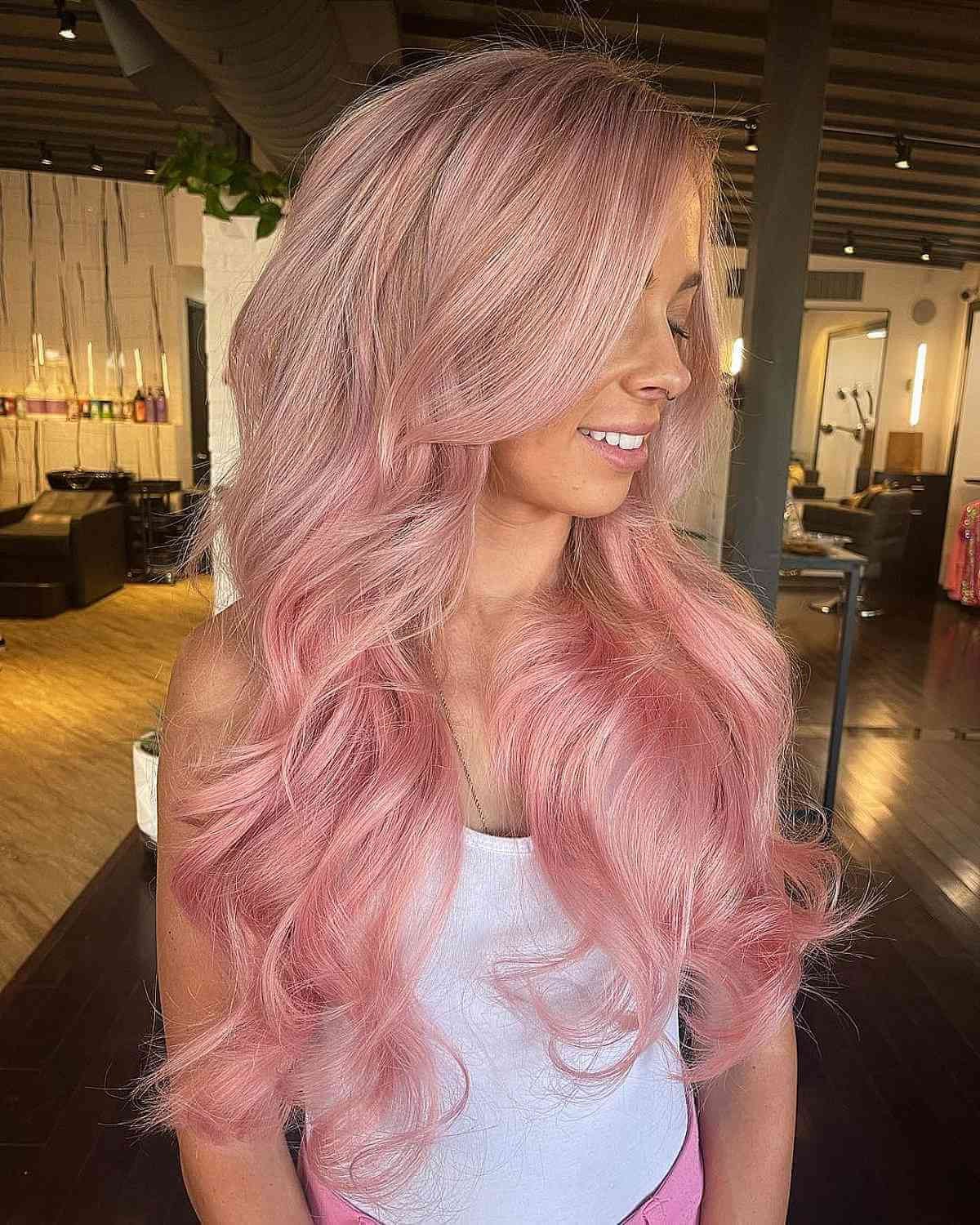
That collarbone length hits the exact spot where thick, wavy hair finally behaves. The pastel pink collarbone cut relies on layers cut into the wave pattern, not against it, so the shape holds its volume past noon. Side swept bangs soften the whole thing without committing to a full fringe, which matters when your texture wants to expand sideways. A round brush and a blow dryer get this done in under twenty minutes. The color fades gradually, which means a toner appointment every four to six weeks keeps it from drifting into dishwater.
Blonde Hair With Pastel Pink Highlights
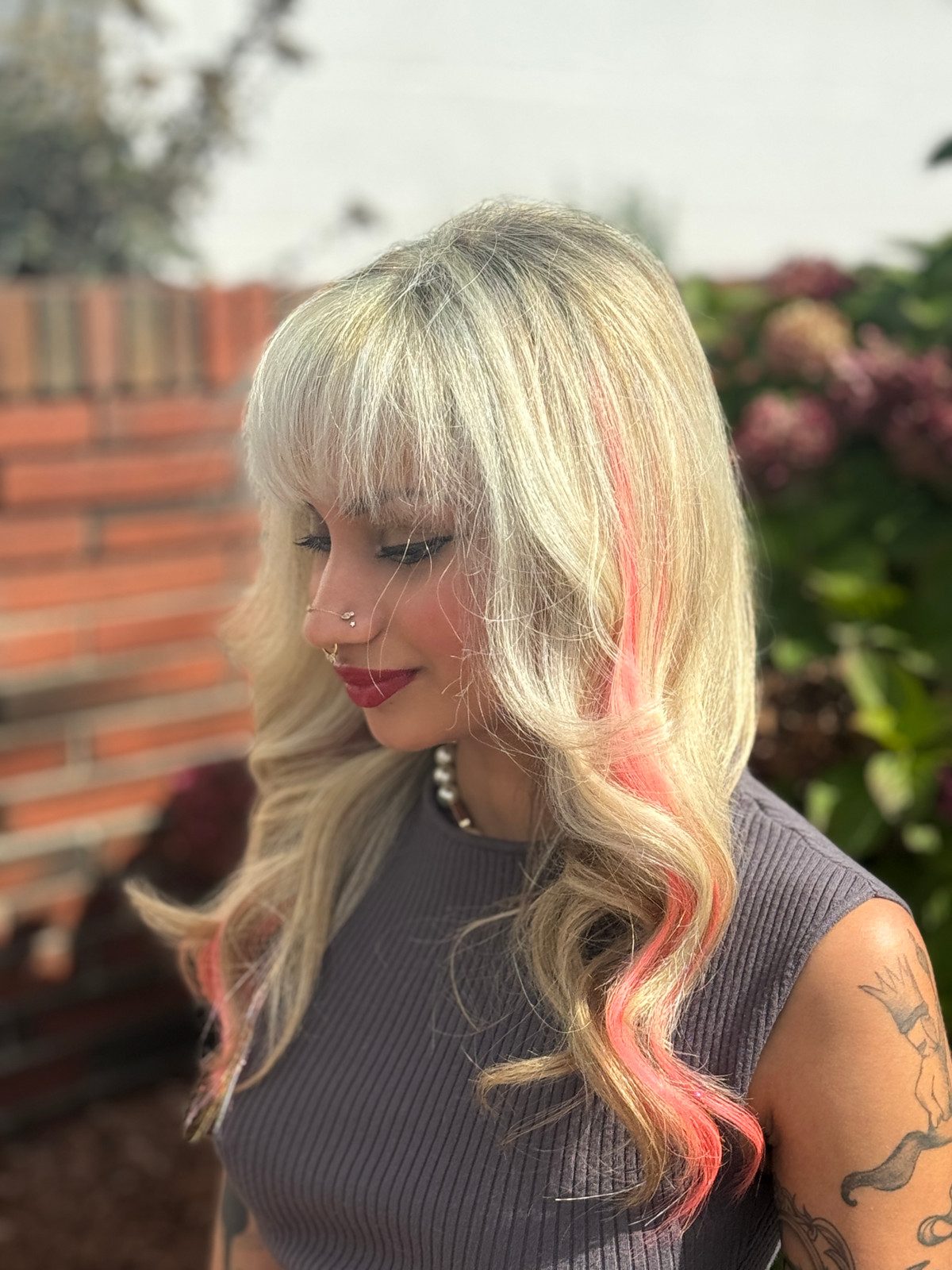
Can a blonde base with pink highlights actually read subtle? The technique builds it from the mid-lengths down, leaving the root area untouched so the grow-out lands softly. Side swept bangs catch just a few of those pink strands, enough to shift the whole face without screaming. The honest downside: the blonde base needs regular toning to stop the pink from reading peachy. Medium texture with layers keeps the wave pattern loose and the highlights visible.
Chin Bob With Pastel Pink Highlights
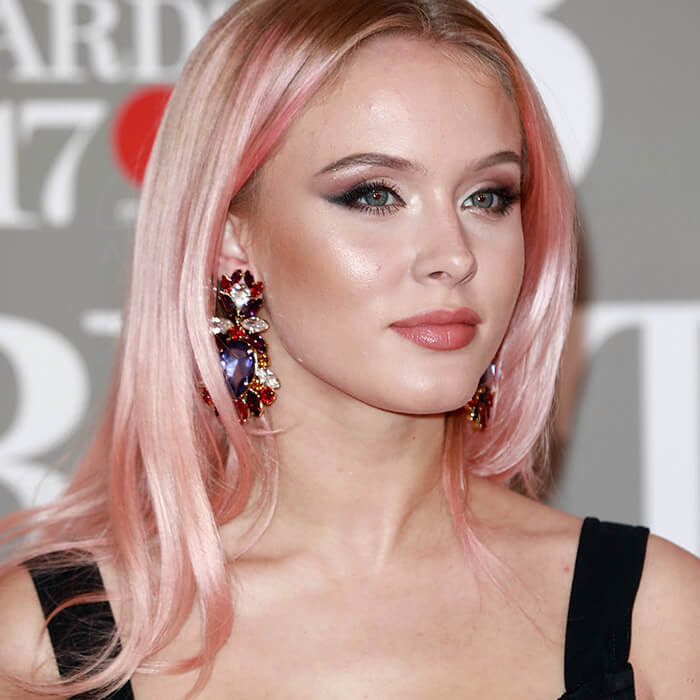
Skip the long pastel hair and go shorter. The chin bob pastel pink cut lands at the jaw and stays there, no layers fighting for space. Straight, fine texture finally gets the density it needs, because a blunt bob reads thicker than any layered alternative. A middle part keeps the shape symmetrical, and the pink highlights land mostly on the ends, which means the root line stays invisible for weeks. No bangs, no fuss, one daily blowout.
Brown With Pastel Pink Streaks
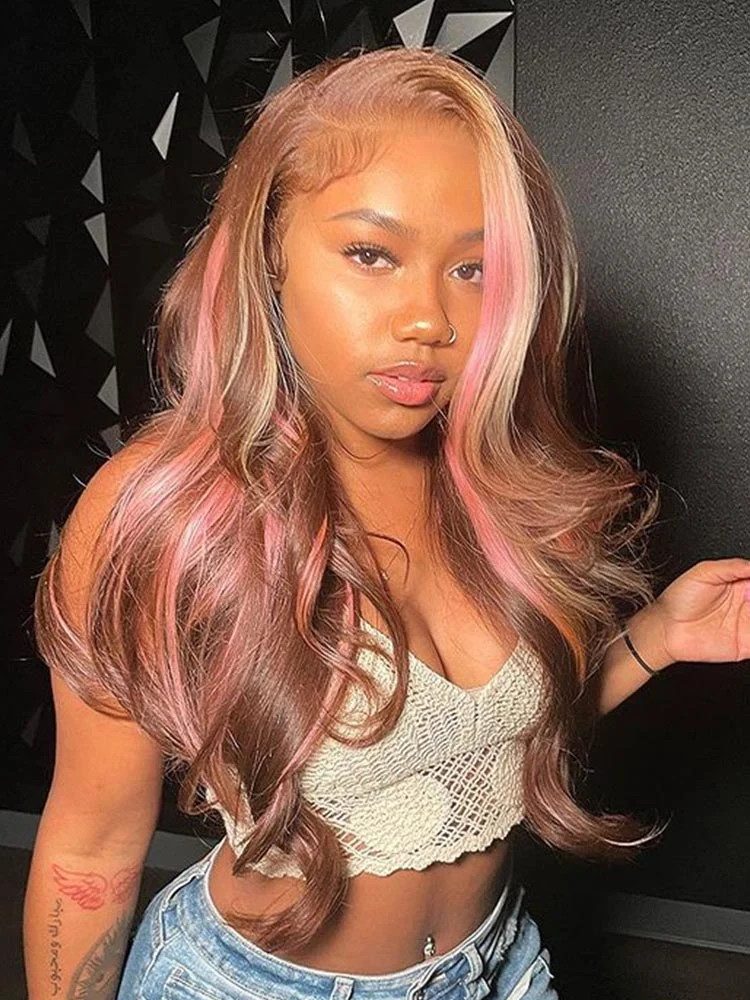
I will admit it: brown hair with pink streaks looked like a gamble until I saw the grow-out. The brown base hides the root line completely, so the pink stays fresh for weeks without a salon visit. Fine, wavy texture needs layers cut into the body of the hair, not just the ends, or the shape collapses by day two.
Ask your stylist for thin, spaced-out streaks starting two inches from the root. They fade faster on a dark base, roughly three to four weeks before the pink turns dusty. A side part lets more of the color show on top.
Vibrant Pastel Pink Collarbone Waves
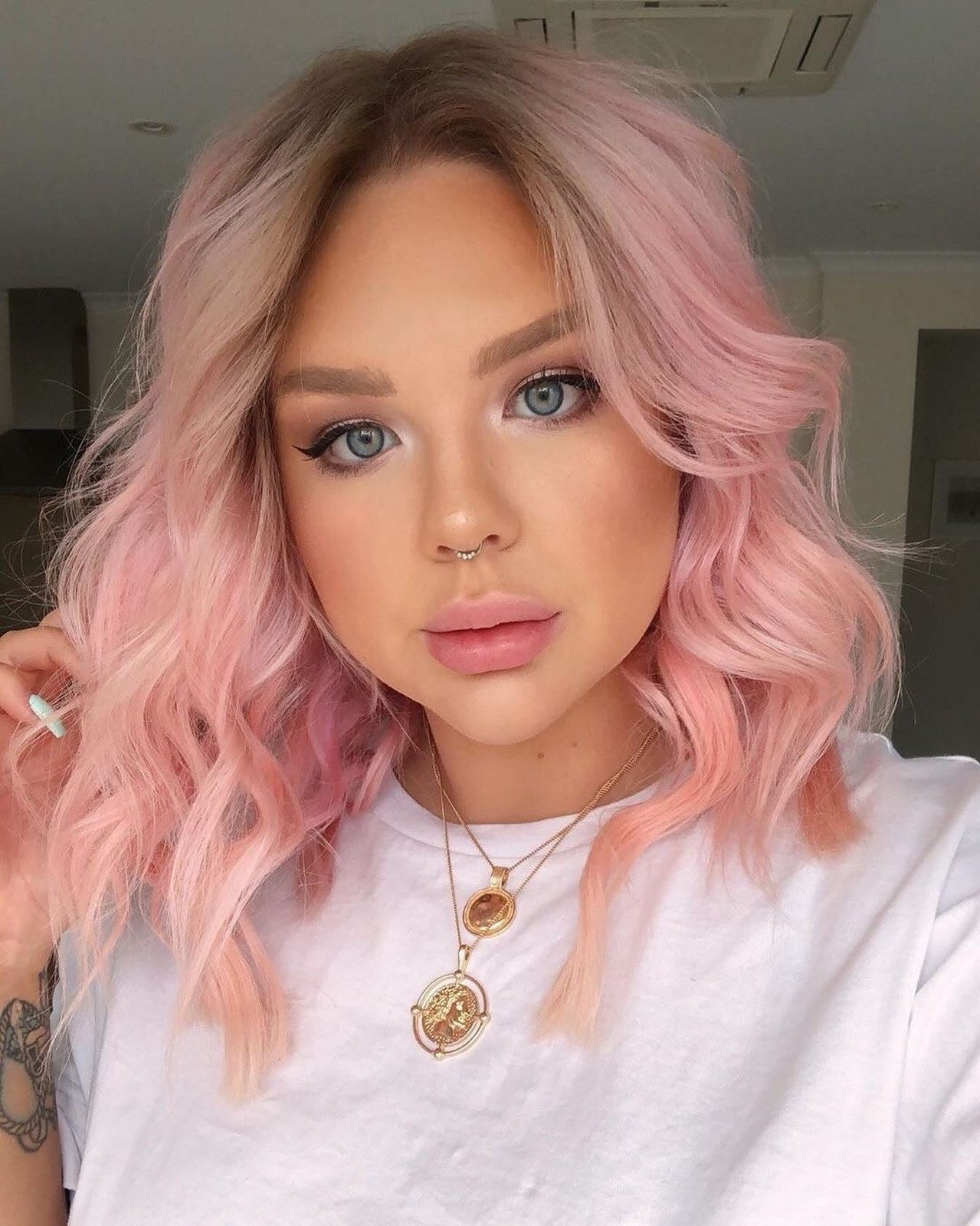
Does vibrant pastel pink hair actually stay vibrant? Not without a plan. Thick, wavy hair eats color fast, so the collarbone length and layers matter more than the shade. The cut removes weight from the interior, which lets the waves form without puffing out at the sides. A middle part keeps the volume balanced left to right.
The upkeep is the part nobody mentions. Every third wash, the pink shifts cooler, and by week four it looks dusty. A toner appointment every three weeks keeps it singing. No bangs means one less thing to wash daily. The wavy texture air-dries into shape, which is the only reason this works on a Tuesday morning.
Soft Pastel Pink Mid-Back Waves
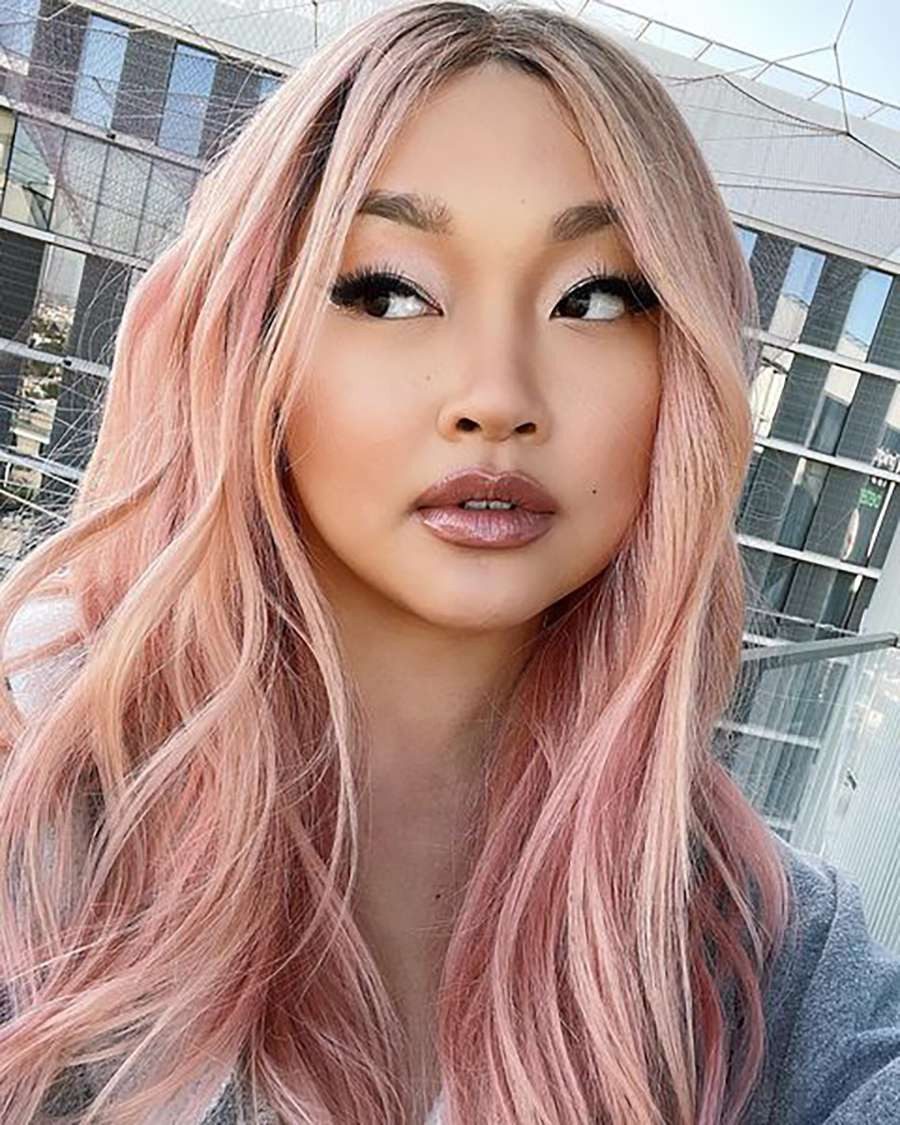
There’s a reason side-swept bangs keep showing up on mid-back lengths: they break up all that vertical space. On an oval face, the diagonal line softens the forehead without hiding it, and the long layers underneath keep the weight moving instead of sitting flat. This is soft pastel pink hair that reads as deliberate, not washed out, because the shade stays even from root to tip.
Thick hair is the real requirement here. Wavy and thick texture holds the bend through a whole day, where fine strands would drop by noon. The cut gives you room to let it air dry with a wave enhancer, and the side part does the styling work for you. It’s the kind of look that fits a garden party or a Tuesday, which is rarer than it sounds.
Subtle Pale Pink Waves
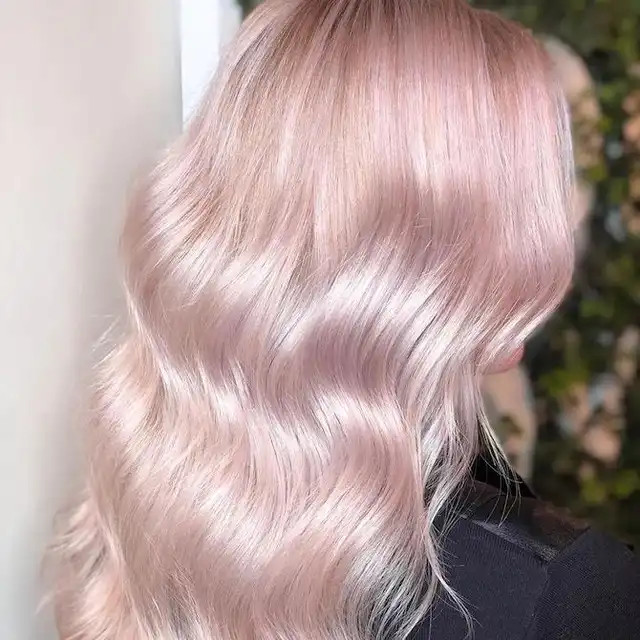
I’ll admit it: I tried to get this pale pink hair at home once, and my bathroom floor still has the evidence. The subtle blonde undertones are what make it look expensive, and that’s a salon conversation, not a box dye one.
On fine, wavy hair, the payoff is a translucent wash of color that catches light instead of shouting. The layers are cut to move, so the loose waves don’t tangle into a nest by evening. Middle parting keeps it soft, no bangs to fight with. Book the appointment, bring a reference photo, and let someone who knows what they’re doing lift your base gently. Your strands will thank you.
Soft Pastel Pink Mid-Back Waves — A Side View Captures Thick
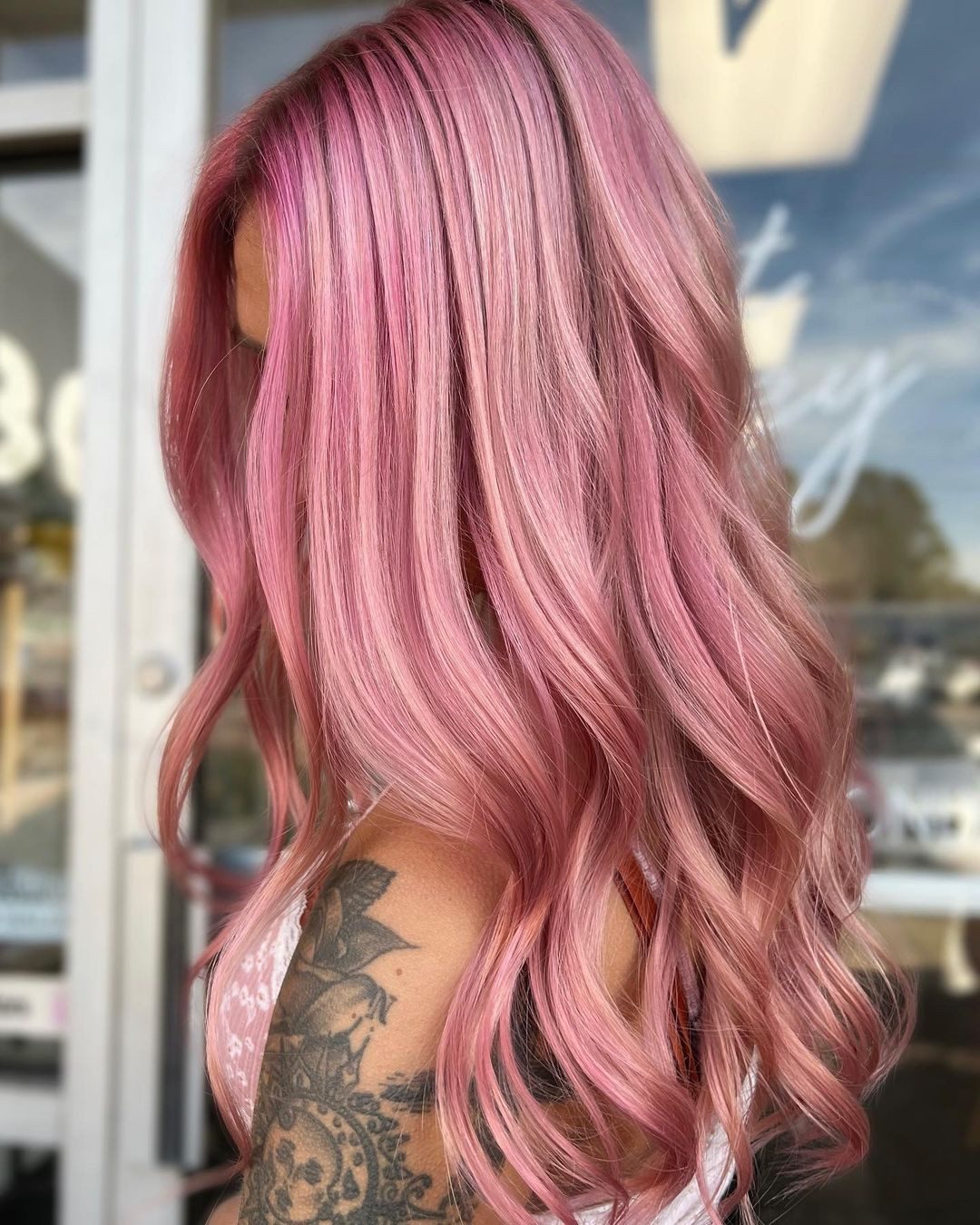
Wednesday morning, 7:45, and I’m already running late because my thick waves decided to dry in three different directions. That’s the reality of pastel pink wavy hair at mid-back length: it’s gorgeous, but it has opinions. The layers are cut to give the thickness somewhere to go, so it doesn’t mushroom out into a triangle. Side parting adds a little asymmetry, which helps the weight fall forward instead of out. A large barrel curling wand gives you soft, uniform bends in about twenty minutes, and a color-depositing conditioner weekly keeps the pink from going muddy. Trim every ten to twelve weeks, or the ends start to look like they’ve given up.
Uniform Pastel Pink Mid-Back Style
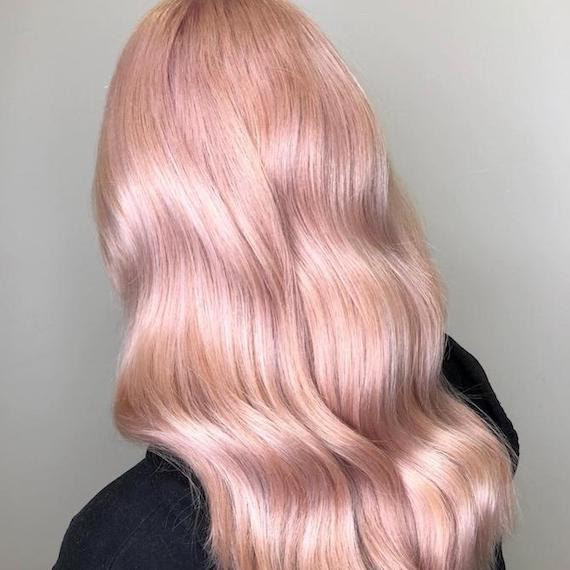
Uniform pastel pink is a commitment, and I respect anyone who asks for it. The trick is in the lift: your stylist has to lighten every strand to the same pale blonde first, or the pink lands patchy. On thick, wavy hair, that means sectioning like a cartographer, because the natural wave pattern hides uneven spots until the light hits them.
The cut matters just as much. Long layers keep the thickness from feeling heavy, and they give the waves a shape to fall into instead of a blunt wall of color. No bangs here, the middle part lets the uniform shade do the talking. Touch-ups every four to six weeks keep the roots from telling on you. It’s not a low-maintenance color, but the polish is worth the calendar reminders.
Long Pastel Pink With Blunt Bangs
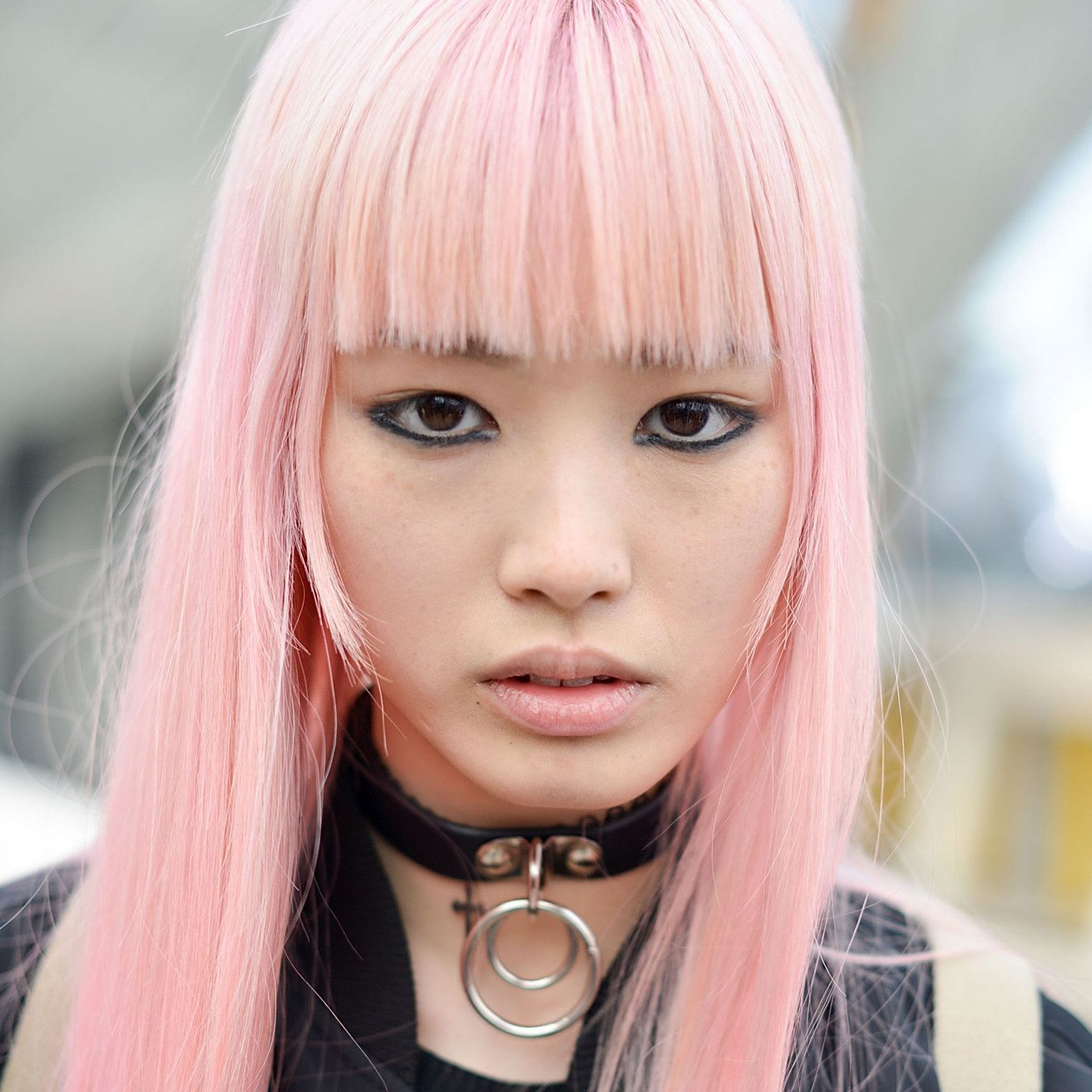
Do you have twenty minutes every morning to commit to a fringe? Because pastel pink blunt bangs don’t style themselves. On straight, thick hair, the blunt cut gives the whole length a graphic weight that suits a strong jaw and a confident part. The bangs sit just above the brow, which widens a round face and balances a longer one.
Here’s the honest downside: blunt bangs need a trim every two to three weeks, and daily straightening is non-negotiable if you want the line to stay clean. The color itself fades fast, so expect a refresh every three to four weeks to keep that pink from going peachy. If you can’t do the upkeep, skip it. If you can, this is the most striking version of pastel pink you’ll ever wear.
Pastel Pink With Peachy Undertones
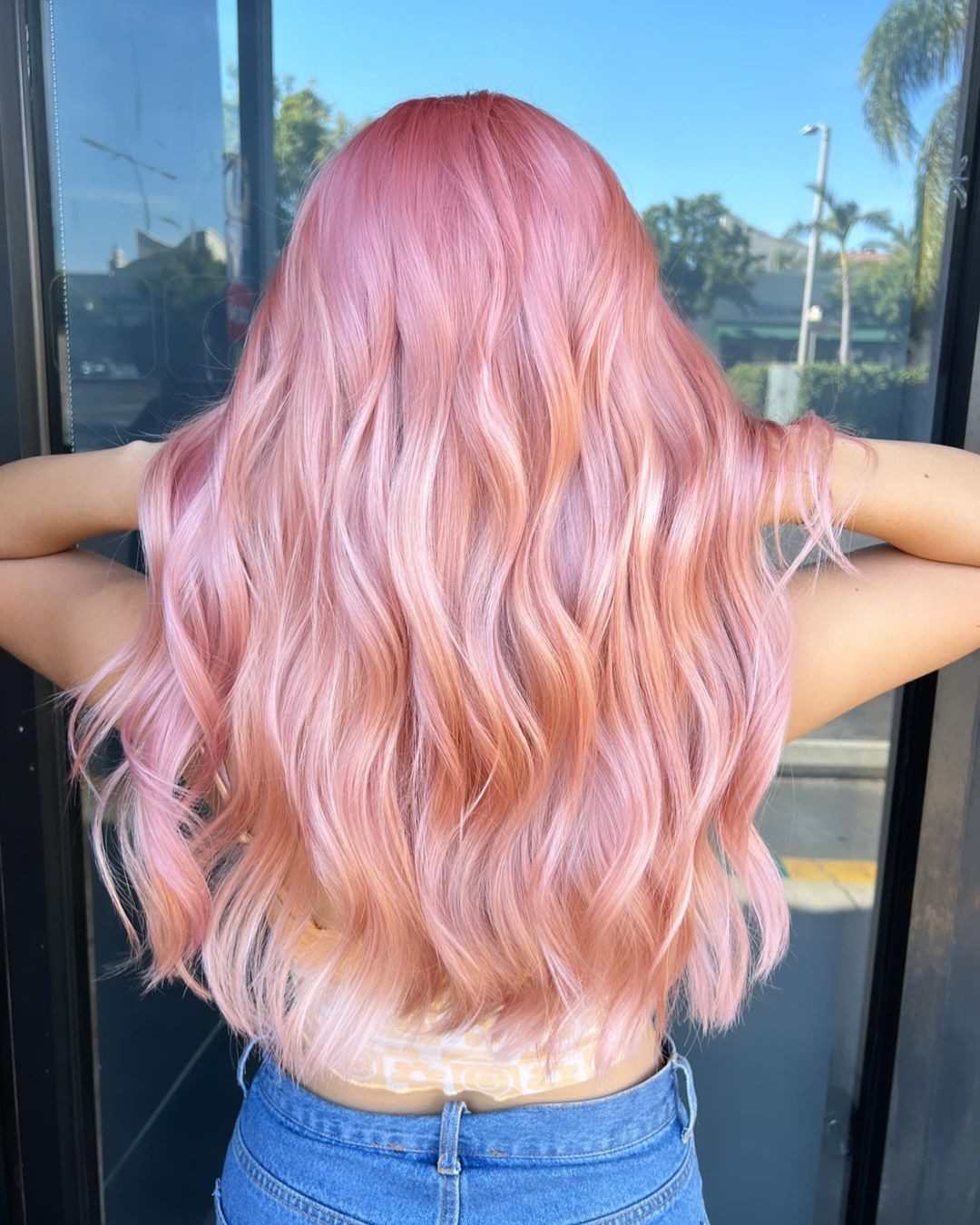
Best grow-out in this roundup, if you play it right. The peachy undertones keep that pastel pink from washing out against warm skin, and on thick, wavy hair the colour sits deeper in the wave bends, which means the fade is gradual instead of patchy. No bangs here, just a middle part and loose waves that land at mid-back, and the layers are cut to move with the wave pattern, not fight it.
Here is the real week: Monday it is vibrant, by Thursday the peach has softened into something closer to a warm blonde. That is not a problem. The colour blend means you do not see a harsh root line for about eight weeks, and the thickness holds the wave shape through a second day without restyling. A trim every ten weeks keeps the ends from tangling, because thick, wavy hair will snarl at the tips first.
Blonde With Soft Pink Balayage
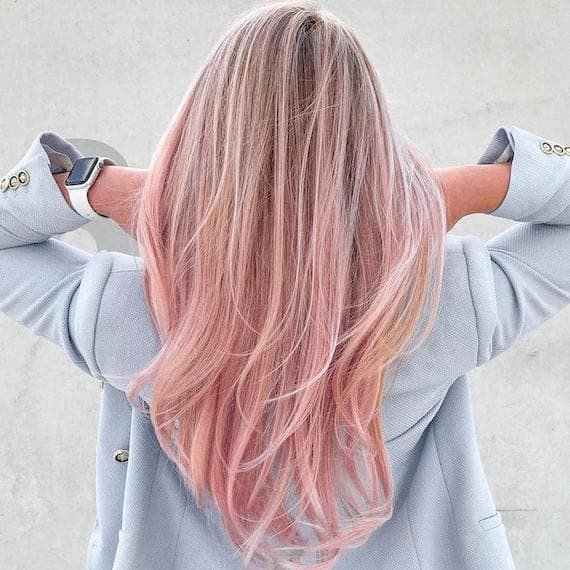
The balayage starts about three inches from the root, so the blonde stays dominant at the top and the pink reads like a slow reveal through the mid-lengths. On thick, straight hair at mid-back, the layers are cut to stack gently, which gives the blowout volume without requiring a round brush battle. A middle part keeps the weight even, and the ends are blunt enough that the pink balayage lands in a clean ribbon, not a scattered mess. To style it, rough-dry the roots, then smooth the lengths with a paddle brush and a cool shot to seal the cuticle.
Dark Base With Purple Balayage
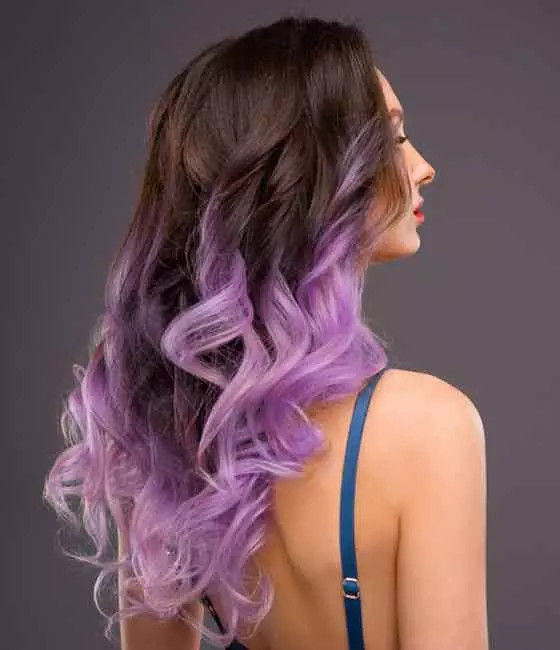
I sat down in the chair with a photo of purple ends and said, “I want it bold but not clown.” The stylist lifted the mid-lengths to a pale blonde first, then applied a violet toner that landed somewhere between grape and lavender. On my medium-density, wavy hair at mid-back, the layers are cut to keep the weight at the bottom so the purple balayage ends hang in defined curls instead of drifting into a frizzy cloud.
Here is the honest downside: the purple fades. By week three it shifts toward a dusty mauve, and by week five it is closer to a silver-lavender. A side part and loose curls styled with a wand give the ends enough structure to hide the fade for another week. This is a salon job, not a bathroom-mirror project, because the lift has to be even or the purple reads muddy.
Rose Gold and Pink Blend
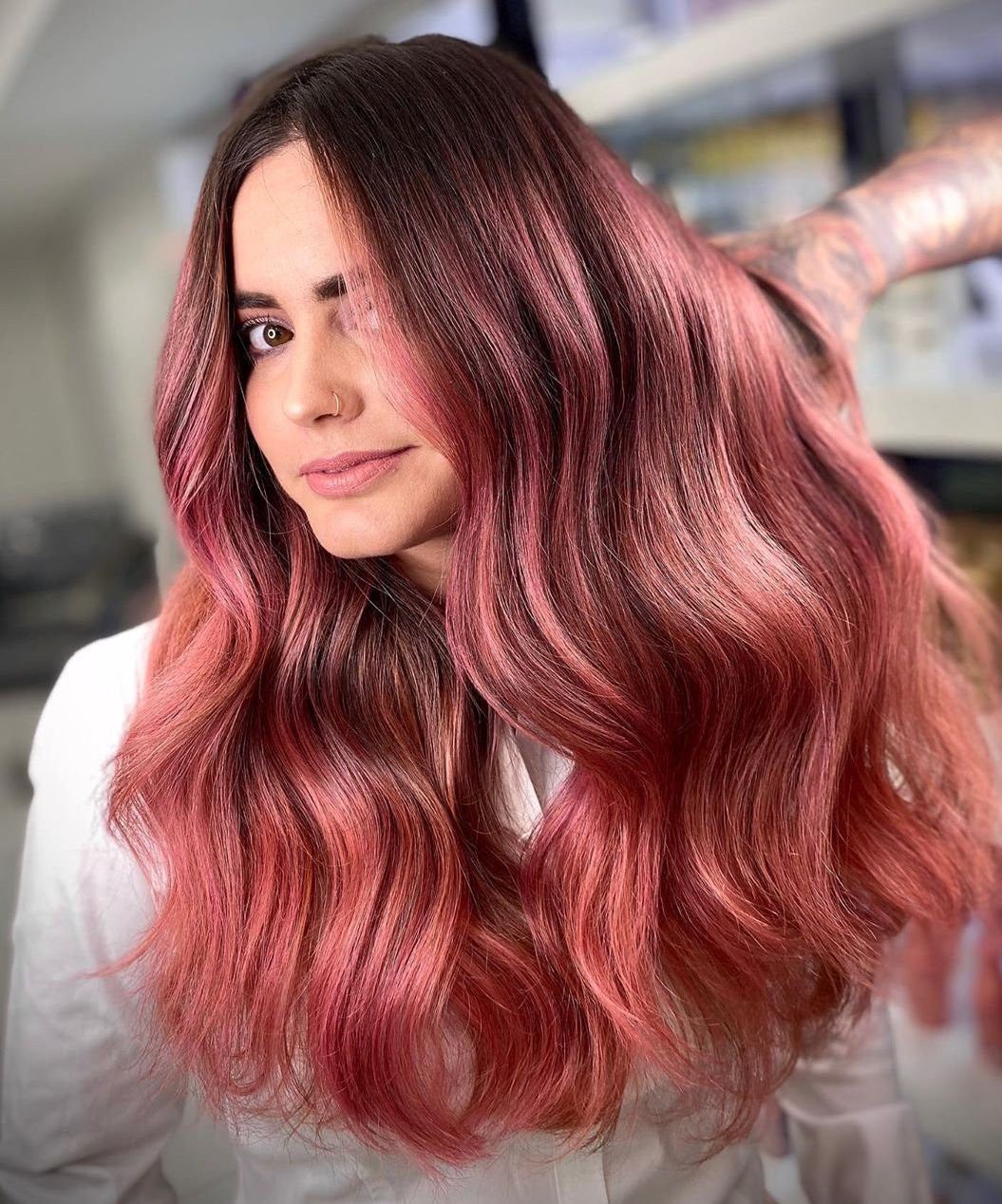
Does this work on olive skin? Yes. On fair skin with pink undertones? It can read too pink, like you caught a sunburn on your scalp. The blend here is rose gold, pink and brown, layered at mid-back on thick, wavy hair with a middle part and no bangs, and the brown base keeps the whole thing from floating into candy territory. The layers are cut to sit just below the shoulder blades, which gives the waves enough weight to hold their shape without going flat by noon.
For thicker hair types, this blend is forgiving because the density absorbs the colour evenly. Fine hair would show every uneven patch of toner. A large-barrel iron creates loose waves in about fifteen minutes, and the warmth of the rose gold catches the light better than a flat, single-tone pastel ever could.
Dark Roots With Rose Gold Balayage
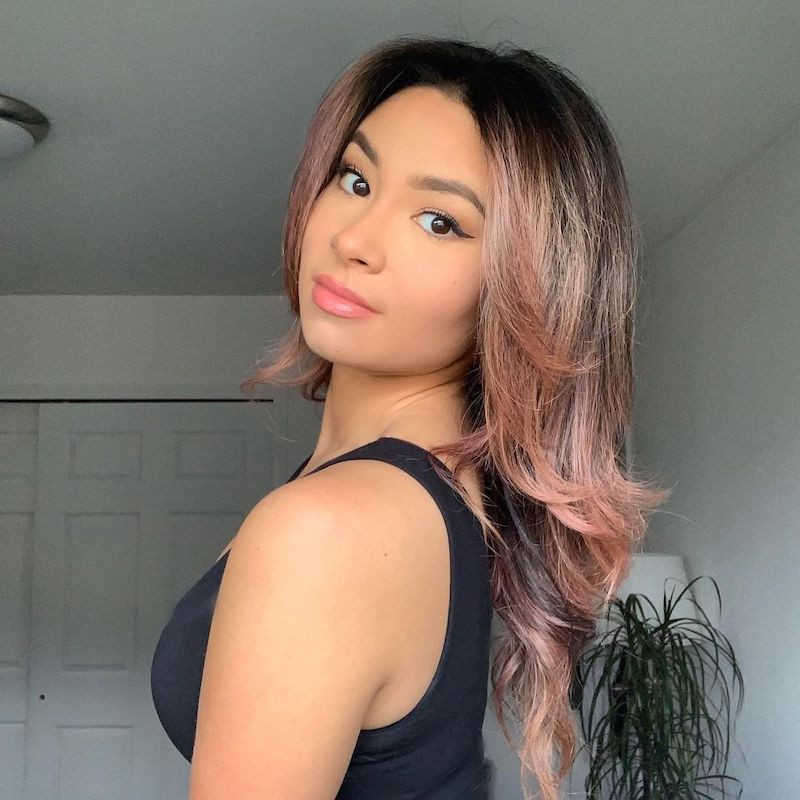
The dark roots are not a grow-out problem, they are the plan. On thick, wavy hair at mid-back, the rose gold pink balayage starts a few inches down, so the root shadow buys you about ten weeks before you need a toner refresh. A middle part and loose waves let the colour melt from dark brown into pink without a visible line, and the layers are cut to keep the length heavy so the waves do not spring up into a triangle shape. No bangs, no daily styling, just a wave spray and a diffuser on low heat. The tone holds for eight weeks before the pink shifts toward peach, which is still pretty, just different.
Dark Brown With Rosy Pink Balayage
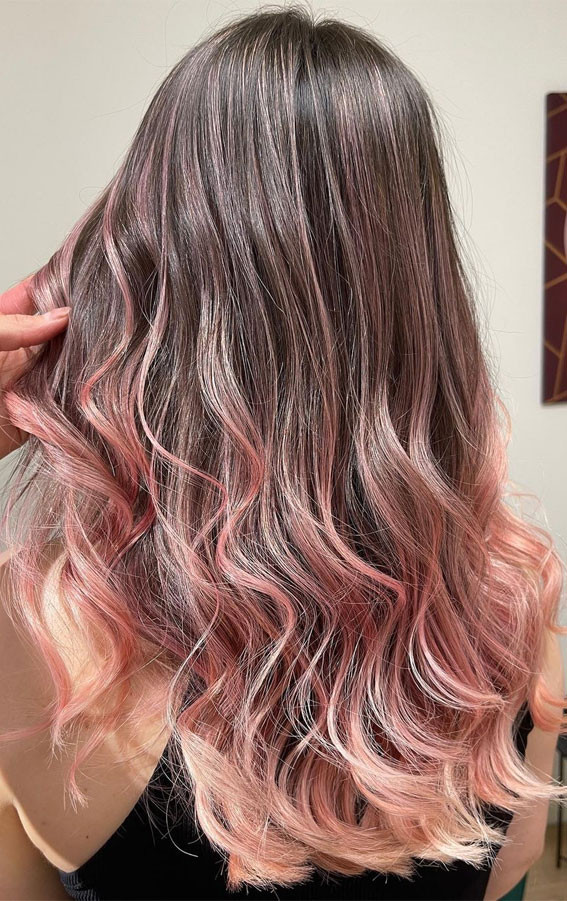
Have you ever wanted pastel hair without bleaching your whole head to the bone? That is what a dark brown base with rosy pink balayage does. The cut runs mid-back with long layers that keep the thick, wavy texture from turning into a triangle. No bangs, just a clean middle part that shows off the colour placement. The technique is what makes this work: the stylist paints the rosy pink balayage onto sections that start below the ear, so your natural dark root stays untouched. That means the grow-out is gentle, no harsh line at week four. The colour reads warm and subtle, not like you fell into a vat of cotton candy.
This is not a bathroom-mirror job. The dark base needs lifting first, then the pink goes on, and the timing has to be exact. I sat for this once and the foils alone took an hour. But the payoff is a colour that shifts in the light, pink against brown, and it does not scream for attention. It asks for it.
Silver With Pastel Purple Highlights
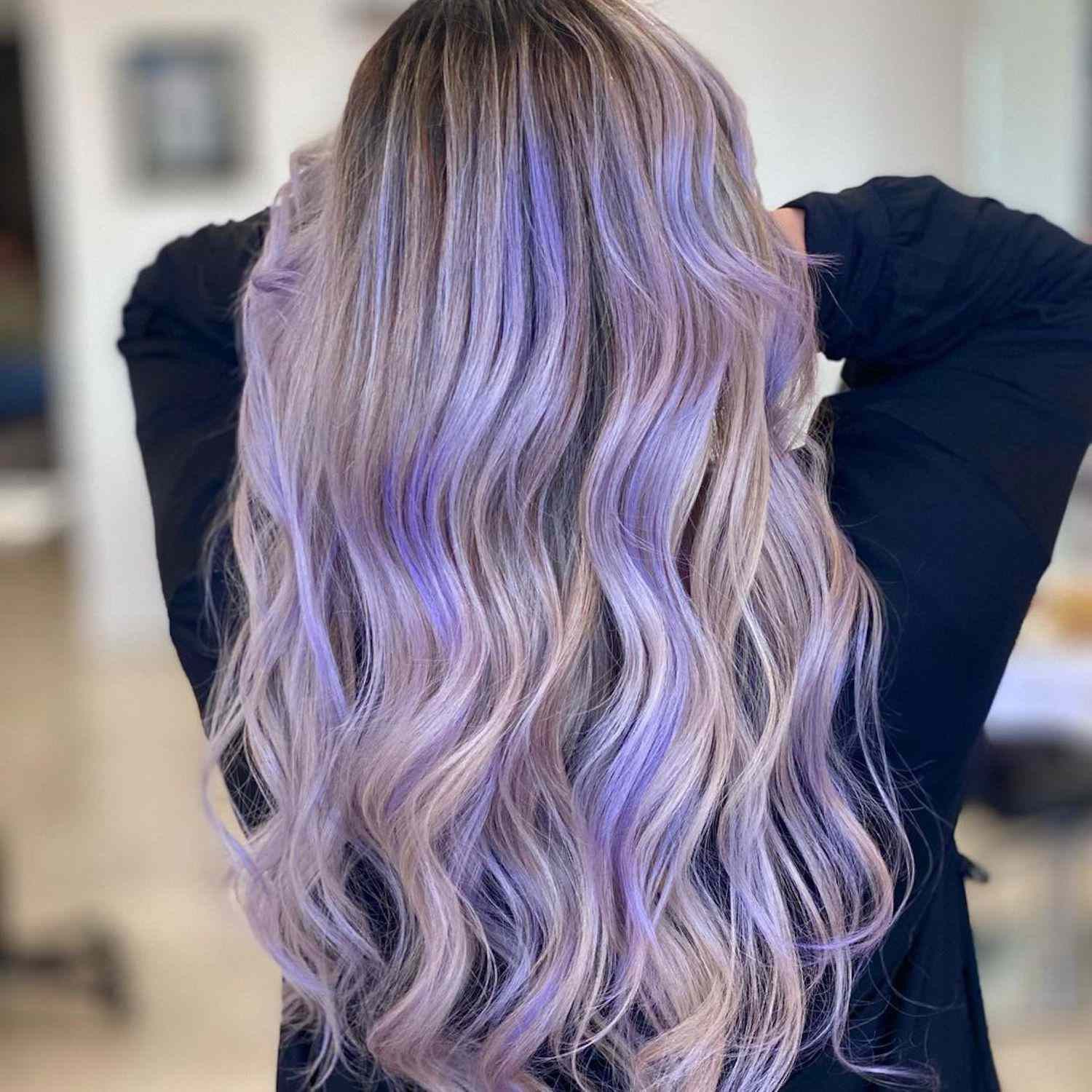
Solid pastel colours are fine, but they sit flat. A silver base with pastel purple highlights has dimension, and that is worth the extra effort. The cut is mid-back with long layers that give the wavy, thick texture room to move. No bangs, middle part. The highlights are woven through the top and mid-lengths, so the purple catches light next to the silver. The honest downside: silver is a demanding base. It needs to be lifted to near-white, then toned, and the toner fades fast. Expect a purple shampoo in your weekly rotation and a toning appointment every four weeks. The purple highlights will shift toward lavender, then grey, then disappear if you skip the upkeep. But when it is fresh, it looks like moonlight on metal. That is the trade.
Pastel Pink Teal Purple Ombre
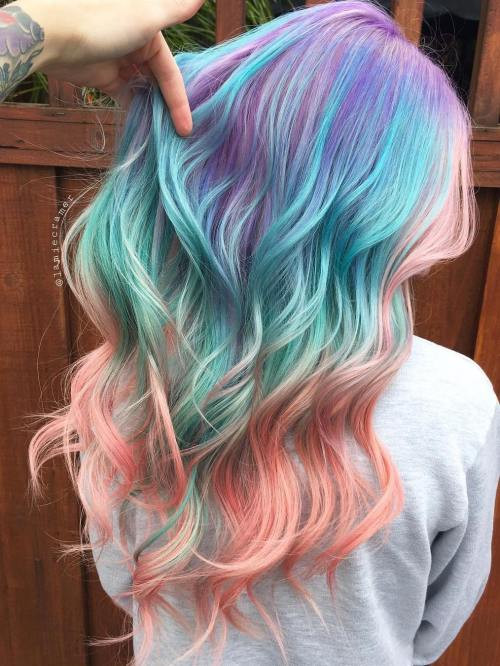
The ombre gradient here starts pink at the roots, shifts to teal through the middle, and lands in purple at the ends. That is three colours on one head, and on thick, wavy mid-back hair, the blend is smooth enough to read as intentional. This works best if your hair has density, because the colours need surface area to breathe. Fine or thin hair will look patchy. The wear is real: each colour fades on its own schedule, pink goes first, teal holds longest, purple turns dusty. You will be back in the chair every five weeks, or you will have a pastel mess. But if you want multiple colours without committing to highlights all over, this is the way.
Rainbow Pastel Hair Blend
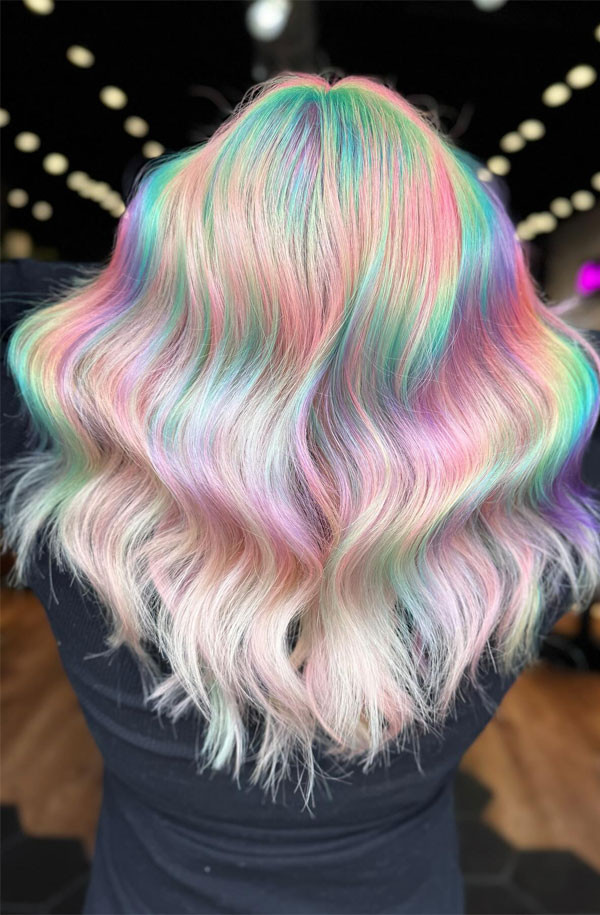
I told my colourist I wanted a rainbow pastel blend and she laughed. Not meanly, just the laugh of someone who knows what it takes. Pink, purple, teal, mint, yellow, all on mid-back wavy hair. The cut is layers, no bangs, middle part. The application took five hours, and that was after two sessions of lightening. The blend works because the colours are placed in sections, not stripes, so they melt into each other. This is not a DIY project. You need someone who understands colour theory, who knows that mint and pink make mud if they overlap wet. The upkeep is a calendar event: toning every three weeks, washing in cold water, no direct sun. But when it works, you have a head full of art. I kept it for one season and then I was ready for a break.
Multi-Colored Pastel Streaks
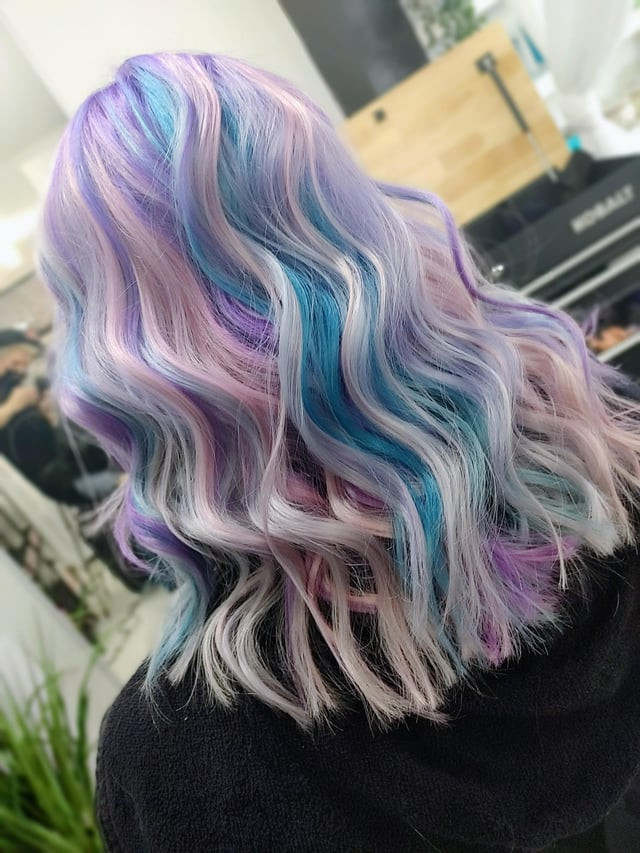
Can multiple pastel streaks on collarbone-length hair survive a real week? Barely. The cut is layers, no bangs, middle part. The streaks are blue, purple, pink and white, woven through medium-density wavy hair. The problem is colour bleeding: the blue wants to drift into the white, the pink stains the purple. By day four, the edges soften and the separation blurs. The honest downside is that collarbone length means less room for the streaks to breathe, so they read as a muddy pastel from a distance. You will need to style it wavy to blend the bleeding, or accept that the clean streak look lasts about two washes. It is a fun look for a weekend, but for daily wear, the maintenance is a losing battle.
Pink and Blue Ribbon Highlights
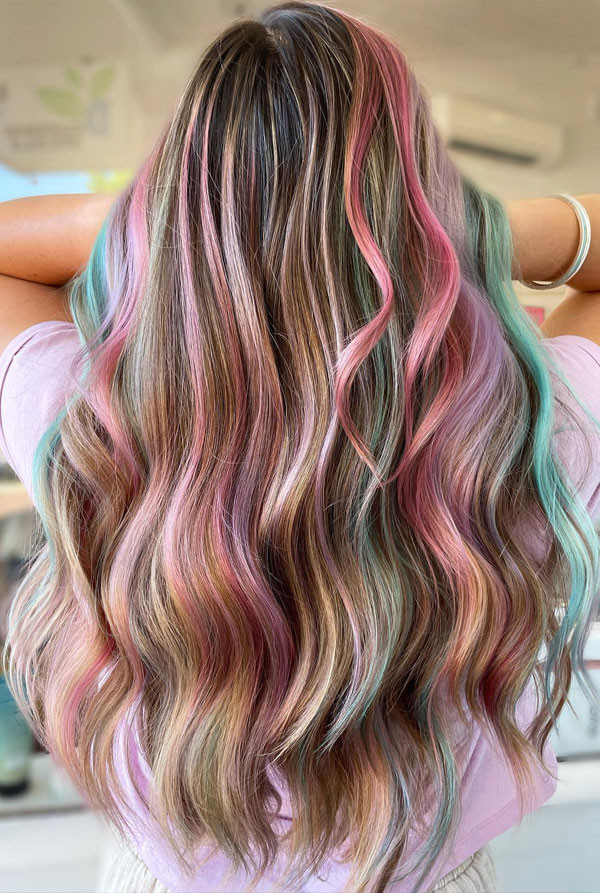
The ribbon highlight technique is precision work. Thin, alternating sections of pink and blue are painted from root to tip, each one kept separate so they read as distinct ribbons rather than a muddy blend. On mid-back length with layers, the effect is dimensional in a way a single pastel never is. The loose waves and subtle glitter accents push it toward special-event territory, which is exactly where this belongs. Book it, this is not a bathroom-mirror job.
The middle part helps the ribbon placement read symmetrically. Thick hair holds the separation best, fine hair risks the colours bleeding together by week two. A gentle shampoo is non-negotiable, and the glitter means you refresh every three to four weeks. The payoff is a pastel look that moves like fabric, not flat colour.
Rose Gold Pastel Balayage
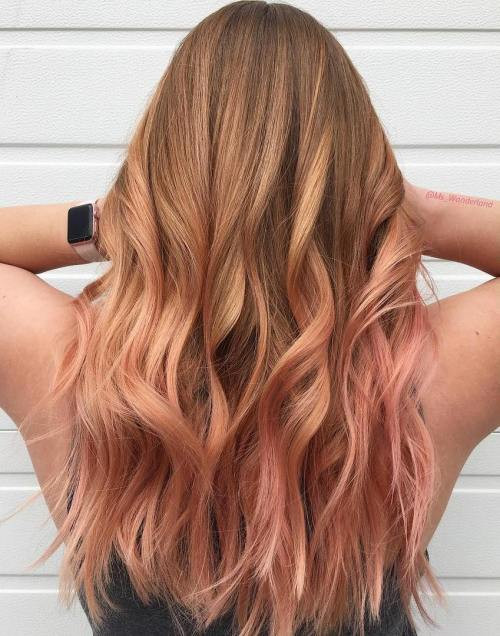
I was skeptical of rose gold balayage on thick, wavy hair. Too often it reads as costume, a pink that fights the natural wave pattern rather than living in it. But this mid-back length with soft layers lets the colour breathe. The rose gold is painted from mid-shaft down, the roots staying warm and dark enough that the whole thing feels grounded. The waves break up the colour in a way straight hair cannot, each bend catching a different tone.
The upkeep is real. Toning every six to eight weeks keeps the rose from tipping into orange, and the balayage placement means the grow-out is soft rather than harsh. Thick hair takes the colour well but demands more product to saturate each section. Trim every ten to twelve weeks keeps the ends healthy enough to hold the tone. It is not a low-maintenance pastel, but it is one that looks intentional.
Mid-Back Rose Gold Balayage Blowout
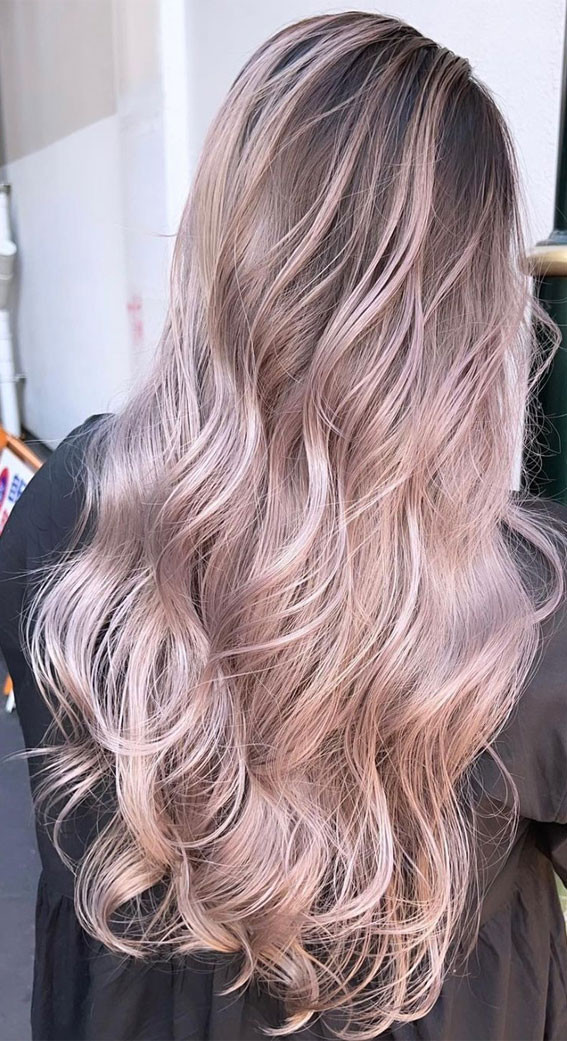
A blowout changes everything on fine hair with rose gold balayage. The waves version lets the colour shift and settle, a soft, blended effect that forgives uneven application. The blowout is the opposite, it flattens the texture and puts the colour on display in one uninterrupted sweep. On fine hair, that means every root shadow and every tone variation is visible. The rose gold reads warmer, more metallic, less forgiving. It is a look that demands daily heat styling and a heat protectant used without fail. The trade-off is a polished finish that waves cannot deliver, but the commitment is higher. Choose based on how much time you have each morning.
Vibrant Peach Balayage Waves
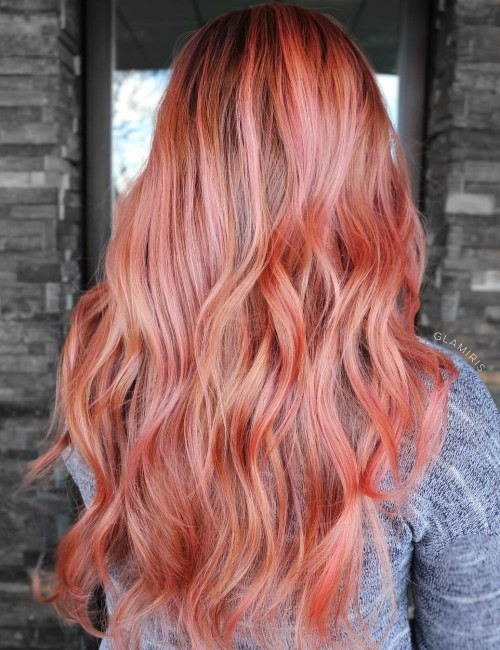
Does vibrant peach balayage suit warm skin? Yes, and it is a near-perfect match. The peach tone sits in the warm family, so it reads natural rather than costumey on golden or olive undertones. Cool skin can wear it too, but the contrast is sharper, the peach reads more deliberate. On mid-back length with layers, the colour moves from darker roots into a soft peach mid-shaft and ends. The loose waves enhance the blend, each wave catching a different depth.
The honest downside is the fade. Vibrant peach drops to a washed-out coral in about four weeks if you do not refresh it. Thick hair holds the pigment better than fine, but both need a color-safe routine. The grow-out is gentle because the balayage placement leaves the roots dark, but the ends will look tired by week six. Trim every ten to twelve weeks keeps the shape and the colour both intact. It is a high-reward look for the right skin tone, but the maintenance is not optional.
Pastel Pink to Blonde Ombre
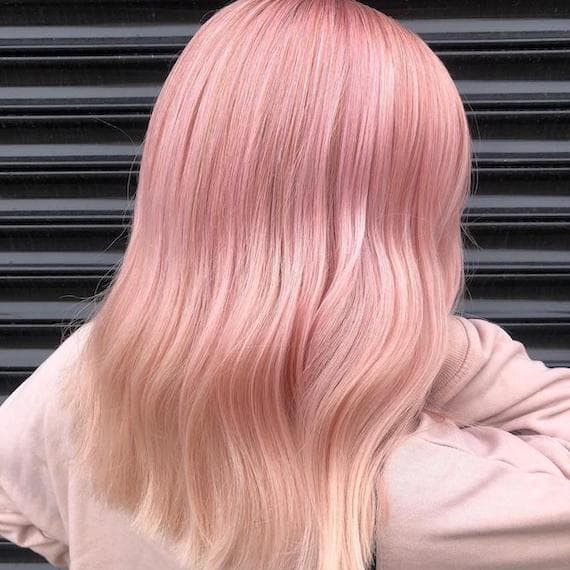
I confess I did not expect a pastel pink to blonde ombre to hold up across a real week. The pink is so light it looks like it would vanish after one wash. But on thick, wavy mid-back hair, the ombre technique keeps the pink concentrated on the ends, while the blonde mid-shaft acts as a buffer. The grow-out is the real win here, dark roots grow in without a harsh line because the ombre starts below the ear. By week four, the roots are visible but not jarring. By week eight, you can push it to ten if you use a dry shampoo at the part. The waves help disguise the transition, each bend breaking up the colour boundary. Toning every six to eight weeks keeps the pink from shifting toward peach. It is a pastel that works with neglect, not against it.
Bob Layers Vibrant Pastel Pink Chin Bob
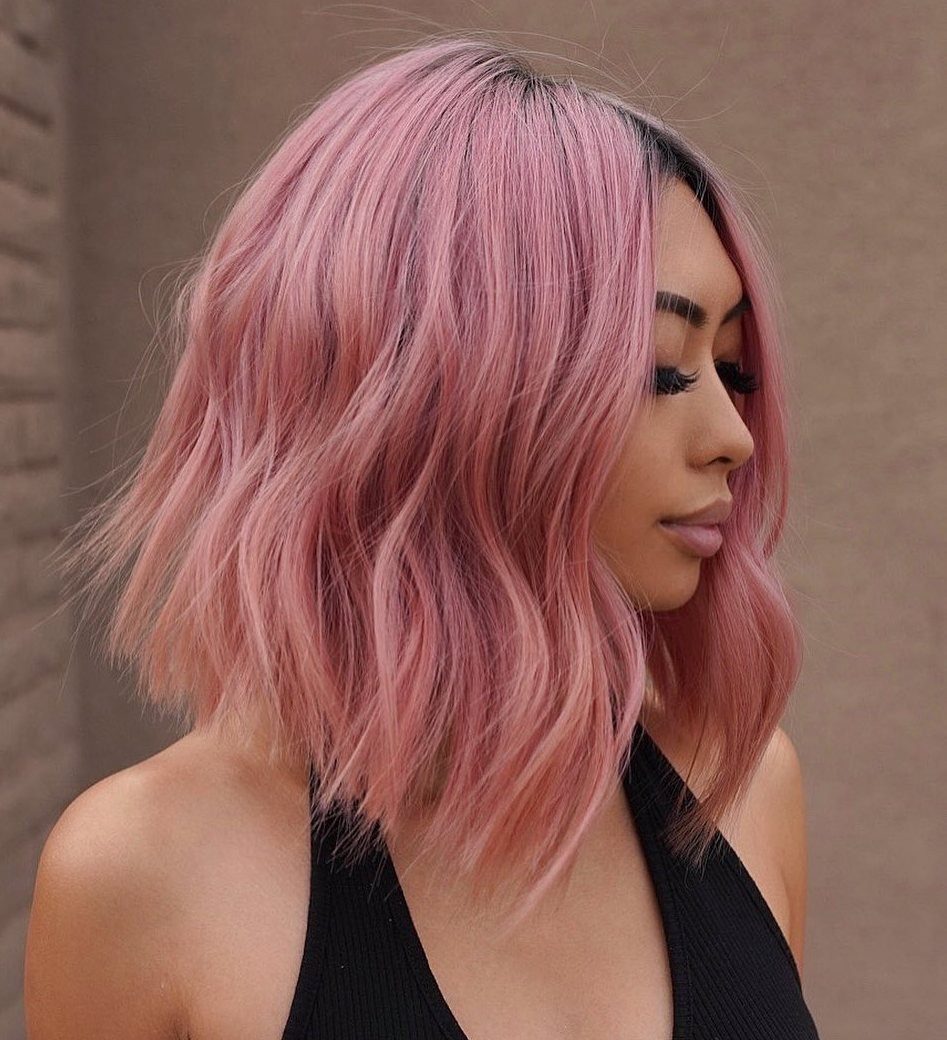
This is a salon-only cut, and I mean that. A vibrant pastel pink chin bob on fine, wavy hair needs a stylist who understands two things: how to layer fine texture without losing density, and how to lift dark base to a pale enough canvas without breaking every strand. The bob itself is blunt at the perimeter, chin-grazing, with soft internal layers that give the waves somewhere to land without collapsing into a triangle. No bangs here, which is smart — the colour is the focal point, and a fringe would just fade faster and need more toning. The dark root is intentional, part of the technique, so you skip the every-three-weeks touch-up. You tell the stylist: pastel pink chin bob, blunt hemline, soft layers through the interior, leave the root dark. Then you sit still for three hours and let them do the bleach work.
Final Thoughts
After writing all 26 of these, I noticed something. The ones I kept coming back to weren’t the loudest. They were the ones with a dark root, a blunt baseline, a cut that held its shape past lunch. I am booking the dark roots with rose gold balayage next. It buys me six calm weeks.

