I used to think pigtails were strictly for school photos and festival weekends. Then I spotted a woman at my local coffee shop wearing a sleek, low-set pair with a middle part, and she looked more put-together than half the people in line. The structured silhouette with a soft pastel accent? That sold me.
This roundup covers 15 takes on pigtails, from five-minute Dutch braids to intricate buns that need a Saturday afternoon. They work for fine hair that goes flat by 4 p.m. and thick hair that holds a braid all day. Pigtails aren’t just nostalgic anymore; they’re a real styling tool.
Playful Braided Pigtails With Bows
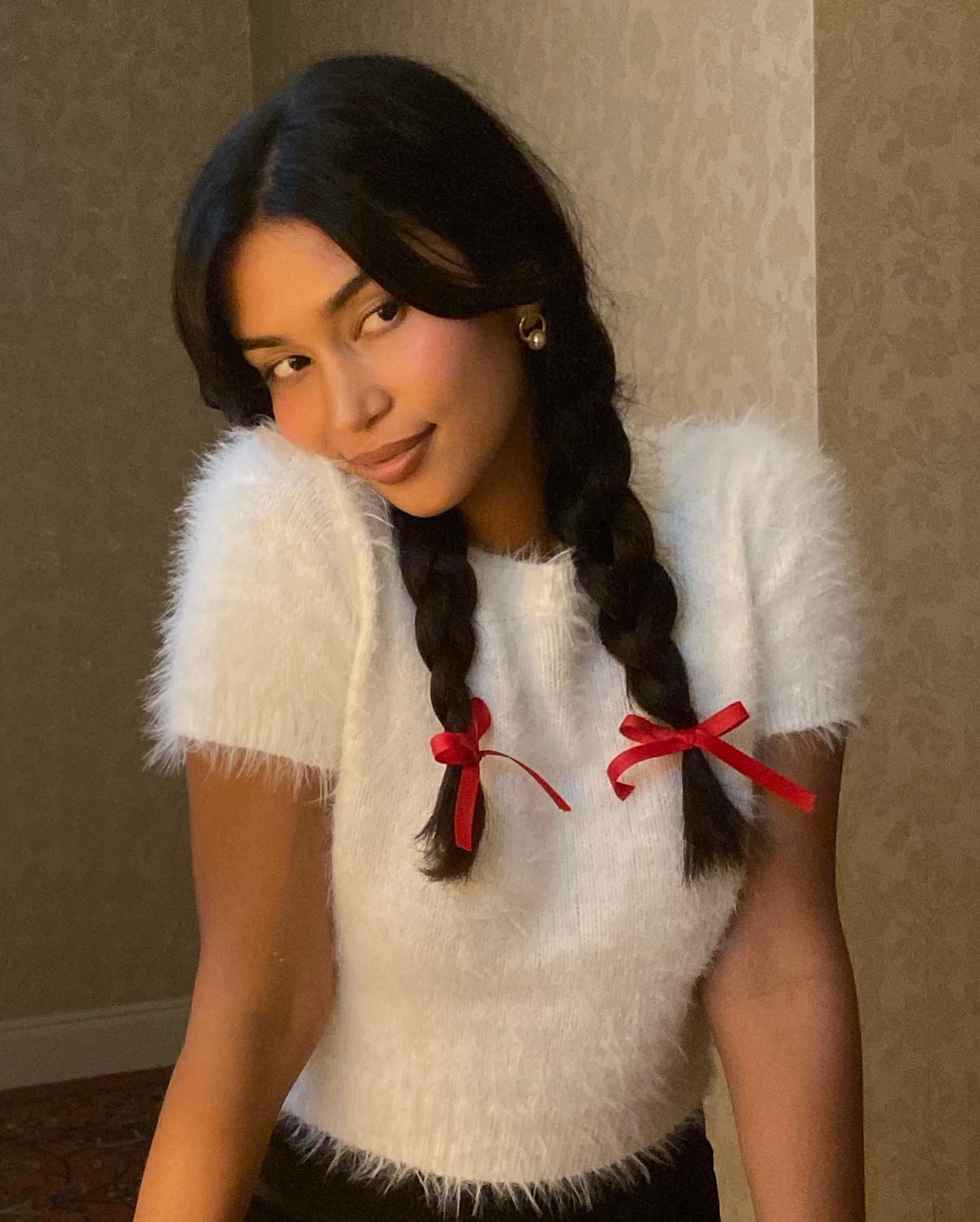
Side-swept bangs with a middle part sounds like a contradiction, but on a heart-shaped face it softens the forehead without widening the jaw. These braided pigtails with bangs hit at shoulder length, which keeps the braids from feeling too heavy. The cut relies on subtle layers so the braids don’t lump at the nape. Straight texture works best here; the braids stay sleek and the side-swept bangs fall cleanly. Oval faces get the same balancing effect.
Glamorous Curly High Pigtails
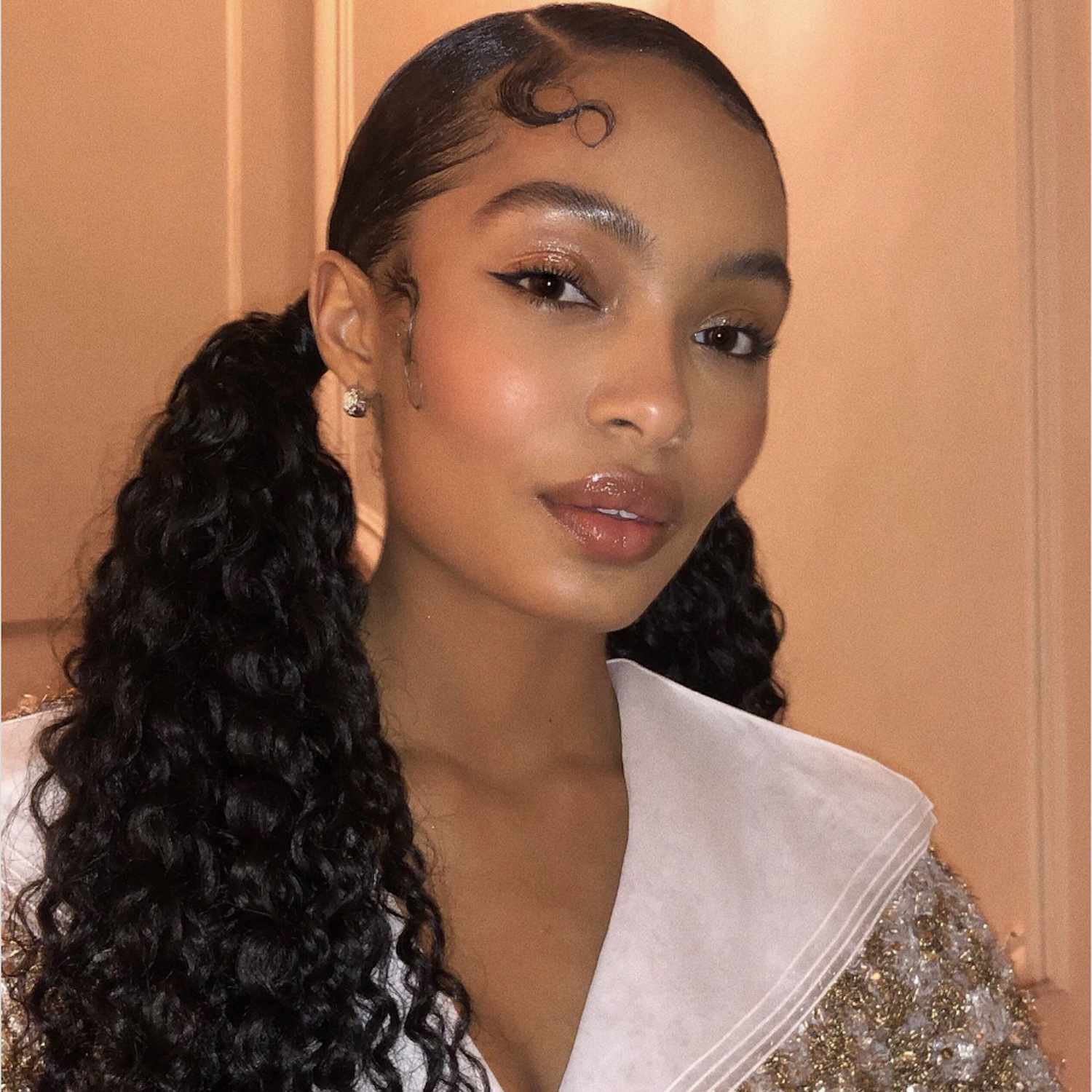
How do you get high pigtails on thick, curly hair without them looking like two sad poofs? The trick is in the layers. A cut with plenty of layers removes bulk so the pigtails sit high without pulling at the scalp. Wispy bangs soften the hairline. For upkeep, curls need a refresh every morning — a spritz of water and a curl cream reactivator. The mid-back length gives enough weight to keep the pigtails from bouncing into your face. The technique: section from ear to crown, twist each section before banding to distribute curl evenly.
Athletic Dutch Braids With Wavy Ends
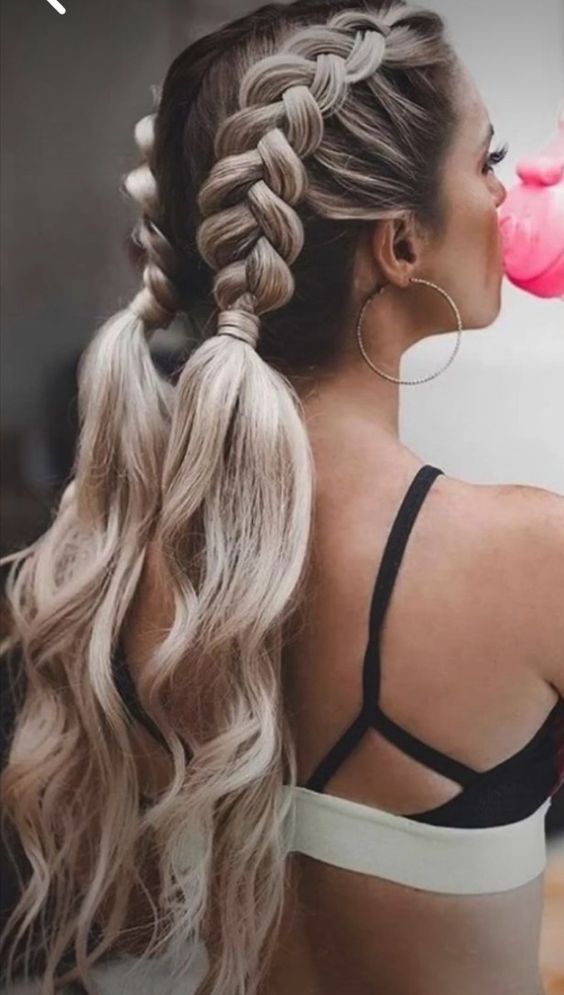
These Dutch braids stay put through a full gym session. For thick, wavy hair, the reverse braiding technique grips the scalp tighter than a standard French braid. The layers in the cut help the braid lie flat without bulging. No bangs means nothing slips out during a run.
Come summer, this is my go-to for outdoor activities. The mid-back length gets fully contained, and the wavy ends can be left natural or touched up with a wand for a softer finish. They hold for two days if you sleep on a silk pillowcase.
Modern Bubble Pigtails With Balayage
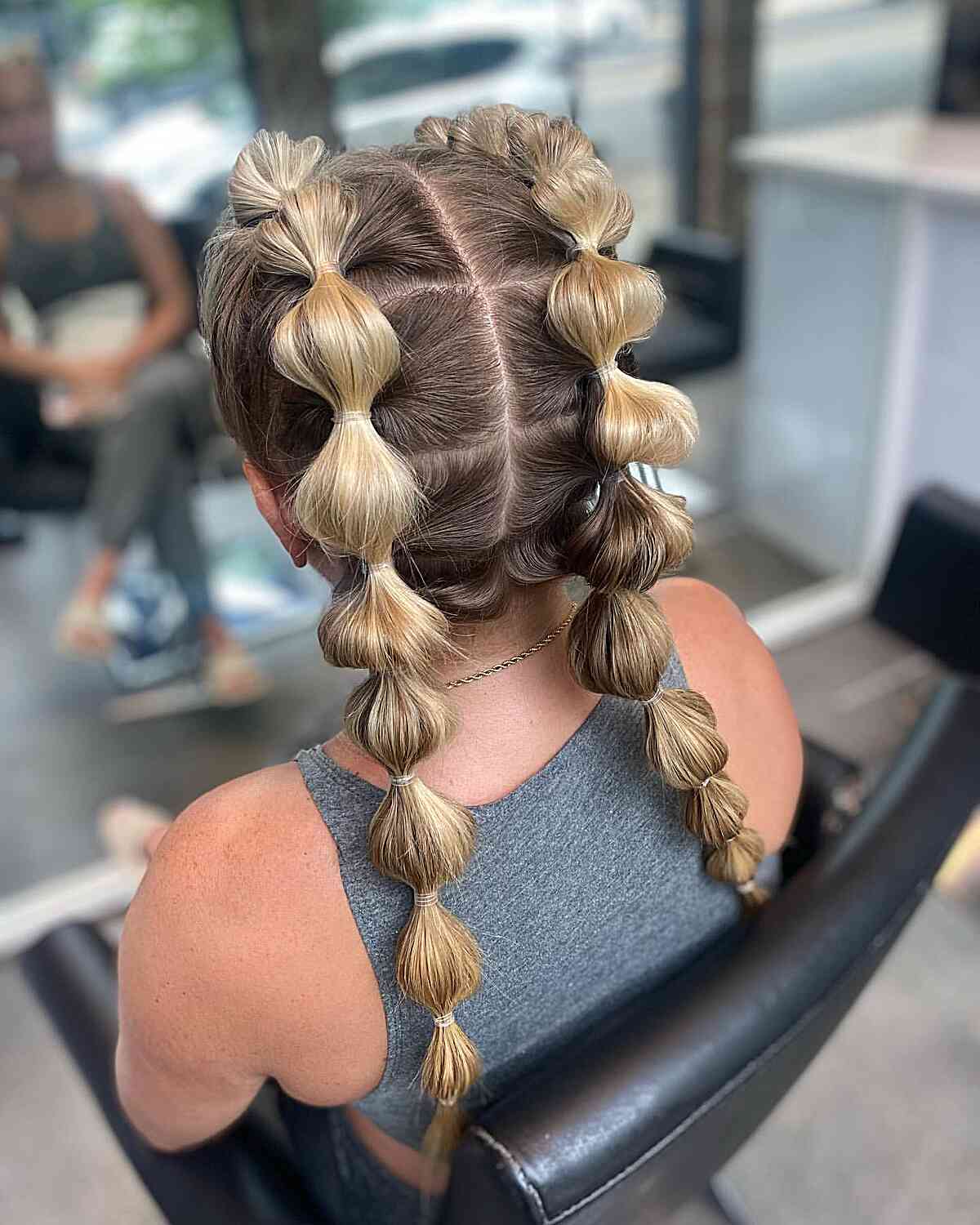
I never thought I’d pick bubble pigtails over a classic braid. But after one try, I was sold. Regular braids compress the color, turning a carefully placed balayage into a single dark rope. The blonde and brown blend together, losing all the dimension your colorist worked for. Bubble pigtails keep each section visible. The color breathes. On long, straight, thick hair with no bangs and no layers, the bubbles stay defined. The middle part keeps the symmetry, and the bubbles frame the back without adding bulk. It’s a small change with a big visual payoff.
The styling steps are easy to remember. Start with a middle part and two high ponytails. Secure an elastic at the nape, then another two inches down. Repeat until you reach the ends. Gently tug each segment to puff it into a bubble. The key is to keep the elastics tight and the bubbles even. The bubbles work best on mid-back length hair; shorter lengths may not have enough room for the effect. The whole process takes about twenty minutes, and the result is more dynamic than a standard braid. The balayage becomes the star, not an afterthought.
Detailed Wavy Pigtails With Face-Framing

I’ll admit, I thought pigtails with face framing pieces would be a quick style. I was wrong. The braided sections take time, especially on thick, wavy hair. This is a salon-level look. A stylist can section the hair evenly and weave the braids so they lie flat. The face-framing pieces soften the jawline, making it flattering for round or square face shapes. But if your hair is fine or thin, the braids may get lost. The cut needs long layers to prevent bulk. On mid-back length hair, the braids have enough room to show detail. The dark brown color is low-maintenance, but the style itself requires a good 25 minutes or a booking. The face-framing pieces also need daily styling to keep their shape. The wavy texture helps hide imperfections, but straight hair would need more precision. Skip this if you want something quick or have short hair. It’s a commitment.
Chunky French Braids With Loose Ponytails
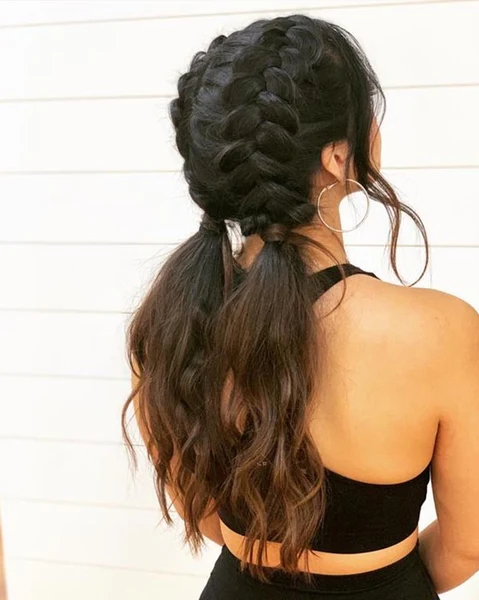
The chunky french braid starts with a decision: how big is chunky? You take sections that feel almost too large, then braid them loose enough that the weave stays visible. The cut matters here — layers give the ponytail ends a soft, tapered finish instead of a blunt drop. Mid-back length lets the braid travel from the crown to the nape without running out of hair. No bangs, so the part is clean and the braid begins right at the hairline. Thick, wavy texture is ideal; it holds the chunkiness without slipping.
The transition from braid to loose ponytail is the tricky part. You braid down to about the ears, then let the remaining hair fall free. A middle part keeps both sides symmetrical. The loose ponytail ends need a bit of wave to blend with the braid’s texture — that’s where the subtle highlights catch the light and add dimension. The technique for turning french braids into ponytails relies on that loose tension. It’s not a quick style, but the technique is straightforward once you commit to those oversized sections.
Classic Mid-Back French Braids
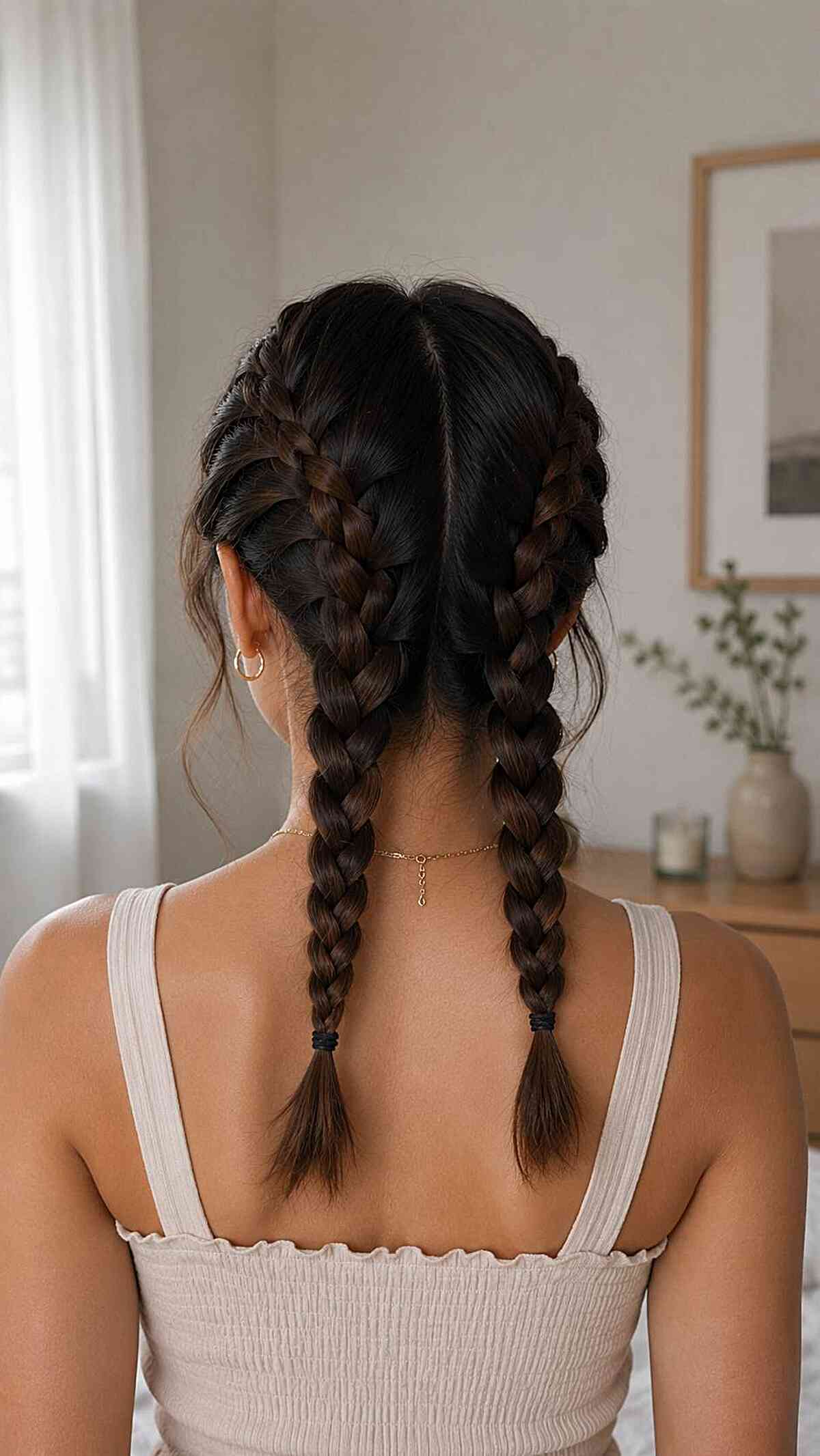
How long do french braid pigtails actually stay neat? On thick, straight hair, they can hold their shape for three or four days. The key is the initial tension — tight at the scalp, then gradually looser. Mid-back length gives enough weight to keep the braid from unraveling. The layers, cut into the ends, prevent the braid from looking too blunt. No bangs means the hairline stays clean, no stray pieces. Upkeep is minimal: a silk pillowcase at night, a light spritz of water in the morning to smooth flyaways. The intricate pattern stays visible because the straight texture doesn’t frizz. That’s the real win — you get a week of neat braids with almost no daily effort.
Intricate Braids Formed Into Buns
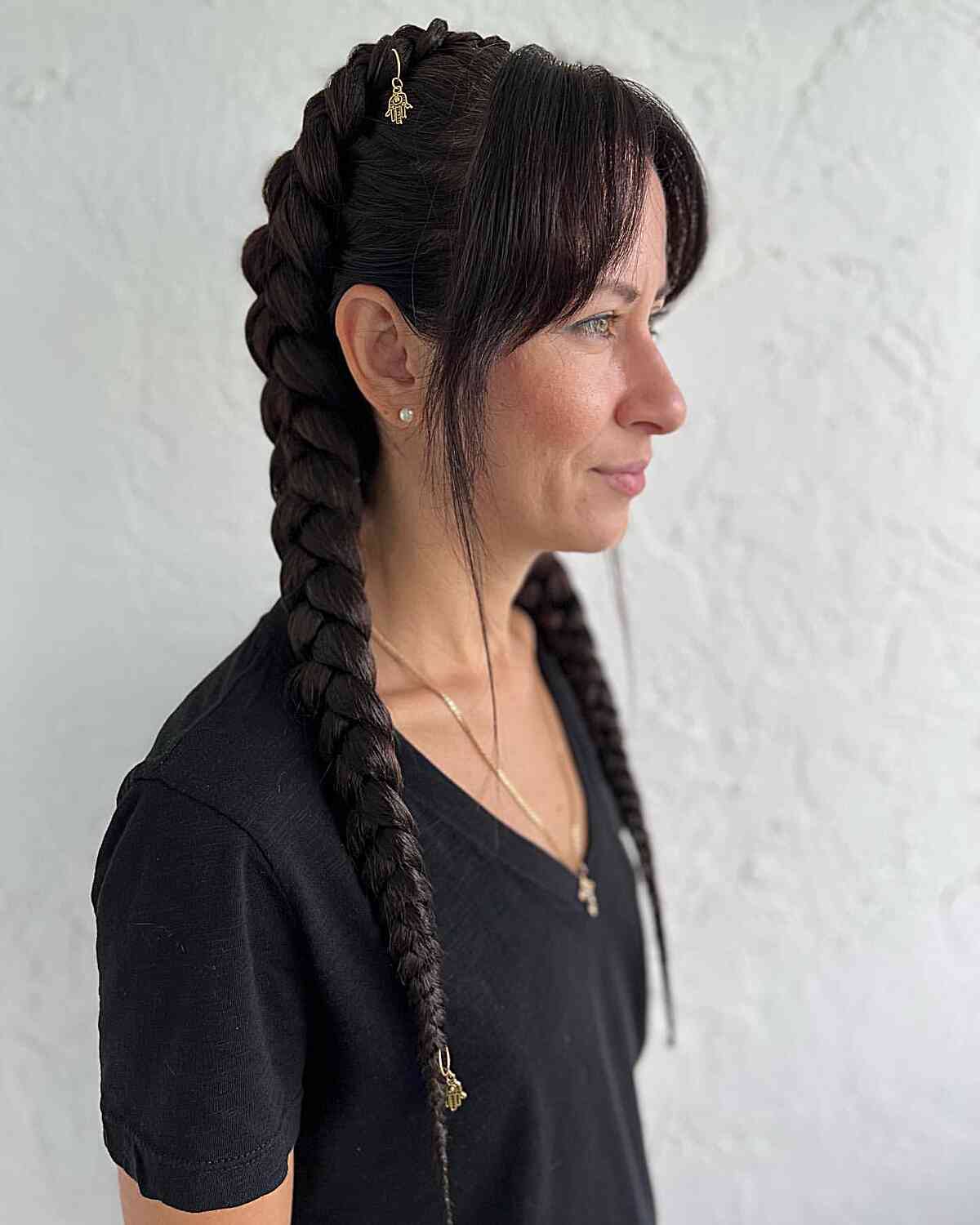
This style is for one hair type and one length only: shoulder-length wavy hair. The braided pigtails need enough texture to hold the intricate pattern, and the wavy texture provides that grip. The buns sit at the nape, and the shoulder length means the braids are just long enough to wrap into a neat coil without extra bulk. No bangs, so the face is completely open — good for oval or heart shapes. Layers are cut into the ends to prevent the buns from looking too heavy. The transformation from braided pigtails into buns takes about 35 minutes, but the result is a sophisticated updo that stays put.
Thick Auburn Wavy Braided Pigtails

Auburn hits differently in autumn light. The warm tones catch the gold of late afternoon, and the thick braided pigtails amplify that richness. Mid-back length gives enough weight for the braids to hang heavily. The wavy texture adds volume, so the braids look substantial without being stiff. No bangs means the face is framed by the braids themselves, which works for round or square faces. Layers are cut throughout to keep the braids from looking too uniform. This is the style for a harvest dinner or a bonfire — it reads as intentional but not overdone. The auburn colour alone makes it seasonal, but the wavy braided pigtails seal the deal.
Neat Classic Braids
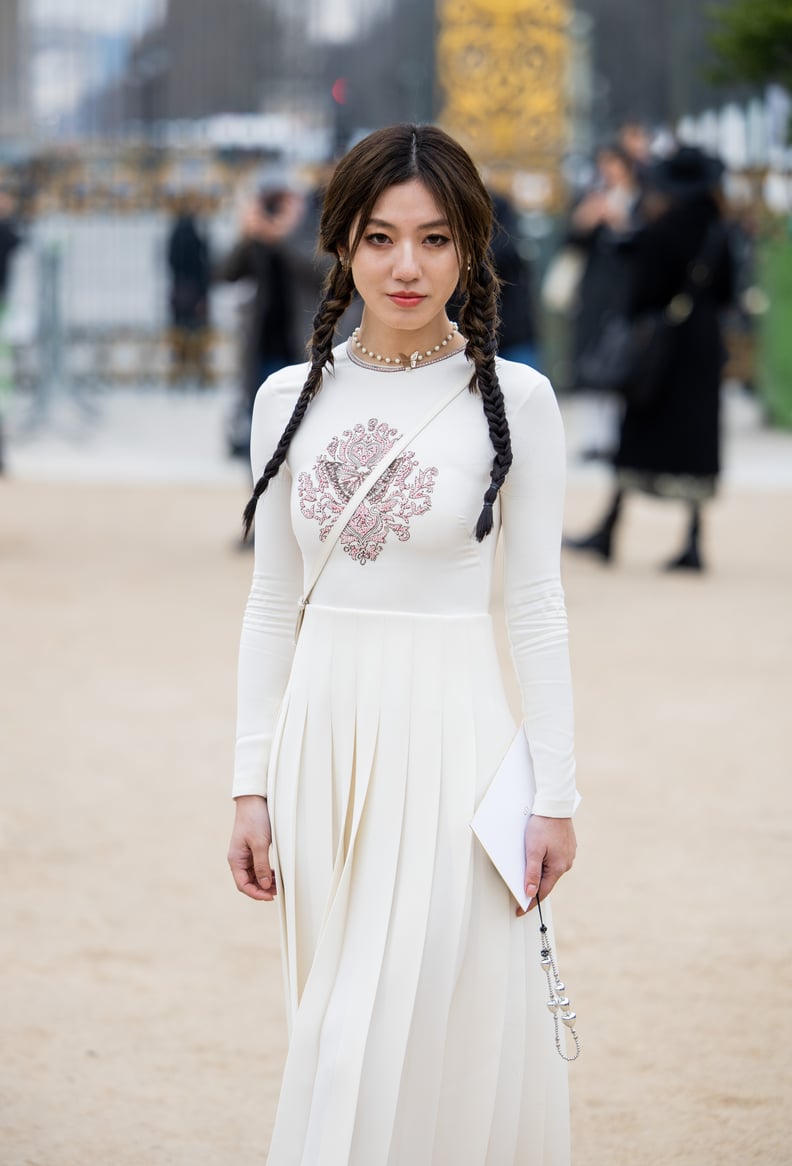
I have tried this at home. It did not look like this. The neat classic braids in the photo are the result of a steady hand and even tension — two things I lack. The hair is thick and straight, which helps the braids lie flat. Mid-back length gives enough rope to work with. No bangs means no stray pieces at the front. The cut is almost blunt, with few layers, so the braids are uniform from root to tip. Achieving this level of neatness at home takes practice; a salon can get it right in one go. The classic braided pigtails are achievable, but be prepared to redo them a few times.
Extremely Long Thick Black Braids
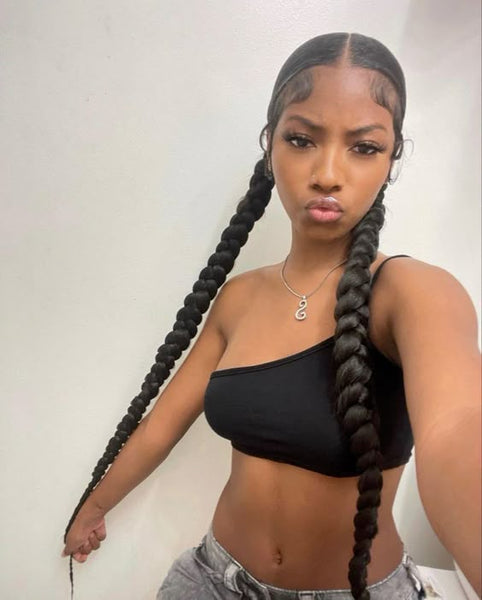
Two thick, long braids that hit mid-back. That is a lot of hair. The middle part keeps it symmetrical, and the straight, black texture makes the braids look almost solid, like rope. You need serious density or extensions to get this bulk, and the weight is real — your neck will know about it by evening. Braiding takes about 40 minutes, and you want a finishing serum to keep the edges smooth and the sections defined. Long braided pigtails this thick do not tangle easily, but they do pull at the roots. I would not wear them for a full day of errands. A dinner or an event, yes. A commute and a grocery run? Your scalp will remind you.
The honest downside is the strain. The length and thickness create tension at the crown, especially if your hair is natural and dense. You can loosen the braids slightly at the scalp to relieve pressure, but the trade-off is a less polished finish. They also take forever to dry after washing. If you have fine hair, skip this unless you are using extensions. The look is dramatic, but it asks for maintenance in return.
Blonde Ponytails With Face-Framing Braids
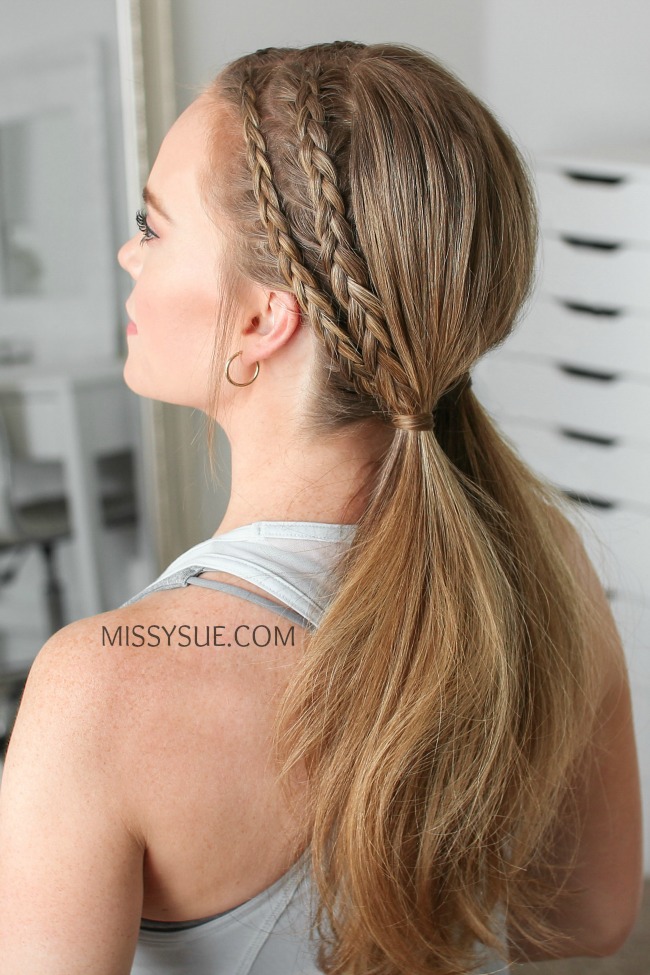
Can multiple thin braids along the hairline actually stay put? Yes, if you work in small sections and secure each one tightly. This is a low ponytail with braids, blonde with highlights, mid-back length, wavy and thick. The braids are the real work — maybe six or seven of them, each no wider than a pencil, running from the hairline back into the ponytail. They tame flyaways better than any product I have tried. The ponytail itself is simple: gathered low, left wavy for fullness. The whole thing takes about 20 minutes, but the braiding requires patience and a steady hand. One slip and the braid loosens, and you have to start over. The payoff is a polished, detailed look that reads as intentional without being fussy.
Sleek Ponytail With Crown Braid Detail
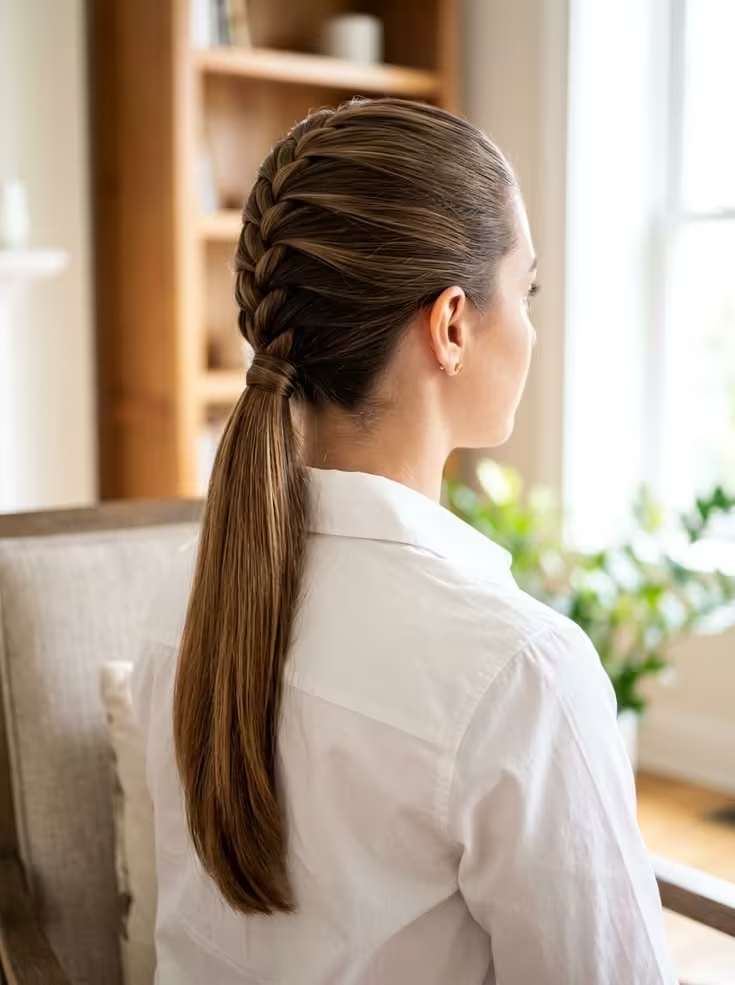
This one actually holds. The braided ponytail starts with a crown braid — a thin, tight braid that wraps from the temple across the top of the head and feeds into the ponytail at the nape. The hair is medium brown with subtle highlights, straight, thick, mid-back. The braid secures the ponytail better than any elastic; it does not slide or sag by lunch. I have worn this through a workday and a humid commute, and it stayed smooth. The upkeep is minimal: brush the ponytail once, re-tighten the braid at the crown if it loosens overnight. Wash every two days, because the braid traps oil at the scalp faster than a plain ponytail. A quick dry shampoo at the part line buys you another day. Best on straight, thick hair — fine hair will show every bump in the braid.
Ash Blonde French Braid With Dark Roots
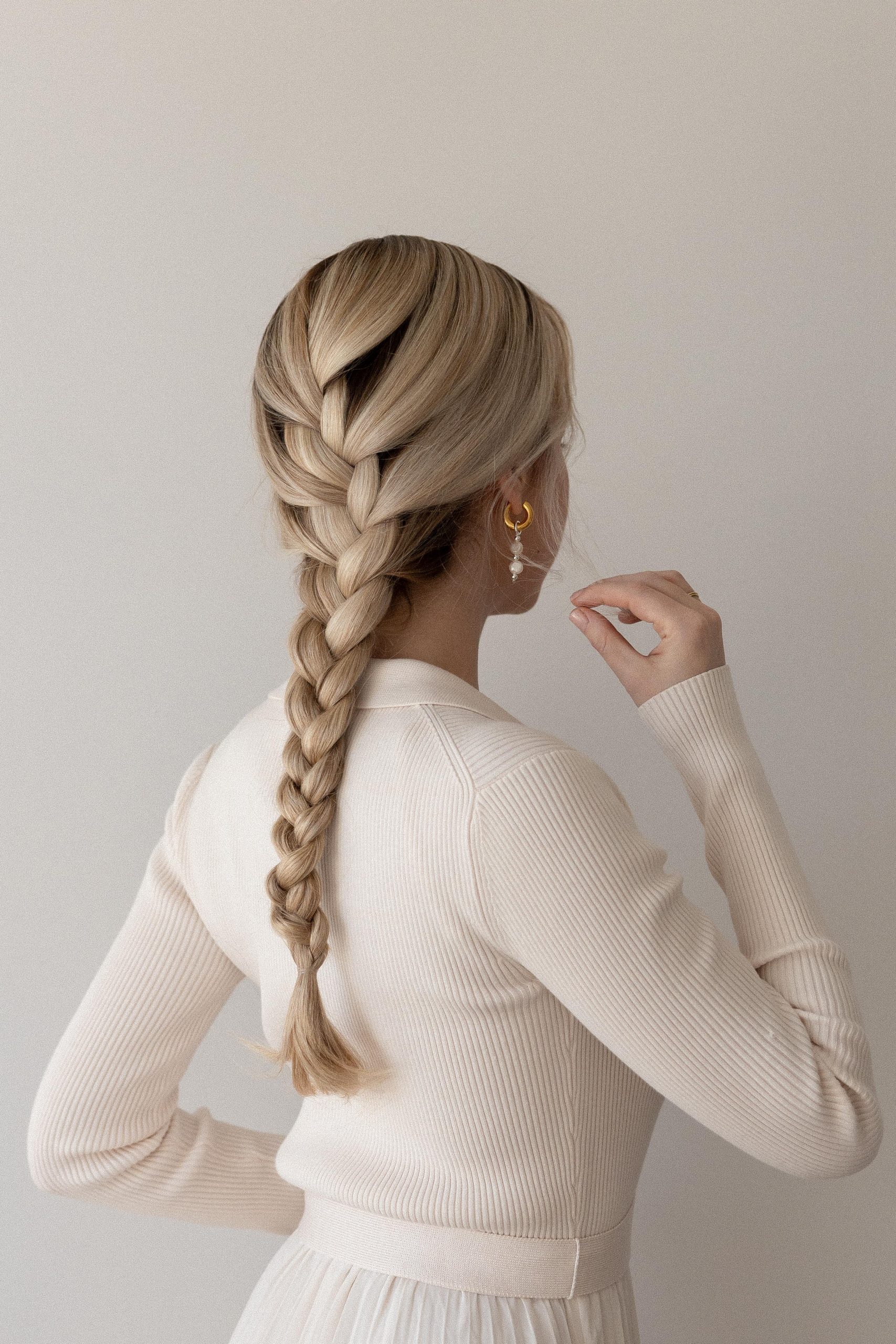
Ash blonde with dark roots reads cool next to warm skin, and it hides grow-out like a pro. This is a side-parted French braid, straight, thick, mid-back. The ash blonde braid itself is intricate — each section pulled tight, the weave consistent from crown to tip. The dark roots create a shadow that blurs the line between natural and coloured, so you can stretch your salon visit by two weeks, maybe three. The colour contrast also makes the braid look more dimensional; the ash catches light differently than the root brown. It is a low-maintenance colour choice that does not look low-effort. The braiding takes about 30 minutes, and re-braiding every two to three days keeps it fresh. A side part widens a round face slightly, so adjust the parting if that is your shape.
Thick Blonde Braid With Statement Bow
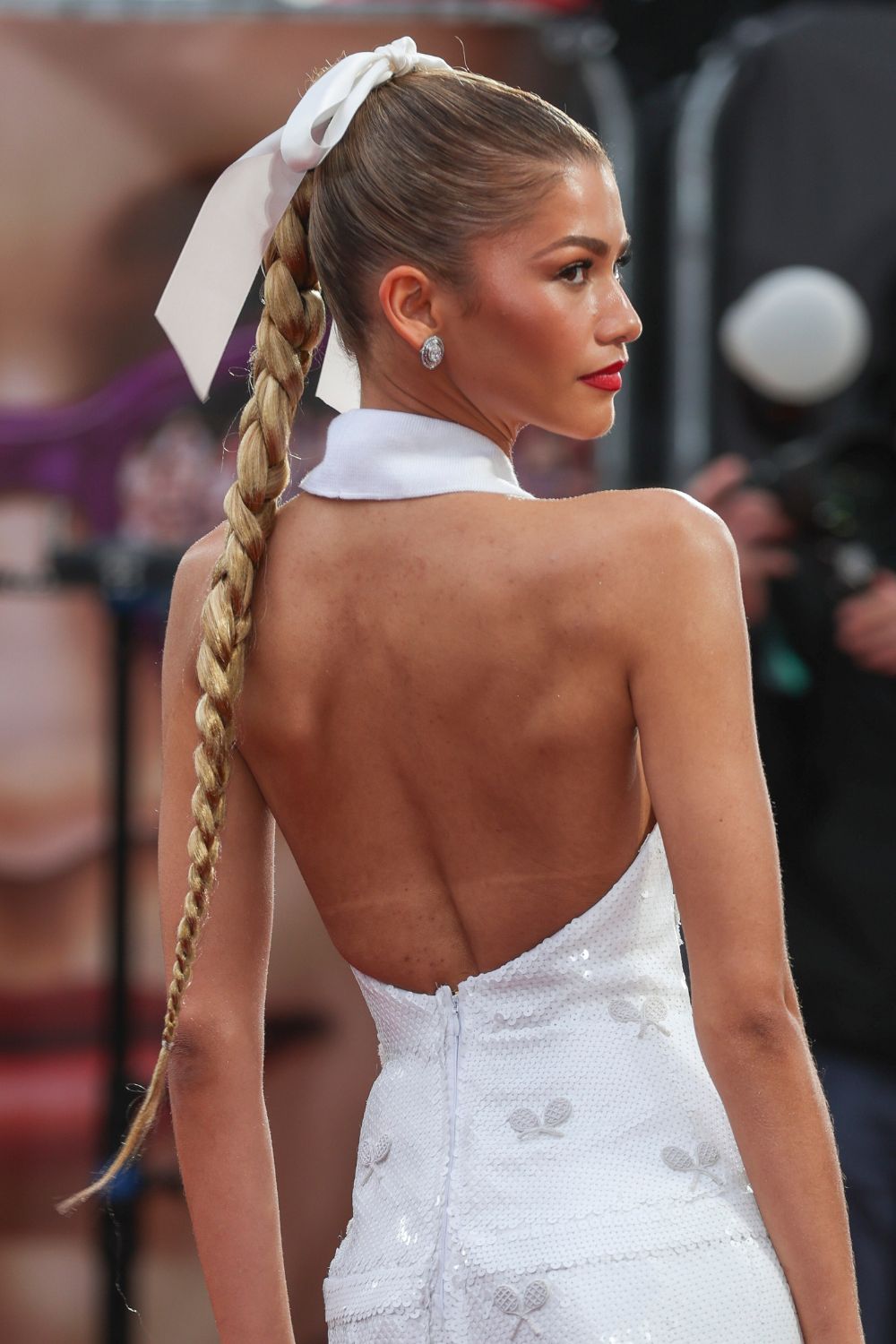
A large white bow on a thick blonde braid. It is not subtle, and that is the point. The braid itself is single, tightly woven, straight, mid-back, dense. The bow sits at the top, a clear focal point that draws the eye up. Compared to a ribbon or a clip, the bow is louder and more deliberate. It works best on thick, straight hair that holds the braid shape without slipping. The honest downside: the bow adds bulk at the crown, so it can feel heavy after a few hours, and it catches on jacket collars. The blonde braid with bow takes about 20 minutes, but the bow needs to be pinned securely or it shifts. Not a casual grocery-run style. It is for occasions where you want the hair to announce itself before you do.
Final Thoughts
That coffee shop woman was onto something. After writing all fifteen of these, I see pigtails as a shape-shifter: they can read polished, playful, or athletic depending on the placement and tension. I’m booking the bubble pigtails with balayage next. They hide a root line better than any ponytail I’ve tried.