
I keep seeing the same thing in the chair next to mine: brown bases with pink woven through, not all-over color, but pieces that catch the light when she turns her head. It reads less costume, more deliberate, and I am here for it.
Here are 30 ways to wear Pink Highlights, from a few face-framing strands to a full pastel commitment, short crops to mid-back lengths, salon bookings to bathroom-mirror risks. Some need a stylist, some need a friend and a bowl. I have fine hair that goes flat by 4 pm, so I notice which placements hold their shape and which ones just sit there.
Vibrant Pink Highlights on Brown Base
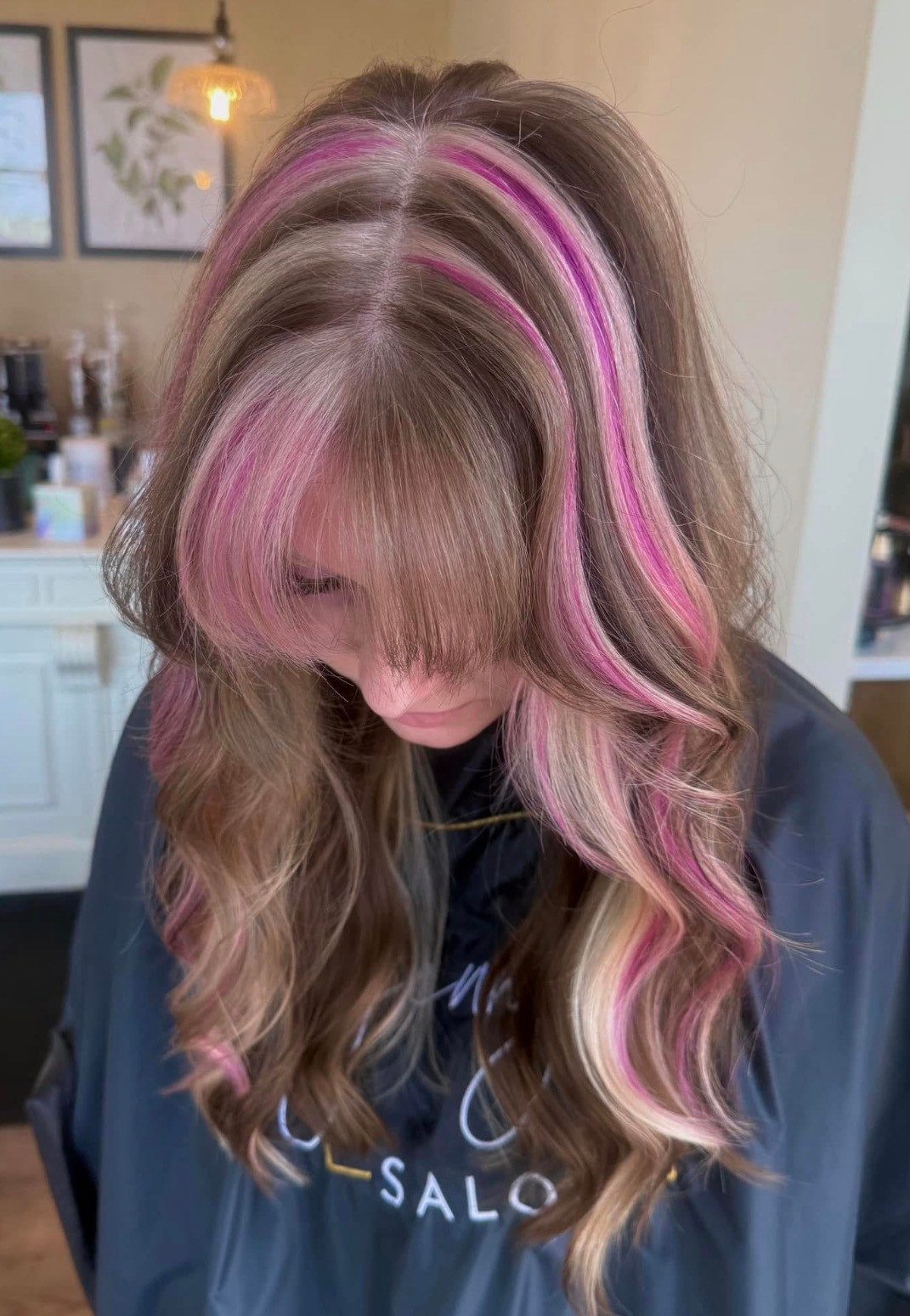
That brown base with blonde undertones is doing the heavy lifting here. Without it, those vibrant pink highlights would sit on top like a sticker. Instead, the warm brown catches the light and the pink streaks read as dimensional, not costumey. Medium density wavy hair at mid-back length, middle part, curtain bangs that soften the whole thing. The loose waves help the pink travel instead of pooling in one spot. This is pink for people who said they would never do pink.
Platinum Blonde With All-Over Pink
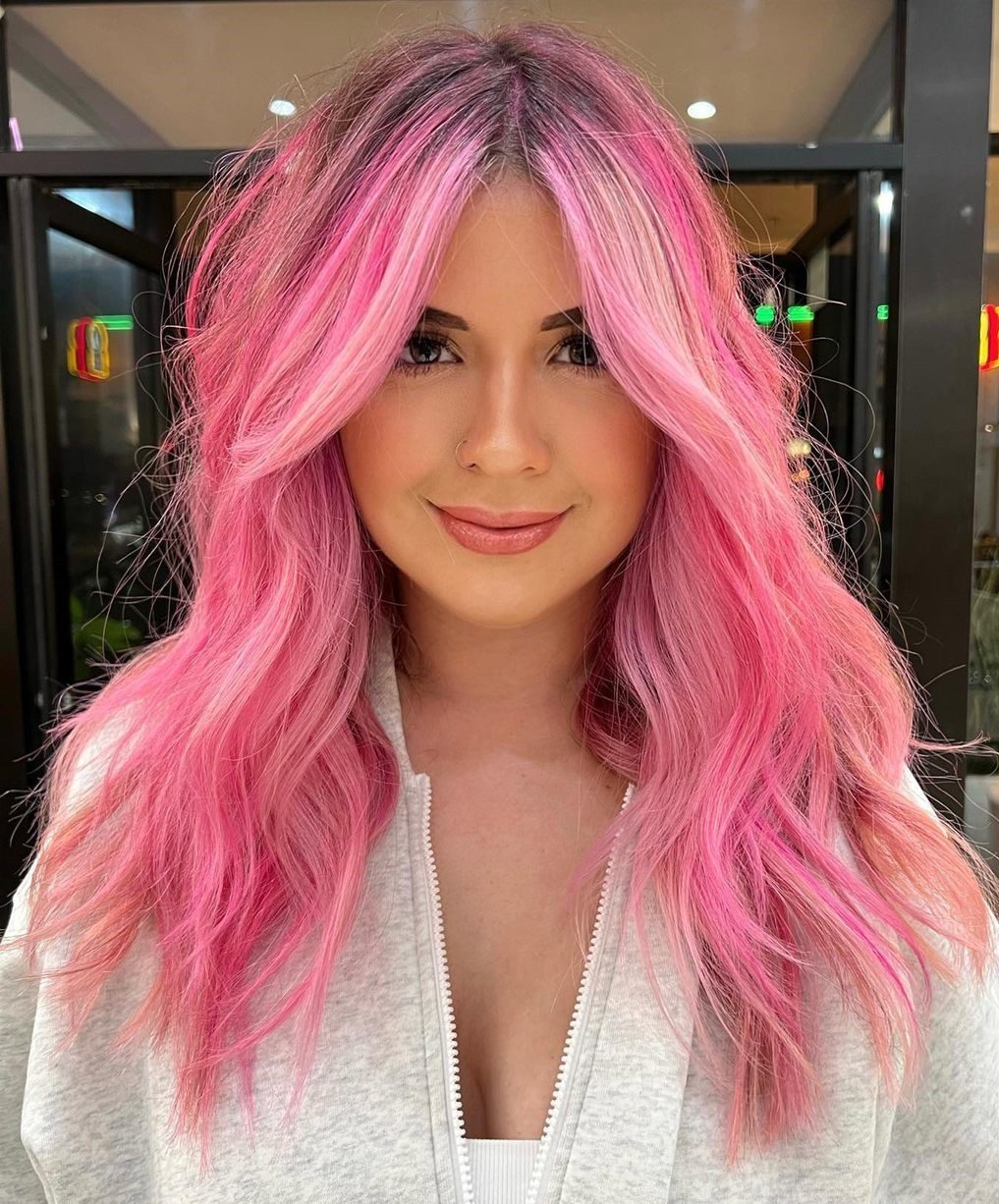
This is not section one’s cousin. This is section one’s louder sibling who calls ahead to check the dress code and then ignores it. All-over pink hair on a platinum blonde base means every strand gets lifted to pale yellow first, then saturated with multiple shades of pink. Shoulder length with wispy bangs, fine to medium density wavy texture, middle part, a voluminous blowout that keeps the pink from looking flat.
The upkeep is the real story here. The platinum base shows root growth at week three, and the pink shifts tone every wash. By week four you are either toning or living with a color that cannot decide what it wants to be. Book the full salon session and plan for a refresh every five weeks. Worth it if you want commitment. Skip it if you want highlights that fade gracefully.
Pastel Pink and Lavender Highlights
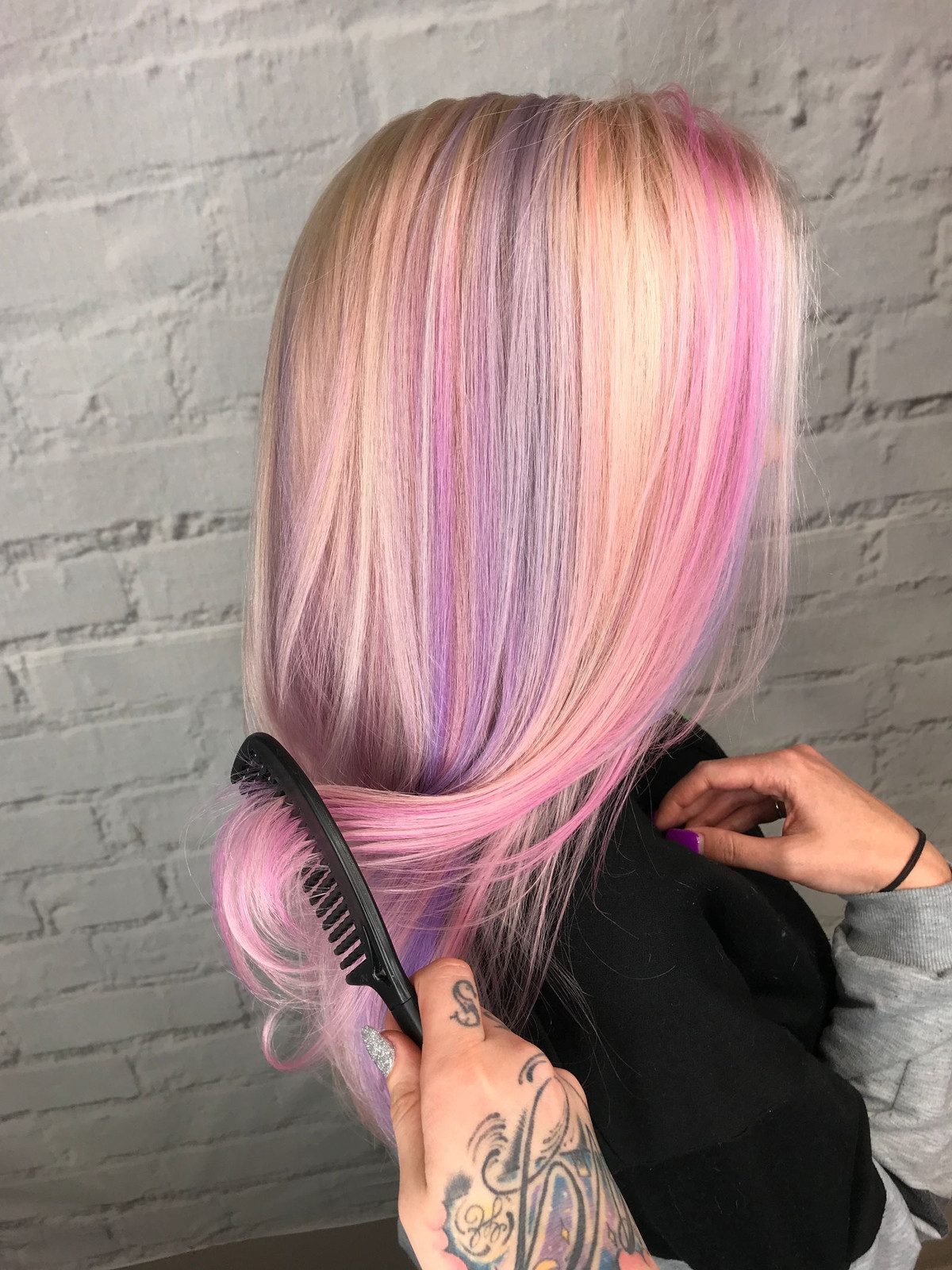
How do you get two pastels to live on one head without turning into a muddy mess? The trick is a blonde base light enough to register both colors separately, then a placement that keeps the pastel pink highlights concentrated around the face and the lavender highlights woven through the back and crown. Collarbone length, no bangs, medium density wavy texture, middle part, a wavy blowout that lets each pastel catch its own light. The lavender reads cooler, the pink reads warmer, and the contrast keeps the whole thing from washing out into one pale blur.
Pink Underlayer Highlights
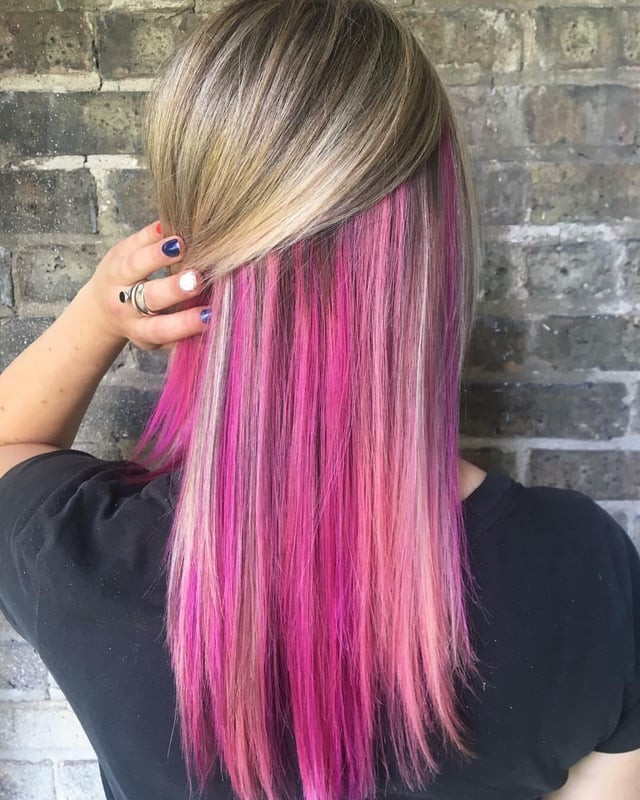
I’ll admit it: I was skeptical about a colour I couldn’t even see from the front. Then I watched this mid-back length, thick blonde base with pink underlayer highlights catch the light during a side part flip, and I got it. The peekaboo placement means the pink only shows when you move, turn your head, or tuck hair behind an ear. Straight with subtle waves keeps the underlayer visible without trying. The honest downside: you have to style it with intention on day one, because if you just air-dry, the pink hides entirely. By day three, the blonde base still looks polished, but the pink needs a refresh every six to eight weeks to stay that saturated.
Warm Brown With Vibrant Pink
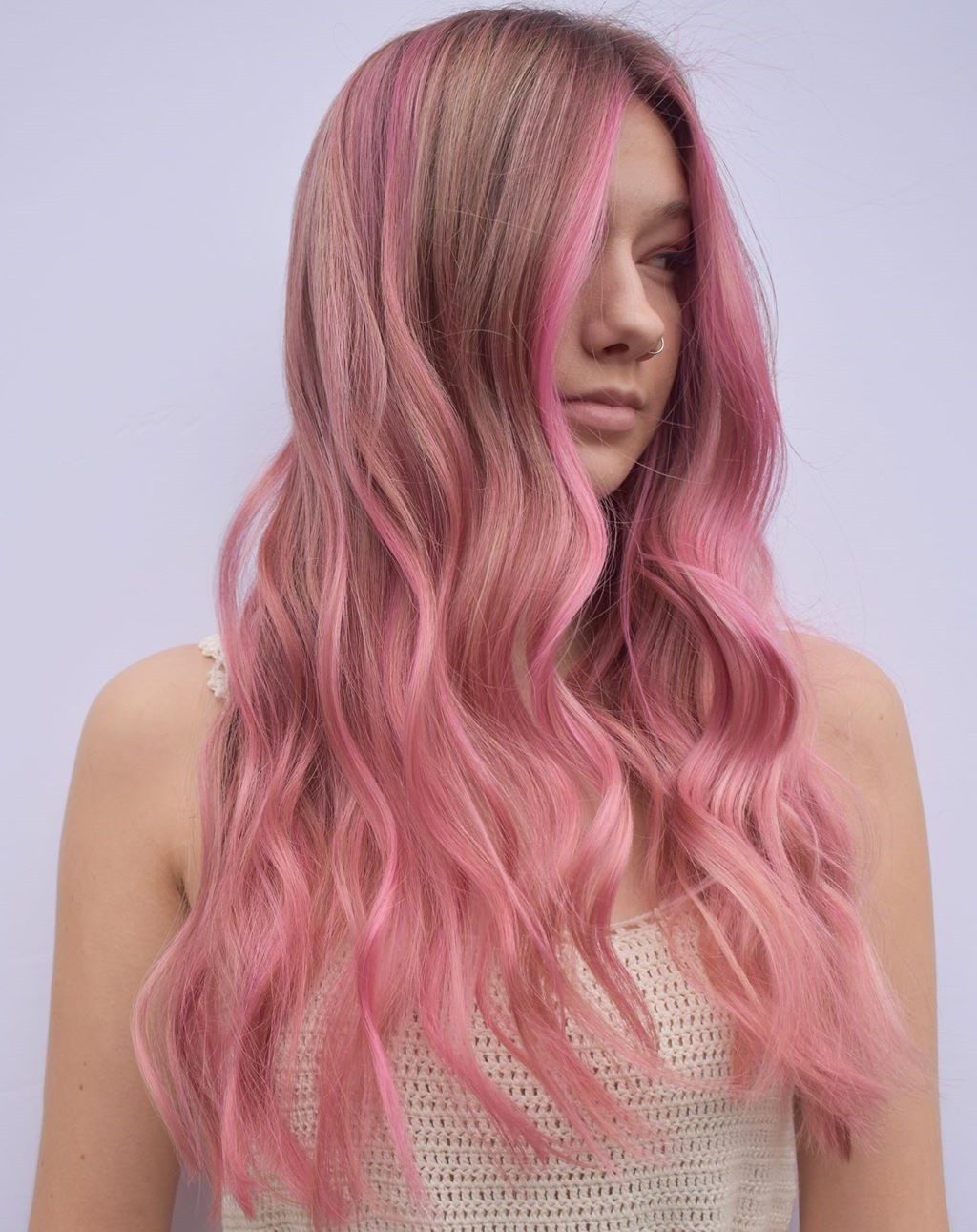
This one stopped me mid-scroll. A mid-back length, wavy, medium density brown base with pink highlights that actually look like they belong there. The warm brown keeps the pink from reading as costume, and the middle part lets both colours sit evenly across the face. It flatters anyone with brown-based hair and medium density, but if your hair is very fine, the pink sections can feel sparse rather than intentional. The wavy texture helps blend the two tones so nothing looks striped.
Pink Streaks on Dark Brown
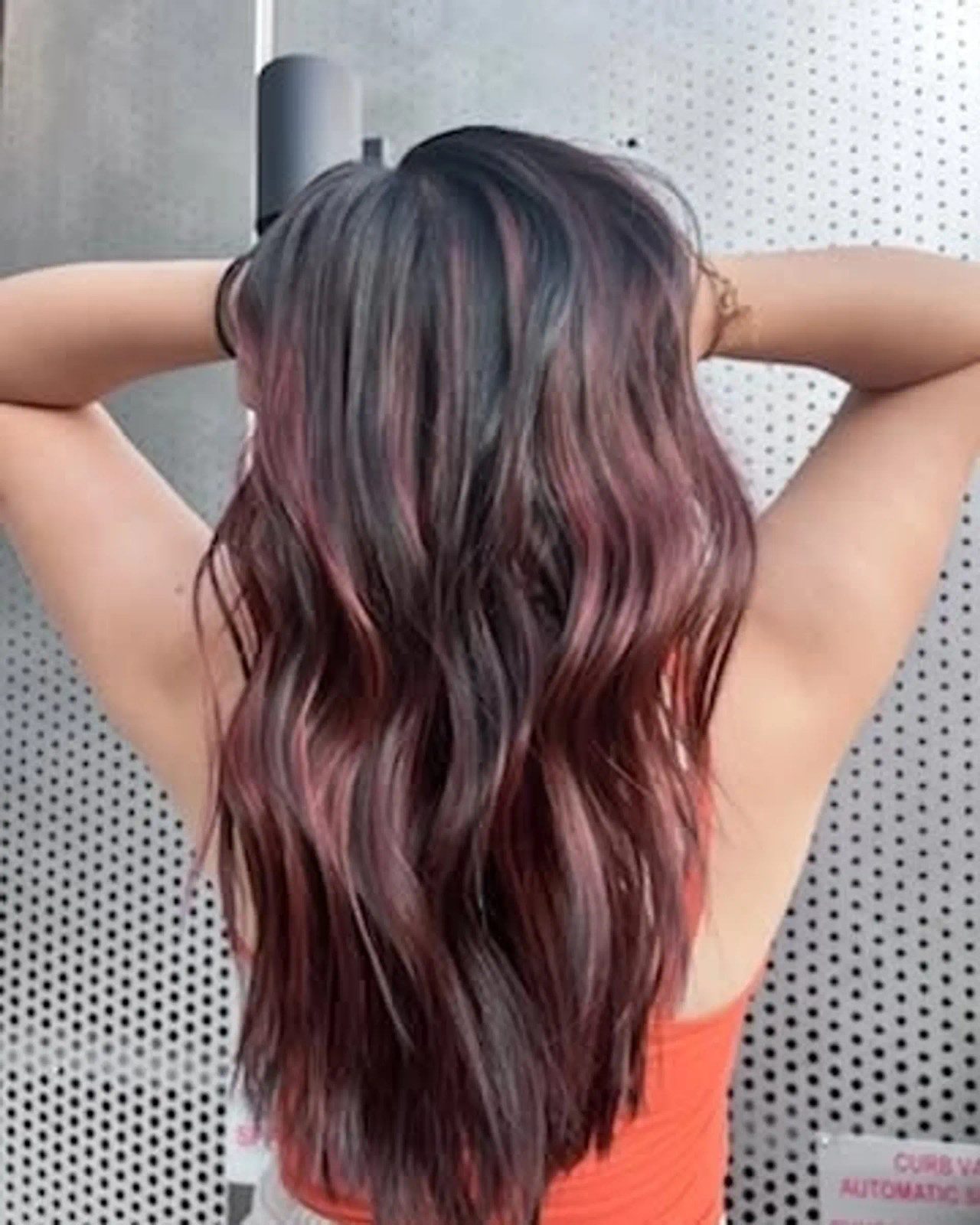
Dark brown hair with pink streaks reads like autumn leaves catching the last light. The technique here is a balayage-style highlight on a dark brown base, lifting sections to a vibrant pink tone that lands somewhere between fuchsia and berry. At mid-back length with loose waves, the pink streaks peek through the brown, creating contrast without overwhelming. The texture is wavy and medium density, which helps the colour sit naturally rather than looking painted on. This is a seasonal move: the warmth of the pink against the deep brown feels made for cooler months, when you want colour that doesn’t shout but still shows up.
Textured Pixie With Pink Accents
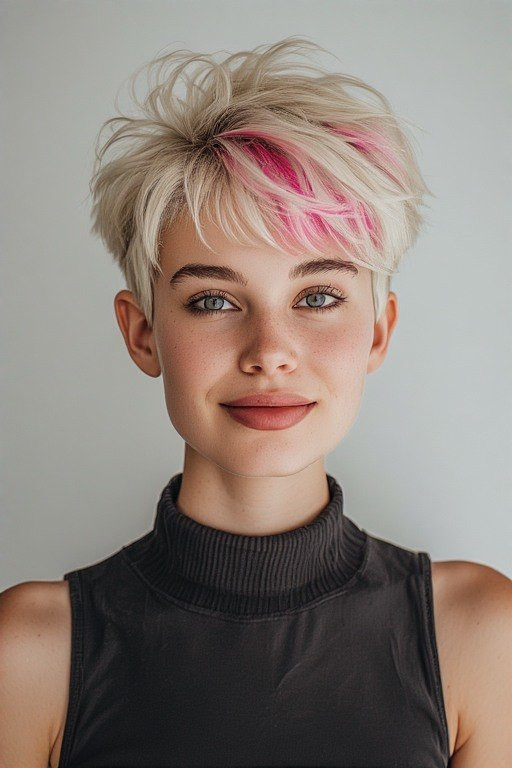
Can you get this at home? Not a chance. A textured pixie with bright pink accents on a platinum blonde base is a salon-only service because the lightening and toning require precision. The technique involves weaving fine sections of pink through the short, fine-textured hair, keeping the base platinum to make the pink pop. The tone is vivid, almost electric, and the cut relies on texture to hold the shape. Without a professional, you risk patchy colour and a wonky cut.
Pink and Orange Highlights on Bob
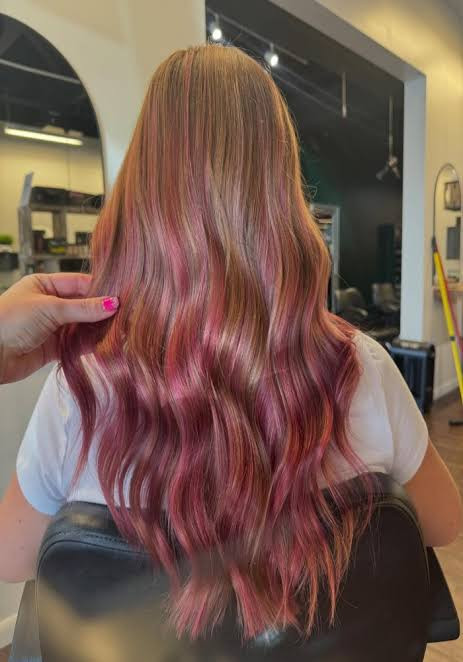
Two-tone highlights are harder than they look. This chin-length bob with pink and orange highlights on a blonde base proves it: the colours are bold, but they fade at different rates, leaving you with a lopsided look if you don’t stay on top of toning. The technique is a section-by-section application, keeping the pink near the front and the orange scattered through the back. The tone is warm and playful, but the honest downside is the upkeep: every four weeks to keep both colours bright. The texture is straight and fine, so the colour sits flat and reads clearly.
Pink Face-Framing Highlights
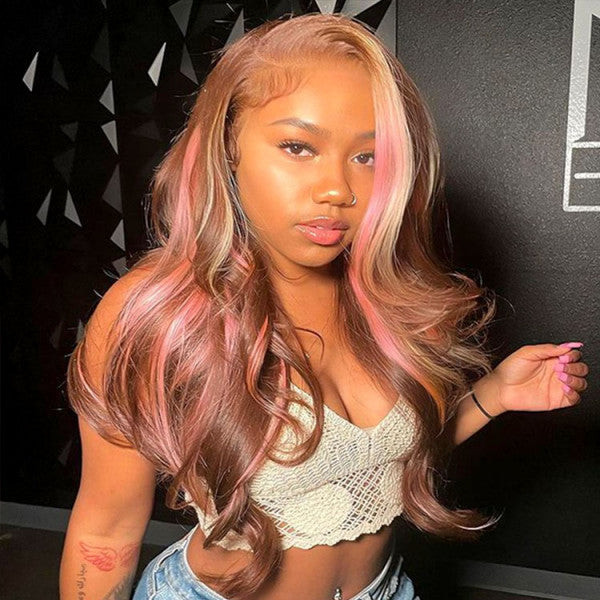
Monday morning, you catch the pink face-framing highlights in the mirror and notice they’ve softened from last week’s salon visit. That’s the reality of this look: brown base with pink and blonde highlights around the face fades fastest where you see it most. The technique places the pink and blonde in the front sections, blending into the brown at the back. The tone is soft pink with warm blonde, and the length hits collarbone with curtain bangs that frame the cheeks.
To keep it fresh, ask your stylist for a glossing toner every six weeks and a trim on the bangs every eight. The texture is thick and wavy, which holds the curl but also shows every bit of root growth. The grow-out is manageable because the face-framing pieces grow into the rest of the hair, but the pink will need a refresh before it disappears entirely.
Collarbone Blonde With Pink Face Framing
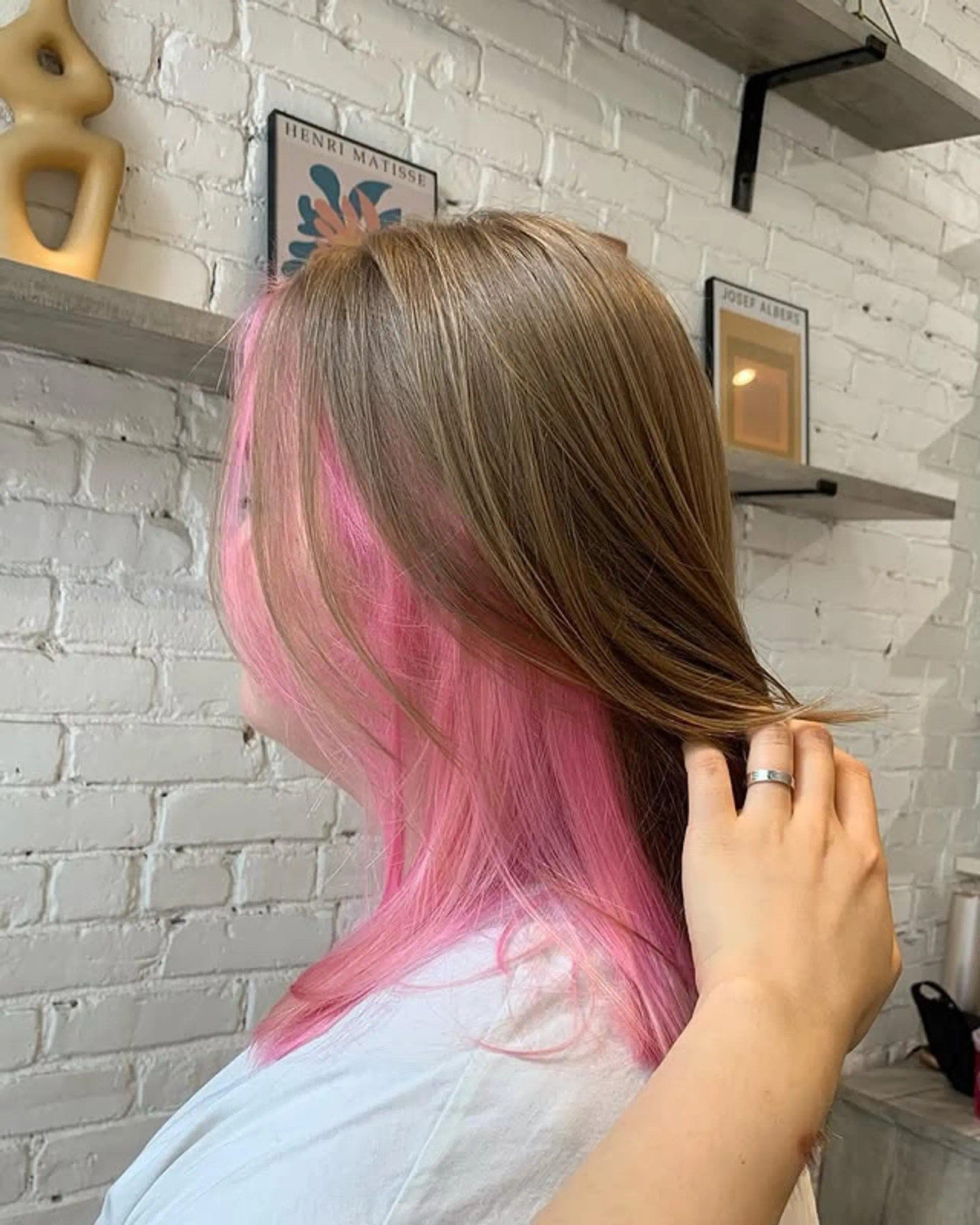
The technique here is deliberate: pink highlights placed only around the face, leaving the rest of the blonde base untouched. On a collarbone-length cut with long layers and side bangs, the pink face framing catches the light when you turn your head. The tone is a cool pink, not too sweet, and the texture is wavy and medium density, so the highlights don’t get lost. The side part helps the pink sit forward, making it the first thing you see.
Hot Pink and Pastel Pink Shag
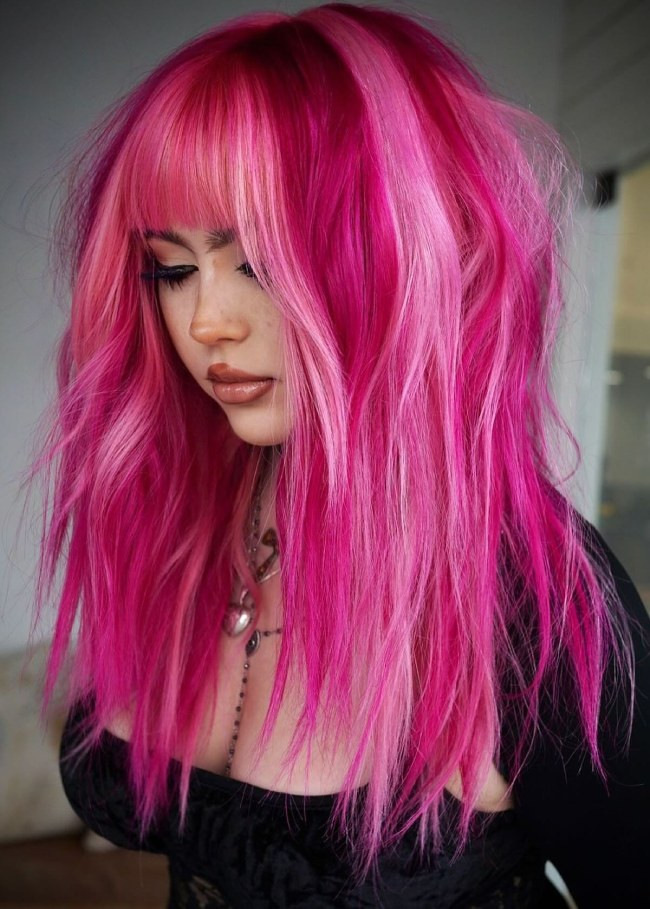
Can a shag handle two shades of pink without looking like a costume? This one does. The hot pink highlights land on the thicker sections, the pastel pink highlights sit lighter through the layers, and the darker base keeps everything grounded. Wavy, thick texture carries the contrast. The middle part and full bangs frame the face without fighting the colour.
The shag cut does the heavy lifting here. Those layers create pockets where the hot pink catches light and the pastel recedes. It is not subtle. That is the point. If your hair is fine or your stylist has not done vivid colour work, skip this one and try a single pink tone instead.
Blonde With Subtle Pink Highlights
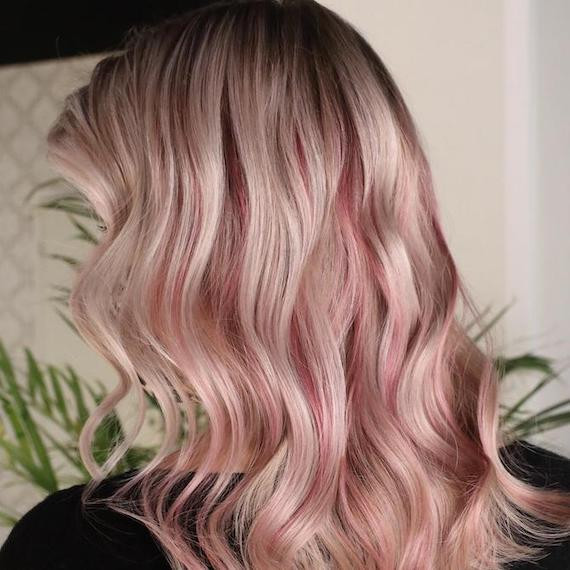
I will admit it: I was sceptical. Subtle pink highlights on a blonde base can read more brassy than intentional, especially if the pink leans warm. This one works because the blonde is cool and the pink stays soft, almost dusty. The wavy collarbone layers diffuse the colour so it never lands in one solid stripe. Medium density helps. Fine hair might let the pink dominate, which defeats the whole point.
Collarbone Blonde Base With Pink Highlights
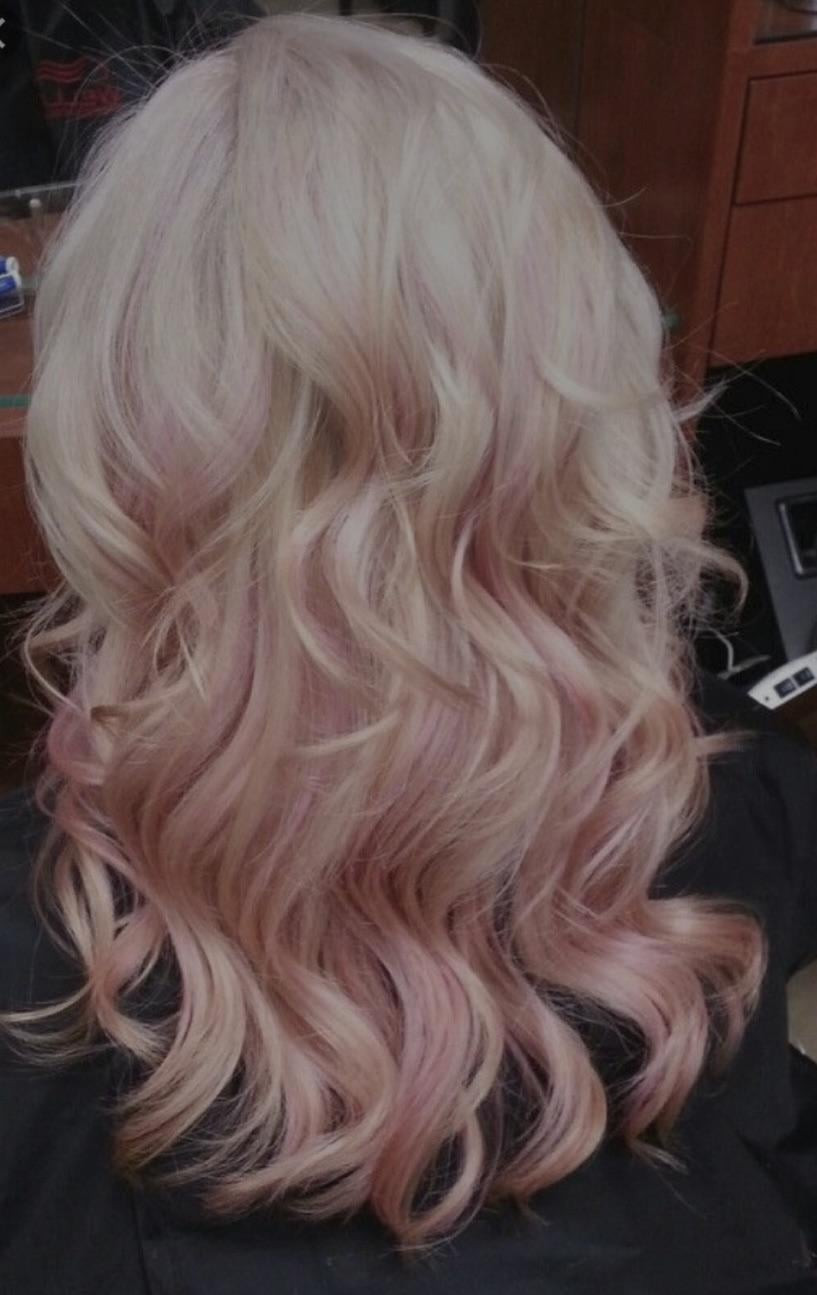
My first thought: that is a lot of pink for a blonde base. Then I looked at the grow-out. The pink highlights on this collarbone length fade into a peachy tone by week four, which is not bad if you like the shift. The middle part and wavy texture help the colour land evenly. By week six, the pink is barely there. A toning gloss at week five buys you two more weeks of visible colour.
Blonde Base With Pink Highlights Chin Bob With Pink Highlights
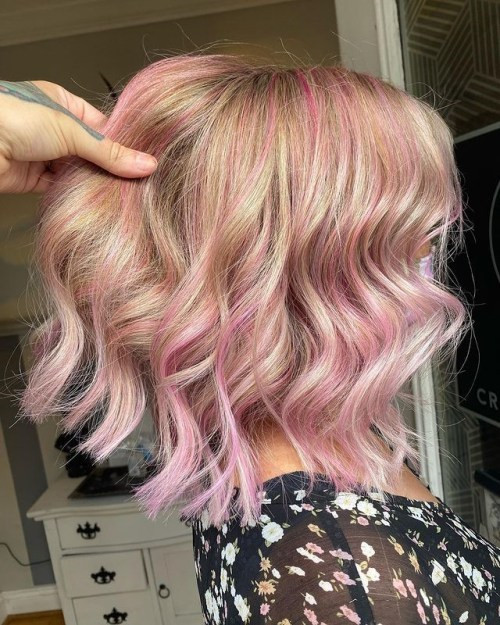
A chin length bob with pink highlights beats a longer style every time. Here is why: the short length means the pink reads as deliberate, not accidental. On long hair, pink highlights can look like leftover dye from a previous appointment. On a bob, it is a choice. The wavy texture and side view show how the colour wraps around the shape rather than just sitting on the ends.
Compare it to a collarbone cut. The longer version spreads the pink thin, so you need more highlights to get the same impact. The bob pink highlights concentrate the colour. Fewer foils, same payoff. Medium density hair holds the wave without collapsing. Fine hair might need a texturising spray to keep the shape.
Baby Pink Highlights on Fine Hair
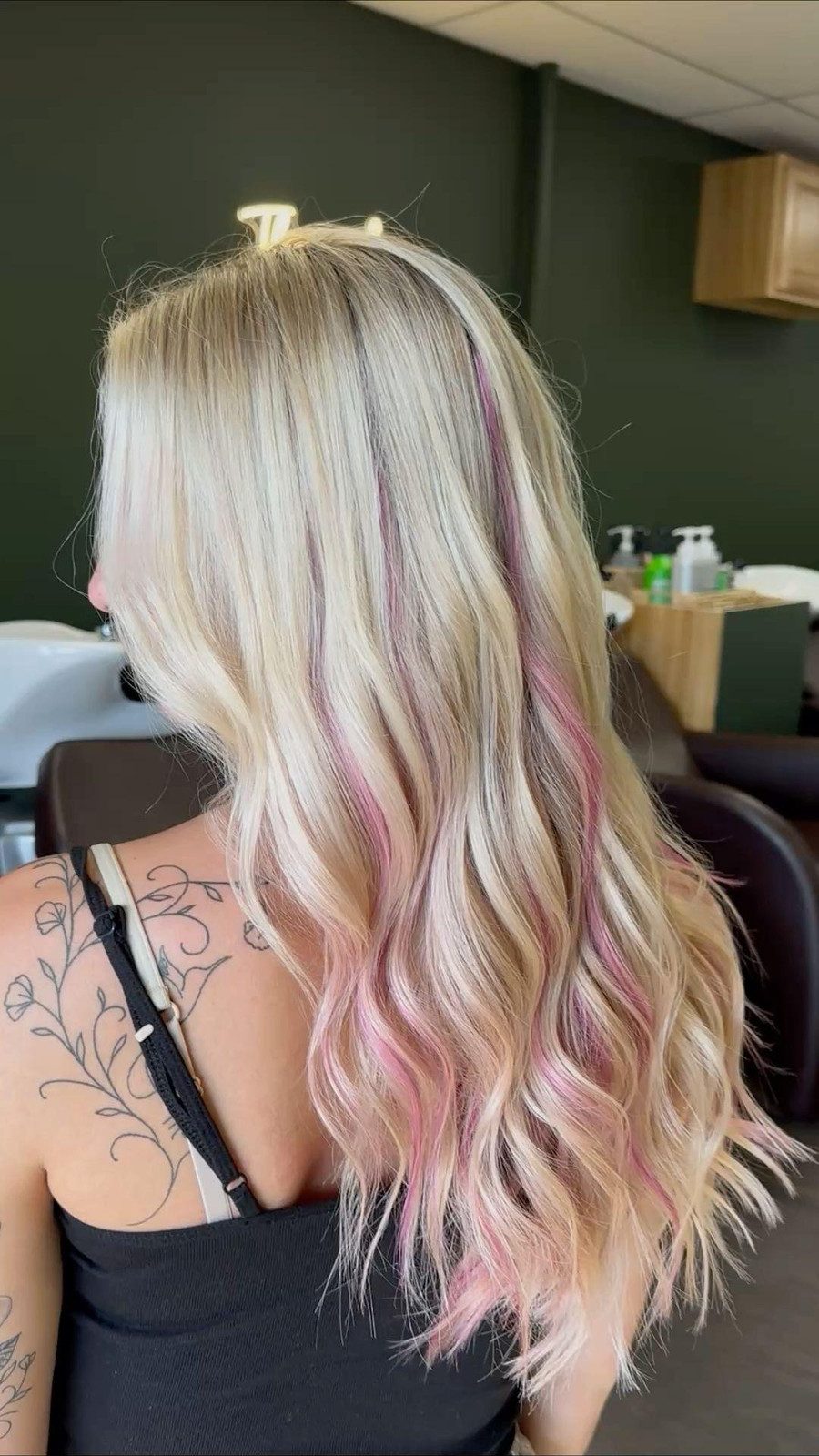
Baby pink highlights on fine hair is a rare pairing that actually adds dimension instead of washing it out. The colour sits close to the blonde base, so it reads as a soft reflection rather than a separate stripe. Wavy, mid-back length gives the fine texture enough body to support the colour without looking weighed down. The middle part keeps the distribution even.
Fine hair can go flat with heavy colour application. The key is keeping the baby pink highlights fine and spaced out, not chunked. Ask your stylist for thin weaves and a root shadow that matches your base. This is not a DIY job. The toner balance between pink and blonde is too precise.
Mid-Back Thick Hair With Fine Pink Highlights
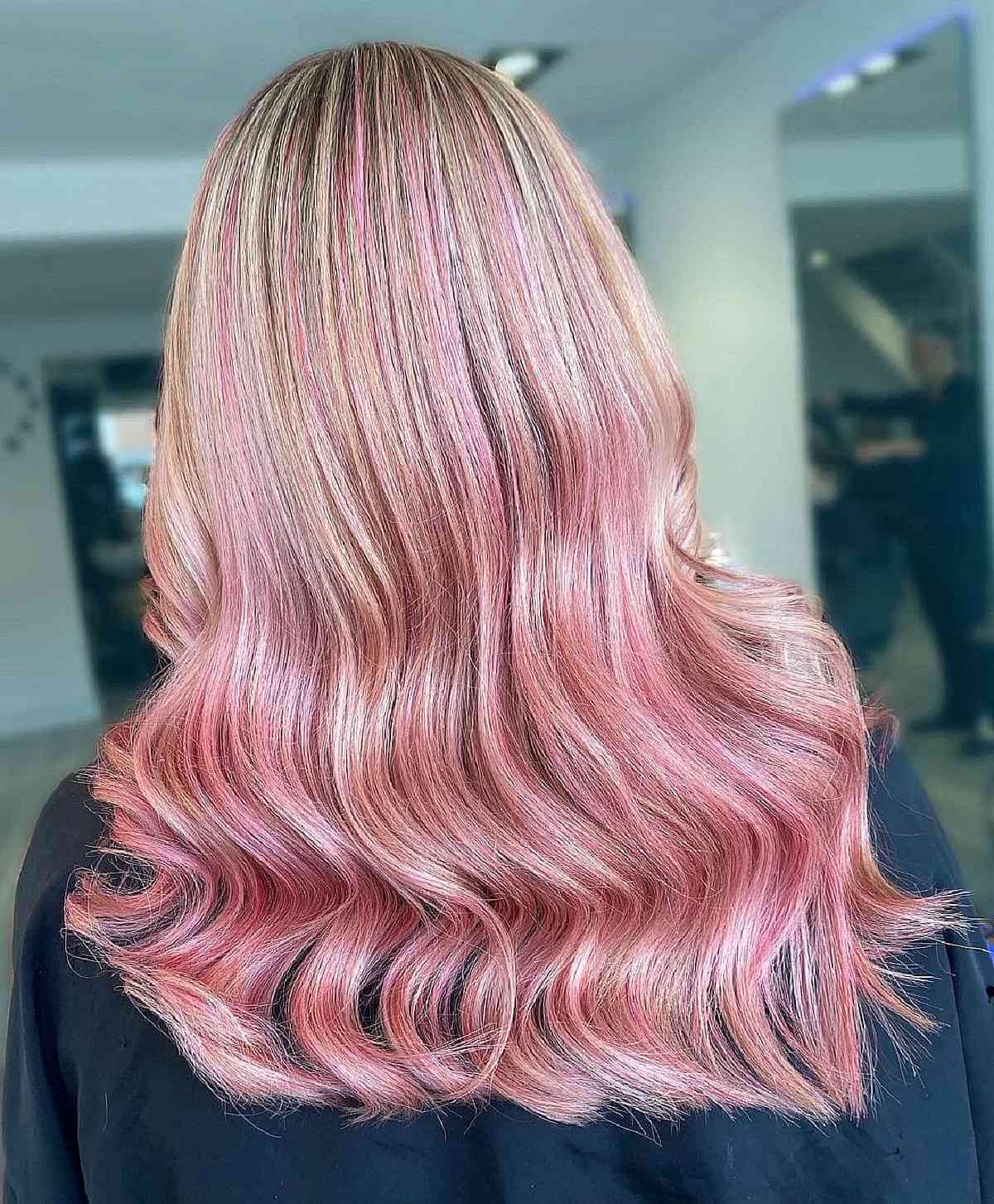
Can thick hair actually carry fine pink highlights without looking like a few random strands got caught in a toner mishap? Yes, but only with a technique that respects the density. On a blonde base, the stylist weaves ultra-fine ribbons of pink through the mid-lengths and ends, leaving the root area untouched so the colour breathes. The tone here is a cool pastel pink, almost dusty, which keeps the wavy blowout looking dimensional rather than streaky. This is not a bathroom-mirror job. Thick hair pink highlights at this scale require a salon chair, a patient hand and a willingness to sit through sectioning that takes longer than the actual colour application. Fine pink highlights read as subtle shine, not costume.
Mid-Back Dark Brown With Bright Pink Streaks
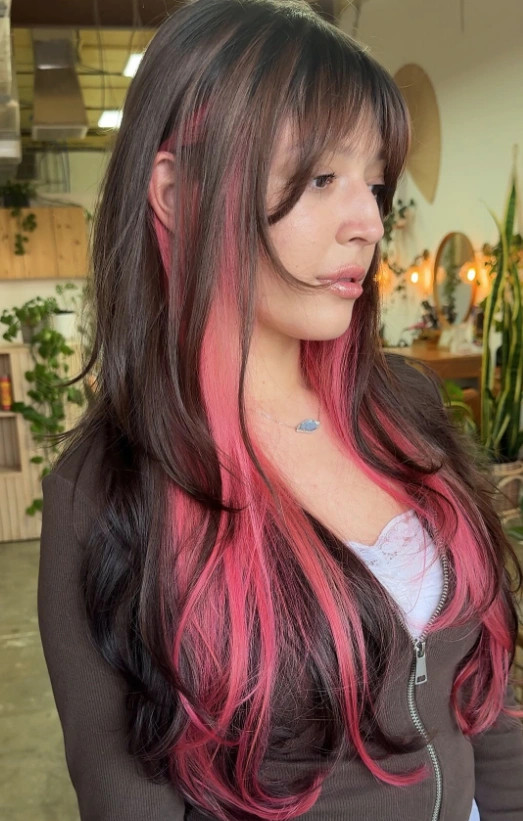
Dark brown base meets bright pink streaks, and suddenly January has a reason to exist.
There is something about cooler months that makes a high-contrast colour feel intentional rather than desperate. The dark brown bright pink combination works because the base is deep enough to anchor the brightness. The streaks here are chunky, placed from mid-length to ends, and the tone is a true hot pink with no coral or lavender leaning. The mid-back length lets the waves carry the colour instead of competing with it. Curtain bangs soften the whole thing, so the pink reads as playful, not aggressive. The dark brown base does the heavy lifting: it makes the pink look saturated without needing a full bleach underneath.
Visual Idea
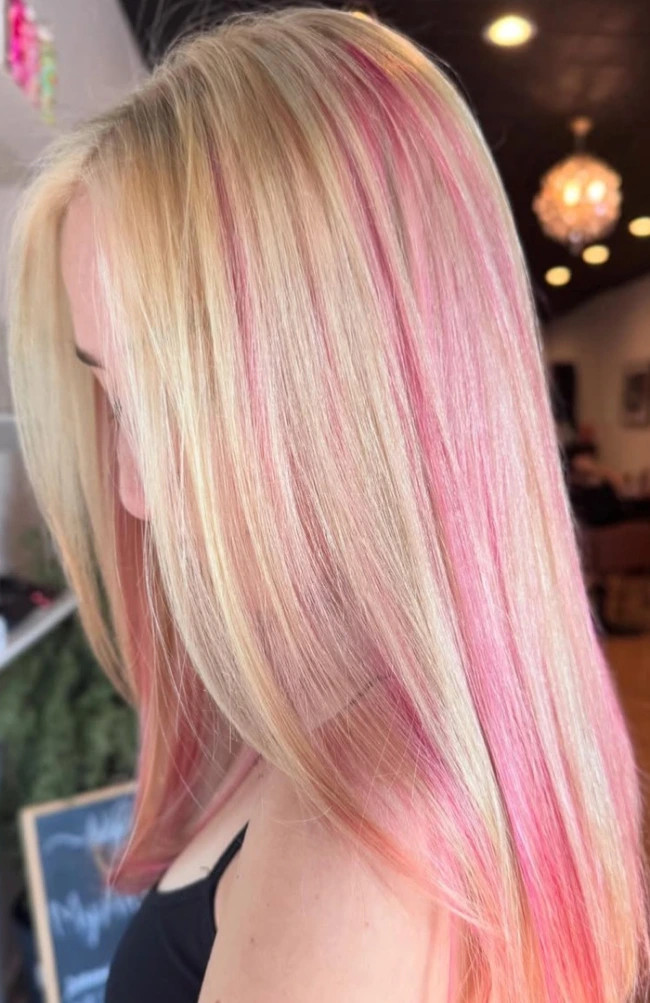
I will admit it: I underestimated how fast peekaboo highlights fade when they are hidden under a layer of blonde. The pink here sits underneath the top sections, so it only shows when the hair moves or is tucked behind an ear. Which is lovely. It is also a maintenance puzzle.
The first wash strips the most pigment. By week three, the pink is more of a blush whisper than a statement. A color-safe shampoo helps, but the real answer is a toning gloss every four weeks to keep the tone from drifting into peach. The blonde base stays cool, the pink stays pink, and the peekaboo placement means you can stretch the grow-out because the root area is never involved. The honest downside: if you wear your hair down all day, nobody sees the colour. You have to style for it.
Shoulder Visual Idea
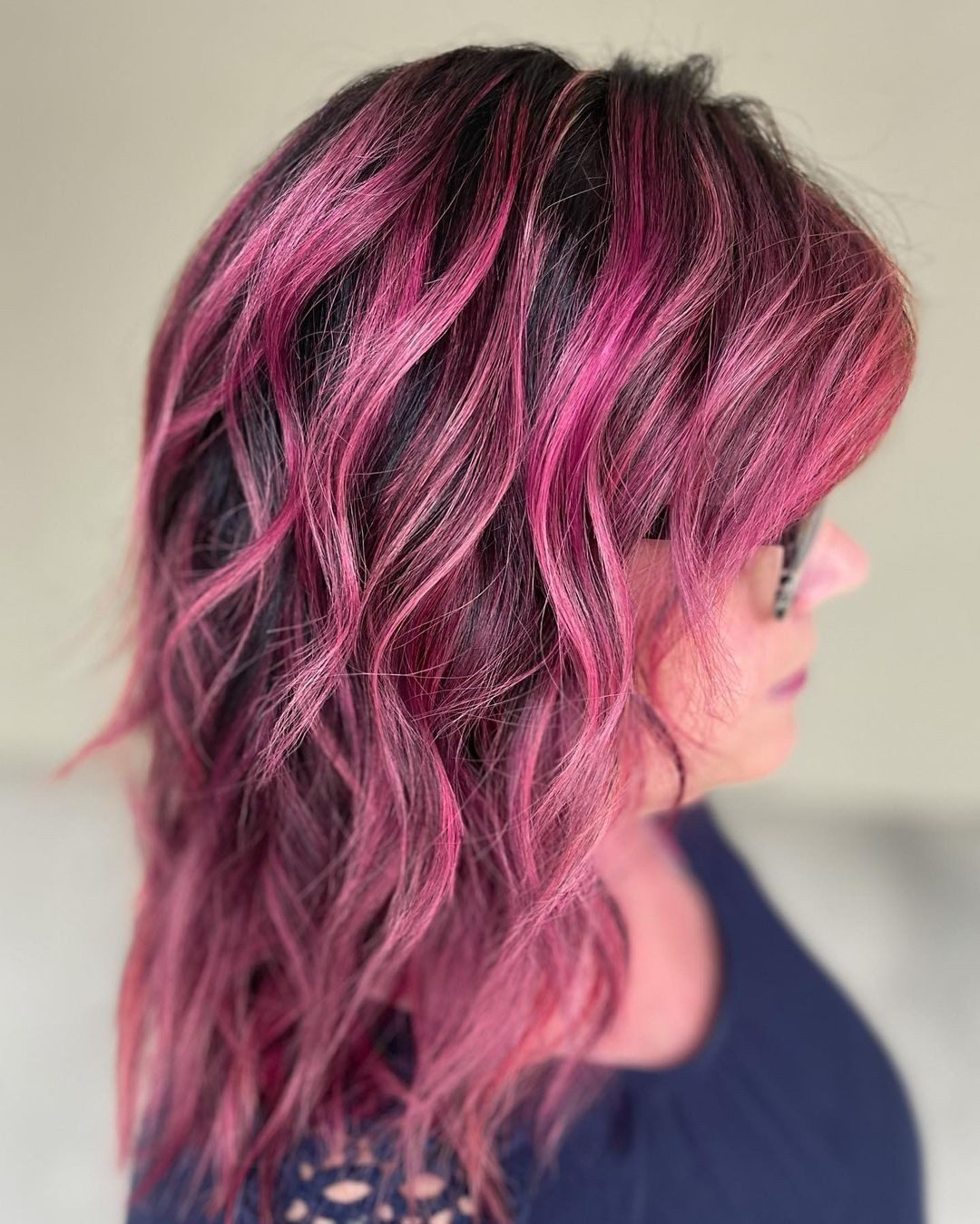
Have you ever tried to lift a dark base to vibrant pink at home? I have. It is a beige-orange disaster that no purple shampoo can fix. This is a salon-only service, full stop. The stylist pre-lightens the selected sections to a pale yellow before applying the pink, and on a dark base that means at least two rounds of bleach. The tone here is a warm fuchsia, not pastel, which helps it read as vibrant against the remaining dark hair. The shoulder length keeps the colour from weighing the hair down, and the thick texture holds the wave pattern without going flat. Skip the DIY box. Book the appointment.
Collarbone Visual Idea
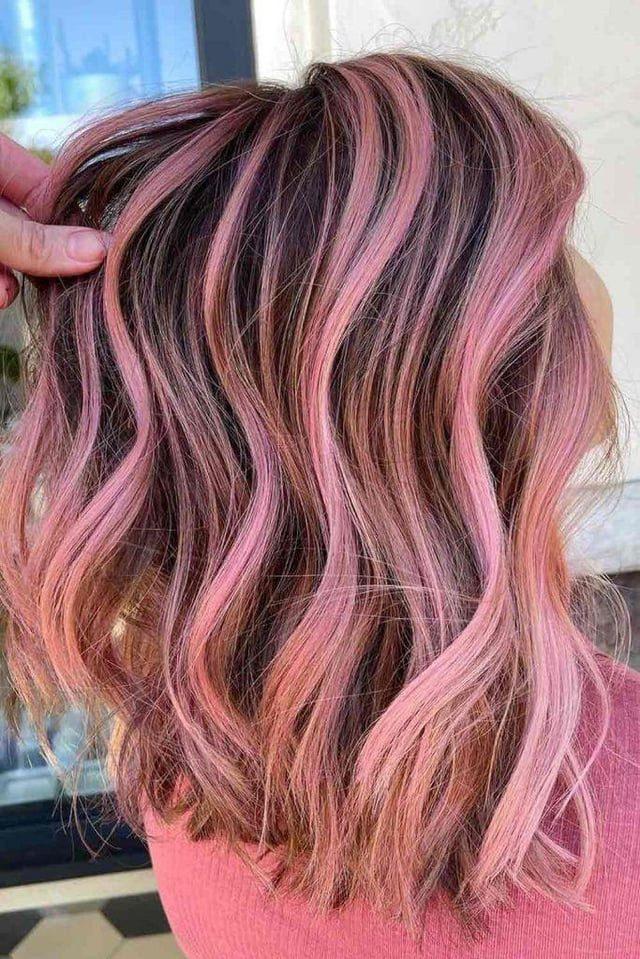
These pink highlights hit different than the face-framing version. Instead of concentrating the colour around the face, they are scattered through the mid-lengths and ends on a dark brown base. The effect is more dimensional and less spotlight. The collarbone length keeps the hair from getting stringy, and the wavy blowout gives the pink something to catch on. The tone is a vibrant magenta, not shy, but the side part and loose waves keep it from reading as aggressive. If you want pink without committing to a full front section of colour, this is the placement. It moves with the hair instead of sitting on top of it.
Mid-Back Visual Idea
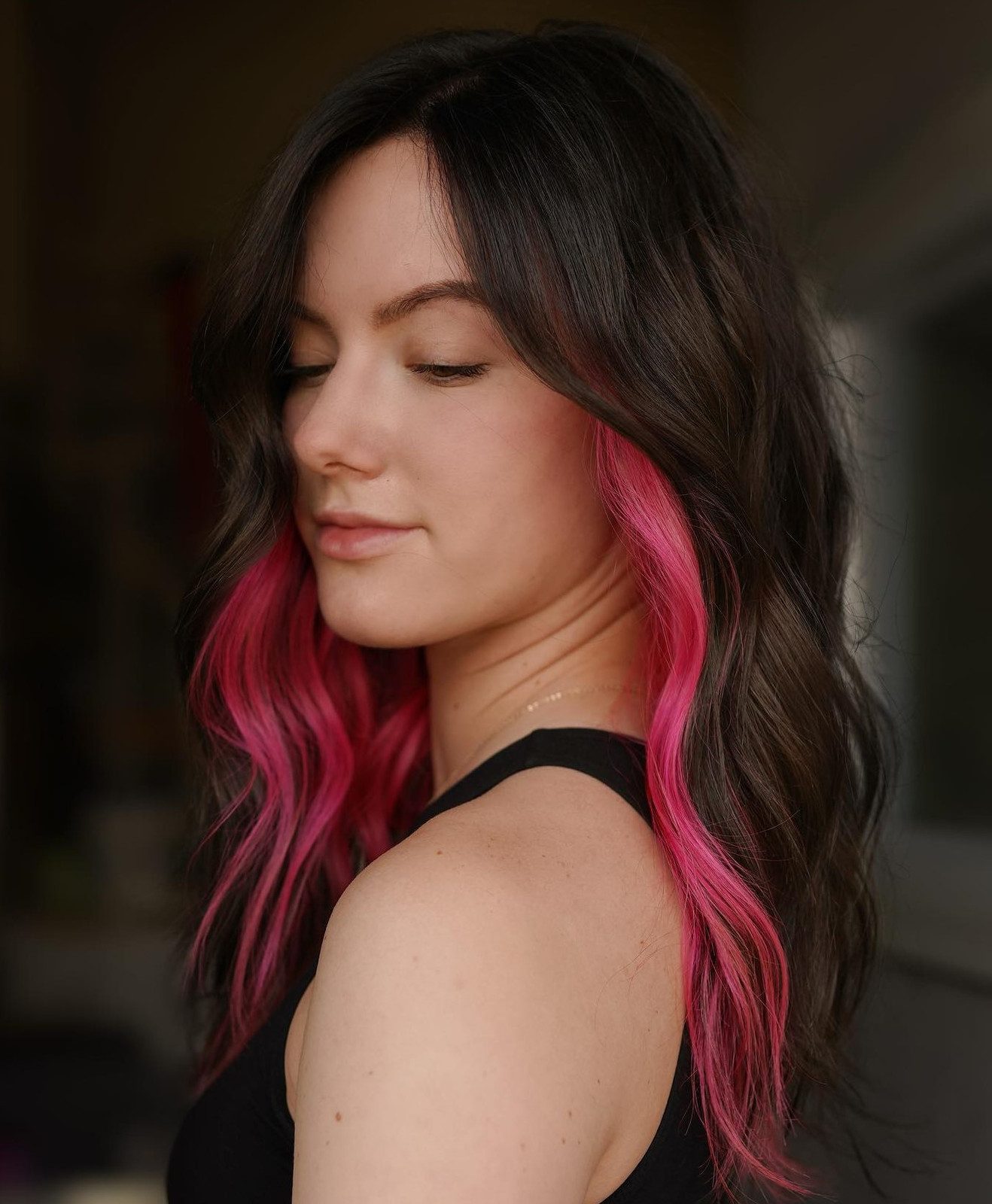
The peekaboo is the trick. On a dark brown base, the bright pink highlights sit underneath the top layer, so they only flash when you move. Loose waves pull the mid-back length apart just enough to reveal the colour without it screaming. Wavy texture, medium density — the technique works because the hidden sections stay vibrant longer since they see less sun and shampoo. A middle part keeps the reveal subtle: you get a pink flick at the ends when you turn your head, not a stripe. This is the colour equivalent of a secret. It only shows itself when you want it to.
Layers Visual Idea
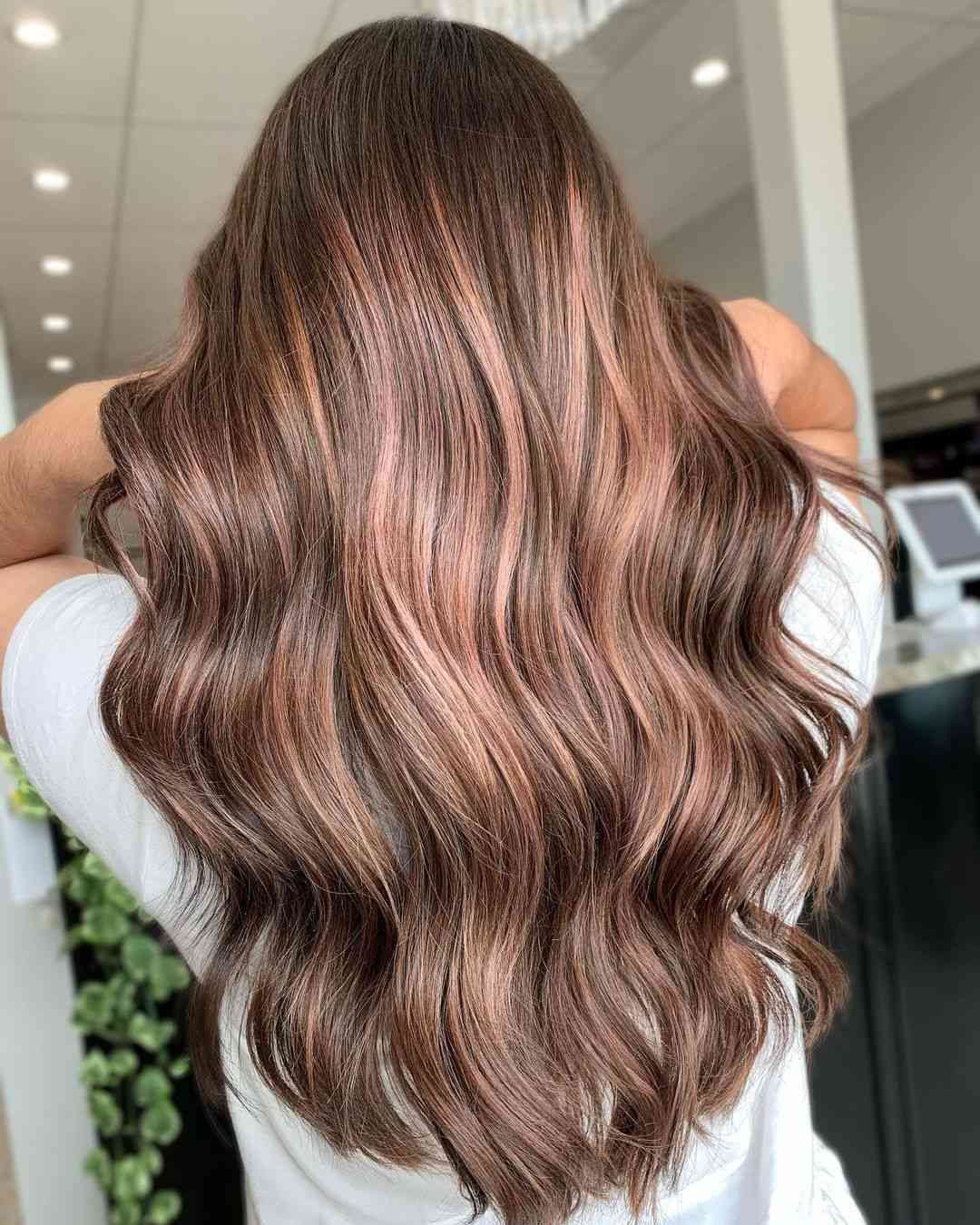
Rose gold on a dark brown base is the colour equivalent of a neutral blush — it reads warm without going full coral. The mid-back length keeps the rose gold highlights from looking too delicate, and the loose waves give the tone somewhere to catch the light. Wavy texture, medium density, and the layers are doing the work: they let the rose gold sit in ribbons through the middle and ends instead of stacking at the crown. A middle part spreads the colour evenly on both sides. If your skin runs cool, skip this one — the rose gold will fight you. Warm undertones? It will look like the colour grew there.
No Bangs Visual Idea
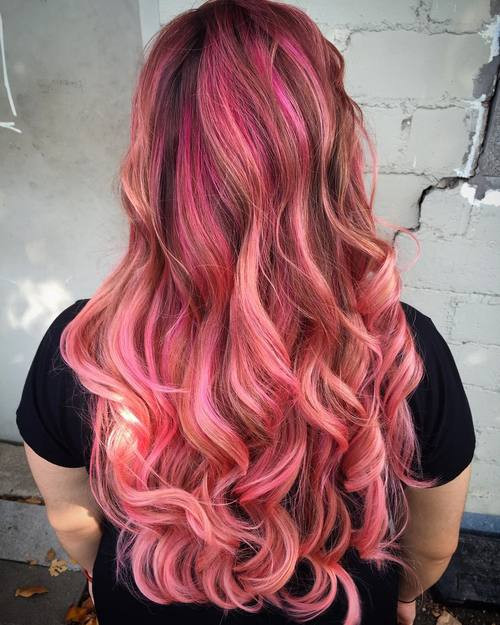
How long does rich pink on a brown base actually stay rich? About three washes before it starts pulling warm. The mid-back length and thick, wavy texture mean you need more product to cover the surface area, and the brown base underneath wants to peek through as the pink fades. No bangs helps — less face-framing colour to watch oxidise. A middle part and loose waves keep the fade even, but the honest reality is that pink on brown needs a toning shampoo every second wash and a refresh appointment around week six. The colour is worth it. The upkeep is not a surprise if you know going in.
Chin Length Visual Idea
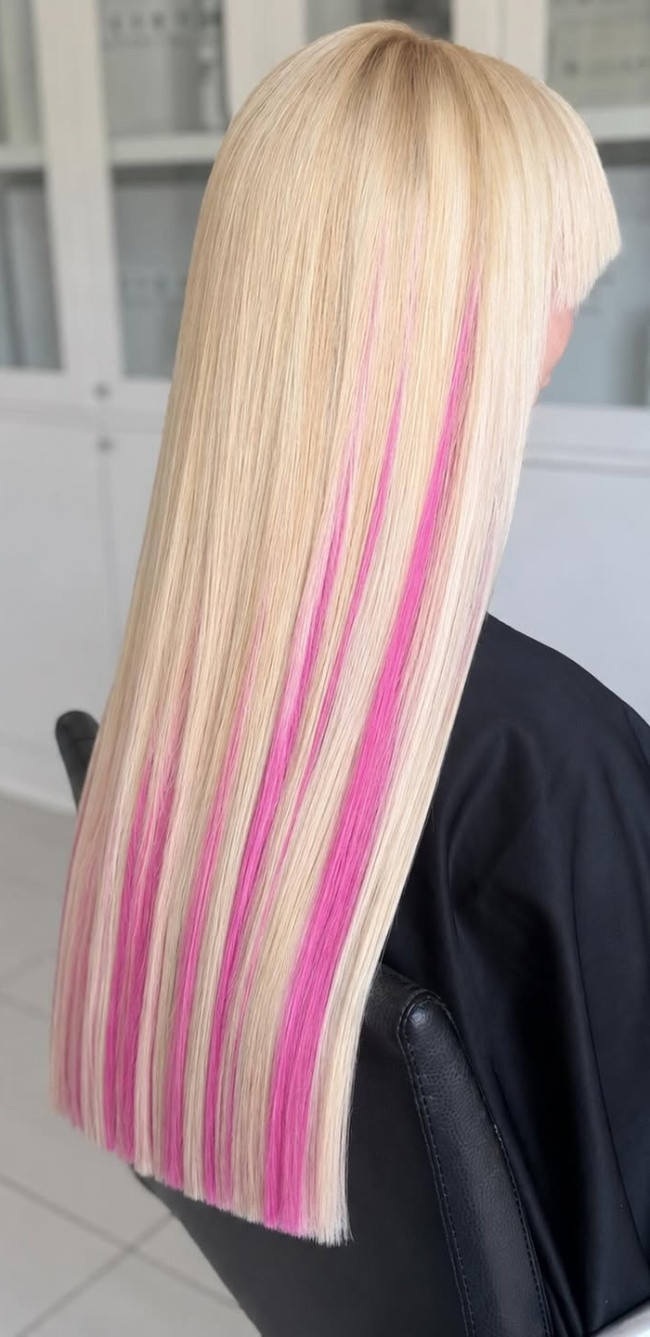
I sat in the chair and said, “Ribbon highlights, bubblegum pink, platinum base.” The stylist nodded like she heard it ten times that week. Chin length and a long bob mean every highlight lands in the same visual field — no hidden sections, no peekaboo. The blunt bangs frame the face, so the pink sits right at the hairline. Straight, sleek styling and fine density make the ribbon technique critical: the colour has to be painted in even, thin strips, or it reads as a solid block. This is not a bathroom-mirror job. Book it, let someone with steady hands place each ribbon.
Front View Close Crop Visual Idea
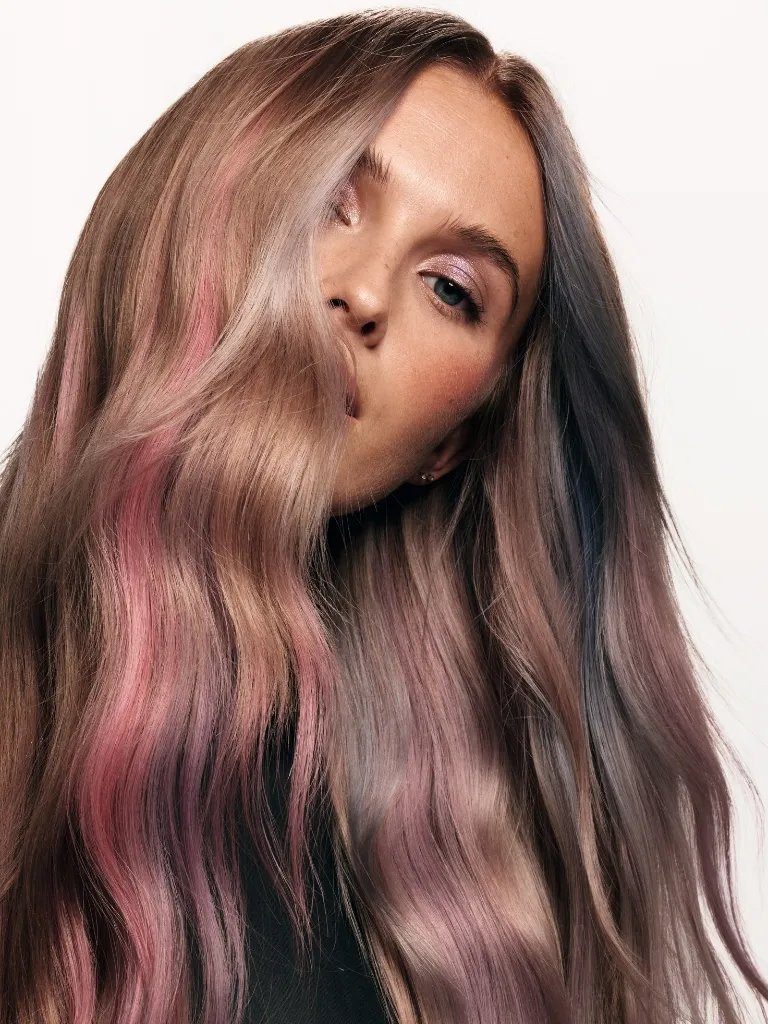
I will admit it: I usually skip pastel pink and purple mixes. They read as too Easter basket for my taste. But on a brown base with wavy, medium-density texture and mid-back length, the pastel tones land differently — they look like a watercolour wash, not a candy coating. The front view close crop shows the pink and purple streaks weaving through the layers, and the air-dried waves keep the finish soft. Compared to the vibrant pinks in other sections, this one reads quieter but more dimensional. The brown base anchors the pastels so they never look washed out. It is the pastel option for people who do not trust pastels.
Curtain Bangs Visual Idea
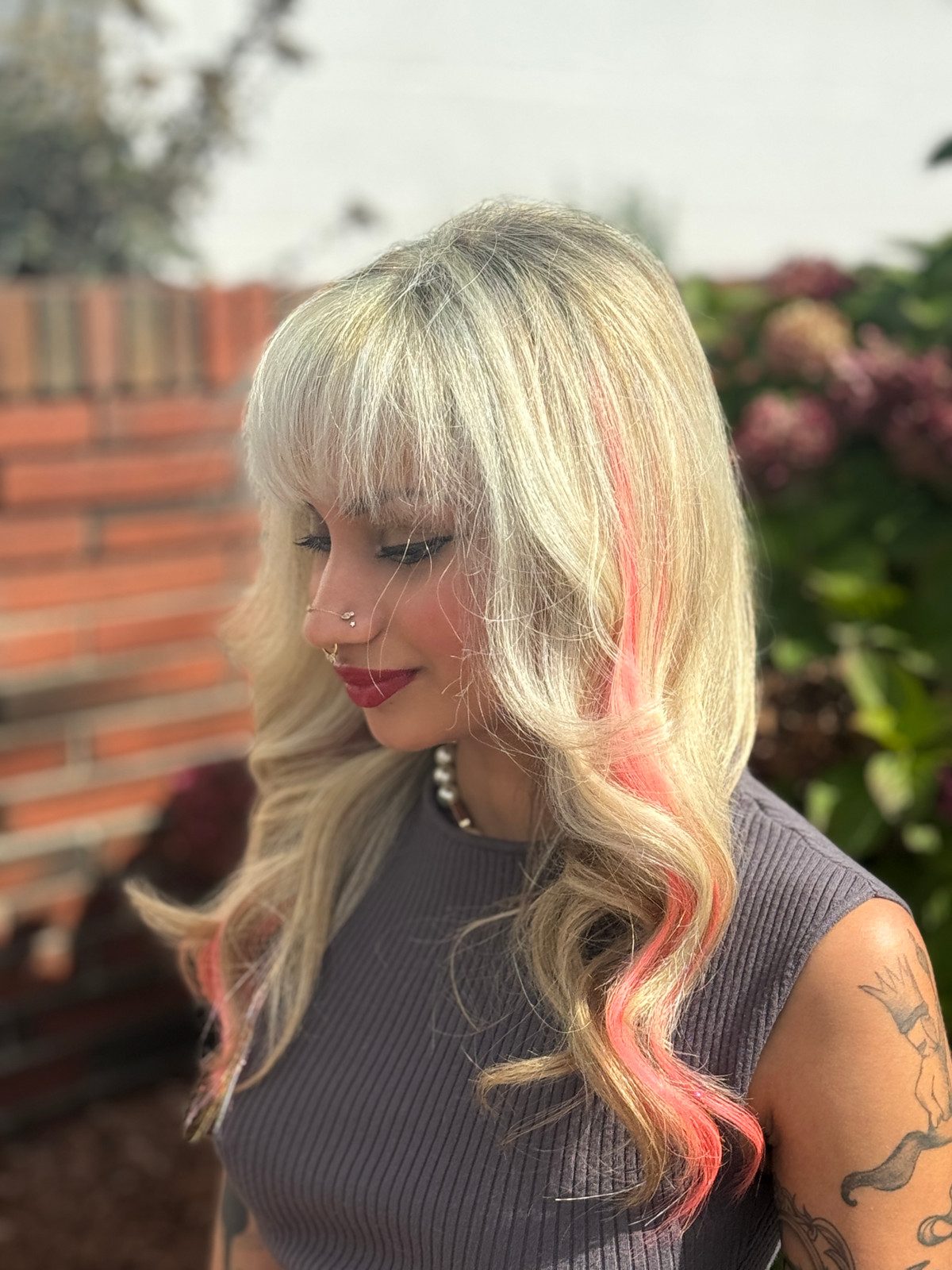
The trick with curtain bangs and pink highlights is placement. On this collarbone length, wavy, medium density blonde base, the pink is concentrated around the face, so the curtain bangs catch the colour when they sweep to the side. A middle part keeps the bangs symmetrical, and the waves stop the pink from sitting in one flat line. The technique works because the colour follows the bangs’ natural movement, not the other way around.
Back View Visual Idea
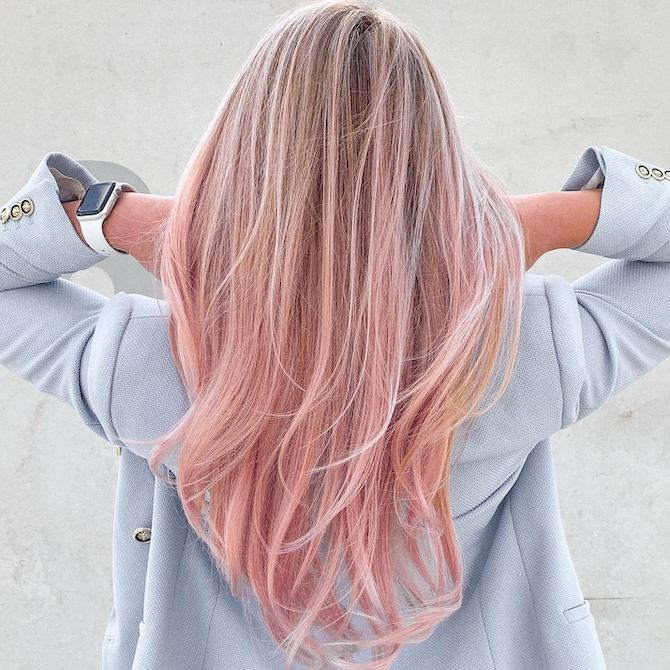
Ever had a colour that looked great from the front but told a different story from behind? This is that story, and it’s a good one. The blonde base carries those pink highlights all the way down to mid-back, and because the hair is fine, the colour reads as a soft wash rather than a stripe. I own fine hair. I know it goes flat by 4 pm. The blowout here is doing real work, but the side part helps the pink catch light on the wave bends. The honest downside: those pink highlights will fade faster than the blonde because fine hair holds demi-permanent colour for about four weeks, maybe five if you baby it. By week three, the pink leans peachy. By week six, it’s a whisper. You will be back in the chair or at the sink with a colour-depositing conditioner before the grow-out even becomes the problem.
Visual Idea — Ending At The Collarbone
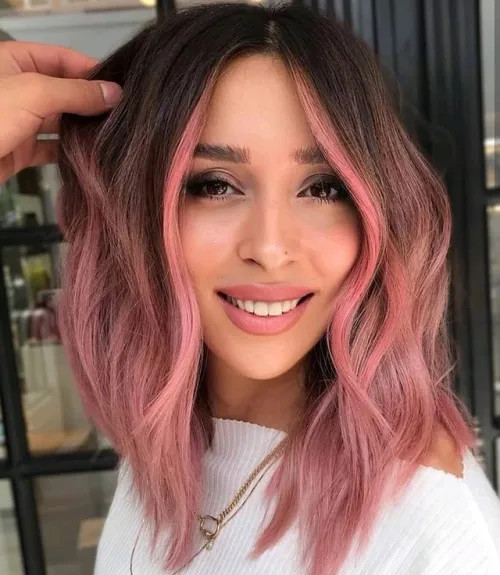
This is the one that made me stop scrolling. A lob at the collarbone, brown base, noticeable pink highlights woven through every layer. The colour technique here matters more than the shade: those highlights are fine and frequent, not chunky, which means they read as dimension rather than decoration. The tone is what I would call a dusty rose, not bubblegum, not neon, and that is the whole trick. It flatters wavy, medium-density brown hair because the waves catch the pink at different depths, and the collarbone length keeps everything from feeling heavy. If your hair is stick-straight and low-density, the pink will sit on top instead of blending in, and you will see every highlight as a separate ribbon. This wants movement to do its job.
Chin Visual Idea
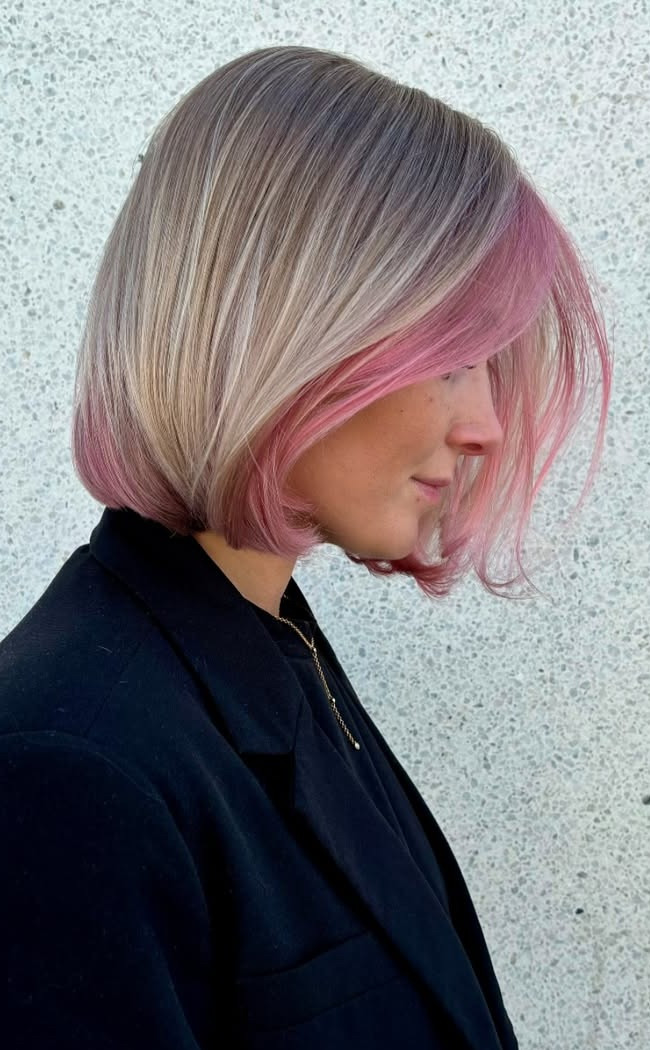
I will admit I was skeptical about ash blonde with pink highlights. Ash and pink are not natural roommates, ash wants to be cool and grey, pink wants to be warm and peachy. But this chin-length bob makes it work because the pink is concentrated on the face-framing sections, not scattered everywhere. The straight, fine texture helps the pink sit clean and sharp, no blurring. The honest downside: if your ash blonde base leans even slightly yellow, the pink will pull coral, and that is a fight you will lose with a purple shampoo. You need a truly neutral or cool-toned blonde underneath for this to read as pink and not salmon.
Front Visual Idea
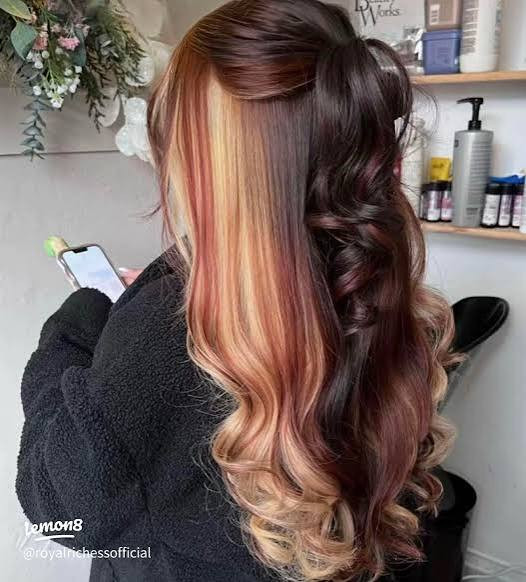
This is the one I’d book a consultation for, not a bathroom-mirror job. Blonde and pink highlights on a dark brown base is a two-step process: lift the strands to pale yellow, then tone them pink, and the order matters more than the patience. On thick, wavy hair that falls to mid-back, the contrast lands soft instead of stripey, especially when the streaks start at the front and melt into the lengths.
At home, you’d likely end up with blotchy patches where the pink grabbed unevenly. A stylist can place the blonde where it catches light and keep the pink from drifting into orange. Side part, no bangs, a blowout that lets the waves do the work. That’s the whole trick.
Final Thoughts
After writing all of these, I keep coming back to that brown base with pink pieces. It is the one that survives a grow-out without looking like an accident, and that matters when my roots show at week five.
- Refresh toner at week six, not week ten.
- Trim the baseline every eight weeks.
- Use a purple shampoo once a week.
- Skip heat styling on pink pieces.
I am booking the warm brown with vibrant pink next. It is the one I would actually live with.

