
I kept seeing the same colour in the chair next to mine: not platinum, not honey, but something in between that looked like it had been there all along. Sandy blonde is the shade that says you went to the beach, not the salon, even though you definitely went to the salon.
This roundup has 15 ways to wear it, from low-upkeep root shadows to bright balayage that needs a toner every six weeks. Fine hair, thick hair, short bobs, long layers — it covers the range. I wrote this because my own blonde went brassy at week five, and I needed to know which versions buy you time.
Voluminous Sandy Blonde With Curtain Bangs
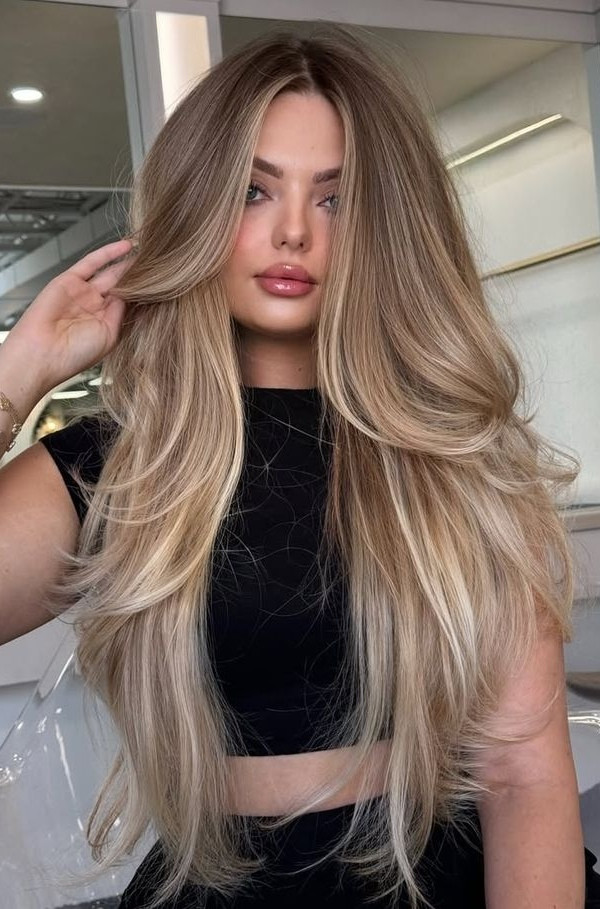
That sandy blonde with curtain bangs lands exactly where it should: cheekbone-adjacent, not grazing the chin, not stopping at the eye. The voluminous blowout lifts the roots and pushes the layers outward, which means a round or square jaw reads softer against the width at the temples. Fine hair needs a thick-hold mousse and a round brush bigger than you think, and twenty minutes of tension. Medium to coarse density holds the shape past lunch. Ask for long layers that start below the collarbone and curtain bangs that hit the cheekbone dry, not wet.
Cool Sand Blonde Balayage
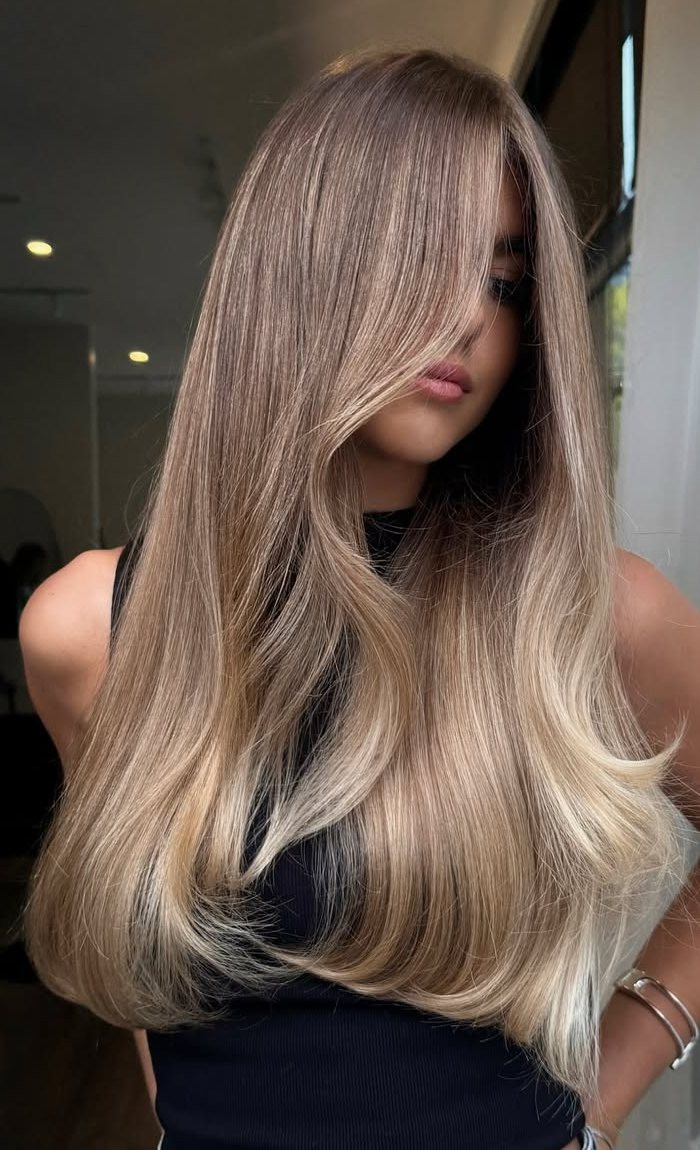
Best grow-out in this roundup.
The cool sand blonde balayage works because the stylist paints the lightener freehand, skipping the root by about two inches, then tones the whole thing to a beige-ash that reads cool without going grey. That soft contrast between the deeper root and the lighter mid-lengths and ends means you do not see a line when the root grows. It is a three-hour chair commitment, but the payoff is ten weeks of not thinking about your hair. Wash once or twice a week with a purple shampoo to keep the tone from warming up, and book a gloss every third month. Thick, wavy texture shows the dimension best; fine hair needs the stylist to keep the balayage pieces fine and spaced so they do not read as stripes.
Sandy Blonde With Subtle Highlights
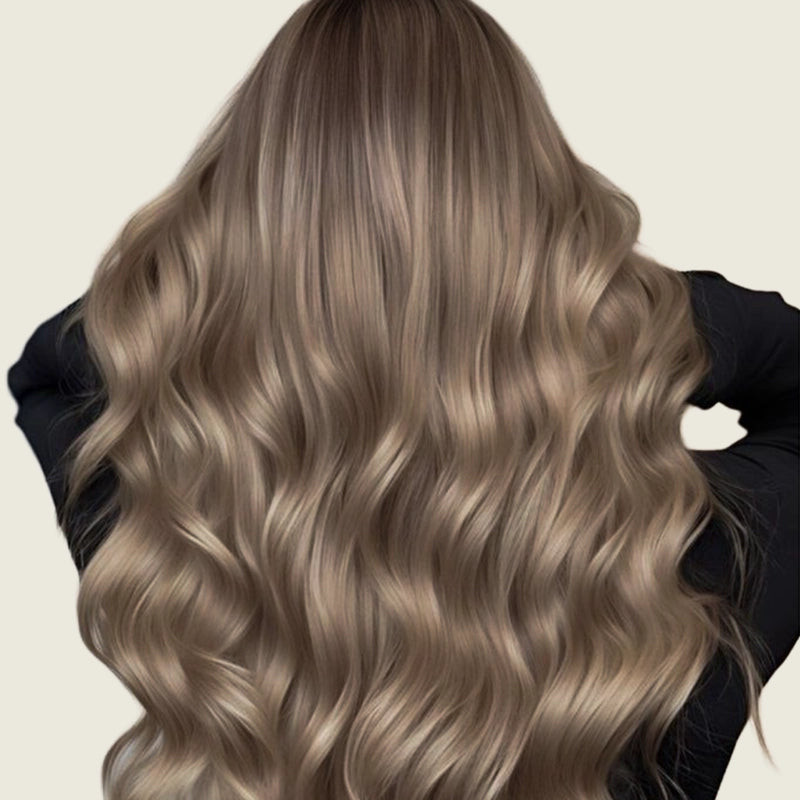
When did sandy blonde subtle highlights start looking this expensive? The colour is woven throughout the mid-lengths and ends, never starting closer than an inch from the root, so the grow-out is genuinely low-stress. The honest downside: subtle highlights on a sandy base can read as brassy by week four if your water is hard or you use warm styling tools without a heat protectant. A cool-toned gloss at the six-week mark resets the tone without another foil session. The texture stays soft because the lightener is painted on fine sections, not chunked. Wavy, thick hair catches the light across the bends; straight fine hair needs a quick wave with a one-inch barrel to show the dimension.
Bright Sandy Blonde Balayage
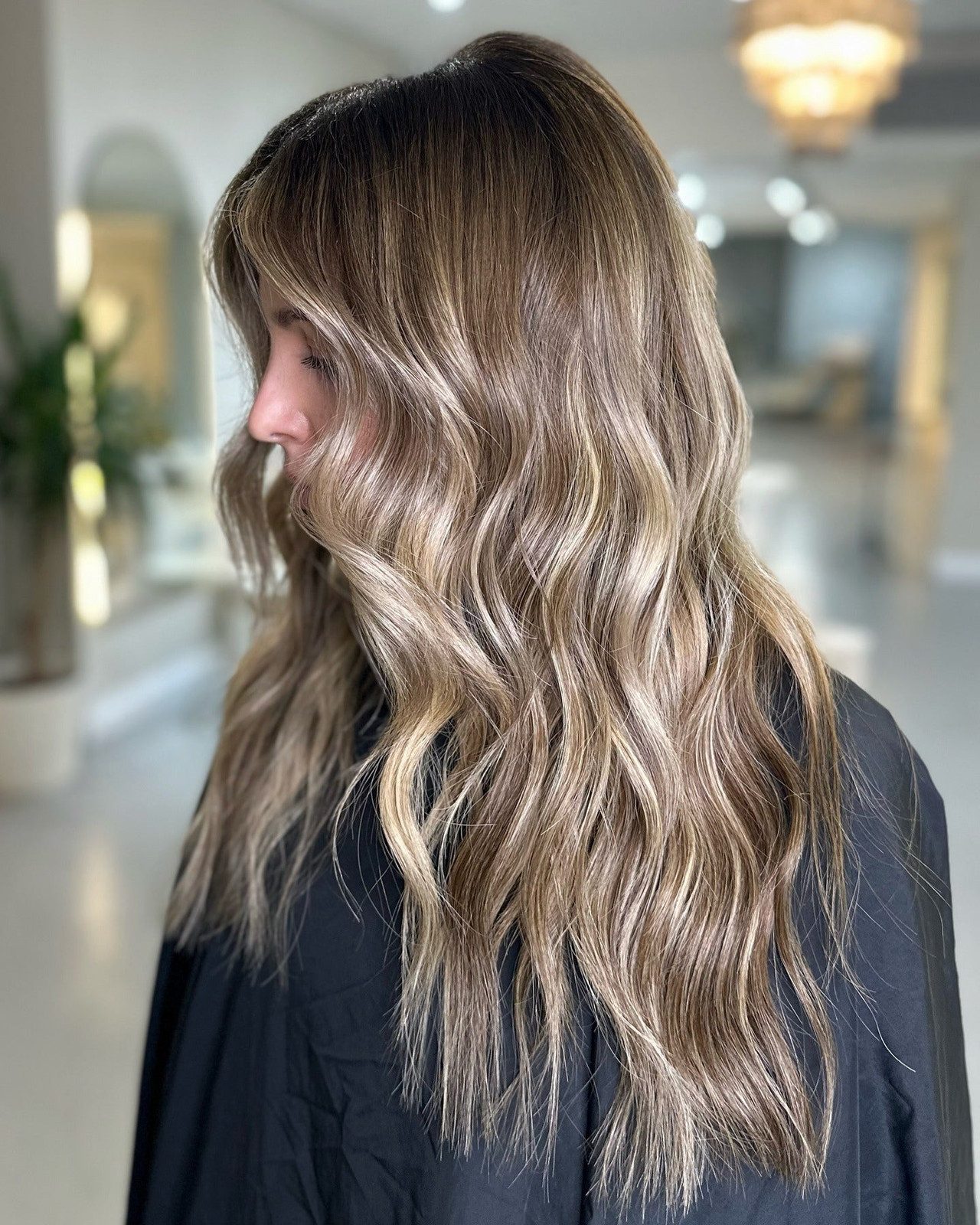
I looked at the bright sandy blonde balayage and thought, that is a lot of lift. And it is. The significant balayage starts higher than a subtle version, closer to the root, and the lightener is left on longer to reach a pale gold rather than a warm honey. Compared to the soft contrast cool sand blonde balayage, this one reads warmer and more dimensional, but it also demands a toner refresh every four to six weeks. The mid-back length and loose waves show the gradient from deeper root to bright end, and medium density is the sweet spot: enough hair to show the movement, not so much that the lightener gets expensive.
Shoulder Length Sandy Blonde Balayage With Fringe
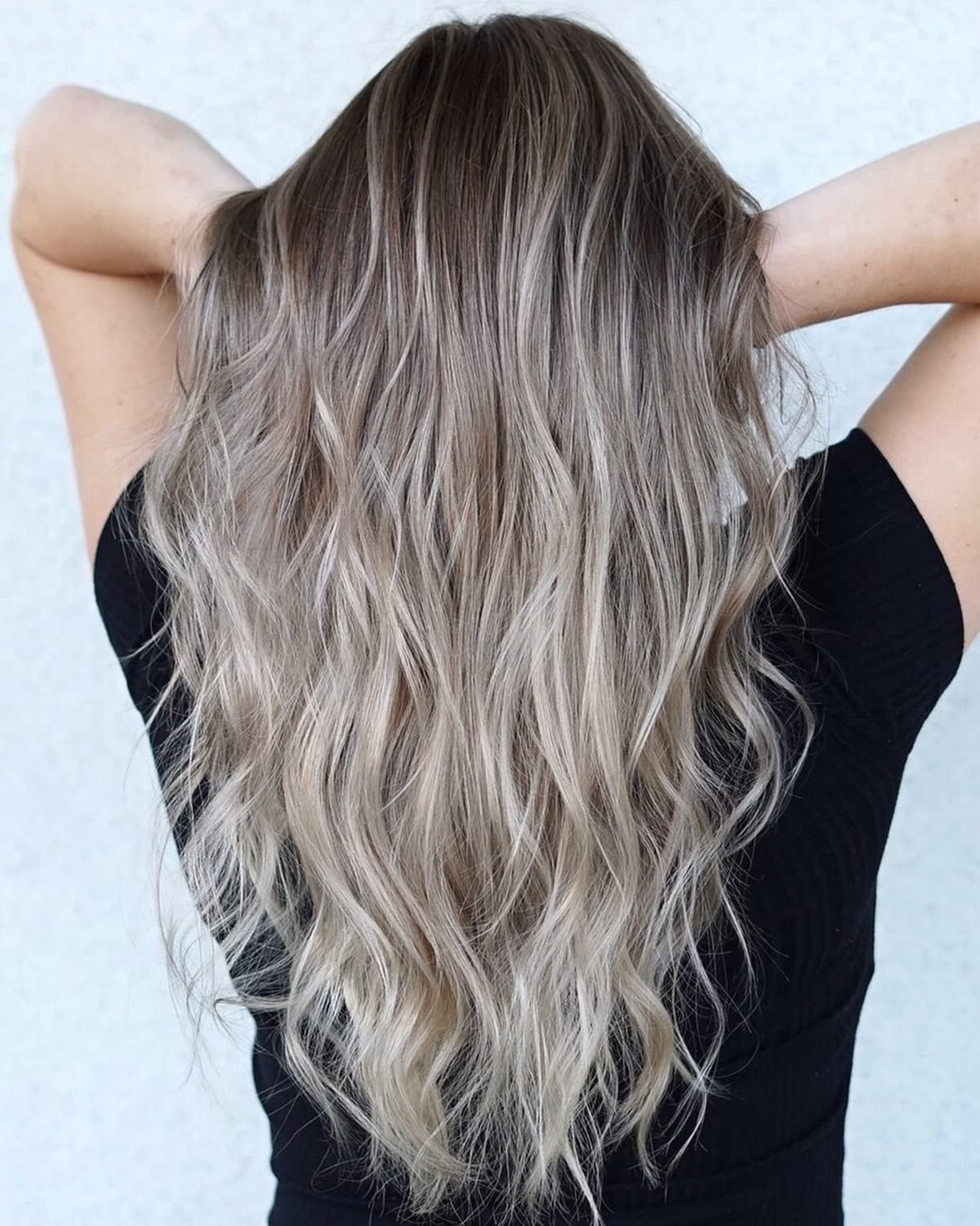
The shoulder length sandy blonde balayage with curtain bangs is the rare cut that works for a wedding and a Tuesday. The side part and loose waves give it polish, but the real trick is the balayage placement: the lightest pieces hit around the cheekbones and the ends, so the colour lifts the face without the fringe doing all the work. Medium density and wavy texture hold the wave pattern without fighting it. This is a summer cut that transitions into fall with a deeper toner. The fringe needs a dry trim every three weeks if you are particular, and the length needs a shape-up every eight.
Dark Sandy Blonde With Muted Tone
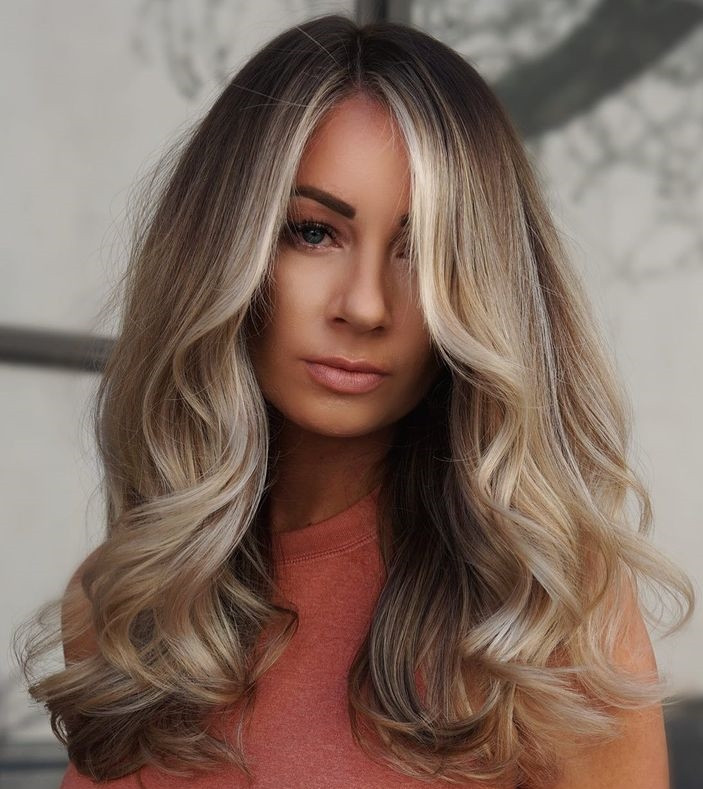
This is the quiet luxury version of sandy blonde. The base leans dark, almost a latte brown, with lighter blonde highlights woven through the mid-lengths and ends. The technique is a subtle balayage that keeps the tone muted rather than bright, which I find looks richer in low light. On wavy, medium-density hair at mid-back length, it reads expensive without trying. The mute means you skip the weekly purple shampoo panic: my own roots showed at week seven with barely a line. A trim every eight to ten weeks keeps the ends tidy, and the darker base buys you six calm weeks before you even think about toning.
The colour isn’t one you see everywhere. That’s the point. The dark sandy blonde highlights sit so close to the base that the whole thing stays soft, never stripped. I told my stylist to keep the root heavy and paint only the middle sections. She nodded like she’d heard it a hundred times. For good reason.
Collarbone Layers With Face-Framing
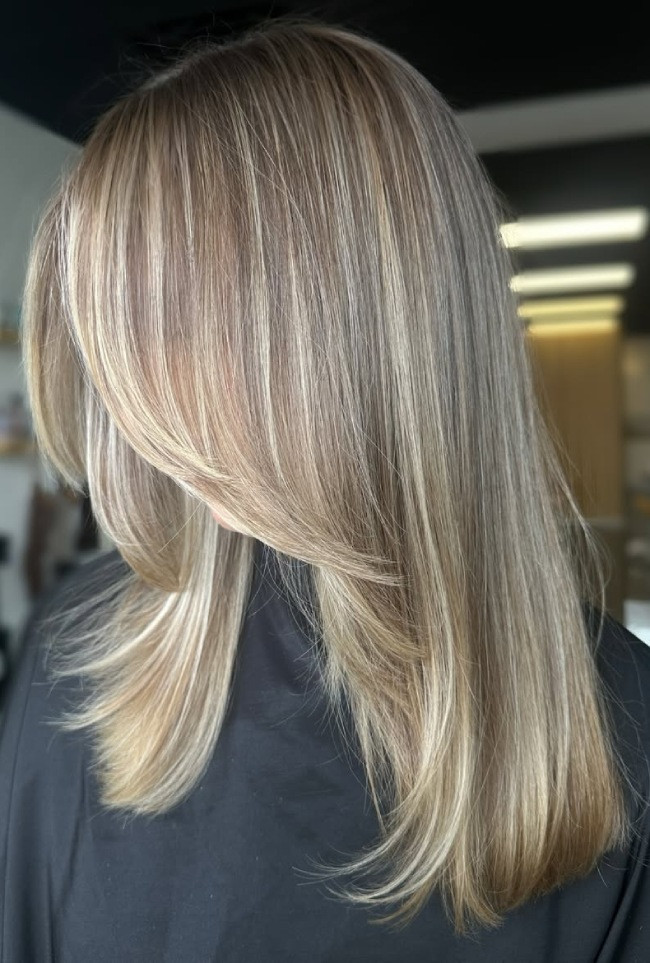
I confess I rolled my eyes at another face-framing moment. Then I tried collarbone sandy blonde highlights on my own fine, straight hair. The layers start below the chin and hit just past the collarbone, with a side part and a smooth blowout. The technique is a blended highlight that lifts the pieces around your face without a hard line. On fine hair, you have to book a salon for this: a heavy hand turns it stripy, but a soft balayage that comes from the mid-lengths out keeps it airy. The side part widens a round face slightly, which is a neat trick if you want that. It takes ten minutes with a round brush and a heat protectant. Trims every six to eight weeks are non-negotiable — fine hair shows split ends like a bad report card.
Collarbone Blended Sandy Blonde Highlights
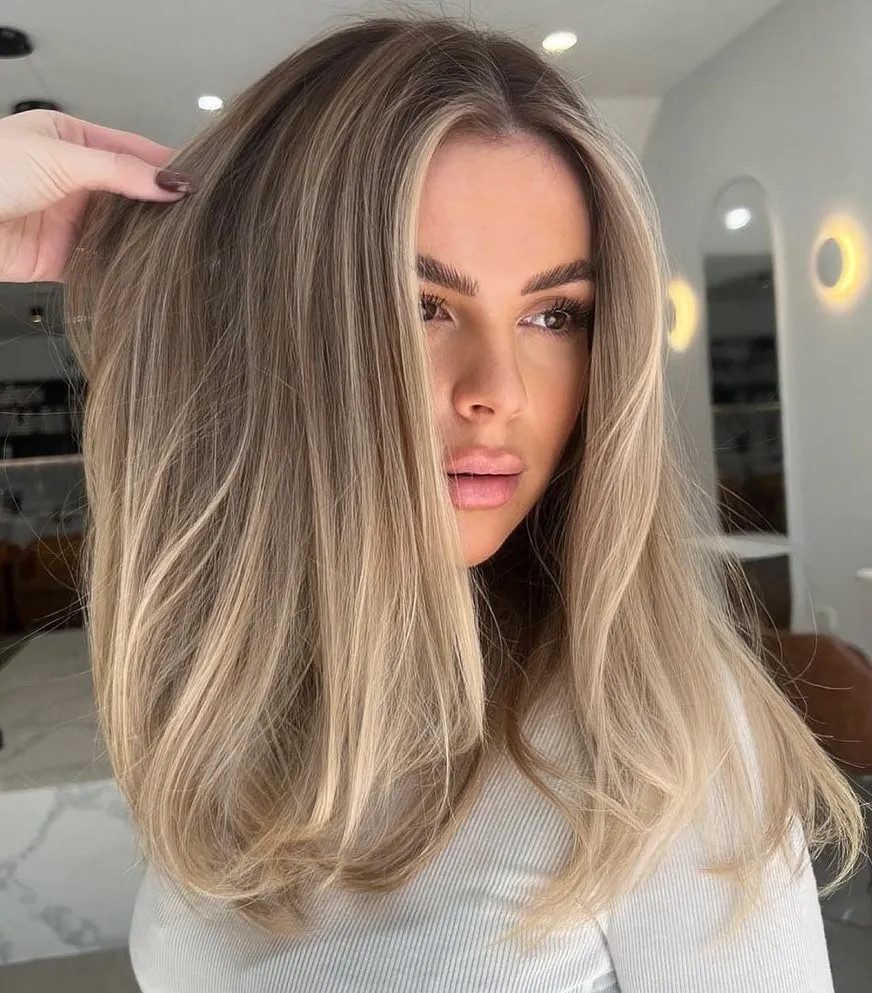
Can we talk about how blended is always pitched as easy? On fine, wavy hair at collarbone length, achieving a sun-kissed effect with sandy blonde blended highlights is a salon game. The highlights weave through the hair so the transition is seamless, but here’s the thing: fine hair grabs colour unevenly if you DIY it, leaving blotches near the crown. The honest downside is this: you need a professional to pack the slices properly, and you still have to style it. A wavy blowout with a side part and a heat protectant takes ten minutes. The blended nature means you push trims to eight or ten weeks, which is the only easy part. That sun-kissed effect works best if your natural base is a level six or seven, warm enough to borrow the blonde without fighting it. If yours is darker, skip it: the grow-out screams.
Wavy Blowout Sandy Blonde
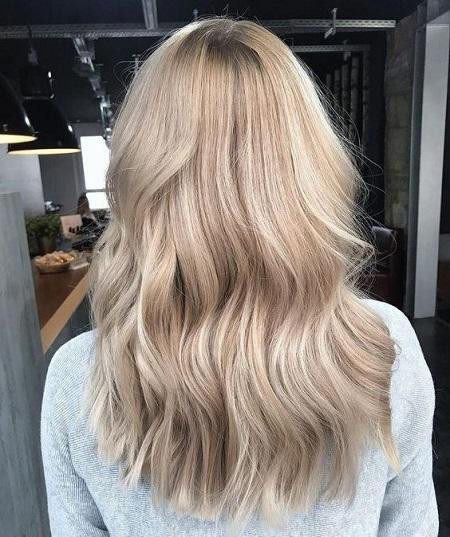
It’s late August and the light is still high at six. That is when this colour lands. The wavy blowout sandy blonde sits at mid-back with a middle part, loose waves and subtle highlights that catch the evening sun without shouting. The tone is neutral-warm, nothing brassy, nothing ashy. On medium-density, wavy hair, twenty minutes with a large-barrel iron and a texture spray gives you that relaxed, polished finish that looks like you just came from a beach dinner. The subtle highlights are the smart part: they warm the face without a sharp root line, which means brassiness is a non-issue for weeks. I have worn this into October, and it shifts from summer blonde to a soft sandy neutral as the season turns. That is the trick: build a colour that bends with the light. A trim every eight to ten weeks keeps it tidy, and the tonal stability means you spend zero energy fighting it.
It is, genuinely, the low-stakes blonde. The one you can take on vacation. The one that does not punish you for a skipped toning rinse.
Shoulder Length Wavy Sandy Blonde
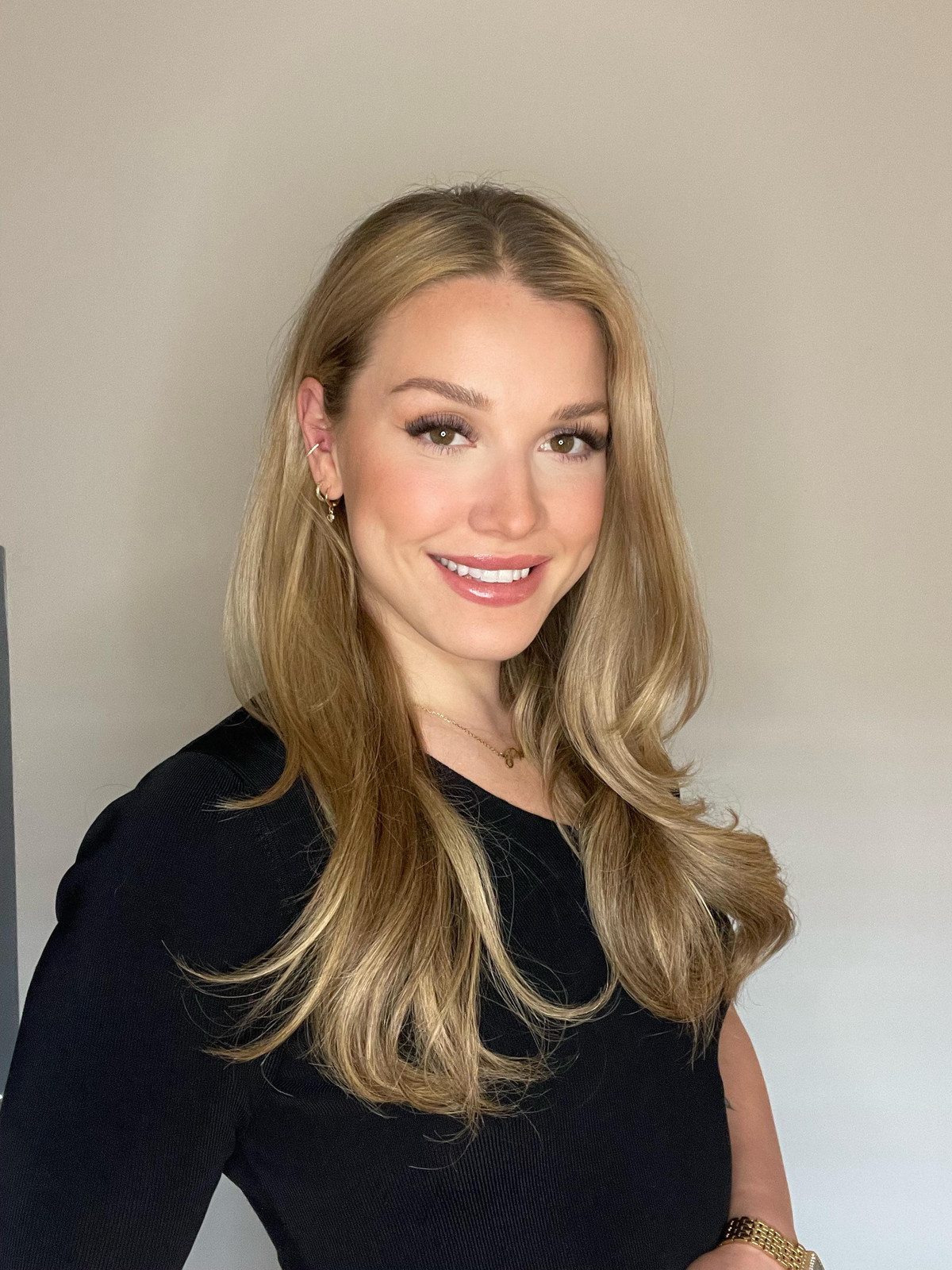
This is the shade that flatters a heart or oval face best. The shoulder length wavy sandy blonde sits at collarbone with a middle part, loose waves and subtle highlights that frame without pulling wide. On medium-density, wavy hair, the tone is neutral-warm, which works on fair to medium skin with a cool undertone. The subtle highlights are placed around the face and through the mid-lengths, which keeps the shade soft instead of heavy. Fine hair should pass: the waves need volume to hold their shape, and fine strands collapse by noon. Thick or coarse hair wears it better, the density carries the wave pattern. A quick wave with a heat protectant takes fifteen minutes, and trims every six to eight weeks keep the collarbone line sharp. The trick is that middle part, which balances round features without hiding them. That is the genuine fit.
Chin Length Sandy Blonde Balayage Lob
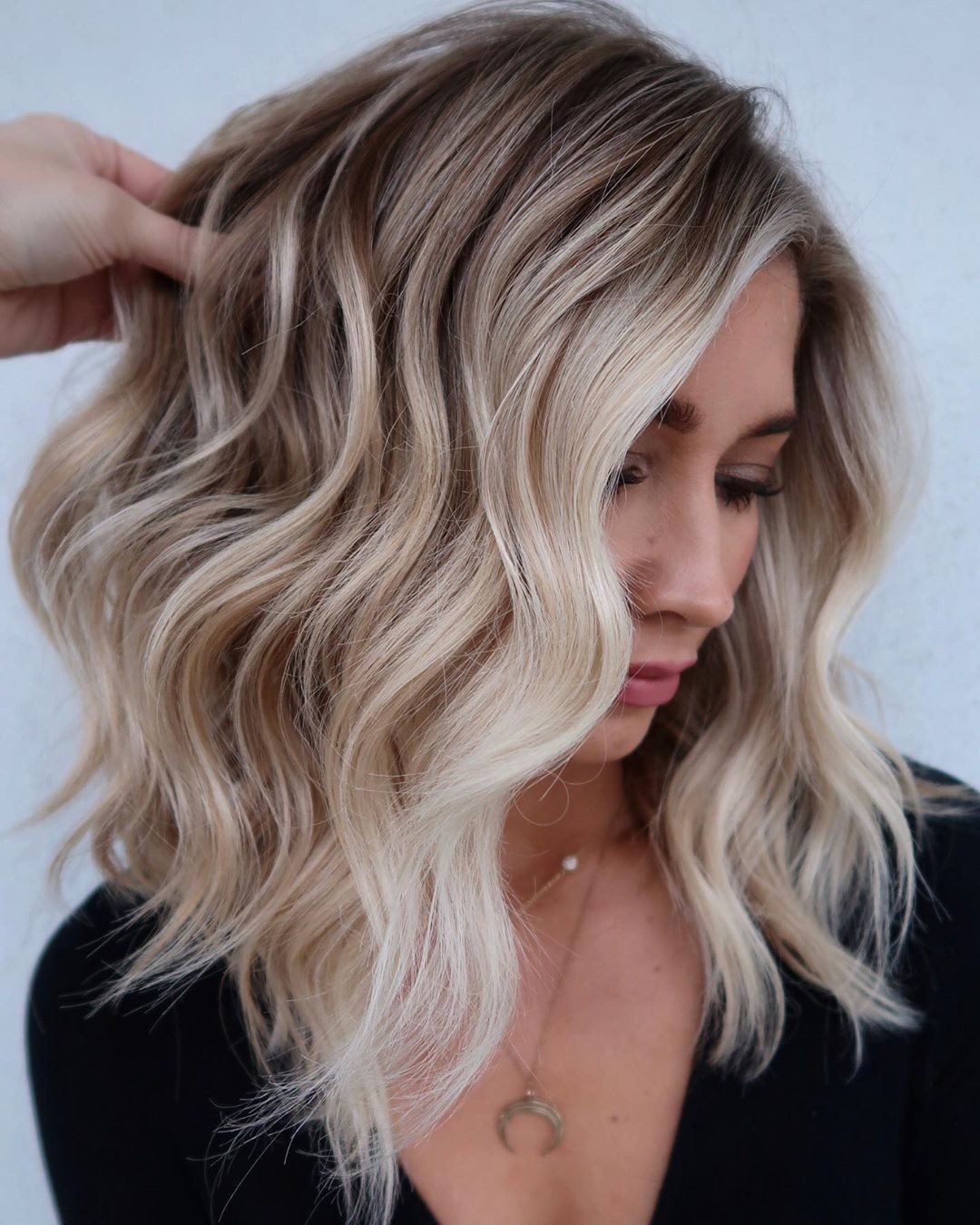
I told my stylist I wanted something I could air-dry and still look like I tried. She gave me a chin length sandy blonde lob with prominent balayage, and honestly, she was right. The cut lands right at chin length, which means it swings when I turn my head and doesn’t collapse into a sad triangle by noon. The sandy blonde base keeps it warm, the balayage lifts the ends without a harsh root line. Loose waves take about ten minutes with a texturizing spray. The brighter pieces do need toning every four to six weeks, and I book a trim every eight to keep the line sharp. Worth the chair time.
Ombré From Dark Brown To Sandy Blonde
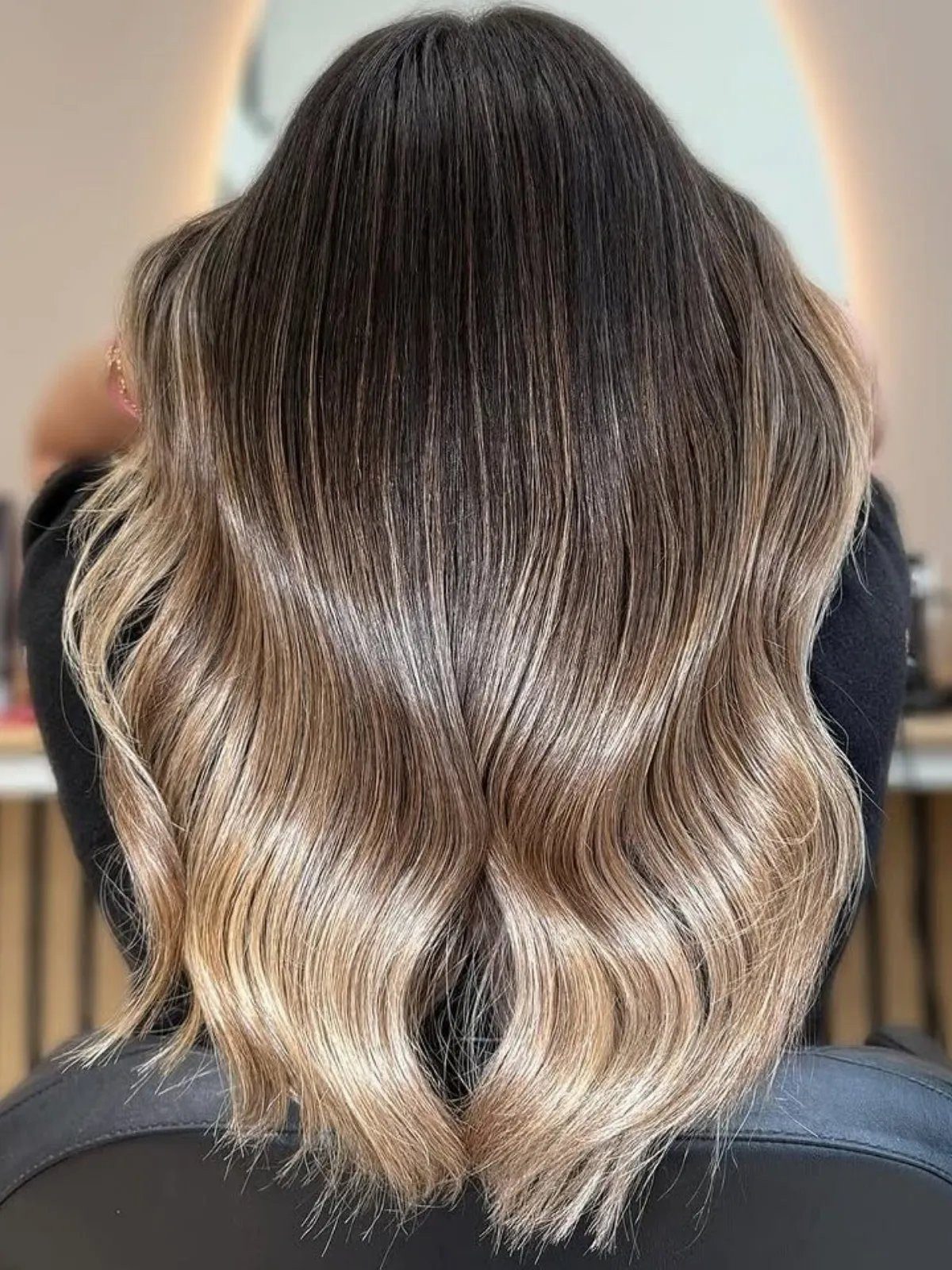
I used to think ombré was a relic from 2014. Then I saw a dark brown to sandy blonde ombré with a smooth transition and changed my mind. The difference between this and a standard balayage is the gradient: the dark brown stays rich at the roots, then melts into sandy blonde through the mid-lengths and ends. No harsh line, no stripe, just a slow fade that looks like your hair spent a month in the sun. The grow-out is the real win. My roots stay invisible for twelve weeks easy, which means I can skip the salon for a whole season. This is not a bathroom-mirror job. The transition needs a skilled hand to place the lightener so it graduates evenly. Book a consultation first. Bring a photo. And expect to sit for a while.
Visual Idea
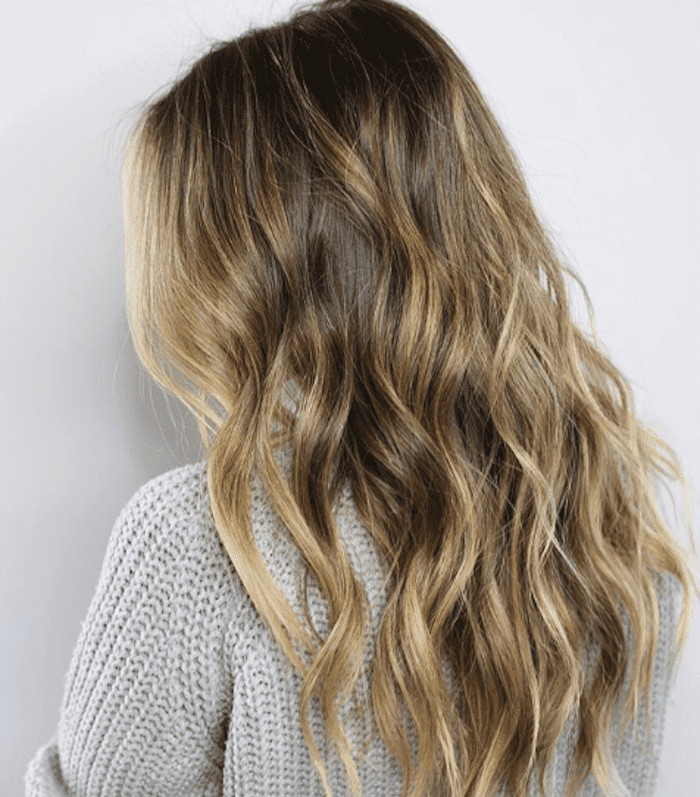
Have you ever fallen for a balayage photo and then wondered why it looked different on your head by Tuesday? This sandy blonde with balayage highlights is that photo. The colour is warm and dimensional, with lighter pieces woven through the mid-lengths and ends against a sandy base. The layers add movement, and the waves help the highlights catch the light. Here is the honest downside: the lighter pieces will brass out if you skip purple shampoo for more than two washes. The layers also mean a blow-dry with a round brush if you want the shape to hold. Without it, the waves fall flat by afternoon. It is a look that asks for maintenance, but the payoff is real.
Collarbone Visual Idea
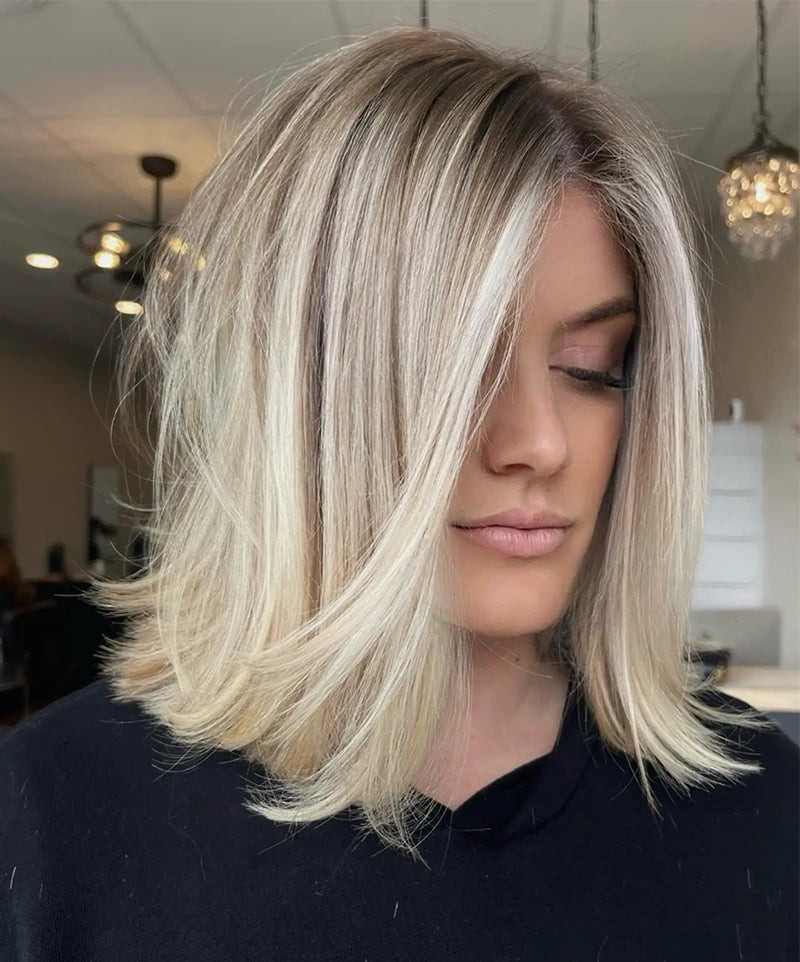
The ashy sandy blonde here is a straight-up formula, not a happy accident. The stylist used a low-lift lightener to keep the base cool and a beige toner to knock out any yellow. Side-swept bangs cut at an angle land just past the brow, which softens a square jaw or a high forehead. The lob is blunt at the ends, so the straight, thick texture reads heavy and expensive. That parting is deep, probably a two-to-one ratio. It shifts the weight to one side and makes the colour look dimensional without a single foil.
Layers Visual Idea
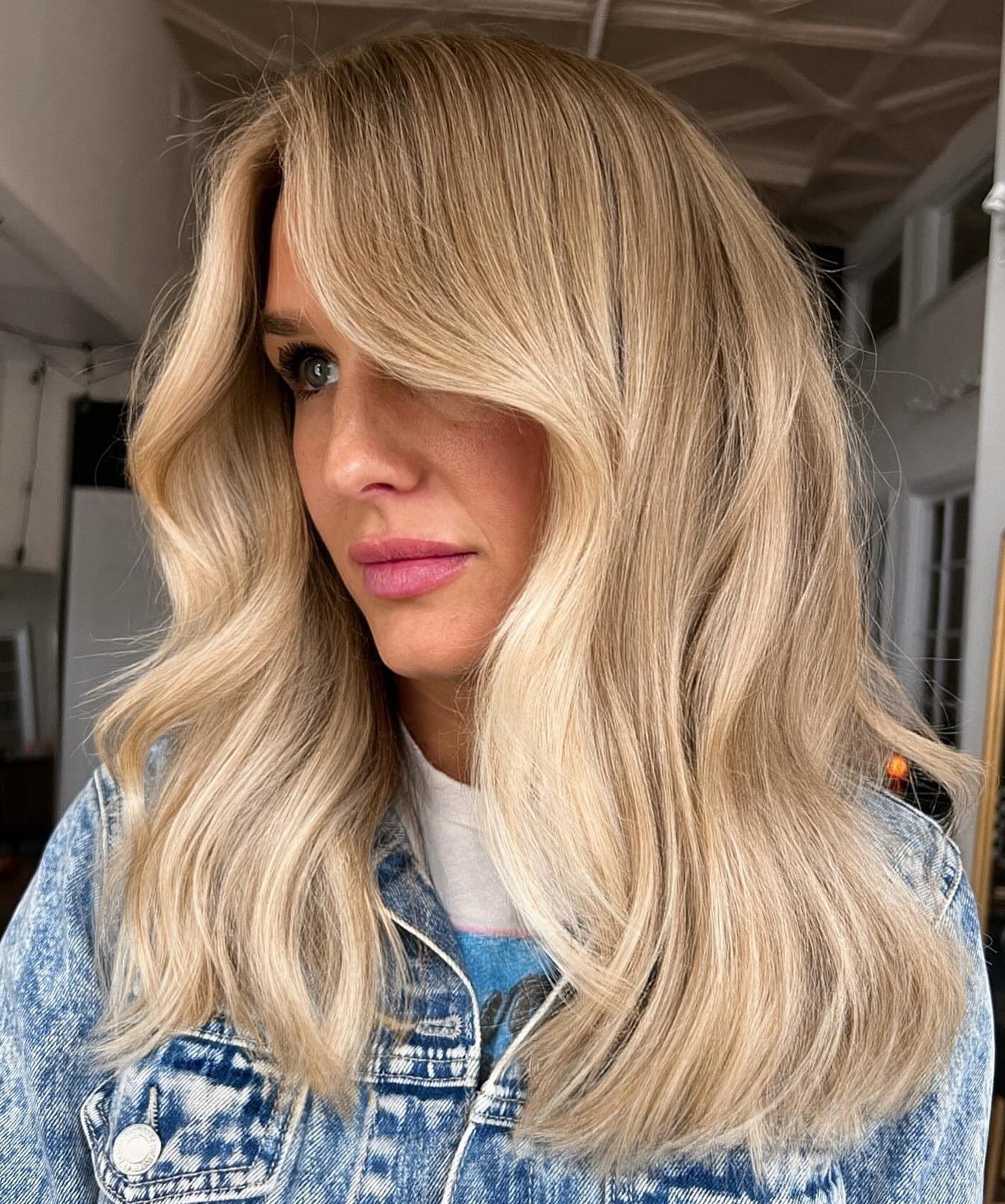
What I notice first is the tone: sandy blonde with subtle highlights that sit close to the base shade, no more than a half-shade apart. That is the trick. You cannot get that blend with a cap or a brush at home. The colour is the expensive part.
What you can do at home is mimic the wave pattern. A one-inch barrel, a heat protectant, and sectioning the hair into four quadrants. Wrap each section away from the face, hold for ten seconds, let it cool in the curl. The middle part and the side-swept bangs are the real work. Bangs need a round brush and a cool shot to sit right. The rest is forgiving. But the colour itself? Book it. That blend is not happening in a bathroom mirror.
Final Thoughts
After writing all 15, I noticed something: the ones I kept scrolling back to were the muted tones, not the bright ones. Dark sandy blonde with a cool shadow root, chin length, no fringe. That is the one I am booking next.
- Trim the baseline every eight weeks
- Tone at week six, not week ten
- Use a purple shampoo once a week
- Root shadow every second appointment

