I kept seeing criss cross patterns in my salon’s waiting room chair last month. Not just on Instagram, but on the woman next to me, on my barista, on someone walking her dog. Structured scalp braids with a little geometry, some soft pastel accents. I have fine hair that goes flat by 4 pm, so I had questions.
Criss Cross Braids come in 17 variations here, from low to high complexity. Some work for a weekend wedding, others for three weeks of no maintenance. I found options for thick and fine textures, for round and oval faces, for anyone who wants the top of their head to look deliberate and their ends to stay tucked.
Intricate Scalp Criss Cross Box Braids
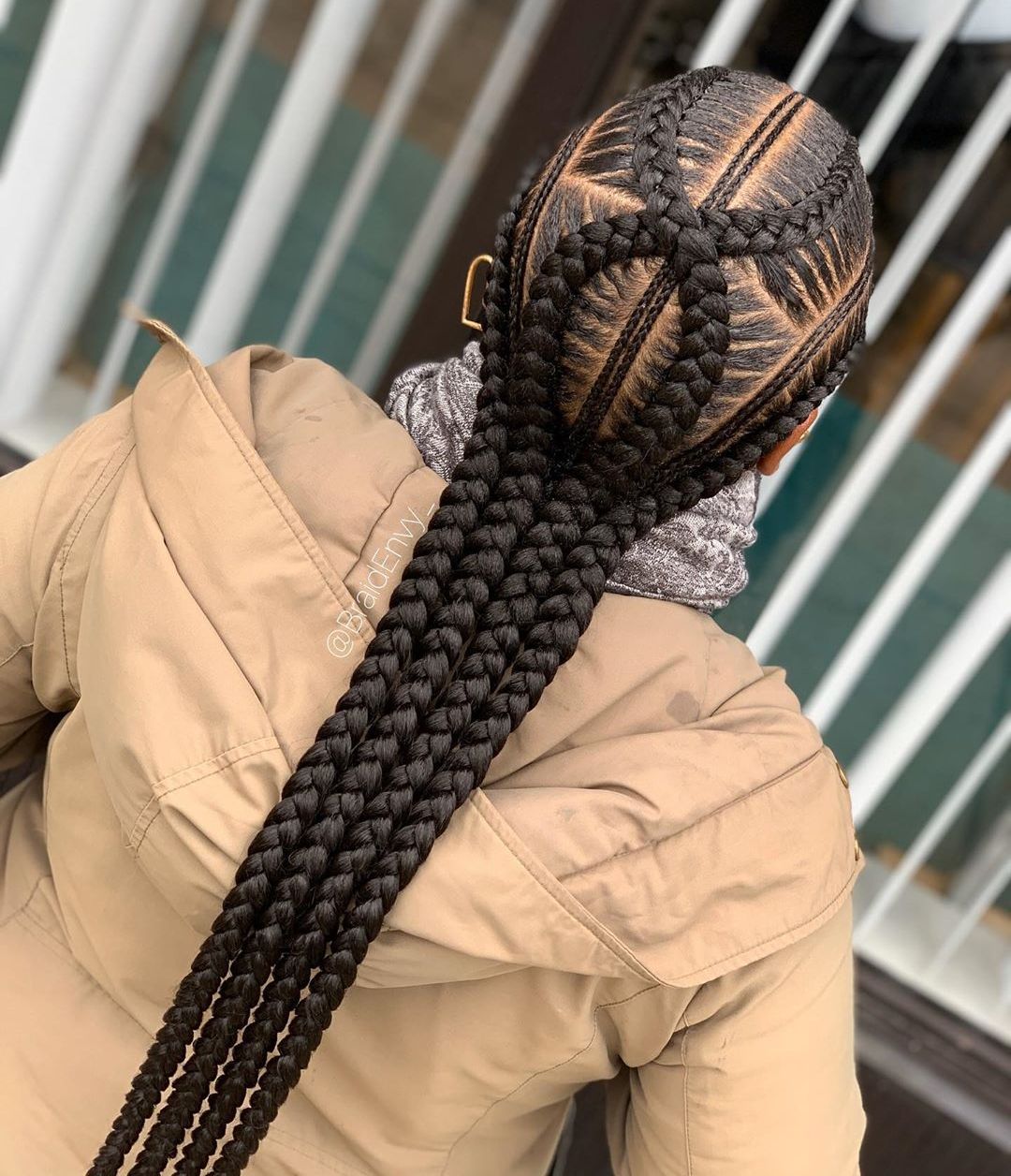
That scalp pattern is the whole point, and only thick criss cross box braids let it land without looking stringy. The criss cross pattern reads cleanest when each braid has enough heft to hold its own line, which means medium-thick sections from root to tip. Black, mid-back, no bangs, middle part. The hold is excellent: the scalp work stays crisp for weeks because the thickness gives the pattern structure. This is a back-view flex, you want people to see the geometry from behind. If your texture runs fine, the pattern can blur — save this for when you have density to work with.
Criss Cross Passion Twists
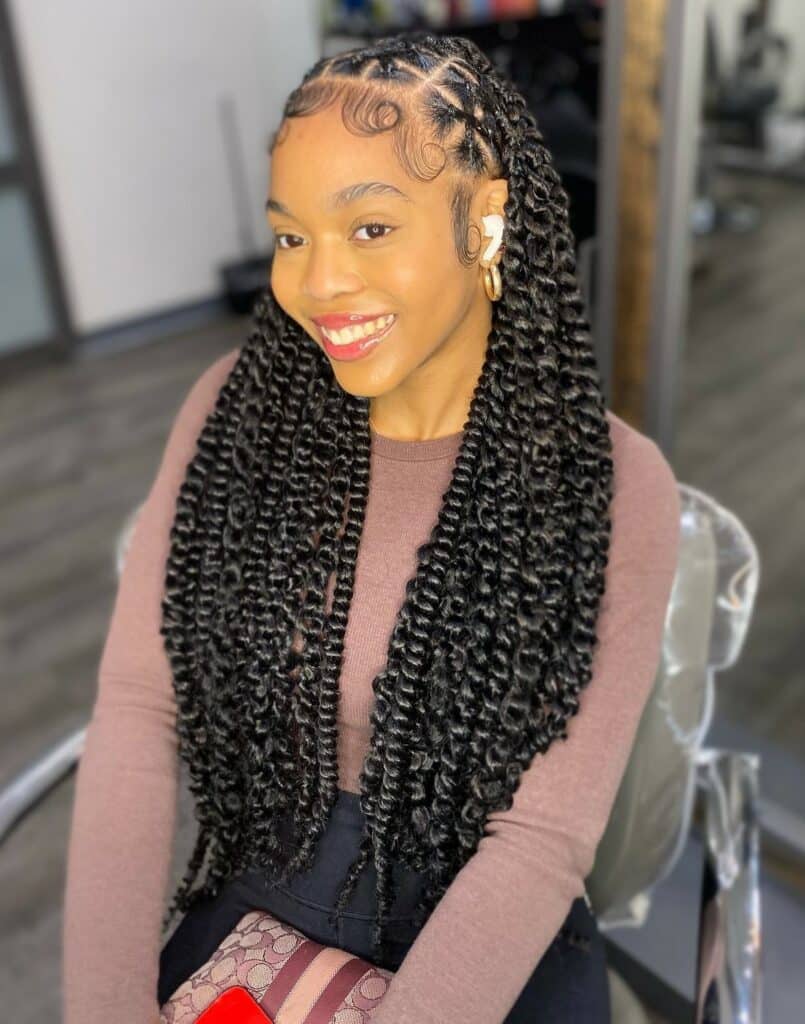
Criss cross passion twists beat regular box braids for movement. The wavy texture gives the criss-cross pattern a softer edge, it does not sit as rigid against the scalp. Same mid-back length, same middle part, black. The hold is different though — passion twists have more give, they swing and shift in a way box braids do not. That is the trade-off: you get flow over precision. The scalp pattern is still visible but it reads as texture, not geometry. Pick this when you want the criss cross effect without the stiff, uniform look. The install takes less time too, the twist motion is faster than a three-strand braid.
Dense Small Criss Cross Braids
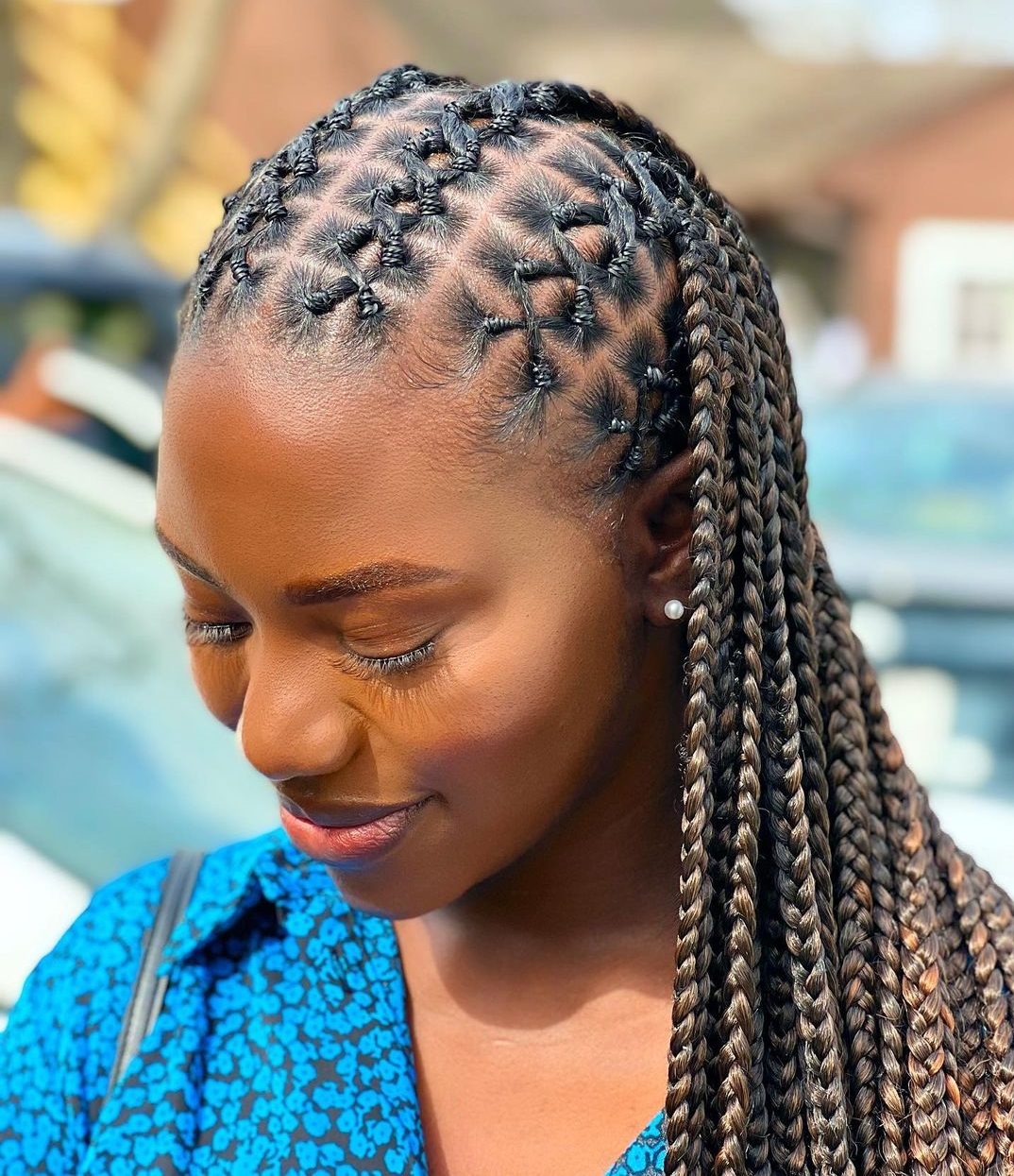
Can small criss cross braids keep the intricate pattern readable through a work week? Yes, but only if you commit to the scalp care. The dense, small sections mean the criss-cross lines stay fine and defined, but new growth blurs them fast. By week three the pattern softens, by week four it is more suggestion than statement. The hold is good for the first two weeks, then it is maintenance mode: edge control and a silk scarf at night. This is a short-wear style, six weeks max before the roots compromise the pattern. Worth it for the initial precision, just know the timeline.
Complex Criss Cross Braids
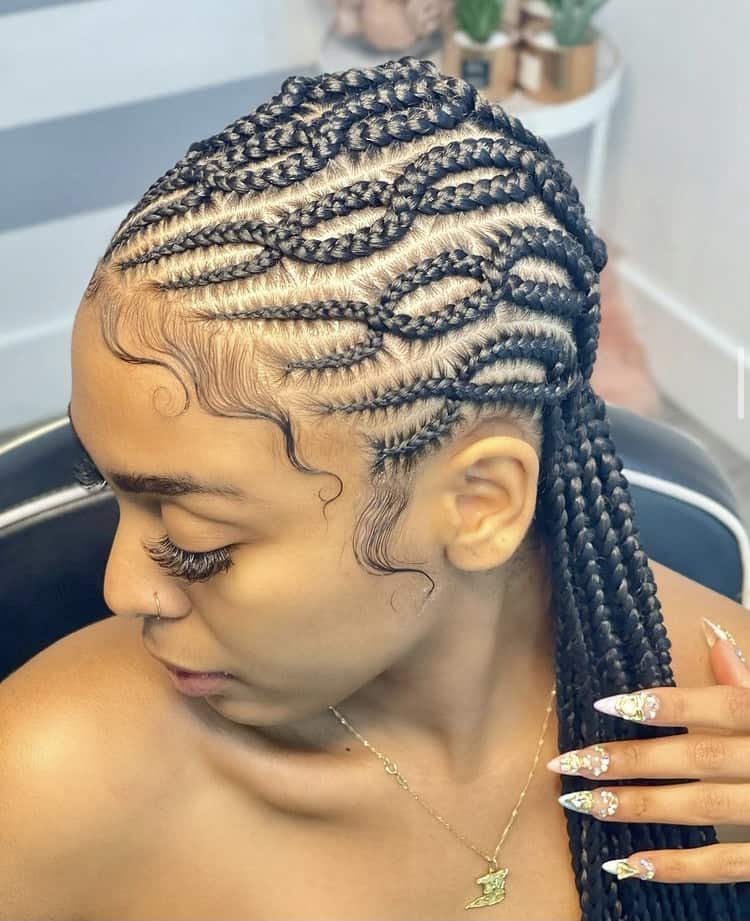
The complex criss cross braids here are not a single repeating pattern, they are a layered map. The scalp work shifts direction around the crown and again at the nape, which means the stylist is working in sections, not rows. Ask for a consultation first. Bring a reference that shows the directional changes, not just the final look. The long braids drop past mid-back, black, no bangs, middle part. The hold depends entirely on the tension at those pivot points — if one section pulls looser, the whole pattern skews. This is an eight-hour install minimum. Say: “I want the criss cross to change direction at the crown and again at the occipital bone.”
Black and Blonde Criss Cross Braids
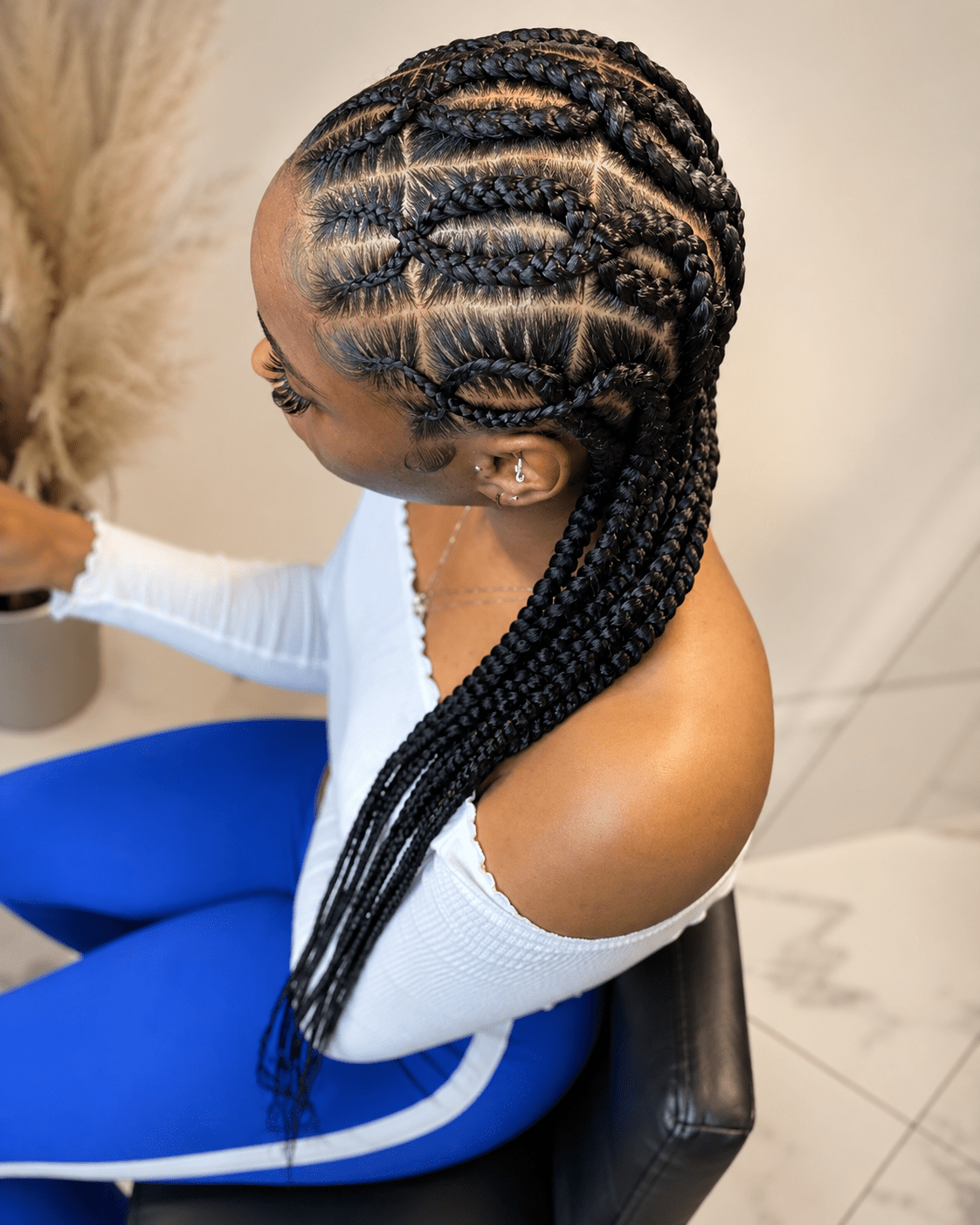
Black blonde criss cross braids hit different in summer. The color dimension from the blonde highlights against the black base makes the scalp pattern pop in direct sun, it reads like a geometric tattoo from a distance. Mid-back, straight texture, no bangs, middle part. The contrast works best when the blonde is woven into the criss cross lines themselves, not just dropped randomly into the length. This is a salon-only install, the color placement needs to match the pattern. The hold is standard for braids, six to eight weeks, but the blonde will fade faster than the black. A purple shampoo rinse every two weeks keeps the highlights from turning brassy.
Geometric Braids with Face-Framing Strands
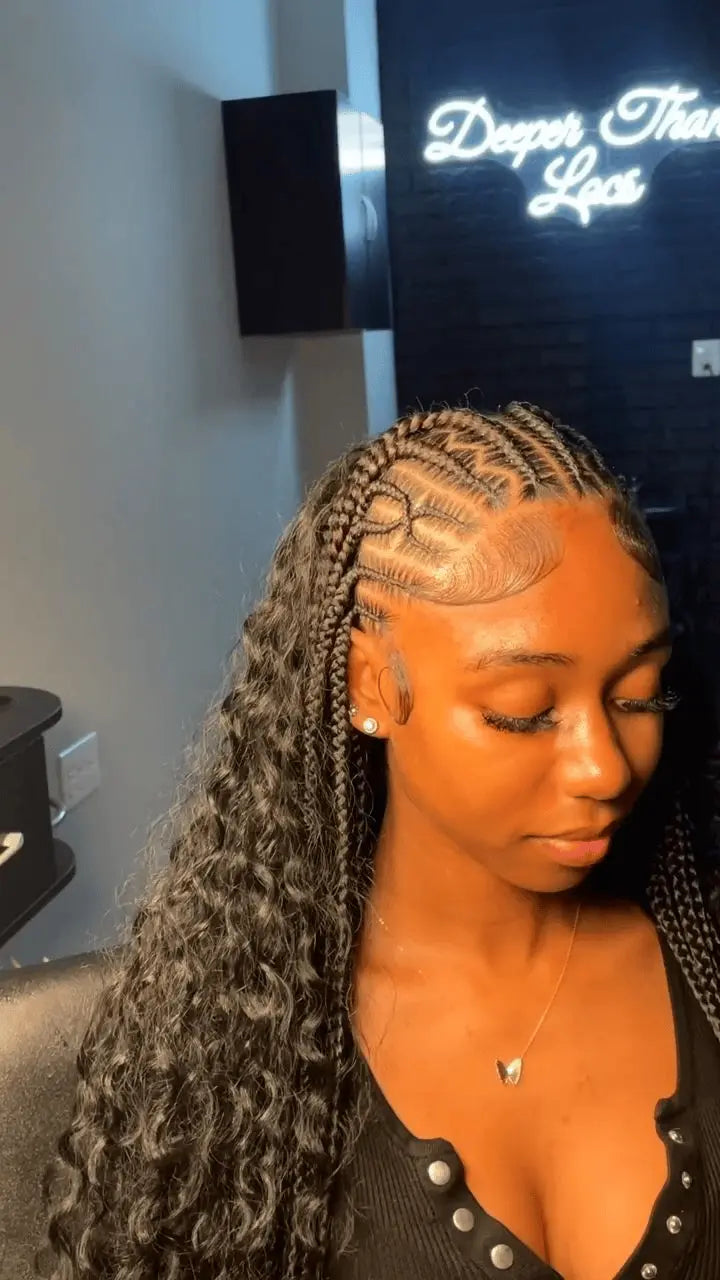
Who does this geometric criss cross braids pattern actually flatter? Anyone whose face wants a little softness around the edges. The shoulder length stops the geometry from feeling severe, and those face framing strands break up the lines so your jaw or cheekbones get a say. Black hair, middle part, no bangs. The wavy texture of the loose pieces reads natural against the structured scalp. Styling is minimal once installed, a light serum on the strands keeps them from frizzing into the braids. The hold is solid for weeks, but the framing pieces will need a trim or re-braid around week four.
Criss Cross Braids into a Ponytail
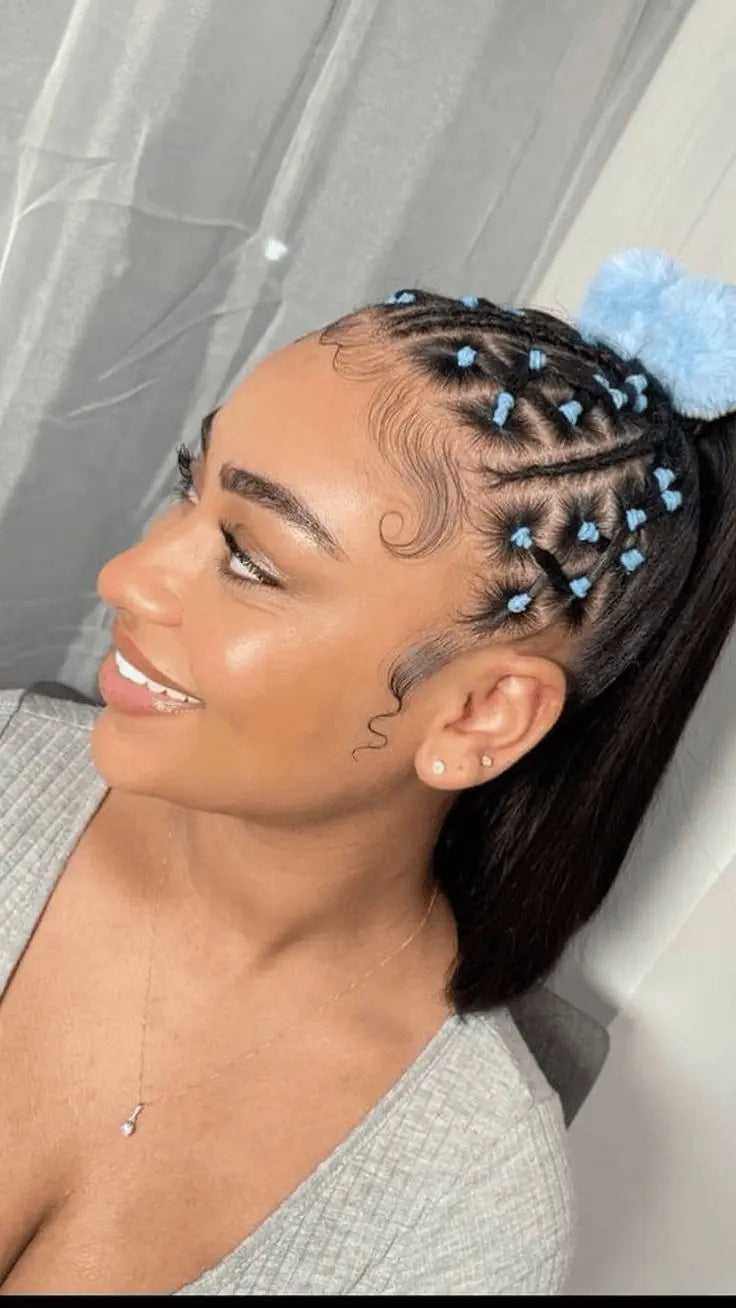
I confess I tried this criss cross braids ponytail at home once. Do not do that. The transition from the scalp braiding to the high ponytail requires a tension and angle that is genuinely hard to replicate on your own head. The photo shows a side view, black braids, a middle part, and that criss cross pattern climbing up from the hairline before gathering into the ponytail. Thick texture helps the ponytail look full. Styling time in a salon chair runs three to six hours, and the hold on the braided section is about two to four weeks before the ponytail starts to sag. Book it.
Detailed Criss Cross Scalp Pattern
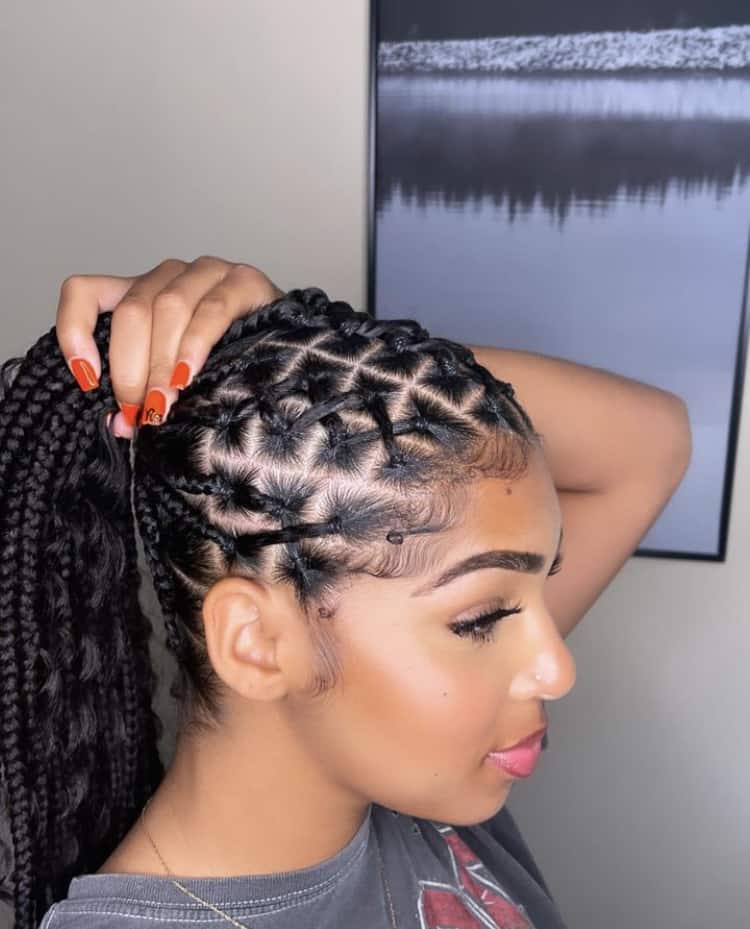
Can a criss cross braid pattern be too detailed? I am not sure. The top view in the photo shows a scalp covered in an intricate pattern, black braids against black hair, mid-back length, wavy texture, a middle part that disappears into the geometry. It is a lot. The installation time is eight hours minimum, and the upkeep is real: you have to keep the scalp clean and the edges laid, or the pattern loses its definition. The hold lasts six to eight weeks, but by week five the new growth starts to blur the lines.
That is the honest downside. The pattern that looked sharp at week one will look fuzzy at week six. If you love symmetry and have the patience for a full day in the chair, go for it. If you want something that stays crisp with less effort, pick a simpler part.
Mid-Back Criss Cross Cornrow Braids
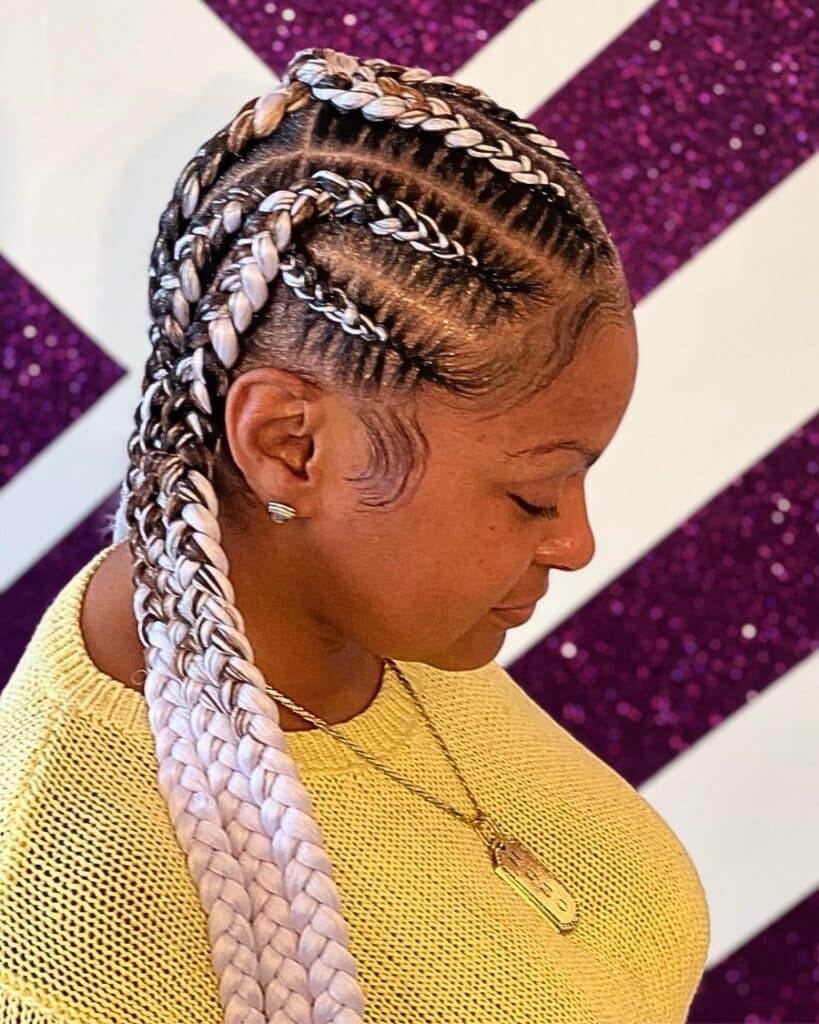
The first time I wore criss cross cornrow braids this long, I kept touching my own hair. The straight texture of the braids, that defined pattern running from the hairline to the mid-back, it feels neat in a way that loose hair never does. Side view, black, middle part, no bangs. The layers in the cut let the braids fall without looking like one solid block. Styling is zero after installation, which is the whole point. The hold is excellent for weeks, the weight is noticeable but not heavy. I was not expecting to like the feeling of a straight, uniform braid that much.
Elegant Criss Cross Braids for Weddings
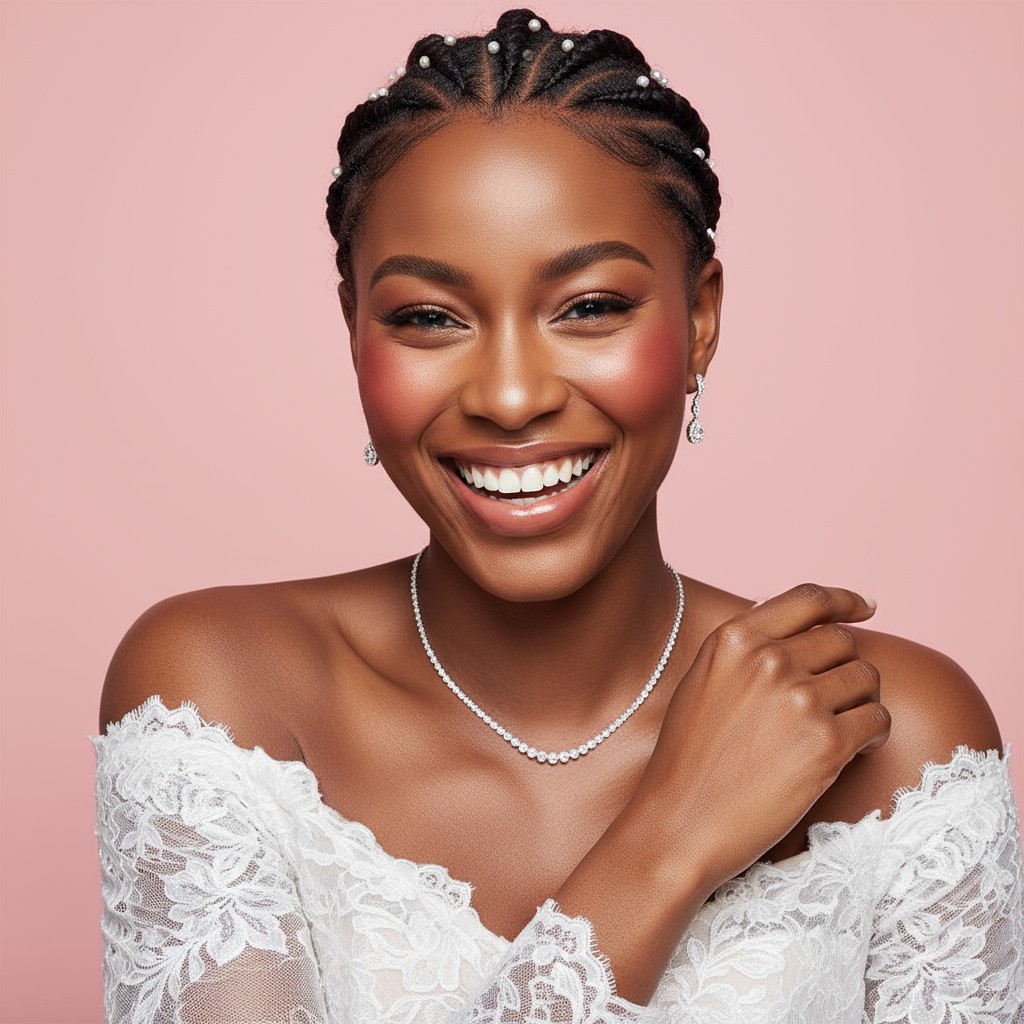
The bridal criss cross braids in the photo use pearl accents threaded through the braid, not clipped on after. That matters. The pearls get woven in during installation, which means they stay put through a full day of dancing and photos. Shoulder length, black hair, straight texture, a middle part, no bangs. The styling steps: braid the scalp section, add the pearl as you cross the next strand, continue the pattern. The hold is event-only, this is not a two-week style. The pearls add weight, so the braid stays flat against the head. It is precise, decorative work that needs a skilled hand.
Visual Idea
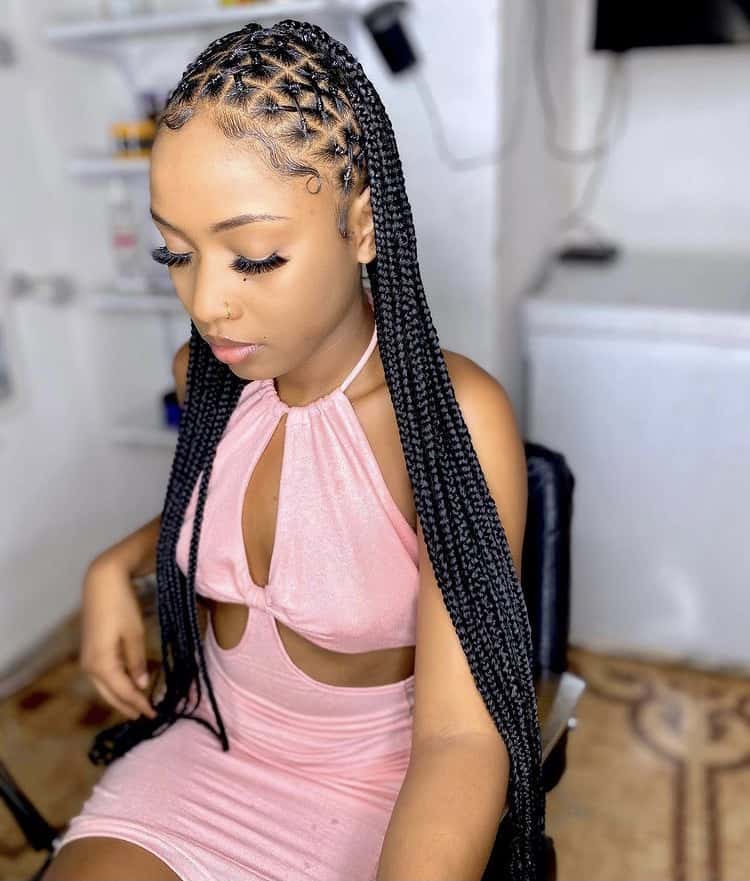
This geometric criss cross braid pattern works best on straight hair. The clean lines and precise angles need a texture that doesn’t fight the shape. Mid-back length gives enough canvas for the design to read, and black colour keeps the focus on the pattern rather than contrast. If your hair has a lot of natural volume or curl, the criss cross braids can get lost in the texture: you want the scalp map to stay visible. The middle part keeps symmetry, and the lack of bangs means nothing distracts from the geometry. This is a salon look, not a bathroom mirror job, and the hold is solid for days if you wrap it at night. Skip it if your hair is very fine or prone to frizz: the pattern needs density to look intentional.
Mid-Back Visual Idea
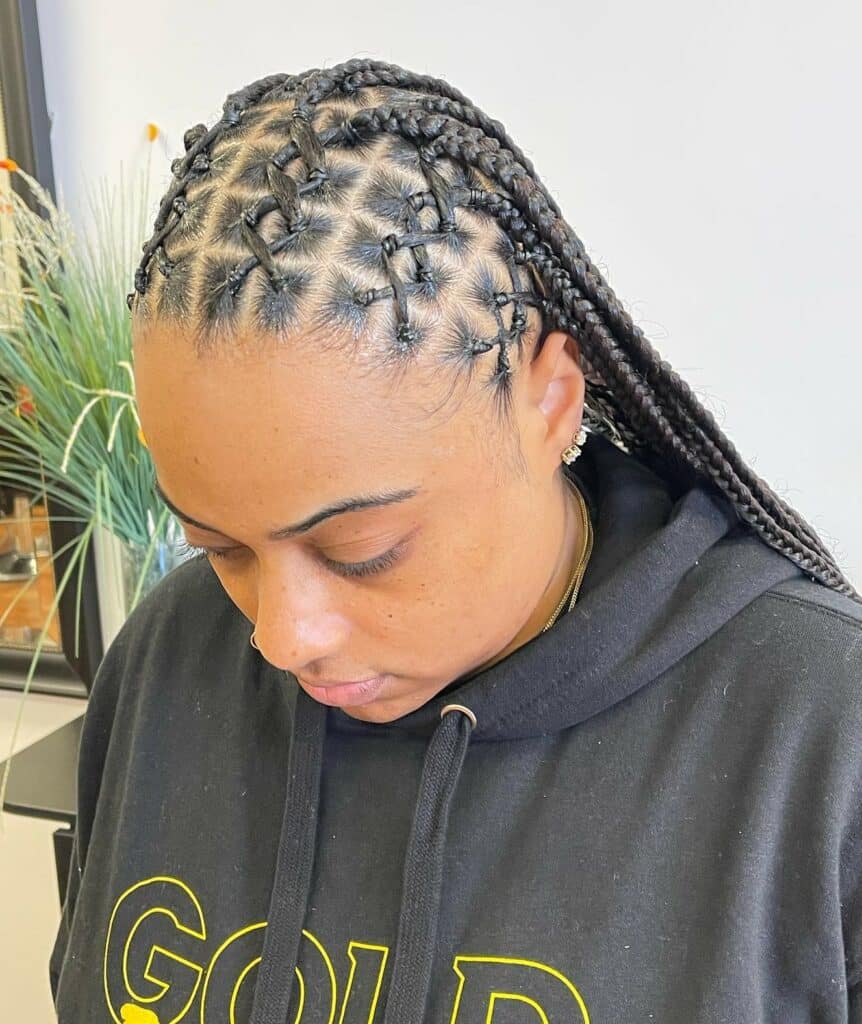
I’ll admit, I was skeptical about how long the intricate criss cross pattern would stay defined. But after a week of wearing these mid-back box braids, the lines are still crisp. The length gives the braids enough weight to stay in place, and the thick, straight texture means each braid is uniform. Black colour means no fading to worry about, and the middle part keeps the symmetry from shifting.
For upkeep, I sleep with a satin scarf and a bonnet. In the morning, the pattern hasn’t budged. The hold is impressive: no loose strands, no frizz at the roots. Even after a few days of normal wear, the intricate criss cross pattern stays defined. It holds up through workouts and even a light rain, no problem. If you’re rough on your hair, this style can take it. Just don’t expect to change the part without a full redo. The criss cross braids are committed to their path.
Black Visual Idea
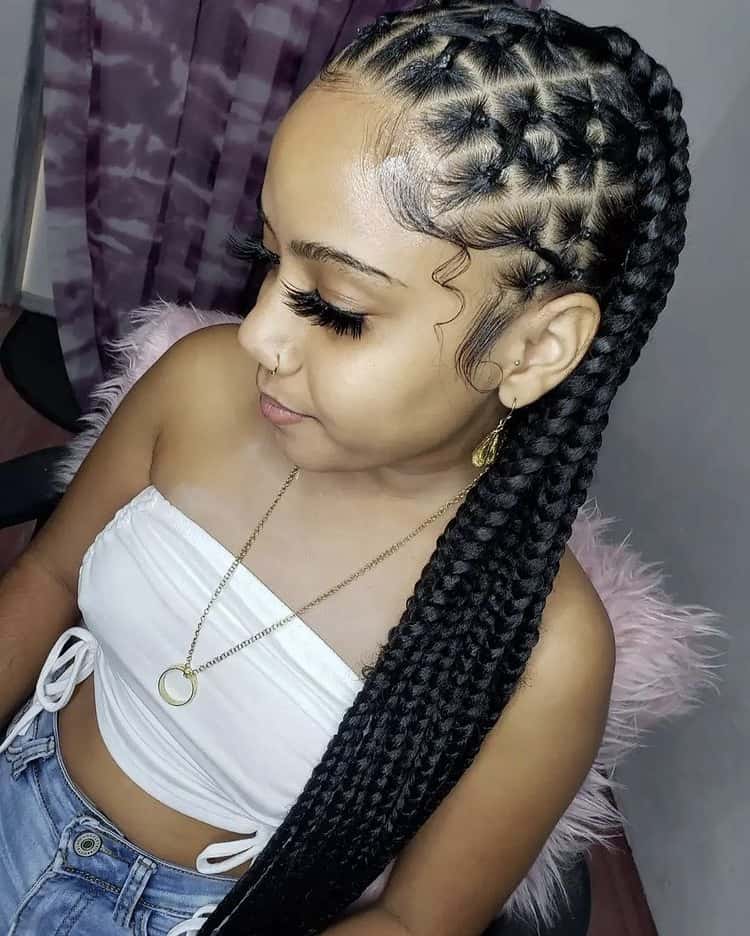
I thought I was a middle part loyalist until I saw this side parting take on criss cross braids. The geometric scalp pattern gets a new dimension when it’s off-center: the lines sweep diagonally instead of straight down. On black hair, the contrast is sharp, and the side ponytail pulls the eye to one side, framing the face in a way a middle part can’t. The mid-back length keeps the braids from feeling too heavy, and the straight texture lets the pattern shine. For someone who wants the structure of braids but with a softer, more asymmetrical look, the side part is the clear winner. The hold is the same as any well-done braid style: solid for days.
Braids Visual Idea
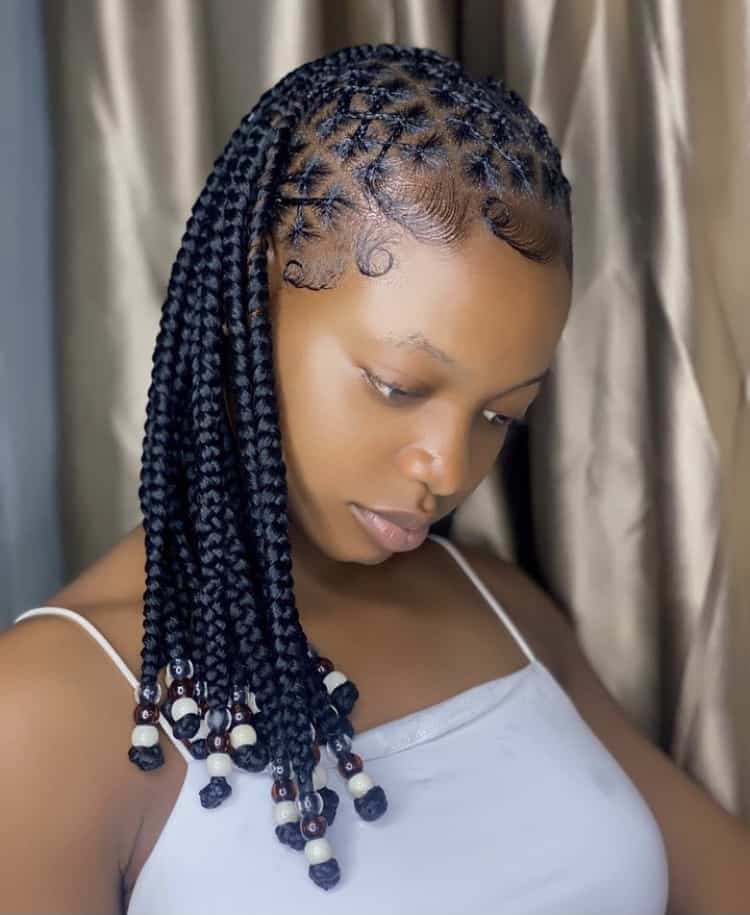
The geometric scalp pattern in these criss cross braids is built with precision sectioning. Each braid is fed under and over its neighbor, creating a grid that sits flat against the scalp. The straight texture makes the crossings clean, and the black colour hides any slight tension marks. At mid-back length, the braids have enough weight to keep the pattern taut. The hold comes from the tight base: these aren’t going anywhere until you take them out. This is a salon technique, not a DIY project.
Layers Visual Idea
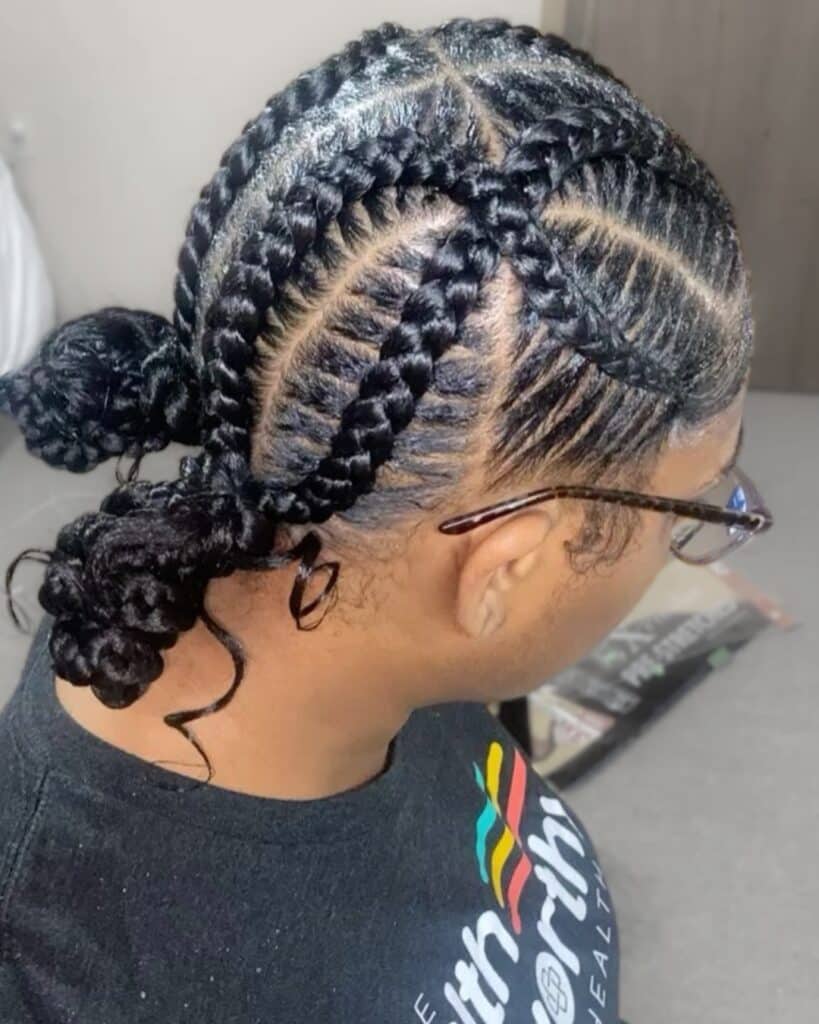
Ever wondered if layers can work with a detailed criss cross braid pattern? They can, but only if your hair has enough density to keep the braids from looking sparse. The layers add a subtle dimension: the braids at the ends fall at different lengths, giving the style a softer finish. On straight, black hair at mid-back length, the pattern stays readable because each layer is thick enough to hold a braid. If your hair is fine, the layers might cause the braids to taper too much and lose the geometric effect. The hold is still solid, but you’ll want a stylist who knows how to section around the layers. This is a salon look, no shortcuts.
Shoulder Visual Idea
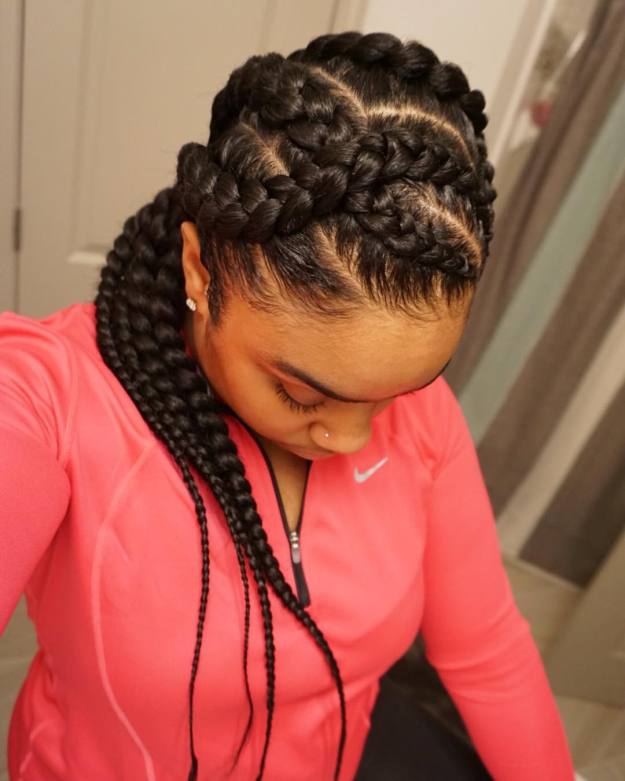
The Shoulder Visual Idea here is all about the chunky braids. Black, straight, thick. The distinct criss-cross pattern stands out against the dark colour, which is exactly the point.
This is a salon job. Trying to map out that geometry on your own crown, especially with thick hair, is a lesson in patience you don’t have time for. The hold is excellent. The sections are wide, the braids are tight against the scalp. The honest downside? That distinct pattern shows every single new-growth day by week three. Chunky sections can look sparse at the ends if your texture is fine. The middle part and side view framing suit a longer face. The volume at the shoulders balances it out.
No Bangs Visual Idea
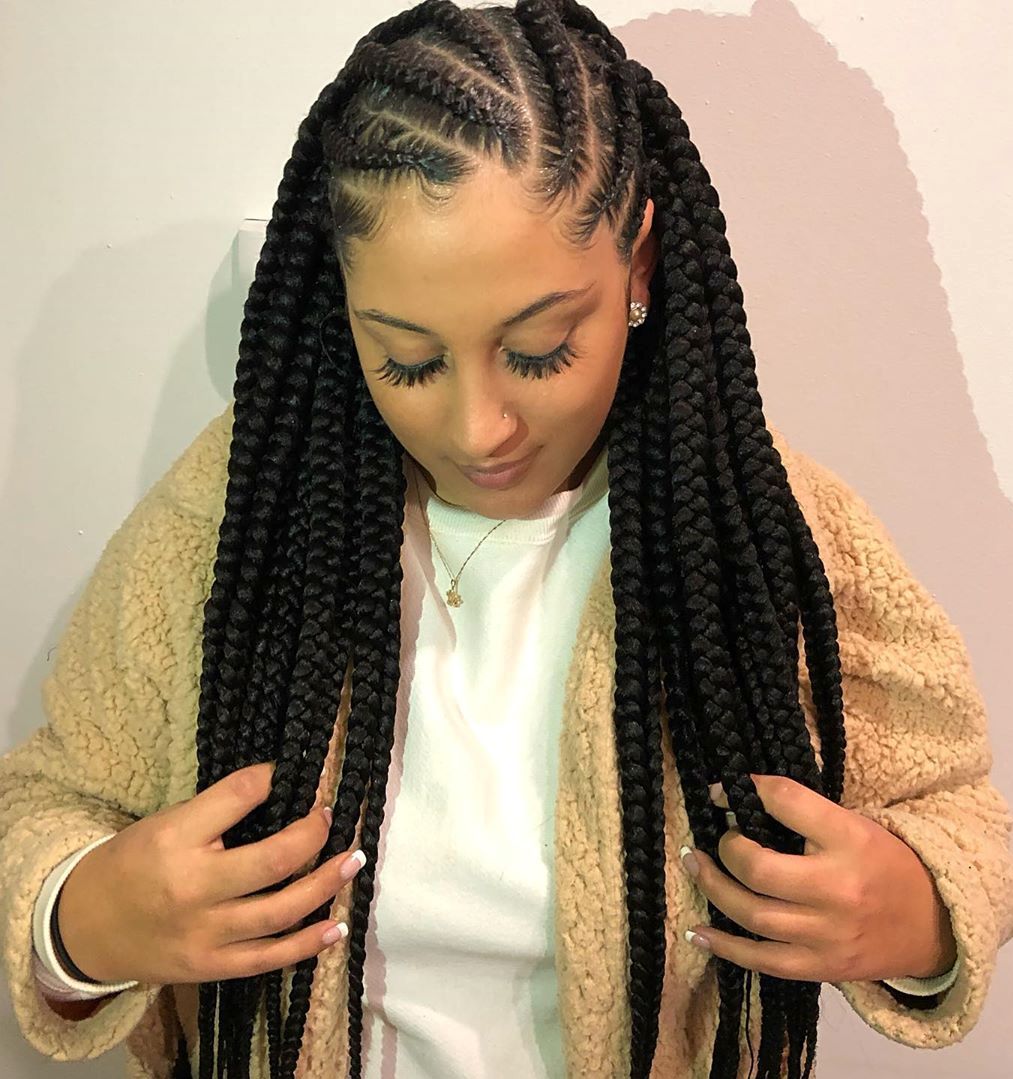
I was skeptical about this density. The No Bangs Visual Idea is dense criss cross braids from root to mid-back, black, straight. It is a lot of hair.
The layers help, they keep the ends from becoming one solid block. The no-bangs, middle-part framing is smart because the weight of the braids pulls everything back, so there is nothing to fight your face. It is comfortable. The density distributes the tension evenly across the scalp. I was wrong to doubt it.
Final Thoughts
After writing all these, I noticed something. The most elaborate patterns actually read quiet from a distance. Up close they’re loud, but across a room they just look clean. I am booking the geometric one with face-framing strands. It is the only way I will tolerate the install time.