I kept seeing the same thing in the salon chair next to mine: a silk press that dropped flat by lunch. Layers were supposed to fix that, but most of them just added frizz. Turns out the right ones hold the smooth line all day, even on fine hair.
This roundup has 34 takes on the Silk Press with Layers, from chin-length bobs to mid-back lengths. Some need a round brush and patience, others work with a flat iron and ten minutes. They suit round faces, square jaws, low density, high porosity. I wrote it because my own grow-out line showed at week five, and I needed cuts that bought me time, not more trips to the salon.
Sleek Chin Bob With Side-Swept Bangs
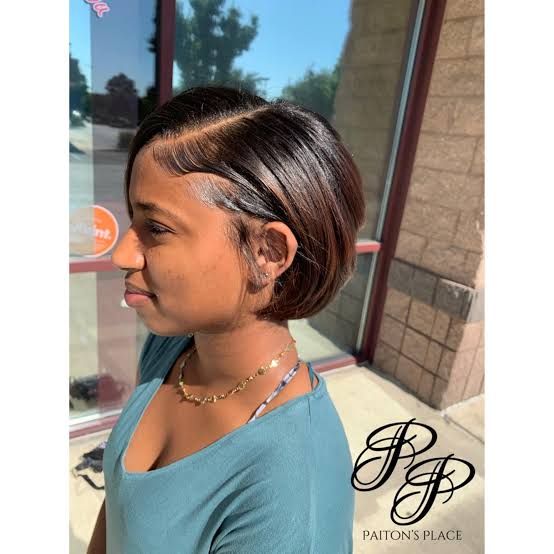
There’s a reason this chin length bob with bangs keeps showing up in salons: the blunt line plus side-swept bangs reads polished without trying too hard. For fine, straight texture, this is the rare cut that actually holds its shape past noon. The sleek finish comes from a professional silk press, not a home flat iron. My roots showed at week five, but the cut itself never went flat on me. If your hair is thick or wavy, skip it. The blunt edge needs fine hair to sit right.
Voluminous Curly Chin Bob
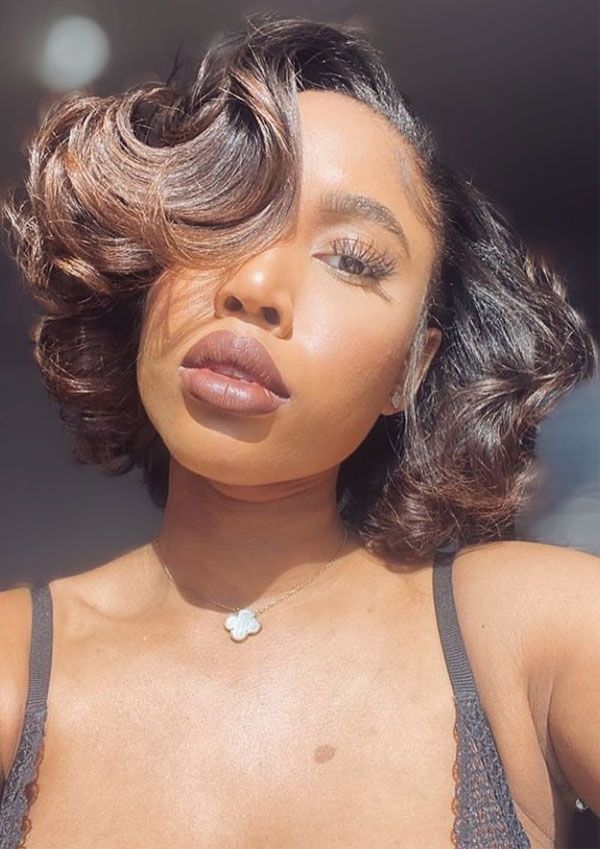
Ever wonder why the same bob looks completely different on two people? This voluminous layered bob is the answer. On thick, straight hair, the layers give it lift and those sleek curls hold their shape for hours. On fine hair, the same cut falls flat by 4 pm. The volume here is built, not born. It takes a professional blowout and a curling iron session to get that bounce. My thick-haired friends swear by it, but I know my fine strands would just look stringy.
Textured Shag With Wispy Bangs
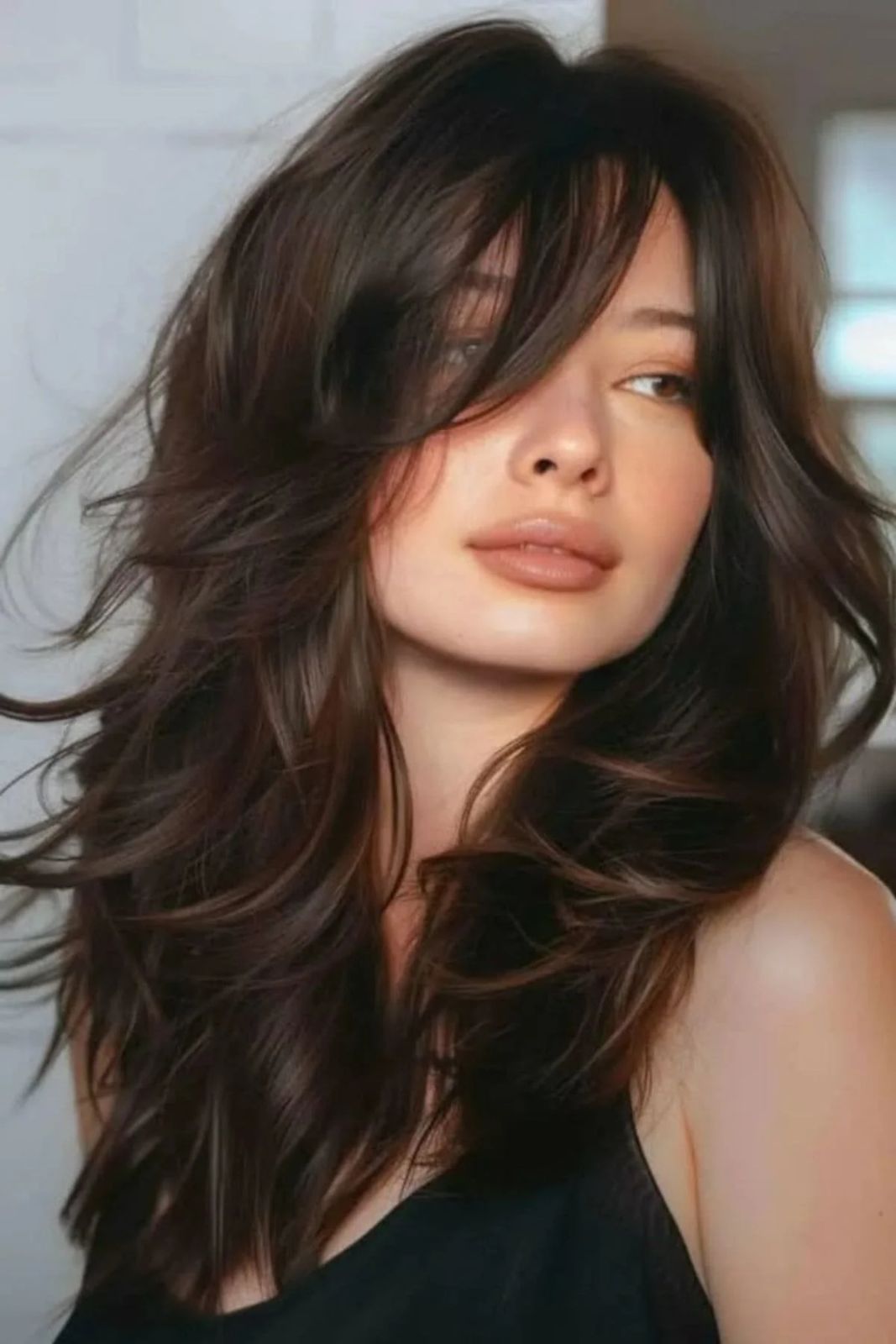
I’ll admit it: I was skeptical of the shag haircut with layers until I tried it. The wispy bangs and face-framing layers give it that lived-in cool that looks intentional, not messy. The texture is the whole point. A textured blowout with some sea salt spray or texturizing paste enhances the natural waves. It looks better a bit lived-in, so daily styling is minimal. But those wispy bangs? They need a quick flat iron pass every morning or they’ll separate by noon. It’s not the wash-and-go it pretends to be.
Smooth Collarbone Bob With Soft Layers
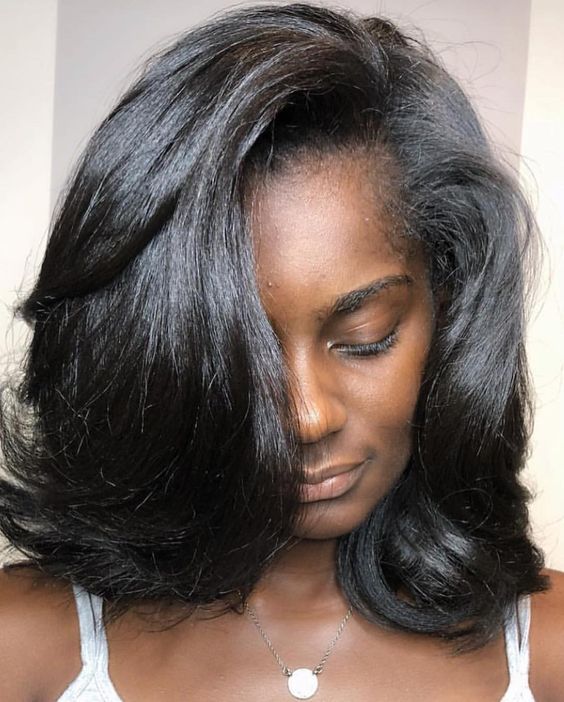
The collarbone bob with layers is the gold standard for a reason. The silk press technique here is what delivers that extreme smoothness and shine. Each section is pressed with a flat iron in small passes, which is why it looks glassy, not greasy. The soft layers keep the shape from feeling heavy, and the middle part opens up the face. For fine, straight hair, this is the most forgiving length. It grows out well, too. You can stretch a trim to eight weeks without losing the line.
Layered Chin Bob With Waves
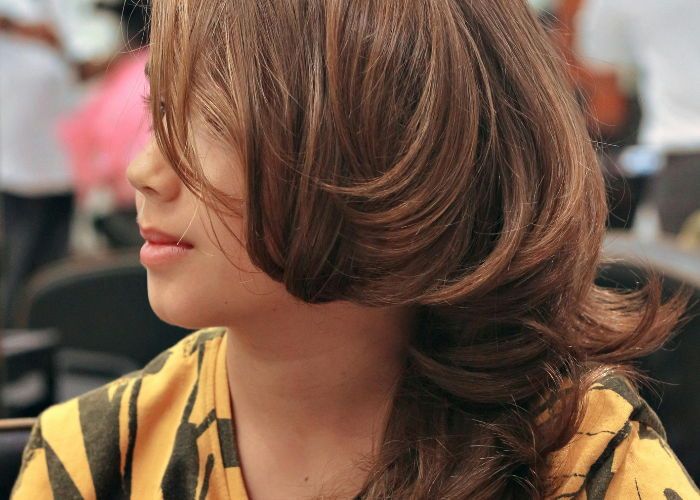
A layered bob with waves is the compromise cut. It flatters round and oval faces because the visible layers add movement without widening the silhouette. The soft waves break up the blunt edge, so it reads romantic rather than severe. If your hair is fine, the layers give it a boost. If it’s thick, they take out the weight.
Here’s the upkeep nobody mentions: those soft waves need a curling iron touch-up most days, and the shape starts to lose its structure around week six. A trim every eight weeks keeps the layers from turning into a triangle. It grows out gracefully, which is more than I can say for most bobs.
Mid-Back Silk Press With Face-Framing Layers
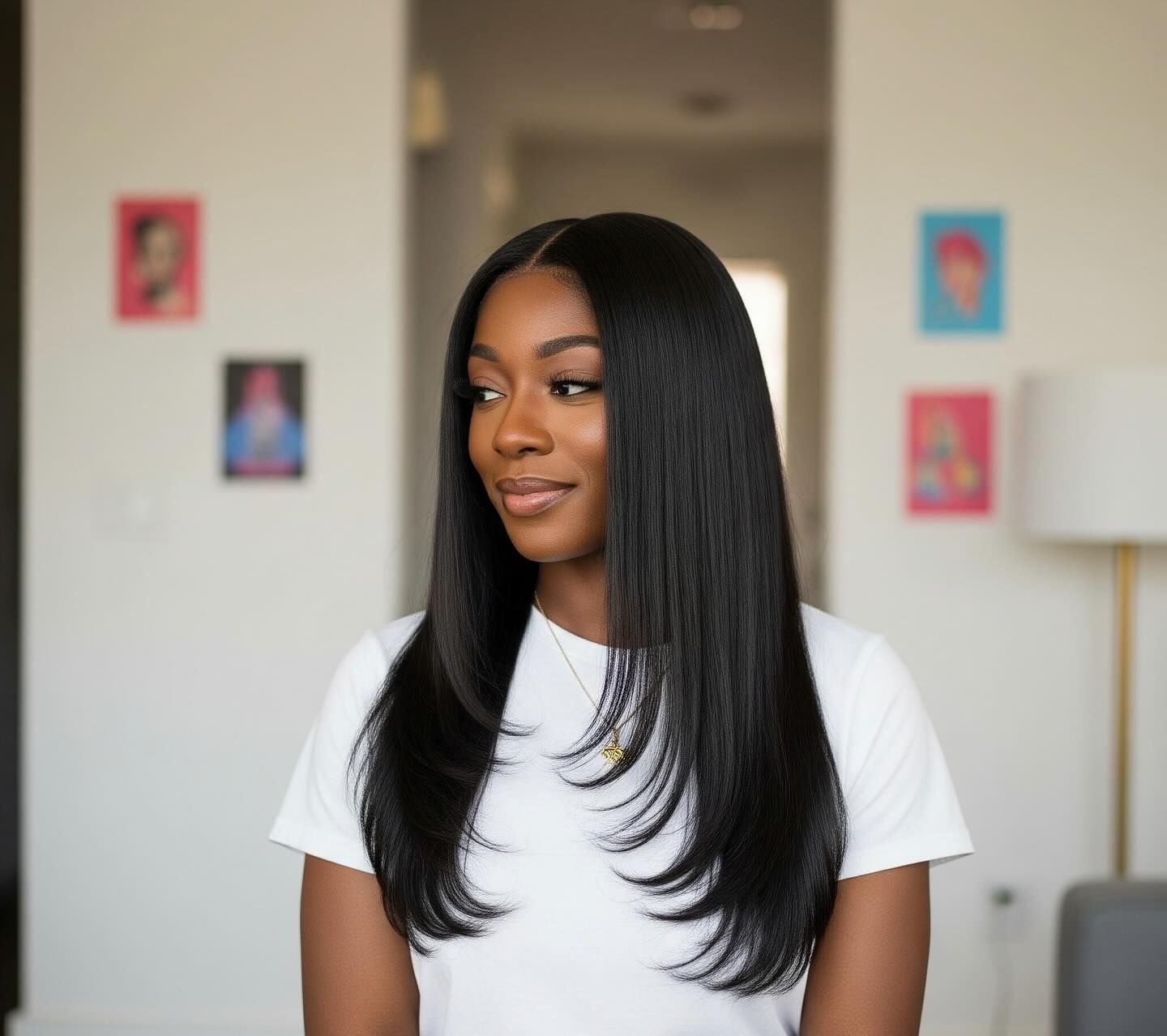
Can we talk about the daily styling commitment before you book this? The silk press with face framing layers in the photo is straight, thick, and so smooth it looks like it never moves. That shine is real. It is also temporary. By day two, the mid-back length starts holding onto body heat, and the straight texture softens at the root. A flat iron touch-up every morning is not optional. The face-framing layers are the first to show any bend, and a middle part means both sides need equal attention. No bangs here, which helps. But the length means you are committed.
The honest downside: this cut does not wake up pretty. It wakes up flat. You need a heat protectant and ten minutes with a flat iron to get back to that photo. A trim every eight to ten weeks keeps the long layers from looking stringy. Skip this if your morning routine is a comb and go.
Glossy Mid-Back Blowout With Waves
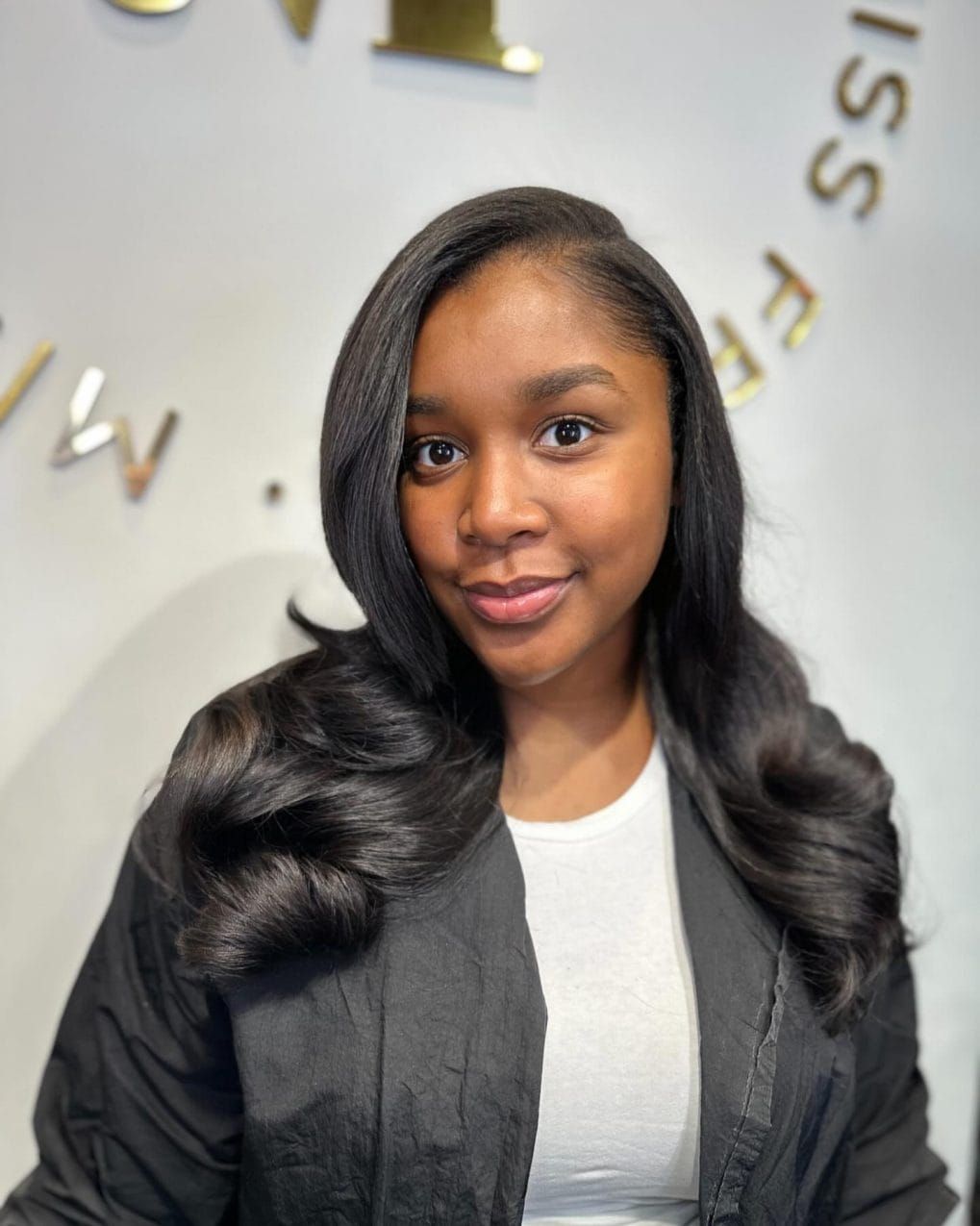
That glossy finish is not an accident. It is a sequence. The long layered hair with waves in the photo starts with a professional blowout, every section dried with a round brush to build volume at the root. Then a large-barrel curling iron, each wave wrapped away from the face. Then a cool shot to set it. Then a shine spray. Then you do not touch it until you sleep.
Here is the short list. One: the blowout must be bone-dry before you curl, or the waves drop in an hour. Two: the middle part means the waves need to mirror each other. Three: a texture spray at the mid-back length gives the waves memory. Four: the straight, thick texture holds the curl best when it is completely cool before you break it apart. Five: no bangs, so the face-framing layers are the shortest point. That is the whole recipe. It takes about forty minutes. It lasts about two days.
Mid-Back Ash Blonde With Curtain Bangs
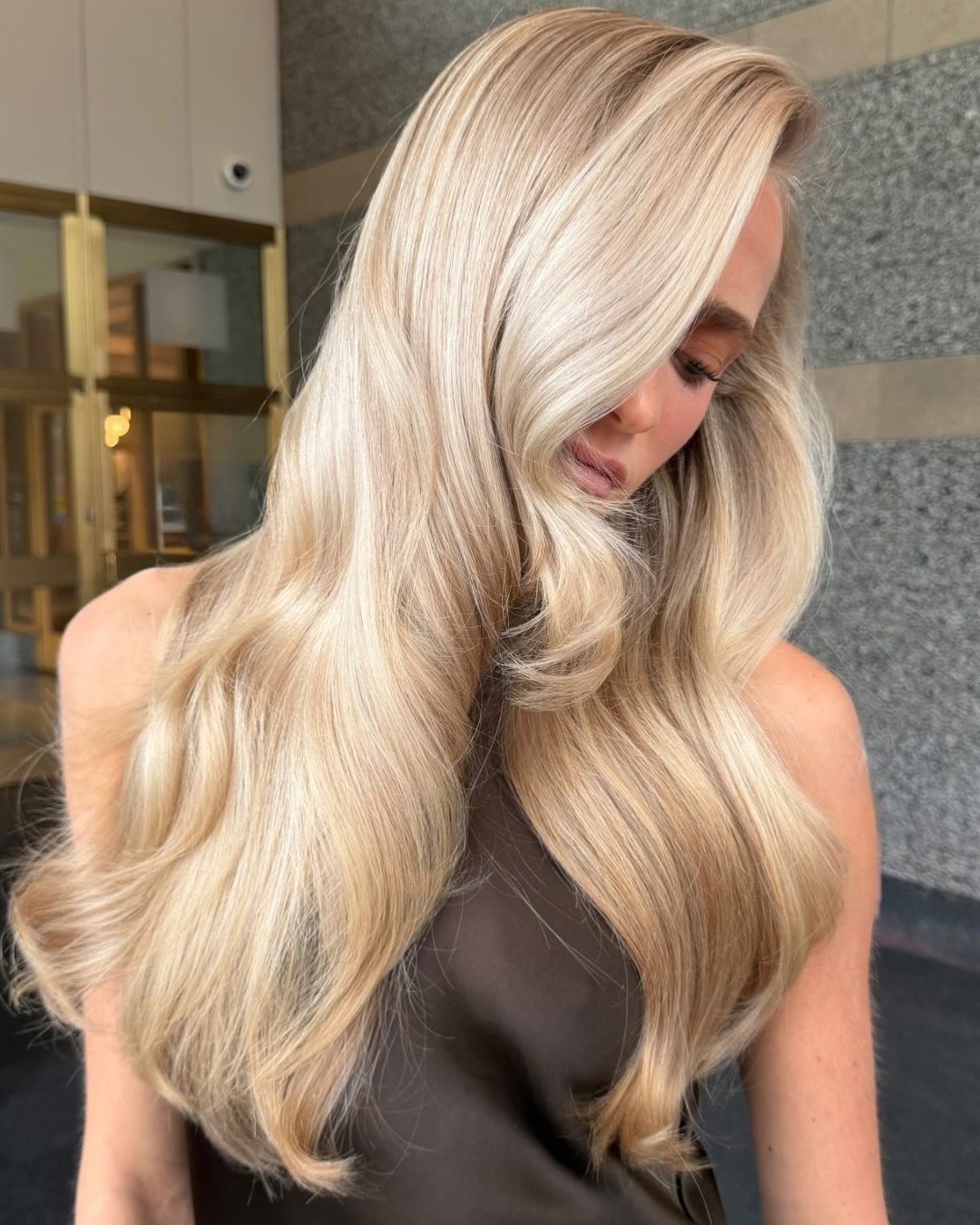
This is for someone with cool undertones and a wedding to attend. The ash blonde hair with layers in the photo is a specific mood: modern, a little serious, not trying to be beachy. The curtain bangs soften it, and the mid-back length keeps it from reading severe. The middle part and the side profile in the photo show how the ash blonde with highlights catches light differently than a warm blonde would. It reads expensive because it is hard to get right.
- Cut: long layers, mid-back length
- Colour: ash blonde base with cool-toned highlights
- Bangs: curtain bangs, blended into the face-framing layers
- Texture: straight, thick, blown out with soft waves
- Ask your stylist: keep the ash tone cool, no gold peek-through
The occasion is a formal dinner, a gallery opening, a day you want to look like you tried. It is not a beach vacation colour. It is a city colour. If your skin reads warm, skip this. The ash will wash you out.
Dark Brown With Subtle Highlights Mid-Back Dark Brown With Face-Framing Layers
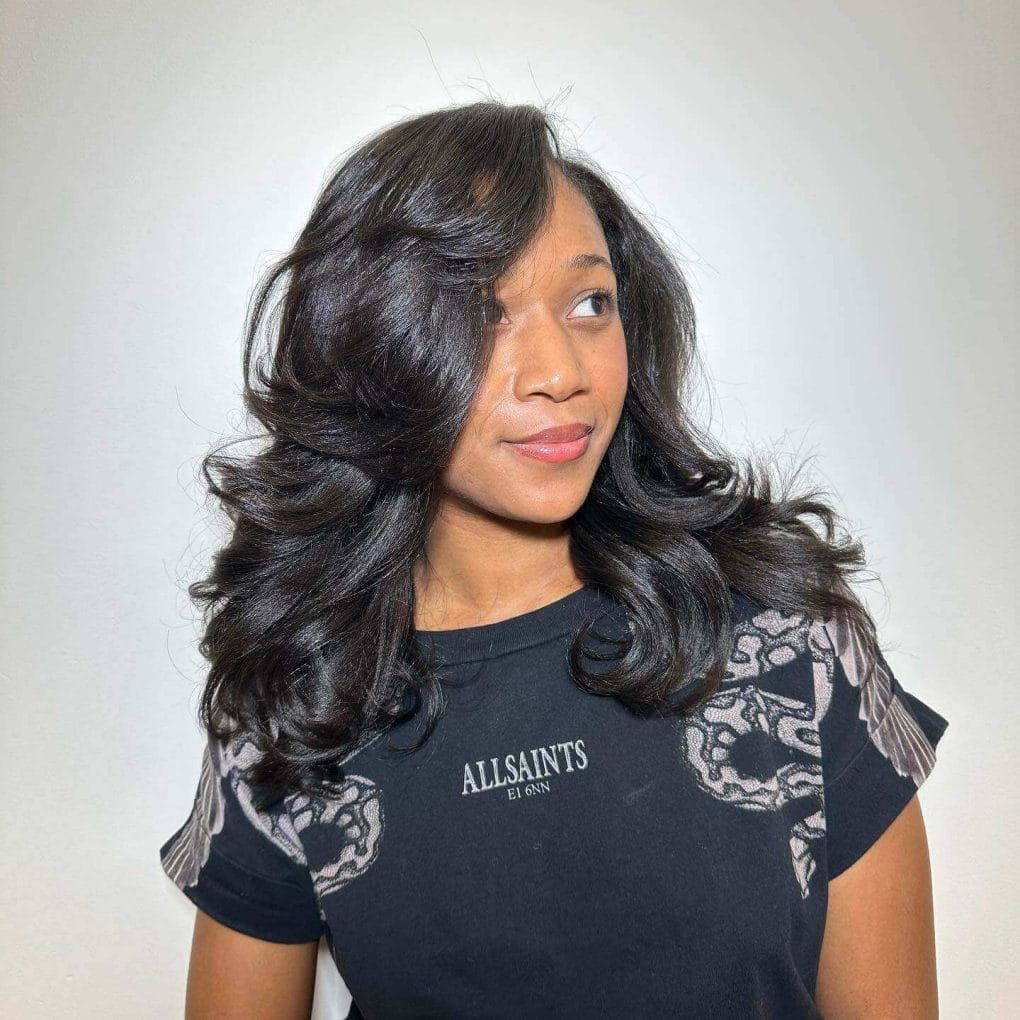
The subtle highlights in the long dark brown hair with layers are doing something specific. They are not for contrast. They are for dimension, so the mid-back length does not read as one solid dark block. The face-framing pieces catch the light first, and the middle part means the highlights sit evenly on both sides. The straight texture and blowout styling in the photo make the highlights look like a natural reflection, not a salon job. The wear and upkeep are moderate. The dark brown base grows out softly, so you can stretch to ten or twelve weeks between appointments. The subtle highlights fade gradually, no harsh line. A trim every eight weeks keeps the long layers from thinning at the ends. It is a low-drama colour for a high-drama length.
Feathered Layers With Curtain Bangs
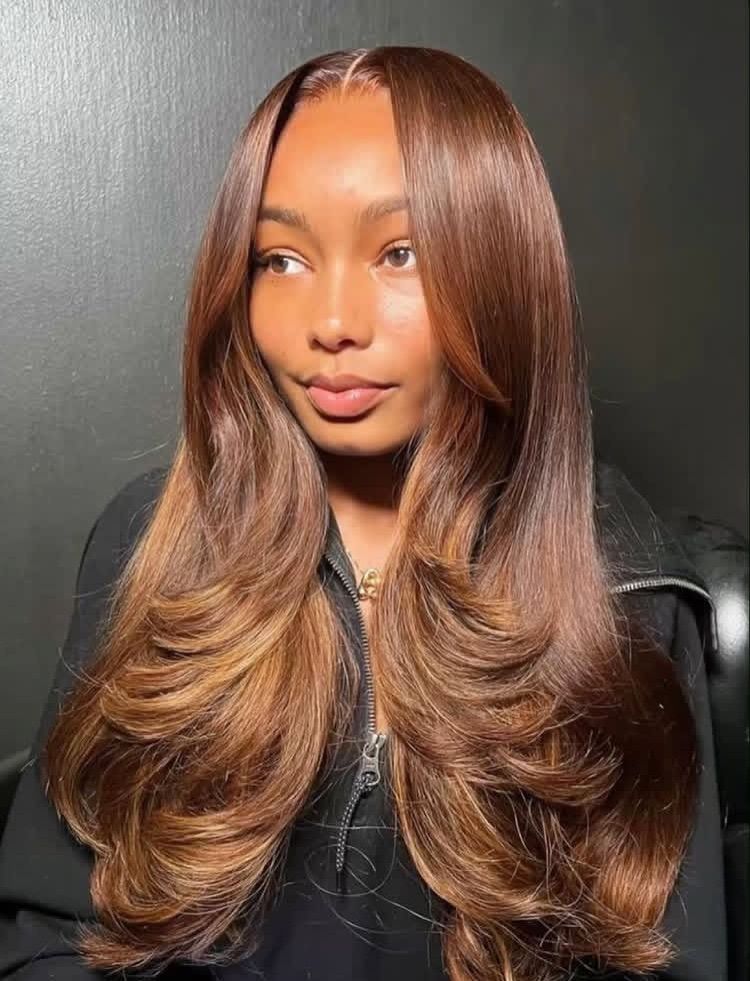
What is the difference between feathered layers and regular layers? The feathering. The layered hair with curtain bangs in the photo has feathered layers that are cut at a sharper angle, so each piece tapers to a soft point. It creates more movement than a blunt layer, and the curtain bangs blend into the face-framing pieces without a hard line. The thick, straight texture in the photo holds the shape well, and the dark brown with warm blonde highlights gives the feathering visual depth. The honest downside: feathered layers are prone to split ends. The tapered points are thin, and they fray faster than a blunt cut. A trim every six to eight weeks is not optional. Compared to a standard layered cut, this one needs more maintenance but gives more volume. I would pick it over a uniform layer every time.
Mid-Back Blowout With Face-Framing Balayage
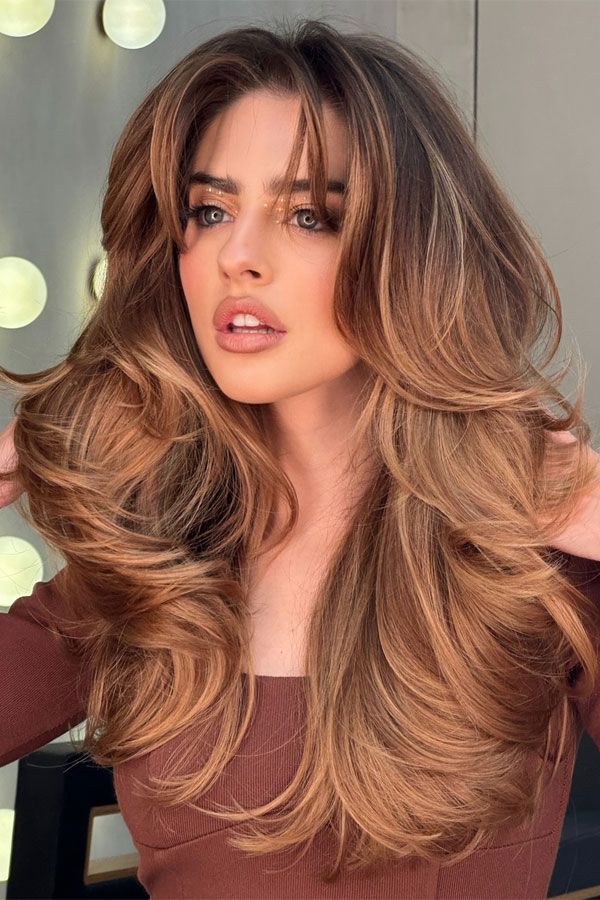
I have a confession: I used to think balayage was just a way to charge more for highlights. Then I saw how it lands on face-framing layers. The technique paints the caramel balayage with layers by hand, sweeping the colour onto the surface of each section instead of saturating the whole strand. That means the lightest pieces sit exactly where the cut already falls forward, around your cheekbones and collarbone. The mid-back length stays darker, which keeps the roots looking intentional for weeks. The blowout seals the cuticle flat, so the straight texture reflects the colour shift clearly. A middle part lets both sides fall symmetrically. No foil lines, no stripe.
Mid-Back Layers With Curtain Bangs and Balayage
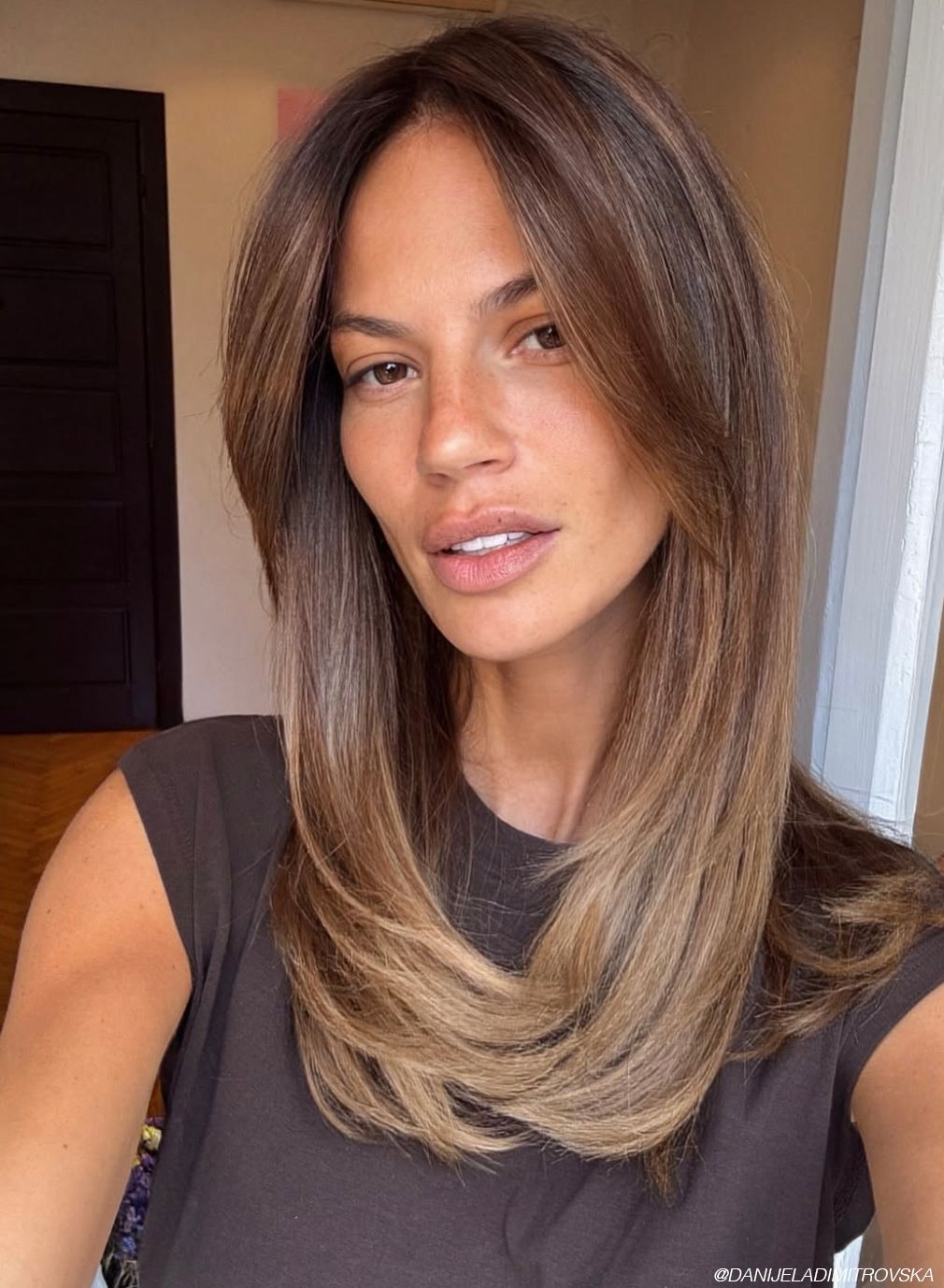
This cut is for anyone who wants movement without losing length. The long layers with balayage keep the mid-back weight while the curtain bangs soften the forehead. I have fine hair, and I would not try the bangs at home. They need a precise angle to blend into the layers, and one wrong snip turns them into a separate piece that does not sit right. A stylist carves the bangs so they feather into the face-framing sections, not sit as a blunt line.
Who should pass? Anyone with very thick, coarse hair that expands in humidity. The curtain bangs can separate and point in different directions by noon. A salon blowout keeps them trained, but day two is unpredictable. Book it for the colour dimension and the soft shape, not for low maintenance.
Mid-Back Loose Waves With Layers
Monday morning, you have a perfect silk press. Tuesday, the waves start dropping. By Wednesday, the layers are flat against your back. That is the reality of thick hair with layers and waves. The silk press gives a smooth base, but the loose waves need a curling iron or wand to reappear each day. A texturizing spray buys a few hours of hold, but do not expect day-three bounce. The layers create volume at the crown, which helps the mid-back length feel lighter, not heavy. The middle part keeps the face open. The healthy texture shows when the shine stays, but that requires a low heat setting and a heat protectant every single time.
Collarbone Layered Cut With Soft Curls
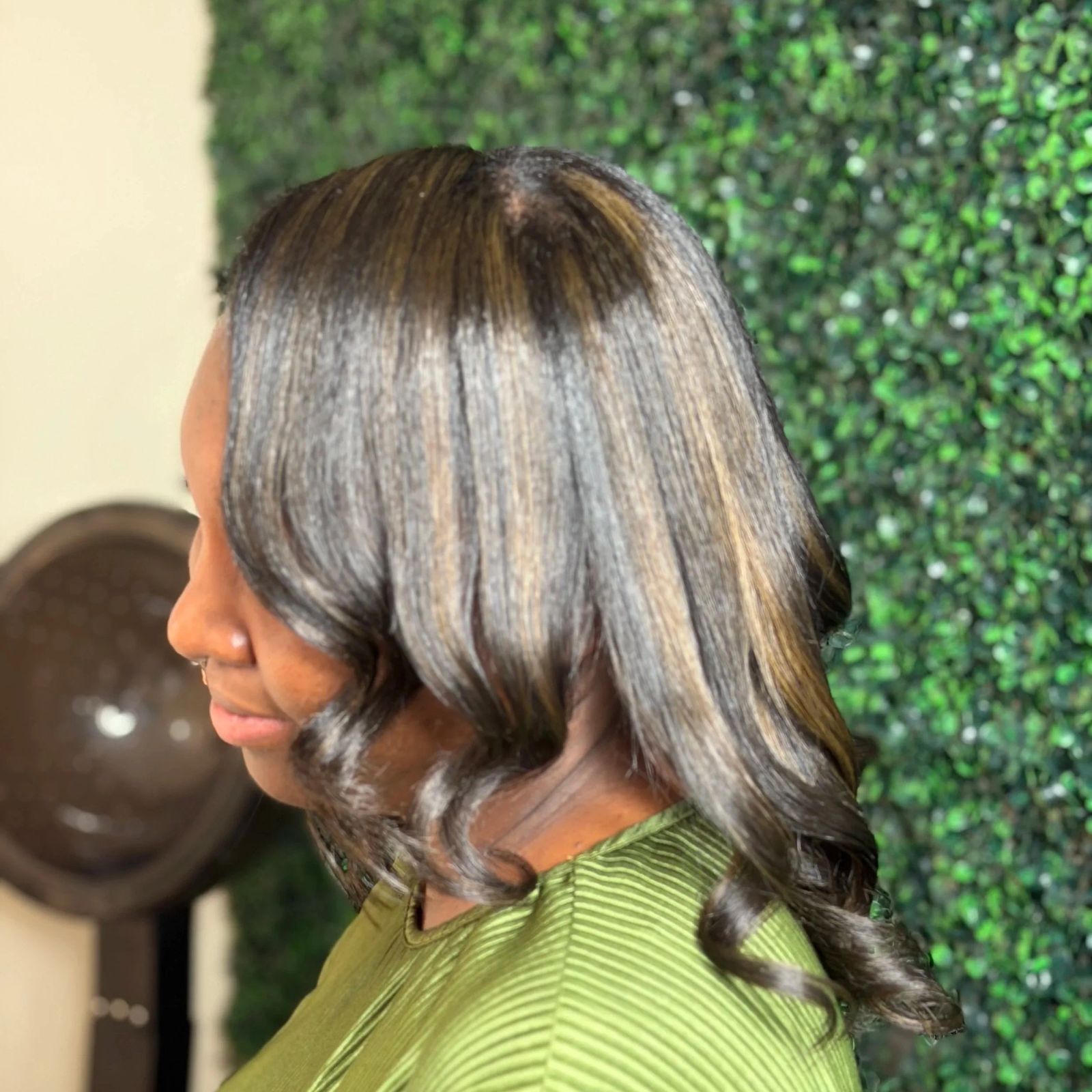
Ever had a cut that looked perfect in the salon mirror and flat by dinner? That is this one if you overdo it. The collarbone length layers here are subtle, not aggressive, which is the whole point. No bangs to fight with. The texture is straight and fine to medium density, so the soft curls at the ends give it movement without weight. The honest downside: too much product or heat and it goes limp fast. A heat protectant and one pass with a flat iron is all it needs.
Dark Brown Mid-Back Smooth Layers With Waves
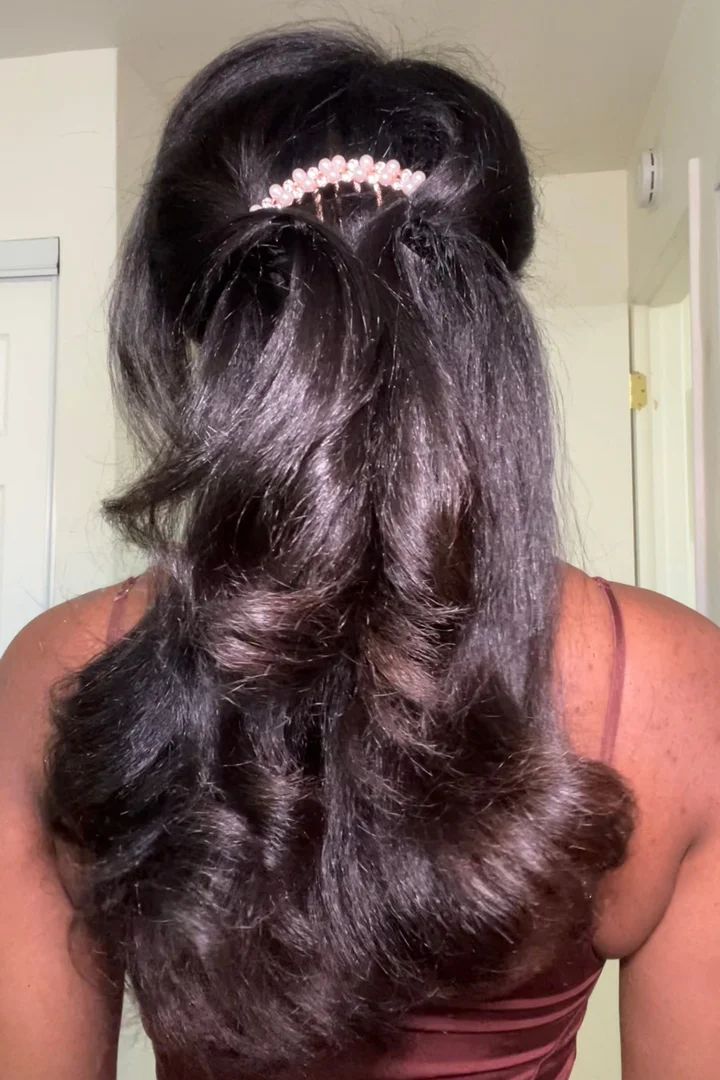
I did not expect to like a back-view shot this much. The long dark brown layers fall straight from a middle part, no bangs, and the smooth layers catch the light in a way that reads expensive. Thick texture helps here, because the weight of the hair holds the wave without it collapsing.
The technique is a professional blowout with soft waves set into the mid-back length. A curling iron touch-up every other day keeps the bend. Trim rhythm: every eight to ten weeks to stop the ends from splitting. The smooth finish is the standout, and it stays that way if you skip heavy product near the roots.
Shoulder Length Stacked Layers
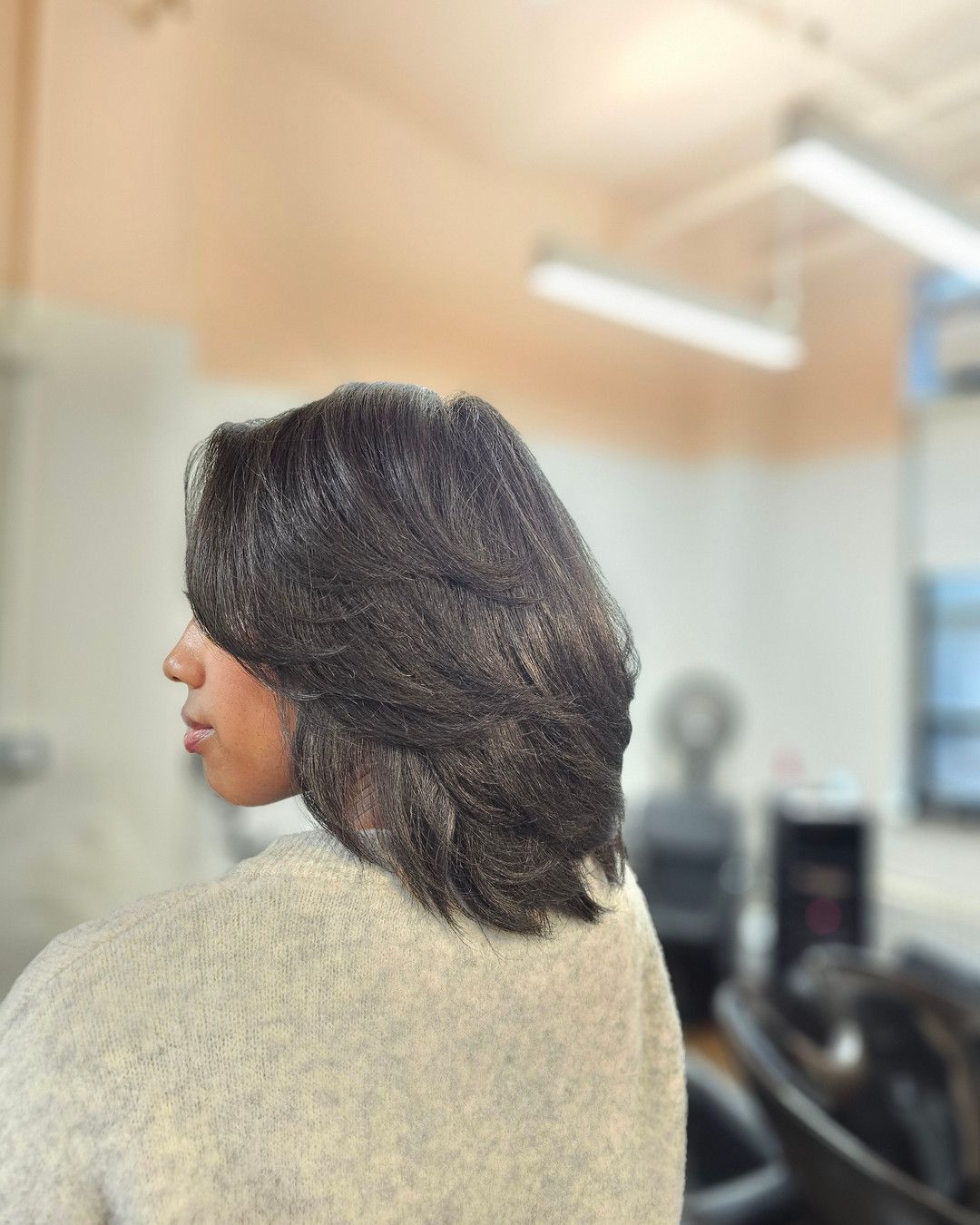
There’s a reason stacked layers haircut photos always show the back. That’s where the magic lives: the nape stacks shorter, then the layers cascade down to the shoulder, and the whole thing reads thick and dynamic. On straight, thick hair, this is the rare cut that actually removes weight while keeping volume. The distinct layers catch light at different points, so the shape moves when you turn your head. It flatters round and square faces because the height at the crown lengthens the silhouette. Skip it if your hair is fine or thin, the stacking will just expose how little you have.
Collarbone Ponytail With Layers
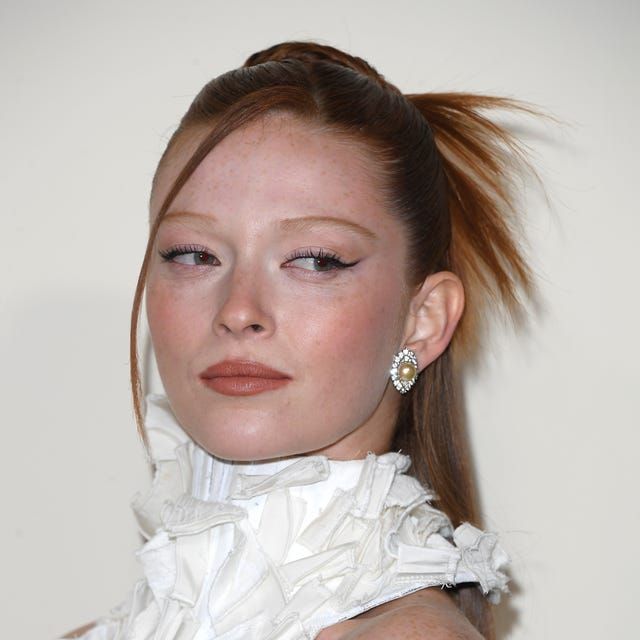
When does a ponytail actually look intentional instead of like you gave up at the door? When it has collarbone length and layers that peek out as you move. This is the cut for early fall, when the air is still warm but you want something sleek for a long weekend. The layered hair in ponytail catches light and breaks up the silhouette, so it reads sporty rather than severe. A middle part keeps the front smooth, and the collarbone length means the tail lands at a flattering spot, not too long, not too short. It suits oval and heart faces best because the clean lines balance a wider forehead.
Sleek Collarbone Bob With Inward Curls
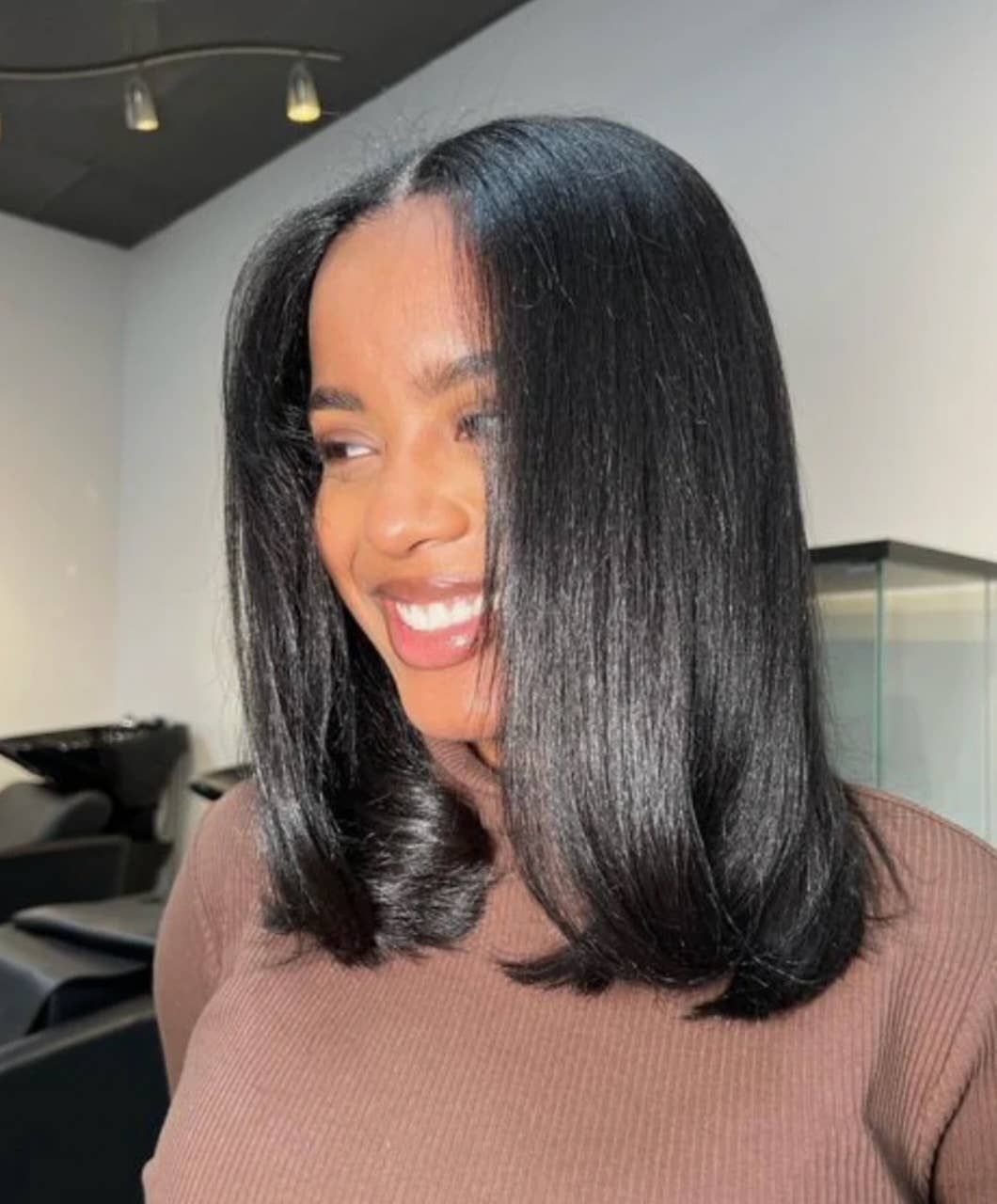
I’ll admit it: I underestimated this bob. The collarbone bob with smooth finish looks like it just happened, but the inward curves at the ends are doing all the work. On thick, straight hair, the blunt baseline reads glossy, and the inward turn softens the whole shape. The downside? It’s a high-maintenance friend. That smooth, glossy finish needs a flat iron touch-up most mornings, and the inward curve will droop by evening if you skip it. It flatters oval and long faces because the collarbone length adds width where you need it. If you’re not ready for daily styling, pick something with more movement.
Sleek Chin Bob With Curtain Bangs
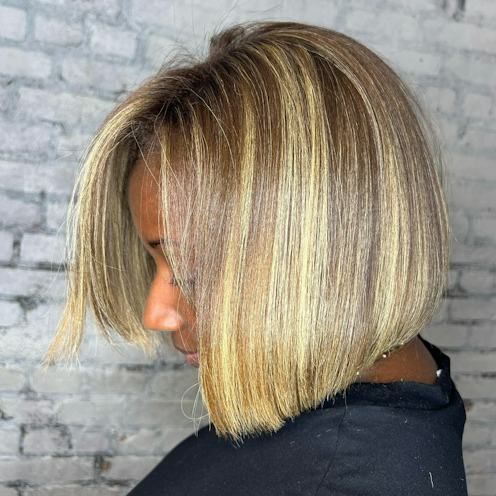
The chin length bob with curtain bangs is the haircut equivalent of a tailored blazer: sharp, but not stiff. The silk press technique is what gets it there, the flat iron glides over each section until the hair is mirror-smooth, and the curtain bangs are cut to sweep away from the face. The result is a sleek bob that frames the cheekbones and jaw without hiding them. It works best on straight, thick hair, because the weight helps the sleekness hold. The curtain bangs are the key: they add softness to what could otherwise be a severe line. Ask your stylist for a soft curtain, not a blunt fringe, so the bangs blend into the layers.
Visual Idea
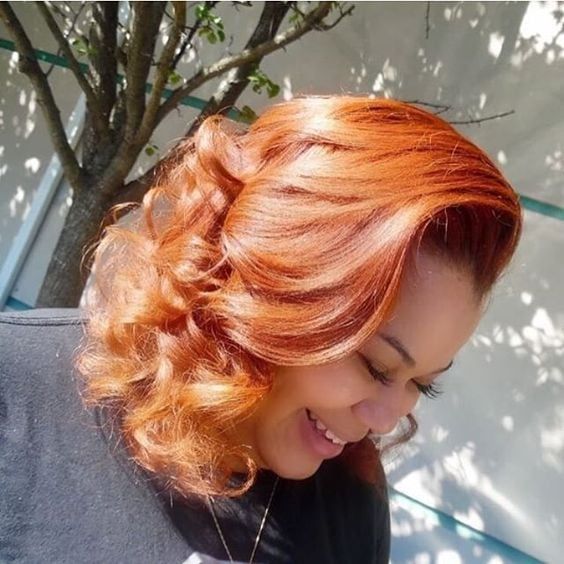
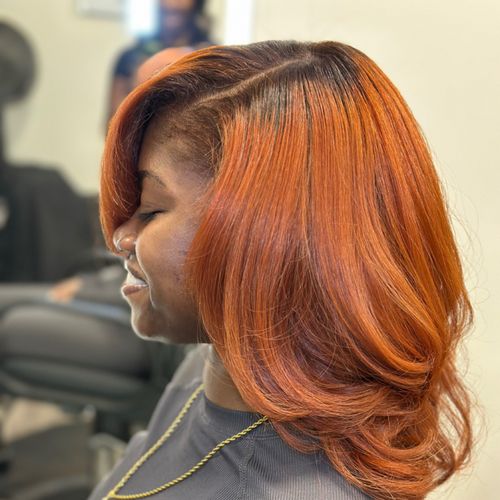
Copper hair has a way of looking expensive even when it’s not. This shoulder-length cut with visible layers is styled into loose, voluminous curls that catch the light and show off every shade of the copper. The side parting and the hair swept away from the face make it read soft and glamorous, not fussy. The layers are what give it that volume, they lift the crown and let the curls bounce. It flatters most face shapes, the side part softens round faces, the length suits oval ones, and the volume balances a longer jaw. If your hair is fine, ask for fewer, softer layers so you don’t lose density.
Visual Idea — With A Middle Part
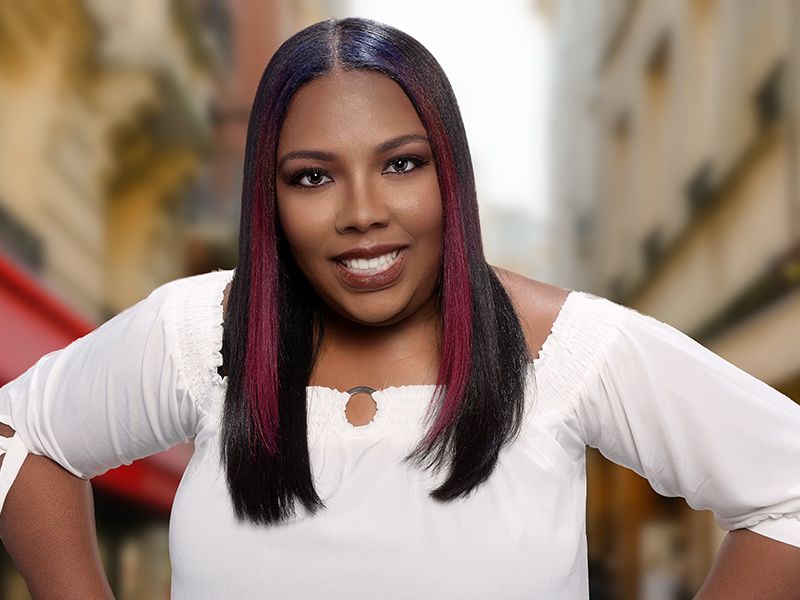
Ever notice how a silk press with layers can read as one solid block of shine until you part it down the middle? That center seam is where the cut earns its keep, because the blunt baseline holds the line while the inner layers catch the light and break up the color. I’m not usually one for loud streaks, but against that dark brown base, the purple and blue read as deliberate instead of costume. The straight finish keeps everything calm, so the vibrancy doesn’t look like a dare. Just know the gloss is the star here, and that means a flat iron pass every morning if you want the shine to stay this loud.
Collarbone Visual Idea
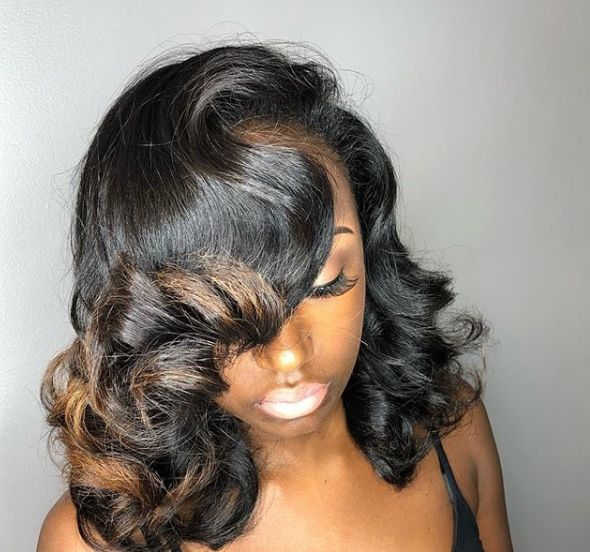
This collarbone cut is the quiet overachiever of the silk press family. The layered bob falls just past the shoulder, and the side-swept bangs soften the whole thing without stealing the show. What sold me is the blowout: smooth, glossy, with just enough bend at the ends to move. The dark brown base with subtle highlights adds dimension without shouting, which is exactly what you want when the cut is doing the work. It’s a salon finish, no question, but the grow-out is forgiving, so you’re not back in the chair every six weeks. If you have fine hair that flattens by noon, this shape keeps its volume because the layers are cut to stack, not to disappear.
Visual Idea — Long
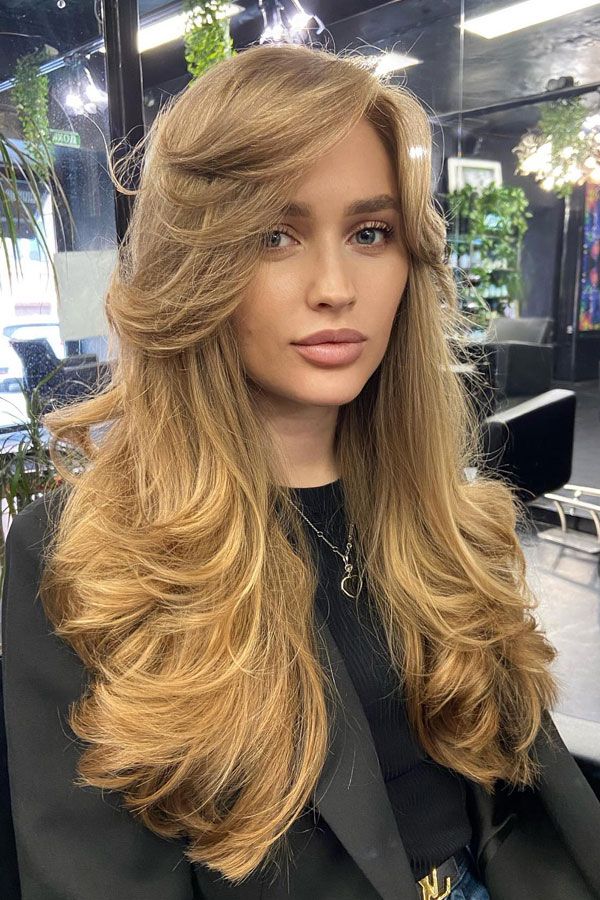
This is the long silk press that makes you want to flip your hair just to see it move. The mid-back length is cut with prominent layers that start below the chin, and the curtain bangs frame the face without committing to a heavy fringe. The honey blonde highlights catch the light in waves, which is the whole point: the blowout is voluminous, bouncy, and soft, not stick-straight. The middle part keeps it modern, and the movement is so pronounced that the layers look like they were painted on. It’s a salon blowout, through and through, but the real trick is the cut itself, because those layers are what give the silk press its swing.
Chin Visual Idea
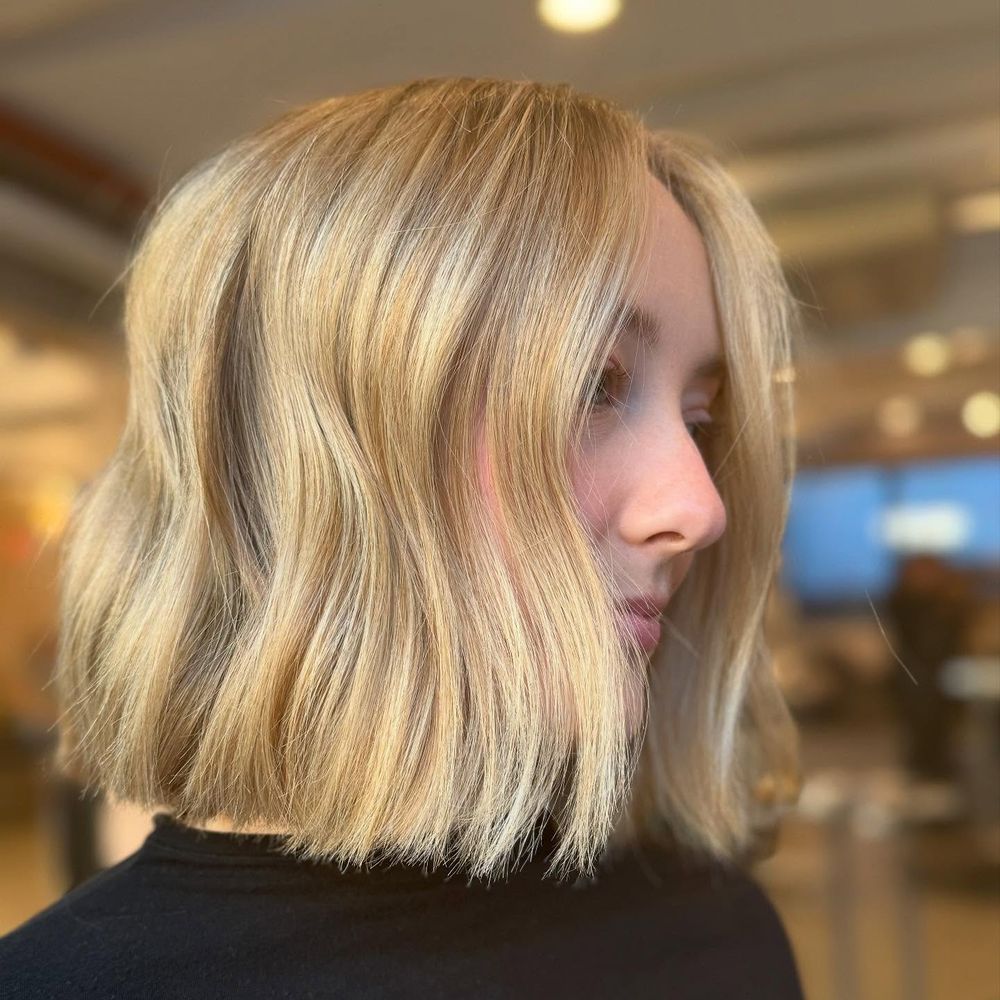
This chin-length bob is the sharpest tool in the silk press shed. No bangs, just a clean middle part and a blunt cut that lands right at the jaw. The blonde is a solid, glossy shade with no highlights to distract from the geometry, and the straight finish is so smooth it looks like glass. The side view is where it hits: the cut is precise, the layers are minimal, and the texture is a medium straight with a bit of weight. It’s a bold move, but the payoff is a silhouette that reads expensive and low-maintenance at the same time. Just know that with this much bluntness, there’s nowhere for the eye to hide, so the cut has to be exact.
Visual Idea — Straight Finish
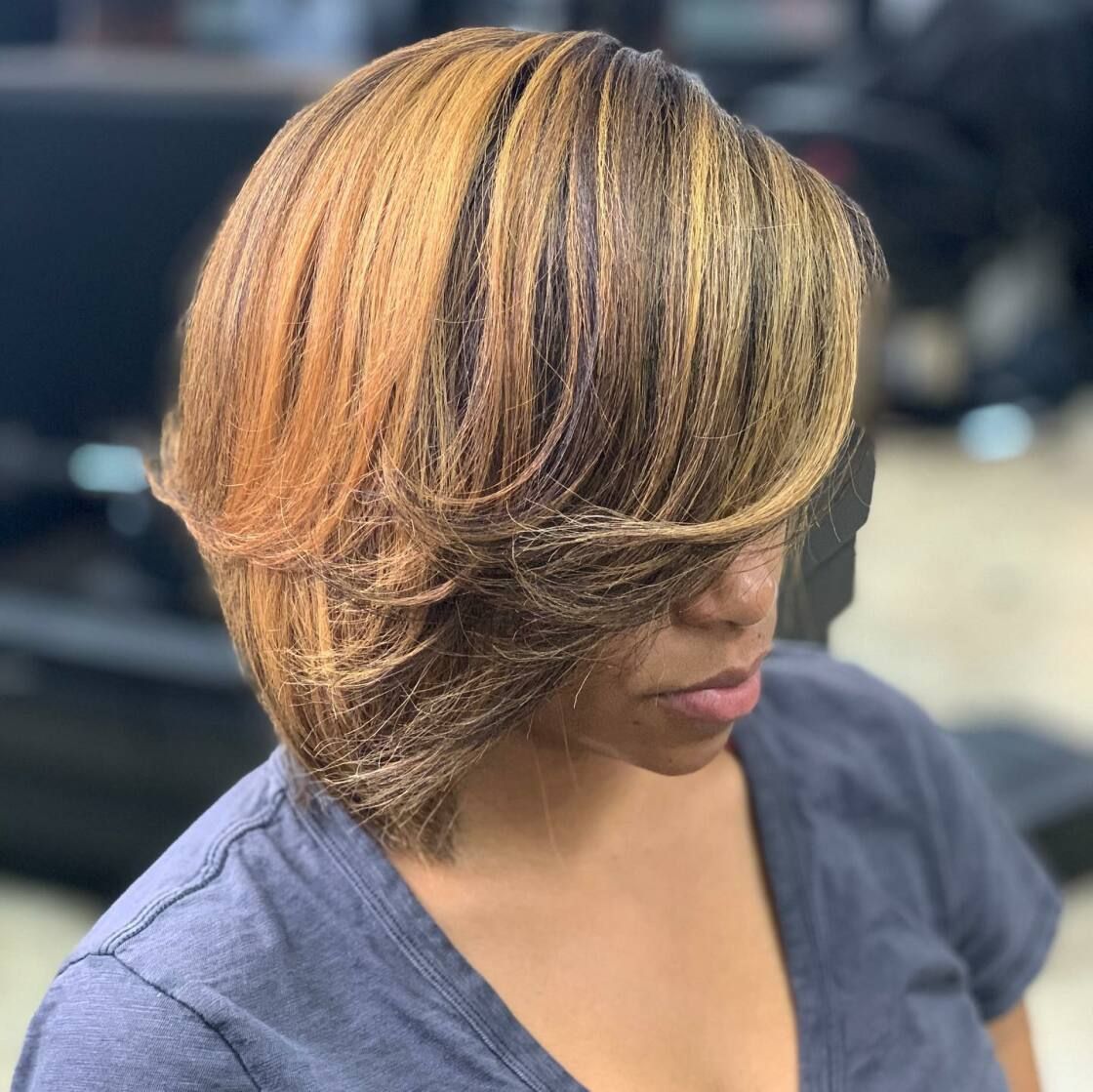
I’ll admit it: I’m a sucker for a blunt bang, but I’ve learned the hard way that it demands a level of upkeep I’m not always ready to give. This chin-length bob with blunt bangs and distinct layers is the kind of sharp that makes you sit up straight. The dark brown base is the anchor, and the blonde and auburn highlights are placed to catch the light without looking streaky. The straight finish is the point, and the silk press here is so smooth that the layers almost disappear until you move. The side profile shows the cut’s precision, and the texture is medium with a glossy finish that feels like a reward. But here’s the honest downside: keeping those blunt lines sharp means a trim every four weeks, and if you skip it, the whole thing starts to look shaggy instead of intentional.
Chin Length Visual Idea
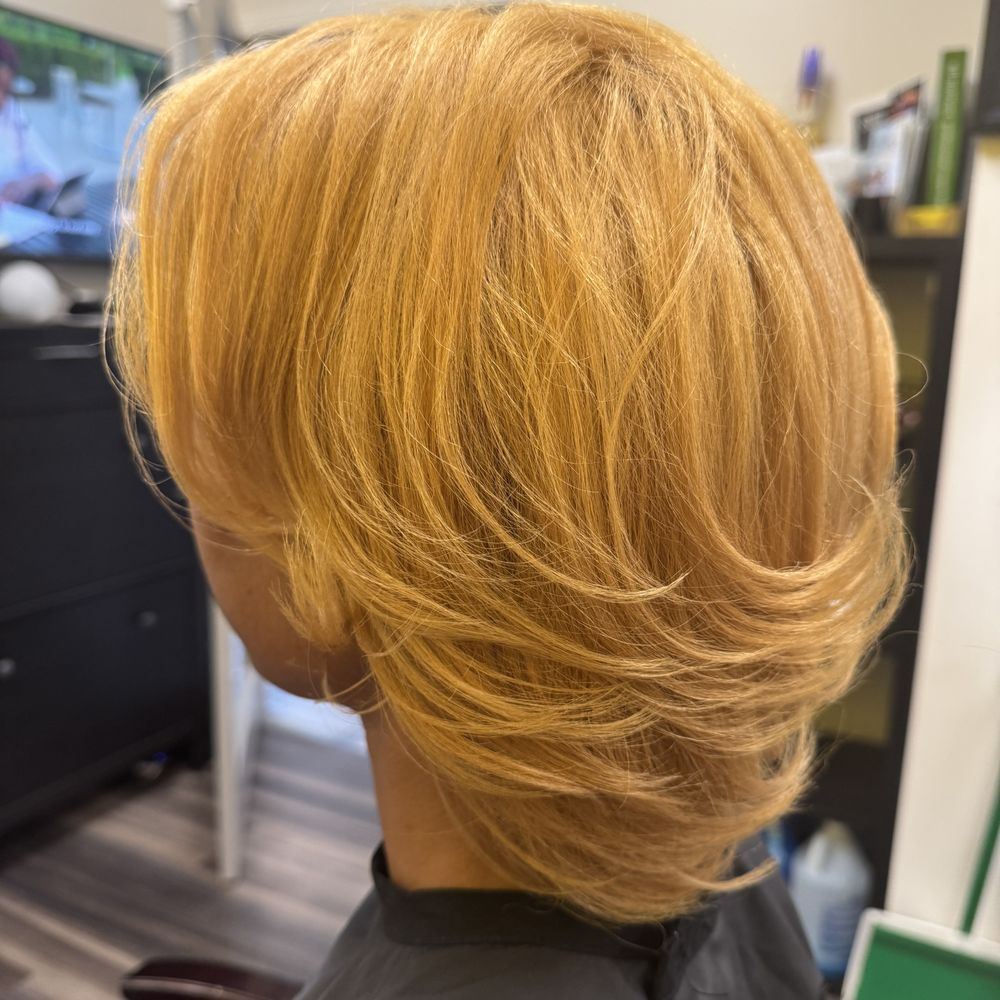
Does your fine hair go flat by noon, no matter what you do? Stacked layers at chin length fix that — the back is cut shorter than the front, which builds volume where fine hair usually falls flattest. I have fine, straight hair that collapses by 4 pm, and this cut held its shape through a full workday. The layers are stacked tight at the nape, then graduate toward the chin.
Grow-out is where stacked layers earn their keep. The shortest pieces at the nape take about eight weeks to blend into the longer ones, so you get a solid two months before the shape starts to feel top-heavy. My roots showed at week five, but the stacked structure still read intentional. No bangs here, which means one less thing to trim. The honey blonde adds warmth, but the real work is the cut itself. A middle part keeps the weight even on both sides.
Black Visual Idea
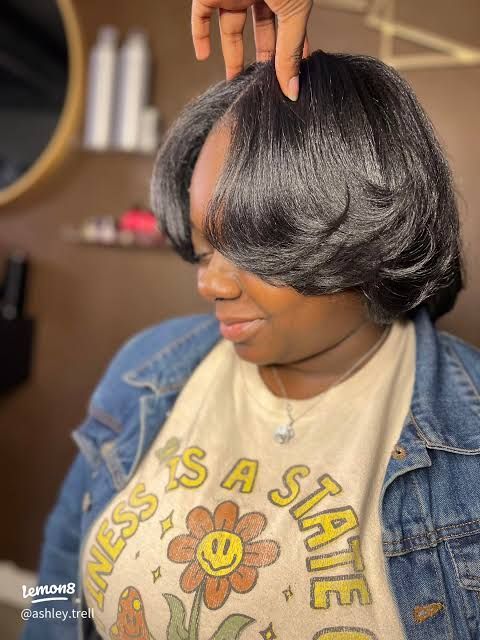
A blunt bob at chin length with blunt bangs is the most unforgiving cut in this roundup. Every uneven line shows, every flyaway catches the light. The silk press technique here is critical: the stylist sections the hair, runs a comb flat against the scalp, and presses each section bone-straight with a flat iron set below 400 degrees. At home, I would not try this. The blunt cut leaves zero room for error — one crooked pass and the bang line looks jagged. The side part and black colour keep it severe in a good way, but book the salon chair, not your bathroom mirror.
Visual Idea — Ash Brown Hair With Highlights
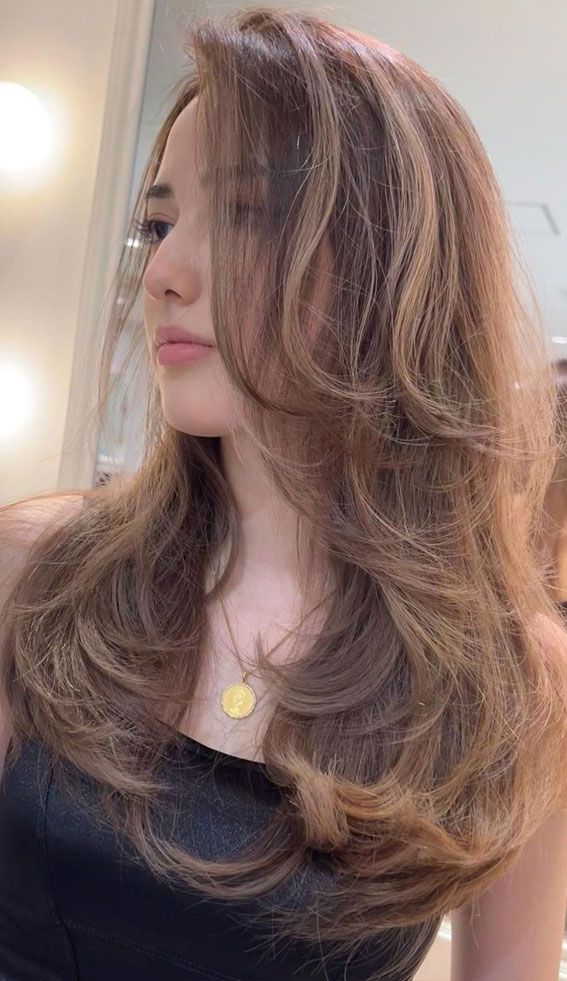
Ash brown with highlights beats flat ash every time. Flat ash reads muddy on most skin tones — it pulls green or grey where you want cool dimension. This version uses long, distinct layers that start below the chin and run to mid-back, with face-framing pieces that catch the lighter highlights. The highlights are placed on the top sections and the front pieces, so the colour lifts where the light hits.
The layers here are not subtle. They are cut deep enough to separate visibly, which means the straight texture holds the shape without curling or waving. A side part opens up the face-framing pieces on one side. The silk press keeps the whole thing glossy, not frizzy. If you want ash without the flatness, ask your stylist for a cool-toned base with fine highlights woven through the top layers only. Skip the chunky streaks.
Honey Blonde Visual Idea
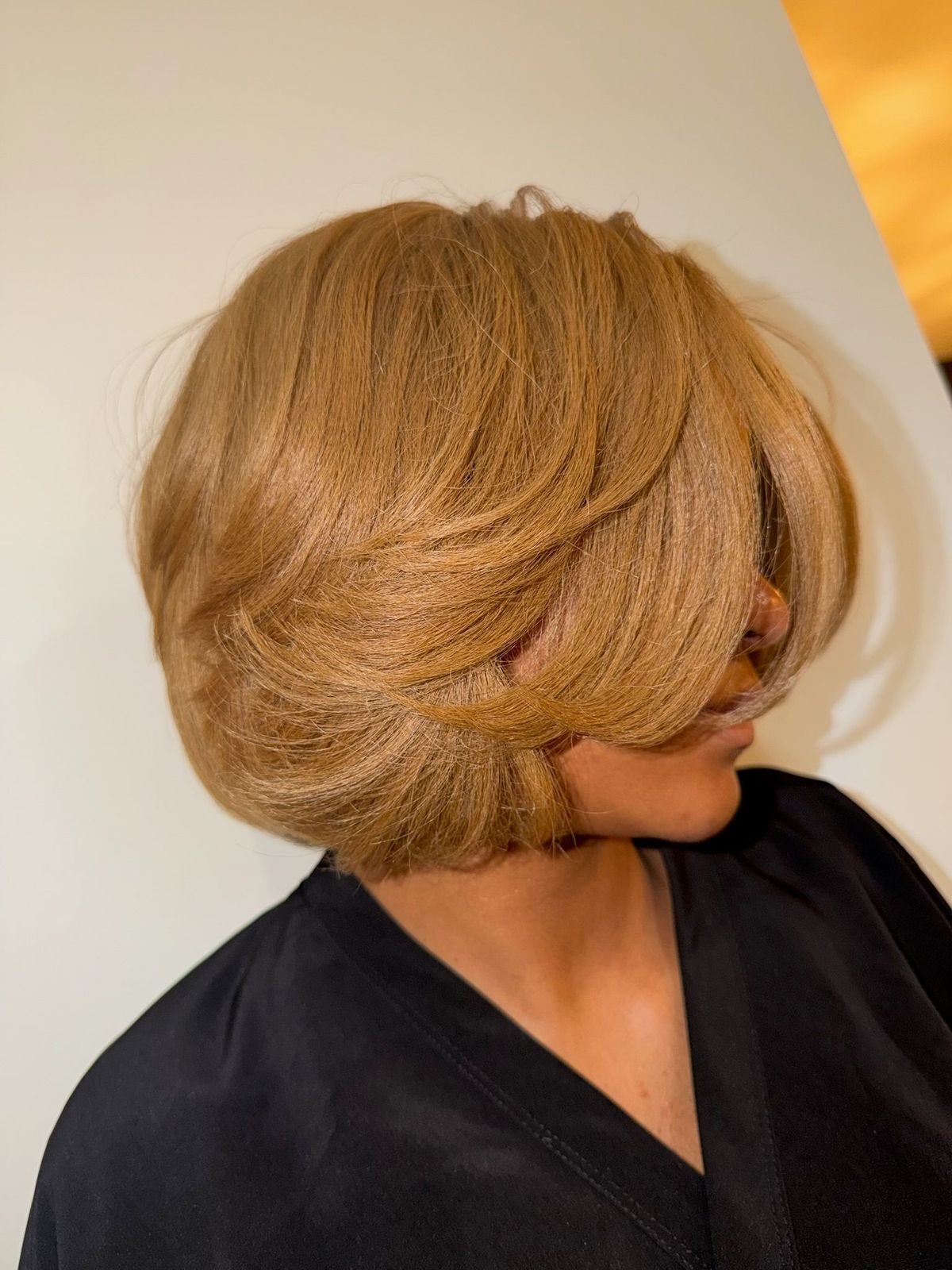
Who does a honey blonde bob with voluminous layers actually suit? Anyone with straight, thick hair who wants the colour to read warm without going brassy. The bob sits at chin length with no bangs, and the layers are cut to add movement through the middle and ends — not just the top. Thick hair can feel heavy when it is straight, but the voluminous layers lift the weight off the ends. The side part and blowout keep the texture smooth. Honey blonde works best on warm or neutral skin tones; if your skin runs cool, ask for a beige-toned honey instead of a golden one.
Ear Visual Idea
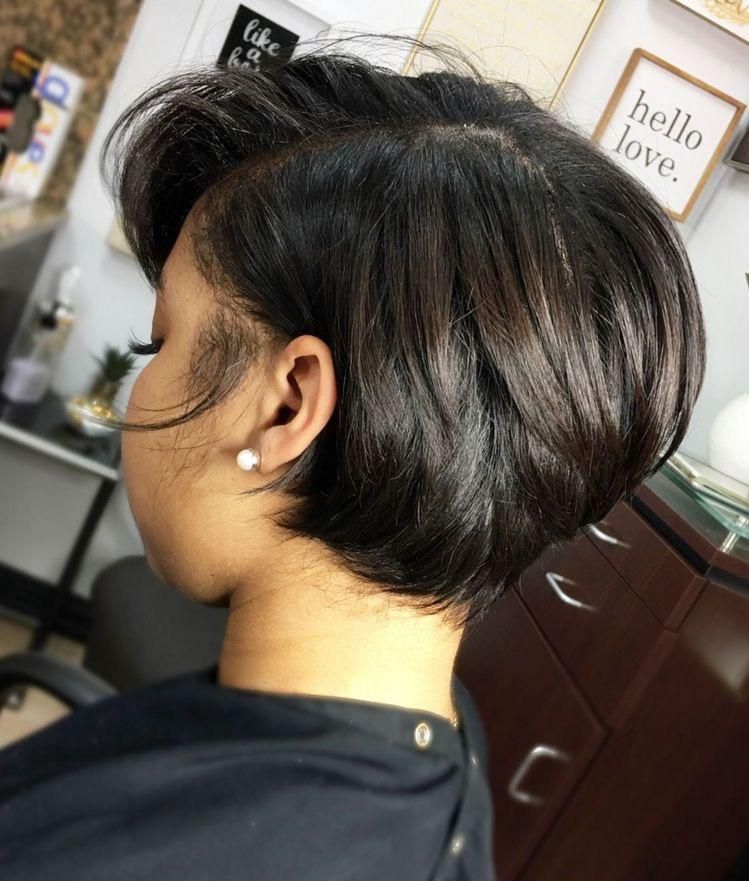
I will admit it: I tried a stacked back at ear length once, and the first week was a disaster. The back piece sits above the ear, so every morning you wake up with a dent where you slept on it. The side-swept bangs need a round brush and a blow-dryer, minimum. The stacked back means the shortest layers are at the nape, which gives volume but also means the cut grows out unevenly — the back lifts while the front stays. Dark brown hides the regrowth, but the shape demands a trim every four weeks. This is not a wash-and-go cut. It is a commitment.
Dark Brown Visual Idea
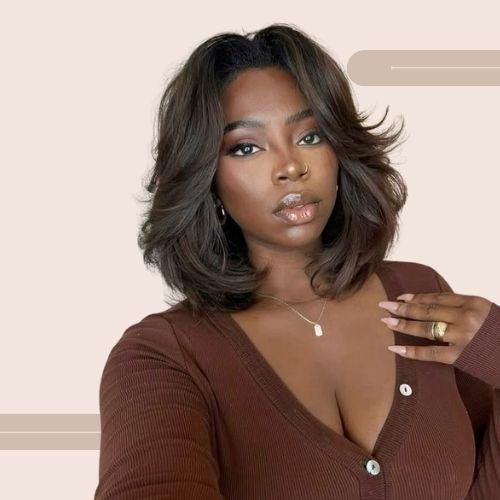
That middle part with curtain bangs is doing more work than you’d think. The silk press is what makes it work: a flat iron glides over each face-framing layer, sealing the cuticle so the dark brown reads almost liquid. Chin length keeps the weight off, and the straight texture lets those bangs fall open instead of sitting flat. My fine hair would need a serious heat protectant and a steady hand, this is not a bathroom-mirror job. Book it, the payoff is a sleekness that lasts past lunch.
Dark Brown With Blonde Highlights Visual Idea
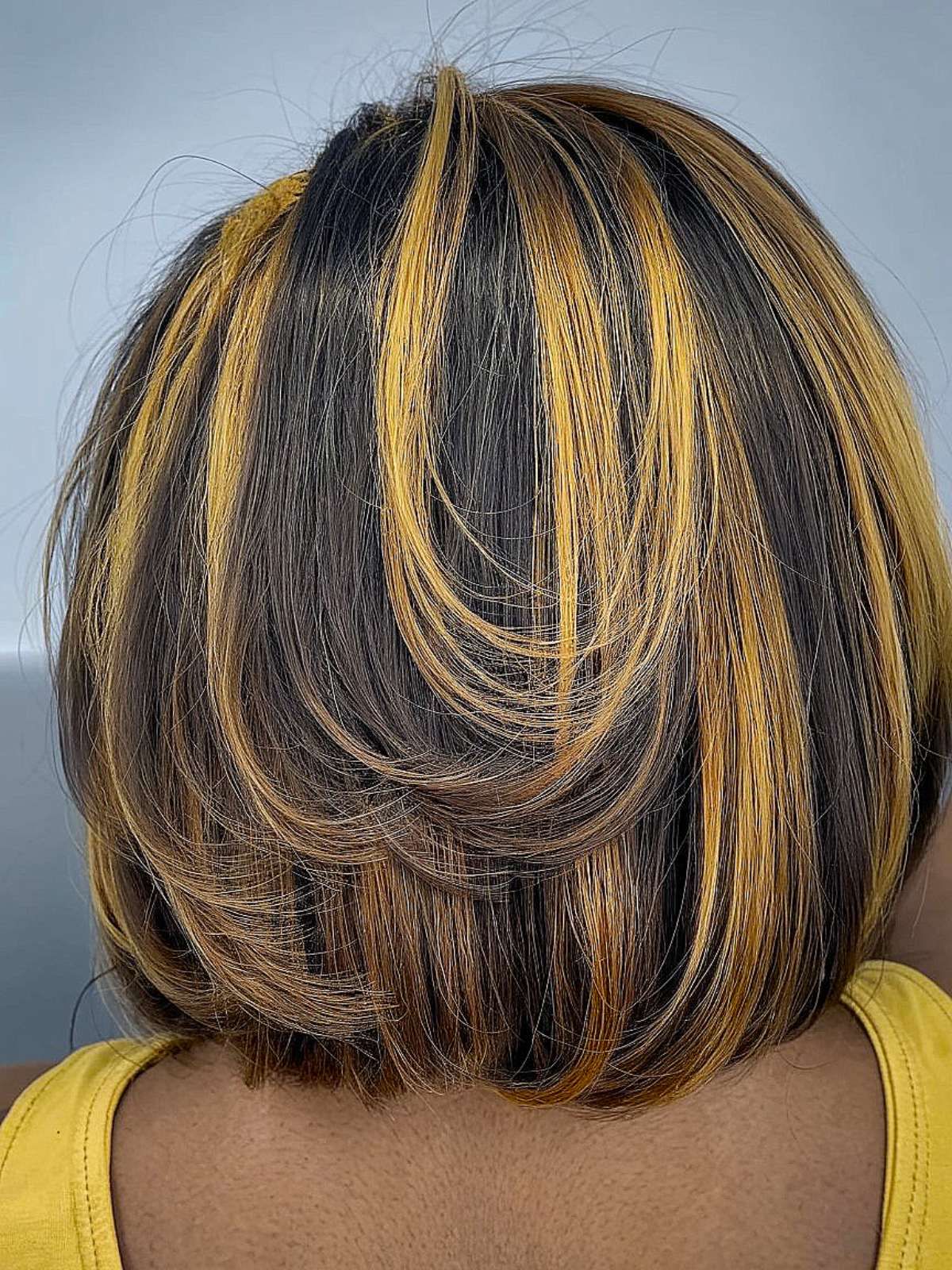
That back view tells you everything: the blonde highlights are woven through the layers, not slapped on top. On a chin-length bob with straight, thick texture, the contrast gives each section its own edge. The upkeep is the catch. Dark brown roots grow out fast, and those highlights need a toner every six weeks or they drift brassy. A middle part keeps the layering visible, but skip this if you hate the salon chair. It suits medium to thick hair best, fine strands might read too busy.
Bob Visual Idea
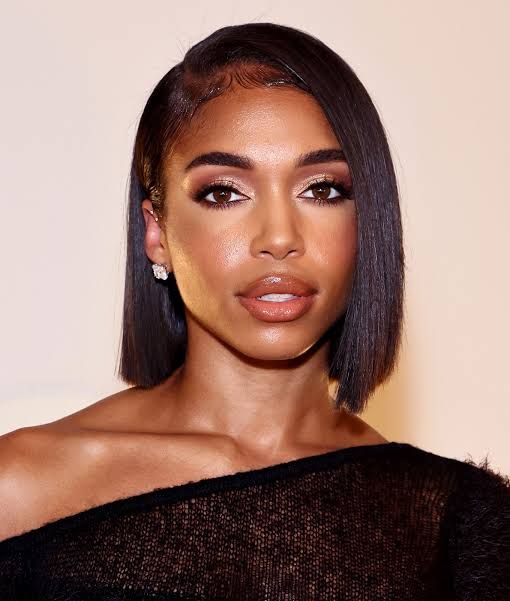
Ever wonder why some bobs gleam and others just sit there? This one, with its side-swept bangs and side parting, is all about smoothness and shine. The fine, straight texture takes a blowout well, and the dark brown color bounces light instead of swallowing it. Compare that to a choppy, textured bob, which scatters shine no matter how much gloss you add. If you want that glassy finish, keep the cut blunt and the layers minimal. My hair would flatten by 4 pm, but on the right density, this holds.
Visual Idea — Silky Finish
I have to admit, I’m a skeptic when it comes to high-gloss claims. But this chin-length bob, with its subtle layers and inward-curling ends, is the real deal. The side-swept bangs and side parting frame the face without fuss, and that dark brown shade has a mirror finish that looks like it was poured on. The honest downside? Maintaining this silky finish at home is a chore. A flat iron and a round brush will get you close, but the salon version holds a gloss that DIY just can’t match. Book it if you want the shine to last past the first wash.
Final Thoughts
After writing all 34 of these, I noticed the same thing kept coming up: a blunt baseline with soft interior layers held the silk press longer than anything else. That is what I am booking next, a collarbone version with curtain bangs. No more flat by 4 pm.
- Trim the baseline every eight weeks.
- Tone at week six, not week ten.
- Use a heat protectant every time.
- Sleep on silk or satin.
- Book the consultation before the cut.