Last spring, every third stylist chair in my city was cutting the same heavy fringe that hit mid-lash and required a flat iron every morning. This year, the air-dried, past-the-eyebrow textured fringe is the one I keep seeing women walk out with. Good move.
Textured Fringe is exactly what it sounds like: a fringe that lets air through instead of landing like a helmet. 20 ideas here, from a five-minute spritz-and-go wispy fringe to a micro fringe that needs a pro scissors, with face shapes from round to square and density from fine to thick in mind. I tested which ones survive a humid afternoon and which ones just look expensive for one good photo.
Mid-Back Shag With Textured Curtain Bangs
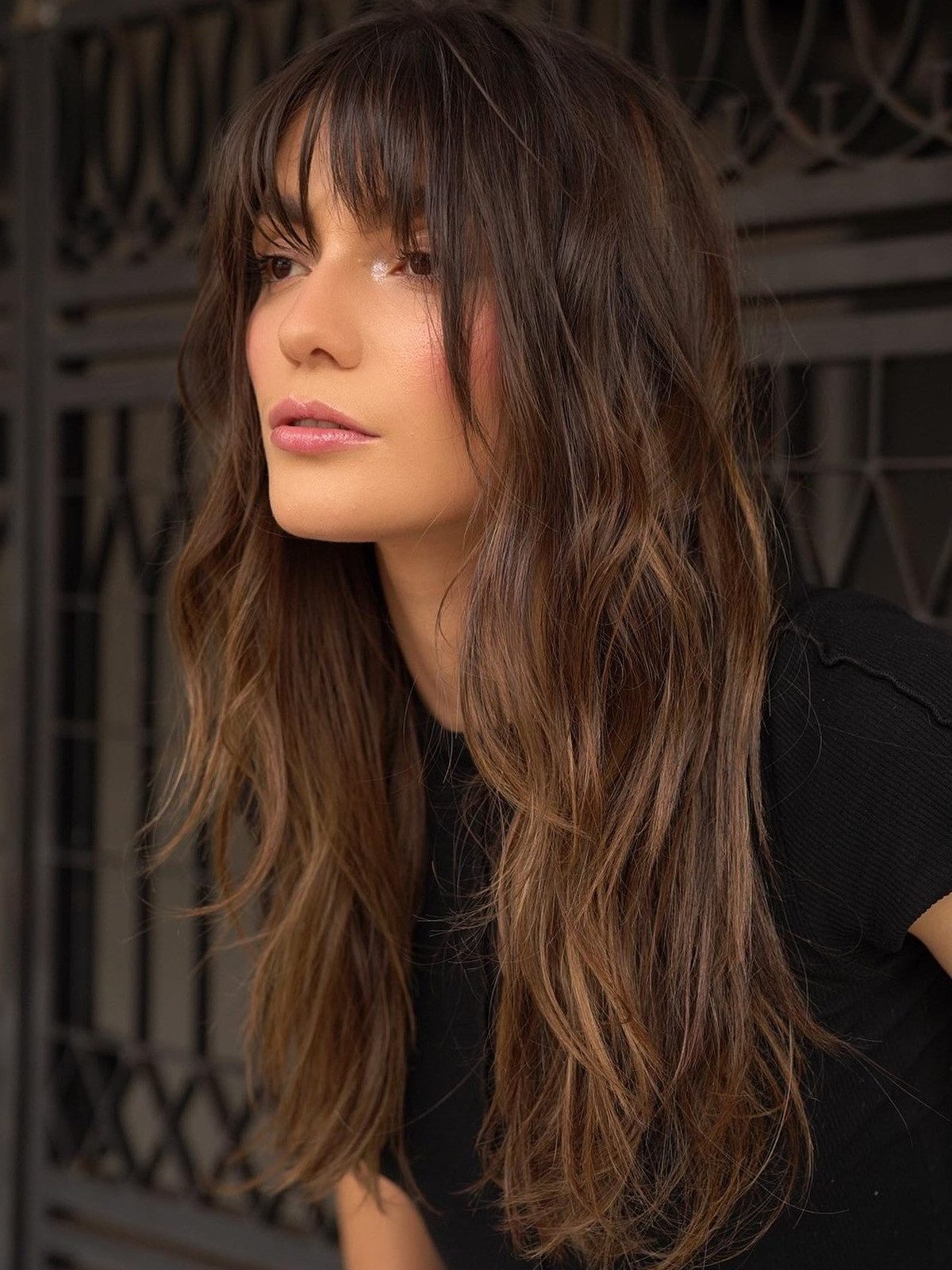
That wispy texture on the curtain bangs is doing more work than you think. It softens the whole face without losing the shag’s edge. The cut stays layered through the mid-back length, so the waves stack instead of falling flat. My hair goes limp by 4 pm, but a long shag with curtain bangs like this one holds its shape because the layers are cut into the bulk. The textured curtain bangs hit just past the cheekbone, which means they blend into the rest of the hair instead of sitting like a separate piece. Medium density is the sweet spot here. Too fine and the layers disappear. Too thick and the wispy effect gets swallowed.
Voluminous Copper Lob With Curtain Bangs

When did copper start looking this expensive? The lob hits collarbone, the curtain bangs sweep to the side, and the layers underneath give the volume room to move. A copper lob with curtain bangs like this one needs a blowout to get that lift at the crown, about 20 minutes with a round brush. The vibrant copper reads warm against cool skin, which is a trick most reds miss. Trim every 6 to 8 weeks, because the bangs grow into your eyes first and the lob loses its blunt edge second.
Collarbone Shag With Textured Copper Fringe
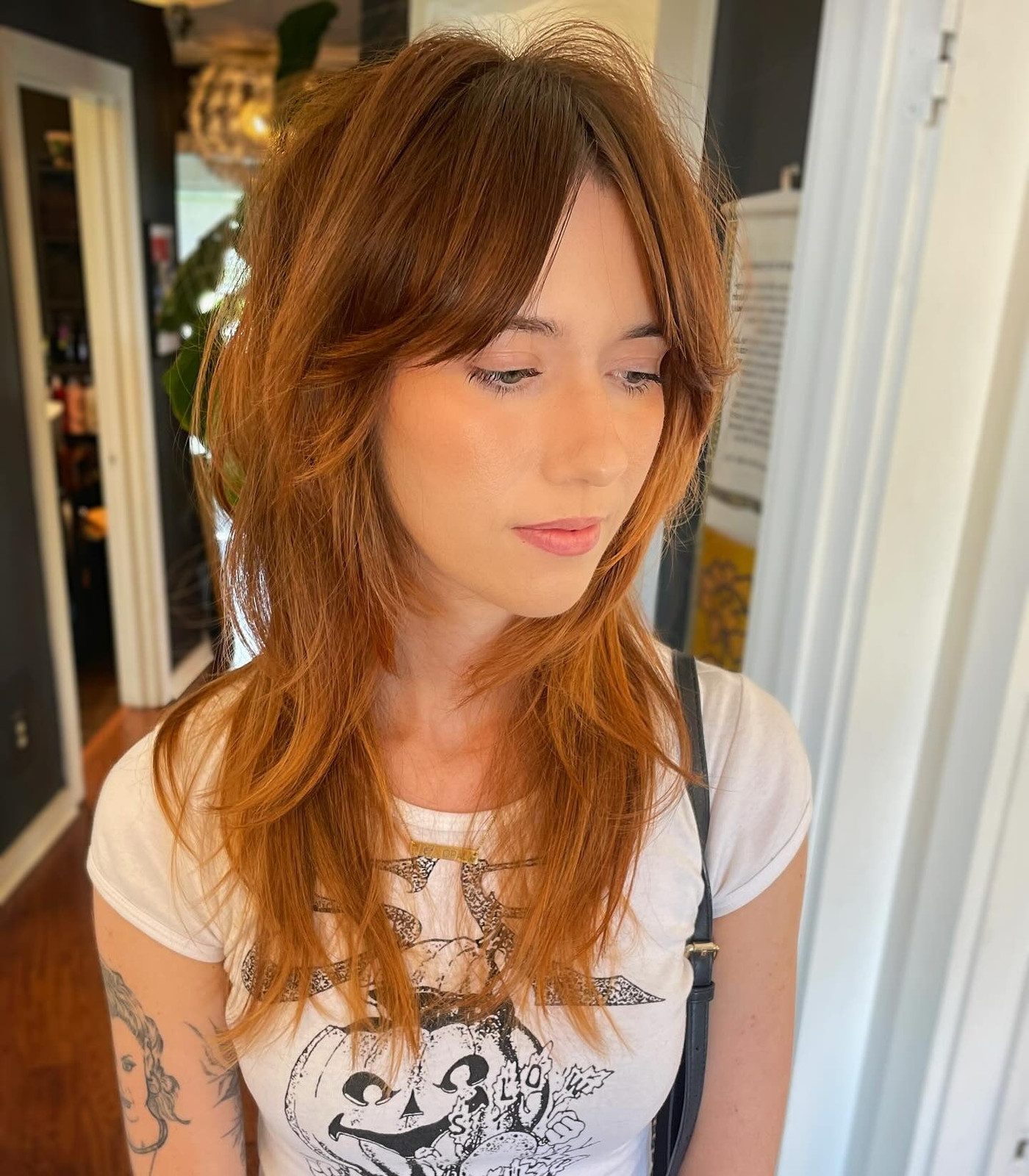
I will admit it, I expected this to be a fight. Thick, wavy hair and a fringe can go wrong fast. But a shag with textured fringe like this one works because the layers are cut into the density, not around it. The copper with blonde highlights keeps the dimension visible even when the waves clump. Air dry, shape the fringe with your fingers, walk out the door. The honest downside is that the textured layers grow out unevenly, so skipping a trim past 10 weeks leaves you with a shape that looks accidental.
Collarbone Ash Blonde With Textured Fringe
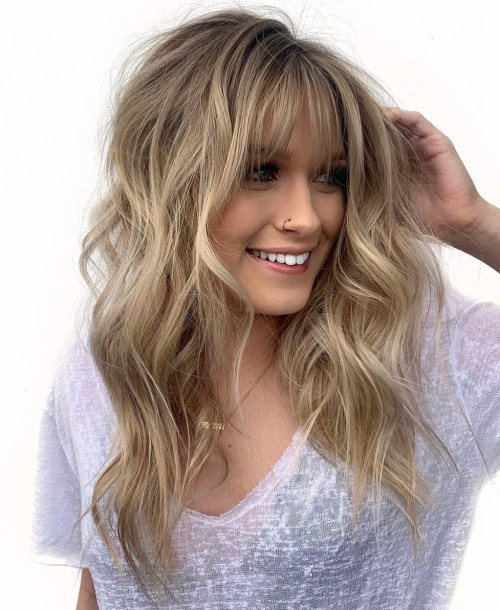
Warm blonde gets all the attention. This ash blonde textured fringe makes the case for the other side.
The collarbone cut keeps the weight low, and the textured fringe breaks up what could be a flat, solid line. Ash blonde with highlights reads cooler than beige, which means it needs a purple shampoo to stay out of green territory. Ask your stylist for piecey ends on the fringe, not a blunt cut, so the texture reads intentional even when the waves relax. The layers sit soft, not razored, which keeps the ash tone from looking dull.
Collarbone Layered With Blunt Fringe

A blunt fringe on fine, straight hair looks great for exactly one day. The mistake is thinking it will stay put. The collarbone length has long layers, so the body moves, but the blunt fringe does not. It sits there, a solid curtain across your forehead, and by noon it separates into two greasy panels. The fix is asking for the fringe to be texturized at the ends, just a few snips, so it has somewhere to go. A blunt fringe layered hair cut needs that release or it fights the rest of the shape.
Collarbone Wavy With Wispy Fringe
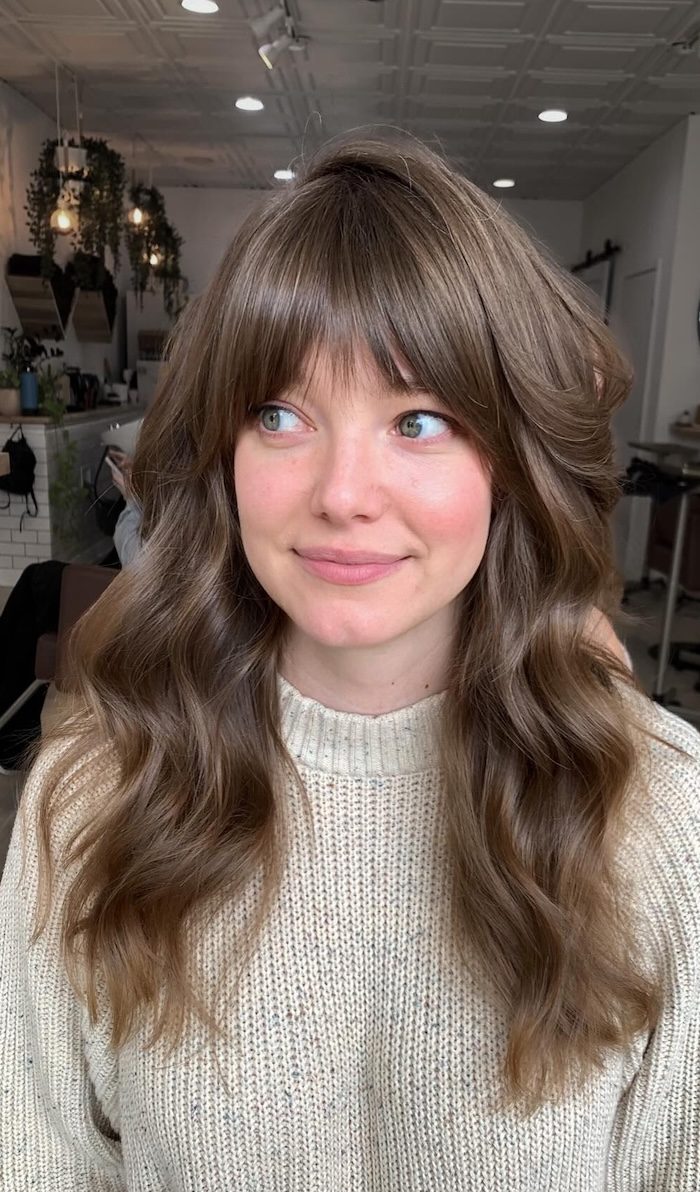
Does a full fringe actually balance a round face? Yes, if you cut it right. This collarbone cut uses long layers throughout the length, so the hair moves instead of sitting heavy. The wavy hair with wispy fringe hits just below the brows, soft enough to skip the severe line. That wispy fringe opens the face without shortening it. Medium density works best here, fine hair needs a bit of product to hold the wave. A middle part keeps everything symmetrical. The texture is the point, not the polish.
Mid-Back Layered With Side Part

Monday morning, wet hair, no round brush in sight. This layered hair with side part is designed for exactly that. The cut keeps a heavy baseline so the layers don’t disappear into thin air, and the full fringe softens what could be a boring long shape. I air-dry it in about ten minutes, just flipping the part and letting the textured fringe fall where it wants. The texture comes from how the layers stack, not from a curling iron. A trim every ten to twelve weeks keeps the shape from going tent-shaped. Switch the side part when the roots feel flat, that buys you another day.
Textured Lob With Wispy Fringe

A textured lob with wispy fringe is not a standard lob with bangs tacked on. The lob itself is cut with internal layers that remove weight from the interior, so the hair sits lighter and the wispy fringe blends into the sides instead of stopping abruptly. That means the fringe reads as part of the cut, not an afterthought. This is a salon job, not a bathroom-mirror experiment, because the interior layering needs a stylist who understands how texture distributes volume. The middle part keeps the weight even. Dark brown, collarbone, done.
Dark Brown Pixie With Textured Fringe
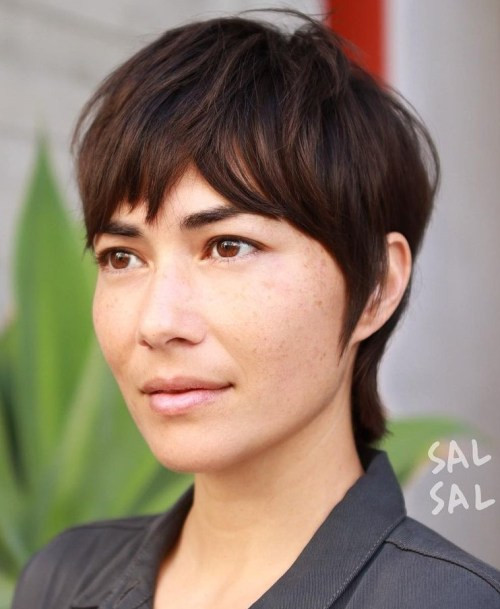
I will admit I was sceptical about a pixie with textured fringe on straight hair. The concern is that the fringe goes flat by noon and the whole thing looks like a helmet. This one avoids that by keeping the fringe long enough to move and the top layers short enough to lift. The texture comes from point-cutting, not from product, so it holds its shape even on a second day. The honest downside is the trim schedule, every four to six weeks, no skipping. Miss one and the fringe hits your eyebrow and the whole proportion shifts.
Collarbone Brown With Voluminous Bangs

I booked this cut for a wedding and then wore it to the grocery store three days later. That is the test. The collarbone length keeps the weight manageable, and the long layers stop the hair from puffing at the shoulders. The voluminous curtain bangs frame the face without committing to a full fringe, so you can push them to the side when you are cooking or let them fall forward for photos. Medium brown with blonde highlights keeps the texture visible. A trim every six to eight weeks on the bangs, eight to ten on the layers. It works for a date night and for a Tuesday.
Collarbone Dark Brown Shag With Textured Fringe

Forget the wispy, see-through fringe. This dark brown shag fringe is a commitment, the full and textured kind that sits right above the brow and refuses to be ignored. The collarbone cut keeps the whole thing grounded, so the heavy bangs read as deliberate, not accidental. Layers run through the mid-lengths and ends, which is what gives the wave its movement instead of a flat, heavy curtain. The middle part splits the fringe evenly, and that balance matters. A lighter, piecey fringe disappears by lunch. This one holds its shape because there is enough density behind it. The texture does the work. If you have fine hair, ask the stylist to keep the fringe a little thicker than you think you need. You can always soften it later. You cannot add hair back.
Light Brown Shag With Balayage Fringe
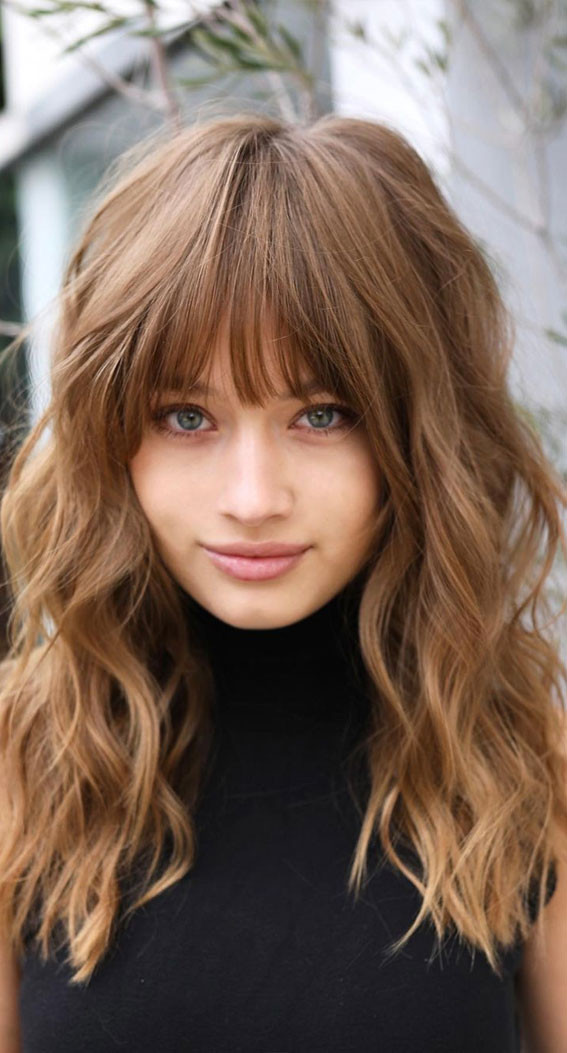
This light brown shag fringe flatters one hair type above all others: wavy, medium-thick strands that hold a bend without fighting it. The balayage fringe is the quiet trick here. Lighter pieces catch the light around the face, so the bangs look dimensional even when they fall flat. The collarbone length keeps the shag from turning into a triangle, and the loose waves give the layers somewhere to land. If your hair is fine and straight, this cut will go flat by early afternoon. If it is coily or very curly, the fringe will shrink up and need daily reshaping. But for that middle ground, the wavy and the medium-thick, this is a low-effort win. Air-drying is ideal, about fifteen minutes with a texturizing spray to break up the waves. A trim every eight to ten weeks keeps the layers and fringe from growing into one shapeless blob.
Collarbone Layered With Blonde Highlights
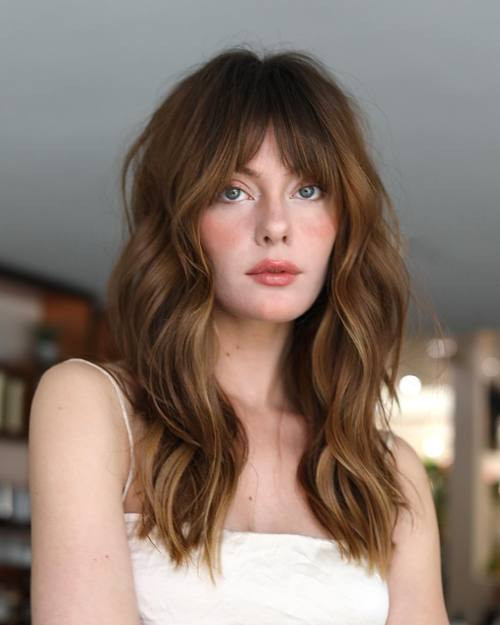
How much styling time are you actually willing to spend on a Tuesday? Because this layered hair blonde highlights cut asks for a real answer. The collarbone length and long layers give the wave a soft, lived-in shape, but the textured fringe is what demands attention. It needs a blowout, not air-drying, and about fifteen minutes with a round brush to get the bangs to sit the way they should. The medium brown base with blonde highlights adds dimension, so the movement reads even when the style starts to drop. The honest downside: by day three, the fringe will separate and the wave will relax. You will either re-wet and re-dry the front pieces or live with a slightly straighter version. It is not a wash-and-go cut. If that sounds like a dealbreaker, pick a style with less layering around the face. This one is for people who enjoy the ritual.
Collarbone Shag With Micro Fringe
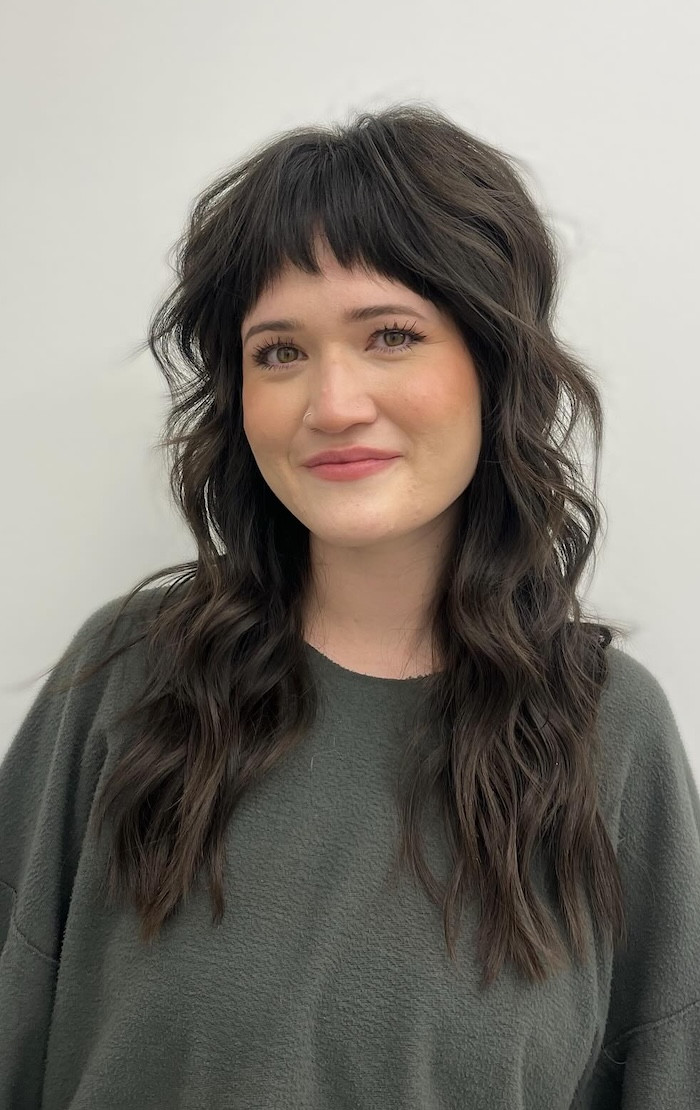
A micro fringe is not a request you make on a whim. The cut requires precision: the stylist sections the bangs at the hairline, then cuts each piece individually, at an angle, so the fringe lands just above the brows. Too blunt and it reads like a mistake. Too thin and it disappears. The collarbone length gives the shag with micro fringe room to breathe, with layers that start at the jaw and stack toward the ends. The texture comes from point-cutting, not razoring. My stylist spent fifteen minutes on the micro fringe alone. That is not a bathroom-mirror job.
Chin Length Pixie Bob With Fringe
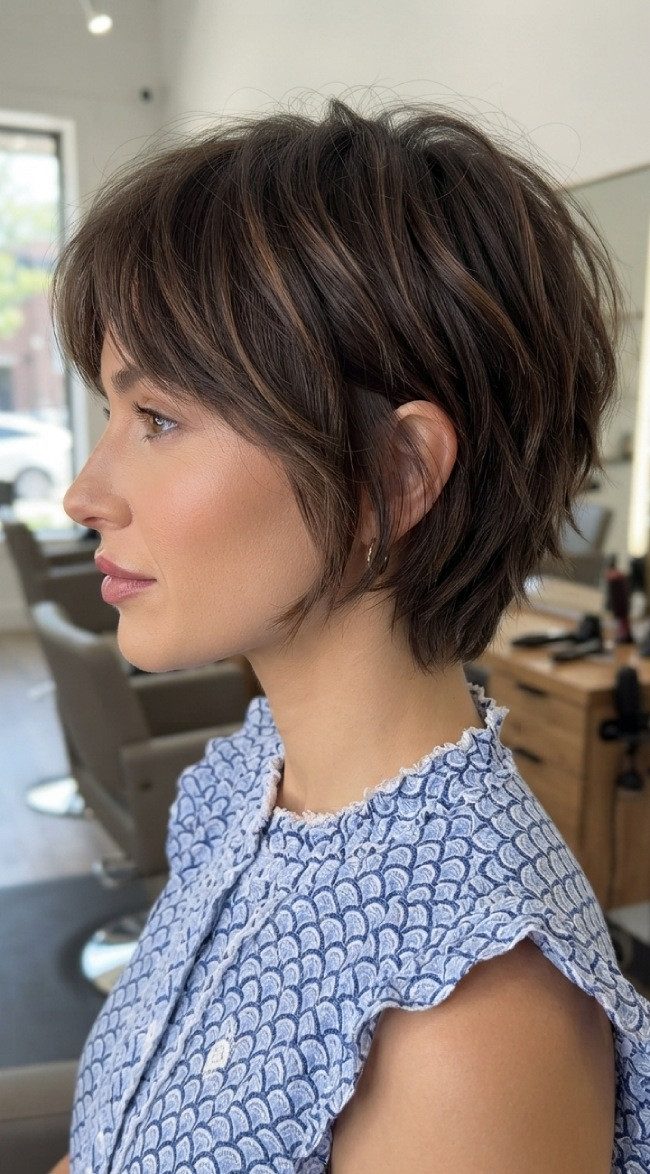
Shoulder Shag With Textured Fringe
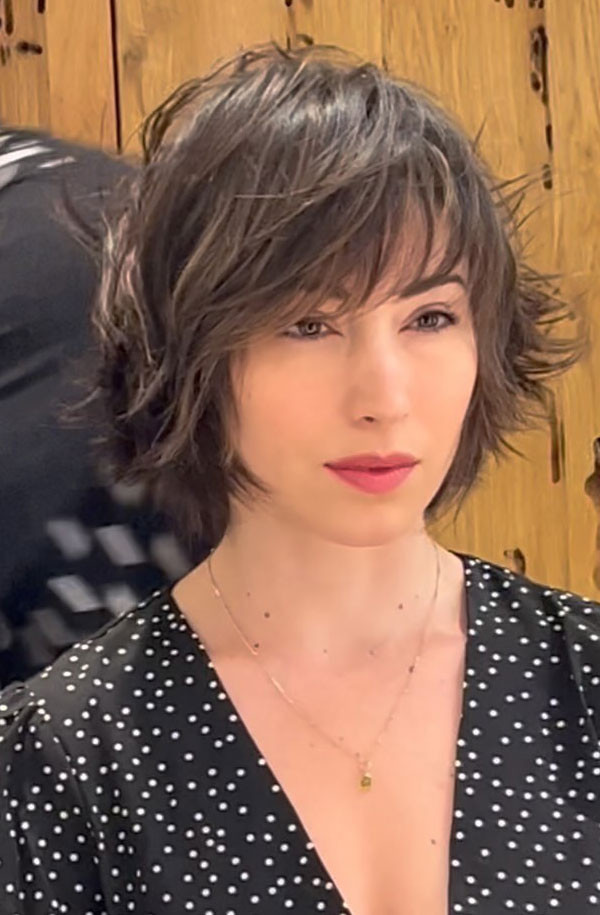
I will confess: I tried to DIY a shag once. It looked like a hedge. The mistake people make with a shoulder length shag fringe is thinking the layers are optional. They are not. The textured fringe needs to connect to the shortest layer, usually at cheekbone level, or the whole thing reads as disconnected. A stylist carves the shag by sectioning the crown, cutting each panel at a steep angle, then blending the fringe into the face-framing pieces. The texture comes from the layering pattern, not from a product. Salon, always. The hedge taught me that.
Chin Mullet With Choppy Fringe
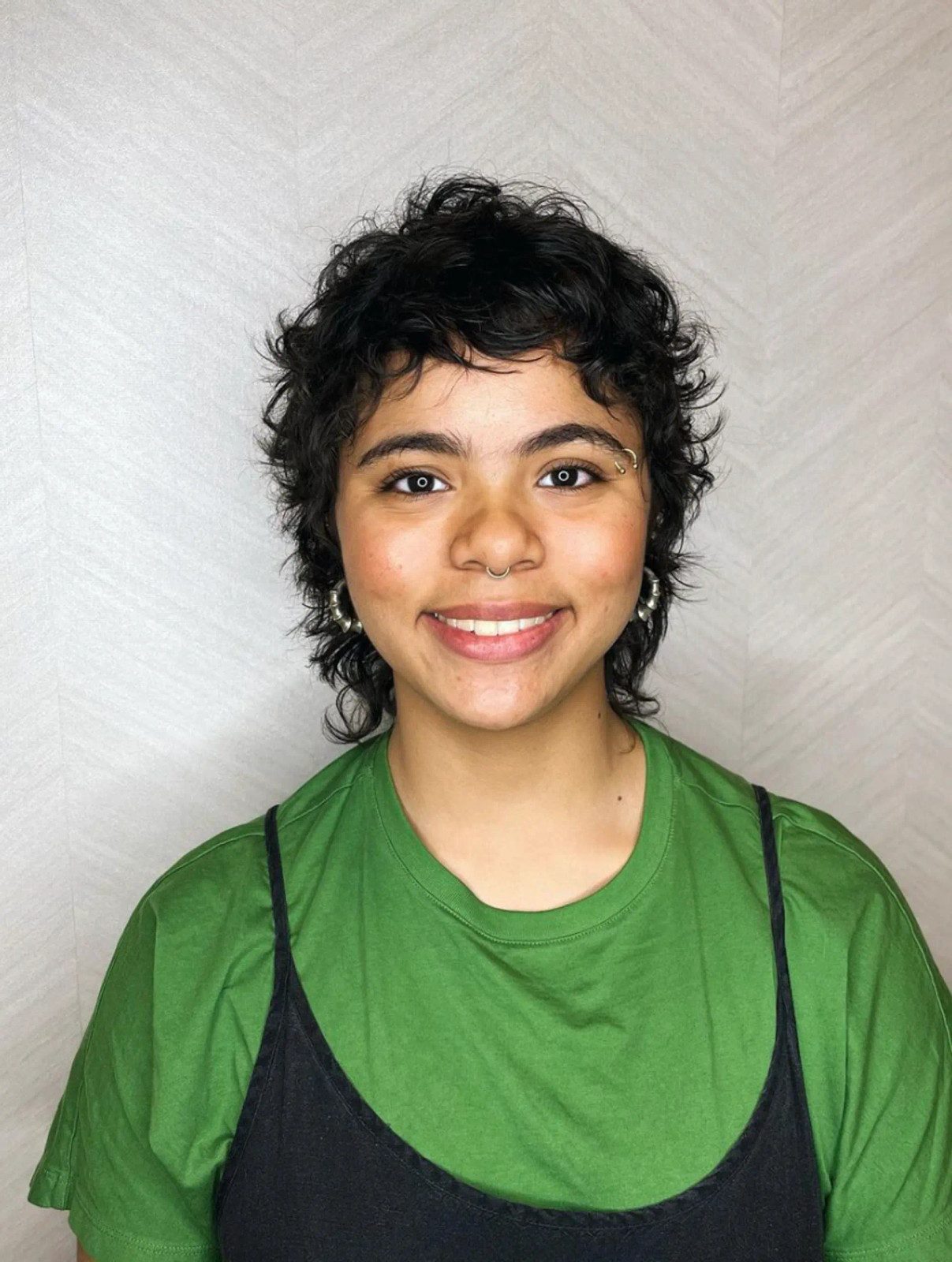
I’ll say it plainly: the mullet with choppy fringe is edgier than any soft curtain style, and that’s exactly why I prefer it. The cut keeps the front at chin length while the back tapers to the nape, so you get this sharp contrast that reads modern instead of retro. The choppy fringe lands short and piecey, which suits fine, curly texture better than you’d expect, the curls give it natural movement. But here’s the honest downside: it needs a trim every four to six weeks, no exceptions, or the shape collapses into a shapeless mess. Styling takes about ten minutes with a texturizing paste, and you’ll want a matte wax for definition. If you’re not ready for that upkeep, pick a softer fringe instead.
Collarbone Brunette With Full Fringe
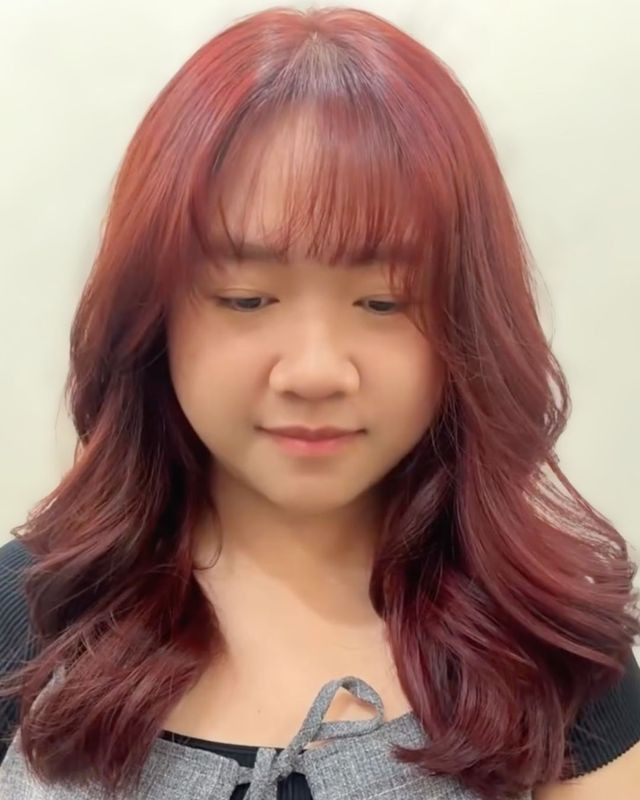
That rich brunette color catches the light in a way that makes you think the person just walked out of a salon. The cut is collarbone length with layers that start below the chin, so the full fringe sits heavy and soft at the same time. Medium density is the sweet spot here: thick enough that the bangs don’t go stringy, not so thick that they become a wall of hair. Wavy texture helps the fringe bend naturally across the forehead, no round brush required. A middle part keeps the weight balanced, and the waves fall in loose S-shapes that land right at the collarbone. This is a 15-minute blowout, not a 45-minute commitment.
Visual Idea
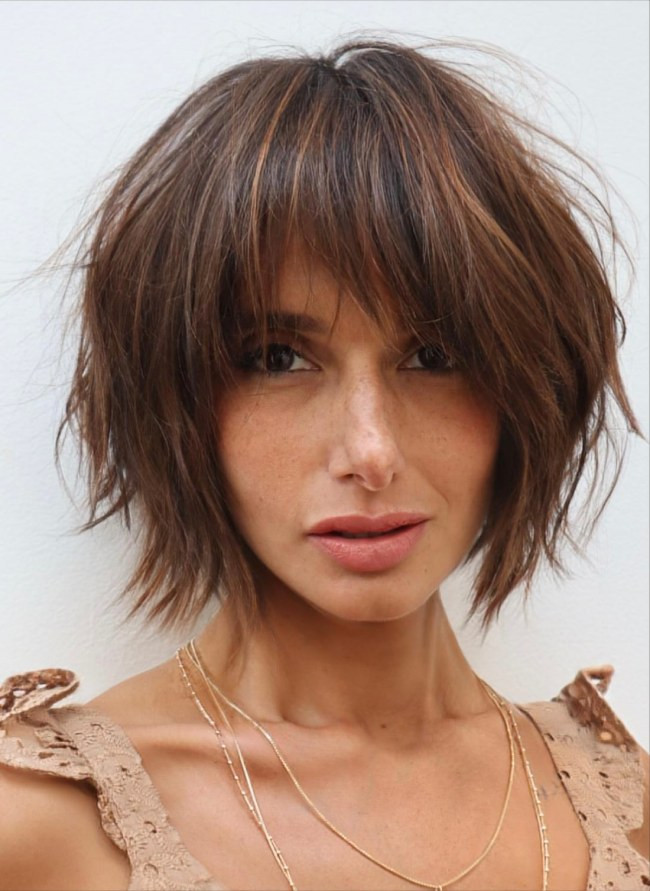
I’ll admit I was skeptical about a chin-length shaggy bob on fine hair. The wispy fringe looked like it would separate by noon and the layers felt risky. But the warm chestnut brown helps the texture read intentional, not thin. The key is keeping the layers soft, not aggressive, so the fine waves stack instead of disappearing. The fringe is cut light enough to blend into the sides, which means it air-dries without that dreaded triangle shape. It holds better than I expected, honestly.
Collarbone Visual Idea
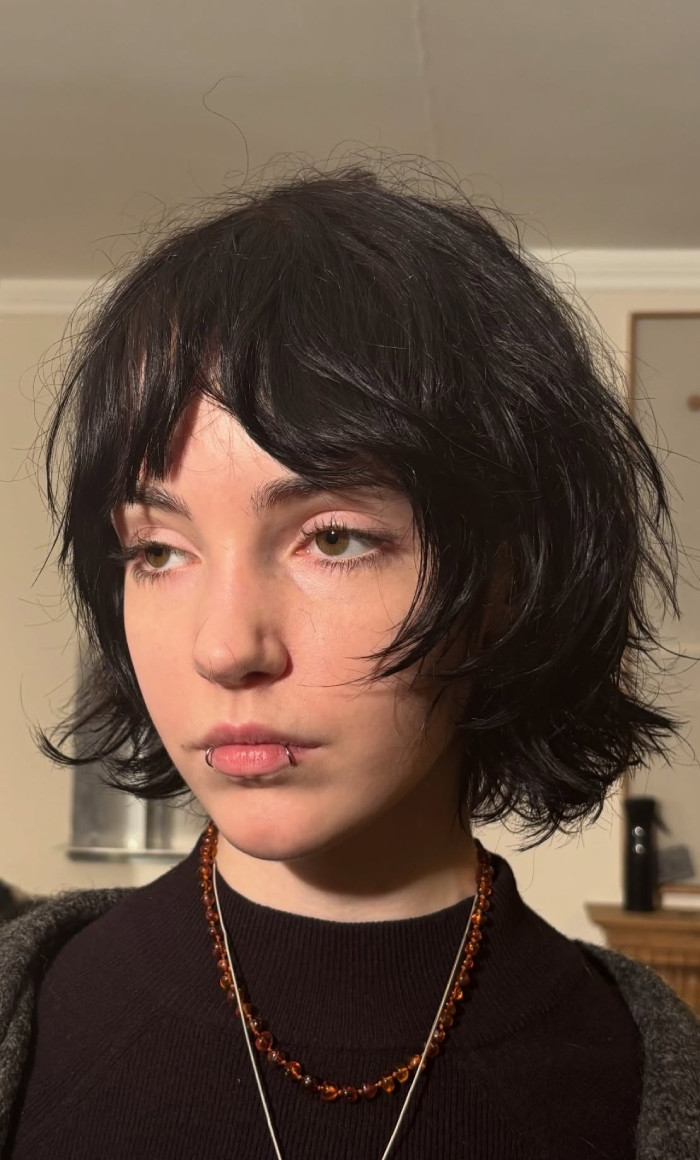
Ever wonder how a shag keeps its shape without looking like you tried too hard? The technique here is all about the internal layers. The stylist cuts shorter pieces underneath the top layer, so the textured fringe has something to land on, not just fall flat against the forehead. The dark brown base stays solid, no highlights to distract from the shape. Collarbone length means the layers have room to move without losing the weight at the ends. Air-dried texture does most of the work, and the thick waves fill in the gaps naturally. A trim every eight weeks keeps the fringe from turning into bangs that need daily attention.
Final Thoughts
After writing all 20, I realized the best textured fringe is the one you do not think about by 3 pm. The copper lob surprised me, I air-dried it twice in one week and it still sat right. Next appointment, I am asking for that collarbone shag with the micro fringe.