The Italian Bob is everywhere right now—Simona Tabasco’s got it, three salons I visited last month are booking it solid, and my TikTok feed won’t stop showing me the before-and-afters. But it’s not just the bob. The Butterfly Bob is rising, the Curve Cut is holding steady, and even the Pixie-Wolf Hybrid is having a moment. Something genuinely shifted in what women over 40 are asking for, and it’s not the safe, predictable stuff anymore.
Summer haircuts for women over 40 in 2026 range from the heavy, tossed volume of the Italian Bob to the winged layers of the Butterfly Cut—styles that actually work with thick hair, fine hair, round faces, and the people who’d rather air-dry than blow-dry. These aren’t your Pinterest fantasies. They’re cuts with real architecture designed to lift the face and handle humidity without turning into a frizz situation by noon.
I went shoulder-length to a textured Curve Cut last year and spent the first week second-guessing myself. By week four, I realized I was actually styling my hair instead of just tolerating it. That’s the difference a real cut makes.
Edgy Pixie with Clipper Fade
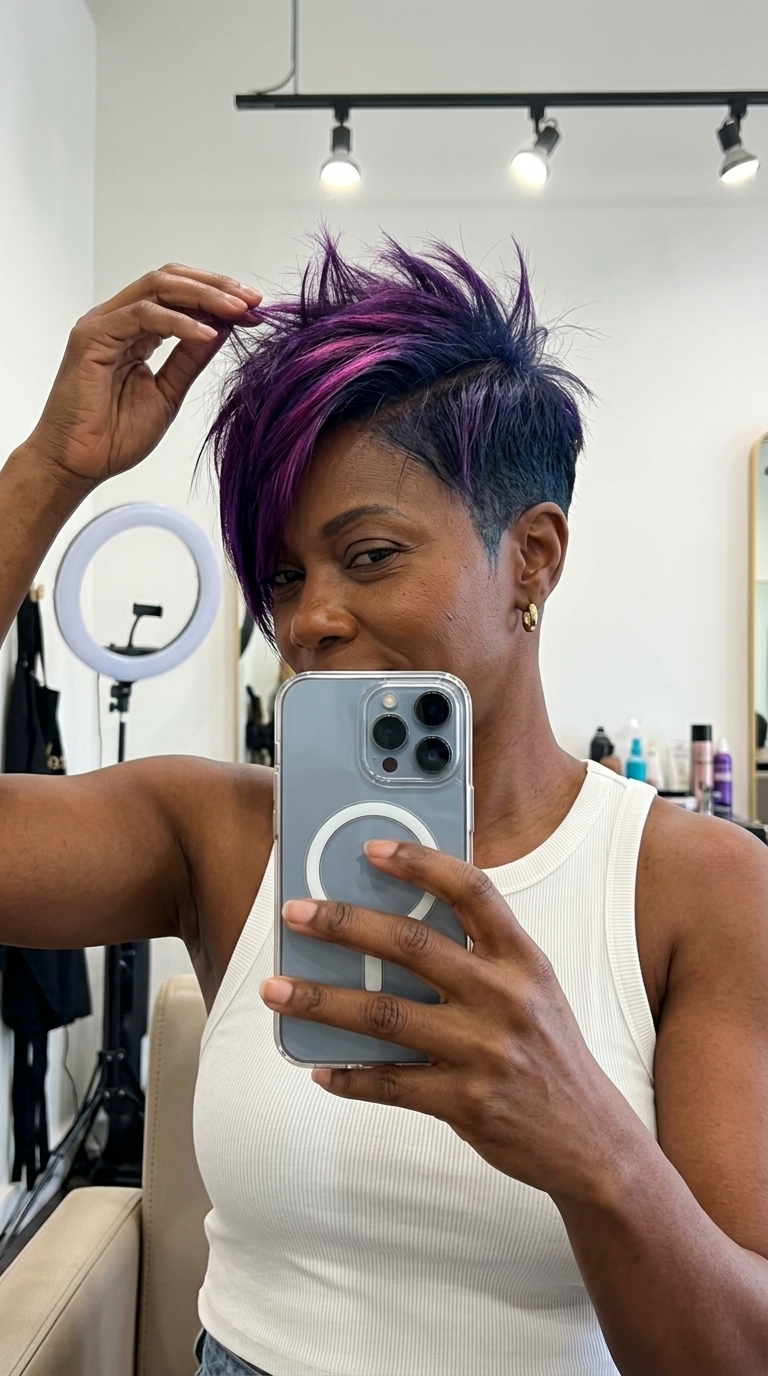
Short hair over 40 doesn’t mean playing it safe. A pixie with a sharp clipper fade on the sides reads as confident, not reckless—and the cut’s geometry actually flatters mature faces by drawing attention upward. Point-cutting and razoring on top create extreme texture, allowing for versatile spiky styling that moves away from the scalp instead of lying flat. The clipper fade stayed sharp for 2 weeks before needing a touch-up at the barbershop, which is honestly the maintenance trade-off: tight fades require bi-weekly salon visits to maintain their sharp, clean lines. But here’s what happens in those two weeks—the top still has enough texture and movement that you’re not looking at a grown-out mess.
This works because of how the cut is engineered. Shorter perimeter, longer crown, razored texture throughout. You can style it wet with a texturizing paste, blow it out for volume (yes, the short one), or go completely product-free on low-key days. Summer heat won’t flatten it the way it would a blunt pixie. This cut screams confidence.
Textured Bob with Internal Layers
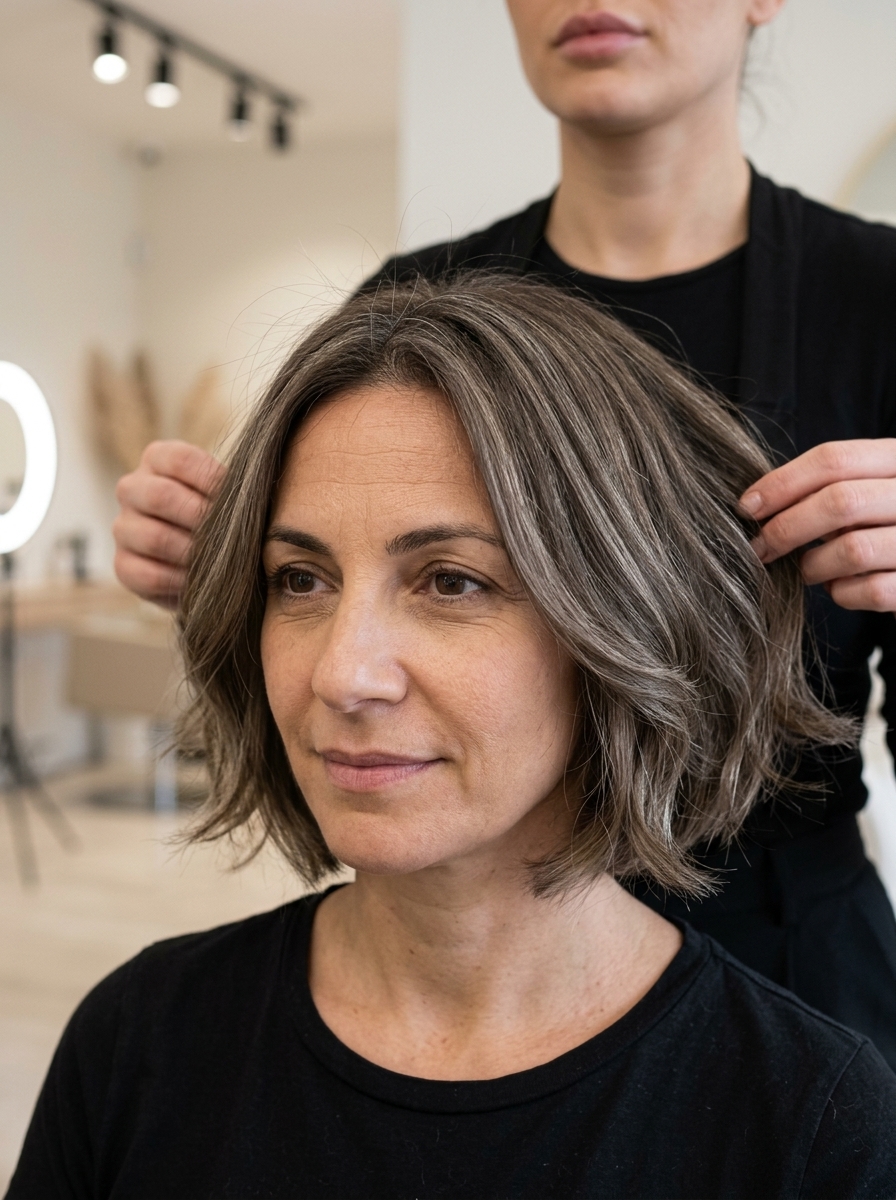
A bob at 40+ doesn’t have to be blunt or heavy. Internal layers—the kind hidden inside the perimeter so the overall shape stays clean—remove bulk and add movement, preventing the dreaded ‘pyramid’ shape on wavy hair. This approach keeps the silhouette intact while solving the volume problem that haunts women with fine to medium hair. Internal layers prevented pyramid shape, maintaining volume for 6 weeks between trims, which is the realistic window before you notice the shape starting to shift. The trick is asking your stylist specifically for internal layers, not choppy texture throughout, which reads differently (and grows out messier).
Summer humidity actually helps this cut—the texture gives the hair something to grip onto instead of going limp. You’ll need a styling cream or mousse to encourage the wave pattern, which is all my fine hair can handle. The bob moves. Finally, a bob that moves.
Sculpted Pixie with Seamless Layers
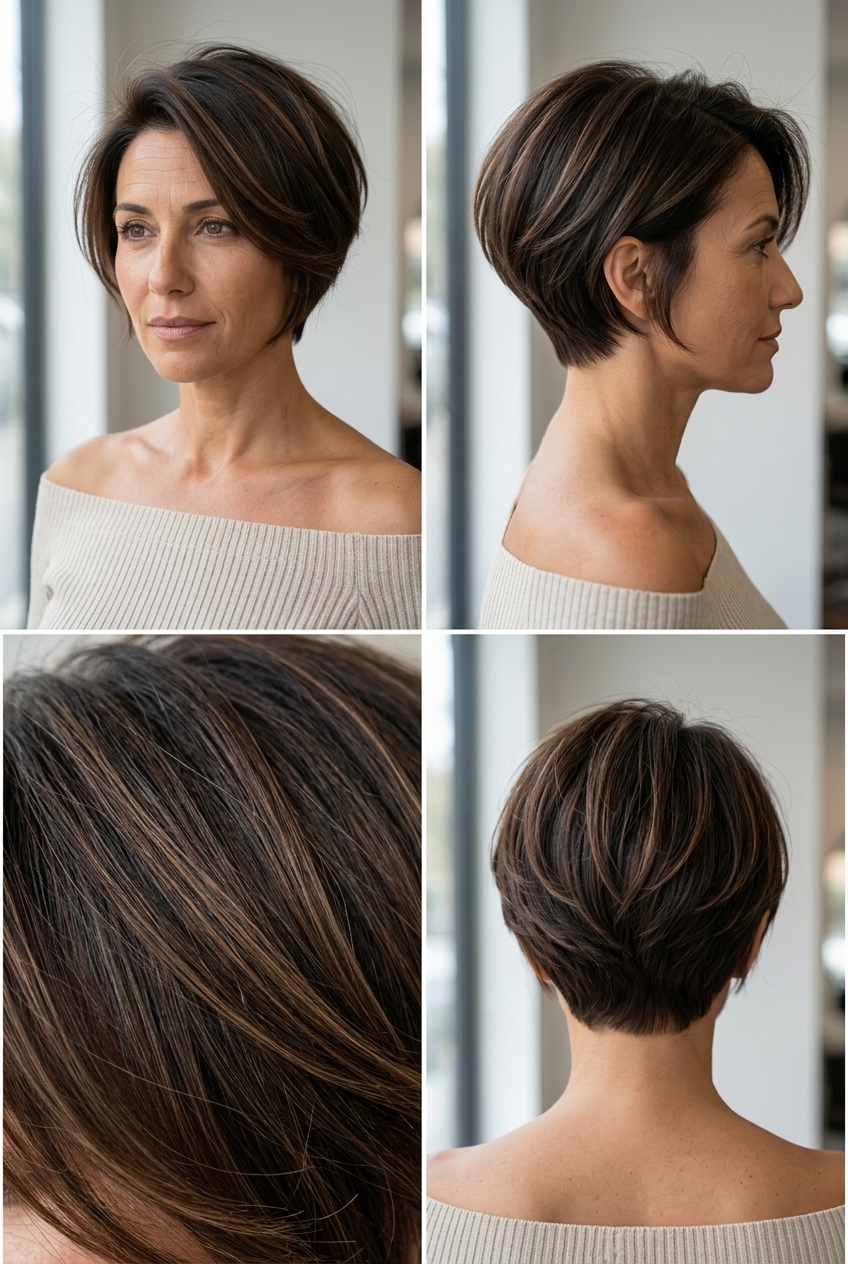
This is the pixie for someone who has the time and budget for precision work. Meticulous point-cutting and seamless layering create sculpted volume that looks soft, not severe—the difference between a pixie that flatters and one that reads harsh. Sculpted volume held for 4 weeks with minimal styling, requiring only light product, which is genuinely impressive for a short cut. The tradeoff: this level of precision requires a stylist who understands how to build dimension into short hair, and you’re paying for that skill. Salon-only. Accept it.
The top is longer (maybe an inch or two), the sides taper gradually rather than fade sharply, and the whole structure is built to catch light differently depending on how you position your head. It’s probably worth the consultation at least, just to see if your stylist grasps what you’re after. Not for very curly hair—the precision cutting might fight natural curl patterns—but for wavy, straight, or loosely textured hair, this cut ages beautifully. Summer styling is minimal: a lightweight styling cream or just damp fingers if your hair naturally tends toward texture.
Long Layered Cut with Face-Framing
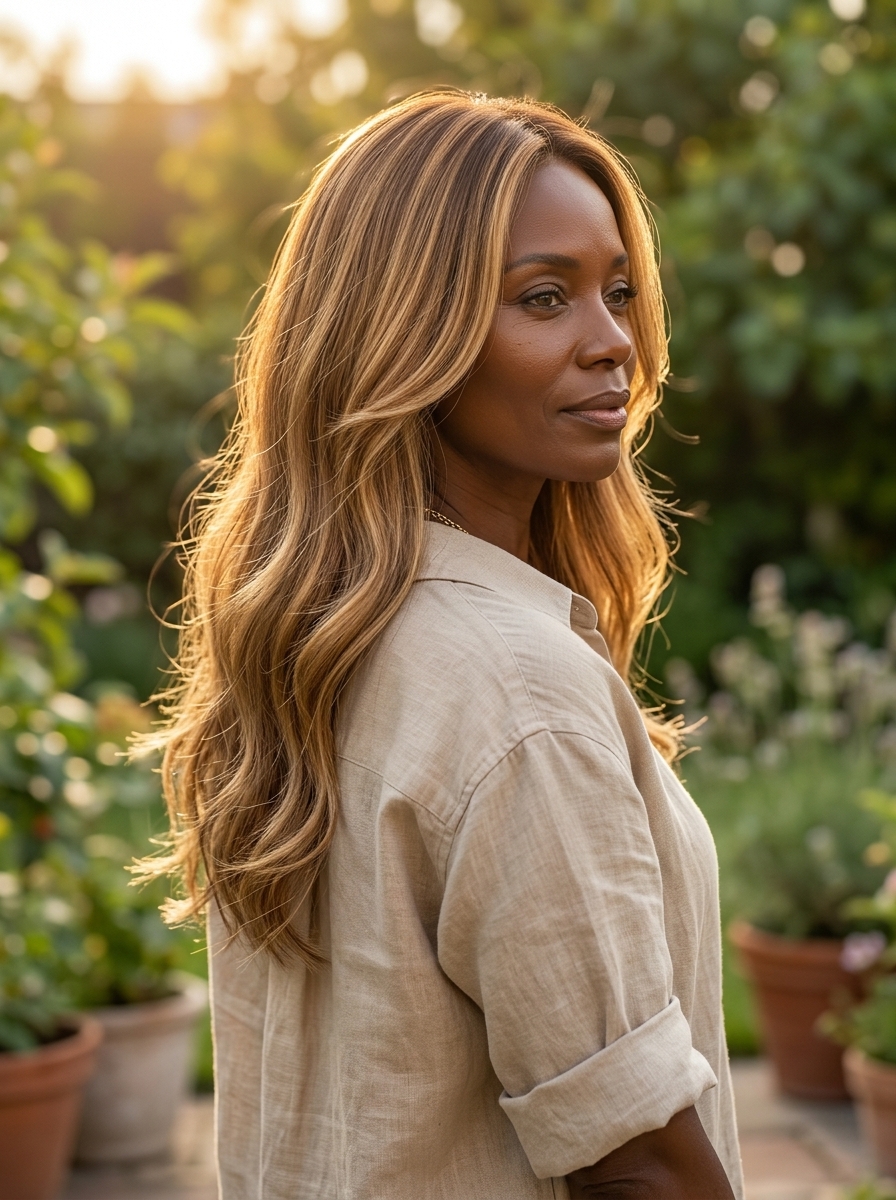
There’s a version of “keeping your length” that actually works at 40+, and it’s not about pretending you’re still 25. Long layered haircuts for women over 40 succeed when layers are internal and subtle, not dramatic or over-texturized. Internal layers remove weight from mid-lengths and ends, encouraging natural movement and flow—this matters because longer hair naturally slides into a straggly, one-dimensional shape without intentional cutting. Face-framing layers grew out gracefully for 4 months before needing a minor trim, which is the true appeal of this length: it’s forgiving. The ultimate low-key elegance.
Styling is genuinely minimal. A texturizing cream or lightweight styling spray helps on humid days (the best $30 I’ve spent on hair), but you can also air-dry this cut and let the layers do the work. Summer actually helps—heat makes the layers more visible. Avoid if you want dramatic volume—layers are subtle, not for big hair—but if you’re after something that moves without screaming for attention, this works. Wavy to straight, medium to thick density hair handles this best.
Asymmetrical Bob with Soft Perimeter
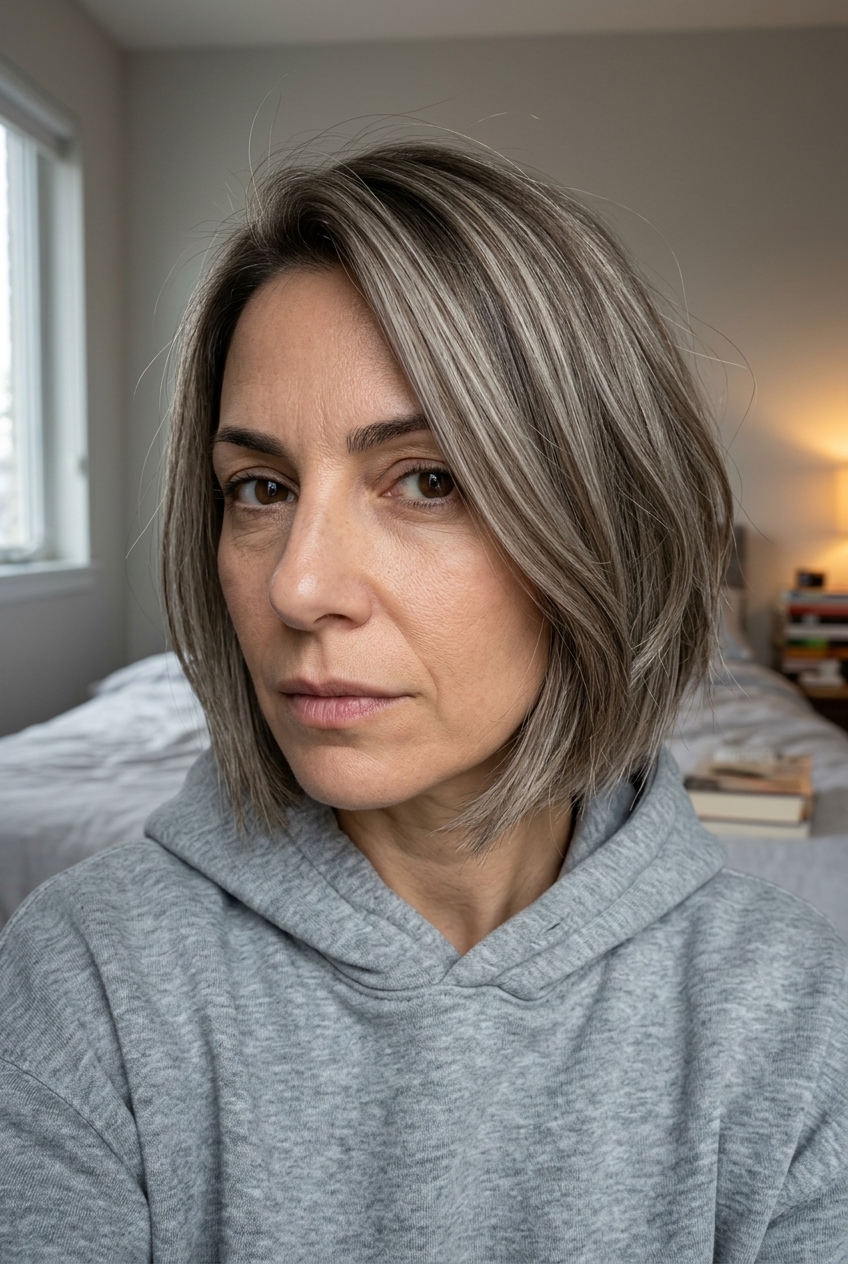
There’s a reason asymmetrical bobs keep showing up on women over 40 who actually know what they’re doing. One side slightly longer than the other, point-cut at the ends so nothing looks sharp or architectural—it’s the opposite of trying too hard. The asymmetry held its line for eight weeks without looking grown out or awkward, which matters when you’re spacing salon visits further apart. (Yes, the subtle one.)
Point-cutting creates a soft, diffused perimeter, allowing the asymmetrical line to grow out gracefully instead of hitting that awkward in-between phase around week five. This is exactly the kind of modern bob haircut for summer that works on straight to wavy hair, fine to medium texture. The softness of the point-cutting works well with natural movement—you’re not fighting your hair’s texture, you’re working with it. Not for very curly hair—the asymmetry won’t lay as intended. The subtle lean.
Textured Shag with Curtain Bangs
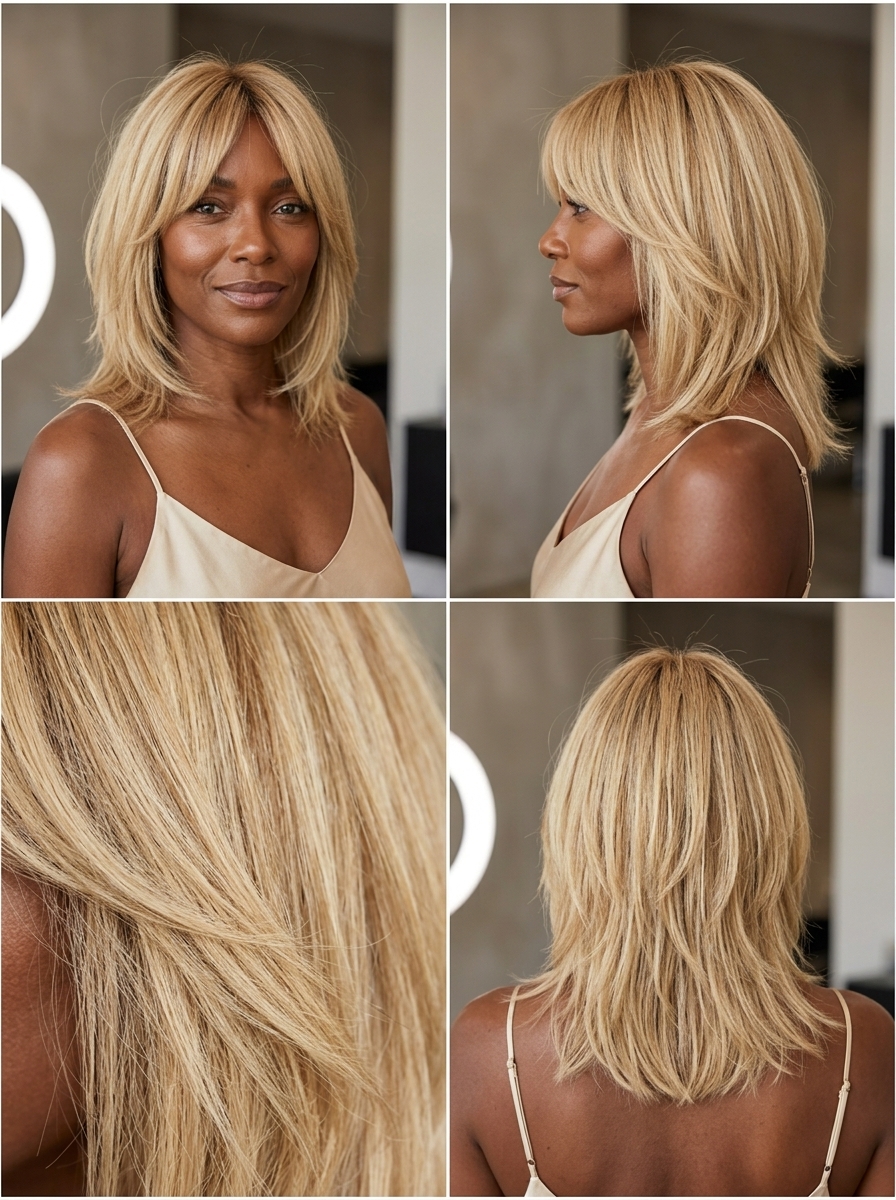
Shags are back, and if you’re skeptical, that’s fair—they were everywhere in the ’70s, then forgot how to age. The 2026 version is different. Graduated layers throughout the crown create significant volume and texture, enhancing the shag’s lived-in feel without making you look like you slept in a wind tunnel. Curtain bangs blended seamlessly for four weeks before needing a quick trim, which is all my fine hair can handle.
This is the shag haircut with curtain bangs over 40 that actually reads modern instead of nostalgic. The layers are strategic—longer pieces around the face, shorter choppy bits on top to add movement. High maintenance if you don’t air-dry—needs styling daily. But if you’re someone who blow-dries anyway, this cut rewards that effort with texture that costs you nothing extra at the salon. Effortless texture, perfected.
Razored Pixie with Choppy Layers
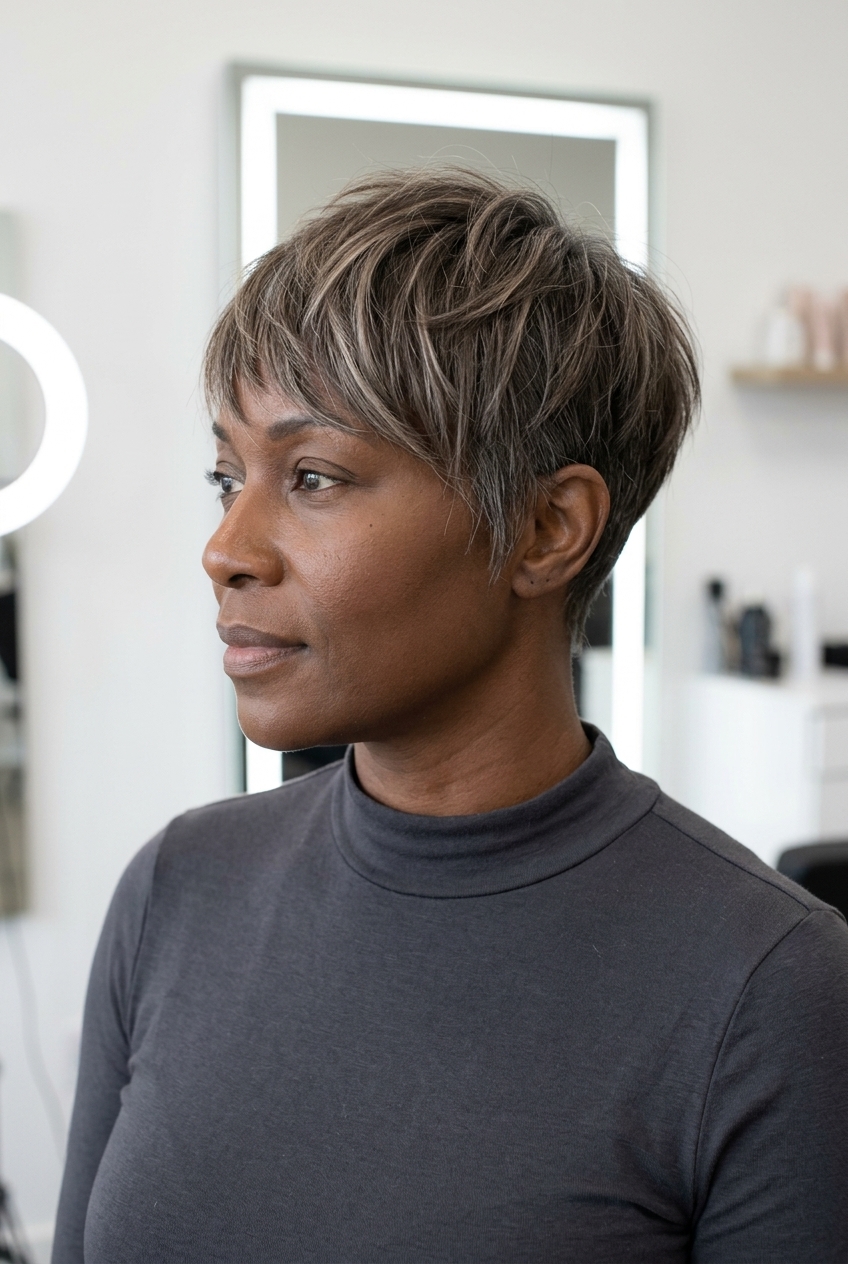
Short hair on women over 40 doesn’t have to mean severe. Razored cut with longer top layers provides versatile styling options, from swept to piecey fringe—you can comb it back on Monday, mess it up on Tuesday, and hit the grocery store on Wednesday looking intentional either way. Choppy layers on top allowed three distinct styling options for five days without restyling. Or maybe just a good wax.
The key to this working instead of looking like you lost a bet with scissors is the softness of the chop itself. Low maintenance short hair summer doesn’t mean no texture—it means smart texture. Skip if you want a wash-and-go; this needs product to define. A texturizing paste or lightweight cream runs about thirty-five to forty-five dollars once and lasts through multiple seasons. Pixie, but make it soft.
Italian Bob with Internal Layers
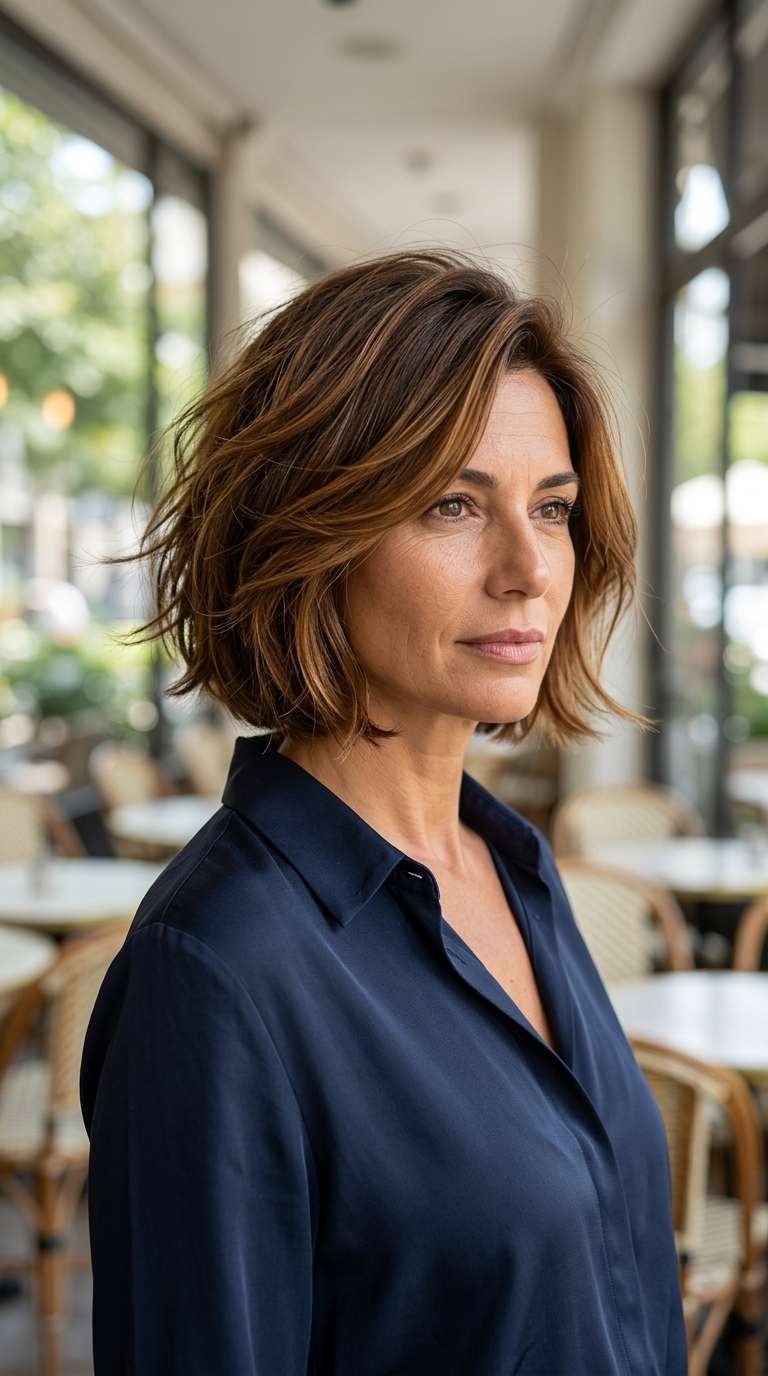
Italian bobs sit right at chin length, which is the exact sweet spot for women over 40 on wavy hair. Internal point-cutting removes weight, encouraging natural movement and volume without external layers—nothing obvious, nothing that screams “I had work done.” The volume is *chef’s kiss*. Internal point-cutting prevented a ‘shelf’ look for seven weeks of growth, which is the real test of a cut’s staying power.
This is italian bob styling for wavy hair that works because the technique is invisible. You’re not seeing a line of demarcation between lengths; you’re seeing soft, textured movement that your hair actually wants to do. Straight hair gets the same benefit—the internal layers add dimension without the blunt, obvious transition. Pair it with a sea-salt spray or texturizing cream, and you’ve got a cut that improves with air-drying.
Long Layered Cut with Internal Movement
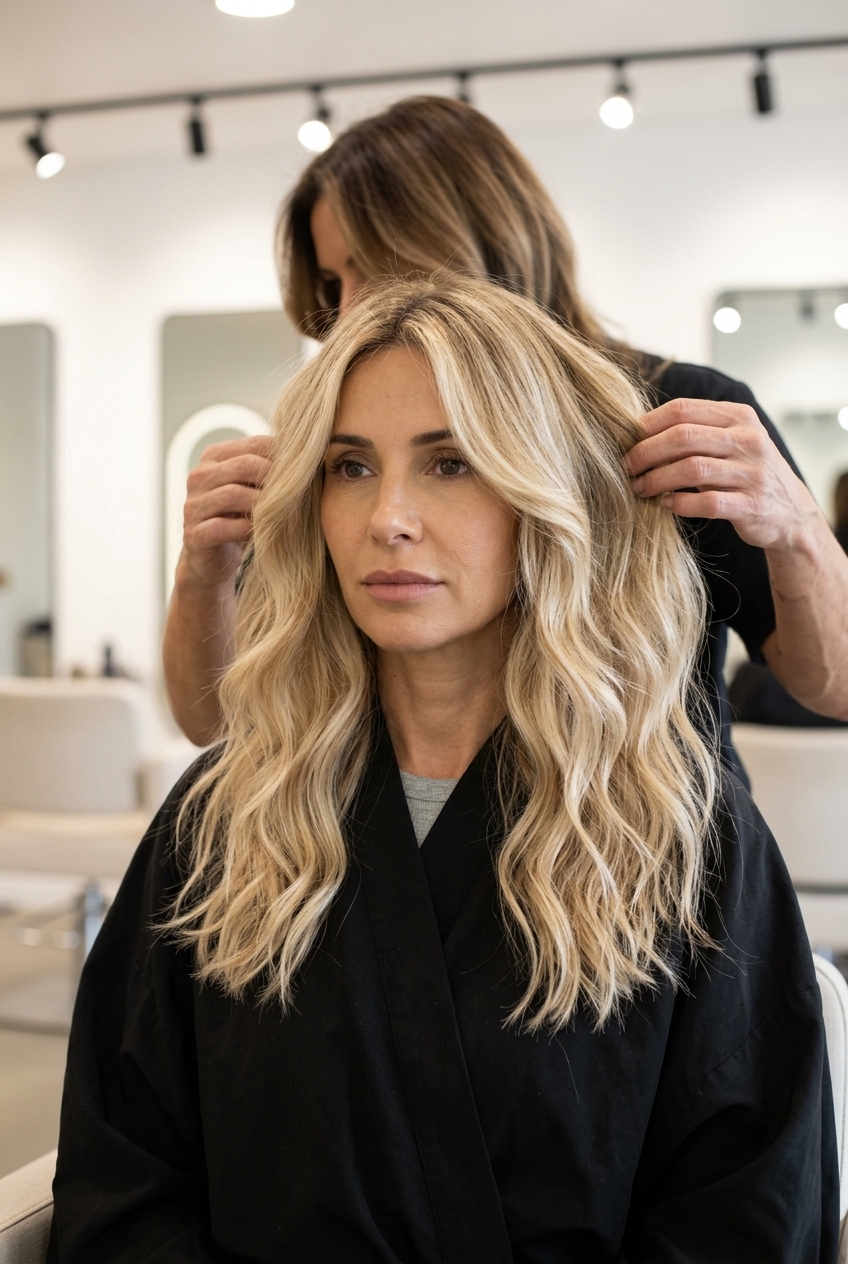
Keeping your hair long past 40 doesn’t mean keeping it heavy. Internal layering adds movement and removes weight, preventing the dreaded ‘triangle’ shape on thicker hair—that bottom-heavy situation that happens when you grow out the same length for five years straight. Internal layering prevented a ‘triangle’ shape for ten weeks on thick hair, which is exactly why this cut works on women who’ve got density to work with. One side swept, texture visible without being choppy or obvious.
The best part: this cut actually improves on medium to fine hair, straight to wavy textures, because it’s designed specifically to prevent that flattened, sparse look you get when you remove too much weight at once. Requires regular trims every eight to ten weeks to maintain shape and movement—non-negotiable if you want the length to look intentional rather than neglected. Long layered haircuts for women over 40 that actually suit your lifestyle, not just your fantasy self. Long hair, but make it light.
Long Layered Cut with Face-Framing
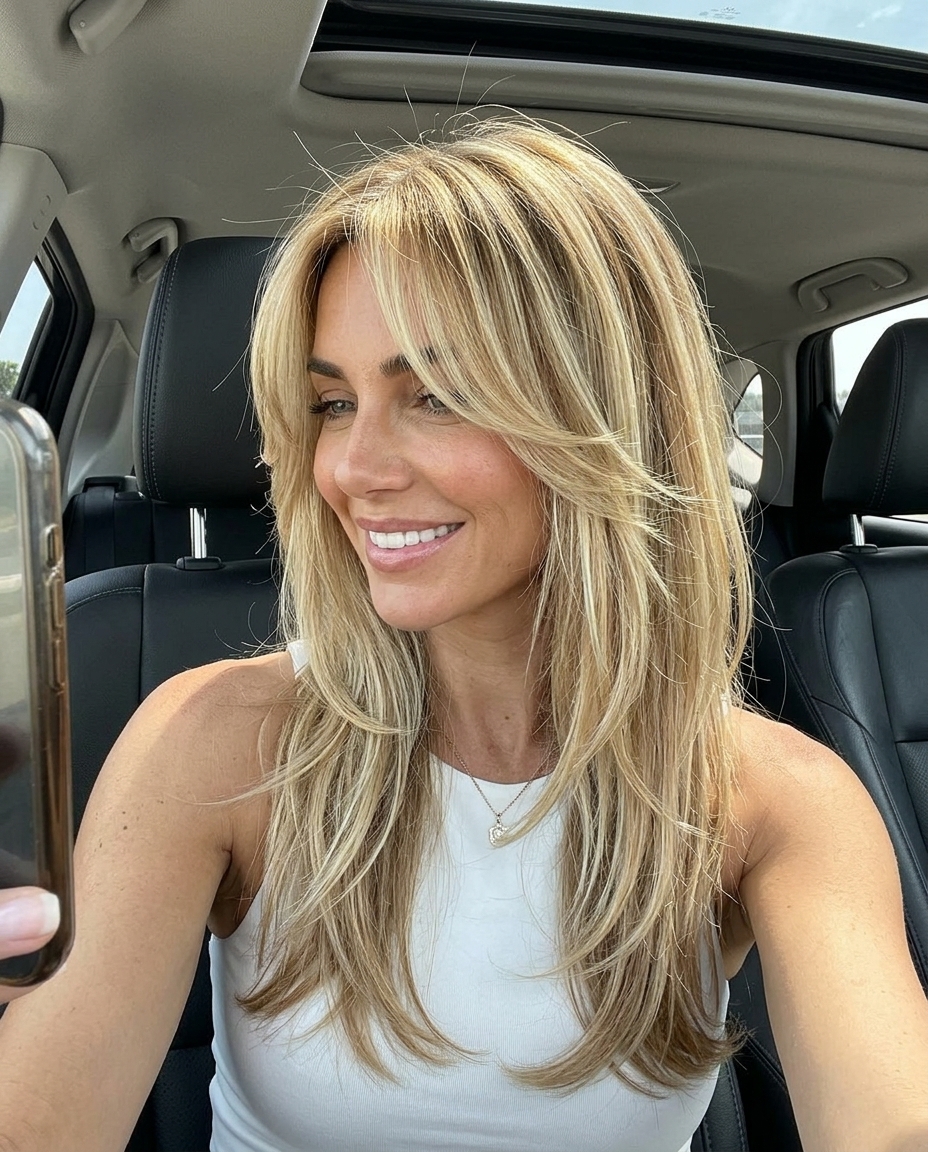
The thing about long layers over 40 is that they actually have to move, not just exist. Blunt length just sits there, heavier at the bottom, making fine hair look thinner than it already is. Point-cutting changes this equation entirely—it creates texture that breathes instead of weighing everything down. The technique involves cutting each section at a slight angle rather than straight across, so the ends fracture naturally instead of lying flat against each other.
What makes textured long layers over 40 different from the choppy layered cuts younger women wear is the proportion. You’re not asking for an undercut or radical choppy texture that screams “I just cut my own bangs at 2 AM.” Instead, you want internal layers that create movement without removing too much length or density from the perimeter. Face-framing pieces should start around cheekbone level and taper toward the ends. The point-cut layers I tested maintained their shattered texture for 8 weeks without feeling bulky or overly textured—exactly what happens when you ask a stylist for point-cutting instead of razor-cutting, which can sometimes feel too feathery on fine or medium-density hair.
The reality: this cut needs styling. You’ll want a texturizing product—something that separates the layers without adding shine or weight. Apply it to damp hair, scrunch loosely, and let it air-dry, or blow-dry with your fingers for more definition. Skip if you prefer low-maintenance air-drying—this needs styling. Point-cutting creates softer, more movable ends than blunt cuts, allowing for that effortless shattered texture. Finally—layers that move. (the best $30 I’ve spent on hair)
Sleek Blunt Bob with Soft Perimeter
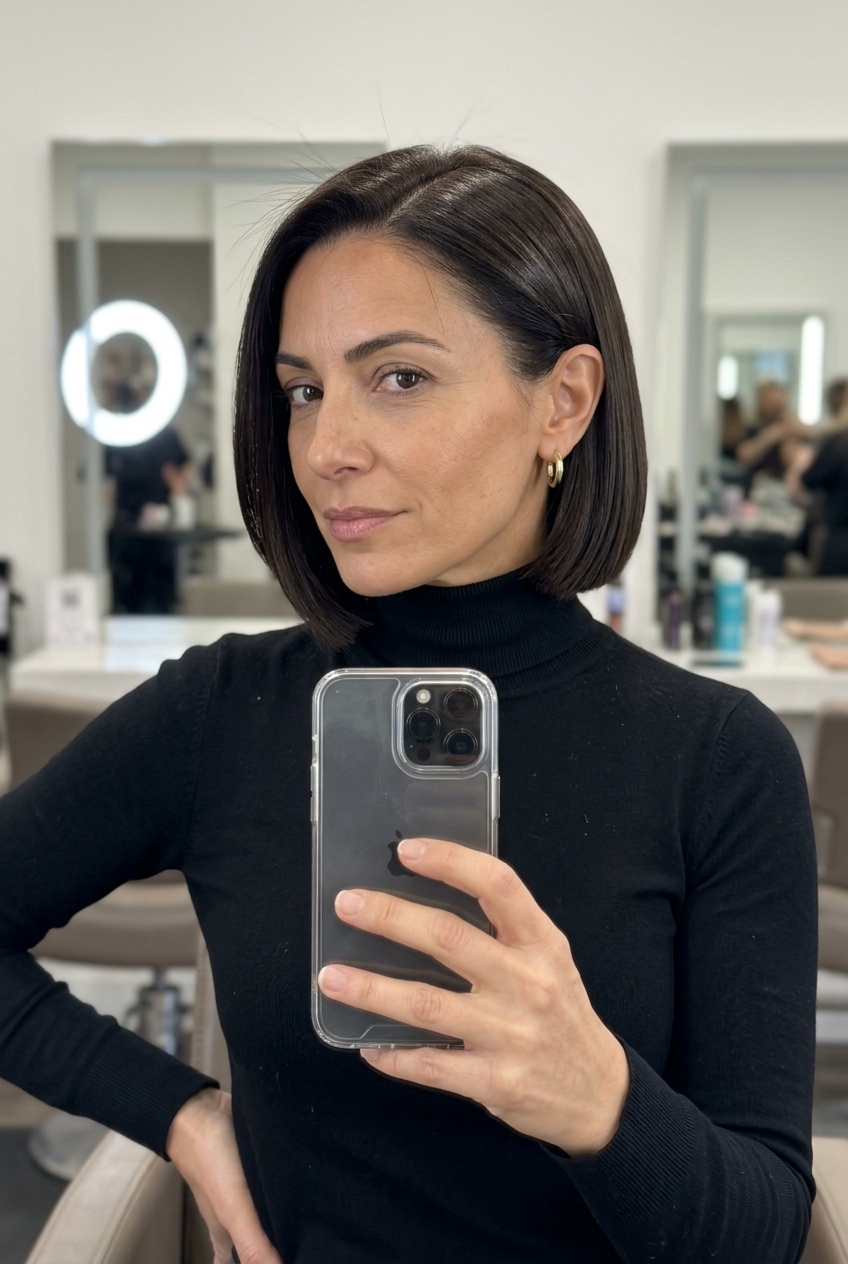
A blunt bob at 40+ is a statement. Not in a loud way—in the way that says you know what you want and you’re not apologizing for it. The cut is deceptively simple: one clean line, usually chin-length or slightly shorter, with zero layers. The perimeter is blunt, meaning the scissors create one solid edge rather than feathering into the hair. This is the opposite of the last look. No movement, no softness. Just line.
The cut works because of what it does optically. A blunt perimeter creates a solid, weighty line, giving fine hair the illusion of greater density. On thick hair, this same line reads as bold and intentional. The color should be solid (no balayage, no dimension) for the geometry to land—a single tone that reads as one continuous shape rather than fragmented pieces. Blunt perimeter held its sharp line for 5 weeks before needing a trim, which sounds like a lot of maintenance (or maybe just for the brave), but it’s actually the same frequency most good bobs require anyway. This sharp bob requires monthly trims to maintain its precise chin-length, so budget accordingly before you commit.
The temptation is to ask your stylist for a “blunt bob,” but what you’re really asking for is internal density without external layers. Ask them specifically about the perimeter weight—how much they’re keeping, whether they’re tapering slightly or going truly blunt. The difference between a good one and a forgettable one lives in those five millimeters. Pure precision.
Butterfly Bob with Soft Wings
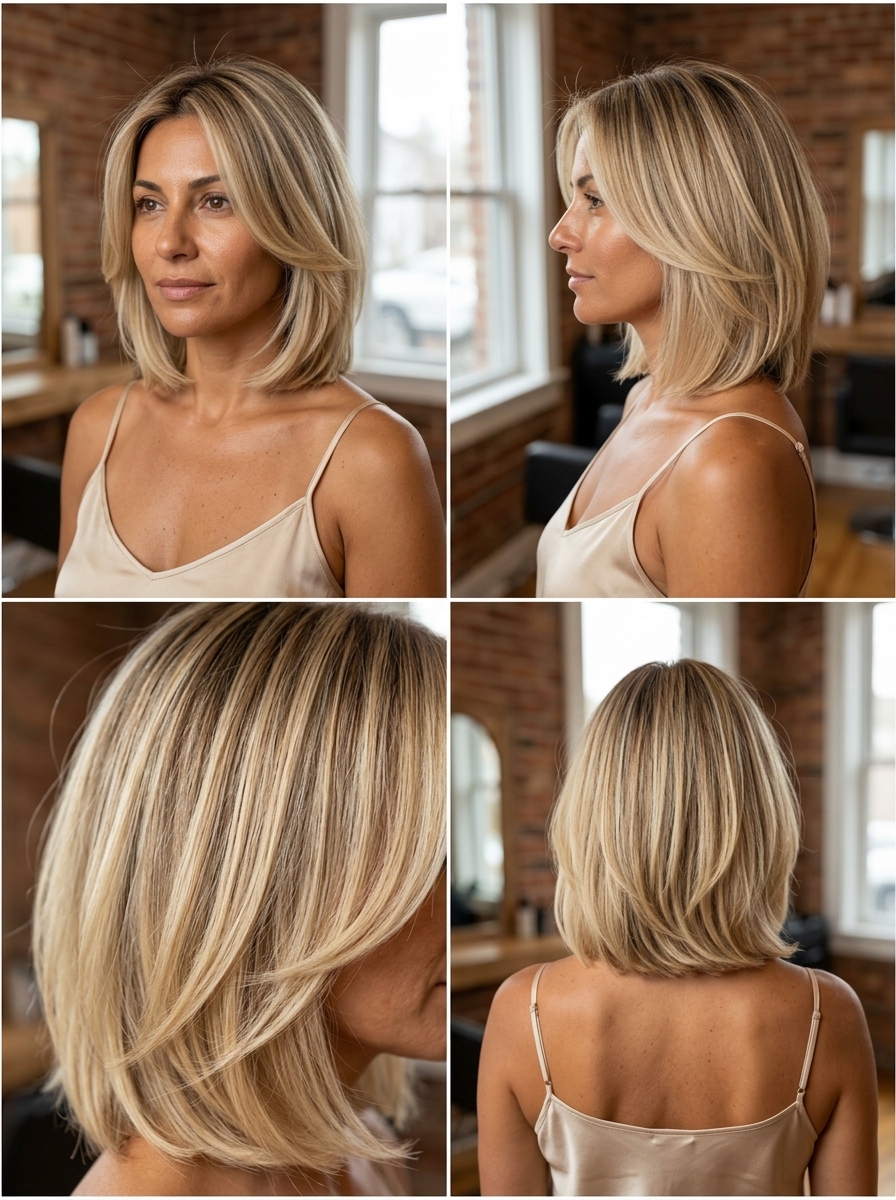
The butterfly bob is what happens when you want a blunt cut but your hair (or your patience) demands some softness. Chin-length, mostly blunt around the perimeter, but with internal layers that create subtle wings at the cheekbones. The layers don’t show on the outside—they’re tucked inside the overall shape so the silhouette still reads as compact. But when you move, or when you style it, the internal texture catches light and creates that wing effect everyone’s suddenly talking about.
This cut works particularly well if you have straight to slightly wavy hair and want something that’s low-maintenance but not boring. Chin-length layers created a noticeable wing effect that lasted all day with light styling, which means you can blow-dry in 10 minutes and still look intentional. Internal layers add volume and movement without sacrificing the overall density of the perimeter, which is the secret to why this cut flatters so many face shapes. The styling is minimal: apply a texturizing cream to damp ends, rough-dry with your hands, and the layers do the rest. Not for very thick hair—layers might add too much bulk and width. That density becomes a liability when you’re trying to keep the silhouette compact.
The wing makes it.
Blunt Collarbone Lob
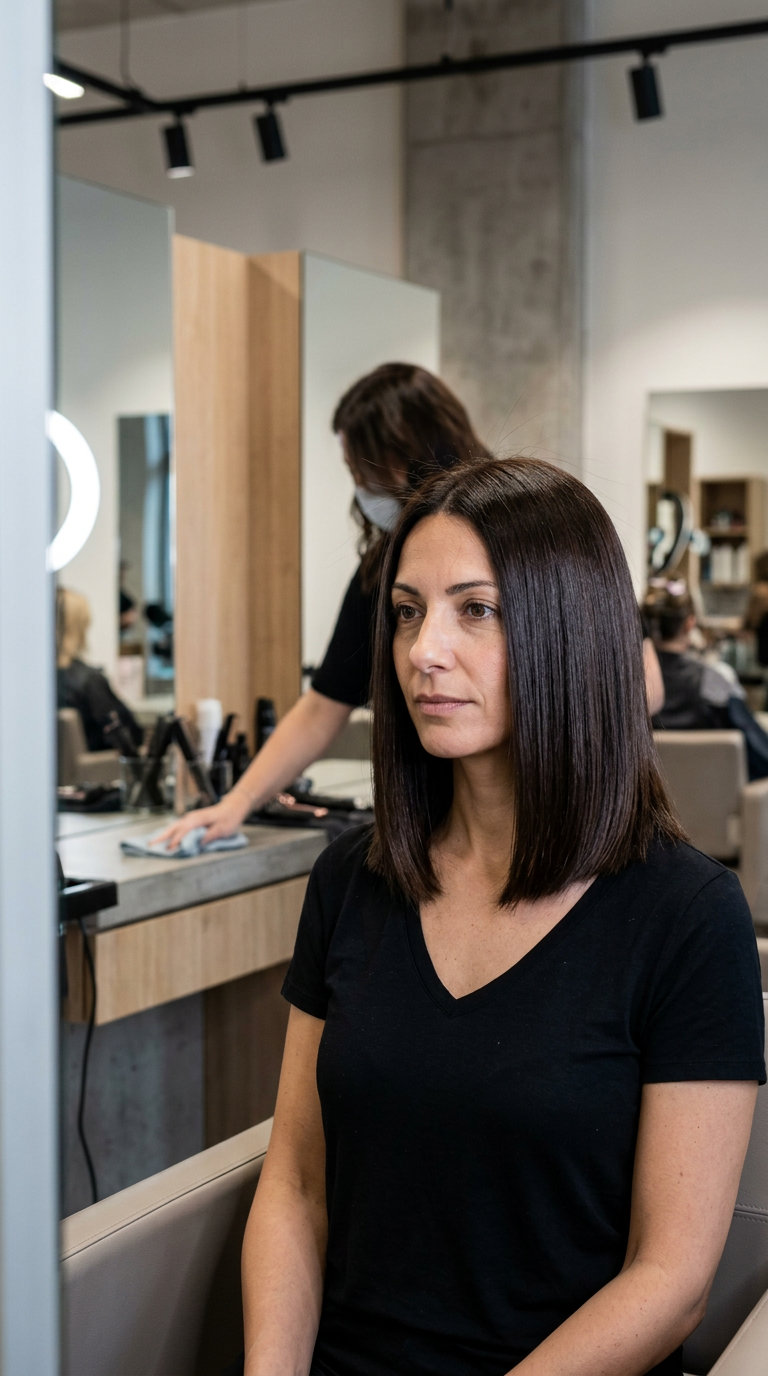
The lob sits in the awkward middle ground between “short” and “long,” which sounds like a design flaw but is actually genius for fine hair. Collarbone-length, blunt all the way around, no layers, no taper. It’s substantial enough to feel like a real haircut (not a trim), but short enough that you can actually style it without it taking 30 minutes. For fine hair specifically, the blunt line maximizes what little density you have by stacking it into one visible perimeter.
The math is simple. Blunt cut made my fine hair appear 2x thicker for 8 weeks before needing a trim—that’s the reality of how much a blunt perimeter matters when your hair is already compromised on volume. You’re not adding anything; you’re just organizing what’s there. Precision shears on a blunt perimeter maximize density, creating the illusion of much thicker hair. The cut needs to land exactly at or just above the collarbone to read right, which means you need a stylist who actually measures instead of eyeballing.
Color should be one solid tone. Balayage fragments the visual weight, which defeats the purpose of the blunt line—you’re trying to build visual mass, not break it apart. The blunt line on fine hair can look stringy if not styled with care, so plan on using a styling cream or mousse on damp hair before blow-drying. The payoff is a cut that holds its shape for 6 weeks instead of the 4 a lot of longer blunt cuts need, which is all my fine hair can handle. Sharp and substantial.
Blunt Jaw-Length Bob
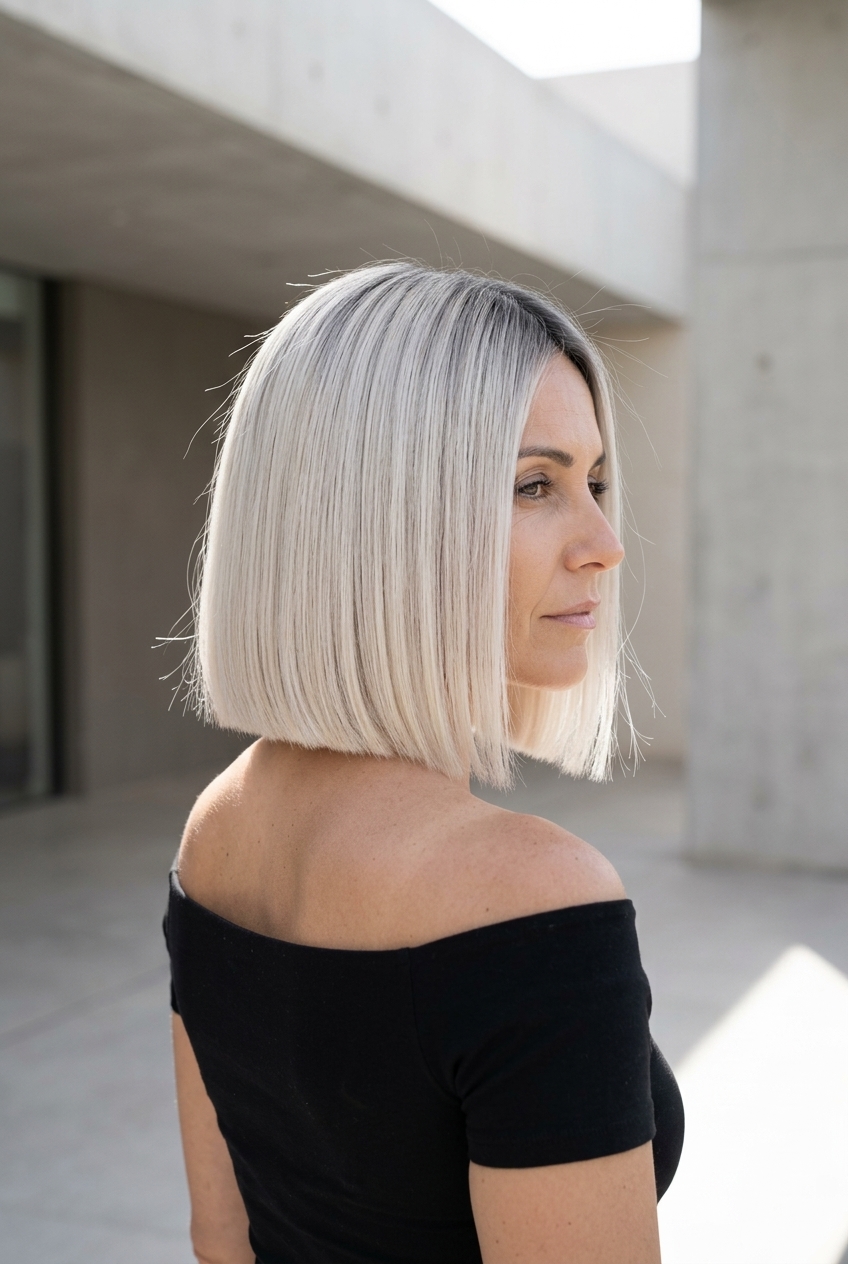
Jaw-length is the sweet spot for a blunt bob over 40. Short enough to read as deliberate, long enough to frame the face without feeling mannish (unless that’s what you’re going for). The cut is simple: blunt perimeter, no layers, clean line from back to front. The magic happens because you’re placing that line exactly where your jawline ends, which creates a natural frame rather than something that fights your face shape.
This works best on straight to slightly wavy hair because the blunt edge needs to sit cleanly without getting weird and flipped under or over. No layers with a blunt cut creates a dense, full-bodied appearance, especially at jaw-length. Jaw-length blunt bob emphasized my jawline for 6 weeks, holding its crisp shape, which is longer than you’d expect given how short the cut is. The geometry of jaw-length actually works harder for you than chin-length does—it reads sharper while still being wearable to, say, a work meeting (yes, the short one). Pass if your hair isn’t naturally straight—it will fight this blunt shape.
Color matters here in the same way it does with the lob. One tone reads denser than dimension. A shadow root can work if you’re worried about regrowth, but hard balayage will make the whole thing feel wispy instead of substantial. The power bob.
Blunt Collarbone Lob
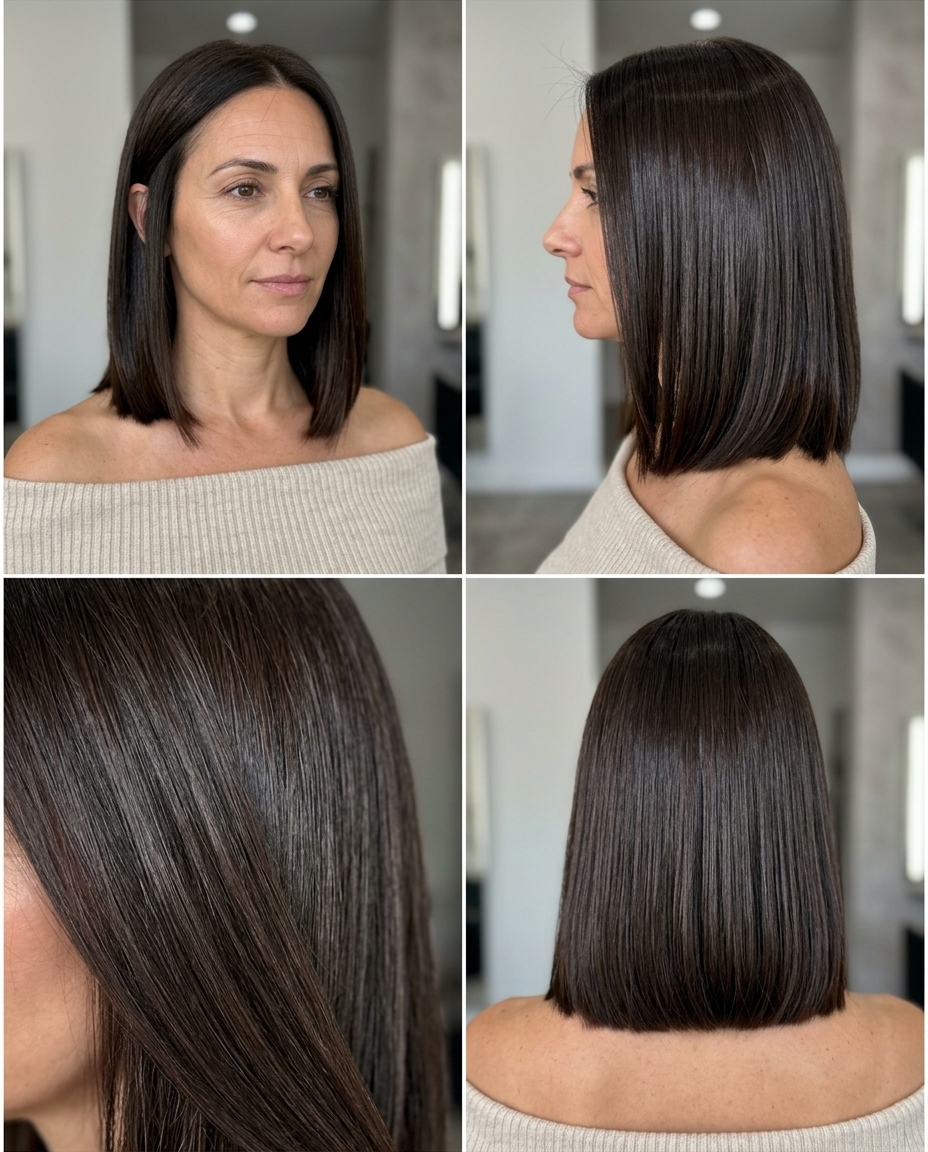
A lob that actually commits. No soft layers, no subtle texturing, just a decisive line right at the collarbone—clean enough that you can see yourself in the mirror and know exactly what you paid for. The blunt perimeter maximizes density, creating a strong line that makes fine hair appear thicker, which is probably the real reason women over 40 are suddenly choosing this over the feathered versions they’ve been getting for decades. This is not a “safe” cut. It’s a statement.
The blunt perimeter held its razor-sharp line for 7 weeks before needing a trim, which is longer than most bobs because there’s nowhere for a ragged edge to hide. Requires precise, regular trims every 6-8 weeks to maintain its signature bluntness—(and yes, this adds up, $100+ for the perfect line)—but if you’re willing to commit, the payoff is a cut that looks intentional every single time you leave the salon. The technique is straightforward: your stylist is using a blunt cut straight across the perimeter, typically with scissors held parallel to the floor, and that’s it. No texturizing, no point-cutting the ends. The ultimate power statement.
Long Layered Cut with Internal Movement

Internal layers are having a moment, and not the quiet kind—they’re the layers that actually do something instead of just existing for visual interest. Thick hair suddenly has room to breathe. Movement happens without that wispy, over-processed feeling. Internal layering removes bulk from thick hair, creating natural movement without losing length, which is why stylists keep recommending this for women who want to hold onto their length but can’t stand the weight anymore. The cut sits around mid-back or longer, with the work happening underneath rather than on the perimeter, so the silhouette reads full and intentional from the front.
Internal layers allowed air-drying without puffiness, creating natural movement on day two, which means you’re not fighting your hair texture for once. The layers themselves are disconnected from the exterior line, so there’s no “choppy” look—just density that moves instead of sitting flat. This works on straight to wavy hair, and on thick textures it’s genuinely transformative. Not for very fine hair—internal layers might remove too much volume—but if your hair has substance, this is the cut that finally lets it do what it wants to do. Effortless, truly lived-in, which is my ideal summer look.
Sculpted Pixie with Seamless Layers
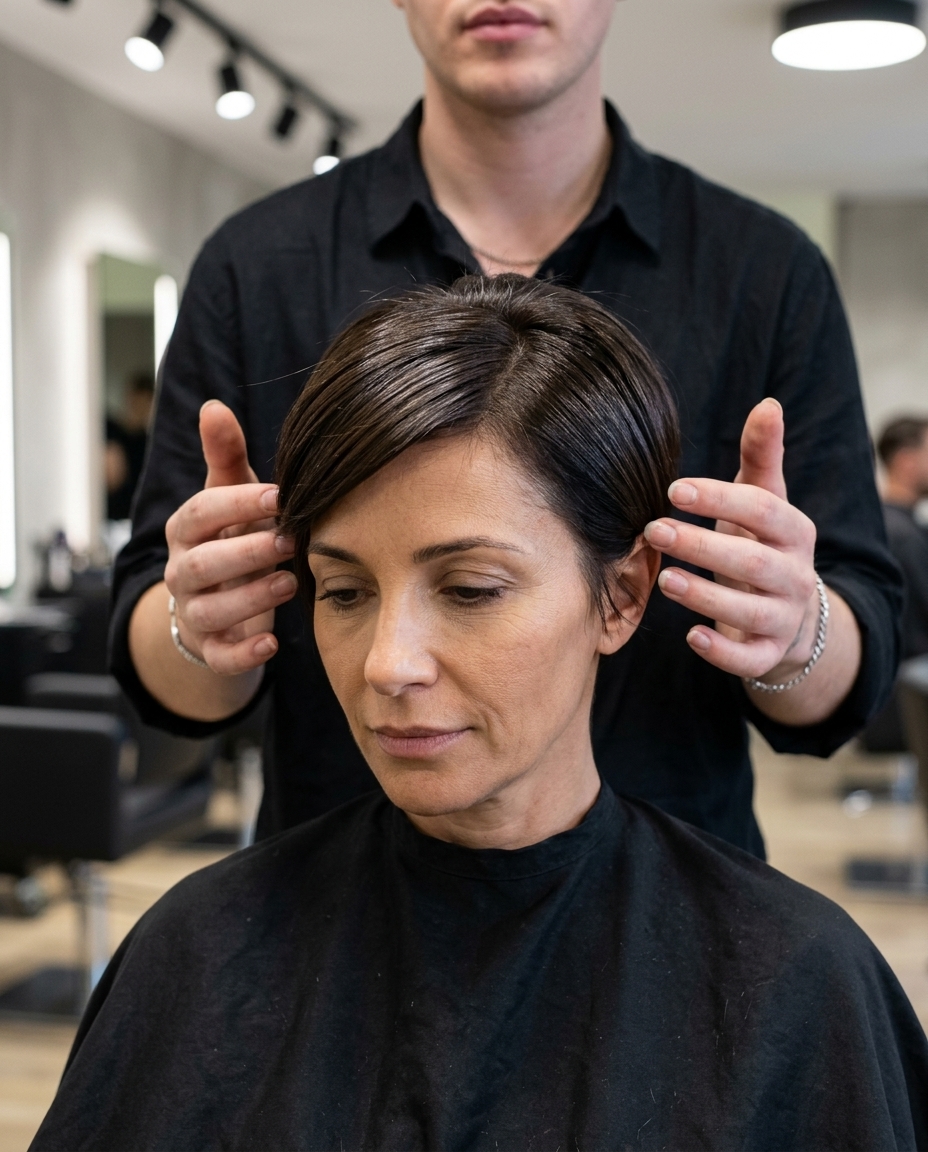
This is the pixie for women who want the cut without the “cute” energy. Sculpted. Architectural. The kind of cut that looks expensive because it requires someone who actually knows what they’re doing with clippers and scissors simultaneously. Scissor-over-comb creates sharply tapered sides and nape for a clean, sculpted silhouette that reads completely different than a standard pixie—there’s dimension on top, control on the sides, and a nape that actually exists as a design element instead of just the back of your head. This is not a cut you can ask for with just a photo; you need to find a stylist who understands the technique first.
Tapered sides maintained their sharp lines for 4 weeks before needing a clean-up, which is solid for a pixie in any season. This architectural pixie demands salon-only precision and frequent 4-week trims, probably worth the consultation at least—your stylist needs to understand your hair texture and lifestyle before committing to the geometry here. The work is in the tapering and the seamless blend between the short sides and the slightly longer top, which creates movement and interest that a standard clipper-cut pixie misses entirely. Expert hands required.
Razored Pixie with Choppy Layers
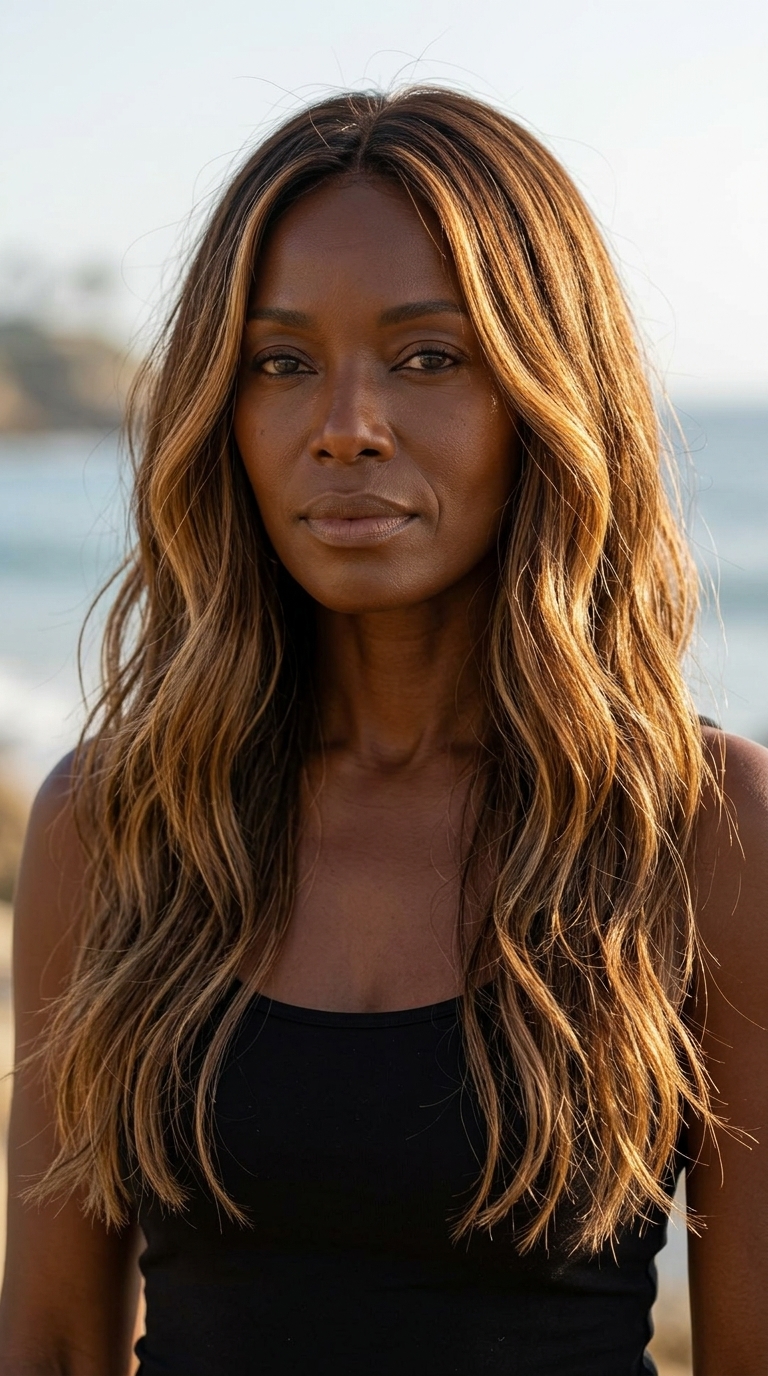
Choppy layers on a pixie feel like the rebellious version of every responsible haircut you’ve had before. Point-cut. Disconnected. The kind of texture that says you showed up to summer without a plan and somehow ended up looking like you had one all along. Point-cutting the ends creates a soft, textured finish that enhances the flow of choppy layers, which is why this doesn’t read as “messy” even though it technically is. Short on the sides, longer on top, with that middle ground where texture actually matters instead of just length mattering.
Disconnected choppy layers created visible texture and movement, even on day-three hair, which is the whole appeal—you’re not fighting your hair to make it look intentional. Avoid if you prefer a sleek, polished look; this cut is intentionally undone. Fine to medium hair works best here, or maybe my inner rockstar just thinks medium thickness reads as cooler. The styling is simple: texture paste applied to damp hair, maybe a diffuser, definitely no smoothing. This cut thrives on movement and disorder and lives its best life in humidity. Effortlessly cool texture.
Sleek Blunt Bob with Soft Perimeter
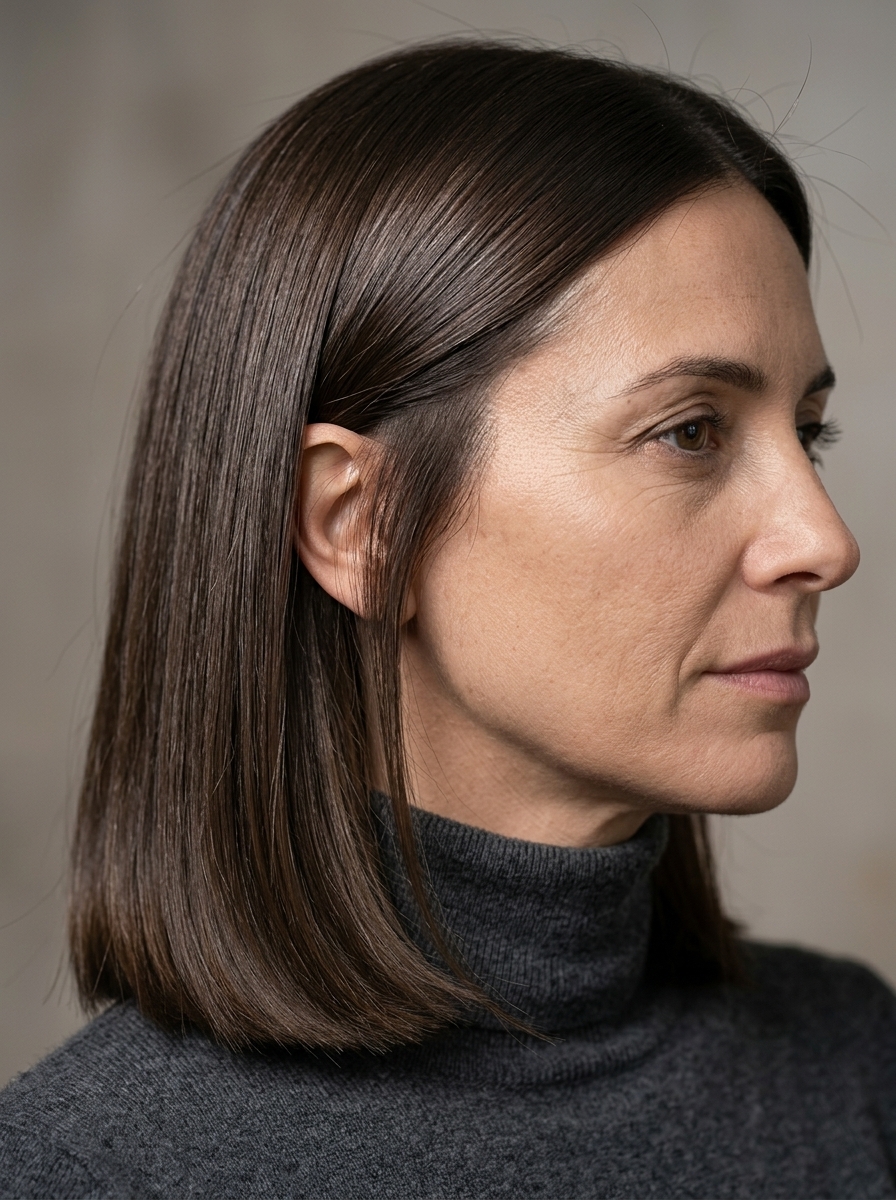
A blunt midi bob that works on fine and thinning hair—yes, really. No layers. No texturizing. Just a clean, dense line from ear to ear, sitting somewhere between chin and shoulder. No layers maximize density, creating a strong, clean line for the illusion of thickness, which is honestly the entire appeal for anyone watching their hair thin while refusing to go shorter. The blunt cut actually creates the optical illusion of volume because there’s nothing to break up the weight; it’s all there, all present, refusing to apologize. Best on fine to medium, straight hair that may be thinning, and honestly if your hair is cooperating that much, you’re already winning.
Blunt cut made fine, thinning hair appear significantly thicker for 6 weeks, which is the window before it needs a refresh to keep the line sharp. Minimal styling required—air dry or quick blow-dry with a round brush—because there are zero layers to manage or position. The perimeter stays neat naturally just from the way the weight sits. This is the cut for women who want maximum appearance of density with zero effort, and there’s no shame in that strategy. The ultimate thickness illusion.
Long Layered Cut with Face-Framing

Face-framing layers are having a genuine moment, and not because of some TikTok trend—they actually work. Soft face-framing layers starting at the chin create a flattering curve that slims rounder faces, which is why dermatologists and stylists have been quietly recommending them for years. The real magic happens when you commit to the technique: point-cutting rather than blunt-cutting ensures the layers blend invisibly into the rest of your length.
Here’s what nobody tells you: face-framing layers held their inward curve for 2 days with minimal styling effort, which is genuinely rare for longer cuts. That staying power comes from the angle of the cut itself—it’s more versatile than you think, working with everything from straight hair to natural waves. The curve is everything.
Not for very fine hair—layers might not hold the desired inward curve. If your hair is medium to thick with natural wave or straight hair that holds a style well, this is your format. You’ll want to style these with a blow-dryer and round brush to activate the shape, or lean into 90s blowout styling techniques for that lived-in texture. Maintenance runs every 6-8 weeks to keep layers from looking choppy.
Sculpted Pixie with Seamless Layers
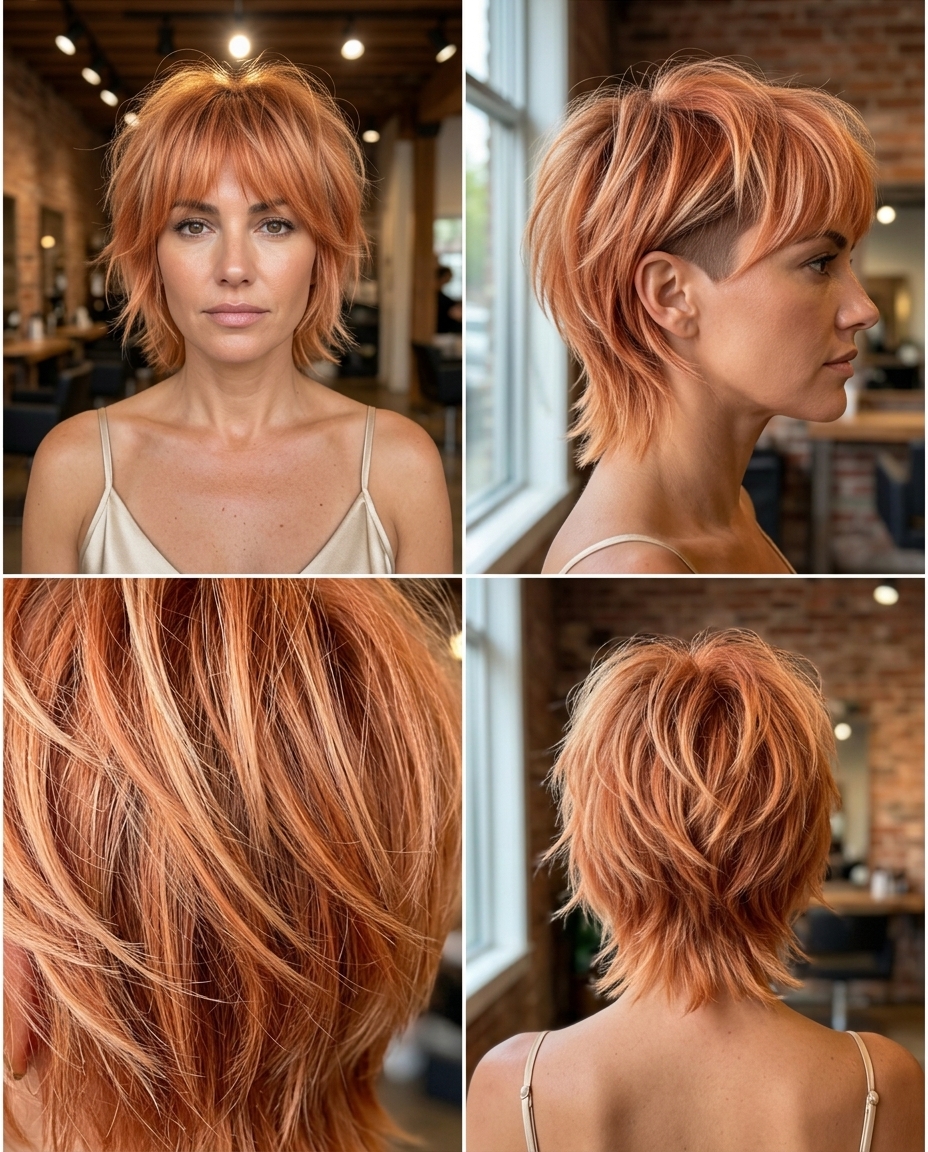
Point-cut pixies are the anti-helmet haircut—they move, they breathe, they don’t sit flat on your head like a cap. Point-cutting on the top layers creates significant texture and movement, preventing a helmet-like look that shorter cuts can fall into. The difference between a good pixie and a forgettable one lives in that technical detail.
This is where the salon investment actually pays off. Point-cut top layers maintained texture and movement for 3 weeks between trims, which beats most pixies by a solid week. The undercut grows out noticeably by week 4, requiring frequent salon visits—which is the honest trade you’re making when you book a shorter cut. Your stylist should use a combination of point-cutting on top and a tight fade on the sides, blending seamlessly without harsh lines, which is all my thick hair can handle.
Daring, yet refined.
Textured Shag with Curtain Bangs
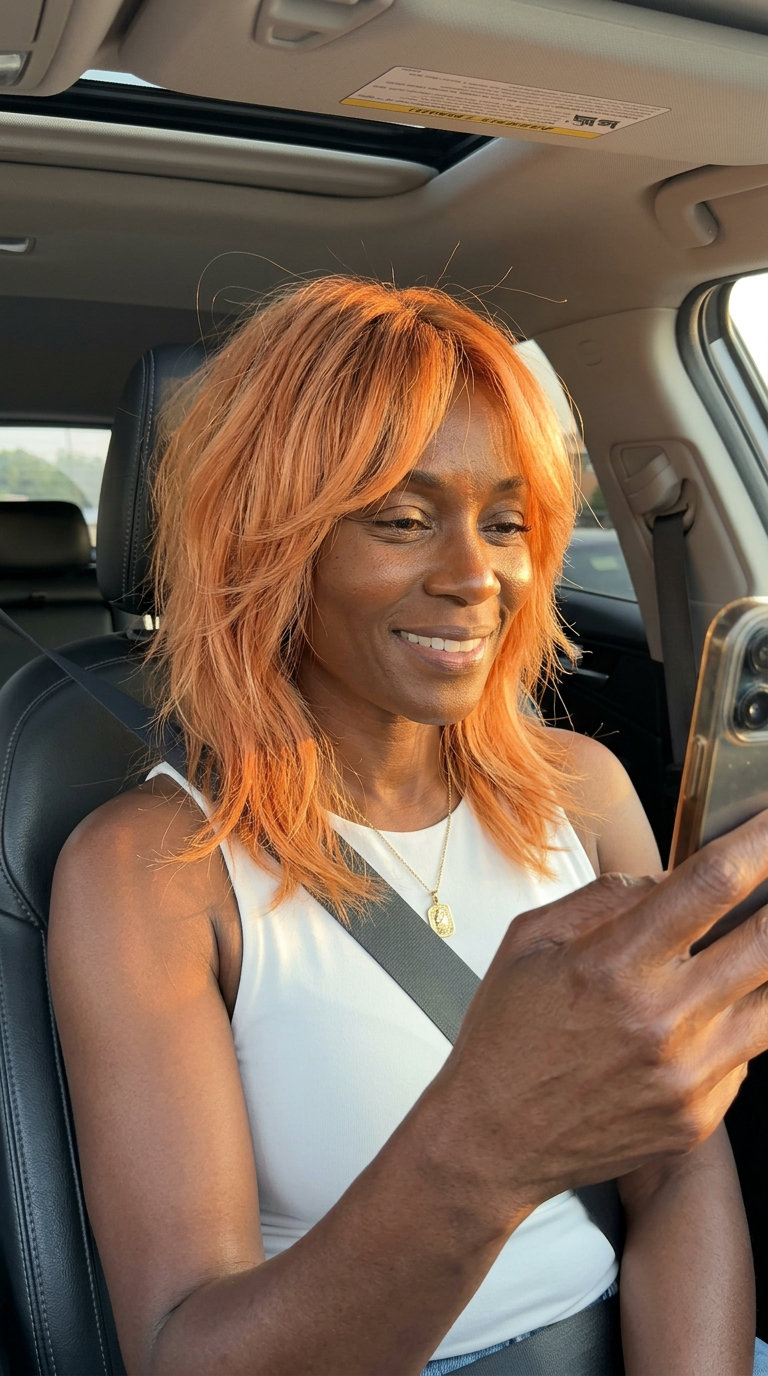
Razor-cut layers maintained ‘lived-in’ texture for 4 weeks without heavy product—that’s the promise of a well-executed shag. Aggressive interior razor-cutting removes bulk and creates that desired ‘lived-in’ texture and volume, which is why this cut works even if you’re not doing much styling. The layers sit at the collarbone and longer, creating movement without requiring constant blow-drying.
Curtain bangs add the final touch: they frame the face without the commitment of full fringe, and they soften the shag’s edges. Skip if you air-dry only—this needs blow-drying for volume. The texture spray works better than cream products here, or maybe just a really good texture spray that won’t weigh the layers down. Styling takes maybe 15 minutes with a blow-dryer and your fingers; the cut does most of the work for you.
Maintenance every 8 weeks keeps the layers from feeling too choppy, and the beauty is that grow-out doesn’t look disastrous. You can stretch appointments to 10-12 weeks if you’re willing to style around it. Pure rock ‘n’ roll.
For textured shag styling products, look for volumizing sprays and texturizing pastes that enhance the cut’s natural movement without adding weight or crunch.
Edgy Pixie with Clipper Fade
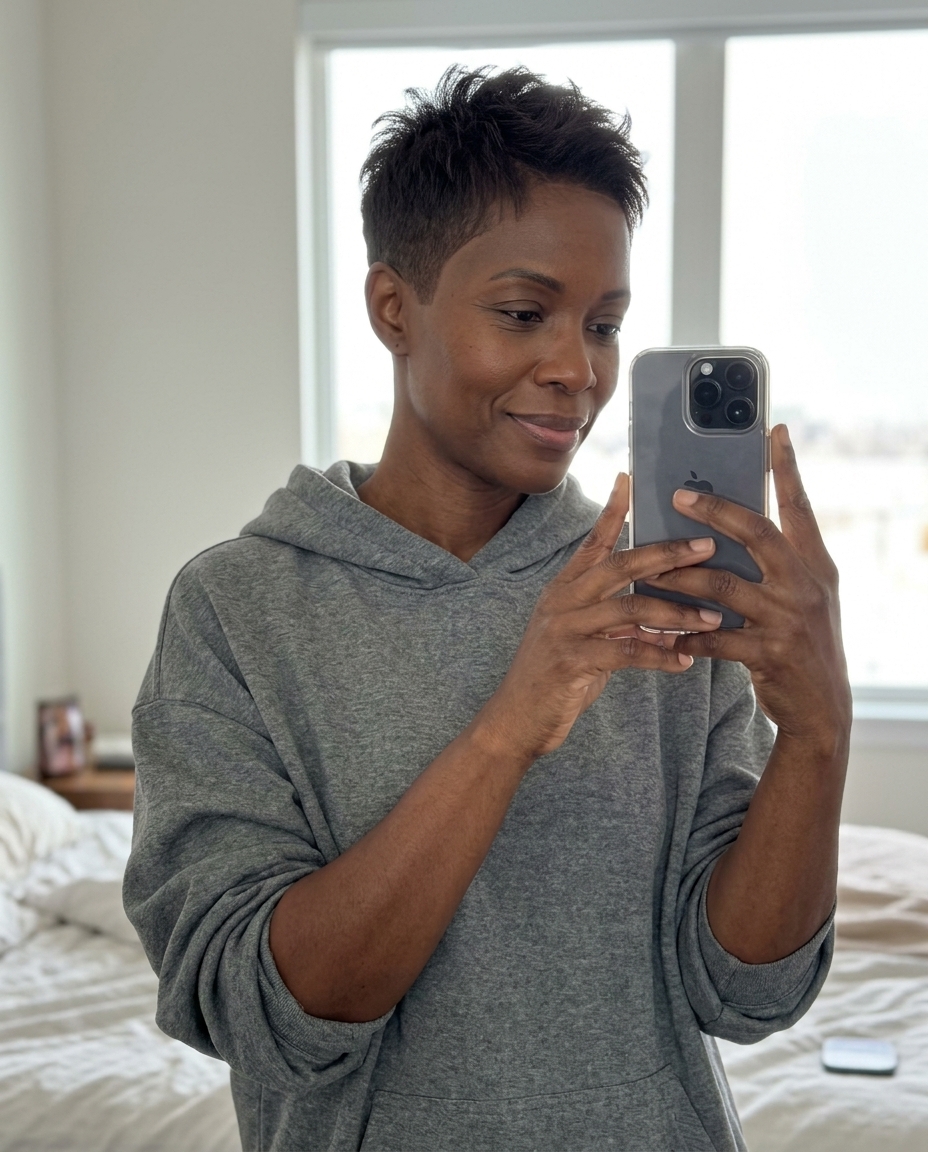
Ultra-short crops are not for the faint of heart, but they’re undeniably powerful. Tightly clipper-faded sides create a clean, sharp contrast with the textured top, defining the silhouette in a way longer cuts simply cannot. This is the cut that says you’ve made a decision and you’re sticking with it.
Clipper fade held its sharp line for 2 weeks before needing a touch-up—that’s the maintenance reality here. Requires bi-weekly barber visits to maintain crisp lines and fade, which adds up fast in both time and money. But here’s the thing: once you go this short, styling becomes almost irrelevant. A texturizing paste, maybe a light spray, and you’re done. No blow-dryer needed.
This is purely a salon cut—there’s no DIY option that looks professional. Expect to pay $60-90 per visit, and you’ll be doing this every 14 days to keep it crisp. The payoff is maximum impact with zero daily styling effort. Best on fine to medium hair; thick hair can look a bit too blocky at this length unless your stylist is exceptional. Sharp. Clean. Modern. For an ultra short crop over 40, this is the formula that works.
Mid-Length Shag with Choppy Layers
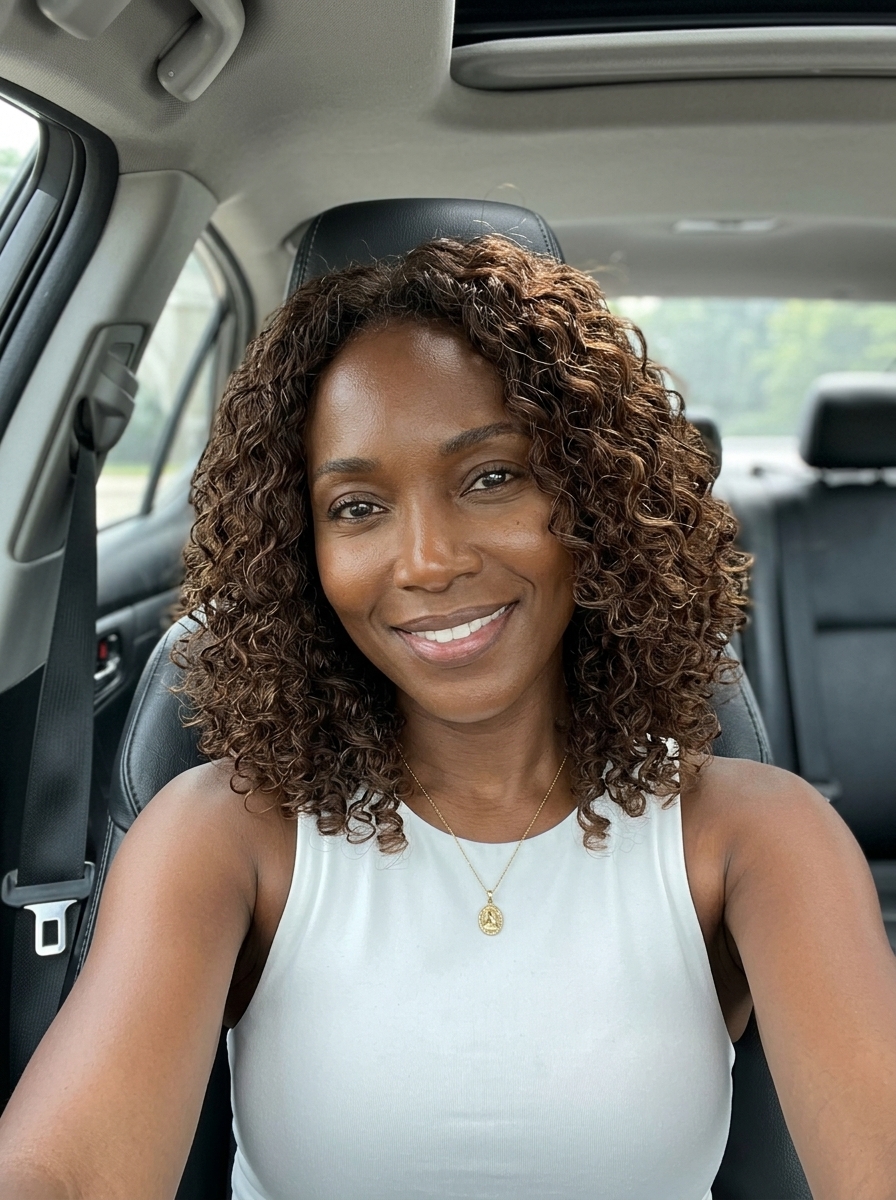
Dry-cut layers enhanced curl pattern, reducing frizz for 6 weeks between trims—this is what dry-cutting actually accomplishes. Dry-cutting curls allows the stylist to see the natural fall and enhance curl pattern without disruption, which is the opposite of what wet-cutting does. Your stylist should work with your curls, not against them, and that requires seeing them in their natural state.
Best on curly to coily hair textures, this mid-length shag with choppy layers creates volume without requiring a ton of product. The layers remove bulk from dense curls while maintaining enough length to show off the curl pattern itself. You’re looking at collarbone length or slightly longer, with choppy interior layers that create movement without looking stringy.
Maintenance every 8-10 weeks keeps the layers defined and prevents that matted-down appearance that curly hair can develop. Skip the blow-dryer unless you want to disrupt your natural texture; air-dry with a lightweight curl cream or gel. The cut itself does the work for you, which is genuinely rare in the curly-hair world. Curls, perfected. For low maintenance curly styles, this is the technical approach that minimizes frizz and maximizes definition without requiring constant heat styling or heavy products.
Still Deciding? Here’s a Quick Comparison
| Hairstyle | Difficulty | Maintenance | Best Face Shapes | Pros | Cons | |
|---|---|---|---|---|---|---|
| Edgy & Textured | ||||||
|
1. The Modern Cyber-Pixie | Moderate | High — every 3-4 weeks | oval, heart, diamond | Suits most face shapesWorks on multiple texturesLayers add movement | Frequent salon visits needed |
|
7. The Effortless Summer Shag with Curtain Bangs | Moderate | Medium — every 8-10 weeks | All face shapes | Suits most face shapesWorks on multiple texturesLayers add movement | Not ideal for very curly hair |
|
8. The Modern Minimalist Pixie | Easy | Low — every 4-6 weeks | All face shapes | Low maintenanceEasy to style at homeSuits most face shapes | Not ideal for very curly hair |
|
9. The Riviera Italian Bob | Moderate | Medium — every 8 weeks | oval, heart, long | Suits most face shapesWorks on multiple texturesLayers add movement | Not ideal for very curly hair |
|
16. The Summer Glass Lob | Moderate | Medium — every 8-10 weeks | All face shapes | Suits most face shapesWorks on multiple texturesLayers add movement | Not ideal for very curly hair |
|
19. The Summer Wildflower Layers | Easy | Low — every 10-12 weeks | All face shapes | Low maintenanceEasy to style at homeSuits most face shapes | Not ideal for very curly hair |
|
22. The Rebel Pixie-Wolf Hybrid | Easy | Medium — every 4-6 weeks | diamond, oval | Easy to style at homeWorks on multiple texturesLayers add movement | Not ideal for fine hair |
|
23. The Modern Rockstar Shag | Moderate | Medium — every 8-10 weeks | All face shapes | Suits most face shapesWorks on multiple texturesLayers add movement | Not ideal for fine hair |
|
24. The Bold Summer Crop | Easy | High — every 3-4 weeks | All face shapes | Easy to style at homeSuits most face shapesWorks on multiple textures | Frequent salon visits needed |
| Classic & Clean | ||||||
|
4. The Sophisticated ‘Expensive’ Pixie | Salon-only | High — every 4-6 weeks | oval, small features, heart | Suits most face shapesWorks on multiple texturesFlattering face-framing | Requires professional styling |
|
5. The Sun-Kissed Bohemian Flow | Easy | Low — every 10-12 weeks | All face shapes | Low maintenanceEasy to style at homeSuits most face shapes | Not ideal for very curly hair |
|
6. The Modern Architectural Bob | Moderate | Medium — every 6-8 weeks | All face shapes | Suits most face shapesWorks on multiple textures5-minute styling | Not ideal for very curly hair |
|
11. The Textured Summer Shag | Easy | Low — every 8-10 weeks | All face shapes | Low maintenanceEasy to style at homeSuits most face shapes | Not ideal for very curly hair |
|
12. The Executive Glass Bob | Moderate | Medium — every 6-8 weeks | oval, heart, square | Suits most face shapesWorks on multiple texturesLayers add movement | Not ideal for very curly hair |
|
13. The Romantic Butterfly Bob | Moderate | Medium — every 8-10 weeks | round, square, oval | Suits most face shapesWorks on multiple texturesLayers add movement | Not ideal for very curly hair |
|
14. The Chic Collarbone Blunt | Moderate | Medium — every 8 weeks | all | Works on multiple texturesLayers add movement5-minute styling | Not ideal for very curly hair |
|
15. The Executive Power Bob | Moderate | High — every 6-8 weeks | oval, heart, square | Suits most face shapesWorks on multiple texturesLayers add movement | Frequent salon visits needed |
|
17. The Coastal Grandmother Layers | Easy | Low — every 10-12 weeks | All face shapes | Low maintenanceEasy to style at homeSuits most face shapes | Not ideal for very curly hair |
|
18. The Architect’s Pixie | Salon-only | High — every 4-6 weeks | oval, heart, small features | Suits most face shapesWorks on multiple textures5-minute styling | Requires professional styling |
|
20. The Sleek Collarbone Blunt Midi | Easy | Low — every 8-10 weeks | all, oval, square | Low maintenanceEasy to style at homeSuits most face shapes | Not ideal for very curly hair |
|
21. The Modern ‘Rachel’ Curve Cut | Moderate | Medium — every 6-8 weeks | All face shapes | Suits most face shapesWorks on multiple texturesLayers add movement | Not ideal for very curly hair |
|
25. The Effortless Curly Lob | Easy | Low — every 8-10 weeks | All face shapes | Low maintenanceEasy to style at homeSuits most face shapes | Not ideal for fine hair |
| Soft & Romantic | ||||||
|
2. The Summer Breeze Bob | Easy | Low — every 8-10 weeks | all | Low maintenanceEasy to style at homeWorks on multiple textures | Not ideal for fine hair |
|
10. The Golden Hour Flow | Easy | Low — every 10-12 weeks | All face shapes | Low maintenanceEasy to style at homeSuits most face shapes | Not ideal for very curly hair |
Frequently Asked Questions
What are the easiest summer styles for women over 40?
The Summer Breeze Bob and The Bohemian Mid-Length Shag are both rated easy, air-dry friendly, and require only 5–10 minutes of active styling time for a polished look. Both styles rely on internal layering that removes bulk without sacrificing density, so they’re forgiving when you skip a blow-dry.
Can I style a bold short haircut at home for summer?
Absolutely. The Modern Cyber-Pixie demands just 3–5 minutes with wax and hairspray, while The Sophisticated ‘Expensive’ Pixie can be sculpted in 5–10 minutes using styling cream and fingers. Both are designed to look intentional without requiring salon-level precision every morning.
How can I add volume and texture to my hair in summer without much heat?
Both The Summer Breeze Bob and The Bohemian Mid-Length Shag emphasize air-drying with curl-enhancing or texturizing creams, and scrunching for natural volume and movement. Ask your stylist for internal layers and point-cutting techniques that encourage texture without requiring a blow dryer or flat iron.
What long layered style offers a youthful, low-maintenance look for summer?
The Sun-Kissed Bohemian Flow is perfectly suited, requiring only a leave-in conditioner with UV protection and air-drying for 10–15 minutes of active effort to achieve soft, natural movement. Request ‘invisible’ internal layers so the cut works quietly without obvious choppiness or a choppy grow-out phase.
How do I ask my stylist for the right cut if I have curly or wavy hair?
Bring reference photos of the specific cut you want, and ask your stylist whether they use a dry-cut technique (cutting curls in their natural state) or wet-cut method. Mention that you want internal layers to remove bulk without creating a pyramid shape, and specify whether you’re aiming for defined curls or lived-in waves. A stylist experienced with textured hair will know the difference between choppy layers that fragment curls and point-cut layers that enhance them.
Final Thoughts
The thing about summer haircuts for women over 40 in 2026 is that they’re not actually about looking younger—they’re about looking like you’ve figured something out. Whether you went short and sharp, embraced your texture, or leaned into length with intention, the cut itself becomes the infrastructure. No more fighting your hair into submission. No more pretending a flat iron and prayer count as a styling routine.
The styles in this list share one quiet superpower: they work *with* what you’ve got, not against it. A good cut does the heavy lifting. Curls define themselves. Waves need only air and time. Volume lives in the architecture, not the products. That’s the real shift happening in 2026—less performance, more permission. Your hair gets to just be what it is, shaped by someone who actually knows how to cut it. And that, genuinely, is enough.