The chair next to mine has had a crimper plugged in all summer. Last spring it was all blunt bobs and gloss; now my stylist is pressing zigzags into mid-lengths. I get it. Crimping is the one texture that skips the round brush entirely.
This list has 15 ideas, running from an air-dried collarbone crimp to a deep, uniform set that wants an hour and a heat protectant. Short, long, fine, thick, and any face shape that wants width at the jaw. My own fine hair quits by 4 pm, which is why I keep testing Crimped Hair at all. Crimping holds what a curling iron drops.
Intense All-Over Shoulder Length Crimp
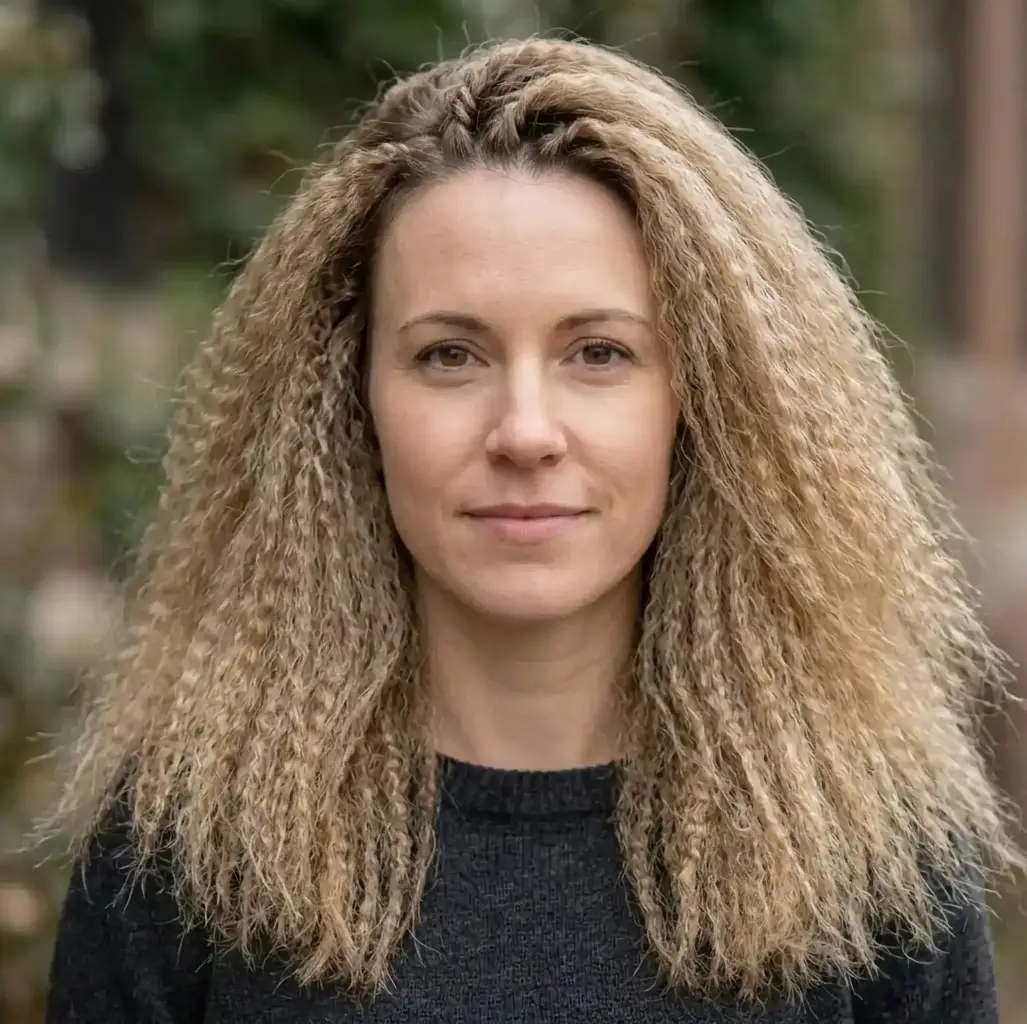
Not every head of hair can carry a crimp this loud. Intense crimped hair that runs root to end of a shoulder-length cut is a real pattern on thick, curly texture, not a bad hair day. The cut underneath is layered, which matters more than it sounds: layers let the zigzag sit at different heights instead of stacking into one dense block. A middle part with no bangs keeps the crimp front and center, so the texture becomes the shape. Fine hair should pass. It flattens by early afternoon and the ridges smudge into something closer to frizz. Thick, curly hair holds each ridge clean, and that is the whole reason this works.
Sleek Top to Crimped Mid-Back
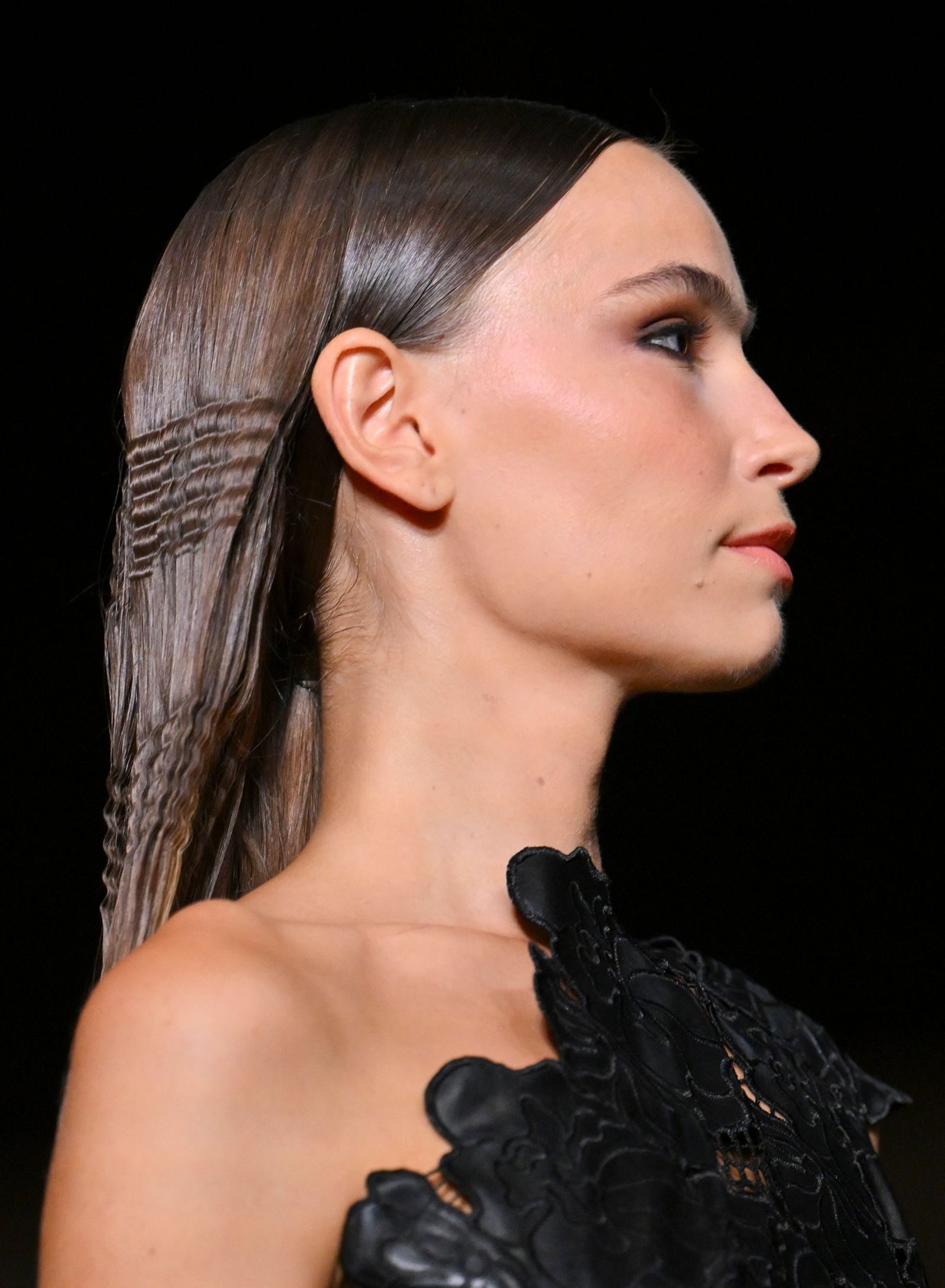
Skip the all-over crimp. Sleek crimped hair is the better idea: keep the top flat and let the pattern start below the jaw, so the shape reads modern rather than costume. The cut is long layers through mid-back with no bangs and a middle part, so nothing interrupts the smooth plane from the crown down. Above the ear the hair stays straight. Below it, the pattern begins. A wet-look finish set with gel or pomade and dried under tension sells the whole contrast.
- Pin the top and dry it flat with tension.
- Crimp small sections and keep the heat moving.
- Leave the iron clamped long enough for sharp ridges.
- Set the top with gel or pomade before combing the crimp.
A dark brown base with lighter ends does quiet work, keeping the ridges from reading flat in low light. Ask for long layers with a middle part and no bangs. Fine to medium density carries it: the top stays straight while the lower half keeps its pattern.
Ash Blonde Braid with Crimped Sections
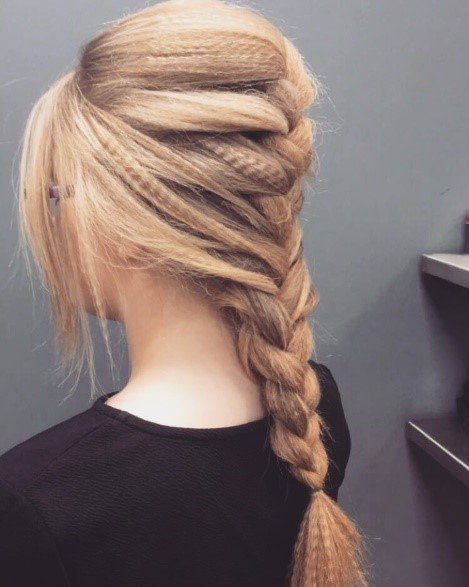
Regular three-strand braids look thin on fine, wavy hair, so why does this version read so full? Braided crimped hair carries bulk inside the weave, where a plain plait slides flat against the head. Here it is set through long layers at shoulder length in ash blonde, with a side part and wispy bangs left loose at the front. The bend survives because each section was set before weaving, which is why the plait keeps its shape instead of collapsing into a rope. Wear it through a full day and the braid stays; take it down and the wave underneath is softer than a fresh set. Upkeep is the honest part. The crimped sections need a quick re-clamp, and the bangs want a trim every few weeks.
Styling Long Fine Hair with a Crimper
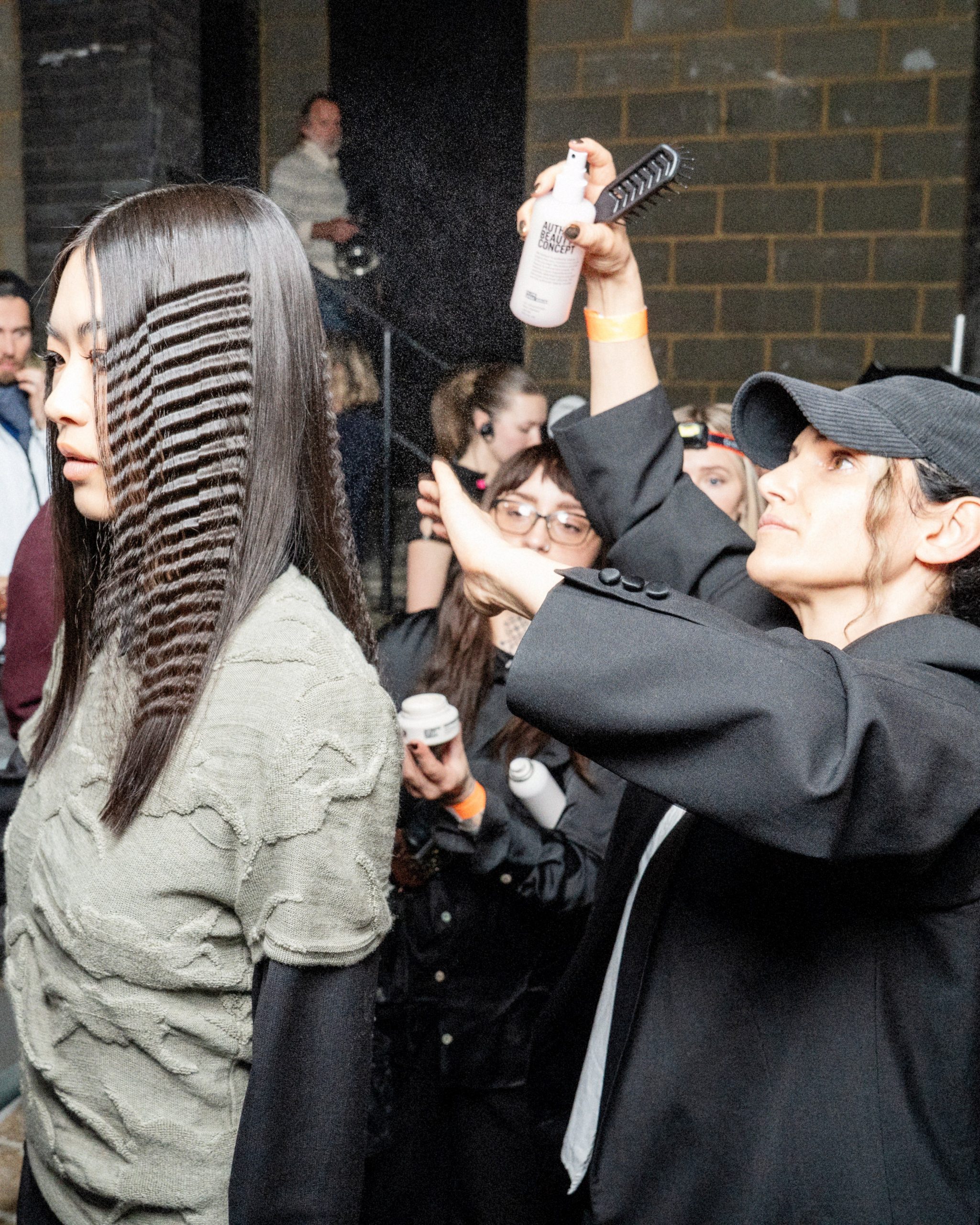
I ignored crimping my own fine hair for years. The first attempt left it looking like a paper lantern nobody asked for. Long hair with a side part takes a crimp well if you keep the sections thin. Home job, not a salon one. That is where a fine hair crimping tool earns its keep, since a wide barrel just flattens what little density you have. The sharp crimped lines read deliberate rather than accidental. No bangs, long layers, nothing to disguise. Skip it if your hair is coarse, where the texture doubles.
Crimped Face-Framing Sections
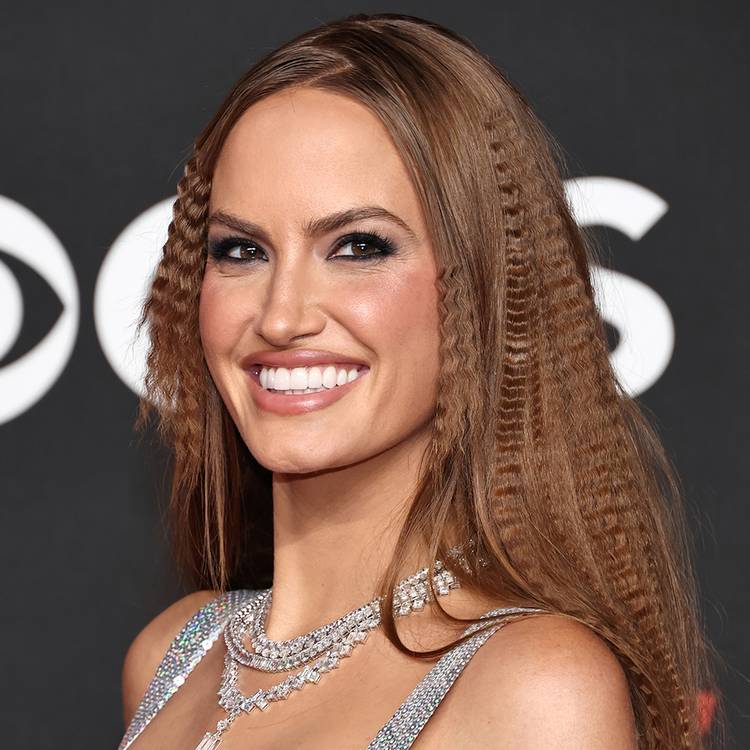
A face framing crimp lives or dies on placement. Two sections beside a side part, medium brown with subtle highlights, and the rest of the shoulder-to-collarbone length stays smooth. The sections sit on long layers, no bangs, which means nothing hides a sloppy line near the temple. Medium density holds the pattern; below that it separates.
The front sections hold better than the back does, which sounds backwards until you have worn it. Ridges near the face keep their shape until evening. The layered back softens by mid-afternoon and reads fine anyway. Upkeep is one pass with a small iron each morning, plus a trim every eight weeks so the front layers do not grow into a flat sheet.
Uniform Crimped Shoulder Length
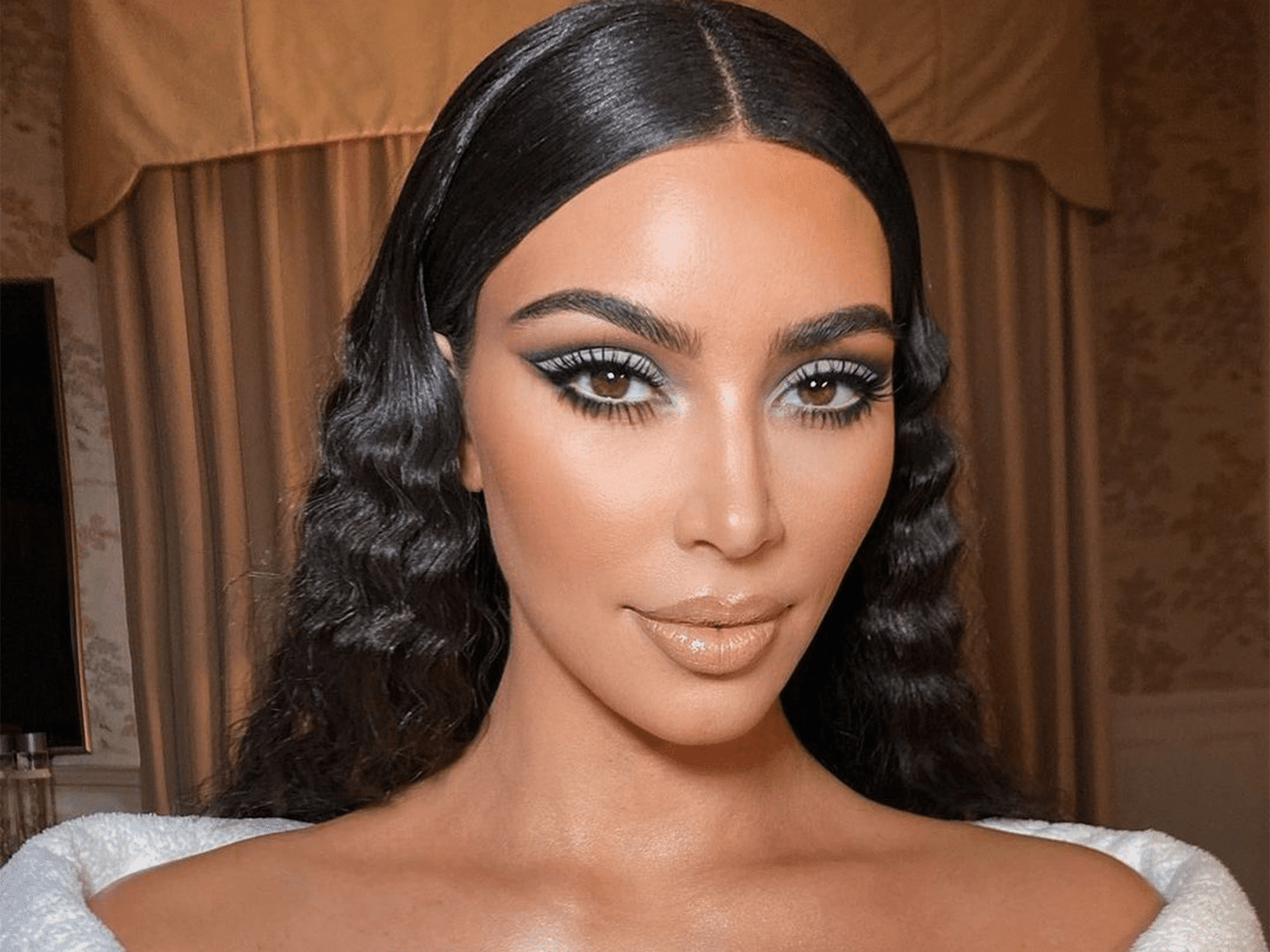
Uniform crimped waves look like a decision, not an accident, and I mean that as praise. The middle part does half the work: it splits the pattern into two even panels, which reads calm rather than chaotic. It suits oval and heart shapes, and it widens a round face more than most people want. Shoulder-length is the sweet spot, since the crimp finishes at the collarbone before it can drag. Layers and bangs both fight this one, because any shorter piece breaks the repeat, so ask for a single-length cut. Density matters more than length. Fine hair separates at the ridges and shows scalp; medium to thick hair holds it. Holiday parties, concerts, anywhere with dim light and a camera.
Air-Dried Collarbone Crimp
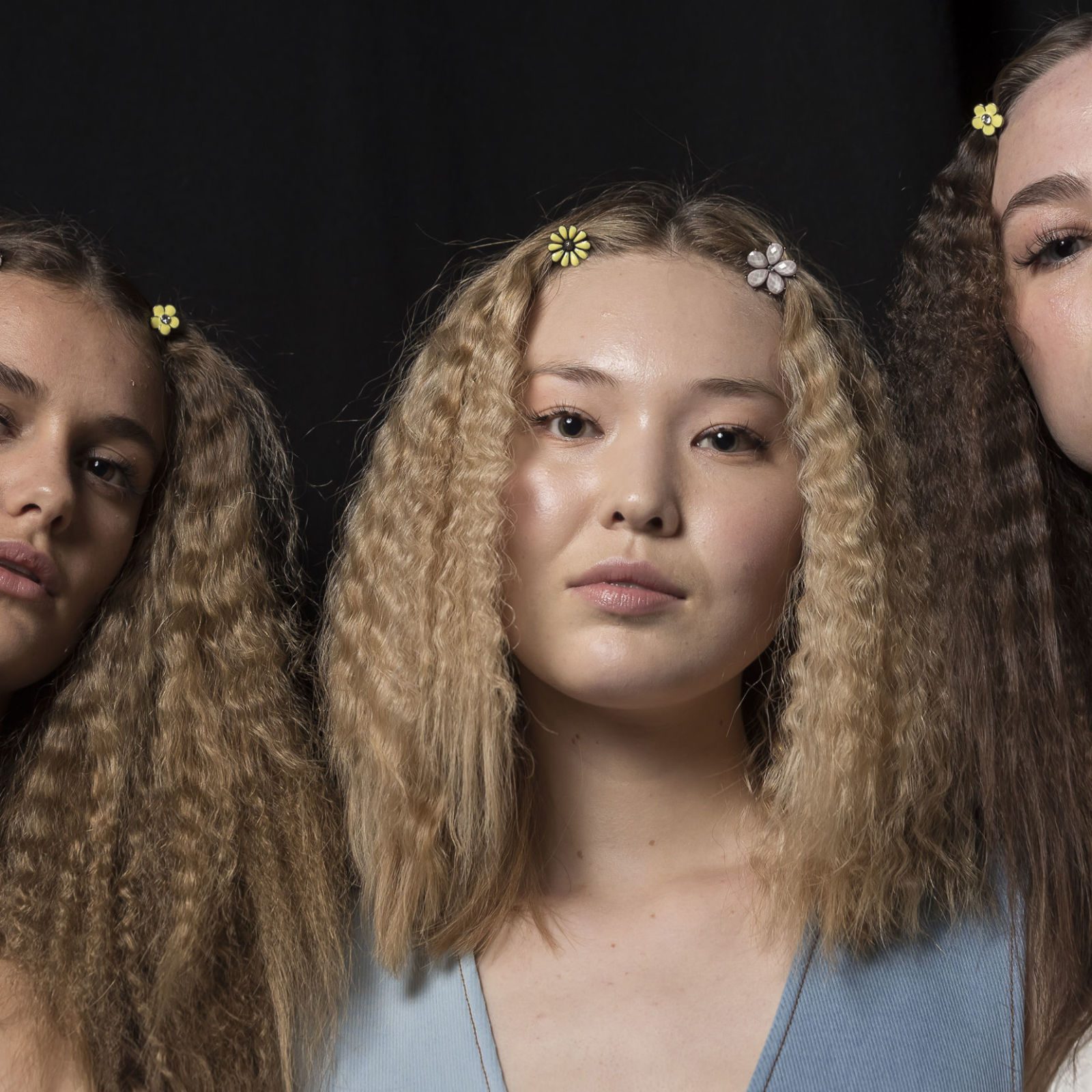
Does air drying ever give you the crimp you had in mind, or just a halo of half-set waves? Here is the mistake I see most: people scrunch once, then expect the pattern to survive until it dries. On fine texture that is optimistic. Layers through the collarbone length hold the wave without collapsing, and a middle part with no bangs keeps the front clean. Air dried crimped hair with dark brown and blonde highlights reads thicker mid-shaft, then the ends go flat if you touch them too early. Rinse, scrunch, walk away.
Crimped Ponytail with Braided Accent
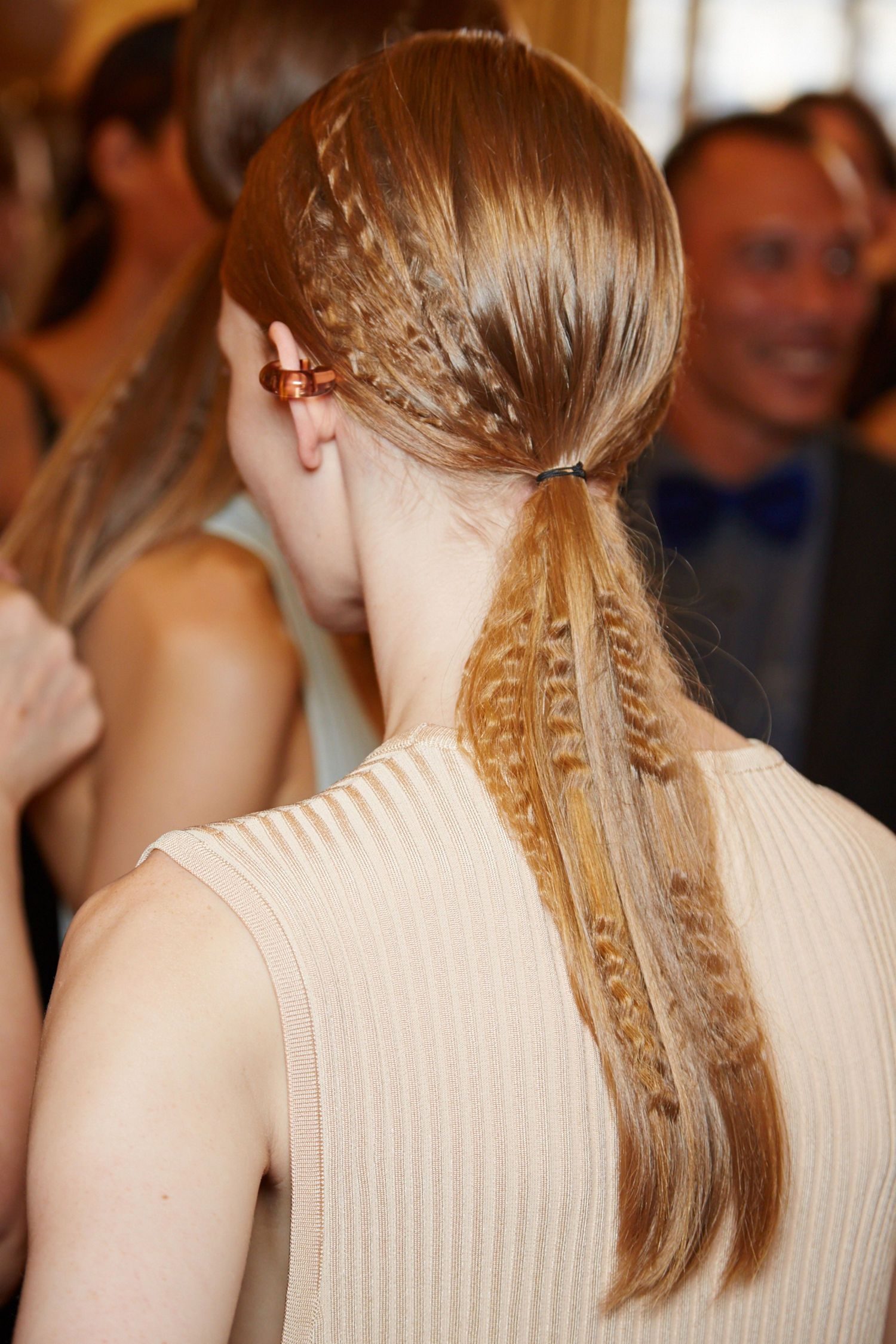
A low crimped ponytail swinging at waist level, the crimped lengths catching the last of the afternoon light. That is the whole idea, and it is why this one lands from June through September: loose enough for a festival field, tidy enough for a wedding guest who has to sit through a full ceremony. The braided accent does the heavy lifting. A small braid worked along the hairline into the base keeps the front looking deliberate when the wind has other plans.
Ask for a cut that holds the waist-length and adds long layers through the ends, because waist-length hair with none is one heavy rope, and the crimp flattens straight into it. That reddish-brown reads warm in summer light. Sweep the front back instead of cutting bangs, and keep the middle parting at the crown clean for the braid. Crimp the ponytail section only, band it low, and the texture carries the rest of the night.
Purple and Grey Loose Crimp
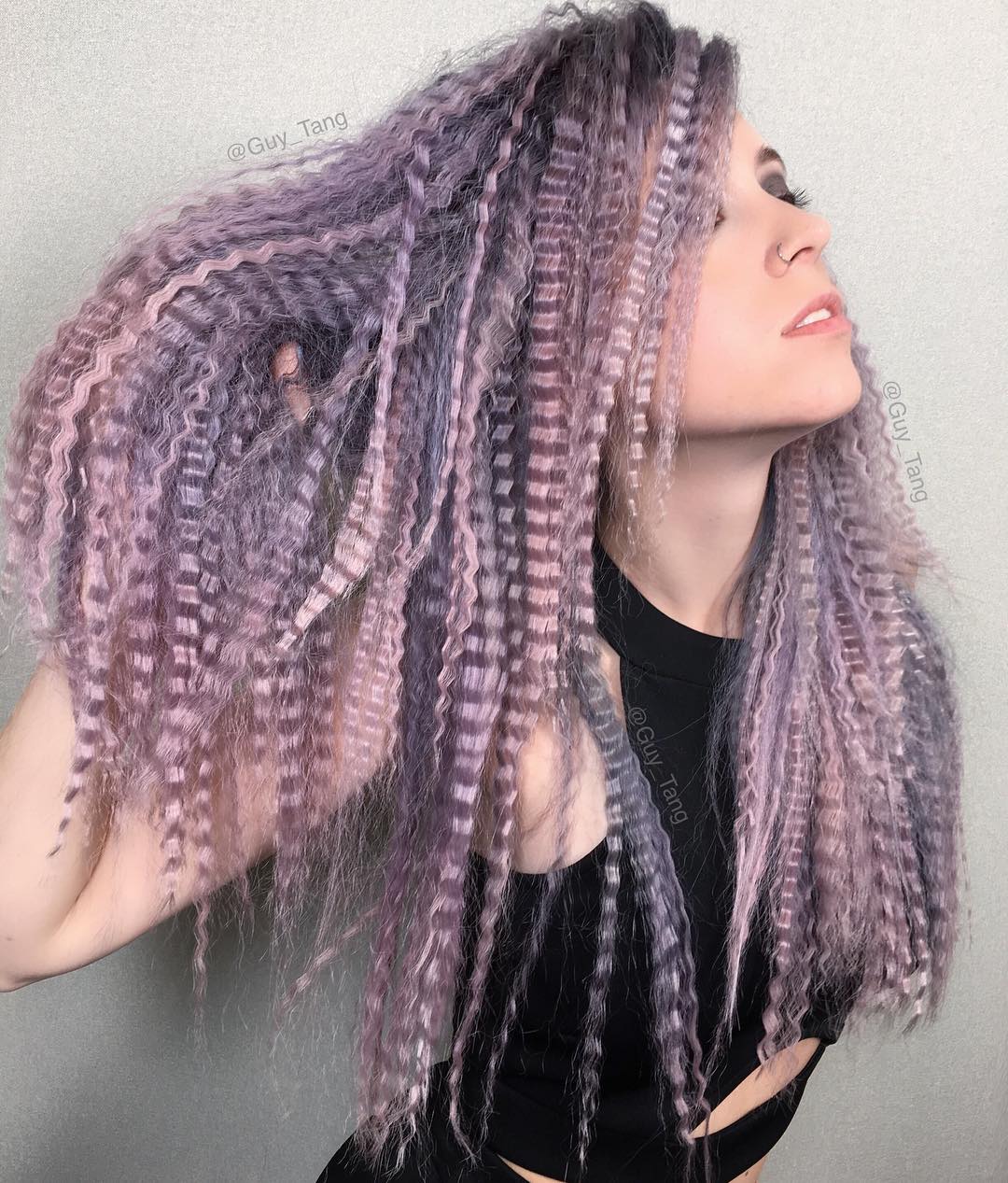
I will confess something: I spent years avoiding grey on purpose, then asked for it on purpose. Purple grey crimped hair is why. The problem with the shade is the root. Left alone, grey reads flat and cold right at the parting, and the purple looks like a separate job sitting on top of it.
So ask for a soft root shadow, no visible line, and let the purple run through the mid-lengths instead. Long layers through mid-back length give the loose crimp a place to bend, and with no bangs and a middle part the colour carries the section. It needs thick, wavy texture. On fine hair the wide-barrel crimp falls out by lunch and just looks slept on.
Vibrant Red Mid-Back Crimp
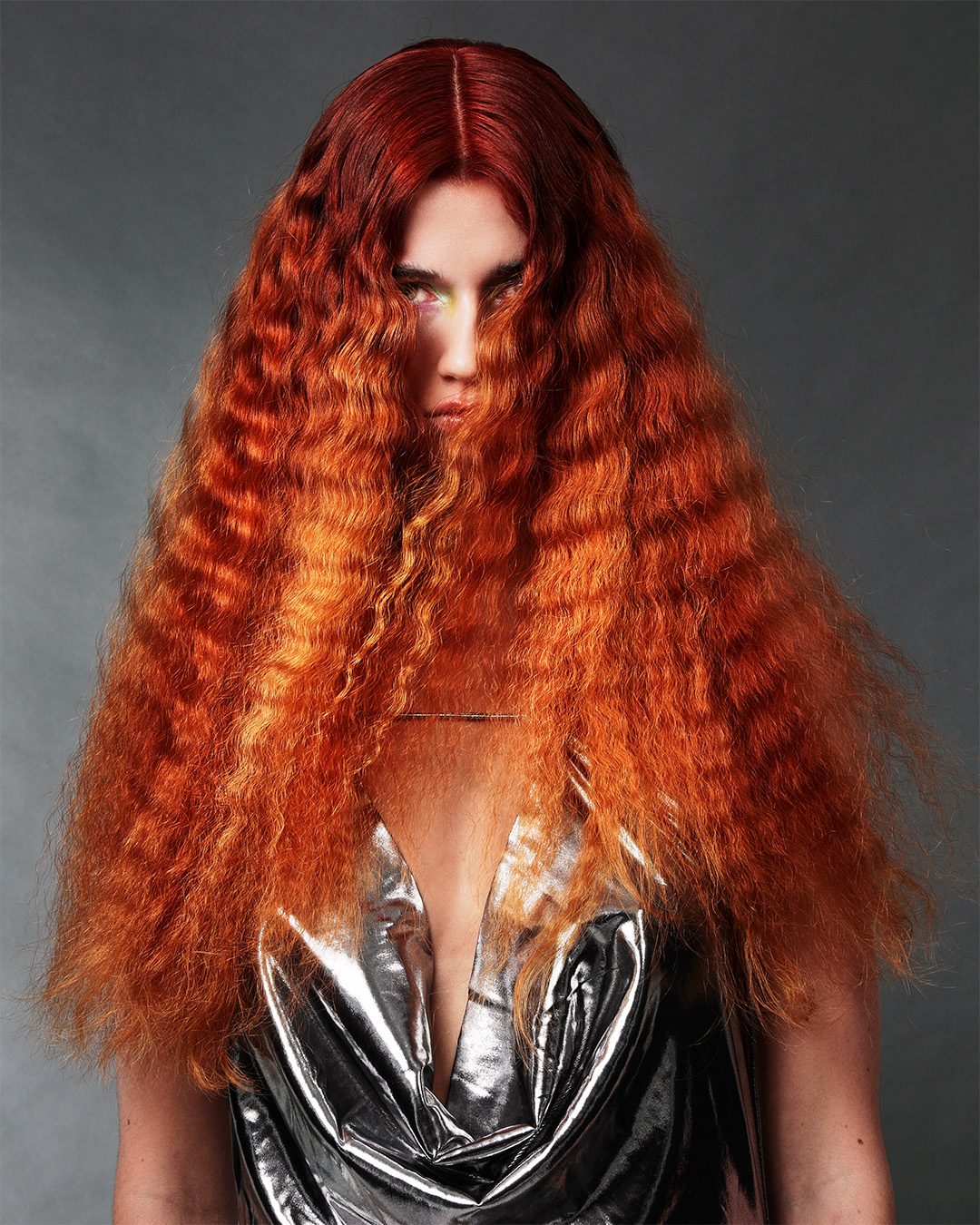
A verdict first: fiery red and a deep crimp is a lot of noise for one head of hair, and it only works when the shape underneath can carry it. Here the shape does the carrying. Mid-back length, a middle part, long layers, no bangs. Iron this cut flat and the layers barely register; crimp it and they finally move, adding bulk through the mid-lengths while the ends swing as one piece. The red carries orange rather than pink beneath the surface, so on warm and olive skin tones it reads as attached to the person wearing it. On cool, pink-toned skin that same orange base can sit slightly apart.
Thick wavy hair holds a crimp pattern without going stringy, and that is why this much texture stays legible on vibrant red crimped hair. Fine hair collapses by mid-afternoon and shows every faded bend. The upkeep is color-led: a color-safe wash keeps the orange vivid for around six weeks before the mid-lengths dull, and refreshing the crimp with a tool from the ears down takes about ten minutes. Roots show first.
High Ponytail with Braided Crimp Accent
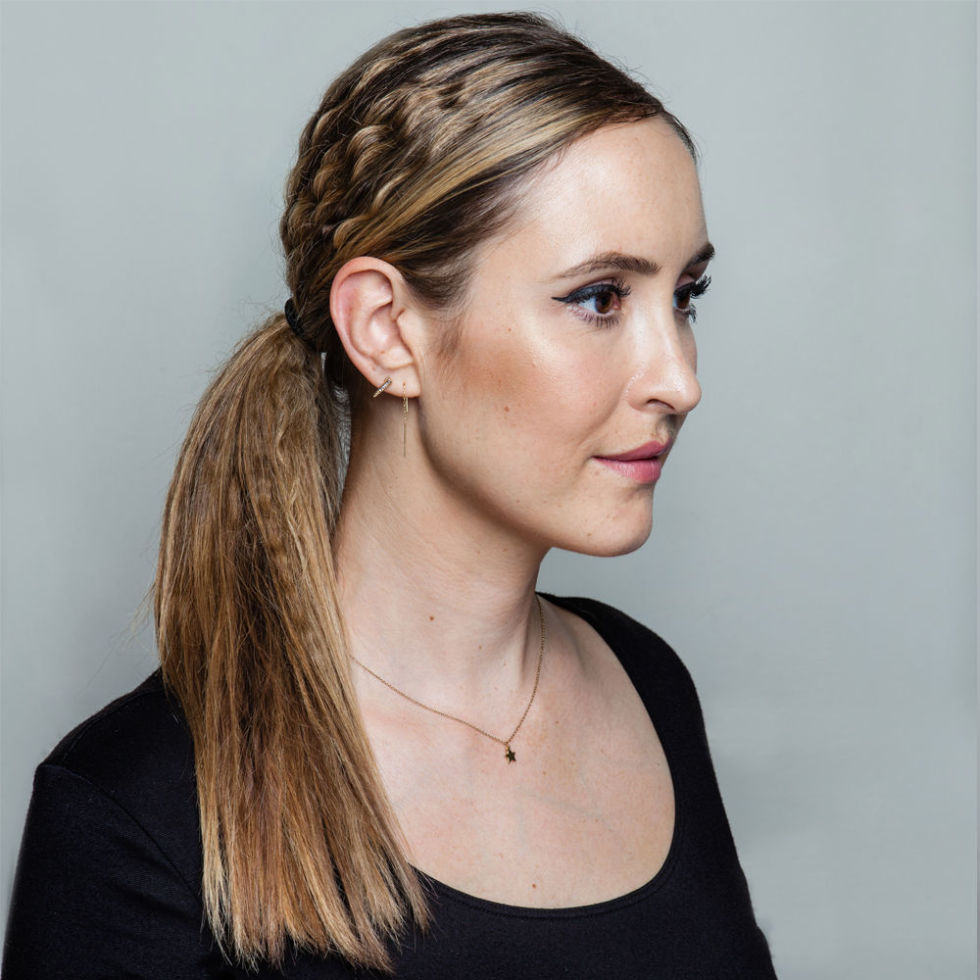
The braid outlasts the ponytail it sits in. That is the whole trick of a braided crimp ponytail: the crimp pattern is packed into a plait, each section pressing against the next, so the texture stays put through a workday and into the evening while the smooth mid-back length above it drops a little by hour six. Dark blonde with lighter highlights catches the light along every bend, which is why this holds its shape rather than looking like a missed blow-dry. No layers means no escape routes for the strands, and no bangs with a middle part keeps the front edge flat. Fine to medium density handles the weight; heavy hair drags the base down and the crimped accent loosens first. Day three, expect to re-braid.
Deep Crimp Collarbone Cut
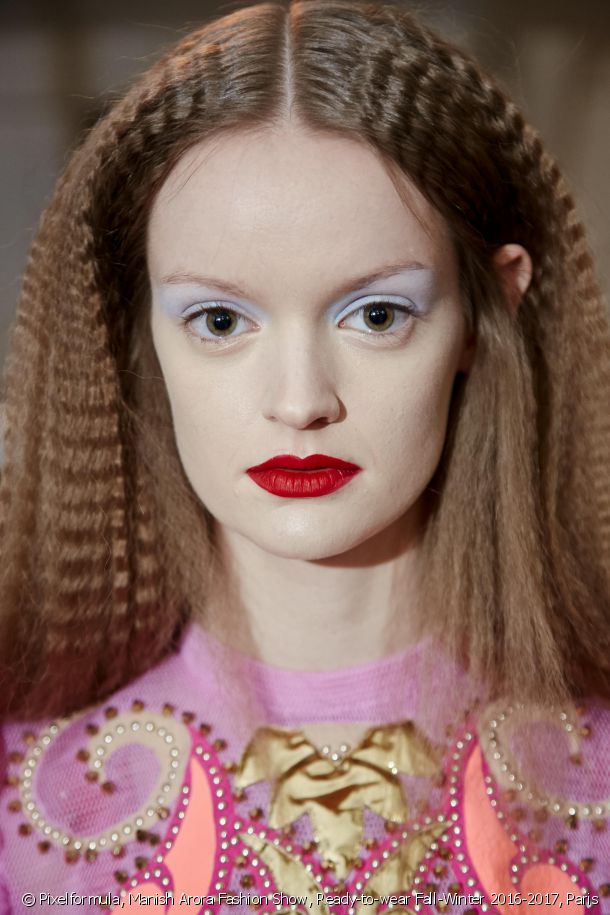
Can you get crimps that deep without a salon? Mostly no. A uniform deep crimped hair finish on a collarbone cut needs a tool hot enough to set a hard fold and a hand steady enough to time each section the same way. Miss a beat and one panel reads tighter than its neighbor. Layers at collarbone length let the folds sit at different depths instead of stacking into one flat band, and fine wavy hair takes the pattern fast. No bangs, middle part, so the crimps start clean at the hairline. Book it.
Dark Brown with Honey Highlights and Baby Bangs
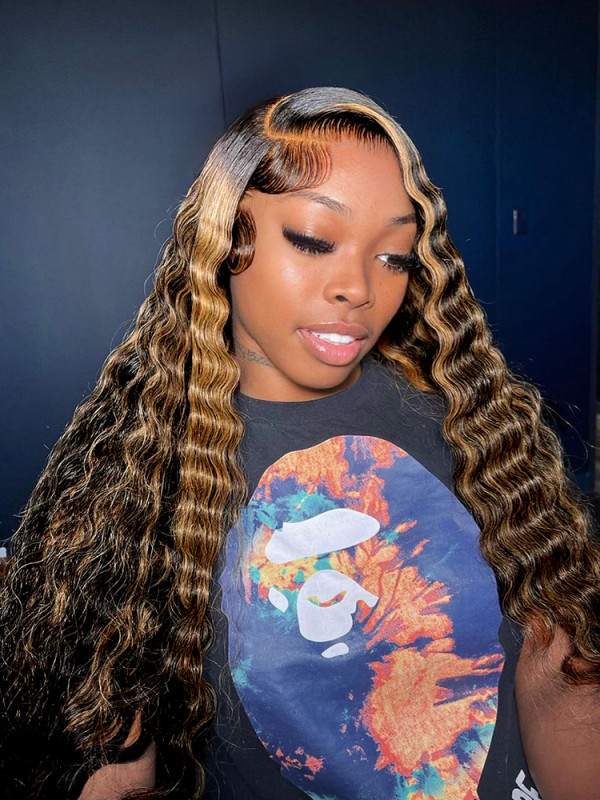
Late September light does something to honey blonde that July light cannot, and that is most of the argument for this cut. Mid-back length reads like a lot of hair until you notice the layers doing the work higher up, so the weight sits at the back and the movement starts near the jaw. Baby bangs sit high above the brow and stay wide, which keeps the forehead open and the whole shape from going heavy. That is crimped hair with bangs handled with restraint. Nothing severe about it.
Season matters here more than it should: this is a late-fall look, built for evenings with an actual invitation, the kind where hair gets photographed. Baby bangs and loose waves carry the seasonal note, and because the layers start at the jaw, the mid-back length can go up in a low twist without losing shape. Thick wavy hair holds it. Fine hair needs a texture spray and a smaller barrel, or the crimp drops before anyone reaches the table. Honey stays an accent, not the headline.
Voluminous Blonde Braided Crimp
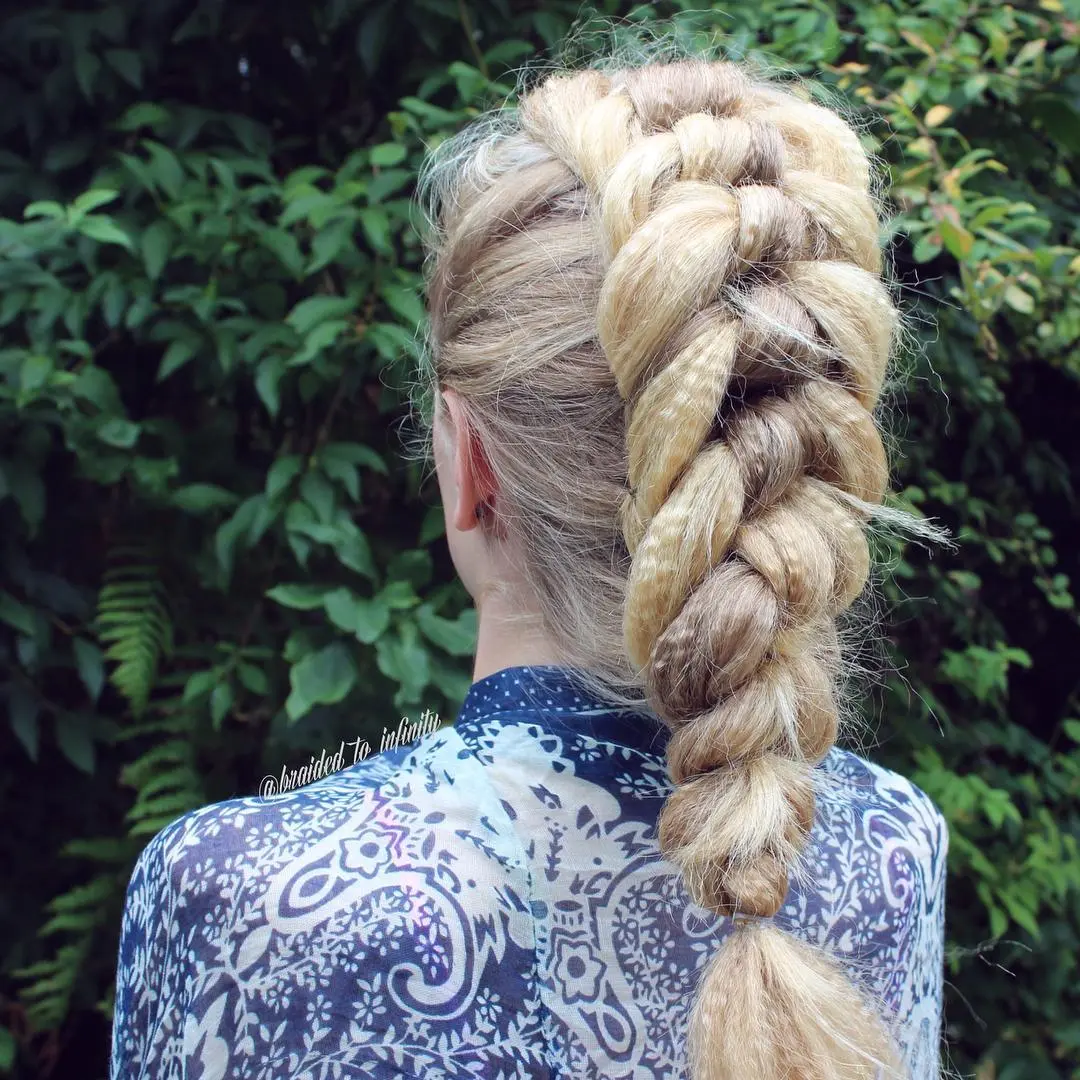
A tidy three-strand braid is the safer choice. I will still pick this one. A voluminous crimped braid is not trying to hide anything: crimp the hair first, braid it second, then pull the sections apart until the whole thing doubles in size. Long layers through mid-back length give it somewhere to swell, and no bangs keeps the front clean so all the volume sits behind the middle parting where you can see it. Thick blonde hair is doing the heavy lifting here, since fine hair will not puff up like that no matter how much you backcomb it. Wear it for an evening and the shape survives; upkeep is two braids a week at most, because repeated crimping on the same sections is where the texture starts to sag.
Dramatic Deep Uniform Crimps
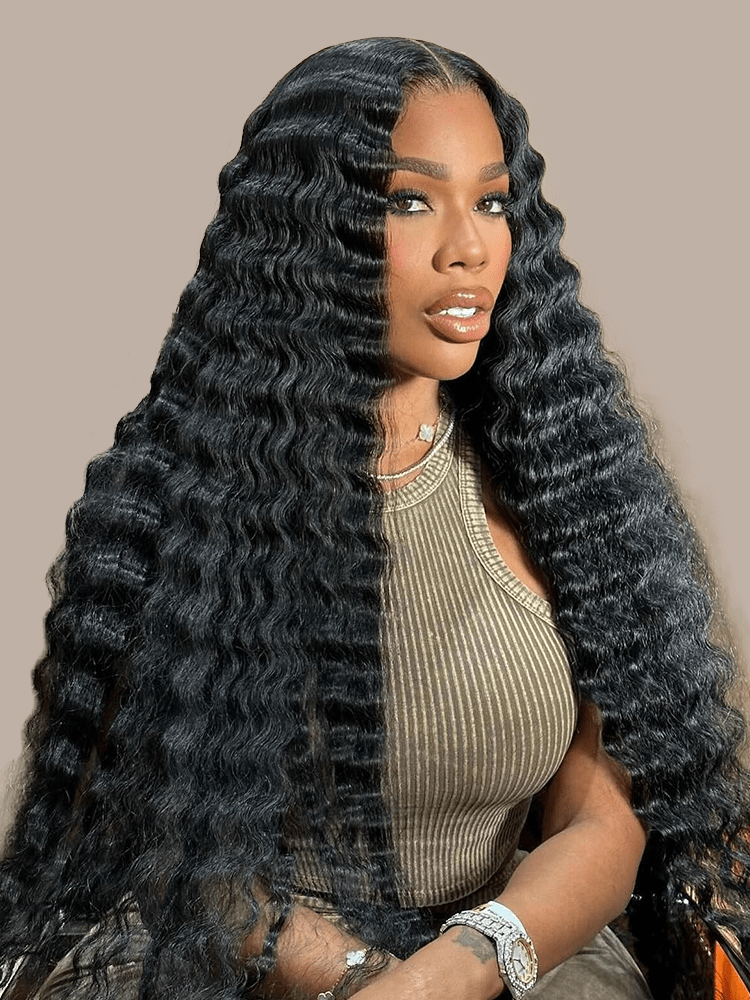
Confession: I blamed the crimper for the soft patch at the back of my head. It was not the crimper. Deep uniform crimps are a timing problem more than a heat problem. Every section has to be clamped at the same distance from the scalp, held the same count, released at the same angle, and rushing the back shows under light. The middle parting keeps the texture lined up from the crown down, and with no bangs in the way, mid-back length and long layers let each crimp repeat instead of bunching in one spot.
Day one is the good day. Dramatic crimped hair looks deliberate when it is fresh, and thick wavy hair starts softening the ridges by day two, where a pillow has pressed them flat. By day three the crown is the only section still holding its pattern. A strong-hold spray on each section before you clamp, plus a ten-minute refresh on the top layer, buys one more day. Deep uniform crimps are uniformity above all, and uniformity is what a proper crimping tool and a patient hand deliver.
Final Thoughts
Six weeks of watching that crimper, and I finally get it: the set stays where you put it. What I did not expect from 15 rounds of crimping is how much the blonde and the purple-grey versions live or die on tone.
I am booking the deep collarbone crimp next, and a trim before it, because a uniform set on frayed ends is not a good time. The crimp holds. The color is the part that needs babysitting.