I keep seeing the same thing in the chair next to mine: a dark base with something unexpected underneath. A flash of teal, a stripe of hot pink, a pastel that only shows when the hair moves. It’s not a full commitment, it’s a secret.
This roundup of 21 Fun Hair Colors runs from peekaboo highlights to full saturation, from pastel blends to vivid reds. Some take a Saturday in the salon, others a single bowl at home. Fine hair, thick hair, round faces, long faces: there is a version that works. I wrote this because I have watched a purple fade to dishwater in two washes and I want you to skip that part.
Deep Blue With Teal Purple Undertones
Does anyone else look at a deep blue with teal purple undertones and think, well, that is a lot of pigment for a short haircut? On a fine-textured pixie cut, it is not overwhelming at all. The side-swept bangs break up the solid colour, and the ear-length shape keeps the whole thing from reading like a costume. Fine hair actually works here because the colour sits on the surface instead of sinking into thick strands. The tone stays cool, the technique is a single-process all-over colour, and the result is bold without being heavy.
Vivid Hot Pink With Lighter Pink Highlights
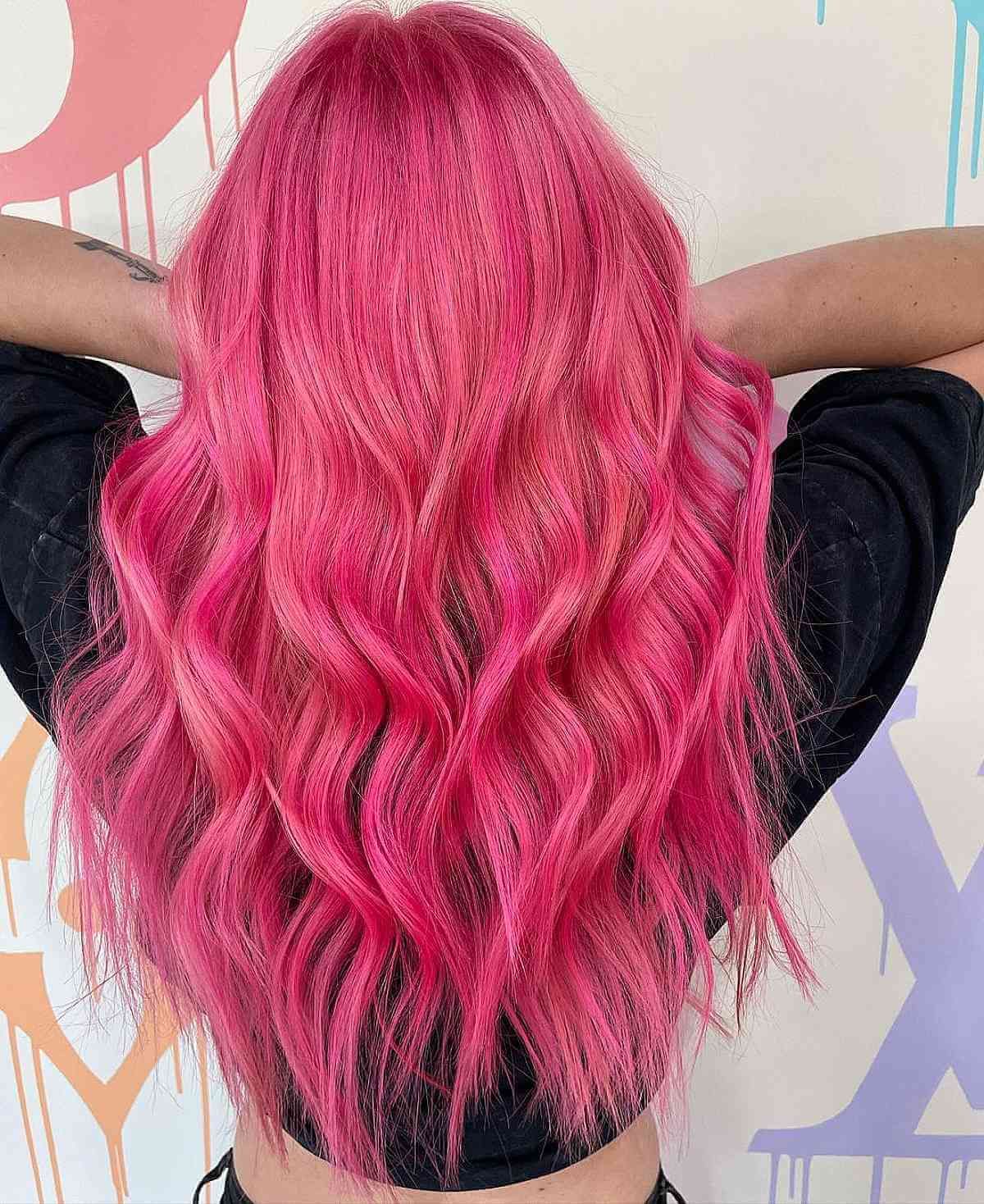
A vivid hot pink on long, wavy, thick hair is a commitment that announces itself before you walk through the door. The lighter pink highlights add dimension, but on this texture, the colour fades fast. By the end of the first week, the hot pink dulls to a softer rose, especially on the ends where the waves open up. The technique is a full saturation with hand-painted highlights, and the tone is cool-leaning pink, not coral. Mid-back length means a lot of surface area to maintain, and thick hair holds pigment unevenly.
Wash in cool water only. A colour-safe shampoo is non-negotiable. The shine stays for about two weeks, then it is a race to the next appointment.
Dark Brown With Rainbow Peekaboo Highlights
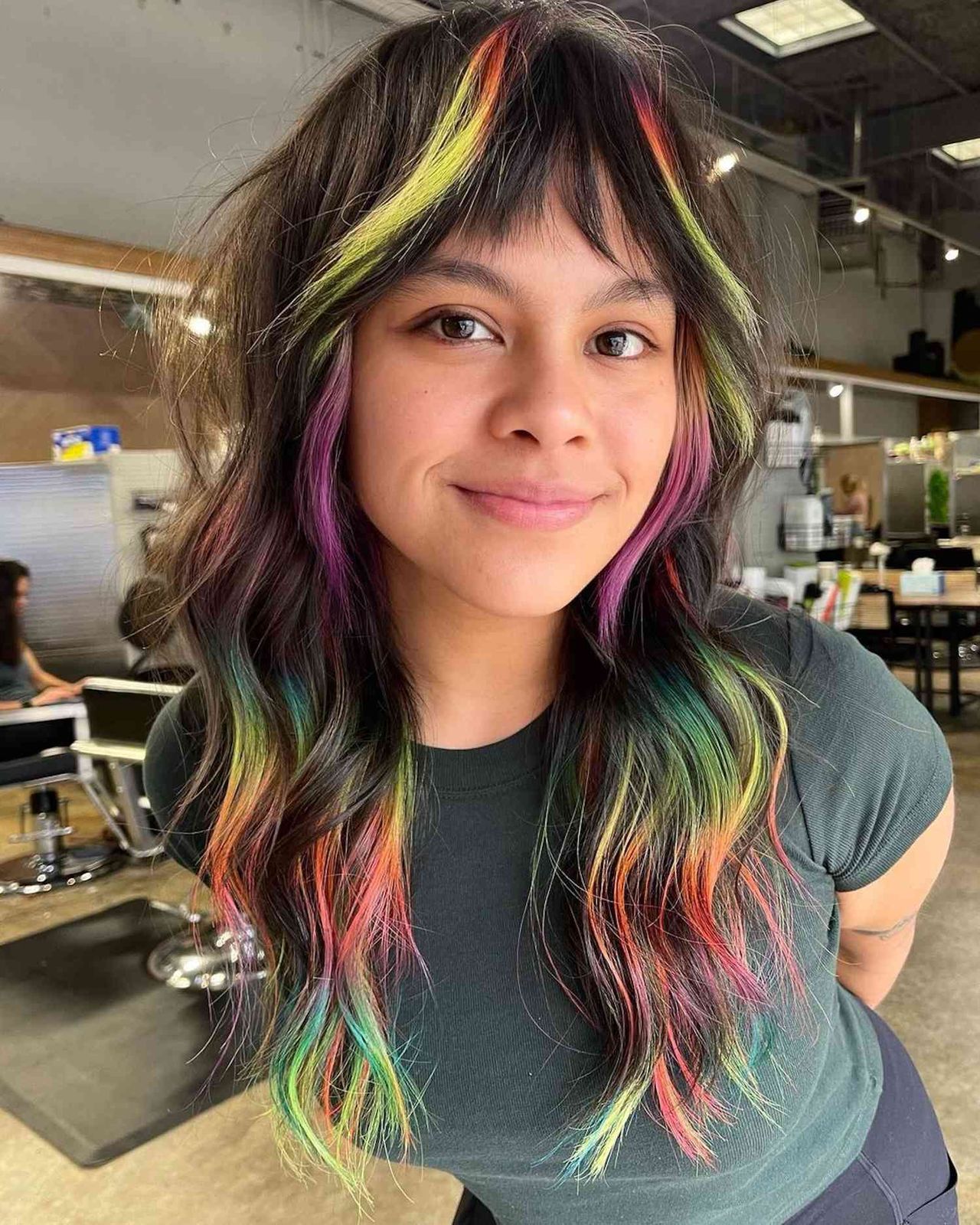
This is the best grow-out in this roundup. A dark brown base with rainbow peekaboo highlights hides the root line completely because the highlights sit underneath, not on top. The technique is a section-and-paint method: the stylist isolates thin wefts at the crown and applies rainbow shades only to those pieces. On a shoulder-length shag with curtain bangs and wavy, medium-density texture, the colour peeks through when you move. Ask for a dark brown base, a partial weave of rainbow tones, and a soft blend at the root. The tone stays cool on the brown, vivid on the rainbow.
Rich Copper With Lighter Copper Highlights
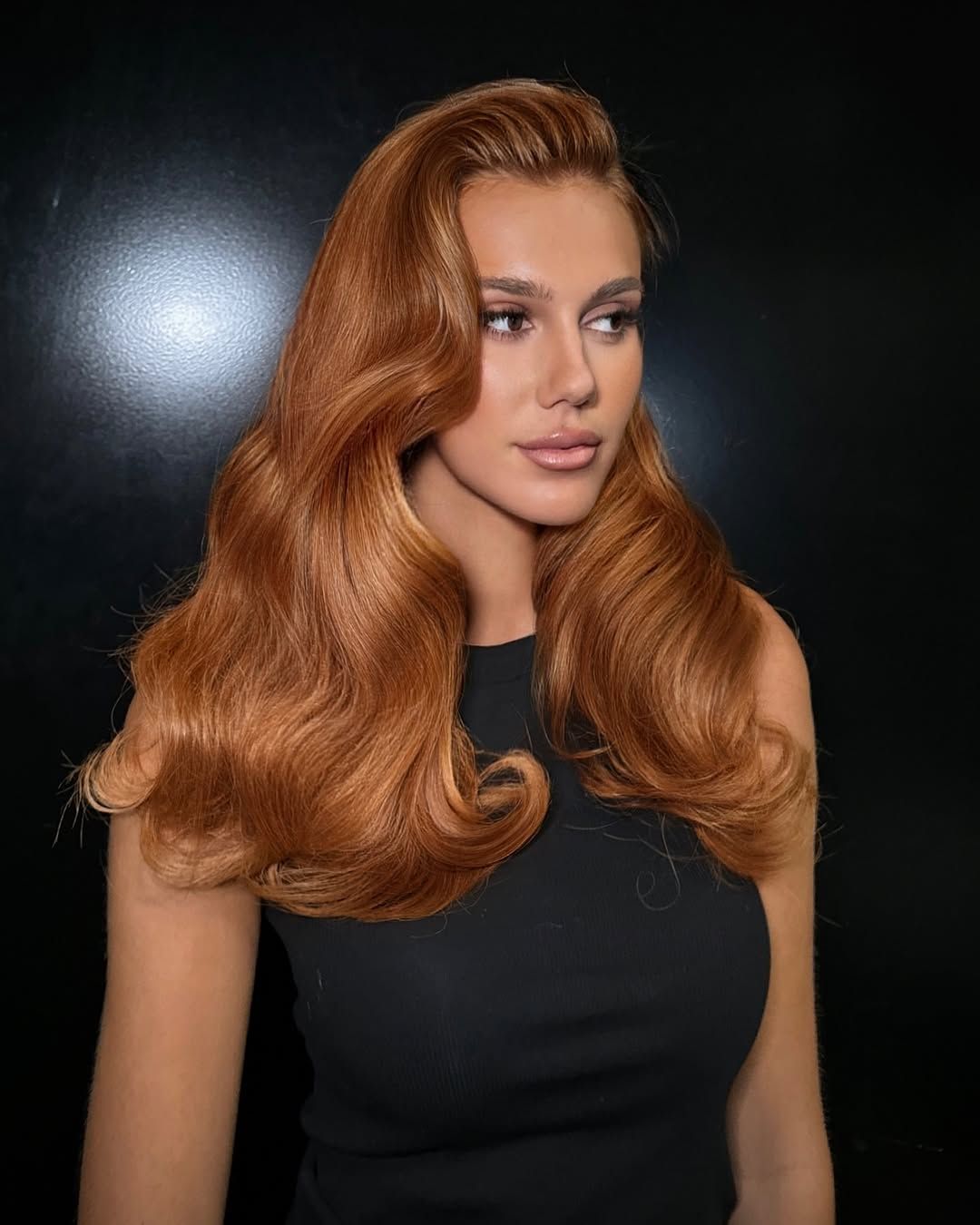
The leaves turn, the air gets crisp, and suddenly every warm copper shade in the salon looks like the only reasonable choice. A rich copper with lighter copper highlights on thick, wavy, mid-back hair is autumn in colour form. The tone is warm, the technique is a full base colour with babylights for dimension, and the side-swept bangs catch the light differently every time you turn your head. This is the colour for a Thanksgiving dinner or a Sunday afternoon walk when you want the sun to do the work. The side parting and voluminous waves sell the whole thing.
It reads intentional without trying. That is the trick.
Dark Base With Teal Emerald Highlights
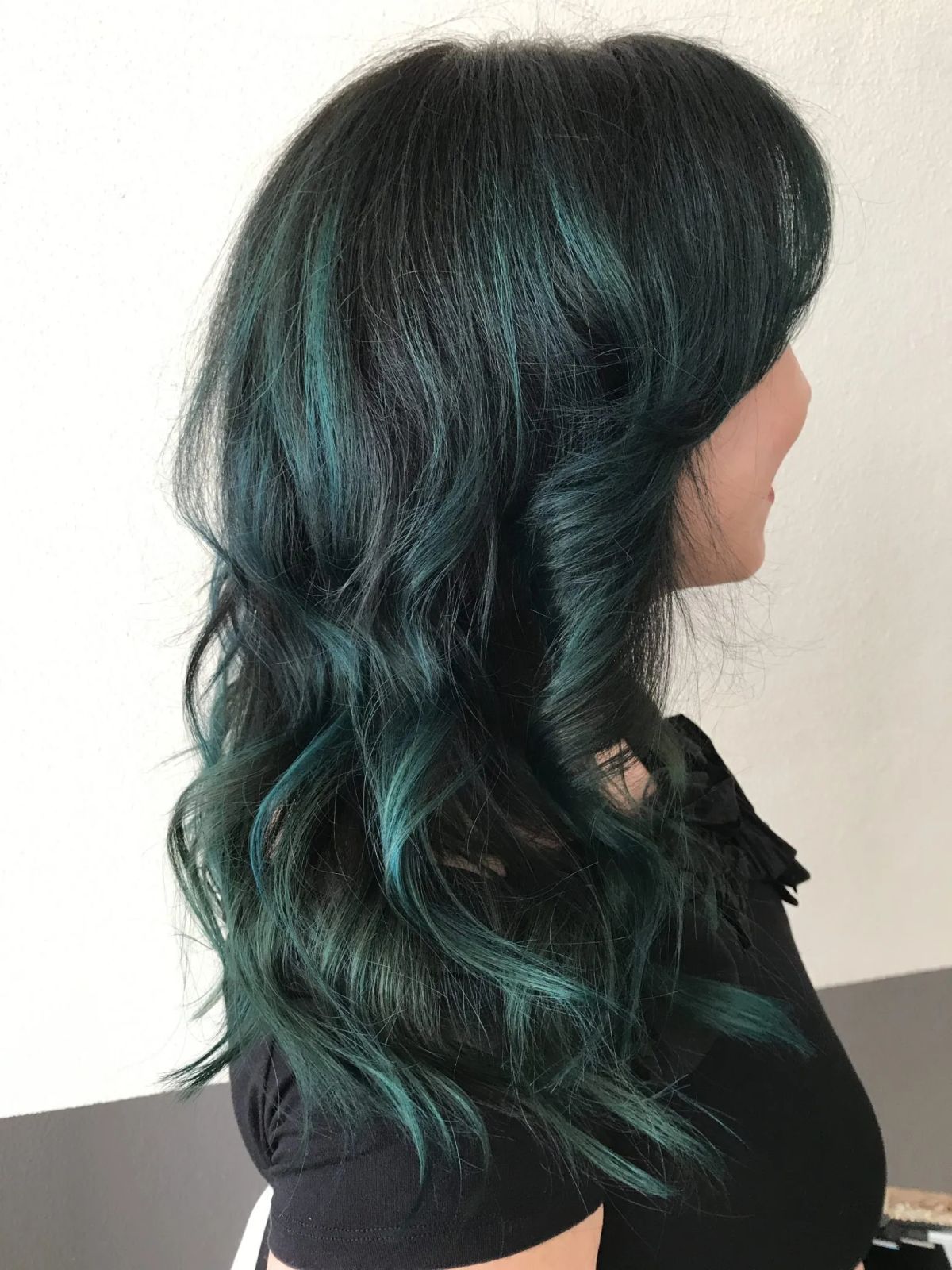
I looked at the dark base with teal emerald highlights and thought, this is what happens when a jewel box meets a haircut. It is richer than a standard blue-green and deeper than a pastel. The technique is a dark base with face-framing layers painted in teal and emerald tones, and the wavy, thick texture makes the highlights shift in the light. Compared to a full rainbow or a single vivid colour, this one feels grown-up. The tone stays cool, and the mid-back length lets the colour travel without overwhelming the shape. Loose waves and a middle parting keep it modern.
If you want fun without looking like you tried too hard, this is the pick.
Lavender Peach Purple Pastel Blend
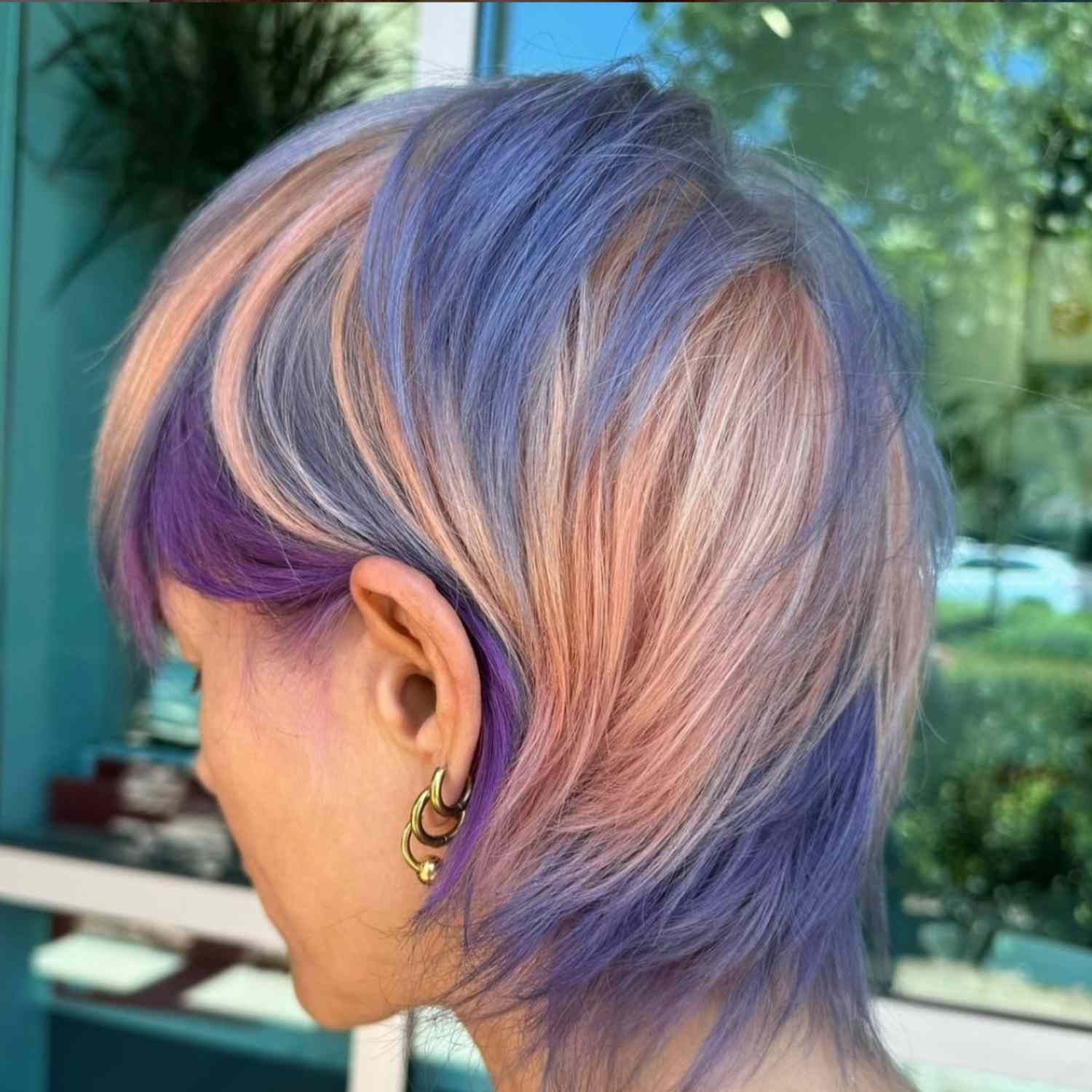
Can a pastel blend actually read as intentional and not like a melted popsicle? This one does. The pastel lavender peach purple mix on a short shag with short bangs lands soft but deliberate, and fine wavy texture is exactly what handles pastel shades best. Coarse or thick hair eats the pigment unevenly. Fine hair lets each pastel tone sit visible and separate. The side part and textured finish keep it from looking like a costume wig. A quick tousle with texturizing spray takes about five minutes. Pastels fade fast, so expect salon visits every three to four weeks. Use cool water and color-safe products.
Soft Pastel Pink Wavy Bob
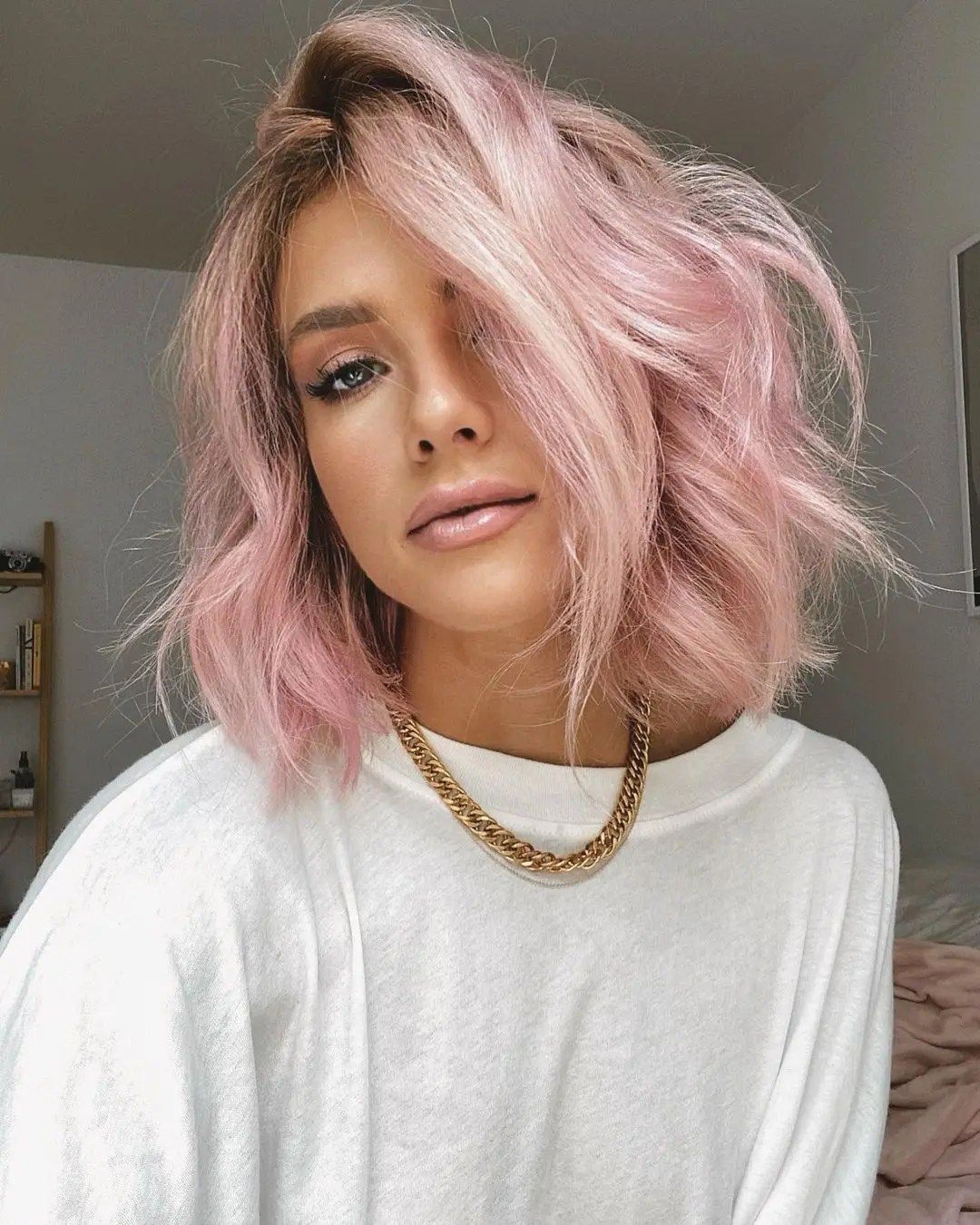
I thought pastel pink would look like cotton candy on anyone over 25. I was wrong. This pastel pink wavy bob at collarbone length with no bangs and a middle part reads soft, not sweet. The soft pastel pink hue sits cool enough to avoid looking childish. Medium density wavy hair holds loose waves for about six hours before they soften. By the end of a workday, it looks lived-in rather than faded. The real wear reality: pastels show every shower. Touch-ups every three to four weeks keep the pink from drifting toward a muddy beige. Loose waves take ten to fifteen minutes to style. Use cool water and color-safe shampoo.
Platinum Bob With Vibrant Pink Tips
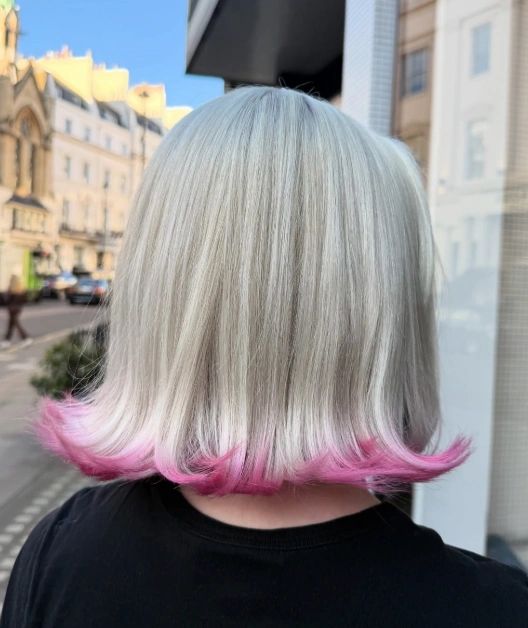
Best technique in this roundup. The platinum with pink tips is a chin-length bob with a middle part, viewed from behind, styled in loose waves. The vibrant pink tips are applied only to the last two inches, so the grow-out line stays hidden for weeks. The platinum base is bleached to a cool white, then the pink is painted on the ends only. Straight to wavy medium density texture works best here. The technique matters: the colorist sections the hair horizontally, applies the pink only to the lower section, and blends the transition with a soft diagonal line. Loose waves take about ten minutes to style. The pink tips require refreshing every two to three weeks. Platinum demands significant upkeep.
Pastel Lavender To Baby Blue Gradient
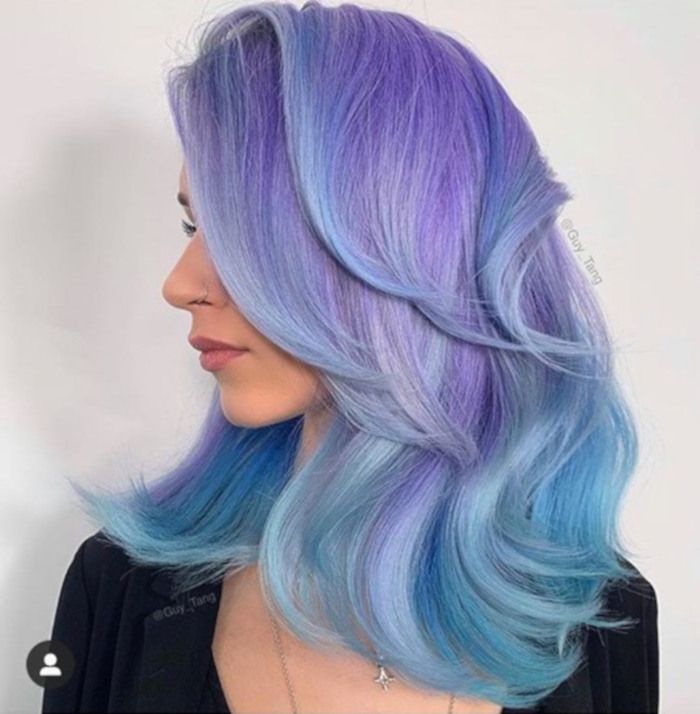
Spring and summer are the only seasons that make a pastel gradient look intentional rather than accidental. This lavender to baby blue gradient on an angled bob with side-swept bangs and a side part lands squarely in warm weather. The pastel gradient runs from a soft lavender at the roots to a baby blue at the collarbone-length ends. Wavy medium density texture carries the smooth waves well. The transition is soft, not striped. The colorist applies the lavender first, then blends the blue into the mids and ends with a balayage-style sweep. Smooth waves take about fifteen minutes to style. The soft transition requires salon upkeep every six to eight weeks. Use color-safe products.
Uniform Vibrant Copper Red
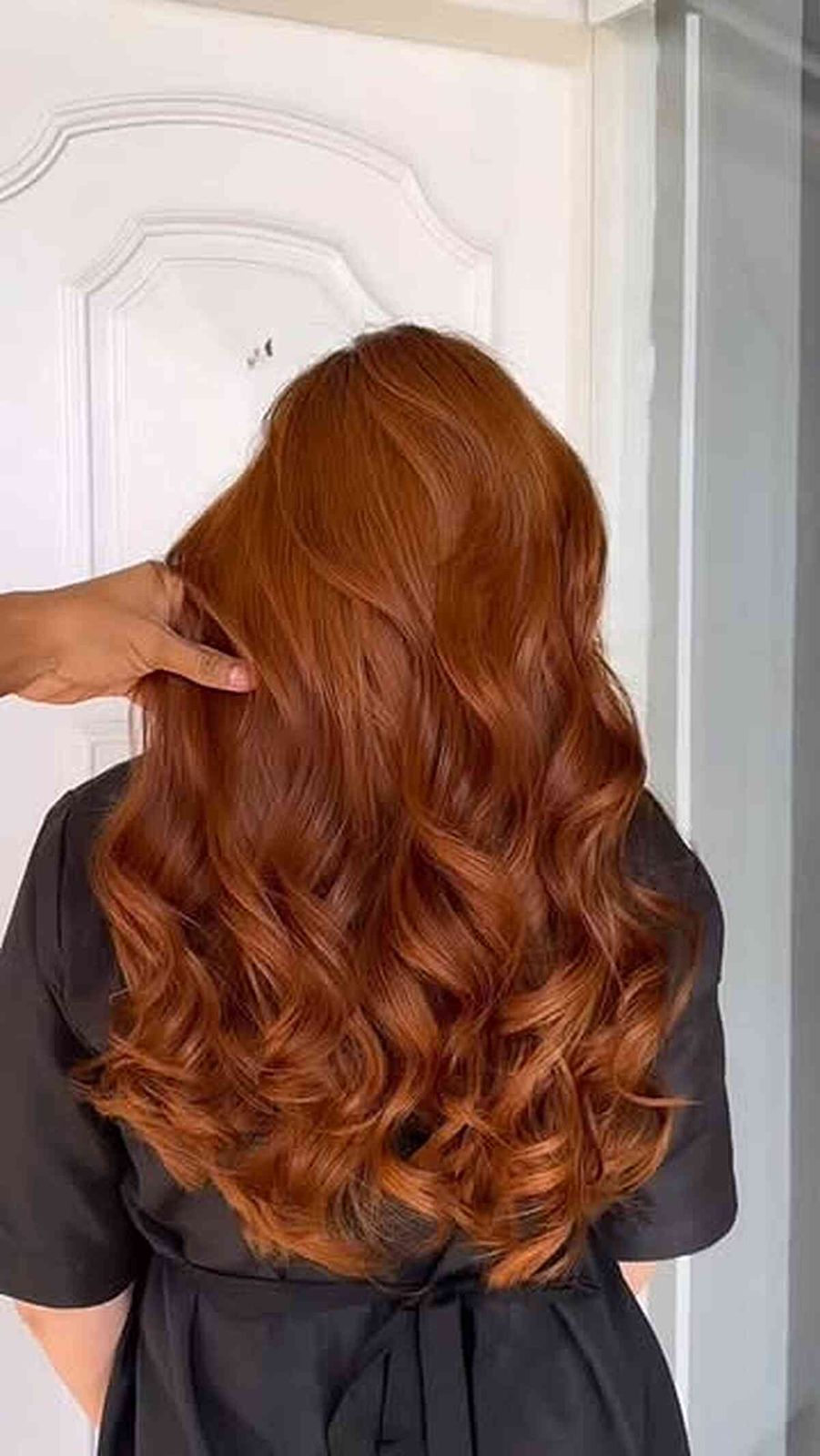
Does a single-tone copper red actually flatter anyone who is not a natural redhead? Yes, but with conditions. This vibrant copper red on mid-back layered hair with no bangs and a middle parting is a commitment. The uniform copper red hue is applied root to tip, no highlights, no shadow. Wavy thick texture is the ideal match. Thick hair holds the pigment longer and shows the saturation better. Fine hair can look thin in a uniform color this bold. The loose curls take twenty to twenty-five minutes to style. The color will fade, requiring touch-ups every four to six weeks. Use color-safe products and cool water. Cool undertones in skin will clash. Warm undertones will glow.
Vibrant Purple With Hidden Rainbow Streaks
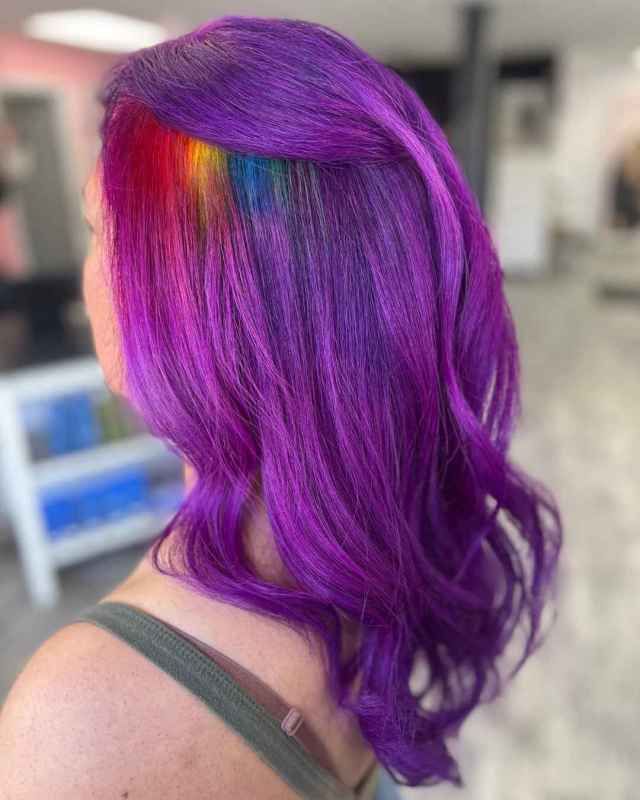
The first time I saw this color, I thought it was a mistake. Then I caught the front pieces in the light and realized the whole point is the surprise. The vibrant purple base reads as one solid shade from behind, but the hidden rainbow streaks in red, yellow, blue, and green sit right at the front, where they peek out when you tuck your hair or turn your head. It’s a color that rewards movement. Loose waves on medium-density hair make the streaks flash more, but here’s the reality: purple fades fast, and the rainbow bits fade faster. You’ll be washing in cool water and booking a toner appointment by week three, because the yellow and green go muddy before the purple does. The streaks need a salon touch-up every four to six weeks to stay sharp, which is a commitment. Worth it if you like your hair to have a secret.
Dark Brown With Pink Magenta Ombre
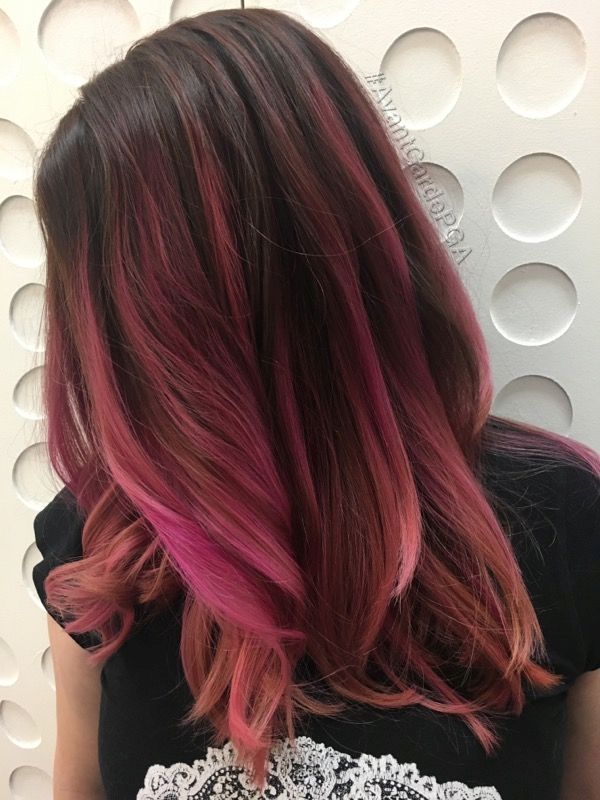
This is the ombre that finally makes sense to me. The dark brown base keeps the roots looking intentional while the pink magenta ombre takes over from the mid-lengths to the ends, and the blend between the two is what sells it. Ask your stylist for a soft transition, not a hard line, and specify that you want the magenta to lean warmer than the pink so it doesn’t wash out against the brown. On collarbone-length layers with loose waves, the color shifts as you move, which is the whole trick. It’s a salon job, no question, because getting that gradient right on medium-density wavy hair takes a practiced hand.
Bright Hot Pink Shag With Full Fringe
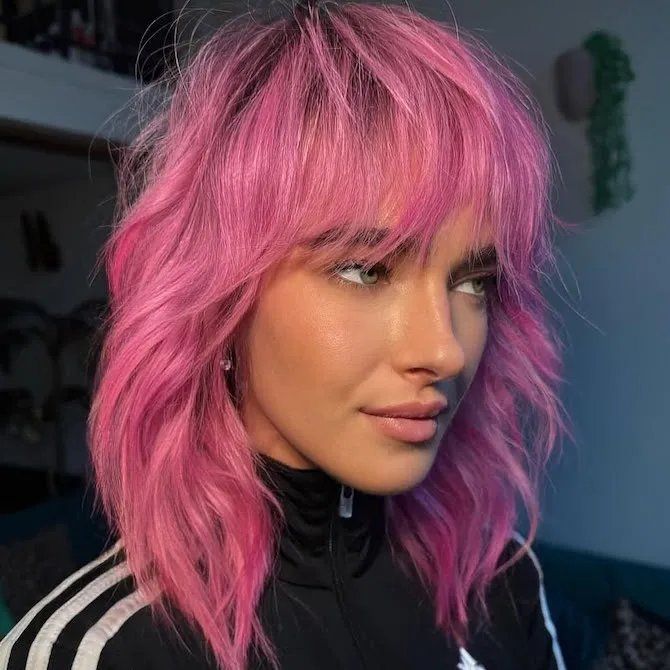
I’ll admit it: I booked this color twice in one season, and I’d do it again. The bright hot pink is loud in the best way, and the shag with full fringe keeps it from feeling like a costume. But the messy, textured styling that makes it look so effortless? That’s a lie. It takes a good ten minutes with a round brush and some texture spray to get the fringe to sit right and the layers to fall in that deliberately careless way. On shoulder-length, medium-density wavy hair, the shag holds its shape, but the pink fades fast, so plan on a salon visit every four to six weeks to keep it from turning a sad, streaky coral.
Dark Blue With Teal Stripes
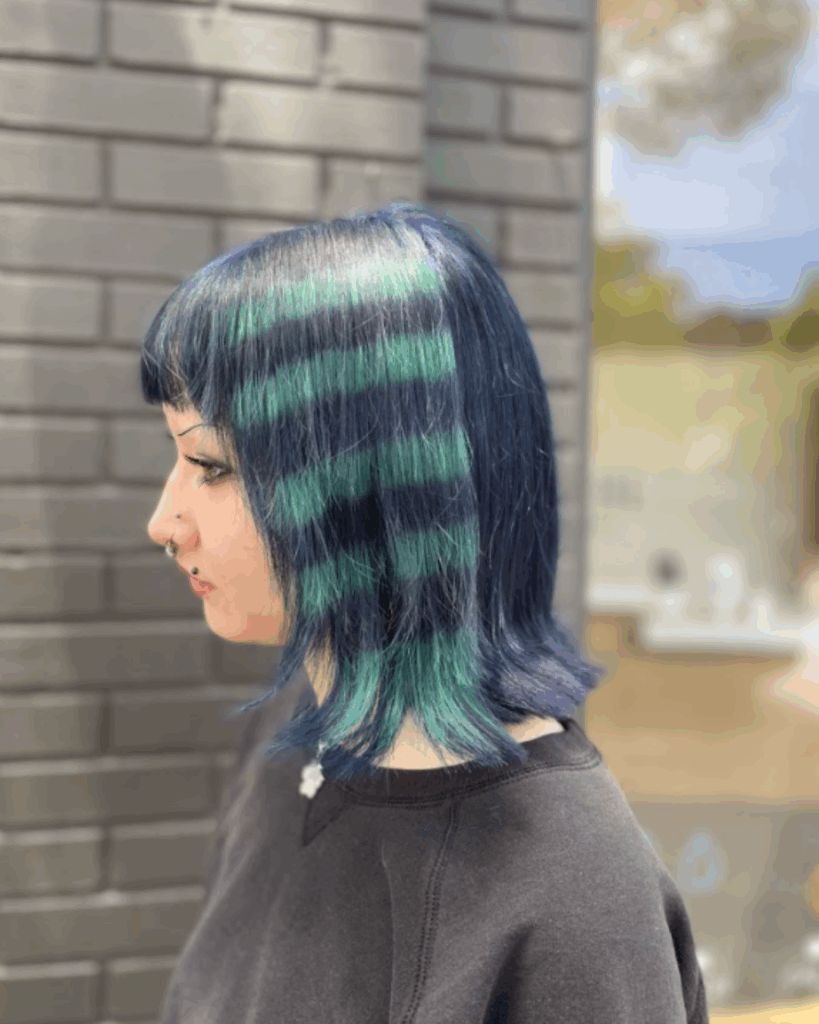
When did graphic hair start looking this wearable? The dark blue with teal stripes is a bold, modern take that works for anyone who wants color without committing to an all-over shade. The stripes are placed so they catch the light when you move, which makes them feel intentional rather than costume-y. On a chin-length bob with air-dried waves, the effect is sharp and clean, and the middle part shows off the pattern best. This is a color for a season of events, like summer festivals or a long stretch of parties, because the stripes need to stay crisp. They’ll blur within a month if you don’t book a touch-up every four to six weeks, so plan ahead.
Dark Red With Orange Copper Highlights
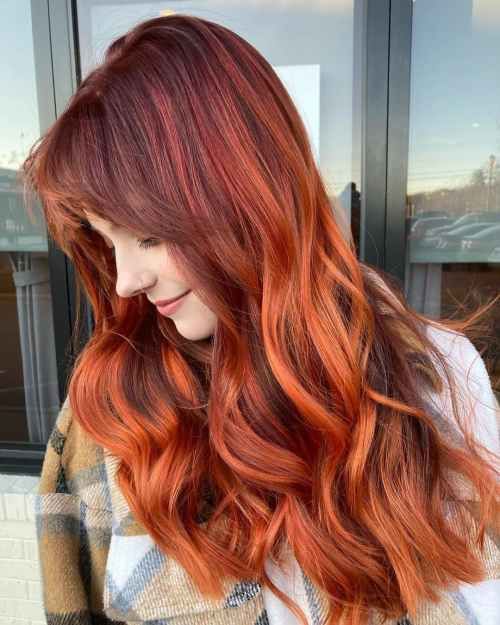
My gut reaction to this color was that it would look like a sunset that got stuck. I was wrong. The dark red base gives it depth, and the orange copper highlights add dimension without turning clownish. This is a color for warm undertones, honestly. If your skin has a golden or peachy cast, the blend will make you look lit from within. If you’re cool-toned, it might make you look sallow, so test a strand first. On thick, wavy, mid-back length hair, the highlights catch the light as you move, which is the whole point. The combination needs a salon visit every six to eight weeks to keep the blend from separating into muddy brown and orange.
Peach To Yellow Gradient Bob
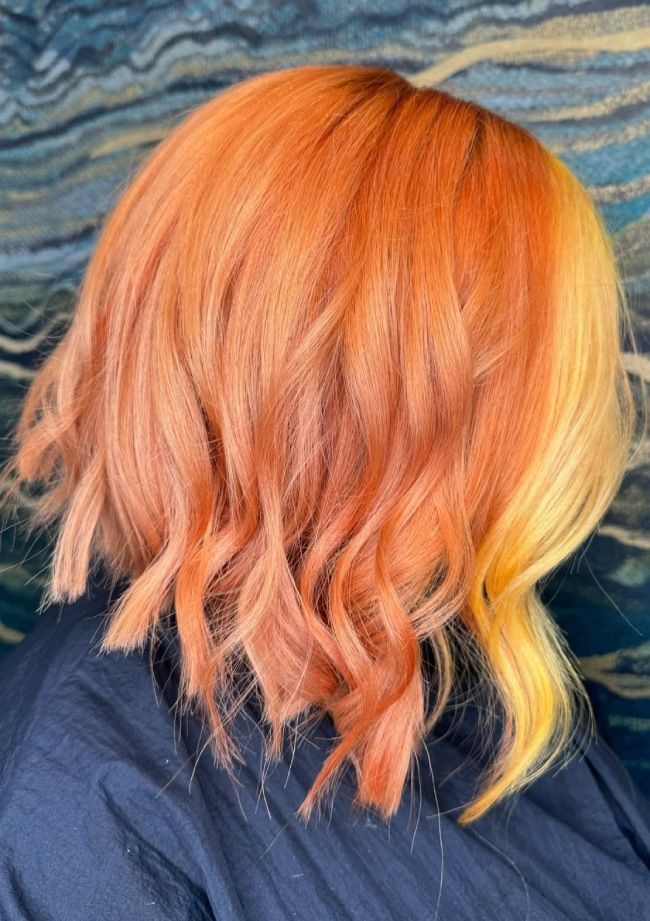
A peach to yellow gradient sounds like a sunrise, and it fades like one too. The chin-length bob holds loose waves for about ten minutes before they soften. That wavy, medium texture keeps the vibrant gradient color from looking flat. I wash with cool water and color-safe shampoo. By week three the peach pulls warmer. By week five the yellow goes pale. A salon refreshes every four to six weeks. That is the trade-off for a bob that looks this playful. The middle part widens a round face. The side view shows the gradient best. It is not a set-it-and-forget-it color. It is a color that asks for a schedule.
Vivid Red With Bright Red Highlights
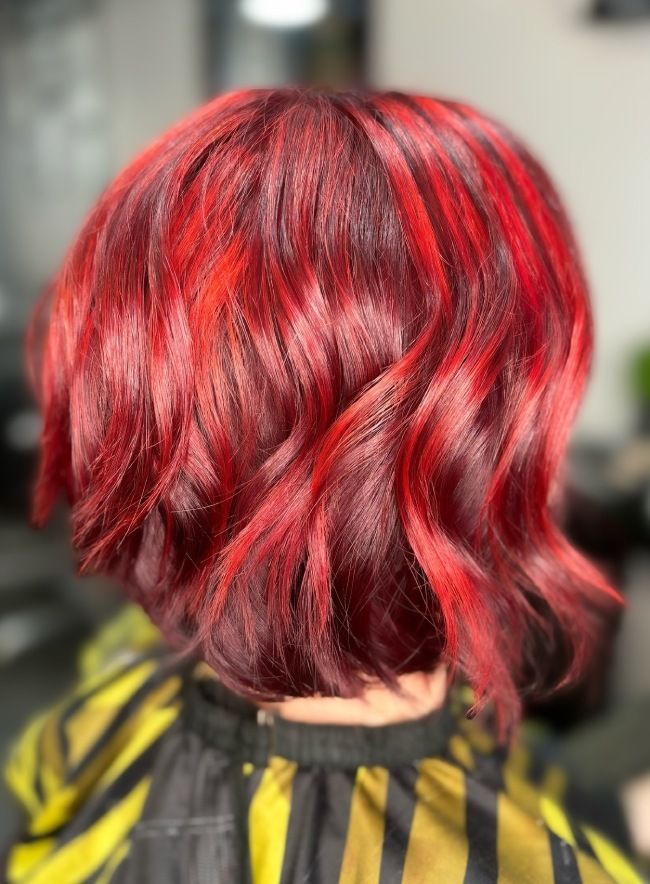
This is the color that makes people ask where you got it done. A vivid red base gets bright red highlights woven through the crown and ends. The technique lifts the base in thin sections, then tones them a shade lighter. The result is dimension without stripes. The chin bob, wavy and medium density, catches the light differently from every angle. The back view shows the depth best. It is not a uniform red. It is a red with peaks and valleys. The middle part keeps the placement even. That is the whole trick.
Vivid Uniform Orange
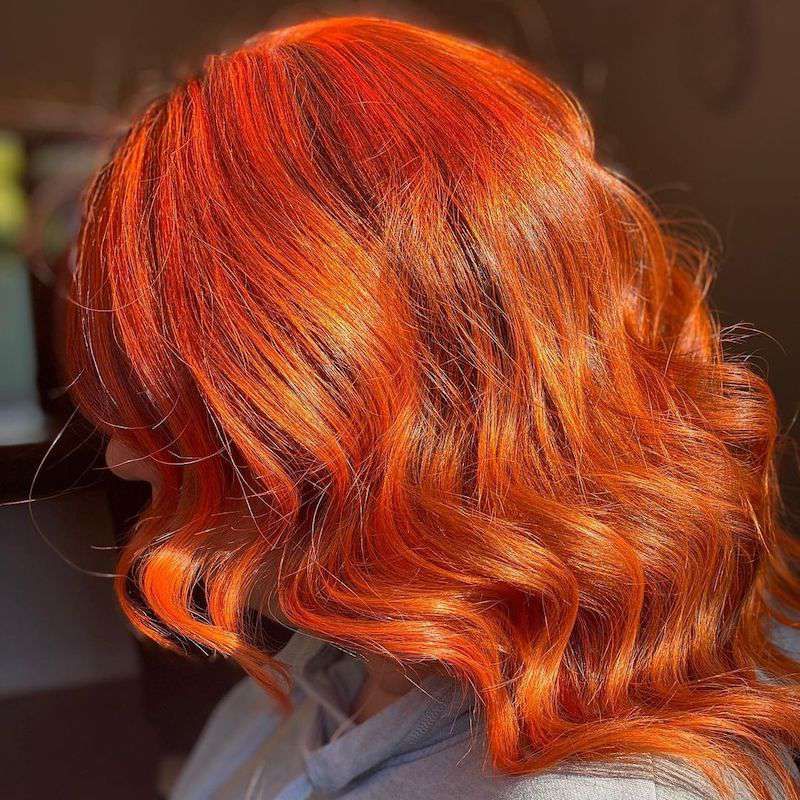
You walk into the salon and say vivid orange. The stylist nods. Three hours later you leave with a collarbone-length cut, long layers, loose waves, and a uniform orange hue that stops traffic. The side part sits low, the waves fall forward. It is bold. It is also a color that brassiness calls home by week two. Orange fades faster than any red I have tried. The medium wavy texture helps, because the waves hide the uneven spots. But the honest downside is that you will see the shampoo run orange every wash. Cool water slows the fade. It does not stop it. A salon visit every four to six weeks keeps it from turning into a washed-out peach. That is the fine print on a color this loud.
Visual Idea
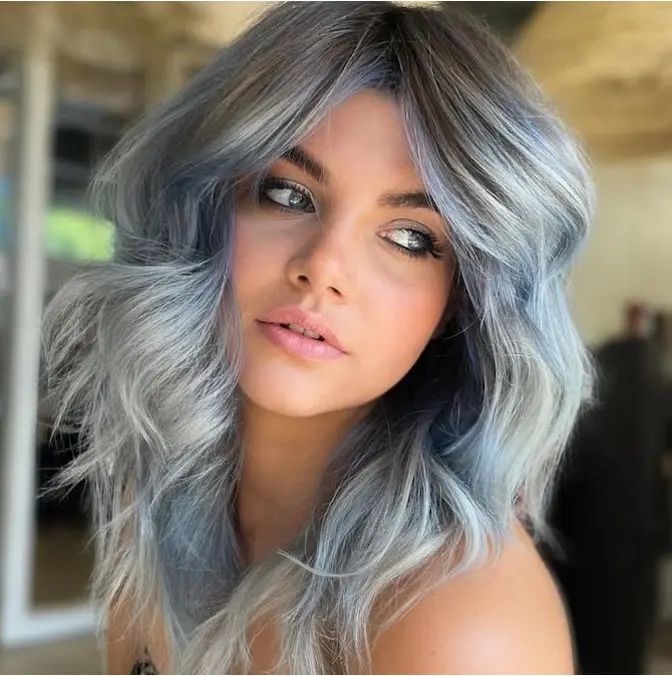
When does a color feel like an accessory? Silver with blue undertones, collarbone length, thick wavy texture, a middle part, a wavy blowout. It is cool, it is metallic, it is not trying to be warm. This is the color that works for winter events and evening occasions. The blue undertone keeps it from reading grey or muddy. The thick texture holds the wave pattern all night. The front view shows the silver and blue blend best. It is a color that says I planned this. And you did. The salon visit takes four to six hours. The grow-out is a soft silver root line. It is not a maintenance nightmare. It is a commitment.
Chin Visual Idea
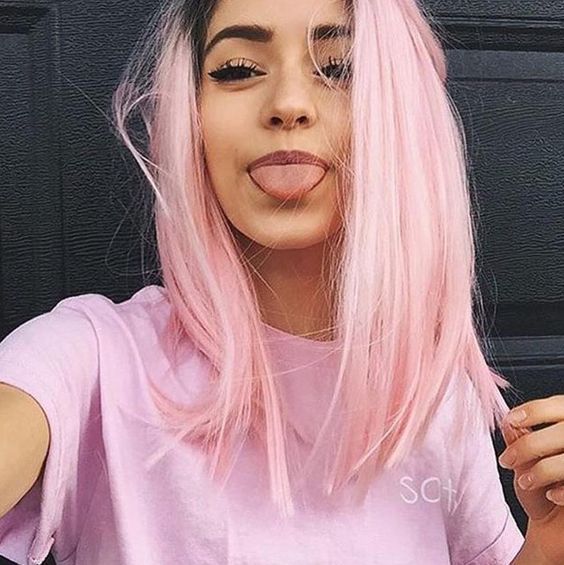
I will confess I was skeptical about pastel pink on fine, straight hair. Then I saw this chin-length blunt bob. The side part, the straight texture, the pastel pink shade. It does not look washed out. It looks deliberate. Fine hair takes pastel well because the color sits on the surface and reflects light. The blunt cut gives the ends weight. The grow-out is a soft white root line, not a harsh band. This is a salon job. Pastel pink lifts unevenly at home. The trim every eight weeks keeps the bob sharp. It is a color that asks for precision. And it rewards it.
Collarbone Visual Idea
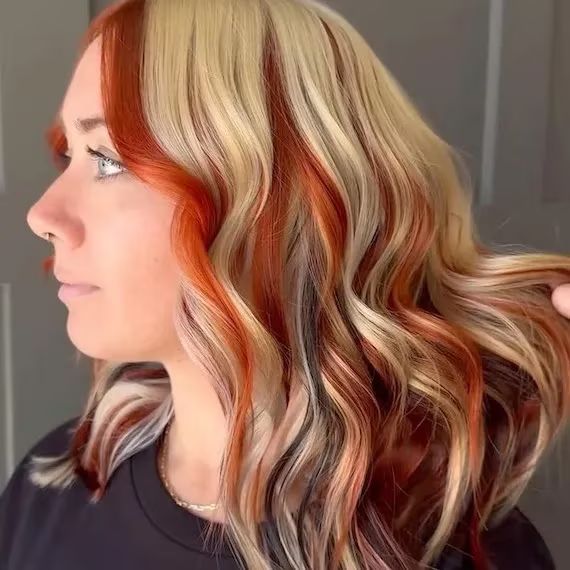
This is the fun hair color that makes me want to book an appointment before I finish typing. The collarbone length lands just where it should, and the fine, wavy texture keeps it from looking like a costume. Blonde base with copper and black highlights gives it depth without a flat, solid line. The side part adds a little lift at the crown, which is a small mercy for fine hair that goes flat by 4 pm.
I expected the copper streaks to fight the black, but they don’t. The technique here is a soft placement, so the copper reads as light catching the waves, not a stripe. On fine, wavy hair, the air-dried finish is the whole point. My roots showed at week five, and the grow-out was oddly flattering, so I stretched the next touch-up to eight. It is not a wash-and-go color, but it is close.
Final Thoughts
After writing all 21, I noticed something. The ones I kept coming back to were not the safest bets. They were the ones with a hidden layer, a gradient that takes effort, a shade that demands a purple shampoo on the bathroom counter. I am booking the dark blue with teal stripes next. It is the one I keep thinking about.
- Use a sulfate-free shampoo for all vivid shades
- Tone pastels every three weeks, not six
- Wash in cool water, never hot
- Book a gloss refresh at week four
- Skip heat styling on colour days