
Every other chair in the salon seems to be asking for maroon these days. Not the bright cherry red of a few summers ago, but something deeper, almost bruised, with a violet or auburn turn depending on the light. I used to think it was a winter color, then I saw it on a humid July afternoon and changed my mind.
This roundup has 23 Maroon Hair ideas, from a quick gloss to a full commitment, from collarbone to mid-back. I wrote it for anyone with fine hair that flattens by 4 pm, for anyone whose roots show at week five, and for anyone who wants a color that does not need a salon visit every month.
Collarbone Layers in Dark Red
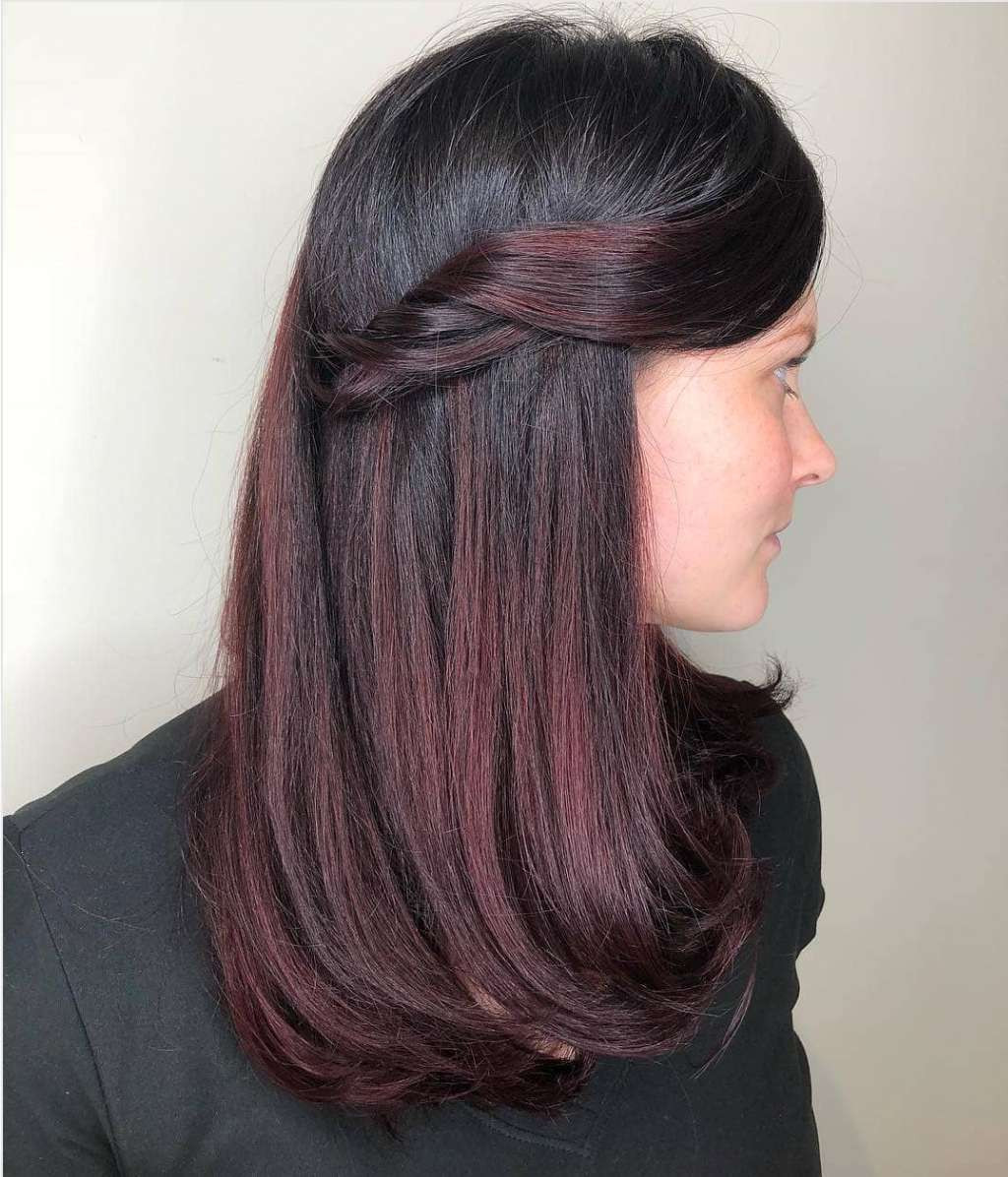
That middle part and collarbone length do something specific: they widen the face just enough to balance a heart or oval shape without dragging it down. The layers here are subtle, cut to fall forward rather than stack, so the thick wavy texture keeps its weight instead of poufing at the ends. No bangs, which is the right call — a fringe would fight the middle part and make the front feel crowded. The blowout is smooth at the root and loose at the bottom, about 20 minutes with a round brush if your hair cooperates. It is not a wash-and-go cut. But it is a cut that holds its shape past lunch, and that is rarer than it sounds.
Dark Auburn with Maroon Undertones
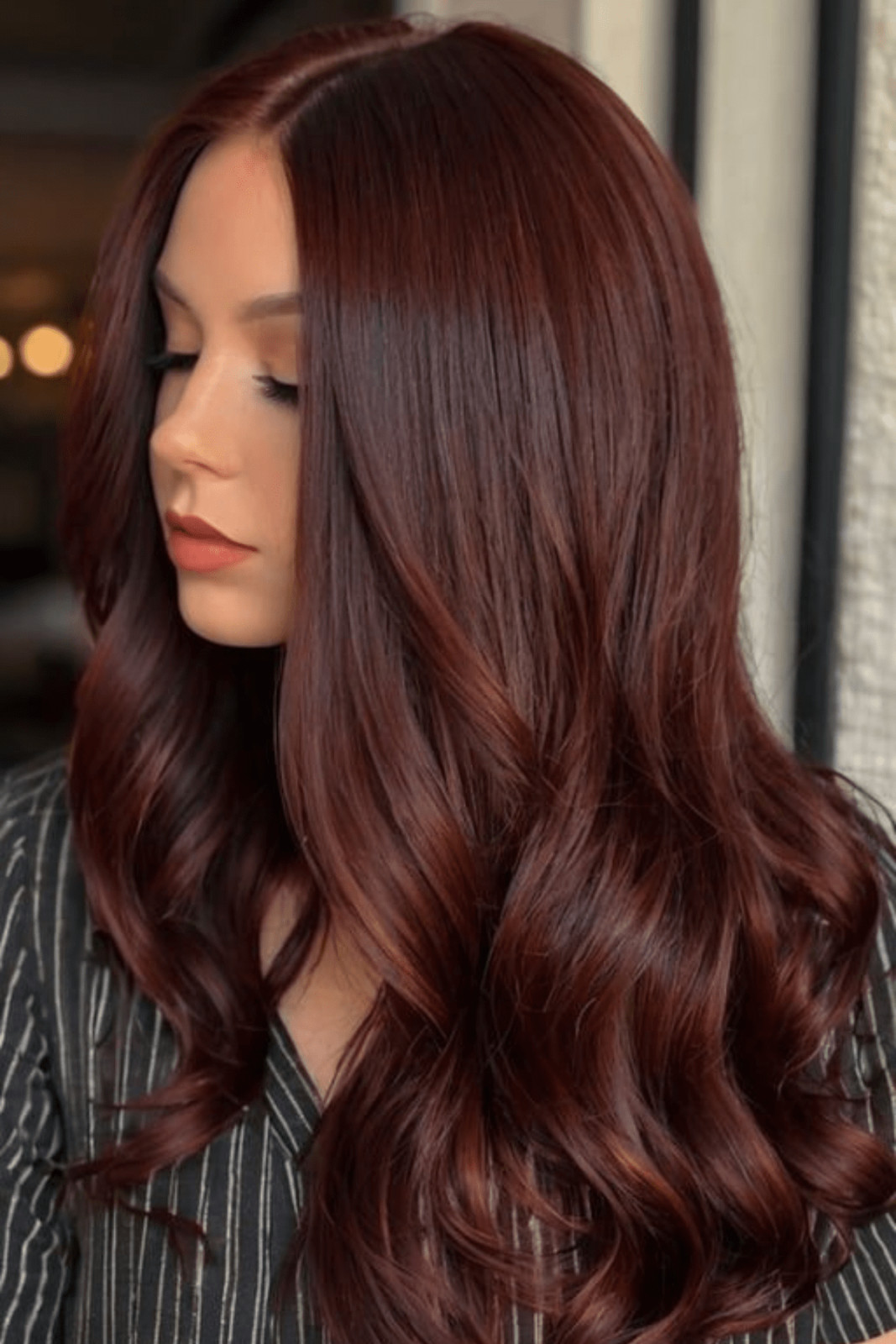
This is the colour that says “I am not a basic brunette” without shouting. The base is dark auburn, warm and brown enough to read natural under office lights, but the maroon undertones sit just beneath the surface — they catch the sun and turn the ends a bruised plum shade. On medium density wavy hair, that undertone shows best where the light hits the bends. The waves here are loose, done with a large barrel, and the side view reveals the dimension a single-process shade cannot fake. It is a salon job, no question: a gloss or toner at the bowl, not a box.
Mid-Back Layers in Deep Dark Red
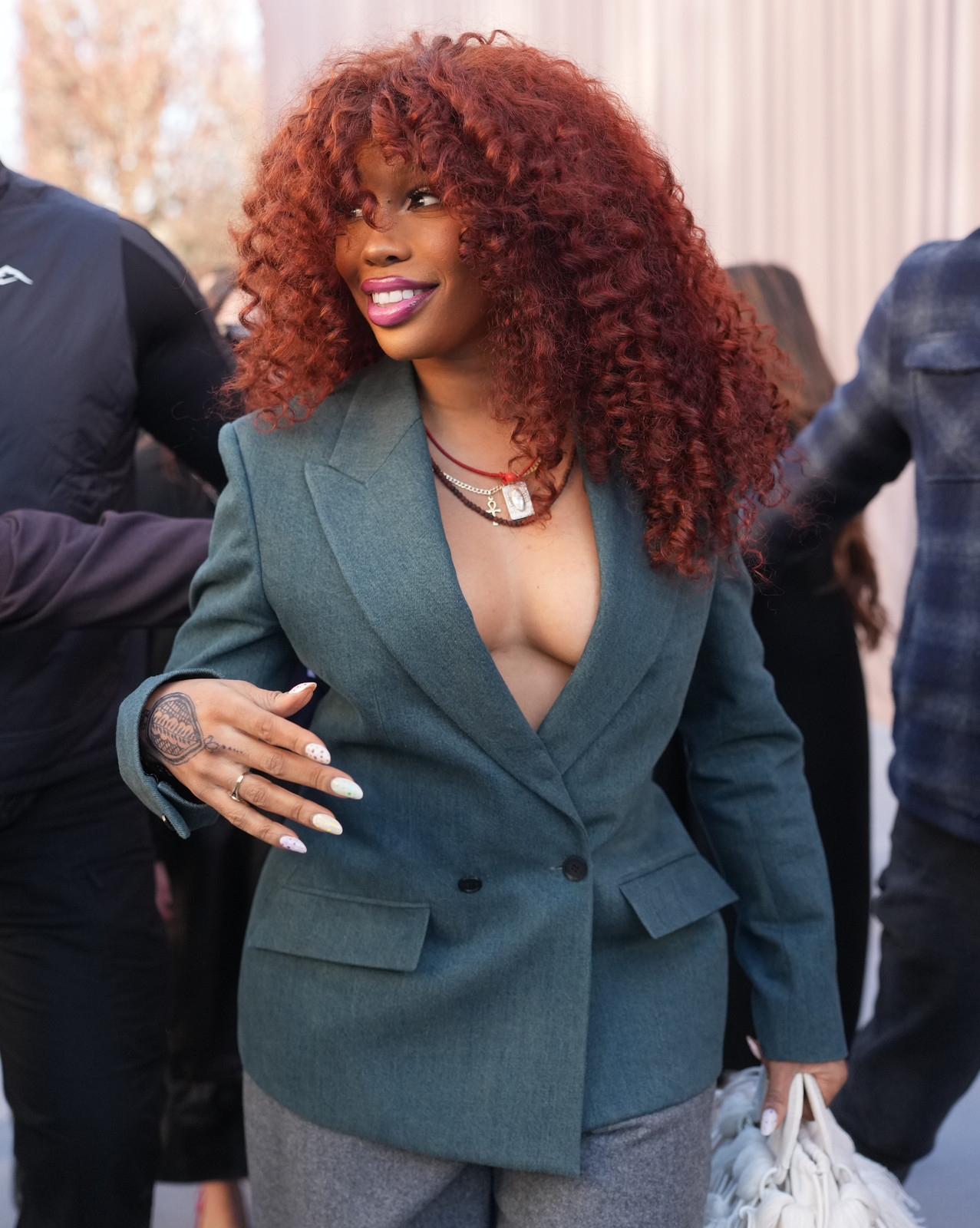
I will admit it: I was skeptical about mid-back length on thick wavy hair. It can look heavy, like the weight pulls the wave out by the second day. But this cut keeps the layers long and gradual — they start below the shoulder, so the wave has room to form without the top going flat.
The deep dark red shade is the star here, but it is also the work. That intensity fades fast, especially on wavy texture where the cuticle is more open. By week four, you are looking at a brownish red unless you use a color-safe shampoo and cool water. The styling takes about 20 minutes with a wand, and the trim schedule is every 10 weeks to keep the ends from splitting. It is a commitment. It is also the kind of colour that makes people stop you on the street.
Uniform Deep Maroon Mid-Back Waves
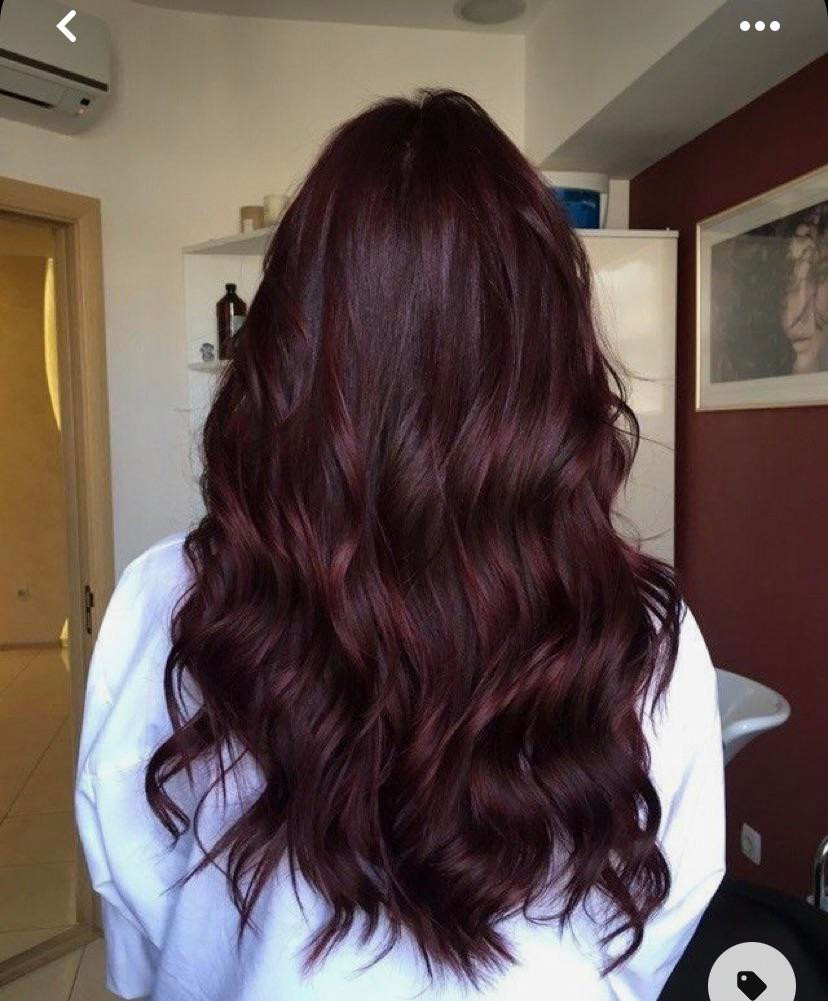
Why do most deep maroon shades look different in every photo? Because they are usually layered over a lighter base or toned with violet. This one is not. It is a uniform deep maroon, same shade from root to tip, no highlights, no dimension tricks. That means the colour reads flat in direct light and rich in shadow — a trade-off. On thick wavy hair at mid-back length, the uniformity makes the texture the focus. The waves do the work. No bangs, middle part, nothing competing. It is bold in the way a single note can be bold. Not everyone wants that. But if you do, this is the version.
Thick Mid-Back Maroon Waves
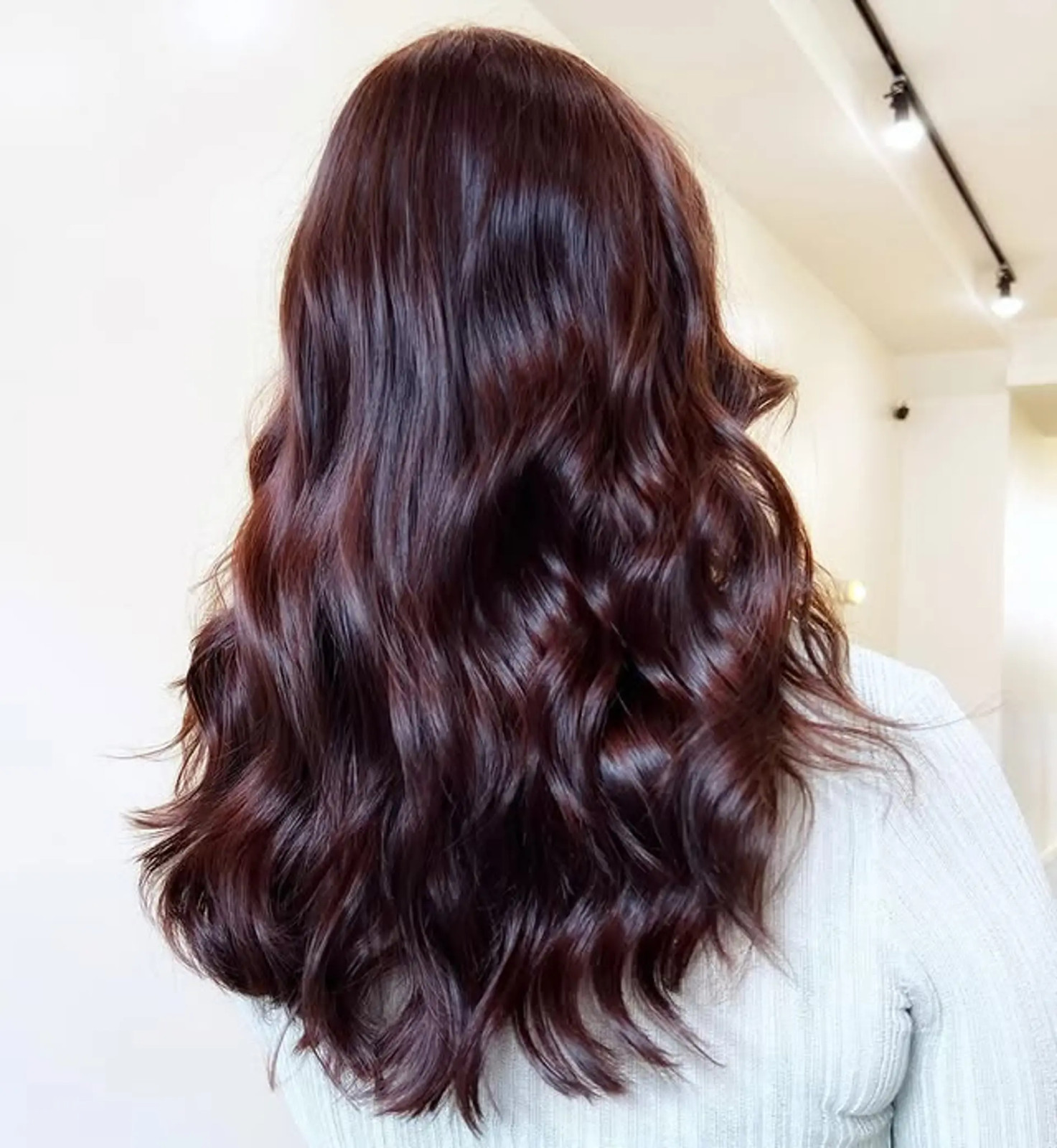
Thick hair at mid-back length has a problem: the weight flattens the top while the bottom poufs out. The layers here solve that by cutting them long and internal — you cannot see them in the front, but they remove bulk from the interior so the wave sits evenly.
The honest downside is the colour. A uniform deep maroon shade on thick wavy hair means root touch-ups every four weeks if your natural base is lighter, and the ends will fade faster than the mid-shaft because the wave bends the cuticle open. It is a high-maintenance look for a low-maintenance texture. The loose waves take about 20 minutes with a wand, and the trim is every 10 weeks to keep the shape from turning into a triangle. It works best if your natural colour is already dark — the grow-out is softer and the fade reads as intentional.
Vibrant Rich Maroon Waves
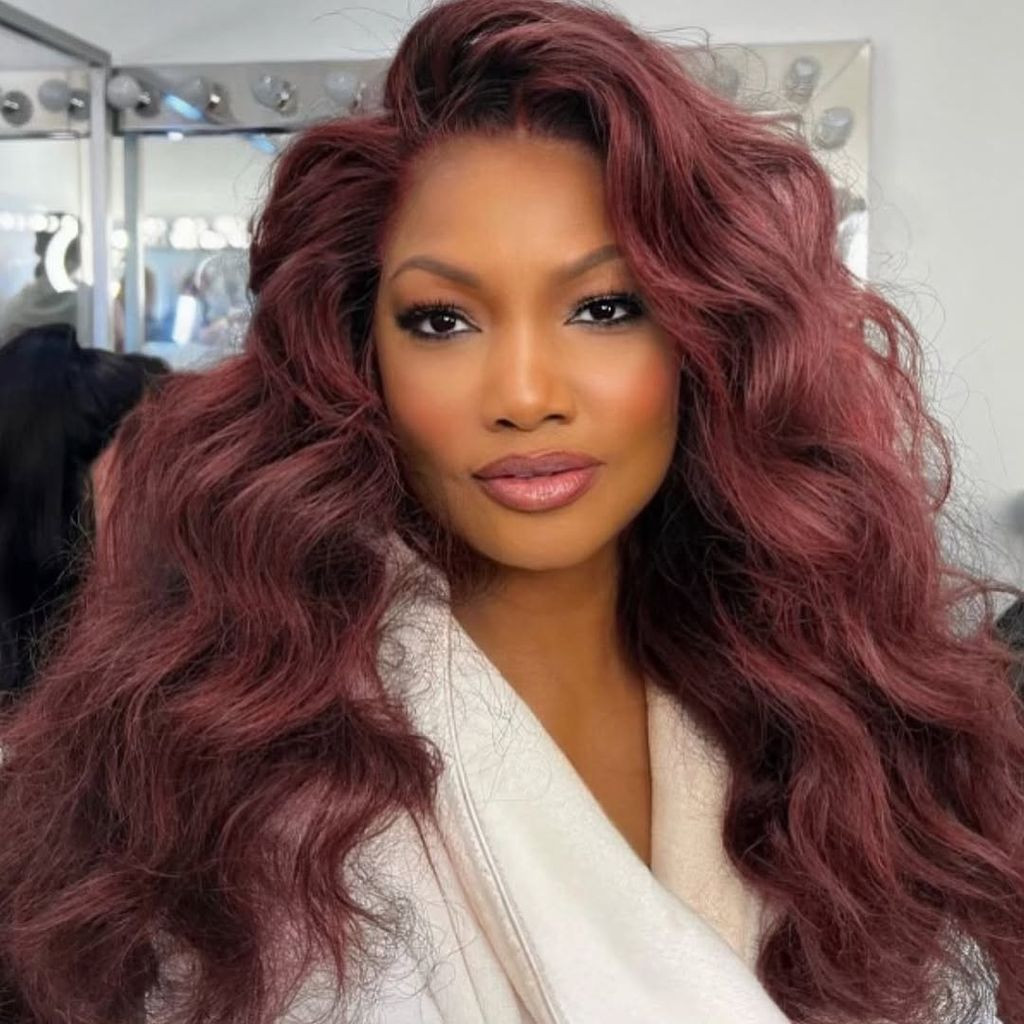
Best color I have seen on thick hair in a long time. The vibrant maroon hair sits at mid-back, cut with soft layers that keep the weight from pulling the wave out by lunch. No bangs here, which is smart: a fringe would fight the middle part and the loose wave pattern. The texture is naturally wavy and thick, so this shape holds its body without a ton of product. That rich maroon shade reads almost jewel-like in direct light, and the layers catch it at different angles. It took about three hours in the chair to get this depth, and the stylist used a technique that keeps the color from turning brassy at week three.
Voluminous Deep Maroon Long Waves
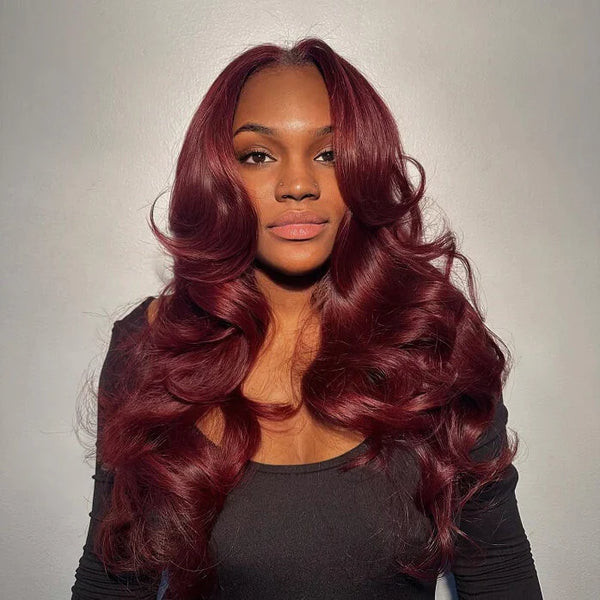
How does a long cut not look flat by day three? Face-framing layers and a middle part. The deep maroon long hair here falls well past the shoulders, and the layers start just below the chin, lifting the weight off the crown. The texture is wavy and thick, so the volume comes naturally once you dry it with a round brush. Bangs are face-framing pieces, not a solid curtain, which means they blend into the rest of the cut instead of announcing themselves.
Upkeep is real: long hair with layers needs a trim every eight to ten weeks or the shape goes limp. Styling takes about 25 minutes with a blowout and a curling iron for the wave pattern. A volumizing spray at the roots helps, but skip it on the ends or they get sticky. The deep maroon shade stays glossy for about four weeks before the roots start to show, which is better than most reds I have tried.
Glossy Dark Maroon Straight Hair
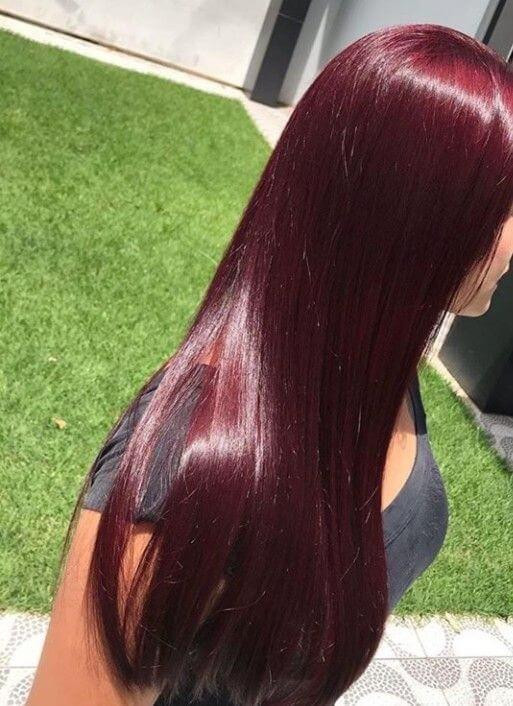
Straight hair in a dark red is rare, and this one earns the look. The glossy dark maroon hair is cut to mid-back with subtle layers that add movement without breaking the sleek line. No bangs, which keeps the finish clean. The texture is straight and thick, so the gloss reads as a single reflective surface rather than catching on shorter pieces. This finish requires healthy hair: deep conditioning before the appointment and a gloss treatment at the salon. You can try a glossing spray at home, but it will not match the salon version. The stylist uses a technique that seals the cuticle, and that is what makes the maroon look wet instead of flat.
Layers Intense Maroon Mid-Back Waves
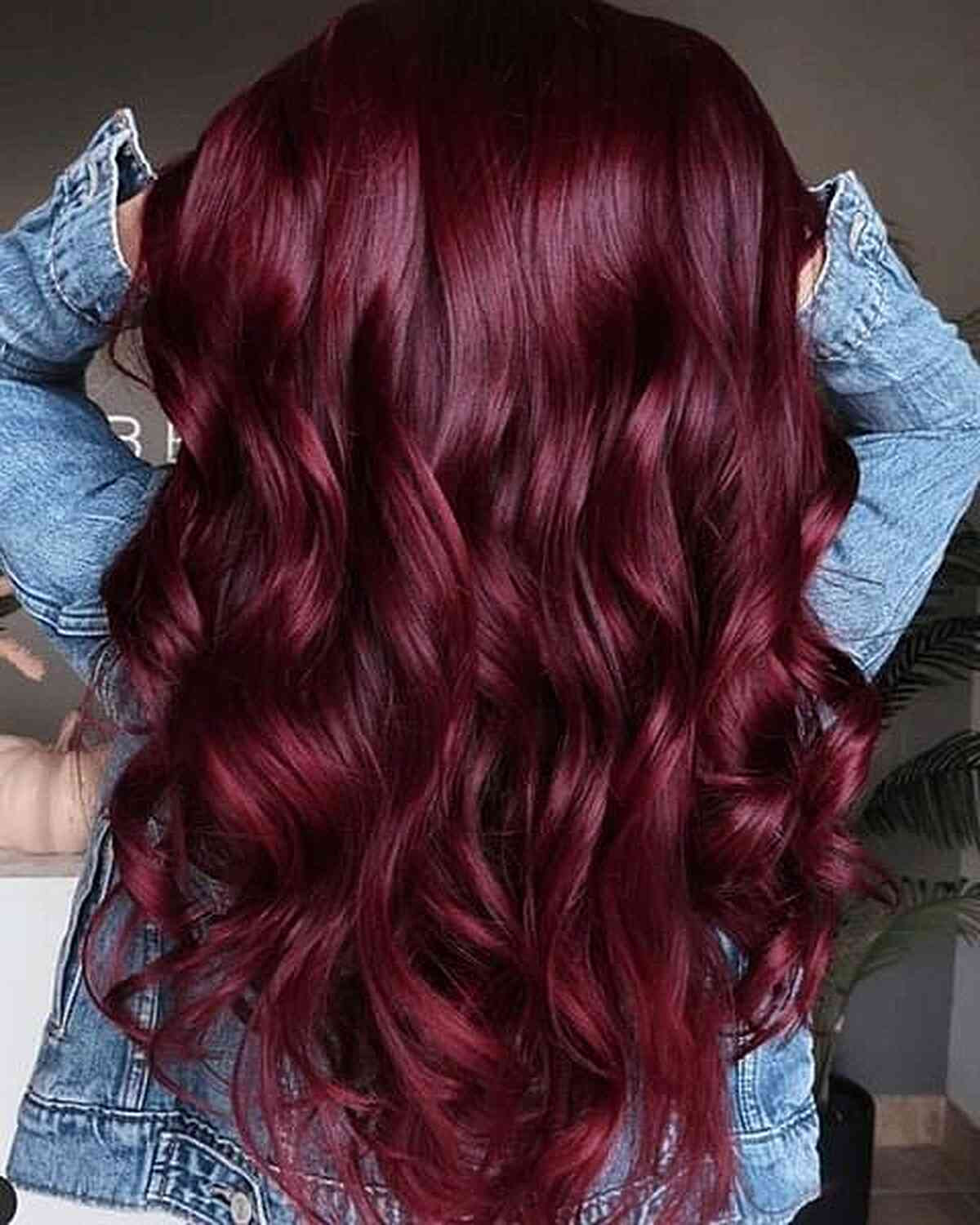
I booked this color twice in one season, which is rare for me. The intense maroon hair sits at mid-back with layers that start at the collarbone, giving the wave pattern room to breathe without tangling at the ends. No bangs, and the middle part lets the color sit symmetrically. The texture is wavy and thick, so the layers lift the wave rather than flattening it. What surprised me was how the shade shifts in different light: indoors it reads almost burgundy, but sunlight pulls out a red that is almost fluorescent. The stylist used a single-process color with a gloss overlay, and that is why the tone stays consistent from root to tip for about five weeks before needing a refresh.
No Bangs Uniform Rich Maroon Mid-Back Waves
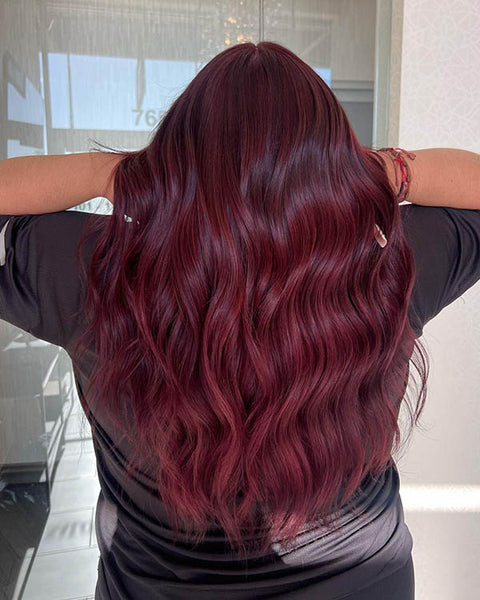
A uniform color without bangs works best on faces with strong features. The rich maroon mid-back hair here is cut with subtle layers that add shape without disrupting the solid color block. No bangs means the eye moves straight down the length, which flatters a longer face or a strong jawline. The texture is wavy and thick, so the uniform shade reads as depth rather than flatness. A middle part keeps the symmetry. This is a straightforward cut to maintain: trims every ten to twelve weeks, and the color grows out evenly because there is no highlight or root shadow to track. If you have a round face, skip the no-bangs version and add face-framing pieces to break the line.
Deep Maroon with Violet Undertones
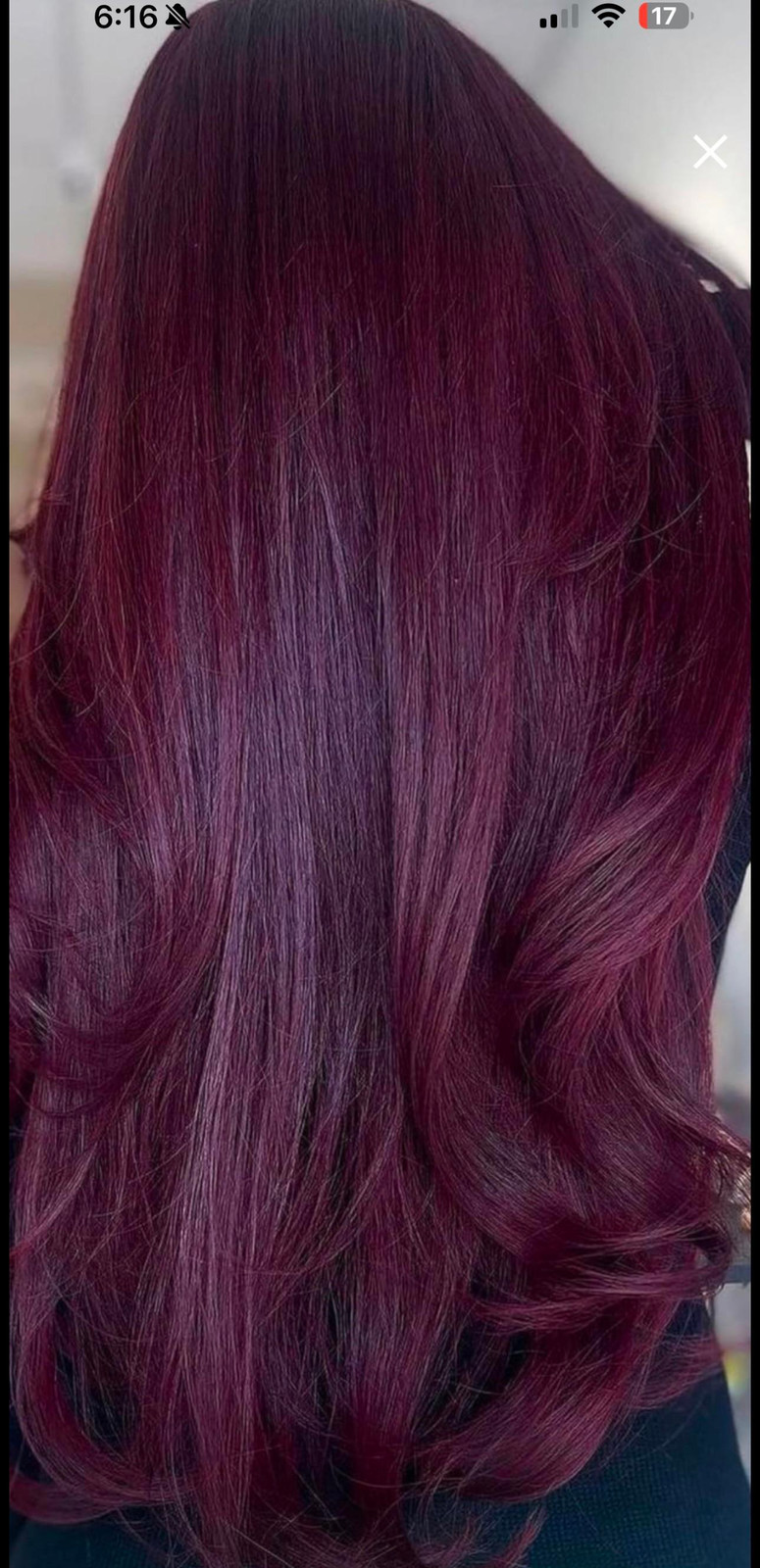
Ever wonder how some reds look flat and others look like they have a secret second color hiding underneath? That is what a violet undertone does for deep maroon. The stylist applies a base of dark maroon, then adds a violet toner that catches cool light without turning the whole head purple. The cut is mid-back with layers that start below the shoulder, no bangs, and a middle part that lets the color sit evenly. Thick, wavy texture helps the undertone read as depth, not damage. The maroon with violet undertones shifts depending on the light, which is the whole point.
Deep Maroon with Red Highlights
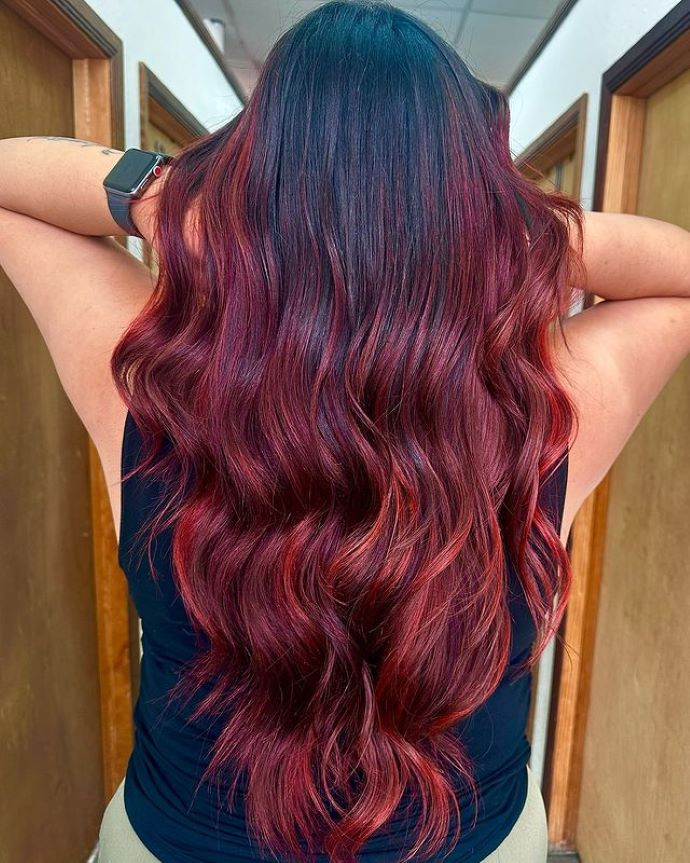
I will admit something: I used to think highlights on a dark red base were a waste of money. Then I saw how the red streaks catch light in a way that solid color cannot. The base is deep maroon, almost burgundy in dim rooms. The red highlights are fine, placed around the face and through the mid-lengths, so they do not compete with the base.
The honest downside is that the highlights fade faster. The base stays dark for weeks, but those red streaks start looking brassy around week four if you do not use a color-safe shampoo. The cut is mid-back with long layers, no bangs, and the thick wavy texture helps the maroon with red highlights read as intentional dimension, not accidental grow-out.
Dark Maroon with Red Streaks
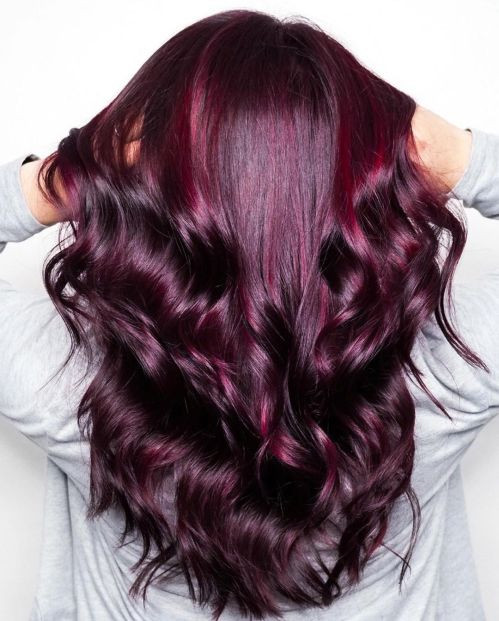
Subtle red streaks versus obvious highlights: the difference is in how much contrast you want. The streaks here are thin, placed close to the base color, so they read as a warm shift rather than a separate color. This is a salon job. Getting that fine streak placement right at home is risky because the bleach can bleed into the dark maroon and create a muddy line. The cut is mid-back with layers, no bangs, and the thick wavy texture blends the streaks so they look like a natural light hit. The dark maroon red highlights work best when they stay within two shades of the base.
Side View Maroon Mid-Back Waves with Depth
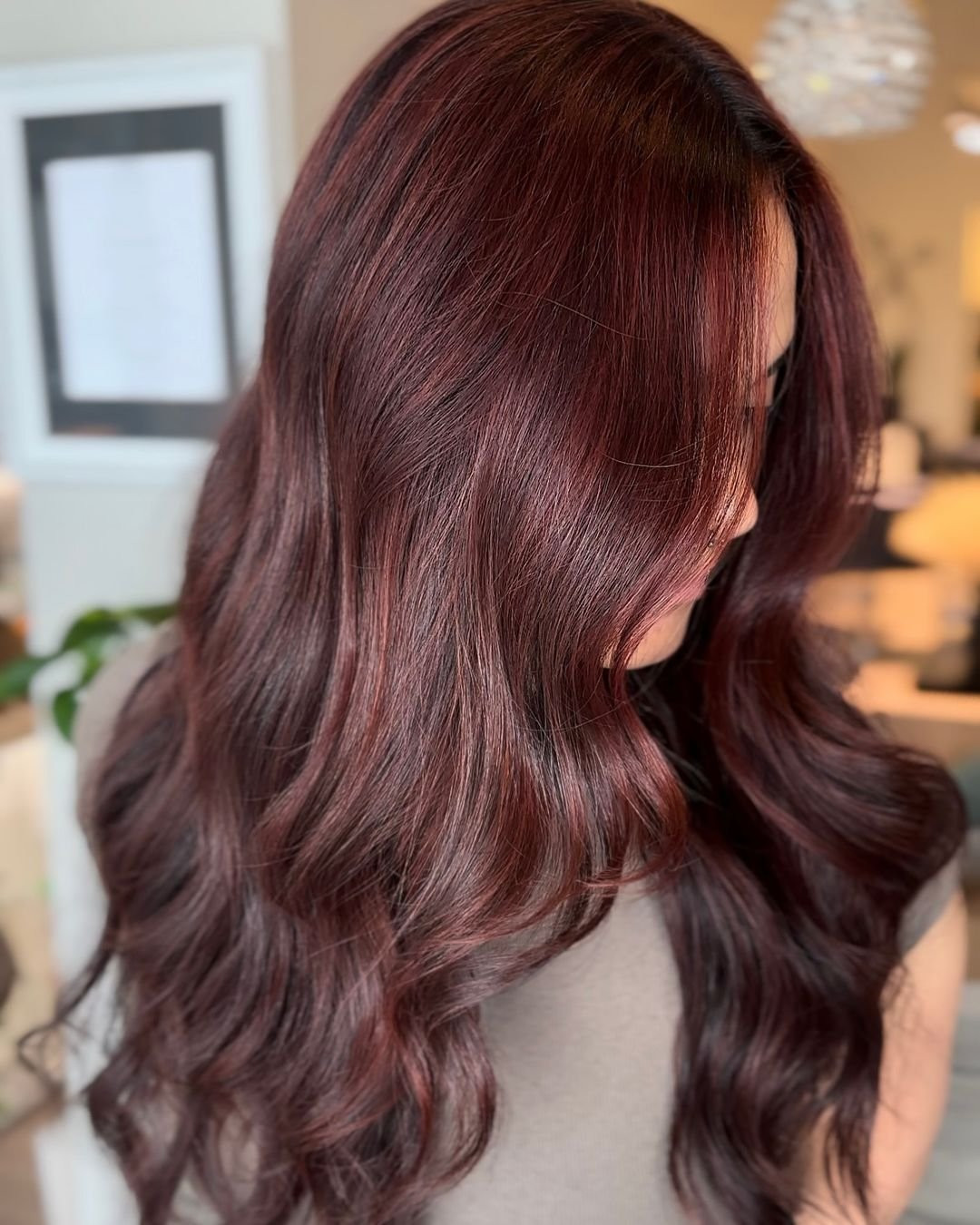
Best for oval and heart-shaped faces, where the side view can actually show the wave structure. The cut is mid-back with layers that start at the chin, no bangs, and a middle part that lets the hair fall forward. The thick wavy texture holds the shape without product, which matters when you want the rich maroon wavy hair to speak for itself. If your face is round or square, this side view can add length but the lack of bangs means the forehead is fully visible, so consider that before booking.
Burgundy Brown Mid-Back Waves
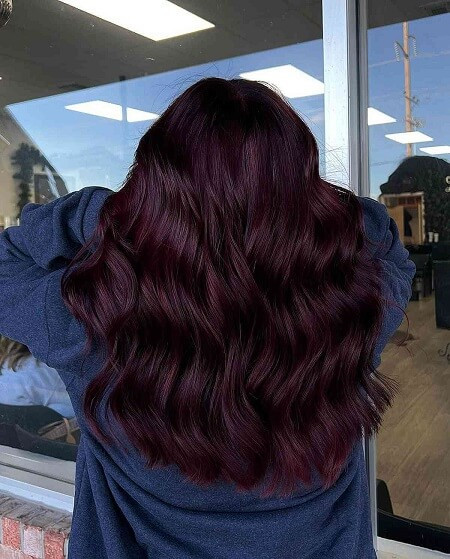
I have a confession: I expected burgundy brown hair to be boring. It’s not. The brown base keeps the red from screaming, and the mid-back length gives the waves room to move. Thick texture holds a loose wave without fighting it. No bangs means I can throw it up on day three and still look like I tried. The colour fades warmer than straight red, which is a relief. By week six, it’s more auburn than burgundy, but it’s a good auburn. A trim every ten to twelve weeks keeps the ends from splitting, and that is the whole maintenance plan.
Deep Maroon Base with Subtle Layers
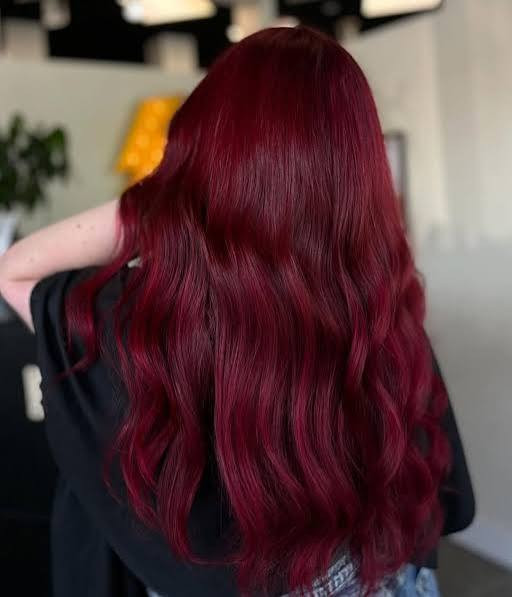
The trick with a deep maroon base color is the layer placement. Long layers, cut into thick wavy hair, catch light at different points. That is what makes the colour look dimensional without highlights. The back view shows it best: the colour shifts as the waves turn, and the deep maroon reads darker at the root and brighter at the ends.
No bangs here, which is the right call. Bangs would compete with the layering. The cut stays mid-back, and the layers start below the shoulder. That keeps the weight in the length and the movement in the waves. A blunt cut would flatten the colour. The layers let it breathe.
Deep Ruby Red with Burgundy Hints
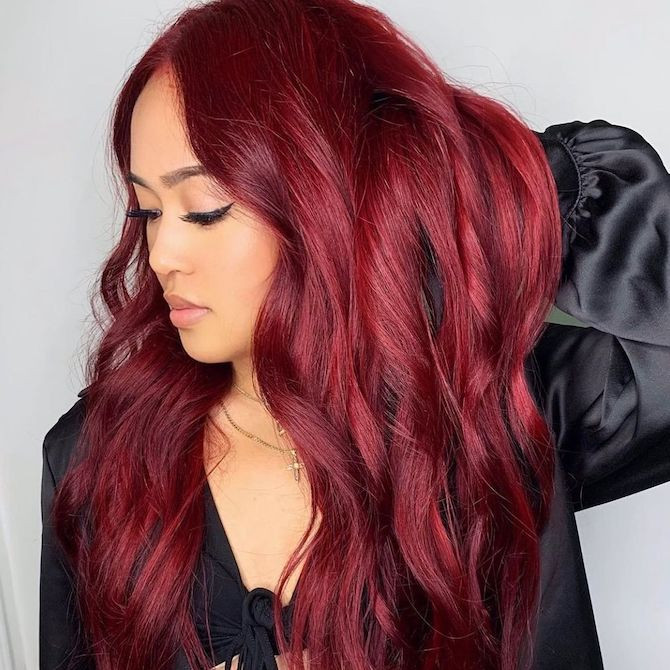
Here is the verdict: deep ruby red hair with burgundy hints works best on medium-density wavy hair. The cut is long layers, mid-back, no bangs. The middle part lets the waves fall evenly on both sides. The colour has enough red to read as ruby in direct light and enough brown to read as burgundy in shade. Medium density is key here. Too fine and the red overwhelms the brown. Too coarse and the burgundy disappears. The flowing waves give the colour movement, which is what makes it look expensive rather than flat.
Vibrant Maroon Shoulder Blowout
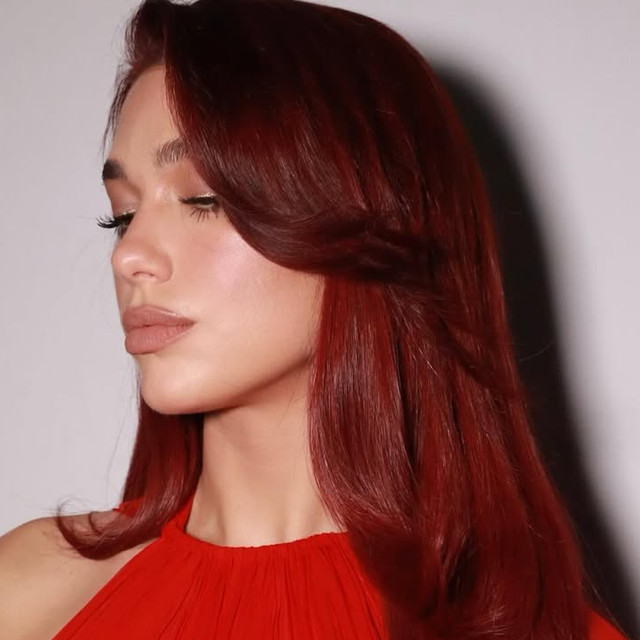
Does a voluminous blowout on shoulder-to-collarbone hair actually last? For a few hours, yes. The cut is long layers with face-framing pieces, no bangs, side part. The hair is straight and thick, which means the blowout holds shape well. The downside is frizz. Thick straight hair puffs up in humidity, and a vibrant maroon shoulder length makes every flyaway visible. A blowout at this length takes fifteen to twenty minutes. By day two, the volume drops and the ends start to separate. That is the honest reality.
Collarbone Waves with Side-Swept Bangs
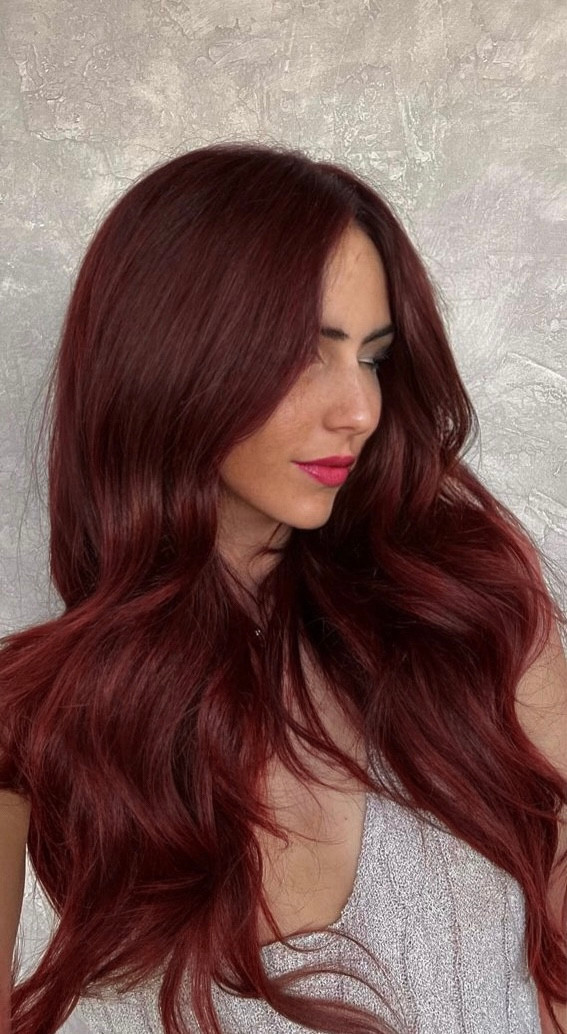
I will confess: I resisted maroon hair with side swept bangs for years. I thought the bangs would fight the waves. They don’t. The cut is long layers at collarbone length, thick wavy texture, side-swept bangs that blend into the face-framing pieces. The bangs need a trim every four to six weeks. The overall cut needs one every eight to ten. The waves take about twenty minutes to style with a round brush and a heat protectant. The bangs separate by noon if I skip dry shampoo. That is the trade-off for a look that actually frames the face without hiding it.
Deep Maroon Mid-Back with Bangs
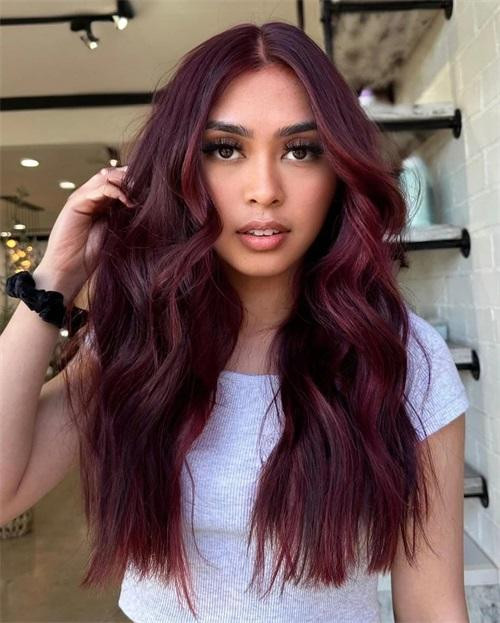
Side-swept bangs and deep maroon work together better than I expected. The cut lands at mid-back with loose layers that keep the wave from collapsing under its own weight, and the thick texture holds the bend past noon. A middle part keeps the bangs from fighting the rest of the length. Compared to a solid block of maroon with no fringe, this reads softer and more dimensional. The side-swept bangs break up the colour so it does not land as one heavy curtain.
What makes this different from a blunt, chin-length maroon bob is the movement. The bob sits still. This one shifts when you turn your head. The deep maroon side swept bangs catch light on the curve, the rest falls behind them. It is not a cut that demands a full face of makeup to make sense. It works on a Tuesday. It works at a dinner where you want the hair to do half the talking.
Burgundy Waves with Wispy Bangs
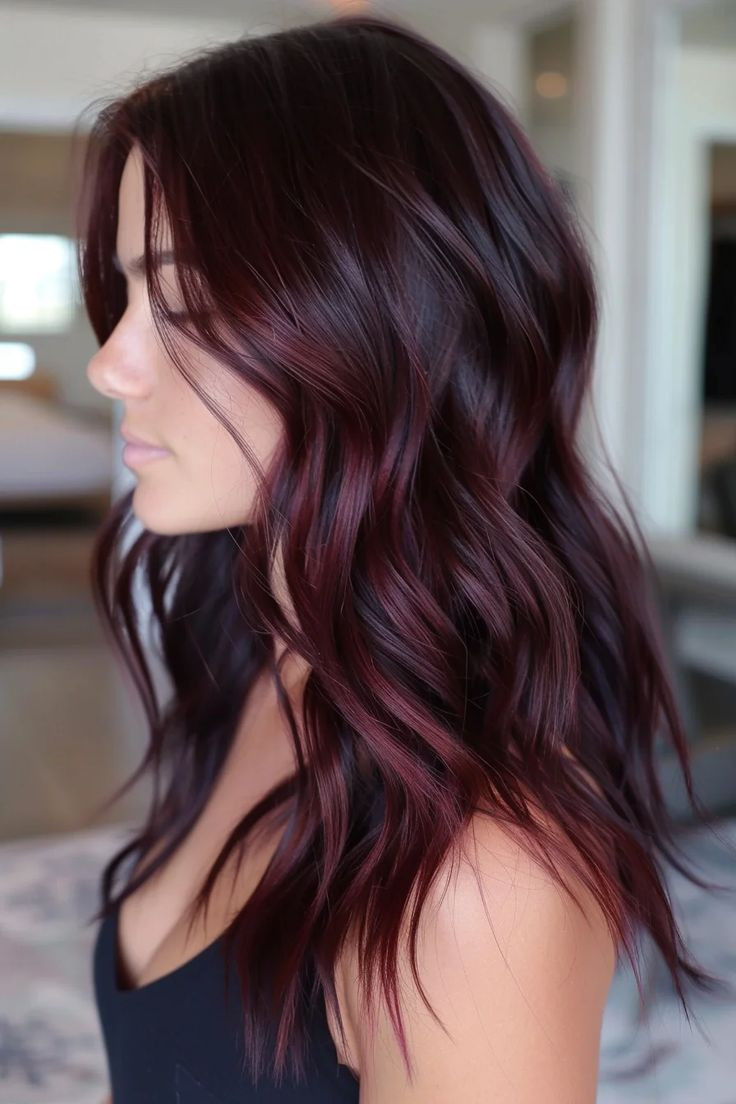
I want to love burgundy hair with wispy bangs, but the wispy part is a gamble. On medium-thick density, those fine, feathered ends do not stay put. They separate by 11 am in humidity, they drift to the wrong side in wind, and if your texture has any wave at all, they curl up instead of lying flat. The rich burgundy colour is forgiving — dark red undertones hide a lot — but the bangs themselves are a project. You will train them, re-damp them, and still catch them pointing east when you want west. Worth it for the soft, voluminous effect when they behave. Just know they will not behave every day.
Glossy Maroon with Blunt Bangs
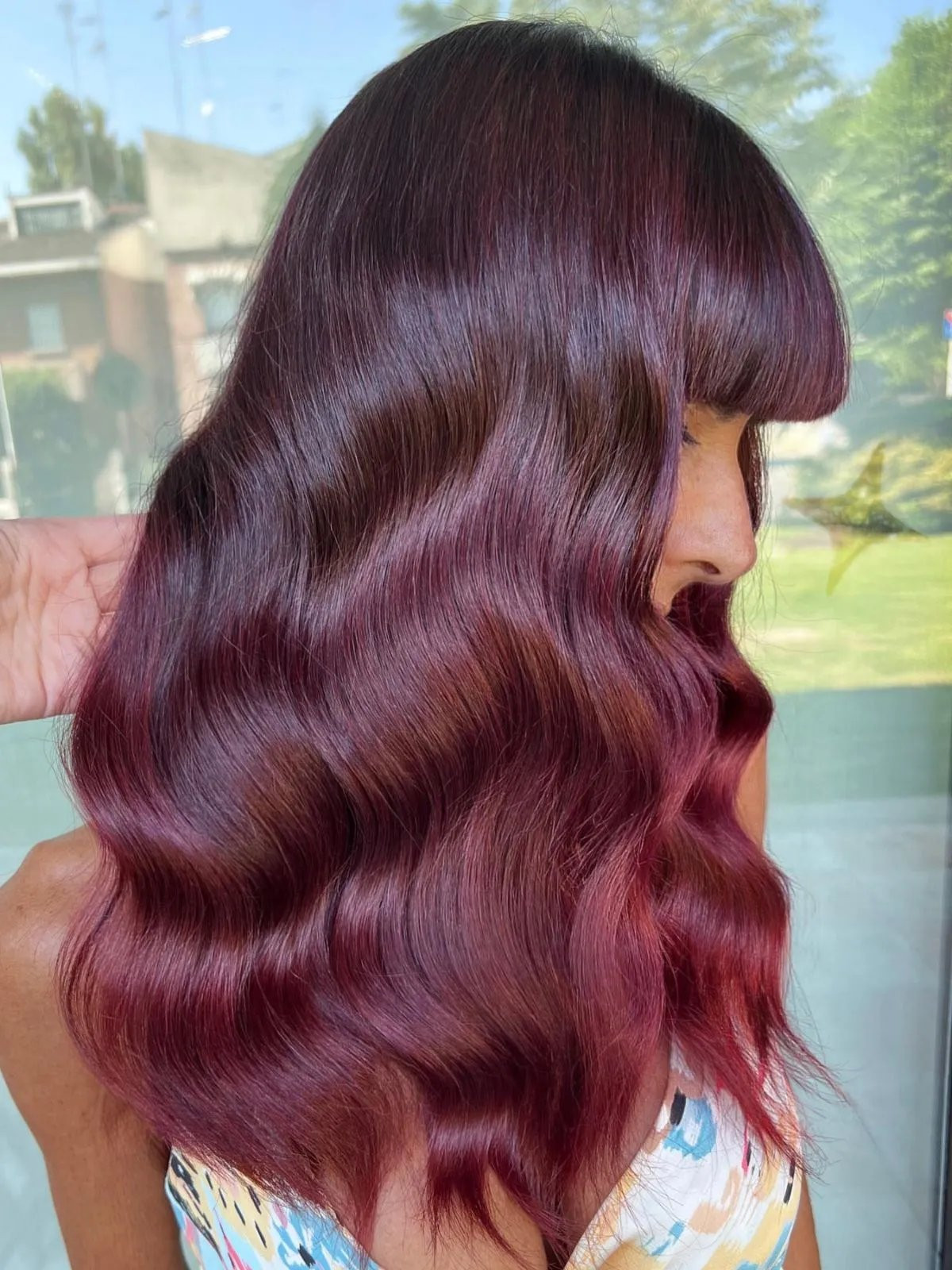
Have you ever seen a maroon that looked wet without being wet? That is this one. The rich maroon blunt bangs sit straight across, thick enough to read as a deliberate line, not a suggestion. The rest of the mid-back length falls in loose, glossy waves that catch the light because the cut is built on long layers — no choppy texture, no razored ends. The blunt bangs shorten a long face and widen a narrow one. I would wear this to a holiday dinner or a night out where I want the hair to arrive before I do. It takes about 25 minutes with a round brush and a heat protectant, but the gloss makes it look like it took longer.
Mid-Back Burgundy with Long Layers
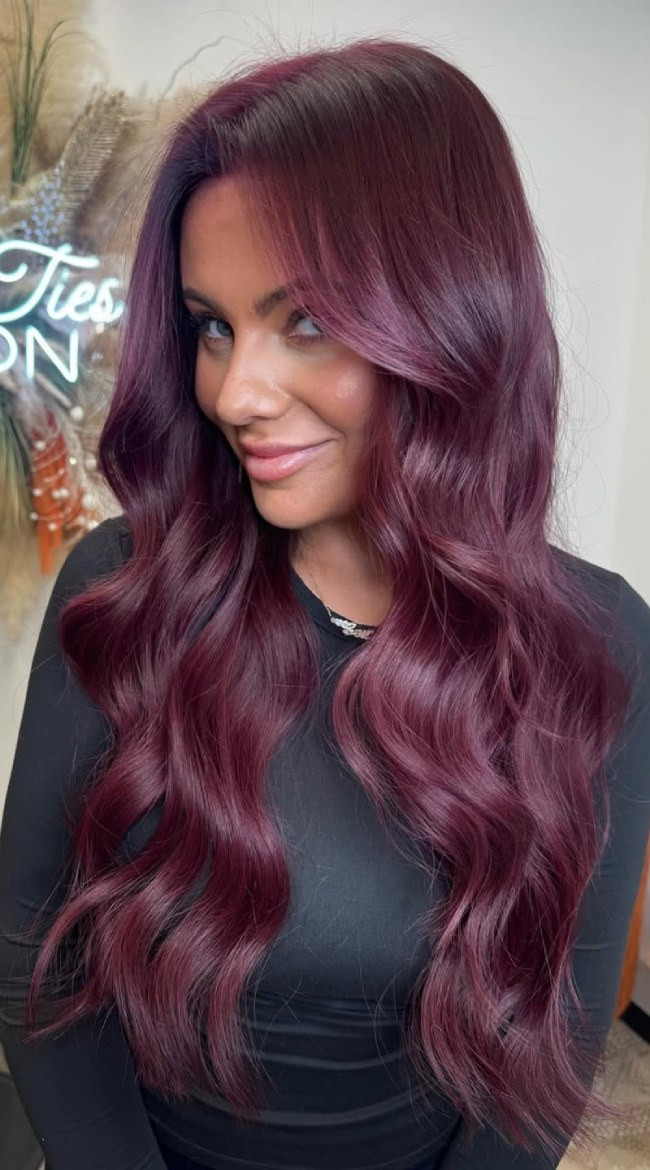
The mistake people make with mid-back burgundy and long layers is letting the colour do all the work. That rich burgundy shade is gorgeous, but without a trim schedule, the layers go blunt and the wave drops to a sad, flat bend. Long layers need a visit every 10 to 12 weeks, not for a full cut, just to refresh the shape so the soft waves actually curve instead of sagging straight. The mid-back length is practical — it stays off your collar, it ponytails easily — but the grow-out phase between trims is where the rich burgundy long layers start looking like one solid block of colour with no movement. Book the trim before you think you need it.
Final Thoughts
After writing all of these, I noticed something I missed at the start: maroon is less a single color than a mood that shifts with your base. The same dye reads burgundy on one head and ruby on another. That is the fun part, and the part you cannot control.
I am booking the collarbone layers with a root shadow next. My fine hair needs the cut more than the color, and the shadow buys me six calm weeks.
- Trim the baseline every eight weeks.
- Tone at week six, not week ten.
- Use a purple shampoo once a week.
- Skip heat styling two days a week.
I was wrong about maroon being a winter color. It holds its own in July.

