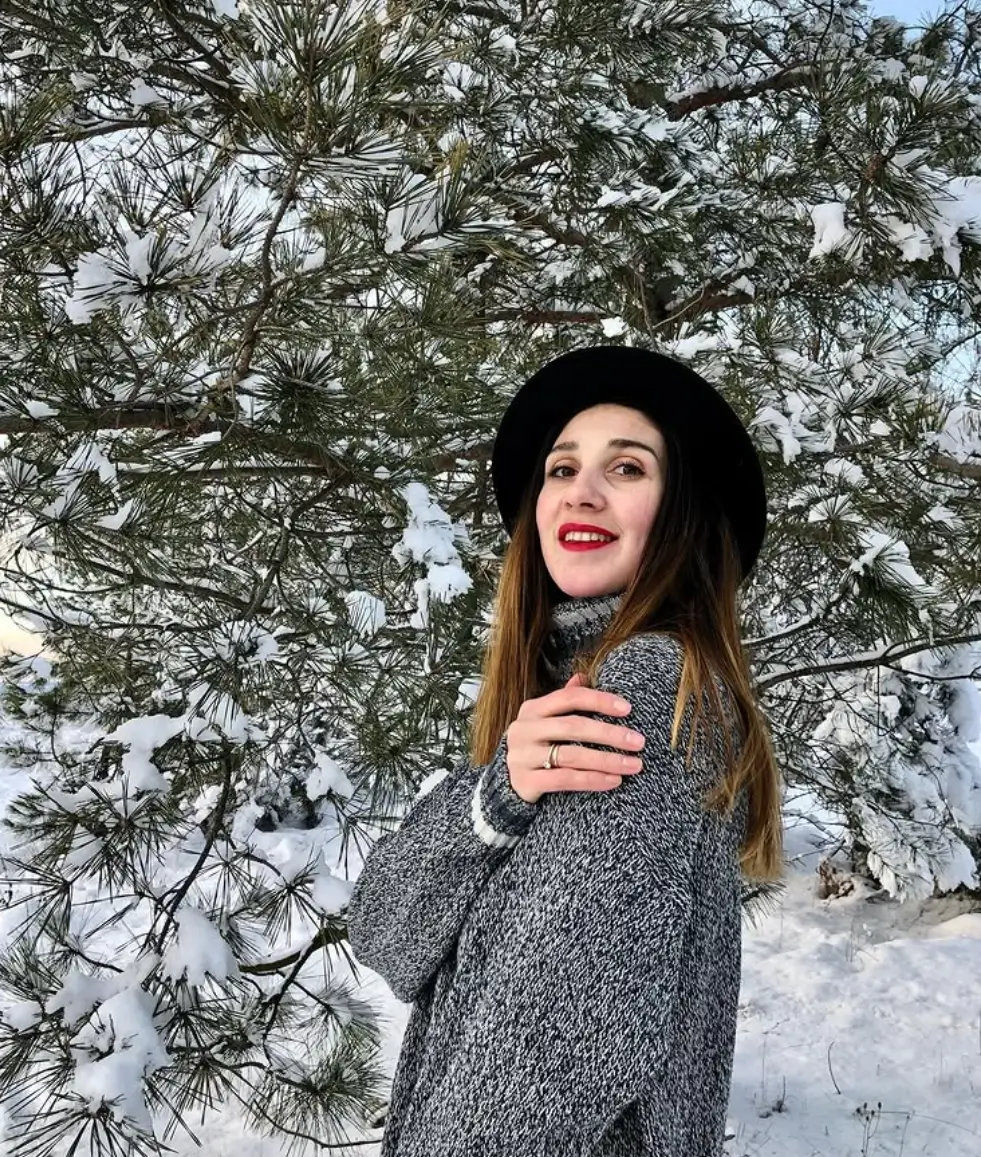
Every other braid I saw last month had a pink elastic or a pastel bandana in it. The structured ones, the Dutch and French numbers that actually stay put on a climb, are the ones people keep asking about. I used to think braids were just for gym class, but they have quietly become the smartest thing I pack for a trail.
So I rounded up 22 Hiking Hairstyles, from a two-minute side braid to an intricate crown that needs a mirror and patience. Whether your hair is fine, thick, wavy, or coily, there is something here that will hold past the summit. My own fine strands go flat by 4 pm, so I tested these with that in mind.
Practical Braided Ponytail with Bandana
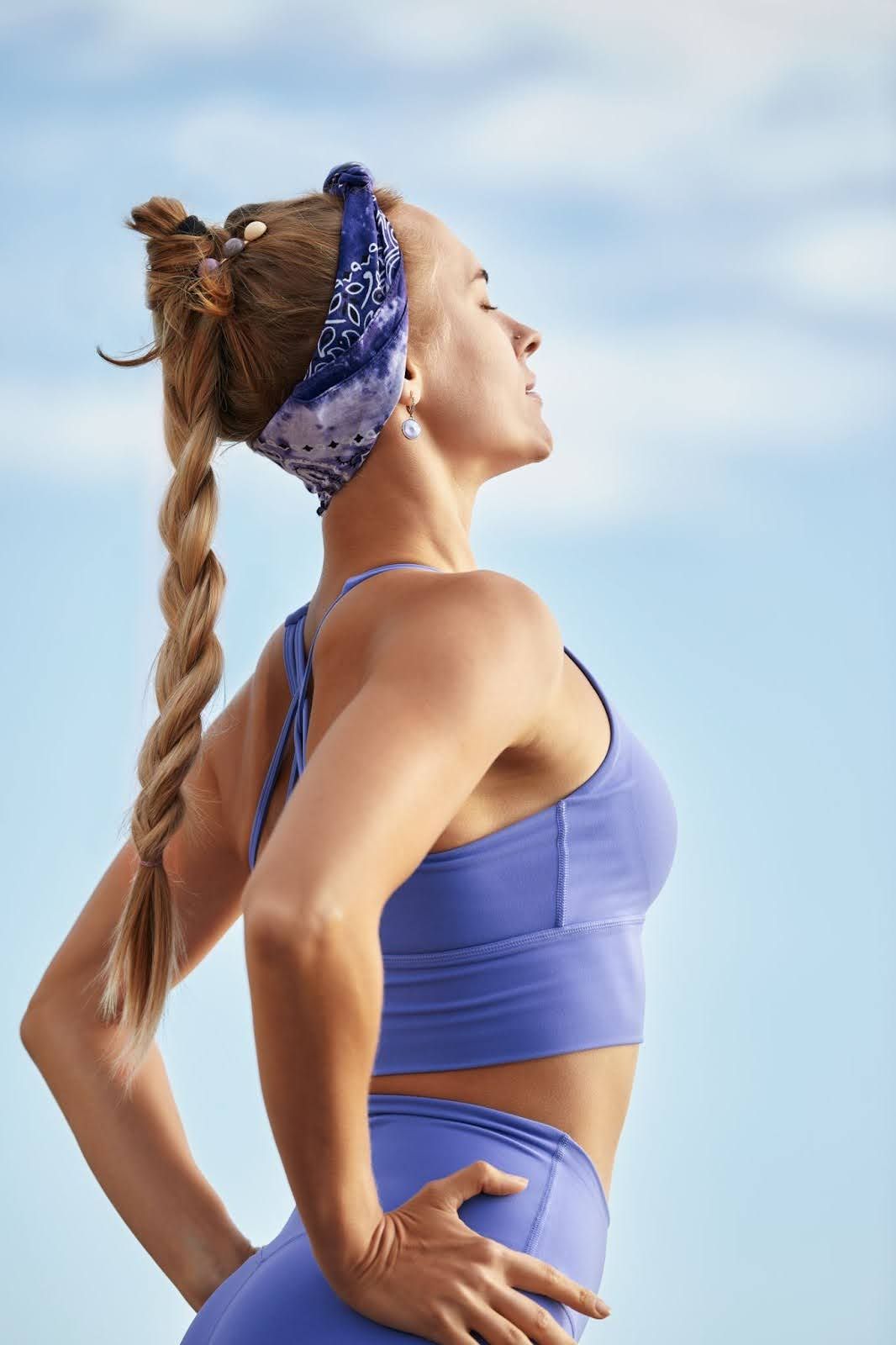
The braided ponytail with bandana works best on wavy, medium-density hair that can grip the braid without slipping. The bandana does double duty: it hides any mid-hike greasiness at the crown and keeps flyaways from escaping the ponytail. On straight, fine hair, the bandana slides forward within the first mile, so you are retying it instead of watching the trail. Blonde or light brown reads cleanest here, because the bandana contrast pops against a lighter base. The hold is solid for about four miles, then the braid loosens at the nape. Middle part keeps the bandana centered, side part lets it sit asymmetrically, your call.
Practical Side Braid for Hiking
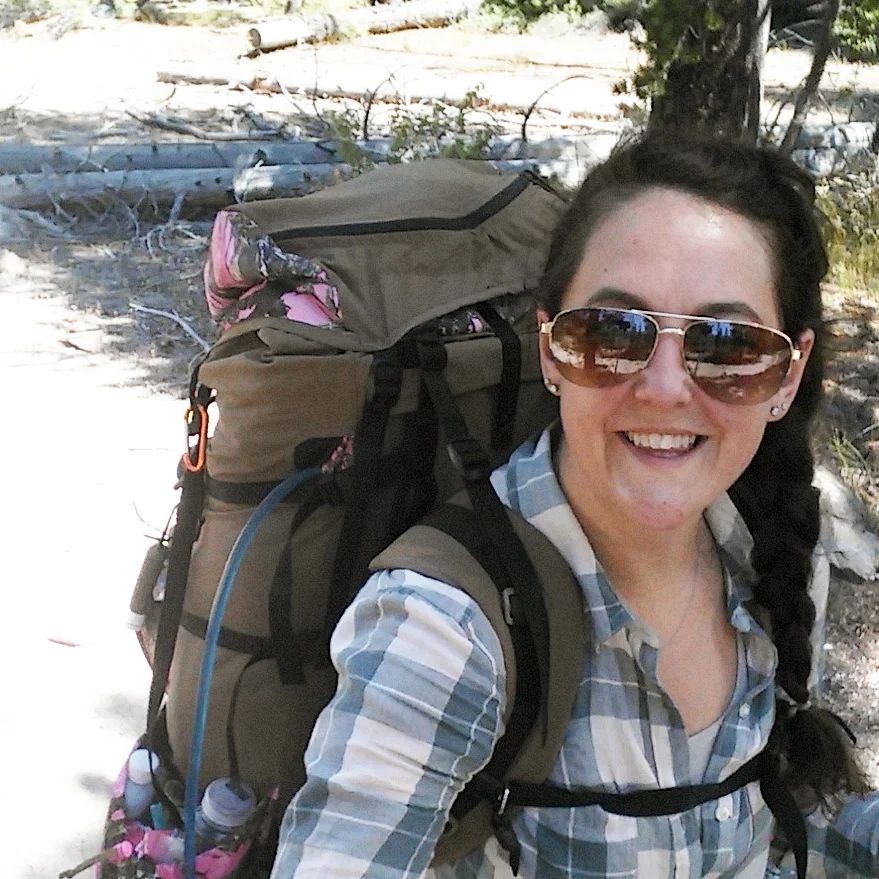
A side braid for hiking is the lowest-effort, highest-reward option in this roundup. You start with a side part, gather everything to one shoulder and braid to the ends. That is it. Five minutes, no mirror required. On shoulder-length wavy hair with subtle highlights, the braid sits flat against the ear and never swings into your face when you look down at the trail. Dark brown with warm highlights adds depth so the braid reads as one thick piece rather than a few skinny strands. The hold lasts all day because the braid tucks behind the shoulder and the weight of the hair keeps tension on the elastic. No heat, no product, just a hair tie.
Thick Braid for Mid-Back Length
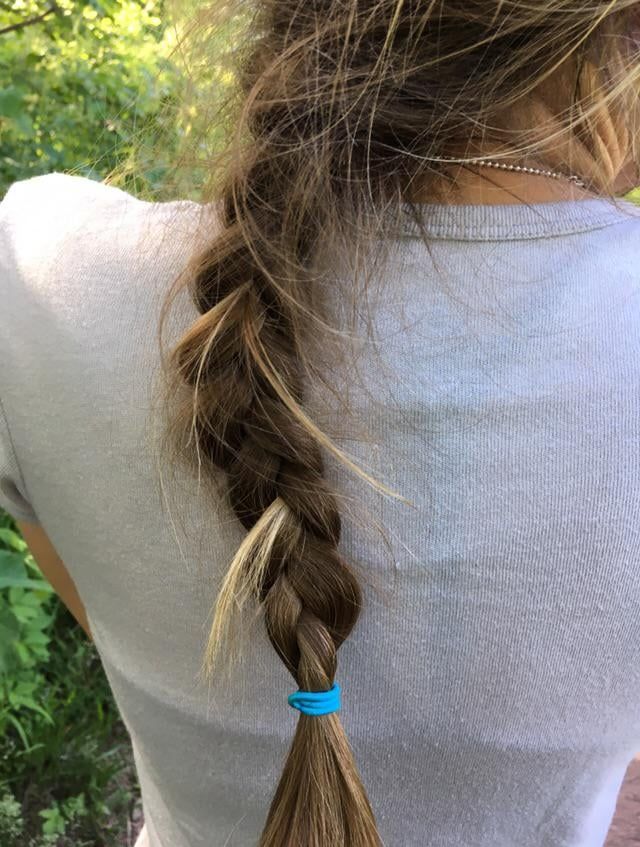
Ever notice how a thick braid mid-back looks impressive but takes the same time as a basic ponytail? That is the trick. On mid-back length with long layers, you section the hair into three equal parts and braid tightly from the nape. The layers disappear into the plait, so you get a uniform thickness from crown to tip. Brown hair with blonde highlights reads as a single blended ribbon, which is more visually interesting than a solid tone. The hold is better than a ponytail because the braid distributes weight across the whole length instead of pulling on one elastic point. No bangs to tuck, no middle part shifting, just one clean line down your back.
Playful Braids in Natural Setting
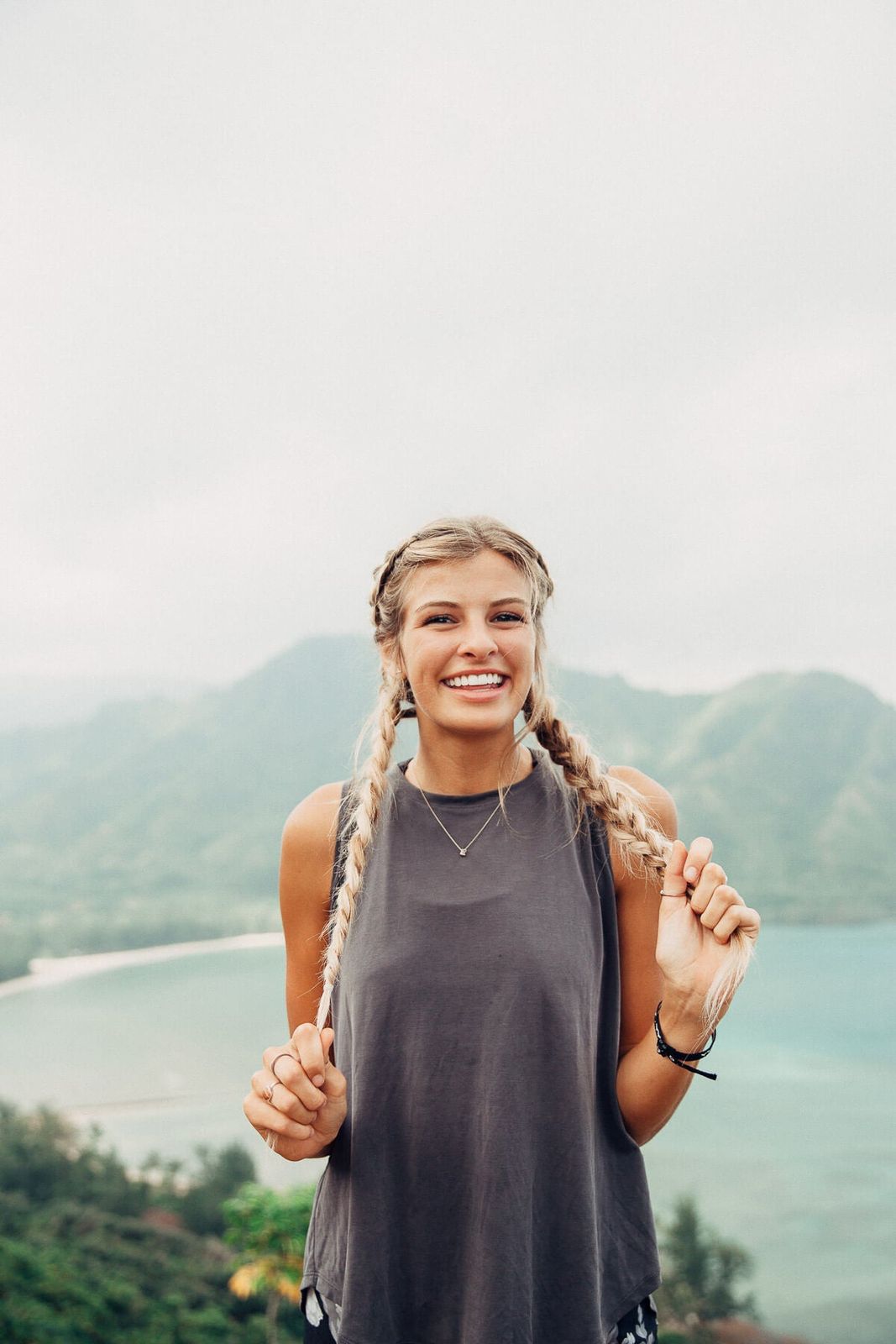
I was standing at the trailhead, second-guessing the two loose braids I had just thrown together. Seven minutes of messy sections and uneven tension. But here is the thing: on mid-back blonde hair with wavy texture, the imperfection reads as intentional. The braids swing when you walk, they do not rub against your neck the way a single braid does, and if one comes loose, you still have the other one holding the side.
Middle part keeps them symmetrical, wavy texture gives the braids volume so they do not look like two sad strings. The hold is about three miles before the ends start to unravel, but that is fine because loose braids look better slightly undone than tight ones do.
Segmented Ponytail with Pink Elastics
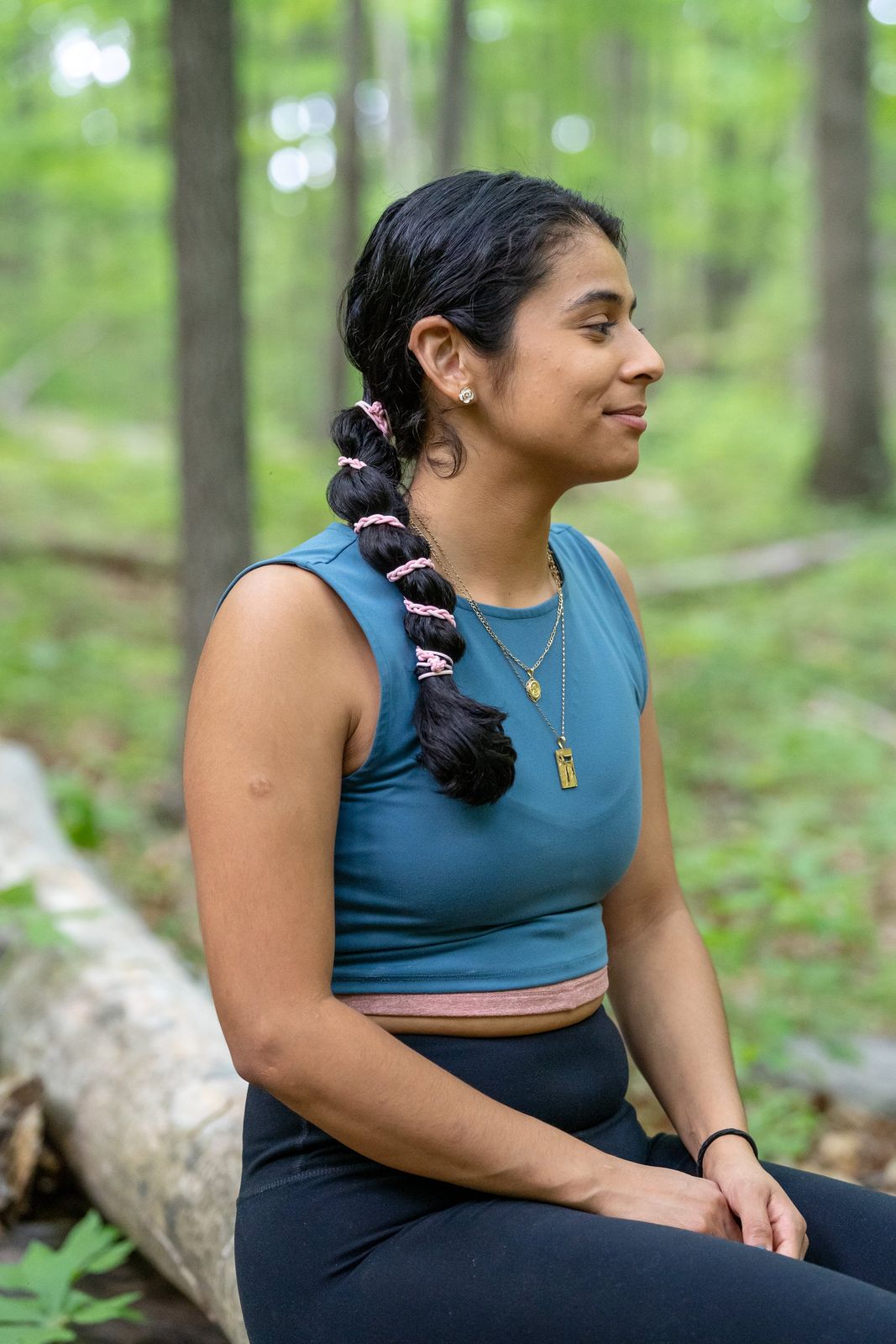
I will confess: I tried a segmented ponytail for a day hike and did not expect it to survive the first incline. The pink elastics looked like a cute Instagram thing, not a functional choice. But here is how it actually holds: each elastic creates a separate anchor point, so when the hair swings, the tension distributes across four sections instead of one. On thick, dark brown hair past the shoulders, the segments stay defined for about five miles. The side part keeps the ponytail from rubbing against your backpack strap.
Upkeep is minimal. You redo the bottom two elastics if they loosen, which takes about two minutes. DIY is the only option here, this is not a salon request. The elastics themselves need replacing after a few wears because they stretch out. But for the price of a pack of hair ties, you get a style that does not need a mirror touch-up until you are back at the car.
Single Thick Braid for Dense Hair
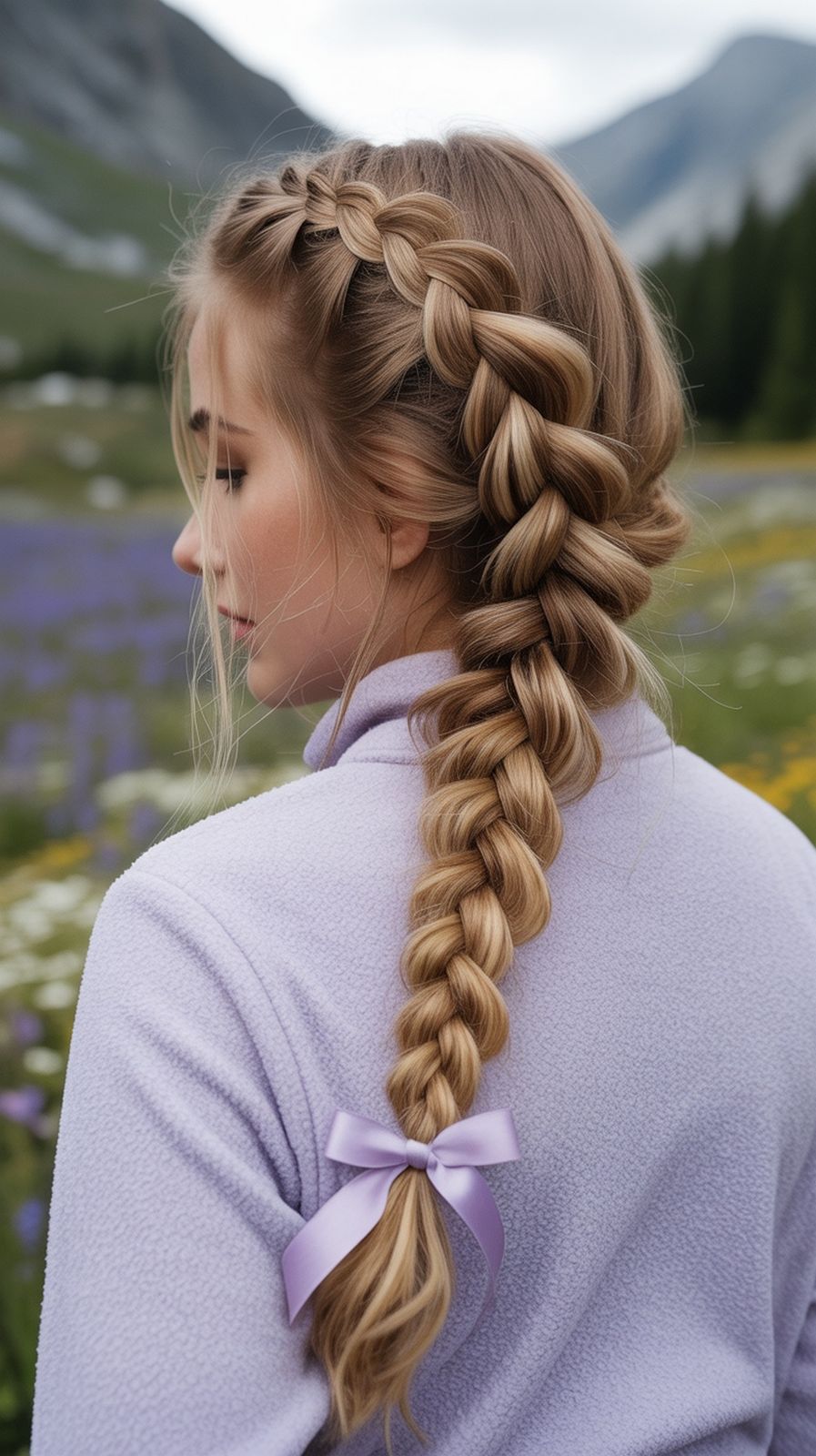
I want to love a single thick braid on dense hair, I really do. The dark brown, mid-back length looks substantial and the middle part keeps it symmetrical. But thick, straight hair has a mind of its own — sections slip, tension goes uneven, and by the third pass you are fighting your own texture. The hold is excellent once you wrestle it into place, and the layers add just enough grip to keep flyaways contained. Getting that first section perfectly neat takes patience, and I still end up redoing the crown twice.
Neat French Braid for Mid-Back
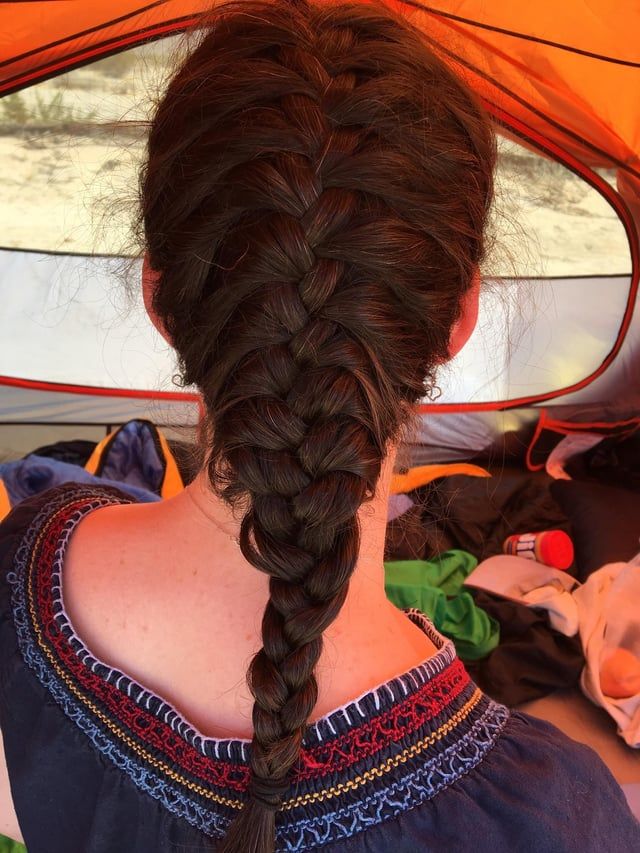
A french braid mid-back works because you are weaving from the crown, not gathering at the nape. The dark brown, wavy, thick hair here has enough texture to hold each section without slipping, and the layers create natural separation between the strands. You start at the hairline, add in pieces as you go down, and the tension stays consistent because you control it from the top. The result is a french braid that does not loosen after an hour of movement — it is secure, polished, and the wavy texture keeps it from looking too stiff. No heat, no products, just ten minutes of deliberate sectioning.
Thick French Braid for Density
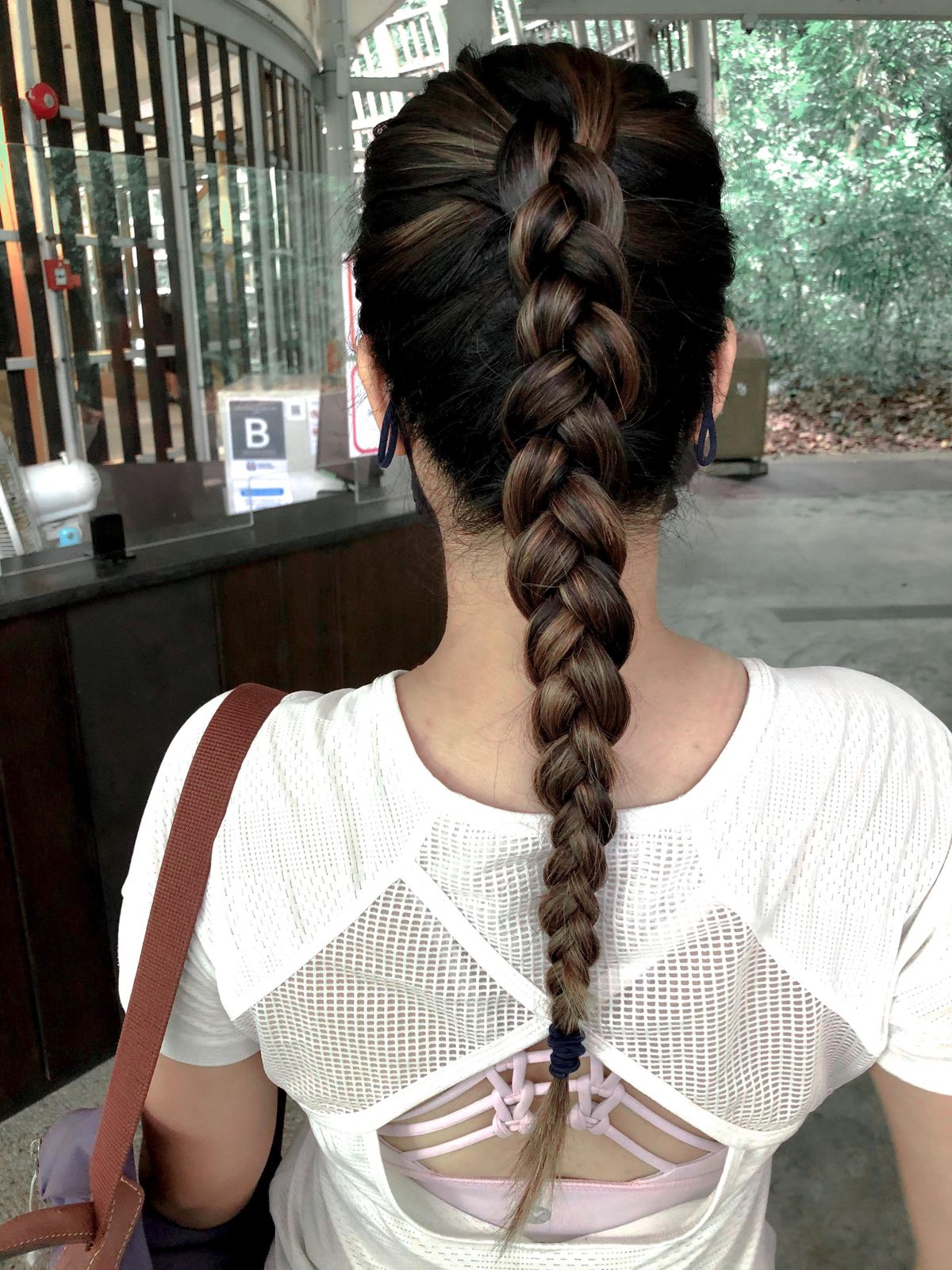
Have you ever tried to braid dense, straight hair and ended up with a lumpy mess? A thick french braid actually solves that. The dark brown, mid-back length here has layers that prevent the braid from becoming one solid, heavy rope — each section has room to sit. The middle part keeps the crown even, and because the hair is thick, the braid itself looks full without needing to pull pieces loose for volume. Straight texture means the strands lie flat against each other, so the braid reads clean and intentional. This is not a five-minute style, but it is one of the few that actually stays put on dense hair.
Two Dutch Braids for Wavy Hair
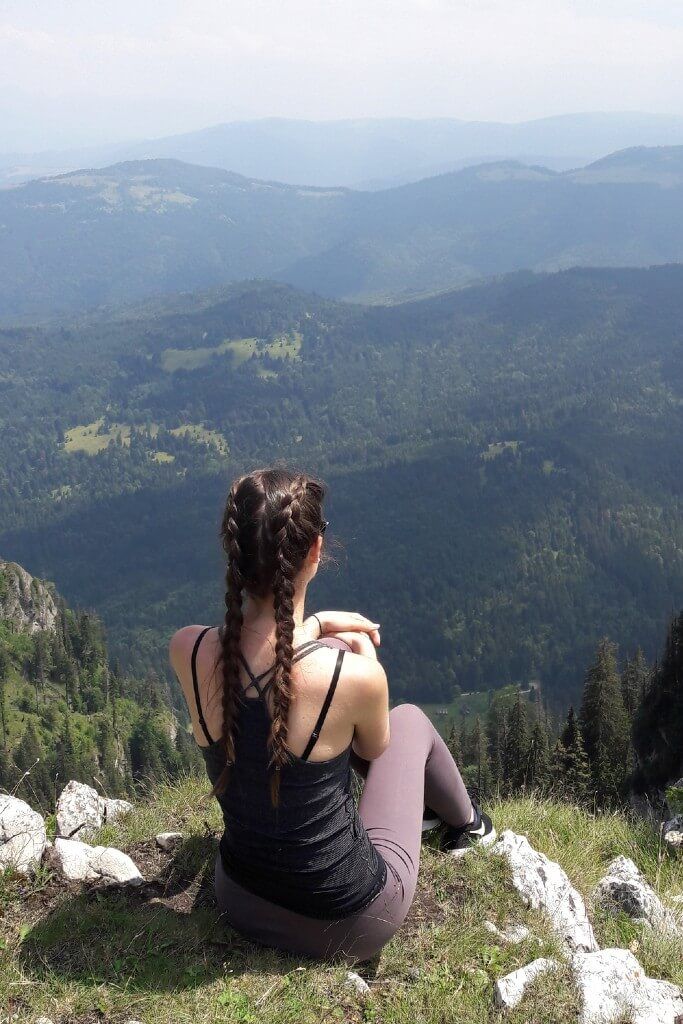
I have worn both on long hikes, and the Dutch braids win every time. The waves hold the sections together without extra pins, and the braids stay put even when I take a hat on and off. It takes about fifteen minutes, and the result is two secure braids that do not need redoing.
Intricate Dutch Braids for Security
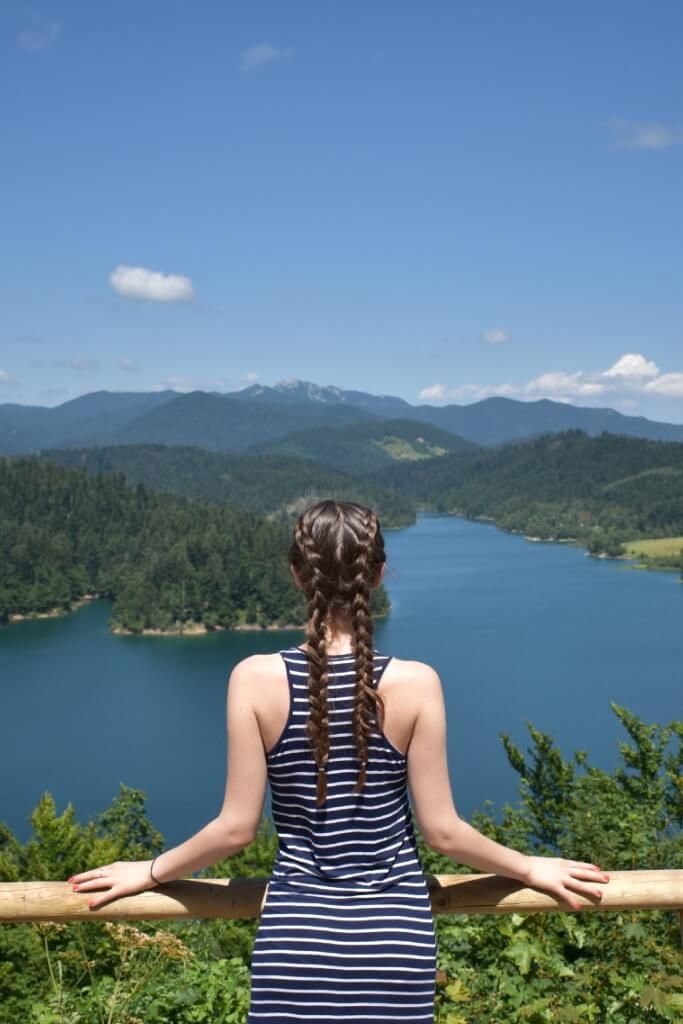
You start at the hairline and weave down, and by the time you reach the nape, the braid is locked in. Intricate Dutch braids on wavy, thick hair at mid-back length do not loosen — the raised construction and the texture work together to hold every section. The dark brown layers add grip, and the middle part keeps both sides even. This is the style you wear when you know you will be moving for hours, when a ponytail would slide and a single braid would swing. The hold is the best in this roundup, and the intricate weaving means no strand escapes. It takes twenty minutes, but you will not touch it again until bedtime.
Braided Pigtails for Curly Hair

I’ll admit it: I used to think braided pigtails were strictly for little kids. Then I saw this version on a grown woman with dark brown curls down to her mid-back, and I changed my mind. The side part and the layers keep it from reading childish, and the two braids actually hold better than one, because each one is lighter and less likely to pull loose. For curly hair, this is a fifteen-minute job that skips heat entirely, which my texture appreciates. The honest downside: if your curls are on the fine side, the braids can look skinny and sad by mile two. Thick, coily, or dense curls get the best grip here, and the hold is real, no re-braiding at the summit.
Intricate Braids for Coily Hair
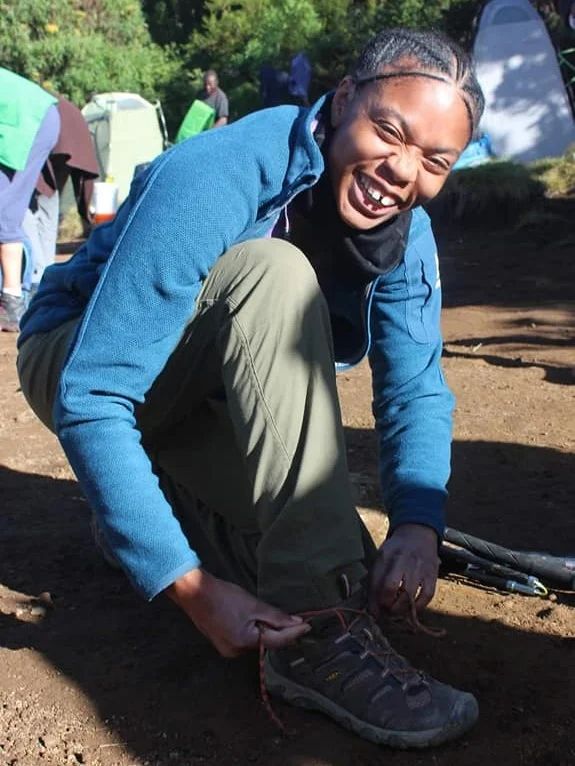
My gut reaction when I first saw this style was pure envy, because my fine, straight hair could never hold that kind of detail. The photo shows shoulder-length coily hair, thick and black, worked into intricate braids that sit close to the scalp. This is a salon job, not a bathroom-mirror project, and it will cost you a couple of hours in the chair. But the payoff is a style that holds for days, not just one hike, with zero heat and minimal fuss on the trail. If you have coily or thick hair and you’re tired of re-doing your hair every morning, this is the answer. I’ve watched a friend wear braids like these through a week of camping, and they looked exactly the same on day five.
Braided Crown with Loose Waves
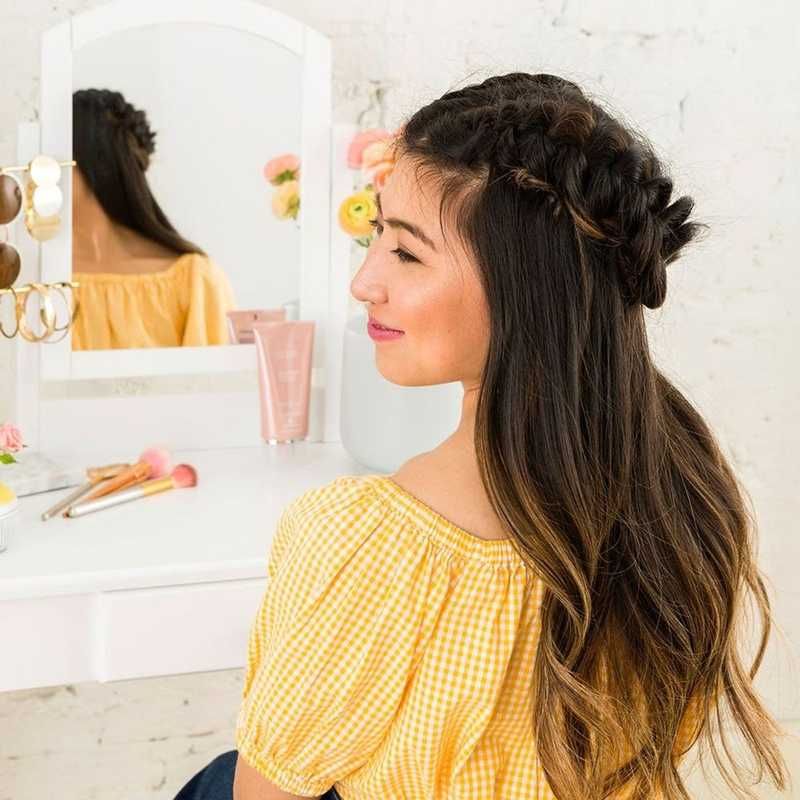
Have you ever finished a hike and realized your hair has been in your face the whole time? The braided crown solves that without sacrificing the loose, wavy look you actually want. Long, dark brown hair with a subtle ombre is pulled back at the front, braided along the crown, and left down in waves below, with side-swept bangs softening the whole thing. It takes about ten minutes, and the braid keeps the front sections from falling forward, which is the real win.
What it takes to keep it going: a few pins to secure the braid ends, and a quick re-tuck if you’re scrambling over rocks. The waves underneath will frizz a little by the afternoon, but that reads as intentional on a trail. It’s a spring and fall style, not a summer one, since the loose bottom half will stick to your neck in heat. For medium to thick hair with some natural wave, it holds beautifully. My fine hair would need a bit of texture spray to keep the braid from sliding.
Half-Up Half-Down with Braids and Bow
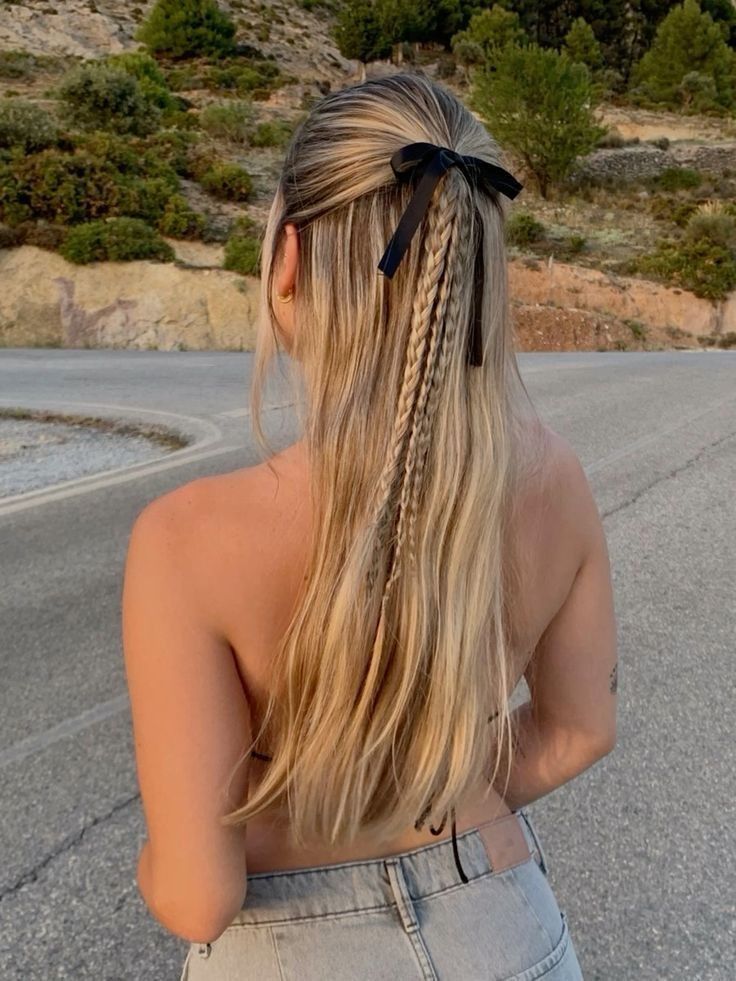
Technically, this is a half-up half-down with two small braids framing the crown, and a black ribbon bow at the back, on long, straight, blonde hair with highlights. The bottom half stays loose, which is the part that always confuses people: it’s not a full updo, so it won’t stay out of your face on a windy ridge. But the braids do keep the top sections secure, and the bow adds a sweet touch that makes it feel deliberate, not messy. About ten minutes to build, and it works best on straight or slightly wavy hair, mid-back length or longer, so the loose bottom has some weight. With a middle part and long layers, it reads polished from the back, which is the angle everyone sees on the trail.
Braided Ponytail with Crown Detail
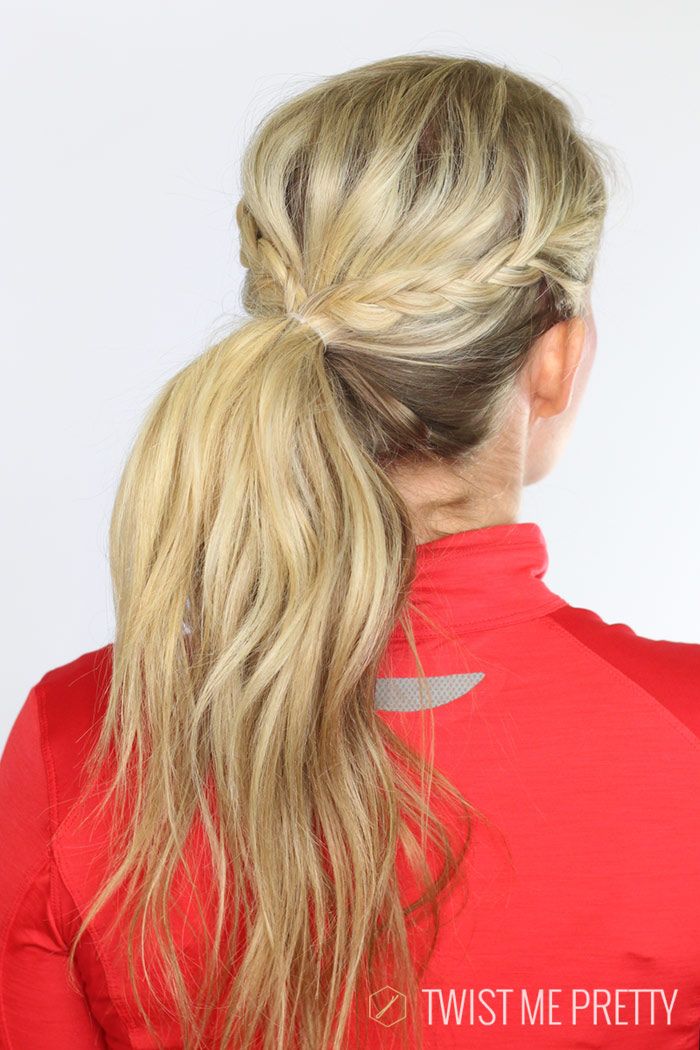
I’m a skeptic about any style that promises both security and style, but this braided ponytail with a crown detail comes close. Thick, wavy, blonde hair is pulled into a high ponytail, with a braid wrapping the crown to add grip and visual interest. The braid does anchor the ponytail, so it won’t slide down your neck mid-hike. The honest downside: if your hair is fine or slippery, the crown braid can loosen within an hour, and you’ll be re-pinning it at every switchback. It’s a ten-to-fifteen-minute style, no heat, and it suits medium to thick texture best. For intense hiking, I’d still pick a full braid over this, but for a moderate trail with photo stops, it holds its own.
High Ponytail with Braid for Wavy Hair
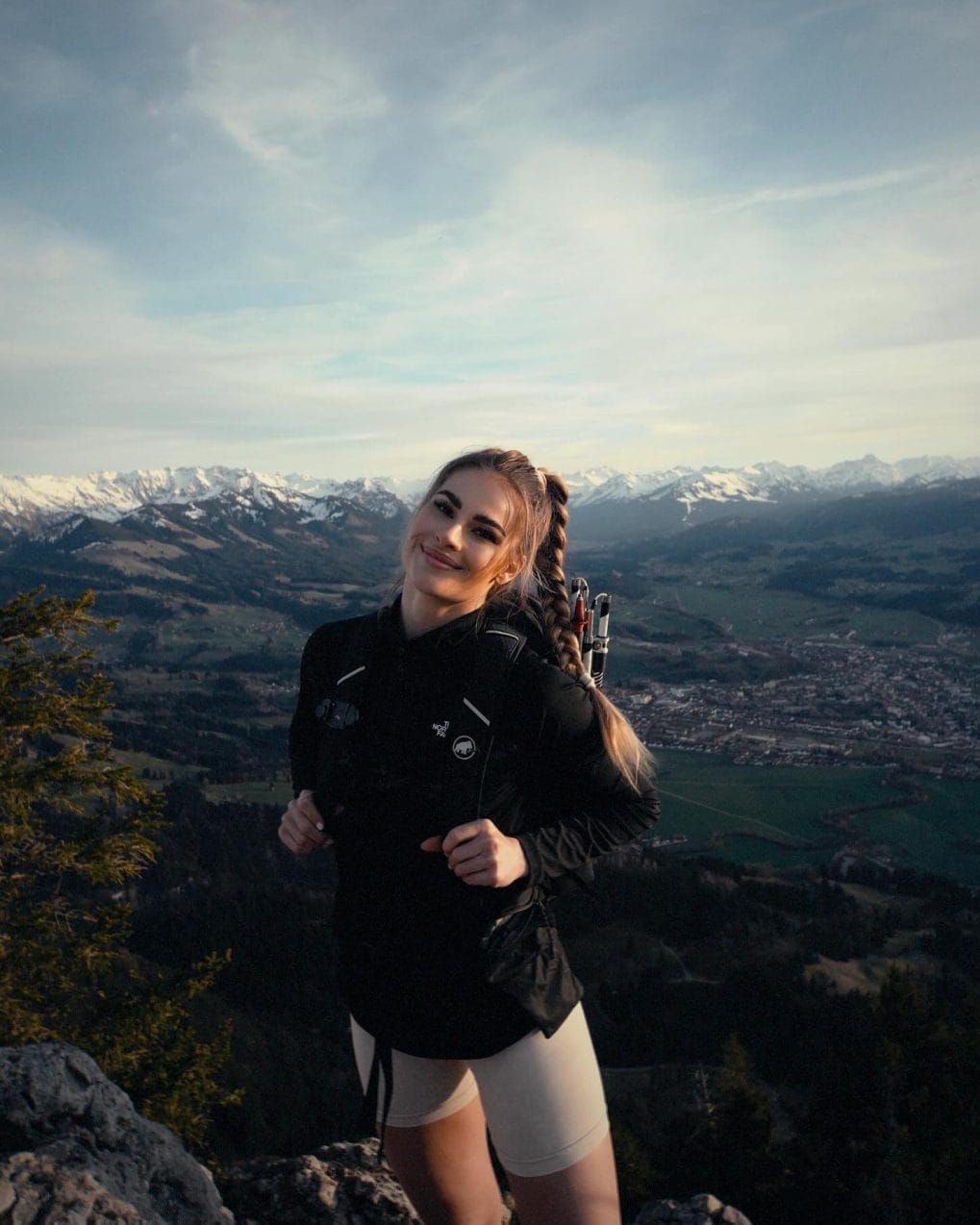
You pull it up, braid it, and the rest of the hike is hair-free. A high ponytail with braid on wavy hair keeps everything off your neck, even when sweat sets in around mile two. The braid locks the length in place, so no strands escape into your face on a windy ridge. Mid-back blonde with highlights catches the sun, and the side part adds volume at the crown. Thick texture holds the braid tight without slipping. Styling takes about ten minutes, no heat, just a brush and an elastic. It stays put through elevation gain and a lunch break on a log.
Upkeep is minimal. You can re-braid it at the summit if the first pass got loose, but it usually holds till the car. The high ponytail with braid works for wavy hair that has some grip; fine, straight hair might need a texture spray to keep the braid from sliding out. Colour stays hidden in the braid, so roots showing at week five is less of a problem. This is the style I reach for when I want to forget about my hair and just walk.
Dutch Braid Transitioning to Ponytail
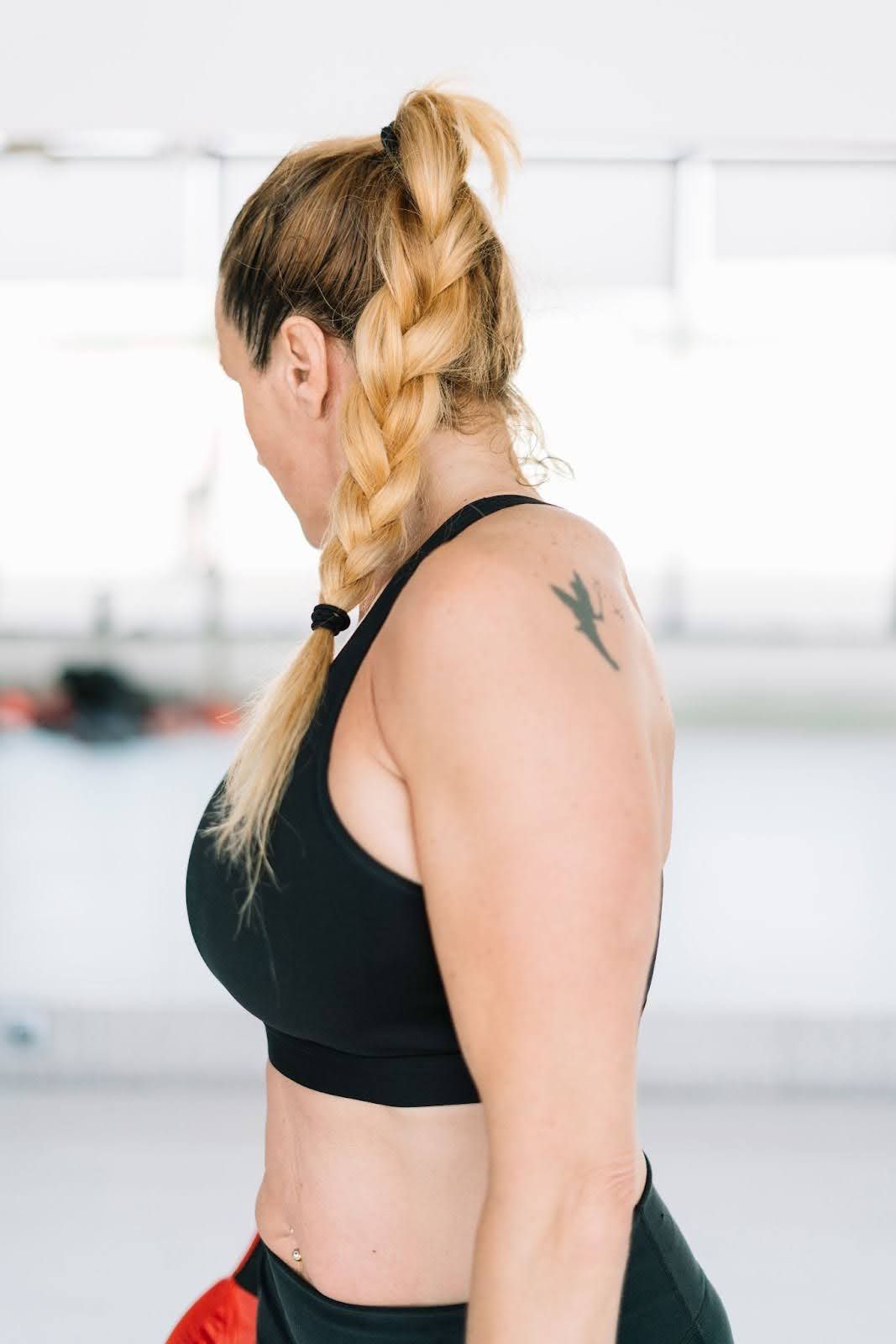
I will admit it: the first time I tried a dutch braid ponytail, I ended up with a tangled mess and a sore arm. The technique is the whole game here. A dutch braid starts at the hairline and works backward, crossing sections under instead of over, which gives it that raised, 3D look. On shoulder-length wavy hair, the braid sits tight against the scalp and the transition into a ponytail at the nape keeps everything contained. This is a DIY project if you have patience and a mirror, but I booked a salon for my first one to see the hand movements up close. Blonde colour hides the braid’s texture well, and the middle part keeps it symmetrical. The hold is solid for a full day hike.
Air-Dried Loose Waves
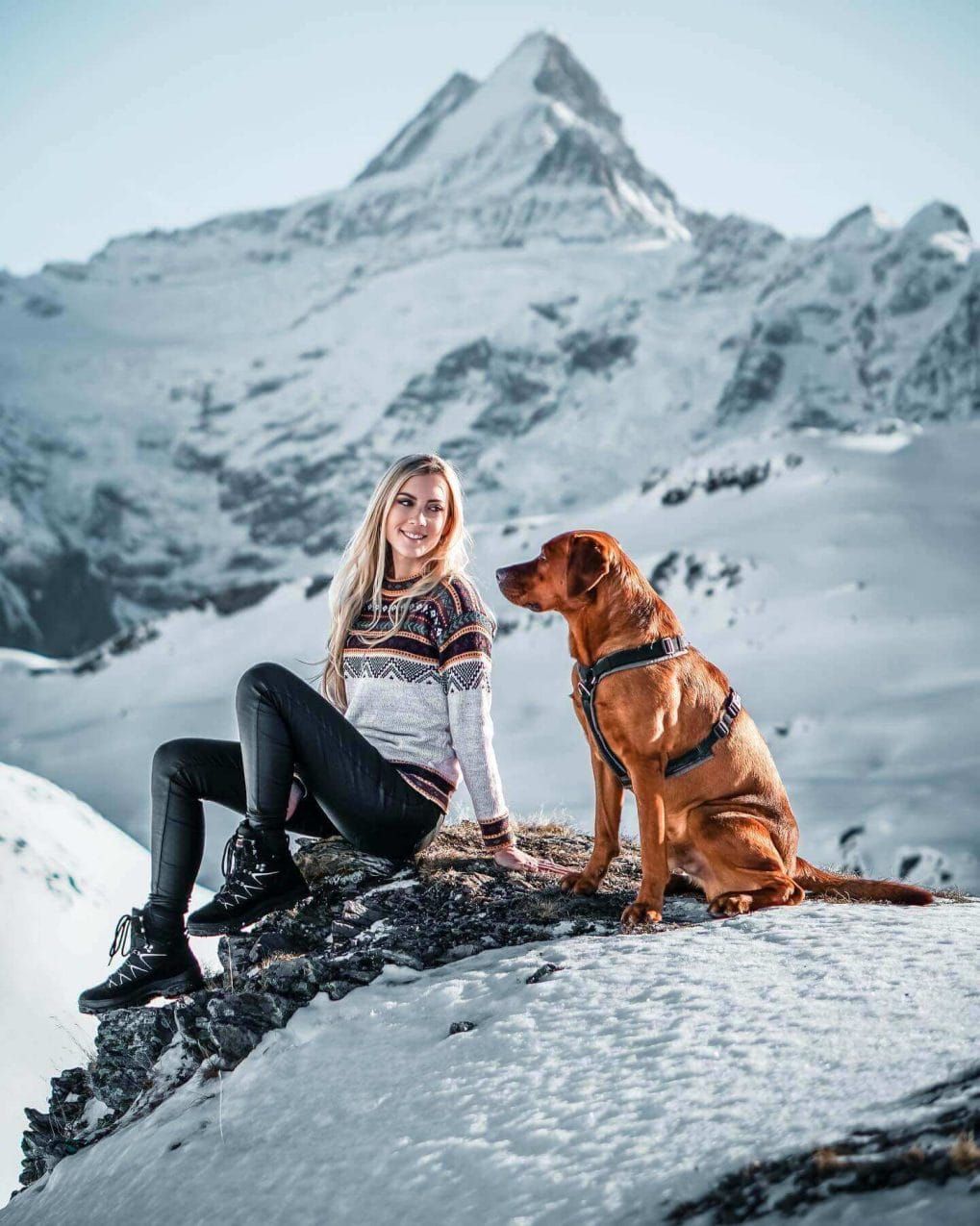
My gut says no to this one for most hikes. Air dried waves on mid-back blonde hair look beautiful, sure, but they are a liability on a trail. Loose waves catch every breeze and every branch, and by the time you hit the first switchback, you are pushing hair out of your eyes. This is a style for a flat, easy walk in a park, not a real climb. It flatters wavy hair with natural texture and layers, and a middle part works well for a round face. But for anything with elevation gain or wind, skip it. The hold is zero, and you will spend the whole hike annoyed.
Braid with Wide-Brimmed Hat
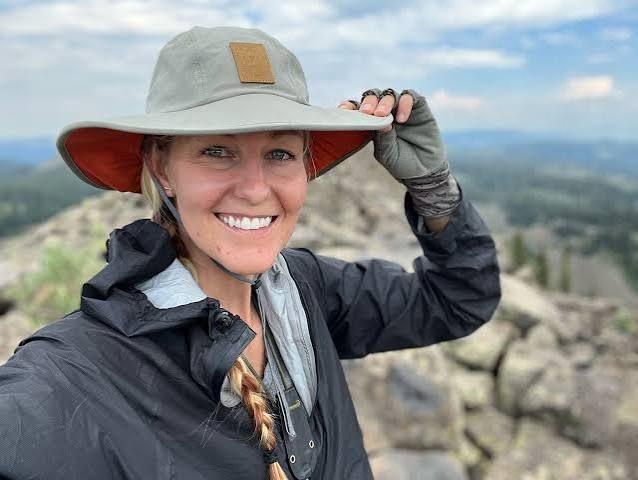
Which does more for a hike, a braid alone or a braid with a hat? I have worn both, and the hat wins every time. A braid with hat keeps the sun off your scalp and your part, which matters when you are out for four hours on an exposed ridge. The wide-brimmed hat also hides any frizz or sweat at the hairline, so you look pulled together at the trailhead and the summit. Mid-back blonde waves stay tucked inside the braid, and the middle part sits flat under the hat band. Styling takes about seven minutes for the braid, then you put the hat on and go. Upkeep is zero: the hat holds everything in place, and the braid does not loosen. For sun protection and hair management, the braid with hat beats a braid alone.
One thing to watch: the hat needs to fit securely, or the wind will take it. A chin strap or a snug fit solves that. The braid itself is simple, a three-strand plait that works on any texture. Wavy hair holds the braid shape well, and the hat keeps the colour from fading in direct sun. This is the most practical combo I have found for a long day outside.
Long French Braid for Forest Hikes
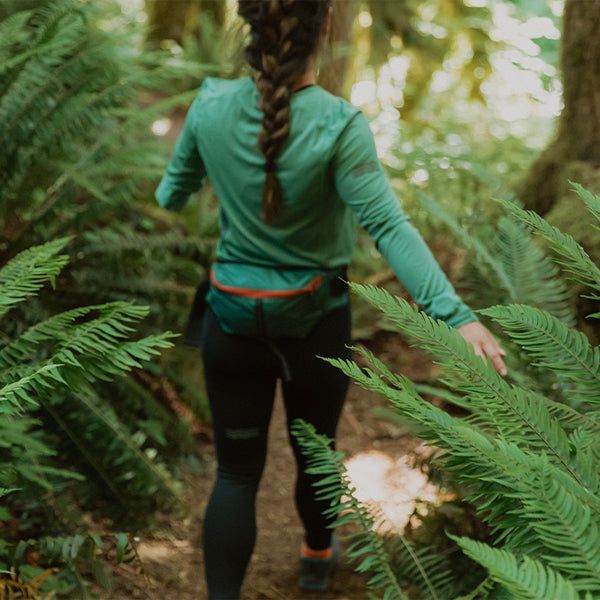
I was halfway up a steep forest trail, branches grabbing at my face, when I remembered I had put my hair in a long french braid that morning. It was a lifesaver. The french braid starts at the crown and weaves all the way down to the ends, so every strand is locked in. Dark brown wavy hair at mid-back length stayed completely contained, no strays, no tangles. The middle part kept the braid centered, and the layers blended into the weave without popping out. Hold was absolute through sweat, wind and a sudden drizzle. The honest downside: it took me fifteen minutes to braid it tight enough, and my arms got tired. But once it was done, I did not touch my hair again until I was back at the car. For a forest hike, this is the one.
Thick Side Braid for Mountain Views

That braid is thick enough to survive a switchback. A thick side braid on wavy, mid-back hair with layers means the sections stay distinct instead of melting into one lump. Dark brown reads as solid from a distance, which helps the braid read as one piece of rope, not three separate strands. The hold comes from the texture: wavy hair grips itself, so you do not need a tight start at the crown. This is a 10-minute style, no heat, and it stays put for a full day hike. You can do it yourself, but the first attempt might feel clumsy. The trick is pulling each section taut before you cross it, then letting the natural wave do the rest.
The side braid sits out of the way of a backpack strap, which is the real test. A middle part keeps the weight even on both sides of the scalp, so no headache by mile three. Layers at the ends mean the braid tapers naturally, no blunt chunk flopping at the bottom. I have worn this on a ridge in wind and it did not unravel. It is not a salon style, it is a practical one that happens to look intentional.
Braided Updo with Low Ponytail
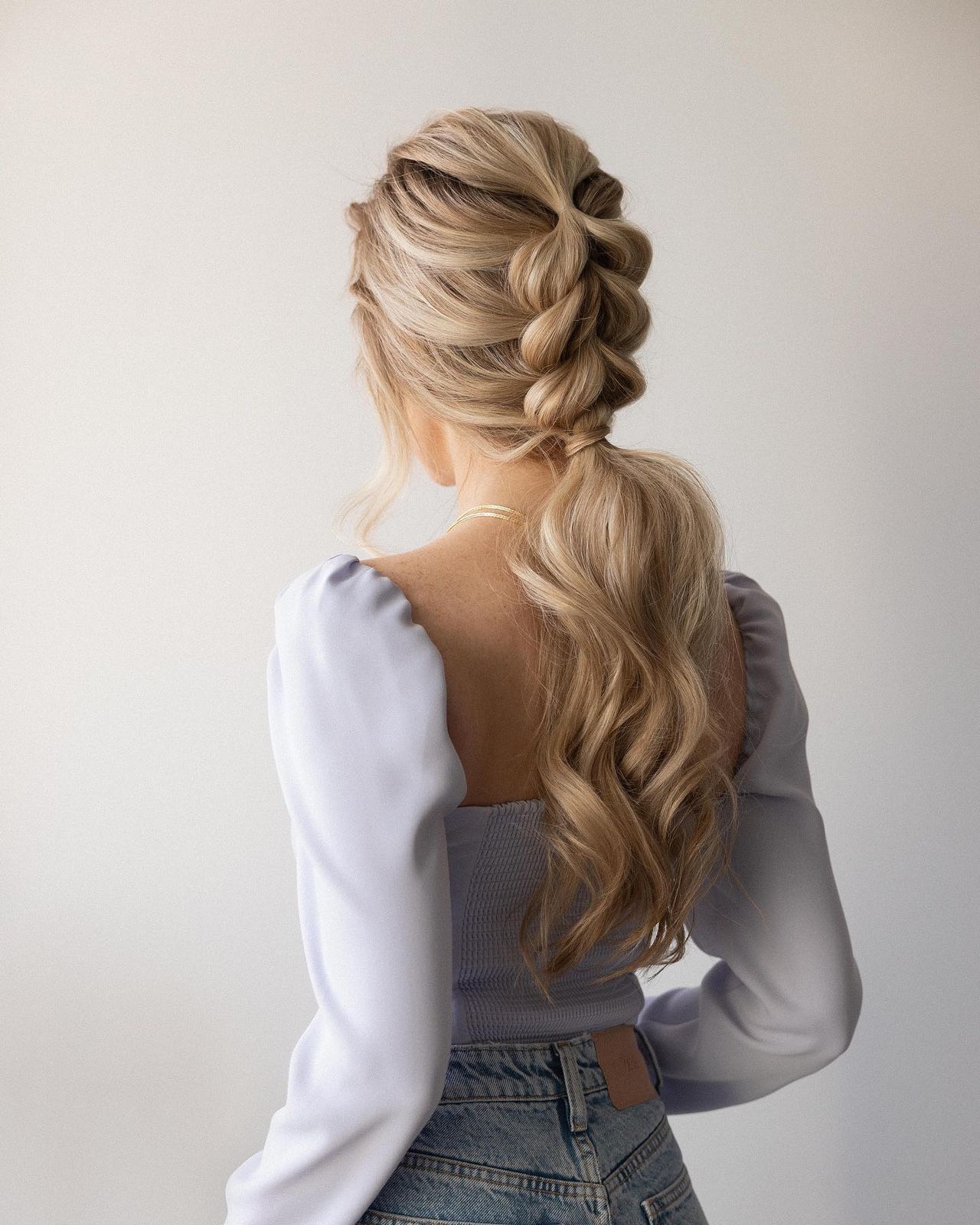
This braided updo low ponytail is not a five-minute style, but it is worth the 20 minutes. Ash blonde with subtle highlights gives the braid depth, each twist catching a different tone so the intricate braided detail reads clearly. The technique: start a Dutch braid at the nape, working upward, then gather everything into a low ponytail at the occipital bone. The braid becomes the crown detail, the ponytail carries the length. Wavy, thick hair holds the shape without pins sliding out. Mid-back length means the ponytail has weight, so it hangs straight instead of flipping. This is a braided updo that stays secure through a full day of movement, no re-pinning required.
Final Thoughts
After writing all 22 of these, I noticed the same thing keeps coming up: the braids that look the most complicated are often the ones that hold the longest. The pink elastics and bandanas are fun, but the real win is a style you do not have to touch for six hours. I booked a Dutch braid for my next hike, the one that transitions into a ponytail, because it is secure without looking like I tried too hard.
- Braid on damp hair for fewer flyaways.
- Re-tighten the base after two hours.
- Use a soft elastic, never a metal one.
- Take it out before bed to avoid breakage.
- Trim split ends every ten weeks.